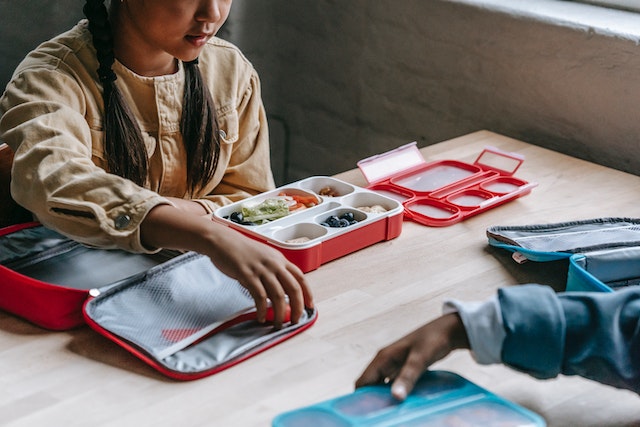
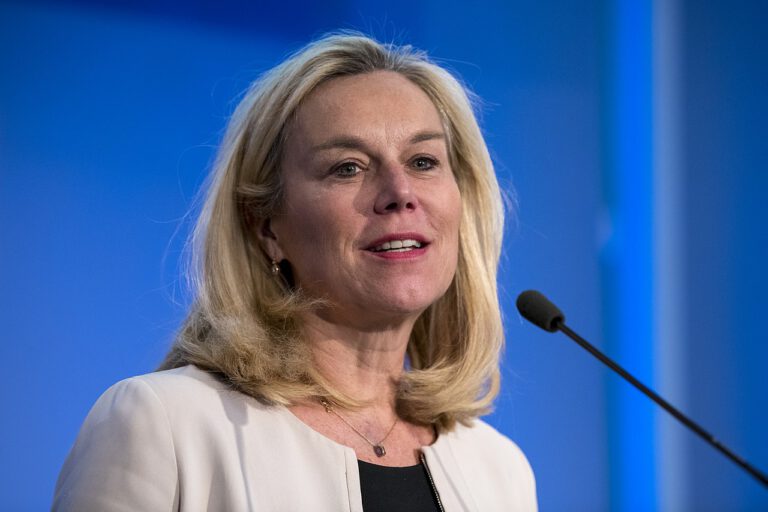
In a proposal presented to Dutch political parties Volt and Democrats 66 (D66), the House of Representatives wants to make €100 million available to start a free lunch initiative at Dutch schools.
Amongst all the bad news lately, it’s nice to hear that something good is underway.
The proposal was met with enthusiasm, as both parties agree that the money for school lunches should be found in the budget, reports RTL Nieuws.
Children shouldn’t go to school hungry
With the major increases in household costs such as electricity and gas prices, alongside the ever-rising inflation in the Netherlands, there will be many families this winter having to cut down.
Translation: There are children in the Netherlands who will be brought to school tomorrow without food. Going to class on an empty stomach is not okay. Nothing should stand in the way of children’s development. Therefore, we propose (with @DassenLaurens) the free school lunch. #APB2022
Parents will have one less thing to worry about and will be assured that their children won’t have to endure the school day while hungry.
Inflation on the rise
As inflation in the Netherlands beats records, reaching a whopping 12% this August, the pressure on wallets has never been tighter.
But, the government seems sympathetic towards the struggles of parents. Volt foreman Laurens Dassen says that the proposal for free school lunches is only the beginning; “Because ultimately we want all children to be able to go to school on a full stomach,” she says.
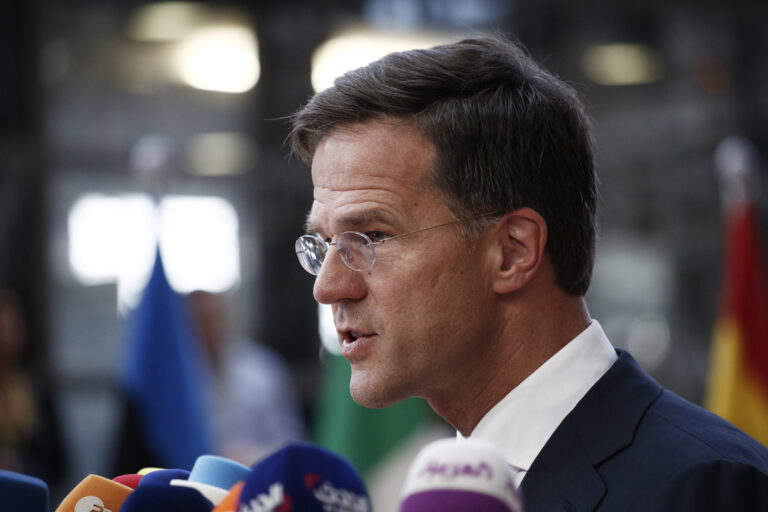
Prime Minister Mark Rutte also maintains that the proposal is ‘sympathetic’.
Finally, some good news for parents and children alike! 🥳
What do you think of the proposal? Tell us your thoughts in the comments below!
Dutchies love camping, and France is by far their favourite destination. However, camping in France as, or with, a Dutchie, can be quite a daunting experience. Let’s talk about everything you need to know for a superb trip.
With warm weather, a variety of landscapes, and a convenient distance from the Netherlands — France really has something for everyone.
There are wild camping sites in the wilderness (for the Dutchies who crave the unstructured nature they don’t have at home), beach towns and lake sites (for those who need a water source nearby), and lovely cultural sights scattered all across the country.
Looking for something specific? Jump to a section!
Ok, so France it is. But where exactly? There’s a sea of options to choose from, so step one to making your decision is to identify what you want from the vacation.
Narrowing down your landscape options is a good first step: ask yourself if you want the grand ocean, mother nature herself, a humble lake, or a cool cultural sight at your campsite.
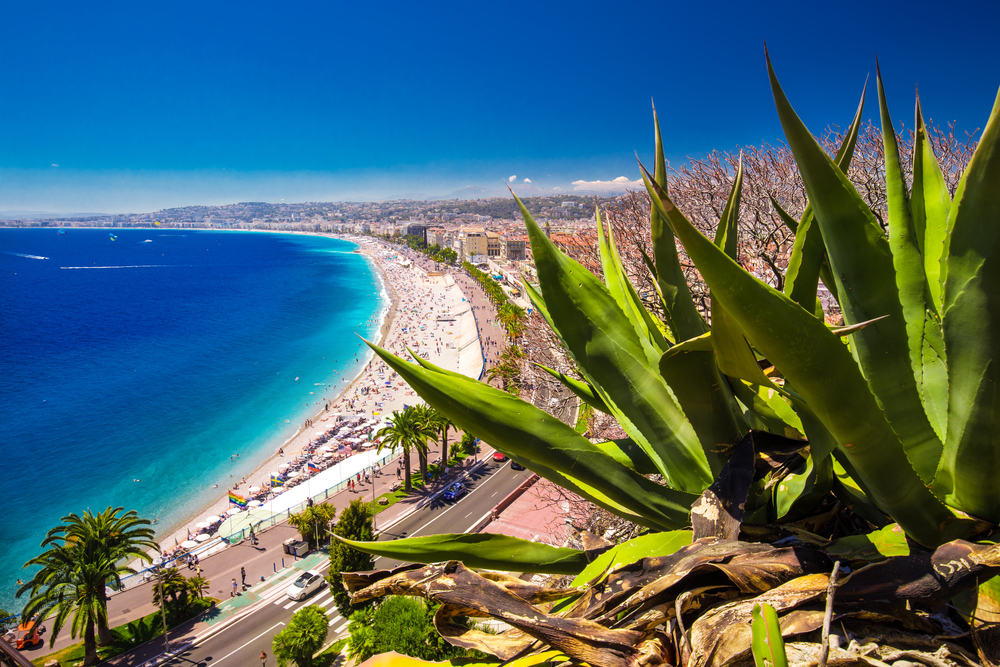
Who wouldn’t love a chill beach vacation right now? Image: Depositphotos
1. The sunny seaside
If the seaside is your thing, consider going camping by the Atlantic Ocean. It’s a dream for families and people looking for a comfortable summer stay. If the Mediterranean is more your vibe, the French riviera is always a good option, with classics like Nice, Cannes, and Saint-Tropez at your doorstep.
The ocean waves and distant sea horizon, the clear blue skies, and white sandy beaches will give you that sweet, sweet vacation vibe.
2. The heart of nature
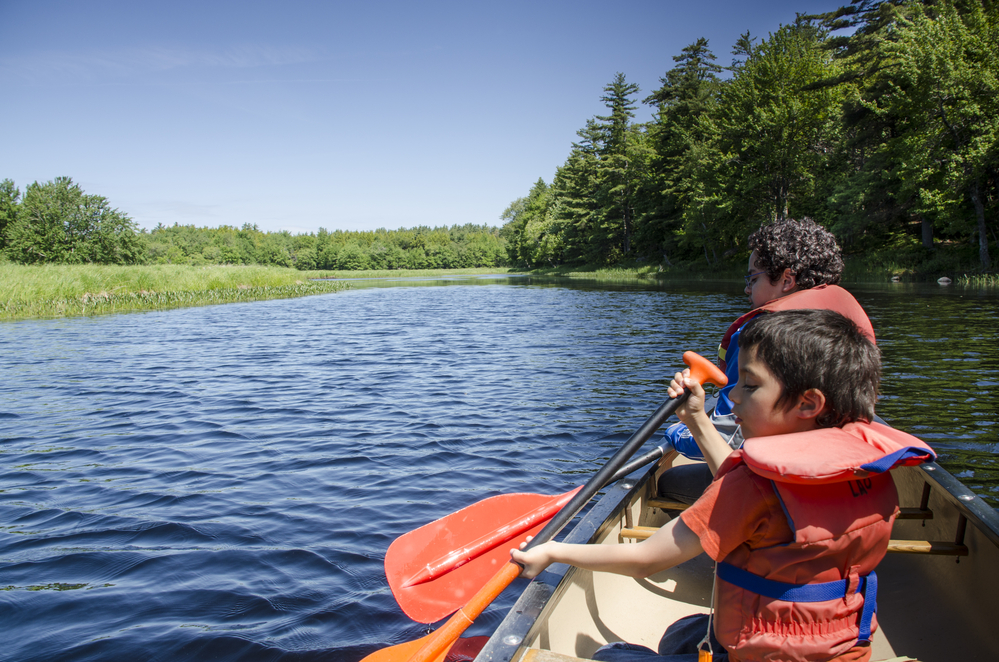
If beaches stress you out, don’t worry. Why not check out some more nature-oriented options? France has vast woods and impressive mountain ranges — quite the change from the Dutch landscape! Sites such as Domaine du Verdon in Castellane allow you to enjoy water sports on the river and breathe in the fresh forest air.
Breathe in the fresh forest air! Image: Depositphotos
The green trees and chirping birds will give you a lovely, chill, holiday, whether it be in the Iraty forest of the Pyrenees, the cliffs of the Gorges du Verdon or the vast lavender fields of Provence.
3. Land somewhere in between
If you want the water source nearby, but you’re not quite vibing with beach life, a lake vacation should be right up your alley.
France can offer options such as La Nublière camping for people like you. It’s located near Lake d’Annecy and is great for water activities, and the views are immaculate.
A lake vacay is always a good idea! Image: Depositphotos
Another good lake destination is Lake de Genève, on the border between Switzerland and France. It’s the largest lake in Central Europe and has a gorgeous village, a classic French chateau, and tons of water sports to show for it. You’ve got the water, you’ve got the woods; it’s the best of both worlds, really.
4. Camp with culture
For the intellectuals among us, a simple sun-sea-and-sand vacation might just not cut it. But fear not, France is stuffed with amazing cultural attractions, from castles to vineyards, with campsites not far away.
Culture geeks should not miss the many gothic cathedrals France has to offer, such as the impressive and famous Cathédrale Notre-Dame de Chartres, located in the charming city of Chartres (not far from Paris).
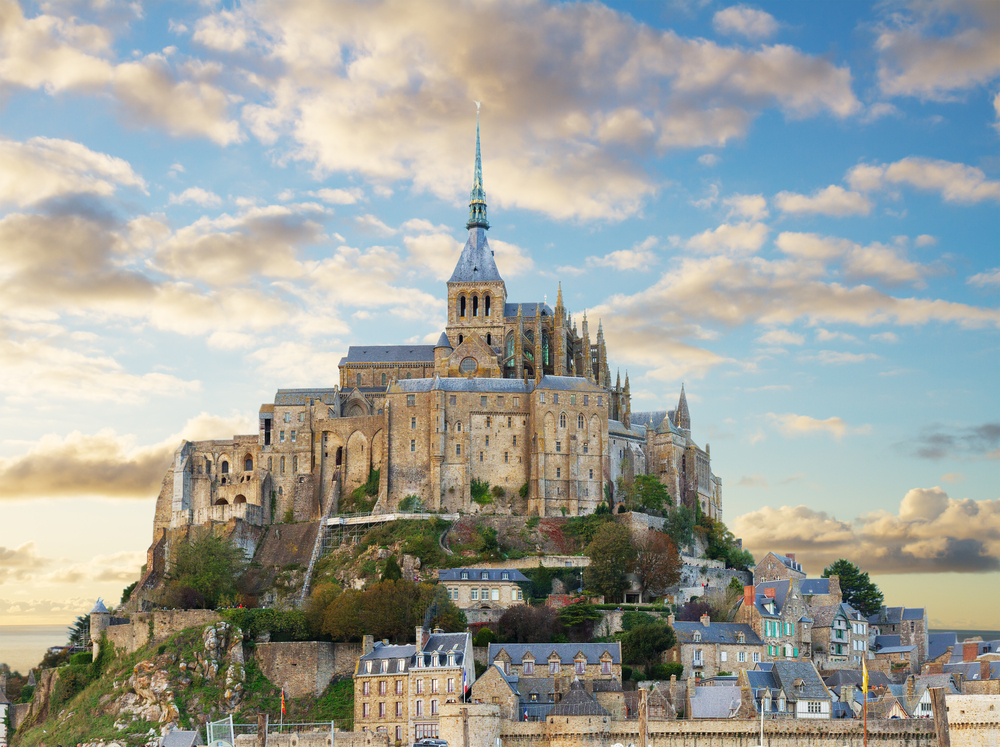
The marvellous Mont St. Michel can be found on France’s north-west coast. Image: Depositphotos
Those seeking a more geologically thrilling experience on their cultural trip can explore the famous Gouffre de Proumeyssac, also known as “the devil’s hole” — a fascinating cave filled with crystals and legends.
Other examples include the beautiful English Canal campsites, Dordogne camping, or Château des Marais for breathtaking sights and interesting history.
The accommodation: pick your level of comfort
Of course, the destination is important, but almost just as important is your accommodation.
In general, there are three main types of accommodation that you’ll find yourself in when camping: tents, camper vans/caravans, and cabins/bungalows.
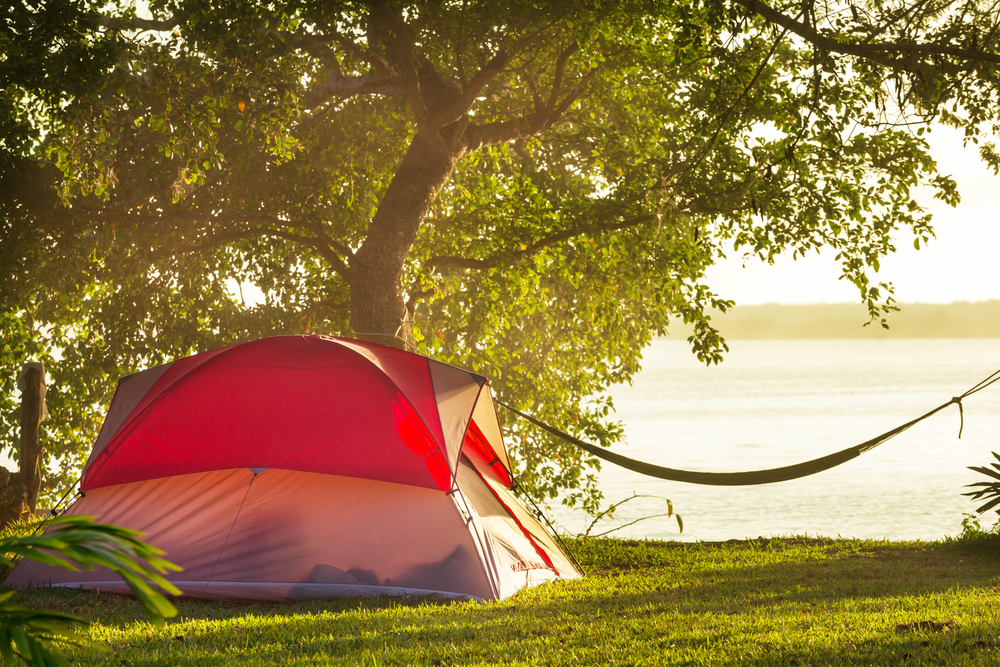
For those who want to get extra close to mother nature on their camping vacation, a tent is the best option.
Simply reserve a pitch on a campsite, put up your tent (with or without great struggle) and voila — you’re enjoying the real, hard-core camping experience.
A step up for comfort: the camper van
For an ever so slightly less in-touch-with-nature, more in-touch-with-mattress option, you can opt for a camper van.
Reserve a pitch for you and your trusty (motorised) travel companion, and enjoy the freedom of being able to move your house around wherever and whenever you like.
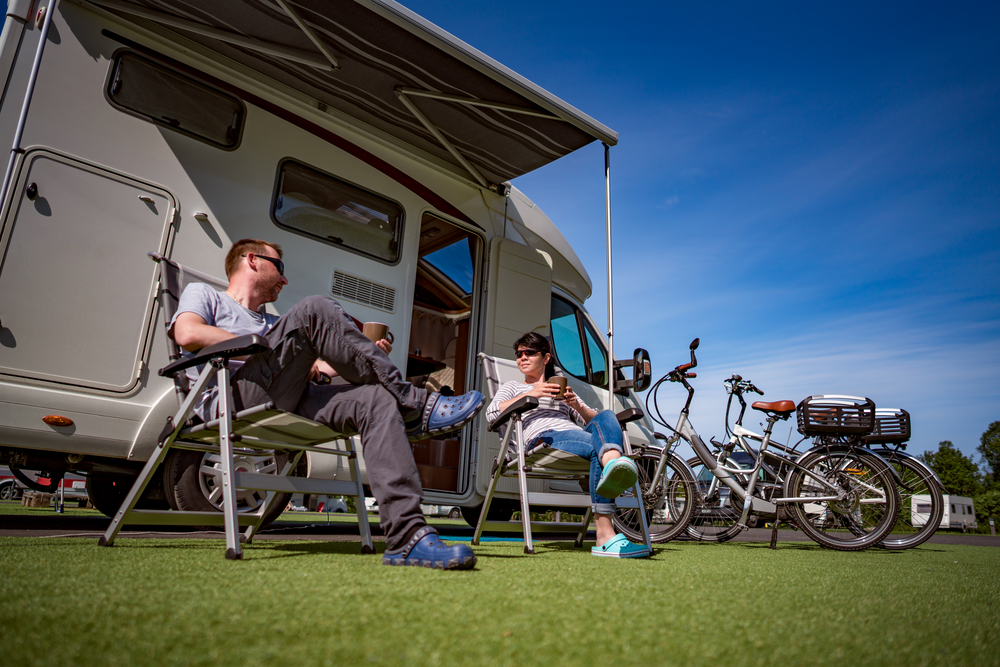
The camper van gives a special feeling of freedom. Image: Depositphotos
For those with higher standards: book a cabin
Luxury camping, or “glamping”, is also a popular option for those who don’t like the idea of sleeping in a car or on the ground for their vacation (weirdos).
You can typically book anything from primitive wooden cottages to luxury houses, or even tree-top huts, depending on where you decide to go.
Other important aspects to consider
Once you’ve decided on your accommodation of choice, it’s time to consider other facilities you’d like to have on your campsite.
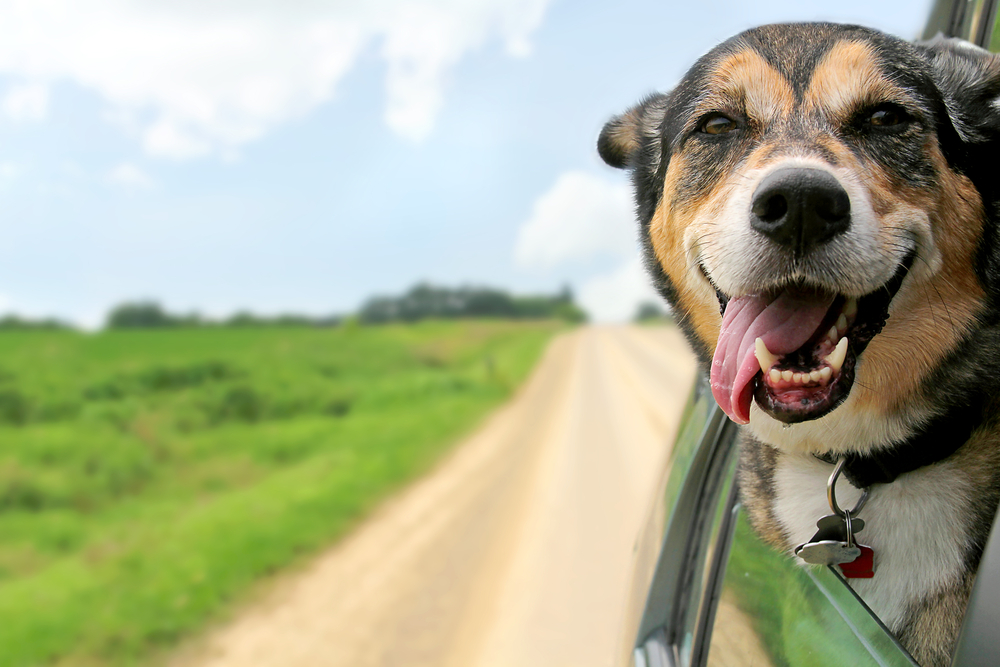
Of course, the family dog is coming with on vacation! Image: Depositphotos
Disability-friendly vacation
For people with disabilities, it might be worthwhile to take an extra look at which sites cater to different disability needs. La Grande Côte is an example of a site that ensures wheelchair-accessible accommodation, and most sites guarantee that service animals are welcome.
Child-friendly vacation
Some sites have an extensive range of activities for children, while others cater more to other groups, for example, couples on vacation. If you’re travelling with children, it’s always smart to check your chosen campsite’s child-friendliness.
Camping with kids can be a handful! Image: Depositphotos
Les Tamaris, for example, has a lovely playground for the little ones and prides itself on being super family-oriented. Les Alicourts is another great example of a child-friendly destination, with a baby pool, waterslides, and a huge, private lake at your disposal.
Pet-friendly vacation
Got a four-legged friend you’d like to bring along on your camping trip? Many campsites cater specifically for pet owners, allowing you to include all family members in the vacation fun. Pet-friendly vacation destinations might include dog showers, grounds for free frolicking, and houses suitable for campers of all kinds.
Life hacks for a pain-free trip
Now that you know where you’re gonna stay, and how you’re gonna camp, it’s time to plan everything else. Let’s talk tips and tricks for planning the trip of your dreams.
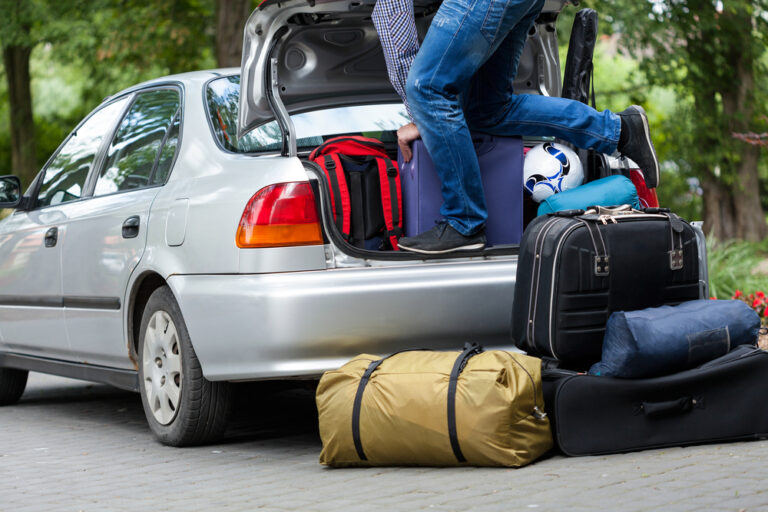
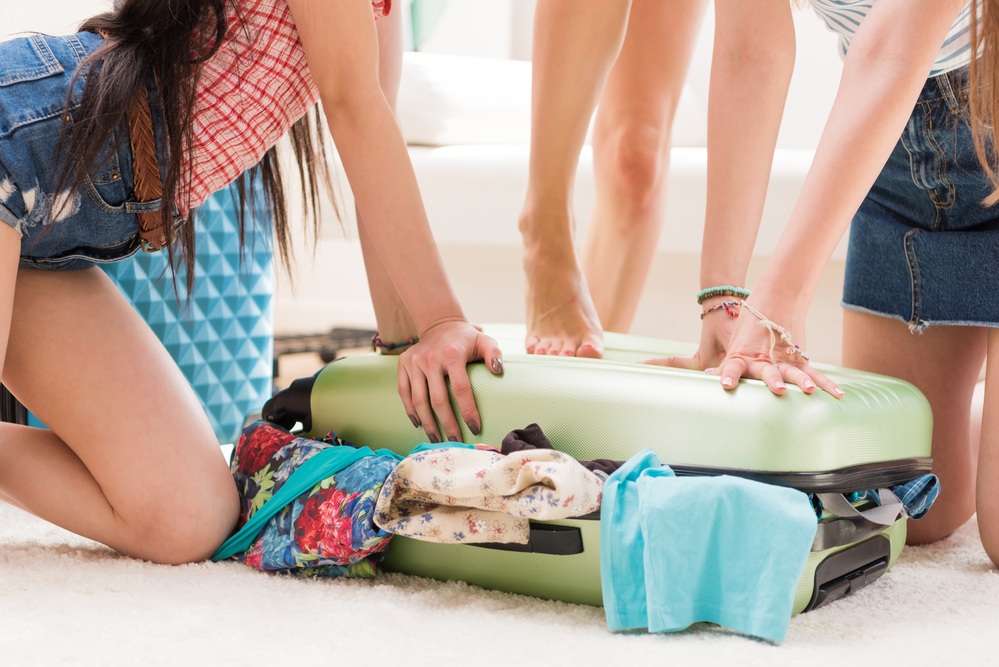
Packing can be a challenge, but the key is in the planning. Image: Depositphotos
Pack like a pro
No matter your accommodation, certain things are just a must-bring;
The ultimate night of sleep while camping can depend on good earplugs. Trust us, you don’t want to stay up all night because the neighbours are having fun, and mosquitoes somehow always find their way in with their infuriating buzzing.
A decent eye mask can save you many a fight with your camping buddies, who might get up at the crack of dawn, while you want to sleep in. That summer sun also tends to sneak in just a bit too early…
Another smart gadget is a microfiber towel. If you camp like most Dutch people, chances are there’ll be some sort of water source nearby for cooling dips and swimming.
If you want to be guaranteed a nice, dry towel every time, you cannot go wrong with a microfiber one. They dry faster than you can say “breakfast mimosa.”
A final key point on the packing list is a Dutch/English-French dictionary. Make it an e-book for easy access, or go old-school with an actual paper copy, but make no mistake: French people hate to speak anything but French.
If the Dutch habit of bringing everything they need from home fails you, you can always pick up stuff in France if you forget something. Believe it or not, the French have stores too.
Evaluate Dutch habits
Now that you’ve packed everything you need for the perfect, stress-free camping trip, it’s time to plan things more in detail.
First of all, if you wanna be a proper old-fashioned Dutch camper, you’ve got to bring your own food from home. It might be a questionable habit, but with the proper planning, it can save you tons of time and money and will ensure you don’t have to buy as much as an ounce of French food.
If you’re not dead-set on following the stingy Dutch code of conduct, you can also ignore this part, and get your food in France like a regular tourist.
Still, if you’re down to save some money on your camping trip (like the good, stingy Dutch person you are/strive to be), it might be worth researching where the closest large-ish supermarket is. Small-town convenience shops and campsite stores can be ridiculously expensive.
Wearing shoes inside is another controversial Dutch habit that should arguably be scrapped when camping. No matter your accommodation, shoes should definitely be left outside.
Nobody wants the dirt, grime, and pool water from a campsite in their (sometimes very limited) living space.
It can be intimidating to join the Dutch tradition of camping in France and understand all the norms and habits that come along with it. It does not, however, have to be overwhelming.
With some planning and preparation, you’ll quickly find yourself loving the Dutch tradition of driving across the border for the summer!
Have you ever been camping in France? Tell us your best tips in the comments below!
On the hunt for a job? You’re in luck. All professions in the Netherlands have a shortage of personnel — leaving folks with a plethora of vacancies to apply to.
The Netherlands is currently undergoing a tight labour market, with unfilled vacancies nearly doubling in a single year.
This has affected the Dutch economy significantly — and woners (residents) are left to deal with the consequences.
Technical jobs are high in demand
At the beginning of the year, there were still a good amount of employees in certain sectors, like travel guides, painters, construction workers, and drivers.
Now, 75% of all professions are understaffed, and the number of filled positions decreased twice as much as the year before. Because of this, the UWV (Employee Insurance Agency) labelled the Dutch labour market as tight.
Of course, the chaos at Schiphol Aiport and the tedious NS train strikes bear witness to the tough Dutch labour market — but facilities, like healthcare and education, are also under pressure.
Jobs in the technical sector, such as engineers, electricians, technicians, nurses, and software developers, are especially high in demand as well.
Most In-Demand Jobs in the Netherlands🇳🇱 in 2022
▪️Agriculture & Green Energy ▫️ Constructions ▪️Retail & Customer Service ▫️Financial and legal ▪️Hospitality ▫️IT ▪️Industrial and installation ▫️ Transportation & Logistics ▪️Healthcare ▫️Engineering
“For a long time, the economy has determined the labour market. Now that the shortage in the labour market has taken on such extreme forms, that relationship seems to have been partially reversed,” labour market adviser at the UWV, Frank Verduijn, tells the NOS.
Companies must improve working conditions
“As the supply of available candidates dries up, retaining and developing existing staff becomes more important”, Verduijn tells the NOS.
If the NS strikes taught us anything, it’s that companies in the Netherlands need to up their wages, and provide workers with better working conditions to attract new candidates.
What are your thoughts on the current Dutch labour market? Tell us in the comments below!
Ultra right-wing FvD leader Thierry Baudet strikes again, throwing allegations against Finance Minister Sigrid Kaag of Democrats 66 (D66).
In an article by NOS, Baudet’s latest insinuations were so beyond the pale that they resulted in the entire cabinet leaving the debate in protest yesterday.
That’s certainly one way to clear the room! 🙈
Watching too much James Bond?
The prime accusation was lobbed against Kaag because she had committed the crime of… attending St. Anthony’s College in Oxford, England. 🤔
This, to Baudet, was evidence that she may have been recruited by the secret service — as Oxford is apparently where all the spies are trained.
Quite naturally, Kaag protested to Chamber President Vera Bergkamp, who advised the FvD leader against making personal attacks. Undeterred by the warning, Baudet continued.
Faster than a fire drill evacuation
Unable to cope with the unceasing attacks, Kaag walked out.
She was not alone — the rest of the cabinet followed, leaving the cabinet box fully empty in less than a minute.
Bergkamp attempted to get Baudet to take back the offensive statements he’d made. That went about as well as anyone might expect — with the latter refusing, and doubling down with a repetition of what he’d said earlier.
Taking the Dutch idiom “mosterd na de maaltijd” (too little, too late) to heart, Bergkamp then deprived Baudet of the floor.
This prevents the FvD leader from participating in the current debate over the Prinsjedag budget documents.
No stranger to making an exit
Baudet, himself, is familiar with the practice of leaving an uncomfortable situation.
Dus volgens Baudet is 'weglopen een teken van zwakte'?
* Baudet loopt weg bij radio 1 uitzending; * Baudet loopt weg bij Emma Wortelboer; * Baudet loopt weg uit de 2e Kamer; * Baudet loopt weg na roast van Martijn Koning. pic.twitter.com/cDShFZWIbg
Translation: So, according to Baudet, “running away is a sign of weakness?” Baudet walks out of a Radio 1 broadcast Baudet walks out on Emma Wortelboer Baudet walks out of the Tweede Kamer Baudet walks out after a roast by Martijn Koning
Mark Rutte got involved in the latest round of Russian condemnation yesterday (and there’s been plenty of them!), declaring Putin’s mobilisation a “panic response.”
Rutte points out that Western involvement in the Ukrainian war effort has helped to start turning the tide against Russian advancements.
According to him, this may have made Putin mobilise his troops as a kind of “panic response”, in a last-ditch effort against Ukraine.
However, in the same NOS report Rutte did stress that the conflict wasn’t entirely over — much as we’d all hope for the Russian war effort to (finally) go down like the Moskva. 😑
Sadly, we’re not out of the woods yet
Rutte also says that a piece of land roughly the size of Hungary is still in Russia’s possession, and re-emphasises the need to keep supporting Ukraine.
This sentiment is echoed by Colonel Hans Bouwmeester, an associate professor at De Nederlandse Defensie Academie (the Dutch Defence Academy). In talks with NOS Radio 1 Journaal, he claims that Putin will now attempt to consolidate the areas that he already controls.
Bouwmeester also pointed to Russia’s latest referendums as further worrying developments (as if we needed any more!)
What are the latest referendums?
The law passed in the Duma (Russian parliament) yesterday makes Russia able to formally annex Ukrainian lands in which people speak out in favour of Putin and co.’s occupation. 👀
Bouwmeester stresses the negative impact that these referendums will have on the war effort in Ukraine. It will now be possible for foreigners to serve in the Russian military, aiding Putin in deploying a much larger number of troops.
Hoekstra joins in
Also vocal in his condemnation of Putin’s latest move is Dutch Minister of Foreign Affairs, Wopke Hoekstra.
The so called ‘referendums’ pro-Russian separatists in the east of Ukraine have announced are nothing other than a new, blatantly illegitimate attempt by Russia to change internationally recognised borders. 1/2
Hoekstra roundedly criticised Putin’s attempt at shifting internationally recognised borders. Branding the referendums “false Kremlin-orchestrated narratives”, he stated that this move would serve as further motivation to stand with Ukraine.
What are your thoughts on Putin’s latest move? Tell us all about it in the comments below!
The cabinet’s first step to solving the current energy crisis is to lower the energy bills starting November 1.
In certain cases, fees have already gone up from €150 – €200 to €600 – €800. These will be lowered for consumers in the coming months.
Put simply, the plan is that the government will pick up the tab for costs above the price ceiling. However, the final details and exact level of the price cap do need to be figured out still.
Next step: price ceiling in January 2023
By January 1, the Dutch cabinet will introduce the price ceiling on energy prices. This will apply from the beginning of next year until at least the end of 2023.
According to the cabinet, this will account for an annual discount of €2,280 for the average Dutch household, writes RTL Nieuws.
In practice, the price ceiling will work along with two separate energy rates: the cheaper one (thanks to the price cap) and the market rate.
The energy consumption of an average household stands at 1,200 m3 of gas and 2,900 kWh of electricity. So, those who use less than that will pay significantly lower than the usual amount.
But, if you use more than the average energy consumption, you’ll have to pay the market price at the given time.
All in all, the Dutch government wants to help households meet their costly ends but also encourage them to continue to save energy in the meantime.
Energy tax, emergency fund, and earlier payments
As the Dutch cabinet shuffles things around in the energy market, it’s been decided that next year’s energy tax will not be reduced, in order to keep the price ceiling up and running.
Additionally, the cabinet and energy companies are setting up an emergency fund to prevent debts from piling up this year and to help those concerned about their upcoming bills.
Dutch have found a pragmatic way of dealing with energy crisis. Subsidy for poorest, cap on electric & gas charges up to average usage. If you use more than cap, you pay higher rate. So encouraging thrift but helping.
In other words, no need to worry if you’re already far behind on your energy bill. You still have until the end of 2023 to pay it off due to the situation of the energy market.
Finally, municipalities will be given the possibility to pay out part of the energy allowance for the group earning the least income in the Netherlands, starting this year instead of the next.
This earlier payment will be able to cover €500 from the €1,300 allowance next year and give those who are struggling the most a glimmer of hope in the energy crisis.
What do you think about the government’s plan to solve the energy problem in the Netherlands? Tell us in the comments below!
The Netherlands is notorious for switching up its weather all the time, some even say you can experience four seasons in just one day, including summer(ish) weather in the fall!
And while most people probably have a different picture of the country’s climate in their head, late summers are also not unheard of in the Netherlands.
They even have a term for it! (Just like for everything else. 👀)
It’s the third Tuesday of September, the day when King-Willem Alexander delivers a famous speech which focuses on all the money plans for the year ahead.
Arguably the most important day in Dutch politics, Prinsjesdag is a ceremonial day of events when the Dutch government ultimately reveals the key plans for next year’s budget.
The day follows the same age-old routine, where all members of the Dutch parliament dress in their best attire and accompany the royal family as they gather traditionally in The Hague.
For the past two years, Prinsjesdag has been limited due to coronavirus measures – but today, the event is back with all its glorious traditions.
Though, there is a slight change in venue this year. Typically, the ceremony is held in a part of the iconic Binnenhof, but due to recent renovations, the royal family travelled to Koninklijke Schouwburg, the royal theatre in The Hague, instead.
This was how Prinsjesdag was celebrated during pre-covid times.
The royal carriage ride
Prinsjesdag commenced at 1 PM when King Willem-Alexander, Queen Máxima, and for the first time ever, Princess Amalia, travelled en route to the centre of The Hague.
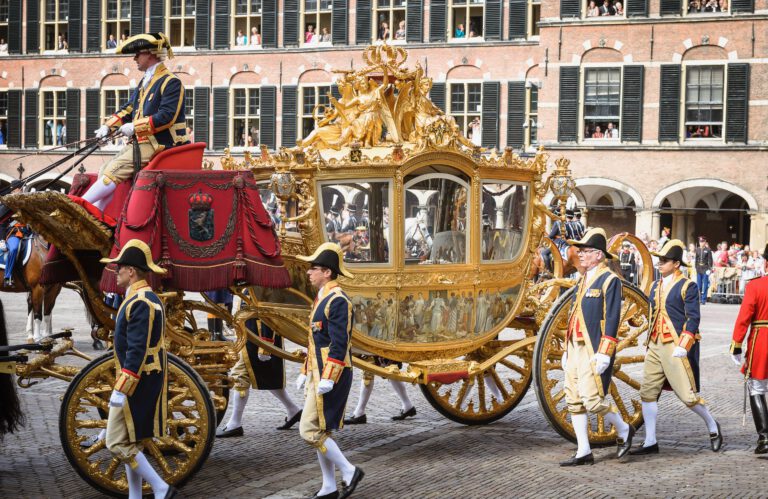
Typically, it’s tradition for the royal family to use the old horse-drawn golden carriage (you know, the one with all the slavery pictures on it), but this was alas being restored. So, they opted for the glass coach instead.
The King’s speech
Once at the ceremony, the King delivered the so-called “Speech from the Throne”, about how the Dutch cabinet plans to create a steadier economy in 2023.
As we all expected, the King’s speech highlighted the many…many money troubles we’ve all been facing the past few months, from soaring gas prices to ridiculous rent costs.
As he sat comfortably on his massive throne and in his million-dollar suit, he spoke on behalf of the government, and said, “we live in a time of contradictions and uncertainties. Our current way of life is running up against economic, social, and environmental limits.”
In the speech, Willem-Alexander shared his worries about the decreasing confidence citizens now have in politics. Many are losing faith in the resolving power of the government. Well, with no money in our bank accounts, it’s hard to give them any credit. 🤷♀️
The King stated that €18 billion will be set aside to try and meet the lower and middle incomes, but he emphasised that even this amount will likely not be enough to help everyone, writes the NOS.
The orange hats 👒
Besides the King’s speech, another ritual that made it to Prinsjesdag this year is the many extravagant hats the female parliament members and guests chose to wear.
🇳🇱Did you know? Nowadays, many female guests wear hats on Prinsjesdag. Former Member of Parliament Erica Terpstra wore a hat for the first time in 1977 when speaking the Speech of the Throne. Since many women have been present on Prinsjesdag with a striking hat!#prinsjesdag2019pic.twitter.com/iN592cz09I
Why? After Erica Terpstra, Dutch politician and former Olympic swimmer, wore a rather flamboyant black hat on her first time attending Prinsjesdag, she found herself to be one of the only ones sporting a fashionable headpiece, along with the queen and a few members of the Diplomatic Corps.
After the mini wardrobe malfunction, she convinced the other 21 female members of parliament to wear one too, and they did. What a wholesome story!
The balcony scene
Once the King finished reading his speech filled with multisyllabic words that no one quite understood, the royal family moved to the balcony of Noordeine Palace at 2 PM.
There, thousands of spectators came to see the King, Queen Máxima, and Princess Amalia stand, smile, and wave from behind the palace’s gate. It’s certainly a joyous time for those that have a day off from work.
But things were a wee bit different this time round. At the palace, the royal family was greeted not only by a crowd of admirers but protesters too, who was seen holding the Dutch flag upside down and booing them.
At 3 PM, the Minister of Finance, Sigrid Kaag, blew in and dramatically unveiled the briefcase containing the national budget. It’s a tradition that has been carried out since 1947 — but Kaag was the first-ever female minister to do it. You go, girl!
She presented the budget of billions to the House of Representatives and stated what the cabinet plans to spend the available money on next year.
Farmer’s havoc
At last, a new addition to Prinsjesdag this year that makes the all-important Dutch event even more Dutch — a little bit of action from the boeren. 👨🌾
According to theNOS, about a hundred tractors were standing along the route of the Prinsjesdag driving tour in The Hague, to protest against the government’s nitrogen plans.
Officials stressed that farmers are allowed to protest in the city. However, the massive amount of tractors was causing havoc on the streets.
As a result, an emergency order was issued, and the police seized a number of tractors from the farmers’ action group, Farmers Defence Force.
Wij hebben zojuist in #DenHaag bij het #Schenkviaduct een aantal trekkers in beslaggenomen wegens het overtreden van het #noodbevel. Boeren probeerden met hun trekkers naar het centrum te rijden en volgden onze aanwijzingen niet op. Er is een noodbevel van kracht. #Prinsjesdagpic.twitter.com/zqHmtnD1o8
Translation: We have just confiscated a number of tractors in #DenHaag at #Schenkviaduct for violating the #noodbevel. Farmers tried to drive their tractors to the centre and did not follow our directions. An emergency order is in effect. #Prinsjesdag
“The emergency order is gradually becoming the thousand-things-cloth of governments to reject and limit any form of democratic protest,” spokeswoman, Sieta van Keimpema, tells the NOS.
Thankfully, the King addressed the farmers’ situation in his speech and said he understood their concerns, but that cutting nitrogen emissions is bound to happen.
Have you experienced Prinsjesdag before? Tell us in the comments below!
The Dutch government also ensured that energy companies aren’t allowed to cut off households which cannot fully pay their bills during the coming winter. Phew. 😅
Dutch government takes dramatic action
On top of all this, starting January 1, 2023, the government also plans to pay part of the Dutch households’ energy bills, reports the NOS.
This measure particularly aims to prevent a million Dutch people from falling into financial trouble due to the rising energy market prices.
Starting next year, citizens of the Netherlands will only have to pay for a part of their electricity and gas consumption.
And, this sum will be set at most the price of last January, before Russia waged war against Ukraine.
The other part of the energy bill will be sent to the government, which will adjust the cost difference between the consumer and how much of the bill they can cover, writes the NOS.
It’s all relative
For certain, rather smaller, households, this may mean that the entire energy bill will go down. Especially if the home is already well insulated.
If you live in a larger house and consume more energy, however, you’ll be paying less for the first part of your energy bill, but also the current market price for the second half.
In more technical terms, households that consume more than the average energy consumption per year (1169 m3 of gas and 2479 kWh of electricity) will pay the market price for the rest.
Finally, the Dutch government will also provide households with a six-month grace period in the situation that they still can’t cover their bills. Though, it isn’t yet clear what will happen after those six months have passed without making a payment.
How has the rise in energy prices affected you? Tell us in the comments below!
If that wasn’t fab enough news, prices are expected to continue to fall! 🥳
Petrol prices have been through the wars
The early days of the Russia-Ukraine war created a massive upward surge in petrol prices, as the Netherlands was also partially depending on Russia for oil.
This is no longer the case, according to Van Selms, director of customer collective UnitedConsumers.
The Netherlands has since found alternatives from other countries, and the cost of a litre of Euro 95 has now dropped from €2.15 to €2.092.
As a tiny (and we mean tiny!) step in the right direction for everyone’s wallets, that’s a drop in petrol prices of 50 cents! 📉
Tip: Sure, you may be itching to take your car on that scenic drive, but there are a whole host of more environmentally-friendly options available to you, too. 🌱 From ride-sharing, and taking the train, to getting that bike out before winter finally hits us — you’re spoilt for choice!
Don’t bet on diesel
However, Van Selms warns consumers against looking to diesel as an alternative.
A litre of diesel is now at roughly €2.11. For the first time, diesel now costs more than petrol (as if we needed something else to add to the list of “expensive things in the Netherlands” 👀).
What do you think of this (tiny) sliver of good news? Tell us all about it in the comments below!