Home Blog Page 475

New to the Netherlands as an international student? Tips from a veteran to settle in

You’ve checked your documents, packed your bags, tied up your shoelaces and voyaged to the Netherlands to start your study at a dream university abroad! 

Although you deserve to take a deep breath, as an international student setting foot in the lowlands for the first time, you’ll still have a few decisions to make. 

But don’t sweat it! We’re talking about some basic choices that are faced by most incoming international students. 

My name is Anwesh, an Indian student who is currently finishing his master’s course in computer science at TU Delft. 

Considering myself to be a veteran in terms of my stay in the Netherlands as an international student, I feel wise enough to put down some thoughts that I’ve neatly gathered since I landed in the flatlands back in August of 2019. 

Now let me quickly ready my Pensieve and recount memories that should serve as sound advice.

READ MORE | Moving to the Netherlands: all you need to know

Choos your housing wisely

In the Netherlands, with university towns like Amsterdam, Eindhoven, Utrecht or even Delft, you are usually faced with the dilemma of either getting a place on (or around) campus or living near the city centre. However, given the admittedly crazy housing situation in this country, it is more likely to be a snap decision rather than a choice anyway.

READ MORE | Student housing in the Netherlands: your guide to finding a room in 2021

Living in the city centre can be great for obvious reasons. You are closer to most of the good cafes and watering holes the place has to offer in addition to having a shorter walk to the grocery store and the marketplace in general. 

Photo-of-housemates-living-together-having-dinner
Shared university accommodation can be a one-way ticket to new friends. Image: DGL Images/Depositphotos

Living around the campus, on the other hand, has its own perks which I personally endorse.

Firstly, an initial benefit straight off the bat is that you have to be super lazy to miss your early morning classes when you live on campus as most of the academic buildings are at a walkable distance.

Secondly, with the multitude of events that take place all over campus, you’re pretty much out of excuses like, ‘That’s too far, I can’t make it!’

Participate in new activities

Looking back at my time in Delft, I would never know I was good at bouldering or that I liked any form of Latin dancing if I had stuck to my excuse of being lazy and excused myself from university events.

I would also be completely oblivious to the fact that students could make and share food with fellow students every month as a ‘no-waste food-sharing meal initiative at TU Delft’s own sports centre (super fun!!). 

READ MORE | 7 innovative Dutch projects for a sustainable future

But I have to be honest, these observations are a direct result of me being dragged to events that I was sceptical of attending in the first place. Therefore, a generous piece of advice to all of you reading this would be to try your hand at various activities that are a regular fixture in and around the university. 

Since you never know where you find your odd element, it doesn’t hurt to get out of your comfort zone and embrace the melange of activities available at your disposal!

💡 A time-saving tip: platforms like Facebook and Meetup come in handy in terms of keeping a track of all these events and activities as most of the organisers like to spread the word through social media.

Study in groups to find your new crew

In addition to taking a shot at attempting new things and having enriching experiences, university events allow you to develop your network both for social and study/academic purposes.

Another choice that you can take advantage of is the possibility of studying in groups which is quite usual here (in contrast to India where usually we studied by ourselves). 

For me personally, this turned out to be a great way to finish my assignments or even prepare for exams while getting to meet awesome new people and of course indulging in post-work social evenings of what the Dutch call, gezelligheid (loosely translated to cosiness). Give it time, the phenomenon grows on you!

READ MORE | Gezellig: an essential Dutch concept

photo-of-students-in-netherlands-studying-in-library
Making friends and improving your grades? How efficient of you. Image: CandyBoxImages/Depositphotos

Studying in groups especially helps when you get stuck trying to figure out the solution to a “take home” assignment for example, especially in the beginning (which happened more times than I am willing to accept).

Studying with your brand new fellow students (and potential new friends) really speeds up your academic work as all of you figure out the nitty-gritties of student life together. 

Chat with everyone (literally everyone)

Admittedly the act of greeting everyone, even people you pass by randomly on Dutch streets was something that caught me off-guard initially. You’d be surprised at how easy it is to strike up a casual conversation with a total stranger!

Believe me, the simple act of exchanging greetings with people does tend to brighten up the otherwise dreary Dutch weather

Coming back to the importance of networking as a student, it always helps to have even the most random conversations with people, whether it involves sharing similar academic/life concerns, getting something done or looking for an opportunity to work, the list is endless.

I once found myself interviewing for a part-time job after a random chat with an acquaintance who motivated me to reach out to recruiters on LinkedIn. In fact, I know many friends and colleagues who’ve landed a gig this way! 

Fortuitously, things do work out, but maybe not without networking or getting motivated by inspiring articles like this one (haha) and eventually, acting on it by fearlessly immersing yourself in an eclectic selection of activities at the university!

With these tips, I hope you’re well-armed to navigate at least the early days and get yourself set up. 

What tips do you have for international students arriving in the Netherlands? Or, if you’re an international student, what would you like to know? Leave your thoughts in the comments below!

Feature Image: Rawpixel/Depositphotos

A bicycle that can’t break: this Dutchie is on a mission

With a dream of never going to a bicycle repair shop ever again, tax specialist and Amsterdammer, Pieter van der Straaten, developed a bike with almost unbreakable components.

Dubbing the design bombproof, van der Straaten opted for a necessities-only concept: no brake cables, no hand brakes, no bike chain, no levers to operate the gears, and no vulnerable lighting in the front and rear — fewer pieces, less maintenance! 💡

With a name that matches the concept, the Bloker Naked Bike comes with the promise of a slim design that weighs next to nothing, is rust-resistant, and is suitable for every type of Dutchie (and international) out there. Hear that guys? 📣

Cycle Simply

Inspired during a visit to New York, the simplicity of rental bikes there captured van der Straaten’s attention and he decided to bring the simple biking experience home.

“They were perfect bikes; very very basic. Sturdy ones that did exactly what they were supposed to do: travel through the city without any hassle. No hassle with hand brakes or gears, just cycle without worries”, says Van der Straaten.

A design without bells and whistles took a lot of work and investment from the entrepreneur. Van der Straaten aims to conquer the area of IJburg first and then expand nationally. With the current design, users can cycle at up to 20 kilometres per hour so there are no plans to go electric in the near future.

Would you go for a nine-component bicycle in the future? Tell us your thoughts in the comments below!

Feature Image: logoff/Depositphotos

Homeless in Groningen: hundreds of international students left to rough it

Hundreds of international students have arrived in Groningen to start their studies — with the added challenge of being homeless.

The volunteer organisation, Shelter Our Students is trying to help these newbies find temporary accommodation but it’s proving to be difficult.

As if moving to a new city and starting a new life alongside studying full-time isn’t hard enough already, hundreds of happy-go-lucky international students are doing all this whilst frantically trying to find a place with a bed and a desk they can call their own, reports The NOS.

International students in Groningen — and, who are we kidding, the rest of the Netherlands — struggle to find accommodation every year. However, Marinus Jongman from Shelter Our Students says that “it is worse than ever this year.”

Why aren’t there enough places for international students?

According to Jongman, “the housing market is completely locked up, so graduates aren’t moving on to starter homes.” Clearly, these astronomical housing prices and of course, the chronic shortage is having a knock-on effect.

In addition, more and more students are choosing to study in Groningen. In 2018, the university had 30,000 students. Now, just three years later the university has 36,000 students. The city and university don’t seem to be keeping pace with this growth.

Discrimination in the rental market

On top of that, Jongman says that international students often become homeless because of discrimination in the market for rental houses and student rooms — his words, not mine. We’ve all seen those “NO INTERNATIONAL” “DUTCH-SPEAKING ONLY” posts.

Foreign students find themselves in a Catch-22 situation: student houses don’t want internationals, and apartments that are open to internationals don’t want students. 🤷‍♀️

READ MORE | Student housing in the Netherlands: your guide to finding a room in 2021

Temporary solutions

An emergency shelter has been set up for these homeless students in Groningen. However, it only has 240 spaces and is already full. 🥵  Many students are also having to stay in hostels which cost around €25 per night — definitely not student budget-friendly.

So far about 600 international students have registered with Shelter Our Students to be placed with temporary hosts. Emphasis on the word temporary. Jongman says that this number is increasing by about 30-40 per day.

What are your thoughts on this crisis of homeless students? Should the universities and municipalities do more?

Feature Image: Resi Kling/Unsplash

Bruises, limps and stretch marks: six Amsterdam student associations found guilty of assault

Everyone leaves their first year orientation with a limp, bruises, and stretch marks, right? Well, no — but you may have if you joined an Amsterdam student association this year.

No less than six student associations in the Dutch capital have been found guilty of causing gross assault and humiliation to first years due to hazing during their orientation.

According to the NOS, the Dutch board of student associations, ASC/AVSV, launched an investigation into the associations after reports of violence — the result? Guilty.

Injuries caused by abuse

After reaching their conclusion, the board explained their decision, stating “These injuries are the result of physical abuse: punches, kicks, and blows in the face.”

And the damage doesn’t stop there, the associations are also guilty of causing psychological harm according to the board. “It is also clear that humiliation leads to a bad psychological state of some aspiring members.”

A known tradition

Dutch student associations are infamous for their often difficult initiation process. This is not the first time that first years have been expected to go above and beyond in order to secure the approval of association members.

READ MORE | Dutch sororities and fraternities: yep, they exist (and are echt bizarre)

Just last week, two first year fraternity members tied the knot for a bit of fun during the orientation week in order to gain sjaarzenpunten (freshman points.) However, the president of their student association claimed this had nothing to do with orientation.

Getting married is one thing, but causing harm to others is not tolerated by the board of student associations. “This has nothing to do with ‘getting acquainted’. It is a miracle that no one has been hospitalised as a result of this action.”

What are your thoughts on Dutch student societies? Tell us in the comments below!

Feature Image: Doble.dphoto/Depositphotos

Weekly update: we’re moving in the right direction

0

The RIVM has released its weekly coronavirus figures from August, 31 to September, 7. The number of hospitalisations and deaths has decreased compared to the previous week.

Over the past week, the RIVM has reported 17,890 new infections in the Netherlands. This is a marginal increase compared to last week’s report of 17,575 infections.

It’s not all doom and gloom though, as the percentage of positive tests decreased to 10.8% compared to 13.1% the week before.

Deaths

The number of patients who have died from coronavirus-related complications has also decreased. This week, 38 people passed away, compared to 43 people the previous week.

Hospitalisations

Hospitalisations have decreased noticeably. The same pattern is true for the number of admission to the ICU. The past week saw 300 new admissions to the nursing ward and 88 new patients in the ICU. The week before, there were 330 and 98, respectively.

Testing for access likely to extend to Horeca and other entertainment

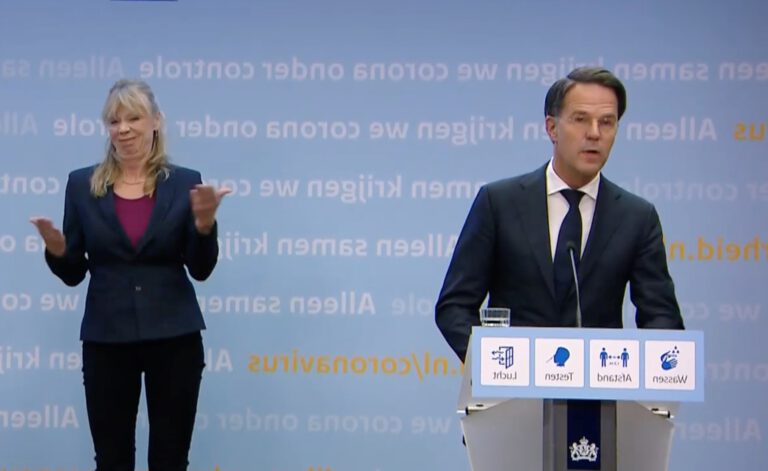
Health Minister, Hugo de Jonge, has announced that from the end of September, people who want to enter entertainment venues, such as restaurants, cafes, and cinemas may have to prove that they’ve been vaccinated or have a negative coronavirus test. 

Testen voor toegang (testing for access), is already being requested at certain events, such as large festivals and sports competitions. However, as of now, it has not been necessary to prove your coronavirus status at smaller venues like terraces, cinemas, and small cultural performances.

New relaxations delayed by five days

At the last press conference on August 13, the cabinet laid out a roadmap for new relaxations. These included an end to working from home, the end of face masks on public transport, and no more prescribed seating in cafes. 🕺

The new relaxations were due to come into effect on September, 20. However, this next step of the opening plan is likely to be pushed back to September, 25 — as the law needs to be amended before the relaxations can come into effect.

Is a third shot on the cards?

As early as the end of September, the cabinet will issue a decision on whether fully-vaccinated people should receive a third shot. Dutch GGD’s are locked and loaded to administer these booster shots as soon as the government gives the green light.

Coronavirus exacerbated a decline in mental health

An annual survey by the Central Bureau of Statistics (CBS), carried out for the first two quarters of 2021 has found that 15% of the Netherland’s population are psychologically unhealthy.

The CBS has temporarily added a section relating to the effects of the coronavirus. Unsurprisingly, feelings of loneliness, fear, gloom, and stress were more common during the coronavirus crisis than before.

Follow DutchReview on Facebook for the latest news and coronavirus updates.

Feature Image: Shane Rounce/Unsplash

Oldest Dutch Neanderthal gets a face!

The oldest ancient Dutchie, Neanderthal Krijn, has been given a facial reconstruction. Unlike other reconstructions, Krijn has an approachable, smiling face. 🧑✨

While only a fragment of his skull survived, The National Museum of Antiquities in Leiden has reconstructed the ancient Nederlander‘s face — reports NOS.

An amateur palaeontologist discovered a fragment of fossil on the coast of Zeeland, which was sucked up from the North Sea.

It is estimated that he lived 50,000-70,000 years ago in Zeeland (but maybe he was Belgian?). Experts believe that he died around his 20th birthday. 🎂

It’s not known if Krijn lived on a diet of haring and boterhammen at the time. 🐟

fossil-fragment-dutch-neanderthal
The fragment of Krijn. Image: National Museum of Antiquities, Leiden/CC0

A unique fossil

He also has a distinctive bump on his head, where palaeontologists believe he had a tumour — based on the state of his skull.

Curator Luc Amkreutz believes that the fossil will be attractive to people and says, “I think it’s cool to see such an old fossil, but when I look at the image I feel a certain kinship. This is not a species that was as far away from us as they thought until recently.”

Krijn will be showing off his new smile at the Doggerland Exhibition — about prehistoric era life — in Leiden starting from September 7, 2021.

What are your thoughts on this caveman’s new face? Tell us your thoughts in the comments below!

Feature Image: National Museum of Antiquities, Leiden

Dinner and a movie? But first, the Dutch cabinet wants you to prove you’re coronavirus free

Health Minister, Hugo de Jonge has announced that from the end of September, people who want to enter entertainment venues, such as restaurants, cafes, and cinemas may have to prove that they’ve been vaccinated or have a negative coronavirus test.  

The cabinet had previously announced that this measure would only apply at venues with more than 75 guests RTL Nieuws reports. However, this limit may be dropped — meaning you’ll have to show your QR code at all restaurants and cafes. ☕️

A coronavirus ticket, or testen voor toegang, is already being requested at certain events, such as large festivals and sports competitions. However, as of now, it has not been necessary to prove your coronavirus status at smaller venues like terraces, cinemas, and small cultural performances.

When will this be decided on?

The cabinet will make this decision on Tuesday, September, 14 — they are currently still waiting for advice from the Outbreak Management Team (OMT). The new measures will then take effect on September, 25 — having been pushed back by five days.

In addition, the cabinet is also discussing whether people who need one of these tests should make a personal financial contribution, and how much this should cost — doei freebie testen voor toegang (testing for access). 👋

Why is this measure being considered?

According to De Jonge, approximately 1.8 million people have still not been vaccinated or built up immunity after a previous infection. He says that this could cause a “complicated dilemma in the autumn” with thousands of new hospitalisations.

At the same time, he recognises that the general will to have very restrictive measures in society is gone. Who really wants another winter lockdown? Not us, that’s for sure. 🤦

Alleviating pressure on the healthcare system

In order to prevent the healthcare system from being overwhelmed, and of course, to avoid that dreaded winter lockdown (let’s be honest, there’s only so many board games you can play), De Jonge sees the coronavirus admission ticket as a necessary step in avoiding another spike.

A coronavirus entry ticket is already mandatory in a number of other European countries, such as France, Germany, Italy, and Austria.

What are your thoughts on the possibility of a mandatory coronavirus entry ticket? Tell us in the comments below!

Feature Image: maria_davy/Depositphotos

Parents rejoice — more students leaving the nest during the lockdown

Keep the moving boxes around 📦 because more students are moving out of their parental homes to live on their own, according to the latest CBS figures.

25.9 thousand students left to live on their own in 2020 compared to the annual average of 22 thousand recorded in the years 2017 to 2019. Parents — be ready with plans for the extra space! 🔧🔨

The last time a moving-away increase happened at such a high rate was in 2016, which is surprising in light of the current student housing shortage.

So where are all the ambitious young people going? Students are moving to university cities as well as major hubs in areas such as the Randstad region, including Amsterdam, Utrecht, Leiden, Delft, and Rotterdam.

More students, more plans

With the sharp increase of young people obtaining a secondary education diploma in 2020 (whoa — almost 100% rate), the number of university students also increased tremendously. 

In a Nuffic survey, youngsters also indicated that they wanted to postpone their plans to go abroad because of the corona pandemic — are we surprised? Everyone’s travel plans are changing these days, even students’. 🧳

The figures show that the increase was greatest in the Haarlem, Het Gooi en Vechtstreek, and Greater Amsterdam region compared to other regions such as Zeeland and the northern and northeastern provinces.

Are you a student who moved or planning to move? Tell us more about your decision in the comments below!

Feature Image: HighwayStarz/Depositphotos

This week’s weather: an almost perfect blend of calm clouds, warmth, and sun

Picture a cloud field with beautiful breaks of sun rays in the afternoon: that’s the good weather in the Netherlands making a late-summer surge! 🌅

Monday’s maximum temperature is forecasted to range from 20 degrees on the Wadden islands to about 25 degrees in the southeast. Later tonight, the temperature cools down 🔽 to about 10 degrees in the east and 14 to 15 degrees at the sea with a little wind.🍃

Tuesday, the weather will get even better — both temperature and sun wise. ☀
With more sun breaks, temperatures will range from 23 to 27 degrees — minimal wind? Goed! 👏

Our week ahead

We have a promising week, folks!

Well, up until Thursday at least. Wednesday temperatures are expected to hit 28 degrees! Whoa — beach day? 🏖

Chances of rain are possible for Thursday, whereas Friday temperatures could bring an end to our warm weather streak with maximums around 23 degrees.

What are your plans for this (almost) week of good weather? Tell us in the comments below!

International students return to the Netherlands — but are Dutch universities ready?

As a new academic year is upon us, the Netherlands is seeing an increase in the number of international students attending Dutch higher education. However, many universities are still struggling with in-person education because of the coronavirus measures. 

According to data from the Immigration and Naturalisation Service (IND), applications for study permits are back on the rise — reports AD

Before the pandemic, the annual growth of students from outside the EU was 10%. This increase is caused partly by British students needing to apply for a permit as a result of Brexit. 

However, in 2020, the pandemic struck and the number of study permit applications dropped by a whopping 40%. 📉

Increase in numbers

This year, 15,110 applications were received at the end of July. Those are more applications than all of 2020 — when only 12,310 applications were received. 🤯

The IND reports most applications came from China, India, the US, Turkey, and Indonesia.

According to Nuffic — the Dutch organization for internationalisation in education — the most popular study programmes for international students from these countries include:

  1. 💲 Economics and business. 
  2. 🧠 Social sciences.
  3. 🛠 Engineering. 
  4. 🎨 Arts and culture. 

University measures

Universities no longer have to observe the 1.5-metre distance within faculty buildings. However, students must wear masks in the hallways, and classrooms are limited to a maximum capacity of 75 people. This may be a problem for students from larger study programmes. 

What do you think of this situation? Tell us in the comments below!

Feature Image: Rawpixel/Depositphotos