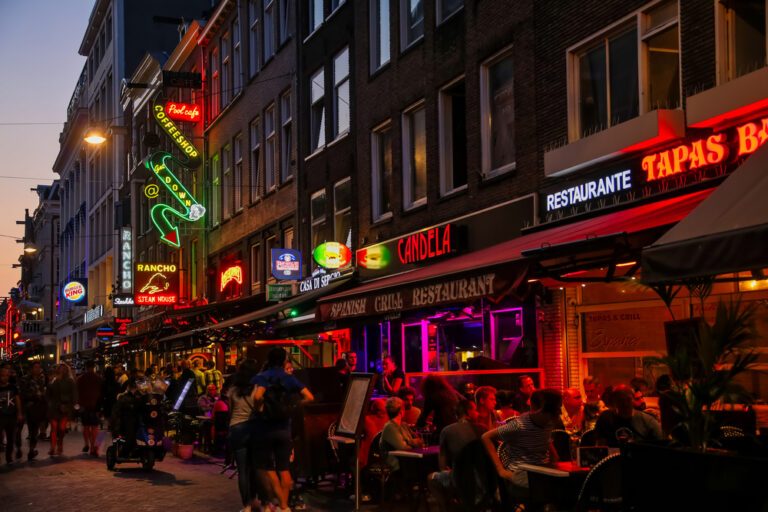
Not the way you want to end your night out — by finding out you have coronavirus. However, this was the reality for one 21-year-old Amsterdammer who wrongly received a negative test resultbeforegoing partying on Saturday night.
Before heading out to a packed pub, he got tested at a “Testen voor Toegang” (Testing for Access) location in Amsterdam. An hour later, he received an email telling him his test was negative. “I met a lot of people, hugged a lot of people,” he told NH Nieuws.
A dreaded phone call
The morning after going out, you might expect to wake up next to a half-eaten kapsalon — but that wasn’t what this gentleman woke up to. Instead, at 9 AM on Sunday morning, he got a phone call from Covidia (the test provider) saying that his test result had been, in fact, positive.
He said he felt guilty that he saw so many people while being infected. “I feel really bad that I reached out to extra people to meet up with. And that I now have to send people a message that I have corona.”
“A situation we must avoid”
A spokesperson from “Testen voor Toegang” has confirmed that on Saturday, two people tested positive at that test location and one person received an incorrect result. “These are situations that we must avoid,” they told NH Nieuws.
Are you surprised by the bumpy start for Testing for Access? Let us know your thoughts in the comments!
The past few years have seen various tropical storms batter the coastlines of many countries throughout the world. Once considered a once-in-a-lifetime event, experts now deem happenings of this nature to become more frequent due to the effects of Climate Change.
While the United States and other countries continue to debate the validity of Climate Change science (thanks Trump — yay Biden), countries such as the Netherlands are investing in R&D solutions to effectively address the challenges of tomorrow’s climate.
Particular attention is given by the Dutch to water management solutions, as more than 26% of the country is located under the sea level. This is worrying when thinking about the rising sea levels in the Netherlands.
The Dutch water management solutions truly embodies the saying “thinking outside the box,” as they not only push the limits of urban planning but also those of imagination.
A barrier to the sea: rising sea levels in the Netherlands
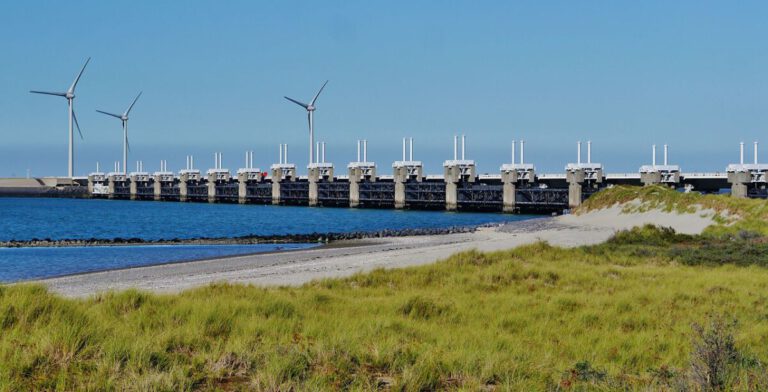
One of the most impressive achievements by the Dutch has been the reduction of their coastline by 700 km. During the 1950s, a series of projects in the southwest Netherlands called the Delta Works was started with the objective of blocking the entrance of the North Sea into the land.
The structure consists of six dams and four storm surge barriers, which makes it the Netherlands largest flood defence. The American Society of Civil Engineers recognized the Delta Works as one of the Seven Wonders of the Modern World.
A continuation of the Delta Works project was the more recently built Maeslantkering, a storm surge barrier that protects the City of Rotterdam from floods. Completed in 1997, the Maeslantkering consists of two 6,800 tons gates that close under the autonomous command of a set of computers that monitor the sea levels on an hourly basis.
These computers are not connected to the internet, making them safe from cyber-attacks. With a construction cost of €450 million, the Maeslantkering protects Rotterdam’s 994,000 inhabitants.
Reshaping the urban landscape
The Netherlands approach to mitigating the effects of the new climate is also shaping the urban landscape. Take for instance Watersquares, these are public spaces that serve as water containers during heavy rainfalls, preventing the flooding of the nearby streets, while serving as gathering spots for the community during dry seasons.
Since 2013, inhabitants of Rotterdam have been able to recreate in the first ever-built Watersquare of Benthemplein, which can withhold approximately a maximum of 1.7 million litres of water when needed.
Another example of Dutch urban adaptation to the new climate is the installation of green roofs across the Netherlands, converting impermeable surfaces into water-observant platforms during heavy rainfall. The benefits of green roofs go beyond water management, as green roofs absorb summer heat during the hot days, keeping structures cooler than they would otherwise be.
Water management is just one of these things the Dutch are awesome at:
Exporting expertise
The innovative solutions being adopted in the Netherlands not only benefit the Dutch, but also the rest of the world. As the Dutch continue to invest in R&D, their water management solutions will continue to be proven effective, further incentivizing other countries to implement similar projects.
Countries around the world are already working with Dutch experts to implement Dutch solutions in their home countries. While the challenge of climate change is a serious one, the Dutch help us see the cup half-full. We might just prevent this cup from overflowing.
Rising sea levels in the Netherlands is an issue and the Dutch are doing all they can to prevent a disaster. What do you think about this? Let us know in the comments!
Feature Image: Zairon/Wikimedia Commons/CC4.0 Editor’s Note: This article was originally published in May 2018 and was fully updated in July 2021 for your reading pleasure.
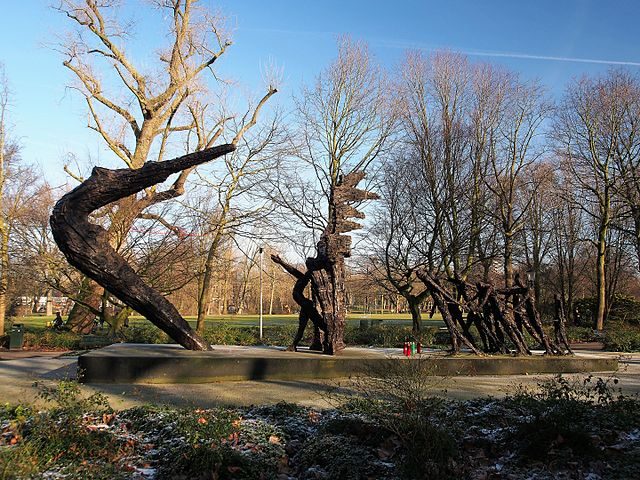
During her speech at the Amsterdam Slavery Commemoration yesterday, Mayor Femke Halsema offered a formal apology for the city’s involvement in the Dutch slave trade and the suffering that slavery caused.
Mayor Halsema made it clear that the Executive Board of the city acknowledges their predecessors personal responsibility in the slave trade, reports NOS.
She said in her speech that, “I, on behalf of the Executive Board, apologise for the active involvement of the Amsterdam city council in the commercial system of colonial slavery and the worldwide trade in enslaved people.”
She added that it is time to recognise the role that the injustice of slavery plays in the identity of the city. This is a watershed moment, as Amsterdam is the first municipality in the Netherlands to take this step.
Personal responsibility
In her speech, Halsema made it clear that Amsterdam is apologising on behalf of the city administrators as opposed to the residents, because the administrators played a personal and major role in slavery and in opposing abolition.
Co-owner of Suriname
Amsterdam was the co-owner of the colony of Suriname (say whaatt!) Historian Pepijn Brandon tells the NOS that “the city council was therefore directly responsible for the administration of the colony.” As a result, private and administrative interests merged, leading important Amsterdam policy makers to become major investors in slavery.
Nevertheless, Halsema emphasised that “not a single Amsterdammer living now is to blame for the past.”
A visible and invisible legacy
According to Halsema, “In the 18th century, 40% of the economic growth came from slavery. In Amsterdam, almost everyone benefited from the colony of Suriname.”
This legacy is visible today in the city’s wealth of art and historic canal belt. However, Halsema emphasises that the inequality and exploitation that enabled this is much less visible and has been ignored for a long time.
Slavery was formally abolished in Suriname and the Caribbean on July 1 1863. There is a movement to commemorate this day with a public holiday, known as Keti Koti (or KetiKoti.)
Amsterdam city council first approached the Municipal Executive to apologise in 2019. However, the Executive first wanted to investigate what role the municipality had played in the slave trade.
A report published last year highlighted the Amsterdam city council’s direct and large-scale involvement over a long period of time.
Similar moves being made in other major cities
Rotterdam and Utrecht have also carried out similar investigations, and research about their involvement. In The Hague this is still on-going. The municipality of Rotterdam found that administrators and entrepreneurs from the city were closely involved in the slave trade for centuries.
Rotterdam is also considering an apology and is in contact with the municipality of Amsterdam about this.
A national apology?
Activists have long been calling for a national apology. But prime minister Mark Rutte has declined, saying that slavery was a long time ago and that debates about an apology would “drive contradictions.”
What are your thoughts on Mayor Halsema’s apology? Tell us in the comments below!
Feature Image: Alf van Beem/Wikimedia Commons/Public Domain.
Got a friend across the border that you’re missing? They may be able to come visit the Netherlands worry free!As of yesterday five European countries or capital cities were added to the Dutch government’s list of ‘safe countries.’
Last week, the Netherlands opened its borders to US tourists, and while that’s great news for American internationals and Dutch tourism, some Europeans might have felt left out. But now it’s their turn to book a worry-free flight! 🥳
What are the new regions?
Starting yesterday, Denmark, Latvia, and Sweden were given the green light for travel to the Netherlands. Previously excluded areas such as the Brussel-Capital Region as well as Athens have also made it to the list.
This brings the total of European countries on the Dutch government’s ‘safe country/region’ list to 31. That’s a good amount to choose from for a quick summer getaway, toch?
Note: While the Netherlands may have marked certain countries as “safe” this does not mean the Netherlands is viewed as a “safe” country in other regions. If you want to travel outside the country, make sure to research the Netherlands’ status in the region you wish to visit.
None! (almost). If you’re traveling to the Netherlands from a safe country or region, the EU travel ban does not apply to you. You also don’t need to show a negative test or a vaccination certificate to enter the country, and there’s no need to quarantine. Essentially, just enjoy your holiday, family visit, or whatever else you might have planned! 😍
However, if you are traveling by plane, you’ll need to fill in a health declaration form. Some airlines include a digital version of the form when you check-in — but make sure to verify whether this applies to your flight, or if you need to carry a printed version with you.
Will you be traveling in Europe this summer? Tell us in the comments below!
As we slowly start seeing the beginning of a post-pandemic world (knock on wood), words such as ‘infections’, ‘vaccines,’ and yes — even ‘coronavirus,’ can be made entertaining.
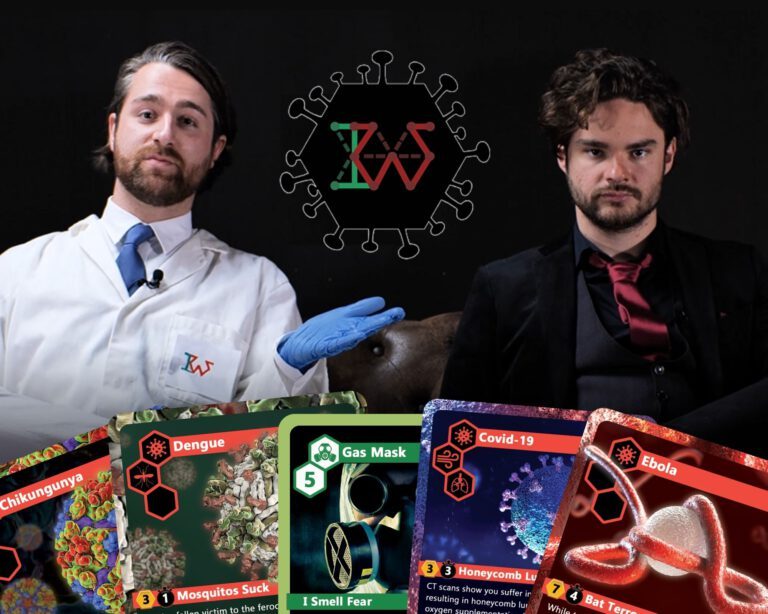
Not quite convinced? That’s because you haven’t played ImmunoWars yet! We sat down with the card game’s developers, Rafael Jezior and Dennis de Beeld to find out what inspired a game where you can give your friends diseases, and what makes the game full of totally infectious fun.
Introducing your new favourite game
ImmunoWars is a fun, satirical, and yet tasteful game. It’s all about biowarfare and infectious diseases, so pull out your mad-scientist goggles because we’re going to spread some viruses — (and healthy doses of dark humour).
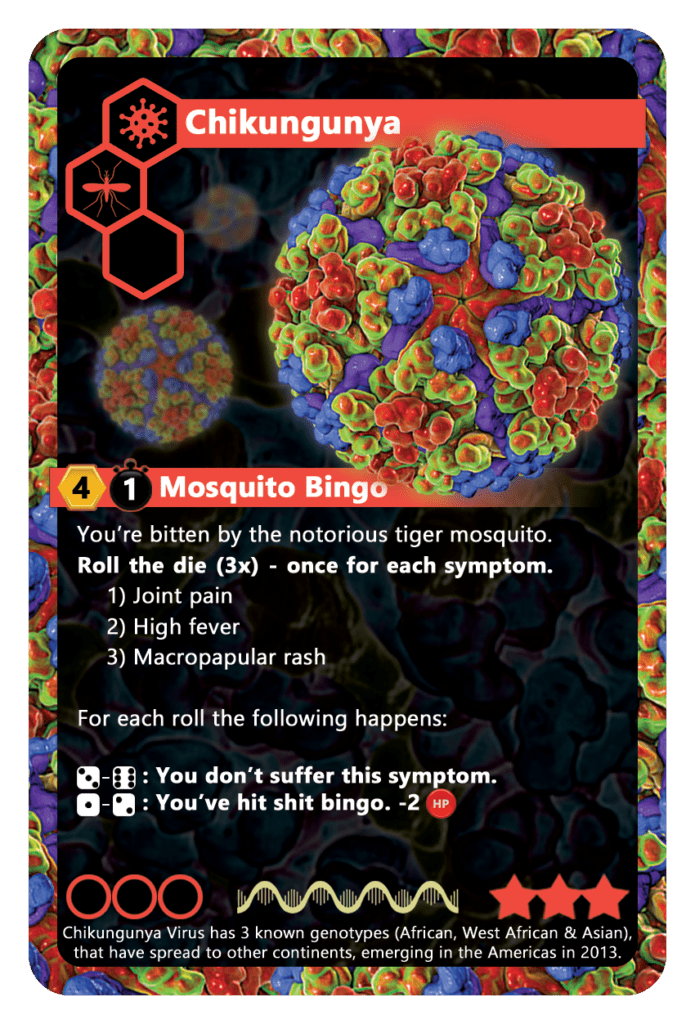
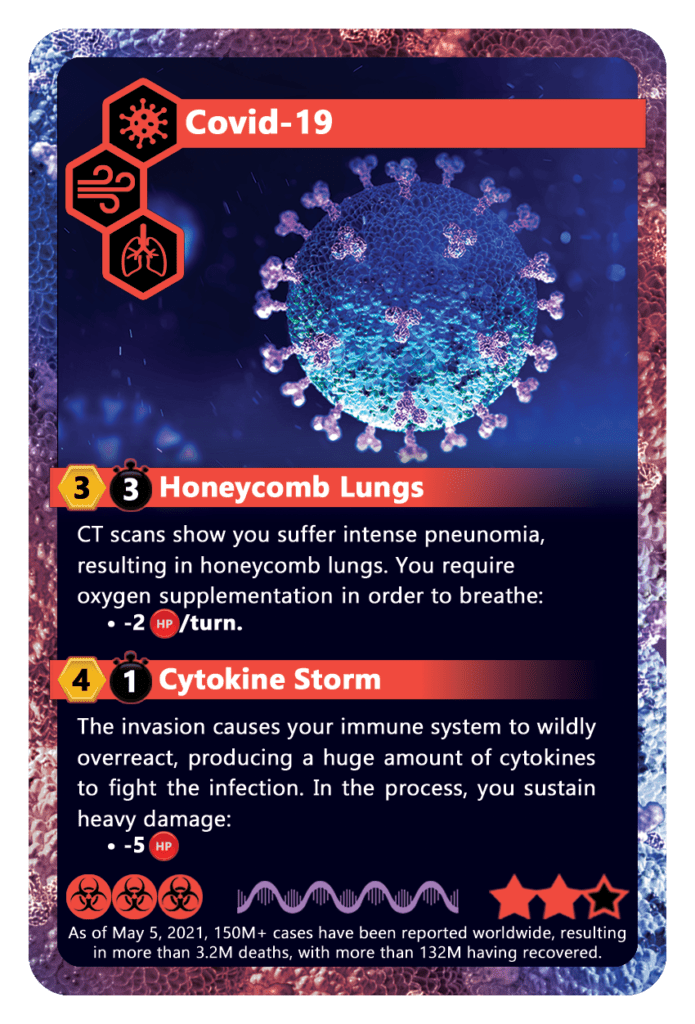
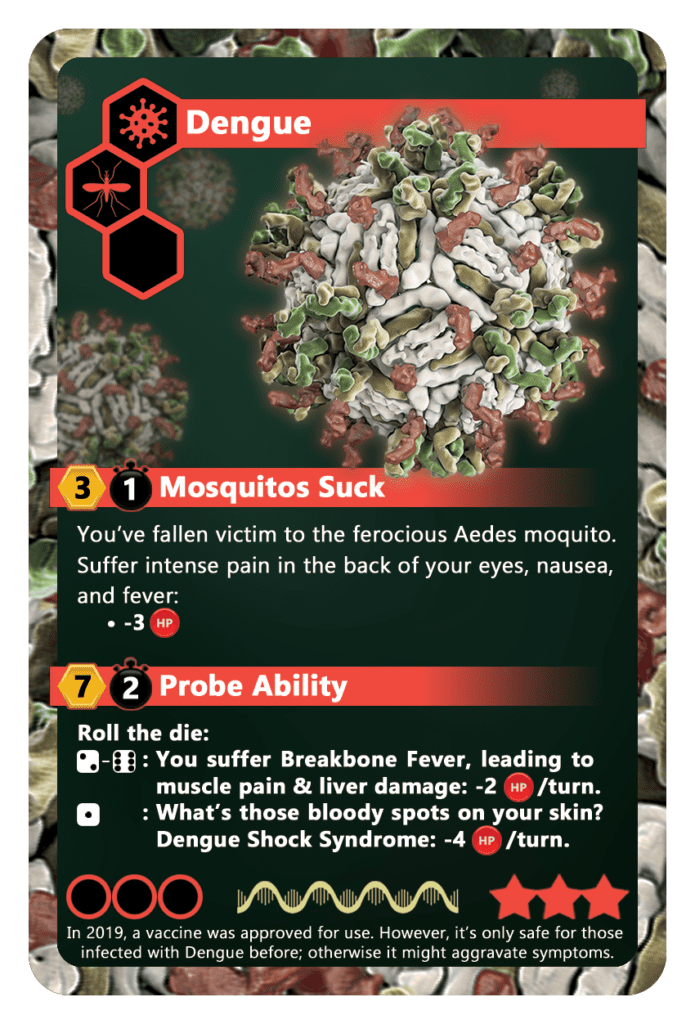
While the card game is all about strategy (and killing off your friends to win), it’s also super accessible. It’s easy to learn and will quickly become a new party-game favourite — so say goodbye to Cards Against Humanity 👋. At the same time, the 100 unique cards guarantee that every game will be different and exciting.
“In one game I’ve recovered from COVID, HIV, and Ebola only to die by stubbing my toe,” laughs Dennis.
All fun and games, right?
Naturally, but that’s not all. While ImmunoWars is packed with dark jokes and sick puns, it also comes armed with scientific research.
Namely, each card presents the players with accurate information about everything from bacteria and viruses to pharmaceuticals and proper lab gear. Coated in a slick layer of satire, you won’t even realise you’re learning all about the origins and symptoms of the Chikungunya virus.
Dennis explains that the idea behind the game is to generate more interest in the life science sector and make people aware of the “realistic monsters” (diseases) in the world.
Image: ImmunoWars/Supplied
Image: ImmunoWars/Supplied
Image: ImmunoWars/Supplied
Sounds frightening? It’s not! The game teaches you about all the amazing ways in which humans can counter diseases, whether through our immune system or technology. There’s even a little fun fact at the bottom of each card — doubling as definite wins for your next trivia night!
“An essential part of this development is making it interesting to professionals within the field but also making it fun and playable for people who barely know the word biology,” tells Rafael.
How ImmunoWars started
As all good stories do, the history of ImmunoWars started with a couple of friends and a few drinks. Back in October 2019, creators Rafael and Dennis wanted to play a fun card game related to their study, Life Science and Technology … but after some fruitless googling, they saw the need to develop one themselves!
Once the concept for ImmunoWars was born, it received backing from PLNT — a centre for innovation and entrepreneurship in Leiden. With programs that help entrepreneurs build their start-up, PLNT turned out to be the perfect haven from which ImmunoWars could take off.
Another of PLNT’s great successes? DutchReview, of course. 😉
How it’s going
Fast-forwarding to now, ImmunoWars is fully developed and is in one of the final stages before you can hold it in your hands — Kickstarter.
Impressively, ImmunoWars has just reached its €10,000 goal (with days still left to go!) on the crowdfunding platform, meaning there’s not long to go before you could be dishing out the Chikungunya virus, syphilis, or food poisoning to your friends! (Hopefully only in the game — if your cooking is that bad, don’t invite us 😂).
But, the Kickstarter goal is not the end game: additional cards, expansion packs, and added technology are all in the pipeline too, and a goal to get the game in game stores across the world.
From shot to trot. You could be out boogying the night away the day after you get the Janssen vaccine. After receiving this one-shot coronavirus vaccine, you can create your vaccine certificate in the CoronaCheck app.
So good news if you’ve opted for the Janssen vaccine. Since last week, all adults in the Netherlands could opt for the remaining doses of the one-shot vaccine. In the last week, more than 233,000 appointments were made, reports the NOS.
Getting out and grooving is a big reason many young adults have opted for this jab. Since it only requires one-shot to be fully vaccinated you can be out and about in no time. Dutch health minister Hugo de Jonge tweeted the good news earlier this week.
De belangstelling voor het Janssen-vaccin is groot. Inmiddels zijn er ruim 233.000 afspraken gemaakt. Vrijdag werden de eerste prikken gezet, waaronder bij @ggdru, waar ze er in de @jaarbeurs een echt feestje van maakten en tot 01:00 uur ‘s nachts doorprikten. #dansenmetjanssen🕺 pic.twitter.com/4Dg73Dj7X1
Tweet translation: There is great interest in the Janssen vaccine. More than 233,000 agreements have now been made. The first shots were taken on Friday, including at @ggdru, where they are in the @jaarbeurs turned it into a real party and pierced it until 01:00 at night.#dansenmetjanssen 🕺
Not immediately protected
Despite this encouraging news, the Dutch government says that “from two weeks after the injection you are protected against the corona virus.” This is up to 66% protection against the virus and up to 85% protection against serious illness.
So how can you boogie so soon?
This might seem contradictory, but a spokesperson from the ministry of health told the NOS “immediately after the vaccination you are so well-protected that we think it is responsible to let you in.”
Hooray! So get on your dancing shoes and get ready to paint the town red, if you choose to get Janssen that is. 😉
What do you think of dancing the day after your vaccine? Is it too soon? Let us know your thoughts in the comments!
You arrived in the Netherlands bright-eyed and bushy-tailed, ready to dive into the cultural explosion that is the lowlands.
On a destiny to chow down cheese, climb windmills, master the guttural ‘g’ and become a pro at biking with no hands, you quickly realised that while living a Dutch life is dreamy, it doesn’t come without its challenges — especially as an international.
Perhaps you find the housing too small, too expensive, or just impossible to find — or maybe you had too many options (lucky!). Maybe you were surprised to find health insurance is mandatory, pricey, and doesn’t cover as much as in your home country — or is there a chance that it’s better?
And of course, those age-old questions every foreigner faces: how long are you staying? Will you ever go back to your home country? Have you learnt the language?
Please, let us enjoy our stroopwafels in peace!
Why you should tell your story
Is the story above ringing a bell? Or do you completely disagree and love the housing, healthcare, and future possibilities? (That’s possible, for sure!). Either way, there are people here to listen: the Share My Voice expat survey.
Armed with a plan to discover the problems and perks of being an expat in the Netherlands, the independent research panel Share My Voice wants your thoughts about living in the Netherlands — the good and the bad.
Why? It’s simple: the Netherlands needs labour migrants. To attract the vital workers that boost the Dutch economy, the Dutch government and international businesses need to listen to expats themselves to find out what is lacking: that’s you! 🙌
After all, as of 2015 there are only between 39,000 and 75,000 expats living in the Netherlands, compared to a casual 17 million Dutchies. My math isn’t great, but I’m pretty sure that means we’re outnumbered.
Of course, that’s fine — except that sometimes internationals aren’t taken into account when it comes to policymaking or big decisions.
If you’ve ever come across something you think could be improved in the Netherlands, found yourself caught in the infamous Dutch bureaucratic red tape, or just generally struggled with Dutch life, then you’ve got insights that can help others (or who knows, maybe your future Dutch life!)
How can I take part?
Through a series of short surveys, internationals can make their voice heard on a variety of topics. This current survey focuses on healthcare, housing, and future perspectives — and we’re betting you have a lot to say on those matters (we certainly do).
spend a maximum of 10 minutes completing the survey.
That’s it! 🏁🍾
It’s simple, quick, and there’s absolutely no judgement involved (so if you want to confess that living in that 16th-century canal house you always dreamed of is actually a cold, noisy, draughty nightmare — you can!).
To sweeten the pot, you also have the chance to win a gift card if you complete the survey. Your last chance is July 21!
Already taken part in Share My Voice in the past? The first survey was a wild success, thanks to you! This second survey focuses on different topics, so you’re encouraged to take part again 👍
Got some other thoughts about living in the Netherlands that aren’t in the survey? Share them with us in the comments below!
During heavy thunderstorms in South Limburg on Tuesday, a record-breaking amount of precipitation fell within 24 hours.
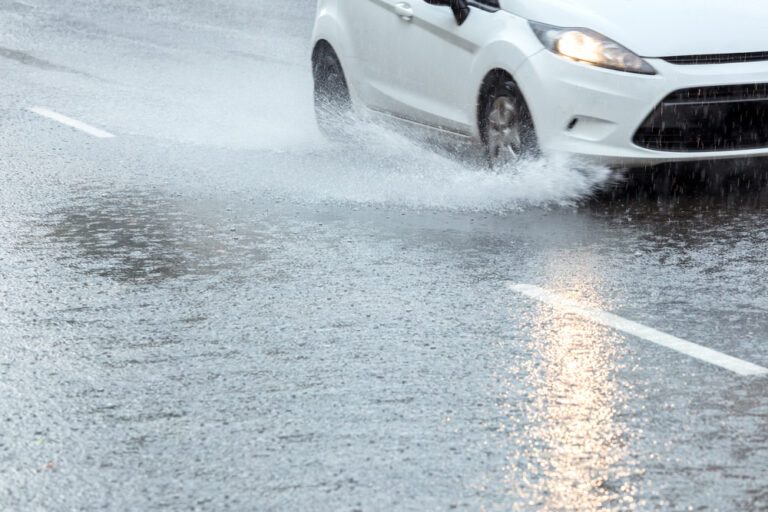
The showers caused severe flooding and disruptions in the province. Several streets in Landgraaf, Kerkrade, and Eygelshoven were underwater and the extreme weather also affected train travel in the region, reports NU.nl.
The KNMI issued a code orange weather alert for the province of Limburg. At 10:30 PM last night, that warning was downgraded to a code yellow.
Meanwhile in the Netherlands… #floods after extreme rain fall..
How many more extreme weather events do we need to get serious on #ClimateAction?
Straten in Zuid-Limburg blank door zware regenval, KNMI kondigt code oranje af https://t.co/dyLQOAGmfE via @NOS
— Sustainable Warrior💙🌎 (@BonnieBouma) June 29, 2021
What caused the storm?
The large amount of rain fell in Limburg because heavy thunderstorms moved over the country at a very low speed and there was no wind to blow the showers away. Typical Netherlands — the wind will ruin your beach day, but when you actually need it, it’s not there.
Extreme weather
This type of weather event happens once every fifty years. During a normal rain shower, Limburg’s provincial capital Maastricht has about four to five millimeters of rainfall. Yesterday, a record-breaking 87.2 millimeters of rain fell on the city.
Prior to that, the record high had been 82.7 millimeters of precipitation, which fell on June 18, 1966. Last year, Maastricht received 719 millimeters of rainfall in total.
According to meteorologist Wilfred Janssen, much more rain fell in other parts of the region. Montfort recorded 91 millimeters, while Eygelshoven was pelted with more than 100 millimeters.
🌧️ Opgepast: enorme flash floods actueel in de regio Kerkrade / Landgraaf, Zuid-Limburg! Naar verluid is daar lokaal al meer dan 100 (!) mm regen gevallen…. #onweer Beelden via collega Tom Reubzaet pic.twitter.com/0C2XvY4mAM
— Wouter van Bernebeek (@StormchaserNL) June 29, 2021
The weatherman Peter Kuipers Munneke explains to the NOS that while the Netherlands often experiences heavy rain, it is especially risky in Limburg because the province has hills. When the water flows down the hills, it can cause “large-scale flooding at the lowest point”, posing a risk to village centers.
Don’t call 112!
The emergency services were so overwhelmed by the downpour that police posted on Twitter that people should only call 112 in the event of a life-threatening situation.
Were you affected by the storm? Tell us in the comments below!
Time to tighten those purse strings yet again. Experts predict that around 5.5 million Dutch households will have to deal with a significantly increased utility bill as of July 1.
Energy specialist Tomas Bleker from Pricewise — a Dutch energy comparison website, tells RTL Nieuws that variable utility rates are expected to increase by 25%. This will cost consumers an extra €160 per year on average.
The situation is even worse for those who are nearing the end of their contract with fixed utility rates. Those individuals will pay on average €400 more per year.
In the Netherlands, there are currently 3.5 million households with variable rates, and two million households with a fixed contract that is about to expire.
Dutch energy contracts
You can choose between fixed and variable energy rates when signing a deal with your energy provider. Most variable rates then change approximately every six month — on January 1 and July 1.
On the other hand, when you get a fixed contract, the price of energy remains the same for the whole duration of your contract.
Fixed-rate-contracts are usually cheaper in the long run, so that’s what many consumers opted for last year, when the energy prices were low, explains Bleker.
However, many of these contracts were closed in April, May, and June for the duration of one year, meaning that they just expired.
If you do nothing when your fixed-rate-contract expires, you will automatically start paying the variable rates. The difference between what households with fixed rates paid until now and what they will have to pay from July 1 is therefore pretty stark.
Why this sudden increase in prices?
Believe it or not, we can thank coronavirus for this inconvenience as well. As coronavirus restrictions begin to lift and the economy bounces back, there’s now a higher demand for gas and electricity — especially in, for example, shops and offices. As a result, prices on the energy market have skyrocketed in recent months.
The chilly weather this spring also didn’t exactly help with lowering our gas and electricity consumption, and prices of CO2 emission allowances have gone up as well.
Bleker expects that prices on the energy market will remain high and thinks that this will probably lead to another price increase for consumers as of January 1, 2022.
Will the new price increase affect you? Tell us in the comments below!
Last week, Dutch Health Minister, Hugo de Jonge, said he was in favour of vaccinating children down to the age of 12. However, he was waiting for a verdict from the Dutch Health Council before making any official decisions. Now he’s got the answer.
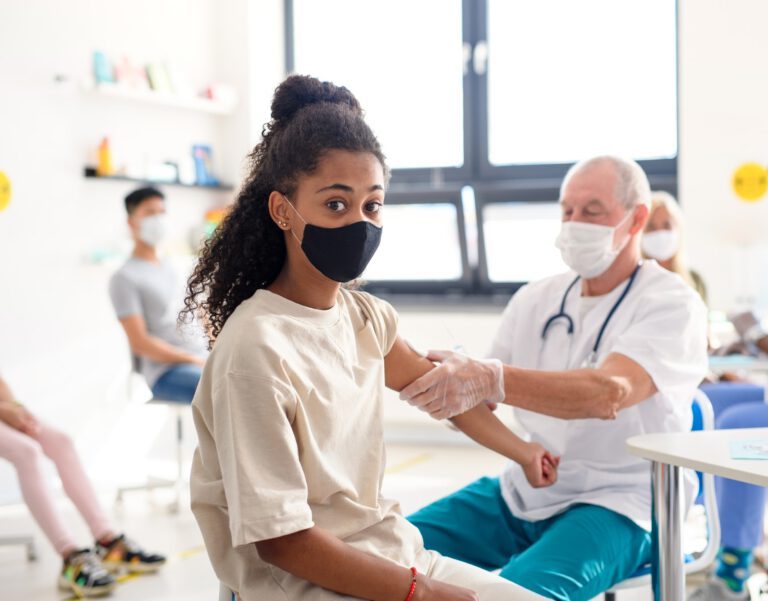
The Health Council — an independent scientific advisory body to the Dutch government — recommends that all healthy children between 12 and 17 years of age (who want to) should be vaccinated with the BioNTech/Pfizer vaccine, reports the NOS.
Ethical dilemma
There’s been a debate in the Netherlands about whether it’s ethical to vaccinate children. Because of this (and the possible side effects of the vaccine), the Dutch health services have hung back and watched how the vaccination of kids went in other countries, such as the US.
After carefully studying the data from the US, Dutch pediatricians concluded that the advantages of vaccinating children outweigh the disadvantages — both for the children and for society as a whole.
Why vaccinate children?
The Dutch Health Council lays out a number of direct and indirect benefits of vaccinating the younger age group.
Firstly, the vaccine protects those children who risk developing severe health problems from the coronavirus. In rare cases, these can include an inflammatory reaction that requires hospitalisation and intensive care.
Secondly, if children are vaccinated, that’ll mean more time with friends and at school without too much worry. An added benefit of this is that they avoid the negative (mental) health effects of quarantine.
Finally, vaccinating 12 to 17-year-olds will alleviate the risk of contamination on the grand scale — meaning that we might be looking forward to a more restriction-free autumn and winter as well!
Possible side effects
Despite all the advantages, there is still a number of side effects that might be linked to the BioNTech/Pfizer vaccine. However, the Dutch Health Council judges that these are mostly minor and shouldn’t hold back the vaccination of children in the Netherlands.
What do you think of the Netherlands vaccinating children? Tell us in the comments below!