As an international who has recently arrived in the Netherlands, I’ve come across so many weird assumptions. One of them is that everybody thinks that you come from Oosterwijk, although you actually come from Austria (Oostenrijk).
Another is the Dutch eating culture, in comparison to mine. And no, they’re not the same!
Arriving in the Netherlands
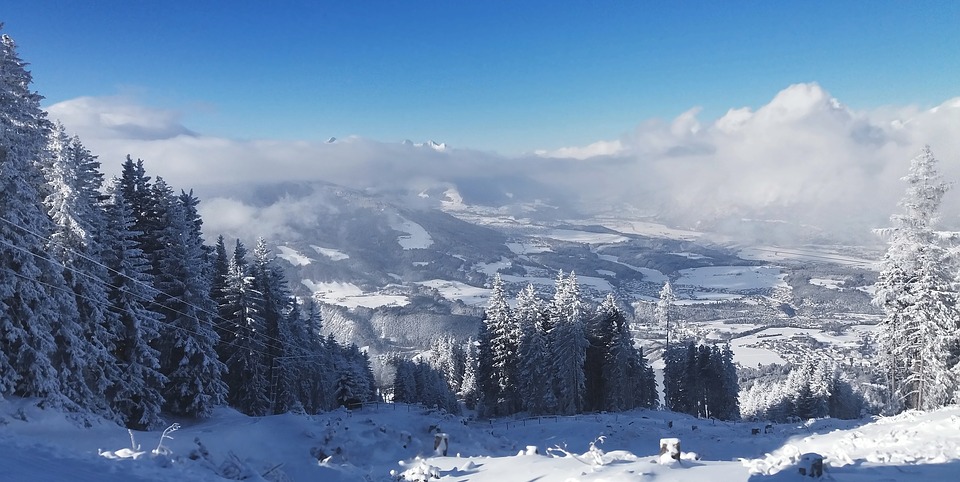
When people get the hint that you are actually from another country and not the tiny village in the Netherlands, people start to assume that you must know that one particular place, somewhere in the Alps, where they always go on skiing holidays. I always feel a bit sorry to disappoint those people, but I also don’t wear my Dirndl on the weekends and I don’t listen to Apres-Ski.
Born and raised in Vienna I did go skiing every once in a while, that doesn’t mean that I know every single skiing piste and glacier. That’s like asking Dutch people about specific fields in the Netherlands.
Nope, not a clue where that is… Image: Walkerssk/Pixabay
Once they are done telling me how beautiful Austria is and how often they go there, or which wine they love from that special region, they kind of run out of topics to talk about. Although, it seems like people have this burning question of how I experience the cultural differences. This term has become a pretty annoying one for me over the past months.
Cultural differences?
The reason is that, throughout the four years,I have been coming to the Netherlands regularly, I didn’t notice as many cultural differences as one might think. Dutch people are straightforward – well Viennese people are rude and grumpy. Dutch people are greedy — I also like to watch my money. Dutch people are so open and tolerant — well, where to draw the line of being tolerant or not caring?
The only big cultural difference I noticed, besides the fluffy, airy bread, was the different time for eating a warm meal. Dutch people eat warm dinner, Austrian people eat warm lunch. Not that this ever caused a problem for me personally, but I did get a lot of confused looks when I ate a plate of spaghetti for lunch. My apologies if that is weird.
Since regular discussions about the terminology of this eating event showed up, I have been thinking of multiple ways to call it. What makes the word lunch “lunch” and dinner “dinner” – opinions regarding this differ, although I couldn’t imagine this myself. I was thinking that the time is in connection with the name. So, lunch happens at obviously lunchtime/noon and dinner in the evening. Apparently, that can be seen differently – meaning that lunch describes a cold meal while dinner represents a warm one. So, complications appeared when I ate my warm lunch…or is it now dinner… at noon?
Dutch eating culture: Linch or Dunch?
To avoid this horrible confusion, I decided to merge two words. If it works with breakfast and lunch, so-called“brunch”, why shouldn’t it work with lunch and dinner? The only tricky question, in this case, was the order. What happens first now? Lunch or dinner… meaning is it now Linner or Dunch?
After half a year of living here, people still want to convince me that there are so many cultural differences between Austria and the Netherlands and I still haven’t figured out yet how to tell them that there is actually just one… and that’s the Dutch eating culture.
But, as long as I haven’t solved the lunch-dinner problem myself, I can’t expect others to understand the Austrian-Dutch cultural difference.
Do you have any experience of this? Tell us in the comments below!
On July 1, 1863, the Netherlands abolished slavery in Suriname and the Netherlands Antilles. In the Netherlands, the impression is often that slavery is an American and British concept, a period when both nations traded in, and transported shiploads of people from Africa to the American continent.
The fact of the matter is that the Netherlands also has several centuries of slavery history which Dutch teachers are often scared of teaching their students, white Dutch folks are very uncomfortable to talk about, and the chapter in history is almost completely ignored to date by the Dutch government.
How is it that this integral part of the Dutch past is completely missing from our collective memory, in our national history, in our education, in our political discourse, and in our national commemorations?
In these weeks leading to Keti Koti (an annual celebration on July 1 that marks Emancipation Day in Suriname), let us take a peek into the lives of slaves in the Dutch colonies.
Let op! We’re talking straight in this article, so there are accounts of torture that some readers may find graphic or troubling.
The Dutch as slave traders
The Dutch contribution to slavery is, to put it mildly, a less glorious part of Dutch history. Suriname, which was a former Dutch colony, was known to have the reputation as a place where slave owners treated their slaves the worst. It’s not that much of a secret that the Dutch slave masters were really more cruel than the British, French, Portuguese and Spaniards.
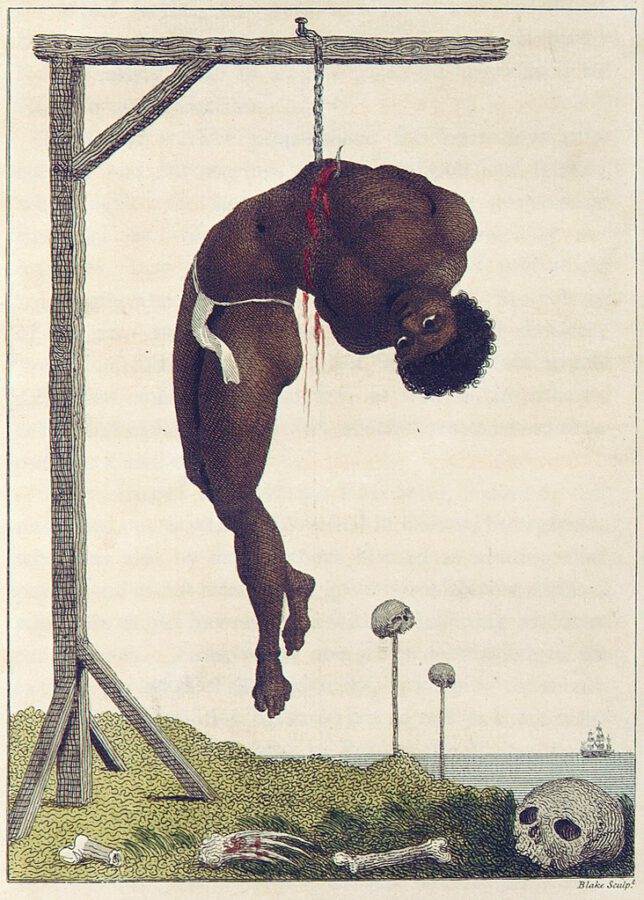
To illustrate the barbarity of slavery in the Dutch colonies, one picture that comes to mind is that of a slave hanging from the gallows with an iron hook through their ribs, while in the background are a set of skulls rested threateningly on stakes.
A first-hand account
This engraving by William Blake is based on a story that captain John Gabriël Stedman heard and wrote in Suriname. John Gabriël Stedman was a Scottish-Dutch officer in the Scottish Brigade of the Dutch Army who had volunteered in Suriname for an expedition to quell the revolt of runaway slaves, the Maroons.
During his time there, he was taken aback by the cruel treatment of the slaves at the hands of their masters. He ended up falling in love with a slave girl, and at one point, tried to buy her freedom. He wrote the influential book the “Narrative of a Five Years Expedition against the Revolted Negroes of Suriname”. In this book he was openly concerned about the rights of the slaves, in particular whether they should be treated as human beings.
Stedman’s book which was published in London in 1796, is an account of the impressions the 28-year-old captain gained during a five-year stay in Suriname. The artist and poet William Blake made engravings, based on his stories and drawings which depicted the cruelty of the slave masters.
For example, he describes how a certain Mrs. S. was fed up with the crying of a slave’s baby: “Mrs. S. ordered her slave girl to bring the child to her. She then took the child by one arm, held it under the water until it drowned, and then she threw it into the stream.” After the mother tried in vain to save her child, she was mercilessly whipped for disobedience.
It will come as no surprise that after the publication of this book, Suriname gained the reputation of being the colony with the most repulsive form of slavery.
Not human but merchandise
From the end of the sixteenth century, Dutch merchants, especially the Hollanders and the Zeelanders (Zeeuwen), had become heavily involved in the Transatlantic slave trade. After about 1635 the West India Company (WIC) also joined in the slave trade.
Slaves were a lucrative commodity; after all, the plantations that the Europeans had built in the “New World” needed labour, and to them, what was better than free labour from Africa?
When the Caribbean region — unlike areas like Peru and Bolivia — turned out to contain little gold and silver, the Spaniards and eventually, other Europeans soon found a way to try to make a profit from the “newly discovered” territory.
New crops such as sugar, coffee and cotton were introduced from Asia and the Middle East, which had to be grown on a large scale in the tropical climate to fill their home country’s treasuries. A lot of workers were needed for this.
The original inhabitants of the area were unsuitable for the hard work and, moreover, had almost been exterminated by the white invaders through massacres and the diseases they brought from Europe. It was therefore decided to bring in slaves from Africa to do the heavy work. The large-scale supply of European contract workers, African slaves and finally Asian contractors made the creation of what would come to be referred to as the “New World” possible.
Between 1492, the year Columbus set foot in the Caribbean, and 1866, when the last shipment of slaves was delivered to Cuba, about 10 million Africans had forcibly been transported to this so-called New World. An equally large number probably did not survive the preliminary stage of sourcing slaves — the slave hunts in Africa and the crossing.
Many of the African slaves being transported like packed sardines in ships were beaten or starved to death, some committed suicide, and lots more were raped and killed and then thrown overboard.
The British, French, and Portuguese were the main slave traders. However, the Dutch share in the slave trade was about 5%. Out of this half a million “Dutch” slaves, about 275,000 Africans ended up in Suriname. Slaves were also brought to the Antilles, and were mainly put to work in the salt pans.
The Dutch in Suriname
In the more than fifteen years that the British had been in Suriname, they had already built up two hundred sugar plantations. These were taken over and expanded by the Dutch. Plantation entrepreneurs were given plots of land to cultivate where initially, sugar cane was mainly grown, and later, coffee, cotton, and cocoa would also be cultivated.
In that same period, plantations with romantic names such as Mon Désir, Roosenburg, and Goede Vrede started to spring up, especially on the coast and along the rivers.
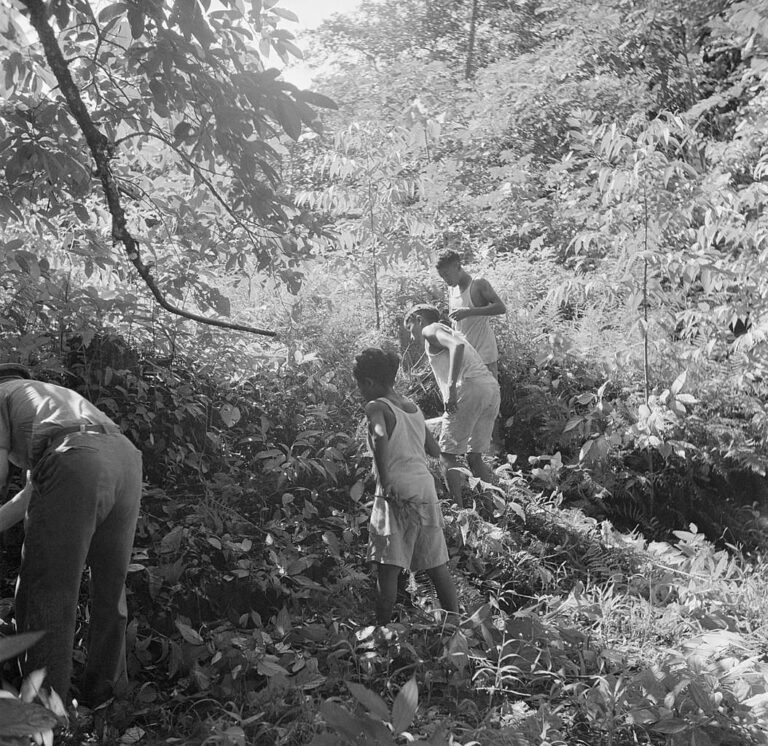
The Dutch colonised Suriname. Image: Willem van de Poll/Wikimedia Commons/Public Domain
In the eighteenth century, the Surinamese plantations were an extremely lucrative enterprise; between 1680 and 1780 the number grew from 200 to 591. Later, partly due to the mismanagement of the often absent owners, they stopped making profit and their numbers also decreased.
However, the Dutch economy continued to benefit greatly from this tropical appendage. In his book “Surinaams Contrast,” Alex van Stipriaan, professor of South American history at the Erasmus University in Rotterdam and curator at the Royal Tropical Institute, calculated and stated that the export of products from the plantations between 1750 and 1863 yielded at least 600 million guilders!
Further benefits for the Dutch
The Netherlands’ trade monopoly on Suriname also resulted in an economic spin-off in the Netherlands. Van Stipriaan said: “All supplies for the plantations, from nails to bricks, had to be delivered and transported from the Netherlands. The dozens of ships that sailed up and down every year between the Netherlands and Suriname provided the shipyards with considerable work and employment.”
This basically meant that while the Netherlands enjoyed considerable returns from slavery and the plantations in the Caribbean colonies, back home they also enjoyed a high level of employment creation from producing all the materials that were needed for the sourcing and transportation of slaves, as well as the daily running of the plantations.
Think of the building of slave ships, manufacturing of all manner of chains and locks for the slaves, whips, and other cruel devices for their punishment, as well as tools for the tilling of the soil, planting and harvesting of crops, and other instruments for working on the plantations. All of these had to be produced and, in doing so, provided employment in the Netherlands.
All of this coupled with the free labour provided by the slaves helped build what the Netherlands is today.
Inhumane and cruel workload
As mentioned before, a lot of the plantations had romantic names like Mon Désir, Roosenburg, and Goede Vrede, where the daily harsh realities of plantation life were hidden. These plantations were nothing but homes to misery, cruelty, the most inhumane practices known to man, and places of torture where slave owners were free to inflict unimaginable pain and suffering on and kill their slaves in whatever ways they liked.
The plantations also had a high mortality rate. The tropical climate, in which infectious diseases thrive, was one of the main causes, as well as the hard and inhumane workload. In the initial expansion phase of colonisation, when the swampy Surinamese coastal plains had to be tilled and reclaimed, the whip was used to hasten the digging of ditches in the heavy clay.
The centuries-old oral traditions of the Maroons tell that the excavation work and the harsh and inhumane treatment by the plantation owners were important motives for them to run away. Due to the heavy rainy periods, even after the construction of the plantations, it was important that the waterworks and the drainage system were well maintained and regularly dredged.
In addition, the daily work on the plantations also had to go on. The slaves worked six days a week and often at night. They were only given a few days off around New Year’s Eve. Working on the sugar cane plantations also came with its own risks. It often happened that a slave would injure themselves while cutting thatch.
Dispensable labour
In cases where treating an injured slave would cost the slave master a lot of money, they would either abandon the slave to die or shoot them dead. There were also cases of injured slaves who were “beyond saving” being taken into the jungle and hunted for fun by their masters and friends. A form of leisure time hunting but with a human being as prey.
Working in the mill or the cookhouse was even more dangerous. Slaves regularly landed on the wheel of the mill or fell into the kettles in which the sugar was boiled. And this was mainly the reason why sending slaves to work there was a form of punishment. The hygienic conditions were also terrible. Many slaves died of lung diseases, schistosomiasis, and dysentery from working in dusty sheds and drinking polluted water.
Moveable property
Until 1828, slaves were not regarded by law as human beings or people, but as (moveable) property. They did not have any civil rights and, in principle, were not allowed to own property. They could also not legally marry amongst themselves, and being married to a white person was seen as taboo and against the law.
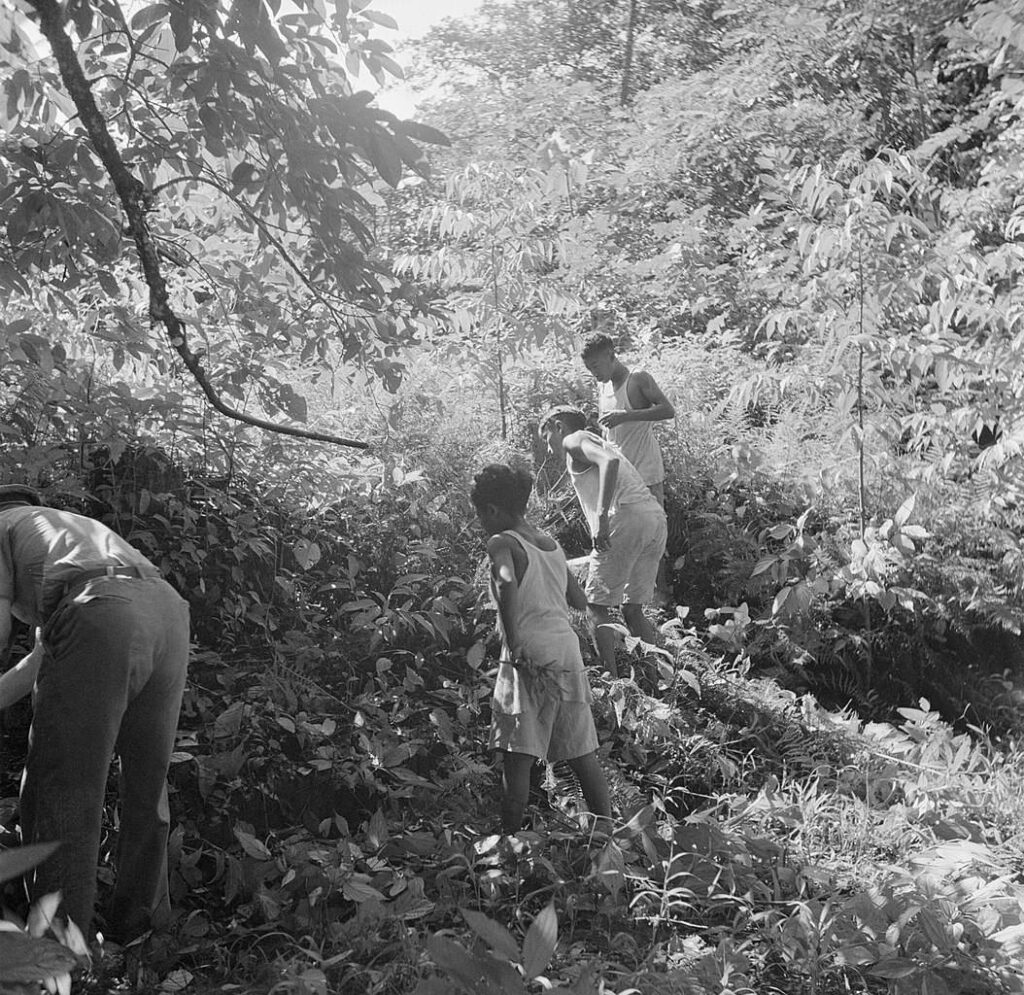
Victims of slavery were seen as sub-human. Image: Willem van de Poll/Wikimedia Commons/Public Domain
Victims of the slave trade would later legally be recognized as human beings in 1828. However, they would be classified as “infants,” over whom their owners had to exercise “paternal discipline.”
The slavery archives of the Netherlands contain numerous inventories of plantations, which contain a description of fields, buildings, and livestock as well as the lists of slaves. In addition to their names and functions, it also mentions the condition of the slaves.
Their value was often determined on the basis of all of this. The inventory of the Roosenburg sugar plantation shows, for example, that Trobel, “Chief carpenter,” was valued at 1500 guilders. Vorte Jacoba, “Field maid,” was worth 325 guilders. The elderly, children and handicapped people often didn’t yield much.
“Inferior creatures”
On average, a slave was worth about 340 guilders. In correspondence between Surinamese administrators and investors or interested parties, there were often constant complaints about the high mortality rate among the slaves. “This invariably resulted in requests for funds to purchase new slaves. These administrators hardly ever asked for permission to spend more on the care of the slaves,” says Van Stipriaan.
As a reply to the prohibition of slavery and slave trade by the English, the Dutch government drew up some regulations for slave owners to try and get them to treat their slaves somewhat “better”. In the Netherlands, few people protested against slavery or the ill-treatment of slaves. Those who did still considered them inferior beings.
It was not until 1842 that the movement for the abolition of slavery, which had become widespread in England, inspired supporters of the Protestantse Réveilbeweging (Protestant Réveil movement) to found the Society for the Promotion of the Abolition of Slavery.
Origins of colourism and the one-drop rule
Initially, the plantation owners used corporal punishment mainly to terrify the slaves, who outnumbered them. They feared uprisings, and to discourage it, they often looked for ways to psychologically subdue and shackle the slaves. A notorious punishment was one in which the victim was wrapped around a stick in the ground, after which they were beaten with a bunch of twigs until there was no more flesh on their buttocks.
Sometimes a slave’s legs were tied to a tree, and the soles of their feet were moistened with saltwater. A tethered and thirsty goat would then lick their feet until the flesh was worn away.
Another way that slaves were oppressed and “kept in line” was to play them against each other. Light-skinned slaves (Mulattoes) were always favoured over “black” or dark-skinned ones. They did not have to do fieldwork and received larger food rations. They were told that if they kept an eye out for the masters, they would be rewarded. Light-skinned slaves were often the products of interracial relationships, mostly as a result of black female slaves being raped by their white masters.
However, even though these light-skinned slaves were more favoured than the dark-skinned ones, they were still seen as “tainted” people. The white populace and their slave masters saw them as a case of “white blood being polluted by black blood.” And as a result of this thinking, they were never considered white. This is the origin of colourism and the “one-drop rule”.
“The one-drop rule is a social and legal principle of racial classification that was historically prominent in the United States in the 20th century. It asserted that any person with even one ancestor of black ancestry (‘one drop’ of black blood) is considered black (Negro or coloured in historical terms).”
Although the whip never completely disappeared, in the nineteenth-century attempts were made to bind slaves more to the interests of the plantation by improving their material conditions and converting them to Christianity.
The Christian faith used to be taboo for slaves, because, as the slave masters often put it: “De Hemel was voor geene Swarten gemaakt, die waaren alle des Duyvels, die moesten maar werken en de planters tot playsier zyn.”
“Heaven was not made for blacks, those are just devils, that must work and be obedient to their masters and plantation owners.“
Segregated plantations
Furthermore, white and black inhabitants of the plantations were strictly separated, although the white men liked to make an exception to that rule when it came to raping slaves. As a result of this separation, the slaves developed their own religion and their own language, Sranantongo — a combination of English, Portuguese, and other African tribal languages.
The plantation owners had a poor command of this language and therefore often did not realize that the songs (Negro Spirituals) the slaves sang had a critical undertone. Due to the slaves managing to develop their own culture, they became more independent and gradually dared to make more demands, for example with regard to working conditions.
Protests
In the course of the nineteenth century, there were also group protests, for example when slaves were forced to move to another plantation. They had become “attached” to the plantations where they were born and where their ancestors were buried and did not want to be separated from their families. Slaves who worked on a coffee or cotton plantation also preferred not to exchange them for a place on a sugar plantation.
Sometimes these protests were successful, but in most cases, the slaves were either punished or killed to set an example. They also openly protested when acquired rights, such as days off, were compromised. This of course doesn’t mean that there were no initial slave resistance or uprisings, it’s just that the nature of the resistance changed over the years.
The Maroons
At the beginning and initial stages of slavery, some of the captured and transported peoples managed to escape. Slaves who escaped and tried to survive in groups in the jungle were called Maroons. Famous Maroon leaders such as Boni, Baron, and Joli Coeur caused a lot of panic among plantation owners in the second half of the eighteenth century.
They regularly carried out armed raids on plantations to liberate others and to steal supplies and weapons. They waged a sort of guerrilla war against slave owners which affected business so much that a treaty had to be drawn up.
For most male slaves in the plantations, military service was also a path to freedom. The Redi Musu, or the red hats, were slaves who fought for the colonial government and plantation owners. They were made to fight against slaves who escaped the plantations and revolted. And contrary to popular belief, they did not volunteer to fight for their white masters. They were forced to.
Why is the Dutch slavery history not a major topic in the Netherlands?
It is quite remarkable that not a lot of people in Dutch politics and the halls of government talk about the Dutch colonial/slavery history, and the attempts that white people often make to kill the conversations surrounding the topic because of how uncomfortable (white fragility) it makes them.
Up until now, Dutch colonial/slavery history has had no place in our collective memory, it cannot be found in our national history, or in our education, and is not even “worthy” of being commemorated as a nation. Our leaders and those in government continue to choose to have a “difficult relationship” with the truth about the dark sides of our national history.
This difficult relationship also extends to the structural violence used by the Dutch army during the Indonesian War of Independence. Nobody talks about these things and somehow, we are all expected to just forget about these past events and move on.
The fact that discussions on the Dutch slavery past are now being had in government, and Emancipation Day is also now commemorated annually, is certainly not due to a general attitude by the Netherlands to willingly face her dark past.
It is mainly the result of the admirable and relentless efforts of the Surinamese, Antillean, and African communities working in unison with both white, black, and colored historians, activists, and others fighting racism, and also calling for the recognition of what their ancestors suffered at the hands of the colonizers and slave owners.
A similar story: Asian colonies
The same silence is applied to the Dutch slave history in its former Asian colonies. The Dutch government abolished slavery in these territories as late as 1860, followed by its American colonies in 1863. In practice, however, after 1860 slavery continued to exist for many years in the Indonesian archipelago, albeit on a reduced scale.
In the West, the slaves were brought from Africa. In the East, it was mostly the natives. The Surinamese and Antillean communities have much more awareness of a common slavery past.
The hundreds of thousands of Indo-Dutch and Indonesians in the Netherlands have little or no knowledge of and awareness of slavery in the Dutch East Indies. The many descendants of the slaves have disappeared imperceptibly into the common population.
When it comes to the Dutch slavery past in the East Indies, there has never been a tenacious group of descendants who demand recognition of its history. Nor is it expected that such a group will arise, simply because the vast majority of the descendants of the enslaved in the East are unaware of their own history of slavery.
So should the Netherlands then continue failing to recognize and remember all these important parts of her slavery past? Should the government continue to ignore the importance and significance of Keti Koti? Why is commemoration important?
I think every Dutch person who observes minutes of silence on Remembrance Day on May 4 definitely understands why commemoration is important. May 4 commemorates all civilians and members of the armed forces of the Netherlands who have died in wars or peacekeeping missions since the beginning of WWII. It is also a day, among other things, that the young generation is made to learn and reflect on the events of WWII and understand how we must continue to make sure that they never happen again. Never forget and never again!
Keti Koti: paying respect to victims of slavery
Keti Koti isn’t just a celebration, and it’s not just about paying respect to victims of slavery and their (conscious) descendants, but is of course also intended to make sure that the horrible atrocities of the past are never forgotten; to become aware of our actions in the past and the present, to (continue to) look at them critically, to learn from them, and to do better in the future.
Moreover, it is a mistake to think that as a country, if we just keep on denying and ignoring our slavery past, the rest of the world will never know and it would all eventually go away. It’s equally sad and shameful that some politicians and their voters often refer to talking about this dark part of our history as “political correctness.” That is extremely false.
Rutte’s response
In 2020, during the Black Lives Matter marches and protests triggered by the murder of George Floyd an African-American man by American police, Mark Rutte, the prime minister finally came out to admit that institutionalized racism does exist in the Netherlands. A welcomed first step by a white tone-deaf politician who for many years has refused to admit that racism is a problem in this country and that Zwarte Piet is a racist tradition.
Despite coming out to say that his attitude towards Zwarte Piet has undergone major changes, and kickstarting the important discussions about racism, slavery, etc, in parliament, marginalized communities still feel a deafening silence regarding their plights in this country. The tone-deafness from white politicians is an ever prevalent occurrence. The child benefits scandal that saw the dissolution of Mark Rutte’s cabinet can clearly bear testament to this fact.
Finally …
For centuries, the slavery history of the Netherlands has been covered up and hidden from posterity. It is therefore high time that not only our education about our slavery past is improved, but that white people, especially those in government and positions of power, put aside their white fragility and face the realities of the past atrocities committed by the Netherlands.
Ignoring this part of history will not make it go away. After all, ignorance of the Netherlands’ slavery past and the resulting false national self-image that is often fostered by an unconcerned government and white people constantly silencing the affected communities, is the root of intolerance, racism, and xenophobia in this country.
A nation that does not want to confront its past mistakes and realise that it had (and still has) an effect on the people that suffered (as well as their descendants), but would rather ignore one of the darkest parts of its history, is not only living in a fool’s paradise but also has no right to command any respect or moral authority on the international stage.
The more the Dutch government and the Netherlands refuse to acknowledge their slavery/colonial past, apologise for it, and seek to do better by the communities and descendants of those once enslaved, the more it will continue to reap the systemic discrimination of already marginalized groups, internal irritation, and profuse scorn.
In order to heal and focus on the future, we need to confront and own up to the mistakes of our past. Maybe the Netherlands and the Dutch government should take a leaf from Germany’s book. Observe how they talk and teach their young ones about their dark Nazi and Holocaust past. Being honest and open in talking about it definitely helps with making sure that white fragility is gradually made a thing of the past and that such atrocities never happen again in the future.
Slavery is so much more than just a dark page in the history of the Netherlands. It is the foundation on which this country’s wealth, growth, and development have been built. We would be lying to ourselves if we say that today, the Netherlands is still not enjoying the benefits of all those years of slavery and colonisation. The truth is, you cannot be involved in the slave trade, and do it for more than 200 years, and somehow expect that it wouldn’t have any effect or repercussion on your future.
The descendants of those who were forced to give blood, sweat, tears, effort, and their lives to build the foundation on which this country stands, are still here today. To recognise them is to respect their ancestors, and the Netherlands can start by making the discussion about slavery as open and honest as possible.
Amplify the voices of these communities. Let them speak and let those in power listen and learn. The Caribbean, Indo-Dutch, and Indonesian communities are part of this country. They deserve to be heard. It’s high time the Netherlands unveiled a “Memories and Truth” commission to look clearly at the wounds of the pasts and the consequent pains of today, as well as a slavery museum which would create a much-needed platform for the stories of slavery in the Dutch colonies to be told. Temporary exhibitions about slavery in “white museums” are not enough. Imagine what we would all learn if we gave these communities the proper platforms to speak and tell their ancestors’ stories. Imagine how much they can’t speak of because of fragile white people constantly shutting them down and derailing the conversation. A “Memories and Truth” commission would go a long way in giving them a safe platform to speak up and not just tell their stories but those of their ancestors.
Whether this initiative would ever become a reality is left to be seen. For now, we continue to commemorate Emancipation Day and remember those who were once enslaved and later succeeded in breaking their chains.
Did you know about this chapter in Dutch history? Let us know your thoughts in the comments below!
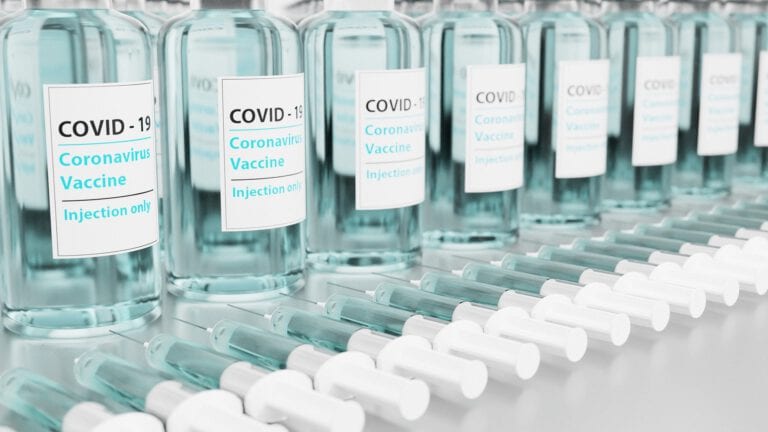
Initially, the Netherlands was one of the slowest countries in the EUwhen it came to coronavirus vaccination. Now, more than 200,000 vaccination invites are sent every day, amounting to about 1.5 million injections per week.
The first 90s babies can already get their first jab and as of today, individuals born in 1994 can book their appointment. The government’s aim is that everyone who wants to get vaccinated will have gotten their first dose by mid-July.
While the GGDs are currently giving about 1.5 million injections per week, the hope is that this will increase to 2 million over a number of weeks, reports NU.nl. If this becomes the case and one or more age groups are invited for their first jab on a daily basis, then everyone over the age of 18 will be able to schedule an appointment for their first jab by the week of June 21.
How are the vaccines rolling out so fast?
The main reason for the sudden spike in invitations is that more vaccines are being delivered to the Netherlands.
When the Netherlands first began to vaccinate people, only 200,000 vaccines were being delivered per week. In April, that number hit 720,000. Now, the vaccination schedule can really start to move forward because last week, 1.36 million vaccines were delivered!
Other factors have also played a role in the increased vaccination rates. For example, it was found out that people who had previously had coronavirus only needed one jab — leaving an extra dose for someone else.
Luxury of choice
In fact, vaccinations are going so well that in June, the government decided to remove the Janssen vaccine from the Dutch vaccination programme.
The Jannsen vaccine was briefly put on hold to investigate its potential side effects but was eventually deemed safe enough to be resumed. However, now that vaccination rates are taking a sprint, the Jannsen vaccine is no longer necessary for the programme.
Outgoing Health Minister, Hugo de Jonge, said that “the injection rate is now so high that we are in the luxury position to offer a choice.”
The Janssen vaccine is still deemed to be sufficiently safe and has the advantage that you only need one jab to be fully vaccinated. From June 21, people who wish to get the Jannsen vaccine can indicate so.
Have you already received your first jab? Do you think the Netherlands will meet its vaccination goals? Tell us in the comments below!
There are many, many Instagram accounts devoted to Amsterdam in every possible way.
We all know why: the city is just impeccably gorgeous, unique, and made for photos. If you feel like you need some guidance because you kinda lost in this abundance, don’t stress — we’ve tracked down a very handy special selection of the accounts to follow.
City photographer Gosse Bouma definitely knows how to catch the most magical moments. He also has a very special sense of light which makes his works powerful and well recognizable. Just look at this photo he made on Rozengracht at 5:25 AM!
Nora Maria is one the best in showing the Amsterdam we all know and enjoy: iconic architecture and city views shot on the wide-angle lens. Here is a great example of Groenburgwal pictured in all seasons (swipe to enjoy! 👉)
The best place to go to get that vintage vibe. Video and photo footage collected in cooperation with Amsterdam City Archives, National Archives and The Netherlands Institute for Sound and Vision. Pictured is the Bloemenmarkt in 1963:
Wonder how the city of Amsterdam has changed? Here are before and after photos to compare. Each post is accompanied by some interesting facts. For example, how Kerkstraat Street looked in 1949 and today:
Darling alleys, lovely street corners, and their exact GPS coordinates. We’ve all been in the situation when you’ve seen that pretty spot on someone’s photo and now you wanna find it but just don’t know where. This unique account comes in handy for that. Now, for instance, you see where to find the smallest house in Amsterdam:
The city’s official Instagram account celebrates important events and, of course, Amsterdam’s beauty. This picture captures the flowering season of wisteria, which takes over Amsterdam at the end of May:
The name of this one says it all! Random sketches of ridiculous collisions between Amsterdammers and tourists on cycle lanes. Even though it hasn’t been updated since 2019 (please tell us that you will return!), it’s still a very funny and educative resource to see the cyclist’s side of the story:
Not enough for you? For a roundup of the finest images from across the Netherlands, check out DutchReview’s Instagram to learn the news, hotspots, culture and everything in between for internationals in the Netherlands!
What other accounts do you think should make this list? Tell us in the comments below!
Finally, after seven years of absence, Oranje made a come back to an international tournament playing against Ukraine in the Johan Cruijff Arena.
The Dutch lads didn’t disappoint and Ukraine was pushed aside in an eventful match. It didn’t come easy though, as Denzel “the bull” Dumfries had to head a goal in five minutes before the end.
Oranje started strong with a 2-0 lead
The Orange squad was looking for the attack in the first half. The defenders Denzel Dumfries and Patrick van Aanholt, who were surprisingly favoured over AZ player Owen Wijndal, were all over the pitch. Dumfries missed two great goals in the first half. After the flashy opening of the match, with no fewer than ten Dutch attempts, there were still no goals. That all changed after the second half as Georgiano Wijnaldum was extremely precise at rebound shooting, giving the Dutch their first goal.
That wasn’t the end of the Orangethirst for goals. After Dumfries continued to “bull” around, it was Wout Weghorst who poached the 2-0 like the born striker he is, his second goal in the past two international matches.
Classic choke: Oranje gives away lead
Keeper Maarten Stekelenburg had little to do in the second half until 15 minutes before time. Andrij Jarmolenko dribbled from the right and beautifully scored a screamer. Ukraine regained some hope and four minutes later, levelling out the playing field for Oranje. From a free-kick by Ruslan Malinovsky, Roman Yaremchuk headed the ball and made it 2-2. Despair fell onto the Dutch in this classic twist of football.
However, for Denzel Dumfries, it was not over. The defender headed in the winning goal on Ake’s cross in the 85th minute causing those loud cheers you could hear from every Dutch homes the only way a late goal can.
It was his first international goal and the cherry on top of a great match from a “bulling” Dumfries. Now the Dutch team moves on to the next match, which is on Thursday against Austria at 9 PM.
Eriksen’s cardiac arrest
After the collapse of Danish ace Christian Eriksen on Saturday, Daley Blind seriously considered not participating in the first Dutch match at the European championship. The defender left the field with tears in his eyes when he was substituted during the game against Ukraine (3-2). He has a history of heart problems and used to play on the same team as Eriksen.
Daley Blind, wat ben jij een topper zeg. Zeer indrukwekkend interview. Ben er een beetje stil van. #nedukrpic.twitter.com/bXYjJvGIFw
He also coined the phrase “Denzel was nicely bulling on the right-side” in a post-match interview. He made up key Dutch football lingo right there and then.
How did you celebrate the Dutch win?Let us know in the comments!
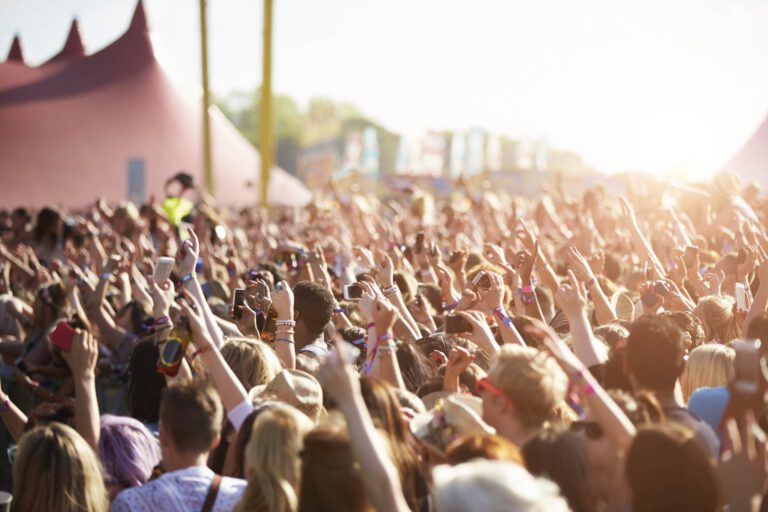
Felt a burning desire to flock to a single location with thousands of other people recently?
Yeah, it feels a little unnatural after over a year of anderhalve meter life, but believe it or not, the Netherlands has a pretty swift plan to get back to normal (the new, new normal?).
Vaccinations and tests unlock the doors
As of June 30, one-day outdoor events will be allowed to operate at 100% capacity if visitors can provide a vaccination certificate or a negative coronavirus test, announced outgoing State Secretary Mona Keijzer on Friday.
On the same day, there will no longer be a requirement to be 1.5 metres away from others during such events. We don’t know if this was Keijzer’s plan, but the dates are coincidentally just in time for the Dutch festival season 🎉.
Luckily, these measures aren’t being lifted all willy-nilly — we think. According to the cabinet, the removal of the 1.5-metre rules is based on the research results of the Fieldlab Events.
“If you have been vaccinated, tested negative or recovered from corona, you can go to a festival or concert as before,” said Keijzer.
Under the new rules, multi-day events are still a no-go — for now. However, from the end of July these will likely be possible, although there are extra conditions attached. For one, interim testing. That means you would need to show up with a test, then be tested over the duration of the festival as well. Small price to be able to rock out at Lowlands, hey?
At the same time, theatres, pop concerts, and potentially the catering industry, cultural institutions, and professional sports competitions may also get the same rules.
That’s all guys, gotta go buy some tickets now ✌️
Do you think the Netherlands is ready to open up on such a large scale? Tell us your thoughts in the comments below!
Over the past month or so, you’ve probably noticed supermarkets like Albert Heijn slowly turning orange. Orange icing on cakes, orange packaging, and orange capes on your Heineken six-pack. Why? Well, the European Championship of course!
“Orange fever” will be a primary feature of life in the Netherlands for the next month. So, gather all the orange freebies you can and grab your beer, because we’ll be following the Dutch national team and orange madness!
Like most events we’ve been looking forward to, the European Championship was delayed a full year due to coronavirus. However, with vaccines rolling out across most of Europe, football fans can finally rejoice! 🏆
Though confusingly still called Euro 2020 at times, you can count on watching the first match of the European Championship between Turkey and Italy tonight. Everything will kick off at 9 PM in Rome.
Over the next month, a total of 51 matches will be played. Of these, 36 will be in the group stage and 15 in the knockout stage, leading up to the final on July 11.
Tip: The championship will be played in 11 different cities across Europe. So, if you miss travelling then just stay tuned. Fans will line up in the stadiums of Rome, Amsterdam, Budapest, Baku, Copenhagen, Bucharest, Saint Petersburg, Munich, Glasgow, Seville and London.
The Union of European Football Associations (UEFA) wanted host countries to guarantee fan access to the stadiums. Because of this, Bilbao and Dublin had to withdraw as host cities.
Following Oranje
Cue VIVAAAA HOLLANDIA! The Dutch national team (nicknamed Oranje) will play their first game in the Johan Cruiijff Arena in Amsterdam this Sunday.
Playing against Ukraine, you can follow the first Dutch match along with 16,000 fans in the arena (operating at about 33% of stadium capacity). It will also, of course, be on everyones’ screens at 9 PM. For now and because of coronavirus, big screens outside at terraces and squares are still a no-go.
Oranje will also play two other matches on the group stage, both of which take place at home in the Johan Cruijff Arena. On Thursday, June 17 you can watch them play Austria at 9 PM and on Monday, June 21, they’ll be playing North Macedonia at 6 PM.
The Johan Cruijff Arena, like all other host stadiums, has taken the necessary health measures to make it a safe experience for all.
— Johan Cruijff ArenA (@cruijffarena) June 3, 2021
Getting the stadium ready for the European Championship!
The NOS is the official Dutch broadcasting partner of the Euro 2020, so you can follow every match via television, radio, or online coverage. You can watch daily matches on NPO 1 or via live stream on its website or app, reports the NOS.
Whether you are following Oranje from the bleachers or from your screen at home, the most important thing is to embrace the “orange fever!” Raise a beer to the quirks of the loud Dutchie fans!
— Johan Cruijff ArenA (@cruijffarena) June 9, 2021
Dutch fan with a hint of “orange fever”.
Orange Fever running high again (but expectations are, meh)
It’s been a while since the Dutch played in a tournament. After a lacklustre performance, Dutchies missed out on the EC of 2016 and the World Cup of 2018. Everybody was looking forward to the EC in 2020, only for it to be shut down and postponed till the summer of 2021 because of coronavirus.
Since the lockdown more or less has just ended in the Netherlands, everybody is looking forward to a carefree summer. This is kicked off by the good old oranjegevoel (orange feeling) making a comeback — and we for one are all about catching that orange fever!
Not the best ‘Oranje’ ever
Purely looking at football though, nobody is counting on the Dutch to snatch the cup this year. Star player and Oranje captain Virgil van Dijk — widely considered the best defender in the world — is missing out on this tournament because of an injury. Players De Ligt and De Vrij are no slouches and Wijnaldum, Frenkie de Jong, and Memphis Depay are also top players. But that’s more or less it. The remaining Dutch players are unfortunately not in the same league as the top players of France or Belgium.
But the main reason for the lack of stellar expectations is the somewhat clumsy practice campaign of Oranje. There’s a lot of criticism of national coach Frank de Boer’s choices for the Dutch selection. Apparently, his choice to quickly integrate a new 5-3-2 system instead of the quintessentially Dutch’ system of 4-3-3 isn’t popular.
There’s also been a number of small incidents signalling a lack of authority by De Boer. For instance, first goalie Cillessen is not on the team because of a positive covid-test a week or two ago. There was an open squabble in the media when De Boer announced Cillessen wasn’t on the team after all.
But like the Dutch saying: de bal is rond — anything can happen! We hope you enjoy the “orange fever”!
Who will you be cheering for at the European Championship? What’s your craziest experience with ‘orange fever”? Tell us in the comments below!
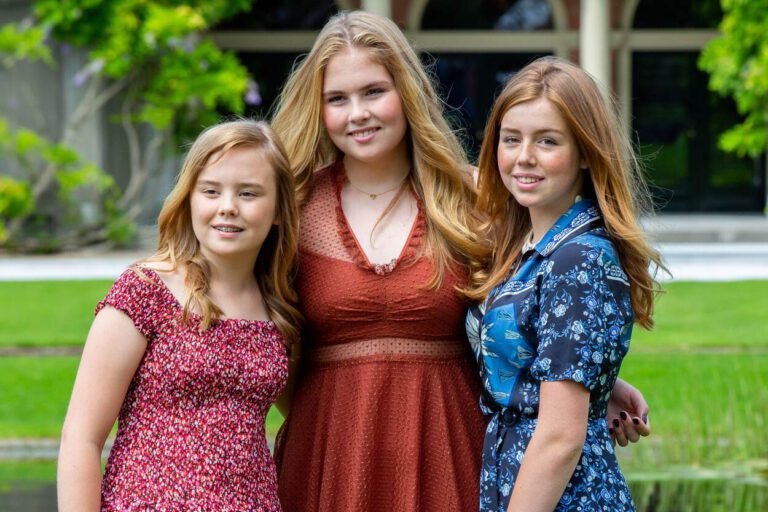
However privileged you might think the Dutch royals are, some of them are at least a bit self-aware. Princess Amalia has said “no thanks” to receiving €1.6 millionon her 18th birthday.
She has said that she doesn’t want a state income or expense allowance during her studies. She let Dutch Prime Minister Mark Rutte know this in a letter, reports Nu.nl.
Finding it “uncomfortable”
In the letter she writes, she finds the income “uncomfortable, as long as she can offer little in return and other students have it so much harder.”
Rutte responded to the letter saying: “I wish you a nice gap year, and all the wisdom in choosing a future study.”
Travelling without testing and self-isolation? Yes, please! Earlier this week, the Dutch government already changed the colour code status for a number of European destinations.
EU member states have said yes to reducing restrictions for those who have been vaccinated this summer, reports the NOS. If you have been vaccinated at least two weeks before you travel, you will no longer have to quarantine. If you haven’t yet been fully vaccinated, you will have to complete a PCR test.
Last month, the EU already confirmed it’s working on a vaccination passport, and this is the next step!
The all-clear for code green
If you’re lucky enough to live in a code green country, sucess! When travelling to another code green country, you also won’t have to be tested, regardless of vaccination status. Check out the list of countries approved by the Dutch government here.
Will you be taking advantage of this easing of regulations? Tell us what you think of this in the comments!
Are you a 90s baby? Then you’re in luck! As of last night, you can make an appointment to get your first coronavirus jab.
The Netherlands is continuing to fire through the vaccination of many year groups — earlier this week it started inviting people in their mid-30s to be vaccinated. Now, it’s the 90’s turn.
How to book your appointment
No more waiting for an invitation. Once your age group is formally called (announcements will be made on the RIVM and GGD websites), you can go ahead and book an appointment on this website.
You can log in using your DigiD, or you can call the GGD on 0800 7070. Outgoing Health Minister Hugo de Jonge announced this on Twitter last night.