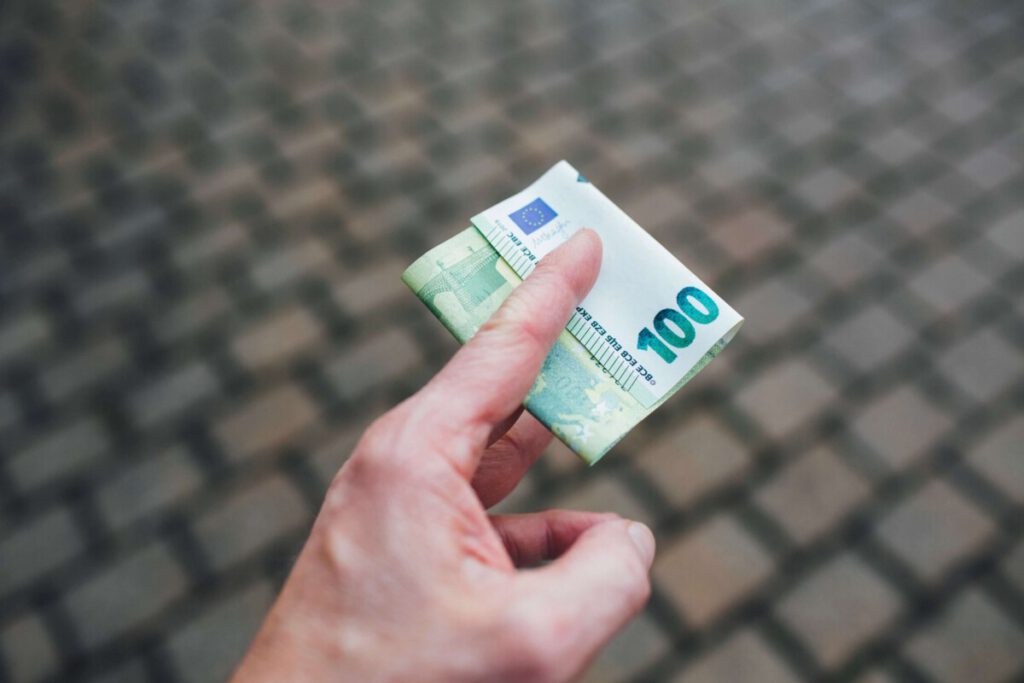
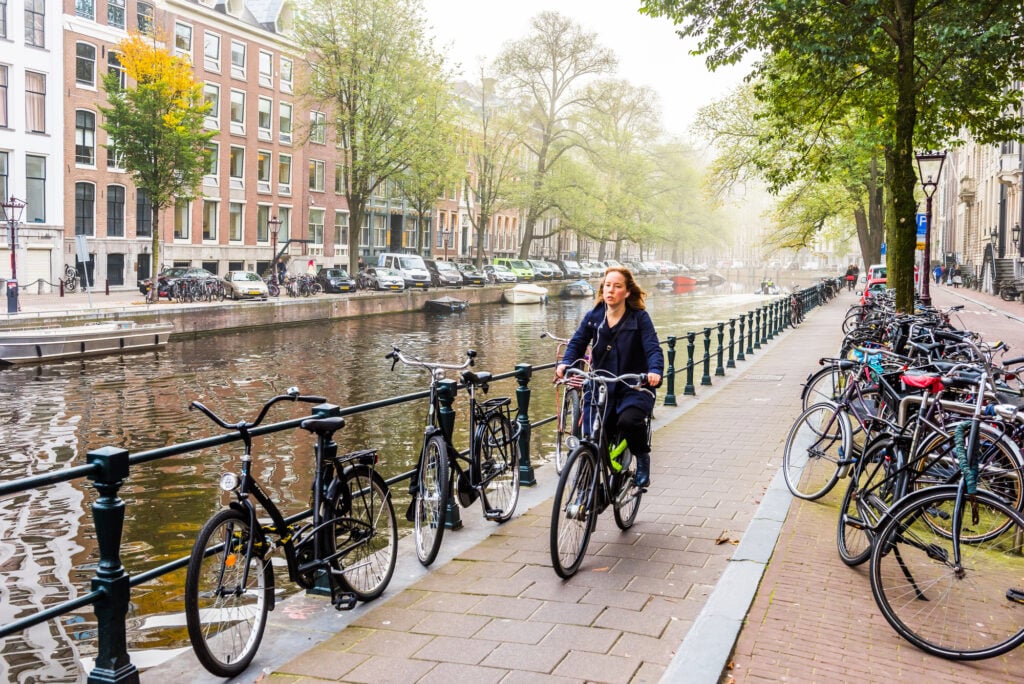
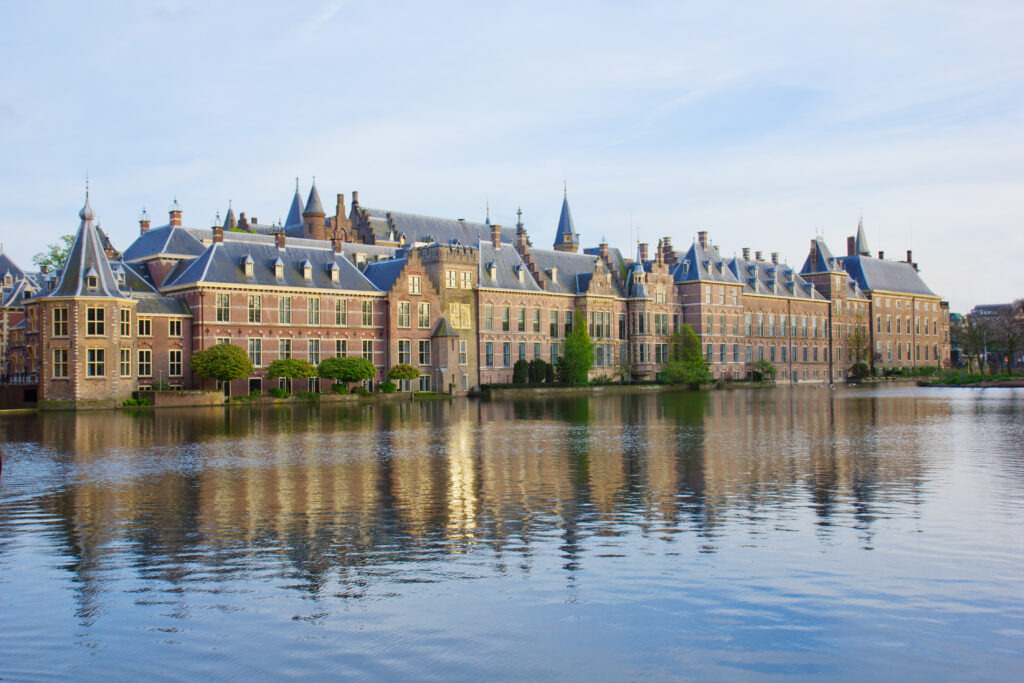
Imagine you’re at a bar sipping biertjesat an intimate gathering with friends, minding your own business. Still, the ear-splitting elephant in the room has gone unaddressed: Dutch music.
That’s right, people shakily sing in Dutch along to the notes of a tone-deaf melody, while thunderous music accompanies them. On purpose. Sometimes in front of crowds of people.
Without further ado, join us as we smile, weep, cover our ears, or wince our way through the key features of the, let’s say, niche phenomenon that is Dutch music.
Why must the volume be cranked up til our ears bleed?
Ever been to a concert, music event, or bar — or even a department store in some cases — where they blast Spotify’s deafening “Top 50 Songs in the Netherlands” playlist?
Nee?Goed. Even if you don’t keel over in pain at the insane volume levels right away (which many of us do), you may find that you wake up the next day with a high-pitched ringing sound deep inside your tympanic membrane.
Except it’s not a mosquito in your room this time.
Instead, it’s our old friend tinnitus — a sign of permanent hearing damage.
That’s right, Dutch music volumes can be heard from several cities away, which leaves us sleep-deprived, in physical pain, and maddened. 🤪
I slept for about 6 hours 'cause I woke up to a nearby school playing Dutch trance music with the volume at max.
In 2016, the Amsterdam Medical Centre found that one in four Dutch people between the ages of 12 and 25 was suffering from hearing loss on some level.
The culprit? You guessed it. Prolonged periods spent listening to the ear-assault that is Dutch club music, as well as headphones and “portable music players”.
This may explain why many Dutch people shamelessly wear earplugs at festivals or concerts, without sacrificing any “street cred” in the process.
To be fair, it’s not considered as uncool as in other countries where volume levels are comparatively mild and mellow.
Casually uncensored, super explicit lyrics
Dutch music artists and DJs really don’t hold back when it comes to the volume knob, or… the lyrics.
Maybe it’s because of that infamous Dutch directness, but Dutch song lyrics aren’t prone to subtlety, euphemisms or beating around the bush.
In fact, they tend to just go straight for the jugular. 🤬
Again, this is a headphone warning, but also a disclaimer to not play this song out loud, especially while a dear Dutch oma (grandma) is in earshot — although, hey, maybe she’ll love it.
Perhaps it’s good that not all of us can understand it. What we do know is that this type of distinctly Dutch vulgarity makes every other English-speaking rapper seem like an uptight vicar by comparison. 😵💫
The obstruction of judgment that is (trash) techno music
Take EDM or techno — a musical genre characterised by its synthesisers and drum machines — combine it with the Dutch flair for eardrum-bursting volumes, and voila: you have my personal nightmare. 🙂
Exhibit A: consider this YouTube snippet down below…
(This is your headphone warning ahead of time.)
I mean, who could the core demographic of this…monstrosity, this music that gives you the wrong kind of goosebumps, possibly be?
As it turns out, all the 50,000 attendees present — most of whom presumably did book tickets by choice.
At least there’s a silent disco after-party on Friday and Saturday to recuperate 🤷♀️.
These types of tasteless beats might be largely wordless, but we can sure as hell tell they’re Dutch since the Netherlands relishes festivals with “harder styles”.
Dutch indie music — it’s a thing, and it’s emotionally abusive
Want to avoid falling down the stairs, collapsing at the office, and curling up, sobbing, into a self-pitying foetal position?
Well, then, heed this advice: steer clear of Dutch indie music.
Those direct Dutch lyrics, croaky guttural sounds, and harsh consonants somehow make for an even more brutal, grungey take on the genre you thought was hard-hitting enough in English.
These tunes will strike a nerve in you that you didn’t know you had, get you right in your feels, and drive you into an existential soul-search, as you stare up at the ceiling while lying on your bedroom floor.
Never has anyone been so candid about the trials and tribulations of “de Schevenings leven” (Scheveningen life):
Who says the breakdown can’t be taken to the dancefloor?
Despite tackling subject matter like drug addiction, poverty, break-ups, and the football team Ajax, Dutch indie artists somehow manage to turn out gems that are upbeat to the point of being danceable.
As you find yourself jumping up and down to the indie classics while strobe lighting washes over you, you’ll just have to embrace that crying-in-the-club aesthetic fully.
It’s an emotional rollercoaster, and we just have to ask the Dutch — why? 😭
Expect to have it on replay in your head for at least another 48 hours. You’ll be left with fewer friends and family afterwards (because they just don’t get it, okay?)
Questionable Dutch remakes of English classics
In all fairness, why shouldn’t Dutchies have the right to belt out their favourite tunes in their native language? After all, it’s a privilege all English speakers are spoiled by.
It’s not their fault that they can’t claim Justin Bieber, Adele, or any other world-famous pop star as a Dutch national.
Instead, the British Empire out-colonising the Dutch in the 17th century is to blame for the fact that Ed Sheeran’s soppy English crooning makes for more of a universal hit song than, say, the Dutch tour de force, Drank en Drugs.
Okay yes, it is catchy. Image: Freepik
If either genuine or morbid curiosity compels you to listen to Dutch remakes of all the catchiest songs from the last decade (remember when Avicii was a thing), do check out this playlist.
Granted, Dutchies are probably more prone to dancing or crying to them than internationals, but some of them are… kinda good?
Some are even, dare we say, better than the original at points (we’re sorry, Harry Styles, if by some miraculous stroke of luck, you’re reading this, we love you).
Like any country’s musical body of work, Dutch songs are multifaceted.
Some will have you in the throes of existential doom, some make for excellent angry workout music, while some Dutch music is best kept within the confines of a shower stall. 👀
Did these song samples leave you pleasantly surprised or give you the wrong kind of musical goosebumps? Let us know in the comments below!
In a statement released yesterday, KLM explained that flights would be cut or changed this month due to rising kerosene prices.
While they noted that there is no kerosene shortage as yet, rising costs mean some flights “cannot currently be operated profitably”.
The airline expects to cut up to 80 return flights (or 160 individual flights) this May. Some routes being cut are flown multiple times a day, such as those to London or Düsseldorf.
The cancellations are scheduled to begin during the last week of April, which coincides with the Dutch school holiday period.
What’s changing?
While the statement did not specify which routes are being cut (other than mentioning London and Düsseldorf), it stated that all affected routes are within Europe.
KLM also explained that any affected passengers would be “rebooked onto the next available flight.”
Despite the upcoming rush of holiday travel, the airline is assuring customers that their vacation destinations will be reachable.
The conflict in the Middle East has caused untold difficulty for the transport sector, and KLM isn’t the only airline affected by rising fuel prices.
As Politico reports, Lufthansa is having to accelerate a planned cut of 27 planes due to fuel costs.
While there is no shortage of fuel as of yet, International Energy Agency Chief Fatih Birol told the AP that Europe only has “six weeks of jet fuel left.”
With that in mind, it seems like this KLM cut may just be the beginning.
Has your flight been affected by the cuts? Let us know in the comments!
The Netherlands is on course to have the steepest aviation tax in the entire European Union by 2027, with airline KLM warning that the consequences go well beyond pricier tickets.
From next year, travellers from the Netherlands will pay an average of over €40 in aviation tax per ticket — though the exact cost depends on your ticket.
If that sounds painful enough for your wallet, just wait until you hear the EU average sits at roughly €5. As KLM reports, this makes the Dutch rate more than eight times higher than the European average.
Here’s what you’ll actually pay
For medium-haul destinations like Turkey, Egypt, or Morocco, passengers will pay €48 in aviation tax per person in 2027. Yup, that’s a steep 60% jump on current rates.
However, it gets worse.
For long-haul routes to the United States, Suriname, or Asia, the tax rises by as much as 140%.
To put that into perspective, a family of four flying to New York would pay nearly €290 in aviation tax alone. That’s €72 per ticket, before a single euro goes to the airline or the airport.
This increase is a carryover from the previous cabinet’s plans, and it puts the current coalition in a peculiar position: its own coalition agreement specifically calls for a single, uniform European aviation tax, yet this hike runs in the exact opposite direction.
With significantly higher flight taxes in the Netherlands, Dutch travellers opt to fly from Germany or Belgium. Image: Depositphotos
Dutch flyers are being pushed across the border
Research by Markeffect, commissioned by the airline, found that 74% of Dutch flyers say they would consider departing from foreign airports more frequently if the aviation tax continues to rise.
And it doesn’t take a data report to see that this trend is already well underway.
KLM warns that if passengers consistently reroute through foreign hubs, airlines will eventually cut destinations from Dutch airports altogether.
That means fewer direct routes for everyone travelling to or from the Netherlands: expats, businesses, international students, and the broader Dutch economy.
Something’s got to give
Naturally, this hits expats and internationals twice as hard.
Visiting family in Asia, the Americas, or North Africa is already expensive — paying an extra €72 per person in tax on top of a long-haul fare is a significant additional burden.
MPs have previously raised concerns about this exact scenario, and KLM is now formally calling on the government to align Dutch aviation tax rates with those of neighbouring countries.
However, whether the cabinet acts on that is another question entirely.
Will you be looking at flights from Brussels or Düsseldorf to dodge the higher tax, or are you sticking with Schiphol? Let us know in the comments.
Dutch house prices fell in the first quarter of 2026, supply is up, and buyers are getting more time to make decisions.
However, before you crack open the bubbly and start dreaming of the home you’ll buy, we need to take a closer look at the fine print.
Here’s what the latest figures from real estate agent association NVM actually mean for anyone trying to buy in the Netherlands right now.
What’s changed for home buyers in the Netherlands?
According to NVM’s figures, the average sale price of an existing home was €485,000 last quarter, down 2.7% compared to the last quarter of 2025.
Given that the average seasonal dip around this period is 1.2%, we’re experiencing what the NVM describes as “a price drop that is steeper than usual.”
And, with supply climbing to just under 30,000 properties in Q1 (over 20% higher than a year ago), there are also more homes on the market.
A few factors are driving the sudden slump in demand, including mortgage rates edging up slightly at the end of 2025, a drop in consumer confidence, and global economic uncertainty, which is making people more cautious.
While house prices are down, you’ll have no such luck with mortgage rates. Image: Dreamstime
However, even with less pressure to overbid wildly, there’s a catch: two-thirds of homes are still selling above asking price, with an average premium of 3.7%.
In the words of NVM chair, Lana Goutsmits-Gerssen, this “gives buyers more breathing room, but it does not mean that the housing market is suddenly relaxed. Affordability remains under pressure, and there is still a shortage in many regions.”
The kind of home you’re buying matters
It goes without saying that not all properties are treated equally — energy-efficient, fully-furnished homes are still selling like hot pannenkoeken.
Meanwhile, homes with a poor energy label, a high price tag, or a less desirable location are sitting on the market longer.
If you’re looking at new-build properties, the picture is more complicated. Supply has jumped to around 18,200 homes (the highest since 2016), but sales fell, with roughly 5,600 new builds sold in the first quarter of 2026.
Buyers are especially hesitant about new builds. Image: Dreamstime
What’s making people hit the brakes? According to the NVM, buyers are hesitant because of long lead times between purchase and completion, high bridging costs, and krimpflatie (shrinkflation).
The latter, in particular, refers to a scenario where house prices look stable, but the square meterage keeps quietly shrinking.
What this means for you
The bottom line is that, while the Dutch housing market is less frantic than it was, it’s still not a buyer’s market.
Supply remains short of demand in most regions, and borrowing power is still the main constraint for most people.
However, there are also a few upsides — key among them the average selling time of 32 days, versus the near-instant turnaround of peak years.
Are you currently trying to buy a house in the Netherlands? Tell us how it’s going in the comments below.
Thinking about taking a day trip from Amsterdam? Wat leuk! (How nice!) While there is heaps to seein the Dutch capital, you can discover even more outside the city.
Picking what to do and see in a short time can be confusing and complicated — but we have some top travel recommendations, no matter what you want to explore!
Here are 19 of the best day trips you can take from Amsterdam, sorted by distance. 😉
This post might have affiliate links that help us write the articles you love, at no extra cost to you. Read our statement.
If you won’t be in the city for long, a 30-minute day trip from Amsterdam is perfect for getting out of the city for a day. Here are our best picks for nearby towns and cities.
1. Zaanse Schans: a picture-perfect town of windmills
A trip to the Netherlands would be incomplete without seeing windmills — and there’s no better way to see them than in the historical town of Zaanse Schans.
This quaint village gives visitors a clear impression of Dutch life in the 17th and 18th centuries.
From cheese and dairy factories to traditional windmills and historical museums, you’ll live, breathe, and experience the old Zaan style of living. Classic!
🚗 Travel time by car: 21 minutes 🚃 Travel time by train: Amsterdam Centraal – Station Zaanse Schans, 17 minutes ⭐ Don’t miss: Zaanse windmills, Honig Breethuis, Museumwinkel
2. Haarlem: the river city
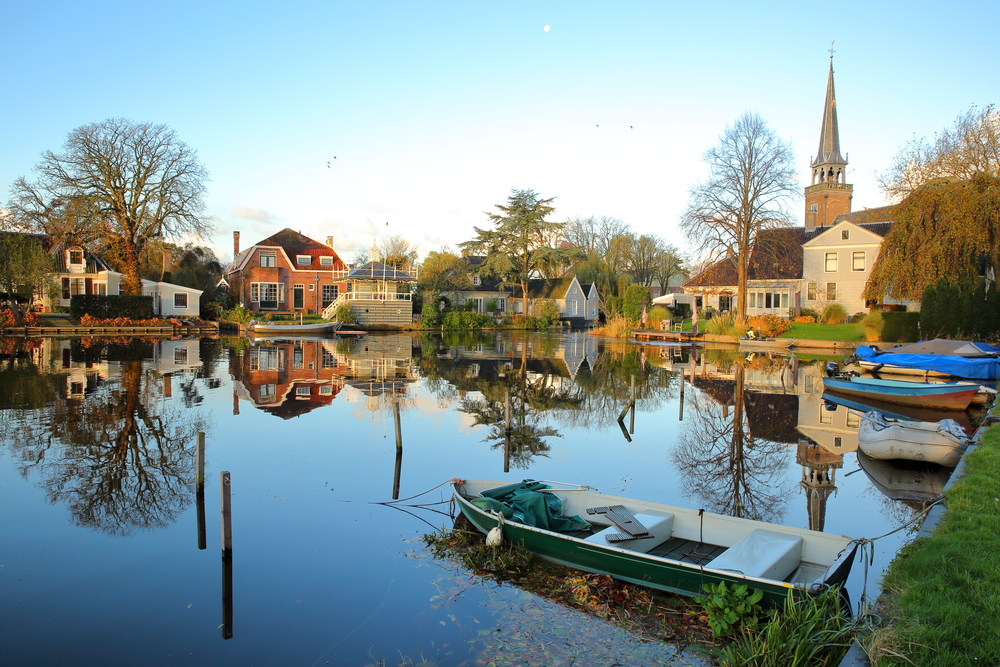
An ideal day trip from Amsterdam, Haarlem is located between the Spaarne River and coastal dunes — did someone say beach? 🏖
Wouldn’t you love to take a walk along the Spaarne river? Image: Depositphotos
This city has everything: bustling markets and shopping streets, plenty of family-friendly cultural activities like museums, comedy clubs, concerts, and restaurants offering a world of cuisines.🍴
If you’re looking for a change of scenery but still want to have lots of activities to do, Haarlem is the place for you.
🚗 Travel time by car: 30 minutes 🚃 Travel time by train: Amsterdam Centraal – Station Haarlem, 19 minutes ⭐ Don’t miss: St. Bavo’s Kerk (church), Grote Markt, Bloemendaal aan Zee
3. Broek in Waterland: a village fit for sea captains
Broek in Waterland made a name for itself back in the 16th century — a popular vacation destination for sea captains! 🧑🏻✈
If you’re looking for a getaway from the big city, Broek in Waterland is the definition of an idyllic Dutch town.
With a population of barely 3,000, this village has quiet streets and picturesque surroundings. 🌿
There’s a reason sea captains had an affinity for this town. Image: Depositphotos
Its standout feature is its traditional wooden houses, with more than 80 of them considered National Heritage Sites.
There are also lots of biking and walking routes nearby. If you’re looking to get some fresh air and exercise while on a day trip from Amsterdam, check out the biking tours around the town!
🚗 Travel time by car: 14 minutes 🚃 Travel time by train: Amsterdam Centraal – Broek in Waterland, 18 minutes ⭐ Don’t miss: Traditional village townhouses
4. Marken: a former island in the Zuiderzee
Marken was separated from the Dutch mainland in the 13th century by a storm, becoming an island in the Markermeer lake. ⛈️
Residents of the town built wooden houses on artificial hills to prevent further flooding damage. To this day, these picturesque homes remain a popular cultural attraction.
Only nine kilometres in area, you can easily walk across the whole island.
On your walk, you can visit the cosy town harbour or enjoy the scenic route of fields, forests, and the lakeshore. 🚣🏼
This town has historical connections to Volendam, so you could make it a longer day trip from Amsterdam and visit two towns with one ferry. 😉
🚗 Travel time by car: 27 minutes 🚃 Travel time by train: Amsterdam Centraal – Marken, 45 minutes ⭐ Don’t miss: Paard van Marken Lighthouse, The Marken Museum
5. Volendam: a traditional Dutch fishing town
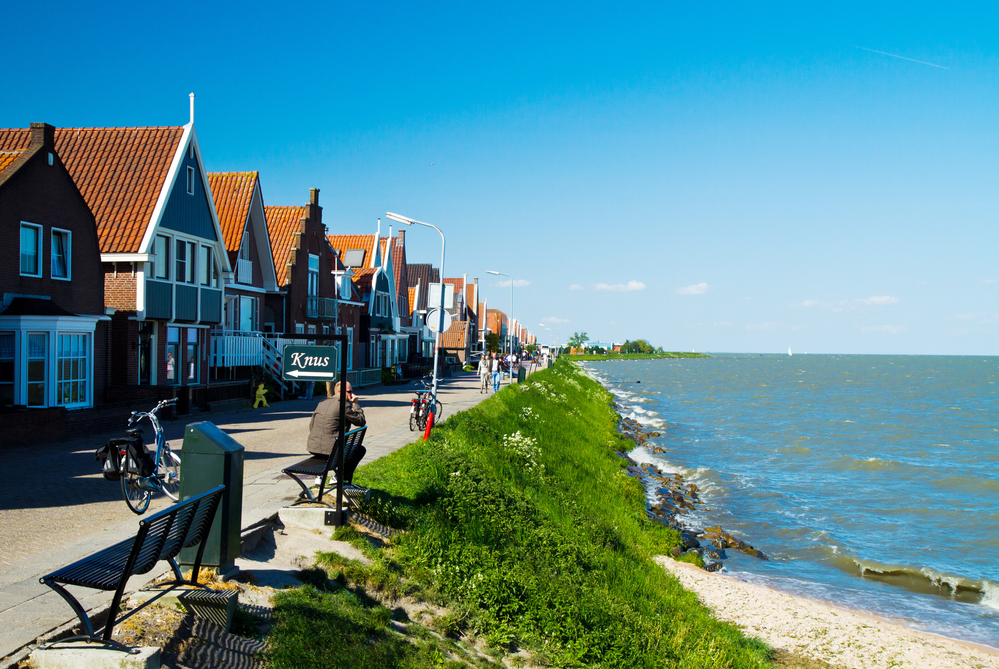
Volendam is the best-known fishing village in the Netherlands. You can visit the old harbour full of traditional Dutch ships, many of which are still in use! 🎣
This day trip from Amsterdam would be incomplete without trying some of their lekker (tasty) fish delicacies. You can finally conquer your fear of raw herring and smoked eel, or stick to the classic kibbeling (deep-fried codfish).
Fresh ocean air and delicious food. What else could you ask for? Image: Depositphotos
Volendam is also one of the few towns where you can experience traditional Dutch clothing.
If you have a little more time on your hands, you can check out these day trips away from Amsterdam!
They’re just a tad further from the Dutch capital, but you’ll see some beautiful monuments and sites if you make the trip.
6. Hoorn: the pearl of the IJsselmeer
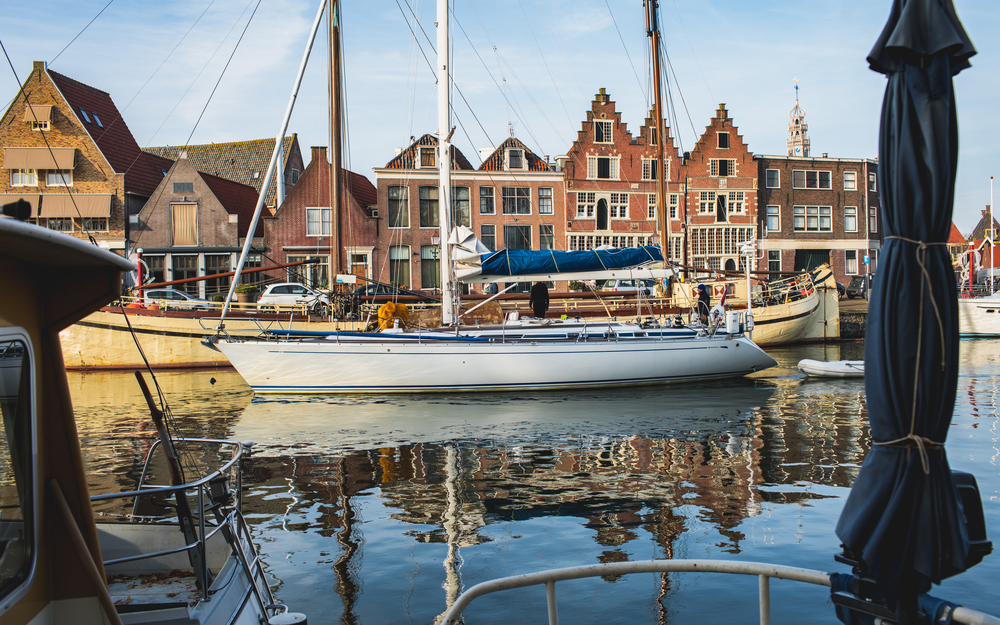
Hoorn is located by the IJsselmeer, an artificial sea-turned-lake in Noord-Holland. This harbour town has a lively centre with plenty of shops, terraces, and restaurants to enjoy.
If you’re looking for an authentic Dutch maritime village, Hoorn is the place to go.
Hey, Hoorn isn’t so bad for an “artificial” island. Image: Depositphotos
You can also check out historical monuments like the historic ship, 16th-century warehouses, the 16th-century defence tower, and the Oosterkerk (Eastern Church) for fishers and sailors!
If you want to get active, you can try some water sports (though we can’t guarantee comfortable water temperatures 🥶) or take a walk on the beach and through the dunes around the area. 🚶🏻
🚗 Travel time by car: 35 minutes 🚃 Travel time by train: Amsterdam Centraal – Station Hoorn, 33 minutes ⭐ Don’t miss: Westfries Museum, The Red Square, De Hoornse Straatjes
7. Leiden: the city of arts and sciences
With the canals and architecture to rival Amsterdam, Leiden might be one of the most underrated places for a day trip from Amsterdam.
We should know — it’s home to our headquarters and one of our favourite Dutch cities! 😉
Leiden is also home to cute, unique shops where you can buy handmade ceramics, old-fashioned mechanical wristwatches, and vintage records.
A university city since 1575, Leiden has been a prominent centre of art and science worldwide.
The inner city is full of museums and historical buildings, such as the Leiden Citadel and the old city gates. It was also home to more Dutch artists than you might expect — Rembrandt, Steen, and more! 👨🏼🎨
Plenty of trains pass through Leiden, making it a convenient day trip from Amsterdam. 😌
🚗 Travel time by car: 42 minutes 🚃 Travel time by train: Amsterdam Centraal – Leiden Centraal, 43 minutes ⭐ Don’t miss: Hortus Botanicus Leiden, Hooglandse Kerk, Museum de Lakenhal
8. Utrecht: the very centre of the Dutch mainland
Utrecht is the Netherlands’ bright, beating heart, connecting the east to the west at the centre of the Netherlands.
Built around the Dom Tower, you can see this spectacular monument from all around the city — so you’ll never get lost.
The historic city is surrounded by an old moat called De Singel, built for defence in the 12th century.
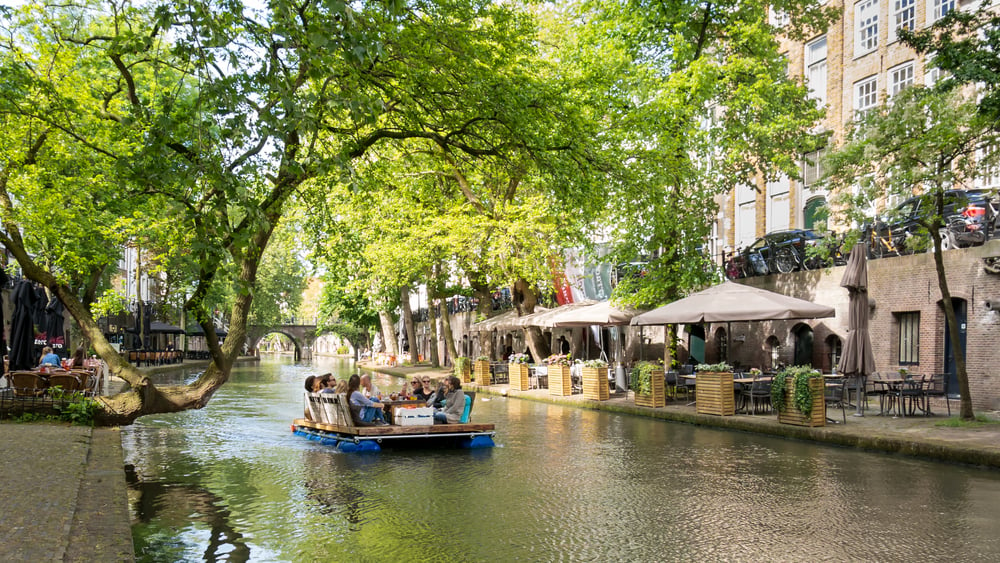
One of the most special parts of Utrecht is its unique terraces: landings right next to the canals, which are lined with bars and restaurants.
Try combining two very Dutch things: canals and terraces! Image: Depositphotos
With lots of places to shop and eat, cultural spots like museums and concert halls, access to nature, and beautiful inner-city sites, you won’t run out of things to do in Utrecht.
This city is a super convenient day trip from Amsterdam because of the direct intercity train (the fast train that runs between cities) that runs every 4 hours. The journey is less than 30 minutes! 🚅
🚗 Travel time by car: 44 minutes 🚃 Travel time by train: Amsterdam Centraal – Utrecht Centraal, 26 minutes ⭐ Don’t miss: The Dom Tower, Rietveld Schröder House, Hoog Catharijne
9. Rotterdam: a city with an unmatched skyline
A city of skyscrapers, bright buildings, and modern facades, Rotterdam is the metropolis of the Netherlands. 🏙
Rotterdam was heavily bombed during World War II, which is why you see far less iconic Dutch architecture from the 17th century, like in Amsterdam or Leiden.
The city has a thriving nightlife scene, sophisticated shopping streets and markets, hip cultural attractions, and a wealth of good food.
Rotterdam might be best known for its expansive port and the iconic skyline that graces the river Maas. ⛴
It’s also a convenient day trip from Amsterdam, with direct intercity trains running every 15 minutes from the central station!
🚗 Travel time by car: 1 hour and 1 minute 🚃 Travel time by train: Amsterdam Centraal – Rotterdam Centraal, 41 minutes ⭐ Don’t miss: Markthal, The Euromast, The Cube Houses, Blijdorp Zoo
10. The Hague: city of justice
The Hague is the political capital of the Netherlands, making it a perfect pairing for a day trip from Amsterdam, the cultural capital.
This Dutch city, filled with historical monuments and museums, is the only major city with a beach and has an international scene second to none in the Netherlands.
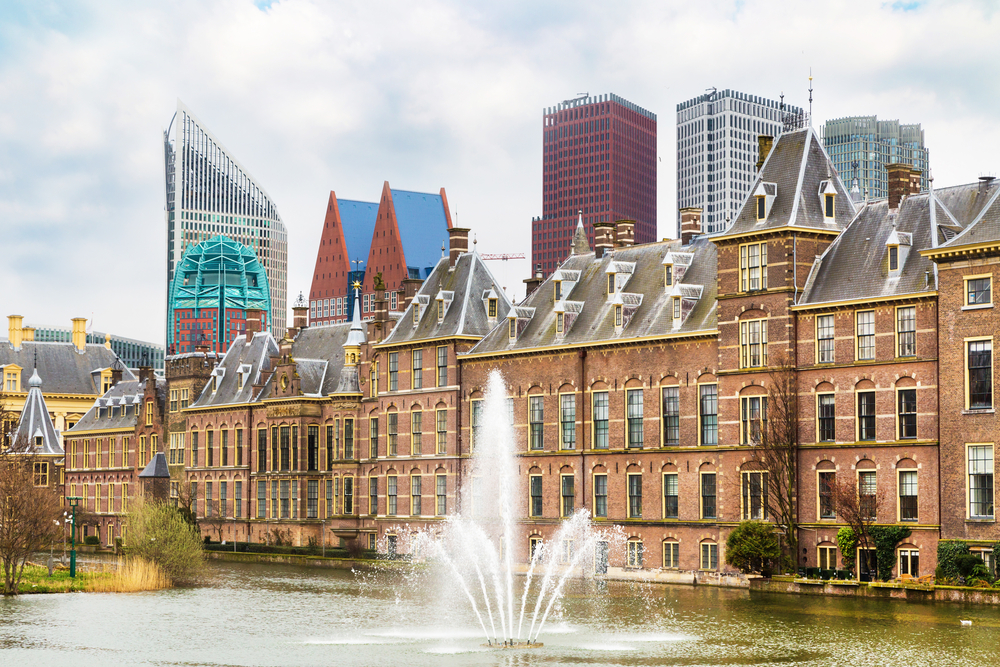
The Hague is home to the Dutch parliament. Image: Depositphotos
You can enjoy a beautiful city centre with places to eat and shop to your heart’s desire, or perhaps go hiking in one of many scenic locations in the Hague, like the Haagse Bos.
If you’re looking to dip your feet in the (albeit freezing) sea, look no further than Scheveningen Pier.
It’s the perfect place to sit by the beach, grab a drink, and enjoy the sea, whether it’s doing water sports or just lounging. 🙂
🚗 Travel time by car: 58 minutes 🚃 Travel time by train: Amsterdam Centraal – Den Haag Centraal, 53 minutes ⭐ Don’t miss: Peace Palace, Buitenhof, Madurodam, Scheveningen Pier, and Boardwalk
11. Delft: home to Vermeer and Delft Blaauw
Delft has an international reputation as the hometown of Dutch artist Johannes Vermeer and as the originator of Delft Blaauw (Delft Blue) pottery.
It is the definition of a full-sized city with a small-town feeling — gezellig! 🔵
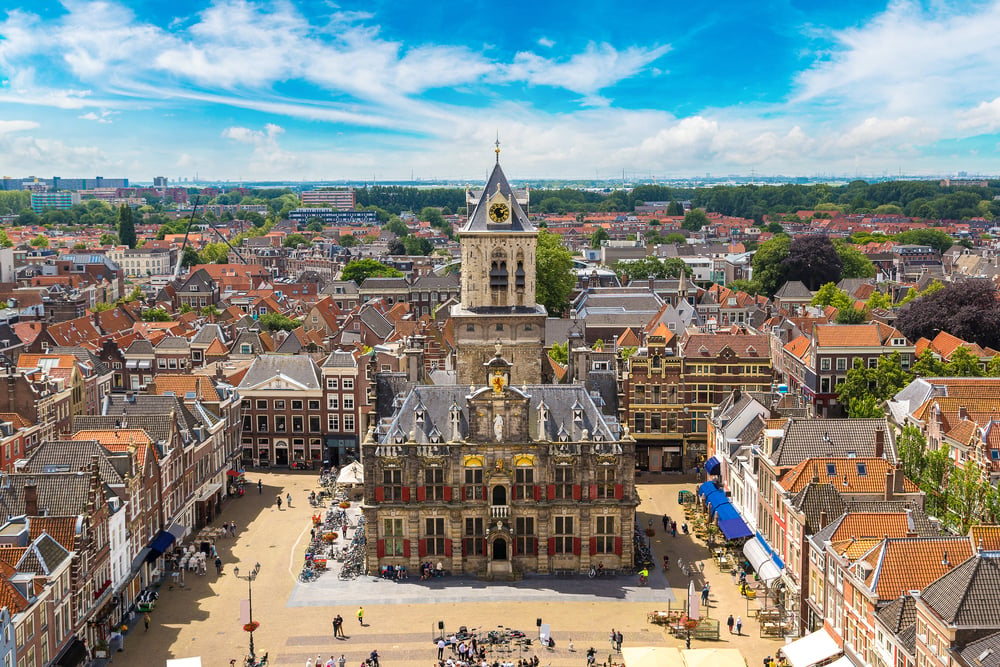
Don’t miss Delft’s stunning main square. Image: Depositphotos
The city boasts beautiful architecture and historical sights like the Eastern Gate from the old city walls to the New Church of Delft.
If you’re curious about experiencing another student city, Delft’s busy nightlife will keep you up on your feet all night long. 💃🏻
🚗 Travel time by car: 59 minutes 🚃 Travel time by train: Amsterdam Centraal – Station Delft, 1 hour and 5 minutes ⭐ Don’t miss: Delft City Hall, Old Church of Delft
12. Gouda: the birthplace of iconic Dutch cheese
Which came first, the cheese or the city? For Gouda, the city is the namesake for this world-famous cheese. 🧀
It’s a surprisingly old city with plenty of monuments and buildings dating back to the 13th century, like the city hall (formerly surrounded by a moat) and St. John’s Church.
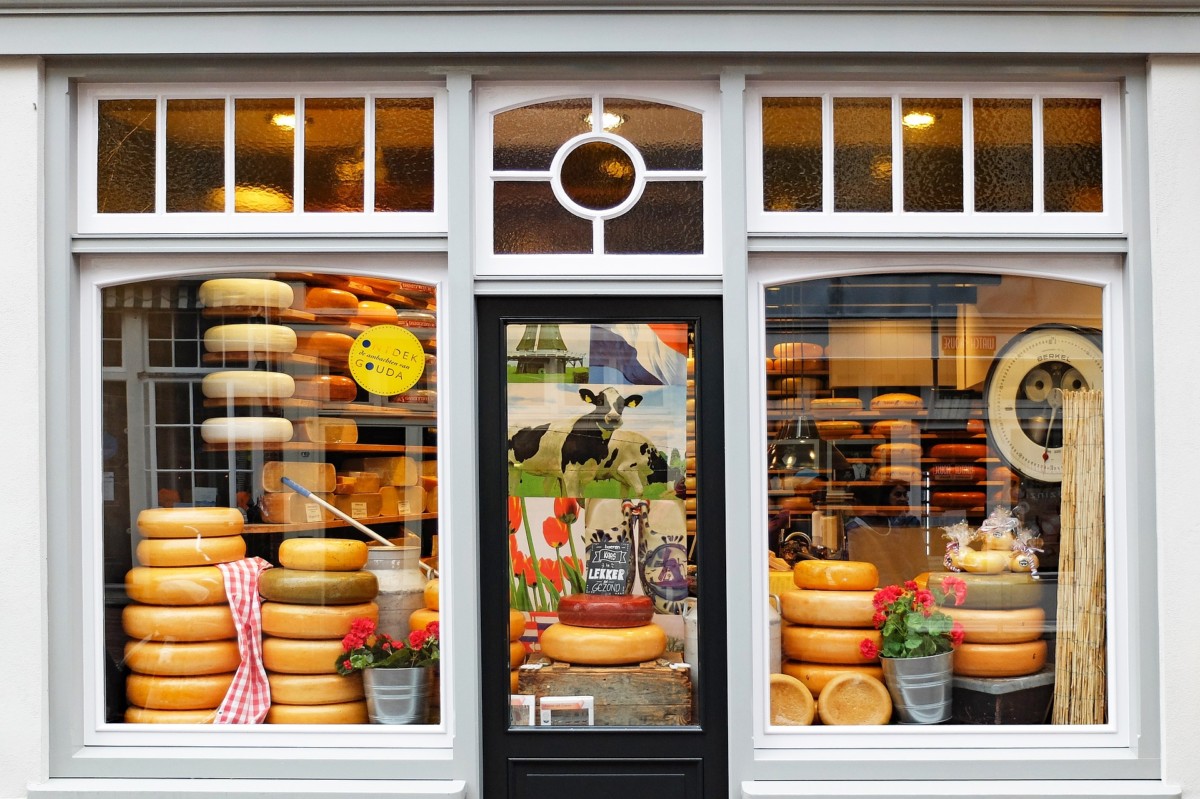
Fun fact: Gouda is actually NOT the cheese capital of the Netherlands. Image: Pixabay
The city is quaint, but the centre bustles with shops, restaurants, bars, and cafés.
Check out the weekly Markt (market) on Thursdays and Saturdays and the first Fairtrade Street in the Netherlands, where all street food is sustainably produced and sold!
🚗 Travel time by car: 1 hour 🚃 Travel time by train: Amsterdam Centraal – Station Gouda, 53 minutes ⭐ Don’t miss: Gouda cheese market, Old City Hall, The Waag (weigh house) Museum
13. Schiedam: home to the world’s tallest windmill
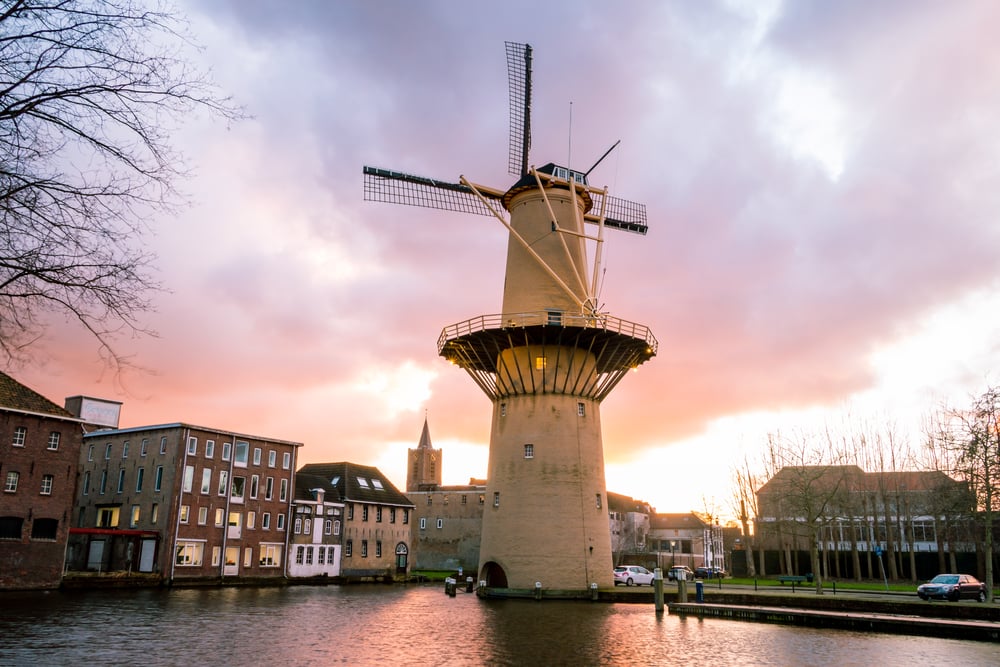
Yep, you heard that right! While there are windmills all around the Netherlands, Schiedam has the tallest traditional windmills of all, standing at 26.6 metres. 🍃
That’s one tall (and old) windmill. Image: Depositphotos
Schiedam is also known for being the Netherlands’s gin capital, with the city producing the most jenever (also known as Dutch gin) in the country.
There are also several museums where you can see the production process. 🍸
Apart from windmills and gin, you can visit Gothic cathedrals, 14th-century churches, and history museums, creating an excellent combination of culture and recreation in one day trip from Amsterdam!
🚗 Travel time by car: 55 minutes 🚃 Travel time by train: Amsterdam Centraal – Schiedam Centrum, 1 hour and 8 minutes ⭐ Don’t miss: National Jenever Museum, Jenever ‘t Spul, Liduina Basilica, Stedelijk Museum Schiedam
Day trips over an hour from Amsterdam
If you’re looking to get out of the region and visit a far-off place (for Dutch standards), here are some longer day trips from Amsterdam!
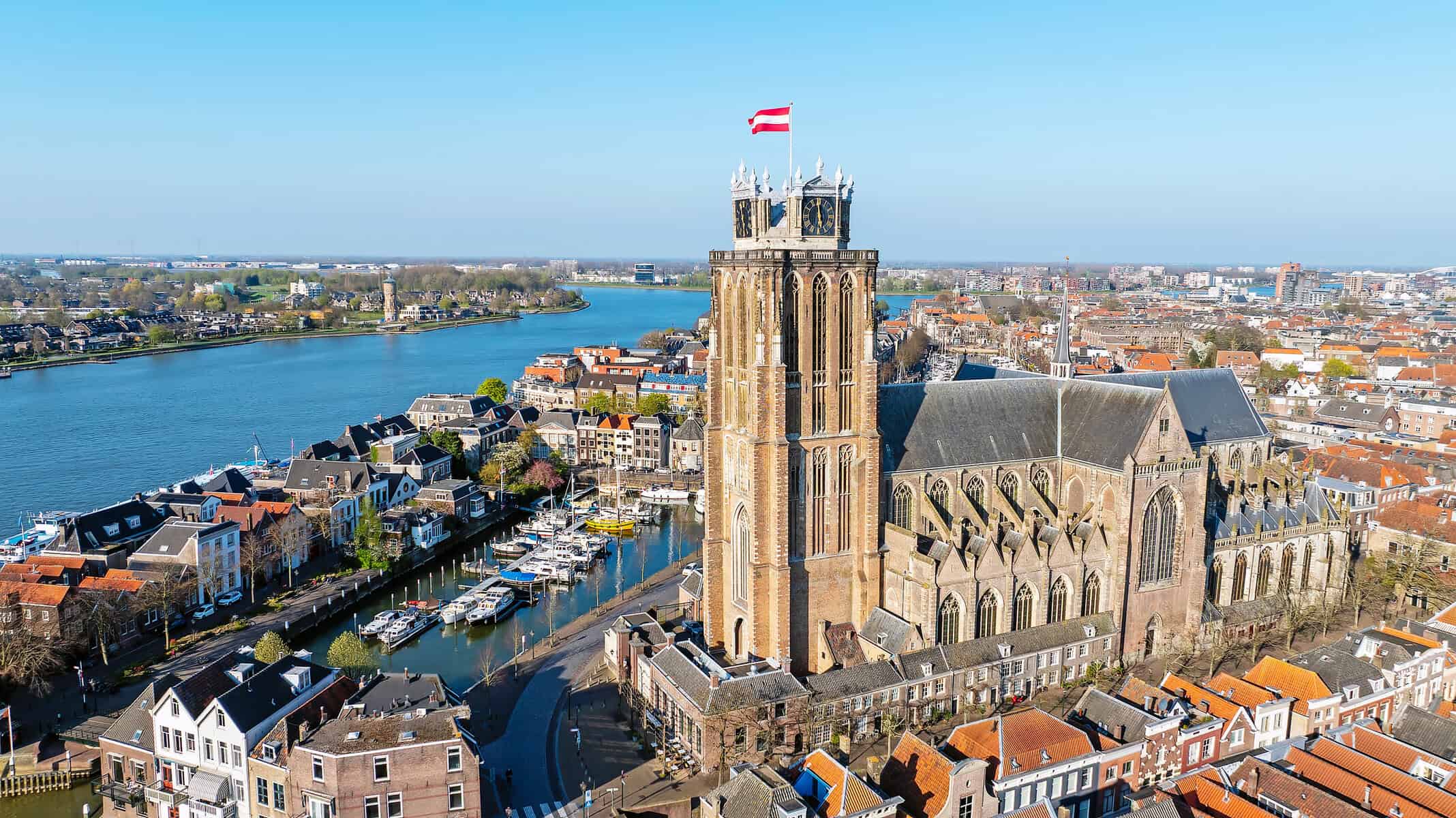
14. Dordrecht: a historic trading port
Dordrecht is the oldest city in Holland (we mean the old province of Holland and not the so-called “country”!).
There are plenty of cultural spots, including seven churches and several historical monuments-turned-museums.
As the oldest city in Holland, Dordrecht gets its own flag! Image: Dreamstime
While most of the Netherlands is surrounded by canals and dikes, water and boats make a unique part of Dordrecht’s cityscape.
As an old trading port, there are plenty of historic boats scattered around the old harbours connected by canals. On your day trip from Amsterdam, check out the canal network and catch a boat tour! 🚤
🚗 Travel time by car: 1 hour and 5 minutes 🚃 Travel time by train: Amsterdam Centraal – Dordrecht Centraal,1 hour and 34 minutes ⭐ Don’t miss: Dordrechtsmuseum, Munt van Holland (Mint of Holland), Grote Kerk
If you go on a day trip from Amsterdam in July, Tilburg hosts a 10-day fair that draws more than a million visitors each year. 🎡
🚗 Travel time by car: 1 hour and 28 minutes 🚃 Travel time by train: Amsterdam Centraal – Tilburg Centraal, 1 hour and 52 minutes ⭐ Don’t miss: Textielmuseum, Stadsmuseum Tilburg, Tilburg Kermis
16. Groningen: the hidden gem of the north
Despite being far away from most big cities, Groningen attracts many travel buffs, making it the perfect day trip from Amsterdam if you really want to get out of your surroundings.
Groningen has a compact city centre with restaurants and shops, beautiful sites like the Martini Tower and Grote Markt, and contemporary art museums. 🗼
As a student city, Groningen has exciting nightlife — plenty of clubs and bars included. 😉
Along with an energetic centre, quiet countryside surrounds Groningen city, which you can enjoy.
You can hike on one of the beautiful trails through the dunes and along the coast or take a cycle route around artificial hills, forests, and old forts.
🚗 Travel time by car: 2 hours 🚃 Travel time by train: Amsterdam Centraal – Groningen Station, 2 hours ⭐ Don’t miss: Groninger Museum, Martinitoren, Groningen City Centre
17. Den Helder: city of the sun
Surrounded by water on three sides, Den Helder is a maritime city at heart.
At the northernmost point of the Dutch coast, the city has many naval sights, including the largest naval base in the Netherlands.
Den Helder boasts a rich history with the largest Dutch naval base, a historic harbour, and fascinating marine attractions, including the North Sea Aquarium and three museum ships (museums housed in historic ships from the Dutch Navy!).
If you’re seeking nature and scenery, the city has a wide variety of landscapes — you can take a refreshing hike around the dunes and polders surrounding the Wadden Sea.
🚗 Travel time by car: 1 hour and 10 minutes 🚃 Travel time by train: Amsterdam Centraal – Den Helder, Steiger TESO, 1 hour and 40 minutes ⭐ Don’t miss: Fort Kijkduin, The Marine Museum, Lange Jaap Lighthouse
18. Giethoorn: Venice of the Netherlands
A picture-perfect landscape, Giethoorn is an almost entirely car-free village, replaced with boats and, of course, bicycles.
Giethoorn is a Dutch town through and through — with winding canals, countless boats, and quaint, matching houses, it doesn’t get more gezellig than this. 🧘🏻
🚗 Travel time by car: 1 hour and 26 minutes 🚃 Travel time by train: Amsterdam Centraal – Blauwe Hand Bus Station, 2 hours ⭐ Don’t miss: Boat tour through Giethoorn, Gondola festival, Giethoorn walking route
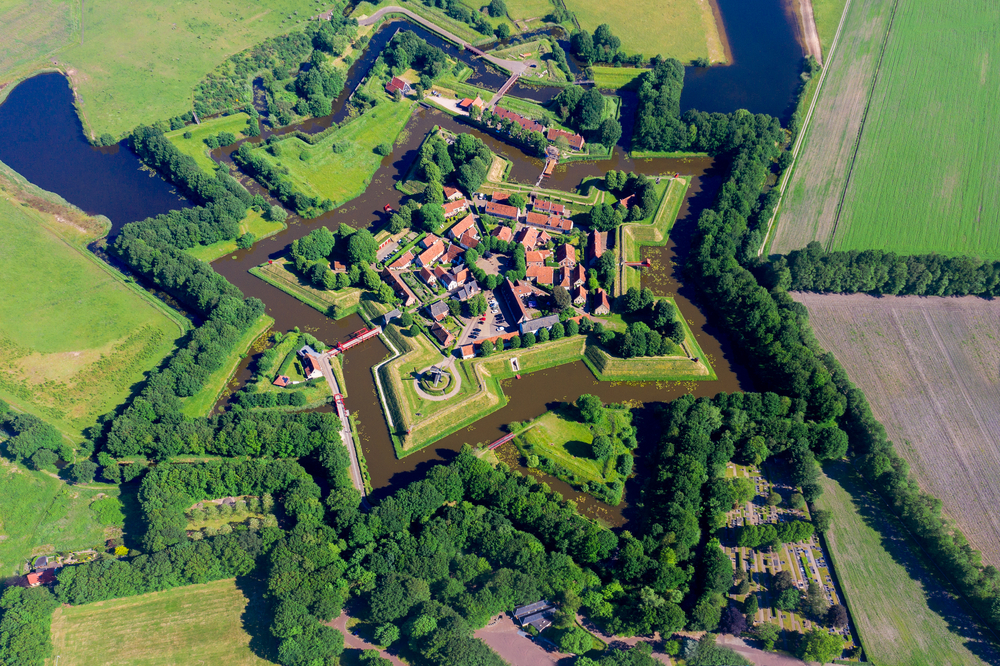
19. Bourtange: the medieval fortress village
While the name suggests a beautiful rural town in France, Bourtange is actually in the Netherlands! Although it might be the longest day trip from Amsterdam yet.
This small village in the north is a perfectly restored medieval fortress town, built in the shape of a star. ⭐️
With a population of 430 people, there isn’t much room for proper shopping, but you can check out smaller quirky shops with Delfs Blaauw pottery, candles, other gifts, and trinkets.
We recommend exploring the medieval architecture, which you’ll find all over the city. From fortified walls and traditional houses to windmills, visiting Bourtange is like visiting a village-sized museum!
🚗 Travel time by car: 2 hours and 35 minutes 🚃 Travel time by train: Amsterdam Centraal – Bourtange Bus Station, 3 hours and 16 minutes ⭐ Don’t miss: City fortifications, Church of Bourtange
20. Texel: a Dutch island escape
For a breath of fresh air on your day trip from Amsterdam, hop on a ferry to Texel: the largest of the Wadden Islands in the north of the Netherlands.
Just a short trip from the mainland, this island is a perfect escape from city life, offering stunning nature, charming villages, and plenty of activities for every type of traveler.
Believe it or not, this is the Netherlands! Image: Depositphotos
One of the best ways to explore Texel is by bike — with over 140 kilometres of cycling paths, you can easily ride through Duinen van Texel National Park, a breathtaking coastal reserve with dunes, forests, and heathlands.
Beach lovers can relax on De Koog, one of Texel’s most famous beach towns, or take a mudflat walking tour during low tide to experience the seabed up close. Whether you’re feeling adventurous or craving a beach day, Texel is for you.
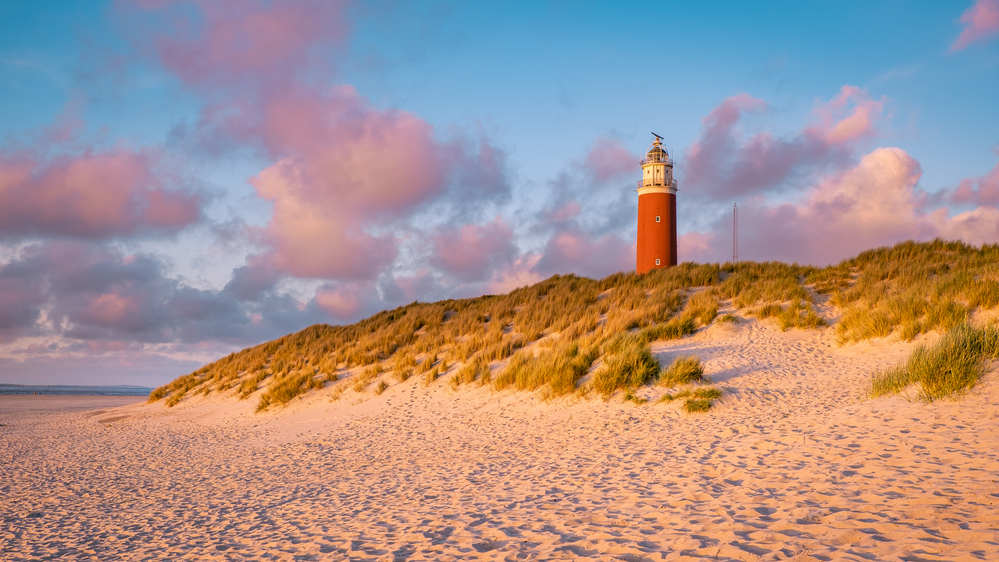
🚗 Travel time by car: 2 hours and 14 minutes 🚃 Travel time by public transport: Amsterdam Centraal – Den Helder – Texel, 3 hours and 9 minutes ⭐ Don’t miss: National Park Duinen van Texel, Eierland Lighthouse, beaches
For a mix of history, seaside beauty, and authentic Dutch culture, Zierikzee is a hidden gem worth discovering on a day trip from Amsterdam.
Located in Zeeland, this medieval town boasts over 500 monuments, including the impressive Sint-Lievensmonstertoren, which you can climb for panoramic views of the coastline.
A stroll through the picturesque harbour brings you past centuries-old fishing boats, and a visit to the Maritime Museum will teach you all about the town’s seafaring past.
Foodies, you’re in luck: The region is famous for its seafood, so don’t miss the chance to indulge in fresh Zeeland oysters, mussels, or lobster at a waterfront restaurant.
🚗 Travel time by car: 2 hours and 20 minutes 🚃 Travel time by public transport: Amsterdam Centraal – Zierikzee, Sas, 2 hours and 51 minutes ⭐ Don’t miss: Oosterschelde National Park, harbours
There are a couple of ways to get around for day trips in the Netherlands, depending on what you’re comfortable with: taking public transport, hiring a car, or cycling.
Using Dutch public transport for day trips
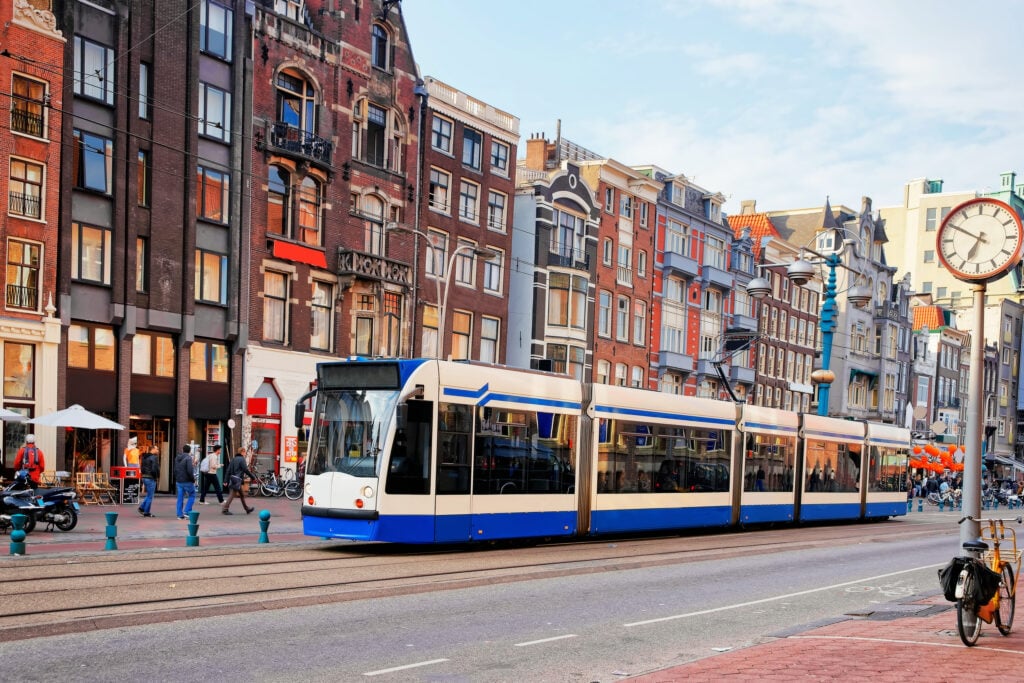
Public transport in the Netherlands is reliable and easy to use. Most cities have trains, trams, and buses, and some, like Rotterdam and Amsterdam, even have metros and ferries.
If you’re travelling between cities, you can buy many types of (cheap) train tickets. The day ticket is the most common and accessible ticket to travel on any train during off-peak hours.
If you’re travelling within a city, you can buy tickets for trams, buses, and metros at ticket kiosks that are usually located around the stop.
Alternatively, you can use your bank card to access the full range of Dutch transport. Use it like a travel pass by scanning it at any transport terminal.
A lot of the bigger cities in the Netherlands have their own tram networks. Image: Freepik
If you are staying in Amsterdam for longer and would like to take us up on a number of our day trip suggestions, an OV-chipkaart (public transport card) might be the thing for you.
You can usually buy an anonymous OV-chipkaart in any major train station. Just go to the NS service desk and ask to buy one! The staff would be happy to direct you further on how to load balance on your very own OV.
Hiring a car to visit Dutch towns and cities
There are five major car rental companies where you can hire a car: Avis Budget, Enterprise Rent-a-Car, Europcar, Hertz, and Sixt.
If you’re flying into Schiphol Airport, you can rent a car from one of these companies directly at the airport. You can either pre-book a car or just go with the flow and see what’s available upon arrival!
If you’re arriving in Amsterdam by another means, these car rental companies have rental locations across the city.
Biking on a day trip from Amsterdam
Biking around your desired day-trip city is a great way to get a feel for Dutch cycling culture!
If you have a personal OV chipkaart (only available to residents of the Netherlands), you can go full circle and rent an OV-fiets.
Cycling is hands down the best way to get around Amsterdam. Image: Depositphotos
The NS has set up bicycle rental locations at most train stations, bus and metro stops, which you can rent for a few hours at a time.
However, if you only have an anonymous OV-chipkaart or none at all, try renting a bicycle from one of the many options in Amsterdam. Different types of bicycles are available for hourly/daily rates.
You don’t need to bike like a seasoned Dutchie, but be extra careful while driving on the bike paths in Amsterdam’s city centre (and mentally prepare for locals yelling at you for being in their way).
What’s your favourite spot for a day trip from Amsterdam? Leave some suggestions in the comments!
Day trips from Amsterdam: frequently asked questions
What are the best day trips from Amsterdam?
Depending on how much time you have during your trip to Amsterdam, there are different trips you can take
Some beautiful locations are within 30 minutes by car or train, such as Haarlem or Volendam, while others can take two to three hours to reach, like Bourtange and Tilburg.
You can choose to visit smaller towns and villages or a big city like Rotterdam — depending on whether you want to visit another urban space or get a break in the quieter, more rural areas, there are plenty of locations to pick from.
Where can I see windmills near Amsterdam?
The closest windmill town to Amsterdam is Zaanse Schans, less than 30 minutes by either car or public transport. If you’re looking for other windmill locations, you can check out Kinderdijk and Schiedam, close to Rotterdam.
Where can I see tulips near Amsterdam?
Tulip season runs throughout spring, so the best time to see the Dutch tulips is from March to May. The most popular tulip attraction in the Netherlands is De Keukenhof in Lisse, a large flower garden that features tulips.
Lisse is about 1 hour and 22 minutes away from Amsterdam Centraal Station by public transport and 44 minutes by car. You can only enter the park with a ticket, so make sure to book them in advance if you’re interested in visiting.
There are other tulip fields by independent farmers in Lisse while walking or cycling around — usually, you can visit these parks for free, but there’s no guarantee the farmers will let tourists near their tulips.
Can you do a day trip from Amsterdam to Bruges?
Yes! You can take a train from Amsterdam Centraal Station to Bruges.
Travel time and prices vary depending on the type of journey, which train you take, and whether you have transfers. The average travel time from Amsterdam to Bruges is between one to two hours.
Where is it easy to travel to from Amsterdam?
We recommend a location within 30 minutes from Amsterdam by car or train for extra easy travel. You can check out Haarlem if you want a change of scenery but want to stick to a city.
Smaller traditional towns like Marken and Volendam will give you a great impression of the scenic Dutch countryside.
If you want to see other big cities, Amsterdam has direct trains that run every 15 minutes to Rotterdam and Utrecht — you can get to the city in less than 30 minutes on these trains!
What’s close to Amsterdam by train?
Generally, the bigger the city/town, the easier it is to reach by train and public transport. So if you’re looking for a laidback day trip with public transport, going to a city like Den Haag, Leiden, and Gouda is the most convenient.
Intercity trains connect most of the Randstad cities, so these trains run consistently — every 15 minutes in both directions from 5 AM to 12 AM.
Russia’s Ministry of Defence has released a list of possible targets that includes a Dutch air defence firm based in Hengelo.
Released on Wednesday, the hit list targets businesses across Europe that are supplying drones to Ukrainian forces.
As RTL Nieuws reports, there’s one Dutch entry on the list: Destinus, a Twente-based company that makes strike and air defence systems.
“Sleep well, European partners!” tweeted the vice chairman of the Russian Security Council.
What is Destinus?
Destinus builds the Ruta, a cruise missile used by the Ukrainian armed forces.
The company made headlines just days earlier when it announced a joint venture with German defence giant Rheinmetall.
The partnership plans to build missiles and ballistic rocket artillery for European and NATO markets starting in the latter half of 2026.
Threat from Moscow
The former Russian president wrote a rather ominous tweet about the hit list on X.
Russian Defense Ministry’s statement must be taken literally: the list of European facilities which make drones & other equipment is a list of potential targets for the Russian armed forces. When strikes become a reality depends on what comes next. Sleep well, European partners!
Dmitry Medvedev asserted, “When strikes become a reality depends on what comes next.”
Russia’s Defence Ministry frames European drone support as “a deliberate step towards a sharp escalation of the military and political situation.”
Russia’s catalogue spans eight other nations, with targets named in Germany, Poland, Italy, and the United Kingdom.
The Dutch response
Just an hour before Medvedev’s tweet, Dutch Defence Minister Dilan Yeşilgöz made a striking announcement.
Nederland investeert €248 miljoen in drones voor Oekraïne. Deze drones worden in onze beide landen gefabriceerd. Hiermee versterken we onze samenwerking én onze eigen industrie nog verder. En het belangrijkste: de drones helpen om de Russische aanvallen af te slaan! 🇳🇱🇺🇦 pic.twitter.com/laKCFcFSxM
Translation: The Netherlands is investing €248 million in drones for Ukraine. These drones are manufactured in both our countries. With this, we further strengthen our cooperation and our own industry. And most importantly: the drones help repel Russian attacks!
And it’s not the first time the Netherlands has found itself in Moscow’s line of fire for supporting Ukraine.
After a highly publicised dinner and sleepover at the White House, the royal couple reflected positively on their visit and discussions with President Trump.
According to NOS, the King stated in a press briefing that they were able to “clearly state their opinions” throughout their stay.
While there was some hint that the Caribbean Netherlands came up, he refrained from providing specific details about their discussions with the president.
“A beautiful evening”
“They did their best to give us a very beautiful evening. We are very grateful for that,” Willem-Alexander revealed.
A dinner of North Sea sole, spinach soup, and more, combined with the tulip-themed decorations, drew kind words from the royal couple, according to NOS.
The couple then spent the night at the White House; however, PM Rob Jetten was not invited to sleep over.
After their visit, the couple continued on their trip to Florida. All in all, the king referred to the US journey as “very fascinating days”.
Enduring partnership
Despite the controversy and discussion in the Netherlands surrounding the royal visit to the Trumps, words from Jetten and the royal couple suggested they were pleased with the opportunity.
Amid the initiation of a cooperation program to open doors for Dutch companies in the US, the King declared that the two countries must “always remain on good terms,” reports NOS.
Navigating the healthcare system when you’re new to a country can be challenging, and if you’re wondering how to go to the doctor in the Netherlands, you’re not alone.
From registering with a huisarts (general practitioner) to understanding when you’ll need a referral, there are some things to keep in mind when planning a first visit to the doctor in the Netherlands.
Wait, is this an emergency?
Regardless of your situation, if you’ve had an accident or see someone who needs urgent help, you should call the emergency number 112 as quickly as possible.
Going to the doctor in the Netherlands: What is a huisarts?
Dutch can be a complicated language. Even though the word huisarts might sound like some artwork you have back at your house, that’s hardly the case.
Huisarts translates to “house doctor,” and refers to General Practitioners (GPs) in the Netherlands.
Your Dutch GP is your first stop for all health-related business. Image: Dreamstime
It is always better to register with a GP in the Netherlands right away because it might be hard to do so when you need actual help.
And who wants to deal with Dutch bureaucracy while feeling under the weather? Exactly.
How to find a doctor in the Netherlands
Now that you know what a huisarts is and that you need one to make a doctor’s appointment, let’s get things going: How do you find a general practitioner in the Netherlands?
The Dutch have made it fairly easy to find a local doctor. Simply go to the ZorgkaartNederland website and pick your municipality. God bless the internet. 🙌
The website is only available in Dutch, so, unfortunately, you’ll have to rely on your Google Translate extension for it!
If you prefer things to be simpler, a Google search with the city you live in and the word ‘huisarts‘ may also work.
Alternatively, you can contact your gemeente (municipality). They’ll be happy to help you find a GP in your area or to provide you with a list of local huisartsen.
Registering with a general practitioner in the Netherlands
It’s important to know that, in the Netherlands, you can’t just rock up to any doctor’s office if you’re feeling under the weather.
Instead, you must be registered with your GP before paying them a visit (unless you’re considered an ‘urgent case’).
To register with a general practitioner in the Netherlands, you can visit a physician’s website or give them a call.
Register with the doctor from the comfort of your own bed. Image: Pexels
You’ll need to provide personal information such as your name, address and Burgerservicenummer (BSN), as well as your health insurance details.
Sometimes you’ll find that the GP of your choice is not accepting new patients at the moment. That’s because they have reached the maximum capacity of patients they can treat.
If this is the case, your best bet is to simply opt for a different doctor.
Making an appointment with a doctor in the Netherlands
So the time has come: you’re feeling unwell, and you need to see a doctor in the Netherlands. 🤒
If this happens, you have three options:
You can make an appointment by calling your huisarts office directly,
You can make an appointment using your GP’s website (if available), or
You can check if your doctor has a consultation hour (spreekuur), where you can drop by without an appointment.
When in doubt, give your doctor’s office a quick call. Image: Freepik
What do you do if you just have a few simple questions? Then you might be able to simply give your GP a call and get a consultation over the phone. Nice!
How to see a medical specialist in the Netherlands
Okay, now let’s get to the real deal: What happens if you need to see a specialist in the Netherlands?
Whether it’s a dermatologist, an ENT, or a gynaecologist, you will need a referral from your huisarts to see any specialist in the Netherlands.
Your GP is the one who decides whether to send you to see a specialist or not, so it’s important to clearly state your wish to do so.
After you get a referral from your huisarts, you can go ahead and make an appointment with the specialist.
Your GP will help you get to a specialist. Image: Depositphotos
If you have a specific specialist in mind already, you can also ask for your referral to be made directly to that person.
Once you have the referral papers, it’s always good to ask your insurance company if they wish to see the referral to make sure you’ll get your money back.
Good to know: It is possible to see a specialist without a referral if you would like to — but this varies between healthcare providers. However, in this case, you may have to cover the costs of your visit yourself.
What happens if you go to a doctor in the Netherlands and don’t have health insurance (yet)?
If you have just recently applied for health insurance and you haven’t got an insurance number yet, you can always visit your huisarts (happy news!).
In the Netherlands, a GP cannot refuse to give you the care you need.
Do keep in mind that being without insurance means you would have to pay the costs yourself.
But it’s not all doom and gloom, and as soon as you receive your insurance number, you can send the bill to your insurance company to get the money back.
What’s up with Dutch doctors and antibiotics?
One of the things to keep in mind is that Dutch doctors might react differently to your health problems than the way you are used to.
Dutch doctors will only prescribe you antibiotics if you really need them. Image: Freepik
Antibiotic resistance is taken very seriously in the Netherlands and is seen as one of the biggest threats to our modern-day life.
Dutch doctors, therefore, only prescribe antibiotics if they diagnose you with a bacterial infection and not a viral one (such as the flu).
So, if you are coming from a country where antibiotics are seen as a magic pill that solves your every problem, don’t be surprised when your huisarts just shrugs and tells you to get some rest.
How has your experience with doctors in the Netherlands been? Tell us in the comments below!
Love or hate them, the Dutch are fiercely unique (even though they may not dress like it).
One of the best examples is what you’ll find in their houses.
In fact, there’s a stack of things that you’ll find in a typical Dutch home that may confuse internationals in the Netherlands. Here are 14 of them! 👇
Let op: Like the birthday calendar (which is also used by the writer’s German family), these items aren’t strictly Dutch. However, they came as a surprise to our international readers — making them well worth a spot on our list!
1. A toilet calendar, for when you’ve got things to do and are stuck in the loo
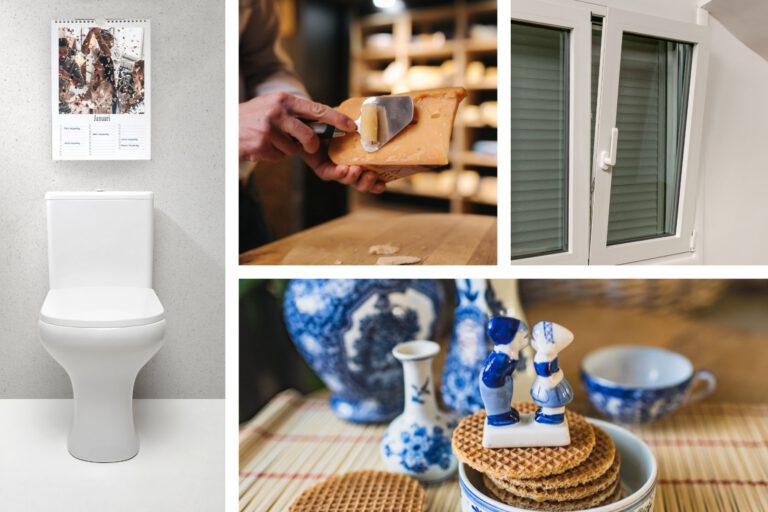
Deep thoughts, deeper toilet calendars. Image: Gpointstudio/Depositphotos & michaklootwijk/Depositphotos
The Dutch are brilliant at multitasking — I mean, just watch them bike while simultaneously holding a potted plant and a wheel of cheese.
That brilliance also extends to their bathroom routines in the form of the verjaardagskalender (birthday calendar) or WC kalender (toilet calendar).
You’ll find this nifty little thing hanging under a sink or on the wall of a Dutchie’s loo. Scrawled on it will be things like: “Nienke’s birthday”, “Wedding anniversary”, or even “Remind Jeroen to pay his Tikkie for €0.85”.
Ok, we may have exaggerated the last part there. 😉
2. Fabulous window displays that’ll have you pausing in your step
When it comes to window decor, Dutchies sure aren’t thrifty! Image: Depositphotos
Whether it’s to announce the birth of a new child, to wish Sarah or Abraham a happy birthday, or just to show off fancy decor, the Dutch excel at cool window displays.
The decor is usually facing outwards, putting on a show for passers-by to have a peep, say “Wat mooi!” (how beautiful), and go along on their way.
At the very least, you’ll see some cute shells and the odd cactus or two on the windowpane; however, among creative urbanites, the sky’s the limit!
3. Invisible curtains and an attitude of never being nosy
And, speaking of windows, windows in the Netherlands feature the latest Dutch technology: invisible curtains!
Jokes aside, curtains and the Dutch are two things that absolutely do not mix.
Houses in the Netherlands usually don’t come with them, as the Dutch prefer having an uninterrupted view outside.
This likely stems from the Calvinistic mindset of open/no curtains equating to having nothing to hide and living a good life.
So what we’re trying to say is that you aren’t likely to see many curtains blocking your view of families eating dinner — or the odd flash of bum crack! 🍑
4. Inspection-shelf toilets so you can hold a funeral before you flush
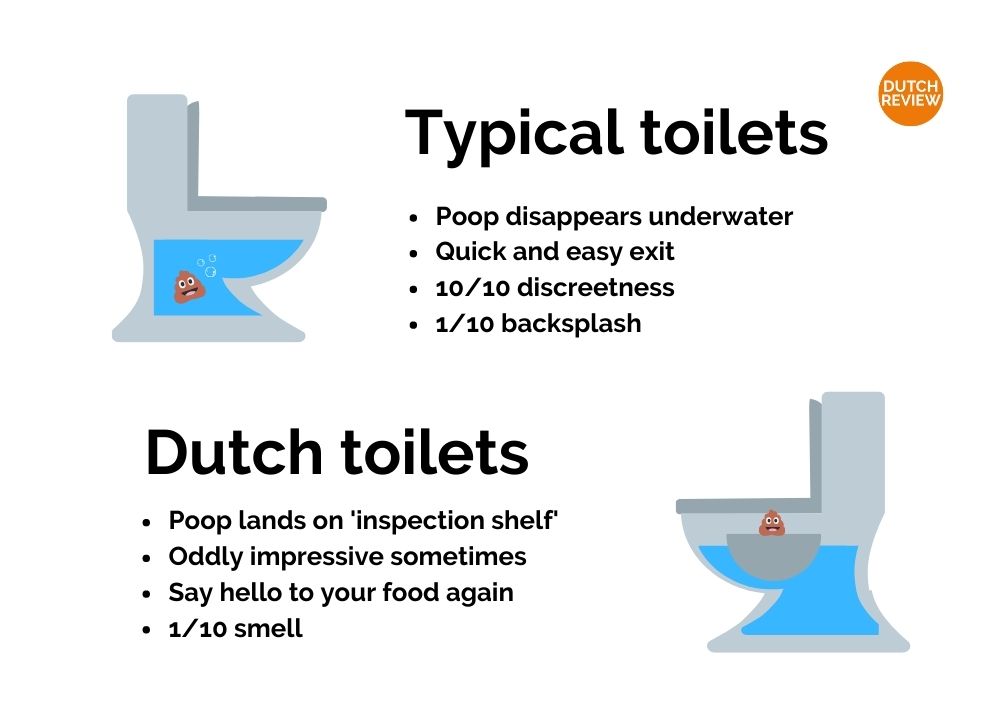
Trust us, you’ll soon become rather…err, closely acquainted with the sight (and smell!) of your poop. Image: DutchReview
Originally nicked from the Germans, the Dutch toilet features an inspection shelf for a closer examination of any logs you may drop. 💩
There’s a method to this madness, however, as this design is perfect for examining your poo to check if your internal plumbing is in tip-top shape!
Pros: you get no wet bum, can have a better look at your poop, and…errr, yeah. You get no wet bum.
Cons: you get a full whiff of the aroma, will use your toilet brush to death, and get to say a final “doei!” to your poop.
Internationals beware — Dutch toilets are a very different beast from the ones you’re used to!
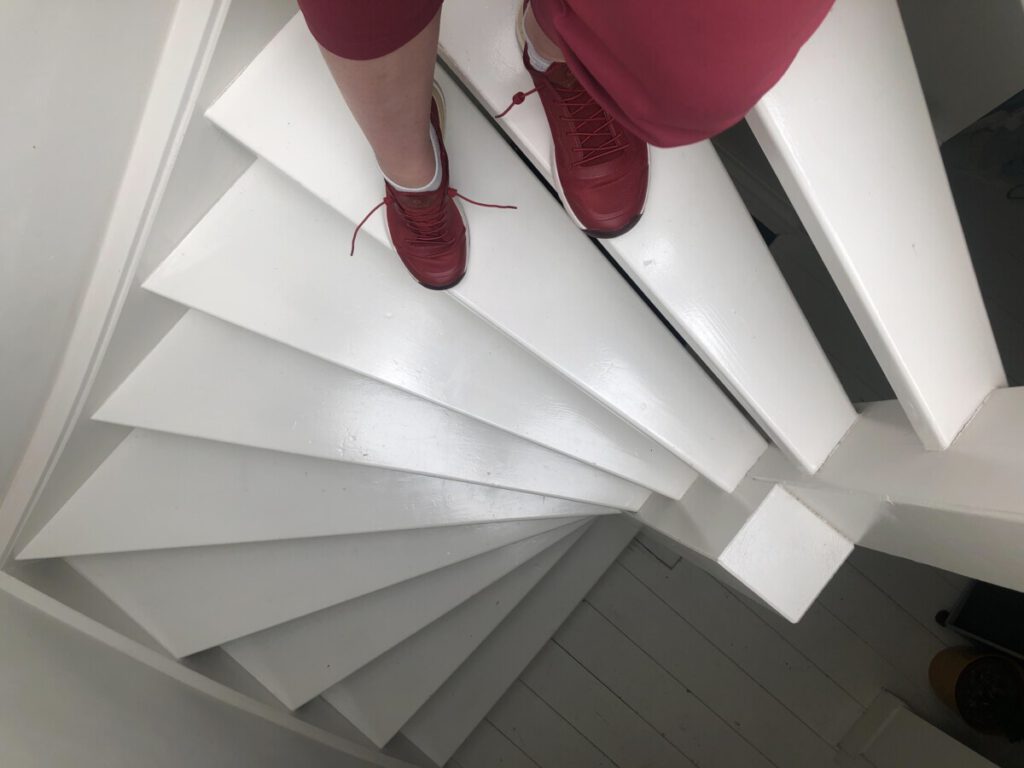
5. Steep stairs that’ll almost scare off a mountain goat
Definitely not a fun experience if you’re afraid of heights. 🥴 Image: DutchReview/Supplied
If you need practice for a trip to the Tibetan mountainside, please visit a Dutch house. The steepness is mostly born out of necessity.
Dutch houses are packed more closely than stroopwafels in AH packaging because Dutch authorities used to tax people based on the width of their homes.
So, if you’re visiting a Dutch house and cry out in amazement at the steepness of their stairs, be warned that your shins may also be in danger.
6. A gourmetten bakplaat (griddle) that’s whipped out every December
Trust us, it’s more fun than it sounds! Image: Christiano Betta/Wikimedia Commons/CC 2.0
It makes sense that the inventors of borrelen appreciate time in the company of good food and drinks.
Gourmetten involves sitting at a table and grilling meat and veggies in tiny pans on a bakplaat (a small device to cook food), with accompanying bread and sauces.
It’s a popular Dutch Christmas tradition and a great way for families to have a gezellig etentje (cosy dinner) together!
As such, gourmetten bakplaten are likely to be stashed somewhere in a Dutch kitchen, waiting for the perfect time to grill.
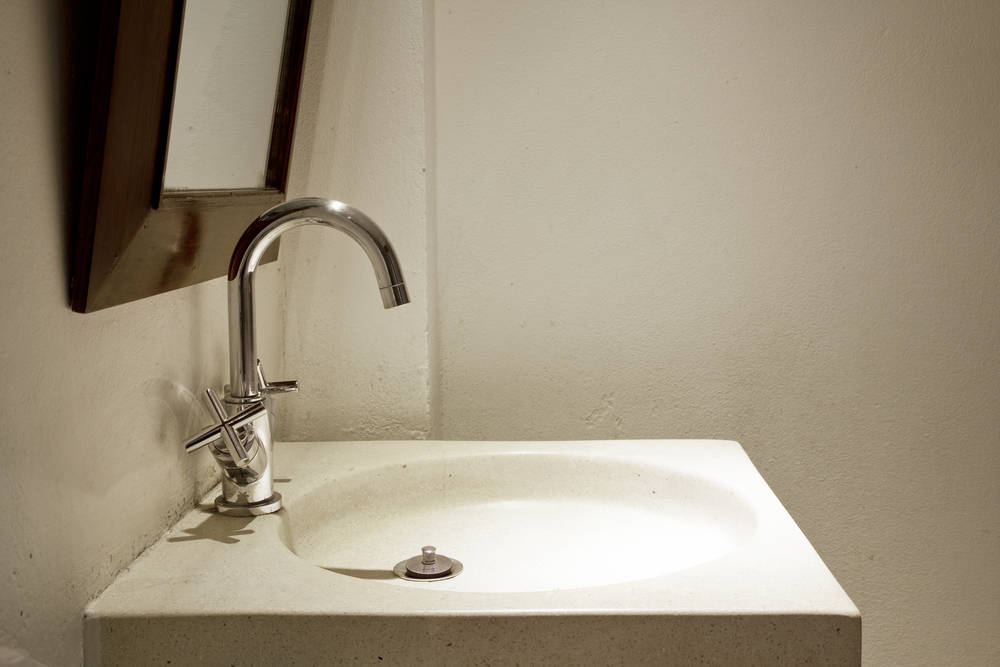
7. Bathroom sinks in bedrooms because we don’t even know
We sink we’ll give this one a pass. Image: Depositphotos
You can occasionally find bathroom sinks lurking in Dutch bedrooms like uninvited guests.
Dating back to a time when proper bathrooms weren’t as common, “bedroom sinks” are currently more often found in older houses, though newer student houses are also seeing an uptick in these fixtures.
That being said, students beware: some landlords use this “privilege” as an excuse to increase rent on bedrooms with sinks. 😉
8. Ceramic figures giving each other a perpetual smooch
We can definitely see why they’re so popular! Image: Depositphotos
Plenty of Dutch houses feature ceramic figurines of a boy and girl in traditional Dutch clothes having a snog.
They’re a combination of adorableness, Dutch traditionality, and Delft blauw (traditional blue and white Dutch pottery which depicts scenes from the Netherlands).
I mean… what’s not to like?! In fact, this kissing couple is so popular that three-storey-tall statues of them were erected in Zaandam.
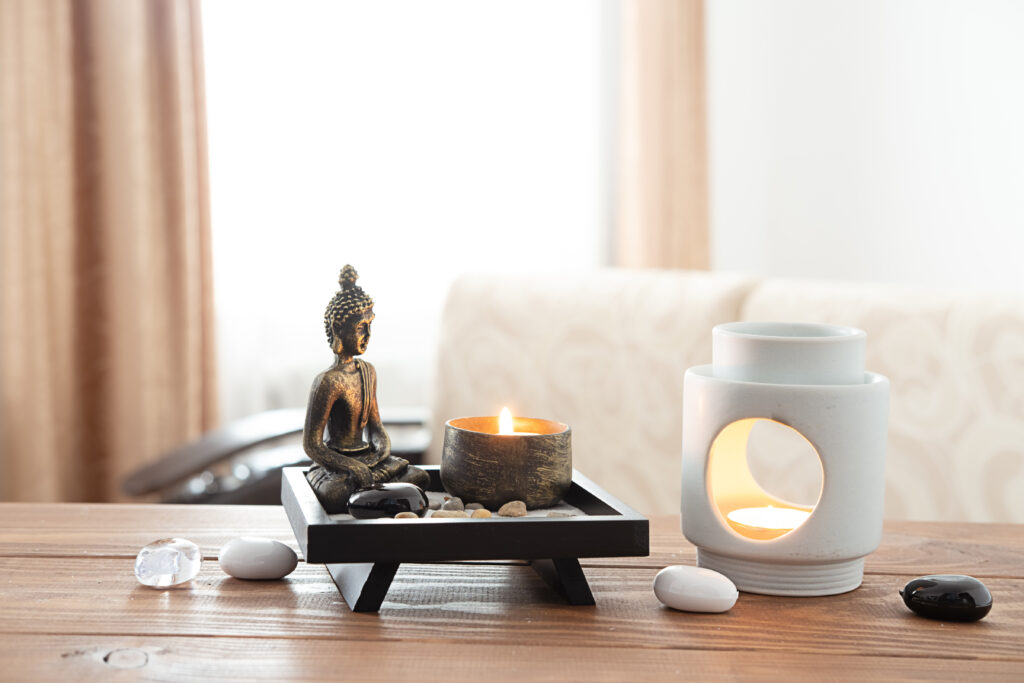
9. Random Buddha statues, for that extra bit of zen
One theory is that Western countries have an appreciation for elements of Asian culture that they find easy to digest.
Here’s our theory: Buddhas, with their aura of exoticism, add an element of “yes, it’s from Thailand — I like to travel, you know 😌” (even if it’s bought with a korting at a gift shop in Amsterdam).
10. A flessenlikker to get every drop of what’s lekker
The Dutch love many things, including various spreads for their boterhammen (sandwiches) and being thrifty.
What’s the best way to combine the two? A flessenlikker, of course!
Dutch doors? But wait… how can so-called “Dutch doors” be that weird? 🤔
Well, these doors — also known as stable doors or boerendeuren (farm doors) — are exterior doors with a weird quirk. They contain an upper and lower half, which can both be opened independently of each other.
These halves function similarly to windows. The top half allows the house to be aired, while the lower half keeps dirt and animals out.
This is pretty nifty as they’re most commonly found on farms. After all, you don’t want a goat to pop in and nick your boterham (sandwich)!
12. The efficient kaasschaaf for all your sandwich needs
Making the perfect boterham (sandwich) has never been easier! Image: Depositphotos
I’m sure most of us are familiar with the humble cheese-grater — but the Dutch kaasschaaf (cheese slicer) is the cheese-grater’s bigger (and dare we say better? 😉) brother.
Dutchies who want something fancier than plakjes (slices) of cheese from their Albert Heijn grab one of these bad boys and slice their cheese wedges at home.
Coming across one of these in a drawer signals that you’re either in a Dutch house or there’s a wild Dutchie lurking around yours (hopefully, they brought cheese!).
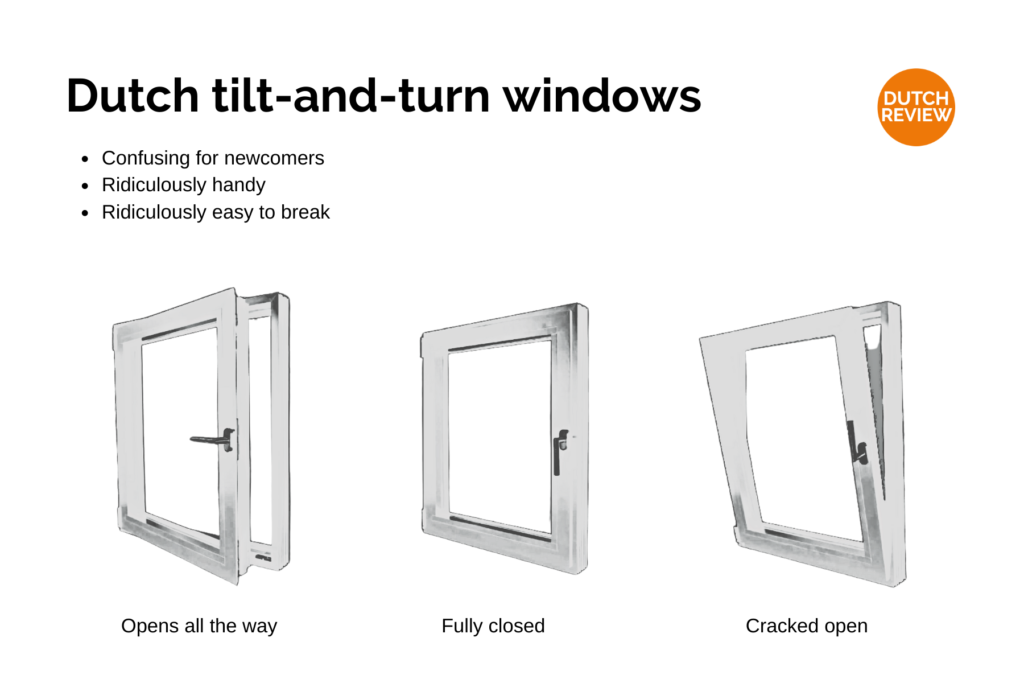
13. Mysterious draaikiepramen that befuddle most internationals
What is this sorcery?! 🤯 Image: DutchReview/Supplied
The draaikiepraam or tilt-and-turn window is relatively common in parts of Europe, but particularly in the Netherlands.
However, its two methods of opening have internationals scratching their heads in confusion. A draaikiepraam can be tilted inward on its axis to let in a light breeze or opened outwards like a door.
These are perfect for houses in the Netherlands that often lack space. However, they feature a finicky mechanism that can be a nightmare. And thank your lucky stars if you’ve never had to pay to have one of them fixed!
Having to do battle with one of these is a sure sign you’ve landed in a Dutch (or Western European) house.
14. Two different kitchen towels that you’d better not mix up
We repeat, don’t mix them up! Image: Freepik
Almost every Dutch house has two kitchen towels — one for your hands, and the other to dry washing up. Wipe your hands on the wrong towel, and you risk a stern frown.
Which one is which? Well, the Dutch people we’ve spoken to for this article say the one for their hands is fluffier. To be perfectly honest, though, we just take a random guess each time.
As you can see, the Dutch abound with creativity and quirkiness (though we will have to give those stairs a pass)!
What other strange things have you come across in Dutch houses? Tell us all about it in the comments below!
Understanding the average salary in the Netherlands is important for professionals considering a move to this European country.
The Netherlands is known for its high quality of life, strong economy, and excellent work-life balance, as well as being one of the highest-paying countries in the world.
Workers in the Netherlands earn one of the highest salaries in Europe! Image: Markus Spiske/Unsplash
But what will your salary be? Well, the average salary in the Netherlands depends on a few factors, such as industry, work experience, and education level.
According to the Centraal Planbureau (Central Planning Bureau, or CPB), the median annual salary in the Netherlands for 2026 is calculated to be about €48,000 gross per year (including holiday allowance). While the monthly average amounts to €3,800 gross per month.
Some sources estimate a slightly lower average salary in the Netherlands, starting at €41,000 gross per year (€3,417 per month).
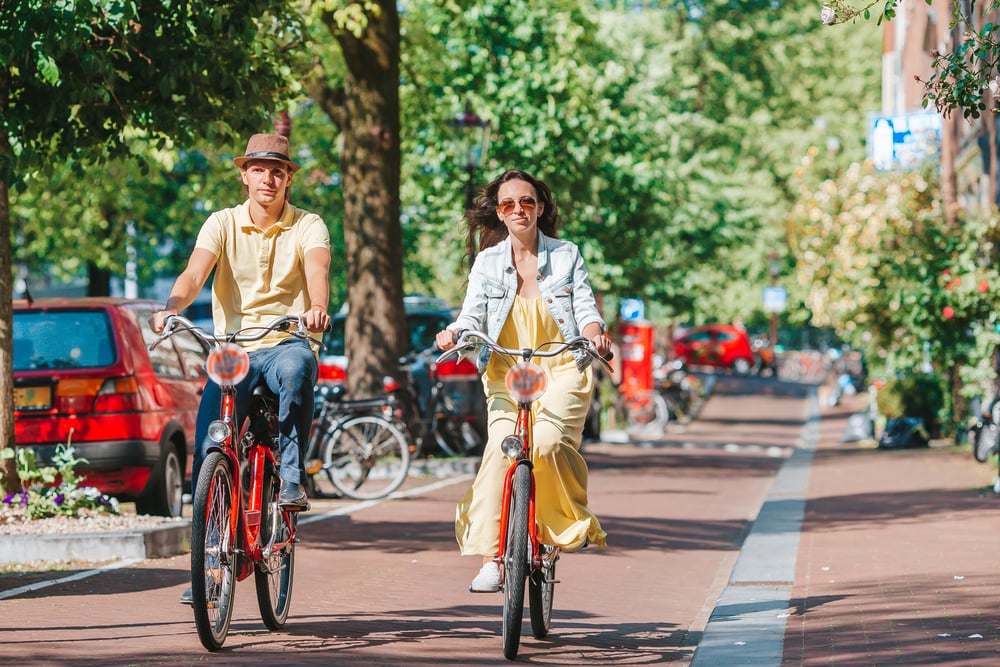
Just like the average Dutchie may cycle to work, the average person earns around €41,000 a year. Image: Depositphotos
Of course, a range of factors impact the average salary, including age, education level, and industry. So what’s the average for you?
Average salary in the Netherlands by age
One way to look at average salaries is by age, where 45 to 65-year-olds usually earn the highest median salary per annum.
Age
Median yearly salary in 2026
25 and younger
€37,500
25-45 years old
€37,900
45-65 years old
€42,700
65 and older
€32,700
Children between the ages of 13 and 16 are allowed to work under certain conditions. They can also work for the minimum wage starting at age 15, earning €4.41 per hour.
Supermarkets are a common “bijbaan” (side job) for people under 18. Image: Jumbo
On the flip side, the average retirement age in 2022 was 65.5 years, which was slightly less than the Dutch state pension age.
The statutory retirement age in the Netherlands has gradually increased in the last few years, reaching 67 in 2024. It will increase further to 67 years and 3 months starting in 2028.
Average salary in the Netherlands by education
The Dutch education system is considered one of the best in the world, with 38% of adults in the Netherlands holding some form of tertiary education.
Getting a university degree increases your chances of a higher average salary in the Netherlands. Image: Depositphotos
As expected, the average salary in the Netherlands increases with education level.
Tech hub and home of Philips, Eindhoven nabs the second place. The Hague takes third place, as it is home to many intergovernmental organisations, embassies, and NGOs.
The Hague takes third place for the highest average salary by a Dutch city. Image: Depositphotos
Average salary in the Netherlands by industry and work experience
The most in-demand job sectors are finance, information technology (IT), (mechanical) engineering, and (public) healthcare.
People working in finance at the manager level make an average of €73,745 a year, while engineers make an average of €43,945 a year.
Gross salary vs. net salary
Once you’ve signed on to a new baan (job), your employer will offer you a salary. You’ll be given two figures, your bruto salaris (gross salary) and your nettosalaris (net salary). So, what’s the difference?
It’s important to keep track of how much money is actually going into your bank account each month. Image: Freepik
Well, your brutosalaris refers to the amount of money you make before taxes and other deductions — which means you won’t be keeping the full amount.
Instead, the netto salaris is what winds up in your bank account once all the deductions have been made.
Income taxes in the Netherlands
In 2026, the Netherlands has three tax brackets for Box 1 income (meaning the money you earn from your work and home ownership).
Gross Yearly Salary
Income Tax
Below €38,883
35.75%
Between €38,883 and €79,137
37.56%
Above €79,137
49.50%
As the incomes and tax rates change every year, you can use an online calculator to determine your exact income tax.
While you’re at it, stay on top of your taxes, too! Image: Depositphotos
When you receive your monthly payslip, your employer has usually already deducted the income tax from your salary (under payroll taxes), as well as any other contributions you may have to pay.
Understanding your Dutch payslip
Employees in the Netherlands receive their payslips (loonstrook) from their employer on a monthly basis.
Dutch term
English translation
Meaning
Periode
Period
The relevant time period of work (weekly or monthly)
Personeelsnummer
Employee number
Your employee ID number
Salaris
Salary based on hours worked
Your gross monthly salary
Brutoloon
Gross salary/wage
Gross salary before taxes and deductions
Nettoloon
Net salary/wage
Net salary after tax and deductions; the final amount that goes into your bank
Uurloon
Wage
Your gross wage (usually by hour)
Burgerservicenummer (BSN)
Citizen service number
Your Dutch social security number
Gewerkte uren
Worked hours
(Normal) hours worked that period
Loonheffing
Income tax
The amount of money deducted for prepaid taxes and contributions
Socialeverzekering
Social insurance
The social security contributions you pay for (and are covered by)
Social premiums and contributions
Your payslip may also include which social security programmes you contribute to and which ones you are covered by.
Your employer often deducts social premiums and insurance from your salary before you get the money at the end of the month. Image: Depositphotos
Examples of contributions are your pension fund (Algemene Ouderdomswet or AOW), disability pension (arbeidsongeschiktheidspensioen or AP), unemployment benefit (werkloosheidswet or WW), and paid sick leave (zorgverzekeringswet or ZVW).
Whether you’re a fresh graduate or a seasoned professional, understanding the average salary in the Netherlands is important for anyone who plans to or is currently working here.
Have you worked in the Netherlands? Tell us about your experience in the comments below. 👇
Average salary in the Netherlands: Frequently asked questions
What is the average salary in the Netherlands?
According to the CPB, the median annual salary in the Netherlands is €48,000, or about €4,000 gross per month.
The average salary depends on many factors, including your age, industry, experience, education level, and even the city you live in.
What is the minimum wage in the Netherlands?
The minimum wage in the Netherlands is fixed per hour and depends on your age. Your weekly or monthly earnings depend on your official number of working hours. Here are the wages by age:



















![What is the average salary in the Netherlands? [UPDATED 2026]](https://dutchreview.com/wp-content/uploads/Depositphotos_80370120_s-2019-768x512.jpg "What is the average salary in the Netherlands? [UPDATED 2026]")