According to Forbes’ 2025 list of the world’s highest-paid athletes, Max Vertsappen, our favourite flying Dutchman (well, Dutch-Belgian to be exact) is the second highest earning Formula 1 driver in the world, right below Lewis Hamilton.
The 27-year-old bagged a casual $78 million over the past 12 months — just $2 million shy of Hamilton.
Where’s all that money coming from? Unsurprisingly, the largest portion ($72 million) is thanks to his salary and bonuses from Red Bull, the Formula 1 team he’s been racing with since 2016.
The remaining $6 million? That’s from endorsements and commercial deals. Not a bad side hustle!
Finishing among the top 50
Verstappen’s success on the track has landed him in 24th place among 50 of the world’s highest-earning athletes.
This year, the bar to break into the top 50 has shot up — athletes needed to earn at least $53.6 million, a significant jump from last year’s $45.2 million (which, let’s be honest, still sounds like Monopoly money to most of us).
Add it all up, and the top 50 athletes pulled in a jaw-dropping $4.23 billion this year — up from $3.88 billion in 2024. Yes, billion with a B.
So no, Max Verstappen isn’t number one — but 24th in the world and $78 million richer? That’s still a podium-worthy finish.
When did success hit?
Max Verstappen’s career didn’t just take off — it exploded onto the scene. He began his journey in Formula 1 in astonishing fashion, becoming the youngest person ever to compete in an F1 race at just 17 years old.
And he didn’t stop there — he made history again by becoming the youngest-ever F1 race winner at 18 years and 228 days old, claiming victory at the Spanish Grand Prix in 2016. Talk about an early bloomer.
What do you think, is Max Verstappen worth $78 million? Let us know in the comments!
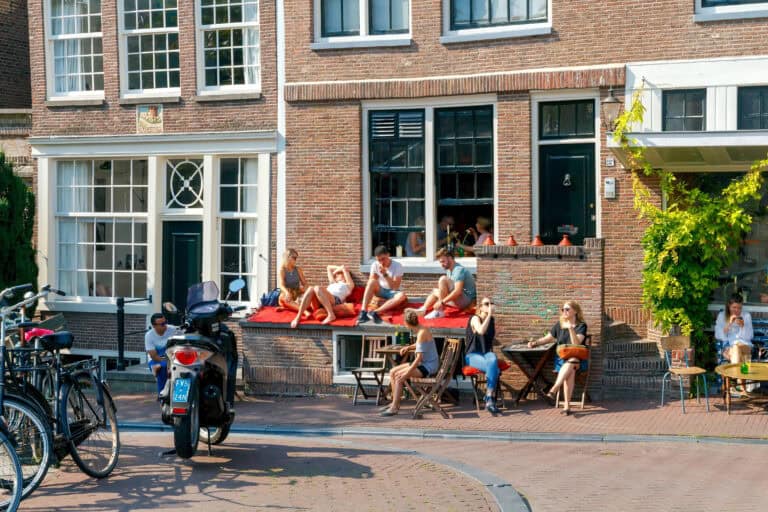
Tired of sipping your cappuccino in the cold while the sun shines mockingly on someone else’s table? Geen stress (no worries), there’s a handy new tool that shows you exactly which terraces are soaking up the most sun. 🌞
Rotterdam local Frank Nanninga had one noble mission: to stop freezing for his caffeine fix. So, he built a clever tool powered by AI to help you spot the sunniest café seats in town.
No more guesswork, no more cold coffee. Let’s dig into how the sun-sniffing masterpiece works. 👇
Built by a man on a (caffeinated) mission
It all began when Frank wandered around Rotterdam, coffee in hand, hunting for a sunny terrace that wasn’t buried in shadow by a skyscraper.
“I love coffee and enjoy it even more when I can sit in the sun with it,” he told RTL Nieuws, summing up the struggle we know all too well.
Tired of playing hide-and-seek with the sun, Frank turned to artificial intelligence and used vibe coding, a method where you describe the problem and let AI do the heavy work.
Within a day, the first version of Koffieindezon came to life. A week later, tens of thousands of sun-hungry visitors had already used it. 🔥
How the magic works
Koffieindezon uses public 3D building models and the sun’s current position to simulate where shadows fall in real time. Think Google Maps, but much hotter.
Just open the site, zoom in on the map, and voilà: you get a live view of where the sun is shining at that very moment.
You can fast-forward through the day, pick a future date (yes, even next Thursday at 4:00 PM), and see exactly when your favourite café gets sunlight. ☀️
It works everywhere in the Netherlands, whether you’re keen to lounge in the heart of Amsterdam or sip a quiet beer in a village with more cows than coffee options.
The Netherlands is full of statues that will make you look twice, and sometimes even laugh to tears. Here are our top five favourites in the weird statutes category.
Holland has always been a pretty artsy place, but there are some weird statues in the Netherlands that will simply make you exclaim, “WTF?”.
While we do understand that art comes in all shapes and forms, there are some pieces that even the most snobby art student will have a hard time taking seriously.
1. Butt plug Santa, Rotterdam
What else is this supposed to depict? Image: F. Eveleens/Wikimedia Commons/GNU
As surprising as it might be, the “butt plug” was actually not intentional. This statue in Rotterdam was supposed to depict good old Santa Clause holding…something? Is it a deformed Christmas tree, a candle, or marshmallows stacked on a stick? Nobody really seems to know the answer.
No matter what it was supposed to be, this unfortunate Santa will forever be cursed with this vulgar nickname. Because seriously, this is the Netherlands. Even old grannies know what a butt plug is.
Regardless of what really went down in 2001, when the statue was commissioned, we are oh-so-happy that this lovely piece of art still stands tall and proud in Rotterdam. Because nothing is more festive than Santa with a dirty sense of humour!
2. Giant tooth, Doetinchem
An ode to the tooth! Image: Ken00bie/Wikimedia Commons/CC3.0
Dental care is important, and the citizens of Doetinchem are reminded of that every single day. While it hasn’t been confirmed whether this is actually a giant tooth or not, it would be weird if it’s anything else. Just look at it: this magnificent beast of a tooth is every dentist’s wet dream.
While there seems to be no explanation as to what exactly this magnificent tooth is doing there, the mystery that it is shrouded in makes it even more intriguing.
Because, at the end of the day, art is all about feelings. Feeling confused, feeling intrigued, or even feeling like you should floss more often.
3. Spider walk man, Hoofddorp
Is it us, or does this guy’s posture seem a little off? Image: Dqfn13/Wikimedia Commons/CC3.0
Now, this is straight out of a horror movie! This giant red sculpture goes against all laws of human anatomy. The poor red man looks just as uncomfortable as he makes us feel.
And yet he leaves us with so many questions. Why is he bending over? Is he waiting for anything? And why red? Not to mention that the statue looks like it’ll soon be activated to destroy the town!
We would love it if an art student actually explained this one to us. But in the meantime, we’ll do our best to suppress this image deep, deep down, until it eventually comes back to haunt us in our nightmares.
4. Concerned sea elephant, Leiden
Quite possibly the chillest elephant in the Netherlands. Image: DutchReview/Supplied
Unlike the aforementioned entries in this list of weird statues in the Netherlands, this one actually has a very sweet story behind it.
This seemingly well-mannered sea elephant is actually called Homunculus Loxodontus (try saying that five times fast). The sculpture represents the emotions of people who wait at the doctor’s office, and is now located at the entrance of the LUMC.
We’ve got to hand it to the sea elephant. He seems to have more patience than most people you can find in the doctor’s waiting room.
I mean, between screaming children and adults coughing in your face, you must have nerves of steel to remain this calm. And where on earth is his smartphone? On second thought, he might actually be a psychopath.
5. The gift of life, Den Bosch
All is fair in love and art (?). Image: DutchReview/Supplied
The best way to describe this piece is “art”. Yes, it’s a man’s lower body. Yes, his upper body is nowhere to be found. Yup, he is giving birth. Yes, it’s a bird hatching from an egg. Yes, there seems to be an arrow penetrating that bird. Pretty straightforward, right?
This sculpture was actually inspired by an artwork of Hieronymus Bosch, and proudly stands in the town of Den Bosch. The more you look at it, the more uncomfortable you’re bound to feel.
But look at it from the bright side: this is the gift of life. Congratulations, it’s a… bird!
It pains us to say this, but the penis fountain in Amsterdam is no longer erected (pun intended). This glorious piece of art originally resided in the Red Light District, until the city council wasn’t feeling it anymore.
And while the penis fountain may no longer be there, we will surely remember it forever, through the images that remain to remind us of its former glory.
Which weird statutes would you add to the list? Tell us in the comments below!
Dutch children are heel independent — from cycling to school on their own to getting their first jobs at a young age.If you have a child in the Netherlands, they’ll likely want to be just as independent. One way to do this? Let them handle their own money.
Now, I get it, this can seem scary at first. But one way to set them up for success is by giving them a solid foundation of knowledge when it comes to financial literacy.
Here’s how to teach your children about money in the Netherlands.
1. Be direct — just talk about it
Dutch people are known for their open and direct approach to life — and that includes conversations with their children. Whether it’s talking about sex, dating, or money, not much is taboo for Dutch parents.
Why do I bring this up? Well, because one of the easiest and most effective ways to teach your children about finances is to dive right into those discussions at home.
Money-related conversations should be normalised from a young age. Image: Freepik
You can start off by talking about how much everyday items cost, and what it means to save for a rainy day.
Being transparent about your family’s financial goals or even the monthly grocery bill can help kids grasp the value of money early on.
2. Make it visible at the local market
One of the best ways to make money real for children is by showing them how it works in everyday life. Since debit cards pretty much rule the Netherlands, this can sometimes be a challenge.
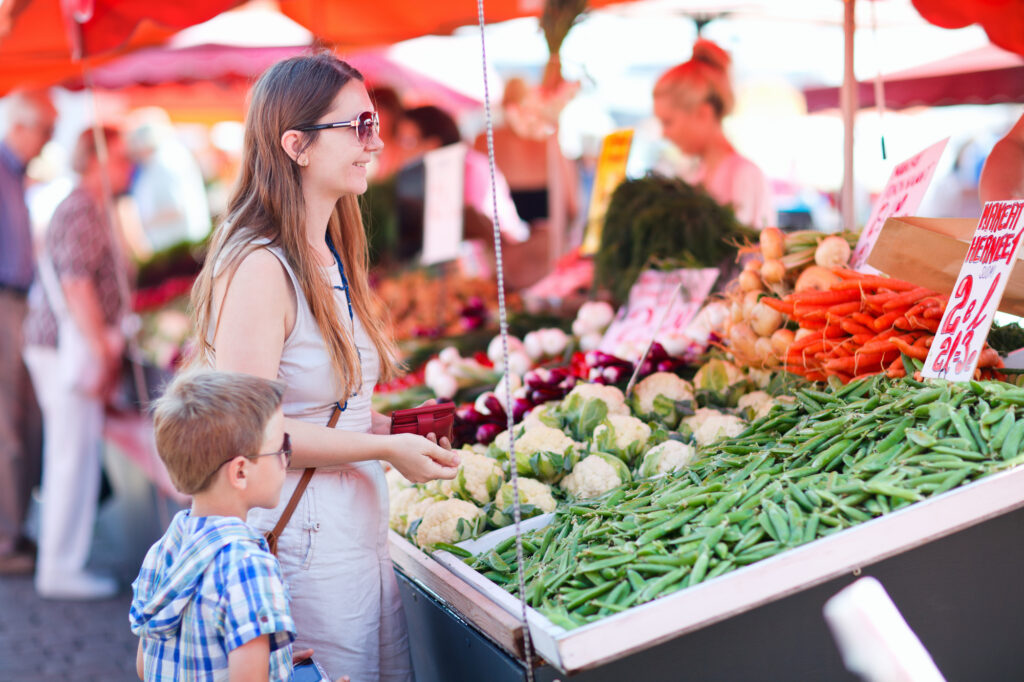
That’s why I recommend going to your local market, where cash is often still king! It’s the perfect place for some hands-on experience (and some delicious snacks).
An educational day out while also running errands? Now that’s a win-win! Image: Depositphotos
Does your child fancy some of those fresh, warm poffertjes? Or maybe they can’t resist a lekker stroopwafel? Hand them a few euros and let them buy something, calculating how much they need and what they can afford.
Not only is your child getting a delicious snack and learning how to make financial decisions, you’re also supporting the local economy. It’s a win-win-win!
3. Discuss kid-friendly ways to earn pocket money
In the Netherlands, pocket money isn’t always just handed out — it’s earned through chores and small tasks, a tradition often referred to as Heitje voor een karweitje(a quarter for a chore).
Encouraging your kids to take on (age-appropriate) responsibilities around the house or neighbourhood is a fantastic way to teach them some financial and life lessons.
You can give your child pocket money as you feel is appropriate. Image: Depositphotos
Whether it’s tidying up their room, helping with chores, or walking the neighbour’s dog, your children will learn two crucial things: First, that money isn’t just handed out but is earned, and second, how to take responsibility for tasks.
4. Let them get a bijbaantje
Many Dutch teenagers have their first part-time job by the time they’re 13 or 14.
Whether it’s stocking shelves at the local Albert Heijn, babysitting, or handing out newspapers, these types of bijbaantjes are a wonderful way to learn about financial independence, responsibility, and time management.
A first job teaches many lessons. Image: Freepik
Of course, having a job also means that your child will earn their own salary for the first time ever. The result? They’ll gain a sense of control over their finances, and learn how to balance spending and saving.
And psssst… it might even make them understand why you can’t always say yes to the latest trending gadget. After all, that shiny new pair of shoes now comes with the weight of hard work. 💪
5. Give them the freedom to manage their own money
With their own salary or pocket money comes the question: how will this money be dealt with? Who will manage it? And who will make the financial decisions about it?
Well, one way of doing things is by giving them some control over it — after all, it’s them who earned the money.
Found a coin on the street? Straight into the piggy bank! Image: Depositphotos
Of course, this doesn’t mean you should give them full access to spend it all on video games and candy.
You could, however, let them have their own (supervised) bank account, with their own debit card and savings account. This way, they can start practising real financial responsibility while you can keep an eye on things.
6. Let them set a saving goal and stick to it
There’s no better way to teach your children about the value of money than to encourage them to save for something they really want.
Whether it’s a new console, rollerblades, or tickets to see their favourite artist — setting a savings goal gives children and teens a clear goal to work towards.
Reaching that savings goal is so rewarding — for both child and parent. Image: Depositphotos
This can help them stay motivated to do good work, all while learning important lessons in money management.
And, of course, when they make that hard-earned purchase, they’ll feel the pride of knowing they made it happen all on their own
7. Educate them about online tools and security
As your kids grow older and start navigating the online world, it’s crucial to teach them about managing their money digitally.
This will help them become financially savvy in a digital world — a skill they’ll need as they become more independent
First things first: they need to understand that online money is real money, even if it’s just a number on a screen. (Trust me, my mum can tell you some horror stories about this one. 🥲)
Tech-savvy kids must know about online security. Image: Freepik
In the Netherlands, online tools like iDeal and Tikkie are a big part of how people handle payments online, so educating your teen on how these systems work is important.
Just as important as teaching them how to use the tools is talking about security and privacy. It’s a jungle out there, but rather than trying to shield kids from the real world, we should teach them to navigate it.
Pas op, it’s not just online! When talking to your kids about security, remind them that scammers can approach them in person too — at school, on the street, or through social media — asking to “borrow” their bank account or card.
Make sure they know: lending their account, even for a quick favour, is fraud, and could lead to serious consequences.
Teaching your children about money in the Netherlands can be scary, but remember that it’s all about giving them the freedom to learn and grow.
Will they make mistakes? Probably — but that’s life. And you’ll be there to guide them along the way.
Do you have any more tips on how to raise money-savvy kids? Share them in the comments!
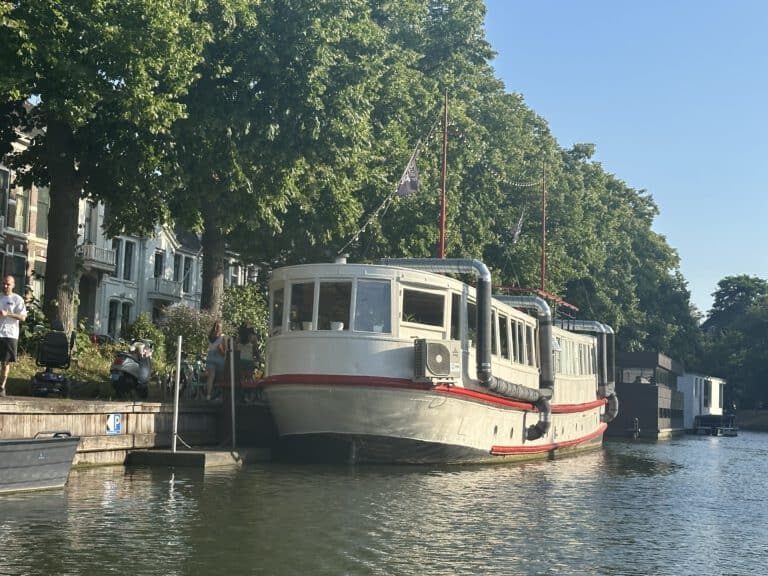
Living outside the Randstad brings many advantages, including lower housing prices, reduced noise, less light and air pollution, and a generally more peaceful life.
When people talk about awesome places to live in the Netherlands, they focus only on the big four: Utrecht, Amsterdam, Rotterdam, and The Hague.
No shade to any of these places, they’re great — but they’re not for everyone.
That’s why we wanted to broaden the discussion and bring you seven amazing places to live that are not in the Randstad.
The Randstad comprises the four largest cities in the Netherlands: Rotterdam, Utrecht, Amsterdam, and The Hague, as well as the smaller areas and cities surrounding them.
The Randstad is the most densely populated area of the Netherlands. Image: Depositphotos
Often, cities and areas outside the Randstad are overlooked in national discussions, the media, and government policy.
Within the Randstad, there’s the perception that the rest of the country is filled with conservative, cow-loving bumpkins — which just ain’t true.
Now that the term has been explained, let’s move on to what you’re here for — the seven places we recommend for living outside the Randstad.
1. Groningen: a student city well beyond the Randstad
Groningen is a beautiful small city in the north of the Netherlands. It’s a student city, which means it feels young, vibrant, and full of life. Farmer’s markets and traditional Dutch architecture abound.
A beautiful view of Groningen and the Martini church tower. Image: Depositphotos
Housing isn’t particularly cheap here, mostly due to the high demand from students, but it’s still reasonable compared to Amsterdam.
You can expect to pay around €200,000 to buy an apartment and between €300,000 to €500,000 for a family home.
As a popular city, Groningen boasts excellent transport links to the rest of the country, particularly the Randstad.
You can get to Amsterdam within two hours, and a train departs at least every half hour in that direction.
So, if you need to commute or simply want to explore the rest of the country, rest assured that traveling via public transport will be no problem.
Groningen is one of the hidden gems of the North. Image: Depositphotos
And the cost of living? According to Numbeo, it’s significantly cheaper than in Amsterdam: a meal at an inexpensive restaurant will cost around €15, a cappuccino €3, and one kilogram of potatoes (a crucial purchase if you’re hoping to integrate) about €1.79.
2. Amersfoort: outside the Randstad but close to Amsterdam
If you’re looking for a city outside the Randstad with a short commute to Amsterdam, then Amersfoort is the city for you.
The train from Amersfoort to Amsterdam takes just over half an hour, and trains depart every 30 minutes, or more frequently.
Doesn’t this beautiful city just scream ‘medieval’? Yup, that’s Amersfoort! Image: Depositphotos
Amersfoort is also a really beautiful city. It has the famous Koppelpoort, which has been around since medieval times and attracts many tourists yearly.
Now, due to its proximity to Amsterdam, Amersfoort is not the most affordable option when it comes to housing.
Buying a traditional Dutch home can cost anywhere from €350,000 to €650,000 — but that could be well worth it if you work in the Randstad and crave a quieter vibe.
It’s also slightly more expensive than Groningen’s cost of living. That kilo of potatoes will cost you an extra €0.10, and a refreshing domestic biertje an extra euro.
3. Eindhoven: your modern city outside the Randstad
If you’re craving a more modern, artistic city, then Eindhoven is your best bet. It’s home to the world-famous Eindhoven Design Academy and hosts Dutch Design Week each year.
Not to mention that it has an airport, so if you need to travel abroad frequently, then it’s the perfect place.
Eindhoven’s futuristic city centre. Image: Depositphotos
Regarding housing, an apartment in the centre costs you anywhere from €240,000 to €445,000, and family homes are usually priced at around €330,000.
Considering how close Eindhoven is to the Randstad (you can get to Amsterdam in an hour and fifteen minutes and The Hague in an hour and a half), this price could be worth it.
The cost of living is pretty much exactly the same as in Amersfoort, but cappuccinos are a whole cent cheaper. So, the answer to all your financial problems is obvious. 🤩
4. Tilburg: a city of art outside the Randstad
Tilburg is an often-forgotten city of the Netherlands, but that’s an injustice we’re working hard to correct at DutchReview.
Here’s a good view of what a regular day in Tilburg looks like. Echt mooi! Image: Depositphotos
With its origins as the wool capital of the Netherlands, Tilburg has recently become home to numerous tech and chemical companies, making it a potential destination for those in these industries.
It also has its own liqueur, Schrobbelèr, and has made a name for itself as a city filled with modern art and festivals.
We’re not the only ones obsessed with Tilburg: housing prices have been steadily increasing each year as more and more people realise that its simple commute to the Randstad (only an hour to The Hague) makes it the perfect city to settle in.
The average house price is now just under €300,000. However, the cost of living in Tilburg is quite low: an inexpensive dinner costs €18, and a sack of potatoes is available for €1.87. Thank goodness. 😌
5. Maastricht: a cosy city centre outside the Randstad
If you want to experience Germany without actually living there, then Maastricht is the place for you.
Just kidding, but Maastricht could be a great option if you work in Germany or Belgium, or often need to travel to either. 😉
It’s also a really beautiful city, with a cosy city centre filled with small shops and restaurants.
A cosy and beautiful riverside view of Maastricht. Image: Depositphotos
Housing prices are reasonable: an apartment will cost about €160,000, and a family home around €300,000.
Maastricht is the city that’s furthest away from the Randstad on this list.
It’s almost three hours on the train to The Hague, so commuting from there to the Randstad would be a bit difficult every day.
However, the cosiness of the city centre and its closeness to Germany and Belgium could well be worth the trek for you.
6. Leeuwarden: traditional Dutch architecture outside the Randstad
Leeuwarden is also quite a distance from the Randstad: you’re looking at a two-hour and 40-minute drive to The Hague and just over two hours to Amsterdam.
The bustling city of Leeuwarden on a sunny day. Image: Depositphotos
However, this city has much to offer for you, Randstad-fleeing people.
It has beautiful and traditional Dutch architecture: canals, tall houses, and church spires. You’ll find cosy cafes with outdoor seating along the canals in summer.
In terms of the cost of living, it’s similar to Amersfoort or Eindhoven: dinner at an inexpensive restaurant costs €18, and potatoes cost €1.71 — but of course, we’re all wondering about the big question: housing.
As the Dutch saying goes: “God may have created the earth, but the Dutch created the Netherlands.” Something they didn’t add? Mountains, or even hills.
For centuries, the Dutch have pumped water out of the surrounding sea to make way for building expansion and agriculture.
Impressive, but sometimes you just need to get high. (No, not that kind of high. 🚬😉)
What is it?
The quintessential windmill and canals you imagine when you think of the Netherlands serve an important purpose: they pump, contain, and manage water flow from the sea to the land.
Since the ocean floor is flat, the resulting Dutch horizon is fairly featureless.
With a growing population, they decided to make more land for themselves instead of simply finding a new place to live.
(So next time you start making excuses, maybe take a page out of their book.) 😉
Why is it quirky?
Typically, when a society runs short on space, we build up: skyscrapers, apartment complexes, and towers.
But not the Dutch. Instead, they picked a perpetual fight with Mother Nature to keep their civilisation afloat.
In my 4 years in the Netherlands, I missed the mountains. Today I biked in Colorado and I understand why it's nice to live somewhere that's as flat as a pancake sometimes.
— Dr. Giulia Evolvi – also on blue ☁️ (@giuliaevolvi) April 9, 2024
Missing the mountains?
If you want to get some vertical perspective, consider a hike up Vaalserberg (322.4 m) or visiting the sand dunes in Zuid-Kennemerland National Park.
If that’s not enough for you, perhaps you can join the cause to build one.
Do you miss the sense of an incline underfoot, or do you prefer the negative altitude? Tell us in the comments below!
Sure, the Netherlands is known for windmills, tulips, and cheese. But here’s something they don’t put on postcards: the Dutch have absolutely cracked the code on being productive without being constantly stressed out.
Call it “chill productivity.” It’s not about working less — it’s about working smart. The Dutch don’t glorify burnout or wear busyness like a badge of honour.
Instead, they get things done with a calm confidence that makes you wonder if they’re onto something (spoiler: they are).
They prioritise well, communicate clearly, and actually trust their employees to manage their own time. Revolutionary, right?
Work less, do more: The Dutch secret sauce
So, what’s in the stroopwafel syrup of success here? It starts with a national mindset that values work-life balance not as a nice-to-have, but as a non-negotiable.
A shorter workweek? Pretty normal. Yet productivity levels? Still high. Because it turns out when people aren’t chained to their desks 24/7, they get more done — and they’re way happier doing it.
Dutch work culture is just different. Image: Freepik
Dutch office culture leans heavily on collaboration, not competition. You won’t find people hoarding knowledge or flexing their overtime hours.
Instead, it’s all about teamwork, setting realistic goals, and — shocker — leaving on time. It’s a system that trusts people to do their jobs without micromanaging the life out of them.
Flexibility isn’t a perk — it’s the norm
Rigid 9-to-5 culture? Hard pass. In the Netherlands, flexibility is baked into the way people work. Remote setups, adjustable hours, part-time gigs — it’s all part of the deal.
And it works. People are less stressed, more focused, and actually have time for, you know, life.
Tech-savvy, not tech-obsessed
This isn’t some magical utopia either. Dutch companies lean into tech to keep everything running smoothly.
Digital tools make communication seamless, project management less of a headache, and meetings short enough to stay awake through. It’s all designed to keep work flowing — without the chaos.
They use tech to make their work life easier, not busier. Image: Freepik
Tech in the Dutch workplace isn’t just about flashy apps and Zoom fatigue. It’s about making work more efficient and less annoying.
Whether it’s quick chats on platforms like Slack or Teams, syncing up across time zones, the tools are there to support — not smother — the team.
And the best part? All of this feeds into a bigger picture. It carries into our personal lives.
Did your cat just vomit all over your rug? You’re not at the end of your tether, so it’s not the end of the world. Did you lose some money on telegramcasinonederland.com? Again, the world isn’t coming to an end, and you have the headspace to think of a solution.
Less panic, more purpose.
The Dutch way of working proves something big: you don’t need stress to be successful. You need trust, balance, and a bit of smart tech. So maybe the next time you’re grinding through another late-night email marathon, ask yourself: What would the Dutch do?
(Hint: they’re probably already on their third coffee, but they’re sipping it in the sun — and their inbox is empty.)
What do you think of the Dutch approach towards stress? Tell us your thoughts in the comments below.
Yesterday, an estimated 100,000 people dressed in red flooded the streets of The Hague in what has become the largest protest in the Netherlands in two decades.
Their demands? For the Dutch cabinet to break its silence on Israel’s war crimes in Gaza and take a firm stand against what many are formally (and finally) calling genocide.
Why was everyone wearing red?
Protest organisers asked attendees to wear red to “draw a red line” — a symbolic act meant to highlight the line the Dutch government failed to draw themselves. ❌
So far, the government has sided with the narrative of “self-defence”, insisting that Israel has a right to defend itself, even as human rights organisations and legal scholars raise alarms over the violation of international law.
According to the NOS, organisers estimate that more than 100,000 people participated, making it the most significant public demonstration in the Netherlands over the last 20 years.
The protestors marched from the Malieveld to the Peace Palace, home of the International Court of Justice (ICJ).
A genocide case against Israel is currently pending at the ICJ. Last year, the court ordered Israel to take all necessary measures to protect the civilian population in Gaza and to ensure that humanitarian aid could enter the region.
However, Israel has blatantly ignored these rulings, causing an unfathomable death toll now surpassing 53,000.
As Students for Justice in Palestine (SJP) emphasised, it’s not only about drawing a red line but ensuring that it’s enforced in our institutions, policies and daily choices.
Missing brother and sister, Jeffrey (10) and Emma (8) are believed to have been taken away in a grey Toyota in the Beerta area of Groningen on Saturdayafternoon.
The children have not been found and an Amber Alert remains in place.
Jeffrey was last seen wearing a yellow shirt, black pants and grey mountain boots. It is not entirely clear what Emma was wearing, however, according to a statement by Dutch police, she was believed to be wearing purple sneakers.
Believed to be with their father
According to police, the children may have been removed from parental custody and taken by their father, 67-year-old Klaas Bijl. The police are concerned for their wellbeing.
Police have released his image to help aid their search. Image: Politie.nl
It is believed Klaas may have taken the children in a 2001 grey Toyota Avensis Wagon Linea Terra 1.6 from the year with the license plate 77-NLV-4. Have you seen this car?
Police have released an image of the car they believe was used to take the siblings. Image: Politie.nl
Searching in the Netherlands and Germany
Beerta is situated along the Dutch-German border, which has also led police to move their search into Germany. According to this morning’s press release, they are in close contact with German police.
Police also searched the Carel Coenraadpolder area this morning, but have announced that the search has yielded nothing. They continue to appeal to the public for any information surrounding the missing children.
Have something to share? You can submit your tip anonymously, via the police tip form, or by calling the Opsporingstiplijn at 0800-6070.
Do you have any helpful information? Make sure to contact the police, any small detail may help.
The Netherlands might be small, but when it comes to sharing its culture with the world, this little country punches well above its weight.
From orange-soaked King’s Day celebrations to innovative architecture, quirky humour, and a surprisingly forward-thinking education system — the Dutch have plenty to offer, and they’re not shy about putting it out there (in English, of course).
Here’s how the Netherlands is showing off its best bits — and why that’s a win for all of us.
Festivals: Putting Dutch culture on the global stage
Let’s start with the obvious: the Netherlands is famously gezellig, slightly chaotic on King’s Day, and suspiciously good at throwing a festival for just about anything (flowers, fish, fries — you name it).
The Dutch would never say ‘nee’ to a celebration. Image: Depositphotos
But beyond the stroopwafel stereotypes, Dutch culture is a fascinating mash-up of tradition, innovation, and international flair.
Events like Dutch Design Week, Pride Amsterdam, and, yes, even Eurovision, show off the country’s creative side, but not just for the locals, but for a global audience.
Education: It’s not just windmills and wooden shoes
The Netherlands is home to some of the most international universities in Europe — and no, it’s not just because everything is in English (though that definitely helps).
Dutch higher education is full of forward-thinking approaches, digital classrooms, and tech-savvy tools that are reshaping how we learn.
Dutch universities are among the best in the world. Image: Freepik
But it’s not all shiny apps and robot tutors. There’s also plenty of debate happening here about the balance between Dutch identity and internationalisation.
How much English is too much English? Can AI improve learning without turning students into zombies? The Dutch are asking all the right questions — and actually trying to answer them.
Satire: The Dutch way of saying “we care” (with a side-eye)
Let’s be honest — the Dutch have a unique sense of humour. It’s dry, direct, and often hilariously (or painfully) blunt.
And that humour shows up everywhere: in news commentary, in late-night shows, in memes, and in those weird-but-wonderful editorial cartoons that say more in a doodle than some politicians say in a year.
Nobody does social commentary like the Dutch. Image: Freepik
Satire plays a surprisingly big role in how the Dutch process politics and social issues. It’s a cultural tool that helps break down complex topics, challenge the status quo and, perhaps most importantly, keep things from getting too serious.
So if you ever wondered how a nation can laugh its way through housing crises and climate debates, you’ve clearly never seen a Dutch comedian in action.
Tech, tulips, and the future…well, of everything
Innovation is kind of a national sport in the Netherlands. Whether it’s creating sustainable floating neighbourhoods or making advances in biotechnology, the Dutch are quietly (or not-so-quietly) shaping the future.
You’ll also find that the latest tech trends often show up first in education. From AI in classrooms to digital administration systems that actually work (imagine!), Dutch schools and universities are busy experimenting with what learning might look like in the future.
Why does all this matter?
Because sharing culture isn’t just about exporting Gouda and tulips (though we fully support both), it’s about building bridges, sparking conversation, and creating space for global perspectives.
The Netherlands is doing that — not just through news articles and events, but through everyday openness, curiosity, and yes, a bit of Dutch directness.
Whether you’re an expat, a student, a tourist, or just a curious human scrolling the internet, there’s something refreshing about how the Dutch show up on the world stage — candid, clever, and always a little bit quirky.
And if you ever want to dive deeper into that world, you’re in the right place. 😉
How do you feel about Dutch culture as an international? Share your thoughts in the comments.