At 2 PM today, ticket sales for Taylor Swift’s three Amsterdam concerts will commence — and you could cut the tension with a knife.
The stress levels have fans sweating profusely, on the verge of projectile vomiting, and prepared to fight tooth and nail at the prospect of being in the same room as this fearless musical hotshot.
Golden tickets
Remember when fans were made to register on TicketMaster just for a chance — but not a guarantee — of snatching T-Swizzle tickets?
Now, out of those desperate registrants, an even smaller percentage have been invited to enter a queue to buy tickets. If selected, you will receive an email containing a code and a link that directs you to official ticket sales, reports RTL Nieuws.
However, the tickets are expected to sell out in a matter of seconds, quicker than you can even say the name of Miss Tay-Tay herself.
“Puking with nerves”
The result of this pressure? Fans are willing to splurge college funds, practically sever their limbs, and stay awake for 24 hours just to purchase tickets in time — even though, according to spokesperson Ellen Tolsma, queuing for hours beforehand doesn’t improve your odds.
Make no mistake, it’s not just your standard Taylor Swift concert — it’s a three-hour long transcendental ✨experience ✨in which she will “sing all her albums”, explains a dedicated Swiftie called Daena from Breda, who was interviewed by RTL Nieuws.
The same fan has a “whole game plan”: several laptops, iPads, and phones open, with credit card details scrawled down on a nearby notebook for easy access. Game on!
The anticipation has her in a state of dizzied exhilaration and feeling as though she’s both “breaking down” and about to “puke with nerves”.
Now we’ve got bad blood
But it wasn’t always like this. TicketMaster had to implement this new system to make sure that tickets end up in the hands of actual Swifties, instead of swindling posers who just want to resell the tickets at a higher price.
While it’s still usually safe, reselling on TicketSwap has become more restrictive. Concert organisations ideally want all resales to happen on TicketMaster, which gives the artist more money directly.
Tay-Tay, if it’s money that you want, we’ll give you everything we have — take our organs if that helps. 🤪
What’s your method for securing a ticket to Taylor’s concert? Share your thoughts in the comments below!
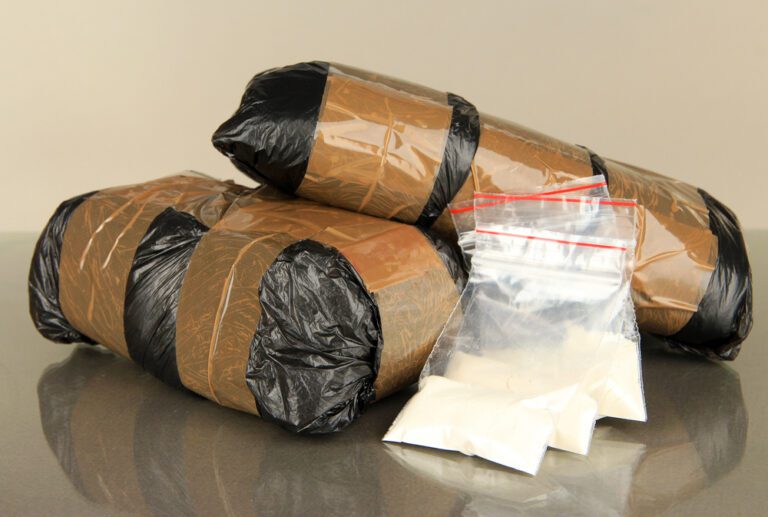
A British dockworker was arrested for trying to transport cocaine worth almost €138 million through a port in Vlissingen. Dutch Police confiscated it and sneakily replaced it with fake cocaine. Take that, drug lords!
The ship that was heading from Columbia to the United Kingdom made a stopover in Vlissingen in the province of Zeeland. In hindsight, that might not have been the best idea for them.
During the check, the politie confiscated a whopping 1477 kilogrammes of cocaine from a ship that looked like it was transporting bananas, according to de Telegraaf. 🍌
The cocaine was hidden between pallets of bananas, but the police replaced it with fake drugs before shipping it off to its final destination: England.
… Some British clients were probably very disappointed.
How was the smuggler found?
Now you may be wondering: why replace the real cocaine with fake cocaine and let the culprit go? Why not just arrest him then and there? Good question.
A corrupt port worker involved in importing what he thought was £118m worth of cocaine has been sentenced to 21 years in prison after a National Crime Agency investigation.
— National Crime Agency (NCA) (@NCA_UK) July 10, 2023
The police let the man think nothing was wrong until he arrived in England. Once there, he was seen on CCTV footage separating the banana pallets and the fake drugs.
He was arrested by local police and sentenced to 21 years in prison. Yikes.
Vlissingen is a drug-hotspot
It’s far from the first time that the police confiscate cocaine in Vlissingen, but it seems to be taking off this year especially.
According to NOS, the amount of cocaine confiscated in the port this year already surpasses that of 2022. 😳
Why Vlissingen? Easy, that’s because police surveillance has increased in bigger ports like Rotterdam — leading criminals to seek smaller ports for their… services.
What do you think of the port being used for transporting drugs? Tell us in the comments!
Amsterdam coffeeshops are a microcosm of their own — smoke wafting through the air, a mysteriously long list of menu items, and the heavy smell of cannabis. 🔮
Intimidating? A little. But visiting an Amsterdam coffeeshop is an opportunity not to be missed! Here are the dos and don’ts of smoking weed in Amsterdam, including things you should definitely try — and avoid — when visiting a Dutch coffeeshop for the first time.
Edibles are food items, usually sweets, that are infused with cannabis. Instead of smoking it, you’re eating it!
The most popular edible choice is probably weed brownies, but you can also get weed-infused cookies, gummies, chocolate bars and cakes
Not only do they go down easy, but they’re also bloody delicious!
Meanwhile, your munchies are immediately satisfied — talk about killing two birds with one stone.
Caution: Eating weed is not the same as smoking weed. Generally, it takes up to an hour for you to feel the effects of THC when you ingest it compared to inhaling it. So don’t feel tempted to take an additional puff of a joint or another bite — you might risk too high of a dose!
2. Do take advice from the coffeeshop employees
Indica who? Sativa what? Yup, all those different weed types can be confusing. The good thing is that there’s no need to pretend you’re a weed connoisseur that knows the differences between various strains of weed.
The coffeeshop employees — some hilariously call themselves ‘budtenders’ — have all the expertise you need! So, go ahead and ask all your questions without shame.
Most people don’t know their way around a Dutch coffeeshop and the budtenders (hee hee) are trained to help you out and help you find the best weed for you.
Here are some ideas of what you might want to ask:
How much should I smoke as a beginner?
Which strain will make me the most relaxed?
Which strain will help keep me awake and excited?
What edibles do you have on offer?
What exactly is the difference between hash and weed?
All we can recommend is: ask, ask, ask! And don’t be shy.
Skilled budtenders at coffeeshop Boerejongens help customers find the strain that works best for them. Image: Supplied
3. Do order a drink to stay hydrated
You know what goes amazingly with a good joint? No, certainly not a beer. In fact, coffeeshops in the Netherlands aren’t allowed to sell any alcohol.
What we’re really recommending is to stay hydrated, kids! Not only will a refreshing drink soothe your throat and balance your blood sugar levels, but it also prevents the dreaded ‘cotton mouth’- feeling. 💧
Most people who have smoked weed before will recognise this; after a couple of puffs, your mouth dries up and you’re in desperate need of some hydration. Why does that happen? Because smoking weed can cause the glands in your mouth to stop producing saliva for a while. Yummy… not!
So, to avoid this problem, just bring along your water bottle or order a drink with your joint. Easy, right?
What’s better than sitting in a café with a drink and a cheeky joint on the side? Image: Supplied
4. Do make use of the free-rolling papers and equipment
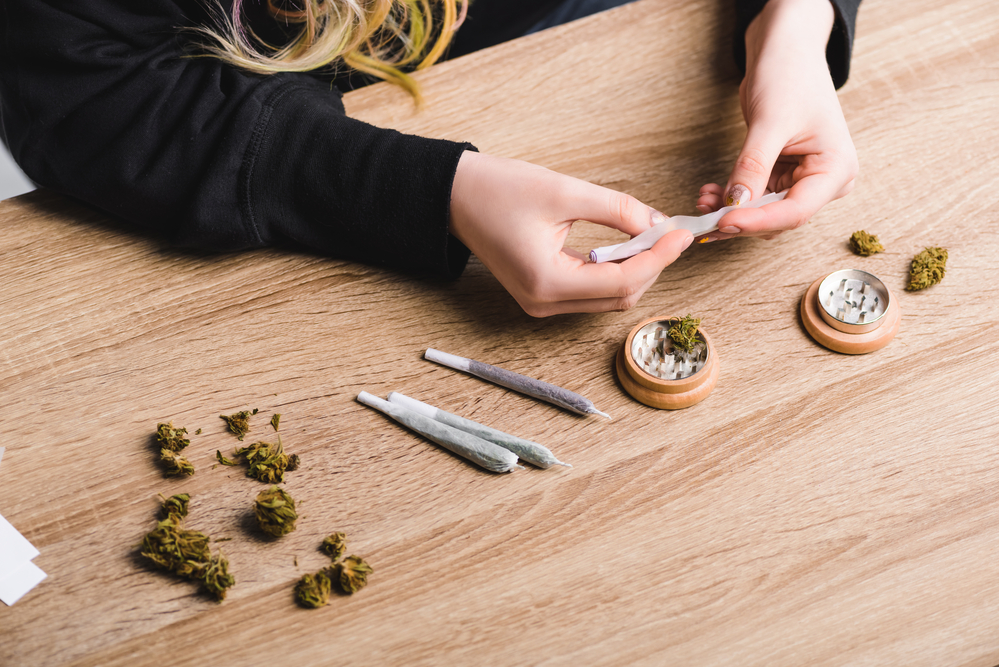
Are you an expert and have mastered the art of rolling a joint yourself? Good on you! Then you’ll love to know that most Dutch coffeeshops give out rolling papers and filters for free.
Usually, there are little dispensers scattered on the counter or in the smoking area, and you are free to help yourself. The same goes for grinders and lighters, as long as you’re smoking at the shop. 🔥
If you’re not a joint-rolling machine, no stress! Order a pre-rolled joint at the counter instead.
Rolling joints like a pro. With a little practice, that could be you! Image: Depositphotos
5. Do take a sober buddy and plan some chill time
If you’re really new to the world of cannabis and coffeeshops, maybe it’s a good idea to do some planning and make your experience as pleasant as possible.
For one, you could take a buddy that will stay sober for your benefit — a true token of friendship. This way, you don’t have to be nervous that you won’t be able to find your way back to your accommodation because your buddy will occasionally nudge (or push) you in the right direction.
Another way to make your experience as pleasant as possible is to plan some relaxing activities to make the most of your high. For instance, you could buy a bunch of food in your nearest Albert Heijn and head to the park after your coffeeshop visit for a lovely picnic.
Want to smoke AND make the most of Amsterdam? Why not visit an art museum? Just imagine how amazing it is to look at Van Gogh’s ‘Starry Night’ while under the influence! Those visuals. 🤯
Amsterdam has plenty of parks to enjoy your ✨trip✨ in. Image: Depositphotos
5 things NOT to do in a Dutch coffee shop
Surely, there are some horrific scenarios that run through every coffeeshop-beginners mind right before their first visit.
What if you pick up a joint, start coughing and somehow the entire shop ends up laughing at you? Or all of a sudden you’re out-of-your-mind blazed and can’t distinguish up from down anymore?
But don’t worry. Neither of these scenarios will most likely ever happen to you. Thousands of people visit coffeeshops in the Netherlands every day and end up just fine.
But we do have some advice for you to avoid any unnecessary mishaps and embarrassments — just in case. 😉
Smoking before going to a club? It might be a better idea to make some more relaxed plans! Image: Depositphotos
1. Don’t smoke tobacco indoors
This one really isn’t up to you. Since 2008, there is an official tobacco smoking ban in the Netherlands that applies to all inside venues, including coffeeshops.
Why are we telling you this? Because it means that you’re not able to smoke mixed tobacco-weed joints on-site. You are, however, able to buy them at the counter and take them home with you. Or smoke ‘em on the canal side. 😙💨
If you want to smoke inside a coffeeshop, you’ll have to smoke pure weed joints. But be warned, these are likely stronger than what you might be used to. Start with a couple of puffs and take your time to notice how you react.
There is also usually the option to stretch your joints with a herbal mixture instead of tobacco. Unfortunately, this is not to most people’s taste, but give it a go! You might like it, and it’s definitely healthier than tobacco.
2. Don’t try to buy more than five grams in a day
Here is another legal footnote you should know about: while you can buy weed in coffeeshops all around the Netherlands, you’re not legally allowed to carry more than five grams with you at a time.
As a consequence, coffeeshops are legally not allowed to sell more than five grams to a single customer in a day.
Before you get upset, let us tell you that five grams is a lot. Unless you’ve been ordered to buy weed for a whole party of people, it’s unlikely that you will need that much. But you never know! 😉
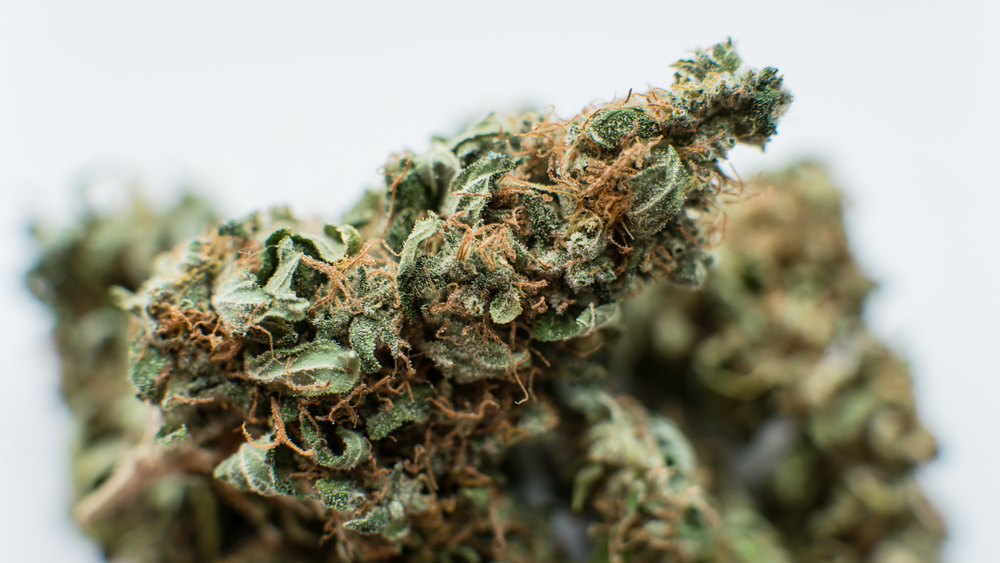
This is the stuff you grind up and smoke! Image: Depositphotos
3. Don’t underestimate your dose
Okay, here is the word of caution you’ve been dreading. Cannabis is a mind-altering drug in the end, and we gotta make sure you’re consuming it responsibly. 😉
Ready for some science? The chemical component in cannabis that makes you high or stoned is called THC (tetrahydrocannabinol). Some weed strands are bred to contain more THC than others.
If you’re a beginner smoker, you might want to opt for a strain that has less THC so you can start off on a lower dose (and, thus, get less high). Or, you could opt for a strand higher in another chemical component — CBD (cannabinol).
CBD is known to inhibit the receptors in your brain that the THC binds to, and end up making you high. Weed strands with a higher CBD content will therefore have a less intense effect — perfect for beginners!
Phew, still with us? If you’re curious about some more science behind THC and CBD, check out the video below! 👇🏻
4. Don’t keep your joint to yourself
Guess what: a joint is called a ‘joint’ for a reason! Unless you’re enjoying cannabis for its sleep-promoting effects, smoking up is really a social activity.
If you’re in a coffeeshop, it’s far more common to see joints passed back and forth instead of each person puffing away on their own.
It’s also much more fun to smoke together in groups. Who else will giggle at your suddenly slow reflexes and funky thoughts with you? 😜
A joint is called a ‘joint’ for a reason — sharing is caring, after all. Image: Depositphotos
5. Don’t accidentally take home an unwanted (and illegal) souvenir
Here’s a really stressful way to end any vacation to the Netherlands: being singled out at your home airport for the illegal possession of cannabis. Oeps. 😳
Or perhaps you’re sitting on the train at the Dutch-German border, and the drug hounds sniff you out because you still have a plastic saché with marijuana traces in your coat pocket (true story 👀).
Whatever the case may be, make sure you’re leaving every single crumb of cannabis on Dutch ground before you leave. Just because the consumption of weed is tolerated in the Netherlands, doesn’t mean that’s the case elsewhere!
With the do’s and don’t of smoking weed in an Amsterdam coffeeshop under your belt, you’re well prepared to venture into the world of weed, blunts, and edibles!
What are your tips and tricks for visiting a coffeeshop in the Netherlands? Tell us about your experience in the comments!
Editor’s Note: This article was originally published in March 2022, and was fully updated in August 2023 for your reading pleasure.
It’s that time of year again. You may have unexpected hair accessories or see insect wings covering the floor. What are they? Flying ants, natuurlijk!
So, why are swarms of flying ants popping up in the Netherlands? It’s breeding season, also called a ‘nuptial flight’. What you see are a bunch of young ant queens and males getting frisky. 😉
Summertime is flying ant time
Clearly, we’re not the only ones who enjoy summer weather, because the flying ants come out when the weather gets warm and humid, reports AD.nl.
In the Netherlands you know it’s summer when you get covered in flying ants because of the weather.
“The new queens need enough food to grow. In the winter, food production virtually comes to a standstill, but it picks up again in the spring,” André van Loon, who is affiliated with EIS Knowledge Center for Insects, tells AD.
“As a result, their wings grow in the spring and they make the nuptial flight not long afterwards in the summer months.”
Flying ant nuptials
While they have their nuptial flight, the queens meet males and receive enough semen to fertilise eggs for the rest of their lives. Yep, it’s basically their wedding day — but it’s not as monogamous or as long-lasting as you would think.
The fertile queens mate with multiple males. No, the males aren’t quite as lucky as you think, as the males die after their short flight of love.
How do these fertilised queens react to the death of their many husbands? They chew off their own wings. Harsh! 😳 Each queen then searches for a new home to start their colony on the ground.
So, they really are more occupied with each other than with you. They won’t hurt you, but you may not want to get between them and their baby-making. 😅
Have you been caught in a swarm of flying ants? Tell us about it in the comments!
This is a massive win for Rikkie Kolle, the first transgender woman to become Miss Netherlands. But she’s much more than just a pretty face; she’s fighting for transgender rights everywhere.
Meet Rikkie Kolle, a fabulous 22-year-old transgender woman and the (other) queen of the Netherlands. She strutted her way into the history books as the first-ever transgender Miss Netherlands, leaving us all in awe. 🤩
Rikkie knows how to rock the runway like nobody’s business. She already wowed us on Holland’s Next Top Model, but snatching the crown at an international pageant? She took it to a whole new level!
We think we found our new idol
Not only is she drop-dead gorgeous (seriously, have you seen her?), but she’s also an inspiration. The pageant judges were blown away by her “iron strong” story and called her someone “with a clear mission.” And boy, do we agree!
Rikkie wants to be a role model for all the queer youth out there. She aims to be their beacon of hope, offering a listening ear and a reminder that they’re not alone.
On top of that, she wants to champion transgender care. Trans people have to wait years for treatment and are often pushed aside for their care — something Kolle wants to fight.
Thankfully, Rikkie had the support of her amazing parents, who recognised her true self when she was just a toddler.
But she knows not everyone is that lucky. So, she’s here to lend a helping hand and let them know she’s got their back (and so do we!).
Internet trolls, please get a hobby
Of course, there are always a few sourpusses lurking in the depths of the internet. These trolls claim that a man is stealing the spotlight from women in beauty pageants.
Well, folks, we kindly suggest you step out of your bubble and have a chat with some fresh faces. It’ll do you a world of good!
But fear not because Rikkie is not letting those haters get to her. She’s Miss Netherlands, and no amount of bitterness from strangers can snatch that tiara away.
Have you been keeping up with the Miss Netherlands competition? Tell us what you thought in the comments below!
Inflation is well and truly taking its toll on the Netherlands, with some internationals on Reddit comparing this country’s recent grocery prices to that of a “gas station”.
Many internationals and Dutchies alike took to the social media forum website Reddit to share and compare their monthly grocery prices in the Netherlands as of July 2023.
€800 per month
Are you someone who meticulously calculates your monthly spending? Or do you prefer to live in denial by not checking your bank balance while spending all your euros on fancy cashews or rice with an ‘aroma’?
An international opened the discussion by revealing that the groceries for their family of four set them back a mind-boggling €800 per month — and that’s not because they’re forking out on high-end restaurants. These are groceries we’re talking about. 😳
One pair of “keen cooks” claim that they seldom eat out, prefer “fresh produce”, and yet only spend €350 a month on food since they shop at Dirk van den Broek or “Turkish/Moroccan shops”.
Staying clear of Albert Heijn already brings the costs down significantly, advises another commenter.
To cut meat or not to cut meat?
Are we all meant to go vegetarian now? (Please no! 😢)
One Redditor shared that their grocery bill wracks up to €700-800 per month for two people, and that’s mainly because of a high protein diet (they eat a whopping 8 eggs per day).
Love your once-a-week treats like flamed grilled steaks and seafood? Helaas, these yummy delicacies are also draining bank accounts:
On the other hand, some say they’d rather splurge on a healthy, balanced and biologisch (ecological) diet now, rather than deal with malnutrition or pay for any related medical bills in future.
Another Redditor kindly wrote out a disciplined and organised list full of tips and tricks for anyone looking to tighten their monthly budget, which we could all attempt (we’ll believe it when we see it):
Princess Alexia proudly raised the Dutch flag on Monday in celebration of finishing her high school years. And, like a true Dutchie, her trusty school bag also got hoisted to the top of the flagpole.
After two years at the international school, United World College (UWC) of the Atlantic in Wales, Princess Alexia went back to her Dutch roots to celebrate the end of her high school years, reports People.
Up goes Princess Alexia’s bag at Huis ten Bosch
After receiving her long-awaited International Baccalaureate diploma last Thursday, the Princess got her arms working and sweating like all of us non-royals.
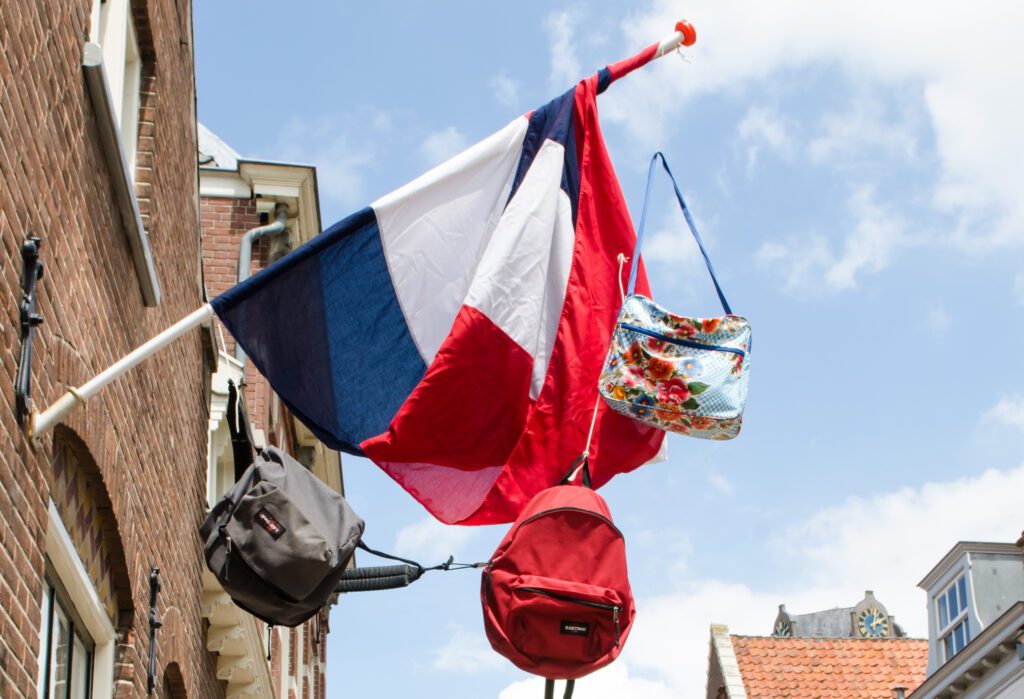
Joining her Dutch peers, the princess raised the Dutch flag and her school bag all the way to the top of the flag pole — in honour of a quirky Dutch tradition.
Except well… instead of hanging her bag from her house’s short and rusty flag pole, she hung her bag from her luxurious Palace’s 3-metre-tall pole.
De vlag kan uit op Paleis Huis ten Bosch! Prinses Alexia heeft donderdag 6 juli haar Internationaal Baccalaureaat diploma behaald aan het United World College of the Atlantic.⁰https://t.co/z4wI6ANM1epic.twitter.com/Dx4ErLiEwS
Going from UWC Atlantic’s beautiful castle-like school with other royals from all over the world to her home in The Hague, Huis ten Bosch Palace — now that’s the life of a royal. 👑
Show off that worn-out school bag in the sky
After making it through years of homework, exam after exam, and hours of listening to a teacher babble on while you zone out looking out the window, it’s definitely time to celebrate.
Most high school graduates in the Netherlands already had their celebratory moment a few weeks ago to mark the long-awaited end of their high school years.
You can then play a game of how many bags can you hang from one flag. Image: Depositphotos
How? It’s a Dutch tradition for recent high school graduates to get their moment of glory and announce to everyone that walks by that they successfully made it through high school.
They hang their school bag at the top of their home’s flag pole, flapping every which way in the Dutch wind (and yes, believe it or not, many Dutch homes have a flag pole).
Dutchies, you just won more bragging rights. Max Verstappen has taken home yet another victory this past weekend at the British Grand Prix.
Everyone’s favourite Dutchie (arguably 😉) enjoyed another one of many victories this Sunday, July 9.
It was his 11th consecutive Formula 1 victory for the Red Bull team and his second win in the British Grand Prix Silverstone circuit. The first time he won the British Grand Prix was in 2020, to mark the 70th anniversary of Formula 1.
He recovered from a rocky start in the race and ended in first place, to the pride of Dutch people everywhere. Hoera!
Verstappen can’t stop winning
11 wins aren’t for anyone, much less consecutively! In total, Verstappen has had 43 wins during his time at Formula 1. Dare we say, that’s impressive. 😳
11 wins in a row for the team, what an amazing achievement @redbullracing 🚀 This is an extraordinary job by everyone 👏 #KeepPushing
Finishing in second, just behind Verstappen, was Lando Norris. Lewis Hamilton, the eight-time Silverstone winner, lost his throne and finished in third place, according to the official Formula 1 website.
Position
Driver
1
Max Verstappen
2
Lando Norris
3
Lewis Hamilton
4
Oscar Piastri
5
George Russell
6
Serio Pérez
7
Fernando Alonso
8
Alexander Albon
9
Charles Leclerc
10
Carlos Sainz Jr.
So if you’re a Verstappen fan, rejoice! This wasn’t his first win (far from it), and it certainly won’t be the last! 🏎️
Are you a fan of Verstappen? How did you celebrate his win? Tell us in the comments!
Schiphol strikes again and another bunch of flights will soon be scrapped — to the tune of 40,000 flights. Yep, you read that right! 😳
Mark Harbers, Minister of Infrastructure, decided to reduce the number of slights next year from 500,000 to 460,000.
Why is this happening? Well, it’s part of a larger scheme to reduce the total number of yearly flights to 440,000.
Schiphol keeps testing us
This comes after Schiphol made some less-than-ideal announcements. First, Schiphol will scrap 17,000 flights this year, because these slots were by flight companies that have since gone bankrupt.
Schiphol has already scrapped 14,500 flights this January and will further whittle numbers down to 483,000 flight paths by this winter.
As Schiphol’s latest move involves a temporary reduction of flights, it’s technically allowed by European legislation. This means that, although the court originally denied the ministry’s request for these flight cuts, doing so temporarily is okay.
As explained by RTL Nieuws, “The minister may well hope that this is a stepping stone to further shrinkage, but that does not in itself make the decision illegal.”
What will happen as a result of these cuts? Other than the number of annual passengers dropping to 1.3 million, shorter flights (like Amsterdam to London) could be a whopping 25% more expensive. As if everything isn’t already expensive enough. 🙄
Customers aren’t the only ones bleeding money, of course. The Dutch economy will also suffer, as this decision can cost €13.6 billion per year for the country. Oof!
With all these price increases and flight cuts, it’s about time we consider other modes of transport. Road trip, anyone?
What do you think of these flight cuts? Tell us in the comments below!
Following the shocking collapse of the Dutch cabinet last Friday, the House of Representatives will be assembling for a parliamentary debate this morning.
The topic on everyone’s lips, however? Mark Rutte’s shocking resignation.
It’s official — Rutte is out
Okay, guys, it’s finally happened. For as long as we can remember, Mark Rutte has been a part of the Dutch political scene.
However, in a shocking statement ahead of the parliamentary debate this morning, Rutte officially said that he’s done with politics and stepping down as the leader of the VVD.
Meaning? During the next elections, when you’re going through the long list of all the Dutch political parties, you won’t see his name under the VVD for the first time in 17 years.
He will, however, stay on as the outgoing Prime Minister until the next elections appoint a new cabinet.
Change is hard for everyone and Rutte is no exception, with the leader admitting he had “mixed feelings” about stepping down. While he said that it was an emotional decision to make, he also stated that “it also feels good to pass the baton,” writes the NOS.
Some see it as a matter of course as, with Rutte’s refusal to compromise on immigration policy, he may have been the recipient of a no-confidence motion if he had chosen not to step down.
The future of Dutch politics? It’s currently being debated
In a debate kicking off at 11:33 AM in The Hague, the House of Representatives will be back to discuss how the Dutch government will go forward after last Friday’s fall of the Rutte IV cabinet, reports the NOS.
Over the next few weeks, they will need to make regular trips back to The Hague to decide what the fallen cabinet’s role will be.
With Rutte now out of the equation, the People’s Party for Freedom and Democracy (VVD) will need to nominate a new successor to take his place and test out Rutte’s well-used seat.
So, grab a beer, sit back, and let’s see where this goes.