Home Blog Page 309

The winner of the London Marathon is… a Dutchie! (And she’s making history)

“I was born for drama,” says Sifan Hassan, the 30-year-old Dutchie who defeated all odds and won this year’s London Marathon. (On her first try, no less!)

The Dutch athlete, who is also the Olympic champion in the 10,000 and 5,000-metre discipline, finished the marathon with a sensational time of 2:18:33.

Earlier that morning, as she tells the Guardian, she was so scared to run that she cried. “Why am I doing this?” she asked her manager. To win, dear Sifan — duh. 💅

All. The. Drama.

An injury, two mid-race stops, and a near-collision with a motorbike — those are all the obstacles that Ethiopian-born Sifan Hassan faced during her very first marathon. 😳

On top of that, Hassan did not go through traditional marathon training. Yet, whilst all the odds (and a whole lot of nerves) were stacked against her, Hassan (not-so-effortlessly) brought the win home.

Much of her debut marathon was spent wondering when she would drop out. Having forgotten to tape up her leg (oeps!), Hassan had to stop to stretch her injured hip just after the hour mark.

The chaos continued when Sifan was nearly hit by a motorcycle when she collected a bottle of water from a drinks station (oeps again!). Due to Ramadan, she didn’t practise collecting drinks beforehand.

An impressive journey

Despite her remarkable runner’s CV, the 30-year-old is humble as ever: “I’m not the greatest,” she tells the Guardian. “I’m just OK. And I don’t need to become the greatest. I’m fine the way I am.”

What makes her story even more special (and totally movie-worthy, if you ask us!) is the fact that Hassan came to the Netherlands from Ethiopia as a refugee at age 15.

After spending some time in a shelter for asylum seekers, she later moved into a house with other refugees. It is here that she started to run — all while following studies to become a nurse.

Her unexpected victory at the London Marathon enhances Hassan’s status as one of the greatest distance athletes in history. You go, girl! 👑

What do you think about Hassan’s sensational career? Tell us in the comments!

Feature Image: Erik van Leeuwen/Wikimedia Commons/GFDL

Guess what? Dutch train travel will be even MORE chaotic and expensive in coming years

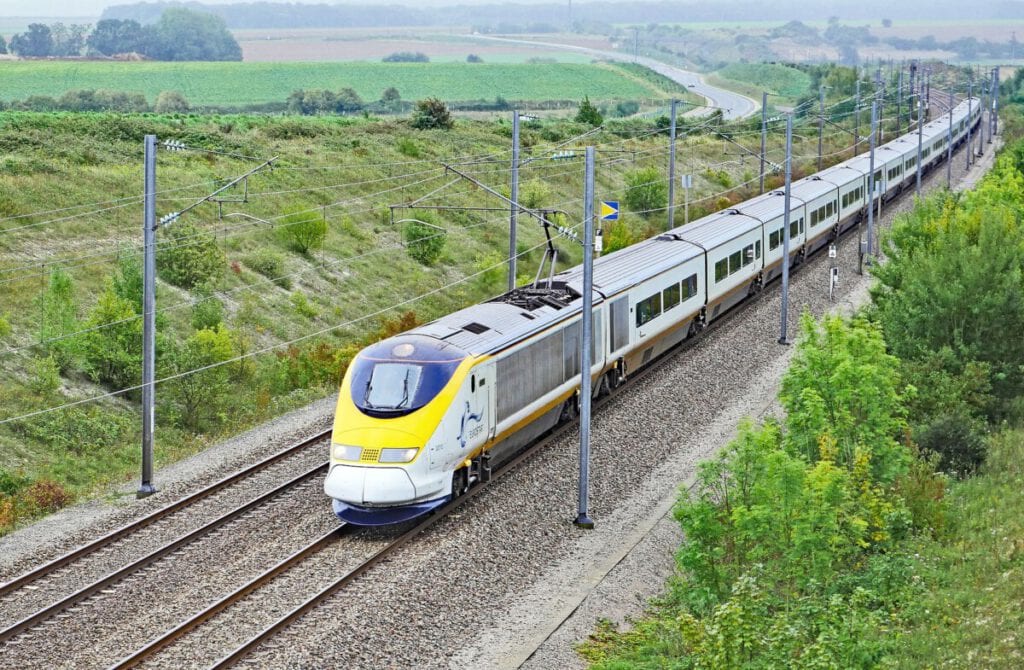
If you thought train travel was expensive now, just wait. Travelling during rush hour is going to cost you much more in the future.

In a letter to the Tweede Kamer (House of Representatives), the Dutch State Secretary for Infrastructure and Water Management, Vivianne Heijnen, states that the NS could have different prices for train tickets during rush hour or on some routes. According to the NOS, this could happen as soon as 2025. 

Why would they do that? A hike in price for rush hour could mean that passenger traffic is better spread out throughout the day instead of morning and evening rushes. The extra fee would go towards using more and longer trains. 

Fewer trains in 2025

You’re probably thinking that if trains are going to be more expensive during rush hour, you can just go when it’s quieter. Helaas pindakaas, fewer trains could be running during off-peak times.

Since the pandemic, fewer travellers are using trains as compared to before. This, with increased costs of energy, personnel, equipment, and maintenance, has caused a financial shortfall for the NS. 

Well, what is the government’s solution for this? A train timetable with fewer trains when its quiet and possible subsidies. 

READ MORE | The NS unveils new high-speed intercity train on Amsterdam-Rotterdam line

The government might also waive compensation for the main rail network during certain times in the new permit from 2025. The main rail network consists of the most important rail connections in the country, for which the NS currently pays €80 million a year for the permit. 

Rover wants it to stop

Traveller’s association, Rover, has worries about a possible rush-hour charge for travellers that can’t afford it.

The higher train prices could also affect the environment. “The climate and housing statement requires that the use of trains and buses should increase,” Rover director Freek Bos tells the NOS. “Chasing travellers out of rush hours causes the opposite instead.”

READ MORE | 17 places you can get to by TRAIN from the Netherlands

Bos doesn’t understand the reasoning for timetable reductions. He says, “Paying more for less is the beginning of a downward spiral for the train.”

We’re with you there, Bos — nee to fewer trains that cost a fortune! 

What do you think of more expensive train fares? Tell us in the comments!

Rain check: disgustingly cold and wet weather coming to the Netherlands

Bad news, folks: if you were hoping to sit in the park soaking up the sun, this week will give you anything but. ☔️

Whilst May is just around the corner, the weather isn’t really giving us summer vibes, with temperatures of only 8 to 9 degrees Celsius. 

Last year, at the end of April, temperatures were twice as high as they are now. Luckily, for those celebrating King’s Day, it will be around 12 degrees this upcoming Thursday, reports RTL Nieuws

Get your umbrellas out: it’s going to get wet 

Monday, Tuesday, and Wednesday will start off the week with the kind of weather that will make you want to stay inside covered in some blankets and drinking a nice cup of Chocomel. (Unless, of course, you’re feeling brave enough to take to the great outdoors and get soaked. 👀)

Buienrader meteorologist, Magdel Erasmus, states that “there is now a rain area crossing from west to east, a lot of rain falls there.” However, if we’re lucky, the sun might come out after all that rain to give us a sliver of hope for warmer days.

Dying to finally catch a tan? Unfortunately, not only will the sun be a very brief visitor, but “there might also be a little hail, which is due to the colder upper air at the moment,” states Erasmus. Hail during April? Sounds just like your typical Dutch weather! 😳

In fact, it won’t get drier until Wednesday, which is just in time for King’s Night visitors who want to dance the night away outside. However, you might want to grab a warm jacket and a thick scarf, as the minimum temperature will be a chilly 2 degrees Celsius! 

A warmer weekend ahead 

From Thursday onwards, the weather will be almost up to spring standards. After King’s Day, it’ll grow a bit warmer on Friday, and may even reach 15 degrees Celsius during the weekend. 

READ MORE | What to do when it’s raining: the ultimate guide to Amsterdam indoors

Whilst 15 degrees Celsius isn’t that warm, considering how the weather has been these past weeks, it’s a blessing. On Sunday, there might be more rain during the day, so be sure to enjoy the early weekend to the fullest! 

How are you planning to enjoy the few sunny days we have this week? Tell us in the comments below!

6 essential phrases you need this King’s Day

Aside from patriotism and all that, King’s Day is a nationwide excuse for binge drinking while wearing orange.

For one day a year, the streets are one big happy, tipsy, orange-loving crowd. 🧡

Now, whether you are here to study or are a long-time expat, you sure are going to need some Dutch to survive the day.

READ MORE | 8 things you should know about King’s Day in the Netherlands

So, here are six essential phrases you need for King’s Day. Master them to blend into the orangey euphoria.

1. Koning

King-Willem-Alexander-laughing-with-Queen-Maxima-2019
King Willem-Alexander is the first masculine monarch since we can remember. Image: Depositphotos

Yes, koning (king), and not koningin (queen).

Unless you were born before 1900, nobody recalls the last time the Netherlands was ruled by a male monarch.

The predecessors of King Willem-Alexander were his mother Beatrix, his grandmother Juliana, and his great-grandmother Wilhelmina, who were all lady-kings, so to speak.

As such, it has been ingrained in Dutch culture to refer to royal matters in a feminine tense.

I, for one, continuously catch myself saying koninginnedag instead of koningsdag. The latter actually sounds weird and off-the-wall to me.

So the first order of business for any wo/man wanting to enjoy the annual orange parade is to get the gender right. Hail to the King, baby! 👑

Bonus phrase: Lang leve de koning! Hoera, hoera, hoera! (Long live the King, hurrah 3x)

2. Vrijmarkt

street-flea-market-in-Amsterdam-on-kings-day
On King’s Day the Dutch sell all their junk in flea markets on the street. Image: Depositphotos

Vrijmarkt (“free market” or “flea market“), also known as that one time a year when Dutchies go nuts and try to occupy a square meter of the street three days in advance so they can sell their junk.

Yes, it’s a tax-free, no-punches-barred, fastest-first slop where each Dutchman will try to solve the alchemical riddle of transforming worthless trash into gold.

But never let it be said that the Dutch are a greedy and money-obsessed bunch. It’s all about getting out in the streets and showing people your stuff and your child’s lack of violin-playing skills.

King’s Day joke starts at 2:09. 👇

3. Bezet!

Normally, this word (which literally translates to “occupied”) stays nicely in the closet until we remember the German occupation of the Netherlands on Liberation Day at the beginning of May.

However, in previous years, people have taken the vrijmarkt a step too far.

Masses of desperate flea marketeers rudely wrote “BEZET” at certain spots on the pavement where they wanted their little one-day operation to be. Unfortunately, that also brought up nasty memories of WWII. Not good, people!

Luckily, the Dutch government issued a verdict that this ain’t right. Not only because of the war, but also because chalk can be hard to remove! As if the inevitable rain won’t wash it away.

The common consensus on this is that you can just occupy someone else’s “BEZET” spot.

Bonus phrase: Wie het eerst komt, wie het eerst maalt” (First come, first serve — the typical Dutch reply to the “BEZET” people. If it is really occupied, why weren’t they sleeping there days in advance?)

4. Herstelbiertje

photo-of-group-of-friends-toasting-with-beer-in-a-pub-in-the-netherlands
After a King’s Day filled with drinking, you need one more beer to help you recover. Image: Freepik

Herstelbiertje (“recovery beer”) is also known as the balansbiertje (“balance beer” or “equilibrium beer” if you’re a pretentious douchebag). It’s the Dutch phrase for that beer you take first thing in the morning as a means of getting over your King’s Day hangover.

We all know there’s no cure like another dose of poison. 😅

READ MORE | Dutch Quirk #99: Drink beer like it’s a national sport

Koningsdag inevitably means drinking way too much, and unless your liver is the size of a city bus, you’re gonna hate yourself the next morning. And then you’ll drink another beer, thinking it’ll make things better, because of the placebo effect or whatever.

5. “Wat kost dat?

For supposedly thrifty and cheap people, both our beers and our junk at the annual flea market are surprisingly expensive.

Luckily, our Dutch directness comes to our aid, as it is completely normal to ask “Wat kost dat?”, meaning “What does that cost?”

Bonus phrase: “Mag het ietsje minder zijn?” (Can it be somewhat less?) Although the Dutch are a trading people by tradition, it is not customary to negotiate a price in a store or for a beer. At the flea market, it is a normal thing. Go nuts!

6. Volksfeest

Volksfeest (national feast) is probably the best way to summarise Koningsdag. While this word has so much overlap with the overused word gezellig, there’s a difference.

Whereas gezellig can refer to just about any kind of social event, Volksfeest is all about the people.

READ MORE | Dutch Quirk #126: Play weird street games on King’s Day

It talks about the fact that something is being said and done together, as a collective. 🍻

Koningsdag is like that weird alternative festival where everyone just goes to the park to look at all the other people who have gone to the park because someone said there was going to be an event.


Now that you’ve learned all these essential Dutch phrases, how about you test your King’s Day knowledge? Here are seven things you need to know about King’s Day. Proost! (Cheers!)

How do you celebrate King’s Day in the Netherlands? Tell us in the comments below!

Expats are welcome in Amsterdam — but they’ll need to learn better Dutch, says mayor

If you have moved to Amsterdam and want to feel like a real Dutchie, it might be time to learn Dutch and become a part of the community.

The Mayor of Amsterdam, Femke Halsema, doesn’t want to limit the number of internationals in Amsterdam but thinks it is important that they integrate. 

Middle-income and young families are leaving Amsterdam and being replaced by internationals, reports AT5. Why is this? High property prices, small property sizes and a lack of a sense of community are some of the main reasons, according to Rabobank

Pop that bubble!

“If you are an international and come to live in this city for a longer period of time, really be here,” Mayor Halsema tells AT5. She believes that internationals should be a part of the community and that they shouldn’t “sit in their own bubble”. 

.

Amsterdam’s mayor also thinks it would be an advantage to speak Dutch, even though English is spoken a lot in the city. It may be an important part of becoming a true Amsterdammer. 

READ MORE | What language level is the Dutch integration (inburgering) exam in 2023?

Mayor Halsema also wants Amsterdammers to take care of the less fortunate people in the city by donating and volunteering in food banks. 

Middle-income groups are important

Nurses, police officers and teachers are part of an important middle-income group and, with them leaving, it’s not good for the city.

Translation: What an incredible naivety of Mayor Halsema, everything in the city is set up for #tourists and #expats and no, they are really not going to commit themselves to the neighbourhood. Amsterdam has become the amusement park they have been working towards for so long. Residents have no business here anymore.

In addition to this, gaps between people in the city are forming, which is something that none of us likes to see.

“Amsterdam has traditionally been a city ​​with many different types of people,” says Mayor Halsema. “We want to keep that and also strengthen it.”

The housing crisis 

Thousands of homes are built every year in Amsterdam, but we all know the struggle: houses are being built smaller for higher prices. Echt niet leuk!

Making units suitable for not only single people but also families is being discussed with housing corporations. 

READ MORE | Student housing in the Netherlands: your guide to finding a room in 2023

Mayor Halsema believes that money should be made available to create good public spaces, youth care, and education. Growth doesn’t need to be stopped for this.

How have you integrated into your Dutch community? Tell us in the comments!

Hoera! More international students now eligible for Dutch student financing

Working and studying hard but unable to receive student finance support? That’s hopefully all about to change soon, as more international students may now be eligible for student finance from DUO. 

Due to a relaxation of rules, thousands of working EU students will now (finally!) be eligible for financial support throughout their studies in the Netherlands, reports NOS

This will likely take a lot of pressure off many international students’ shoulders, as many are currently unable to receive the financial support that so many Dutch students in the Netherlands depend on. 

However, the government is concerned about how costly this change will be, as it could potentially cost them tens of millions of euros.

Working alongside your studies?

DUO will now consider students working at least 24 hours a month alongside their studies as potentially eligible for financial support. 

READ MORE | Studying in the Netherlands: the ultimate guide

While the work-life balance in the Netherlands gets praised, it’s often not the case for students, who end up struggling to balance their work and student lives. This current rule relaxation is a big move because students previously had to work 56 hours a month to even be considered for financial support. 

In the past few years, several students working less than 56 hours a month already successfully challenged that limit and many judges deemed the 56-hour limit too strict. However, under current EU rules, students working at least 24 hours a month are considered employees, making them eligible for government support.

So, good news! DUO say they will now consider and check each European student that is working at least 24 hours a month on a case-by-case basis.

Non-EU international students, on the other hand, will not be entitled to this financial support.

A costly move

While the inclusion of more students will help thousands of European students that are finding it difficult to make ends meet, it won’t be cheap for the Dutch government.

According to official calculations, every extra thousand students cost the government €13.8 million. 

Moreover, the government is concerned that it may attract more international students to the Netherlands, a worry that they already have

In a letter to parliament discussing the new rules, officials say: “In addition to the extra expenditure on student finance, a further increase in the number of international students puts further pressure on the higher education system.”

What do you think about the recent change in rules? Tell us your thoughts in the comments below!
Studying in the Netherlands? You may now be forced to learn Dutch

Attention, international students: it’s time to get your Dutch on during class. 🇳🇱

In recent years, the rise of international students studying in the Netherlands has led to a variety of problems, such as a lack of housing, lecture halls being overcrowded, and Dutch students being outnumbered by students from abroad

This has led to Dutch universities putting their recruitment of international students on hold to limit their intake. In order to contain the flow of international students, Minister of Education, Robbert Dijkgraaf, wants to introduce something new: lessons taught entirely in Dutch.

Class is in session maar in het Nederlands 

Dijkgraaf wants Dutch to become the main language in education again. While this is the case on paper, most lessons at universities are given entirely in English. 

Another reason why Dijkgraaf wants international students to start learning Dutch is that this increases the chances that they will stay in the Netherlands after finishing their studies. 

international-students-at-lecture-hall-learning-Dutch
Good education? Absolutely! International students continue to come to the Netherlands for their studies. Image: Depositphotos

Echt waar? (Really?) These measures proposed by Dijkgraaf will not take effect immediately, so international students that are not yet comfortable with their language skills will have time to brush up on their Dutch. 

The minister is also currently working on further plans and legislation on the subject, which he intends to send to the House of Representatives before the summer. In addition to this, he plans to encourage colleges to stop actively recruiting foreign students for the time being.

A continuous worry for Dutch education 

There are now a whopping 115,000 international students in the Netherlands, which is 3.5 times as many as in 2005. 

While Dijkgraaf thinks that attracting many foreign students benefits both Dutch society and the knowledge economy, he notes that the continuous flow of international students needs to be contained. “We don’t have enough control over it,” he told the NOS

Dijkgraaf fears that if no action is being taken to control the intake of international students, the quality of colleges and universities will deteriorate to such an extent “that this will undermine our international top position.”

READ MORE | Universities outside the Randstad don’t want to limit the intake of international students

To find a solution, Dijkgraaf wants to establish central management with regard to how Dutch society and the education system can cope with the issue, rather than just dictating what a university can do. 

One method of doing so is by setting a maximum number of places for foreign students. Also known as an “emergency capacity fixus”, it can be used in the event that there is a large number of applications from students from outside Europe.

This, in turn, also allows Dutch students to continue having access to their university of choice. 

What do you think about these measures to control the rise of international students? Tell us in the comments below!

Taking an international train from Amsterdam? It might be cancelled

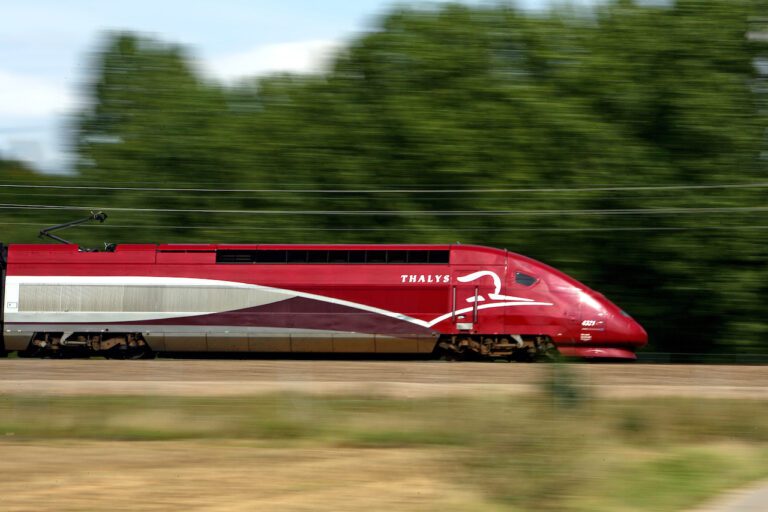
Many trains between the Netherlands and Germany are being cancelled this Friday due to a strike on the German railways. However, it’s not just German destinations that may be affected.

Travelling to or through Germany today by train? It’s time to double-check your train information. At the time of writing, 10 international trains have already been cancelled, and the number might go up, reports NU.nl.

Avoid travel to or through Germany

While the Netherlands just got over their train troubles between The Hague and Leiden, German railways are now posing new problems for the NS and other international train services. 

Train traffic from Amsterdam to many German cities, such as Frankfurt, Berlin, and Basel, will be heavily disrupted most of the day due to the strike. 

READ MORE | All aboard! This new train line will connect the Netherlands, Germany, and Belgium

This means that if your weekend plans involve Duitsland, it’s probably best to change them. 

The NS advises everyone to avoid travelling to Germany if possible this Friday: “Keep in mind that other train traffic from, to and within Germany will be seriously disrupted for a large part of the day,” writes NU.nl.

No staff, no trains

The disruption started early this morning, with German railway workers striking today until 11:00 AM. However, trains are likely to be disrupted all day. 

Why? The German Railway and Transport Workers Union (EVG) is asking for a wage increase of 12%, or at least an extra €650 per month. The union represents 230,000 train employees. 

It’s not just the train services either. Many workers around Germany are struggling with soaring prices due to inflation. There have been many nationwide strikes this week across the country, including strikes at several airports. 

Stay up to date with all the news in the Netherlands by following DutchReview on Facebook.

Take that! Iconic 71-year-old Dutch woman sets trap for scammer

1

Ever gotten a suspicious phone call that makes you think “Echt?! Who would fall for that?” Well, one lady in Amsterdam wasn’t going to just hang up the phone and let this scammer get away with it. 

A 71-year-old woman from Jordaan answered a call on Monday afternoon that was quite obviously a scam, reports the NOS

A man impersonating a bank employee said she should place her debit card in an envelope and give it to his ‘colleague’ when he came to collect it that evening. Hmmm, fishy… 🤔

Time to go undercover

So, what did she do? The plucky woman said “Ja, zeker!” and went along with it. Meanwhile, she called the police. 💅

READ MORE | Scamming Dutch public transport with OVpay? It’s more possible than you think, experts say

By the time evening came, she was ready with some backup. A few police officers dressed in civilian clothes lay in wait in and around the woman’s house. 

The 20-year-old man went to pick up the ‘debit card’ at 8:30 PM and got a surprise he really wasn’t expecting from the elderly woman. 

>

Our ‘she-ro’ handed over an envelope that the scammer thought held her debit card. What happened next? The hiding police sprung into action and the cheeky criminal was caught in the act. 

READ MORE | Dutch Quirk #100: Use the power of the “social police” (betutteling)

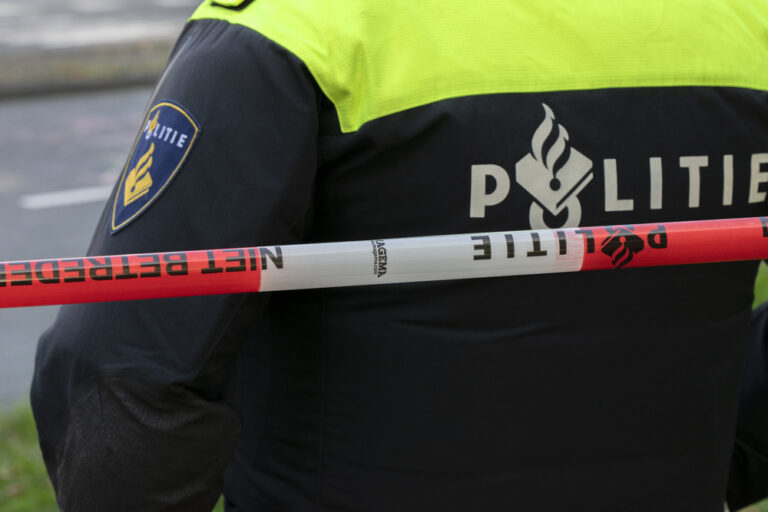
The suspect made one last-ditch effort to get away by pushing an officer to the ground. He didn’t get far, however, and was handcuffed.

While the woman didn’t place the handcuffs on him herself, we think it’s safe to say that this icon was integral in the arrest. 

Let this be a warning: Don’t. 👏 Mess. 👏 With. 👏 Sweet. 👏Old. 👏 Dutch. 👏 Women. 👏 

What would you have done if you got that scam call? Tell us in the comments!

Got Friday plans? Thunder, hail, and a weather warning to hit the NL

0

Don’t put away your raincoat just yet, guys. In fact, maybe batten down those hatches. Code yellow thunderstorms are set to welcome us into the weekend this Friday — and they’re hitting all across the country. 

Well, this is awkward… Last week we were boasting about the spring weather finally arriving — but as we know, Dutch April weather is as unstable as an international’s first steps on a bike

It might be a stay-in kind of Friday as code yellow thunderstorms with strong wind and hail are predicted for the evening, reports AD

What does a code yellow mean?
“Code yellow: be alert — there is a possibility of dangerous weather. These are weather situations where it is advisable to pay attention, especially when you are on the road.” KNMI

A code yellow Friday

The day will start out cloudy with some light rain in many parts of the Netherlands. From the late afternoon, however, the rain will get heavier, and there will be a chance of thunderstorms.

Yep, the Royal Netherlands Meteorological Institute (KNMI) reports that showers and heavy wind gusts of 60-70 kilometres per hour are coming for us. 

Translation: Rain will move into the country tonight. The rain and clouds will continue to hang over the centre of the country tomorrow, with a chance of a thunderstorm later in the east. The northeastern Netherlands might have soft wind with some sun.

For those of us who aren’t the lucky northeasterners, on top of the wind, we’ll have plenty of glorious rain. Buienradar will be your best friend today, as showers will fluctuate with heavy rain periods throughout the day.

There is also even a small possibility of HAIL across the country. Hoping to sleep through it? Ok, but go to bed late. The thunderstorms should continue until around midnight — niet leuk.

READ MORE | 11 must-have closet items to survive the Dutch weather

It’s time for a lazy day. Traffic on the roads and outdoor activities are likely to be echt difficult due to the classic Dutch weather. 

So grab that book you’ve been meaning to read, pet your cat, and wrap up nice and warm — it’s spring in the Netherlands, after all. 😉

What are your tips to manage this type of April weather? Tell us in the comments below!