Home Blog Page 345

Here’s how you can help Ukraine from the Netherlands [UPDATED]

The Russian invasion of Ukraine and the ensuing war have sent shock waves throughout the Netherlands and the rest of Europe.

The conflict continues and leaves many Ukrainians without a home, job, stable food supplies, and medical aid after a year.

The Netherlands might be pressed into the most Western corner of Europe, but there are still ways we can assist the Ukrainian people. Here’s how you can help Ukraine from the Netherlands. 💙💛 👇🏻

Disclaimer: The first version of this article was published in March 2022. The war is constantly changing and so are the ways we can provide aid to Ukraine.

We try to keep this article updated, but please tell us in the comments if you have new inputs, NGOs or campaigns you think we should include and support.

Donate

There is a widespread humanitarian crisis resulting from the conflict. While it’s not possible for most of us to travel to Ukraine and offer humanitarian assistance, you can donate to organisations that do.

Here is a list of ongoing campaigns that can use your donations to fund medical aid, emergency shelter, and food supplies for people directly affected by the war.

  • Giro 555 is a collective effort of aid and humanitarian organisations in the Netherlands to collect money for the people in Ukraine. Over €160 million have been donated as of March 2023.
  • Stichting Vluchteling 999 is a Dutch refugee aid organisation that has opened an account called Giro 999 to collect donations for displaced persons and refugees.
  • The UNHCR (UN Refugee Agency) has also opened channels to help refugees of the Russia-Ukraine conflict.
  • FreePressUnlimited has set up a donation campaign to support journalists and free press in Ukraine, Russia and Belarus.
  • Ukrainians in the Netherlands collect donations to buy medical supplies and protective equipment in bulk.

Donating just the smallest amount can help. There are also options to contribute on a monthly or yearly basis for long-term assistance.

Help Ukrainians in the Netherlands

By now, almost 90,000 Ukrainian refugees have been registered in the Netherlands, according to the Dutch government website. The conflict is no longer far away, but we have the opportunity to help those that have come all the way from Ukraine to the Netherlands.

Volunteer

Dutch aid organisations are looking for volunteers to help Ukrainians in the Netherlands on a rolling basis. Helping hands are especially needed in refugee shelters, administration or the organisation and distribution of donations.

These are the websites of some Dutch organisations that regularly update their openings for volunteers:

  • Leger des Heils: the Dutch branch of The Salvation Army needs help especially in refugee shelters and in support of families hosting Ukrainian refugees. (Job openings posted in Dutch.)
  • NLvoorelkaar: this organisation coordinates volunteer opportunities across the Netherlands and they have set up a forum for all volunteer and aid requests.
  • VluchtelingenWerk Nederland: this aid organisation is present in every single Dutch refugee shelter and you can register as a volunteer in your area. (In Dutch.)
  • Fast Lane Ukraine: this volunteer-run organisation based in Amsterdam organises and supports trips with urgently needed supplies to the Polish-Ukrainian border. See their vacancies for volunteer positions.

Housing

The Dutch government jointly with the various municipalities has prepared temporary and long-term housing to host refugees coming in from Ukraine. This is currently the main way Ukrainian refugees in the Netherlands are provided with shelter.

However, if you want to open your home to Ukrainians there are ways to do so. The Netherlands Red Cross together with other Dutch charity organisations has set up RefugeeHomeNL, which seeks to place Ukrainians with Dutch families.

You can connect through Takecarebnb with registered refugees that are looking to stay in a family home as opposed to a refugee shelter. The agreement lasts for a maximum period of three months.

Note: Housing Ukrainian refugees is a big responsibility. There is a risk of Ukrainians falling through the cracks of the Dutch governmental care systems when living with Dutch host families, reports NU.nl.

This option should, therefore, only be considered if you have the means, time and capacity to help Ukrainians build up a life in the Netherlands.

Employment

Since April 1, Ukrainian refugees are allowed to work in the Netherlands without an official work permit (tewerkstellingsvergunning;twv). The Dutch Employee Insurance Agency (UWV) estimated in May that 4,300 Ukrainians found work with Dutch employers.

A Ukrainian refugee wishing to work in the Netherlands will need:

  • A Dutch citizen number (Burgerservicenummer; BSN),
  • A proof of residency from a Dutch municipality.

In order to receive a BSN, you must register with your municipality.

Are you an employer who wants to offer work to eligible Ukrainians? The Dutch government website specifies that you will have to:

  • Set up a valid work agreement or contract;
  • Register the Ukrainian employee with the UWV, at least two days before the official start date of employment.

Drop-off points for clothes, medication and other goods

Another way you can help is by dropping off goods such as blankets, sanitary products or canned foods at collection points in the Netherlands. From there, volunteers and employees will make sure the collected donations will reach Ukrainians in need.

Important: Before buying loads of goods and heading to any of these drop-off points, inform yourself what exactly is needed! For example, at the moment, medication and medical equipment are urgently needed. It is no longer advised to drop off clothes or liquids.

Check here for updates on what is required or call your closest drop-off point in advance.

There are also small, non-profit organisations in the Netherlands that continue to use their social media presence to collect donations and raise awareness. Here are the Instagram accounts of some of them.

  • @help_ukraine_nl continues to run a drop-off point and collect donations in Amsterdam, the Netherlands.
  • @zeilenvanvrijheid collects money to buy and drive ambulances as well as medical equipment to Ukraine. Thus far, 70 ambulances have been purchased in total.
  • @u.aid.foundation provides targeted humanitarian aid to, for example, citizens of the Ukrainian city Bucha. Their newest project is looking to collect produce to support Ukrainian orphans.
  • @uaid.nl collect donations and run a drop-off point in Castricum, Noord-Holland. Their website gives a good overview of what is needed most.

Did we miss any charities, campaigns or non-profits you would like us to mention? Tell us in the comments how you are planning to help Ukraine. 👇🏻


Surf’s up! The Hague is getting an indoor wave pool

Surfers (and those trying to become one), listen up! The Hague is getting Europe’s VERY FIRST indoor wave pool. 🌊

Yup, you heard that right. At SurfPoel in The Hague, you will soon be able to catch those heavy waves that the North Sea is a stranger to.

Surfer’s paradise, but at home

The idea for SurfPoel came to its founders partly out of frustration, writes RTL Nieuws.

Due to the North Sea‘s small size, the Dutch coast usually doesn’t get waves high enough to surf on.

Computer rendered images give an idea of what the fun will look like. Image: SurfPoel

READ MORE | Surfing in the Netherlands: where to go and what to know in 2022

“My son surfed competitions and we always had to go to Portugal and France,” says Jeroen den Otter, one of the project initiators. “He couldn’t practice here in the Netherlands, because we don’t have such good waves here.”

But soon, this will be an issue of the past. 🏄‍♂️

Up to 1.5m high

Europe’s first-ever indoor wave pool is 70 metres long and 20 metres wide. Once fully functional, it will produce 120 waves per hour — of a height of about 1.5m. 🤩

READ MORE | You’ll soon be able to go surfing in the centre of Rotterdam!

It will be filled with that lekker dune water from The Hague, to give you that real ocean vibe (but all indoors, of course)!

Let’s go catch a wave (soon)

The construction of the indoor wave pool started in December of last year, and is progressing rapidly. “It’s about 60% done,” Den Otter tells RTL Nieuws — but some more funding is needed.

Construction of an indoor wave pool in the Hague
Within just a few months, there will be big waves crashing over this construction. Image: SurfPoel

With all of the necessary machines in place and ready to go, the team of founders hopes to get water into the pit by March.

Surf’s up! We don’t know about you, but we’re super excited to hit those waves. 🌊

Will you visit The Hague’s wave pool? Tell us in the comments!

It’s over! Dutch garbage collectors reach an agreement, all strikes are off

The prayers (strikes) have been answered: garbage collectors and other municipal workers are officially getting a wage increase. Hoera!

This comes as a sigh of relief. Trade unions FNV and CNV have reached an agreement with the Association of Dutch Municipalities (VNG). 😮‍💨

This means no more stinky streets. All garbage collection strikes have been called off — at least for the time being.

Money makes the world go ’round

As a consequence of the new collective agreement, many people will get a well-deserved wage increase.

READ MORE | Salaries in the Netherlands: the ultimate guide to Dutch wages

In fact, it’s not just garbage collectors that are affected, but ALL municipal workers — amassing a total of 190,000 people. 🎉

The burning question is, of course: “What’s the increase?”

An monthly increase of €240 plus 2%

All municipal employees will see an increase in their salaries of €240 per month, plus an extra 2% on top of that. What does that mean in practice?

As Marieke Manschot from the FNV has told the NOS, “at the bottom in the lowest scale, this means almost a 16% wage increase. All in all, this means an average pay increase of 9% for all employees.” 📈

Garbage-strikes-in-the-Netherlands-Amsterdam-this-week-garbage-cans-overflowing
Over the past few weeks, the Netherlands has realized how indispensable municipal cleaners really are. Image: Depositphotos

As of May 1, municipal workers that work from home will also receive an extra €3.00 compensation per day for hybrid working.

Lastly, in addition to higher salaries, all civil servants will be given an extra holiday this year. Then, starting in 2024, May 5, will be a fixed holiday for all civil servants.

READ MORE | Holidays in the Netherlands 2023: when are the public, national, and school holidays?

Since the deal has not been finalised just yet, the new deal won’t go into effect until April 6 (at the earliest).

But luckily, the new agreement will take effect retroactively from January 2, 2023 — so all municipal workers will be given their increased salary for the months from this date.💪

So, striking pays off?

By the looks of it, it can! Though regional transport workers and hospital employees are still fighting for higher salaries, the garbage collection strikes have shown that striking can have its desired effect.

“The men and women of the municipal cleaning services and enforcement have shown in recent weeks that they are indispensable for the Netherlands,” says Juan Schot from the CNV.

What do you think about the new collective agreement for municipal workers? Tell us in the comments!

Legal to cultivate cannabis? Amsterdam wants to give it a try

The municipality of Amsterdam is hoping to participate in a cannabis cultivation legalisation trial. As part of this, a district in the capital will make it legal for coffeeshops to grow cannabis on a trial basis.

The municipality is already investigating which district can participate, and Mayor Femke Halsema has informed the government of this. The municipality aims to designate a district in May, Het Parool reports.

The front/back door twist

As you probably already know, there are already plenty of coffeeshops that sell soft drugs like marijuana to their customers in Amsterdam. 

This means it’s legal to buy and sell pre-rolled joints at the “front door.” However, in the Netherlands, coffeeshops are actually prohibited from receiving their merchandise at the back door.

READ MORE: 7 practical questions about smoking weed in Amsterdam, answered

So you can buy it and sell it, but we don’t want to know how it got there! 👀

Why not cultivate?

You might think that this system doesn’t make any sense, and you would be completely right. The goal of participating in the cannabis cultivation legalisation trial is to find a legal way for coffeeshops to receive and sell their products. 

A few problems to overcome

Initially, in order for the trial to proceed, all coffee shops in the municipality of Amsterdam had to agree to the experiment’s rules.

close-up-of-man-putting-weed-buds-on-scale-with-tongs
This is how the magic happens! Image: Unsplash

However, in the city of Amsterdam, this was deemed unfeasible. Instead, the municipality suggested that a district would be more suitable in terms of scale and population. 

Amsterdam now plans to discuss possible participation with the districts and the coffeeshop industry.

READ MORE: Believe it or not, smoking weed in Amsterdam’s city centre is about to be banned

Currently, discussions are ongoing with the Ministry of Justice and Security, and the Ministry of Health, Welfare, and Sport about “further elaboration” — whatever that may entail. 👀

What do you think of the cultivation legalisation trial? Tell us your thoughts in the comments below! 

Flying during the May holiday? Schiphol to limit travellers once again

If you have a flight booked for a vacation in May, Schiphol says to wait a minute. Why? The Easter holidays will see a slight change at the airport. 

Schiphol has announced restrictions once again, this time to limit the number of departing passengers during the April and May holiday period.

As a result, passenger numbers will be slashed by 5%, reports NU.nl.

So, what’s the plan?

According to Schiphol, this new measure will apply from the end of March to mid-May. Travellers are warned: the airport’s busiest hours will be in the morning from 6 AM to 1 PM. So perhaps avoid booking that early-bird flight! 

By setting a passenger limit, the airport hopes to reduce the risk of “unacceptable delays for travellers at check-in, security check, and passport control,” reports a spokesperson for Schiphol. 

Additionally, the number of seats that can be booked will be limited. Wait, what? 

Yep. This means that airlines will either restrict the number of seats they can sell, or they will have to move flights to other airports, choose to fly with fewer full aircraft or even cancel flights. (Cue flashbacks to last year’s chaos.) 

Not the first time — but hopefully, the last

Schiphol hasn’t had the best of luck in the past. At the beginning of February, the airport announced another possible limitation of the number of daily travellers due to staff shortage. 

Last year, the airport faced huge delays as passenger numbers doubled in 2022 due to people wanting to travel again after the coronavirus. This was also a result of staff shortages, mismanagement, and flight cancellations. 

READ MORE | Schipol airport failed miserably in 2022

This time around, however, the airport has seen an improvement compared to last year. Chairman Marnix Fruitema, BARIN (board of airline representatives in The Netherlands) stated that a maximum of five thousand fewer seats sold per day would be “reasonably manageable.”

Let’s hope that our Easter holidays will go through. 🐣

What do you think about Schiphol wanting to limit passengers? Tell us in the comments below! 

Student housing in the Netherlands: your guide to finding a room in 2023

Congratulations! You got into your study course, and now you’re looking for student housing in the Netherlands. So, what are the next steps, and is finding student accommodation in Holland really as challenging as it seems?

In true Dutch fashion, we’re going to be direct with you: Yes, finding student housing in the Netherlands can be a nightmare. But if you’ve done your preparations (and we’ll tell you which 😉), then you’ll be well on your way to living your best student life in the Netherlands.

Know what you want

The first step to finding student housing in the Netherlands is plan, plan, plan! This is important as it makes the search for your perfect student room a whole lot easier. You’ll need to ask yourself questions such as:

  • How many people am I willing to share a house with? And do I even want to share a house?
  • What is my budget?
  • Do I mind having a shared bathroom, or do I only want a private one?
  • Are all my utility bills included?
  • Is the house close to the university and if not, is it easily accessible via public transport?
  • Is the area is safe?
  • Is the student house close to a supermarket?
  • Do I want to share with only boys/girls or mixed?
  • Do you want a short-term or long-term contract?

We could go on and on but you get the idea!

Note: When looking, remember that unfurnished literally means unfurnished! This means that light fixtures and flooring may not be present. Semi-furnished includes the light fixtures, flooring, curtains, and some basic appliances. Furnished means that it has everything you may need.

Once you’ve got your head around that, you need to get your search on ASAP. We recommend that you start looking for student housing in the Netherlands at least three months in advance. Unfortunately, your home isn’t going to magically appear out of thin air. Het spijt me! (Sorry!) 😪

Don’t have high expectations

It’s important that you don’t hold high expectations when it comes to student housing in the Netherlands. Of course, some landlords get away with students living in a literal hell, which is completely unacceptable (please report them!), but you still need to remain realistic. 😞

Prepare for your space to be limited, yet as long as it’s not drenched in mould or infested with bugs, you might want to go for it: Your choices are also going to be incredibly limited.

Of course, if your choice will result in you wanting to escape your room every five seconds because you hate it that much, then go with your gut and find something that suits you better! Your experience of studying in the Netherlands should be a good one!

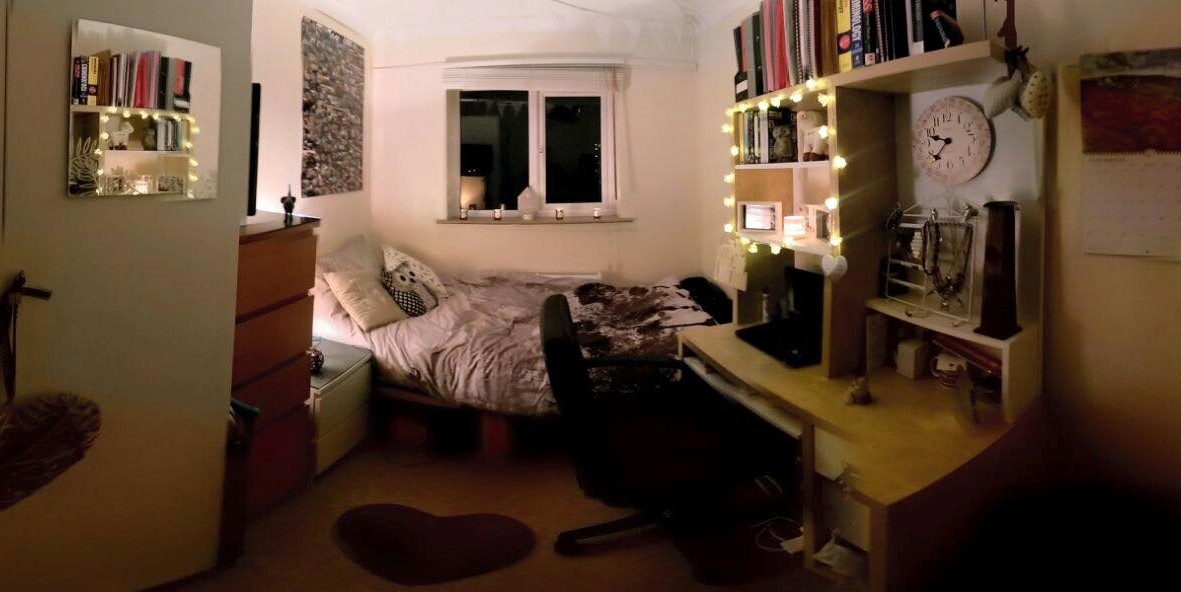
photo-box-room-student-housing-in-the-netherlands
I actually had a box room at university (the picture is a panoramic shot so makes it look MUCH bigger than it was), but I decorated it to s**t and made it homely and cosy. So anything is possible! Image: Emma Brown/Supplied.

Search online to find a place

Of course, you don’t have to look online exclusively, but that’s what we do these days, and it’s quick and easy. There are plenty of ways to find student housing in the Netherlands, and the internet is your friend! 💻

Some good places for finding student housing online include:

  • Facebook groups
  • Your university housing office (for short-term contracts)
  • Kamernet (rooms, studios, and apartments in all of the Netherlands)

These are generally the most popular — but a quick Google search will bring up even more! But you still need to be wary of scammers, no matter how you find your house. Now let’s go through the pros and cons of each one, so you’re prepared. 💪🏼

Facebook groups

Pros: So many to go around that you won’t have any problems finding a suitable one (hey, even DutchReview has one 😉). We recommend checking student groups from your university, as many will advertise their apartment there when they move out or when they looking for a new roommate! You can also connect directly to whoever is advertising the housing vacancy, or they can contact you.

Cons: You’re rarely in touch with a landlord, so you then have to scout out and ask the landlord. You can be scammed easily via Facebook through fake accounts.

Through your university housing office

Pros: It’s the safest method if the accommodation is provided by the university itself because you’re sure to be free of scammers (just make sure it’s actually from the university site). You’ll know who to contact, and you can usually keep in contact fairly easily.

Cons: This can sometimes be the more expensive option. It’s usually only for first-years, and the contracts only last one year. If you want university housing, you need to apply as early as possible, or you will likely not get it!

Studentenwoningweb

Pros: It’s purely for student accommodation so it’s perfect for a house search. You can create a personal profile, so it makes things faster. 

Cons: You have to pay money to register — it’s not that much, of course, but it’s still money. Note that Studentenwoningweb specialises in the Amsterdam, Diemen, and Haarlem areas before getting too deep into your search! You’re still not completely free from scams.

Kamernet

Pros: It’s free and easy to use! It’s also easy to plan viewings and contact people. 

Cons: You have to pay to go premium if you want to apply to many viewings. There is quite a high scam rate, so be critical when searching.

photo-female-student-sitting-in-bed-searching-for-student-housing-in-the-netherlands
At one point all the rooms might start to look the same, but keep searching and you’ll find something! Image: Depositphotos

Avoid getting scammed (if you can)

We at DutchReview are not unfamiliar with the horrible experience of housing scams in the Netherlands. So here are some top tips to avoid it:

If they can’t meet you, they probably aren’t real

No, seriously. Of course, some landlords do rent away from home (I never met my landlord beforehand, as he lived in Ireland and he’s legitimate), but if they can’t provide any sort of meeting AT ALL, then it’s fishy. 🙄

For instance, I went through his agency, they showed me around the apartment, they had the keys, they had ID, and they had proof. If this landlord is providing nothing for you to see beforehand and offers empty promises, then avoid them like the plague. 🏃🏼‍♀️

Do not sign your contract until you’ve seen the property (AND READ IT TOO)

I’m sorry, but pictures just won’t cut it in this situation. You need to see the property in the flesh and not just the outside but the inside too. Like I said earlier, make sure they have the keys and show you around. Only once you’ve done that, you should sign the contract, NEVER before! 🙅🏼‍♀️

Never secure the house with a deposit — a deposit is not for that!

I’ve come across this a fair few times, and this is not what a deposit is meant for. They are more likely to scam you if you do this or claim that the deposit never arrived in their bank account.

When paying for an actual deposit, it should never amount to more than one month’s rent, and if they ask for it in cash, then decline and make sure it’s transferred from bank to bank (not sites like money transfer or PayPal).

READ MORE | Housing & rental scams in the Netherlands: ultimate red flag guide

All in all, if things look far too perfect (did someone say a penthouse suite at a cheap price?!), then it’s probably a con. I nearly got conned on Airbnb, so never again (I reported it, and he was removed)! 🙏🏼

Budget, budget, budget!

Now you’re a student, you need to weigh up price vs. convenience, and even then, you should probably go for the price (all that booze isn’t going to pay for itself). 😉

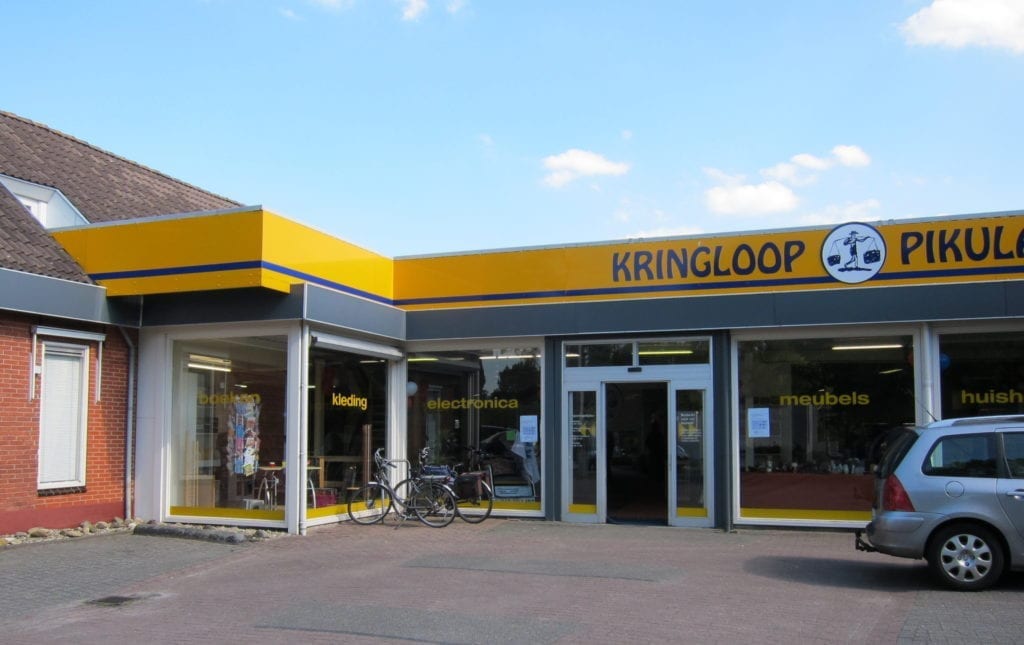
Your student housing in the Netherlands might not be fully furnished, and even if it was, it might need a few fairy lights to make it homely. If you want to furnish your house cheaply, then stick to Action and Kringloops, they’re a godsend!

READ MORE | Tips on how to work your way through college in the Netherlands

picture-of-storefront-Kringloop-winkel
Enter the kringloop for the cheap second-hand objects of your dreams! Image: Baykedevries/Wikimedia Commons/CC4.0

Saving money wherever you can (within reason) is key — and everyone in the Netherlands understands the student budget struggles. 💸


Good luck with your new student house in the Netherlands, we hope this guide has helped to get you started on your search! Succes! (Good luck!) 🙌🏼

Do you have any other tips for finding student housing in the Netherlands? Tell us in the comments below!

Editor’s Note: This article was originally published in August 2019, and was fully updated in February 2023 for your reading pleasure.

Rotterdam expects to have the world’s very first hyperloop by 2030

Soon, it will be possible to travel from Rotterdam to Berlin in about 1.5 hours without any stops or CO2 emissions!

Since 2017, the Hardt Hyperloop startup company, founded in Delft, has been developing a hyperloop system for Europe, and the first one will open in our beloved Rotterdam.

Hyper what?

The co-founder of Hardt Hyperloop, Tim Houter, described the hyperloop to the Port of Rotterdam.

“The hyperloop allows people and goods to be transported through a low-pressure air tube by a vacuum train. The means of transport is magnetically driven.”

READ MORE: Wait, what? These Dutch trains now run on vegetable oil

Hyperloop is a fast and eco-friendly way to travel across Europe, consuming less time and energy than current methods.

Are you ready?

Are you excited to get vacuumed into a tunnel that can take you hundreds of kilometres away in two hours? Well, you don’t need to wait long for that experience

In their brand new office in Rotterdam at the Science Tower in M4H, they have also opened an Experience Centre, where you can have the whole adventure.

READ MORE: Groningen receives funding for the Netherlands’ first hyperloop speed train

“That was an incredible moment. We were so honoured. In the experience centre, we familiarise visitors with the hyperloop at a glance.

We plan to open the experience centre to the public a few times a year.” — said Houter to Port of Rotterdam.

Money Money Money

The Hyperloop project is supported by multiple organizations. They received support from the Dutch government, and the European Commission also pledged a large investment last year.

“We are receiving support at more and more levels. From local to regional and national to global.“ — said Houter.

Are you ready for the Hyperloop experience? Tell us in the comments!

Paw Patrol: Amsterdam has a “police cat” and he’s so. Damn. Cute.

It can’t get any cuter than this: Nimis, a local Amsterdam cat, is going viral on TikTok, and for good reason.

Nimis goes under the name “Police Cat” thanks to the shiny lifejacket he always wears. He lives on a houseboat and wears a yellow life jacket for safety. 

The cat has been gaining followers and fans from all over the world, reports RTL Nieuws. And, he’s paws-itively adorable! 🐈‍⬛

The story behind it 

Nimis’ owner, Lydia Faber, started making videos of her cat and posted them on TikTok as a fun way to communicate with and entertain her young nieces. The videos, however, quickly went viral, with one of them being viewed more than 1.4 million times. 

Nimis has been living on a houseboat since he was just a kitten. With the canal walls being so high, it can be dangerous for the cat to fall into the water, as he won’t be able to get out. 

Faber took the necessary measures and gave Nimis his very own lifejacket for safety. No risk for cat-astrophe here! 🐱

READ MORE | This Amsterdam based company is helping to find lost cats across the world 

“It’s basically a life jacket to ensure he doesn’t drown,” reported Faber. Because the lifejacket is so bright, neighbours started to refer to him as the neighbourhood’s police officer. 

Faber decided to then make it official by adding a police badge to his jacket, making him a true local hero. 

Rise to fame 

Nimis is a growing star with more than 42,000 followers. “It’s crazy. It’s crazy! I never expected that, of course. It was just for fun,” stated Faber. He gets recognised by many people on the street, wanting to take a picture of him. 

The TikTok videos show him in his police uniform, patrolling the Amsterdam canals, climbing trees, and getting into mischief. 

When he’s not guarding Amsterdam, you’ll often find Nimis posing with colleagues from the Amsterdam police. 

Will he be recruited to join the police force? We wouldn’t be opposed to that. 🥰

If you want to check out Nimis’ cute videos, check him out on TikTok! 

What do you think about this cute cat? Tell us in the comments below!

Wait, what? These Dutch trains now run on vegetable oil

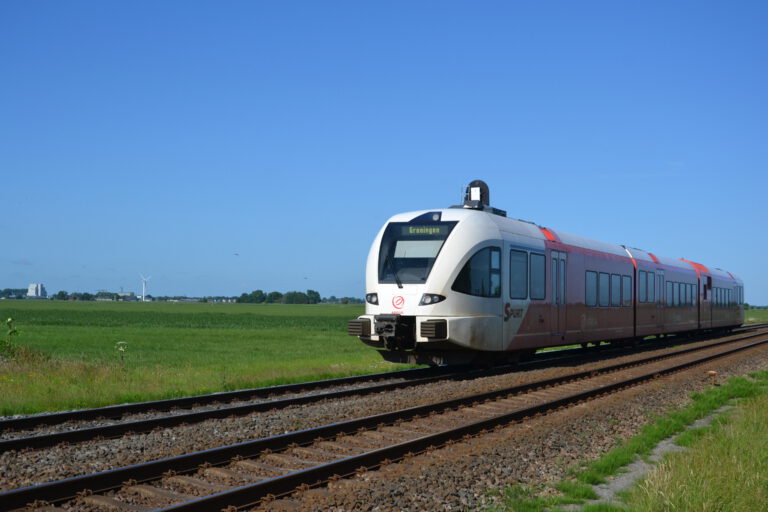
As of TODAY, all 68 Arriva trains in the Dutch provinces of Groningen and Friesland will run on plant-based Hydrotreated Vegetable Oil (HVO). 🌱

The new fuel, also called biodiesel, is a residual product that can be gained from frying fat, for example.

Everything works the same

Prior to the switch to vegetable oil, Arriva’s trains had been running on regular Diesel (when they weren’t on strike, that is 😉). But in comparison to the latter, HVO causes 90% fewer CO2 emissions. 📉

READ MORE | 7 innovative Dutch projects for a sustainable future

As the NOS reports, Arriva had been testing the fuel for the past two years, on two of its trains. The results? “Everything works the same with HVO as it does with Diesel,” a spokesperson told ANP news.

Luckily, no new trains were needed for the switch. 🚄

More green plans in the making

While this certainly is a step towards sustainable travel, the switch to vegetable oil is not enough for Arriva; they’ve got bigger plans.

At the end of 2022, the train carrier and the province of Groningen signed a contract for four hydrogen trains. These must be up and running on the route by 2027.

Besides this, a number of trials of battery trains are also ongoing in the region.

What do you think about Arriva’s fuel switch? Let us know in the comments!

New series of strikes: regional Dutch transport won’t be fully functional this week

On Wednesday and Friday, Regional transport workers will strike again to demand a better salary and labour agreement. 

Are you shocked? We sure aren’t. Recently, there’ve been more and more regional transport strikes — and it looks like they’re not going anywhere. 😉

Trade unions CNV and FNV warn that these strikes will not be the last of them since there has yet to be a collective labour agreement, reports the NOS.

Where and when?

Did you think Wednesday and Friday would be the only days of a strike? Nope, not on the regional transport workers’ watch.

At the moment, two days of strikes have been announced, which will set off a series of strikes that’ll each be reported at least 48 hours in advance.

For now, it’s still unknown which transport links will or won’t be running, so you can’t plan your journeys just yet.

READ MORE | Hoera! You can now use your phone or bank card to check in on Dutch trains

Therefore, we suggest keeping your eyes peeled on 9292 to know whether you’ll be one of the unlucky commuters on those days.

Trouble on and off the tracks

Regional transport workers aren’t the only ones on strike. Over the last few weeks, garbage collectors in and around Utrecht and Amsterdam have stopped working for the same reasons. 

READ MORE | Amsterdam garbage collectors are officially on strike for one week

The FNV wants to increase wages to line up with the inflation and stressful work conditions that are being felt all throughout the country. 

On behalf of the Association of Public Transport Employers, chairman Fred Kagie explained that the money is just not enough to support these demands. 🙄

What do you think of the regional transport strikes? Tell us in the comments below!