Home Blog Page 393

The Netherlands ranks 9th in the world for higher education in 2022

This year, the Netherlands has snatched the 9th spot among the 20 best countries in the world for higher education, according to The Campus Advisor. ๐ŸŽ‰

The Campus Advisor is a global student platform that allows users to rate and review their university, academic staff, campus facilities, accommodation, and academic experiences!

It recently ran a survey on 17,824 students, asking about the countries where they received their higher education degrees.

The survey took into account the scores of the following categories when calculating the overall rankings of the countries:

  • Quality of Education
  • Cost of Living as a Student
  • Graduate Career Prospects
  • Student Diversity
  • Social Life
  • Arts & Culture

Ninth spot for the Netherlands

The Netherlands achieved a total score of 4.32 out of 5 after combining the scores of the six individual categories.

The top categories for the lowlands were those of ‘Quality of Education’ scoring 4.57 out of 5 and ‘Graduate Career Prospects’ with a score of 4.58 out of 5. ๐ŸŽ“

Here are the individual category scores for the Netherlands:

  • Quality of Education:ย 4.57
  • Cost of Living as a Student:ย 3.19
  • Graduate Career Prospects:ย 4.58
  • Student Diversity:ย 4.49
  • Social Life:ย 4.55
  • Arts & Culture:ย 4.51

READ MORE | Hoera! UvA and Utrecht University rank among top 100 scientific universities worldwide

The top 20 countries for higher education in 2022

RankingCountry
1United States
2United Kingdom
3Australia
4Germany
5Ireland
6Switzerland
7Canada
8Denmark
9Netherlands
10France
11Japan
12Czech Republic
13Austria
14Singapore
15Sweden
16New Zealand
17South Korea
18Portugal
19Belgium
20Malaysia

The United States got the top spot thanks to the great quality of education they offer to its students. If only they could provide them with a standard level of protection and safety as well! ๐Ÿคฆโ€โ™€๏ธ

At least we can say that students aren’t afraid when going to their university campus in the Netherlands. Though, we’re sure the costs of living are bound to give them a fright! ๐Ÿ˜ฑ

Did your country make it to the list? Tell us in the comments below!

Schiphol passengers are now jumping on the belts to grab their luggage

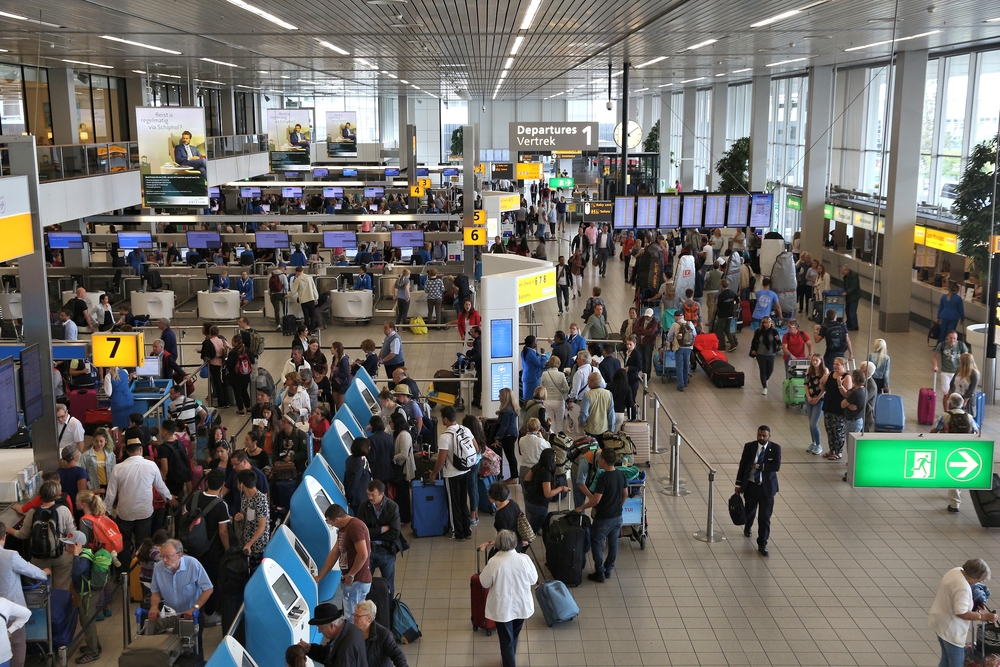
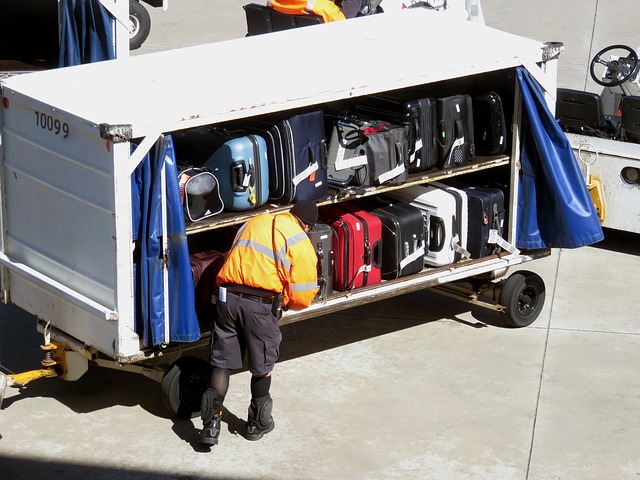
The Schiphol nightmare continues where baggage is ending up strewn all over the airport โ€” and now even passengers are ending up in places they don’t belong.

Where exactly have some passengers found themselves? On the baggage belt. ๐Ÿงณ To be fair, they did put themselves there.

Taking matters into their own hands

On Saturday night arriving passengers were left frustrated as they could see their bags lingering behind the flapping curtains of the baggage belt โ€” but the bags weren’t coming out.

After a long wait, five different passengers decided to take matters into their own hands and simply jump on the belt, climb up to the flaps, and grab their awaiting suitcases. Can we blame them? Nee.

A warning

Yet, neither could the Dutch Marechaussee (y’know, those ridiculously attractive people at passport control?)

While the Marechaussee could have given the passengers some serious trouble, they decided to let them off with a slap on the wrist given the exceptional circumstances.

READ MORE | Thatโ€™s a lot of baggage! Huge piles of suitcases left lying unattended at Schiphol

Speaking with De Telegraaf, a spokesperson for the Marechaussee explains, “Of course, it’s not ok that people can just decide to go to places where they are not allowed to go. It doesn’t work that way,” the spokesperson said.

“But given the situation and the long wait, the passengers got off with a warning.” Fair!

Do you sympathise with the passengers? Tell us your thoughts in the comments below!

Dutch supermarket shelves go empty while farmers do exact opposite of their jobs and block our food

Farmers have continued to protest by blocking supermarket distribution chains and honestly, we’re just kinda done.

Remember those empty supermarket shelves during the great pasta/rice/toilet paper shortage of March 2020? Yeah, the flashbacks hurt us too.

In the latest episode of “What have the farmers done in their quest to protest Dutch government climate measures,” supermarket shelves are running dry on dairy and vegetable products, reports NOS.

That means no cheese for the kaas-loving Dutchies โ€” s*** is getting real.

(Also, we thought farmers existed to help us get food, but okay?)

Wasting away

Now supermarkets are warning that millions of euros of food could go to waste if farmers don’t remove their blockades and LET US EAT CHEESE.

Research agency Roamler has identified that the empty shelves are not being seen across the country, and that where shelves are running empty customers are also hoarding stock, stretching the problem further.

To be fair, municipalities are trying to step in. In Nijkerk, Gelderland, an emergency regulation has been issued.

Three Overijssel mayors have also “made requests” (a.k.a asked nicely) for the farmers to end their blockades, but failed to mention any consequences if the farmers refuse.

Have you experienced empty supermarket shelves in recent days? Tell us in the comments below!
Dutch Quirk #94: Sound an air raid alarm every single month

If you’ve ever been in the Netherlands on the first Monday of any month of the year, you’d probably have heard the daunting sounds of the Dutch air raid alarm. ๐Ÿšจ

While these alarms are only tests, they can sound pretty scary if you have no idea what those blaring sounds actually mean! ๐Ÿค”

READ MORE | Sirens in the Netherlands: what you need to know

What is it?

On the first Monday of each month, the Netherlands tests its public warning sirens at 12 PM for one minute and 26 seconds.

In the Netherlands, there are about 3,800 of these sirens. They’re all operated by local authorities in case of any emergency!

Tip: If the first Monday of the month falls on a national or religious holiday or on Remembrance Day, sirens will not be tested!

Why do they do it?

The Netherlands tests its public warning sirens regularly to make sure they’ll function properly in times of emergency!

It’s important that authorities can rely on these alarms to alert everyone about a certain danger, whether it’s on a local or national level. ๐Ÿ™Œ๐Ÿผ

Why is it quirky? 

The Dutch test their alarms 12 times a year because, well, you can never be too sure! However, the Danish and the Swiss sound their alarms only once a year.

Either they aren’t expecting to ever use their alarms or they simply trust their systems more than the Dutch do. ๐Ÿคทโ€โ™€๏ธ

Should you join in? 

While you probably can’t trigger the sirens yourself, it’s definitely worth hearing the alarms blast through your ears at least once.

Though, if you do hear them, make sure to check if it’s happening on a Monday at 12 PM sharp. There’s no telling what sort of imminent danger is coming towards the lowlands! ๐Ÿ˜ณ

What do you think of this Dutch quirk? Have you experienced it? Tell us in the comments below!

Eurostar adds an extra daily train from Amsterdam to London

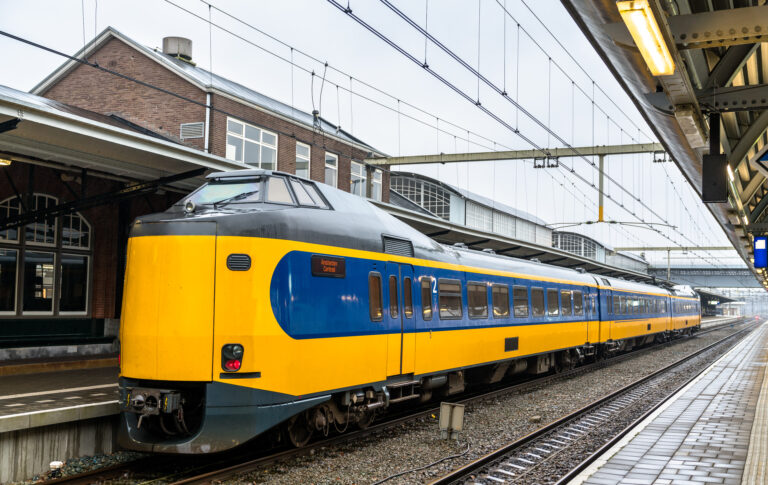
Pack your suitcases! Starting September 5, Eurostar will add a fourth daily train that runs from Amsterdam to London! ๐ŸšŠ

According to the company, there’s a greater demand from travellers for train journeys to London, reports Het Parool.

Train schedules

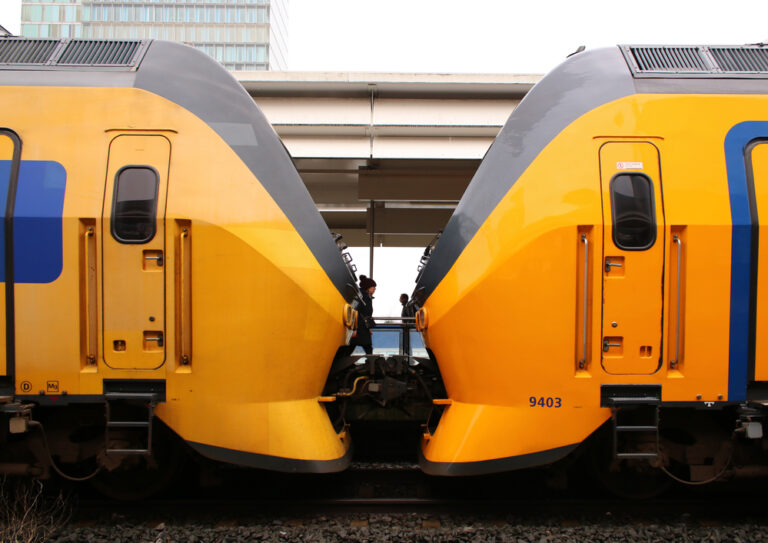
The Eurostar train is set to depart from Amsterdam Centraal at 7:47 and from Rotterdam at 8:28. The journey from Amsterdam to London takes a little over four hours total.

Business and leisure travellers seek the Eurostar services โ€” especially when the Netherlands’ Schiphol Airport is facing a plethora of its own problems. Yikes. ๐Ÿ˜ฌ

Set for renovation

Earlier in June, there was talk that the Eurostar wouldn’t run from Amsterdam to London due to planned renovation of the platforms on the Dutch end.

According to Minister Heijnen of Infrastructure and Water Management, it’s not possible to have an “alternate” departure hall for the train. ๐Ÿ˜•

However, the Amsterdam traffic alderman (council member) Melanie van der Horst tells Het Parool that the trains will continue to run as the Dutch government is working with ProRail and the NS to find a solution. ๐Ÿ‘๐Ÿป

It seems like the Eurostar train is here to stay! โญ๏ธ

Do you plan to use the Eurostar train soon? Tell us in the comments below!
Dutch-American history: how the Netherlands played a pivotal role in America’s Independence

The Dutch relate to their history like all of us do to our own: we highlight our accomplishments and hide our embarrassments. 

But Dutch history has many horrible, fascinating, and illuminating lessons for you โ€” including the Netherlands’ influence on the creation of the United States of America. So let’s start with the story of the Dutch and the American Revolution, shall we?

Dutch-American history: what Rutte forgot to tell Obama in 2014

While Dutch-American relations have developed since then, Obama’s 2014 visit to the Netherlands is a good place to begin our story of the Dutch and the American Revolution.

Press conference of President Obama and the Dutch Prime Minister, Rutte, in March 2014 in the Amsterdam Rijksmuseum (for the Nuclear Summit).

They stood in front of the colossal Nightwatch painting of Rembrandt โ€” the best example of the Dutch Golden Age. However, Obama was also shown two documents that “played an important role in the age-old friendship between our two countries.”

By showing these two particular documents only, Rutte negated the tragic failures of the last years of the Dutch Republic. Failures, however, helped to create the United States of America we know today.

Involvement of the Dutch in American independence

So what did Rutte forget to tell Obama? A lot. For example, he didn’t mention that a Dutch governor recognised the United States for the first time โ€” without consent from the government in The Hague. Is that the reason Rutte met Obama in Amsterdam?

In 1776 on the Caribbean island of St. Eustatius, the cannons of Fort Oranje gave the ‘the first salute’ to the American rebels. This salute was no coincidence. As early as 1774, Dutch merchants provided staggering amounts of gunpowder to the American war effort. St. Eustatius was the place where supply met demand.

dutch-american-relations-postage-stamp-first-salute-to-the-flag-of-the-U.S.A
“First salute to the flag of the USA.” Image: US Embassy The Hague/Flickr

Thisย did not happenย because Dutch merchants were particularly sympathetic to American ideals ofย democracy andย taxation with representation. They were a highly oligarchical bunch โ€” totally at ease with privileges that even then wereย consideredย ‘so earlyย modern’.

Business first

The Americans needed gunpowder badly, and the Dutch (particularly Amsterdammers) dived into every lucrative market they could find. Profits were what these merchants needed in 1776. Business, like the Dutch economy at large, had been in relative decline for decades.

The Americans gradually realised that the Amsterdam merchants and bankers were acting opposite of their government. At this point, the Dutch Republic was allied with Britain, America’s arch-enemy, for more than a hundred years.

Still, the Americans, critically short on cash, sent John Adams across the Atlantic Ocean. He brought his two sons, who he sent to study in Leiden.

READ MORE | The pilgrims in Leiden: Where were the pilgrims before they sailed to America?

In 1778, he visited Amsterdam, still the world’s financial centre at the time, to obtain enormous loans from Amsterdam bankers, who would remain responsible for financing the American national debt well up until the 1790s.

Adams observed the political situation in the Dutch Republic, and what it could teach him. His tone was sympathetic to Dutch culture but mostly negative.

Above all, the country he describes in his correspondence was a Republic that had lost its way through years of corruption and party strife.

READ MORE | That time the Dutch ate their prime minister

A failed political system

When America was founded, the Dutch Republic had become a dysfunctional state. The provinces could not bridge their different interests.

Before, Holland’s richest province of the Republic was able to negotiate effective policy. Now, mercantile Holland stood totally opposite to the government in The Hague, which represented the more landward provinces.

Consequently, the Dutch Republic barely had a common foreign or defensive policy โ€” nor a budget to back it up. It was unable to protect its still enormous (colonial) empire โ€” it simply did not have an army or navy to do so.

This powder keg of political partisanship and inertia exploded when Britain chose to declare war on the Dutch Republic in 1780; the merchants would not stop trading with France and the United States.

Britain destroyed the Dutch merchant fleet and took possession of swathes of Dutch colonial territory.

The anger over this defeat triggered a revolution in the Dutch Republicย in 1781. A broad section of the Dutch population sought political reform but they couldn’t pull through.

Unable to control the increasingly violent situation, William of Orange and his clique invited Prussia’s well-drilled soldiers to squash resistance after years of political upheaval in 1787.

Now, why is that important?

In the weeks that Prussian troops routed Dutch revolutionaries, the Founding Fathers of America descended on Philadelphia to write their constitution to reform their loosely tied confederation of States into a United States (more than 10 years after they declared independence).

During intense debates, several key American Founding Fathers, like Thomas Jefferson, Benjamin Franklin, John Jay, and Thomas Paine, were aware of the developments in the Dutch Republic.

Primarily, the questions that faced the Founding Fathers were some that still rhymes with those dominating American politics today: what were to be the powers of the American federal government?

The fate of the Dutch Republic clouded these debates, providing lessons on how a Republic should face internal political strife. After the Prussian invasion, Madison wrote one of the famous Federalist Papers. In No. 20, he stated:

The union of Utrecht [โ€ฆ] reposes an authority in the States-General, seemingly sufficient to secure harmony, but the jealousy in each province renders the practice very different from the theory.

Dutch-American relations in the present

Ironically, Rutte’s press conference with Obama took place a few months after an unprecedented shutdown of the United States government.

It was the bitter evidence that Obama had been unable to bridge the partisan divide he’d sought to tackle. It was evidence of how the United States of America had reached a political deadlock similar to one that the Dutch Republic experienced some 230 years before.

Of course, Rutte did not tell Obama this.

But then again: why didn’t he? Extreme partisanship pushing political institutions to their limits is inevitable in the rise and fall of great powers. Obama’s presidential predecessors knew this by studying that country that had, through providing the American rebels with gunpowder and vital loans, dug its own grave. 

The politics of the Dutch Republic inspired them to write a ‘rational’ constitution that could overcome the ‘spirit of party in the future. Indeed, perhaps that constitution prevented total institutional inertia in the United States today โ€” the silver lining of history that Rutte forgot to tell Obama about.

Any details we might have missed in this crash course in history? Tell us in the comments below!

Feature Image: Rijksoverheid/Wikimedia Commons/CC1.0

Editor’s Note: This article was originally published in July 2016, and was fully updated in July 2022 for your reading pleasure.

Outraged Dutch farmers block supermarket distribution centres in protest

Once again, Dutch farmers have set out to protest the government’s nitrogen policy. ๐Ÿšœ

Plans to cut down nitrogen levels in the Netherlands have a long history of bringing Dutch farmers to the streets. Just recently, 20,000 to 30,000 farmers participated in a huge protest that caused widespread traffic disruptions on Dutch highways.

Today, farmers are blocking supermarket distribution centres, airport routes and ferries to raise awareness of the impact of the nitrogen policy on the agricultural sector. โœŠ

Disrupting food supply

Farmers are blocking food distribution centres of major supermarkets in the Netherlands like Jumbo, Lidl, and Albert Heijn, reports the NOS.

In the case of Lidl, three distribution centres all over the country are currently blocked. Supermarket giant Albert Heijn lets customers know that those who ordered their groceries online will have to wait on their orders due to the protests.

However, this isn’t the only form of disruption the farmers have brought. Farmers blocked ambulances, set fires, and even stormed the Nitrogen and Nature Minister’s home.

Solidarity from fishermen

In support of the farmers protests, fishermen have also come together to block the harbour of Den Helder.

That means that there is currently no ferry available to transport visitors from the Dutch mainland to the popular island Texel, says the NOS. A similar protest is blocking the harbour in Lauwersoog and Ijmuiden.

Have you seen the farmer’s protests in the Netherlands? What do you think of their cause? Tell us in the comments below!
Dutchie (19) gets a heavy fine for cruising a scooter through Venice

One may rightfully say that the Dutch are enthusiastically reckless drivers. We have our very own Formula 1 champion, everyone is freakishly skilled on a bicycle, and we defy traffic laws โ€” even in other countries.

A 19-year-old Dutch man faces a hefty fine for taking a scooter ride through the centre of Venice. ๐Ÿ‡ฎ๐Ÿ‡น

According to the local newspaper Corriere del Veneto, the Dutchie in question has been banned from the city for at least a year as a consequence! ๐Ÿ˜ฑ

Serious consequences

The Dutchman will receive a restraining order for several years and a fine of at least a few hundred euros, says RTL Nieuws. That’s because it’s strongly forbidden to ride any kind of motorised transport in the historic centre of Venice.

In fact, it happens so rarely that many residents were surprised to see a blue Vespa cruising through their city, according to Corriere del Veneto. Is it really so hard for Dutchies to NOT use a scooter?! ๐Ÿ™„

The Dutch tourist apparently entered Venice through the Italian mainland, crossing Ponte della Liberta (Freedom Bridge).

What do you think of this traffic blunder? Tell us in the comments below!

Scrapping rides: NS continues to cancel trains due to staff shortages

While it seems like an overplayed joke, it’s not just Dutch airports and airlines that are struggling with staff shortages.

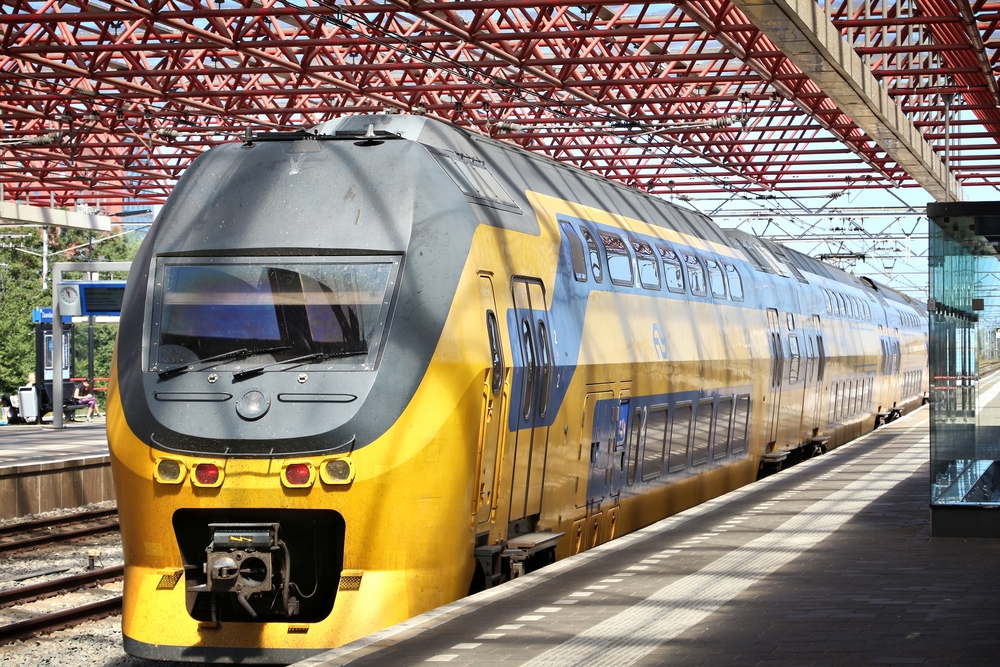
The Netherlands’ railway company NS continues to cut train rides throughout July to cope with the lack of staff.

The company cancelled trains on six routes, two more than the week before, says RTL Nieuws.

Fewer Randstad trains

Overall, most of the affected trains are in the Randstad region of the Netherlands.

Travellers from The Hague, Rotterdam, and Gouda may have trouble getting around with sprinters only running two times an hour instead of the usual four.

Likewise, anyone who wants to visit Amsterdam from Enkhuizen or Eindhoven will have to plan carefully with only two sprinters and four intercity trains an hour.

Luckily, the Intercity Direct trains won’t be affected by the sparse schedule this week. Hopefully, passengers travelling from Amsterdam and Rotterdam can beat the scheduling chaos. ๐Ÿ˜ฐ

Shortages across the board

Secretary of Infrastructure Vivianne Heijnen said staff shortages could last until after summer, according to the NOS. ๐Ÿ˜ณ

“There are shortages across the board. Of course, we don’t want to cancel trains, but we do this on routes where it hurts the least and where the personnel shortages are the greatest,” says an NS spokesperson. ๐Ÿ˜•

More than enough vacancies

When candidates apply for a job as a train driver or conductor, they can’t get to work immediately. Train driver training takes two years and conductors must follow a six-month course before they can even start checking tickets.

While there’s a major shortage of drivers and conductors, the NS is also looking for service employees and IT staff.

Have you had any problems with the trains in the Netherlands lately? What was your experience like? Tell us in the comments!

Butts everywhere! Dutchies cycle naked through Amsterdam

If you were in Amsterdam last Saturday, you might have spotted them: a group of Dutchies cycling through the city in their very own birthday suit.

It almost sounds like another Dutch clichรฉ โ€” of course, there are naked cyclists in this liberal and bike-obsessed nation.

But don’t be fooled! The Dutchies that cycled their naked bodies through Amsterdam last Saturday did so for a good cause as part of the global movement World Naked Bike Ride (WNBR).

World Naked Bike Ride

So, uhm, what’s that exactly? The WNBR is a global initiative that tries to raise awareness of the vulnerability of cyclists in the hustle-and-bustle of everyday traffic.

“We [the cyclists] are very vulnerable. Whether you’re wearing nothing or a very thin T-Shirt […] really doesn’t make a difference in the case of an accident,” one participant tells NU.nl.

The WNBR organises events in over 70 cities spread across 20 countries all over the world. Wat mooi!

Mostly positive reactions

But what’s it like to cycle stark naked through a city as crowded as Amsterdam? Is it not just the teeniest bit nerve-wracking to potentially make eye contact with your boss or ex-partner when cycling completely unclothed through the city?

Roland van der Kleij, one of the organisers, tells NU.nl that this year marks his tenth time participating in the WNBR: “It’s no longer that exciting,” he says.

“A bit less now but the year before,” replies Anika, another participant, when asked if she is nervous. “Last year was my first time.”

Overall, participants report that the majority of reactions are overbearingly positive.

Would you have the courage to cycle naked through Amsterdam? Or have you seen the WNBR in Amsterdam last Saturday? Tell us in the comments below!