It’s the end of an era! Albert Heijn decided to scotch the age-old system, where Nederlanders had to stow a coin into shopping carts at the grocery store.
The largest supermarket chain in the Netherlands has made it apparent that you’ll no longer need to dig deep into your wallets for that one, tiny shopping cart token. 😲
It’ll take some time before they completely abolish the system, considering that there are just about a thousand stores across the lowlands, but they do have a plan underway.
“Initially, the coin locks at Albert Heijn are taped, so that they can no longer be used. The intention is that those locks will be removed completely later”, a spokesperson for AH tells NU.nl.
The pandemic made it a reality
Who can remember a time when the grocery-store world wasn’t controlled by the order of the coin? 🤔
Back in the day, many people would think it wise to steal the carts and bring them home — oftentimes even leaving them astray in parking lots.
When the system was introduced in the late 1900s, it was the only, true motivation for bringing those carts back to where they belonged.
Well, the pandemic changed all that. It showed that nowadays, people simply don’t have the urge to steal shopping carts anymore, and would rather do without the coin system.
The ‘rona wasn’t all bad: Dutch supermarket chain Albert Heijn realises the scheme to unlock shopping carts with a coin makes no difference and drops it.https://t.co/3wEyG4oxiE
“During the corona pandemic, we saw that it actually went well without coins. No more or fewer carts disappeared”, a spokesperson for AH tells NU.nl.
Fewer tokens, less plastic
When the system was first introduced, folks had to deposit actual guilders into the shopping trolleys, which later on switched to real metal-made coins. 💸
Now, these coins are almost entirely made of plastic and have become a huge part of one of the most pressing environmental issues on the planet.
On Saturday evening, a large truck drove into a group of people having a neighbourhood barbecue in Nieuw-Beijerland around 6 PM.
The empty truck drove off a dike in the hamlet of Zuidzijde in Nieuw-Beijerland. The driver went towards a group of dozens of people barbecuing at the bottom of it.
The truck was standing on the dike before the accident, and the police have yet to find a reason for why it started driving again.
As a result, seven injured people are still in the hospital, one of whom is in critical condition, reports the NOS.
Dutch police say ‘several’ people died after a lorry appears to have gone over a dyke & rolled into neighbourhood barbecue in Nieuw-Beijerland, around 30km south of Rotterdam.
Truck driver, who wasn’t injured, taken in for questioning.
The tragedy caused six people to lose their lives: two men, aged 50 and 62, and two women aged 32 and 75. A 48-year-old man and 28-year-old woman from a neighbouring village also died.
Out of all the fatalities, three victims belonged to the same family: a mother, a son and a daughter-in-law who was eight months pregnant.
“Everyone was in a panic, everyone tried to help. The emergency services were busy, but there were an awful lot of injured,” says Rebecca van Wijgerden to the NOS, a bystander who came to the scene after the accident.
“Later, the driver got out of his truck and was taken away by the police. Everyone who was there was upset. It is unknown what exactly happened, but people were angry, wanted to know what had happened.”
Driver arrested and truck taken from the site
The police have arrested the driver, and are investigating what happened.
Initial observations show that there was no alcohol or drug use involved. The driver has also taken a blood test which will show if he had taken anything beforehand that might’ve affected his driving.
The truck has now been removed from the site of the accident is now subject to further investigation by the police.
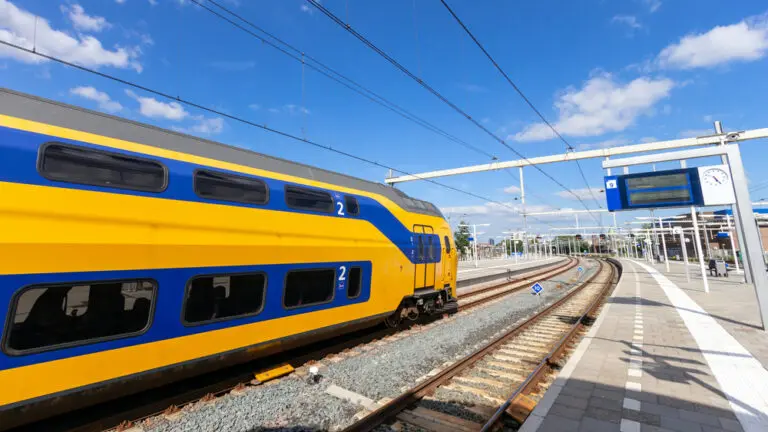
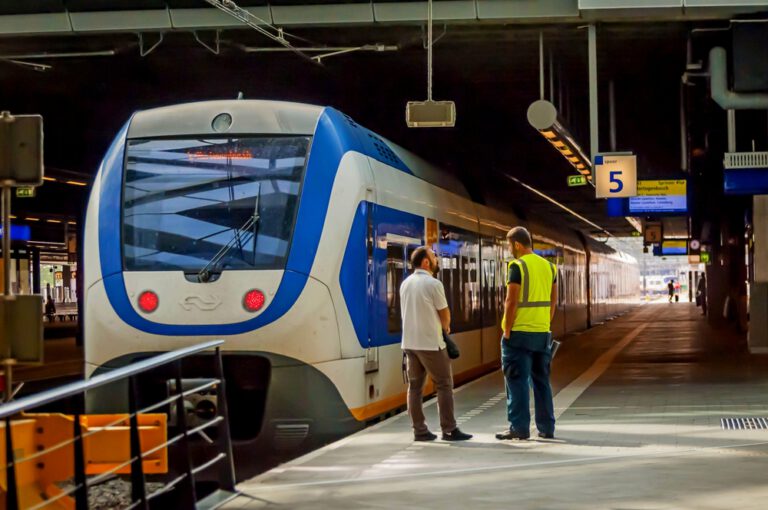
Last week, many of us in the North-West regions had to face the hindrance of 30-minute train delays at NS stations — or no trains at all, for that matter. 🤦♀️
This week, those within the Eastern and Southern regions of the Netherlands will be hit by the strike the most. And, with that, we wish you luck. 🤞
This week, in strikes
Today, people can still expect train traffic to and from Haarlem and Amsterdam due to NS strikes.
The NS staff plans to make their way to the central regions of the Netherlands tomorrow, where train cancellations and delays will affect those travelling to and from Utrecht, Amersfoort, Gouda, and Hoofddorp.
On Wednesday, trains in the Eastern and Southern regions will be stopped, which applies to the following cities:
Arnhem
Breda
Den Bosch
Deventer
Ede-Wageningen
Eindhoven
Enschede
Heerlen
Hengelo
Maastricht
Nijmegen
Roosendaal
Sittard
Venlo
Vlissingen
Zutphen
Need a complete overview of exactly when and where to expect train strikes this week? RTL Nieuws laid it out nicely for us. 👌
It’s not just local trains
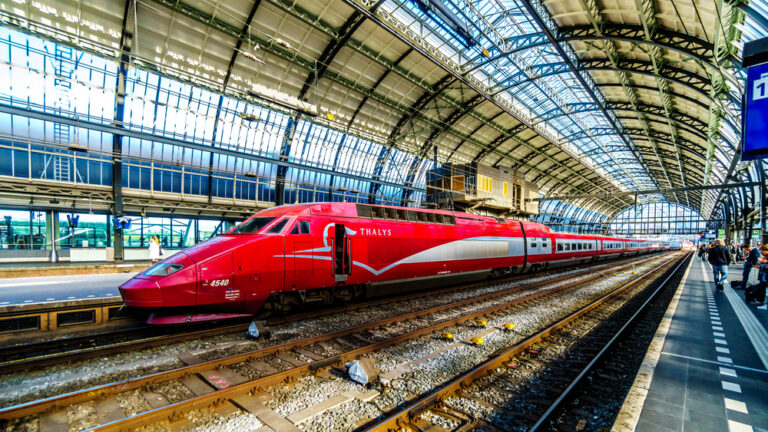
This week’s strikes are even going as far as to affect international trains, where none will grace the rails from Amsterdam to Berlin and Basel, and only a few will successfully arrive in Frankfurt.
If you’re looking to snag a ticket to Vienna or Zurich, then you’ll have better luck taking the ICE. 😬
Compensation? It’s possible
If your train isn’t running due to a strike, you might be able to request compensation through NS’s strike scheme.
On the day of the strike, they will announce whether the striking scheme is effective on NS.nl. If it is, then you’re entitled to one of the two following schemes:
The NS Delay Refund Scheme (GTBV),
Compensation for alternative transportation of up to €25 a day per person.
If you decide on the refund scheme, then keep in mind that you’re no longer entitled to compensation for alternative transportation and vice versa.
Did you have to personally deal with the NS strikes recently? Tell us in the comments below! 👇
The Dutch train strike is headed towards its second week, and it’s off to a dramatic start. Today, train traffic in North Holland and many trains going abroad are affected.
New week, new train problems. One of today’s most noticeable complications is that NS will shut down basically all trains going to Amsterdam, writes RTL Nieuws.
Another central hub shut down
If you were planning on going to Amsterdam (or any other cities in North Holland) today, you might want to reconsider. The rails will be empty today, in one of the busiest areas of the Netherlands.
This Monday 29 August NS (Dutch trains) will be on strike in the region around Schiphol. This may affect incoming international students @Radboud_Uni Are you driving from Schiphol to Nijmegen on Monday and happy to share a ride? Then please try and find a match with #radboudride
There are still some options open for those in need of transport, however: some trains still operate between Amsterdam, Schiphol, and Utrecht, and the roads are, of course, accessible for car drivers.
However, the message from NS is clear: to avoid packed trains and busy roads, it’s better to stay home. This strategy will also prepare future passengers, since NS will cut many trains permanently starting from September 5th.
Going abroad? Planning is key
The North Holland train strike also influences international travel to a larger extent than the other regions.
If you’re going to Schiphol, it’s definitely best to go by car, although there will hopefully be a few trains running.
If you decide to drive, chances are it will be extra busy on the roads (although it’s expected that many people stay home), so make sure you plan some extra time in.
Ha! Last night was something else – because of Dutch railways strike today, all the sleeper carriages were removed from our Zurich sleeper train and we terminated in Frankfurt at 3am instead of Amsterdam at 9am… now on v busy train to Amsterdam
In an effort to fight the asylum crisis, the Dutch cabinet is cooking up a plan to make 20,000 houses available for asylum seekers and offer €730 million to advocacy projects.
The Netherlands has been struggling with an overflow of asylum seekers for weeks, and the lack of housing has left many shelters and centres crammed.
In particular, the aslyum crisis has been ever-growing at the registration centre in Ter Apel, where asylum seekers can be seen sleeping outside in tents and chairs.
The situation deteriorated so much that the international aid organization, Doctors Without Borders, intervened and provided care for those staying outside of the centre’s gates.
What’s the cabinet’s solution?
To combat this, the government and municipalities are trying to find new ways to reduce the influx of asylum seekers, writes the NOS.
Cabinet officials are looking at measures such as by temporarily limiting the options for family reunification.
To further reduce pressure on the asylum seeker centres, the cabinet is going to ask municipalities to provide up to 20,000 temporary homes for asylum seekers with residence permits by autumn of this year, according to RTL Nieuws.
This is, of course, going to be quite challenging for the municipalities as nearly all of the Netherlands is suffering from a serious housing shortage, and especially social rentals, which are under control of the municipalities, are extremely limited in Dutch cities.
In the coming years, they also plan to supply €730 million to create new opportunities for emergency shelters, flexible housing, integration, and tackling nuisances.
Follow DutchReview on Facebook and Instagram for the latest news from the Netherlands!
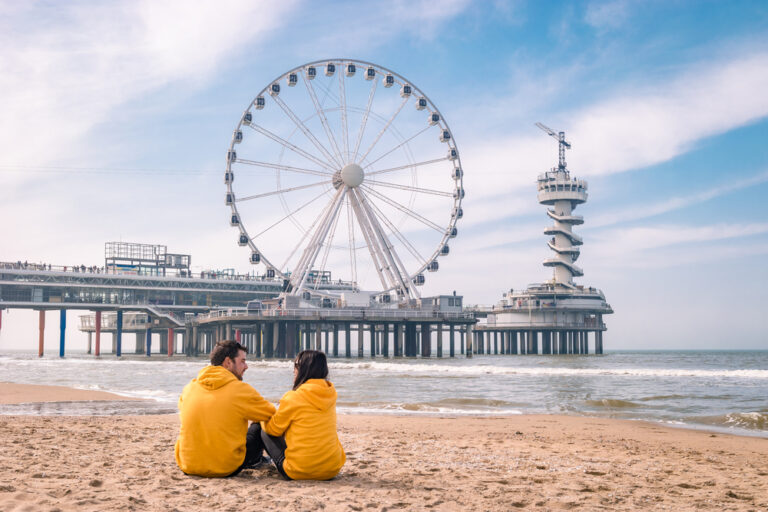
Scheveningen is the coastal district of the Hague and an all-time favourite with Dutchies and tourists alike.
In the dead of winter, you’ll see people solemnly walking their dogs along the water, and in the summer, you’ll hear enough German to believe you’ve crossed borders in your sleep.
This sandy part of town has something to offer for everyone — including those strapped for cash (ahem, us). So, let’s have a look at our favourite things to do for free in Scheveningen. 👇
1. Take a walk along the beach
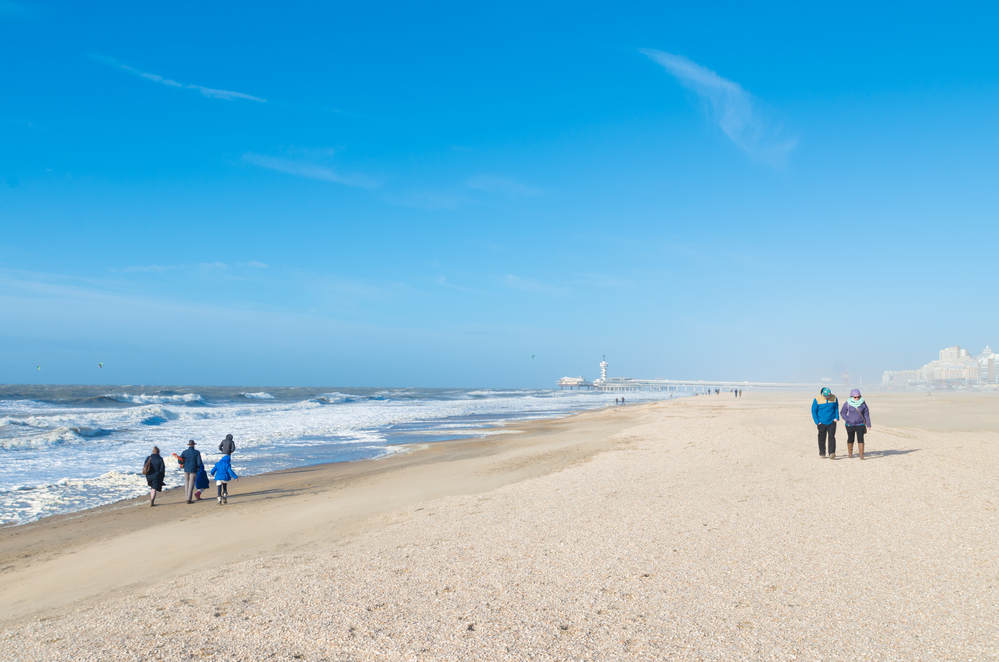
We are kicking off our list of free things to do in Scheveningen with a classic: taking a long walk along the beach!
All you need is yourself and a good pair of shoes — and, in the summertime, you can even ditch the shoes. You can go with a group of friends or simply enjoy the coast on your own! 🙌
Scheveningen is also the best place to ‘uitwaaien.’ Image: Depositphotos
In the cold winter months, it feels natural to stay indoors where it’s warmer, but winter is no excuse to skip nature! It’s fun and relaxing any time of the year, especially by the sea.
You can either take a relaxing walk or challenge yourself with a little something such as visiting the dunes. There are plenty of things to do if you put your time and mind into it. And to keep it free, don’t forget to pack a thermos of coffee and sandwiches to gobble up during your stay — you can even make a picnic out of it. 🧺
Is the sun shining and all is nice and warm? Then you know what to do. 🏊
Do you have a dog? Take your beloved pet with you to enjoy the outdoors as well. Make this a perfect day for both (or three or more) of you.
If you’re a serious walker, you might want to check out the City Pier walk2022, which will take place at the Scheveningen pier on September 25, 2022! Each year, thousands of people, old and young, participate in the march by either running, walking, or simply just strutting their stuff!
2. Go bird watching
Here is something that doesn’t easily come to mind: bird watching. Despite the general idea, bird watching is neither old-fashioned nor boring! It’s not only a relaxing activity but also something you can do anytime and anywhere. All you need is your enthusiasm and interest (Okay, and maybe binoculars).
Oh, all the birds you’ll see! 🦅 Image: Freepik
If you like the idea, grab your bird food and come to Scheveningen because there is no better time to watch the birds than wintertime. In colder months, seabirds hibernate right off the coast and the beaches being calmer makes it safer for birds to chirp around freely.
Some of the birds you can come across are songbirds and birds of prey, to name a few. Plus, how can you forget about the seagulls? They are usually less popular with Scheveningen because, as we all know, they can get quite noisy, but for nature photos they are great! They sit still for a long time and are easy to approach (again, some bird food would do the trick).
If you want to spot more birds, you can also look for the tranquillity of the dunes. A good chance to improve your photography as well!
In short, come over and give it a try. Who knows, maybe this will become your lifelong hobby.
3. Take photos
Speaking of bird watching, how can we miss out on photography? You don’t need a fancy camera to join in the fun even your phone will do.
Also, forget about whether you are serious about it or not. It’s about enjoying yourself. With calm beaches, rolling waves and a beautiful view any time of the day, nothing is easier than getting some inspiration.
If you have been following us for some time, then you must know that we love our photo reports! And, it’s no surprise that Scheveningen is one of our staple locations to post. We call it our favourite beach town for a reason!
4. Have a picnic
A thermos of coffee or maybe even some gluhwein, some cheese (or a lot of cheese), sandwiches and music to set the atmosphere is all you need for your little picnic by the sea. If you want to be on the safer side, it might be a good idea to add a few extras like hand warmers, warm rugs, or lightweight fleece throws.
Winter picnic check-list:
Radio
Extra blankets
Thermos full of hot drinks
Extra pair of socks in case your shoes decide to betray you
Every help you can get, including hand warmers, hats, gloves
Food (duh!)
An adventurous attitude
Lip balm (it’s dry out there)
5. Run for fun!
Our last item on our “free things to do in Scheveningen” list is nothing but good old running! Breathe in the fresh air and kick some miles while you are at it.
Running at the beach isn’t limited to humans! Image: Pixabay
Running brings so many benefits: it improves your mood, stimulates your brain, and enhances your overall well-being! Combine that with the beautiful view of the Dutch coast and just imagine all the wonders it can do for you!
Whichever activity you choose, it’ll be the perfect way to end the summer season and get in the spirit of winter!
Which one of the “5 free things to do in Scheveningen” is your favourite? Tell us in the comments below!
Offering a free nutritious lunch at work is a smart business decision, right? Wrong! In the Netherlands, lunches are taxed by the government — and, trust us, they will get mad. 🤔
At Koppert Cress, a Dutch horticultural company, owner Rob Baan wanted to encourage healthy eating habits and provides his employees with none other than fruits, veggies, soups and salads. Lekker (for some)! 🙈
Yet, his good intentions weren’t enough — and now he has been slapped with a €120,000 tax bill.
Hey Dutchies, what’s the problem?
Dutch companies are allowed to spend money on staff tax-free, like for a Christmas party. However, lunches aren’t included in this — healthy, or not. That means Rob has to pay back all the taxes for all of his 200 employees’ lunches. 🤦♀️
“The government wants the Dutch to live a healthy life. That starts with nutrition. We eat far too little fruit and vegetables. We often don’t get more than 130 grams per day. That’s because we don’t have a good lunch culture. […] I changed that,” says Rob to RTL Nieuws.
A healthy lunch should not be taxed
A lunch costs about €800 for employees with a full-time contract. Calculate in the number of staff since 2016, and you get around €120,000 to pay in taxes, simply for a healthy appetite.
“I want that money back. I objected to it, it was rejected, and then I started the lawsuit. A ton is nothing compared to my total turnover, and litigating also costs money, but it’s about the principle. A healthy lunch should not be taxed, it is not a disguised wage.”
Um, yes! Rob Baan for Prime Minister! Healthy lunches for everyone! 🇳🇱
What do you think about the unhealthy situation at Koppert Cress? Tell us in the comments below! 👇
Dutch hospital, Amsterdam UMC, has become the first in the world to use Artificial Intelligence to help doctors make decisions in the Intensive Care Unit.
Turns out Elon Musk wasn’t exactly lying when he said robots would take over the world in the next five years. 🤔 (kidding…not really)
Artificial Intelligence: your doctor’s new assistant
Ok, so you won’t be seeing a live robot standing next to your doctor with a pen and paper in hand any time soon. When we say Artificial Intelligence, we really mean a programmed computer.
The computer will work to analyse a mass of data, and from this, advise your doctor on whether or not you should be transferred to a nursing ward.
The intensive care unit of Amsterdam UMC implemented an artificial intelligence solution to determine whether patients are fit to leave intensive care. “A world first”, the organization said. Artificial… https://t.co/OHfHMaIiJl#Analytics#AI#amsterdamumc – Follow for more
“We see it as a kind of the second opinion. And by investigating how the software is used in practice, we want to further increase the value for patients and healthcare providers,” Patrick Thoral, intensivist, tells NU.nl.
A.I. to potentially help with new COVID-19 wave
With the help of A.I., Amsterdam UMC is hoping to easily determine when the right time is for a patient to leave the ICU.
If a patient goes to the nursing ward too early, it can result in a rather risky outcome — and if they stay in the ICU for too long, the patient is likely to get frustrated. Plus, it’s also pretty expensive. 💸
With the pandemic still rolling around, doctors also want to be prepared for packed ICUs at any given moment and ensure that hospital beds are being used optimally.
Artificial Intelligence is already altering the world in more ways than one. Not too long ago, augmented reality, smart cars, and virtual assistants could only be found in science fiction movies.
Heck, we’d be helplessly lost if we didn’t have Siri’s dad jokes to keep us steady. So, here’s to hoping the new A.I. tech does wonders in Dutch hospitals. 🤞
What do you think about the new A.I. in this Dutch hospital? Tell us in the comments below! 👇
The NS train strike is in full swing, with inconveniences felt in all regions of the flat country. The rail service is calling it “virtually impossible” to travel with the trusty (albeit not perfect) Dutch trains.
To limit the amount of damage, however, the rail service is tackling one Dutch region at a time.
Today, it’s South Holland’s turn — one of the busiest and most populated regions of the Netherlands.
Needless to say, the disturbances are great, as many people travelling within other parts of the country also depend on South Holland’s platforms for connections. 🤷🏻♀️
What to expect
Most importantly, according to RTL Nieuws, NS expects there to be no trains between The Hague, Rotterdam, and Leiden this Friday. Ouch, that’s gotta hurt…
If you’re travelling in South Holland today, you should make sure to have a plan B if/when the trains fail to live up to your morning routine expectations.
Not only that, travellers in the rest of the country might want to take an extra look at their schedule, and follow the NS advice to say home if you don’t absolutely have to go somewhere.
From September onwards, there will be fewer trains and more connections on Dutch rails, due to the NS staff shortage.
So, if you think (positively) about it, this train strike is actually great practice for the slightly more annoying commuting routine we’ll have to adopt very soon.
Will you be taking a home-office day today, or are you braving the Dutch trains? Tell us about your experience in the comments below! 👇
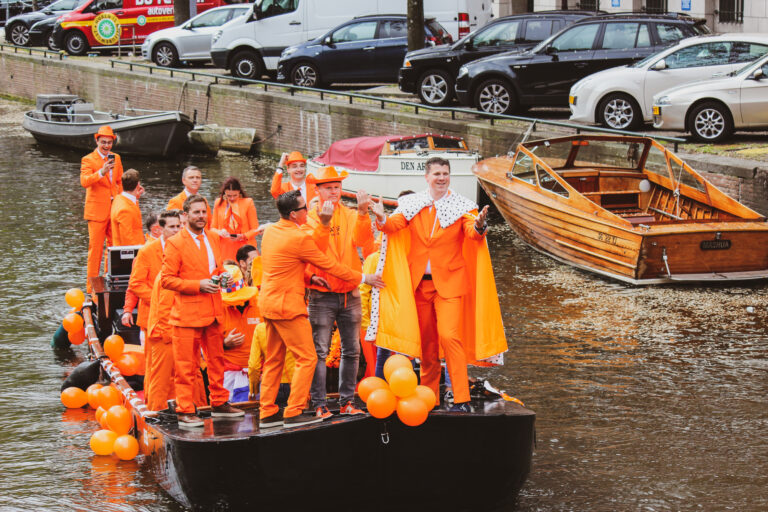
Come time for national celebrations, the Dutch flash their patriotic spirit by chanting their national anthem. It’s a glorious time — but apparently, they’re singing technique is just a wee bit off. 🥴
If you’re not familiar with the Dutch national anthem, “Wilhelmus”, let us quickly brief you. The song, in all its essence, is all about a war between the Netherlands and Spain.
In a language that very few Spaniards can understand, the hymn alludes back to that one time where the Dutch were under political control of the Spanish crown.
And while the national anthem used to be sung as a battle song by soldiers who fought in the war, it’s now one step away from stealing Michael Bublé’s tempo in his (very) slow version of “White Christmas”. ❄️👌
The anthem can make anyone feel Dutch, even if they’re not! 🥴
A battle song turned romantic
According to the NOS, the Dutch have strayed a bit from the original version of the national anthem, taking a more solemn, sloth-like approach to singing it these days.
If you find yourself at any international event celebrating the Dutch, you’ll notice that there’s a bit of a “romantic” tone behind the song.
Why? Well, during the Romanticism movement, the tough, battle song that soldiers once knew was transformed into a national anthem that even became popular for ballroom dancing. Say what? 🤨
Then, in the late 1800s, Austrian composer, Eduard Kremser, adapted the anthem once more… and guess what? The already sluggish tempo became even more slugged.
Too slow? Not according to musicians
It’s interesting to know that if the original pace of the anthem was played in this day and age, it would actually leave many Dutchies surprised.
Several Dutch musicians and singers passionately chimed in on the topic, debating whether the national anthem is truly sung too slowly nowadays.
Double bassist, Rob Dirksen, tells the NOS he prefers to play the slower, turtle-like tempo. “This is what we made of it. It was not an anthem and now it has become at this pace.”
However, Dutch scholar and singer, Margot Kalse, begs to differ. She believes that the pace should vary per occasion.
If it’s a football match, the battle version of the song should shine through, but if it’s for something like Remembrance Day, then the slower tempo would be a better fit.
There’s a possibility that we’ll hear the Wilhelmus being played much faster in the future, at least according to song expert, De Bruin — but it all depends on the Dutch and their haste-making ways. 😉
Do you think the Wilhelmus should be sung faster or slower? Tell us in the comments below! 👇