Home Blog Page 407

Lowlands’ parking lot is now covered with 90,000 solar panels

The world’s largest solar car park has officially opened at the famous Lowlands festival.

The three-day festival attracts more than 50,000 visitors every year. As Europe is trying to move more toward renewable energy, Lowlands is keen to contribute.

Moving away from fossil fuels

As you can imagine, the amount of electricity required to run a festival is pretty substantial. Every year, around 300,000 kWh of electricity, which now mostly comes from fossil fuels, is consumed at Lowlands, reports Euronews.

A roof with 90,000 solar panels over the festival’s parking lot covers an area of 350,000 square metres and houses more than 15,000 cars. It seems like a good solution.

Fully self-sufficient

The idea is that the festival will be able to run entirely on renewable energy within the next two years, reports NPO 3FM. With the new solar panels, that definitely seems possible.

The solar car park can generate enough power for 10,000 households. The festival itself would only need about one per cent of that generated electricity.

An inspiring vision

Festivals are known for the detrimental impact they have on the surrounding environment. But Lowlands wants to “be part of the solution, not the problem,” tells the festival director, Eric van Eerdenburg, NPO 3FM.

“As a festival-organiser, we want to cultivate an optimistic vision of the future and play a role in solving climate problems,” tells Eerdenburg Euronews.

”We hope this construction can be a source of inspiration for our visitors to contribute, no matter how small, to making the world more sustainable,” he adds.

What do you think of the new solar car park? Will you be going to Lowlands this year? Tell us in the comments.

Grab a torch: a total lunar eclipse is coming to the Netherlands this week!

Dust off your binoculars — and maybe grab a torch. The Netherlands will experience a total lunar eclipse (aka a blood moon) in the early morning of May 16, 2022. 🌘

However, you’re going to have to be quite dedicated if you want to experience it. It will only be visible between 04:27 and 5:37 AM, so you will have to skip a few dreams in order to see the entire thing.

Though, our guess is that it’s probably going to be worth seeing a big red ball in the night sky. 🔴

When and where?

To get a clear view of the eclipse, you’ll want to be looking in a Southwest direction. Put simply, you should look for the moon somewhere near the horizon. 🌚

In the Netherlands, the moon will reach its maximum point (total eclipse) at 5:37 AM.

So if you need to wake up early on Monday but also want to experience the eclipse, set your alarm for 5:35 AM, look up at the sky, and promptly fall back to sleep knowing you’ve seen the grand finale!

The blood moon is going to be right above the horizon, however, so there’s a chance that you’re only going to catch a glimpse of it. 🌒

Eclipse phasesTime
Start of the partial eclipse4:27 AM
Start of the total eclipse5:29 AM
Maximum point in the Netherlands5:37 AM

What exactly is a total lunar eclipse?

A total lunar eclipse happens when the Earth finds itself between the sun and the moon, as a result, our planet casts a shadow on the moon.

When the total eclipse begins, the moon turns red, hence the name blood moon! The moon gets a red tint because the sunlight reaching the moon passes through the Earth’s atmosphere. 🌍

The atmosphere scatters the sun’s blue light and only lets the red go through. How cool is that!?

Do you plan on watching the eclipse? Or rather catch some sleep? Tell us in the comments!

Get those shades on! Summerlike days in the Netherlands next week

In the upcoming days, we will be treated to warm and dry weather. With temperatures rising into the twenties, it’s time for the summer lovers (and the sun) to shine. ☀️

After tomorrow, the temperatures will start going up until they reach a high of 24 degrees next Monday, reports RTL Nieuws. On Tuesday, it will get even warmer.

Cooler on the coast

Those of us living near the coast might experience cooler air next week, with our days filled with winds coming from the west, reports Weerplaza. 💨

However, those living more inland are going to rejoice in summer-like heat with temperatures reaching above the long-term average.

Usually, during the month of May, temperatures stagger around 17 or 18 degrees, so it seems the sun is treating us well this time around. 🕶

Increasing drought

We do have to thank the spring season for keeping most of its moisture — because there’s recently been a lack of precipitation daunting the Dutch soil.

While we will enjoy the summerlike heat and shining sun, it’s still possible that we’ll see some showers in the warmest areas later this season. 💧

And as much as we like to imagine a sunny summer, some good ol’ Dutch rain will be good for the soil — so don’t let the waters bring you down!

How are you going to fill up your sunny days? Tell us in the comments below!

Ajax celebrates as national football champions for the 36th time

Amsterdam’s local football team Ajax won the first division football nationals for the 36th time. ⚽️

The team easily secured the win in the Johan Cruijff Arena against Heerenveen, 5-0, reports the NOS.

Ajax made all the preparations for their winning ceremony and supporters celebrated in Leidseplein before they even won against Heerenveen. 🥇

Goal after goal

Before half-time, Ajax had already scored three goals, one of which was a penalty goal. 🥅

The team faced a slump in goals (although 3-0 isn’t really a slump) before scoring the final two goals in the second half of the match.

It’s unsurprising the team performed so well — Ajax played on home turf which completely sold out. 🏟

Team departures

Ajax sent off a few of its key members. Noussair Mazraoui, who is leaving Ajax for the German team Bayern Munich, left the stadium with a standing ovation. 👋🏼

The team’s coach, Erik ten Hag, will leave for Manchester United after this football season. Ten Hag led the team to Dutch national championships three times.

Party in the streets

Despite the rain (and the fact that the match wasn’t over yet), supporters celebrated Ajax by singing, hoisting the flag, and setting off fireworks. 🎇

There was no major upheaval, but police arrested 51 people, mainly over fireworks and disturbing public order, reports the NOS.

Local authorities even congratulated Ajax on Twitter: “We wish everyone a pleasant and safe championship party.” The party at the Johan Cruijff ended around midnight.

Did you keep up with the Dutch football championship season this year? Tell us in the comments!

No trains between Den Haag and Schiphol this morning

Due to a collision, there are currently no trains running between Leiden Centraal and Schiphol airport.

This means that commuters and travellers are facing extended delays and waiting times this morning, reports NU.nl.

The exact nature of the problem is not known, but the NS says that it won’t be fixed before 9:30 AM at the earliest.

Who is affected?

The line blockage especially concerns those travelling from and to Leiden, Den Haag, Amsterdam, Schiphol, Haarlem, Hoofdorp, and Lelystadt.

Alternative routes

Those affected by the delays are asked to look for alternative routes. There are busses available from Haarlem to Leiden Centraal.

From Schiphol airport, you can travel to Rotterdam Centraal and proceed your travels from there. However, the NS does predict high demand for this train connection so expect full trains.

Have you found a good alternative to forego this unexpected train blockage? Tell us in the comments!

You what!? A quarter of Dutch people wash their raw chicken

New research by the Netherlands Nutrition Centre reveals that 25% of Dutch chicken-eaters wash their raw chicken before cooking it, reports the NOS.

The survey by the research centre showed that 42% of the Dutch have grown up with the custom of washing chicken. The reason? They claim they simply learned this practice from home. 🤔

A previous food safety survey the centre also showed that 28% of the Dutch wash raw chicken occasionally, especially people between the ages of 56 to 69.

Stop washing your chicken — increase in health risks

According to the Nutrition Centre, Dutch people wash their chicken because they believe it’s hygienic.

While some people believe that washing chicken cleanses it of germs, this has unfavourable effects on their health. 😵

READ MORE | Don’t spice up your life: these Dutch herb mixes may contain salmonella

In fact, washing raw chicken can be pretty dangerous. It increases the risk of food poisoning such as Salmonella and Campylobacter.

How? Bacteria can be transmitted via tap water splashes or raw chicken fluids that can find their way into your food.

Recommendations by the Netherlands Nutrition Centre

The Netherlands Nutrition Centre also understands that old habits die hard, however. They say that while washing chicken isn’t really necessary, there are better and safer ways to wash raw chicken that can lessen the risks of food poisoning.

READ MORE | Half of the Dutch STILL don’t wash their hands, even in the face of a pandemic

If you are going to wash your raw chicken, the Nutrition Centre recommends washing your hands, cleaning your kitchen counters and splashing as little tap water as possible.

Do you wash your chicken before cooking it? 👀 Tell us in the comments below!

First report of needle spiking now also in the Netherlands

Since last winter, there are reports of women being drugged on nights out in the UK, France and Belgium. Now, the first case has also surfaced in the Netherlands.

Before, it was the roofy in the drink. Now, victims are being spiked with needles. 💉

Until recently there were no accounts of needle spiking known in the Netherlands. Now, a young Dutch woman talked to the NOS about her experience with needle spiking in November 2021.

A victim’s report

The NOS interviewed a victim of needle spiking, who reports being drugged in Amsterdam last November already. After just two mixed drinks, the young woman noticed the first symptoms.

She says: “I collapsed. I no longer understood what was happening around me.”

The first aid correspondent concluded she was drugged. Two days later, after noticing a mosquito-bite sized lump on her leg, the woman return to the GP.

Here, she was told that there was a good chance for the lump to stem from a needle. However, because no blood or urine test was made, there is no 100% certainty.

The police have confirmed the report, but also state that as of now, there is no conclusive evidence of needle spiking as a widespread phenomenon in the Netherlands.

First cases reported in the UK

In October 2021, the first cases of girls being drugged in nightclubs made headlines in the UK. Since then, over 1300 reports of needle spiking have been made in England alone.

Similar incidences were also recorded in Belgium and France, but it’s only recently that the crime has made its way to the Netherlands.

What to look out for?

Victims are spiked with a thin needle, commonly in the arm or leg. Soon after, they will feel dizzy, nauseous, experience memory loss, or become temporarily unconscious.

As an outsider, you might notice that someone seems disproportionately intoxicated in comparison with the amount of alcohol they’ve consumed.

In the video below, you can hear a first-hand account of needle spiking from a young woman who was drugged in Scotland.

Have you heard of needle spiking before? Do you know any first-hand accounts? Share them in the comments!

Hefty fine and warning for KLM over non-refundable tickets

The flight industry really can’t seem to catch a break lately. The Netherlands’ Royal airline, KLM, will receive a €40,000 fine and another penalty of up to €500,000.

The Human Environment and Transport Inspectorate (ILT) announced these fines back in December 2021.

Schiphol and KLM had a busy past few weeks. On top of a hefty fine, they dealt with staff shortages, long lines, a workers’ strike, debt, and had to pay compensation fees. Not exactly the business you’d want after a two-year pandemic. 😬

Refunding raucous

During the May holiday’s chaos, many flights were either cancelled or missed by travellers.

However, the fine imposed by the ILT relates to tickets that had to be cancelled due to the pandemic.

KLM didn’t offer travellers the choice to get a refund or take another flight after booking a ticket from a travel agency, says NU.nl. 🙅🏻

If travellers book a trip through an online or physical travel agency, and that flight is cancelled, they must offer a refund or another flight. 🛫

According to the ILT, KLM did not offer the travellers that choice directly and referred them back to the travel agent.

However, it is the responsibility of the airline to refund the flight or offer another travel option.

KLM to appeal

The €40,000 fine concerns the now-bankrupt travel agency D-reizen. Passengers booked KLM flights via the agency between 2019 and 2021 and claimed they refunded the money. 💶

However, the agency went bankrupt before the money was transferred to the passengers. It’s unknown how much these fines are going to be exactly. 🤷🏻

KLM maintains the position that it refunded the tickets and plans to appeal the fines.

What do you think of KLM’s tricky economic situation? Tell us in the comments!

Dutch Foreign Minister pledges continuous support for Ukraine in meeting with Zelensky

Yesterday, the Dutch Foreign Minister, Wopke Hoekstra, met with Zelensky to discuss the future of the Netherlands’ involvement in the war in Ukraine.

In the meeting, Zelensky expressed his gratitude for the support that the Netherlands has offered thus far, writes the NOS.

“He is very explicit about what the Netherlands has done,” Hoekstra told the news site. “He appreciates the arms deliveries, the sanctions, and the team collecting evidence for war crimes. On the other hand, he says: we are not done yet, the war continues. We need more and soon we have to build the country, please help us.” 

According to Hoekstra, Ukraine can count on the Netherlands to offer further support as they continue fighting.

Also, when Ukrainians eventually rebuild their country, the Netherlands will be there.

Zelensky and Hoekstra also discussed Ukraine’s candidate status to the European Union. In June, the EU will present a proposal for Ukraine’s inclusion into the union and Hoekstra said that the Dutch cabinet will look at this with an open mind, according to the NOS.

However, Hoekstra emphasises that “the most important thing now is that we help with weapons, sanctions, and reconstruction. I think we should go full steam ahead with that. They are also fighting for our freedom, stability, and security.”

What do you think of Hoekstra’s promises to Zelensky? Tell us in the comments.

Image: Ministerie van Buitenlandse Zaken/ Wikimedia Commons/CC2.0

Why is there a housing shortage in the Netherlands? The Dutch housing crisis explained

There is a huge housing crisis in the Netherlands. In the major cities, finding a place to live is expensive and difficult.

Particularly for people who want to buy their first Dutch home, the market has become a nightmare over the past five to ten years. A combination of registration regulations, population growth, and privatisation has left the Netherlands with way less affordable housing than it needs.

Technically speaking, to meet the Dutch housing demands, the government would have to build 845,000 homes by 2030. It’s estimated that by this time, the country will have about 18.8 million inhabitants. This is on top of the housing shortage that is already going on.

READ MORE | Enough is enough: thousands of protestors in Amsterdam march against the housing crisis

The Dutch housing crisis: is it a big deal?

The impacts of this problem are numerous and serious. Firstly, the most obvious one: rising house prices. With rising house prices, it becomes more difficult for first-time buyers to enter the market — and if they do manage to buy a home, they risk negative equity if housing prices drop again.

The housing shortage also impacts social housing: while working-class families tend to be taken care of, single individuals have a hard time getting a roof over their heads. Furthermore, homelessness is on the rise and particularly students struggle to find affordable housing.

READ MORE | If you’re homeless in the Netherlands, what support is out there?

While the problem is nationwide, the major Randstad cities are particularly under pressure, with Amsterdam, of course, leading the way. Utrecht, The Hague, Rotterdam and Groningen are also struggling to house their inhabitants affordably.

Housing shortage in the Netherlands: the nitrogen crisis and a lack of building permits

Ah, our favourite topic: the Dutch nitrogen crisis. But what does the housing crisis have to do with the nitrogen crisis?

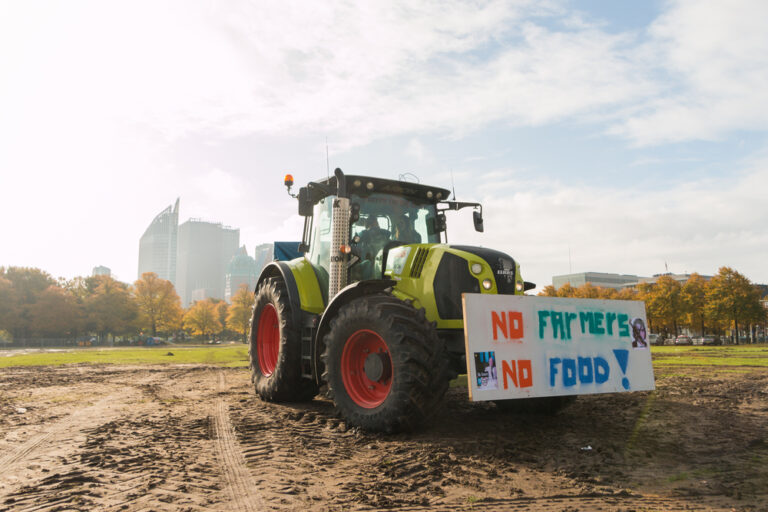
Well, the Netherlands has been struggling with too many nitrates in the air for years now. In 2019 it all came to a head. Farmers and their tractors were out on the streets to protest, but so were construction workers, at least a couple of times.

photo-of-one-red-tractor-and-one-green-tractor-parkt-next-to-one-another
The Hague was filled with tractors almost every week in the autumn and winter of 2019. Image: Cekay/Wikimedia Commons/CC4.0

The reason behind the construction workers’ protests were the new nitrogen regulations — namely the PFAS standard — imposed by the government to deal with the untenably high levels of nitrogen being emitted.

For the construction industry, these regulations meant that around 18,000 building projects had to be delayed because they breached EU law, according to Reuters. Good for the environment, terrible for a country that is in desperate need of more housing.

Following more protests, these regulations were eventually rolled back. However, it still takes two years from the granting of a permit to a house being ready to live in, so we are likely to be dealing with the effects of these regulations into 2022 and onwards.

Housing shortage in the Netherlands: lack of free space

The Netherlands is small, I think we can all agree on this. It also makes very economical use of its land, being the second biggest exporter of food produce in the world, just after the US. Agricultural space takes up 53 percent of the Netherlands. Add in the occasional nature reserve (also under threat because of the nitrogen crisis, by the way) and you’re not left with very much space at all.

That means that building permits are naturally hard to come by. It is vital to protect nature reserves, even as the housing crisis takes hold. Not only do they provide sanctuary for wildlife that has otherwise been evicted from this highly urbanised country, but they also provide value to people as places to relax and exercise. There’s no point in building new houses in a country that isn’t liveable otherwise.

READ MORE | Hiking in The Hague: 11 nature spots for the outdoor adventurer

Who is behind the Dutch housing crisis? Partly investors

The Netherlands has failed to deal effectively and fairly with property investors. A study commissioned by the ministry, and carried out by the Land Registry and the University of Amsterdam, showed that in areas where investors were buying more than 20 per cent of the properties that came on the market, they were able to manipulate the market so that they paid less per property than first time buyers or ordinary people moving house.

These areas include what you would expect: Amsterdam, Groningen, The Hague, Utrecht, Rotterdam and Eindhoven.

Another culprit of the Dutch housing crisis: Airbnbs and tourism

In many cities around the world, the rising popularity of Airbnb has caused housing shortages where there were none before, and worsened already existing shortages. The easy money available from tourists persuaded many to convert properties into Airbnbs: but that left the locals short on places to, well, live.

photo-of-crowded-street-in-Amsterdam-with-many-tourists
Overtourism has made the housing crisis in the Netherlands much worse. Image: Ivaylo Kirov/Supplied

In the Netherlands, and particularly in Amsterdam, which suffers from over-tourism as a rule, Airbnbs created a real problem for local people. Thankfully, since July 2020, the Dutch government has implemented an outright ban on Airbnb rentals in three districts of the capital.

On top of this, renting out your property as a holiday rental in the rest of the city is only possible with a permit and can no longer be allowed for more than 30 days of the year.

Tighter lending regulations don’t make the Dutch housing shortage any better

There are also some tighter lending regulations at play. These don’t necessarily mean that fewer houses are built, but what they do mean is that unless the housing crisis is resolved by building new houses, potential buyers are in a much worse position.

Dutch banks are only allowed to lend buyers the value of the house they buy as a mortgage, which is sensible. The problem with that, though, is the extra costs that are incurred when you buy a house. For first-time buyers on a middle-sized income between €30,000 and €40,000 per year, those are big costs to incur. That means that people in this income bracket need to save for a long time before buying a house, so they’re left renting for longer than is ideal.

The population is increasing, which means the Dutch housing shortage is getting worse

The population in the Netherlands is increasing, so more housing is necessary. There are two reasons for this: natural population growth (though in the Netherlands, this is fairly low) and immigration.

photo-of-a-group-of-young-people-sitting-on-stairs-talking
Finding a place to live becomes increasingly difficult for international students in the Netherlands. Image: Buro Millennial/Pexels

The Netherlands has become home to lots of international students and expats over the past decade. Both tend to congregate around the Randstad, but even in Tilburg and Wageningen, both decidedly not in the Randstad, students have needed to camp out because the housing shortage was so bad in these cities.

So how do we deal with the housing shortage in the Netherlands? 8 possibilities

1. Building more houses

The people in the back are likely already screaming “jUst BuILd mORe HoUsEs” — but it’s nowhere near that simple.

Crises don’t tend to occur when there are simple answers to the problem at hand. For one thing, the government doesn’t build houses or give out housing permits.

It’s the local government, the municipalities, that give out the permits to developers to build new houses. Unfortunately, many Dutch municipalities are dragging their feet on that matter and there is also limited space available within Dutch urban areas.

2. Centralising control

Given the number of control municipalities currently have (and their ineffectiveness in dealing with the housing crisis), part of the solution could be transferring some of that power to the central government.

3. More affordable types of houses should be built

The housing crisis could also be ameliorated by changing the types of houses being built. First-time buyers are having a hard time getting on the property ladder: houses are too expensive, and the wrong size.

photo-of-a-row-of-amsterdam-canal-houses-lining-a-canal-and-reflecting-in-the-water
New housing in the Netherlands needs to be practical to solve the Dutch housing crisis. Image: na4ev/Pixabay

4. Build more family homes and also smaller apartments

Most people want to buy a house, rather than an apartment, and also want a place with a small garden. That is not, however, what is most often being built. Apartments are most commonly constructed because they are cheap and don’t take up as much space as these terraced houses.

On the other side of the debate, there is also the fact that a lot of apartments are also not small enough: as more and more people choose to live alone, smaller apartments are becoming more desirable.

5. Building tiny houses (and offices)

Although far a solution that supports the status quo, another solution to the Netherlands’ housing crisis might be tiny homes. An emerging phenomenon in the western world, the concept originated in the US, where many people have enormous homes filled with stuff.

Minimalists and those in search of a simpler way of life were attracted to the concept of tiny homes: which have now made their way to the Netherlands.

We interviewed some tiny home inhabitants, so if you want to know what life is like in a house the size of a garden shed, then we’ve got you covered. Tiny offices have also started to emerge onto the scene.

6. Cannabis concrete?

Dutch innovation rarely lets us down, and that also rings true for the housing crisis. A company called Dun Agro constructed the first prefab house made from hemp back in September 2019. Given the current number of hemp farms in the Netherlands, the building company believes it could be possible to construct up to 500 of these hemp houses each year.

That wouldn’t solve the housing crisis, but every little bit helps. (And who doesn’t want to tell their scandalised family back home that they live in a house made of cannabis concrete?)

7. Get rid of those dang chickens

Other proposed solutions have included major changes to the Dutch agricultural model. In 2019, leftist political party D66 proposed to half the number of livestock. Apart from the sheer amount of space they take up, commercially farmed animals produce a lot of nitrogen. (Aha, it’s the nitrogen crisis again!)

By halving the number of animals, D66 had hoped to allow more building to take place as a result of the drop in nitrogen output. But the plan was almost universally denounced and was followed by months of protests by farmers.

8. Tax relief for first-time buyers

And, finally, there are tax measures that could be taken to make it easier for people to buy for the first time, even if that in itself would not add to the amount of housing on the market. The government has already taken some steps in the right direction and as of January 1, 2021, buyers aged, between 18 and 35 no longer have to pay the 2% transfer tax.

What has your experience of the Dutch housing market been? Let us know in the comments below.

Feature Image: djedj/Pixabay
Editor’s Note: This article was originally published in January 2020, and was fully updated in May 2022 for your reading pleasure.