Home Blog Page 447

The Netherlands expects booster shots for everyone by mid-March

As it looks like international travel will require booster shots going into the new year — the public health service of the Netherlands (GGD) is stepping up its game.

The GGD plans to guarantee booster shots to all those who want it by mid-March, a little late for anyone with travel plans in February, no? However, this is a big move. 

In order to meet this mid-March deadline, the GGD will have to go from “150,000 to 700,000” vaccinations per week in a matter of just fourteen days,  COVID-19 program director of the GGD, Jaap Eikelboom, tells de Telegraaf.

Rapid expansion

The dutch government has received its fair share of criticism for its uncharacteristically disorganised leadership amidst the pandemic, oscillating from discouraging the use of masks to imposing air-tight lockdowns. The booster shot rollout has been no different. 

However, it looks like things are about to change for the better (finally.)The Red Cross, employment agencies and Defense have stepped in pledging to expand the number of GGD locations from 83 to 90. 

This move will hopefully help speed up the booster shot campaign — at least for those who are willing to receive one. (Fun fact: one of the nominees for Dutch word of the year is prikspijt — yep, that’s a thing now.)

Why do we have to wait until March?

Due to a comparatively slow start to the booster shot campaign, a mere 5% of the Dutch population have received their third jab. Currently, only individuals born between 1956 and 1957 are eligible for booster shots.

Today, the Netherlands has one of the highest rates of daily infections, with 104 cases per 100,000 inhabitants. All the while, the booster shot rollout has been painfully slow, landing the Netherlands at one of the lowest positions on a ranking of all EU states. 

What are your thoughts on the Dutch booster campaign? Tell us in the comments below! 

Featured Image: SSilver/Depositphotos

Quick ways to get a Dutchie to stop talking about Bitcoin

1

Ah, Bitcoin. The other relentless pandemic that’s ruining our social lives and happiness. Although it is very much an international issue, it seems to be particularly infectious among Dutch males with very few maatregelen (restrictions) in place.

Perhaps you’ve already got someone in mind? And perhaps you’ve had enough? Don’t worry. Here’s some positive capital to invest in.  

While some Bitcoin conversations could very well be the cure for chronic insomnia, it has been scientifically proven to be a very destructive drain on limited natural resources such as time and f*cks given.

READ MORE | Bitcoin and the Netherlands: How it could change life in Holland

To borrow (and edit) human Muppet Michael Gove’s famous Brexit declaration: I think the people of this country have had enough of Bitcoin experts.

Especially those who don’t seem to be making much money at all. Just enemies.

Sitting there and taking it like a champ is no longer acceptable, so here are some tried and tested, Dutch-orientated methods to get some sweet, Bitcoin-free relief.

Tell them to ‘Hou je bek’ — meaning shut your mouth

Yup — the Dutch option. Well, when in Rome…

This is definitely a know-your-audience approach and could backfire spectacularly — but the blunt, fearless expression of disapproval and a willingness to change the topic on your own terms is a real-life, invaluable Inburgeringscursus experience.  

A potent combination could be an ultimatum: “Either move to El Salvador or hou je bek.

But for the record, saying “how about you invest in this” and showing your middle finger is, surprisingly, deemed highly inappropriate and counterproductive.

Use distraction tactic 1 — 90’s/00’s music nostalgia

This is clearly an age-appropriate topic but one that seems to get results fast.

Throw in some Backstreet Boys, Spice Girls, and definitely a slew of happy hardcore anthems such as Nakatomi’s Children of the Night and Party Animals’, ‘Have You Ever Been Mellow.’

READ MORE | 11 Dutch songs to learn the language (and culture!) 

Quality is, of course, not essential here — just anything that induces that warm, fuzzy glow of nostalgia. A further classic is to translate the lyrics of these songs to highlight just how dirty they often were.

Bitcoin will soon be forgotten. If not, you can just turn the music up. 🎶

Distraction tactic 2 — controversy

Pushing buttons gets the job done, and some of us were born to push those buttons like an accomplished accordion player on speed.

My favourite conversational hand grenades for life in the Netherlands include:

  • “Dutch males reach peak maturity at the age of 12”
  • “Hamilton will always be a better driver than Verstappen” — but this can also spark very dry, monotonous conversations.
  • “The FA Women’s Super League is already more competitive and of a higher quality than the Eredivisie” — However, the consequences are, understandably, very intense. So learn how to talk your way out of trouble and get ready to take some serious heat (it does work every time though…).

Just avoid politics. That’s the nuclear option.

Do you have any useful tips and tricks to plug Bitcoin conversations? Leave a comment and save a life.

Feature Image: fizkes/Depositphotos

From Zurich to Amsterdam: the Netherlands welcomes another night train

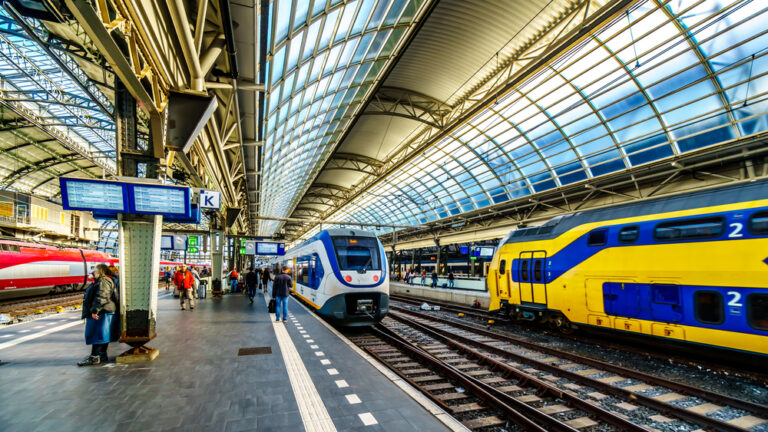
Coming to you from the largest city in Switzerland, the first of (hopefully many) night trains between Zurich and Amsterdam arrived in the Dutch capital on Sunday morning.

With 876 passengers, the train reached Amsterdam Central Station on Sunday at 9:59 AM after an 11.5-hour trip. To compensate for the corona-cancelled festivities, it was greeted by NS International very own director Heike Luiten.

According to Treinreiziger, the new night train will be running on a daily basis from now on, marking a return of the route after it last ended in December 2016.

It will be replacing a German Night Intercity, with a stop at Utrecht Central, skipping Arnhem Central for now due to construction work.

Roomy and eco-friendly

While the Swiss destination is nothing short of exciting, hopping on this trip also happens to be a green option. “One night train to Zurich is equivalent to four planes,” explains Luiten.

The train itself consists of 14 carriages. Eight of them have seats, two are sleeping carriages with train cabins, and the remaining four have train berths.

As for pricing, seats can be booked starting at €38 for a seat, €60 for a berth, and €90 for a bed in one of the sleeping carriage cabins — which can fit up to 3 people.

Connecting European gems

Apart from Zurich, you can also sleep your way from the Netherlands to Vienna, Innsbruck, and Munich on a Nightjet that started running earlier this year.

In April 2022, you can also look forward to the brand new European Sleeper going through Berlin all the way to Prague.

Will you be taking a night train trip from the Netherlands to Zurich? Tell us in the comments below!

Feature Image: sborisov/Depositphotos

Dutchies are using apps to organise thousands of parties despite lockdown

We all know that the Dutch like a good feestje (party). So with the 5 PM evening lockdown in place for a couple of weeks now (and extended until January) — they had to get creative. The solution? An app!

Thousands of house parties have been organized with the help of an app called Amigos, reports the NOS. This goes against standing government advice to keep the number of guests at home to a four person maximum. 

But are we really all that surprised? After all, Dutch youths are known for finding creative solutions to their lockdown-induced party detox — be it heading over the border to Germany or using apps and WhatsApp groups to dodge restrictions.

What’s the app about?

The app Amigos was developed prior to the pandemic with the noble aim to help tackle loneliness among young people. 

With one lockdown following the other, the app has gained increasing popularity — and the 5 PM avondclock has notably boosted its downloads. 

Founder Johanan Fraanje tells the NOS that in the last two weeks, the number of users went up from 109,000 to 184,000!  

Thousands of parties every week 

“It’s a bit like Tinder for social contact”, says Fraanje. If someone wants to organise an event, such as a house party, they can register it on the app. Amigos then shows it to other users in that area. 

About 20,000 events are registered per week and 34% fall into the category borrel or feestje

If someone is interested, they can ask to join in. It’s up to the organiser of the event to accept or reject potential guests. 

Obviously, having a house party — or any event, really — is not in line with current governmental advice at the moment. However, because having no more than four guests at home is only urgent advice, not a hard rule, Dutch party-enthusiasts happily take the risk. 

The founder of Amigos brushes off all responsibility. “Like Facebook and WhatsApp, this is an open platform where users are responsible for what they organise themselves. It’s not up to us to forbid it,” he tells the NOS. He also says that doesn’t earn money from the app. 

What do you think of apps like Amigos? Tell us in the comments!

Feature Image: sbartsmediagmail.com/depositphotos

More trains, fewer travellers: NS to introduce new timetables this Sunday

Heads up, guys! Starting on Sunday, most forms of public transport will be leaving at different times than what travellers might be used to — but this isn’t necessarily bad news. 🚅

Every year, the Dutch public transport system prepares for the biggest change of the year. This time around, these changes include a shift in train timetables for the winter and — get this — an increase in overall train departures. 🎉  

Randstad to see more frequent trains

A majority of these timetable changes, particularly for trains, take place in the Randstad as it’s the most densely populated area of the Netherlands. So if you’re a non-Randstader who is sick of hearing your friends talk about how great it is, perhaps it’s time to buy earplugs. 

And who are the lucky ducks that will enjoy some extra trains? Well, Intercity trains between Schiphol-Leiden-Rotterdam now run every 10 minutes instead of every 15, while other tracks like Leiden to Utrecht will now run every 15 minutes instead of every 30 minutes among many other changes. 

In the (train)works🛤

No new train tracks have been built for this increase in train departures so everything goes on the current tracks, creating a logistical puzzle for the NS (Nederlandse Spoorwegen, Dutch Railways). 

READ MORE | The ultimate guide to taking a train in the Netherlands: from OV cards to saving money

That’s why these new timetables have been in the works for nearly three years, Jantina Woudstra tells the NOS. Railways across the Netherlands are already full so fitting more departures than usual takes a lot of effort and time to organise. 

Struggling public transport systems

Due to current coronavirus measures, public transport is running at only about 60% capacity over the last year and a half, so there is a question of whether the NS needs all these trains running. 

You may be wondering — why now? During a global pandemic. It’s simple, the NS expects a 10% to 30% increase in travellers by 2030 compared to the period before coronavirus and these timetable changes serve as preparation by the NS in the meantime! We love to hear it. 🔥  

What are your experiences with Dutch trains? Tell us in the comments!

Feature Image: nanka-photo/Depositphotos

Sigh — the Netherlands’ evening lockdown will be extended until 2022

Since coronavirus only comes out after 5 PM, new leaks from the Dutch cabinet reveal that they plan to extend the current measures — including the evening lockdown — until the beginning of next year.

Sometimes, our hands are tied when it comes to the news we must report — this is one of those times. Until at least the beginning of January, the Dutch will be unable to enjoy catering, non-essential shops, or working towards a weight-related new year’s resolution at gyms after 5 PM.

Thinking of hosting a Christmas event at home? Think again, because (holiday or not) the advice to receive a maximum of four people at home also remains, according to the NOS.

As for the rumours of extending Christmas break in schools to limit the spread of coronavirus, the outgoing cabinet is still in session regarding this point and will bless us with a decision during tomorrow’s press conference.

The Netherlands after dark

Well, something seems to be working with these new measures as last week’s numbers had an optimistic vibe where the number of infections, hospitalisations, and deaths slightly decreased.

That being said, the Dutch Outbreak Management Team (OMT) will not be easing up on its advice anytime soon. They have explicitly warned the Dutch government against relaxing any measures due to the uncertainty around the Omikron variant and the high pressure on healthcare.

Since a new Dutch government cabinet is expected to take over at the beginning of January, the new cabinet will find more and more on their plate.”The new cabinet must get to work without a good reopening plan,” says political reporter Xander van der Wulp.

What do you think of the Dutch government’s plans to extend the current measures until January 2022? Tell us in the comments!

Feature Image: PhotographerFromAmsterdam/Depositphotos

Max Verstappen becomes first Dutchie to win F1 world championship after a crazy climactic race

Formula 1 fever was running high in the Netherlands this week and it took till the last lap of the Abu Dhabi race, but what a finish!

On Sunday Max Verstappen became the first Dutchman to become world champion in Formula 1 racing. In the final race of the season in Abu Dhabi, the Red Bull driver finished just fractons ahead of Lewis Hamilton after an insanely tense final lap.

For a long time, it didn’t look like Max Verstappen was going to win this final race. So what happened and why are some Dutchies now celebrating wildly in their homes and bars?

Max losing the first spot right away

Hamilton took the lead at the start from Verstappen, who started from pole position as reported by NU.nl.

A few moments later, a heavily debated moment happened, where Verstappen tried to overtake Lewis Hamilton but the Brit kept the lead by cutting the corner.

The stewards ruled that Hamilton was forced out of the track by Verstappen, and this time the 36-year-old Briton did not have to give his first place back. Whereas last week the roles were reversed and Verstappen did have to give his advantage back, quite a controversial moment which left many Dutchies frustrated behind their televisions.

Heroic racing opposition by Perez

Verstappen and Hamilton made an early pit stop, putting Verstappen’s teammate Sergio Pérez in the lead.

The Mexican managed to hold up Hamilton for quite some time, allowing the Dutchman to get close to Hamilton once again.

But after Hamilton passed the Mexican, the Mercedes driver steadily overtook Verstappen when it came to pure racing speed. For quite a while it looked like Max was racing a lost race.

Safety car at the end changed everything

Verstappen was able to make a second pit stop under the virtual safety car after Alfa Romeo driver Antonio Giovinazzi retired from the race.

Hamilton continued to race hard and had a 17-second lead over the Dutchman with 20 laps to go. Verstappen slowly but surely came a little closer on his new tires, but Hamilton kept a lead of about 10 seconds (which is pretty solid in this sport normally). Many Max fans were losing hope for a final victory at this moment in the race.

But due to a crash by Nicholas Latifi, the safety car entered the track five laps before the end.

Verstappen switched to soft tires in an ultimate attempt to attack Hamilton. After the safety car disappeared, there was still one lap to go, in which Verstappen spectacularly went past Hamilton and wrote racing history by becoming the first Dutchman to become world champion.

Did you watch the race? Happy with Max his win? Share below in the comments!

Image: Wikimedia Commons/CC3.0/Alberto-g-rovi

Presenting the (hilarious COVID-19 inspired) nominees for Dutch Word of the Year

Dutch dictionary Van Dale has announced the 15 new words battling it out for the prestigious title of Word of the Year 2021. Just four of the nominees are non-coronavirus-related. 🦠 

Intimiteitsvacuüm (intimacy vacuum), Deltavariant, prikspijt (pricker’s remorse), and finfluencer (financial influencer) are all in the lead to win this year!

The majority of last year’s nominations also consisted of words related to the coronavirus crisis. The winner? Anderhalvemetersamenleving, aka one and a half meter society. 

Here’s a full list of the 15 nominees, loaded with a ton of fun Dutch wordplay!

  • Boosterprik: Also known as a booster shot, is the repeated injection of a vaccine, pretty straightforward. 
  • Deltavariant (Delta variant): the contagious coronavirus variant that was dominant in 2021. We’re wondering if Omicron is going to make the list in 2022? 
  • Doorbraakinfectie (breakthrough infection): a virus infection that occurs in someone who has been fully vaccinated.
  • Finfluencer (Finfluencer): someone who gives investment advice to their followers via social media, combining “finance” and “influencer”.
  • Gevoeligheidslezer (sensitivity reader): reader or editor who reads a manuscript before publication for potentially offensive passages, stereotypes, or politically incorrect statements.
  • Grotsyndroom (cave syndrome): an anxiety complex experienced by someone who is able to participate in social life again after prolonged isolation — we’ve probably all had a taste of this phenomenon. 😳
  • Intimiteitsvacuüm (intimacy vacuum): the temporary or long-term lack of connection and intimacy (both mental and physical) between partners within a romantic relationship. As the second year of the pandemic clearly continues to put relationships to the test. 
  • Memeaandeel (meme stock): a share of a relatively small company that is bought en masse by a horde of small investors to manipulate the price.
  • Pandemocratie (pandemocracy): a democracy that is affected and (permanently) changed by a pandemic — never heard of her. 😉 
  • Prikpolarisatie (prick polarisation): a phenomenon in which proponents and opponents of a large-scale or general vaccination of the population are diametrically opposed and fight each other verbally. Could never be us. ✋
  • Prikspijt (prick remorse): a person’s regret for having been vaccinated against a particularly contagious disease. Bit of a strange one.
  • QR-samenleving (QR society): a society in which people only have access to certain places if they can prove that they have been vaccinated by means of a QR code. As we’ve seen in the past weeks, QR-samenleving can contribute to prikpolarisatie
  • Vaccinatievoordringer (vaccination queue jumper): someone who, according to the vaccination schedule, should not yet be vaccinated, but abuses their position or falsifies information to jump the queue. We do not approve.
  • Wappiegeluid (wappie sound): misleading opinion, not based on facts or generally accepted scientific insights, about a social or political issue — similar to last year’s nominee viruswappie!
  • Woonprotest (housing protest): tens of thousands of people across Amsterdam, Rotterdam, The Hague, Utrecht, and beyond, took the streets to demand fair housing​​ starting back in August. The demonstrations were spurred by grievances over the astronomical housing prices, rising rents in the private sector, and the shortage of social housing. As Yuri Veerman’s poster campaign put it, Je bent te laat. 

Make sure to check out some untranslatable Dutch words that have absolutely nothing to do with coronavirus.🤒

Which one of these words is your favourite? Tell us in the comments below! 🤗

Feature Image: IgorVetushko/Depositphotos

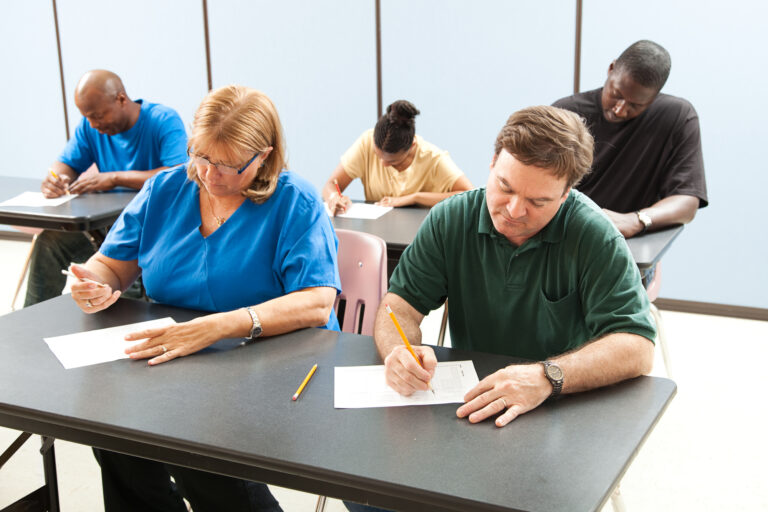
Students in the Netherlands are coming to exams with coronavirus complaints

Students at Dutch universities are attending physical exams, despite suffering from coronavirus symptoms. This is against the general health advice from educational institutions — but for many, it’s the only way they can pass their exams.

This is due to the fact that Dutch educational institutions don’t offer an extra chance to take the exam if a student misses the first exam due to coronavirus symptoms, reports AD.

Basically, instead of having two chances to take an exam (the normal exam and a resit), many institutions simply tell their students to just go take the resit.

However, this “ensures that a number of students have fewer opportunities to pass their exams and that the coronavirus measures are not complied with,” says Lisanne de Roos, the chair of the Dutch National Students Association (ISO). 😱

A widespread issue

According to the ISO, the problem is widespread in the Netherlands. At least three universities and three colleges have made it evident that students in quarantine don’t have as many opportunities as other fellow students in terms of exam opportunities. Wat jammer!

Some universities are offering “replacement moments” where students get another chance at taking the exam, but only if they submit a request to the institution’s Exam Committee.

ISO wants to give students a second chance

ISO is calling for every student to be offered another chance to take the exam if a student is infected with the coronavirus. 🤗

A spokesperson for the Universities of the Netherlands says that their institution is looking for solutions on a “case-by-case basis.” They also said to adhere to the rules for the meantime and to stay at home if students have coronavirus complaints.

What do you think about students taking exams with coronavirus symptoms? Tell us your thoughts in the comments below!

Feature Image: Milkos/Depositphotos

Tiny houses in the Netherlands: inside minimalist Dutch life

Tiny living is becoming increasingly popular as people strive to spend less on their homes and, in turn, free up money and time for their true passions. But the tiny house pioneer movement has only just started in the Netherlands and the laws that govern tiny houses are playing catchup. 

We live in a consumerist culture where many of us criticise materialism. Some have decided to practice what they preach and remove all the items in their house that don’t ‘spark joy,’ a term coined by Marie Kondo, a Japanese organising consultant, whose tips and tricks for a well-organised home has gained her international appraisal.

Why tiny homes?

So why are tiny houses on the rise? Some say it is simply another trend, people eager to prove they can live big in a small home. Many others are turning to tiny houses amongst the housing crisis and the inability to afford a full-size home. Some, just want the challenge of living in a different way. Whatever the reason, the tiny house movement is rapidly growing.

Tiny houses come in all shapes and sizes but one universal trait is that they are intricately and cleverly designed and utilise every space possible. Stairs fold out to provide storage underneath, lofts are added to create dividers in the house to give the illusion of separate rooms and big windows are installed to create natural light and brighten the space.

stairs tiny house
Stairs in one of the tiny towers of Almere. Image: Adrienne Norman/Supplied

They are far cheaper to run and maintain which allows the owner to spend the extra money on travelling or extra-curricular activities. Remember that badminton team you’ve never been able to afford? Or that book club you always wanted to attend? Downsize your home and you may be able to!

We got in contact with tiny house architects and tiny house owners and dwellers and asked them some key questions. We hope the information will help you to better understand tiny living!

What are the measurements of a tiny house?

A tiny house needs to be built as a primary and stand-alone dwelling on a small scale. A small house is a dwelling that is less than 1,000 square feet (93 m2). By comparison, a tiny house is a home that is less than 400 square feet (37 m2) and some are even as small as 80 square feet (7.4 m2).

Where can I find tiny house initiatives in the Netherlands?

On this map you can see all of the tiny house initiatives that are taking place in the Netherlands. Get in contact if you are interested in visiting or are considering building a tiny home.

Can you get a mortgage for a tiny house?

As it currently stands, it is not possible to get a mortgage for a tiny house. However, if the tiny house is anchored to the ground you can register the property with your local council and some mortgage providers such as Triodos and Obvion may be willing to give you a mortgage.

How much does a Dutch tiny house cost?

There is no fixed price as it depends on how big you build the tiny house and what amenities and features you include. Some people say €25,000 is doable for a basic home. But it can cost as much as €100,000 if you use more expensive materials and include the latest technology.

Show me those Dutch tiny houses!

Curious about what living in a tiny house in the Netherlands is really like? Here are some tiny houses (with big personalities).

Martijn and Irena’s stand-alone tiny house in Ouddrop

Aerial view of Martijn and Irena’s tiny home. Image: Martijn/Supplied

Martijn and Irena built a tiny house in Ouddrop, a village situated in Holland on the Kabbelaarsbank. Their house, 20m2, is considered very small by tiny house standards. But they adjusted relatively easily as they lived in a caravan for three years prior to moving into the tiny home.

“We were used to life without a lot of stuff” they told DutchReview. “For us, the tiny house felt more like upsizing. We’ve travelled a lot, and lived in campers and tents so we are used to not having much stuff.”

The most challenging aspect of tiny living

Martijn and Irena agree that the most challenging aspect of living tiny is the inability to host parties. When they do have people over, it has to be outside or in a small group. “Luckily, most of the time it is okay weather to be outside,” the said. “Bad weather doesn’t exist, only bad clothing.”

Inside a Dutch tiny home
The stylish interior of Martijn and Irena’s tiny home. Image: Martijn/Supplied

Did the building go according to plan?

When you build anything from scratch there are obstacles. Especially because Martijn and Irena’s tiny house was one of the first built in the Netherlands.

“Everything was pioneering and we didn’t had any building experience which made it harder. But with YouTube and Google you can build whatever you like,” they told DutchReview.

The most difficult legal barrier was that the tiny house can only weigh 3500 kilos.

Evening looks pretty special with the clear night sky. Image: Martijn/Supplied

Tiny ‘towers’ of Almere designed by House of Architects

Niek decided to downsize as he wanted to have more control over the costs of his utilities and what he spends money on. Niek bought one of three Tiny Towers, which are designed by House of Architects. He has a three-floor apartment with a roof terrace but each floor is only 3 x 4.5m2.

tiny apartments netherlands
The tiny towers. Image: Ricky Rijkenberg/Supplied

He reasoned that if he had less electricity costs and more solar panels then he can spend more time doing what he truly loves. “I don’t want to have to do maintenance for space I don’t use,” he told DutchReview.

Searching for the tiny house

Niek said that searching for a tiny house proved rather difficult because of exceptionally high housing prices in the Netherlands.

Niek noticed patches of land for sale in Almere and saw that tiny houses were being built there. That kick-started his interest in tiny living. The problem was, there was a massive list of people who signed up for the Almere Houses so he was unsuccessful in his bid for land. “But it planted the seed in my mind,” he told DutchReview.

Sometime later, while Niek was browsing housing website Funda, he saw an architect selling a concept for tiny house towers. The build was to commence once they found a buyer “I contacted them and I was lucky enough that I got the house” Niek explained.

The small space is not a problem

Niek doesn’t find the small space a problem. “I have never owned a lot of possessions. The room layouts are so smart that I have more space than ever before.”

He said the only frustrating aspect of tiny living is “when I need to put something big together like a couch, then I really miss some space” he laughs.

inside a tiny house
Niek in his living room. Image: Adrienne Norman/Supplied

Any advice for those considering downsizing?

“Try to ask some tiny house owners if you can look inside their houses. It will change your perspective about how small it is. It feels a lot bigger inside than people often imagine because the spaces are so well designed and executed.”

The Tiny A house

tiny house in the netherlands
The outside of the Tiny A house. Image: DaF-architects/Supplied

Tiny A is located in Almere Oosterwold, a large patch of land located between the Waterlandse Weg and the A27. Architects who submitted ideas were given the opportunity to realise their dreams through the 2016 Bevrijd Wonen competitions organised by the municipality of Almere. The tiny-A house was one of the award-winning concepts from the competition.

tiny house netherlands
Tiny A house in concept stage. Image: DaF-architects/Supplied
building a tiny house in the netherlands
Construction of Tiny A house. Image: DaF-architects/Supplied

Food, water and a roof?

The Tiny-A house is just a roof that stretches down to the ground to create a triangle shape. Given a roof is the cheapest building element of a house, the architects harnessed this and created one large roof that is anchored to a foundation plate.

The Tiny-A house is a mere 50 m2 but has lots of height due to the seven-metre roof. A large piece of furniture that doubles as a bookshelf and set of stairs, divides the interior and gives the feeling of separate rooms. An intimate mezzanine rests above the kitchen and bathroom where owners can sleep and study.

inside tiny house
The bookshelf doubles as storage and stairs. Image: DaF-architects/Supplied
inside tiny house
The living room. Image: DaF-architects/Supplied

All-electric, energy-neutral and sustainable

15 solar panels are installed along the one side of the roof which provides all the energy required for the house.

tiny house
The solar panels covering one side of the building. Image: DaF-architects/Supplied

The house also boasts infrared underfloor heating, an E-shower, a Quooker (a kitchen tap that provides both cold and boiling water) and a balanced ventilation system.

Daan Bakker, an architect from the Tiny A project, is currently developing the “Tiny-C” by using a sea container as the foundation, which is far cheaper to build. He hopes to develop a do-it-yourself kit to fit the small budgets of those who want to build a tiny house.

Did this article spark or encourage your curiosity in the tiny house movement? Have you ever considered downsizing? Let us know in the comments below!

Feature Image: DutchReview
Editor’s Note: This article was originally published in November 2019, but was fully updated in December 2021 for your reading pleasure.