Home Blog Page 448

Top American biochemist blasts Dutch coronavirus policy: ‘outdated’ and ‘obsolete’

Jose-Luis Jimenez, a professor of chemistry and biochemistry at the University of Colorado and one of the most-cited scientists in his field, is hardly impressed by Dutch coronavirus measures. 

Like many vocal critics of coronavirus policy from within the scientific community, Jimenez, who specializes in aerosols, is deeply frustrated with basic — and frankly misleading — coronavirus regulations. 

In a series of tweets on Wednesday, he claimed that recommendations to wash your hands regularly, wear facemasks, and practice distancing can hardly prevent the spread of the virus without proper ventilation. 

Maybe he’s seen Rutte say “wash your hands” one too many times. Or perhaps he finds refuge in criticizing other nations’ mishandlings after two years of careless US leadership amidst the pandemic.  

Air quality is the single most important factor 

Jimenez is far from alone in thinking this. TU Delft’s own building engineer Philomena Bluyssen also believes that greater action needs to be taken. Much of the Dutch health recommendations mirror that of the World Health Organization, but these “are the minimum,” she tells Nature.

Bluyssen and other critics are not shy to point out the Dutch governments’ failure to provide comprehensive guidance and to allocate the necessary funding to ensure people’s safety in indoor spaces. 

So while the government relies on the avondklok to keep the COVID-19 bogeyman away, many scientists worry that significant portions of the population — from schoolchildren and students to office workers, restaurant-goers, and prisoners — remain extremely vulnerable in the absence of effective ventilation. 

Reaching boiling point 

Some find Jimenez’s words are fueled by frustration, even though his opinion is in line with the scientific consensus. 

As Charifa Zemouri, a Dutch expert on infectious diseases and public health told RTL Nieuws: “What I sense with him, and what I sometimes catch myself similarly feeling, is frustration. Why can’t we just go along with the scientific consensus? Sometimes it drives you to use more severe language.”

Would you like to see the Dutch government pay more attention to ventilation to prevent the spread of coronavirus? Tell us in the comments below! 

Feature Image: bldekok/Depositphotos

Extended lockdown and more: this is what the Dutch cabinet is considering

The third week of this winter season’s lockdown is approaching and it’s re-negotiation time. Which begs the question — what will the Dutch government be giving us for Christmas this year-round?  

With Christmas gatherings coming up and a new variant in town, Dutch politicians remain concerned. Over the weekend, they will discuss a possible extension of the lockdown. Here’s what’s on the cards.👇

Evening curfew here to stay?

For the past two weeks, non-essential businesses were obliged to close at 5 PM, while essential stores such as supermarkets could remain open until 8 PM. 

However, the chances of you being able to head out for a lukewarm Heineken after your Christmas dinner are slim. It’s likely that the evening lockdown will continue but there is no consensus yet on when to start it — 6 PM, 7 PM or 8 PM? We just pray that late-night supermarket runs will be possible again soon. 😩🍦

Proof of vaccination

The cabinet has also already agreed on making QR codes mandatory to enter non-essential shops such as hairdressers, cafes, furniture stores and so forth. The idea is to potentially ‘swap’ stricter measures such as these for the evening lockdown and relieve businesses, RTL Nieuws reports. 

What about Christmas?

As we’ve seen last year, the holidays tend to be followed by spikes of coronavirus infections. As of now, the advice is to only host four people at home at a time. But is that really feasible during Christmas time? 

The cabinet is debating whether or not to officially restrict visits or simply keep regulations in place. Another debate is to extend the Christmas holiday for school children. We don’t think there’ll be too many complaints about this from the kids — but perhaps from their poor parents.

When will we know for sure?

This weekend is discussion time, so there will probably be announcements (cough, cough, leaks) on either Sunday, Monday or Tuesday. A 7 PM Tuesday press conference is the usual time for coronavirus related announcements by the cabinet. 

But with the new cabinet being formed at the moment, things are a bit more unclear. We’ll  keep you updated and make sure to check out our summary of the press conference on Tuesday!

What do you think about these potential new measures? Tell us in the comments!

Feature Image: Kzenon/depositphotos

9 top tips to help you fit in in the Netherlands

Moving to a new country always involves a bit of culture shock. You might not like the food (think slippery, slimy herring) or you may need to get used to the cultural norms and practices. But never fear, with this starter pack you’ll be acting like a true Dutchie in no time.

We’re not saying it’ll be easy or that you’ll feel at home from day one. However, these tips will help you keep up with all the Dutch quirks you’ll meet in the Netherlands and make your relocation process much more enjoyable! 🎉  

1. Learn some Dutch  

While many Dutchies speak impeccable English and you can get away with communicating through English most of the time (especially if you live in the Randstad), we can guarantee that your experience of living in the Netherlands will be much easier and more enjoyable if you put in the time and learn een beetje Nederlands (a bit of Dutch).

READ MORE | Learning Dutch: 7 questions answered  

2. Understand the liberal mindset

Sure, Amsterdam is known for its Red Light District and coffeeshops, but the Netherlands’ liberal attitude towards sex and drugs isn’t about carelessness or tourism

So before you make assumptions about sex work in the Netherlands or buy into myths about weed, educate yourself about the policies behind these controversial practices — and hear what Dutchies have to say.

Drugs

First of all, drugs aren’t legal in the Netherlands (nope, not even weed!). 🙅‍♀️ However, there are 33 legal drug testing locations spread across the country where people can get their drugs tested — and yes, people get them back after a small educational talk about drug use.

Though this may seem contradictory from a legal point of view, the primary concern is public health and safety. So, the Netherlands makes sure drugs are used in a safe way, through coffeeshops and test locations. 

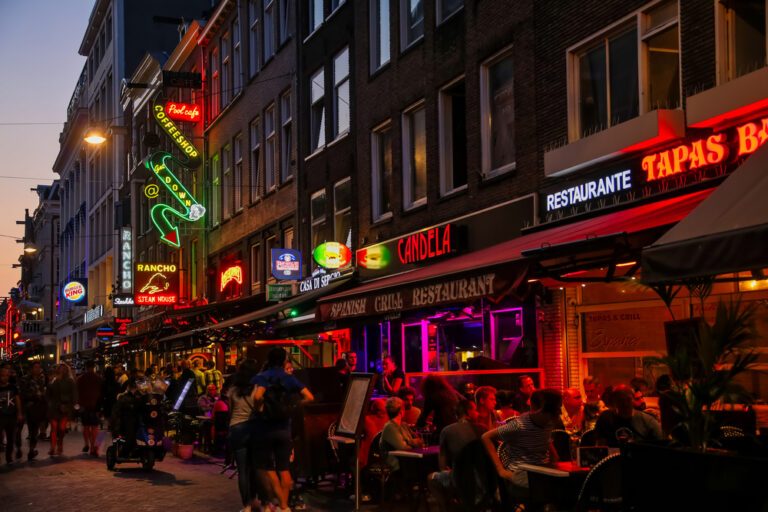
amsterdam-red-light-district-street-with-people-standing-outside-coffeeshops
Coffee anyone? Image: Phototraveller/Depositphotos

Let’s talk about sex, baby 

Another thing that might take some getting used to when arriving in the Netherlands is how openly Dutchies talk about sex. With age-appropriate sex education starting already at age four, it’s no surprise that most of the taboos and giggles have been stripped from the subject by the time Dutchies reach adulthood. 

READ MORE | The complete and unadulterated guide to sex in the Netherlands

3. Learn to be direct 

It’s no secret that Dutchies don’t beat around the bush. Living in the Netherlands requires thick skin. Sometimes, the Dutch can seem a bit arrogant or harsh — but despite the blunt delivery, they’re usually just interested in hearing your opinion and getting to know you better. 

READ MORE | Dutch directness: 5 questions you’ll get in the Netherlands (and how to answer them)

Plus, most of the time they’ll switch from intense discussion to cracking a joke in the blink of an eye, so we wouldn’t take it personally. 😅 In the end, being direct does save time and Dutchies will respect you for it. 

4. Surround yourself with Dutchies 

Being around Dutch people will help you learn things about the country and the culture, as well as pick up some local tricks to make life easier. There are simply some things you’ll never learn if you spend all your time with internationals. 

So, head along to your local sports club, introduce yourself to your neighbours and go to a borrel. Before you know it, you’ll have found a ton of new friends in the Netherlands. 🥰

5. Inform yourself about cultural sensitivities (and the lack thereof) in the Netherlands

Despite their directness, the Dutch are recognised as tolerant and welcoming people. However, the country’s colonial past tends to trigger discussions — both between Dutchies of different generations, and internationals. 

So, to understand the Dutch traditions and opinions better (and avoid getting caught up in a Zwarte Piet debate), inform yourself about some of the deeper roots of Dutch culture. 

READ MORE | Zwarte Piet: the full guide to the Netherlands’ most controversial tradition

It’s heavy stuff but read up on things like the VOC and the life of slaves in the Dutch colonies. This is a part of Dutch history that’s talked about more and more and it’s important to understand where the Netherlands’ wealth originally came from. However, it’s just as important to remember that it wasn’t the fault of any currently living Dutchie.

In present-day Holland, some people pride themselves on living in a multicultural society and some want stricter immigartion laws. Learning to fit in doesn’t have to mean agreeing with the majority or what your neighbour thinks. Instead, listen to both sides and form your own opinions once you’ve done your research. 

6. Get yourself an agenda

“Want to grab dinner tonight?” isn’t gonna fly in the Netherlands (or at least it’s not very likely). The Dutch swear by their agendas and perhaps you should as well — to be fair, being organised is never a bad thing. 💁‍♀️ 

A tip for combating some of the potential cultural differences you’ll run into in the Netherlands is to plan, plan, plan when meeting up with Dutch friends or acquaintances.

two-women-friends-writing-in-agendas-to-confirm-plans
Time to dig the washi tape and stickers out again. Image: GaudiLab/Depositphotos

7. Embrace the gezelligheid (cosiness)

Gezellig is an untranslatable Dutch word and it’s safe to say that it captures a feeling quite unique to the Netherlands. What the Netherlands lacks in mountains, it certainly makes up for with a “cosy” atmosphere. There’s nothing like having a biertje at a canal-side terrace or strolling Amsterdam’s wintery streets with a cup of mulled wine.

8. Look for discounts 

Dutch people are known for being stingy. You’ll notice this when you inevitably receive a Tikkie for a negligible amount. But this also comes with its perks. Dutchies are sensible with their money, avoid debt, and they always know when there’s a sale on — cha-ching! 💃

So, scope out a good sale, direct your eyes to the bottom shelves of the supermarket aisles (where the housebrand goods are usually kept), and get yourself an Albert Heijn Bonuskaart. Even if your friends and family find it cheap, your wallet will thank you!

9. Celebrate your birthday like a true Dutchie

If you haven’t felt the culture shock since moving to the Netherlands, this might change when your birthday comes around, or you get invited to your first Dutch birthday celebration.

To say that Dutchies celebrate birthdays differently is a bit of an understatement, and there are some pretty non-negotiable birthday norms. Expect to be trapped in a circle of felicitations as the whole party literally sits in a circle and congratulates each other on knowing the birthday person. Yes, it’s cute and weird at the same time. 👀

Also, don’t forget to bring your own cake, pick up the tab, and invest in a birthday calendar for your toilet.

READ MORE | The full guide to celebrating your birthday in the Netherlands 

What helped you fit in in the Netherlands? Tell us in the comments below!

Feature Image: Kireyonok/Depositphotos

Dutch government buys single Rembrandt painting for €150 million

Last night, outgoing culture minister Ingrid van Engelshoven pledged €150 million for the purchase of Rembrandt’s painting, ‘De Vaandeldrager’ or ‘The Standard Bearer’ (1636), which will tour go on tour in each of the Dutch provinces. 

And just to clarify, this isn’t coming from Ingrid’s own funds — nee, this amount will be paid by the Dutch government. 

An insane amount of money

On top of the €150 million, an additional €15 million has been pledged by the Rijksmuseum Fund and the Rembrandt Association, making this the largest amount the state has paid to buy back a single work of art, reports de Volkskrant.  

READ MORE | Fallen painting leads to discovery of new Rembrandt masterpiece

Rembrandt’s masterpiece has been in the possession of several major private collectors for centuries, from England’s King George IV to the Rothschild family. However, after almost 200 years of ownership by the Rothschild’s and as art historian Wouter Kloek says, thanks to “an insane amount of money,” the painting will, at last, be in the hands of the Dutch again!

Rijksmuseum director declares victory 🎊  

Rijksmuseum director Taco Dibbits regards the purchase as a ‘unique opportunity‘, as he believes it is the single most important of Rembrandt’s paintings still privately held. 

Additionally, the painting depicts a scene from the Dutch War of Independence, and is thus a historically significant piece, claims Dibbits.

But not everyone agrees..

Volkskrant art critic Wieteke van Zeil is not convinced, she’s waged several critiques at the rather hasty — and exceedingly expensive — move. 

For one, van Zeil argues that the was decision made in the absence of a public debate, for a sum that totals more than 10 times the total spending budget of all museums of the Netherlands combined! Many of which are struggling to stay open two years into the pandemic. 

READ MORE | Decolonising Dutch museums: stolen heritage to be returned?

Van Zeil also finds the historical relevance claim a bit overdone. She says that while the job of standard-bearer was indeed one of honour for elite members of the militia, Rembrandt used himself as a model.

This makes the painting yet another self-portrait to be added to the four portraits the Rijksmuseum currently displays, bringing the total number of Rembrandts at the museum to 24.

Not to mention Baron James de Rothschild only bought the painting for a mere £840 at an auction in London in 1840! 

Is this a total waste of money or are you happy to see more Rembrandt’s returned to the Netherlands? Let us know in the comments! 

Feature Image: De Vaandeldrager/Rijksmuseum

Low-income Amsterdammers can get a laptop for just €20

Under a new initiative by digital learning centre Cybersoek, low-income residents of Amsterdam with a municipal discount card can get a laptop at quite the reduced price, reports ​​NU.nl

They can keep or return it after use; in the latter case, they get the money back. Talk about practical! 🙋🏻‍♀️

Futuristic food bank 💸

Similar to a food bank, the “Cyberbank” will open this Friday in Amsterdam East to help residents with their digital needs. 

Any old or new equipment can be donated by individuals, companies, and the municipality — while second-hand devices get repaired by young people at a distance from the labour market. 

Digital city 💻

Amsterdam is becoming an increasingly digital city and has been developing faster since the start of the pandemic. 

However, a digital divide is also developing between Amsterdammers who have access to the internet and technology, compared to others who don’t, according to alderman (municipal member) of Amsterdam, Touria Meliani. 

With the Cyberbank, Amsterdam hopes to bridge the gap and make the city a place for “digital self-reliance”. 

Where else would you like to see a cyberbank? Tell us in the comments below!

Feature Image: Christina Morillo/Pexels

Only 36% of Dutchies would vote for mandatory vaccines

Mandatory vaccinations in the Netherlands? It’s a big, fat NO for the majority of Dutchies, according to a national survey commissioned by the NOS

Austria and Greece already have it and Germany is seriously considering it: a vaccine mandate. But Dutch politicians have been discussing it since last year to no avail.

Well, if it were up to Dutchies, this is just fine. At least for some of them. 

Dutchies really aren’t on the same page 

‘Non-vaccinated people should be obliged to get vaccinated now.’ This is the question survey respondents were asked to reply to. 

And the answers are all over the place:

  • 43% disagreed
  • 36% agreed  
  • 19% weren’t sure

Generally, Dutchies over the age of 65 are endorsing mandatory vaccinations with almost 60% voting in favour. On the other hand, 60% of younger Dutchies voted against a vaccine mandate. It’s a clash between generations. 👵⚡👧

And what about the other issues?

And many questions remain unanswered. What about vaccinations for children? Almost half of survey respondents (49%) don’t think that’s a good idea. 

Or the booster shot? Health minister De Jonge has announced that, potentially, international vaccination certificates will only be valid after a third booster shot starting February 1. So…those disagreeing with the vaccine mandate might not be able to make it to their ski holidays in Austria or Italy? 

We don’t know about you but our head is certainly spinning a little. 😳

What do you think about a vaccine mandate? Tell us in the comments below!

Feature Image: Lakshmiprasad/depositphotos

No booster shot? You could be blocked from international travel after February

Rethink booking tickets for a ski vacation in Austria or a beach trip to Greece — next year, you might not be able to travel anywhere without getting your next prick. 💉 

Minister of Health Hugo de Jonge has announced that starting February 1, international vaccination certificates will only be valid if people have received a booster shot in time, the NOS reports.

Anyone who has not received a third vaccine jab (or a second shot for those who got Janssen) within nine months of their last vaccination will no longer be able to generate a QR code for travel.

But here’s some good news to the travel buffs out there: if you haven’t had the chance to get your next shot, it will remain possible to obtain an international QR code based on a negative corona test or a valid recovery proof.

EU regulations

The European Commission initially decided to put this travel rule in place on January 10, but countries now have an additional three weeks to administer booster shots.

The Netherlands happens to be one of the countries lagging behind in this area (they even called the big guns), so with these extra few weeks there is still hope for any upcoming trip you’re planning. 🤞🏼 

State of the vaccine 

As of this week, more than half a million people in the Netherlands have received their booster shots against the coronavirus.

That’s a 174,000 increase in booster shot vaccinations compared to last week, according to RTL Nieuws.

What do you think of these new travel measures? Let us know in the comments!

Feature Image: Anna Shvets/Pexels

‘Horror winter’ is coming to the Netherlands

January weather predictions are looming with at least 10 degrees below average temperature accompanied by prolonged periods of strong cold.

The predictions are so extreme that meteorologists apply the term ‘horror winter’ for long-term weather in Europe this year, according to Trouw. As if the idea of winter in Europe (or a Dutch winter) wasn’t cold enough.

Two weather agencies, Germany’s Kachelmannwetter and the Dutch Weer.nl, both see a colder winter in our future. 🔮 How bad you say? Think the Big Freeze of 63. “Climate change will not make it a repeat of the extreme winter of 1963. But the run-up is very similar.” Says Reinout van den Born, Weer.nl.

If we don’t like this, we can take it up with the polar vortex, which appears to be the main mover behind these long-term weather predictions. Similar to last February, when the vortex brought cold polar air to the southern regions, Van den Born sees that it’s a scenario to be repeated this year. 🐧

Dutch weather works in mysterious ways

Not every meteorologist seem to agree with this gloomy projection, however — especially when it comes to the weather in the Netherlands.

Peter Siegmund from Royal Netherlands Meteorological Institute (KNMI) is definitely not buying these predictions as he explains that Dutch weather can only be predicted for the short term, two weeks in advance at most. Oh, we hear ye! 👀

“Our weather is now determined by storms and depressions. They arise chaotically. You know they come and go, but not where or when.” Says the KNMI’s meteorologist.

Although contradicting, Van den Born says he understands the KNMI’s scepticism citing it to “their models which are based on today’s weather and do not take these factors into account.”

Follow DutchReview on Facebook and Instagram for the latest on Dutch weather and more!

Feature Image: Webdexter Appeldoorn/Pexels

Jammer! Annual New Year’s dive in Scheveningen cancelled…again

What do Dutchies do on January 1 of the New Year? 🏊 Right! They run off into the freezing cold sea for the annual Nieuwjaarsduik. Brrr! 🥶 Unfortunately, the tradition is cancelled for the second year in a row due to coronavirus, reports Omroep West.  

The show must go on!

Don’t worry! There is a chance for you to get a taste of the experience after all. Last year, the organizers sent out over 25,000 cans (blikken) filled with seawater. The initiative proved so popular that this year, double the amount will be available. 

Is there a better hangover cure than dumping a can of refreshing seawater over your head? We don’t think so. 

A year-long tradition

The Dutch have been risking hypothermia to celebrate the New Year since the 60s. The beach of Scheveningen is especially popular with brave Dutchies — about 10,000 dive-enthusiasts flog to the sea each year to participate in the Nieuwjaarsduik. Don’t knock it until you’ve tried it, we guess? 😬 

Since the 70s, the event has been sponsored by the popular soup brand Unox. Each returning diver is rewarded with a swim cap and steaming pea soup upon return. Doesn’t sound so bad after all, does it?

What do you think of this crazy Dutch tradition? Tell us in the comments below! 

Feature Image: ankorlight/depositphotos

Weekly update: Dutch coronavirus infections are finally going down again

The RIVM has released its weekly coronavirus figures from November 30 to December 7. The number of hospitalisations has decreased, while the number of deaths went down slightly.

The number of hospitalisations and ICU admissions have decreased while the number of deaths also decreased.

Over the past week, the RIVM has reported 147,982 new infections in the Netherlands. A slight increase compared to last week’s report of 155,152 infections.

The percentage of positive tests also decreased slightly, dropping to 21.3% compared to 21.4% from the week before.

Deaths

The number of patients who have died from coronavirus-related complications has decreased compared to the past week. This week, 356 people passed away, compared to 367 people the previous week.

Hospitalisations

Both the number of admissions to the nursing ward and the ICU has gone down. The past week saw 1,655 new admissions to the nursing ward and 343 new patients in the ICU. The week before, there were 1,770 and 367 respectively.

Dutch government to hold off on 2G measures (for now)

After the November announcements of a three-week lockdown and the introduction of new coronavirus measures, the Dutch cabinet has decided to hold off on implementing 2G measures for the time being.

The 2G policy includes measures that restrict access to events and other aspects of public life for people who aren’t vaccinated, even when they can present a negative PCR test.

Only those who have been fully vaccinated or have recovered from coronavirus can receive a QR code. However, for those who have recovered from coronavirus, the QR-code is now valid for 365 days (only in the Netherlands, however.)

PCR test no longer necessary for coronavirus symptoms, says Dutch Health Ministry

The Dutch Health Ministry (RIVM) has announced that if you have light symptoms such as a sore throat, running nose, and/or cough that a self-test is enough, i.e. you are no longer required to go get an official PCR test.

However, if your self-test shows a positive result, then you still have to make an appointment to get tested at a GGD location.

This advice doesn’t apply, though, if you have been in direct contact with someone who tested positive or if you are a high-risk individual.

Coronatest phishing scam and people lying about their age to get a booster shot

The Dutch National Institute for Public Health and the Environment (RIVM) warned the public about a phishing scam in the Netherlands asking people to make test appointments that give up their banking information.

The Netherlands is currently giving out booster shots for those born in 1942 or earlier and for people with down-syndrome. However, some people are lying about their age to get their booster shots earlier.

Follow DutchReview on Facebook for the latest news and coronavirus updates.

Feature Image: IgorVetushko/Depositphotos