A major data breach at Testcoronanu, a coronavirus testing company, made it possible to get fake travel certificates and admission tickets in the CoronaCheck app — without even taking a test.
But by adding just two lines of code in their web browsers, people could fill in their details, enter what kind of test they wanted, when they took it, and what the result was, reports RTL Nieuws. It was also possible to manipulate the test results or testing dates of others — for example, by marking a negative test as positive.
Experts say these kind of fake test results are not only a danger to public health — but can also have a detrimental impact on the public’s confidence in the CoronaCheck app.
Data of 60,000 people leaked
As if that wasn’t enough, the leak gave access to the private data of over 60,000 individuals. This included not only names and email addresses but also phone numbers, residential addresses, BSNs, passport numbers, and medical information, such as whether an individual has tested positive in the past.
“Testcoronanu.nl manages your personal data with the greatest care,” reads the company website, a laughable message in the wake of the scandal.
“This data breach is very shocking,” tells Frederik Zuiderveen Borgesius, professor of ICT & Law at Radboud University, tells RTL Nieuws.
“It doesn’t get much more sensitive than this. This is exactly what medical privacy is for: that people dare to get tested because they trust that their data is safe,” he adds.
Official testing partner
Testcoronanu was not only recommended by the government as one of the affiliated travel test providers, but also received subsidies to operate.
The company has 10 testing locations in the Netherlands and three in Belgium, all of which have been closed since Sunday.
The Ministry of Health, Welfare and Sport is now investigating how the company was accepted as an official testing partner.
Very serious breach
The Dutch Data Protection Authority classifies this breach as very serious. Testcoronanu may only start testing and processing data again if “security and reliability are guaranteed.”
The Ministry of Health, Welfare and Sport says that there are no indications that anyone else except the RTL Nieuws journalists had access to the database.
How do you feel about this data breach? Tell us in the comments below!
A misunderstanding allowed people to walk in for their second vaccination — no appointment necessary.
Twitter was abuzz over the weekend with reports that various places in the Netherlands were allowing second shots on a walk-in basis.
“Amsterdammers, you can just go get your second vaccine at RAI now. Even if you already have another appointment. It’s very quiet so go!” wrote Meike (@Meikebe) on Twitter.
Amsterdammers, bij RAI kan je gewoon je tweede vaccin gaan halen nu. Ook als je al een andere afspraak hebt staan. Tis heel rustig dus ga!
Others posted about their success, like Deniz Alkac (@denizalkac).
“Fully vaccinated. And earlier than planned. Thanks to @gjkooijman‘s tip. You can walk into Amsterdam this weekend without an appointment for your 1st or 2nd injection, provided it was 21 days(+) ago. Spread the word, not the virus! 🦠💉”
Volledig gevaccineerd. En eerder dan gepland. Dankzij de tip van @gjkooijman. Je kunt dit weekend in Amsterdam zonder afspraak binnen lopen voor je 1ste of 2de prik, mits deze 21 dagen(+) geleden was. Spread the word, not the virus! 🦠💉
But the number of lucky people who walked in appointment-free quickly dried up, with the GGD quickly identifying it as an error.
“You can only get a first shot without an appointment,” a spokesperson for GGD Amsterdam told RTL Nieuws. “The instructions have been tightened and just walking in is no longer possible.”
The GGD clarified that you can only walk in for your first jab if you haven’t made a vaccination appointment yet. “It is possible that the information about a first or second injection without an appointment has started to get mixed up,” says the spokesperson.
“It is based on a misunderstanding, which is entirely due to us.”
Time between vaccinations shorter
The good news is that people now only have to wait four weeks for their second shot, instead of five. The bad news is that this only applies to people who haven’t made their appointment yet — and you’re not allowed to call to bring your appointment forward.
“There are about three million appointments planned for a second shot in the coming period. If you bring all of those forward, there will not be enough vaccines at that early date,” says the spokesperson.
Are you anxious to bring your vaccination forward? Tell us your experience in the comments below!
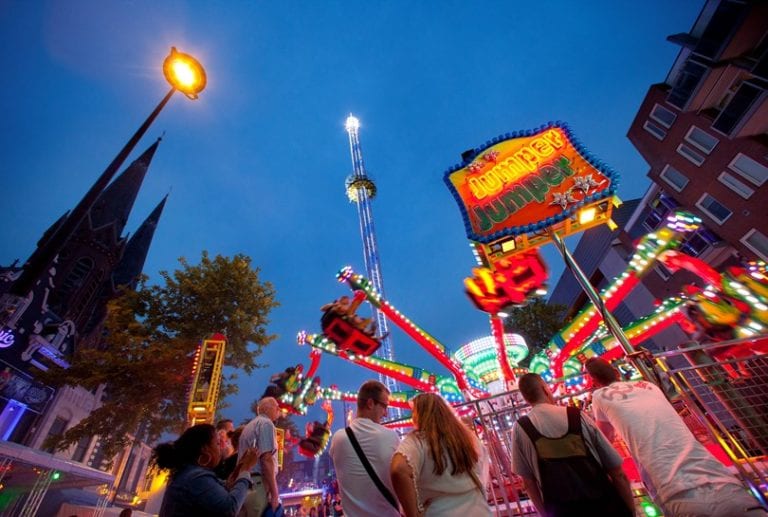
It’s funfair time! De Tilburgse Kermis, or the Tilburg Funfair, is back from Friday, July 16 until Sunday, July 25 and it’s as fabulous as ever. Never been and need the low down? Here are 5 reasons why the Tilburgse Kermis needs to be on your to-do list this summer!
This fair has been around for a very long time and has been nominated to be a UNESCO protected heritage event. In fact, the fair dates all the way back to the year 1570, so it’s well ingrained into the history of Tilburg.
What started out as a way to celebrate the city’s patron saint, has become the largest party in the Benelux. The word kermis originates from the Dutch words for church (kerk) and mass (mis) but this event has long since shed its religious roots and made way for — well, fun.
Due to the continued presence of coronavirus, the fair has been adapted in accordance with government regulations. The organisers ask visitors to check the online pressure meter to see how busy it is at the fair before coming and to pay attention to the current guidelines.
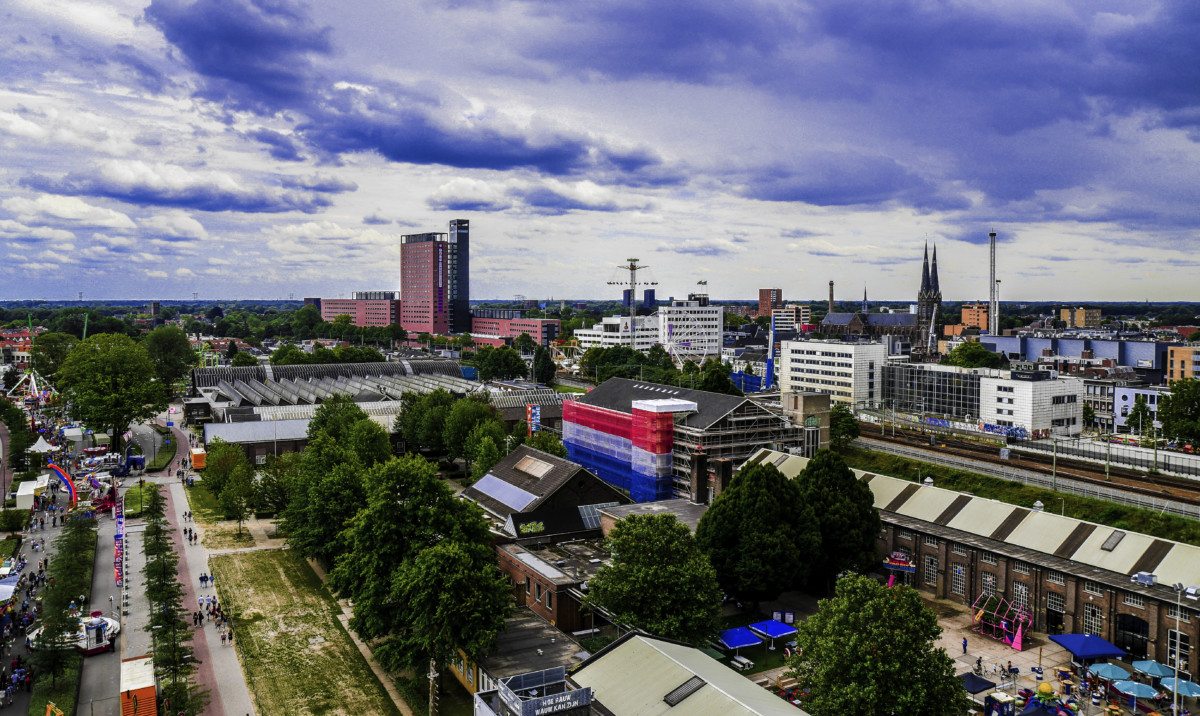
The Skyline of Tilburg during the Kermis in 2018. Photo credits: Freddie de Roeck/merktilburg.nl
1. The Tilburg Funfair is the largest in the Netherlands
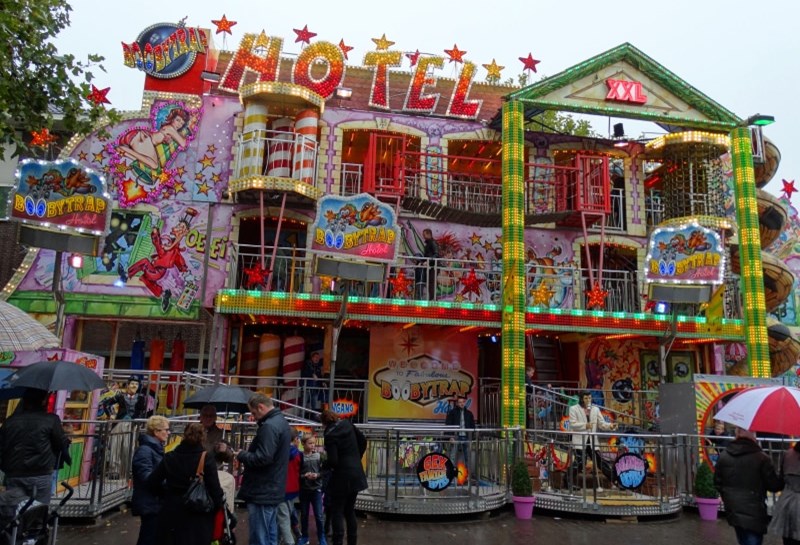
In fact, it’s not just the largest in the Netherlands but in the whole Benelux! Over 140 attractions are present at this funfair, so there is no shortage of things to do. Prepare for the walk though — it’s around 3km long. 😉
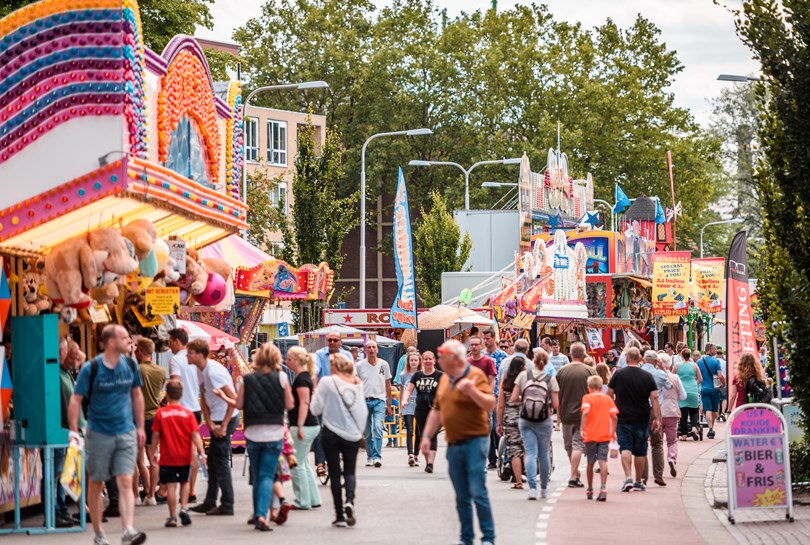
Get your exercise and fun in at the same time at the Tilburg Funfair. Image: merktilburg.nl
2. Entry is completely free
On a tight budget? No worries, entering the fair is completely free! This means that you don’t have to worry about getting ripped off by high entrance fees. It also gives you and your crew more money to spend on rides and delicious food.
The Tilburg Funfair literally has something for all ages. While the fair is being organised slightly differently this year due to the ongoing coronavirus regulations, there are still lots of rides, food stands, music, drinks and more. What more could you want on a day out?
You might want to check out our Tilburg video if you haven’t visited before!
4. Lekker food and drinks
There will be plenty of food and drinks to go around. Burgers, bratwurst, fries, cotton candy, churros, popcorn — you name it, they’ve got it. So even if you’re with someone fussy, don’t panic, because no one will go hungry!
4. It’s more than just a funfair — enjoy music too!
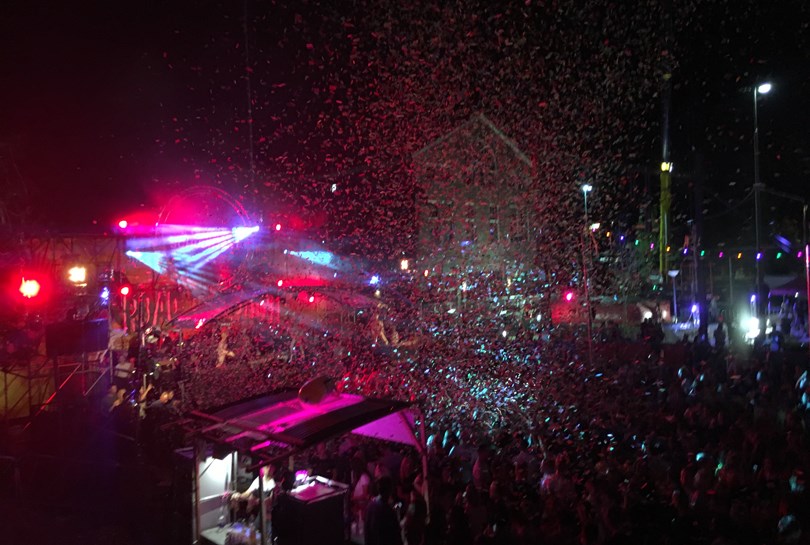
The Tilburg kermis is so much more than just a fair. It has live music (techno, rap, hip-hop, hardstyle etc.,) and plenty of spots to chill and have drinks with friends.
Who said it’s all cotton candy and ferris wheels? Image: merktilburg.nl
The Desperados Roadshow is back this year too, offering amazing musical acts. Throughout the nine days of the festival, you’ll find them playing at their terrace. In their own words, it is like Oktoberfest, but with fewer Germans. Hurry, because tickets are selling fast. So, if you’re not a big lover of rides, but you don’t want to be the killjoy of the group, you still have a reason to attend the fair!
5. You’re in Tilburg — and there’s a lot to do there
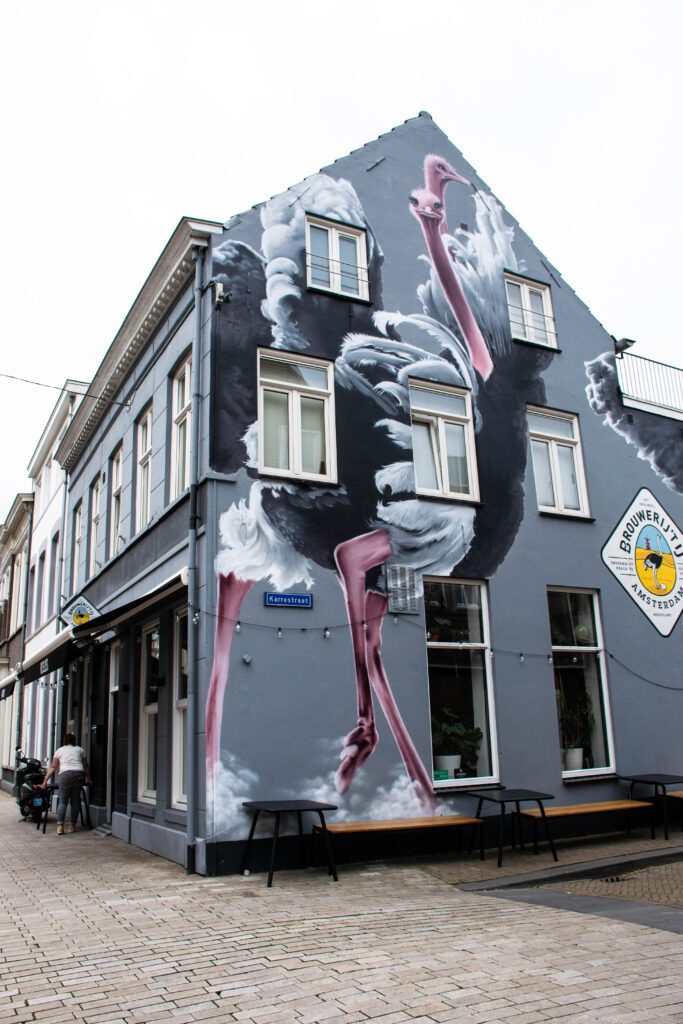
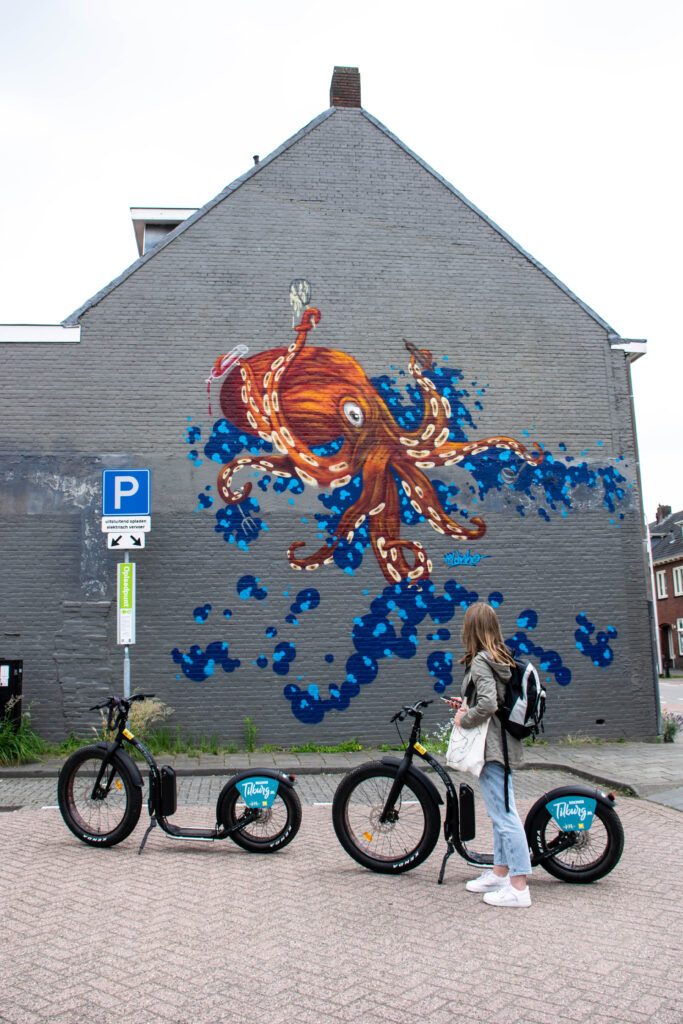
Need a break from the buzz? Don’t forget that you’re in a city that’s brimming with attractions. Why not explore Tilburg’s magical murals while you’re there. In recent years, the municipality has invited artists to create colourful artworks on walls that were once dull and grey — and boy did they deliver.
While you can easily see most of Tilburg’s murals on foot, there’s a quicker and more exciting way to enjoy them — by e-step. The urban street art tour is the perfect way to get to know Tilburg, giving you a glimpse of all the best spots around the city.
Image: Jana Vondráčková/SuppliedImage: Jana Vondráčková/Supplied
How about some culture? There are some great museums in Tilburg and plenty of other cultural hotspots. Tilburg has also somehow nearly perfected the art and process of refurbishing old buildings.
That includes buildings like the LocHal, a state-of-the-art library which used to be a giant hall to repair locomotives. It’s an architectural marvel and is a great place to study and chill.
Where can I get the full program for The Tilburgse Kermis of 2021?
Remember that there are different opening times, acts and themes for each day! You can check out the full program on their website, their Facebook page, or on the Ticket to Tilburg website!
Plan out your days well so that you can make the most of everything this amazing Dutch funfair has to offer! You’re not going to regret it.
Will you be attending the Tilburg Funfair? What are you looking forward to the most? Tell us in the comments below!
Feature Image: merktilburg.nl Editor’s Note: This article was originally published in July 2019, and was fully updated in July 2021 for your reading pleasure.
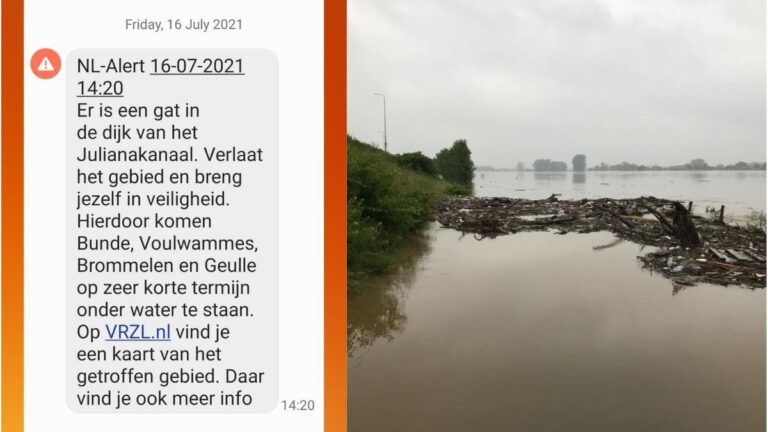
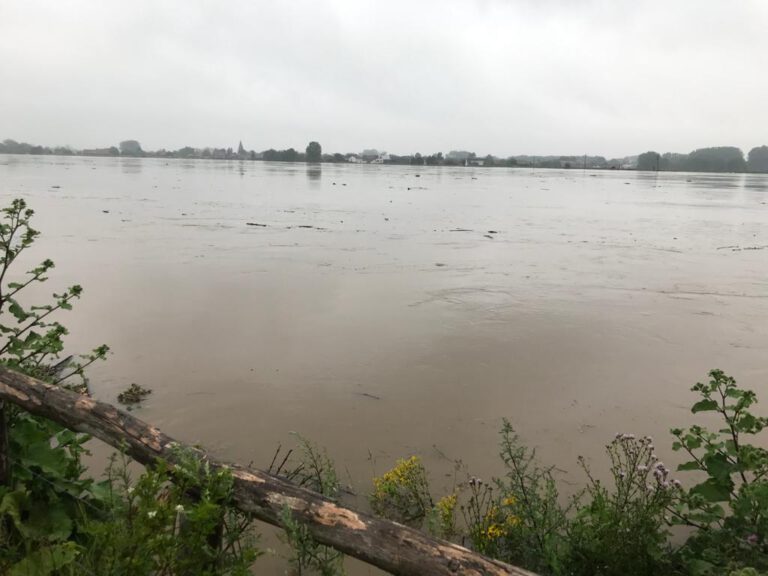
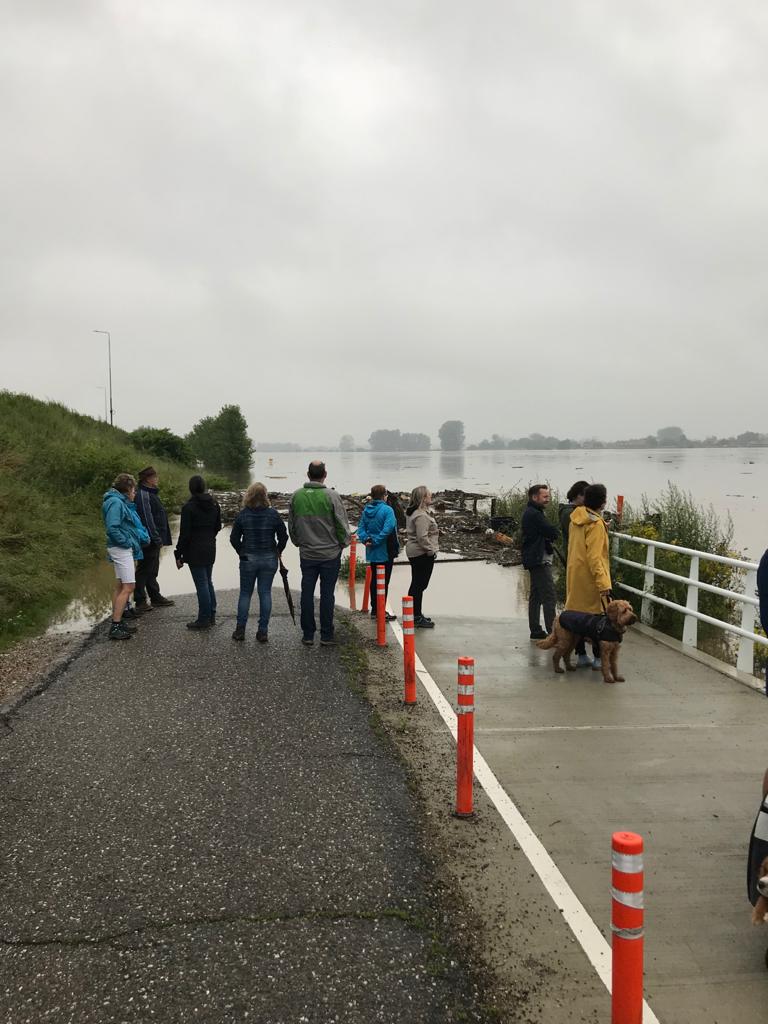
As a result of the continual flooding in the south of the Netherlands, a dike has broken in Meerssen, Limburg. Residents were originally told it was too late to evacuate, but that advice has since been withdrawn.
The dike is at the Juliana Canal where a hole of about one square metre is currently leaking water. Thousands of residents in various towns, including Bunde, Voulwames, Brommelen, and Guelle are impacted.
Residents have been told to evacuate or seek higher ground. A spokesperson has warned that the area will go underwater.
Sirens across the region are sounding off. Initially, residents were told they could return to the area earlier today. However, since the break occurred, they’re told to seek a safer place as soon as possible.
All good sequels have a decent amount of time between them. Just think about the years between each Harry Potter book/movie, each Twilight book/movie, each wave of COVID-19.
That’s the official justification my PR manager advised me to give every time I’ve been asked when there will be a follow up to the articles I wrote many moons ago entitled ‘What’s in a Dutch name?’
I’ve said it before and I’ll say it again: My claim to fame, my party trick, my one true talent is being ‘one of those people who is good with names.’ One day I’ll get a tattoo of this moniker but for now, it’ll simply underpin the importance of a name (to me at least).
I’ve gotten much better with my pronunciation and coherence of Dutch names and being a woman of the people, I’d like to share what I’ve learned; what follows is thus the long-awaited (by no one) sequel to ‘What’s in a (male Dutch) name?‘
Tim
Gotcha! Looks like the English version, doesn’t it? Spelled the same and pronounced the same, I put this one down to start us off easy. Tim as in Tim as in Tim.
Thijs
Definitely cranking us up to the medium difficulty level. I personally really like the way this name looks aesthetically. Do you ever get that too or am I the only one? The way it sounds is also pretty nice (in fact, it rhymes with nice) — start yourself off with a soft ‘t’ then end with ‘ice’ to get this name rolling off your tongue right.
Thijmen
Advanced difficulty. If you pronounce the ‘Th’ as a ‘Tee’ sound you will be off to a solid start. Oh, but then there’s the ‘-ij-‘ part which will come out sounding like the word ‘eye’ in English. So ‘T-eye-men’ is how it sounds. Practice makes perfect.
Pim
Like Tim, of course. Short and snappy.
Pelle
So this name is… unusual. In my previous article on Dutch names, I mentioned the name ‘Jelle.’ Pelle is basically the brother of Jelle. Not in reality, obviously (confirm relatedness of Jelle’s and Pelle’s with any that you personally know), but in spelling! So accordingly you don’t pronounce this name as ‘Pel’ but more as ‘Pell-Uh’… a bit like the word ‘Fella’ in English I suppose.
You can remember this with my self-made rhyme: ‘Pelle and Jelle are some nice, young fella(s).’
Bas
While it sounds the same, it is not to be confused with the fish species (Bass) or the instrument (Bass — spelt the same as the fish but pronounced differently). Bas is a super popular name. Short, easy and mysterious: Is your full name just ‘Bas’? Or is it short for Sebastiaan? Or perhaps shorter for Bastiaan? Varies on a case-by-case basis.
Sebastiaan, Bastiaan
Variations of Sebastian. Like the anxious crab in The Little Mermaid. See above note on Bas.
Guus
Not to be confused with the name ‘Gus’ like the adorable little mouse Gus-Gus from the original animated version of the movie ‘Cinderella.’
Dutch names are just names to Dutch men — so the confusion is confusing. Image: khosrork/Depositphotos
I once had a colleague named Guus and I laughingly tried to explain to him the reference to Cinderella, showing him a cute picture of Gus-Gus from Google. Guus smiled but the look in his eyes made it pretty clear he had no idea what the link was/is/will ever be. His loss because that reference was gold.
Gijs
Like Thijs above, but I have no tie to the aesthetic of this name. For this name try a guttural Dutch “G” sound and then the English word “Ace”. Thank me later.
Geert
As in Geert Wilders. Think of how you may pronounce the end of the word ‘yoghurt.’ Loosely translated in English as Git Wilders.
Thierry
As in Thierry Baudet, just whilst we are on the topic of Dutch politicians. Technically the name Thierry is 100% French- at least that’s what I thought. But the Dutch don’t pronounce it ‘Thierry’ or indeed as the similar-sounding version in English, ‘Terry’ but instead say ‘Cherry’. As in Cherry Baudet. This is a true story.
Sjaak
My personal favourite. Sjaak as in /Shaak/ as in Sjaak(ira). So basically my name in a cute and fun Dutch way! I love it! Although Sjaak (or Sjaakie) is a male name so maybe the similarity ends in the phonetics of this name.
Another fun fact that that ‘Sjaakie en de Chocoladefabriek’ is the Dutch version of the Roald Dahl classic ‘Charlie and the Chocolate Factory’. Schattig.
The list of names is never ending and endlessly interesting but there are so many still to learn.
Drop me a note in the comments with any ones I’ve missed and I might just feature them in Part 3!
Last night the cabinet formally declared the flooding in Limburg a disaster. The government will help to pay for the damages. Meanwhile, 12,000 people were evacuated in Maastricht and Bunde last night in anticipation of “doomsday” flooding levels.
— Zoe Elliott | Together In Transit & Mama Ginger (@Tog_in_transit) July 16, 2021
The NOS reports that while the high water level in South Limburg is starting to fall, the high water peak is now moving towards the north of the province and is rising faster than expected. As a result, 550 homes in Roermond were evacuated by police at 6:00 this morning.
The river Maas has burst its banks — crowds in the village of Elsloo gather to look at the torrent that used to be flood fields. Image: DutchReview: Supplied
Government response to the disaster
The NOS reported last night that the cabinet has put into effect the Compensation for Damage Act. This means that victims whose insurance won’t cover their damages will be partially reimbursed by the government. This legislation is used in cases where the damage is so great that insurance companies aren’t able to cover it.
The prime minister will be visiting Limburg this afternoon.
Flooding in the town of Valkenburg in Limburg province of the Netherlands on the borders of Germany and Belgium https://t.co/AKDR99ETb2
Meanwhile, our Belgian and German cousins have also been tragically affected by the floods. So far there have been 80 recorded deaths in Germany with many more people missing and 11 deaths in Belgium.
Militairen van @13LichteBrigade hebben de hele nacht ondersteuning geleverd aan civiele diensten in #Limburg die daar met man en macht aan het werk zijn. Ze hebben op meerdere locaties zandzakken gelegd en geholpen bij #evacuaties in Valkenburg. pic.twitter.com/ZpZeaEuGce
Oliver Daemen, an 18-year-old Dutch student from Tilburg, has been named as the fourth and final passenger on the first commercial launch from Blue Origin.
Joining him will be Jeff Bezos, founder of Amazon and the owner of the space company, Besoz’s brother, and 82-year-old American Wally Funk. Daemen and Funk will be the youngest and oldest people to ever go to space, reports the NOS.
Unexpected
Daemen and his father participated in an auction where the fourth seat in the spacecraft, New Shephard, was offered. They didn’t, in fact, win it. The seat initially went to the highest bidder — who offered €23 million for the 10-minute tour. How much Daemen and his father offered is not known. However, Blue Original has stated that it’s much less than €23 million.
So how did this 18-year-old Dutchman get to go to space with Jeff Bezos?
Last week he received an unexpected phone call from Blue Origin. The auction winner had decided to go to space another time due to “scheduling conflicts”. The space company then specifically chose to invite Daemen to man the spacecraft instead! According to Blue Origin, they chose Oliver because of his age.
For Daemen, who’s “been fascinated by space, the Moon, and rockets since he was four”, flying on New Shephard will be a dream come true, writes Blue Origin.
Yesterday, Daemen left the Netherlands with his father. Before going into space next Tuesday, he’ll be completing a short, intensive astronaut training in Texas. “The flight to and into space only takes ten minutes, but I already know that these will be the most special ten minutes of my life,” he says.
Once his life back here on Earth resumes, Daemen will study physics and innovation management at Utrecht University, starting this autumn.
What will the launch look like?
New Shephard will launch from Texas next Tuesday. It’ll go to an altitude of 100 kilometres from which the curvature of the Earth is visible and where the passengers will be weightless for a few minutes. After admiring the beauty of our planet, the passengers will be guided back into our atmosphere to land safely on Earth. The round-trip takes a total of 10 minutes.
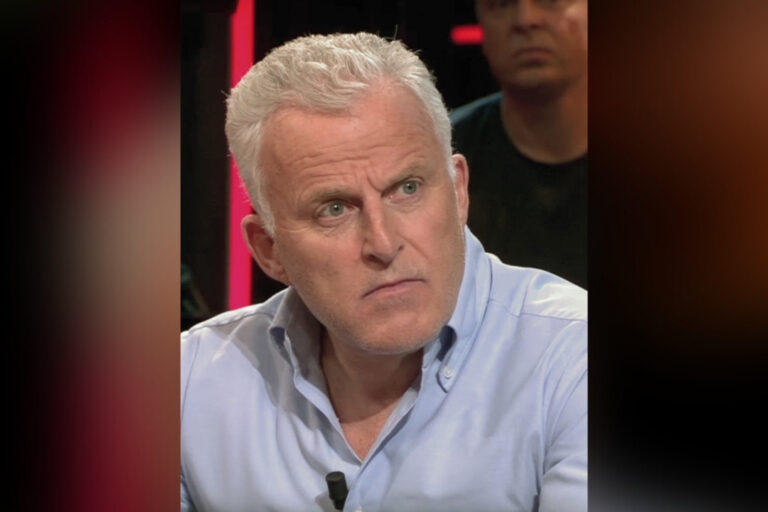
The famous Dutch crime journalist, Peter R. de Vries was shot last Tuesday after leaving a TV studio in Amsterdam. He was hit in the head but rushed to hospital while police made arrests.
For more than a week, De Vries fought for his life in hospital. However, his family announced his passing earlier today, reports RTL Nieuws.
Career and fame
De Vries started his career as a reporter for the Dutch newspaper De Telegraaf. He continued to work there until publishing his book ‘The Kidnapping of Alfred Heineken’ in 1987. In the book, he described the famous kidnapping from the point of view of Cor van Hout, one of the kidnappers who De Vries had befriended.
In 2015, de Vries’ book was adapted for cinema.
In 1987, de Vries left the newspaper for a position as Editor-in-Chief of the magazine Actueel. Later his focus shifted more towards television, later creating the tv-show ‘Crime Time’ together with Dutch television presenter Jaap Jongbloed.
His real breakthrough in the public eye came in 1995 when he launched the show ‘Peter R. de Vries, crime reporter.’ For almost 17 years, Dutchies followed De Vries as he investigated, exposed, and defended criminals on screen.
One of perhaps the most internationally known criminals that De Vries interacted with during his career is Joran van der Sloot. De Vries invested van der Sloot’s role in the 2005 kidnapping of Natalee Holloway of which he’s the main suspect. Currently, Van der Sloot is serving his sentence in a Peruvian prison after killing Stephany Flores Ramírez in Lima in 2010.
We all knew it was going to happen, so here it is. The ECDC (European Centre for Disease Prevention Control) has announced that the Netherlands is officially a code red (high-risk) country due to the high number of coronavirus infections. Groningen has been labelled dark red.
This means that travellers coming from the Netherlands might find it harder to go on holiday. Each country can determine what restrictions they put on Dutch travellers. This could include a quarantine obligation or an entry ban. Some countries might change these depending on whether or not you have been vaccinated.
A country is labelled red if there are 200 to 499 infections per 100,000 inhabitants in the past 14 days, according to the EDCD. Dark red is if there are 500 or more infections per 100,000.
The other countries that have been marked red include Spain, Portugal, Luxembourg, and Cypris. Parts of Greece and Denmark are also red.
Remember that bucket load of rain we talked about earlier this week? Well, it’s falling and battering Limburg in its wake. The centre of the town of Valkenburg is looking like a river, and a food shortage threatens as the town is inaccessible to food trucks.
To say that Limburg has had a wet summer would be an understatement. Last month the province experienced record-breaking rainfall which has lead to flooding. Today, the province is awash once again, as more than 100 millimetres of rain fell in parts of Limburg yesterday, reports the NOS.
While the weather warning was downgraded last night from code red to code yellow, there’s still lots of debris and chaos. In Valkenburg, two care homes had to be evacuated. The NOS reports that, according to the mayor, 400 households are still experiencing a power outage.
Limburg isn’t the only province that’s getting wet. The NOS weather forecaster, Peter Kuipers Munneke, predicts that between 20 and 40 millimetres of rain will fall in the rest of the country today. He says that is “more than usual at this time of year”.
As a result, all provinces have been issued a code yellow warning. This is with the exception of Zeeland and North and South Holland. We hope you’ve all invested in a good umbrella. ☔️
What has been your experience of the rain today? Tell us in the comments below!