Throughout the Netherlands, restaurants are closing their doors because so many of their staff are infected with coronavirus or quarantining that they cannot operate properly.
Many employees in the hospitality industry are young people — gotta make money to eat, right?
After being locked down for a year, many young people jumped at health minister De Jonge’s offer of “dancing with Janssen” and got the shot so that they could hit the town.
Unfortunately, it seems this all happened too soon. Infections in this age group have skyrocketed after the new relaxations took effect two weeks ago, with many people contracting coronavirus at clubs and festivals, reports RTL Nieuws.
A devastating effect for restaurants
This spike in infections among young people is taking a toll on the HORECA sector. One sick employee in a restaurant can mean that many of the other staff have to quarantine for five days — significantly impacting how restaurants operate.
If you thought the service was slow in normal times, imagine what it would be like when half of the staff are in quarantine. That is why many owners have decided to close shop.
So, if you were planning a romantic evening in a restaurant, you might want to have candle-lit Thuisbezorgd delivery instead.
The Streetfood Club in Utrecht is one that decided to close its doors. The restaurant owner, Wes Schreutelkamp, made this decision this week since so many of his staff are in mandatory quarantine. He says that “Other employees had to pay for that” by working overtime — but this isn’t sustainable.
Schreutelkamp has also closed his other business in Utrecht, the Rum Club. He says that “We will remain closed until we can open responsibly again.”
Business owners are upset
Many restaurant owners think that the relaxations took effect too quickly and were too extreme. Nina, from De Karavaan in Amsterdam — another restaurant that had to close due to a shortage of staff — says that “the clubs are also closed again, so we hope it stays that way.”
Meanwhile, Willem van Heijningen, owner of the Op Roose restaurant in Utrecht, complains that entrepreneurs have already suffered many blows over the past year. He adds that “every day that I remain closed costs thousands of euros.”
What are your thoughts on these restaurant closures? Tell us in the comments below!
It’s not long since we celebrated travellers from the Netherlands being (literally) in the green on the European coronavirus map.Today, we expect less good news, as everything indicates the Netherlands is going red — dark red, reports RTL Nieuws.
The map is published by the European Centre for Disease Prevention and Control (ECDC) every Thursday, based on the outcome of test results in the past 14 days. Last week, the Dutch government sought urgent advice from the Outbreak Management Team (OMT) on how to avoid a change in the colour code for the Netherlands. Nevertheless, rising infections suggest a colour change is inevitable.
What does code red mean?
The ECDC marks an area as red if the cumulative infection rate is high enough for the body to advise against travel. However, while the map works as a recommendation to establish “a coordinated approach on the restriction on free movement” in response to the pandemic, it is not binding advice.
That means it’s up to individual countries to decide whether they want to welcome travellers from the Netherlands if we turn red. Most likely, a colour change will not mean that it’s impossible to travel abroad from the Netherlands, but it will complicate it a great deal.
What about the European corona passport?
The EU Digital COVID Certificate, as it’s officially called, will also affect how the colour change translates into travel restrictions. The certificate was created to help free movement. Holders of it should “in principle be exempted from free movement restrictions,” including those that arise from the Netherlands turning red.
In the Netherlands, the certificate is part of the CoronaCheck app. It can be issued with a negative PCR test, two weeks after you’ve been fully vaccinated, or with proof that you’ve recovered from coronavirus within the past six months.
However, countries have different rules regarding entry with the certificate. In France, for example, the PCR test must be no more than 72 hours old upon arrival. Italy demands that it’s a maximum of 48 hours old.
So if you are travelling, always check the specific travel restrictions issued by your destination country.
#UPDATE of the weekly color-coded map on request of #Czechia – including data from the country.
Hold your horses before you hop on that flight to Mallorca because Dutch travel advice to the Canary Islands and the Balearic Islands is expected to change today. The Spanish Islands are expected to be marked “code orange.“
Even though the travel advice has not yet been announced, TUI is jumping the gun. The travel company has cancelled all trips from July 16 until August 2 in anticipation of the islands becoming code orange later today, reports the NOS.
Unfortunately, the bad news keeps coming as the Netherlands is expected to be labelled code red. 😬
Some companies still flying
If you were planning on tanning in Tenerife, not all hope is lost. The Dutch travel company Coredon will continue flights to the Spanish Islands. “If you pay close attention to all measures, the chance that you will become infected is just as great as in the Netherlands,” a company spokesperson told the NOS.
However, other operators aren’t so optimistic. Sunweb has also announced that it will cancel trips to the islands if they do indeed go orange. The company is offering customers the chance to book a trip to another destination or cancel their holiday. Sunweb estimates that this will affect a few thousand customers in the Netherlands.
What to do if you have a holiday booked
This news might leave you with a lot of unanswered questions. What if I’m fully vaccinated and still want to go? When do I need to contact my travel agency? What do I do with the “I Love Ibiza” T-shirts I had printed?
Sadly, we can’t answer all of those questions completely. Even if the islands turn orange, you are still able to travel with a Digital Corona Certificate proving you have tested negative or have been fully vaccinated for over 14 days. However, the travel advice is to only go to orange destinations “if necessary.”
The ANVR (Dutch Association of Travel Companies) advises that if you have a holiday booked, wait to be contacted by your travel company. It also advises what to regularly check the Ministry of Foreign Affairs website for travel advice.
How do you feel about the expected travel advice? Would you goto a code orange country? Let us know in the comments!
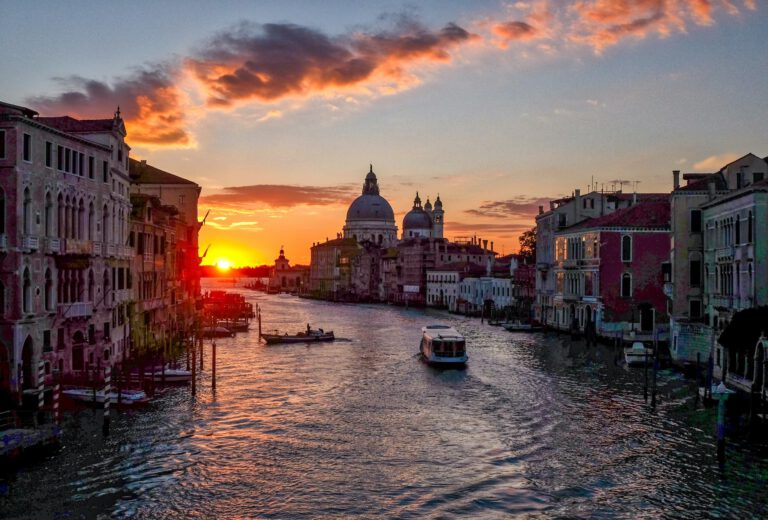
Flying is so 2019, and the travel industry knows it. Dutch railway stations will soon be adding destinations such as Venice, Verona, Vienna, Innsbruck, Milan and Prague to its board — and you can snooze all the way there!
Forget planes, airports and a lack of leg space — on these night trains, you’ll be able to stretch out and sleep. Let your head hit the pillow in Amsterdam and wake up in Venice, my friend.
Who, what, where and when
Here’s the lowdown. The trains have been chartered by GreenCityTrip.nl and will begin on October 15 from Breda to Prague, with additional boardings at Rotterdam Central, The Hague HS, Amsterdam Central, Utrecht Central, and Arnhem Central, reports Treinreiziger.nl.
The trains will run twice a week to different destinations and, if you board in the evening, you can sleep your way across the continent.
You’ll also likely sleep a lot easier knowing that you’re doing the environment a small kindness. After all, trains are a much more sustainable solution when it comes to travel — hence GreenCityTrip.nl!
Green City Trip departure days
Destination
2021
2022
Prague
October 15 & 23, November 25, December 9 & 20
January 6, February 3, 18 & 26, March 10
Venice (via Innsbruck and Verona)
October 19, November 11
January 2, 13, & 7 and Febraury 11
Milan (via Innsbruck)
November 4, December 27
January 20, February 22
Vienna
November 18, December 2 & 16
March 2
The company is also dreaming of an overnight train to Krakow, Copenhagen and Budapest.
Where will you be heading first? Tell us your thoughts in the comments below!
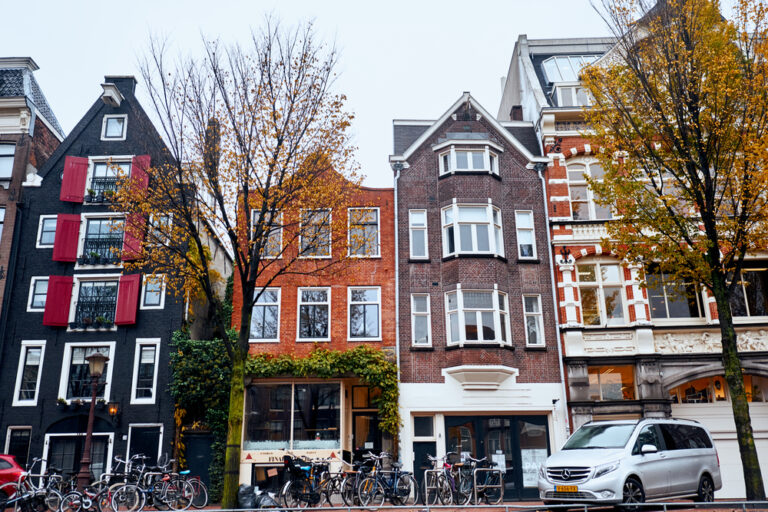
The absence of internationals in the major Dutch cities over the past year has resulted in a drop in rental prices in the free sector, with landlords adjusting prices to keep houses occupied.
The free sector is the part of the rental market that’s not part of social housing — so basically, the shiny houses reserved for flashy business people. Just kidding, it’s most of the houses!
The rental platform Pararius reports that in the second quarter of this year, the average cost per square meter in the free sector is 2% less than it was a year ago. That means a grand total of about €24 on a €1,200 rental 🤑.
However, this research only concerns new leases for vacant homes, and is not relevant to existing leases. So if you thought you’d be getting a discount on your rent, we’re sorry to break it to you — but that won’t be happening.
Expats drive up rental prices
Rental prices in the major cities fell over the past year, as the coronavirus situation meant that there wasn’t the usual influx of internationals. As a result, many high-value rental properties in large cities that would usually be occupied by these happy-go-lucky foreigners remained vacant.
According to Jasper de Groot, the director of Pararius, this led landlords to “adjust rents downwards in order to attract a wider target group and prevent vacancy.” That means some lucky people got an upgrade last year on the cheap.
Where have prices become cheaper?
Rental prices have fallen the fastest in Amsterdam because the city is an expat hub. New tenants are paying 6.8% less in rent than they would have done last year.
That means if you were wanting to move to the capital, this is your sign. Or maybe not — while this figure is lower than last year, rent in Amsterdam is still much higher than the national average.
In Rotterdam, rental prices fell by 4.6%. The Hague didn’t see much of an adjustment — new renters will only pay 0.9% less than the year before. Prices in the Domstad, a.k.a. Utrecht don’t seem to have been impacted by this change where, just like in 2020, you’ll still be paying €17.81 per square meter for your apartment.
Return of international workers
According to Pararius, the expat housing market is starting to take off again. However, they say it’s still too early to predict what impact the return of foreign workers who live in the Netherlands short-term will have on rental prices.
Although De Groot suspects that the return of foreigners will probably be reflected again in rental prices soon — so if you’re wanting to move to Amsterdam, go quick! This golden window could just be about to shut.
What are your thoughts on this change in the housing market? Tell us in the comments below!
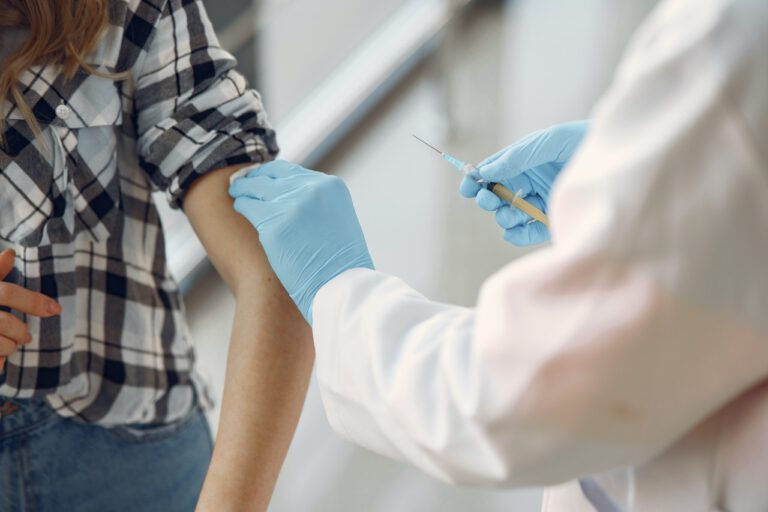
Are you one of those people who wants to be vaccinated sooner, rather than later — particularly amid spiraling coronavirus infections in the Netherlands?
Good news: walk-in appointments and a shorter gap between each vaccination could be on the way.
De Jonge made the announcement last Friday, but the GGD is warning that it hasn’t happened yet — so is begging people to stop calling the vaccination lines to ask.
“Many people call us, for example, because they want to quickly get their second shot before they go on holiday. But that makes no sense yet,” said a GGD spokesperson to NU.nl. “We’re still setting up that process.”
The current waiting time between each jab is at least five weeks. However, although Pfizer recommends a three week gap between injections and Moderna suggests four weeks, these time frames may not necessarily be what the Netherlands puts into practice.
“We are still looking at what time is the most sensible with regard to the effectiveness of the vaccine, for example,” says the spokesperson. “And the vaccines must of course be guaranteed to be in stock: we are still getting deliveries.”
Walk-in appointments in the works
Ever been out for a morning walk and thought “Hmm, I might pop in for a vaccination against that deadly virus that’s been ravaging the world for the past year”?
Soon, you may be able to act on that dream (and if you do, we also suggest treating yourself to a warme Chocomel after 😉). The GGD is working on a system to let people get a vaccination without booking in advance.
“We want to create the space at our locations to be able to go without an appointment,” says Jaap Donker, director of the Public Health at the GGD in Utrecht. “We have already looked at whether that would work in our country and we see that it works out well for some people.”
By providing shots on demand, vaccination could become more accessible — particularly for people who feel concerned about receiving a vaccine.
“We also see that there is a lot of fake news in circulation, so it helps to have a doctor or nurse there who can properly inform people. We will facilitate that,” says Donker.
Will you be trying to move up your vaccination — or be taking advantage of a walk-in appointment? Tell us in the comments below!
The RIVM has released its weekly coronavirus figures from July 7 to July 13. The number of infections has risen exponentially compared to the previous week.
Over the past week, the RIVM reported 51,957 new infections in the Netherlands. This is an unprecedented increase compared to the previous week’s number of 8,541 new infections. The percentage of positive tests rose to 13.4% compared to 4.5% the week before.
Deaths
The number of patients who have died from COVID-19-related complications has gone down slightly. This week 11 people passed away, compared to 15 people the previous week.
Hospitalisations
Hospitalisations, as well as the number of admissions to the ICU, have also decreased. The past week saw 60 new admissions to the nursing ward and 12 new patients in the ICU. The week before, there were 47 and 7 respectively.
New restrictions
The Dutch government has done a full 180 in the last month. After saying goodbye to all restrictions on June 26, Rutte and De Jonge announced the reintroduction of some measures on Friday.
These include the complete closure of nightclubs and restricted opening hours in other hospitality venues which must now be closed between 12 AM and 6 AM. Sports events will also have to ensure fans are at least 1.5m away from each other. All restrictions are in place until at least August 13.
Neither the prime minister nor the health minister took questions from the press on Friday — an odd move considering it was a press conference. Yesterday, Rutte apologised for a “bad press conference” as well as the government’s lack of good judgment over the relaxing of restrictions.
Highest number of cases since Christmas
As you can see from these figures, the Netherlands has seen a sharp increase in coronavirus infection rates. On Saturday of last week, the Netherlands recorded its highest number of daily cases since December last year with the number of positive tests increasing by over 500% in the space of one week.
Amsterdam was hit the hardest, recording over 1,000 infections in one day last week. Rotterdam and Groningen were next in line logging over 500 in each city on the same day.
Testing for holiday temporarily stopped
For a while, those who were travelling could get a PCR test for free. That has been temporarily postponed due to the overwhelming demand for coronavirus tests in the last week.
Lead Healthcare says the lab has been overwhelmed and is unable to deliver on the promise of a test result in 24 hours. Holidaymakers have been left still waiting for their test results at the airport before boarding the plane. Lead Healthcare is currently urging travellers to check whether they can use an antigen test as proof of immunity in the country of destination.
Are you surprised by the rise in coronavirus figures? Let us know your thoughts in the comments.
Congratulations! You’ve jumped through the hoops and bought yourself the perfect Dutch house — well, almost perfect. Here’s how you can use your mortgage to help renovate your home and make sure that your monthly payments are working in your favour.
Buying a house and taking out a mortgage in the Netherlands is no small feat. It’s a flurry of paperwork, sweat and the occasional tears. But once the dust has settled, and you’ve made yourself comfortable in your home, it may be worth considering how you can make the most out of your Dutch mortgage.
Making the most of your Dutch mortgage: renovating
This year of lockdowns and remote work has caused many homeowners to reconsider the interior of their houses. They are no longer just spaces that you return to at the end of a busy day, they have become our offices, schools, libraries and cafes.
Our homes became our offices and more this year. Image: Annie Spratt/Unsplash
While life may be slowly returning back to normal, the way in which we use our homes has been changed permanently. For example, many of us will likely work both in-office and at home from now on. This means that the decision to make your home a more pleasant space is a worthwhile investment. The problem is, many don’t know how to fund this.
When you have a house, you have equity but not many people know that they can actually use that equity to make their homes nicer.
There are two key ways that you can do this — through bouwdepot or by refinancing your mortgage.
Make the most out of your Dutch mortgage: bouwdepot
Indeed, one key way to expand on the possibilities of your mortgage lies in the word bouwdepot. Take note of this word non-Dutch speakers — it’s going to be very important if you’re a hopeful or current homeowner in the Netherlands.
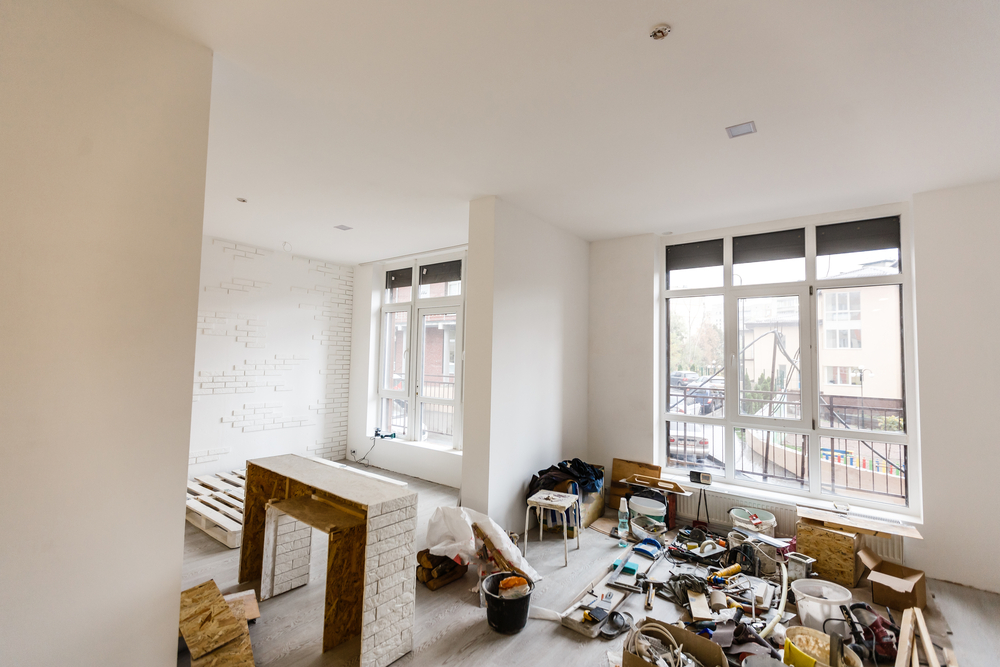
A bouwdepot (meaning construction deposit) is a loan that can be taken out of your Dutch mortgage to finance the renovation or construction of your home. Think of it as a loan that you organise alongside your mortgage. A certain amount of money is put aside which can then be used to finance a facelift for your house.
Why get a bouwdepot in the Netherlands?
Pandemic aside, there are many reasons why a bouwdepot may be a good decision for you and your household.
Make space for a growing family
Perhaps you and your partner fit nice and snug into your beautiful home — but now you’ve got the pitter-patter of little feet to cater to. With an extra (slightly unruly) human in the building, you may feel that it’s time to add a conservatory to your home or replace those wobbly windows with something a bit more sturdy.
Give your house a new look
Perhaps you want to treat your house to a nice makeover? Or to invest your time and money in raising saplings in a newly built garden? Again, bouwdepot is the magic word here.
Make your house more sustainable
You can even use a bouwdepot to make your house more eco-friendly! In today’s day and age, making a house more sustainable adds to its value in the same way that a snazzy look does.
The bouwdepot can be used not just to make your home pretty but also more sustainable! Image: Tina Dawson/Unsplash
Add value to your home
Yup, that’s right, by taking out a bouwdepot to better your home, you’re also adding to its value. This means that the fruits of your labour can be enjoyed even if you decide to move on and sell your property!
In fact, should you ever wish to sell your house, you may make back the money that it cost you to upgrade in the first place — or more.
How can you apply for a bouwdepot in the Netherlands?
The process of getting a bouwdepot in the Netherlands is similar to that of getting a mortgage — which is no easy feat.
Getting a bouwdepot in the Netherlands can be similar to getting a Dutch mortgage — but it’s worth it! Image: sinenkiy/Depositphotos
What do you need?
If you want a bouwdepot, the first thing you’ll be needing is a mortgage advisor. Usually, you arrange for a bouwdepot with your advisor while you are establishing the terms of your mortgage. However, some mortgage companies will also allow you to arrange it later on in the process.
The second thing you will need is a valuation report. In order to determine how much money you can set aside as your bouwdepot, a valuation report will be carried out by an appraiser. The amount you are eligible for will then be based on the estimated costs of any future construction.
Once you know how much money is necessary for your future renovations, it’s time to prove it to the banks. You’ll need to offer specific information such as how many jobs will be done and the cost for each element of construction.
Once you have taken these steps you are free to use your bouwdepot! Simply ask your mortgage advisor to activate the loan when you are ready to give your home some TLC.
It is important to note that a bouwdepot has a time limit. Once you have asked your mortgage advisor to activate your bouwdepot you usually have between six months and one year to spend it if you live in an existing house. If you are using it for a newly built house, the maximum is extended to two years.
Making the most of your Dutch mortgage: refinancing
Another way to make the most out of your Dutch mortgage is to refinance it. This can reduce your monthly mortgage payments — and the equity can be used to finance the renovation of your home among other things.
Why should you consider refinancing your mortgage?
You may want to refinance your mortgage for a number of reasons:
Falling interest rates
One of the primary reasons is simple — if mortgage interest rates have dropped significantly since you bought your house, then you may decide it’s time to refinance your mortgage. In doing this, the interest that you pay would be lower, meaning you pay less each month.
For example, you may have taken out a mortgage with Rabobank a couple of years ago when the interest rates were higher. But now you realise that you can refinance your mortgage with ABN AMRO and enjoy much lower rates. This means you pay less each month.
In the process of refinancing you can also have a revaluation of your property carried out. Again, this requires a valuation report which in turn could lead to higher equity (meaning more financing for your house.)
What’s great about this added equity — aside from the fact that it’s more valuable — is that you can use this amount to finance the refurbishment of your property.
You’re moving abroad
However, a snazzy new home office isn’t the only way that you can make the most of your Dutch mortgage. If you plan on leaving the Netherlands but own a home here, you may decide that you want to keep your house and rent it out. In this case, you will need to refinance your residential mortgage as an investment mortgage.
You may choose to refinance your mortgage instead of selling it when you move abroad. Image: cottonbro/Pexels
Improve the terms and conditions of your mortgage
You may not be happy with the initial terms and conditions that you agreed to when first establishing your mortgage. By refinancing, you open up these negotiations again and may be able to get yourself a better deal.
How can you refinance your mortgage in the Netherlands?
The process of refinancing your mortgage is similar to the process of establishing your mortgage in the first place. However, the first step is to break your initial mortgage agreement.
The “penalty fee”: a one-off cost
This means that you will have to pay a “penalty fee” for breaking the contract before the term of the mortgage ends. The fee is often a reason why some people will choose not to refinance their mortgage as it can be quite high and sometimes outweighs the benefits of a reduced monthly payment.
However, this is not always the case. For some, the cost of the “penalty fee” is worth paying as they can save more money in the future and enjoy more well-suited terms and conditions by refinancing their mortgage.
This penalty is often tax deductible. This means you can receive between 33-55% back from the Dutch government.
Mortgages are often seen as a burden to bear, but it’s important to remember that there are also things that your mortgage can do for you and your home.
How have you made the most out of your mortgage? Tell us in the comments below!
In June, the government announced that travellers from the Netherlands could be tested for free before going on holiday. The offer should’ve lasted all of July and August — but that won’t be the casereports RTL Nieuws.
Yesterday, the director of Lead Healthcare (who provides the coronavirus tests in cooperation with the GGDs) announced that they will stop the free testing scheme.
Testing temporarily stopped
Lead Healthcare has 100 testing locations throughout the Netherlands where travellers were tested for free. The promise to travellers was that they’d have their results within 24 hours of testing — plenty of time before they’d need to show the result in the airport. However, due to being “extremely busy,” that promise couldn’t be kept. Many travellers have now had to cancel vacation plans last minute.
Therefore, Lead Healthcare has decided to temporarily stop the free testing scheme “until further notice.” People who already have an appointment will still be tested but no new appointments can be made.
Not prepared for the increase in infections
Last weekend, there was an “explosive growth” in the number of people who came in for testing. On an average weekend the main laboratory processes 2000 tests but last weekend this number skyrocketed to 15,000. A spokesperson for the lab says that they are simply not equipped to handle that amount of tests.
So where did it go wrong?
According to the spokesperson, coronavirus outbreaks across the country have overwhelmed the testing facilities. They were ready to tests happy holiday goers, but not on top of the massive increase in testing required by heightened infection rates.
Working on a solution
A spokesperson for the Ministry of Health, Welfare, and Sport say they are working together with the lab to fix the problem so they can resume testing travellers as soon as possible. Amongst others, they’re looking into transferring some of the tests to another lab.
Currently, thousands of people are still waiting for their test results, long after the 24 hours have passed. Lead Healthcare has already spoken to hundreds of people worriedly calling from the airport, asking about their results.
Families have been stranded at Schiphol airport thanks to the delay in test results. Many have been anxiously waiting for their results while they see the plane boarding.
Gister 10.30 een pcr test laten afnemen door #leadhealthcare, 30 uur later nog geen uitslag. Aan de vele andere tweets te zien ben ik niet de enige 😅
Many unhappy travellers have taken to Twitter: “Had a PCR test taken by #leadhealthcare yesterday, 30 hours later and still no result. From the many other tweets, I see that I’m not the only one 😅”
Double check which test you need before travelling
The director of Lead Healthcare urges travellers to make sure whether they need a PCR test or just an antigen test to enter their destination country. He says many European countries accept antigen tests. These can be done without a lab (and results are back in 30 minutes!). So if you’re planning on travelling, double-check the entry requirements for your destination and, if possible, get an antigen test instead of a PCR test.
Do you have any experience with the free travel test scheme? Tell us in the comments below!
After what has felt like an eternity, summer is finally returning to the Netherlands.While parts of the country are in for a bucket load of rain in the coming days, from Friday, it will be drier and warmer.
Meteorologist Maurice Middendorp tells RTL Nieuws that, “a big bucket of rain” will fall this week primarily in the south, east, and southeast of the country.
Limburg in particular is expecting a downpour of 100 millimeters of rain. This is much more than what usually falls in the entire month of July. So, Limburgers — we suggest trading in your fiets for a boat.
In contrast, we can expect warm, summery evenings over the coming days. Night-time temperatures will hover around 18 degrees — so these will be sticky nights. According to Middendorp, “We will get the burdens of summer, not the lusts.” By this, we think he means that you can expect a mosquito or two.
Meanwhile, the north and west of the country are due to remain fairly dry and will not get cold this week.
Weekend full of sunshine
Meteorologists forecast that around Thursday it will become drier, and “the weather will be nice in large parts of the Netherlands.”
But Friday is when the fun will really start and the sun will really shine. We’re on course for very pleasant weather over the weekend, as winds from the north mean that it won’t get too hot. We can expect temperatures around 23-24 degrees. In some places, it will reach 25 degrees.
Middendorp tells RTL Nieuws that it isn’t clear yet what the weather will do after next week. “It could go either way,” he says. Let’s cross our fingers and toes and hope for the best.
How do you plan on spending this sunny weekend? Tell us in the comments below!