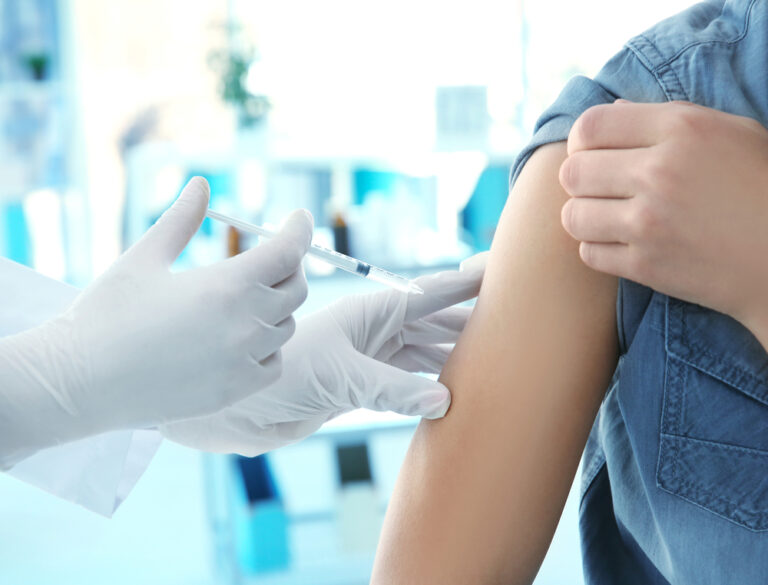
Today’s the day! If you’re itching to get your yellow book stamped, listen up. In a bid to use the remaining 200,000 doses, anyone over the age of 18 in the Netherlands can opt to book an appointment for the Janssen vaccine.
The GGD has released a special phone number that any adult in the Netherlands can call to make an appointment for the one-shot coronavirus vaccine. However, it’s first come, first served. From 10 AM this morning, you are able to call this number to book your appointment: 0800-1295.
A GGD spokesperson tells RTL Nieuws “we have 200,000 vaccines to schedule appointments for, and the rule is: gone is gone.” The line has already been inundated with calls.
For those who are eager to get vaccinated ASAP, the opportunity may be tempting. The first jabs are expected to be given this Friday.
Convert current appointments
Now the answer to the big question. What if I already have an appointment for another vaccine? Never fear. If this is the case, you can call up the GGD telephone number and convert any existing appointments to opt for the Janssen vaccine, reports the NOS.
Get on the waiting list
If you can’t get an appointment straight away, you can opt to be put on a waiting list. This all depends on the uptake of the one-shot vaccine. We’re guessing it will be popular, as earlier this month 1,200 queued for it after a power outage in Utrecht.
However, there still isn’t any certainty over turnout. According to the RIVM, the vaccine provides up to 67% protection against coronavirus after one shot, this is a lower rate of protection than other vaccines. There have also been concerns over its link to thrombosis which may also affect the popularity in uptake.
Will you be calling the special number to get the Janssen vaccine? Tell us in the comments!
Previously known as the Indian variant, the Delta variant of the coronavirus has claimed its placein the Netherlands. Dutch virologist Marion Koopmans expects it to continue spreading.
Currently, the variant is more common in the Rotterdam region than in other parts of the country. “We expect that to continue, so it’s important that the basic measures remain in place,” Koopmans tells Rijnmond.
While it’s easy to get carried away by the new relaxations, it’s necessary to still respect social distancing and keep the 1.5-metre distance.
Similar situation as the UK
Numbers show that the Delta variant is more contagious than other coronavirus strains. In the UK, it quickly superseded the other variants, which forced the country to postpone its plans for reopening.
Increased infections?
In the Netherlands, Koopmans says we might encounter a similar situation to the one we had around Christmas. Just like the British variant at the time, she now expects the Delta variant to become much more widespread and cause increased infection rates.
Currently, it’s responsible for about three percent of coronavirus infections in the Netherlands. This number is slightly higher in Rotterdam. However, Koopmans reassures that they are keeping a close eye on it.
Follow DutchReview on Facebook for the latest news and updates.
The Dutch government needs to invest €20 billion to help realise large-scale housing projects. This is what the outgoing Minister of Internal Affairs, Kasja Ollongren, has claimed in a letter to the House of Representatives.
Housing prices in the Netherlands keep going up. Last month, owner-occupied homes were 12.9% more expensive than in May 2020. This is the largest price increase since April 2001, reports Statistics Netherlands.
While the prices are rising, the number of available homes keeps going down — not only because of population growth but also because people live alone more often.
The Netherlands is currently short of 279,000 homes and those that are already built are bought up by investors who rent them out for high prices, reports RTL Nieuws.
How to fix this?
Building new houses, therefore, seems to be the only solution to the country’s ongoing housing shortage. That’s why last year, a plan was introduced to build 440,000 new homes by 2040.
The idea was that 70% of these would be affordable and would include social housing as well as homes that cost less than €1000 per month to rent.
It’s all about the money
The entire project would cost €142 billion. While private actors such as construction companies and investors are expected to cover €109 billion, the government has already set aside €13 billion for the project.
And the remaining €20 billion? According to the outgoing minister Ollongern, the government should be responsible for covering those.
An unusual step
Since the 1990s, housing has been in the hands of the commercial market, provinces, and municipalities. This means the intervention of the government would be an unusual step to take.
However, “in order to be able to build this many homes, investments are needed,” says the minister. She emphasises that without government support, the housing that we so desperately need will be built much slower and will be much less affordable.
The current proposal is that the government would pay one billion euros a year over the next period of 20 years. This money would be used to build infrastructure, or for example, green areas or sewerage.
What do you think about this proposal? Let us know in the comments below!
If you felt as if we’d been mercilessly plunged back into winter yesterday, never fear. The worst day of the week is behind us and the weather is set to improve.
Yesterday was a chilly one with temperatures hovering around 17 degrees — practically freezing in contrast to last week’s sustained 30-degree weather.
However, Buienradar meteorologist Marc de Jong tells RTL Nieuws that these fluctuations are pretty normal for this time of year: “Summers in the Netherlands often have moments when it is very hot and dry and then very cool and wet again.”
Better for nature
According to De Jong, the weather that we are currently experiencing is better for nature than the heavy showers we’ve had over the past few days. This is because when it rains lightly throughout the day, the water has a chance to soak into the ground.
This rain is definitely worth it as it will keep the parks lovely and green for our picnics and BBQs.
What happens next?
From today, the weather is set to improve — it will be a little drier, with patches of sun. After yesterday’s greyness, we’ll take it!
“Last week we were well above the average summertime temperatures and now we’re significantly below them,” De Jong says. Nevertheless, in the second half of the week, we are set to return to that average, with “temperatures around 21 degrees and lots of sunshine,” he adds.
After this chance to reset, we’ll all be welcoming back the sun with open arms and looking forward to our next beach day. After all, you need a little rain to fully appreciate the sunshine.
What’s your favourite thing to do on these cooler, rainier days? Tell us in the comments below!
The years 2020 and 2021 haven’t exactly been the years to meet new people but with restrictions relaxing like never before, this summer might hold new hope for desperate romantics! And now there’s a whole new way for singles to meet, reports RTL Nieuws.
Cue Finder. Finder is not another dating app, but a pin that you can attach to your clothes. The idea is to make the most out of the reopening of society after months of lockdown — and find love, of course.
The concept
The idea behind Finder is simple: It’s a green pin with a magnifying glass on it. Attach the pin to your, shirt, shoes, hat, or back pocket of your jeans (wherever suits your outfit really) and show the world that you’re single and ready to mingle!
There’s no need to make a profile, search your phone for selfies, or come up with an edgy bio. Finder is meant to create real-life connections and for people to meet you exactly as you are!
The creator of Finder, Nadine Roestenburg, came up with the concept as a response to her personal frustration with dating apps like Tinder. She was tired of how dating apps work: “They are not made to find love, but to let us swipe. They play with our brain and try to make us addicted to the app. That’s why I thought: this has to change.”
For everyone
Finder is created for all singles, no matter what you’re looking for. The pin signals you’re open to meet someone — but whether you’re looking for a relationship or just a fun summer date is then to be established by face-to-face conversation. Nadine says that “love comes in all kinds of forms. You’ll find out soon enough what the other person is looking for. We don’t have different colored pins.”
Started in Tilburg
Most of the people using Finder are in Tilburg where Nadine first came up with the concept. Currently, there are about 600-700 people walking around with a green pin but more and more of those are also from outside Tilburg. Whether any successful matches have been made is not established, but the concept seems to be growing.
What do you think of Finder? Will you be ordering a green pin? Tell us in the comments below!
By Saturday night, we will once again see drunk patrons standing outside club doors as the dancefloor is set to reopen. You can also start to buy some festival fits as these will also go ahead with full capacity after July 3.
In order to get your boogie on, you will first need to show a “corona ticket” using the CoronaCheck app. This ticket acts as proof that attendees have either been vaccinated against coronavirus, have had coronavirus in the past, or have tested negative within the past 48 hours.
Half of Amsterdam’s clubs to reopen
Clubs across the country are delighted by the news that they can dust off the dancefloor and fling open the doors — but many aren’t quite ready yet. This comes down to the practicalities involved in reopening.
As a result, it is expected that Amsterdam will see only half of its clubs open their doors this Saturday, the NOS reports. However, by the following week, this is expected to jump to 80% of clubs.
Pieter de Kroon of the Overleg Amsterdamse Clubs (OAC) and owner of Chicago Social Club explains to the NOS that clubs do not need to worry about a lack of demand. “For us, the 700 available tickets sold out within a day. People want to be back in the club and feel that bass,” he says.
Controversy but not too much
Most potential club goers are ok with testing or vaccination being necessary before entry. However, some groups find this discriminatory on the basis of health.
Vincent Böhre of the Privacy First campaign believes this is the case, telling the NOS “you then go to a test society, and then you discriminate against people on the basis of their medical status. There are also privacy risks.”
Lowlands and Down the Rabbit Hole
As for the popular Dutch festivals, Lowlands and Down The Rabbit Hole, organisers are unfazed by the current entry restrictions. Given that both festivals will take place at the end of August, organisers will wait and see whether a corona ticket is even necessary at all by the time the events roll around.
Spokesperson for the two festivals, Bente Bollmann, explains to the NOS that if “corona tickets” are still needed to allow entry, the events will arrange for testing. “We will solve that, that will be fine,” he says, “in the end we are very happy that these festivals, as it looks now, can continue.”
What are your thoughts on clubs and festivals returning? Tell us in the comments below!
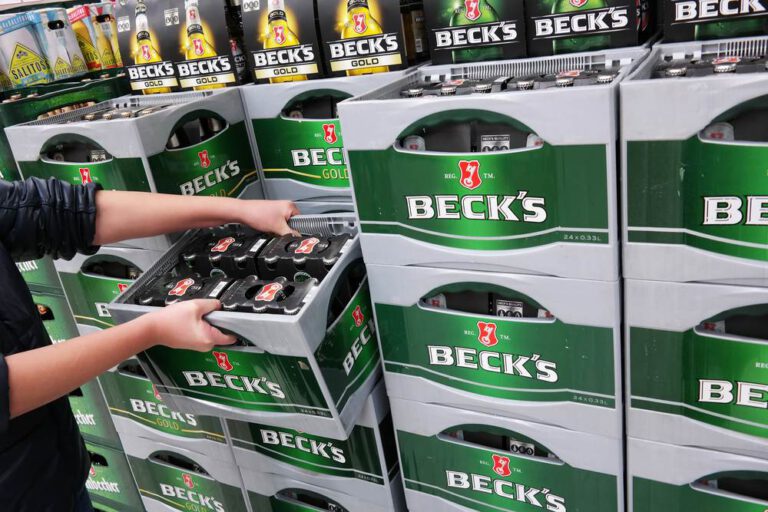
Give the Dutch a discount on beer and they will flock to the supermarkets en masse. Tell them beer discounts will be cancelled and they’ll come with a tractor to stock up on 6,000 euros worth of this indispensable beverage…
Or at least that’s what happened in the town of Gramsbergen yesterday when the local PLUS store came up with an offer that was just too good to pass up on — three crates of beer for 25 euros.
Upon hearing this wonderful news, a group of friends in their early twenties from the nearby Drogteropslagen village in Drenthe decided to take out their tractor and hit the road, reports RTV Oost.
“Beer will become more expensive in a few weeks, so we thought we should strike now,” explains Jorgen, who called the supermarket to order seven pallets of beer.
The boys spent no less than 6,003 euros 29 cents and started emptying their newly acquired supplies immediately — four crates were drunk on the day of the purchase.
Why now?
The Netherlands recently passed a new law known as the Alcohol Act, which states that supermarkets and liquor stores are no longer allowed to offer more than 25% discount on alcohol, reports NU.nl.
Want ja. Het bier gaat niet meer maximaal in de korting. Ik ga zo ook. Ik gooi ‘t in de diepvries en kijk wel rond november weer👌🏻👌🏻 #Tippic.twitter.com/K7rWo9I0Jg
The law comes into effect on July 1, leaving the Dutchies about two weeks to fully replenish their discounted beer supplies — a chance one simply cannot miss.
Will you be stocking up on beer in the coming days? Let us know in the comments below!
The global video game industry grossed over one hundred and thirty-nine billion euros in 2020 — a figure and an industry that is only expected to grow over the next five years.
To support this growth, there is a high demand for skills. Countries across the EU could see themselves competing for these skills, as experienced developers become harder to come by. ⌨
The Netherlands is positioned as an attractive option for local and international game developers alike. Here are four ways the Netherlands has become an unexpected and underrated gamer’s paradise.
The Dutch government actively participates in the video games development and funding
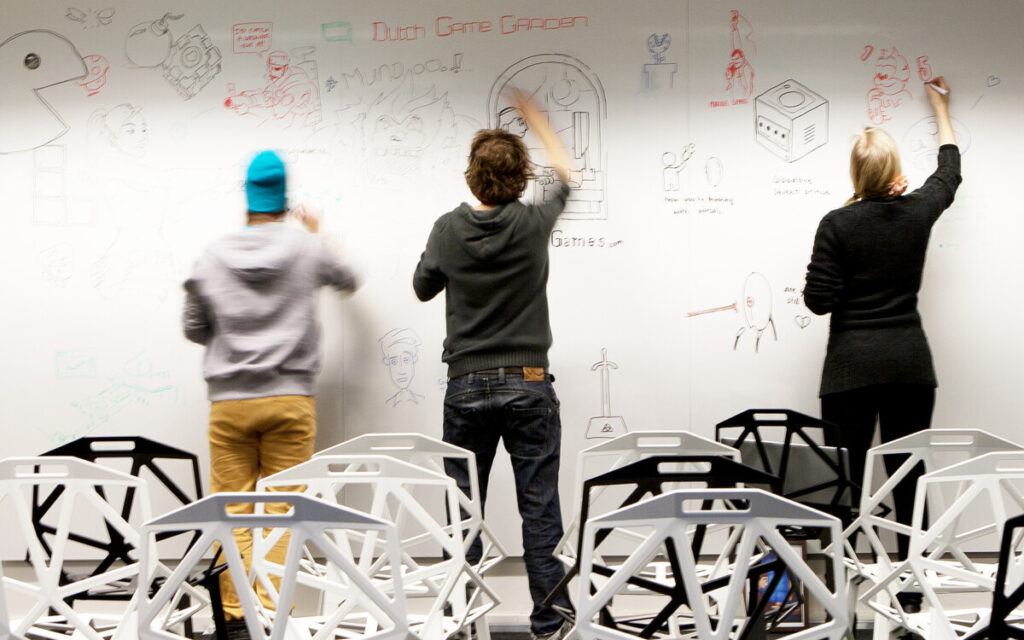
The Dutch Game Garden in Utrecht has created over 350 video game titles. Image: Dutch Game Garden/Supplied
The Dutch Game Garden in Utrecht is a 2008 initiative that was established in support by the province and City of Utrecht. The Game Garden is an incubation program that is managed by the award-winning JP Van Seventer with a goal to support promising game startups in their development into fully functioning game companies.
With programming or design being a passion-driven occupation that usually consumes the individual in developing their craft, the Game Garden is perfectly suited for merging the gap between designer and entrepreneur. The Game Garden supports startups with the business development tools they need to be successful.
This incubation platform started with only 12 studios, growing substantially to over 40 studios in 2020. The Dutch Game Garden has incubated over 120 game startups which have given rise to 350+ video game titles. They offer the studio’s office space and act as an agent for the participants in the program, matchmaking studios with work for hire, or funding through recognized publishers.
Indigo X Event
Initiated to serve and empower Dutch game developers, this event was started by the Dutch Game Garden and acts as a joined platform for game developers, the press, and publishers to connect. Presenters have the opportunity to showcase their games and present their concepts and demos to game publishers. Many well-respected publishers use the event to scout and develop partnerships with new game developers.
Indigo was first established in 2010 to promote engagement in the business of gaming and act as a platform to facilitate relationships within the industry. Since then, the event has proved to be an excellent showcase for Dutch studios, and even welcoming international studios since 2016.
This year, we saw the 12th edition take place on the 25th of June 2021. The event was hosted online to mitigate risks associated with the coronavirus pandemic, showcasing new and exciting gaming creations from the Netherlands, Luxemburg, and Belgium.
The Dutch take gaming seriously
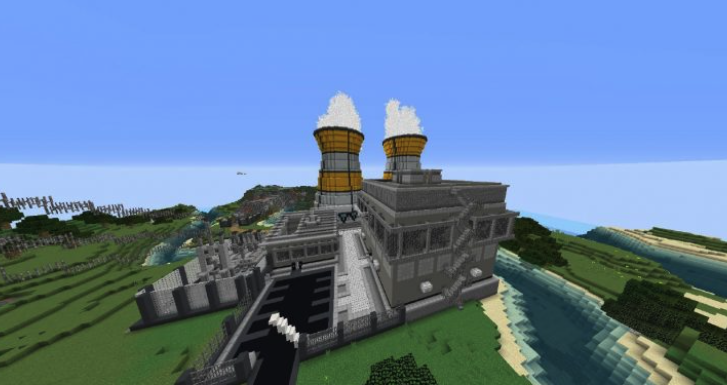
Lumen is a Dutch Minecraft module that educates kids on energy production. Image: InnoEnergy/Lumen
The Dutch don’t just play video games to kill time. The Netherlands is one of the market leaders in what is referred to as serious games. In the Netherlands, we call it leerzamespellen, which roughly translates to educational games.
Instead of entertaining, these games aim to teach something and are designed for industries like health care, science, engineering, and the military. The main purpose is to offer a simulated experience of a chosen task, which serves as an excellent training platform for new entrants into the specific field.
This method allows players, or rather users, to take advantage of trial and error. This way, users can learn without the usual serious consequences attached to real-life errors. It doesn’t mean that the games aren’t entertaining.
I don’t know about you, but cutting through grey clouds in an F-16 across Amsterdam in VR sure sounds like a lot of fun to me! 🕹
Guerillas live in the Netherlands
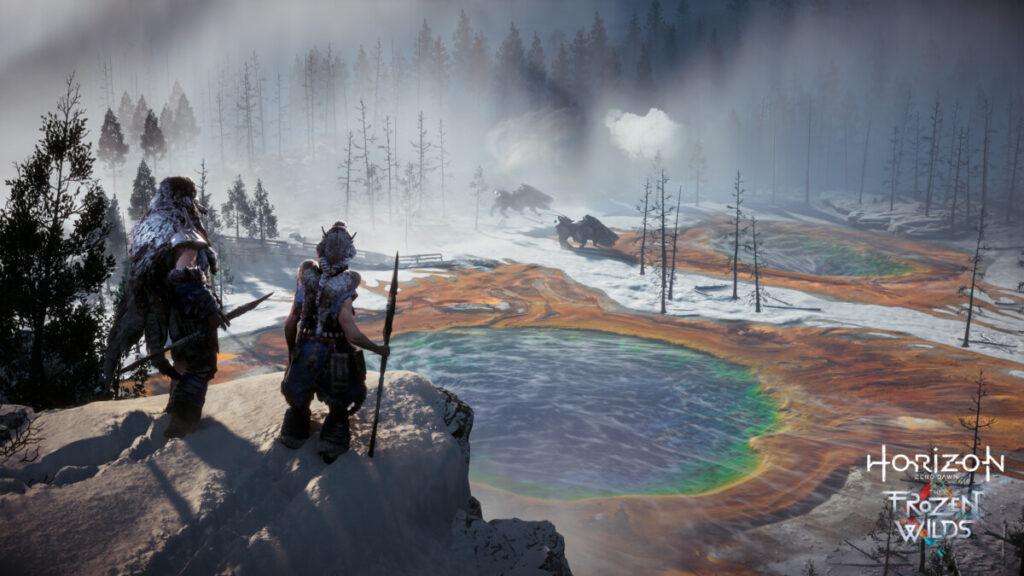
Guerilla Games ‘Horizon Zero Dawn’ series is one of the most successful Dutch-produced games. Image: Guerilla Games/Supplied
By Guerrillas, I am not talking about the beefy, hairy kind that you find in a west African jungle. 🦍 I’m talking about the kind who work at the Triple-A studio in the heart of Amsterdam called Guerrilla Games.
Established through an acquisition by Sony Interactive Entertainment, which saw the merging of three smaller game development studios in the year 2000. Guerilla Games found immediate success with the release of their first title called Killzone and went on to create three award-winning sequels to the Killzone franchise while producing multiple handheld spin-offs of the series.
Guerrilla Games gained worldwide recognition for the development of the popular Horizon Zero Dawn, which was built exclusively for the Sony Playstation 4 and nominated for a whopping 26 awards. The studio went on to win 14 of these award nominations, which proved them to be serious developers when compared to a large group of international Triple-A studios.
With a team of 200 people, from over 25 different nationalities, this studio may just be a great opportunity for you to make your mark in the Triple-A gaming world — if you think you have what it takes of course. 💪
Are you a gamer in the Netherlands? How else do you think it’s perfect for gamers? Tell us in the comments below!
Coronavirus vaccination in the Netherlands is skyrocketing and all adults in the country can now book an appointment for the first jab. But what about the ones who haven’t done so yet?
While the overall willingness to vaccinate is 87%, the Dutch Ministry of Health wants to make sure that vaccination is high across all age groups and regions, reports the NOS.
To ensure this, Dutch GGDs together with other authorities are working out creative solutions to attract people who haven’t been vaccinated yet.
While individuals in IJmuiden got to enjoy free herring after getting their shot last week, people in the region of Hollands Midden can look forward to getting free ice cream next week.
A concert or a jab appointment?
Amsterdammers will get to enjoy live music at every vaccination location. “We try to make vaccination as pleasant and fun as possible,” says a spokesperson for GGD Amsterdam.
Utrecht uses a similar strategy, having recently worked with the music venue TivoliVredenburg. “This gives the artists a stage and the vaccinated people beautiful live music,” says spokesperson for GGD Utrecht.
What about younger generations?
Outgoing Health Minister, Hugo de Jonge, points out that even though the willingness to get the vaccine is higher than expected among young people, it is still at 76% — which is lower than the average.
This is why younger generations in particular are the target group of many creative strategies. While the Utrecht-based doctor Putri Hintaran reaches them via TikTok, GGD Rotterdam-Rijnmond has special selfie walls where they can snap a photo after the injection.
No Dutch? No problem
As for people who speak little or no Dutch at all, the GGDs try to reach them via their children’s school.
Their parents get an invitation for a free appointment where they can get information about the vaccine as well as the shot.
Vulnerable neighbourhoods
The Dutch government has also introduced initiatives to reach people in vulnerable neighbourhoods, sending vaccine vans to areas where vaccination uptake has been low. The vans have been used in Friesland, Amsterdam, Rotterdam, and The Hague.
What do you think about this strategy to increase vaccination? Let us know in the comments below!
A summer of no restrictions is well and truly on the way, with Prime Minister Mark Rutte and Minister of Health Hugo de Jonge announcing relaxations of coronavirus measures virtually across the board.
“The Netherlands is taking a big step,” said Rutte. “Almost everything is possible at one-and-a-half meters.”
Let’s be honest: you’re here to find out what is being relaxed and when. Well, we aim to please, so here ya go! 🎉
The basics are this. From June 26:
Almost everything is possible if people keep their distance and wash their hands.
Events and parties can go ahead, but only with a negative test, proof of vaccination, or evidence of having had coronavirus in the past (a so-called “corona ticket” in the CoronaCheckapp).
What does that break down to? This! 👇👇👇
No more face masks
Gone are the days of doing the walk of shame when you approach a store entrance only to realise your trusty face mask has gone missing. From next Saturday you’ll only be required to wear a face mask in public transport, at the airport, on airplanes, or in other places where you can’t keep distance, like secondary schools.
Prefer to take your dinners according to the Spanish clock? Dat kan! From next Saturday the catering industry can stay open as long as they would like.
There are also more people allowed in restaurants: as many as fit while still allowing one-and-a-half metres distance.
On a related note, the ruling that alcohol can’t be sold in supermarkets after 10 PM is also gone like the wind 💨.
Everybody: you can DANCE 💃
Start practicing those sweet moves, because clubs and discos can officially open for the first time in over a year — yeah, baby! 🕺 Of course, if you want to dance you need to pass the test — a coronavirus test, that is. Show your corona ticket at the door and you can bust a move!
No more rules on the amount of visitors
Currently, we’re advised to only group together as a maximum of four people — but not anymore! There is no more advice or rules about groups of people, provided distance can be kept.
Work from…office?
Let’s hope you still fit into your work pants, because for the first time since the pandemic began the advice to work from home as much as possible is being replaced with “work from home at least half the time.” Provided you can keep your distance from your colleagues you can return to the office! Mmm, office coffee…? 😬☕️
What’s happening? Everything!
Get out your agenda, because events are back on without mouth masks or keeping distance. All major events can go ahead provided visitors show their corona ticket.
Competitive sports make a return
For our competitive friends out there, amateur sports competitions will now be allowed — which is good, because we all need to take out our frustrations from the past year on something.
Coronavirus tests to travel are gratis
Got a holiday planned for July or August? You’ll be able to get tested for free, although the dates on this remain a little unclear.
But guys, keep your distance
At the office, on the street, in the house — the advice to keep one-and-a-half-metres from each other will last until at least mid-August. There are some exceptions for locations and events that require negative tests to enter.