Looking for a rental in the Netherlands these days? You might want to stretch first. Not just your legs, but your patience, your budget, and probably your CV. 😬
The latest Pararius Rental Report reads less like a housing update and more like a plot twist in a dystopian drama.
Let’s dig in! 👇
Starting with the big one: Competition
The number of available rental homes dropped by more than a third compared to last year. Only about 12,744 properties made it to the market, which means every new listing was basically swarmed.
On average, each one got 57 responses. That’s right, 57 people eyeing the same flat, probably while writing heartfelt letters to landlords and attaching their LinkedIn profiles for good measure.
And if you do spot a listing, better act fast: homes now stay online for just 18 days on average. Blink, and that studio with a shower over the toilet and “creative storage solutions” is gone.
Now, brace yourself for the financial part. The average monthly rent in the Netherlands has hit €1,830.
To comfortably afford that, you’ll need to earn a gross salary of around €5,490 per month.
That’s €800 more than you’d need just a year ago. So yes, your rent has probably gone up more than your salary, and possibly your serotonin levels.
The average monthly rental price per square metre has also jumped past the €20 mark for the first time, because apparently, walls are the new luxury. 🙄
No more “low” rents
If you’re hunting in the so-called “lower” rental bracket of €1,185–€1,500, you’re not alone. That slice of the market is being hunted down with gusto, attracting 35% of all tenant interest.
Even the luxury pads over €2,000 are getting more attention, because desperate times call for very expensive measures.
Meanwhile, every province is joining the rent-hike party. Amsterdam is still the MVP of “most expensive” with new tenants paying €27.91 per square metre per month, but it’s got some tough competition.
These are some of the most expensive Dutch cities for renters in 2025. 👇
City
Monthly price per square metre
Amstelveen
€23.38
Bussum
€22.65
Haarlem
€21.66
Rotterdam
€21.52
The Hague
€21.34
Utrecht
€21.60
Eindhoven
€18.38
Provinces are also seeing jumps in price, with the largest bump of 16.7% recorded in Drenthe.
So yes, welcome to 2025: where finding a rental is a full-time job, affordability is a myth, and the only thing moving faster than housing prices is your growing sense of disbelief. Happy hunting!
Should earning €5,000 a month be the new baseline just to rent in the Netherlands, or has the housing market completely lost the plot? Let us know what you think in the comments! 👇
Dutch skies are throwing everything our way this week, with sunshine, showers, and sizzling temperatures all packed into one forecast. 🌧️🌞
It’s time to pack your umbrella and stock up on some ijsjes, with Weeronline predicting moody showers and tropical temperatures.
Here’s what the Netherlands can expect over the coming days. 👇
Wednesday brings typical, rainy Dutch weather
Today (July 16), you’ll want to prepare for plenty of clouds and scattered showers, especially inland, where some might come with a dramatic thunderclap or two. 👀
The sun might peek through the clouds briefly, but don’t hold your breath.
By the afternoon, things will start to improve from the west, while central and eastern regions may still catch a few heavy showers.
Sunny spells in the west will be accompanied by temperatures between 19 and 21 degrees Celsius and a moderate wind. Living near the coast? Try not to get blown away, as you’ll get the full force of the wind. 🌬️
Come evening, most of the country will be dry, though a few showers could linger in the east.
Overnight, skies will clear across much of the country and winds will ease. Temperatures, meanwhile, will fall to 11 degrees inland and 15 degrees along the coast. 🌙
Thursday will be grey in the northeast, golden in the south
Thursday is expected to be a mixed bag. 👀
The north and east of the country will see some clouds and a few leftover showers through the early afternoon. Lucky ducks in the south, however, will get to enjoy some sweet summer sunshine.
Thursday will also be somewhat warmer, with temperatures ranging from 18 to 20 degrees in the north, and up to 25 degrees in the sunny southwest.
Winds from the northwest will calm as the day goes on. Things are improving, at least for now. 😏
Friday and beyond? Get ready for summer heat
Expect sun from morning to evening this Friday, with barely a breeze to mess with your hair. 💁
Temperatures will climb to 25 to 27 degrees across much of the country, with the coast and north a bit cooler but still pleasant.
Saturday will turn up the heat even higher. The south could hit 30 degrees, and it will feel more humid. (Hello, sticky skin and frizzy hair!)
But don’t get too cosy, because Saturday evening might see heavy showers or thunderstorms roll in, especially in the southwest.
Sunday stays warm, but rain and thunder could arrive to gently cool things down. After the weekend, expect cooler and more unpredictable weather ahead. 😬
Which weather mood are you hoping for: calm sunshine or stormy drama? Let us know in the comments. 💬
A country where washing the stresses of a work week away with some drinks is a social event? Let’s just say Netherlands: 1 World: 0 🥳
The Dutch have seemingly mastered the art of winding down after a long week at work or university, and no… it’s not by turning your mobile on DND and crashing out on the couch.
In fact, there’s even a special term for it. (No, we’re not having you on! 😂)
What is it?
Say hello to the vrijmibo or vrijdagmiddagborrel (Friday afternoon borrel).
A borrel refers to an informal meet-up to have a few drinks and socialise with friends or acquaintances.
If, like us at DutchReview, you work for a Dutch company, you may even be familiar with the werkborrel.
This involves some well-deserved after-work time with your boss and colleagues, where you can all sit back and unwind with some drinks. Proost! 🍻
More often than not, a borrel isn’t complete without a full complement of borrelhapjes (borrel snacks).
There’s generally a little something for everyone. You can be a cheese fanatic who craves the tangy crispness of kaasstengels, or the molten core of kaassouflés.
Once Friday rolls around, many Nederlanders up and down the country look forward to een gezellige borrel (a nice, sociable borrel) to wash down their week.
Like wearing enough orange to be spotted by the International Space Station during national holidays, it’s one of those stereotypically Dutch things. And we have to say, we internationals are big fans.
Why is it quirky?
If, like the writer, you come from a culture with a rather rigid work hierarchy, then the sight of your boss cracking open a cold one and letting loose with you and your co-workers might seem rather odd at first.
However, once you’ve been converted, it’s a great way to socialise with your coworkers. (Not to mention how fun planning a borrel can be with your friends.)
And hey, even if it takes some getting used to, there’s your excuse to try it over, and over, and over again! 👏
Should you join in?
Definitely! If you’re in the Netherlands, then you absolutely can’t miss out on experiencing this Dutch quirk.
Crack open a cold one, grab some bitterballen, and tell your colleagues about that one time you nearly died walking down a bike path.
Nijmegen is done with wild pee-ers, and it’s tackling the problem with a splash of creativity.
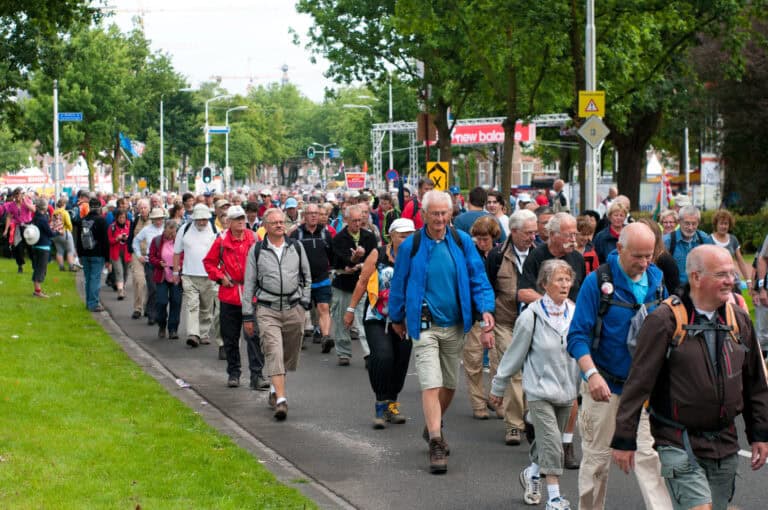
As crowds pour in for the Four Days Marches event and its street parties, the city is fighting back with more toilets and one very cheeky pee park. 👇
Welcome to the plaspark
On Saturday (July 12), Nijmegen unveiled its boldest (and weirdest) attraction yet: the plaspark.
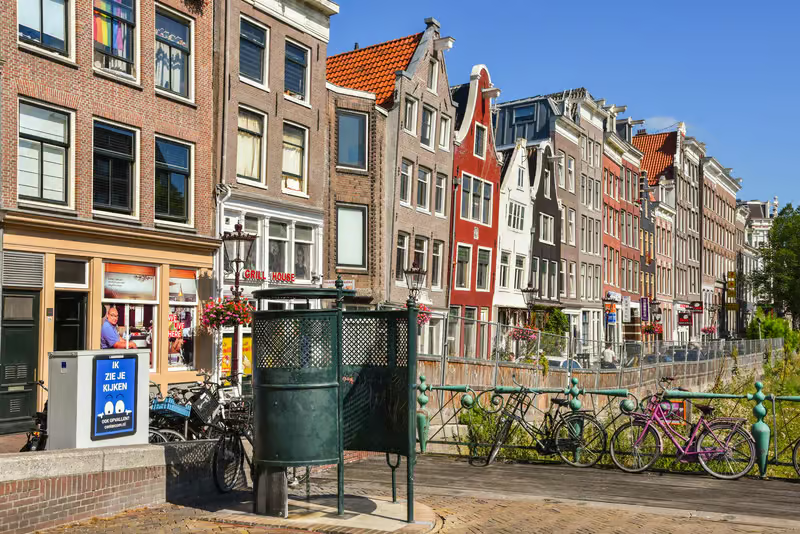
This 2.5 by 7-meter setup allows people to legally relieve themselves against replicas of classic urination targets, such as a tree, a fire hydrant, and even a front door.
Each is connected to a clever underground drainage system, keeping things surprisingly clean for a public bathroom installation.
Backed by the organisers of the Four Days Marches, the park aims to flush out one of the city’s most persistent party problems.
“With this, we draw attention to a real problem: over one in six inner-city residents experience nuisance from urinators in the street,” director Joris Bouwmeister tells de Volkskrant. “Our message is: if you really have to, or want to, do it here.”
A public toilet that both mocks and prevents wild peeing? That’s peak Dutch practicality.
A creative fix, but clearly made for men
Let’s be real. The plaspark and the 1,300 urinals now scattered across Nijmegen are effective… if you’re a man.
Like most public toilets, the plaspark is designed solely for men. 🙄 Image: Dreamstime
Even the director of the Four Days Marches knows this isn’t a perfect fix.
“It keeps mopping with the tap open. Literally and figuratively.” Joris Bouwmeister confesses, using a tongue-in-cheek Dutch idiom to highlight that he’s aware the plaspark is attempting to solve the issue of “wild peeing” without addressing the actual problem.
Despite significant upgrades, the city’s toilet landscape is far from equal. If you can pee standing up, Nijmegen has you sorted. If not, things get trickier. 👇
So, where’s the pee Disneyland for women?
To help with the demand, 250 extra portable toilets have been added “to accommodate women in particular”, but they aren’t women-only and still lack basic privacy and comfort.
More voices are calling for a truly inclusive solution, one that offers a clean, covered, and private space where women can go without queues, stares, or stress.
This isn’t a futuristic fantasy. It’s a basic need that still hasn’t been met.
Is Nijmegen on the right track, or should public toilet design stop catering to just one gender? Let’s flush out the conversation. 💬
Working in the Netherlands and want to know what your rights are? Then you’ve come to the right place! Here’s all you need to know about vacations, free time and working hours in the Netherlands.
This way you can know if you’ve been unpaid and underappreciated (tut, tut)!
Before we begin, I’ll briefly explain some important pointers to you, to get you started on your rights when working in the Netherlands.
If you’re working over here, then the law applies to you, even if another law is present in your employment. Always remember that folks!
Work contracts in the Netherlands
Firstly, when you start working in the Netherlands, you will be given a fixed-term contract. You may be used to being automatically permanently employed — but it doesn’t work like that in this country.
You will be given the contract and then your employer will choose whether to extend it when the time comes.
You can have no more than three fixed-term contracts, after this, you must either be let go or employed permanently.
It’s incredibly difficult to get rid of an employee if they are employed on a permanent contract, so they need to be sure that you’re going to be good to them.
It’s also important to note that if you have more than a six-month gap in your employment with the company, the contracts restart again (how annoying)!
Holiday and vacation days in the Netherlands
Everyone is in need of a vacation every now and then! Want to work out how much you’re entitled to? Well, the legal minimum is four times the weekly working days. So it all depends on working hours in the Netherlands.
A working day in the Netherlands is generally eight hours.
So if you work four full days a week, 4 x 4 = 16 days holiday.
However, there is a tendency for full-time workers to get 25 days holiday in the Netherlands (you’ve cashed in there!), alongside the usual Dutch national holidays.
Note: If you want to save your holidays, you have 6 months after the year in which it was accumulated. So, say you were working in 2026 and want to save them for next year — it must be used within 6 months.
However, it’s important to remember that you can’t just take all this holiday off in one go. You can usually take up to 3 weeks consecutively, and anything more than that, you must ask your employer.
Before you take off on that well-deserved vacation, remember these facts! Image: Freepik
What about if you’ve accumulated lots of holiday hours, yet you’re quitting your job? Then you should try to use up these hours before you officially quit your job.
If this is not possible, then speak to your employer, because they may be able to sort the hours being paid out to you on your final pay day. This is only possible if it exceeds 20 days, though — so bear that in mind!
Working hours in the Netherlands
What do working hours look like in the Netherlands? Let’s run through them.
Full-time
If you are a full-time worker, that means that you work between 36 – 40 hours per week (if you aren’t, then you’re working too much or not enough to call yourself a full-timer!).
The average full-time Dutch worker works 38 hours. This usually means that you will have a 30-minute break during your shift that is unpaid (with a shift of over 5.5 hours).
Part-time
If you work more than 12 hours, but less than the 36, then you are considered a part-time worker. This is extremely common in the Netherlands, especially with women, so don’t feel embarrassed to take the back seat and work a little less.
You can also be more flexible with your working hours — don’t forget to discuss this with your manager if you want to do this, as it may be possible.
How much can I work in the Netherlands?
In the Netherlands, it is illegal to work over 12 hours per shift and over 60 hours per week. This is only acceptable if it is for a short period of time or a one-off. If this is a regular thing, then it is not allowed.
Watch out for those burnouts! Image: Freepik
In a four-week period, you must not work anything over 55 hours per week, which lowers to 48 hours per week over a 16-week period.
It’s not very common to do lots of overtime in the Netherlands. Instead, part-time work is incredibly common here!
Like I said earlier, you are entitled to an unpaid break of 30 minutes if you work over 5.5 hours. This can also be broken up into two 15-minute breaks if wanted.
Maternity and paternity leave in the Netherlands
Before you even take leave, you need to tell your boss that you’re pregnant. This legally needs to be done 3 weeks before you are due to take maternity leave (and the belly may give it away, too).
This is why it’s usually done much earlier, once you are in your second trimester. You should not have your contract stopped just because you’re pregnant.
Take that time off as a new mom! Image: Pexels
If you are working in the Netherlands and become pregnant, then you should get at least 16 weeks of paid maternity leave.
This usually begins 4 weeks before the due date and then 10ish weeks after (depending on how much you have left).
For fathers, paternity leave is not as long. You get five weeks of leave however not all of this is paid!
You can take parental leave until your child reaches the age of 8, however, you can usually take longer unpaid leave if it discussed with the employer before though.
Sick leave in the Netherlands
No quite a vacation, but still important. If you fall ill and you’re meant to be at work, then you need to call your employer ASAP.
It’s important that you inform their HR department, so then they can arrange cover (if applicable) and you can claim sick leave.
If you are on vacation and fall sick, it is possible to swap this for sick leave, if you inform them beforehand.
Take care of yourself and get that rest! Image: Freepik
If a family member or close friend falls ill and they are within your care, then it is also possible to take short-term care leave.
This can only be possible if you can prove that you are the only person to provide the care to that person if they are out of hospital care. Of course, this must be done ASAP, so everything can be sorted.
You’re then entitled to take care leave time, which is twice your weekly working hours.
You’ll then get a 70% payment (some employers may be kind and give you your full wages). The long-term max is six times your weekly working hours and you may not be paid at all!
So, there you have it — just some important info on working hours in the Netherlands and taking a vacation.
How have you found working in the Netherlands? Tell us your thoughts in the comments below!
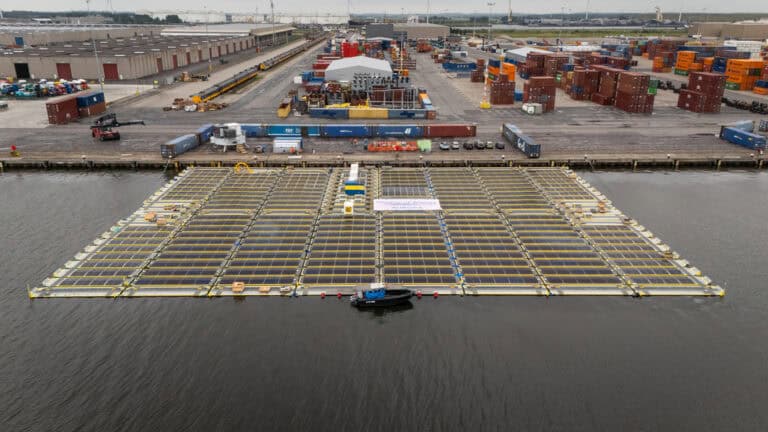
In an unprecedented global milestone that sounds like something straight out of a renewable energy sci-fi novel, a Dutch company has just released a massive floating solar farm into the ocean.
According to Oceans of Energy, the “Nymphaea Aurora” solar farm is the planet’s very first offshore solar farm designed to work hand-in-hand with an offshore wind farm. And yes, it’s as cool as it sounds.
This floating solar system will soon be installed at the Hollandse Kust Noord wind farm, about 18.5 kilometres off the Dutch coast.
To give you a sense of scale: it’s larger than a football field, so pretty hard to miss if you’re sailing by.
Floating power petals
The floating solar system isn’t just a pretty face with a poetic name. It was assembled in just three days at the Port of Amsterdam using prefabricated units, proving that large-scale clean energy projects don’t have to move at glacial speeds.
“The Oceans of Energy offshore solar farm floats in the sea at water level, like a waterlily, therefore, we have named it ‘Nymphaea Aurora,’” says Allard van Hoeken, Founder & CEO of Oceans of Energy.
Come mid-August, the solar park will take a scenic trip down the North Sea Canal, towed out to its offshore home.
Once anchored in place, it will undergo a full year of testing to see how it handles the famously feisty conditions of the North Sea. If all goes well, this floating sun farm could become a permanent feature, and perhaps just the first of many.
The solar farm is set to become fully operational in summer 2025, adding sunny power to the already buzzing 759 megawatt Hollandse Kust Noord wind farm, which has been churning out clean electricity since December 2023.
That wind farm alone already generates enough electricity to power over one million Dutch homes annually. Not too shabby!
Practically invisible, seriously clever
Bright reports that the solar park has also been smartly designed to stay practically invisible, both from the beach and the skies.
So, if you’re soaking up the sun near Egmond, don’t bother squinting; the panels are a full 18 kilometres offshore and well out of sight. And pilots? They’re flying far too high to notice any glare.
Are you excited about this new project? Let us know in the comments below!
Does the Dutch royal family pay taxes? What exactly is the financial status of the royal family in the Netherlands?
This is a good question, especially when keeping in mind that the Dutch are amongst the last remaining kingdoms in Europe. Sure, the chancellor of Germany or the French president do their taxes. (Hopefully.)
But how does it work with the royal family? Does Queen Máxima sit behind the computer every year around April to fill in her income tax returns? 🤔
Do the royals pay taxes in the Netherlands?
We’ll cut it short: no, the royal family of the Netherlands does not pay taxes.
Under the constitution, royal house members receiving a stipend are exempt from income tax over that stipend.
They are also exempt from all personal taxes over assets and possessions that they use or need in the execution of their functions for the kingdom.
On top of that, the monarch and the heir are also exempt from any tax that concerns inheritances received from members of the royal house. 👑
Phew, that’s a lot of tax exemption. Here’s a summary. 👇🏻
The Dutch royal family is exempt from taxes on:
income
inheritance
donations
a part of the capital money (used to carry out their functions for the Kingdom)
cars and motorcycles with an AA license plate
The Dutch royal family is taxed on:
private capital
VAT on groceries
dogs
Should the royals pay taxes in the Netherlands?
We think so. For one, the Dutch Royals are very expensive, according to research by the University of Ghent. As of 2023, the royal house of Oranje-Nassau cost Dutch taxpayers around €50 million per year, says The Guardian.
That makes them the most expensive royal family in Europe! Jesus, dial it down on those expenses, Willem-Alexander!
The King, the Queen and the oldest Princess also get constitutional benefits that increase annually at the same rate as the salaries of governmental officials. And they get compensation for paying their staff too!
We’re sure there is plenty left to pay for taxes that benefit everyone. 😊
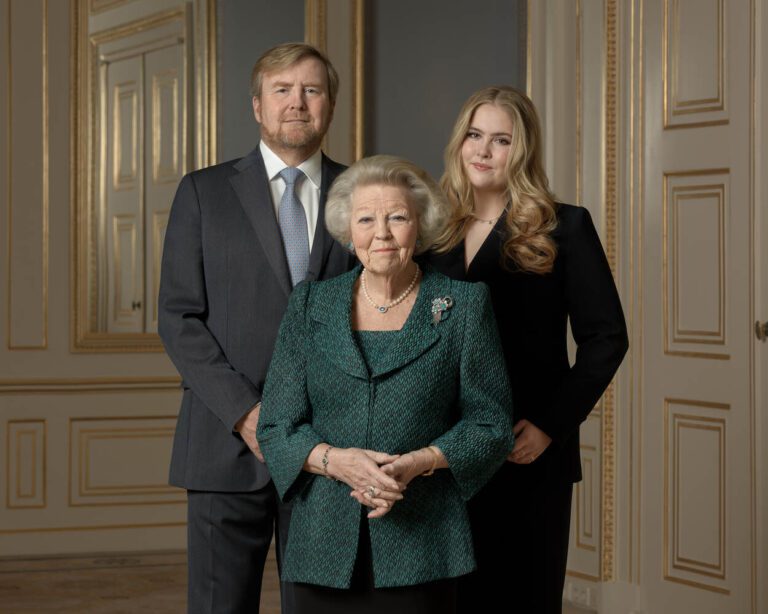
The King and Queen and their three daughters. Image: Koninklijkhuis
When asked — Do you agree with the statement: “the king, queen and princess Beatrix should pay taxes over their income and wealth, like all Dutch?” — 65% of Dutchies said ja in this 2019 survey by Statistica.
Why don’t the royals pay taxes in the Netherlands?
There are rumours that since the establishment of a new financial system managing the Royals’ expenses in the early 70s, a deal was made with the Dutch cabinet to guarantee that the ‘losses’ of replacing the old system would be compensated.
If this is true, this agreement would still be ongoing.
A couple of years ago, a report detailing this theory stirred up quite some controversy. There was even a committee put in place to clarify the matter. However, in the end, a conclusion was reached that no such deal was ever made. 🤷♀️
Is this the end of it?
Of course not. Instead, this has sparked several discussions about whether the Royals should pay taxes like everyone else.
A motion was passed by the previous cabinet at the start of 2024 proposing that members of the Royal Family should pay income tax. However, that government soon fell, and when Dick Schoof became Prime Minister, he decided not to pursue this change.
As a result, the discussion was effectively put on hold.
Do you think the royals should pay taxes? Let us know in the comments!
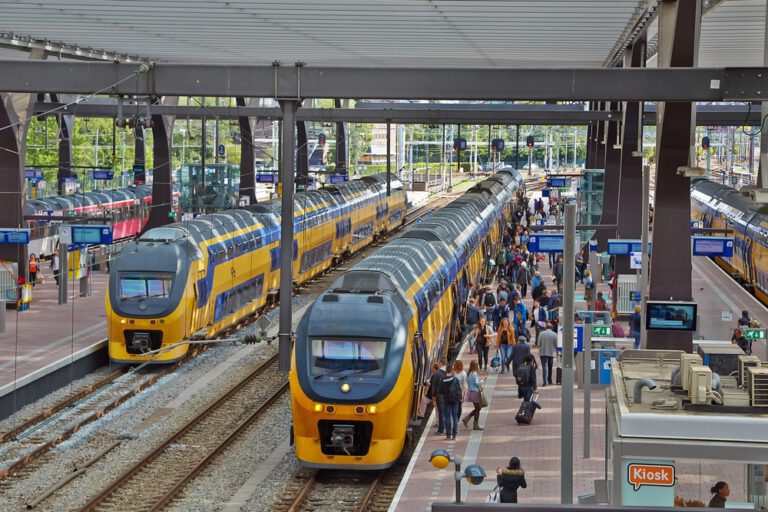
If you were planning on travelling south from Rotterdam today, you’re going to have to wait until tomorrow.
Update: Services have resumed sooner than expected, with Nu.nl reporting that train services through the tunnel have resumed.
Due to a malfunction that occurred on Friday evening, trains are still unable to travel through the Willemsspoortunnel.
As a result of the outage, trains were unable to travel between Rotterdam Centraal and Rotterdam Zuid for the entire weekend.
This morning, power was restored to the tunnel, and according to Rijnmond, trains ran briefly. However, ProRail is still testing the safety systems, and traffic has come to a standstill once again.
According to Nu.nl, the NS expects that trains won’t be running again until 2 AM on Tuesday.
And what does this mean for today? A lot of train chaos for commuters.
What routes are affected?
As a result, there will be no trains running between Rotterdam Centraal and Breda and Rotterdam Centraal and Dordrecht today, Monday, July 14.
If you are meant to travel from Rotterdam Centraal to Dordrecht, you can instead take a bus to Rotterdam Zuid, where trains are still running to Dordrecht.
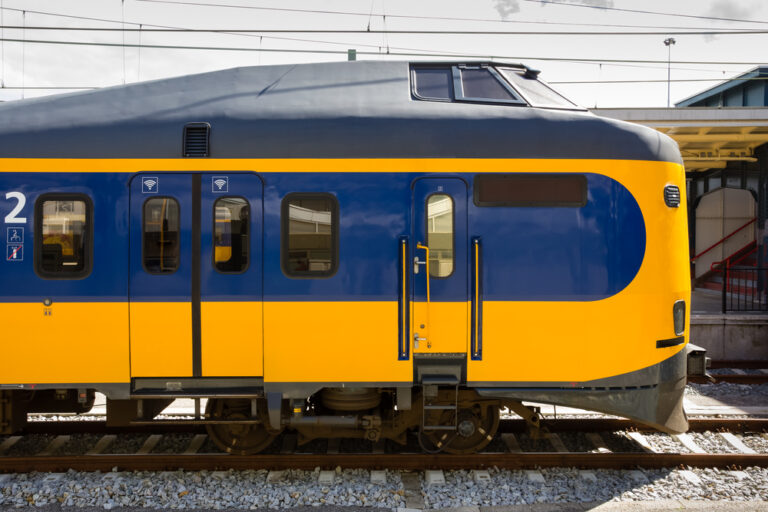
In an unexpected twist for trainspotters and defence buffs alike, the Dutch Ministry of Defence is in talks with the NS to buy 24 old train carriages. Not to restore them to glory, but to turn them into mobile emergency hospitals.
Instead of getting shipped off abroad like many decommissioned train carriages do, these trains could soon be rolling through the Netherlands as life-saving units on wheels.
According to the AD, the plan is to convert them by 2026, and if all goes well, that number might climb past 24.
NS confirmed the negotiations to the AD, but cautioned that it’s all still in the “exploratory phase.” A spokesperson tells the paper: “The Ministry of Defence has contacted us, and we’re looking at ways to help them. We’re always up for that.”
Why the push for a Defence-on-Rails project?
It’s all part of a broader initiative to get the Netherlands battle-ready, sparked by what the Ministry calls “the current threat in the world.”
Think: large-scale military logistics, but make it modern, mobile, and multi-modal.
And the trains are just one track on this military supply line. The Ministry has also struck a deal with KLM to provide reservists who can fly fighter jets (talk about frequent flyer miles).
Up next? Partnering with dozens of logistics companies to transport tanks, ammo, and other essentials eastward.
This is all part of what is now being called the “Logistics Ecosystem” — Defence’s ambitious plan to create a next-level network of transport, storage, and support services.
With over 40 categories ranging from warehouse space to fuel supply, the goal is to lock in at least two companies per category.
So, if you see a train trundling by in 2026, don’t be surprised if it’s not carrying commuters, but medics, stretchers, and a whole lot of first aid kits.
Dig what you’re reading? Get more of it! Join our WhatsApp channel or Instagram broadcast to get the latest news straight to your pocket. ⚡️
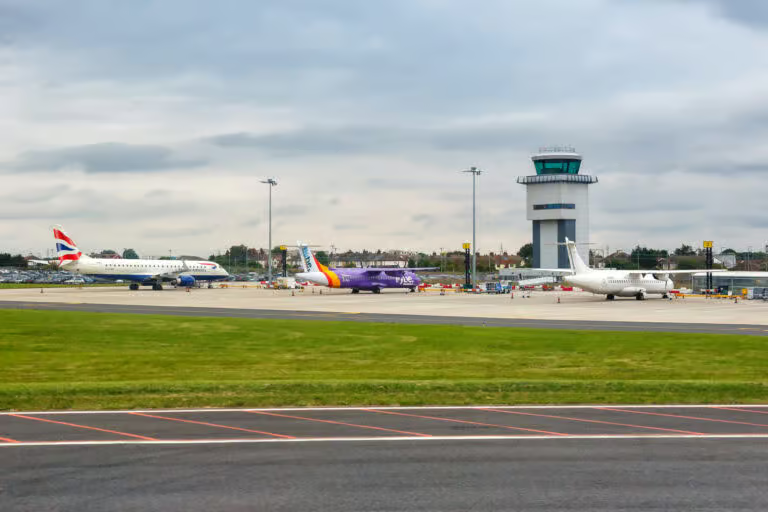
A Dutch-operated private plane crashed at London Southend Airport shortly after taking off. It is unclear who was onboard the aircraft bound for Lelystad.
According to witnesses and photos circulating the internet, the aircraft crashed just seconds after takeoff at 4 PM yesterday, erupting into flames upon impact.
The Guardian reports that it was leaning slightly to the left after takeoff.
— UK News in Pictures(@UKNIP247) (@uknip247) July 13, 2025
Who was onboard is still unknown
The aircraft was reportedly operated by Dutch company Zeusch Aviation and was equipped with medical equipment to transport patients. However, who was onboard and whether there were any survivors is still not known.
Essex police have yet to announce anything regarding those onboard, giving the latest update yesterday at 8:45 PM:
“We have put a wide cordon in place to ensure all our emergency service colleagues can carry out their work safely, and we will be doing so overnight and into tomorrow morning.”
Do you have information that could help police? International callers can contact Essex police at 0207 1580126.