It’s official! The Dutch government has announced a new train linefor December 2023 that will allow you to travel directly between the Netherlands, Belgium, and Germany — without needing to transfer between stations.
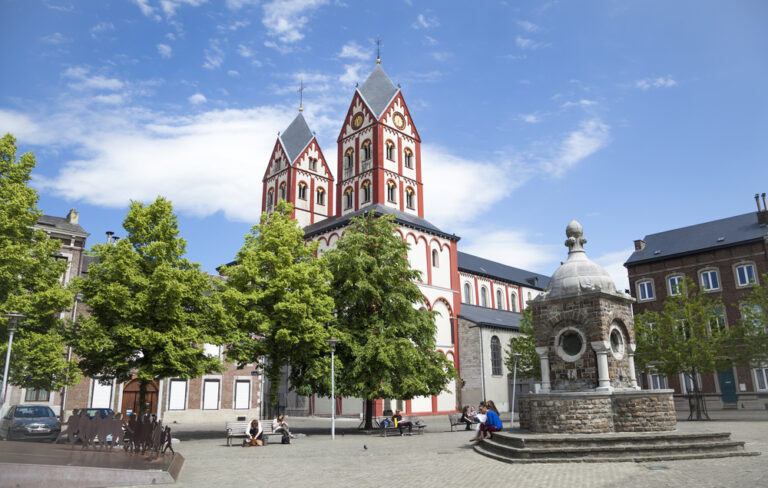
The new Three-Country Train network will connect the cities of Liège (Belgium), Maastricht (the Netherlands), and Aachen (Germany) for simpler travel.
Travellers rejoice! Direct connections between these cities will shorten journey times and lessen stress for those travelling by train for work, school, or even a cheeky holiday.
What does this mean? Instead of worrying about train switches during your journey, you can read your book worry-free and stay inside the gezellige train.
No more waiting around
Another plus is that the trains will be running every hour between the three cities. This means no more waiting for hours if you miss the first train.
The new line will also create quicker journeys to other neighbouring (and fancy) destinations such as Berlin, London, and Paris. 🤩
The Three-Country Train should contribute to making train travel in Europe a more attractive and sustainable alternative to air travel.
The "three-state train" linking Liège, Maastricht and Aachen will finally stop in Belgium. Starting in December, a direct line will connect Maastricht and Aachen with the Walloon city https://t.co/bHP3Bq0shk#Railways#EUGreenDeal#ClimateActionNow
— Alexander von Witzleben (@AlexWitzleben) March 14, 2023
The green light has been given
The three transport agencies involved, NMBS (Nationale Maatschappij der Belgische Spoorwegen), our beloved NS (Nederlandse Spoorwegen), and Arriva, have given the green light for this network to be established.
The Belgian Minister of Mobility, Georges Gilkinet, praises the project saying that “Travellers now get more destinations, more comfort, and fully accessible trains — across national borders.”
While the practical details, such as the prices, are yet to be finalised, we can look forward to comfortable and quick connections later this year!
Where are you most excited to travel to and take advantage of the new line? Tell us in the comments below!
Remember the sexual misconduct accusations that were made against key employees of The Voice of Holland? Well, the OM (Dutch Prosecution Service) has decided to prosecute two out of the four accused men: Rapper Ali B. and bandleader Jeroen Rietbergen.
The OM started investigations into the cases at the end of April 2022, after the Dutch YouTube show BOOS uncovered that dozens of women were subject to sexual assault by employees of the show.
Allegations ranged from unwanted texts to groping, touching, and rape. Four men were put into the firing line: Ex-judges Ali B. and Marco Borasto, bandleader Jeroen Rietbergen and director Martijn N.
Ali B. to be prosecuted
Three rape reports and one claim of sexual assault were filed against Ali B, who was formerly one of the Netherlands’ most popular rappers.
After one rape allegation against him has been dropped, he is now being sued for the three other instances.
In response to the news, Ali B. made an Instagram post in which he expressed his shock, as Het Parool reports. He claims that no prosecutable acts had ever been committed.
According to the rapper, mediation talks with those that filed reports against him are currently ongoing, and “it is incomprehensible that the OM did not choose to wait for the results.”
Jeroen Rietbergen “worked on himself”
Bandleader Jeroen Rietbergen was the only one out of the four suspects to admit that he had crossed a line, but he also denied having committed any criminal offence.
Equally shocked by the news about his prosecution, Rietbergen claims that he has dealt with “all the consequences and worked hard on himself over the past year.”
What about the other two men?
Besides Ali B and Jeroen Rietbergen, two more men had come under scrutiny: Martijn N. and Marco Borsato. So, what happened to them?
Nothing, pretty much. All The Voice-related charges against both men will not be further prosecuted due to a lack of evidence.
Borsato, however, currently has another case pending against him, involving reports of sexual assault of a 22-year-old woman. Decisions in this matter are yet to be made.
Today, March 15, the Netherlands is holding elections for the 12 provincial councils (Provinciale Staten) and 21 water boards (Waterschappen). Time to head to the polls!
Polls will be open from 7:30 AM to 9 PM all day across the country.
What are people voting for?
By voting, you can help determine who gets to decide on the plans for the province and water authority over the next four years. Not sure what they entail? Let’s break it down.
The provincial elections
There are 12 provinces in the Netherlands, which means residents of each province will be voting with different candidate lists and the main issue focuses.
The Provincial Councils play a key role in governing each province, managing aspects such as traffic, housing, and nature.
The provincial councils are then also responsible for (staged) electing the 75 members of the Dutch senate, the so-called Eerste Kamer.
Although not as politically orientated as its American counterpart, it’s supposed to mostly look at the technical and legal aspects of new legislation.
The water board elections
You might think to overlook the water elections, but the Netherlands take their water management very seriously.
There are 21 water boards in the Netherlands. They are responsible for managing how water is used around the country — managing the country’s polders, dykes, and ensuring that water remains purified.
How and where can I vote on March 15?
First, it’s important to see if you are eligible to vote. For the provincial elections, you can vote if:
You hold Dutch citizenship
You are at least 18 years old
You live in the province where the election is
For the water authority elections, you must:
Be at least 18 years of age
Be a resident of an area covered by the water authority
Hold Dutch citizenship or citizenship of another EU member state
Next, you should have received your stempas (voting paper). To vote, take your stempas, and a legitimate form of ID (passport, ID card, driving license.)
Red pens will be provided for you to fill in the ballot at the polling station. You can vote today from 7:30 AM to 9 PM at the nearest polling stations, which you can find online.
Who should I vote for?
If you’re unsure of who to vote for on March 15, no stress, as there are many things you can do to help you make a decision.
For starters, you can check the website of your municipality and water board and see who’s running in your area (six of the 21 Dutch water boards have information on their websites in English).
Other alternative platforms, such as Kieskompas, have quizzes which are tailored to your area and can help you figure out how your beliefs align with the parties.
When will we know the results?
While nothing is certain yet, results will start to trickle in in the following hours after 9 PM. The first provisional result will be around midnight.
According to RTL Nieuws, so far, the battle for first place seems to be between the VVD, the combined list of left-wing parties GroenLinks and PvdA, and the BoerBurgerBeweging (BBB).
Who are you voting for today? Tell us in the comments below!
In their report, “The State of Climate 2022,” the KNMI (Dutch Royal Weather Institute) has given an overview of, you guessed it, the Dutch weather in times of climate change.
The most important conclusions have been summarised by RTL Nieuws. And let us tell you: It’s not looking too good.
It’s gettin’ hot in here
Many people have noticed that the land of clogs seems to be getting hotter each year. And yup, there is truth to this assumption.
In 2022, the lovely flat country was no stranger to high temperatures and broke record after record.
Overall, according to the experts from the KNMI, the Netherlands has warmed up by 2.3 degrees Celsius over the past 120 years — and the Earth’s surface as a whole, by 1.2. 📈
“What was considered an exceptionally hot year in the Netherlands 100 years ago would be exceptionally cold today,” Bart Verheggen tells RTL Nieuws.
2022 was DRY
The high temperatures of 2022, in combination with little amounts of rain, had rivers run dry all over Europe. The land of dikes and canals suffered its very own drought, which even caused there to be a nationwide water shortage.
This #Summer has not been forgiving to #Europe and their series of bad decisions this year.
This is a trend that, as Bart Verheggen tells RTL Nieuws, is expected to continue over the years due to climate change.
With about two-thirds of the Dutch population living below sea level, this can quickly become a problem in the Netherlands — where low rivers can interfere with water traffic and lay low houseboats. ⛴️
Rising sea levels
Though it’s been a dry year, climate change has global sea levels rising at record speed.
Up until recently, the Dutch coast seemed to be dodging that bullet, but the KNMI’s new research has proven that acutely rising sea levels are affecting the Netherlands more and more.
The masters of water bending will need to revise their Delta Plan to take preventive measures that focus on the places where most people are at risk — such as the Randstad.
More sun?
Though it may not have seemed that way, 2022 was the sunniest year since the start of records in 1965. ☀️
And no, this is not due to the sun shining stronger (because that’s not possible 😉), but because there was less cloud coverage.
What adds to the increase of the so-called “solar radiation” is the fact that the air has become cleaner overall. Harmful matter in the air used to not only add to cloud formation but also reflect the sun.
But over the past years, more and more of this matter has been phased out of the air.
What do you think about the results of the KNMI’s climate investigation? Tell us in the comments!
Kaas lovers, it’s time to stock up! To meet the cabinet’s climate goals, the Dutch government will have to introduce some “far reaching policies” — which will affect the cost of our beloved Dutch cheese.
To reduce CO2 emissions by 60% by 2030, Minister of Climate and Energy Rob Jetten has ordered a committee to draw up a plan. As NU.nl writes, they have have come up with a set of measures.
Helemaal not on track to reach climate goals
As calculations from the Dutch Environmental Assessment Agency (PBL) have shown, the Dutch government is not on track to meet its climate goals for 2030. AT. ALL.
Based on current policies, rather than the 60% that they are aimed for, the Netherlands’ emission reduction would only reach around 41%-52% by 2030. Oeps! 👀
Proposed measures
The solution? New policies! (And some of them are quite harsh.)
Here are some of the most important ones:
Limiting the number of cows that can be kept per hectare, which should result in 30% fewer dairy cattle by 2023. 🐄
The introduction of a tax on meat and dairy products, and a requirement for supermarket and fast food chains to offer plant-based alternatives.
A significantly higher tax on natural gas, accompanied by a lower tax on electricity. This is meant to stimulate the switch to electric heat pumps.
A ban on fuel-driven cars for business use by 2025. 🚗💨
An overall increase of the use of biofuels in road traffic.
A much higher CO2 tax for industry, which far exceeds the current EU CO2 price.
A higher tax on flights that exceed a distance of 2,500 kilometres.
The government’s ambitious strategies will not just lead to a reduction in CO2 emissions. These will also result in billions of additional costs for the energy system and an additional €3.5 billion in tax revenues — all to be used to tackle the climate goals.
But the worst part? Even if these measures are implemented, it’s not certain that that the target of a 60% CO2 reduction will be met by 2030. 😬
Climate neutral by 2050
The ultimate goal for the Netherlands is to be climate neutral by 2050. 🌱
This means that all the sectors affected by the proposed measures will have to work even harder in the years after 2030 — especially if goals aren’t met.
So really, any delay now simply means a steeper reduction path for later, the committee writes.
Measures will affect everyone’s lives
Minister Jetten wants to use the advice given by the committee in his report for the so-called “spring memorandum,” where the State’s finances are discussed. 💰
While he cannot anticipate the decisions that the government will make, Jetten recognises that the measures will affect citizens’ lives.
To ensure that everyone can help in reaching the climate goals, he hopes that government grants can help households and small businesses in the transition.
What do you think about these proposed climate measures? Tell us in the comments!
Sometimes trains get cancelled due to delays or staff shortages… and sometimes they get cancelled because of badgers. 🦡
Yes, you read that right. 😳
Currently, no trains will be running between Workum and Stavoren this week, because badgers have decided to make dozens of underground caves near the village of Molkwerum.
According to the NOS, these caves can collapse under the pressure of a passing train, making them a safety concern.
Hard to move them
The badgers have made their home at the station of Koudum-Molkwerum for years, and the track had previously to be repaired whilst trains drove at an adjusted speed.
ProRail’s rail manager is well aware of the problem and has had plans to relocate the badgers, but the badgers are a little too cosy in their current home to move.
In fact, since they are a protected species, they can’t be chased out of their burrows without authorities granting permission.
No solution just yet
According to a ProRail spokesperson, “they are in their breeding season and are therefore often in their burrow.” Although it’s currently unclear how to solve the problem, the rail company will be talking to various authorities to find a solution.
It is also unknown how long the blockage will last, but ProRail advises travellers to keep an eye on their travel planner. 👀
What do you think about these badgers blocking trains from running? Tell us in the comments below!
Throw all your self-tests in the bin, as the Dutch Cabinet has agreed to get rid of the latest COVID-19 measures. 😷
The Cabinet has decided that self-tests are no longer required and you no longer need to stay at home if you have any symptoms, reports the NOS.
Why did they come to this decision?
Last month, the Outbreak Management Team (OMT) advised that the measures be scraped.
As the consequences are much less serious than they were at the beginning of the pandemic, the Cabinet concluded that the measures were just not necessary anymore.
“You can now indeed call it a kind of flu,” Minister Kuipers told the NOS.
Corona will now be treated like other respiratory infections since everyone in the Netherlands has built up a response to it. Hoera!
A public health service announcement
The public health department (GGD) testing facilities will close down once and for all.
From March 17, people who need a test or proof of recovery to travel abroad to countries that require one will have to go to private testing facilities in order to do so.
This move, however, did garner some backlash from those not in favour of the Cabinet’s decision.
Come over to the Netherlands. We have Corona parties 🎉for free. No testing, tracing or isolation. Bring al the Corona together. It will be fun. We don’t obey WHO or any other foreigner scientist. We do as we please! As a treat you get LongCovid. We are a cool country.
Their only advice is to continue practising general hygiene such as washing your hands and coughing or sneezing into your elbows. (A little bit of common sense will go a long way! 😉)
For those in the care sector
Employees at nursing homes will still be allowed to work if they present covid complaints.
However, the institution should continue to take precautions like, for example, wearing protective clothing if they have symptoms since there are many vulnerable people in nursing homes.
What are your thoughts on the Cabinet’s decision? Tell us in the comments below!
Is it spring yet? Unfortunately not, say experts, who predict stormy weather instead. ☔️
While temperatures will hit a balmy 17 degrees Celsius in the southeast of the country this Saturday — don’t let the weather fool you, as we’re predicted to be hit by strong winds and rain.
A code yellow warning was issued today
The Royal Netherlands Meteorological Institute (KNMI) has issued a code yellow for northern provinces, such as Friesland and Groningen.
Strong gusts of wind in the west and north of the Netherlands are to be expected this morning and afternoon.
Although the afternoon will see the occasional hint of sunshine peeking through the clouds, meteorologist Raymond Klaassen tells AD.nl that “it won’t be pleasant.”
“There is a strong, sometimes even stormy wind with up to 95 kilometres per hour in the coastal areas.”
Er staat vandaag behoorlijk wat wind! Daarbij is in de kustregio’s kans op zware windstoten tot 100 km/uur. Daarbij is het erg zacht. Check de actuele weerkaarten: https://t.co/Z4eomnq5Hm
Translation: There is quite a bit of wind today! There is also a chance of heavy gusts of wind up to 100 km/h in the coastal regions. In addition, it is very soft.
Unpredictable weather awaits
Despite the unseasonably warm temperatures for Friday and Saturday, some rather unpredictable weather shifts are set to make an appearance over the rest of the week.
Tuesday in particular will be cloudy and rainy, with the chance of even some wet snow and hail from west to east across the country — echt niet fijn.
With changeable weather ahead, you may not want to start packing your winter wardrobe away any time soon, as experts say it’s still too early to announce spring.
What do you think about this weather in March? Tell us in the comments below!
Two DutchReviewers and expats (Emma Brown and Veronika Licheva) decided to battle it out, which was the best Dutch city for expats. Who did you think will win? 😉
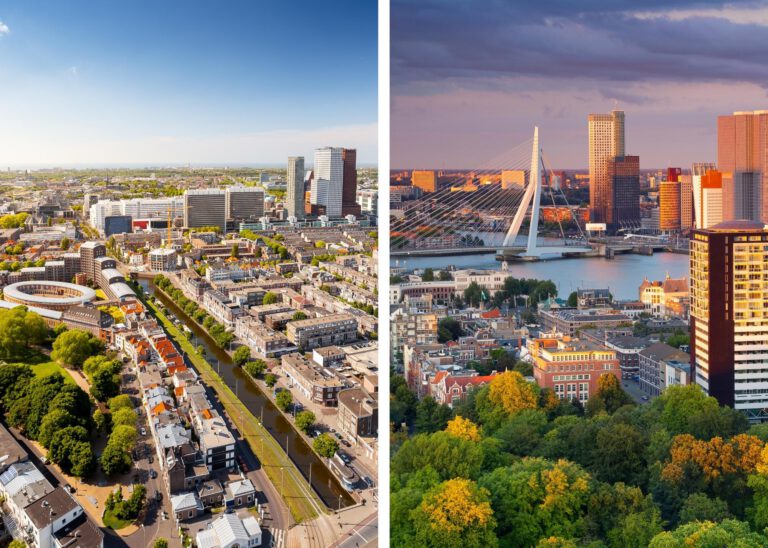
Why The Hague is better than Rotterdam
Other than the fact that The Hague is a beautiful and picturesque city, here are some more reasons why it is one of the best Dutch cities for expats.
The beach
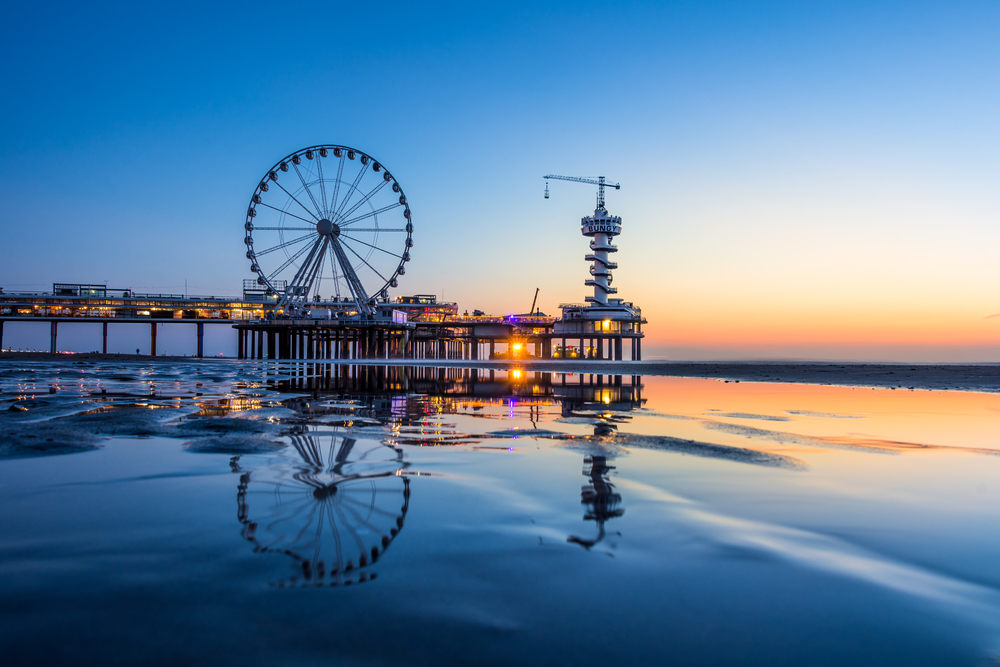
One of the best things about living in The Hague is how close to Scheveningen beach is.
In the summer you can go every evening to the beach if you wanted to. Not to mention all the exquisite fish restaurants and bars that give you the perfect summer vibe.
Who wouldn’t want to go to a beach that looks like this in the evening? Image: Depositphotos
It really feels like you are at a resort! So if you’re skipping out on an exotic vacation this summer, but still want to feel like you’re getting the most out of those hot months, just head on to Scheveningen.
The beach really makes The Hague one of the best places to live in the Netherlands.
The city centre
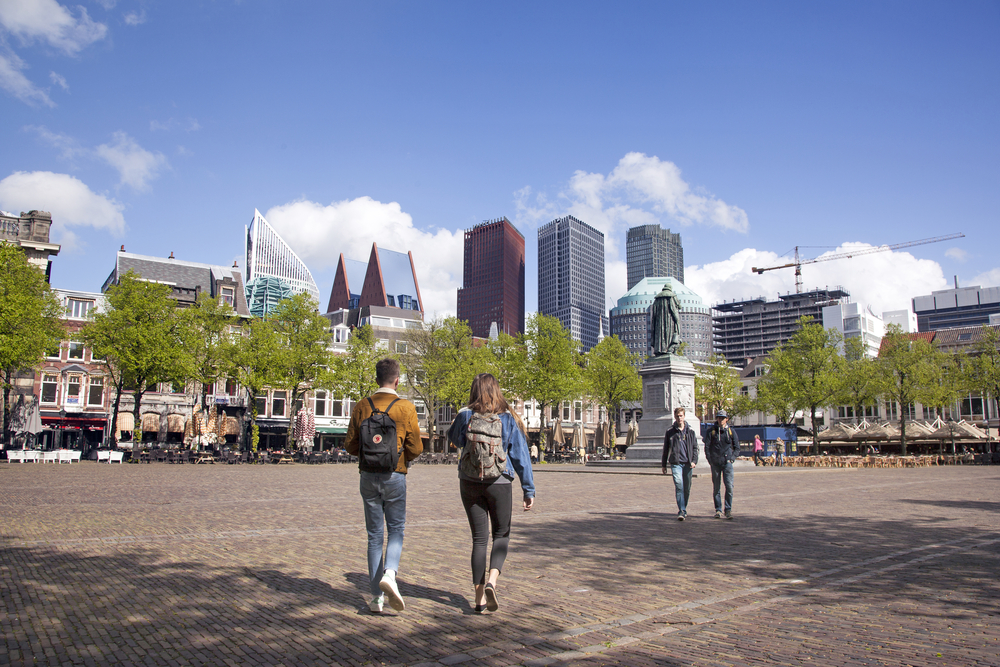
The city centre in The Hague also has a lot to offer. It has a big shopping street, where you can shop — from major global clothing brands to small local boutiques.
Various restaurants offer food from all over the world, including countries like Mexico, Japan, Argentina, Italy, Korea, Cuba, China, and many more.
There are a number of bars that are always full of people enjoying their free time after work. Not to mention the multiple movie theatres, tattoo shops, food markets, museums and historical monuments that are situated right in the centre of The Hague.
The Hague: beautiful, friendly, lovely places to relax including the beach, awesome hash at good prices, public transport paradise, good local entertainment and only a train ride away from Amsterdam/Rotterdam/Utrecht, have local friends, and love Dutch houses/neighborhoods.
Even though The Hague is one of the biggest cities in the Netherlands, it’s not as overcrowded as Amsterdam.
You can actually walk down the streets freely, without bumping into people or getting hit by a bicycle. Another big plus to The Hague is that everything is a tram ride away.
Commuting within The Hague is very easy, and the distances aren’t that big. So even though you live in a big city, you do not feel the burden as much.
In fact, there are some neighbourhoods that can also give you that sweet, small-town vibe. There are also many parks in The Hague that are so serene and peaceful that if you do get stressed, you can also go there to get some quiet and fresh air.
There are so many things to do, without those hectic city vibes! Image: Depositphotos
Speaking English is totally fine
Unlike some Dutch cities where speaking English is not always acceptable, The Hague doesn’t seem to have a big problem with that.
You can easily shop, order food, and get around the city without knowing that much Dutch.
People in The Hague seem to be very accepting of foreigners, so you rarely get an attitude for speaking English.
It may not be as easy to find a job in The Hague if you only speak English, but the possibility is still higher than in other cities like Utrecht.
You can impress your friends from back home
Telling your friends back home that you live in The Hague just sounds pretty cool. All of them get pretty impressed!
“Isn’t that where the International Court of Justice is?” “I have studied about The Hague!” “Oh my God, The Hague is very popular, isn’t it?” Yes, yes, and yes!
Everyone knows what The Hague is about. Just saying you live there almost makes you feel like a stuck-up intellectual…almost.
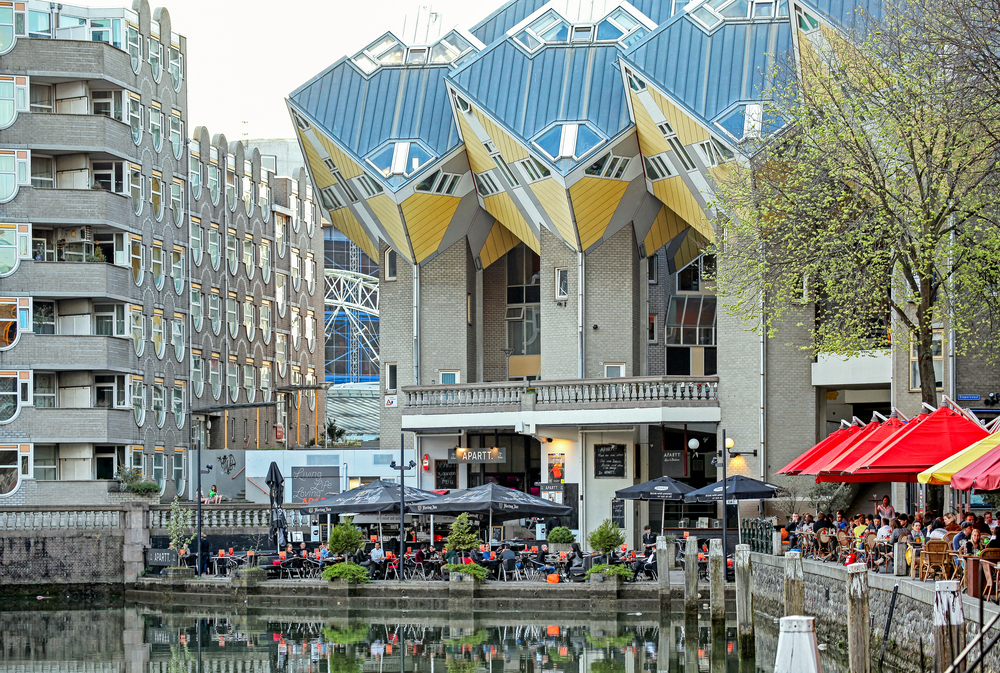
Okay, despite me saying that Rotterdam has a lot more to offer than just architecture, I’m going to start with just that. Basically, if you go to Rotterdam Central and walk in basically any direction, you’ll find some cool asf buildings.
I mean, I’ve never been a massive building lover myself, but this city definitely converted me to falling in love with them (but not quite as much as those people who marry buildings and bridges, like wtf).
Rooftop bars
Look at the beautiful architecture around you, it just can’t compare with other Dutch cities! Image: Depositphotos
Rotterdam has some of the best rooftop bars around! And it’s no surprise when you consider the amazing view that you can get from a lot of them (being the Dutch sky-scraper city and all).
Rooftop bars such as Suicide Club, Stroom and the Euromast, not to mention Rotterdam Rooftop Days, means that you have no shortage of a drink with a view.
Why would this appeal to expats? Well, most people in general like a bit of a wine and dine every now and then, not to mention that it makes friends visiting seem even more ace.
Plus, if bar work is your thing, then there is no shortage of cool places to work your magic.
Young-at-heart vibe
As Rotterdam is one of the most modern cities in the Netherlands, it naturally has a young-at-heart feel to it.
When Rotterdam was destroyed in the war, Rotterdam was essentially a blank canvas to make something amazing. And that it is.
Offering something for anyone, no matter what your age is, Rotterdam is a great place for expats to lay down their roots. Although naturally, the younger generations (me included) may be more inclined to pick Rotterdam, it’s still as diverse as ever.
If you’re specifically into business, innovation or finance, then you’re laughing. But no, it’s still not easy for everyone, but it’s still a great place to try your luck in the job market by how much Rotterdam is continuously thriving!
Everyone speaks English
Rotterdam is also a place that sports amazing English skills. When I first arrived in Rotterdam, I found it easy to get around (because not only is transportation brilliant, hello underground metro), but things are usually translated into English.
A lot of buses, metros and trams also offer information in English. Everyone seems to be able to speak amazing English, which is helped by how diverse the city is, so you can meet internationals from anywhere (who nearly always speak English and aren’t afraid to show it off).
So if you’re struggling in the early years, then there is no need to worry!
What do you think is the best Dutch city for expats? Tell us in the comments below!
Editor’s Note: This article was originally published in July 2018, and was fully updated in March 2023 for your reading pleasure. Feature Image: DutchReview/Canva
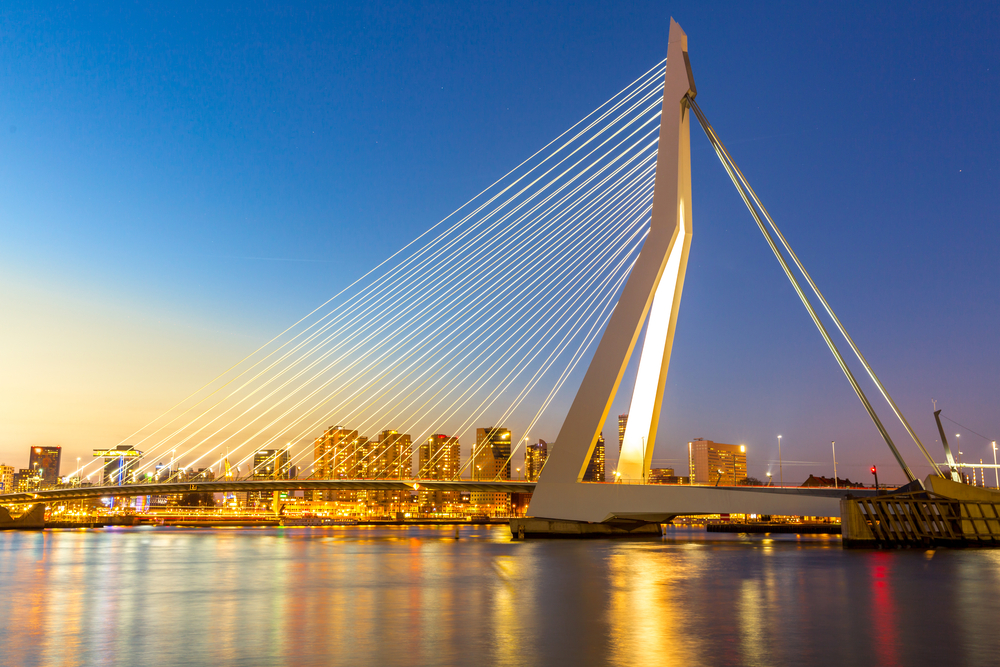
Rotterdam is a city famous for its stunning architecture and modernity. With June on the horizon, this means that Rotterdam Architecture Month ’23 is also coming up! And what is it bringing? A floating. Festival.
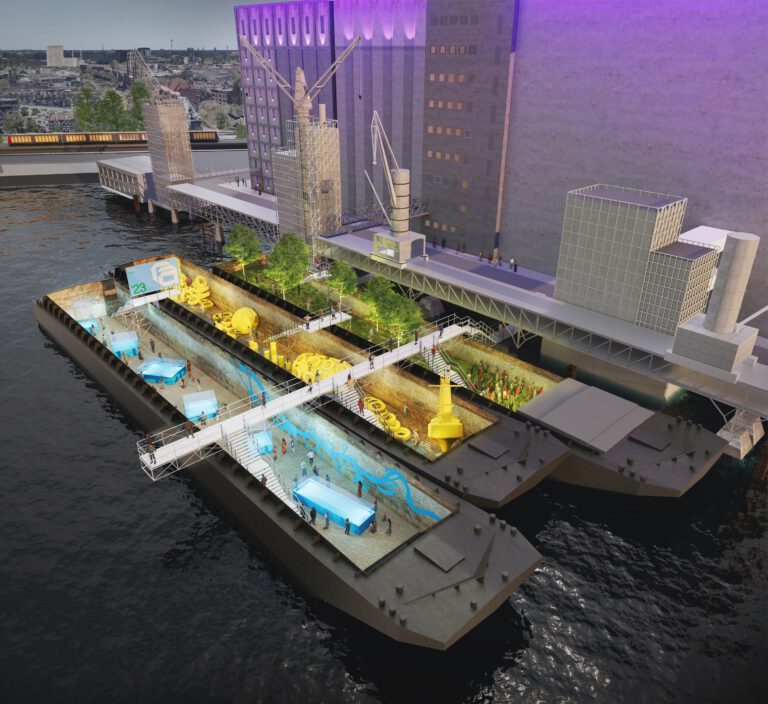
Yep, you read that right. This year it’s returning in style with a floating festival heart in the Maashaven, a concept by Rotterdam-based architecture office, Studio Marco Vermeulen.
Rotterdam Architecture Month: celebrating the strength and quality of architecture
Rotterdam Architecture Month is the Netherlands’ largest architecture festival about the future of the city. Every June, the event chooses a new site for the heart of the festival.
Last year, the theme for the event was “Vista Rotterdam,” where MVRDV (an architecture and urban design practice in Rotterdam) crafted a neon-pink staircase and viewing platform on Het Nieuwe Instituut, known as The Podium.
This year, the theme is “Liquid City,” with the idea that the floating festival will tackle complex challenges related to water and climate in concrete urban solutions.
The anticipated event
So, what will the event offer exactly? There will be a bunch of activities organised, spread over three barges.
On one barge, visitors will be able to attend talks, debates, and films — a true event venue. On another, visitors will be able to enjoy the green surroundings of a temporary park. 🌱
More into physical activity? Another barge will have urban sports, such as freerunning and callisthenics.
With the barges linked to a footbridge, visitors will get the most Instagrammable spot to enjoy an unmissable view over the Maashaven and the rest of the city.
If you want to join but know nothing about architecture, no stress! The event is open to everyone, regardless of their architectural knowledge or experience.
Oh, and the cherry on top? Admission to the festival is free! 🥳
Will you be attending the floating festival heart? Tell us in the comments below!