It’s official: right after COVID-19 has taken a backseat, the Netherlands has now been blessed with a flu epidemic (a-choo!) 🤧
Over the past few weeks, the number of people with the influenza virus has gone up drastically, RTL Nieuws reports.
Just like earlier this year, the RIVM (National Institute for Public Health and the Environment) has now officially declared its spread an epidemic. 🦠
What does that mean?
For there to be a flu epidemic in the Netherlands, 58 out of 100,000 people must report flu-like symptoms for two weeks in a row, with at least 10% of them actually having the flu virus.
After the pandemic, many people choose to do a rapid test when they start having complaints since many flu symptoms overlap with those of COVID-19. This makes it difficult to determine the number of people infected.
As of right now, the limit of 58 people has not yet been reached — but there has been a sharp increase in the number of people with flu-like complaints.
How can you protect yourself?
As a preventative measure, the RIVM recommends an annual flu shot. 💉
Besides that, basic hygienic measures should be taken, such as washing your hands, sneezing and coughing in your elbow, and … social distancing (anyone else getting flashbacks to a darker time?) 😳
In the last days before Christmas, you won’t need to worry about slippery roads while doing your last-minute shopping.
On Thursday early morning, the temperature will be around 8 and 13 degrees Celsius, so you probably won’t need your warm winter coat to survive. However, you might want to bring a raincoat or an umbrella just in case, NU.nl reports.
Gentle and mild
Even if most of us have already gotten used to having no white Christmas in the Netherlands, this temperature is surprisingly warm.
The good news is that later this morning, the rainy weather will slowly move to the east part of the Netherlands (sorry, Easterners 👀). You may even catch some sunlight in the northern and western parts of the country.
No hope for the next few days
In the afternoon, however, all of our hopes for a non-rainy Christmas will be gone, and only the northern part of the Netherlands will remain dry.
More than 70 millimetres of rain is expected in the Netherlands before Christmas, but the day’s temperature will stay around 13 degrees. The night temperature will also be soft, around 7 and 10 degrees.
Winter after Christmas
When all the Christmas spirit is gone, we will receive some winter weather. Around December 27 and 28, the air will cool down, and the temperature will be around 6 and 8 degrees Celsius. We can also enjoy some fog between the holidays if that’s your cup of tea.
On June 21, 2018, we landed in a very cold and wet Schiphol. That, however, did not put a restraint on the excitement of going back to the Netherlands. The weather was on our side and improved a few days later.
For my friends, this was a first-time visit to the Netherlands — but for me, this was a revisiting after 24 years.
Let me explain why, within a few hours of being back in the country, I realised that I had made a monumental mistake of leaving in the first place.
1. Dutch food is unbeatable
Food, what an absolute delight. Yes, I’m South African, and proudly so, and I know good food. But, this is a whole other level.
Maybe it’s just me, but haring met uitjes, kibbeling, patatje oorlog (speciaal), kroketten and my new favourite: krentenbroodjes. I’m a foodie, so trust me when I say these are heavenly.
Delicious Dutch poffertjes! Image: Freepik
Did I forget to mention my first breakfast in Amsterdam were poffertjes? What a warm delight! I could go on about my love for Dutch food but then I may as well do a food review. 🤤
2. Tip top day trips
We did the tour of Volendam, Marken, and Zaanse Schans. The air still had a slight chill, but the rain had stopped. I think the cooler weather was needed for all the walking and sitting on the bus. It was just the touristy thing we needed on our first full day in the country.
We could not get enough of Amsterdam. There are no words to describe the feelings conjured up when you’re in this bustling city. Amsterdam seemed fuller and busier than I remembered, but still, an amazing place to be.
Stunning Amsterdam! Image: Pexels
Our travels took us from Amsterdam to Naarden-Bussum, to Wijchen and Nijmegen, Huizen, Spanderswoud, Hilversum, ‘s-Graveland, Rotterdam, Den Haag, Scheveningen, Madurodam, Utrecht, Haarzuilens (Kasteel de Haar), Nieuwleusen, and of course Giethoorn.
I really wish we had longer than just two weeks. In between all this Dutch sightseeing, we still spent a couple of days in Germany. There are so many places that needed to be seen, but we ran out of time. My all-time highlight had to be Giethoorn. I definitely need to come back just to visit it again.
3. Public transport in the Netherlands is top-notch
Oh, my word. I have absolutely no complaints about infrastructure and the transport systems the Netherlands has in place. What else can be said? The rest of the world has to sit up and pay attention to how public transportation should be. 🚆
Even though this efficiency was in place 24 years ago, I don’t think I fully appreciated it until I came back. Whether you are using a road, train track, or waterway; this is a place where you will reach your destination effortlessly.
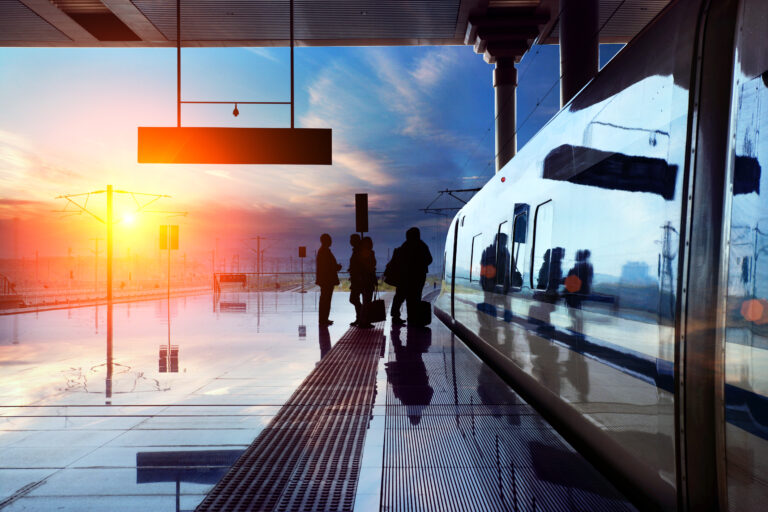
Gotta love trains in the Netherlands! Image: Unsplash
Okay I admit, maybe my South African roots are showing, but this has got to be the safest place in the world, at least it felt that way to me. I hope my daughter will be able to experience this level of freedom of travelling safely one day.
One of my friends summed it up perfectly. She said that nobody bothers anyone else. People just joyfully went about their business without causing anyone any annoyance. Lest we not forget, Wi-Fi on public transport?! I’m sold! 😅
4. All the bicycles
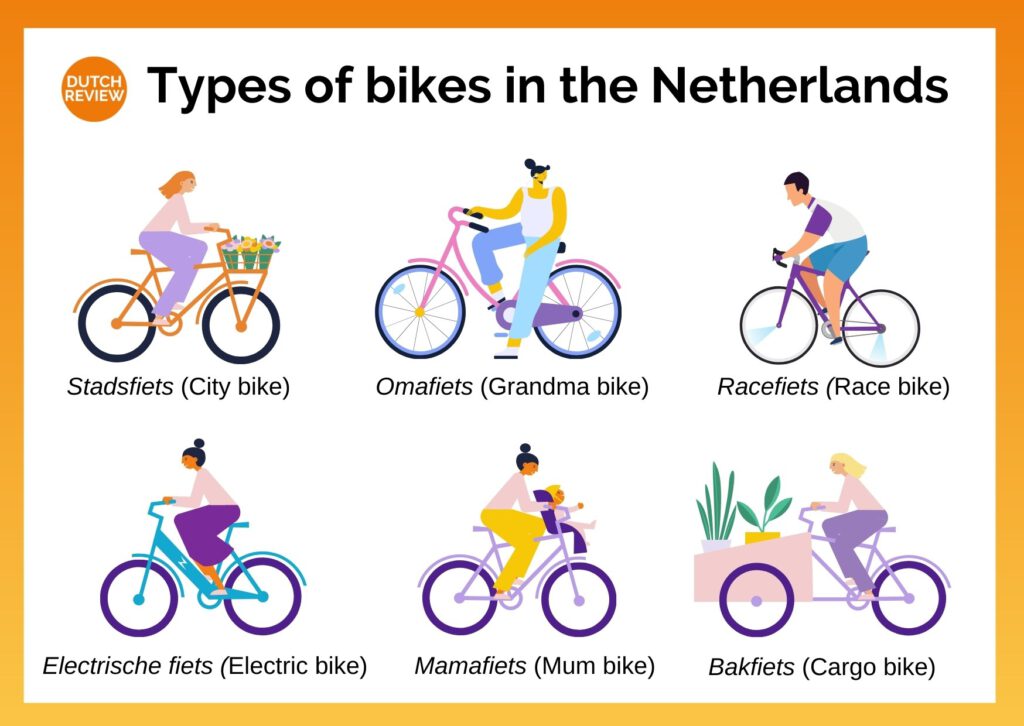
The biggest difference from 24 years ago: what have y’all done to the bicycles with kid carriers? This is not fair, the rest of the world is missing the beauty, that is the bakfiets. 🚴
The bakfiets can carry kids, furniture, or whatever you like. Image: DutchReview
When I was an au pair back in the dark ages, those poor kids had no protection from the elements other than their clothes. I had one kid on the back of my bicycle in her seat and the other in his seat on my handlebars. This fancy creation the Netherlands has now is just superb. I walked past a kid sitting and eating her breakfast whilst her mom was riding a bakfiets. I think it’s definitely a massive improvement and great innovation.
Imagine, if you will, going back to a country 24 years later and being treated like the returned prodigal son (or daughter). Not only did my au pair family offer me and my friends a place to stay, but we were welcomed with open arms and made to feel at home.
Friends that I’ve not seen since 1994 accommodated us, took us around to visit various sights and generally took care of all our needs whilst visiting. I can’t even begin to thank them for the amazing time we had. I only hope to return the favour when they visit me in South Africa.
This trip was the best, but also the worst. I was heartbroken when I had to leave. Yet Again. 💔 This country holds such fond memories close to my heart. I immediately recalled everything I loved about it. New places were seen and new memories were made. Reconnected with old friends and definitely made some new ones.
This only means one thing: I can’t wait another 24 years before going back again. Tot zo!
What is your favourite thing about The Netherlands? Tell us know in the comments below!
Editor’s note: This article was originally published in July 2018 and was fully updated in December 2022 for your reading pleasure.
Going to sleep in Amsterdam and waking up in Berlin; the first sleeper trains are scheduled to start services between Belgium and Germany via the Netherlands in 2023.
Night trains are making a big comeback. From next year, you’ll be able to sleep comfortably between your destinations with rail service, European Sleeper.
The company announced the plans in April last year with intentions to take passengers from Brussels to Prague. Now, they’re advising it’s full steam ahead to get to Berlin — but Prague will have to wait until 2024.
The first carriages have been rented
European Sleeper have announced that they have secured enough rental coaches in order to allow operations to start.
“Securing access to good quality sleeper coaches is crucial to get more night trains on track.,” says project manager of European Sleeper, Rob Gelissen. “We are preparing both the acquisition of renovated second-hand coaches, as well as completely new ones.”
The trains were originally intended to connect the cities Brussels, Antwerp, Rotterdam, Amsterdam, Hannover, Berlin, Dresden, and Prague.
However, due to construction works south of Dresden, there wasn’t a track capacity allocated to make it all the way to Prague.
For this reason, the train will be travelling from Brussels via Amsterdam, and Berlin will be the last stop for 2023. For 2024, the company hopes there will be capacity for Prague again.
@EuropeanSlpr say they’re almost ready to run trains from Belgium and the Netherlands to Berlin in 2023! 😀 🇩🇪🇧🇪🇳🇱
That’ll provide a great new link even before it gets extended to Prague in future – eastern Germany and Poland will be more accessible 👍
After a two-week battle, the Van Dale Word of the Year 2022 goes to klimaatklever (Climate adhesive), and we think it’s fanta-stick!
What is a “Climate adhesive”, you may ask? Well, it describes “activists clinging to an object of symbolic value to draw public attention to climate change.”.
Over one-quarter of the 15,000 voters chose “klimaatklever” as the winner for 2022.
Tough competition
While we’re loving klimaatklever, we really love the Dutch innovation for the word that came in second place: sevenvinker.
Sevenvinker (Seven Ticker) is someone who ticks off seven items on an imaginary list:
✅ Man (man) ✅ Blank (white) ✅ Hetero (straight) ✅ Afgerond VWO (above-average high school education) ✅ Universitaire opleiding (university education) ✅ Autochtone vader of moeder (native father/mother) ✅ Rijke of hoogopgeleide ouders (wealthy or highly-educated parents)
And yes, we do know a lot of sevenvinkers in the Netherlands. 🙄
Meanwhile, third place went to energietoerisme (energy tourism), which describes someone who travels to a warmer country in the winter to escape the rising energy prices.
Be right back, gotta book flights. ✈️
Previous Dutch Words of the Year
Like those Dutch words? Here are the winners of recent years:
In the United States, Dictionary.com’s Word of the Year was “woman.”. According to the website, the word depicts “how the intersection of gender, identity, and language dominates the current cultural conversation and shapes much of our work as a dictionary.”
“Inflation”, “quiet quitting,” and “democracy” also made the American list.
All in all, great words, but klimaatklever ready does stick the best. 😉
What do you think of the word of the year? Tell us in the comments below.
The tiny country of the Netherlands has many great experiences to offer. Known for its culture, history, architecture, famous art, and wide open fields — the lowlands is the place to go for adventurous souls!
The best time to visit this wonderful country is between April (hello, tulips!) and October (you know, because of the rain), but the Netherlands really is an all-year-round sort of destination
Explore Amsterdam’s nightlife
Amsterdam is known for its incredible nightlife, with many amazing clubs scattered throughout the city.
Move your body to popular music (Lady Gaga, Sia, Eelke Kleijn, anyone?), or explore the world of more alternative vibes, and you’ll have a great night out.
One of the most popular clubs in Amsterdam is OT301, situated in an old Dutch Film Academy. Another isRadion, which sports techno music and various events. You’ll also find that all types of people are accepted and gathered at Nyx, or experience a different vibe at Vondelbunker.
Amsterdam is one of the world’s best party capitals! Image: Depositphotos
Visit museums
The Netherlands boasts a vast history of arts and culture that can be experienced by visiting the country’s many world-class museums.
Explore famous artworks from artists like Van Gogh, Rembrandt, and Vermeer, or discover the bustling contemporary art scene of the Netherlands.
The Dutch capital can showcase some of the most vital parts of Dutch history, while the museum town of Leiden offers deep dives into fascinating things like the Weaver’s House, the American Pilgrim Museum, and the Academic Historical Museum.
Go mudflat hiking
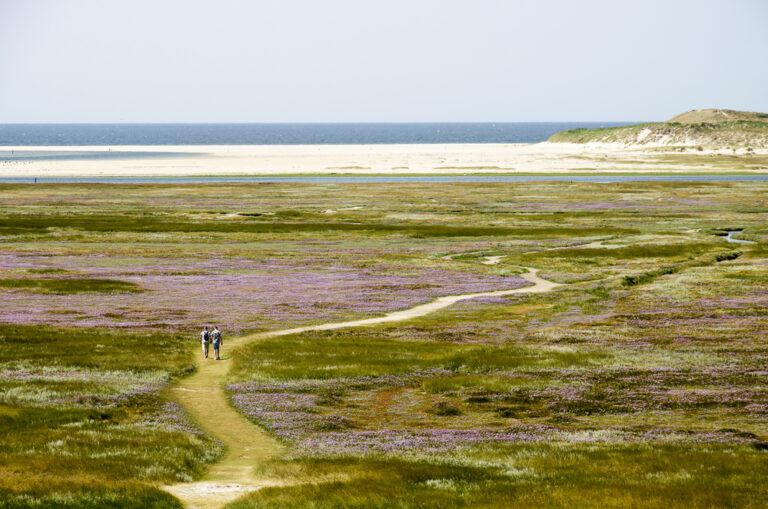
If you love experiencing the outdoors as it is, then Mudflat hiking may be just the thing for you. Mudflat hiking is exactly what it sounds like: hiking across vast mudflats and experiencing the wildlife of the Netherlands.
Located in the Wadden Sea, it can be a strenuous journey, battling intense winds and all the rest of nature’s elements.
The Wadden Sea is a vastly untouched piece of land. You experience it like it was meant to be, with professional guides leading you through the nature reserve.
Although it can be intense, the experience of exploring new islands, and seeing unique wildlife, makes mudflat hiking greatly rewarding.
Explore the (Dutch version of) mountains
Try out the beautiful “mountain” hiking spots if you love exploring the outdoors but don’t necessarily want to get your clothes muddy on the mudflat.
The highest mountain in the Netherlands is the Vaalserberg, which stands at just over 322.7 metres (so it’s more like a hill, really, but we’ll take it). This “mountain” is between Germany, Belgium and the Netherlands, at the Drielandenpunt (three-country-point).
If you want a smaller hike with more history, try the Sint Pietersberg hike, a mountain standing at just over 171 metres. It’s a historic spot where the residents of Maastricht hid during WWII, which boasts a fortress and 80 kilometres of underground tunnels you can explore as part of a guided tour.
Go on a castle adventure
We all dream about going on an adventure and discovering ancient ruins filled with treasures.
Although they’re not filled with gold and jewels, exploring the castles of the Netherlands is an excellent alternative. These breathtaking castles will transport you back into olden times, giving you a glimpse into the life of royalty.
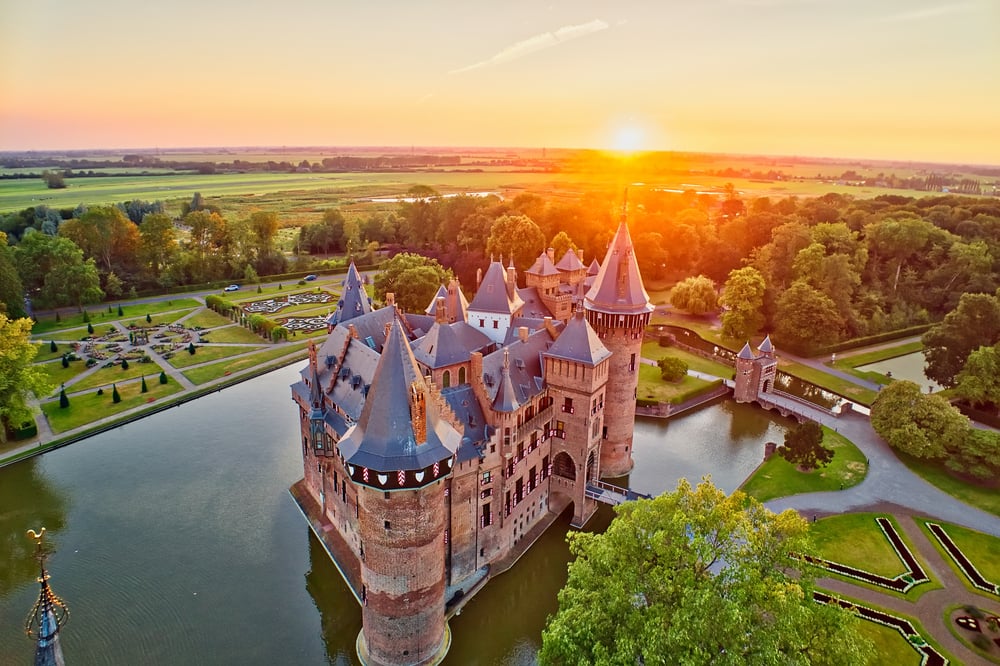
These historic buildings are often well-preserved and open to tourists. Famous castles include De Haar Castle, Muiderslot castle, Doorwerth Castle, and the Royal Palace in Amsterdam.
De Haar castle in Utrecht is a must-see on your trip to the Netherlands. Image: Depositphotos
Practise crazy sports
If you’re a sports lover, then you’ve come to the right country to experience some of the oddest sports out there. While you’ll find run-of-the-mill sports, including hockey, football, and ice skating, you’ll also find some pretty insane ones.
One example is paalzitten, a sport where you sit on a pole for as long as possible. Another exotic sport unique to the Netherlands is fierljeppen.
In this sport, you run towards an 8- 13 metre long pole plunged in canal water, jump on it, and climb as high as you can, with the aim of using the pole to land on the other side of the canal.
Enjoy typical food
You can’t visit a new country without trying out the local food — it’s basically an unofficial tourist rule. The Netherlands offers many typical foods you can try out, from the syrup sandwich stroopwafel to baby pancakes called poffertjes.
For lovers of fried foods,bitterballen are a must. Why? They’re deep-fried, breadcrumbed meatballs. Another must-try fried treat are oliebollen, the Dutch version of a doughnut.
If you’re in The Hague, try out Botanica, serving authentic Dutch cuisine focused on seasonal vegetables. Another option is Just Meet in Leiden, a quality, meaty establishment.
The Netherlands offers plenty of opportunities to explore culturally rich and historical sites for adventure-seekers. Rent a bicycle and explore Amsterdam, enjoy a canal boat cruise with cheese and wine, and much, much more.
An astonishing number of great activities are available, ensuring you’ll never be bored when visiting this stunning country.
Today is the darkest day of the year. (Stop, please, the cheers and applause is deafening!)
Yes, you’re not the only one who is fed up with coming AND going to and from school or work in complete darkness.
For all its merry merits, December has the shortest daylight period of the year and the sun is even farther from us these days than usual.
Hope is on the horizon
The sun is at the lowest position above the horizon this afternoon, meaning today will be the shortest day of the year.
This is because the sun is perpendicular to the Tropic of Capricorn, in the southern hemisphere, according to AD.nl. This phenomenon is also called the winter solstice and is as depressing as it sounds.
But the good news is that from tomorrow we will gradually return to longer days, so when all the Christmas decorations are gone, there will (eventually) be sunlight on the way!
So when exactly?
Stay in the Christmas spirit for now because you won’t immediately see sunlight begin to stream through your windows each morning. The latest sunrise is still to come on December 30.
Following that, you will see half a minute of extra sunlight every day, and not even the Dutch weather can ruin that for us. 💪🏼
What about the weather?
We will have mild days for the coming Christmas days, so there will be no white Christmas this year. Today the temperature will be between 7 and 10 degrees, and most of the Netherlands will stay dry. (Yes, this can happen!)
In the next few days before the holidays, the weather will gradually warm up to around 9 and 12 degrees.
Are you ready for the brighter days? Tell us in the comments below!
If you see something unusual flying through the sky tomorrow night, it most likely isn’t Santa (dang!).
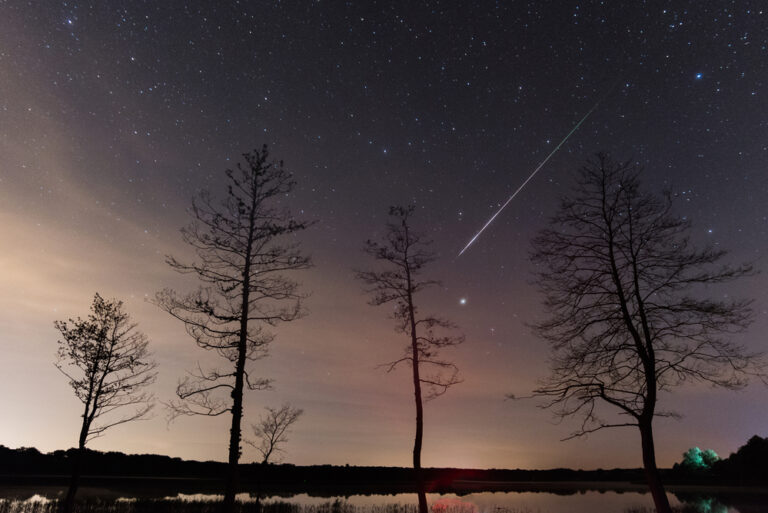
But, perhaps it’s even better: the Ursids, meteor showers that will peak in the Netherlands on the night of December 22.
Compared to last week’s meteor shower, the Ursids will be a little more sparse, with only up to five meteors an hour at its peak — but great viewing conditions can still make for a spectacular display. ✨
How can you see the Ursids meteor shower in the Netherlands?
Great viewing conditions mean we don’t have to stay up late to see the shooting stars — hoera!
Since the Ursids’ peak is close to the shortest day of the year on December 21, and the New Moon arrives on December 23, the sky will be darker than usual. 🌑
But just like all meteor showers, the Ursids are best observed away from all light pollution, so jump on an NS train and escape to the countryside.
Bundle up, grab a warm drink, and get ready to spot some shooting stars! 💫
The Ursids explained
The name of the Ursids shower is derived from the Ursa Minor constellation, although experts say that the actual source of the shower is the comet 8P/Tuttle, which follows a 13.6-year orbit around the sun. ☄️
If you’ve never been to the Netherlands before, you’re probably thinking, “besides all the lovely tulips and the windmills, is the Netherlands actually safe?”
Well, in theory, no place is 100% safe, however, the Netherlands is a relatively safe country to live in. Currently, it ranks as the 21st most safe country in the world, according to the 2022 World’s Safest Country index.
But to go deeper than this, we’ll give you the complete lowdown on what it’s like in the Netherlands, and how to keep yourself safe in every situation. (Hint: most of it is common sense!)
How safe is the Netherlands for tourists?
As a tourist, you are very safe here in the Netherlands. Of course, you still need to exercise caution when you are out and about (just because it’s considered safe, don’t do things such as flaunt your belongings, of course).
As a tourist, the thing you should be most concerned about is pick-pocketing, especially in Amsterdam. 🎒
Pick-pocketing is considered a medium risk throughout the Netherlands, so bear that in mind. If you take precautions, however, the risk is low. Make sure that you keep your belongings close to your body at all times, and don’t carry unnecessary valuables with you.
How about solo travelling as a woman?
Many people decide to travel solo, and women, in particular, tend to ask if it is safe for them to do so. When it comes to the Netherlands: yes, it is safe to travel solo, and yes, it is safe as a woman.
Of course, you should still take regular safety measures into consideration, such as avoiding secluded areas alone at night, for instance. Have your wits about you still, but in general, it’s no more dangerous than most places.
What is the most unsafe city in the Netherlands?
Statistically speaking, Amsterdam is the least safe city in the Netherlands, but this is to be expected — it is the capital, after all. Following behind Amsterdam are Rotterdam and Eindhoven.
Compared to other big European cities, these three still have a relatively low crime rate.
Most of the crime that occurs in the Netherlands tends to be related to theft, pick-pocketing and drugs.
Sex and drug laws in the Netherlands
Prostitution is legal and regulated in the Netherlands, as long as it involves two consenting adults. This decision was taken by the Dutch government to improve the working conditions of sex workers, and reduce criminal activity.
Despite what is believed by many people, prostitution is not only legal in the Red Light District in Amsterdam, but all over the Netherlands.
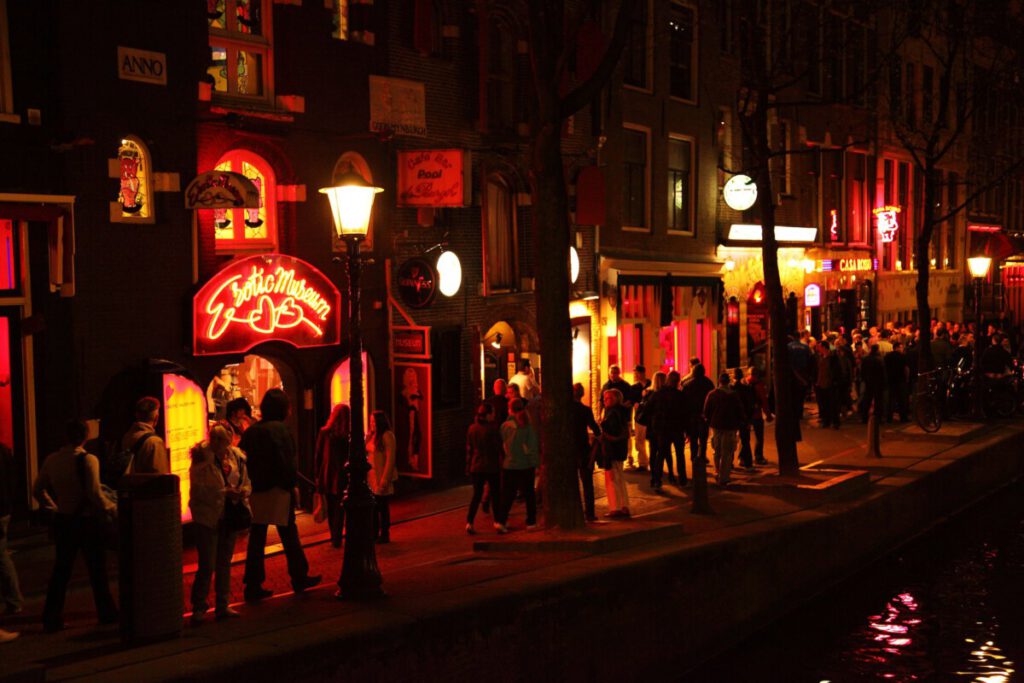
Visiting the Red Light District is not unsafe, but like anywhere, it is safer to go there during the day. And pas op (be careful) tourists! Pick-pockets are quite active in the area.
The Red light district is relatively safe — but you should watch out for pick-pockets! Image: Pixabay
When it comes to drugs, the Netherlands has a very liberal attitude. Hard drugs, such as cocaine, LSD and heroin, as illegal in the Netherlands. Soft drugs, such as truffles and cannabis, are not legal but decriminalised for personal use.
While truffles can be bought at smart shops, cannabis can be purchased from coffee shops throughout the Netherlands, by anyone above the age of 18. As long as you are not carrying more than five grams of cannabis with you, you will not get in trouble.
Terrorism in the Netherlands
A question that is always brought up in the context of safety is: “What about terrorism?”
And with terrorist attacks occurring all around the Netherlands and throughout Europe, it’s natural to worry about it.
However, terrorism is still rare and, as morbid as this is, you’re more likely to be killed in your car on the way to work. Do not be put off moving to the Netherlands (and Europe) in general because of this.
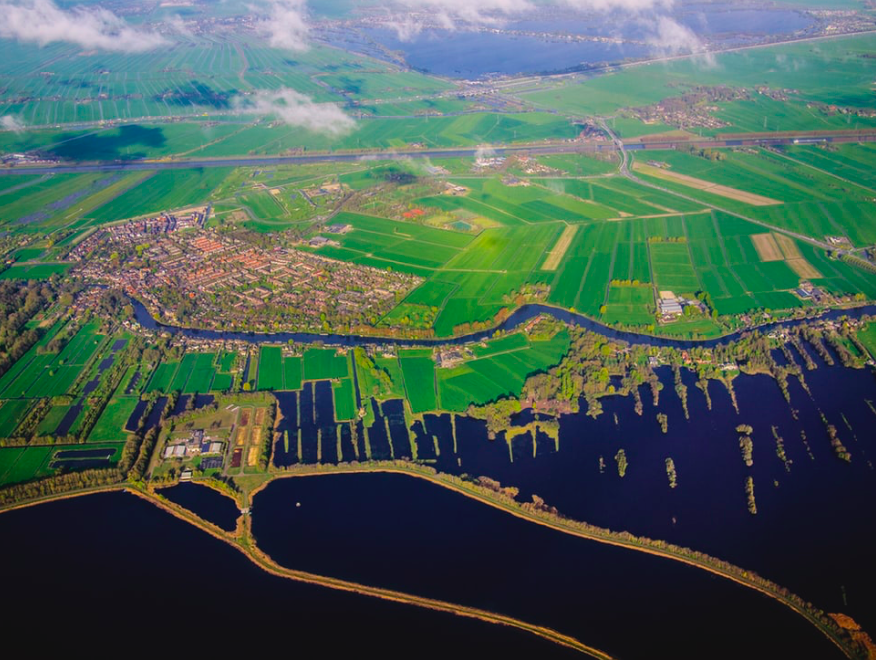
Thankfully, they have one of the best water management systems in the world, made possible by Delta Works, dikes and surge barriers. And so far, so good. If the Dutch weren’t so good at managing their water, then the Netherlands certainly wouldn’t be the place to be.
In the past, lives were lost due to flooding, but it is generally unheard of. Therefore the actual risk right of natural disasters is low.
The Netherlands fights hard to keep water at bay. Image: Unsplash
Living in the Netherlands
Though generally considered very safe, if you live in the Netherlands, you still need to take precautions — like in most places. For example, make sure to keep your house locked every time you leave, along with your car.
This is especially true if you are away for more than a day (burglar alarms help here, or telling a trusted neighbour that you’re gone). No valuables should be on show, either.
We know the Dutch like to show their lovely homes with their open curtains, but if you’ve got a lot of valuables on display, it does make you more vulnerable to a break-in.
That’s not the only thing that can be unsafe when living here. Due to typical Dutch architecture, a fire in your home can be incredibly dangerous and not only damage your belongings but damage you!
Make sure to install some basic fire safety equipment in your home (such as fire alarms, distinguishers and blankets). Tip: you can buy these cheap at Action.
Getting around the Netherlands safely:
Use generalised safety precautions in the Netherlands, such as the following:
Ensure that you aren’t walking alone in secluded dimly-lit areas at night if you can help it.
Always keep an eye on your children.
Keep an eye on your belongings.
Make sure you are visible on the road: always have lights on your bike, and don’t wear dark clothing.
If there is an issue, the police are here to help! 112 is the emergency number for the Netherlands.
If you are planning on coming to the Netherlands, then don’t forget to bring copies of all of your travel documents and keep them safe. It’s also a legal requirement to carry ID around with you at all times in the Netherlands, so bear this in mind. 😉
And you’re all set! Enjoy being in the Netherlands.
Do you find the Netherlands safe? Let us know your thoughts in the comments!
Editor’s Note: This article was originally published in January 2019, and was fully updated in December 2022 for your reading pleasure.
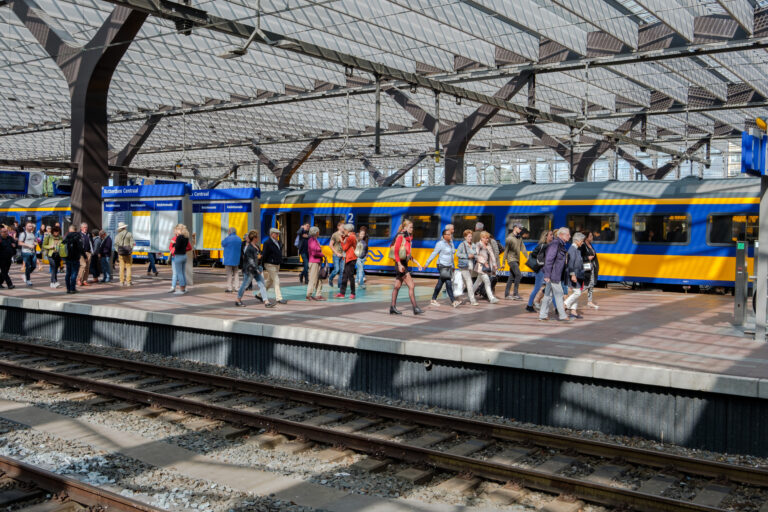
Oh, public transportation! To all train-goers waiting for their train to arrive in the cold weather, only to be met with delays and crowded aisles, NS confirms that 2022 was a difficult year.
In 2022, fewer trains arrived on time, and passengers had a lower chance of finding seating during rush hours, reports NRC.
Based on the preliminary figures for 2022, there was a 3% decrease in train performance in 2022 compared to 2021.
Timetable adjustments and staff shortage
NS had its fair share of major problems this year due to the aftermath of the coronavirus, which led to a shortage of conductors and operators.
To make sure the trains would still be up and running, NS had to adjust their timetables with evening timetables starting earlier than usual.
The result? NS ran fewer trains, and trains were by far the busiest, with overcrowded passengers having to stand as there would be no place to sit. 🧍
With such problems, many train passengers took to Twitter to complain about how packed the trains would be and how trains would be either delayed or cancelled.
Can @NS_online explain why train is cancelled?? Every weekend i have problem to come back home… Now with dog i need to stand on cold temperature 30min… 🙁 That’s not fine looking at price of tickets and subscriptions… pic.twitter.com/3TLr1zrq7n
Due to damage involving cracks in the welds in some tracks, Intercity trains slowed down to as low as 80 kilometres per hour, instead of the usual 160 to 300 kilometres per hour.
Trains on the high-speed lines to Brussels, Paris, and London were delayed and arrived later than other trains. The problem remains unclear, and delays could continue for months to come.
With a new timetable for 2023, which started on December 11, NS believes it will be able to perform better and improve its services by extending a third of its trains.
Wouter Koolmees, president-direction of NS, announced that “the 2023 timetable will be a turning point and is more closely linked to the new travel behaviour with structurally fewer travels and more people working from home. This is the new foundation we can build on.”
With a new year approaching, let’s hope travelling with NS makes a comeback! 💪
What do you think about the NS train problems as a passenger? Tell us in the comments below!