Grab some hot, buttery popcorn and your favourite slushie, because the Leiden International Film Festival is officially back from November 3 to 13!
Whether you’re a film fan or you’re just looking for an excuse to binge some of the best films to come out this year, LIFF has your back!
This is the 17th instalment, which promises 11 days full of special screenings, premieres, and parties. We promise, you definitely don’t want to sit this one out! 😉
Three films you absolutely can’t miss
There are SO many interesting films on show this year, and we do suggest that you have a look at the full programme. However, there are three films that we couldn’t help but rave about — and here they are!
Emily
This charming costume drama portrays the life of famous British novelist Emily Brontë, played by the talented Emma Mackey (or Jacqueline de Belfort, for those of you who’ve seen Death on the Nile).
The film is a wild ride of romance, passion, and rebellion — culminating in the creation of Brontë’s famous novel, Wuthering Heights.
Marcel the Shell with Shoes On
If quirky indie films are your jam, then you will likely find this a hit!
The film is about Marcel, an adorable shell that lives with his grandmother Connie. Their lives soon get upturned when the filmmaker finds them living in his Airbnb. (We promise this film makes sense.)
It’s one of the most creative and heartwarming films to come out this year, and a definite must-see!
Three Thousand Years of Longing
Pragmatic academic Dr. Alithea Binnie (played by the incredible Tilda Swinton) accidentally unleashes a Djinn (Idris Elba), after he offers her three wishes in exchange for his freedom.
We don’t want to spoil this one for you, but we will say that the film’s fascinating concoction of fantasy and romance hits just right!
Well, how about it Leidenaren? Ready to get cultured and have a good laugh, scream, or cry? Then we suggest that you have a look at the full programme where you can choose from a terrific menu of international films.
So, what films have caught your eye on LIFF? And which ones are you going to see? Tell us all about them in the comments below!
We’ve put together the ULTIMATE guide on child benefits in the Netherlands. If you’d like some support but don’t know where to begin, then look no further! Take a seat, beloved reader. You’ve come to the right place.
Congrats! You’re moving to The Netherlands or becoming a parent — or both! Whatever reason you’re here for in regards to Dutch childcare: we want to help.
What are child benefits in the Netherlands?
Let’s start with the basics.
Child benefits are where the government gives you money towards the expenses of raising a child. Yay!
In the Netherlands, this is paid for by the SVB (Social Insurance Bank or Sociale Verzekeringsbank).
Dutch child benefit (toeslagen) is paid on a quarterly basis.
The government will shoulder some of the financial burdens of taking care of a child! Image: Depositphotos
If your child is due to be born here, the first payment you receive will be for the next quarter after your child’s birthday — starting in January, April, July or October.
Have we lost you yet? Don’t worry — we know this is a lot of information, so we’re going to break it down.
There are 3 types of child benefits that you can receive, depending on your situation.
Children’s Allowance: Kinderbijslag
First of all, there’s Kinderbijslag, which helps cover the general costs of raising children.
To receive this type of child benefit, you must be registered and living in the Netherlands.
In some special cases, you can be living abroad, but only if you have a “social security agreement” with the Netherlands and are insured by the Dutch child benefit scheme (AKW).
If you live and work here, then the allowance should be provided automatically to you via the SVB when the baby is born, but if not, you can always apply using your DigiD code.
The amount of child benefit you receive depends on how many kids you have and how old they are.
It will also change if the child has a disability, if they live at home, and/or if they have a part-time job.
Here’s a list to give you an idea of the serious coinage you could end up receiving for child benefits in the Netherlands!
In 2018 the general amount of child benefits per child per quarter is:
€249,31 for children up to age 5
€302,74 for children aged 6 to 11
€356,16 for children aged 12 to 17
Child Benefit: Kindgebonden Budget
Secondly, to most Dutchies and honorary Dutchies alike, this is probably the most important child benefit in the Netherlands.
This will help pay for your child’s schooling. Image: Depositphotos
The Kindgebonden helps parents and guardians cover the cost of their children’s clothing, food and school/international school.
Again, this depends on your level of income, and how many kids you have. To put it in simpler terms: the higher your income, the lower your child benefit will be.
Remember to spend wisely, people!
The requirements for this child benefit are as follows:
You have at least one child under the age of 18
You receive the Kinderbijslag (children’s allowance) from the SVB
The last one is a weird one — but this is all about “capital.”
If you don’t have a fiscal partner, your capital can’t exceed €120,020. If you do, then the maximum combined capital is €151,767.
Every individual is different (hooray for multiculturalism and uniqueness!), so there may be conditions and exceptions that apply to you personally that we haven’t listed here — in which case you should head on over to the Belastingdienst.
This is a government organisation (that deals with all that Dutch tax and customs admin stuff) which can help you with the child benefit system.
You can find out all the nitty-gritty specifics of what kind of benefit you’ll be receiving. Here’s a nice one, for example: are you a single parent? Then you’re entitled to more money!
Childcare Benefit: Kinderopvangtoeslag
Finally, the Kinderopvangtoeslag is the last child benefit in the Netherlands.
Are you studying alongside raising your child? The Kinderopvangtoeslag can help! Image: Depositphotos
This is for parents or guardians who are working, studying or following an integration course, who already receive the Children’s Allowance (kinderbijslag) and/or are partially responsible for the child. Woah, that’s a mouthful! Let’s break it down.
If the child is registered at your address (which you have a valid residence permit for), has not yet started secondary education and still attends a registered daycare facility, you are eligible for the Childcare Benefit.
You must have a contract with a childcare centre or childminder, and you must pay (part) of the childcare costs. The child benefit is calculated on an hourly basis.
The exact amount of child benefit you receive will depend on your personal income (as usual) and the type of childcare.
The specific expenses of the childcare you choose, therefore, will come into play.
Can I get child benefits in the Netherlands as a foreigner?
Help will always be given to those at Hogwarts — I mean, Holland.
Whether you are an expat or an international student, you will always have options for child benefits as a foreigner.
Not Dutch? No problem! You’ll still have options for childcare benefits. Image: Depositphotos
If you live or work in the Netherlands and you have a child or children under 18, never fear — you will get Dutch child benefits.
Sign me up! How do I apply for child benefits?
So, you’ve probably been reading this and exclaiming at regular intervals, “Wow! Sounds tremendously phenomenal!”
But by now, you’ll be wondering, “how do I actually get this so-called toeslagen and claim some real moola, man?”
Well, it’s pretty easy: contact SVB!
The office in your particular region determines what child benefit you’re entitled to.
Whether you already have a DigiD code and an account with “My SVB” or not, they’ll send you a claim form to fill out (you can ask for an English one), and you’ll be on your way in no time.
You just need to print it out, fill in your deets and send it back to them. Simples!
If you’d like to see a quick estimate of the amount of child benefits you’ll receive, here is a handy calculation tool that works it all out for you!
And if your browser can’t translate Dutch, here’s a PDF showing you how to calculate your child benefits in English.)
Note: all this includes step-children and foster children! If you already receive child benefits and you’re looking into fostering or adopting a child, you can use your DigiD code to report this as a “change in domestic circumstances.”
Did we miss something, or do you have any further questions? Be sure to let us know in the comments below!
Editor’s Note: This article was originally published in October 2018, and was fully updated in November 2022 for your reading pleasure.
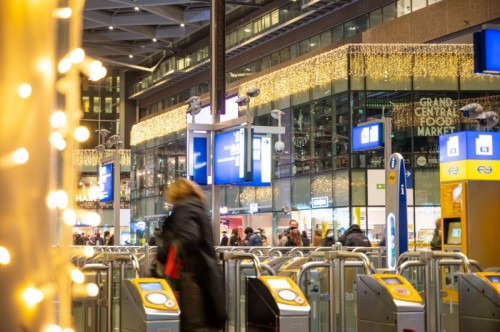
If you’ve ever lived in the Netherlands, you’ll be familiar with this feeling; rushing up to the train, digging through your wallet to get your yellow (or blue!) chipkaart, only to find the verdomd thing isn’t there.
Well, no more missing trains as a result, good folks! Say goodbye to last-minute card disasters, because by the end of this year, you’ll be able to check in with your very own bank cards, reports Het Parool.
One less card in the wallet
In December of this year, the NS will launch a new method of payment, called OV-Pay, across the country.
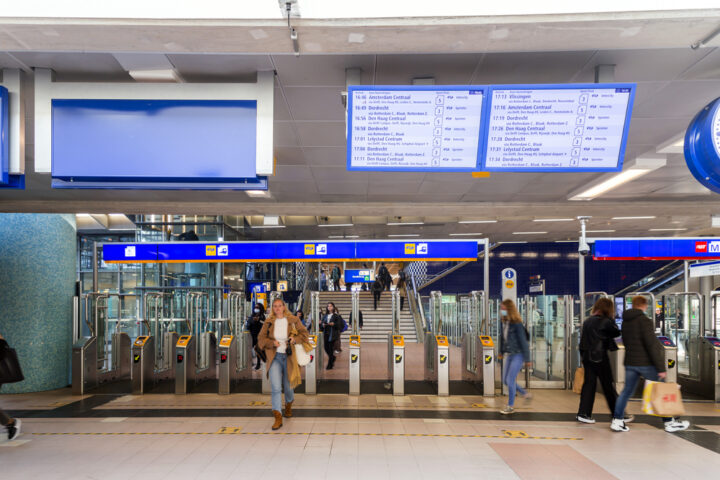
The NS has been trialling this new method of payment in Lelystad Station since March 2021. Apparently, the trial run has been successful, and now the service will be available in all major stations, such as Utrecht, Rotterdam, and Amsterdam.
OV-Pay will enable public transport users to check in and out of trains using bank cards and will rule out the need for the OV-chipkaart completely.
Finally, we say, because we are tired of having so many different cards all the time.
No more minimum balance
There’s more to benefit from than just having one less card. A notorious, and annoying, aspect of some OV-chipkaarts is the fact that you need a minimum amount loaded onto the card to even check-in.
With OV-Pay, you can say doei to problematic checking in and out. Image: Depositphotos
Without a personalised OV, even if you have €15 on your anonymous card, don’t even think of checking in.
According to the NS, your measly €15 is getting you nowhere, and you’ll need minimum €20 to check in for your train journey, no matter how short or far the trip. 🙄
With the new system, passengers will be able to check in and out of trains without requiring a minimum balance on their cards. The card will be debited overnight, and, if payment happens to be unsuccessful, the card will be blocked from making any further travel until the charge goes through.
The only issue with OV-Pay is that the system cannot tell yet if you have a discount or subscription loaded onto your OV-Chipkaart.
So, for now, those of us with handy discounts will have to stick to using our Chipkaarts.
It took y’all long enough
Though we surely appreciate the new initiative, we can’t help but think; dear NS, it took you long enough.
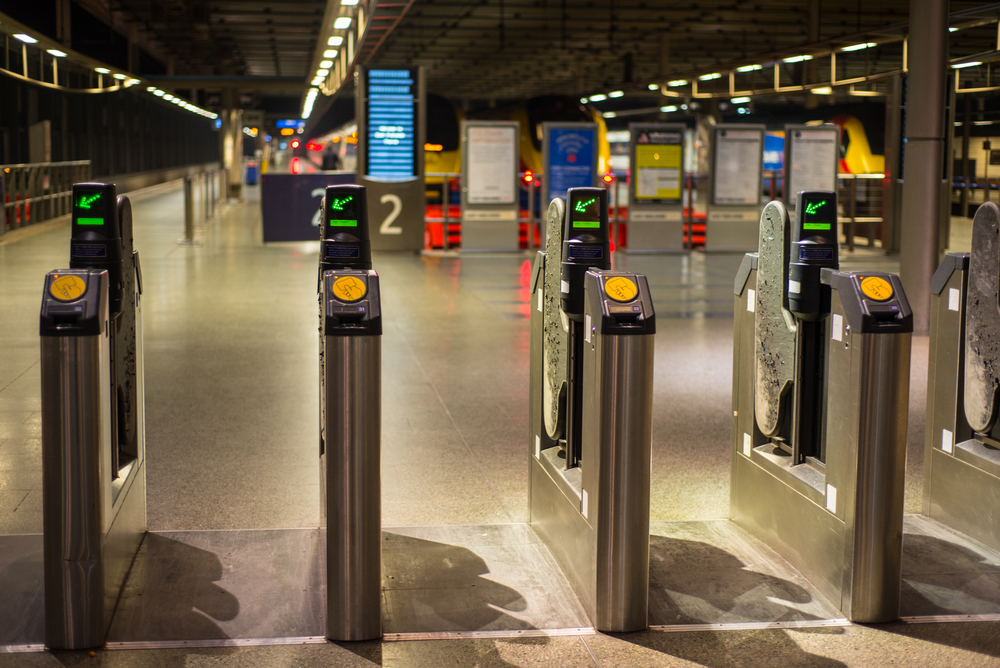
The Netherlands, it seems, is a bit late to this whole bank card-checking-in thing. Passengers have been able to check in using bank cards on London trains since, em, 2014. And, in Nice in France, this has also been possible since 2010.
It has been possible to check in using card on the London underground since 2014. Image: Depositphotos
Thanks, NS! While we’re celebrating how much easier things are about to get, let’s not forget the fact that train tickets are about to get more expensive.
On a side note, we’ve been able to check onto most buses and trams in the Netherlands with our bank cards for some time now.
No more OV-Chipkaart by 2024
As the NS rolls out the use of OV-Pay, it also has other plans; to scrap the use of the Chipkaart altogether.
By 2024, the Chipkaart will be replaced with something else; the OV-pass — sounds… similar.
What do you think of this payment method? Tell us your thoughts in the comments below!
A formal apology by the Dutch government to the tune of €200 million will be made, along with projects to raise awareness of the Netherlands’ past slavery.
The Dutch government will also be setting aside an additional €27 million for a museum on slavery, reports the NOS.
An apology has been in the works for a while
On a recent visit to Suriname, Prime Minister Rutte stated that the next year should be dedicated to acknowledging the Netherlands’ involvement in the slave trade.
The majority of the Tweede Kamer also pushed for a formal apology to be made.
And even the king agrees! He brought up the subject of an apology on Prinsjesdag — noting that 2023 would commemorate 150 years since the Netherlands abolished slavery.
King Willem-Alexander didn’t hesitate to point out the importance of taking responsibility for this part of Dutch history.
Not everyone thinks it’s necessary
Although the Dutch government’s persecution of Jews and their horrific treatment of Indonesians (following the decolonisation period) have been formally apologised for, slavery hasn’t been directly addressed.
Dutch conservatives: We must teach children to be proud of our [colonial] past when we were rich thx to the East/West Indees Company!
Also Dutch conservatives: I have nothing to do with the genocides in Indonesia or slavery! Why should we teach kids about the past? Now is now!
Due to track work, no NS trains will run to and from Amsterdam Zuid between November 13 and 27. Those looking to commute to Schiphol Airport during that period will also see fewer to no trains operating.
As a result, folks will have to find alternative transportation options to get around the area during those two weeks, so in other words, 9292 to the rescue! 🚂
15 dagen geen treinen naar Amsterdam Zuid en minder treinen naar Schiphol vanwege werkzaamheden ProRail. https://t.co/iPpsOniI46
Translation: No trains to Amsterdam South for 15 days and fewer trains to Schiphol due to ProRail work.
The alternative options
Those who need to travel to one of the two stations can make a detour via Amsterdam Centraal. From there, you can take the metro to Amsterdam Zuid or a train that goes to Schiphol.
The metro lines in Amsterdam that you should look out for are 50, 51, and 52. For any unknowing internationals, you can use your NS train ticket to travel. 🎟️
During that period, the NS also plans to use extra trains on weekdays between Amsterdam Centraal, Schiphol, and Utrecht Centraal. Direct trains between Rotterdam and the airport will continue to run as normal.
International trains also affected
Alas, those travelling abroad by international train will also fall victim to some disruptions.
From November 13 to 27, the train to and from Brussels won’t go further than Rotterdam Centraal, writes RTL Nieuws.
And due to international train traffic, the Thalys, Eurostar, and the train to and from Berlin will have a change in departure and arrival times to and from Amsterdam Centraal.
The NS advises travellers to keep an eye on the NS app before departing on their train, as track changes, detours, and extra travel time can take place at any minute.
Not just that, but people should expect extra crowds on the trains and at stations.
Will you be travelling by train during that period? Tell us in the comments below! 👇
If you think Dutch ticket prices are already way too high, we have news for you: NS is about to get even more expensive from January 1, 2023.
The single ticket for a second-class seat will rise by 5.5%, but subscriptions for unlimited rush hour or fixed routes the tickets are becoming 2.4% cheaper, the NOS reports.
Hopefully, these adjustments will make it more charming for passengers to travel outside of rush hour (as if crowded trains weren’t enough to turn people away come 4 PM).
While with all the rising prices, you would think that the NS is trying to copy the rest of the world. Buuuut, they’re adjusting their ticket prices based on the expected inflation. And well, that’s not the most ideal this year.
The never-sinking boat
The NS has gone through a lot in the past mounts, but somehow they are still functioning. 🤘🏽
And on top of everything, they got a new captain to lead the company as the new CEO (Well, succes!).
Even on first class
While the first class passengers might not experience the overcrowded trains as much as the people who travel in second class, their ticket prices will rise as well. In fact, even more.
According to NS, first-class ticket prices have been a bit too low in recent years, so they will pay 7.4% more from the 1st of January.
And if you can pay the ticket prices, it’ll be a challenge to find a train that can take you to your destination.
What’s your latest adventure with NS trains? Tell us in the comments!
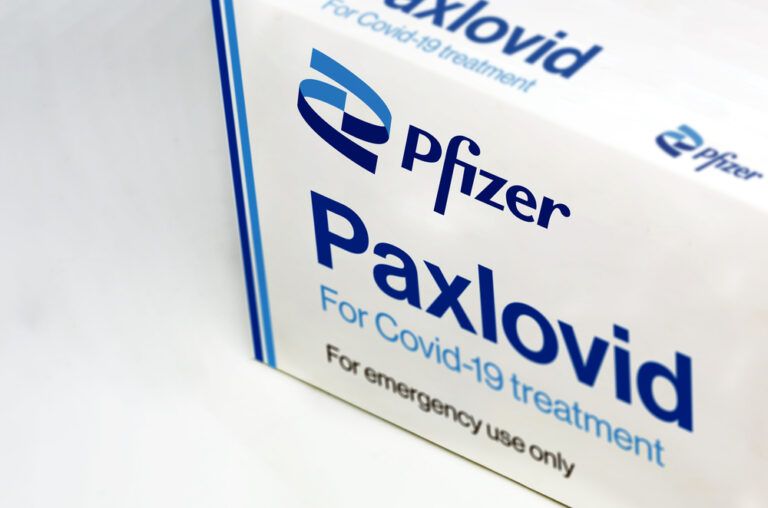
Doctors in the Netherlands will soon be able to prescribe Paxlovid, or the “corona pill”, after it was approved by the Medicines Evaluation Board (MEB) in January.
The country will introduce Paxlovid in the basic health insurance package. So, you won’t have to pay extra when buying it anymore.
However, the pill is only eligible for certain groups of people. Particularly, those who are at very high risk of developing the disease, writes RTL Nieuws.
“This concerns, for example, people who do not receive the vaccine properly due to an underlying disease that affects the immune system, or because of old age,” says Joost Wiersinga, an internist-infectiologist at UMC Amsterdam.
Doctors will only prescribe Paxlovid to high-risk patients, such as the elderly, those with heart and lung diseases, and people with a reduced immune system.
If your doctor doesn’t think you are suitable for the medicine, but you still want to take the pill, you will have to pay the manufacturing costs of €1242 for it.
When and where can I get Paxlovid?
The National Health Care Institute of the Netherlands recently advised Ernst Kuipers, Minister of Public Health, to include the medicine in the basic health insurance package.
It will still take a couple more weeks before doctors in the Netherlands can prescribe it to their patients.
But, you can expect to find Paxlovid at your local physician no later than December 2022.
A hefty amount to pay
However, introducing this medication to Dutch society doesn’t come without setbacks. The National Healthcare Institute must pay €1242 for a complete pill cure — €707 more than what the US government currently pays.
Lovers of the racist anthem “Hanky Panky Shanghai” may have hanked their last pank, as a new anti-racism initiative has its sights set on quashing this song.
Anti-Asian racism has long been allowed to flourish in the Netherlands — and, along with it, the exclusionary processes holding people of Asian descent back.
A teaching package against singing the song “Hanky Panky Shanghai” is soon to be launched in schools, says the National Coordinator against Racism and Discrimination Rabin Baldewsingh to the NOS.
But wait…what exactly is “Hanky Panky Shanghai”?
This is a song, sung to the tune of Happy Birthday, that contains the words “Hanky Panky Shanghai” and “Hanky Panky” repeated over and over again. (Yes — that’s the full extent of the lyrical brilliance involved. 🙄)
And, as if a mere sprinkling of racism wasn’t enough, it is accompanied by hand gestures such as pulling one’s eyes into slits. Really innovative stuff, for sure.
Benieuwd hoe de – meestal toch witte – mensen die het zingen van Hanky Panky Shanghai geen probleem vinden op zouden kijken als hun kind door de hele klas gezellig toegezongen werd met 🎶 Melkfles Kaaskop Volendam – Melkfles Kaaskop Volendam 🎶
Translation: It’s curious how the — mostly white — people that find singing Hanky Panky Shanghai no big deal would look up if the class sang 🎶 Melkfles Kaaskop Volendam 🎶 (making fun of Dutch people) to their child.
The song is generally more popular with children, due to it being spoonfed to them by parents and teachers that want to uphold this great traditie (tradition).
What does the new initiative intend to do?
The anti-racism coordinator Baldewsingh will be organising conferences on discrimination in education.
A new teaching packet has also been released with the support of the Asian Raisins Foundation, which helps fight racism against East and South Asian people in the Netherlands.
In addition to this, the organisation has created a petition against “Hanky Panky Shanghai” that calls for it to be banned.
What do you think of this new initiative? Tell us all about it in the comments below!
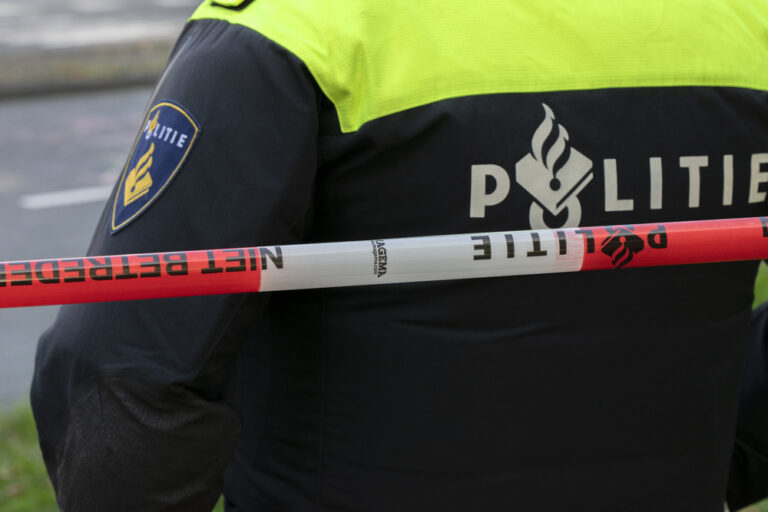
Last night, Dutch police in Gelderland were flabbergasted after receiving a report of a dead body on a beach, only to discover that it was something far less critical — a sex doll.
The police rushed to the Havenlijn in the Dutch city of Nijkerk, when they made this “special find” — and a special find it was, indeed. 🥴
Aan de Havenlijn in #Nijkerk is vanavond een lichaam aangetroffen in het water. Na onderzoek door de Forensische Opsporing (FO) bleek het niet om een lichaam te gaan maar een levensechte sexpop. De politie had groot ingezet. De omgeving is inmiddels vrijgegeven. pic.twitter.com/WnhWhNla6x
Translation: A body was found in the water on the Havenlijn in #Nijkerk this evening. After an investigation by the Forensic Investigation (FO), it turned out not to be a body but a lifelike sex doll. The police had made a big effort. The area has since been released.
A case of mistaken identity
People spotted what they thought was a woman’s corpse floating in the water and notified the police at around 6:30 PM yesterday.
Once the police arrived at the scene, they closed off the Havenlijn area for trace research and called upon forensic officers to analyse any potential evidence.
Then, it turned out that there was no dead body at all, but a large human-like sex-cessory instead.
Why and how did this sex doll end up on a beach in the middle of the night… and who put it there, has yet to be determined (and frankly, we’d rather not know). 🤷
What do you think about this police story? Tell us in the comments below! 👇
If you are one of those people who react to spiders like they are Satan’s spawn coming to eat you, then we have bad news. More and more people are reporting sightings of false wolf spiders in the Netherlands.
What does this mean? According to experts, we might just have to — pauses to shiver — get used to them.
“They are going to spread even more evenly across the country; it can become as common as the cross spider,” spider expert, Peter van Helsdingen, tells RTL Nieuws.
Growing number of legs
The number of venomous false wolf spiders, also known as zoropsidae, has increased tenfold in the last five years. So if you didn’t find the perfect crisis to freak out about yet in 2022, this can be the one!
The first false wolf spider was reported in 2007 in a supermarket.
“It was one among the vegetables in a supermarket. It is a spider species from southern Europe that has been supplied via transports and can now survive well here,” biologist, Jinze Noordijk, explains to RTL Nieuws.
They are here to stay
If you think they are only here to visit the Netherlands to check out some windmills, you are wrong. Because of climate change, now they are perfectly happy in the land of tulips.
“They don’t freeze to death in the winter. If it’s freezing here, that’s only for a short period,” says Van Helsdingen.
That’s it? Are we all going to be eaten?
No. This is not the end of humankind (yet.) While by Dutch standards, the false wolf spiders have big size (with the headpiece and abdomen together, they are an inch or two), they won’t eat your family (and the whole neighbourhood) for dinner.
“They are real insect eaters: crickets, locusts, woodlice,” says Spider expert Lars Vermeeren of animal park De Oliemeulen in Tilburg.
If you see one and you have enough presence of mind to do something, you can report it on waarneming.nl.
Would it solve your problem? No. But you can be together with another 1,060 people who already had the same experience as you this year. Last year there were significantly fewer, only 331 reports.
Arachnofobie? Als je bang bent voor spinnen, is dit misschien geen leuk nieuws. De #wolfspin wordt steeds vaker gezien in Nederland. Vier jaar geleden ongeveer 40 keer per jaar en nu al ongeveer 500 keer. Wij haalden deze uit iemands slaapkamer #HulpTerPlaatse#Vrijwilligerspic.twitter.com/5gc3MBvjjz
Translation: If you are afraid of spiders, this may not be a fun news. The #wolfspider is seen more and more often in the Netherlands. Four years ago about 40 times a year, and this year already about 500 times.
That being said, some people appear to be ‘crying wolf,’ so to speak.
“We have recently received dozens of phone calls from people who say: help, there is a wolf spider in my house. Then we ask them to send a photo, and in half of the cases, it turns out to be an ordinary house spider. That’s mainly because there’s a lot of attention for it now,” says Vermeeren.
So they will murder us with a poison bite, right?
No. They are no more dangerous than a wasp, and (unlike wasps) their biggest goal in life is not to inflict pain on us.
“Spiders are not aggressive, but defensive,” Lars Vermeeren says to RTL Nieuws.
“They prefer to leave us. Only if they can’t go anywhere, they might bite you. Their teeth are small but just big enough to get through human skin. You don’t feel much of the bite itself. And the poison is not very strong, similar to a wasp sting.”
What’s your relationship with these eight legs friends? Tell us in the comments!