The publication shared his story (and a screenshot of his panic-inducing energy bill).
All’s well that ends well…right?
Help, for Janssens, came in the form of a call to customer service on Monday.
After much humming, hawing, and head-scratching, it came out that the Janssens’ metre reading had been misreported. The bill, thankfully, would not need to be paid.
However, the silver lining to the Janssens’ saga darkens considerably with the knowledge that none of us are out of the woods yet.
De gasopslagen in Nederland zijn inmiddels voor meer dan 90% gevuld. Zo hebben we een buffer voor komende winter. De prijs fluctueert sterk, maar is nog steeds hoog. We werken daarom aan een tijdelijk prijsplafond voor energie. Het besparen van energie blijft cruciaal. https://t.co/by31xS341W
Translation: The gas storage facilities in the Netherlands are now more than 90% full. This way, we will have a buffer for the coming winter. The price fluctuates strongly but is still high. We are therefore working on a temporary price ceiling for energy. Saving energy remains crucial.
Despite the proposed price ceiling, energy prices are still surging, and a €100,000 energy bill isn’t as fantastical as it may once have been.
What would you do if you were hit with a €100,000 energy bill? Tell us in the comments below!
After Rutte’s texting scandal became public, the Government Information and Heritage Inspectorate started an investigation.
From this, the Inspectorate concluded that Rutte’s ministry failed to act in accordance with the archive law, and properly delete and store texts on his ancient Nokia. 🤦
It’s also still unknown whether the forever-gone messages held essential information about political decisions.
Rutte and his ministry acted in defence
During the investigation, Rutte said that he simply deleted those messages to prevent his Nokia from becoming slow and cluttered. 📱
In his defence, any text that he deemed important, he always forwarded to officials before archiving. And according to the Inspectorate, this was indeed the case.
If you thought Partygate and Beergate was mad – check out the "Nokiagate" saga unfolding in the Netherlands.
For years Dutch PM Mark Rutte has been using a Nokia brick which only has room for 20 texts at a time, sparking a row about him deleting old messages
Nevertheless, many parties rebuked Rutte for his rather special way of choosing which texts should be stored, and which should be archived. 🤔
When you forward chat messages, it’s no longer possible to see when the message was received. When screenshots are taken, information can be lost, writes RTL Nieuws.
That being said, Rutte and his ministry should have thought twice before sticking with their archiving method. They need to find a more agreeable way to do this that won’t breach the Archives Act.
What do you think about Rutte’s texting scandal? Tell us in the comments below! 👇
Finally, the Netherlands can offer relief to asylum-seekers as up to 10,000 extra spaces are made to host people. Where? In churches and holiday homes!
The initiative, run by Protestant Church in the Netherlands (PKN), will offer temporary housing to status holders, aka asylum-seekers with residence permits, reports the NOS.
100 places promised
As of now, 10 different municipalities promised to receive status holders.
With so many extra spaces, the Dutch government hopes it will speed up the flow of the 17,000 status holders currently awaiting housing.
Municipalities in the Netherlands are faced with a huge influx of status holders; they are expected to house 20,000 people before January 1st, 2023.
But, hopefully, the extra spaces in churches and empty homes will lessen the strain on local municipalities — and provide some much-needed hope to asylum-seekers who have been left waiting for housing for so long! 🏡
Reception places decreasing
However, despite the extra 10,000 spots for status-holders, the number of reception places in the Netherlands is on the decrease.
Despite agreements made with regions, there are 1,250 reception places fewer than before. This is mostly due to expiring contracts between the government and municipalities for crisis shelters to house people.
This leaves a lot of people in limbo as they wait for somewhere to stay. 😞
Many contracts expired on October 1st, so, while the Dutch government attempts to find more reception areas, their solution remains — churches! ⛪
Other municipalities can host more
Yet, it’s not allbad news; there are over 11,000 reception places in the Netherlands to receive asylum-seekers. Areas such as Amsterdam receive up to 3,000 status holders.
Amsterdam alderman Rutger Groot Wassink has another idea to overcome the need for housing for status-holders; increasing the number of asylum-seekers in smaller municipalities. “If we can do that with other municipalities, we’ll be out quickly.”
What do you think of the Netherlands opening up its churches? Tell us in the comments below!
A Dutch village called Velp experienced one of the most bizarre crime stories on Saturday. And, yes, we’re including that one time a man pooped on a Dutch woman’s front porch. 🤦♀️
A man was already finishing up his burglary of the Blue Lotus restaurant when he got his foot stuck in the freight elevator – NU.nl reports.
The next morning the staff found him waiting there, in need of rescue — we are indeed very curious about what he had to say at that moment!
Using our imagination, it probably went something like: “Um, I was just trying to find your bathroom”. We hope we’re wrong, or else that really would’ve been a sticky situation!
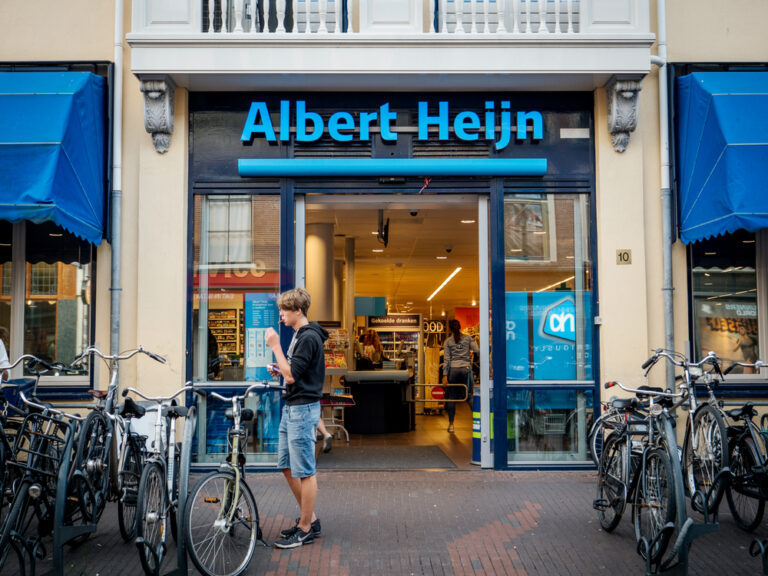
Dutch supermarket giant, Albert Heijn, say it’s going hard on sustainability in an attempt to encourage shoppers to make more environmentally-friendly shopping choices.
From meat replacements to plastic-free shopping options, everyone’s favourite, cheapest, most dominant Dutch supermarket claims they’re bringing the goods for a greener future, reports NU.nl.
Bad news for meat eaters
The carnivores among us may want to cover their ears because it looks like Albert Heijn is on a mission to cut down on the meat options they stock.
New vegan fresh pasta at Albert Heijn! Ravioli filled with spinach and some other stuff. This one is also gluten-free.
Albert Heijn also wants to encourage more customers to bring their own packaging.
That means you must remember not just your bags but also your Tupperware containers, or else you might end up attempting to carry pasta home in your hands. 🙃
Scholte op Reimer says they want to encourage shoppers to adopt more sustainable behaviours, tempting them into more ‘green’ behaviours.
However, in terms of the influence on the climate, Scholte op Reimer states that packaging and transport play only a small role, “The biggest impact is in the product itself.”
But, amongst all the plans to encourage shoppers to make more sustainable choices, it looks like Albert Heijn is missing its own goals.
The Paris Agreement is a collective of goals set by the United Nations to limit climate change globally. Under this agreement, countries, the Netherlands included, pledged to decrease their greenhouse gas emissions by 45% before 2030.
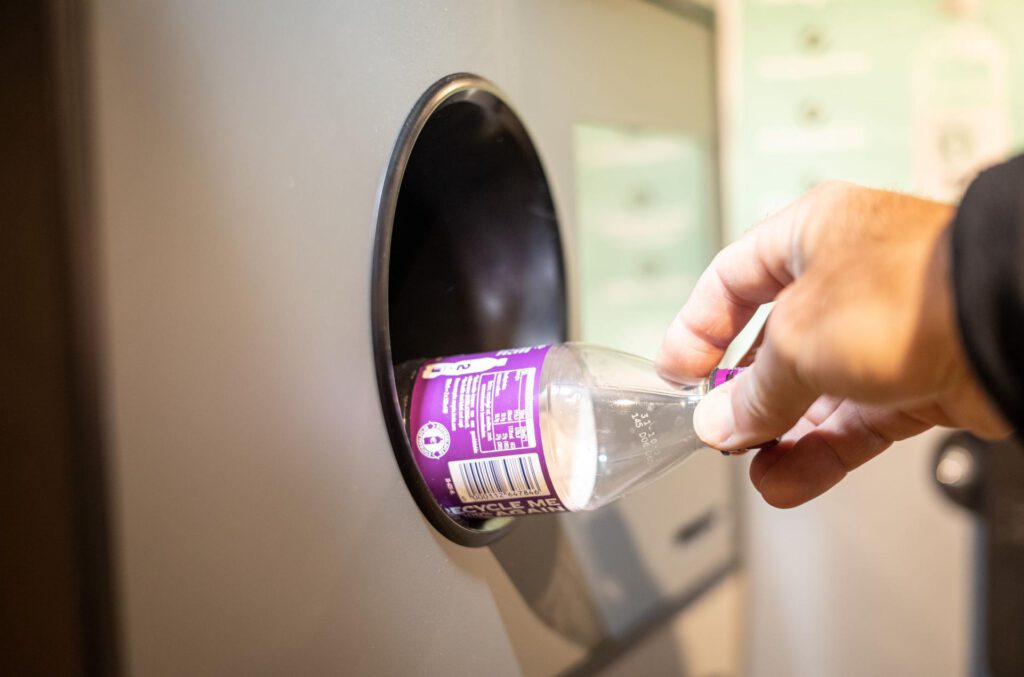
The Netherlands already has a successful bottle return scheme. Image: Statiegeld Nederland
Albert Hijn is falling behind on this promise, with the store likely to cut down by only 15% by 2030.
If they don’t meet these goals, the store faces court action. “A lawsuit can also damage the image of Albert Heijn,” says Scholte op Reimer.
Well, while Albert Heijn tries to attempt to make some sustainable changes, we’ll be clutching our frikandel in desperation. 🌭😭
What do you think of these sustainability measures? Tell us your thoughts in the comments below! 👇
The main plant-based alternative at McDonald’s will stay on the fast-food chain’s menu for the foreseeable future — thanks to the high demand for vegan and vegetarian options in the Netherlands!
Veganism is not exactly the first thing that comes to mind when you think of chains like McDonald’s and Burger King. Still, fast-food restaurants across the world are adapting their menus to cater to as many people as possible, writes NU.nl.
Growing trend
There’s no getting around the fact that the vegetarian wave is here to stay. Being vegan or vegetarian has quickly gone from being fringe and has entered the mainstream.
McPlant is now a permanent menu item nationwide in Austria 🇦🇹, Portugal 🇵🇹, UK 🇬🇧, Ireland 🇮🇪, and – confirmed today – the Netherlands 🇳🇱. Current test markets include Taiwan 🇹🇼, Australia 🇦🇺 and Germany 🇩🇪, with Germany testing both burger and McPlant nuggets #beyondmeatpic.twitter.com/gLBWL0pb0t
McDonald’s seems to have understood this fact after the popularity of their vegan burger went through the roof.
It probably helped that the burger was based on the famous, juicy, fan-favourite Beyond Meat — a remarkably “realistic” meat substitute. 🍔
Nobody’s perfect
Well, we say vegan, but vegan folks might want to think twice before embracing the McPlant too enthusiastically.
Firstly, the plant-based alternative is frequently in contact with the meat-based products and areas of the kitchen, during the preparation of meals at McDonald’s. So, if that grosses you out, you should probably go somewhere else for your late-night deep-fried snack.
Secondly, although McDonald’s plant-based initiative has gained praise for moving with the times, the chain has also been accused of so-called greenwashing.
There’s just no getting around the fact that fast-food chains like McDonald’s contribute greatly to the many environmental issues connected to the meat industry.
In other words, if you’re vegan for environmental reasons, you might want to reconsider your choice of restaurant — despite the lovely green marketing around the McPlant burger.
What do you think about McDonald’s choice to make the McPlant a permanent part of their menu? Tell us your thoughts in the comments below!
It seems like meteorologists at Weerplaza served the weather with an extra dose of wit yesterday.
Indeed, tomorrow’s World Animal Day is going to be even more pleasant than today, with temperatures a degree higher. And, thankfully, the Dutch doggos won’t be getting wet this time! 🐕
Areas in the far northwest can expect some rain in the afternoon and evening, but things are likely to clear up before late evening — so you needn’t shelve those going-out plans! 💃🏻
And the warmest day of the week is…
Wednesday! 🥳
Hoping to have tapas on the terras this week? Wednesday’s your friend — with afternoon highs of 18 degrees Celsius in the northwest to 22 degrees Celsius in the south and east of the country.
You may need to pack that brolly as the day progresses, however, as some areas could expect a bit of rain.
Rain, rain, go away
Oh well, we knew it couldn’t last.
The latter half of the week is expected to get a bit cooler, with much stronger wind. Thursday and Friday will be cloudy, with a few brief showers.
Approximately 1700 Utrechters strapped on their dancing shoes Saturday evening ready for 900 straight minutes of dancing.
And why would they subject themselves to the blisters, spilt drinks, and ringing eardrums? For a birthday party, of course.
Not just any birthday party
The city of Utrecht, affectionally known as the beating heart of The Netherlands, is turning 900 years old — and there’s no better way to celebrate than a 900-minute dance marathon.
The event took place over three popular dance clubs in the city with different styles of music.
Naturally, of the 1700 revellers, only a few hundred were left by 6:00 AM Sunday morning. (We don’t blame the early leavers and would also have been toasty warm in bed by 10:00 in the evening).
Now the only question is: how can this mega dance event be topped?
“I already made a joke that we are going for 901 minutes [next year],” event organiser and dance programmer of De Helling Lévi Smulders told AD.
Would you dance for 900 minutes straight? Tell us in the comments below!
The Netherlands has long been a favourite destination for Brits, thanks to its iconic canals and cheese markets. However, come 2023, UK travellers will face a couple more obstacles if they wish to step foot in the country.
Around two million (!) British citizens travel to the Netherlands every year, with roughly half of them visiting Amsterdam.
But despite the lowlands’ popularity, good ol’ Brexit gave rise to quite a few notable changes for any British traveller in the EU.
As a result, those looking to cross over to the land of clogs will now need to consider the following:
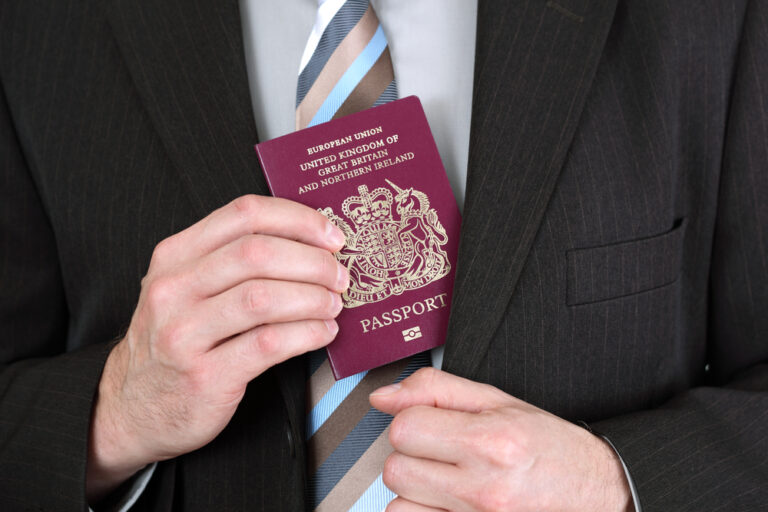
At present, British citizens must have a UK passport that will continue to be valid for at least six months to travel to the Netherlands.
UK passports are no longer accepted at the dedicated EU border gates at airport arrivals.
Long-term study or work in the Netherlands might only be possible for Brits with the appropriate visa.
If UK travellers intend to stay in the Netherlands, they may need to show proof of a return ticket and sufficient funds.
In addition, Brits will soon face the end of fee-free travel. Why? Because the long-awaited ETIAS visa waiver is set to debut in 2023 — and it comes with a small price to pay.
What is an ETIAS visa waiver?
You might be wondering what the heck an ETIAS (European Travel and Authorisation System) visa waiver is. In short, it’s an online security check that grants entry to all European countries in the Schengen Area.
Citizens of all visa-exempt countries (which are outside of the EU) will need to apply for an ETIAS visa waiver.
Whether it be for holidays, transit, or business purposes, the visa waiver will allow any UK traveller to visit the Netherlands for up to 90 days within every 180-day period.
The good news? It’s valid for up to three years from the date of approval or until the date your passport expires, so you won’t have to apply every time you travel.
What will the requirements for an ETIAS visa waiver be?
Once the ETIAS visa waiver takes shape in 2023, it’s likely that UK passport requirements for Europe will change.
With that being said, British citizens will need to meet the following requirements if they wish to enter the Netherlands, or any country in the EU:
A valid passport for at least 3 months from the date of arrival in the Netherlands, and no older than 10 years.
An approved ETIAS visa waiver.
How can Brits apply for an ETIAS visa waiver?
Applying for an ETIAS visa waiver is actually pretty simple. Firstly, you’ll need to fill in an online application form with personal information, passport details, and answer a set of health and security-related questions.
Then, a processing fee of around £6 GBP (or €7) will be required for those between the ages of 18 and 70 — and that’s it! The only thing left to do is wait. Most ETIAS visa waiver applications are approved within 24 to 48 hours.
In some cases, it can take slightly longer, so it’s essential that UK citizens apply at least 72 hours before departing to the Netherlands.
Keep in mind: All the information provided in the form must be accurate. Errors, including spelling mistakes, can lead to a delay in getting the ETIAS visa waiver. Applicants must ensure that they submit the application accurately filled in.
When will Brits need an ETIAS visa waiver to travel to the NL?
While the official launch date is not yet known, the ETIAS visa waiver will probably be necessary to travel from the UK to the Netherlands by November 2023.
Important to know: UK travellers will need an ETIAS visa waiver if they wish to visit any country within the Kingdom of the Netherlands. This includes several island territories in the Caribbean, namely Aruba, Curaçao, and St. Maarten.
Until then, Brits can enjoy a visa-free voyage to the lowlands for stays of up to 3 months out of every 6 months. In other words, weekend trips to Amsterdam are still in the cards.
Are you among the lucky chaps who will need to apply for an ETIAS visa waiver next year? Tell us in the comments below!
Is your rent still under €1,000? Well, we have good news for you — you may (still) be able to claim rent protection! 👀
The Dutch Minister for Housing, Hugo de Jonge (a familiar face from our never-ending coronavirus lockdown days!) plans to introduce expanded rental protection — to the tune of €1,000. A more detailed plan is set to come out this November.
This decision was announced at a debate in the Tweede Kamer (the parliamentary lower house) yesterday, reports RTL Nieuws.
How does it work?
Rent is based on a system of points — points are added for factors like the size of rooms and whether the property comes with a kitchen, toilet, bath…etc.
Landlords that set rent much higher than the maximum figure it should go for are straying into grey territory. Tenants that calculate a discrepancy can then go to the Huurcommissie (rent commission) and request a reduction. 📉
However, for rents above the rental protection limit, landlords can decide how much they want to charge for their properties.
The current limit for rent protection sits at €763.47, and newer constructions will automatically have the raised rental protection factored in.
For existing buildings, however, rental protection will only kick in when there are new tenants.
This move is aimed at middle-income renters, as they earn too much for social housing and cannot afford the ridiculously expensive properties in the free market.
The two important sides to the debate
De Jonge does note that vital employees — like policemen and nurses — need accommodation in the bigger cities (tough ask, seeing as how we’re in the midst of a housing crisis).
However, he’s also keeping an eagle eye out for housing corporations and investors to fund the construction of more housing.
Om huurders te beschermen tegen absurde huren wordt nu ook de middenhuur gereguleerd tot rond de €1000. Door duidelijkheid te geven over de grens kunnen investeerders blijven investeren in de bouw van nieuwe middenhuurwoningen. https://t.co/7guOCeqPiT
Translation: In order to protect tenants from absurd rents, mid-rent will now be regulated to around €1,000. By clarifying the limit, investors can continue investing in the construction of new middle-rent housing.
De Jonge says that investors need a return on their initial investment, and hope that this latest move will motivate them to finance new rental accommodation.
It’s not all been smooth sailing
Investors have been hesitant about constructing new rental housing in recent months, due to De Jonge wavering on where to cap the price protection between €1,000 and €1,250.
The uncertainty over the exact value (and worries about their return on investment), led to some property developers protesting the new rental protection plans.
Taking their concerns into consideration, De Jonge has now settled for the lower limit of €1,000.
And what does this mean for us?
It remains to be seen how this will affect the rental market — and whether landlords will raise their rents over €1,000 to escape the new cap.
What do you think of this latest move? Tell us all about it in the comments below!