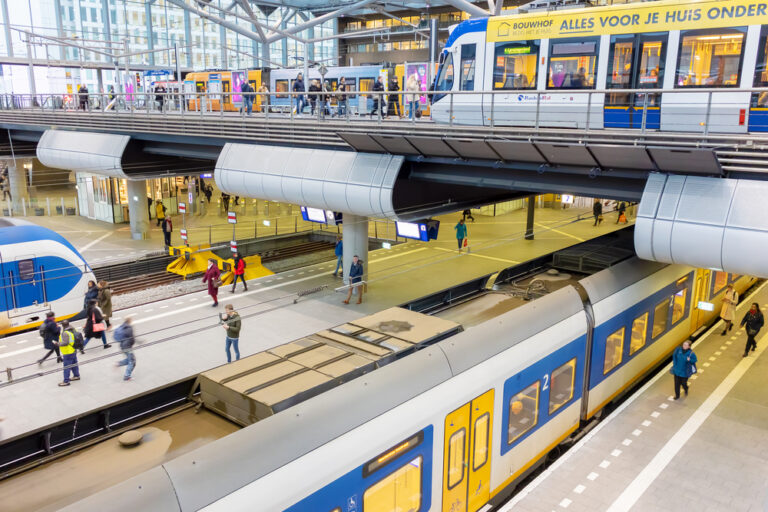
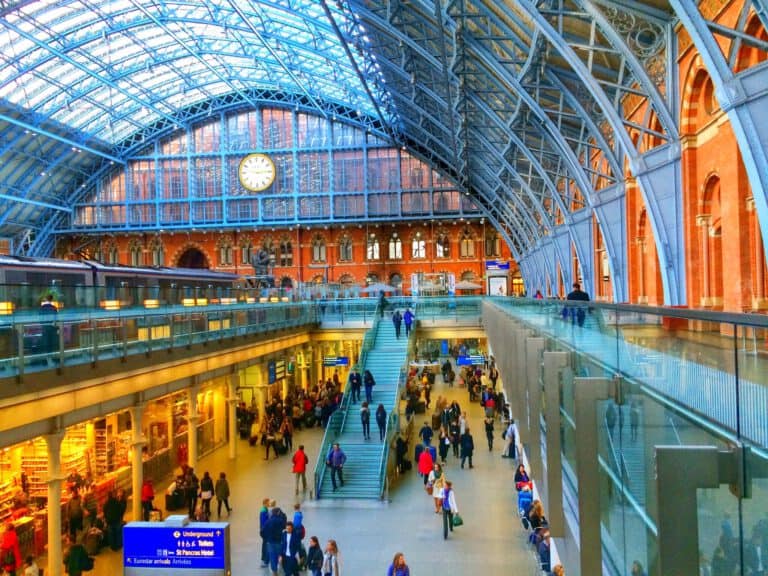
The Dutch rail service has announced a 6.52% price increase, which will come into effect from January 2026 onwards.
The NS’ planned price hike will affect both regular rail tickets and seasonal tickets, but these aren’t the only changes chugging down the track.
Let’s run through what’s being proposed.
Pricier tickets, higher penalties, and fewer discounts
If you prefer travelling in first class during the week, the NS will now be increasing the surcharge on your ticket. This means that while both first-class and second-class tickets are getting pricier, we’ll see a starker price difference between the two during the week.
However, weekend first-class travel is actually getting relatively cheaper, as the NS attempts to fill those often-empty carriages.
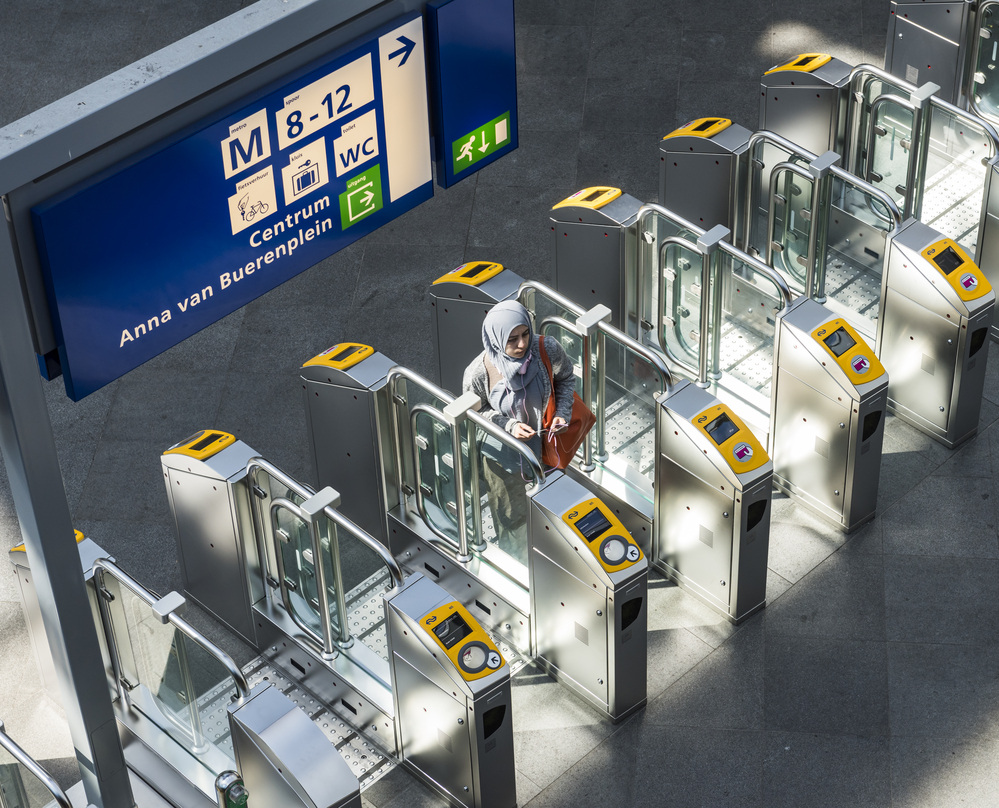
And you’d better remember to check out once you’ve arrived at your destination, because the penalty for a missed check-out is jumping from €20 to €33.30 per train journey.
With higher penalties for missed check-outs, it pays to be careful when checking in and out at the station. Image: Depositphotos
Meanwhile, the NS is simplifying its subscription options by… axeing two of them. Yep, you read that right: both the Weekend Voordeel and Altijd Voordeel discounts will stop being sold from February 1, 2026, though current holders can keep using them until July 1.
Not everyone’s happy about it
Rover, the Dutch consumer organisation for public transport passengers, is pushing back against the NS’ decision. The organisation argues that while the NS is allowed to raise prices by this much, it’s not required to do so.
“NS is deliberately choosing to increase prices, while passengers get nothing in return,” says Rover director Freek Bos. Rover had initially advised the NS to limit their price increases to actual inflation rates.
But the NS isn’t the only party taking the full brunt of Rover’s criticism. The organisation also blames the government’s “yo-yo policy” of allocating funding to cushion fare hikes, then scrapping funding altogether.
“We’re seeing NS pass the shortfall on to passengers instead of investing in more attractive and affordable rail transport,” Bos continues.
What do you think of the NS’ price hike? Share your thoughts in the comments below!
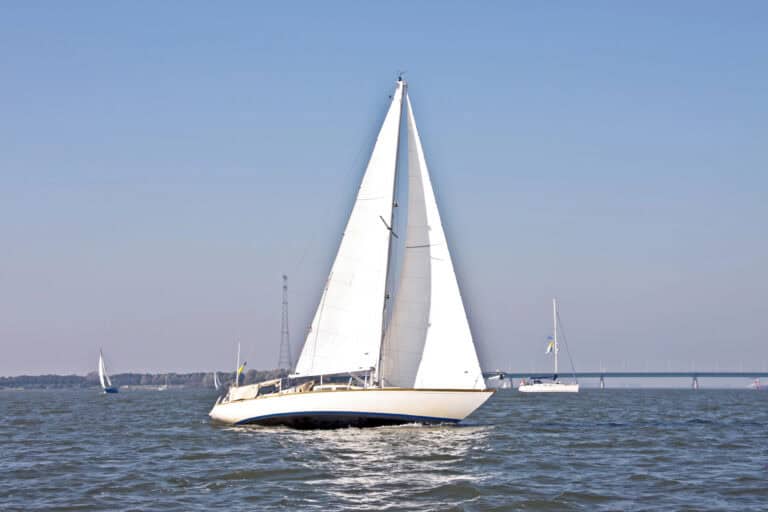
Is it a scene from a film, TV series, or a survival documentary? No, this poor sailor actually spent two and a half days stranded on an uninhabited Dutch island after his boat ran aground.
What started as a peaceful Friday evening sail turned into an unexpected survival challenge when the man’s anchor failed to hold near De Kreupel island on the IJsselmeer.
Strong winds pushed his boat onto the rocks, and it began sinking.
Stranded with no food, water, or supplies
Dutch maritime rescue station KNRM Andijk and the rescue service KNRM recounted the man’s ordeal in Facebook posts.
With no marifoon (maritime radio) or emergency flares in his supplies, and a dead phone battery, calling for help wasn’t an option.
Even worse? The man had no food, water, or shelter with him.
So he did what any resourceful sailor would do: fashioned a tent from his sail and waited. And waited. And waited. For two and a half days.
Helaas, with it being the end of the boating season and the weather predictably terrible, it was the absolute worst time for a solo-voyage-gone-wrong.
Rescue… at last!
No boats passed by until Sunday morning, when a yacht finally spotted the half-sunken wreck and alerted the Coast Guard.
KNRM Andijk’s rescue boat ‘t Span quickly sprang into action and retrieved the weakened man, who later admitted he thought he’d die there.
After a warm coffee, shower, and dry clothes at the KNRM Rescue Station Andijk, the sailor was taken to a hotel to process his unexpected island holiday.
In a country that’s described as overly bureaucratic, it’s not surprising that the Netherlands controls some things you wouldn’t expect them to.
From who can share houses, to where you can lock a burglar, and whether you can take an acorn from a forest tree — let’s jump right into the world of strange Dutch laws!
1. Locking a burglar in your toilet? Illegaal!
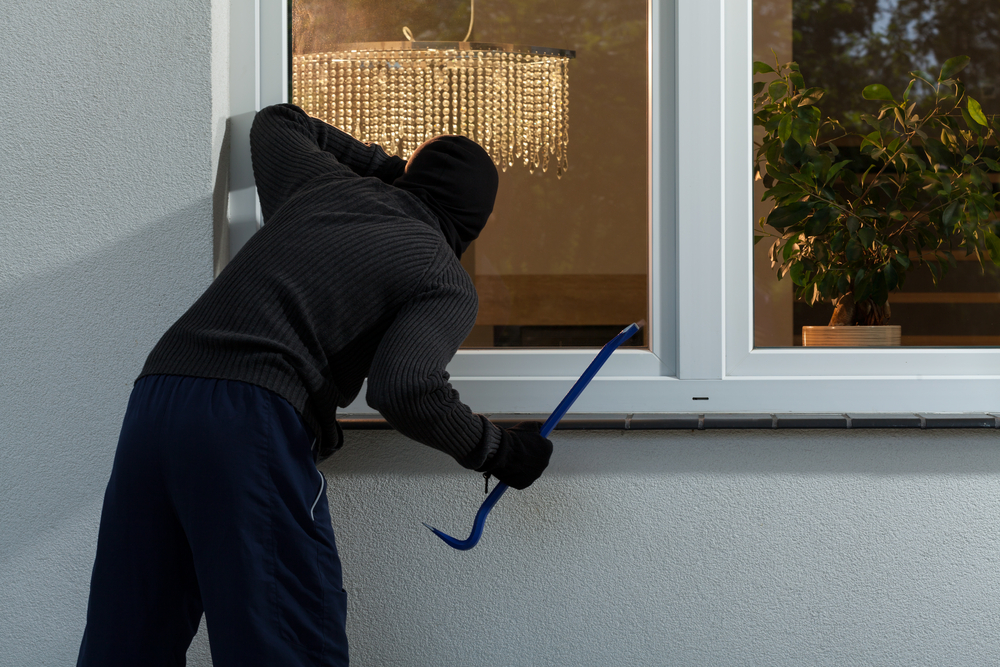
Picture this: a robber breaks into your house while you’re at home. In a burst of adrenaline and quick thinking, you trap them in the bathroom. 🪠
Don’t lock them in your own house! That wouldn’t be fair for the thief …🤣 Image: Depositphotos
Hoera, success! Well, nee.
By locking up that burglar and depriving them of the privilege of stealing your stuff, you’re simultaneously depriving the burglar of their liberty, and that’s against the law.
The bad news is: in the Netherlands, they’re still your family — even once the ink on your divorce papers has dried.
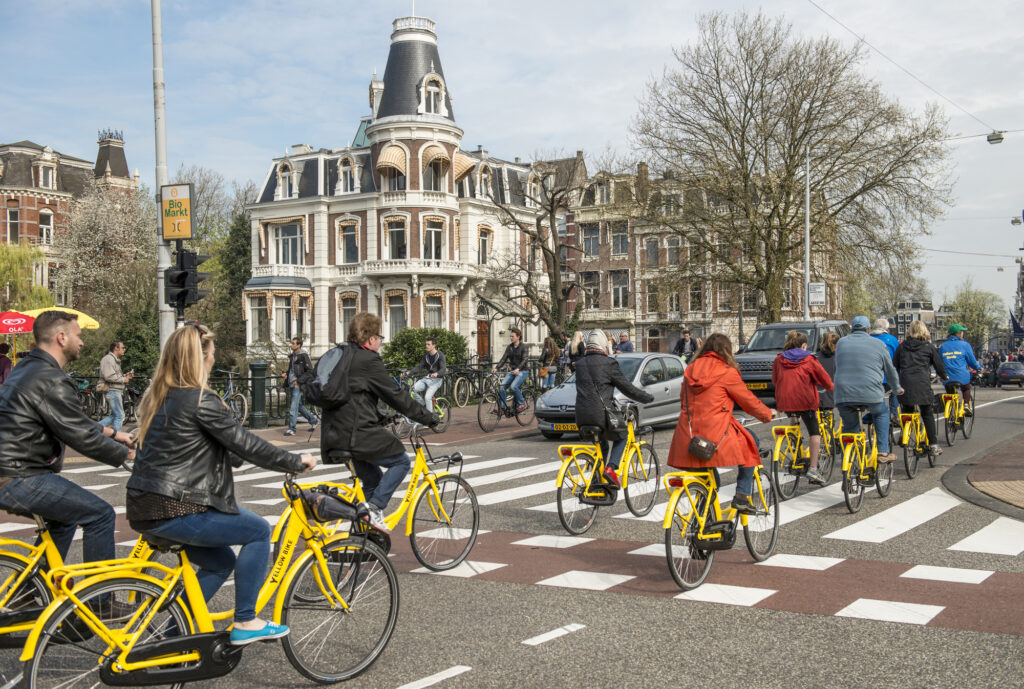
3. It’s illegal not to have lights and a bell on your bike (but helmets are optional)
In a lot of countries, this is the other way around, due to obvious safety reasons. And, of course, if you’re out with a small child, they usually have to wear some form of protection.
A helmet? We’ve never heard of that. Image: Depositphotos
Not in the Netherlands, though. In fact, a missing bell or light can land you a €75 fine here.
But as long as you have lights for visibility and a bell to attract attention, you’re good to go.
Is it safe or just stupid? The debate on whether we should all wear helmets continues for now. Luckily, the Netherlands does have great bike lanes, which definitely makes it a heck of a lot safer. 🤷♀️
If you’re wanting to get hitched on the canals of Amsterdam and neither of you is a registered resident, forget it.
No getting hitched, unless one of you is a resident, says Dutch law. Image: Freepik
In order to get married, the Netherlands requires at least one of the partners either be Dutch or to legally live in the Netherlands.
8. House sharing is technically not allowed
Three or more young singles are technically not allowed to live together, not without the required permit, at least. This is to prevent a load of house shares.
It’s a law that is pretty much never enforced, though, so it’s just pointless and bizarre and definitely doesn’t help the housing crisis.
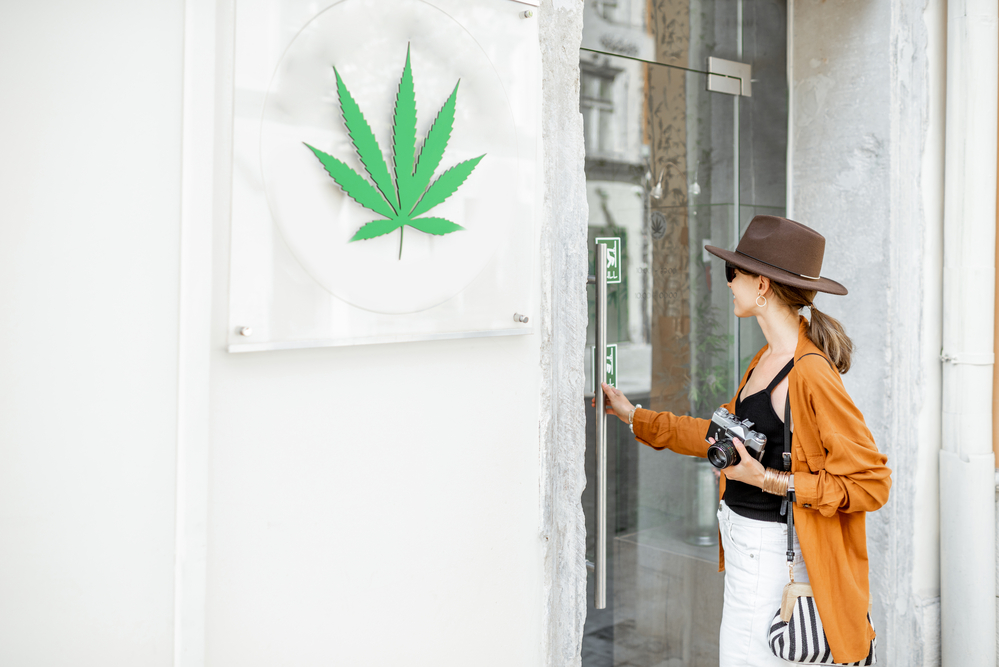
9. It’s illegal to go into a coffeeshop if you’re under 18
It’s not illegal for individuals under 18 years old to go into a regular coffee shop or ‘café’. Coffeeshops in the Netherlands, however, are special.
While this sounds like a strange law, we think it’s great that trees are just as protected as canal-side houses! 🌳
11. Keep off the grass — by law
A walk in the park or a picnic on the grass? Not in Oldenzaal, and many other Dutch towns.
Who knew it was possible to study and commit a crime at the same time? Image: Depositphotos
Walking, sitting, or just generally hanging out beyond the designated paths in parks, public gardens, green areas, and lawns are technically not allowed — unless you get a permit from the municipality, of course.
12. Tenants have incredible protection when renting
A law that’s good for tenants and not so good for landlords, tenants have an incredible amount of protection. In fact, the landlord can’t kick you out unless a court rules that they can.
Pretty bizarre if you aren’t paying the rent and trashing the place. Great if you don’t want to be made homeless by your landlord for literally no reason.
While some are good, others are just bizarre. But after all, the Netherlands seems to be functioning quite well, so these 12 weird laws that the Netherlands has must be doing their job!
What other Dutch laws do you find weird or cool? Tell us in the comments below!
Big news in the world of biotech and general global pill production: Eli Lilly is heading to the Netherlands.
The pharmaceutical giant is planning to invest €2.6 billion to build a brand-new factory that will employ about 500 people.
A big scientific hub
The factory will be located at Leiden Bioscience Park, one of the biggest science parks in Europe.
The spot was chosen because it’s close to the Port of Rotterdam, Schiphol Airport, a highly skilled talent pool, and the European Medicines Agency (EMA) in Amsterdam.
Leiden Bio Science Park is the Netherlands’ largest life sciences cluster and one of Europe’s leading biotech hubs.
Located between Leiden Central Station, Katwijk and Oegstgeest, it brings together more than 200 companies, research institutes, and startups focused on biotechnology, pharmaceuticals, and medical innovation.
Anchored by Leiden University and the Leiden University Medical Center, the park fosters collaboration between academia and industry.
It’s home to global players like Janssen and Astellas, as well as pioneering Dutch biotech firms. With modern labs, research facilities, and a growing innovation community, the Leiden Bio Science Park plays a vital role in advancing global health.
Once the plant is up and running, it will produce medications for a whole range of conditions and medical sectors: think diabetes, obesity, cardiovascular disease, oncology, immunology, and neuroscience.
In a press release, CEO Dave Ricks claims that: “Leiden Bio Science Park offers access to a skilled workforce, reliable infrastructure and proven pharmaceutical manufacturing capabilities.”
We’re investing $3 billion in a new manufacturing site in Katwijk, Netherlands, to boost global access to oral medicines. Building on our U.S. expansion, this helps deliver treatments to more patients, faster. Learn more about our M&Q commitment: https://t.co/n3GMDxHAkY… pic.twitter.com/FHf9HYFYFJ
One of the star products will be the weight-loss drug Mounjaro, which Eli Lilly hopes will go head-to-head with Denmark’s Novo Nordisk (who produces the popular Ozempic).
A new job market?
However, before anyone gets too excited about the job posts, there’s a tiny detail to sort out: who is going to work there?
As Marco Frenken, general manager of Lilly Nederland, explains to the NOS: “These are truly specialised jobs that require a tremendous amount of high-tech knowledge.”
So whether the roles will go to Dutch workers or incoming expats is still up in the air.
Construction is not guaranteed just yet
And that’s not the only thing that’s still up in the air: several permits still need to be approved, including those related to water, nitrogen, energy, and accessibility.
Because if there’s one thing the Netherlands enjoys, it’s paperwork.
After 30 years of Eurostar having the Channel Tunnel all to itself, Richard Branson’s Virgin Group has got the green light to shake things up.
The British billionaire plans to launch rival train services between London and Amsterdam by 2030, which could mean cheaper tickets and better service for travellers.
“It’s time to end this 30-year monopoly and bring a bit of Virgin magic to the Channel Tunnel,” the eccentric entrepreneur declares in a press release.
We’re not entirely sure what “Virgin magic” entails, but if it involves lower fares than Eurostar’s eye-watering prices, we’re listening.
What’s actually happening?
The British rail regulator has approved Virgin’s use of the Temple Mills depot in East London, the only facility suitable for larger European trains. This means Eurostar will have to share its toys with Virgin when the time comes.
Virgin plans to connect London with Paris, Brussels, and Amsterdam, with ambitions for further European expansion. They’ve already ordered twelve trains for the connection, according to RTL Nieuws.
But there’s still a long way to go. Virgin needs to secure commercial agreements, obtain financing, gain track access, and get safety approvals from both the UK and EU authorities.
Finding a parking place might just be a bit difficult
ProRail says there’s space on the high-speed line for Virgin. The tricky bit? Finding somewhere to park and clean the trains.
“That’s a bit more complicated,” Aldert Baas of ProRail admits to RTL Nieuws.
There’s also Belgium to consider. The track there is “a bit cramped,” which could complicate matters for any new international service.
Competition at last?
Virgin isn’t alone in eyeing this route. Italian state-owned Trenitalia, Spanish newcomer Evolyn, and Gemini Trains (backed by Uber) are all interested, though none have Virgin’s regulatory approval yet.
Meanwhile, Eurostar announced plans last week to purchase new double-decker trains for 2031. Perhaps the threat of competition is already working its magic.
Will Virgin’s “magic” actually materialise by 2030, or will this remain another ambitious plan that never quite leaves the station? What do you think?
The Dutch just seem to love coming up with unique names — so much so that many Dutchies are given a special roepnaam to replace their legal first name!
“A what?”— Exactly. This is a tradition that many internationals might not even know about. So, allow us to explain.
What is it?
Literally translated, roepnaam would be something like a “calling name.”
It’s basically a nickname, just more official if that makes sense. Okay, we know it doesn’t, but bear with us. 😬
Roepnamen are either chosen by the parents at a child’s birth or arise later in a child’s life. This can happen, for example, when a child can’t pronounce their own name correctly.
(Considering some Dutch names — take Sjoerd Sjoerdma, for example — it’s not really a surprise. 👀)
Roepnamen are usually derived from a person’s first name. And so, a Willem can become a Wil, Wim, Wiel, Willy, and so on.
Dude, my name (roepnaam) is Mark, but my legal names are Hermanus Klaas. My parents just took those names, jumbled the letters and distilled Mark out of that for my everyday name. So even if you got Caramel as your first legal name, you could still say you want to be called Mel.
Now it gets a little unusual: instead of using their legal given name, many Dutchies will go by their roepnaam all their life, even on official documents.
So really, a roepnaam is a nickname, but with more weight to it!
“Hi, my name’s Jan Frans, but my roepnaam is Frank. Don’t you dare EVER call me by my real name.” Image: Depositphotos
So, if you think you know your Dutch friends, think again; you may not even know their real names. 🙀
Why do they do it?
The Dutch love their roepnamen because they are personal and allow them to hide their often very Christian first names.
Like many other places, Dutch children are often named after their grandparents, who, let’s be honest, often don’t have the sexiest names.
This is where a roepnaam can come in handy. Not only can it make a name more age-appropriate and trendy, but it also allows people to distinguish themselves from others who share the same legal first name!
A roepnaam is also a great option for trans people in the way that it allows them to pick a name that they identify with more than with their given legal name. 👇
I had to put in my deadname as official name but they asked for “roepnaam” so i said Arden because that is what i want to be called and yeah turns out in arrived like that and i couldn’t be happier
— Arden ❤️🔥 he/they ✨Went to ONO✨ (@5secondsofArden) August 18, 2020
Why is it quirky?
Because it’s unique and fun! Why bother with a name you don’t like the sound of when you could just … change it? 🤷♀️
The roepnaam is a real-life testament to the fact nothing is ever really set in stone, not even your name.
And if the bureaucracy-loving Dutchies can get behind that, then so can we!
Should you join in?
If you don’t like your name, or if people struggle to pronounce it (and that bothers you), then why not?
Just make sure you let people know in advance. Otherwise, your co-workers will probably give you a quite confused look when you introduce yourself to the new intern as ‘Tom’ although your ‘real’ name is ‘Johannes’. 😉
What do you think of this Dutch quirk? Have you experienced it? Tell us in the comments below!
Getting paid as ZZP’ers shouldn’t mean losing Zzzs. This is everything you need to know about sending invoices as a freelancer in the Netherlands.
Feeling overwhelmed about invoicing is normal and curable! The task feels much more achievable when you are prepared.
This guide will help tackle all your freelance invoicing questions — from the deadlines to the fine lines. 👇
What is a freelancer invoice?
Unlike when you’re employed, as a freelancer, you don’t receive a paycheck at the end of every month. Instead, freelancers in the Netherlands must send invoices to get paid.
You’ve done all the hard work, and now it’s time for the client to pay you for the services or products you’ve provided.
However, there’s one more step you have to take before you get paid. It’s up to you to create and send invoices to your clients.
This should be done no later than the 15th day of the month following the month in which you supplied the service or product.
Whether you’re a newbie or a seasoned ZZP’er, invoicing can be headache-inducing. With an easy-to-use tool like Qonto, bookkeeping and invoice management become a breeze, and, with prices starting from a super-affordable €7/month, it won’t break the bank either.
Why should freelancers send invoices?
Invoicing is incredibly important as a freelancer to ensure you are complying with both law and tax regulations in the Netherlands.
It’s important to know that the Dutch tax system classifies freelancers as entrepreneurs.
Being an entrepreneur means sending invoices. Image: Magnific
If you are classified as an entrepreneur in the Netherlands, you must charge and account for BTW (or VAT, Value-Added Tax) on your services.
And that requires a formal record of transactions, AKA our friend: the invoice.
But it’s not just about compliance — it looks better for your business too.
A polished and professional invoice system can boost client confidence, improve business relationships and ensure stability as you fly your freelancer flag.
How to create an invoice as a freelancer in the Netherlands
Now that you’re crystal clear on the premise of freelancer invoices, the next step will be much easier — let’s send one!
📄 Gather all the important information
There are a few important documents and details you have to gather before creating your invoice.
If we could talk to our naive, new ZZP’er selves, we’d make TRIPLE sure we knew all about VAT, had a clear overview of our costs, and that all our personal and financial details were updated.
However, there are two particularly important details you must have: your BTW number (BTW-identificatienummer) and your KvK number (Kamer van Koophandel number).
What is my BTW number?
After registering as a freelancer in the Netherlands, the Belastingdienst will issue your BTW number (BTW-identificatienummer). This is essentially your VAT ID and must be used during all transactions with customers and suppliers.
Your BTW number includes: the country code NL, nine digits, the letter ‘B’ and a two-digit check number.
Note: If you provide goods or services to another EU country, you will also need your customer’s BTW (or VAT) number.
What is my KvK number?
As for the KvK number (Kamer van Koophandel nummer): this is your business’s unique identification number, and every business in the Netherlands has one.
You are given this eight-digit number when you register your business at the Dutch Chamber of Commerce.
What else should be included in my invoice?
There are several other important elements you must add to complete your invoice:
The applicable VAT rate
BTW (VAT) amount
Invoice date
Invoice number
Your name and address
The name and address of your customer
The date of delivery
Which goods or services were supplied
The quantity of goods or services
⏳ Know when to send an invoice
Listen up — you must send your invoice no later than the 15th day of the month following the month in which you supplied the service or product.
So, if you’re a freelancer who sold something to a client during April 2025, you must send the invoice by May 15, 2025.
Sent it on time? Next, the client must pay within the payment term. 👇
📅 Add a due date
One important detail when invoicing as a freelancer in the Netherlands is deciding the payment term (AKA the date the client must pay by).
If you work with clients, you can decide on a reasonable payment term.
Make sure you include the agreed-upon payment term on your invoice, i.e. “Due Date: Monday, May 5, 2025” or “Payment due within 30 days”.
While there isn’t an explicit limit on the payment term, around 30 days is best practice to maintain a regulated cash flow.
However, this is not the case if you deal with companies or governments.
If you’re invoicing companies or a governmental body, then the due date must comply with the maximum term that you have previously agreed upon. This is usually established as part of a contract.
🔢 Always number your invoices
Don’t forget to number all your invoices sequentially for VAT purposes.
This is an important step — and one you’ll have to rectify if you forget.
🛠 Consider using an invoice management tool
There’s no sugarcoating it; there’s a lot to remember. Having such long checklists can feel overwhelming, especially when balancing all your other freelancer to-dos and not-to-dos.
When you need to stay on top of things and your own spreadsheets just aren’t cutting it, an invoice management tool can be a good way to alleviate the load.
Many have handy reminders, neat lists and centralised payment plans to help you handle invoicing as a busy freelancer.
Qonto’s affordable basic plan offers all the essential invoicing tools and lets you choose add-ons such as automated recurring invoices, custom payment reminders, and unlimited e-signatures for quotes.
As long as you include all the correct details, there is no set template for freelancer invoices when it comes to design and layout.
That’s not a call to stretch your creative legs — yellow writing on a purple background isn’t going to cut it.
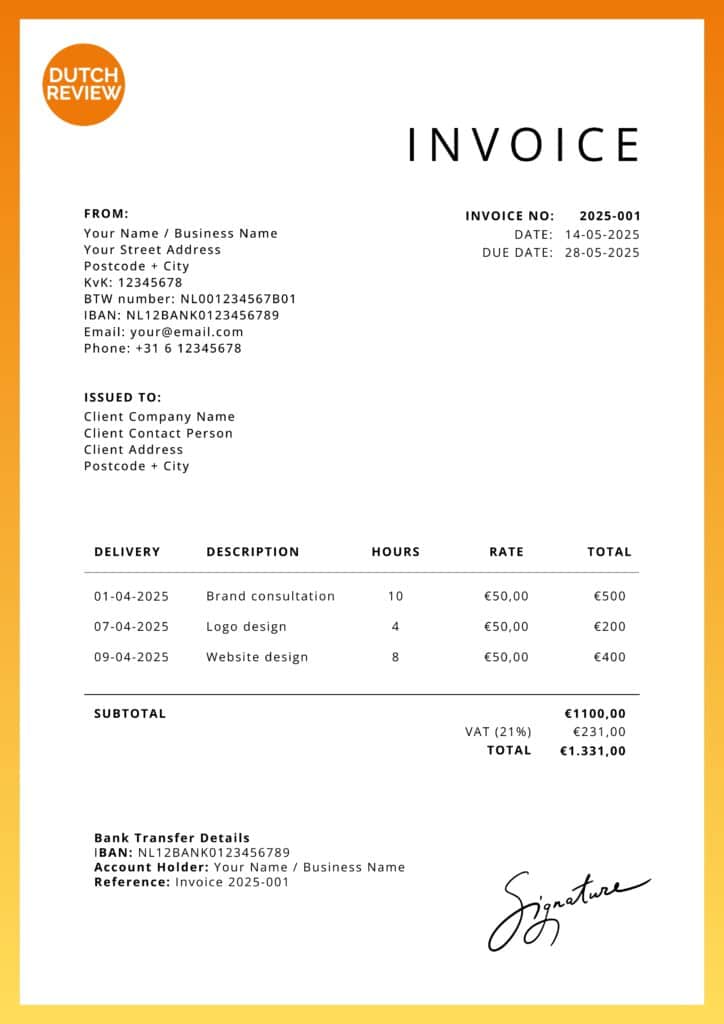
Think clearly and accessibly, not creatively chaotic. Here’s a neat example:
Image: DutchReview
How to send an invoice in the Netherlands
Once you’ve got all your details in order, you might be thinking — how should I send this?
There are three different ways you can choose to send your invoice in the Netherlands. 👇
Sending an invoice by post
If you send an invoice by post in the Netherlands, it’s similar to standard mail.
That being said, it’s a far less common method these days — you might feel more secure with the popular electronic options.
Electronic or e-invoice
More and more freelancers in the Netherlands are sending e-invoices. They are a great option for keeping records in check, as they are processed automatically.
That’s where digital tools for freelancers come in — enabling you to send the invoice as an electronic document, with all required details fixed in place, via a secure server or accounting software.
Always ensure your client has agreed to accept an e-invoice first — this isn’t something they are obliged to accept! It is only mandatory if you carry out work for the Dutch government.
If you’re not sure where to start when selecting an invoicing platform, browse Qonto’s intuitive product tour. Look and feel right for you? Check out their customisable plans to finally take control of your freelancer finances.
Digital invoice
A digital invoice is when you send a PDF version of your invoice to a client or business by email — easy-peasy.
Sending invoices outside the Netherlands
Are you a freelancer who deals with other countries? Firstly, congrats, you international star. 😎
Secondly, you might need to take extra care to ensure you meet other countries’ varying invoicing requirements.
Got an international client? Congrats! Now, let’s figure out how to invoice them. Image: Magnific
For example, you should include your customer’s VAT identification number on the invoice. You may also need to apply for VAT exemptions.
The Belastingdienst nicely lays out how to send invoices to other countries correctly, including the international rules for sending e-invoices.
Frequently Asked Questions about invoicing as a freelancer
It’s not just the HOW that can be confusing; you probably have many other burning questions about invoicing as a freelancer in the Netherlands. Let’s answer them.
What happens if I don’t send an invoice on time?
There’s something called the Limitation Period for freelancers sending invoices in the Netherlands.
If your invoice passes this, your client might not have to pay anymore.
The invoice is out of date:
5 years after the prescribed payment term has expired
2 years after the payment term has expired, if you sell products to private individuals
5 years after the payment term, if you sell services to private individuals
Want to extend the Limitation Period? Dat kan (that’s possible); you just need to send the client a registered letter. The limitation period will then restart, called stuiten (interruption).
What happens if I haven’t been paid after sending an invoice?
You’ve done all the hard work, then the extra work of sending an invoice, and you’re still waiting for payment.
Not good — whether you haven’t been paid on time or at all, you could have the right to:
Charge a standard fee for collection costs of €40
Charge reasonable compensation for expenses incurred, such as legal fees or collection costs
Charge statutory interest, calculated from the date the payment term expires
Should I keep my invoice records?
This is a definite YES, as it is a requirement by law, and an auditor could come knocking.
Invoices are part of your business records — you must keep them for seven years. This increases to 10 years for immovable goods, such as property.
Keep them in the same form that you sent them, making sure all the required information is intact. You can scan receipts and invoices to save them digitally.
Do freelancers pay taxes in the Netherlands?
Freelancers must pay taxes in the Netherlands.
If your services generate regular income, the Dutch tax authority requires you to pay taxes. Most ZZP’ers pay both VAT and income tax.
It’s worth noting that there are multiple subsidies available to freelancers in the Netherlands, from tax deductions to social assistance programs.
Do all freelancers have to send invoices?
Let’s break this one down, as “freelancer” can be a broad term.
According to Belastingdienst, you must send an invoice if you supply goods and services to:
Other entrepreneurs
Legal entities that are not entrepreneurs (for example, associations and foundations)
Private individuals, in specific cases (e.g. if you sell a new or nearly new means of transport to a customer in another EU country)
Is there a minimum amount to send an invoice?
There is such a thing as a Simplified Invoice (Eenvoudige Factuur). This is for when the total amount is less than €100 (VAT included) or when you are rectifying a previously sent invoice.
That means the requirements are less strict, with only the following details required:
Name and address
VAT amount
Invoice date
Goods or services supplied
In the case of a rectified invoice, a reference to the initial invoice.
However, it’s not quite as ”simple” as it sounds, since you cannot send simplified invoices if you supply:
Goods to another EU country (intra-community supplies)
Distance sales
Goods and services in an EU country, while the VAT regarding that service has been reverse-charged to the person receiving the service.
What are Adjusted Invoice Requirements?
Adjusted Invoice Requirements (Aangepaste Factuureisen) are special rules that apply to certain entrepreneurs, like those in the taxi, transport or hospitality industries.
Also, if you are exempt from VAT or taking part in the small business scheme (KOR), you do not have to include VAT on invoices.
What if I need to send an invoice to the Dutch government?
Carrying out work or services for the Dutch government? How mysterious.
You will need to send an e-invoice: it is mandatory for all government organisations and other contracting authorities to be able to receive and process them.
After a long day, week, or month of freelancer frenzy, the last thing you want is an invoicing headache. Avoid the chaos and tackle these important bills with preparation and awareness.
Follow our advice to set up a clear, manageable invoicing process so your customers will be thanking you (and paying you, of course).
How do you find sending invoices as a freelancer in the Netherlands? A headache or a piece of cake? Let us know your experience in the comments below. 👇
The Hunger Winter took place as World War II was in its final year. Following a German blockade, food supplies to the Netherlands dwindled, and people began to starve.
It was a rare instance of famine in a developed and wealthy country in recent history. Let’s talk about it.
Why was there a Hunger Winter?
If the Dutch had survived the war so far without running into food shortages, why was there a famine in the winter of 1944? There were a couple of reasons.
The obvious and literal cause of the famine was a German blockade enacted in retaliation to a Dutch railway strike that aimed to help the Allied invasion of the country.
The German army blocked water and road routes into the Netherlands and only lifted the water blockade when temperatures had already fallen too low to allow boats to operate in the icy conditions.
At this point in the war, Allied forces had liberated the south of the Netherlands. But as the forces pushed further north, the failure of Operation Market Garden impeded their progress.
The Allied forces failed to seize a bridge over the Rhine at Arnhem. They decided to focus on other parts of the liberation process first, including capturing the French ports of Calais, Boulogne and Dunkirk.
Their progress into Germany slowed down at the time because they couldn’t use the port of Antwerp.
How did people survive the Hunger Winter?
Between 18,000 and 22,000 people died during the Hunger Winter, most of whom were older men.
When we talk about survival rates, it’s important to remember that it was not just the supply of food that was hampered by the blockade.
So, not only was it a very hungry winter, but it was also a very cold winter for the Netherlands from 1944 to 1945.
The starvation was particularly intense in cities — after all, in the countryside, most people lived around farms.
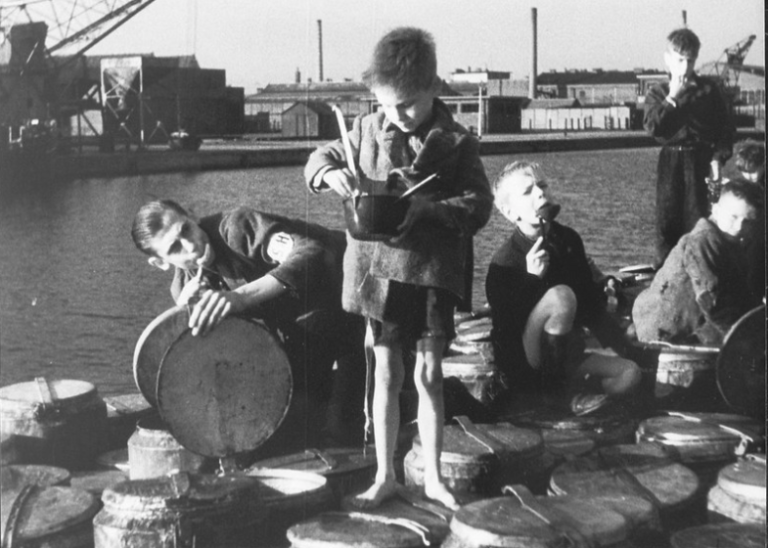
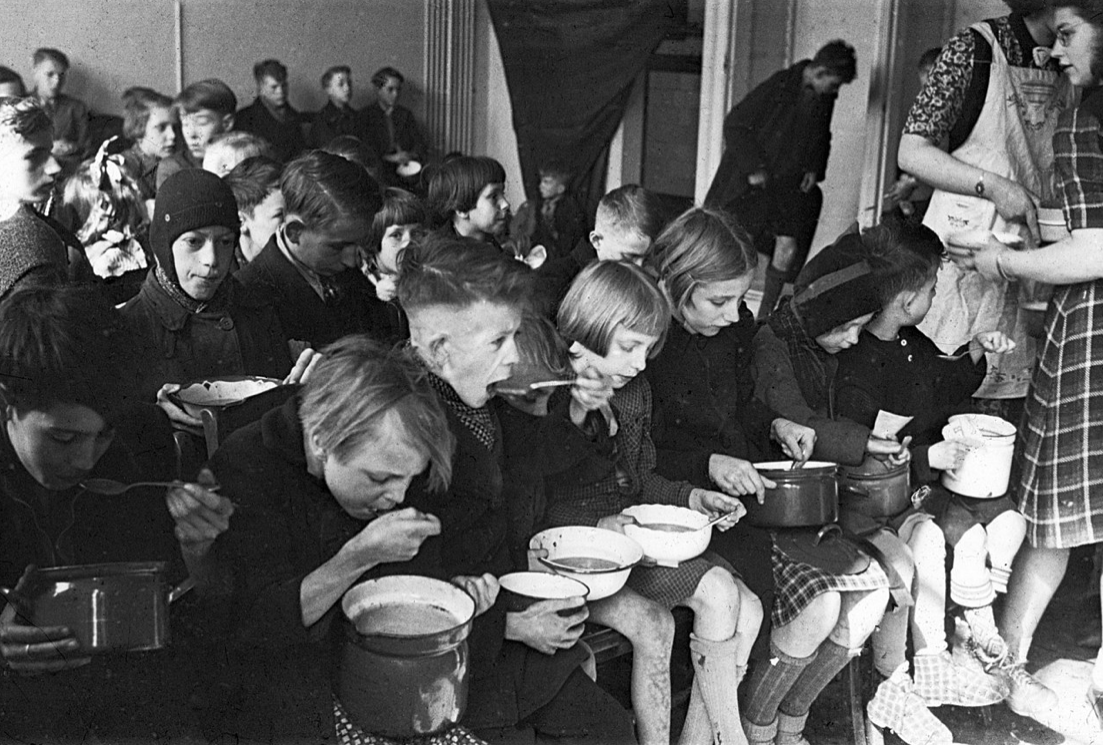
Children eating soup. Image: Menno Huizinga/Wikimedia Commons/Public domain
That didn’t mean they didn’t experience food shortages, but the survival rates were much higher outside urban areas. For the Dutch city-living population, times were hard.
So how much food did people consume during the Hunger Winter?
Rations decreased in calorie content over the long winter.
In big cities like Amsterdam, adults had to contend with only 1,000 calories of food by the end of November 1944 — but that dropped to 580 calories a day by February 1945. Even the black market was empty of food.
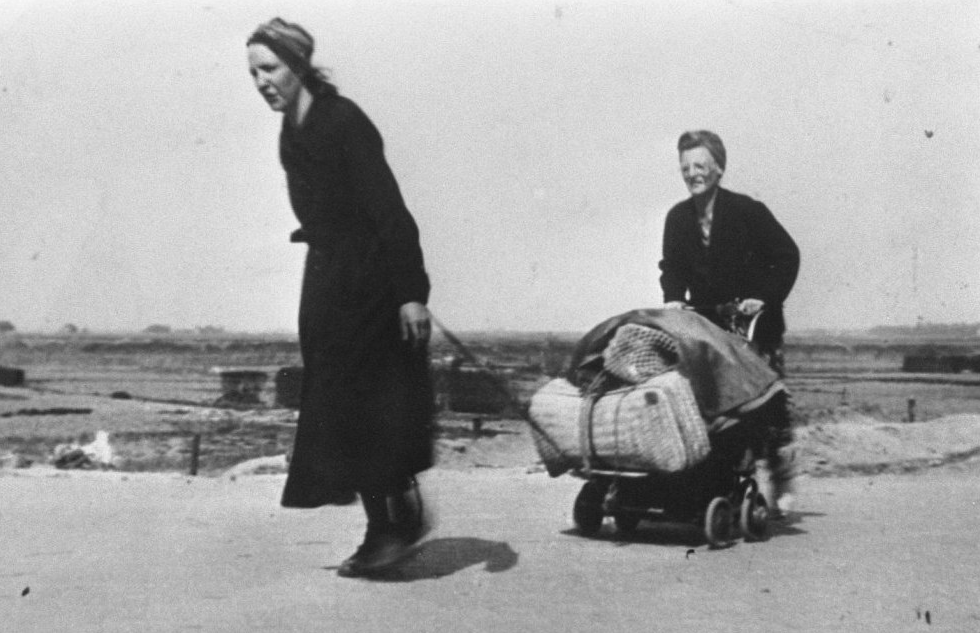
People walked long distances to farms to trade anything they had for extra nourishment. As the winter wore on, tens of thousands of children were sent from cities to the countryside so that they, at least, would get some food.
When it came to heating, people desperately burned furniture and dismantled whole houses to get fuel for their fires.
How did the Hunger Winter end?
The Hunger Winter came to a close in May 1945 when the Allies liberated the Netherlands, which partially alleviated the starvation of the Dutch population.
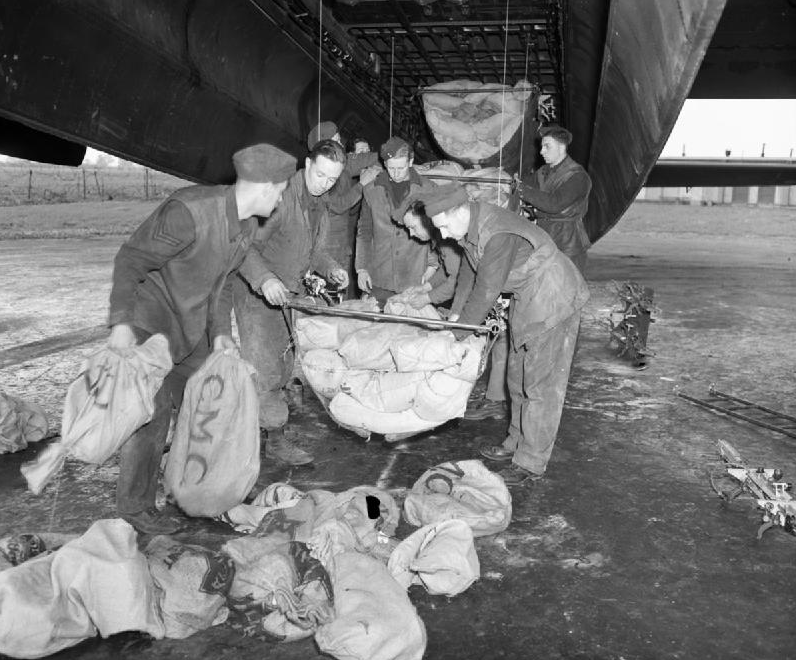
RAF plane being loaded up with food. Image: Imperial War Museums/Wikimedia Commons/Public domain
Sweden shipped flour, and the Dutch made it into bread to feed the people. The Germans also allowed airdrops of food supplies from the end of April forward.
What were the effects of the Hunger Winter on the Netherlands in the long term?
The Hunger Winter had long-term effects on the health of the Dutch population. Even when the blockade ended and people returned to eating normally, starvation had long-lasting effects on the body.
The Dutch Famine Birth Cohort Study revealed that the children of women who had starved during the Hunger Winter had health problems, including higher rates of diabetes, obesity, and cardiovascular disease.
One study also showed that the grandchildren of women who had experienced famine were smaller than average at birth.
How is the Hunger Winter remembered in the Netherlands today?
The Hunger Winter is usually remembered in conjunction with the resistance movement during World War II.
There is an exhibition on it at the Resistance Museum in Amsterdam, for example. There are also statues commemorating the Hunger Winter.
The Hunger Winter wasn’t the first time people in the Netherlands had experienced starvation — the Siege of Leiden during the Eighty Years’ War was another occasion where food shortages affected the population.
Did we miss anything important about the Hunger Winter? Let us know in the comments below.
First, a note to my editor: I’m really sorry this article is late. I don’t really have a reason. I’m just an Australian without an agenda. 🤷🏻♀️
Dutchies balance work, study, friends, family, sporting commitments, and other extracurricular activities, dashing quickly between these activities on two human-powered wheels. This is made even more possible by the Dutch agenda.
The Dutch people’s organisation shows in the results.
So how are the Dutch so damn productive? I’ll answer this question with a challenge: ask a Dutchie to meet up for a koffie.
Cue: the Dutch agenda
What is this elusive agenda? It’s a secret guarded by generations of Dutchies. It contains the solution to all the world’s problems. It’s the ultimate pen versus the sword. Well, the book versus the sword. It is … a diary.
How is a simple diary the ultimate tool in the Dutch arsenal? Well, as with anything, it all comes down to the planning.
It’s a strange social ritual. A group of Dutch friends suggest a dinner together. They stand in a circle and pull out their individual books. Then the date trading discussion begins.
Next Wednesday? Nee, Joost has hockey training. The following Sunday? Nope, Froukje is travelling to Eindhoven. Tuesday in five weeks? Too bad, Tim has scheduled some Netflix time that evening.
A typical example of Dutch agenda scheduling.
In fact, scheduling a time slot to socialise almost needs to be scheduled itself because it’s such a time-consuming activity. (But sorry, Lotte needs to reschedule the scheduling session for the weekend if that’s okay.)
The Dutch agenda ain’t pretty
While the agenda is the greatest tool the Dutchies have in their belt, their most prized possession, and quite literally their life in their hands, the agendas quite often look like a kindergartner’s first workbook.
You see, just like the Dutch, agendas are cheap. A €2 option from Hema will do the trick for the full year, or a freebie from the Postcode Lottery filled with coupons is even better.
Unlike the #planners on Instagram, this is not the place for stickers, nice handwriting, and washi tape.
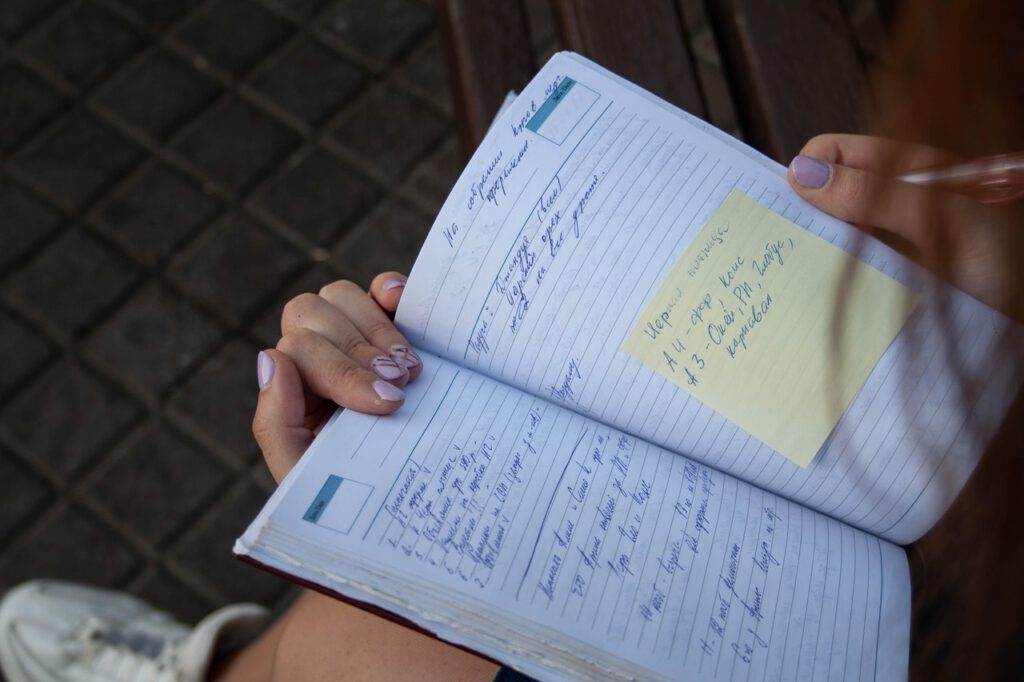
Only the most basic Bic blue pen may write in the Dutch agenda, and its glorious lightweight pages cannot be touched by an item as crude as White-Out.
Instead, if an appointment changes, a battle scar must be shown as the Dutchie vigorously scratches and scabs away the failed date, and writes the new, superior appointment below.
Scribbles and scrawls all belong in a typical Dutch agenda. Image: Pexels
The result is a casual dinner with friends — in three months time. And remember, don’t be late.
Does the Dutch agenda work? Well, the results speak for themselves. The Dutch rank as some of the happiest people in the world. No time to read this now? Take a leaf out of the Dutch agenda and write it in your planner.
As an international, have you adopted the Dutch agenda? Tell us in the comments below!
Munching on delicious oliebollen, warming yourself with a steaming mug of glühwein (mulled wine) after a round on the ice rink, and dancing to Christmas music under twinkling fairy lights: Christmas markets in the Netherlands are amazing.
But the Netherlands has spectacular Christmas markets in almost all of their cities — and that’s not counting the amazing fairs in nearby Belgium, Germany, and France! Choosing the best one to visit can be as difficult as only eating one stroopwafel.
So here’s our cadeautje (present) to you: the ultimate list of the best Christmas markets happening in and around the Netherlands!
Looking for the perfect Christmas market? Just jump to it! 👇
1. Christmas Town Valkenburg: an enchanting market in a cave
The entirety of this quaint Dutch town in Limburg comes alive during the Christmas season with Christmas Town Valkenburg.
Boasting the largest underground Christmas market in Europe, the Gemeentegrot (Municipal Cave), these centuries-old tunnels wind under the ruins of the castle of Valkenburg and are filled with over 50 festive market stalls for you to explore.
If exploring the stalls has tired you out, be sure to stop off at Santa’s Village for some delicious oliebollen, waffles, crêpes, and churros — washed down with hot chocolate or mulled wine.
📅 Dates: November 14, 2025 – January 5, 2026 💰Entry price: prices vary from €8.50 to €9 depending on attractions 📍Location:Valkenburg
2. Het Amsterdamse Winterparadijs: part market, part seasonal paradise
Grab yourself a mug of mulled wine and clear your agenda because the sixth edition of Amsterdam Winter Paradise begins this December!
At this Dutch Christmas market, you can stroll down festive booths selling seasonal products and delicious goodies under garlands of twinkling fairy lights or even check out exclusive live musical performances by several Dutch artists.
And activity-hungry shoppers needn’t fret! Whether you’d rather visit the skating rink, take a ride on the Ferris wheel, or try your hand at skiing, this Christmas market features a winter wonderland unlike any other.
Note: all events taking place after 9 PM are 18+. The venue also enforces a strict “no sweatpants” dress code for late-night events.
📅 Dates: December 13, 2025 – January 3, 2026 💰Entry price: prices starts from €24 depending on the day 📍Location:Amsterdam RAI
3. Christmas Market Haarlem: the Spaarnestad puts on its winter finery
The centre of Haarlem will be transformed into an enchanting Christmas market this December that’ll have you feeling merry long before the glühwein hits!
The market also offers the best selection of seasonal gifts, mouthwatering delicacies, and warm beverages for the absolute gezelligste experience.
Meanwhile, if you fancy some carols, you’ll have your pick of several choirs and a moody “Dickens Orchestra”.
📅 Dates: December 12 – 13, from 10:30 AM to 8 PM 💰Entry price: free 📍Location: Throughout Haarlem’s city centre
4. Magical Maastricht: a true Limburgian Christmas market
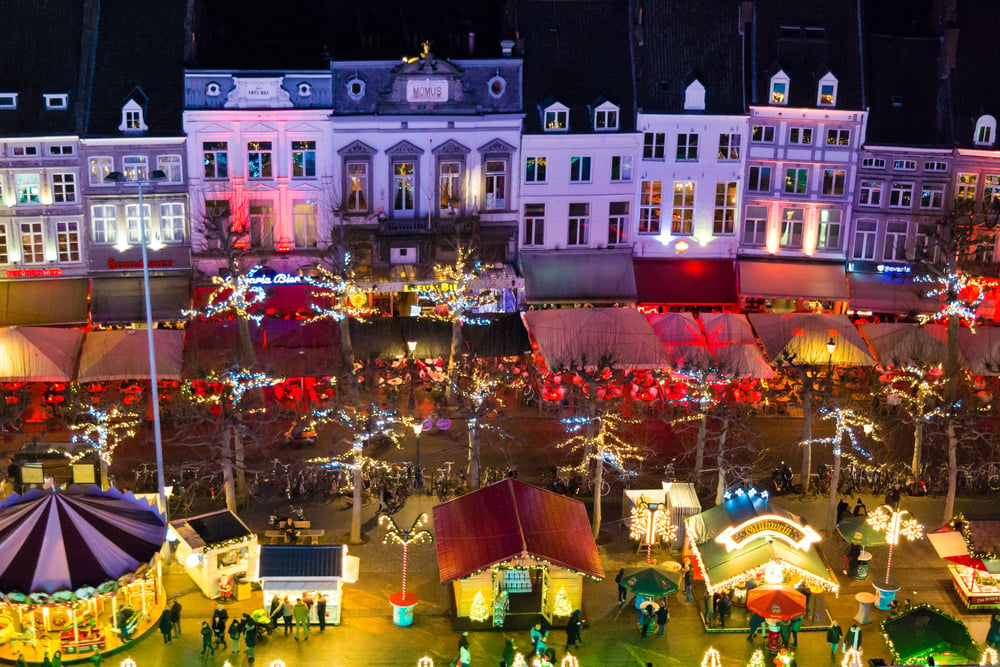
We can almost smell the glühwein from here! 😋 Image: Depositphotos
Stalls will be filled with special regional products, delicious seasonal goodies, and cheery decorations.
And when you’ve skated your heart out at the ice rink and picked out some awesome gifts for your loved ones, you can pop into the toasty Almhütte chalet for some glühwein (mulled wine).
Visitors will also be treated to festive light routes, with Maastricht’s walking paths illuminated by thousands of shining lights. Gezellig!
📅 Dates: November 28 – December 29, 2025 💰Entry price: free 📍Location:Vrijthof, Maastricht
5. WinterWonderWeken Leiden: floating festivities in the City of Discoveries
Stroll down the stunning Hooglandse Kerkgracht with a warm mug of glühwein (mulled wine) in hand and explore Leiden’sWinterWonderWeken!
This nostalgic Christmas market boasts stalls packed full of seasonal cheer — and, best of all, a floating ice rink! Twirl, pirouette, and dance over one of the most picturesque canals in the heart of the city.
Even better, if you plan on shopping in Leiden, you’ll be pleased to know that shops are also extending their opening hours during the Christmas season.
6. Winter Market Molen de Ster: Utrecht’s cosiest winter market
Dutch Christmas markets are a masterclass in gezelligheid! Image: Depositphotos
Fancy a Christmas market in the courtyard of a gorgeous windmill? Then you need to check out the Winter Market at Molen de Ster!
You can stroll through stalls full of unique handmade goods from Utrecht’s artists and designers, let your children frolic in the mill playground — and perhaps pat an adorable goat or two.
Visitors are also offered a free tour of the windmill, and there will be hot chocolate and warm snert (pea soup) for sale. Lekker hé?
📅 Dates: December 14 – 15, from 11 AM to 5 PM 💰Entry price: free 📍Location:Molen de Ster, Utrecht
7. Royal Christmas Fair: a festive market in The Hague’s historic centre
With over 100 stalls and a diverse cultural programme to celebrate the season, the Royal Christmas Fair in The Hague is a definite must-see!
Still got time on your hands after picking out some truly amazing gifts from the market’s stallholders? Be sure to stick around for the spectacular light shows, and take a magical walk amongst the ice sculptures.
Those with kids will also have a chance to meet Santa Claus (in his sleigh!) and visit the special Children’s Christmas Fair.
📅 Dates: December 4 – 23, from 12 PM to 9 PM and open its doors at 5 PM on December 7 💰Entry price: free 📍Location:Lange Voorhout, Den Haag
8. Gouda by Candlelight: a Christmas market with old world charm
Gouda’s stunning Christmas market, Gouda by Candlelight, is here once again, with a dash of history amidst the seasonal cheer.
Shop for delightful seasonal products illuminated under the romantic glow of over a thousand candles, then watch the lighting of a Christmas tree that represents a long tradition of friendship between Gouda and the Norwegian city of Kongsberg.
But wait — the celebrations don’t stop there!
The city centre also plays host to a dazzling light festival, complete with singing, theatre productions, and more.
📅 Dates: December 12, with the opening concert starting at 2:30 PM 💰Entry price: free 📍Location:Gouda
9. Dickens’ Festival: Deventer’s festive trip back in time
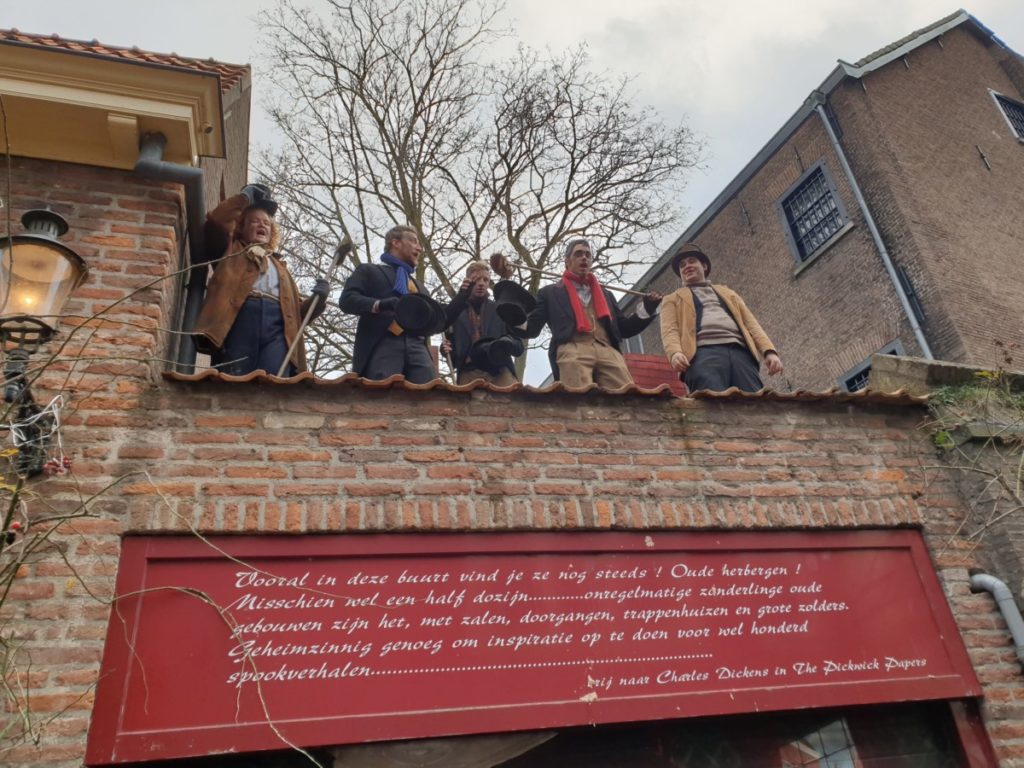
Please, Sir, can I have some more…of these fabulous Christmas festivities? ✨ Image: Aisha Brown/Supplied
Deventer’s gorgeous Lebuinuskerk will once again play host to the city’s cheery Christmas market, featuring around 75 stalls full of exquisitely artistic and handmade goods.
Not enough? We gotcha. Fans of Charles Dickens can’t miss the Dickens’ Festival, where 950 of his beloved characters come to life and take to the streets!
There will also be a special performance of the play Alles is Dickens and a Dickens Walk around Deventer featuring an accompanying radio play.
📅 Dates: December 14 (Christmas market at the Lebuinuskerk), December 14 – 15 (Dickens’ Festival) 💰Entry price: free 📍Location:Deventer
10. Archeon Midwinter Fair: the ultimate winter market for Renaissance fans
Want a less typical Dutch Christmas market? The 20th edition of Archeon Museum’s Midwinter Fair in Alphen aan den Rijn celebrates the Yule tradition, an ancient winter celebration observed by Germanic people.
Between a various live music events, a fantasy market with a seemingly endless array of stalls, and several tents full of food and drinks, there’s an abundance of things to see and do (and eat)!
Tip: Museum Card holders are offered discounted rates, so be sure to bring your card along if you have one.
Visitors can also try several activities at Archeon’s spellbinding theme park, such as archery, swordfighting, and a cosplay workshop.
11. Winter Heerlijckheid: Christmas magic set in a castle
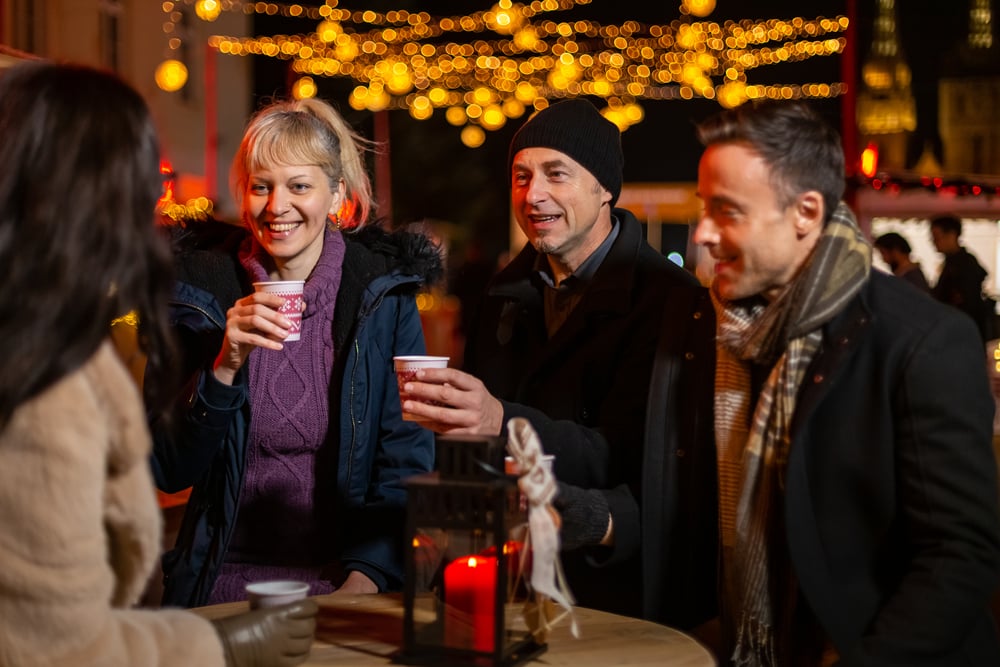
Heading outside to “chill”? Grab some mulled wine! Image: Depositphotos
Set in the gorgeous estate and castle of Warmelo in Twente, this outdoor Christmas market features over 100 booths selling a range of seasonal products that’ll have you buzzing with festive cheer!
Whether you’re dying to pick up the perfect winter scarf or a fancy bottle of wine, you’re sure to find something to get you into a festive mood.
📅 Dates: November 7 – 8 – 9 💰Entry price: €13.50 for adults, €5 for children aged 7 to 14, and free for children under 7 📍Location:Kasteel Warmelo, Diepenheim
Christmas markets beyond the Netherlands
If you’re looking for choices further afield or want to make a weekend getaway of it — great idea!
Here are some fabulous Christmas markets in Belgium, Germany, and France for an extra helping of festive cheer. 🎄
12. Winterland Hasselt: an alpine winter experience in the heart of Belgium
Winterland Hasselt will soon be here to treat you to a uniquely alpine experience with over 50 market stalls and drinks in a traditional Austrian mountain chalet!
Are you looking for fun activities whilst you shop? This Christmas market’s got it all, whether you’re more into taking up Hasselt dancing, indoor skating, or exploring unique attractions like Arthuro Cardini’s Mini-circus.
And if you’re also interested in entering the new year in style, be sure to book your ticket for Winterland Hasselt’s New Year’s Eve party.
13. Winter Wonders: Brussels celebrates Christmas in style
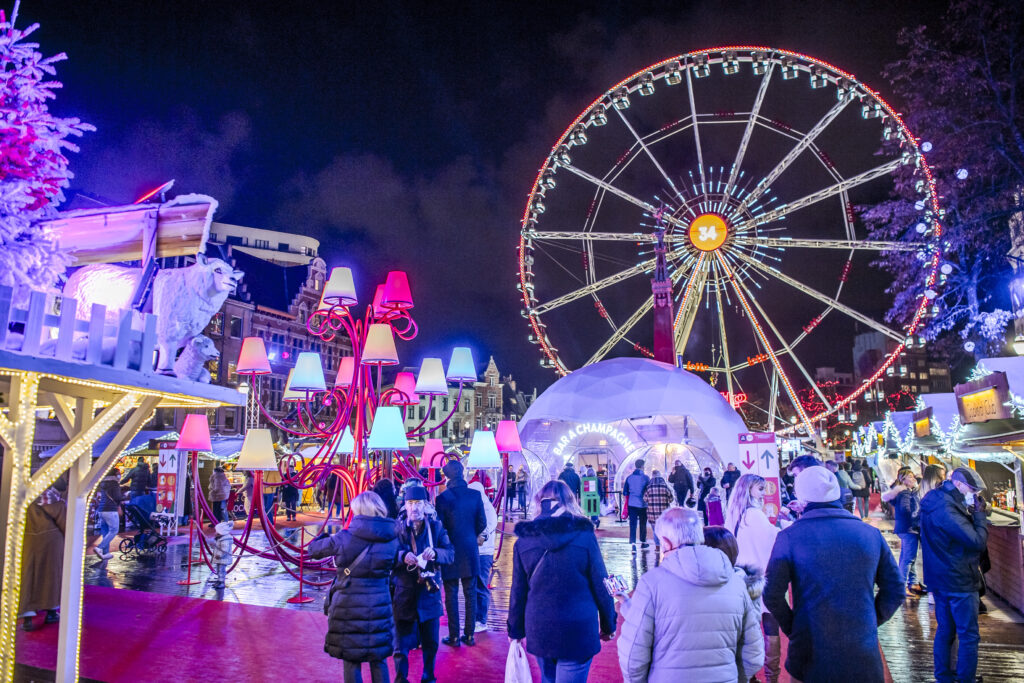
It’s fun for the whole family, so you don’t want to give this one a miss! Image: Press Photos
The 24th edition of Brussels’ Winter Wonders offers visitors a spectacular sound and light show at the Grand Place.
Dubbed one of the best Christmas markets in Europe, it features many fun cultural activities in the heart of this stunning city.
Between going ice skating, exploring 250 stalls full of Christmas goodies, and checking out entertaining shows for both adults and children, there’s loads to see and do!
14. Köln Cathedral Christmas Market: traditional winter cheer
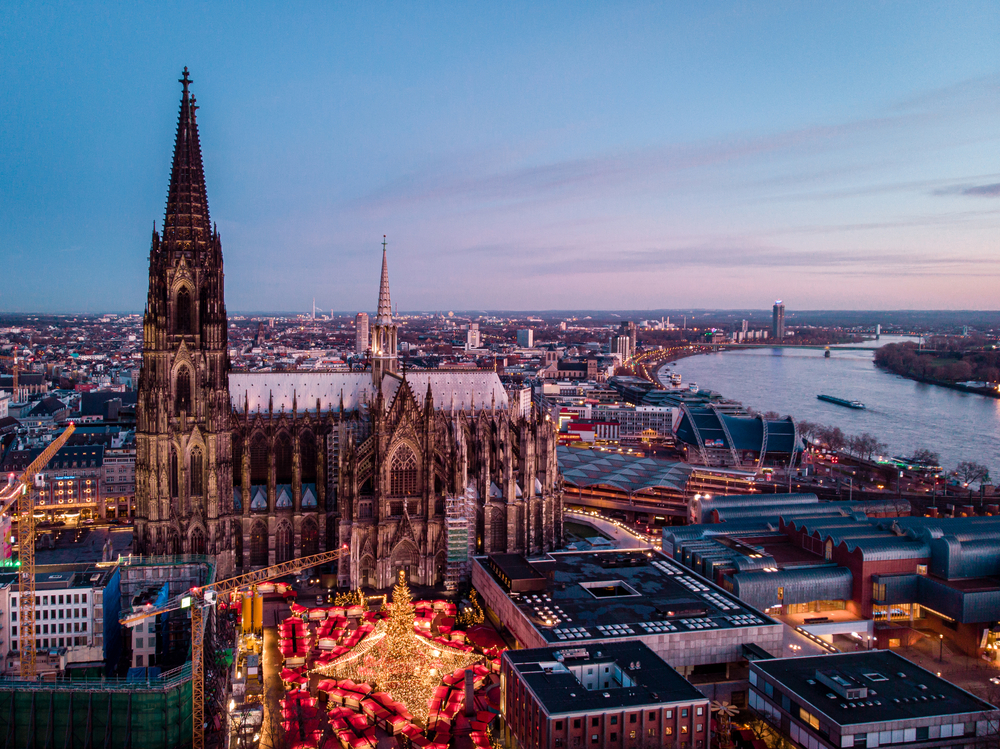
Christmas festivities in one of the most beautiful cities in Europe! Image: Depositphotos
A Christmas market on the grounds of a UNESCO World Heritage Site — what could be merrier?!
This Christmas market has over 130 stalls selling handicrafts, gifts, and seasonal food. You can pick up glassblown items, festive ceramics, children’s toys, or even personalised embroidered items.
As for entertainment, there are over 100 (free!) events on the central stage.
This quaint German town’s underground wine and Chrismas market is set in a 16th-century wine cellar, where twinkling fairy lights and cheery music are sure to get you into a festive mood.
There’s much to discover, including artisan food products, jewellery, antiques — and, of course, wine. 🍷
Tip: We suggest driving there and making an overnight stay. If you don’t have a car of your own, why not try car-sharing or renting a car?
16. Metz Christmas Market: seasonal cheer in one of France’s most beautiful cities
Pick up a trinket or two — and a large helping of Christmas cheer! Image: Depositphotos
Step aside, Paris, there’s another French city brimming with seasonal cheer!
The Metz Christmas Market promises a shopping experience full of festive gifts, fabulous festivities, and wine tastings.
And if you need to chill after you’ve shopped yourself giddy, pop on a pair of skates and have a twirl at the city square’s giant ice rink.
Tip: For a truly breathtaking view of the city, you need to check out the Place d’Armes, where a giant Ferris wheel will lift you high above all the festivities.
Visiting a Christmas market is the best bucket list item if you’re staying in the Netherlands over the winter!
City centres up and down this cheese-obsessed country blossom with cheery market stalls selling homemade goods, festive decorations, and — best of all — delicious seasonal food.
Eating delicious food, having fun on the ice, AND shopping? Sign us up! 🙋🏻♀️ Image: Depositphotos
As you wander through these stalls, you’ll also be treated to the scent of glühwein and oliebollen (a scrumptious deep-fried ball of dough). Lean into temptation and give these a try!
More activity-hungry visitors are also in for a treat, as Dutch Christmas markets generally offer a range of fun activities. Whether you’re a lover of ice skating, going on fairground rides, or just swaying to some live music, you’re guaranteed to have a fabulous time.
What to eat and drink at a Dutch Christmas market
In addition to fan favourites oliebollen and glühwein, there are many other delicious things to try!
Appelbeignets and appelflappen are deep-fried apple pastries which go very nicely with hot chocolate 🍎
If you’re in the mood for something more savoury, then try some bitterballen (deep-fried and breaded meatballs) or their longer cousins kroketten (a deep-fried and breaded cylinder of ragout)
Every Dutch Christmas market will serve glühwein, a type of spiced wine that is served hot and will warm your belly🍷
You can also pick up bags of kruidnoten — hard round cookies made of speculaas 🍪
Ready to experience the Dutch winter wonderland at these incredible Christmas markets in the Netherlands and beyond? Pop on your gloves, grab your warmest winter coat and hit the streets — the glühwein is calling your name!
Which Dutch Christmas markets are you going to visit this winter? Tell us all about them in the comments below!