With Bitcoin reaching a new all-time high and the new US president bringing out his own “meme-coin”, many Dutch people are becoming interested in cryptocurrencies (again). But with the annual income tax just around the corner, you might wonder: how do crypto taxes work in the Netherlands?
Well, we hate to be the bearers of bad news, but when it comes to taxing cryptocurrency, the Netherlands is among the strictest countries in the world.
How strict, you ask? As Crypto-Insiders writes, a recent study by HelloSafe has ranked the Netherlands in the top 5 globally for the highest crypto tax rates.
But what exactly does this mean for Dutch crypto investors? Let’s break it down.
Crypto taxation in the Netherlands
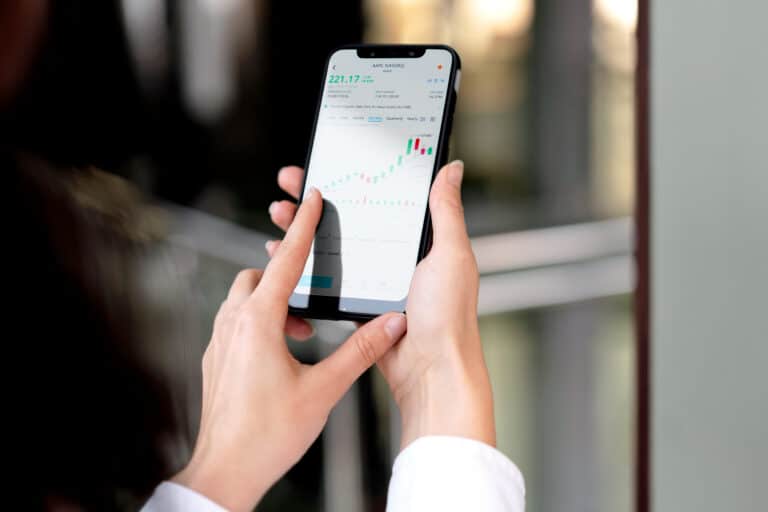
Whether you’re using cryptocurrencies as a way to diversify your investment portfolio or to have fun on one of many crypto gok sites, one thing is certain: you’ll pay a tax rate of 36% on a presumed annual return of 6.44%.
Taxes on crypto work the same way as taxes on stocks in the Netherlands. Image: Depositphotos
“Presumed return?” I hear you ask — and yes, you read that right. In the Netherlands, your investments are taxed on an estimated profit rather than the actual value of your assets. This counts both for shares in the stock market and cryptocurrency.
With this legislation, the Netherlands is the country with the fifth strictest crypto taxation laws in the world. Check out the top five:
Denmark with tax rates ranging from 37% to 52%.
Iceland with tax rates between 40% and 46%.
Finland with tax rates ranging from 30% to 34%.
Ireland with a flat tax rate of 33%.
The Netherlands with a 36% tax rate on a presumed return of 6.44%.
Perhaps not surprisingly, European countries dominate this list, with taxation policies that are often stricter than those in other parts of the world.
Many countries tax crypto outside of Europe based on actual income, which can lead to higher taxes for wealthier investors but may benefit those with lower incomes.
That being said, there are also some European countries that are true tax havens for crypto traders.
Crypto tax paradises
If you want to make the most of your crypto gains, you may want to consider moving to a country where crypto profits go untaxed.
In Europe, these include Switzerland, Luxembourg, Germany, Cyprus, and Malta. In these nations, crypto may only be subject to wealth tax under certain conditions.
For example, in Germany, you only have to pay taxes on your crypto if you hold it for less than a year before selling. Similarly, crypto gains in Luxembourg are tax-free as long as you have been holding your shares for more than six months.
In North America, countries like Canada and the United States take a progressive approach to taxing cryptocurrency, taxing it based on income. Australia follows a similar model, where tax rates depend on earnings.
So, what does this mean for Dutch investors?
For crypto investors in the Netherlands, it’s crucial to understand how the tax rules impact your earnings. So, let’s get into it a little more.
In the Netherlands, crypto gains are taxed under box 3, which is a collective name for everything you can count as your wealth. This includes savings, debts, stocks, and cryptocurrencies.
Crypto gains fall into box 3 when filing your tax return. Image: Depositphotos
When filing your tax return, the governmentlooks at how big your total power is in box 3. Some of this box 3 wealth is so-called “tax-free capital”, meaning you don’t have to pay tax on it.
Tax-free capital in 2025 is €57,684 as a single filer or €115,386 if you have a tax partner.
It’s also important to know that, when you file your taxes, you must enter the value of your assets on January 1 at midnight of the year of the declaration. For example, if you’re filing taxes for 2024, you must declare the value of your assets as they were at 00:00 on January 1, 2024.
If you add everything together in box 3 and come out above this tax-free capital, you must declare this in your income tax return.
Let op! If you don’t report your crypto, it is considered as “undisclosed assets.” This could result in a fine of up to three times the amount owed. In severe cases, they may even take legal action against you.
The Dutch tax on presumed profits can significantly reduce your earnings, making accurate record-keeping essential. Being informed about the tax implications helps you plan better and avoid surprises during tax season.
How do you feel about the Netherlands’ strict crypto tax policies? Share your thoughts in the comments below!
If you’re sick and tired of spending your money in expensive and touristy Amsterdam, there are several free things you can do in The Hague!
When asked why I enjoy The Hague so much, I always tell people that it’s the perfect balance between busy and calm. The city centre is lively, but there are many locations where you can enjoy some peace.
So, before you spend all of your life savings in Amsterdam, here are 11 things you can do in The Hague — without spending a single dime.
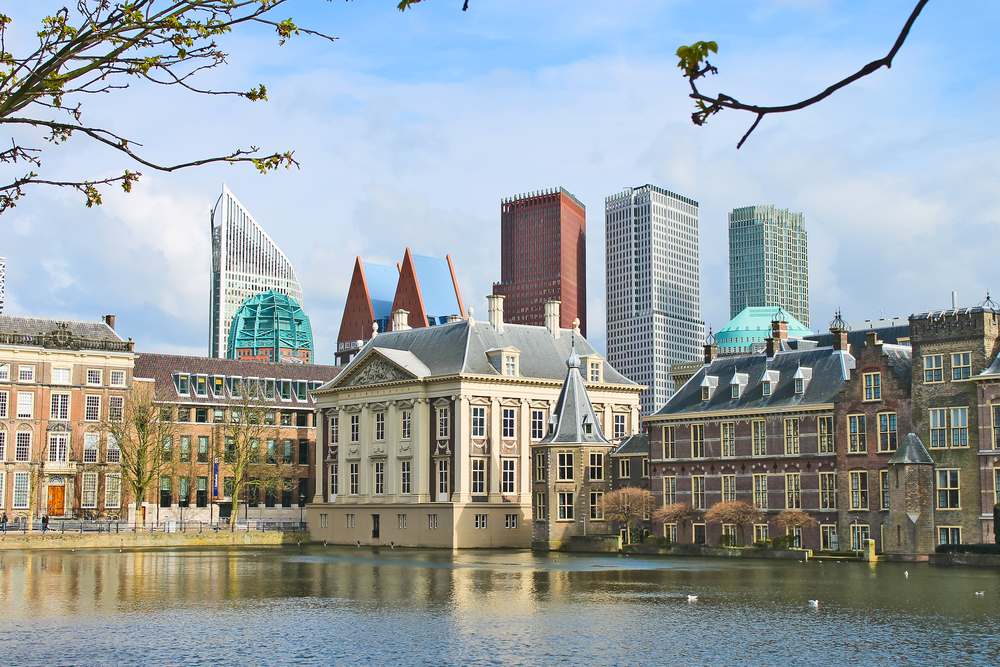
It’s hard to miss, and it’s totally free — Binnenhof! Located in the heart of The Hague, this Dutch governmental building is a fascinating complex dating back to the 13th century.
Look at this gorgeous Den Haag skyline! It’s worth the visit alone. Image: Depositphotos
The enchanting Hofvijver pond is home to multiple ducks and swans (just like the entirety of the Netherlands) and a very bizarre water fountain.
During sunset, it looks like something straight out of a Disney movie!
The inside of the Binnenhof is striking as well. 🤩
Standing in the courtyard makes you feel like you’ve been transported back in time. And the best part is that you get to experience all of this for free!
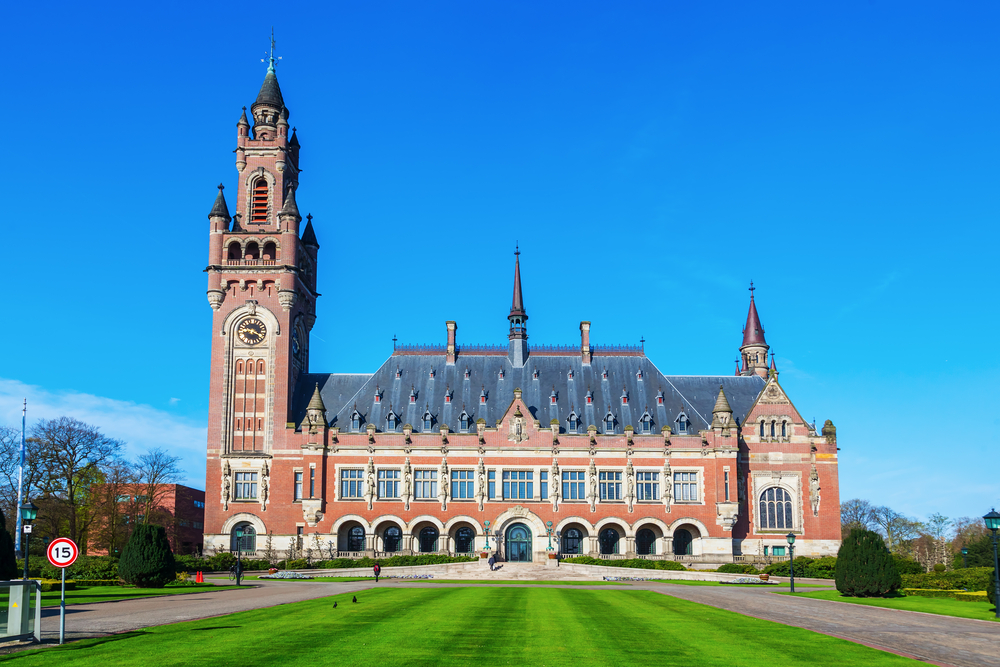
When exploring The Hague, the Peace Palace (Vredespaleis) is an absolute must-visit. Aside from housing the International Court of Justice, it’s also a very impressive building.
This is where world peace is made! Or, it should be, ideally. At least the building is nice. Image: Depositphotos
And while going into the grounds of the Peace Palace will cost you a few euros, exploring the small museum in the front is free.
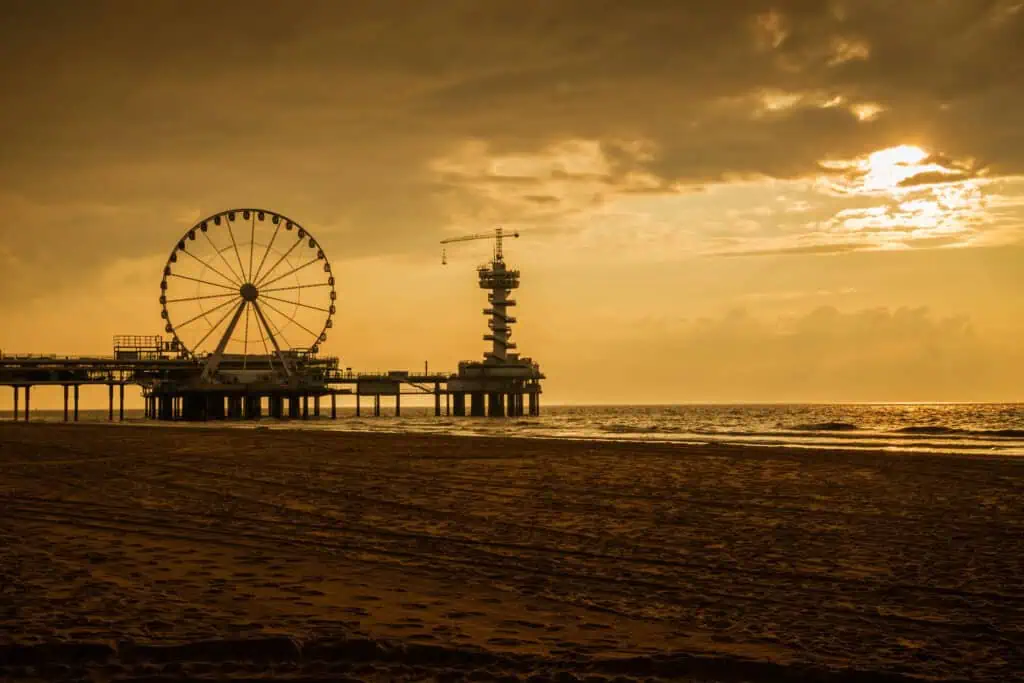
One thing that’s always made The Hague so unique is its beach. While you might not enjoy going for a swim 11 out of 12 months, it’s still very relaxing to stroll up and down the coast any time of the year.
It’s especially beautiful during sunsets. Image: Depositphotos
In summer, when temperatures creep above the 20-degree mark (it happens!), you wouldn’t know the difference between a French or Dutch beach.
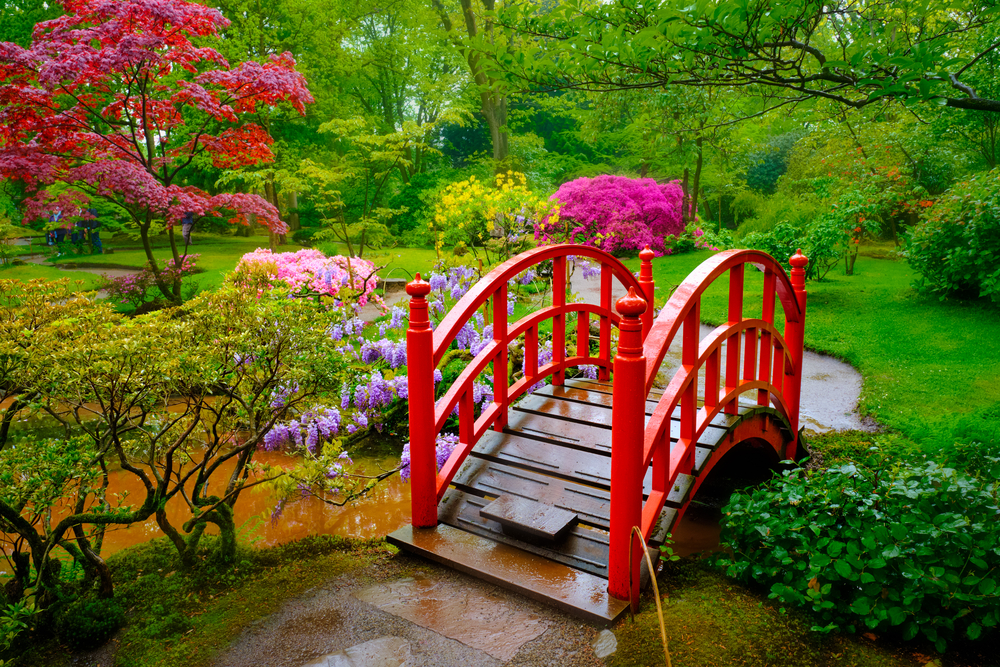
Clingendael is one of the most beautiful country estates in the Netherlands. If you’re looking for a way to get out of the city and connect with nature, the park is the perfect place to escape!
Doesn’t this just radiate peace and serenity? Image: Depositphotos
The vast grounds, canals, and secret pathways make the park a fun and peaceful place to explore. In fact, Clingendael is so diverse that you could spend the whole day there — just bring a lunch to enjoy on one of the many picnic tables.
If Amsterdam seems too far away, you can also visit the Red Light District in The Hague (bet you didn’t know they had one!). Even though it is quite small and also quite dodgy, it’s still a Dutch Red Light District if you really want to have the, um, full experience.
Let op: Don’t take any pictures when in the Red Light District. It’s not appreciated by sex workers or their clients.
However, ‘experiencing’ its full potential might be quite costly.
Walking through the area to have a peak is still one of the free things to do in The Hague.
Want to feel like you’re in Central Park in New York? Well…we can’t help much there. But Malieveld park is as close as you’ll get to it in The Hague.
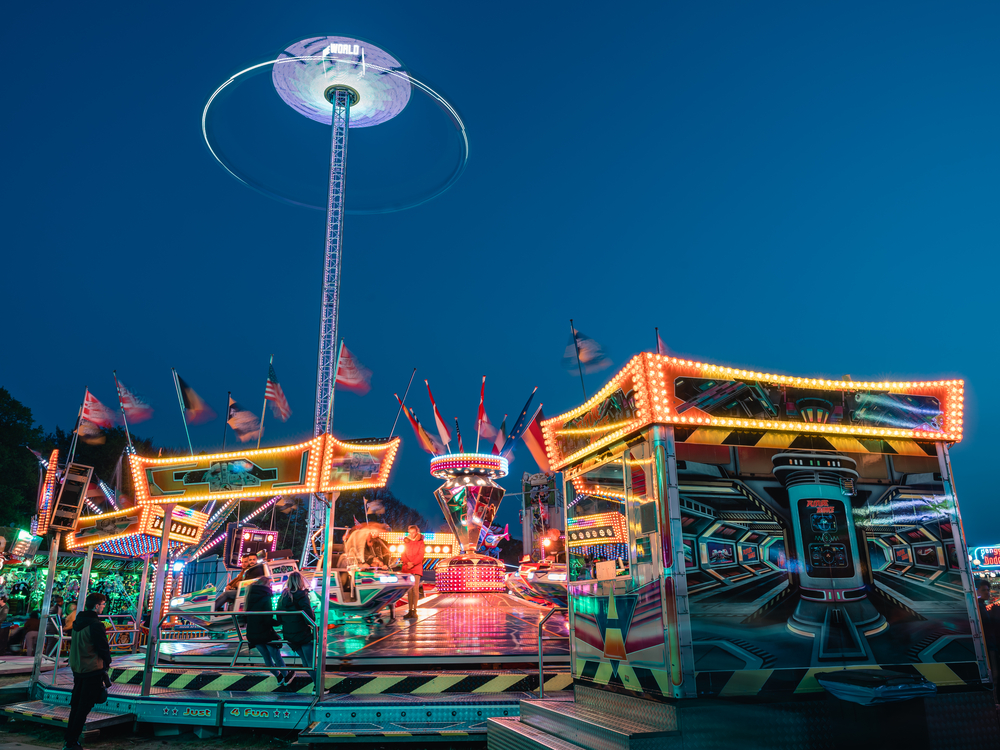
Okay, it’s not free, but the annual fair at Malieveld is definitely worth a visit! Image: Depositphotos
Located right across from Central Station, this park is like an oasis in the heart of the city.
You can enjoy a pleasant walk, try your skills at the skate park, and observe the deer that reside there. Malieveld is like a bubble you can enter to save yourself from the stressful city life.
And it’s definitely cheaper than any psychiatrist (because it’s free!).
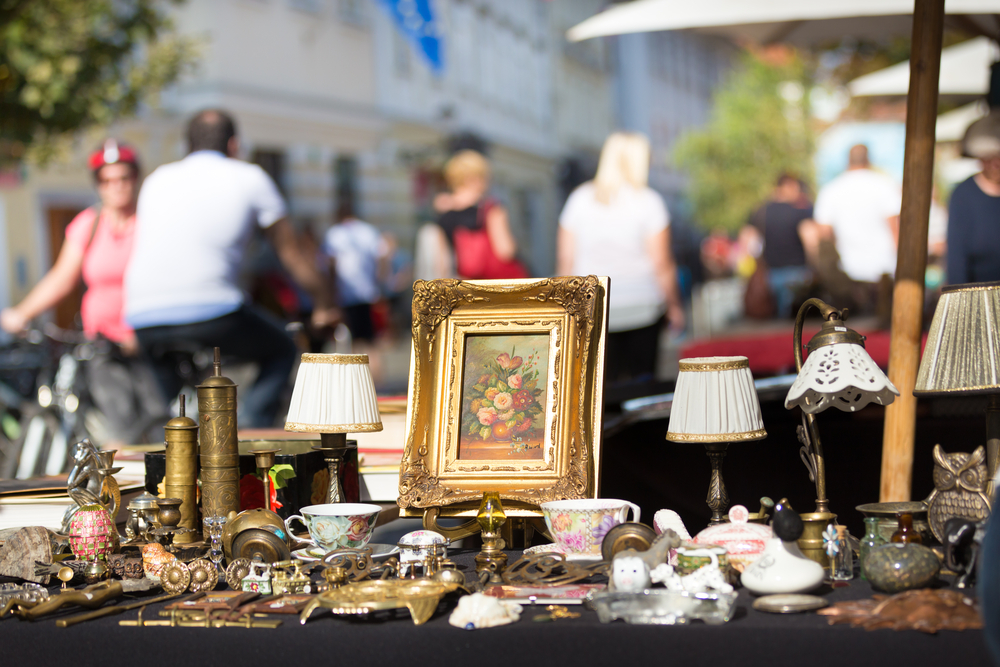
Love finding vintage gems or have a bookshelf to fill? Right splat in the city centre, there is an antique and book market in The Hague full of curious wonders.
Forage through the immense collections of old things at the antiques and books market. Image: Depositphotos
If you’re willing to search through tables full of old books, prints, paintings, and plenty of knickknacks, you will find hidden treasures. 💎
Located on Lange Voorhout, the market is open on Thursdays and Sundays between the months of May to September.
Directly opposite the beautiful Binnenhof and under the old Linden trees, the market is peaceful, even just for a walk-through. 🚶♀️
⏰ Opening hours: Thursday and Sunday (from May to September) 10 AM to 6 PM
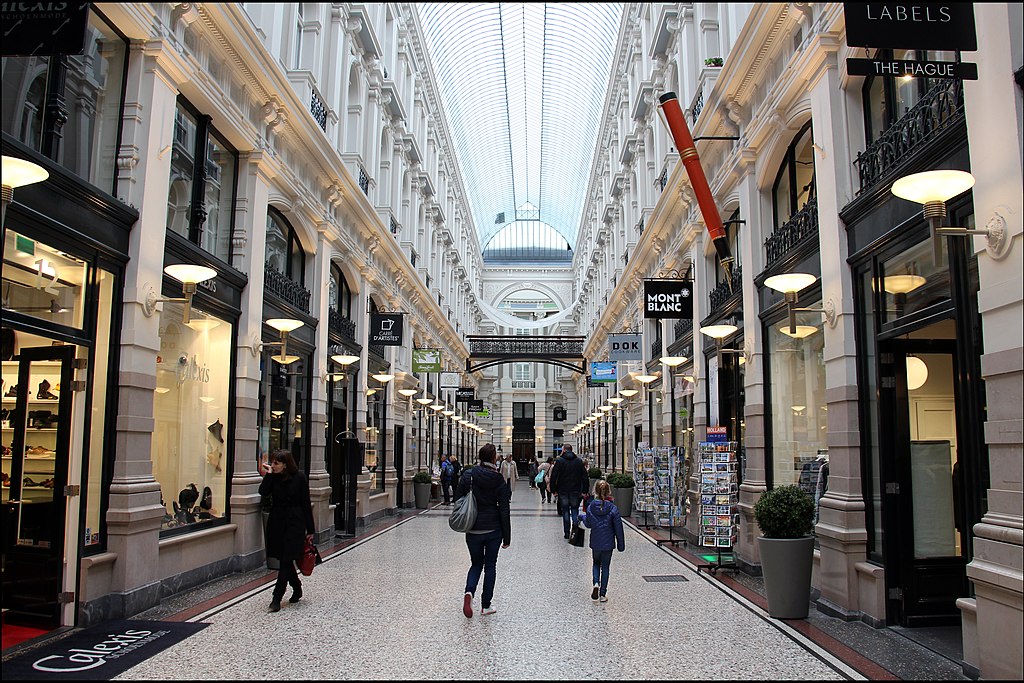
While you’re in the city, you shouldn’t miss walking through the gorgeous, historical, Parisian-style shopping arcades in De Passage.
Explore the shops in The Hague under the beautiful glass ceiling. Image: Fred Romero/Wikimedia Commons/CC2.0
From the white and blue tiles on the sides, to the high glass ceiling, De Passage has impressively beautiful architecture. Not to mention the luxury shopping stores and the delicious and tempting foodie spots on the ground floor.
The glass-covered shopping street was originally built in 1882 and now has become a common path for the residents of The Hague while exploring the many shops of the city.
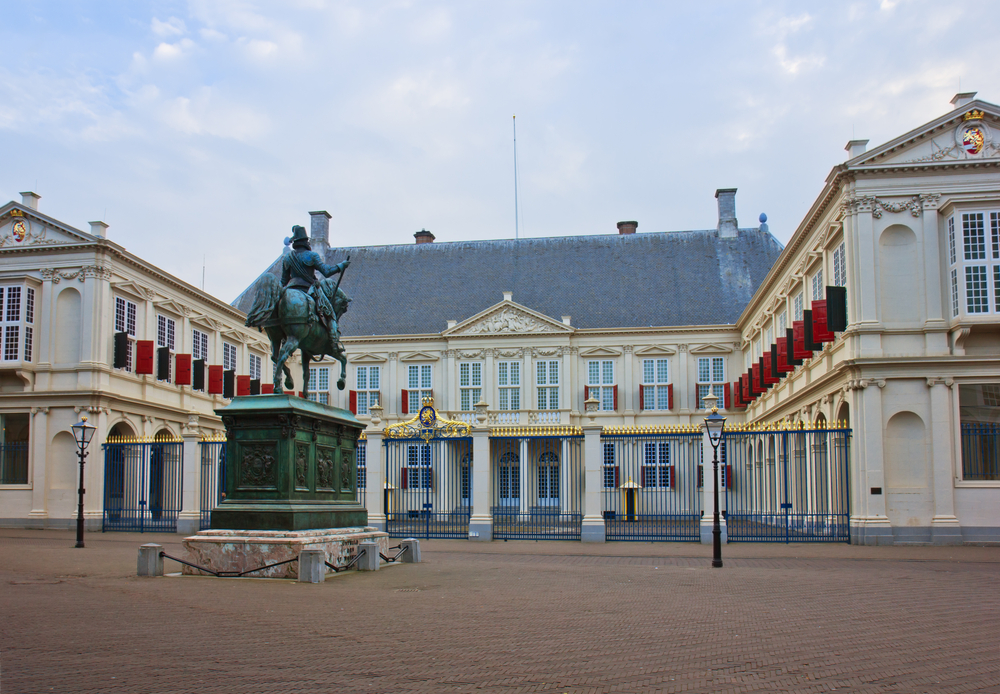
Another must-see if you’re visiting the Dutch royal family’s city is their palace, named Paleis Noordeinde.
You can admire the King’s office from two sides: the front on the street Noordeinde or from the back, where there is a luscious green park as well as the royal stables.
Note: If you’d actually like to see the inside, tickets will cost you around €10. However, the outside is more than enough to satisfy your architectural craving.
Admire the gold and red intricacies of the King’s office. Image: Depositphotos
This palace has been the centre of attention for the Netherlands’ royal family, acting as the place for Princess Juliana and Prince Bernhard’s weddings.
Both King Willem III, Queen Mother Emma, and Queen Wilhelmina have made this place their home.
Today, Noordeinde Palace has become King Willem-Alexander’s office. So, when you’re walking past, make sure to look for whether the flag is up — which means that he’s clocked in! ⏱
11. Explore the colourful alleys of the Haagse Markt
Walk through one of the largest food markets in Europe, with fruits and veggies of all colours left and right. It’s open four days a week, on Mondays, Wednesdays, Fridays, and Saturdays from 9 AM to 5 PM.
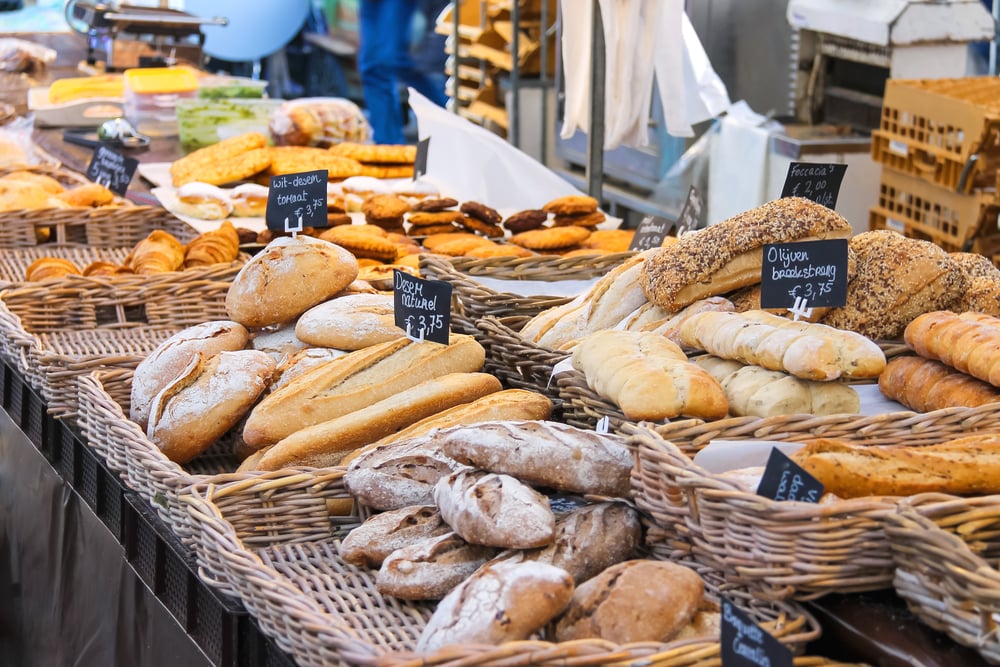
The smell of baked goods will tempt you while at the Haagse Markt (but don’t worry, it’s cheaper than in the picture). Image: Depositphotos
As you wander the aisles of the market (happily knowing you aren’t spending any money), we do have to warn you that you will be tempted by the smell of baked treats like baklava, Turkish pizza, and cookies.
Besides endless amounts of food, the market also sells flowers, clothing, shoes, and much more. 🛍
⏰ Opening hours: Mondays, Wednesdays, Fridays, and Saturdays from 9 AM to 5 PM
Do The Simpsons even need an introduction? The world-renowned animated sitcom, with its quirky yellow characters, has been running since 1989 and is still going strong.
Naturally, at various points, the Dutch have popped up — and their stereotypes have made the punchlines.
Here are just five moments where The Simpsons referenced, featured, or made fun of the Dutch.
Grab a doughnut (or five), lean back à la Homer at his work control panel, and enjoy! 🍩
1. When the Simpsons accidentally went to The Hague
👮🏻♂️ Court officer: “You are NOT in Oslo. You’re in Holland. Specifically, The Hague.” 😱 Homer: “Did you say Hey-Hey-gue?”
In “Elementary School Musical” (Season 22, E1), Krusty the Clown is delighted to discover that he has won the Nobel Peace Prize. Together with Bart and Homer Simpson, Krusty boards a plane to Oslo to collect his honours.
But, surprise! It was a “ruuuseeee”, and instead, the three are shipped off to the Netherlands! 🇳🇱 Specifically, to The Hague, the city of peace and justice.
Why? Well…
2. Krusty gets put on trial
Once in The Hague, Krusty is taken to the International Court of Justice (ICJ). The building illustrated beautifully is the Peace Palace (Vredespaleis), home of the ICJ.
Pssst: If you read the signs closely, it says: “International Court of Justice. Formerly International House of Pancakes.” What a fun tribute to the Dutch love for pannekoeken. 🥞
Spoiler alert: Krusty doesn’t get trialled. Instead, he makes friends with his judge — a true recognition of the lax Dutch attitude at the workplace. Hierarchy? What’s that?
The two also decide to celebrate their newfound friendship in true Dutch fashion: smokingweed. 😮💨
🤡 Krusty: “Where is the nearest place I can score a little victory-weed?” 👨🏻⚖️ Judge: “That would be the courthouse cafeteria. I’ll be right there. Order me a raspberry crêpe and a brick of hash.”
And how does our totally cool, non-authoritarian judge smoke his hash? He melts it and injects it into his eyelid. Because that’s an ordinary sight found in any Dutch coffeeshop. 😂
(Also, you really shouldn’t inject hash, let alone into your eyelids. Just saying.)
3. Homer reveals his secret addiction (not weed)
🌷 Bart: “Ohhhh, so THAT explains his mysterious trip to Holland.”
In “Burn’s heir” (Season 5, E18), Mr Burns almost drowns himself in a bathtub (by placing a wet sponge on his head) and decides he needs to find someone to inherit his fortune.
His eyes fall on Bart Simpson, who ends up spending considerable time with the crooked millionaire. At one point, Burns wants to prove to Bart that his family doesn’t care about him anymore.
He sets up secret cameras in every house in Springfield, including the Simpsons’ home, and this is when they discover Homer’s guilty pleasure: hiding in the bathroom and gulping bouquets of tulips. 🌷👀
To be honest, we’re not sure if this is mocking the Dutch or merely an attack on Homer’s gluttony.
Of course, the Netherlands are known for their beautiful tulip fields. But maybe Homer just misunderstood the meaning of edibles? 🤔
Note: the Netherlands is already referred to as ‘Holland’ for the second time. There is a whole history behind the difference (and confusion) between the two terms.
But, in short: the Netherlands is the country’s official name. Holland only describes two provinces in the Netherlands, North-Holland and South-Holland. 🤓👆🏻
But because Amsterdam (North-Holland) and Den Haag (South-Holland) are in the Holland provinces, the Simpsons technically got it right!
4. Bart falls in love with Milhouse’s Dutch cousin
You might not have been aware of it, but The Simpsons have a very prominent Dutch character: Milhouse (Mussolini) van Houten! Well, he’s not fully Dutch. His mom is Greek and Italian, while Milhouse’s dad is Danish and Dutch. But it still counts!
Anyway, the Dutch side of the family (and all the stereotypes) manifests in the form of Milhouse’s cousin Annika who comes to visit in “Let’s Go Fly a Coot” (Season 22, E20).
Annika’s appearance comes with a vast array of Dutch references, so there are loads to unpack here. Let’s start with Annika, who is heel cool.
Not only does she wear loads of piercings and smokes e-cigarettes, but she is also very openly sexual towards Bart, who falls immediately in love with her.
We’ve already touched upon the liberal Dutch attitude towards drugs — an open approach to sexuality is no different.
Bart: “God, I love spijkerpoepen. Annika, you’ve introduced me to a whole new world of butt games!”
Well, for once, it’s not as close to sensual as it sounds (to non-Dutch ears). Spijkerpoepen (nail/spike pooping) is an old Dutch children’s game whereby a string with a nail on the end is wrapped around the hips of the player, who then tries to get it into a bottle.
We have to admit, this is a pretty niche reference, but The Simpsons did their research, and it’s much appreciated! 😂
Another Dutch game also features in this episode: sjoelen. Sjoelen is the Dutch version of the American shuffleboard and is definitely more common than spijkerpoepen.
Annika also leaves the scene in classic Dutch manier (fashion): swearing and cursing at the stomme Americans. (Her words, not ours.) 🫣
5. When a Dutch piece of art almost kills the Simpsons
In “The Nightmare after Krustmas” (Season 28, E10), Dutch artist Theo Jansen comes to Springfield to display his most famous artwork at the Pagan Winter Carnival.
Homer: “Is it science? Or garbage?” Jansen: “Dutch art.” Lisa: “Ohhhh, and I bet it’s environmentally conscious.” Jansen: “No. It is not.” 😂
Fun fact: the Strandbeests (beach beasts) featured in the episode actually exist!
Jansen first envisioned the bony artworks in the 1990s, and ever since, the creatures have haunted the shores of Dutch beaches. They are made from yellow plastic tubes and move quite similarly to how they are depicted in The Simpsons.
6. Bonus! Moe confesses he’s also a Dutchie
So, that’s it for the five moments we spotted where The Simpsons made fun of the Dutch! There are plenty more, of course.
Did you know, for instance, that barkeeper Moe Szyslak is actually Dutch? In “Bart-Mangled Banner” (Season 15, E21, 8:35), Moe announces — “What? What are you all looking at? I’m Dutch!” — and proceeds to stomp out from behind the counter in chunky, wooden clogs.
Whether that’s actually true remains a mystery, as Moe’s true ethnic origins are a running gag in The Simpsons.
But hey, we love a good Dutch stereotype, so we’ll gladly accept Moe as a clog-wearing Dutchie. 😂
Did we miss any of your favourite Dutch references in The Simpsons? Tell us in the comments!
We hate to be the bearer of bad news, but your next grocery run might hurt a little more. Over the past year, groceries have become 7% more expensive.
And unfortunately, that’s just one of many price increases that may affect your day.
Rising cost of food and drinks
According to the Dutch Statistics Centre (CBS), the price of food, drinks, and tobacco has increased by 7% compared to January 2024.
And if you’ve noticed that your favourite snacks are getting smaller while their prices stay the same, you’re not alone — shrinkflation is making this increase feel even worse. 😣
A factor for rising costs is the increase in tobacco taxes. However, Peter Hein van Mulligen, chief economist at the CBS, admits that he cannot confidently explain why foods are becoming more expensive.
Maybe now’s the time to stock up before next year’s inevitable increases. 📈
It’s not just groceries
Unfortunately, price increases don’t stop at supermarkets.
Other services have also become more expensive, with trips to the hairdresser or your insurance increasing by an average of 4.4% compared to this time last year.
But life also got cheaper (kind of)
Looking for a silver lining? So are we, so here’s what we can offer:
The overall cost of living in January was 0.3% cheaper compared to December. However, you should take this number with a grain of salt. The decrease is likely due to price increases during the holiday season.
On the other hand, according to the CBS, energy prices such as petrol and natural gas are actually 1.4% cheaper compared to a year ago. Hoera for silver linings. 😀
Have you noticed increased prices in groceries, services and other amenities? Share your observations in the comments below.
Visitors to the Netherlands will probably be struck by a very specific element about this country. Things tend to look, well, quite the same.
By this, we do not mean that there aren’t different architectural styles. They are certainly out there — from Art Nouveau to Art Deco, post-war modernism, and more traditional architecture.
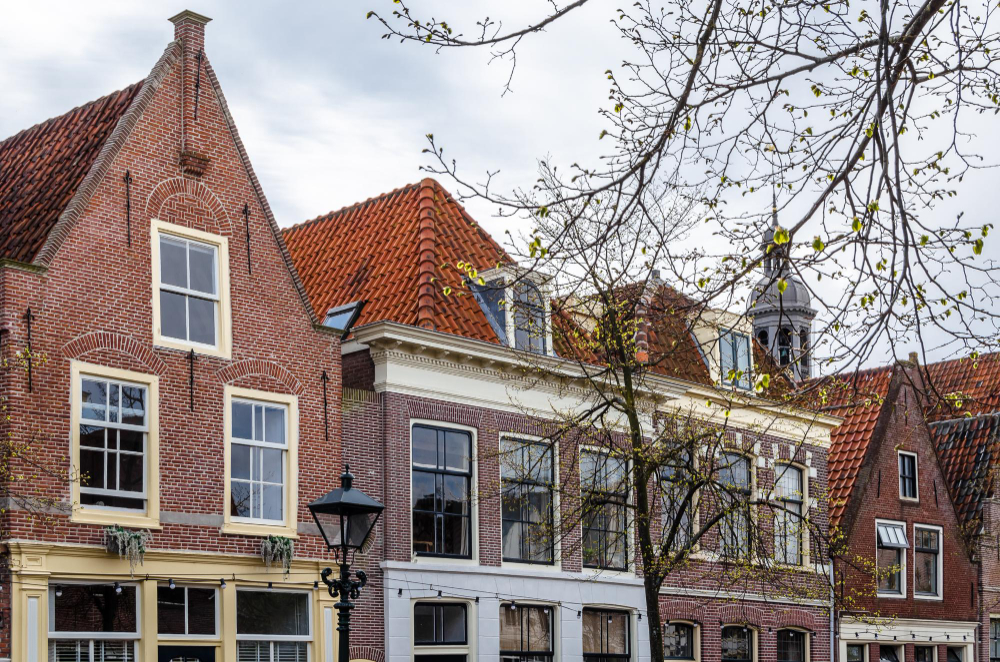
What we mean is a certain degree of aesthetic similarity. Whether you’re looking at the red bricks or the colour palette that’s similar from the pavement up to the facades, it seems like there is tight control over how the Netherlands should look.
How did all of this come to be? What’s up with all the bricks? How does the enforcement of colour palettes work?
Bricks, bricks, and some more bricks
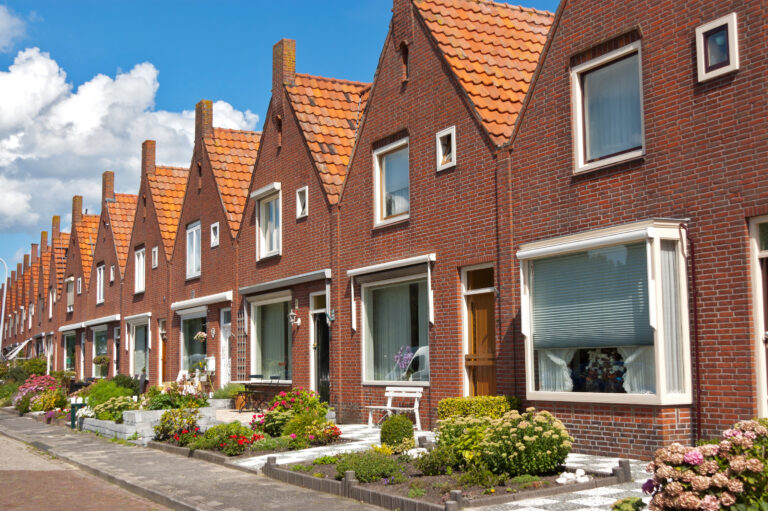
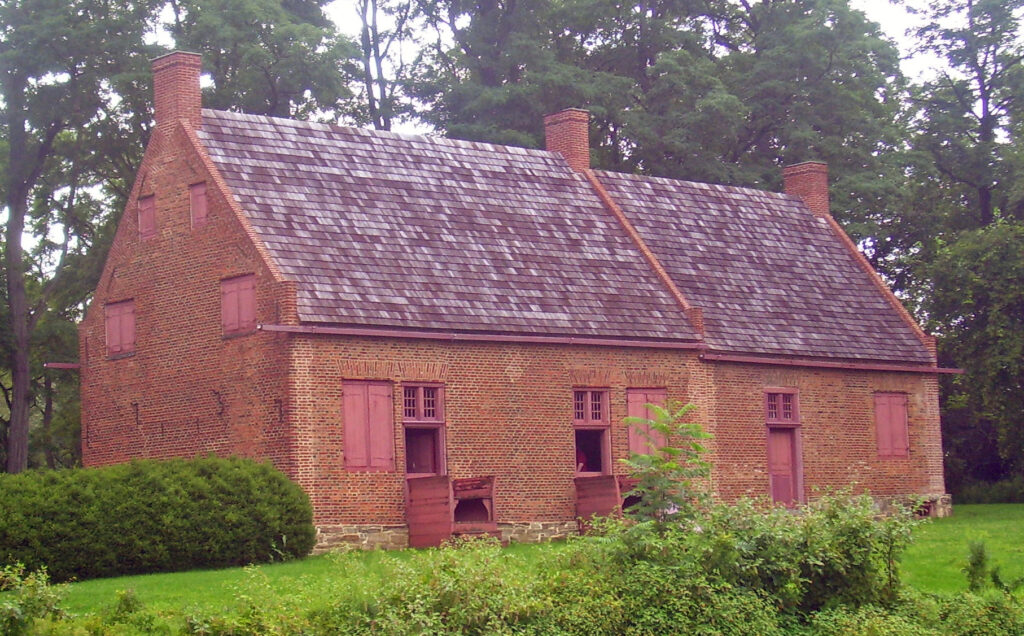
To start off our incursion into architecture, we need to talk about the building blocks of this country: the bricks. You must have noticed them too, as they are pretty much everywhere, and odds are you’ll run into more brick buildings than the un-bricked variety.
Brick on brick on brick! Image: Freepik
But why specifically brick compared to any other building material? Well, to answer this question, we need to take a look at the past.
It’s actually believed the word “brick” might have Dutch origins. The Dutch have been developing bricks ever since the Middle Ages, and their production only increased with time.
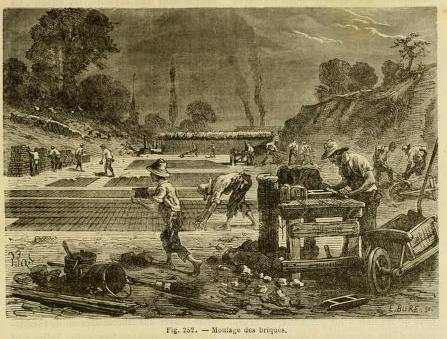
However, despite their vital role in construction, the brickmakers were usually ostracized members of society belonging to lower social classes.
Brick workers in the 19th century. Image: E. Bure/Wikimedia Commons/Public Domain
Brick factories were on the outskirts of cities to keep the dust and smoke away from the centres. A report from 1873 from a municipality near Nijmegen stated that “as the number of brick kilns increases, so does poverty.”
Child labour was intensively used in making bricks, including in the 19th century. Children who were eight years old and younger would work 16-hour shifts, which might seem downright shocking in the welfare state the Netherlands has today.
Now, the reason that the Netherlands made so many bricks is because of an abundance of clay. Rivers in the country, like the Ijssel, the Rhine, or the Waal, were great sources of clay, which is the main ingredient needed in making bricks.
The bricks were not only used domestically but exported as building material to neighbouring countries as well.
You can find great examples of Dutch brick architecture throughout the United Kingdom. Other places with Dutch bricks can be found in the former colonies throughout Southeast Asia.
Now that we’ve figured out a brief history of bricks in the Netherlands, let’s move on to another important element that makes everything look similar in the Netherlands — urban planning.
Urban planning
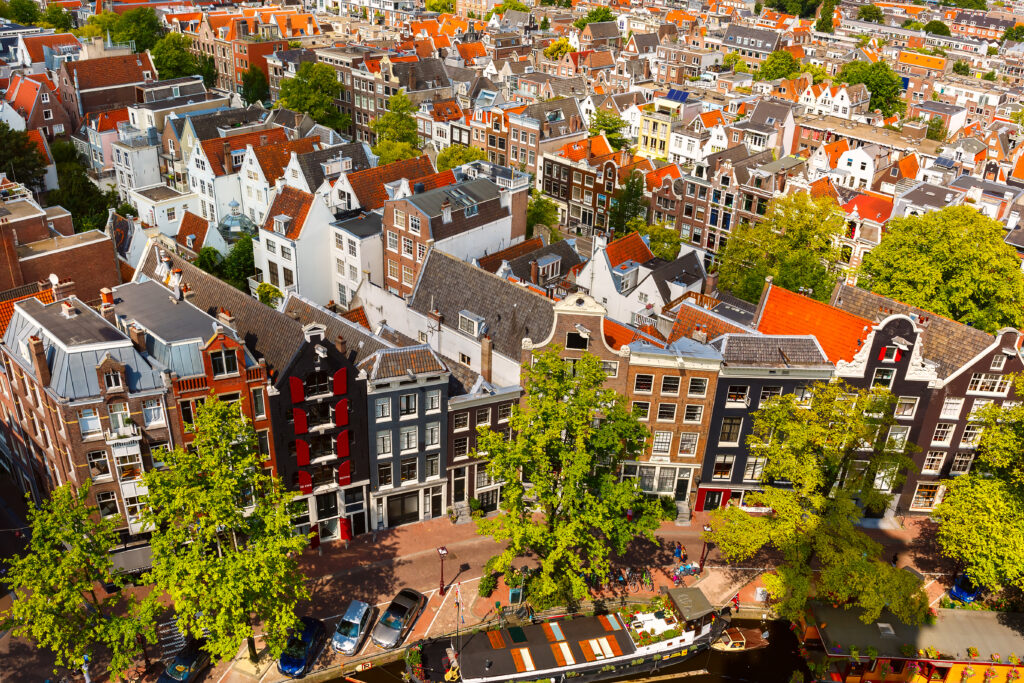
Depending on where you’re coming from, urban planning might not really be a concept — like if you come from a place with winding and twisting streets or chaotically built buildings of various sizes and not much sense of order.
Well, the Netherlands is certainly the opposite of that, and it’s not hard to see why. With a small area size and a population of 17 million, screwing up urban planning means the country wouldn’t function well.
One thing that definitely lends a helping hand in urban planning here is that the country is relatively flat, so architects and planners don’t need to work around things like mountains.
Most Dutch cities have a similar layout. Image: Depositphotos
While I miss the chaos of cities in my home country, there’s something to appreciate about the orderly way Dutch cities are built, even if it makes them quite bland at times.
The most major event you need to know about in recent history is the construction boom that followed WWII. This boom happened at the same time as a population boom, which led to overcrowded inner cities that became gradually unsafe.
However, with space available outside of The Randstad, urban planners started to build cities, such as Zoetermeer and Hoofddorp.
And while they are certainly effective, they are also terribly bland, unmemorable, and look-alike in the sense of architecture, colours, and general vibe.
“Fabulous” Zoetermeer. Its bland architecture is defining for the post-war boom, not only in the Netherlands but throughout Europe. Image: SJ de Waard/Wikimedia Commons/CC3.0
General aesthetics
Let’s say that you are now the proud owner of a Dutch home. Bored with all the brown on its facade, you feel that it’s high time you give it a makeover.
Let’s say you choose to paint it all blue. After that, you also think that it wouldn’t be bad to add an extra floor or two. You commence your work when — surprise! You get a fine through your newly blue-painted letterbox. What on earth has happened?
Enter the Welstandscommissie (Welfare and Monuments Committee).
Any sort of building permit, facade modification, extra floor and the like need to pass through them first. They are responsible for making sure all new constructions or modifications follow rigorous guidelines, lest everything turns completely chaotic.
So, if you’re planning on changing something about your building or constructing something new entirely, make sure you give them a call in order to avoid a hefty fine. 😉
Is there anything we missed that influences the fact that everything looks the same in the Netherlands? Let us know in the comments! 👇
The Netherlands has two kinds of architecture — the classic canal houses that you’ll see in every Dutch city and then the impressive, too-mind-blowing-to-be-real pinnacles of modern buildings that you’ll find in the city of Rotterdam.
Rotterdam is a place where new ideas are born one day and turned into reality the next. The city with the biggest port in Europe offers anything from unique food to wonderful nature escapes.
However, it’s the prominent skyline and incredible architecture that truly make Rotterdam stand out.
A brief modern history of Rotterdam architecture
How is it that Rotterdam’s urban landscape is so different from anything else you’ll find in the Netherlands?
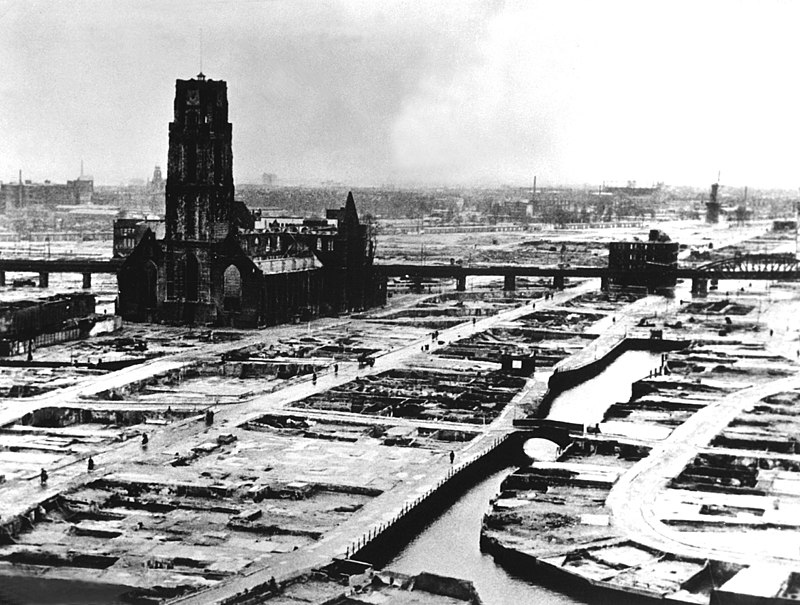
Sometimes, big changes are preceded by transformative, tragic events. The story of Rotterdam’s architecture is no exception. On May 14, 1940, almost the entire city centre was wiped out by German bombs in an attack that lasted barely 15 minutes.
The bombs took 900 lives and 85,000 homes, leaving behind a stad zonder hart (a city without a heart).
However, instead of simply rebuilding what used to be, the city of Rotterdam decided to completely reinvent itself.
Led first by W. G. Witteveen and his assistant Cornelius van Traa, the post-war reconstructions were characterised by wide streets and sidewalks, as well as the — rather problematic — separation of districts.
The city centre was practically reserved for commercial purposes only, while residential areas were pushed to the outskirts.
By the 1960s, the initial euphoria about post-war reconstruction started to fade. Rotterdammers felt like the new city centre was impersonal and lifeless and were calling for something more vibrant and green instead.
So in the 1970s, Rotterdam invited architects such as Piet Blom and gradually started to transform into the place we know today.
1. Rotterdam Centraal: the gateway to the city
A central station is typically the first thing you see when you visit a new place — and the one in Rotterdam does an exceptional job of welcoming you into the world of incredible architecture.
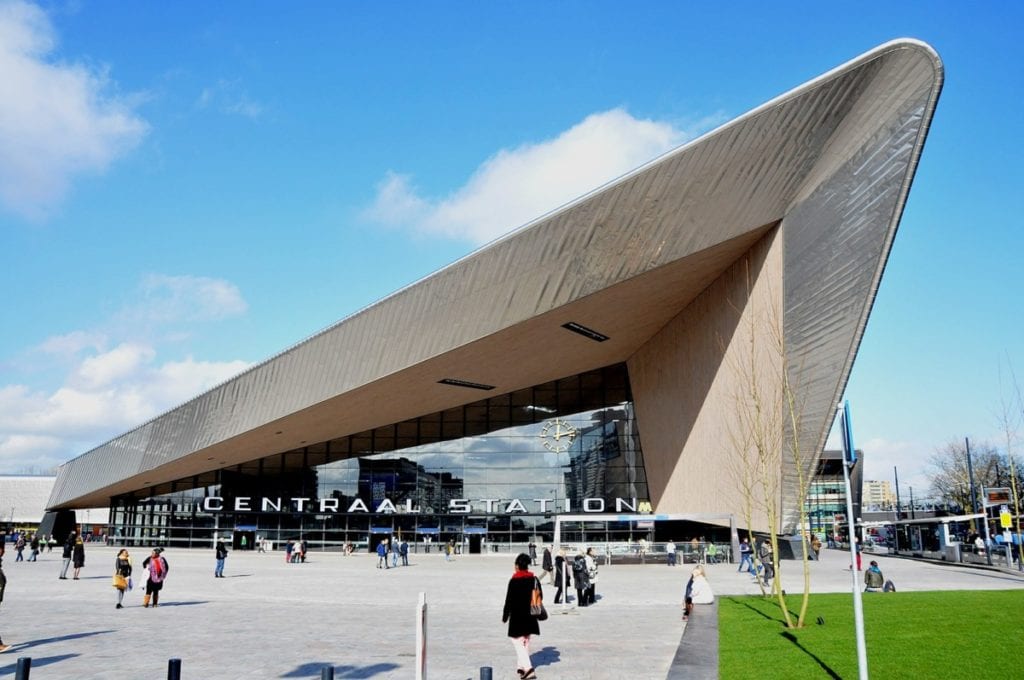
The station underwent a complete makeover and was fully reopened in 2014.
Even the train station in Rotterdam is impressive. Image: Spoorjan/Wikimedia Commons/CC3.0
Its prominent metal rooftop, partly covered with solar panels, earned the station the nickname “Station Kapsalon” (referring to Rotterdam’s popular dish).
If you don’t understand why just google the phrase “Rotterdam Station Kapsalon”, and you’ll see.
A few elements from the original station, which was built back in 1957, still remain today. These include the clock on the front facade, the letters spelling out “Centraal Station,” and the two granite sculptures called Speculaasjes.
Maybe you can try and find them on your next visit. 😉 (Hint: they’re on one of the platforms).
2. Markthal: fresh food stalls under one roof
This iconic piece of architecture in Rotterdam proves that the city can overcome just about any obstacle.
De Markthal — or ‘the market hall’ — was born as a solution for a new set of stricter EU regulations about selling meat, fish, and cheese in the open air, as well as the growing housing shortage in Rotterdam.
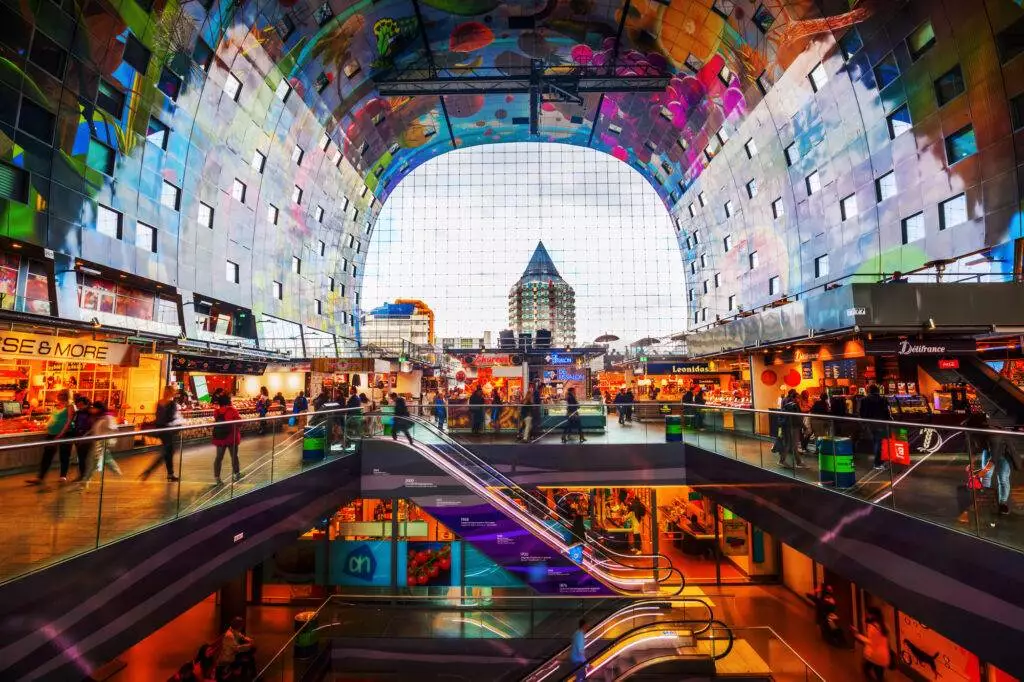
Rotterdam’s Markthal is buzzing with life. Image: Depositphotos
A place for anyone who loves good food, Markthal is home to almost a hundred fresh food stalls, shop units, and restaurants, as well as over 200 apartments.
As you go down the escalators and into the car park, you can see various medieval objects that were discovered during its construction.
Besides the countless food stalls and vendors, the one thing you won’t miss as you enter the impressive indoor market hall is that its walls and ceiling are covered with images of giant fruits, flowers, and insects.
This gigantic artwork — titled Horn of Plenty and created by the artists Arno Coenen and Iris Roskam — is one of the biggest in the world and covers an area of about 11,000 square meters.
3. Kijk-Kubus: an urban forest
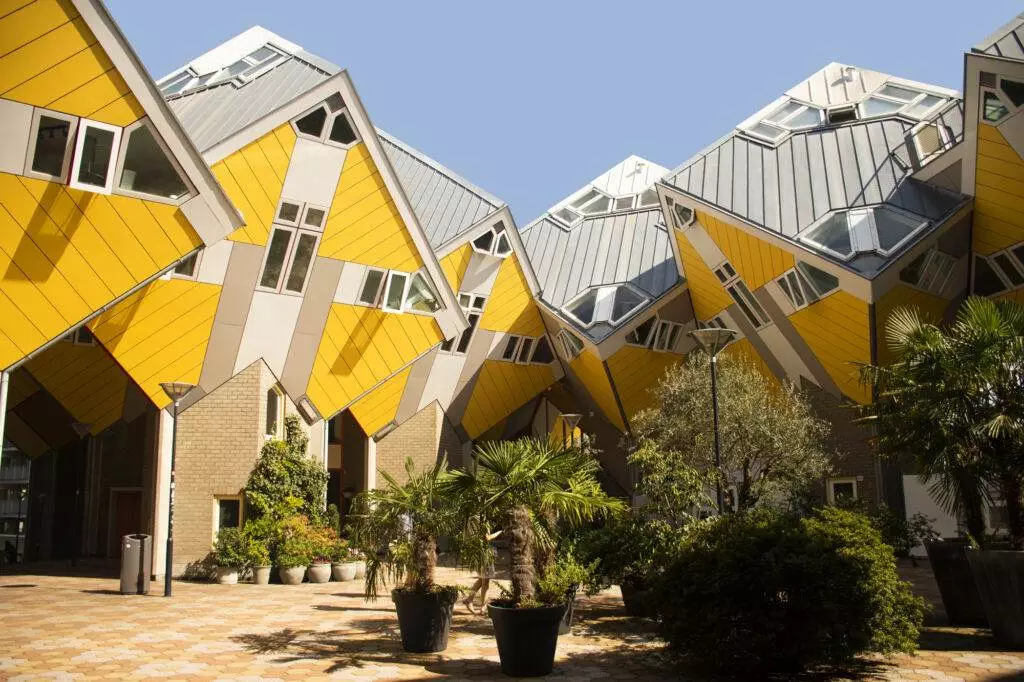
Living in a city centre usually means that you have to give up being in nature, right? Well, not in Rotterdam. These impressive Cube Houses, designed by architect Piet Blom, are supposed to represent urban woods.
While this may be a bit difficult to grasp as you observe them from afar, a simple walk through this building complex is all you need to feel like you’re truly stepping into the Blaakse Bos.
While we’re not entirely sure how practical it is to live in these Cube Houses (especially when you consider the process of moving in or the shape your furniture probably needs to have if it’s to be placed right on the walls), we can assure you that they are worth a visit.
4. The Erasmus Bridge
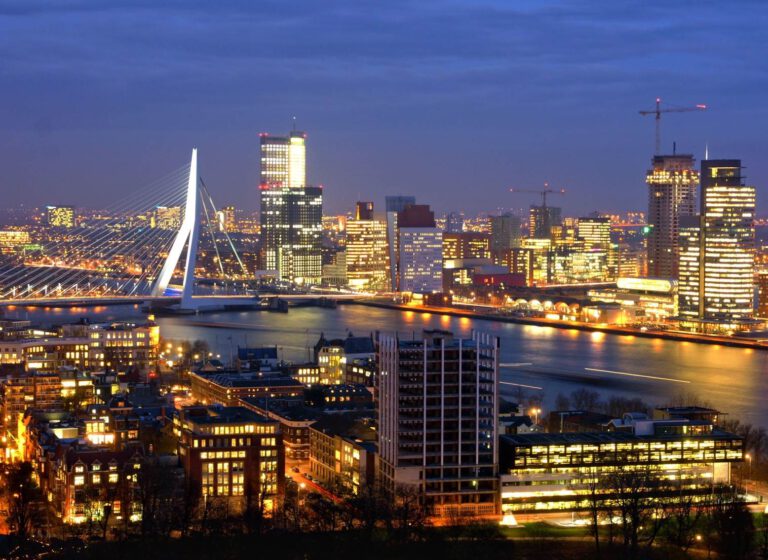
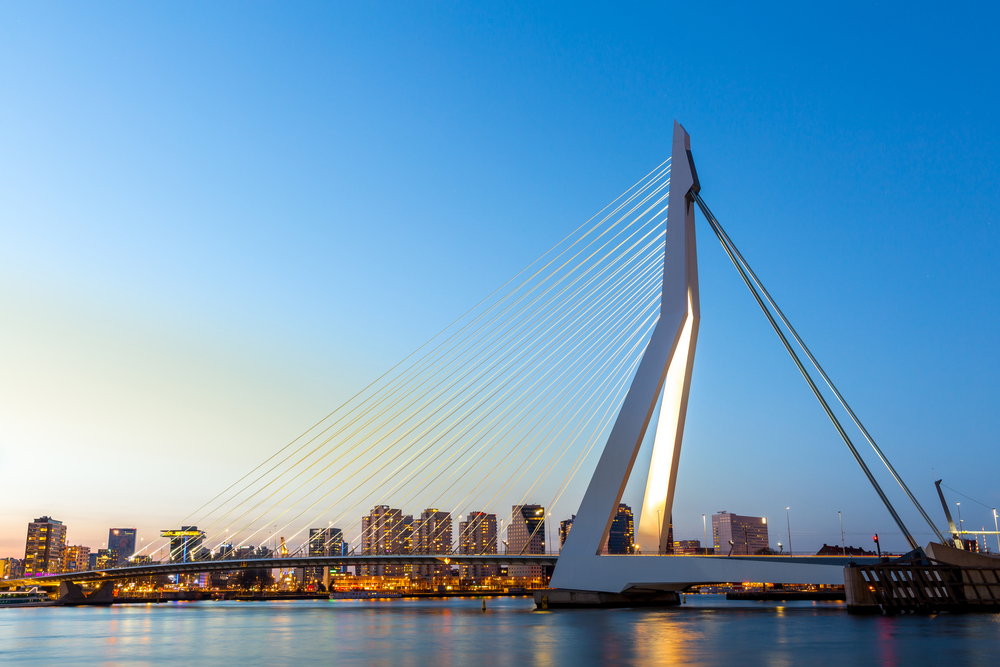
There’s no other landmark that represents the port city of Rotterdam better than the Erasmus Bridge. It stretches over the river Maas, connecting the city centre with the neighbourhood of Kop van Zuid.
Erasmus Bridge is nicknamed ‘the swan’. Image: Depositphotos
Named after the city’s famous scholar Desiderius Erasmus, Erasmusbrug is 808 metres long and weighs as many as 1700 adult elephants.
Fun fact: the bridge actually had to be closed just four days after it opened in 1996. Several cables were shaking in a strong wing, which led to the movement of the road surface.
However, the problems were quickly fixed, and a few days later, people were able to stroll over Erasmus Bridge again.
Just like many other things in the Netherlands, The Erasmus Bridge has a nickname — De Zwaan (the swan).
It does require a bit of imagination to see how this giant piece of steel resembles an actual swan, but if you look at it from above (for example, from the top of the Euromast tower), it becomes a bit clearer.
5. De Rotterdam
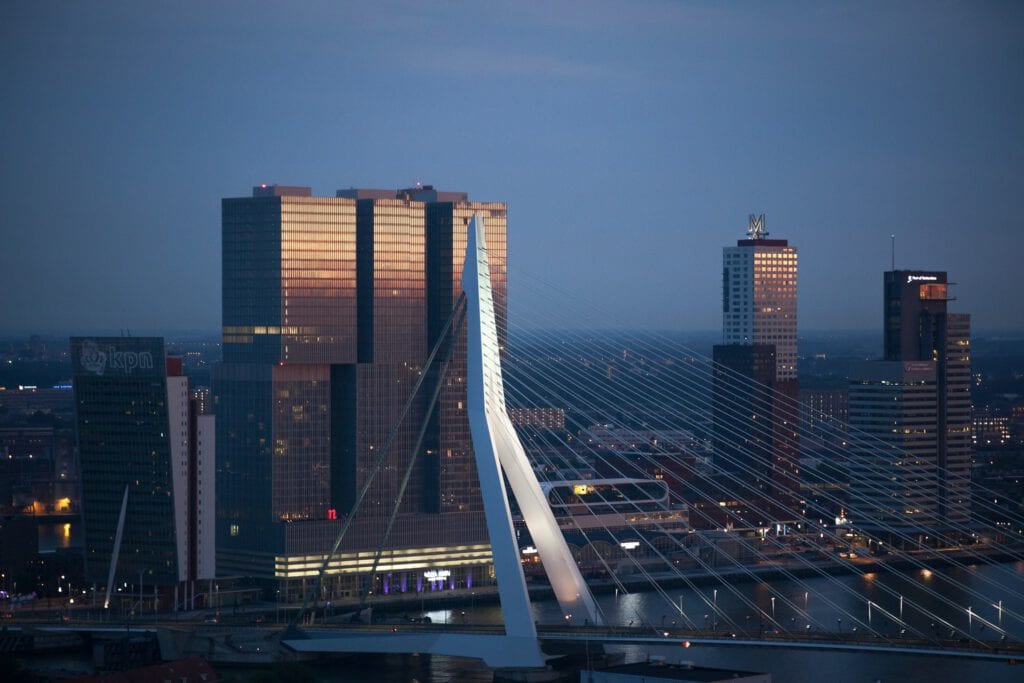
De Rotterdam — a building complex of three interconnected towers — got its name after the famous ship SS Rotterdam, which transported Dutch immigrants to America in the late 19th and 20th centuries.
You’ll find De Rotterdam right beside the Erasmus Bridge. Image: Unsplash
Located on the south side of the city, it’s over 150 metres tall and has 45 floors, which makes it the sixth tallest building in the Netherlands (the top five are also located in Rotterdam, in case you were wondering).
Also known as the “vertical city,” De Rotterdam houses commercial office spaces, residential apartments, cafés, restaurants, and even the luxurious Nhow Hotel.
With a total floor space of about 160,000 square metres, it’s supposedly the largest group of buildings in the Netherlands.
6. Museum Boijmans van Beuningen Depot
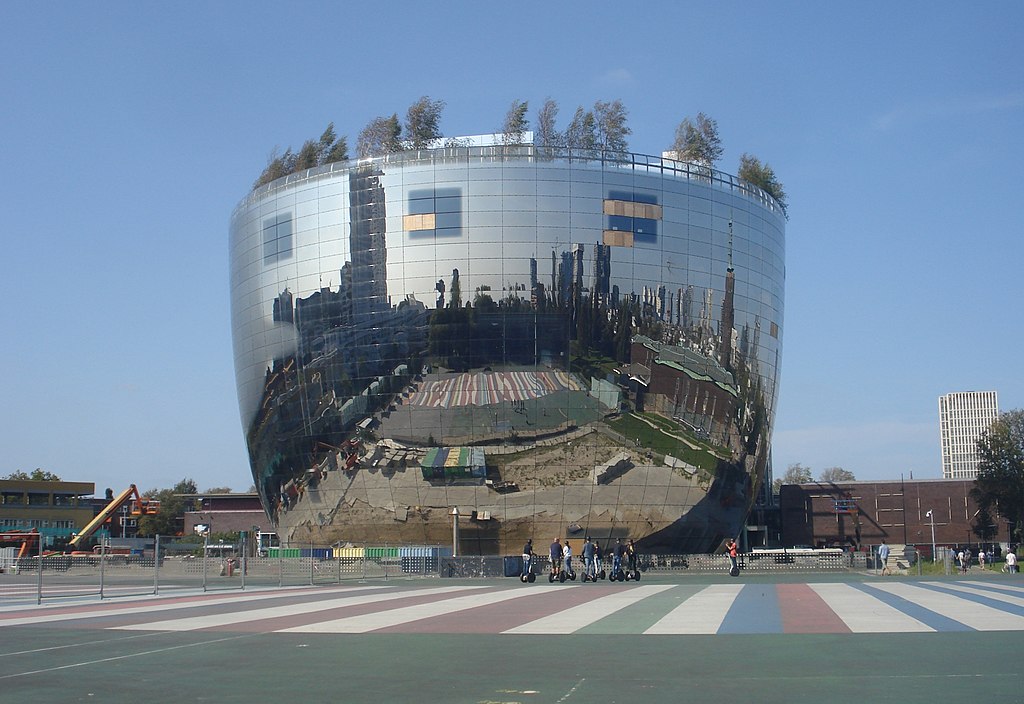
The Depot of Museum Boijmans Van Beuningen is one of the latest additions to Rotterdam’s urban landscape and the first art storage facility in the world to open its doors to the public.
Head to Museumpark to see this incredible piece of architecture. Image: F. Eveleens/Wikimedia Commons/CC4.0
Museum Boijmans Van Beuningen has acquired more than 150,000 artworks over its 170 years of existence, and the Depot was born out of a desire to share these pieces with as many people as possible.
Open since the summer of 2021, the depot gives visitors a unique behind-the-scenes look into the world of art conservation, art restoration, and museum management.
To top it off, visitors have free access to the rooftop garden, which offers panoramic views of the city.
7. Witte Huis: where past and present come together
Rotterdam is a city of contrasts, and the Witte Huis is where history and modernity really unite.
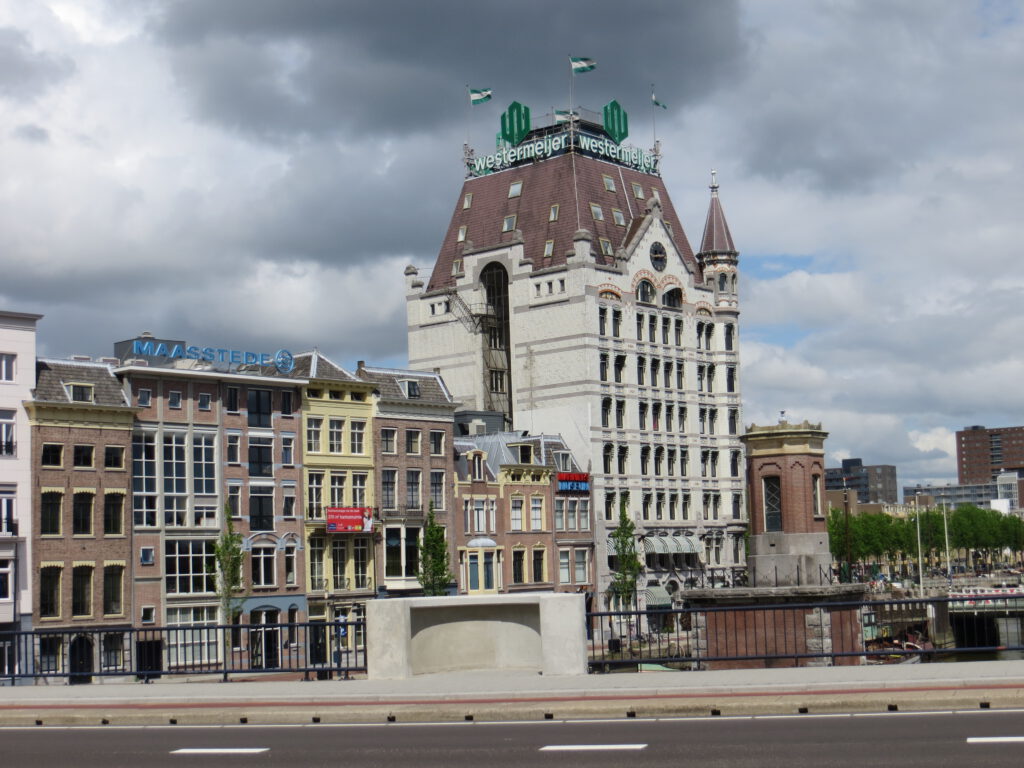
Built between 1897 and 1898 in the Art Nouveau style, it was the very first skyscraper in Europe and, for a long time, remained the tallest building in the Netherlands.
Witte Huis is Europe’s first skyscraper. Image: Racingfreak/Wikimedia Commons/CC3.0
The idea to build the Netherlands’ “White House” came from Gerrit van der Schuijt, who was inspired by the many skyscrapers he admired on his travels to New York.
He and his brother Herman, then in their 30s, already owned a couple of buildings in the Wijnhaven area, so they simply decided to tear them down to make space for the new building.
Their plan to build an eleven-story skyscraper was met with a lot of scepticism, as buildings back then were no more than five floors high.
However, the 43-metre tall Witte Huis — fully equipped with central heating, a telephone office, gas, and electric light — proved to be a success.
Surrounded by modern high-rise buildings today, Witte Huis is one of the few survivors of the Rotterdam bombing of 1940 — only the bullet holes in the building’s facade remind us of this dark chapter in the city’s history.
8. Hotel New York
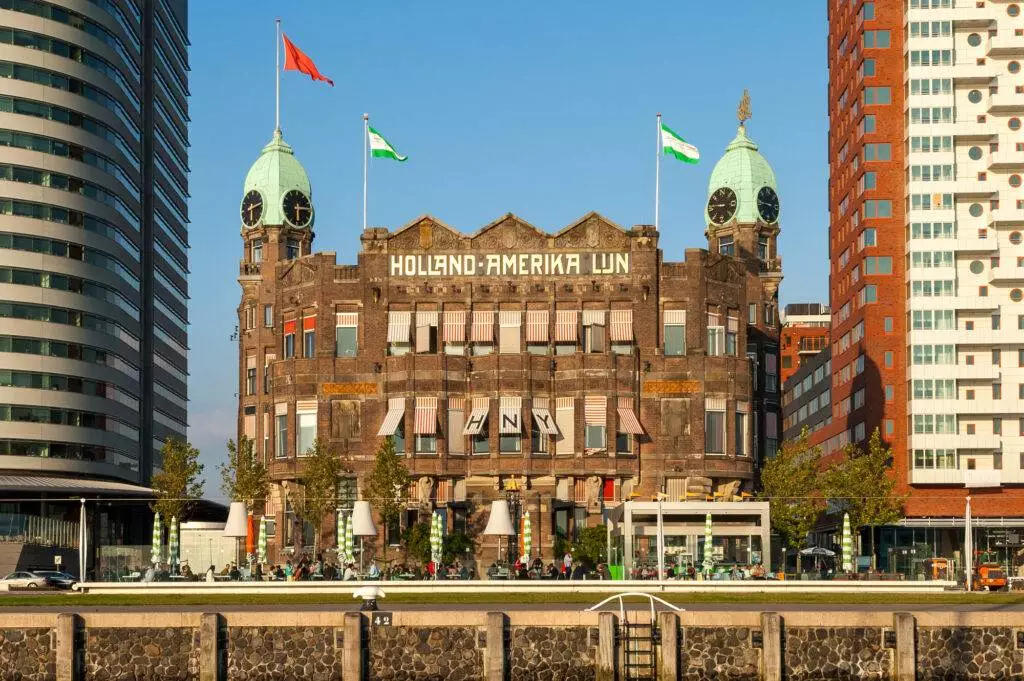
Another survivor of World War II in Rotterdam, Hotel New York, formerly served as the headquarters for the Holland America Line — a cruise line transporting passengers and cargo between the Netherlands and North America. The hotel officially opened its doors in 1993.
Hotel New York sits between two impressive high rises. Image: Depositphotos
Step back in time and into the shoes of the many immigrants who left their homelands behind and arrived with the Holland America line as you sip on a cocktail in the hotel’s basement restaurant with its charming 1920s and 1930s interior.
9. Van Nellefabriek
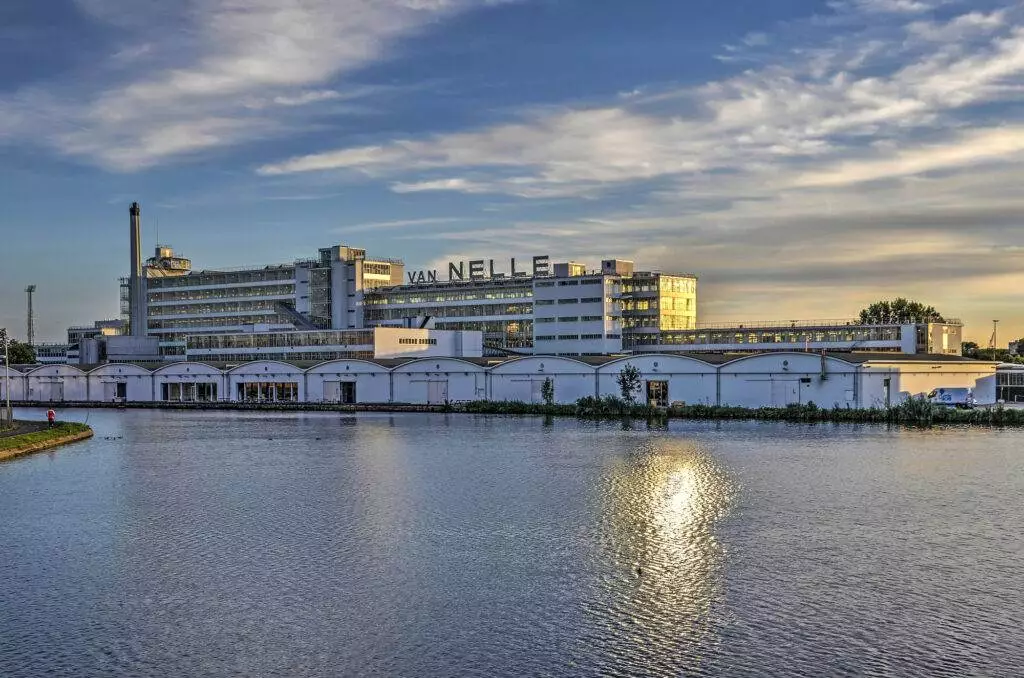
UNESCO World Heritage Site, the most important Dutch industrial monument, and a textbook example of the Nieuwe Bouwen architectural style — all this is Rotterdam’s Van Nelle Factory.
Designed by Johannes Brinkman and Leendert van der Vlugt, it was praised by many artists and architects and even described as “the most beautiful spectacle of the modern age” by the famous Le Corbusier.
Van Nelle served as a tobacco factory up until the 1990s. It was renovated in 2000, and now it’s home to various media and design companies, events, and conferences.
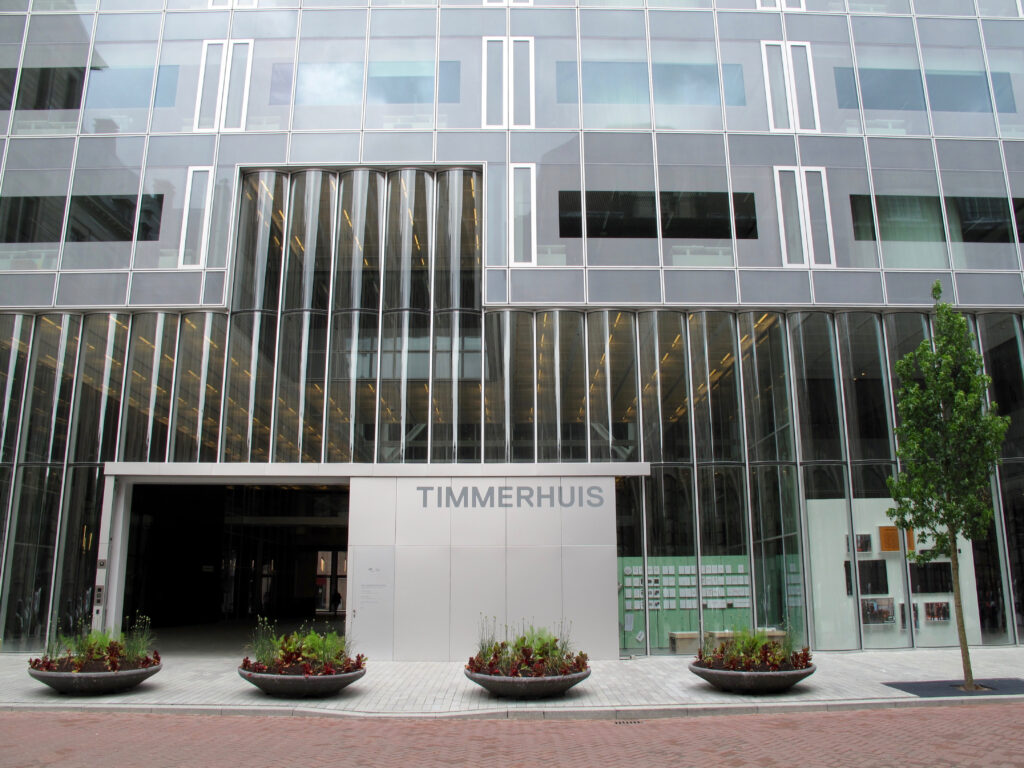
10. Timmerhuis
Timmerhuis — the “cloud of glass and steel,” as it was nicknamed by the OMA architect Reinier de Graaf — is an extension of the historic Stadstimmerhuis from the 1950s, which was a municipal building from which the city’s reconstruction after WWII was coordinated.
Timmerhuis is another example of Rotterdam’s impressive architecture. Image: Sandra Fauconnier/Wikimedia Commons/CC4.0
Timmerhuis is a multifunctional building, which now houses offices, apartments, shops, as well as Museum Rotterdam.
11. McDonald’s at Coolsingel
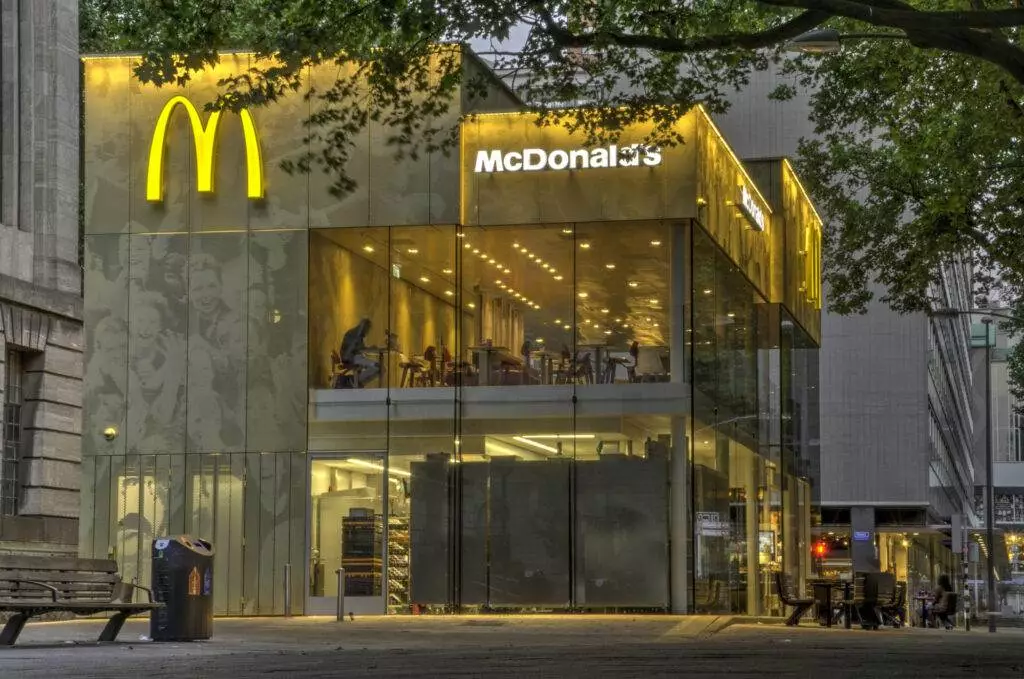
As much as we’re aware that McDonald’s doesn’t need more promotion, our list wouldn’t be complete without this building.
With its golden facade and a beautiful spiral staircase, this is probably the most beautiful McDonald’s you’ll ever see.
Isn’t this the most gorgeous McDonald’s building you’ve ever seen? Image: Depositphotos
However, this piece of architecture in Rotterdam hasn’t always been the prettiest. The original building was actually voted the ugliest in the city, and the council wanted to demolish it.
But McDonald’s had it on the lease for another 40 years, so it was instead decided that a new, more aesthetic building, which blends well with the surroundings, would take the place of the old one.
You can see for yourself whether this goal was accomplished. 😉
Have you visited any of these landmarks before? Which ones do you think should be added to the list? Let us know in the comments! 👇
After the tragic stabbing of an 11-year-old girl in Nieuwegein in the province of Utrecht last week, parents at the victim’s school took action.
They organised a fundraising campaign to help her parents with repatriation and funeral costs. The campaign has already reached its first goal of €32,500.
Out of nowhere
Last Saturday, February 1, 11-year-old Sohani was stabbed to death while playing in the street in Nieuwegein. The crime took place in broad daylight and seemingly came out of nowhere.
A 29-year-old man has been arrested, but his motive and whether he had any relation to the victim is still unknown.
The funeral
Sohani’s family is originally from Eritrea, so they wish to organise her funeral there. That, of course, costs money.
The close-knit Eritrean community has offered to initially advance the costs of the funeral, but the parents would have to pay it back eventually.
The parents at Sohani’s school, Tweeklank, launched the fundraiser to help her family with these costs.
“That is an amount that they cannot pay alone, and that is why we are helping,” Sander Kaldenhoven, one of the initiators of the campaign, tells RTL Nieuws.
Exceeding the goal
The goal was set at €32,500 and has already been exceeded — currently, the amount raised stands at €34,000.
“We initially made the target amount flexible according to the advice of GoFundMe to keep it feasible,” explain the Tweeklank parents on the fundraising platform, “but the generosity has exceeded our expectations.”
Because of this, they’ve also now set a maximum amount.
If you would like to donate to the campaign, the fundraiser is still open.
Students were hospitalised after a distressing hazing ritual at the Hotel Management School of Maastricht.
This marks the second time in the history of the student association that such an incident has occurred.
The brutal initiation
The hazing was organised by the Amphitryon Student Association and involved around one hundred students.
The hazing lasted from Friday night to Monday morning, pushing participants to their physical and mental limits.
According to De Limburger, the initiates were made to stand outside for hours with minimal food and drinks. They were kept awake by noise from pots and pans being banged together.
And if anyone decided to move? They were snapped at by organisers.
Severe consequences
As a result of the hazing, seven students fainted from exhaustion. One student had an epileptic seizure, while others experienced hypothermia.
Two participants were even hospitalised with exhaustion symptoms.
In response to the alarming incidents, the school has initiated an investigation into the student association.
Until further notice, the university has asked all student associations to halt their introduction activities.
Have you ever been part of a hazing? What was your experience? Let us know in the comments below.
American TV network Fox Comedy has just graced the world with a brand-new show: “Going Dutch” — a masterclass in what the Netherlands is all about. Or, well… at least according to Americans.
While some critics argue the show lacks depth and an authentic understanding of Dutch culture, others believe it simply hasn’t found its audience yet.
What is “Going Dutch” about?
The show follows a tough, all-American army commander who gets transferred to the American military base in the Netherlands… as punishment.
His new post? It’s called Stroopsdorf, and it’s the least important base in the world.
Soldiers here spend more time cycling and perfecting cheese recipes than preparing for battle.
The show’s premiere attracted 1.3 million viewers, but one in five jumped ship after the first few episodes.
Maybe Dutchies can only handle one source of affectionate mockery of their culture — and lucky for us, they’ve already chosen DutchReview. 😁
A distorted image of the Netherlands?
The show heavily relies on Dutch stereotypes — toy windmills in the middle of the base, characters named Jan (of course) and a national fixation on kaas (cheese).
While some of these clichés aren’t entirely off the mark, there’s not much Dutch about the rest of the show. For example, the series is largely filmed in Ireland and the main “Dutchman” is played by an Icelandic actor.
The series also makes the classic mistake of confusing Dutch and German culture. But hey, at least Americans are finally recognising that Europe isn’t just one big country. That’s progress! 👏
The NOS claims that“Going Dutch” gives a completely distorted image of the Netherlands.
But let’s be honest: If an outsider describes the Netherlands as a flatland with bikes, cheese and legal weed — they wouldn’t be too far off.
Have you watched “Going Dutch“? What do you think? Let us know in the comments below!
In Turkey, it’s quite the opposite. Showing up unannounced or “çatkapi” is not just normal, but welcomed!
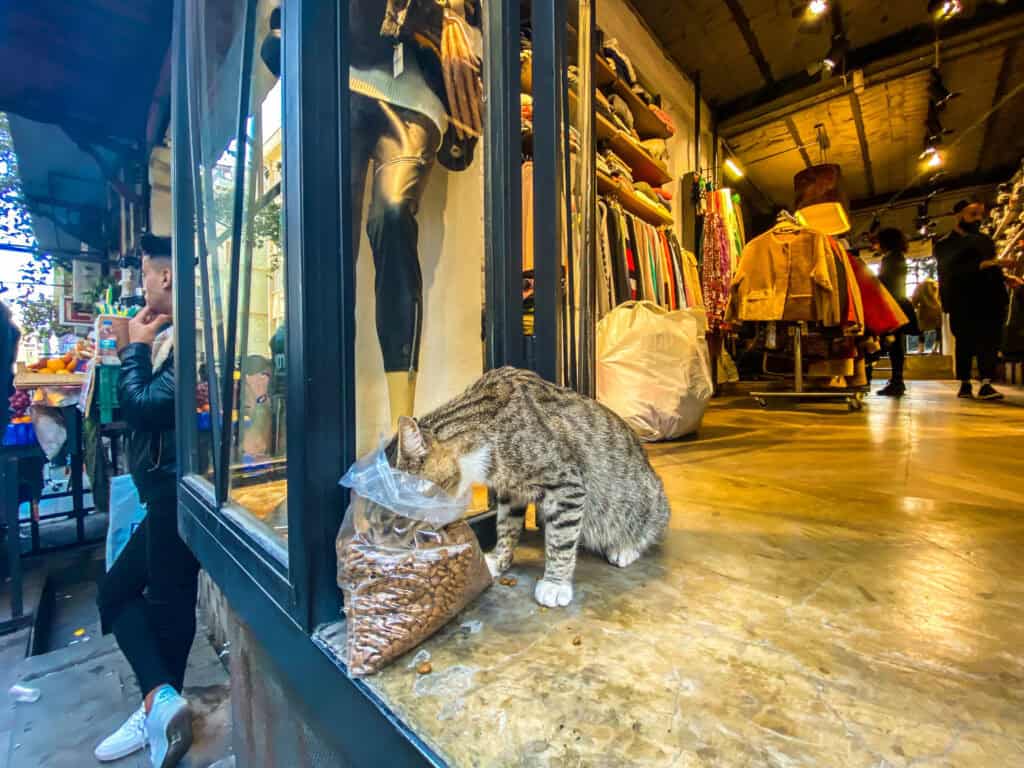
3. Turks adore animals, especially strays
Most people also let them rest in their stores and restaurants! Image: Depositphotos
Turkey is known for streets full of stray animals, but they are far from neglected creatures.
Okay — maybe not all Turkish people love them equally, considering the controversial ban on stray animals. However, many Turks adore and protect these animals with their entire soul.
Turkey has become internationally known for its stray community, and their presence is accepted as a major part of its cities’ identities.
Feeding and caring for them is part of a deeply ingrained cultural routine.
The Dutch, on the other hand, take a different approach. Their streets are spotless and stray-free, reflecting their desire for order and aesthetic harmony.
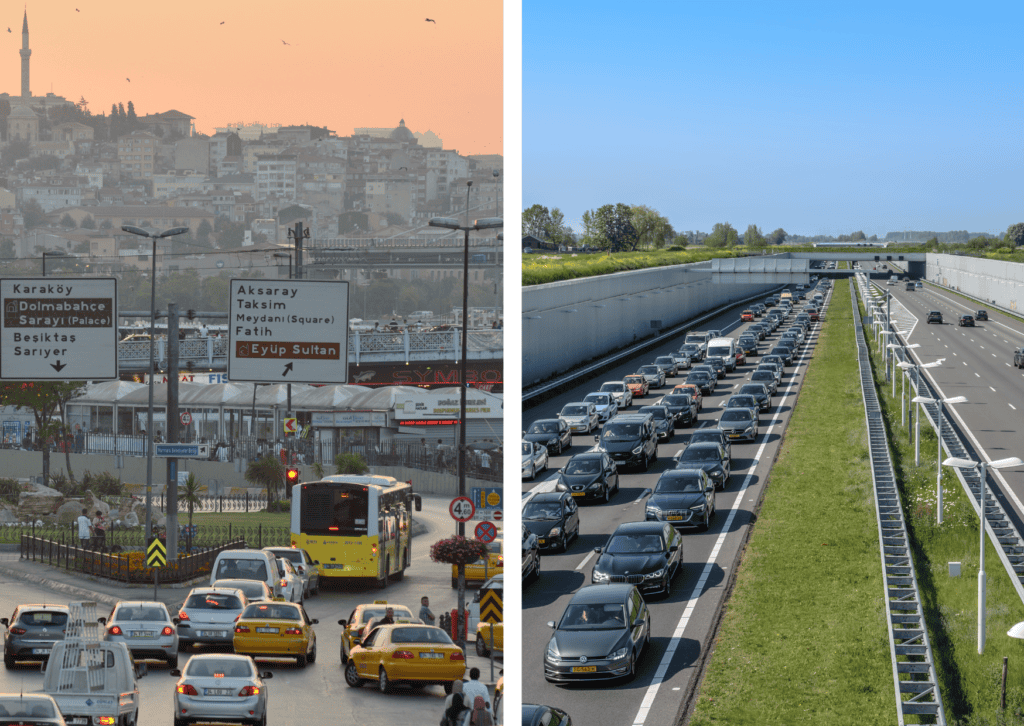
4. Dutchies follow rules
“Doe maar normaal dan doe je gek genoeg” (just act normal it’s already crazy enough) is basically the national motto. In short, it’s general knowledge to act as normally as possible.
Whether it’s driving, waiting in line, or filing paperwork, there’s a system in place that Dutchies love to stick to.
Things are done a little differently down in Turkey…
Rules are seen more as flexible guidelines. We could even say rules are optional in Turkey.
My advice as a Turk? If you follow the rules too closely, you’re probably doing it wrong.
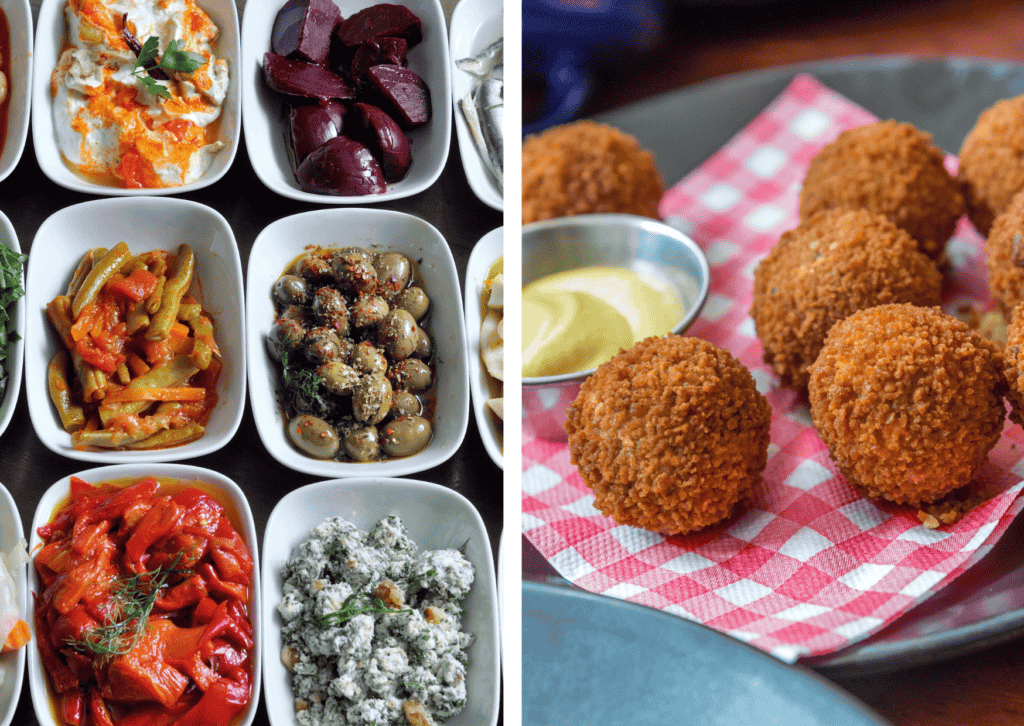
5. Turks have a rich cuisine
Mouth = watering. Image: DutchReview
Turkish cuisine is spectacular (and yes, I might be biased). From olive oil to yoghurt and spices, Turkish cooking is like no other, and if you were to taste my grandmother’s dishes, you would say the same.
8. Dutchies don’t like to draw attention to themselves
Most Dutch people seem to prefer blending in. Their fashion choices sure don’t seem to demand attention, especially when they ride their bikes in casual flip-flops and dress in muted colours.
Contrarily, Turks are known for their felt presence. It’s not uncommon for Turks to have heated (but friendly) debates with one another and make the entire restaurant think they’re arguing over a decades-long family fued while they’re just debating how much sirke is the right amount to add to çorba.
They’re definitely more at peace with dramatic gestures for attention. (Exhibit A: Turkish soap operas)
9. Turks put their car horns to good use
It feels suspicious when there’s nobody honking… 😑 Image: Depositphotos
In Turkey, one thing they do know is how to use that car horn. It’s simply another way of communicating with one another.
Whether for a friendly greeting, a warning, or impatience, the honk is just another native language for them.



![11 of the best free things to do in The Hague in 2025 [UPDATED]](https://dutchreview.com/wp-content/uploads/scheveningen-pier-in-the-hague-on-a-sunny-day-768x512.jpg "11 of the best free things to do in The Hague in 2025 [UPDATED]")