Yet another National Heat Plan has been announced for parts of the Netherlands as more sweltering conditions are expected in the coming days.
When temperatures are persistently above 27 degrees, a National Heat Plan is activated. Unfortunately for some regions, this will be exactly the case this weekend.
Starting tomorrow, the National Heat Plan (and a Code Yellow weather warning) will be in place for Zeeland, South Holland, North Brabant, Limburg, Utrecht, Gelderland, and Overijssel, according to NOS.
Temperatures above 30 degrees
Get the fans out and perhaps find a separate bed for your partner. The KNMI is expecting the average temperature to sit at around 29 degrees this weekend.
And it’s only going to get warmer with temperatures of up to 32 degrees expected for the days that follow.
It’s not just the heat that’s going to have us struggling, however. They’re also warning that the UV index is about to get very high for the coming days — so protect your pale friends and don’t judge them for their factor 50.
The RIVM is stepping in for all of us whose mothers are in another country, warning that everyone should make sure to drink plenty of water.
They also want us to remember the signs of overheating: headaches, dizziness, fatigue, and extreme thirst.
The National Heat Plan primarily exists to warn caregivers and vulnerable groups about the incoming heat. When temperatures are this high for consistent period of time, the sick and elderly are particularly at risk.
This marks the second time this summer that the National Heat Plan has been launched, and it’s only July… Time to raid the appie for ijsjes, and maybe avoid sunbathing.
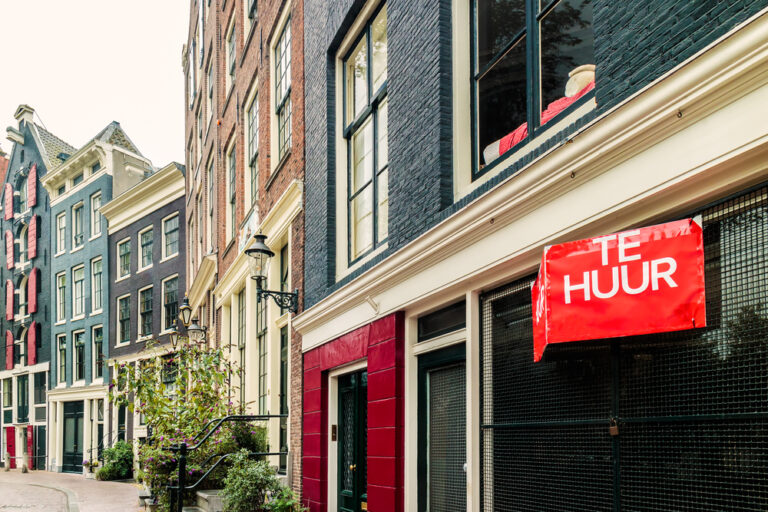
Looking to rent in the Netherlands? Well, you better be earning well. As of the second quarter of 2026, you need an income of €5,650 for the average rental home.
Rental prices in the private sector have risen 5% more compared to this time last year, according to Pararius and Huurwoningen.nl.
And this means you need to be earning even more to secure a home.
Where does this figure come from?
Well, first of all, there’s the current average rent. As Nu.nl reports, more than 4 out of 10 rental properties will set you back above €2,000 per month.
More specifically, in the second quarter, new tenants are now paying an average of €1,882 per month.
Then, we have to remember one of the many requirements you have to meet in order to appeal to a Dutch landlord: usually, your income should be three times the monthly rent.
If we do the maths, this means that you now have to earn an income of roughly €5,650 to secure the average rental home.
More rental properties being sold
One huge contributor to this tight housing market is the 2024 Affordable Rent Act.
With the introduction of the act, many landlords don’t see it as profitable to rent out properties anymore. The result? A lot of Dutch rental properties have gone up for sale over the past few years.
As Nu.nl reports, in the second quarter, 11,389 rental homes became available on the market — but at the same time, 12,150 disappeared from it.
A bit of good news
To end on a more positive note, believe it or not, this quarter marked the first time in two years where prices dipped slightly compared to the previous quarter.
Yep, compared to the first three months of 2026, rental prices have actually gone down.
Will this trend continue? With that average income needed, we can only hope.
In the Zaanse Schans, you can experience what life was like back in the 18th and 19th centuries — full of life, windmills, and shops. We all know you’ve come for the windmills, though.😉
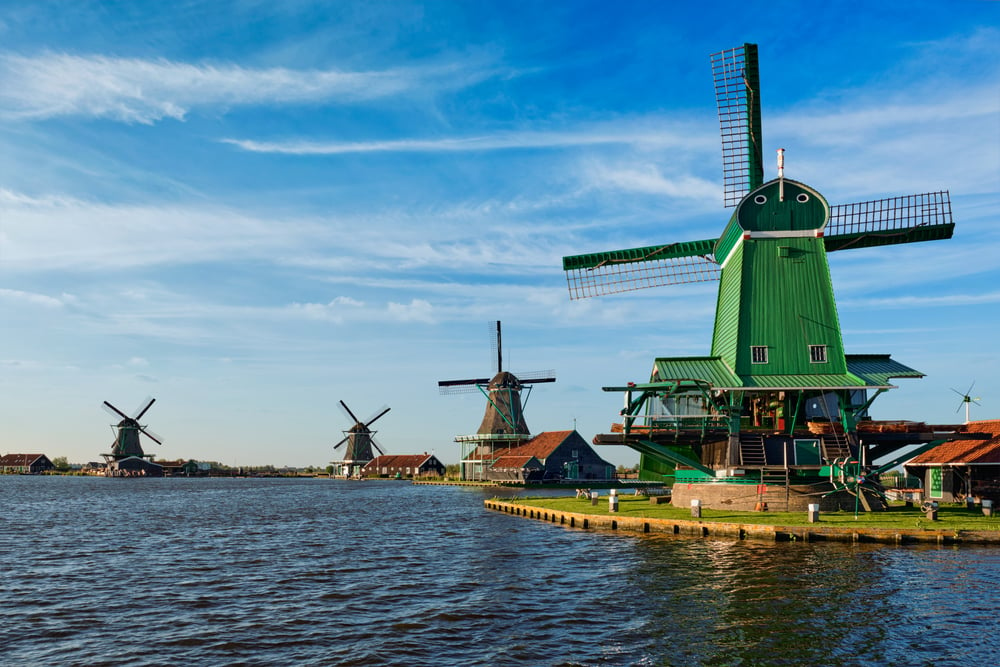
When you go to the Zaanse Schans, you’ll be greeted by 11 different windmills and people’s beautiful little Dutch houses (yup, people still live there).
Check out these traditional Dutch windmills! Image: Depositphotos
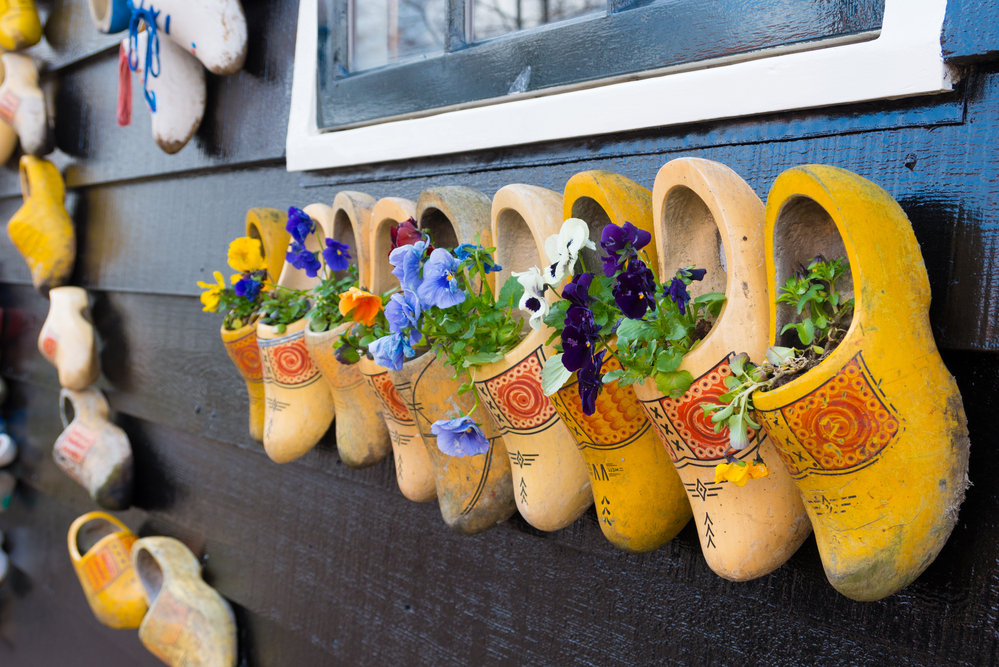
Not only that, but also lots of little shops, a bakery, cafés, a cheese factory, souvenir shops, and a clog warehouse. As a result, tourists flock to the area (so be aware — it gets busy). It’s like a mini traditional Dutch village, a just short train ride from Amsterdam.
This post might have affiliate links that help us write the articles you love, at no extra cost to you. Read our statement.
What to do in the Zaanse Schans
There’s enough to do in the Zaanse Schans that you can easily spend a whole day there. You can also combine this top spot with a trip to another iconic Dutch destination, like exploring the canal town of Giethoorn.
However, while you’re there, here are the things you won’t want to miss:
The windmills at the Zaanse Schans
There are 11 different windmills that you can explore in the Zaanse Schans. Here’s a brief outline of what they all are:
De Huisman: A spice warehouse where you can taste different spices
De Gekroonde Poelenburg: A centuries-old wood sawmill
De Kat: A paint mill where you can watch demonstrations
De Zoeker: An oil, paint, and cocoa mill
Het Jonge Schaap: A unique wood sawmill replica
De Bonte Hen: An oil mill which has been running since 1693!
De Os: A windmill that was later transformed into a diesel-powered mill
Het Klaverblad: A small wood workshop mill
De Bleeke Dood: The oldest smock mill in the Netherlands, used to mill flour
De Ooievaar: An old oil mill that was moved to the Zaan area
Mini-mills on the Schans: Miniature windmills that were used to pump water from the polder
Your Instagram feed is going to love you! 📸
The museums at Zaanse Schans
An iconic historical destination like Zaanse Schans is naturally jam-packed with incredible, one-of-a-kind museums.
TIP: Want to get the most out of your trip? The Ticket Zaanse Schans gives you access to multiple attractions in Zaanse Schans, making it the best way to see it all. Find out more.
The Zaans Museum and the Verkade Experience
When you first arrive in Zaanse Schans, you’ll notice a large museum. This is the Zaans Museum, which teaches the history of the area, the windmills, and trade.
One of the trades of the area that you can learn all about (and taste) is biscuits and chocolate (yum!) since it’s the spot where famous Verkade girls made their treats.
It’s a very interactive and modern museum, helping you to truly enjoy learning about the area — and then you can go out and see it for yourself.
You can even operate the chocolate machine in the museum. (Now we’re talking!)
The Zaanse Time Museum
The museum houses many different Dutch timepieces that tell the story of the Zaanse Schans through beautiful old clocks that’ll chime on the hour, every hour.
Here you’ll learn about Dutch clockwork history from the 16th century. There are plenty of different things to see, as well as learn about their scientific and design history.
The Albert Heijn Museum Shop
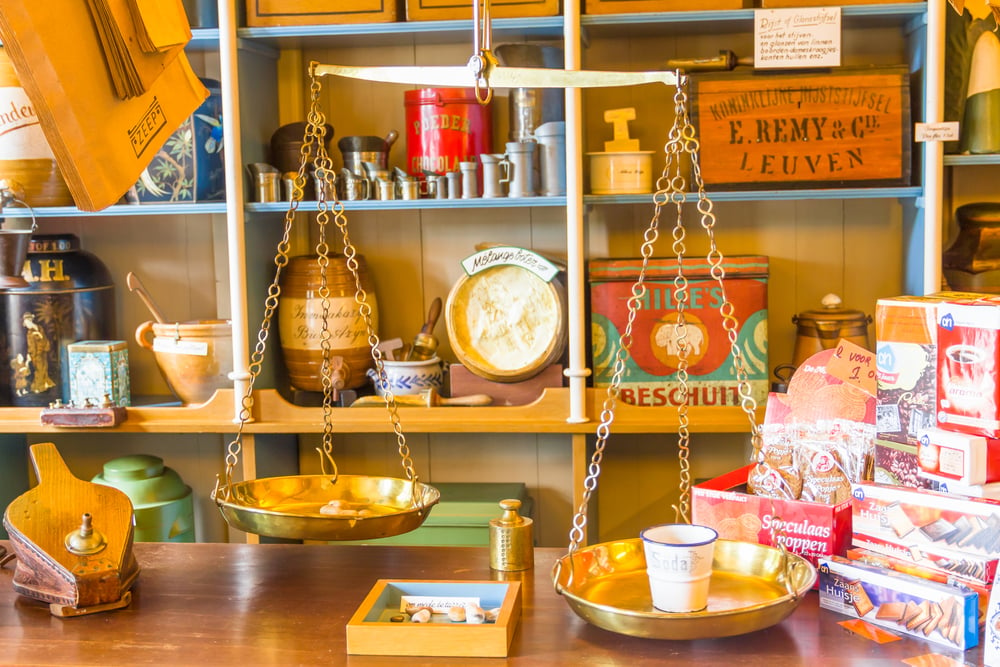
It’s hard to believe (we know), but Dutch grocery behemoth Albert Heijn started out as a single, small shop.
Tell a Dutchie that you know all about the first Albert Heijn ever; they’re sure to be left impressed! Image: Depositphotos
Albert Heijn took over the shop from his parents in 1887, when he was just 21 years old. It was nothing like it is today.
In this museum, you can see a reconstruction of the original shop, stocked with the items that were sold at the time. Discover the roots of the Dutchies’ favourite store, unknown by many today.
The Jisper House
The Jisper house is an old fisherman’s cottage, as it would have stood in the village of Jisp back in the 1850s.
Here, you can explore the cute little cottage and even dress up in traditional local costumes and have your photo taken — selfies at the ready!
The Bakery Museum de Gecroonde Duyvekater
As you walk through the Zaanse Schans, the smell of Dutch treats will tempt you right into the bakery museum. The house that this bakery is located in has been around since 1658 (yep, wow!).
You’ll learn all about traditional Dutch culture on a day trip to the Zaanse Schans near Amsterdam. Image: Depositphotos
This bakery is not just a museum; it is actually in use! This means that… you can try out and buy some delicious traditional Dutch baked goods. 🤤
You can taste Duivekater, a famous sweet bread from Zaanse and other originals, as well as more modern baked goods.
If you want an excuse to chow down on some even more delicious Dutch snacks, then here’s your chance. 😉
The Windmill Museum
If you just can’t get enough of those adorable Dutch windmills, head to the Windmill Museum!
At the windmill museum, you’ll be able to interact with the exhibitions and learn all about what life working in a windmill was actually like.
From rotating exhibitions, films, and an interactive model with 1,100 windmills — you’ll be sucked into the charming world of the Zaanse Schans for hours.
The Honig Breethuis
At the Honig Breethuis, you can jump into the lives of a Dutch merchant family in the 1830s.
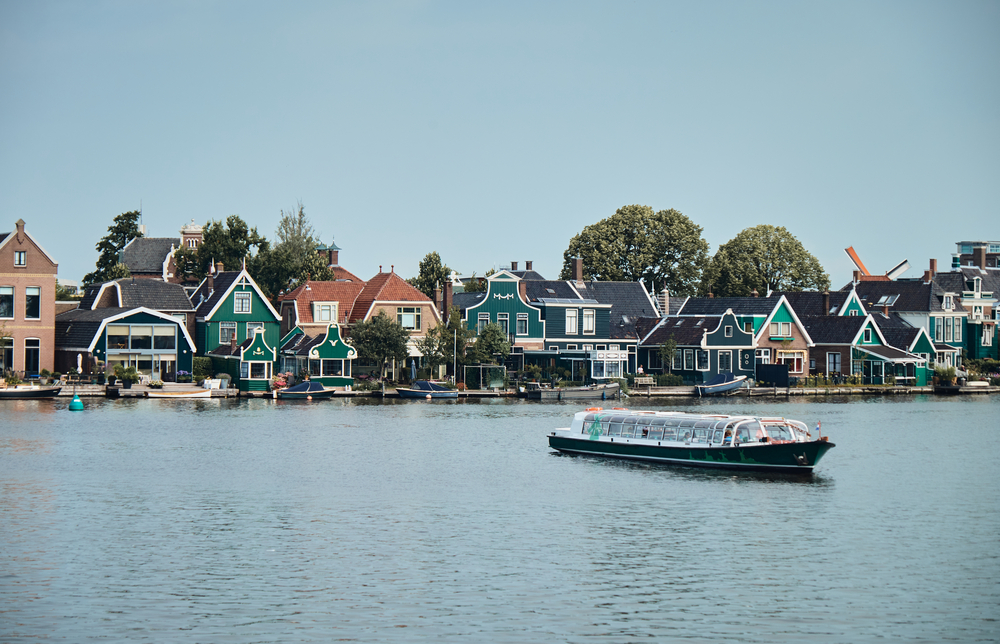
The Honig Breethuis is located on the other side of the water, across from the windmills. Image: Depositphotos
Beautifully painted wallpapers and old-fashioned furniture will tell you all about the lives of the former inhabitants of the impressive traditional Dutch home.
Besides the wood detailing of the furniture and the gold accents on the walls, keep an eye out for special gems — like the old ornate fireplace.
How to see the Zaanse Schans
There are many ways to get around the Zaanse Schans — whether you prefer walking, cycling, or hopping on a boat. 👇
Cycling around the Zaanse Schans
Cycling at the Zaanse Schans is possible (we’re in the Netherlands, after all), so it’s good news if you want to take your fiets for a spin.
No bike? No worries! You can rent bicycles at the Zaanse Schans if you’re bike-less.
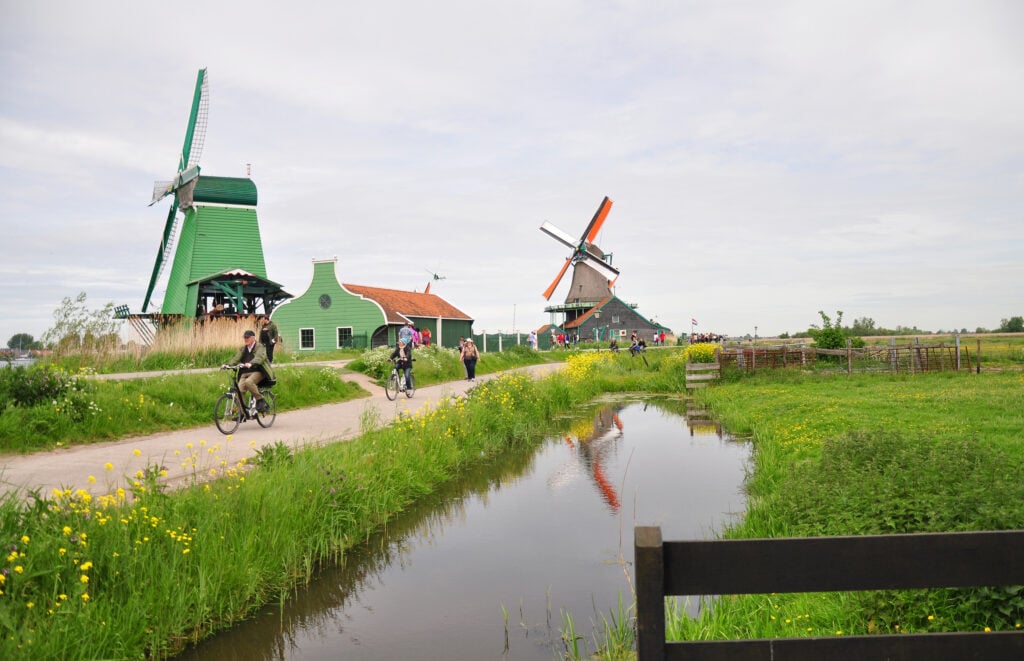
You won’t be the only one on a bike! Image: Dreamstime
There are bike tours and different cycling routes you can take throughout the area, so it’s the perfect place to go on a sunny day.
In the height of summer, it gets really busy along these routes, though, so beware of grandmas zooming down the paths on their e-bikes.
Going for a walk at Zaanse Schans
Just looking for somewhere nice to go for a walk in Holland? Well, the Zaanse Schans is the perfect place! Strolling around and exploring most of the windmill area is completely free.
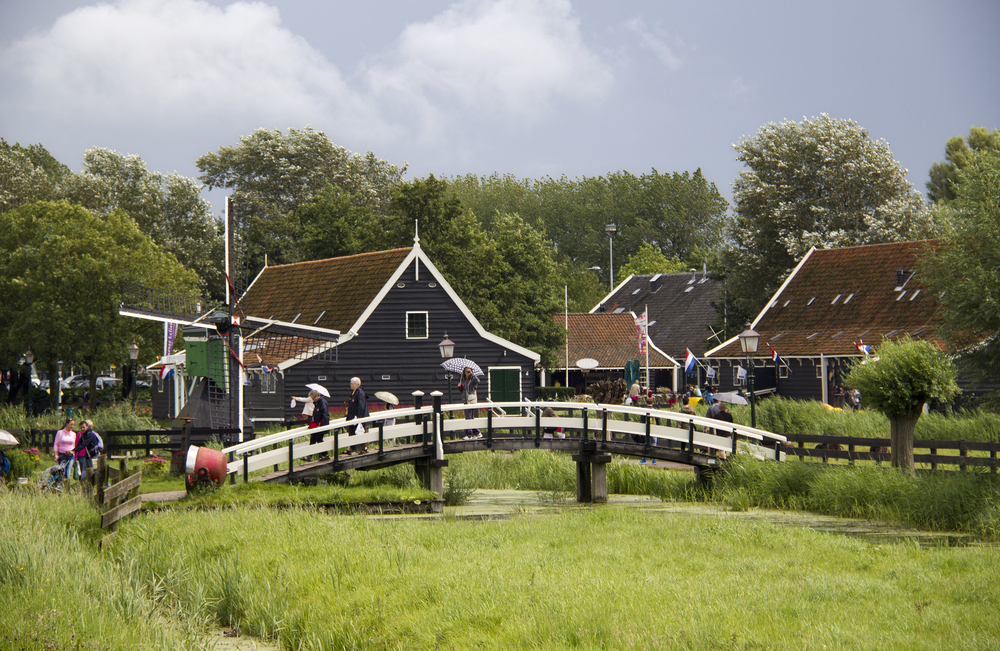
Walk between the small Dutch houses and on the cute bridges in the traditional village. Image: Depositphotos
There are also theatrical walks if you’re looking for something a bit different. A guide in Zaan costume will show you around the area, where you will learn all about the history, food, and culture.
They may even let you in on some of the 1850s gossip. And thankfully, these tours are also available in English if your Dutch isn’t up to scratch.
Hop on a boat through the Zaanse Schans
Really want to get the most out of your visit to the Zaanse Schans? Hop in on one of the many boats that sail on the River Zaan, or take a boat tour!
Feel the wind in your hair and smell the freshness of the water, all while learning from a guide about the beautiful sights around you.
The Zaanse Schans oozes quintessential Dutchness, and it’s a perfect destination for a day trip from Amsterdam or any other Dutch city. You won’t regret it!
Have you ever been to Zaanse Schans? Tell us in the comments below!
Travelling around the Netherlands, you’ll spot tons of beautiful churches, and meet people living simply and modestly — or as some might say, quite Calvinist. So, you might be puzzled to discover that the Dutch are in fact very atheist. How did this culture come about?
With a largely atheist population strongly rooted in religious culture and tradition, you can easily end up visiting nightclubs and bars in the Netherlands, only to find out that they were once churches!
While it may be difficult to imagine for some, the fact remains that if you observe the non-religious Dutch closely, you’ll definitely notice a Calvinist nature.
But, before we go any further on the Calvinist nature of the Dutch, let’s find out what Calvinism is all about first. 👇
First things first, what is Calvinism?
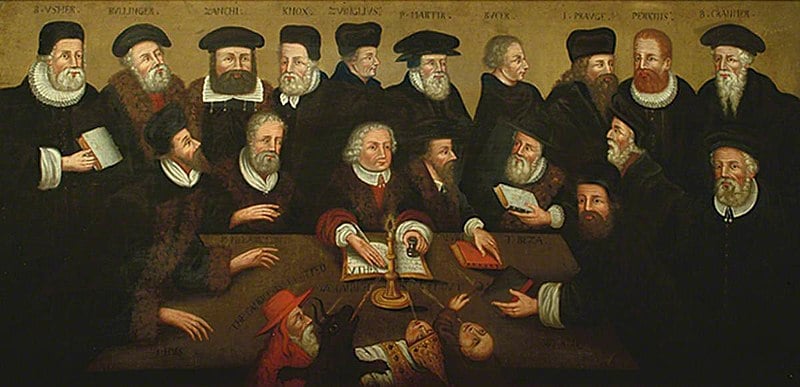
Calvinism is a major branch of Protestantism that follows the teachings of 16th-century theologian John Calvin.
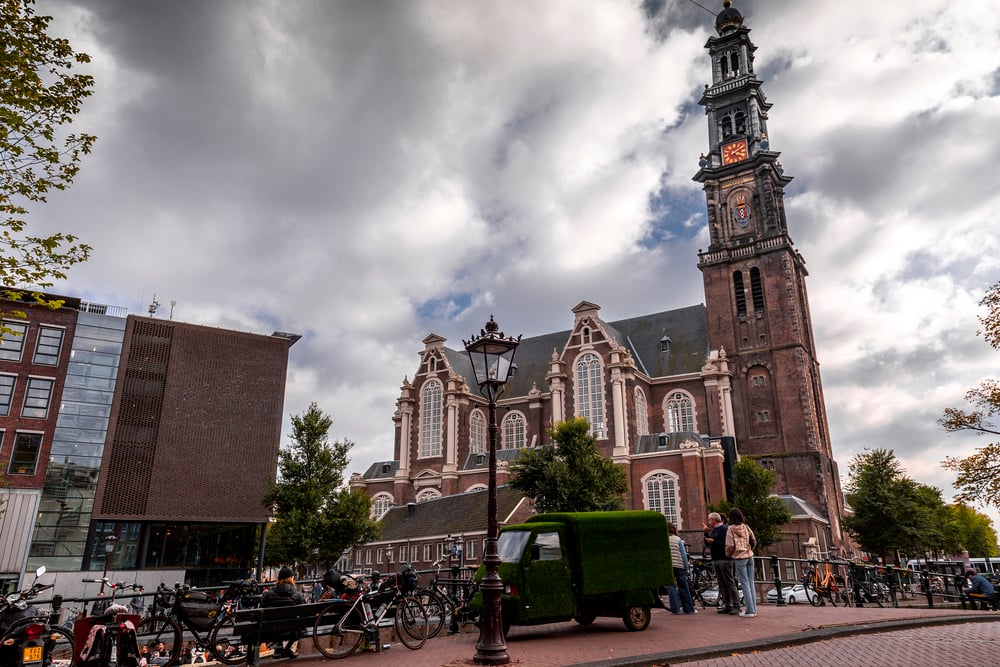
The Westerkerk, a Calvinist church in Amsterdam. Image: Depositphotos
While the core doctrines are predestination and election, its basic principle is that the Bible must be interpreted by itself. This means that parts that are harder to understand are explained in other passages.
Simply put — if you don’t understand a passage in the Bible, just read on. You’ll understand it later. 🙃
How does Calvinism relate to the Dutch?
It is no secret that the Netherlands has been a Protestant nation since the beginning of the Protestant Reformation in the 16th century. Martin Luther and John Calvin’s teachings were very popular among the Dutch.
Even in the period when King Henry VIII of England was having a feud with the Catholic Church, the region that is now the Netherlands was already a strong Protestant part of Europe.
It’s also important to note that William of Orange was a Calvinist. Furthermore, the Eighty Years’ War wasn’t just a war of independence. It was also a war between the Spanish Catholics and William of Orange’s Protestant Calvinists.
This is not to say that everyone who fought under William of Orange in the Eighty Years’ War was a Calvinist. However, the majority fought on his side because they disliked the Spanish and their strange Catholic ways.
Calvinism arrived in what is now the Netherlands in the 1540s, when both the nobles and the common folk converted.
Under Phillip II, the Spanish government started harsh persecution campaigns against the Dutch. As a reaction to this persecution, the Calvinist population rebelled.
History buffs never forget the Beeldenstorm in 1566, which refers to the wave of disorderly attacks that spread rapidly through the Low Countries from south to north, carried out by Calvinists in the summer of 1566.
These Calvinist Protestants destroyed Catholic art and many forms of church fittings and decorations. It was in that same year that William of Orange started the Eighty Years’ War in order to liberate the Calvinist Dutch from the Catholic Spaniards.
There was definitely little love for Catholics or Catholicism in the Netherlands back then, and driving the Spanish away was one extraordinary way of showing it.
Atheism in the Netherlands
It is already an established fact that most Dutch people are not very religious today. I’m pretty sure more Dutch people have read Harry Potter than the Bible, and the majority of them probably only say Jesus Christ (Jesus Christus!), out of frustration rather than in a moment of prayer. 🙏
Still, religion in the Netherlands remains an interesting topic of discussion.
Many religious people live in the so-called Bible Belt. Image: Magnific
Results of research carried out at the Vrije Universiteit Amsterdam in 2016 showed a steady decline in the number of Christians or believers in the Netherlands. This has led to the Netherlands no longer being seen as a Christian nation.
In 2021, research by the CBS (Central Statistics Bureau) showed that most Dutch people neither attend church nor believe in God. It also stated that there are more irreligious people aged 15 years and older (58%) than believers in the Netherlands.
But the question still remains: how is it that a nation with an atheist majority lives by the teachings of a religious preacher? Before we answer that, let’s talk about who John Calvin was.
Calvinism in the Netherlands: who was John Calvin?
John Calvin was a French theologian, pastor, and reformer in Geneva during the Protestant Reformation. He was a principal figure in the development of the system of Christian theology that came to be known as Calvinism.
Being one of the fathers of Protestantism, he played a major role in how the Netherlands went on to become a Protestant nation.
Although born into a family of the Catholic faith, he converted to Protestantism in 1533 after studying philosophy, humanism, and law.
While John Calvin may never have set foot in the country, his teachings in the period of the Protestant Reformation found fertile soil in the Netherlands. In fact, almost every political party in the late 1800s adopted his teachings.
Despite not being Dutch, the Dutch feel great when his name is mentioned. For whatever reason, they see him as one of their own. 🫂
So why do the Dutch, who aren’t really religious, follow the teachings of John Calvin?
If you’re a foreigner observing the Dutch, you’ll notice how hardworking, frugal, and straightforward they are. A look into the history books will tell you that the Dutch statesman and theologian Abraham Kuyper played a big role in reviving Calvinism in the late 1800s.
A true believer in the separation of church and state, Abraham Kuyper and other lawmakers of his time took it upon themselves to follow in the footsteps of Calvin in breaking the yoke of Catholicism in the country.
Their reforms (which were very Calvinist in nature) laid the foundation for what the Netherlands is today.
The Dutch (Calvinist) nature
The Dutch were able to build a society based on respectfulness, acceptance, self-discipline, and efficiency. It’s a country where hard work is valued, justice can be served, and talents are nurtured.
Not because they think you would go broke without the money they borrowed, but because of the principle attached to it. Being orderly and straightforward is a way of life, without losing sight of open-mindedness.
Your word is your bond, and if you don’t live up to your word, you will definitely be confronted. 🤞
Interesting government comms here when in many houses in the Netherlands 🇳🇱 they don’t even have big curtains or anything covering their windows. In Dutch culture, it shows that one has nothing to hide and is also believed to have its origins in Calvinism. https://t.co/hljVWOQTjc
— Dr Jamie Halliwell 🏳️🌈🇦🇹🇧🇪 (@ShadyEuroFreak) March 24, 2023
The best of both worlds
The Netherlands is the perfect example of how you can be an atheist liberal (or progressive) and still live by the moral teachings of a religious preacher. It is a testament to the fact that even if one is an atheist, one can adopt good things from any religion.
Even years after the death of John Calvin and the Dutch statesmen who laid the foundation of the society we know today, it is evident that, while religious beliefs may not hold sway in the Netherlands, their virtues still linger.
The Netherlands is one of the world’s most liberal nations, yet its inhabitants are generally described as sober, reserved, rule-driven, and well-disciplined: all typical Calvinist characteristics.
Calvinism in the Netherlands is no longer intensely tied to religious beliefs as it once was, but Calvinism has nevertheless developed into a way of life for the Dutch.
What is your experience with Calvinism in the Netherlands? Tell us in the comments below!
Footage of a woman being severely beaten inside an NL Jobs company car went viral across Dutch platforms this week.
The couple at the centre of the case are Romanian, and both had been placed in work by NL Jobs.
The agency mainly supplies foreign labour to horticulture, packing and technical roles across the western Netherlands. According to a spokesperson who spoke to AD, the man is the woman’s partner.
A recognisable car, and a video that spread fast
The attack happened last Sunday in Schagen. A bystander, filmed it from a short distance away.
What the footage captures is hard to watch. The woman tries to get out of the vehicle, and the man drags her back inside to keep hitting her, striking with enough force to visibly rock the car.
By later that day the clip had landed on several platforms, including the Dutch shock site Dumpert, where it passed 125,000 views.
The car was clearly identifiable as an NL Jobs vehicle, tying a private assault directly to a named company.
Woman didn’t want to press charges
The violence happened in one of NL Jobs’ cars, but management is adamant it occurred outside working hours and entirely in the couple’s private life.
Workers who pay bijtelling (a Dutch tax on the private use of a company car) are allowed to drive the vehicles off the clock, the spokesperson noted to AD.
The agency says it knew nothing of any abuse and was shocked. However, when confronted with the video, the couple reportedly stayed remarkably calm, and the woman did not want to report anything herself.
That refusal is the difficult part. Without the victim coming forward, an employer has very little formal footing, which is often exactly where these cases stall.
NL Jobs filed a report anyway
However, the agency didn’t leave it there. The man was dismissed on the spot, and the company took the assault to the police itself.
In a written statement, NL Jobs said it condemns every form of violence, calling it flatly incompatible with the firm’s values. It promised full cooperation with the authorities and acknowledged that what happens next is out of its hands.
The spokesperson also argued that employers need better tools for moments like this, floating the idea of a dedicated platform where such situations could be flagged.
For anyone living in the Netherlands and facing violence at home, confidential advice and support are available through Veilig Thuis (the national point for reporting and advice on domestic abuse), which can be reached free on 0800-2000.
Should agencies that place workers carry more responsibility when abuse surfaces among their staff? Tell us what you think in the comments.
In preparation for my big move from the United States to the Netherlands, I set sail on a Dutch history hunt within the continental US.
But, I couldn’t just buy a book like a normal person — nah, I went for the more expensive, dramatic, and yet romantic route in a jumpy attempt to get familiarized with a culture I was about to be soon part of. 🧳
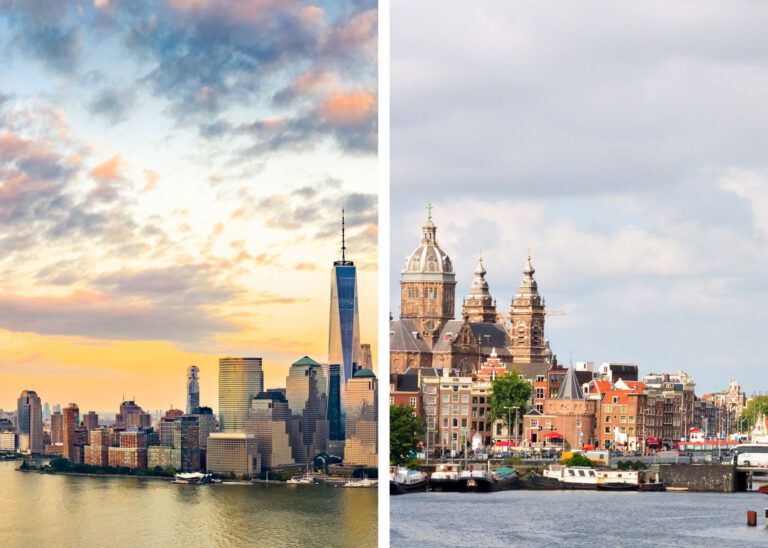
For my attempt’s itinerary, I booked a ticket to New Jersey and found myself a tiny NYC apartment in the southern tip of Manhattan in New York City (ahem, New Amsterdam) not knowing this would be a mutual housing pattern in both cities.
Let me reminisce for you
I began my journey by visiting The Vander Ende – Onderdonk House located at the border of Queens and Brooklyn, with its charming white stones tucked away from New York’s steel skyscrapers.
It was within the oldest Dutch Colonial stone house from the 1820s in New York City that I encountered the famous Dutch clogs.
And although the remains of Dutch heritage in New York City are not plenty, I refused to give up.
Up next, I took long walks around Breukelen (Brooklyn), Parelstraat (Pearl Street), Haarlem (Harlem), and Waal Straat (Wall Street) — where no one other than Google Maps and street signs bothered to correct my use of the old Dutch names. 🤳
See, within my US life, which preceded my Syrian one, as beautiful as I found New York to be in its unique way, I couldn’t help but wonder if Amsterdam (the city I would be moving to) would feel as scary to me as New York City made me feel.
The metropolitan and constant hustle of New York City scared my inner child. People always run to catch the subway from their first job to the second, just going around the clock and acing it.
Was the populous city of Amsterdam a good fit for me at all?
A whole different story
Well, fast forward to this day, I’m sitting on a window ledge of my gezellig Amsterdam apartment, finally under the same roof as my loved one, thinking about that cone of hot marketfrites I had yesterday and laughing at the idea that I had cold feet about living in Amsterdam or the Netherlands.
Sure, Amsterdam turned out to be a populous city filled with sassy seagulls and busy crosswalks where texting and walking simultaneously is as much of a hazardous activity as it was in New York.
But, the truth is, this city also turned out to be as hearty as a cup of your favourite soup on a rainy day. It’s a spirited, and welcoming city with its own character and style with the occasional pyromaniacal tendencies.
Did you have to go through a big move to or from the Netherlands? Tell us all about it in the comments!
Selling a home quickly in the Netherlands sounds easy enough in this climate — but to get the best price, you need to make sure you go about it in the right way.
Sit back, relax, and let me walk you through seven tips to sell your Dutch home efficiently, quickly, and with top results.
1. Find yourself a realtor
The first favour you can do for yourself is to get the professionals involved. The process of selling a house is no small feat. Especially if you’re new to the various steps involved — or the language!
Trying to sell your own house in the Netherlands without a professional background leaves you with a high chance of falling into various pitfalls — and trust me, that’s not exactly conducive to a quick sale.
To save yourself time, stress, and potentially even money, you should find yourself a highly trained selling realtor (verkoop makelaar). 😉
Ok, you want a realtor — but where can you find one? Krib was made to help people find and choose a realtor that suits their personal situation.
The site compares different realtors, allowing you to reach out to someone with expertise in the area that you are hoping to sell in, the type of house you’re selling, or more.
As a homeowner who really wants their home to sell fast, one of the best things you can do for your case is to make sure that your house is freshly polished, wearing a bow tie, and sporting its best smile for potential buyers.
In order to sell your Dutch home fast, one of the best tips I can give is to make sure it’s looking snazzy. Image: Depositphotos
And how do you do that? Fix that broken skirting board, give the walls a fresh lick of paint, and maybe have the windows cleaned — a little goes a long way.
Of course, balancing the cost of renovations and the value that they’ll bring to your property is a tricky business and sometimes requires a professional evaluation.
3. Ensure that people can find your house (and are impressed!)
It’s all well and good if you’ve made your house sparkle, but it’s equally important that you ensure people actually see it.
So, how do you make sure your house gets the love and attention it deserves?
📸 Get professional photos taken. Sure, your iPhone camera may be good, but it takes more than a good lens to highlight your home’s best features. Many realtors will help you arrange for this.
📣 Make sure that people know your house is on the market. The next step is to take those pretty pictures and share them with the world. Try traditional platforms such as Facebook or Instagram — the more people that know, the better. Your house’s quirky interior could be the dream house for that friend of a friend on Facebook.
🏠 Get it up on Funda. Perhaps one of the best platforms for your home is the Dutch real estate website Funda. Think of it as Tinder for houses for sale. It’s one of the first places hopeful homeowners in the Netherlands will check when they decide they want to buy.
Note: Sadly, you cannot upload your home to Funda by yourself. Only real estate agents have access to the platform.
4. Write down your home’s strongest selling points
Is your home freshly insulated? Does it have a state-of-the-art roof? You may know these things, but potential buyers are coming in blind. It’s time to show off!
Really think about your home’s assets. Buy yourself some fancy stationery if needed and write. Them. Down. If you’re hosting your own viewings, make sure to point these out to viewers.
If you’re unsure what the unique selling points of your home are, it’s always worth getting a professional to take a look.
They will likely see points that you wouldn’t consider, ensuring that you’re ready to wow your viewers and get the bids flowing.
5. Decide exactly what you want from the sale
So you’ve bedazzled your house, put it out there for everyone to see, flaunted its best assets — and now you have interested buyers!
Make sure you know what you want from the sale. Image: Dreamstime
However, one thing that will slow down the sale of a house in the Netherlands is the negotiations.
To ensure that things run as smoothly as possible, you should enter talks knowing exactly what you want in terms of resolutive conditions and knowing where you’re flexible.
What are the resolutive conditions when selling a house in the Netherlands? Simple! When you agree to hand over the keys, both the seller and the buyer may lay out certain conditions.
For example, the seller might agree to make certain repairs, or the buyer might need to secure financing by a certain date. If these conditions aren’t met, one or both parties may decide not to continue with the sale.
6. Know how much your home is worth
While it may be easy to receive an offer on a home in the Netherlands, you need to make sure that it’s a worthwhile one. This takes time, so don’t wait for an offer to come in before determining the true value of your home!
This can be done beforehand by either a taxateur or a trained real estate agent.
Krib also allows you to get a professional opinion on the selling price of your home. When you reach out, realtors can give you a competitive quote in advance, and you can even compare the average selling times and estimation accuracy of different brokers.
7. Set a deadline for potential buyers
It’s important to be clear to potential buyers that you need an answer from them as soon as possible. Image: Freepik
You don’t have to be the only one working under a deadline! In the Netherlands, it’s common practice to set a deadline for potential buyers to speed up the process.
For example, you may decide to sell your home within eight weeks. Let the hopeful buyers know this and hold your ground.
This way, you know when you should expect an offer and can keep the process running smoothly towards a swift sale!
Now, are you ready to have your lovely home loved by others? Good for you! We hope these tips help you reach the finish line swiftly and safely.
Have you sold your home in the Netherlands? Tell us about your experience in the comments below.
The Dutch are a no-nonsense sort of people, but don’t you just love the idea of a grown Dutchie getting ready to start their day as a straight-talking businessperson by eating SPRINKLES for breakfast? Something’s gotta fuel that badassery. 🤔
The question of sugar for breakfast seems to mark a dividing line between the Dutch and internationals. Sure, the odd encounter with hagelslag can evoke happy memories of celebrations and being a kid again.
But if you ask me, I’d rather have a poached egg and some bacon!
2. Wish total strangers “eet smakelijk” if they walk past while someone is eating
Have you ever tried to eat something on a train in the Netherlands? Be it your lunch or just a frikandelbroodje you got from the Albert Heijn?
We almost guarantee that the conductor or another well-meaning person who walks past you will say “eet smakelijk” which basically means “enjoy your meal”. Why thank you, kind Dutch stranger, we will!
3. Congratulate everyone at someone else’s birthday party
Have you ever been to a Dutch birthday celebration, aka a “circle party”? If not, you’re in for a surprise. Upon arrival, it’s basically mandatory to greet every guest in attendance and congratulate them for their connection to the person whose birthday you’re celebrating.
In English, it would go like this:
Hey Joost’s girlfriend, congratulations on Joost’s birthday!
Nice to see you, Joost’s father, congratulations on your son’s birthday!
Hey Joost’s neighbour, congratulations to Joost!
You have to congratulate everyone. Image: Pexels
While we think it’s great to spread the love, it can be super awkward to congratulate a distant uncle you may be meeting for the first time. Nevertheless, this is a Dutch tradition that many people love.
Tip: don’t forget the three cheek kisses!
4. Wave at everyone from their boat ride on the canal
Whether it’s a typical Dutch family with two kids and a dog, or a boatload of rowdy frat boys, there’s one thing they all have in common: waving at people on the side of the canal.
And we appreciate that. After all, if you’re not in the boat, you at least deserve a little wave to ease your FOMO (Fear of Missing Out).
5. Be a little cat crazy
The Dutch sure do like their feline friends. With between two and three million domestic cats in the Netherlands, you’re likely to see a plethora of different kitties wherever you go.
Many restaurants and shops even have an in-house cat (who acts as a built-in rat-catcher). 🐱
In fact, there are establishments that offer cats as their selling points — cat cafes! Want to enjoy a hot chocolate with slagroom (whipped cream) as a bundle of fur purrs in your lap? The Dutch have just the thing for you.
Are you also dying of a cuteness overload? Image: Depositphotos
There is even an Instagram page called raampoes(which directly translates to “window cat”) in which people share pictures of photogenic cats looking out through windows. Purrrrima!
6. Hang their backpacks on flagpoles when they graduate
Have you ever been strolling through your neighbourhood and suddenly seen a bunch of backpacks mysteriously dangling from flagpoles beside the Dutch flag? It’s nothing sinister — just a much-loved Dutch tradition!
Every year in June or July, when Dutch students graduate from high school, their families proudly hang the student’s school bag on the house flag pole. Happy graduation!
7. Add “je” to everything to make it sound small and cute
While Dutch can sound like a bit of a hard language sometimes, here is a teenie weenie cute thing the Dutch do — add “je” to the end of words!
In English, we refer to this as baby-talk, but Dutchies use this all the time: a bier is a “biertje” and an aardappel (potato) can be an aardappeltje. Imagine walking up to an English bar and asking for “one beerie, please!” 😂
8. Be completely obsessed with flowers
Every weekend, you’re bound to see Dutchies of all ages filling the streets with flowers in hand — no special occasion required. 💐
Just topping up the flower supply. Image: Magnific
Bloemetjes appear to be a great solution to everyday problems in the Netherlands. Had a bad day at work? Flowers. Bad period pain? Flowers.
Did someone steal your bike? Flowers. If you ever have the pleasure of dating a Dutchie, make sure you have more than one vase or you will be judged as your room fills with — you guessed it — flowers.
9. Use funny little sounds to convey intricate meaning
If you’re new to the Netherlands and haven’t picked up any Dutch yet, the language can sound a bit like gibberish. Even more so when the Dutchies use those little words to express themselves.
Truth be told, even if you’ve been here for years, it’s still possible to be surprised by some of the little sounds that Dutch people make, which are widely accepted and understood forms of speech, like:
Saying “zo” after they’ve finished doing something,
Saying “hé hé” to express satisfaction at a job well done,
Saying “nee nee nee” (always three times) before actually replying.
So simple, yet so packed with meaning.
10. Be ultra-enthusiastic when saying “hi” and “bye”
In the Netherlands, saying “hi” and “bye” are very important, and there are very specific ways of doing this.
Saying hello and goodbye sets the tone for your conversation. Image: Pexels
Dutchies often say “hoi hoi” when they greet people, which is adorable. (Reminds us a bit of Santa, actually).
But better yet is the enthusiasm with which groups of friends yell “doeeiiiii” (byeeee) in perfect harmony at each other as they split off and cycle in different directions.
It’s even better when this high-pitched “doeeiiiii” is being yelled out by middle-aged men. (This never fails to brighten up a bike ride).
11. Wave their hand next to their head when eating something yummy
If you’ve ever eaten stamppot with a bunch of Dutchies, you might’ve noticed some people pulling happy faces and waving the palm of their hand around next to their cheek.
Do they have something on their face? Are they choking? Nee! This is the lekker hand gesture. Whilst it can look kinda ridiculous initially, we’ve gotta admit it’s also pretty endearing.
12. Get excited about fancy sandwiches
We know the Dutch love bread and cheese, but fancy sandwiches at lunchtime bring on a new level of excitement. These could be anything from goat’s cheese with rocket and parma ham, to smoked salmon, cream cheese and capers.
You can be sure that will have all the Dutchies’ mouths watering. Pair this with a massive cup of milk, and it could almost be Christmas!
13. Hold hands while cycling
Did you know that most Dutch people actually cycle straight out of the womb? We’re kidding! But it’s safe to say that Dutch children can pretty much cycle better than most of us internationals by the time they start walking. 🚲
Cycling is an important part of the Dutch lifestyle, so naturally, many of the cutest things you’ll see Dutchies doing involve bikes.
The initial sighting of a couple holding hands while cycling towards you can cause a bit of a panic — will they make space? Or do you need to swivel off the cycle path?? — but eventually, you’ll realise their love poses no threat.
14. Decorate everything from their houses to the streets
Confused? Yep, we are too. But decorating houses is just the Dutchie way! What are they celebrating? It could be anything, and we support that.
Only one thing that we know for sure is, at the rate that Dutchies decorate, HEMA will never go out of business!
15. Follow the sunshine (wherever it goes!) 🌞
Let’s face it, the Dutch winter is bleak. But as soon as the sun comes out (even if it’s winter), people will drag chairs outside and follow the sun around their garden.
If they don’t have a garden or balcony, no problem! They’ll just move out to the street and take up the sidewalk or a parking spot — and will they apologise for that? No!
Meanwhile, as soon as summer comes, it won’t be long before the Dutchies have their cheeseboards and white wine out, transforming their doorsteps into alfresco cafes.
Rail operator Arriva has applied for permission to run direct trains from Den Haag Holland Spoor and Amersfoort to Paris starting in early 2028.
If it goes ahead, you’d be able to board in Den Haag and step off in the French capital without a single change and there would be three daily services in each direction.
However, there’s still a fair bit of paperwork standing between the plan and the platform.
What exactly is Arriva proposing?
Arriva has filed an application with the Autoriteit Consument & Markt (ACM), the Netherlands’ consumer and markets regulator.
According to RTV Utrecht, the plan covers three daily return trips between Den Haag Holland Spoor and Paris, plus two daily return trips from Amersfoort. Both routes would stop in Antwerp and Brussels.
This isn’t Arriva’s first attempt at a French connection.
As Omroep West reports, the company had already filed plans for a daily Groningen to Paris service, and these new routes from Den Haag and Amersfoort expand that earlier application.
A route to the “city of peace and justice”
Arriva argues a direct link to the political capital fits Den Haag’s role as the “city of peace and justice.” A direct train would make the city easier to reach for global organisations, institutions, and tourists.
The Brussels stop is a selling point too. Arriva points out that travellers could change there for Brussels Airport and the EU’s political heart.
The city of Den Haag is on board. In a statement to Mobiliteit.nl, Arjen Kapteijns, Alderman for Mobility in The Hague, says that the connection is “good news for travellers, it makes international travel easier and more sustainable.”
When can you actually book a ticket?
Arriva wants to launch on February 1, 2028, “or sooner if possible”, but that date is far from guaranteed.
Running a train across three countries means Arriva has to request track capacity separately in the Netherlands, Belgium, and France, and coordinate timetables with the rail managers in each.
Until all that’s sorted, there’s no certainty the trains will hit the tracks in early 2028.
Would you swap a flight for a direct train from Den Haag to Paris? Tell us in the comments!
You can legally obtain a weight-loss prescription in the Netherlands without setting foot in a clinic. Licensed, BIG-registered doctors handle the assessment entirely online, delivering your treatment safely and discreetly to your door.
The Netherlands has one of the better healthcare systems in Europe, but for internationals, it can feel like a maze. Language barriers, amongst other things, can make the whole in-person process exhausting before it’s even begun.
It’s worth clearing something up before we go further: modern prescription weight-loss treatments are nothing like the stimulant-based diet pills of decades past.
Older-generation options largely worked by suppressing appetite through the central nervous system, blunt instruments that were often only approved for short-term use and came with a fair number of side effects.
Newer-generation prescription treatments work differently: they interact with the body’s own hormonal signals to regulate hunger, slow digestion, and influence how the body processes blood sugar. The science has moved on significantly, and for eligible patients, so have the results.
Modern weight-loss drugs have come a long way, with fewer side effects and more effective treatments. Image: Wellis
That’s precisely why these medications require a prescription. They’re effective, but they need to be carefully matched to the right person, which brings us to why having a legitimate medical process behind them matters.
A fully regulated alternative to traditional clinics
This is where online medical consultations come in, and no, this isn’t a grey-area workaround. It’s a fully legal, regulated pathway to accessing prescription treatment in the Netherlands.
Wellis is an integrated online health platform that connects patients with BIG-registered doctors and healthcare professionals.
BIG stands for Beroepen in de Individuele Gezondheidszorg, the Dutch register that certifies licensed medical professionals, the same standard applied to your local clinic or hospital.
Wellis operates in full compliance with Dutch healthcare law and AVG (the Dutch implementation of GDPR), meaning your data and your health information are handled to the same standard as any regulated medical provider.
How the Wellis consultation process works
The process is straightforward, and it works in 3 steps:
Step 1: Fill in a health questionnaire. You’ll answer questions about your medical history, current weight, lifestyle, and any medications you’re taking.
Step 2: Online consultation with a healthcare professional. A healthcare professional will contact you by phone. Subsequently, a doctor will assess your application and, if suitable, prescribe the appropriate treatment. It’s a real conversation, not an automated tick-box exercise.
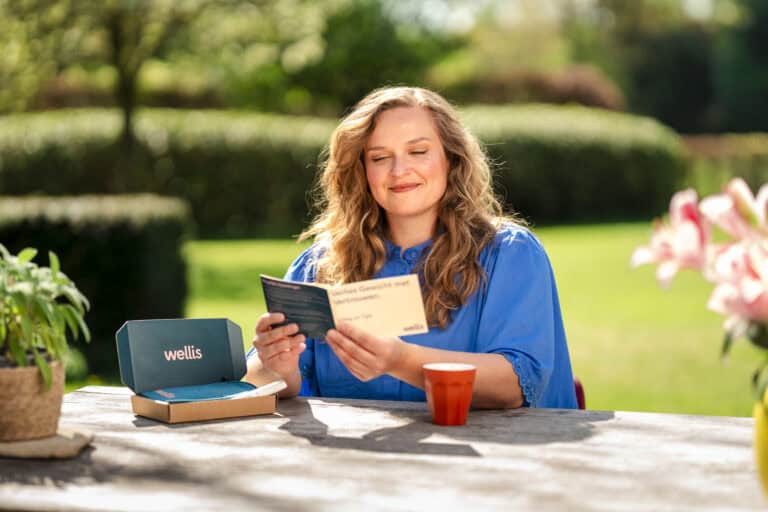
You’ll be in contact with a healthcare professional, who’ll assess your application. Image: Wellis
Step 3: Home delivery and ongoing support. Receive your medication at your home within one to two business days, free of charge and packaged discreetly. You’ll receive a tracking number once it’s on its way.
What kind of medication could you be prescribed?
The treatment options available through Wellis fall into the category of newer-generation prescription weight-loss medications, the kind that work with the body’s hormonal system rather than bypassing it.
What you’re prescribed depends entirely on your individual health profile.
There’s no one-size-fits-all approach: Wellis’s doctors assess your situation and recommend what’s medically appropriate for you specifically, taking into account your health history, current weight, and any other relevant factors.
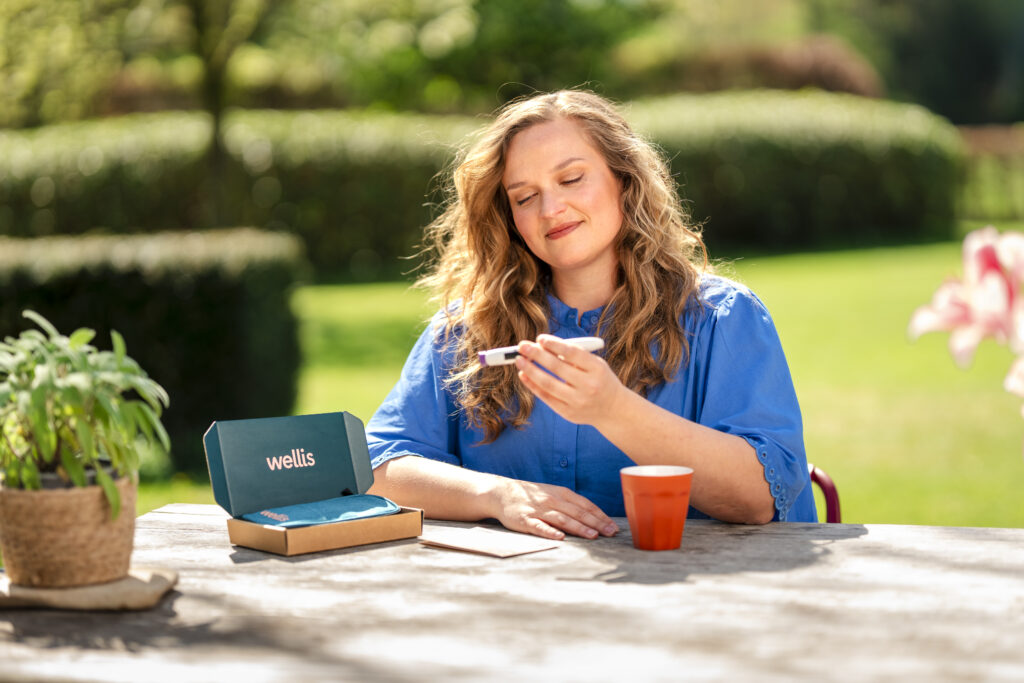
The medication offered will depend on your personal situation. Image: Wellis
Throughout your treatment, you also have ongoing access to Wellis’s healthcare team at no extra charge.
Got questions in a few weeks? Not sure if what you’re experiencing is normal? You can contact a professional at any time.
Is it safe and legitimate?
These are fair questions, and the answers are yes and yes.
All of Wellis’s healthcare professionals are BIG- and EU-registered, and every prescription is issued by a licensed doctor and fulfilled by a registered pharmacist. The platform follows the same laws and regulations that apply to any medical practice in the Netherlands.
Wellis is also trusted by over 60,000 patients across the country (as of June 2026). So while it may feel like a newer way of doing things, it’s well-established in practice.
According to CBS, more than half of all adults in the Netherlands are now classified as overweight, which means having more accessible routes to medically supervised treatment matters more than ever.