If your savings are sitting in a traditional Dutch bank account right now, there’s a very good chance your money is working harder for your bank than it is for you.
Dutch banks have long offered savings rates that make your euro do little more than exist. But one digital bank is currently doing things very differently — and new customers stand to benefit.
Trade Republic, Europe’s largest savings platform, is currently offering new customers in the Netherlands 3% interest per year on balances up to €50,000. The ECB rate will then apply to any amount above this.
It’s paid out monthly, and you can withdraw whenever you like.
How does 3% compare to other banks in the Netherlands?
To put that number in context, it helps to look at what else is on the market right now.
Research commissioned by Trade Republic and conducted by Ipsos I&O found that 59% of Dutch savers are unhappy with the interest offered by their banks, with interest in Dutch savings accounts sitting at just around 1.25%.
Sign up as a new customer to enjoy 3% interest on your savings. Image: Magnific
Among digital banks, the picture is better — but still well short of 3%.
If we look at the current best savings accounts in the Netherlands, the closest competitors currently on offer are Scalable Capital at a variable 2.5%, and Raisin at 2.85% for the first three months only.
To put things into perspective: if you save €10,000 in an ordinary Dutch savings account at around 1.25% interest, you’ll earn €125 in 12 months. At Trade Republic’s 3%, you’d earn €300 in the same period. Open an account now.
What makes Trade Republic’s offer different?
The rate is the headline, but there’s more going on under the hood.
Trade Republic offers a free current account with a Dutch IBAN, meaning you can send money to anyone, add or withdraw funds from other banks instantly, and earn interest on your cash at the same time.
For internationals who’ve just arrived and are still navigating how to open a Dutch bank account, having a single app that handles spending, saving, and investing is a meaningful simplification.
Other features worth knowing about:
1% Saveback — every card payment puts 1% back into your savings or investment plan
Free savings plans for stocks and ETFs, starting from €1
How does the interest actually work?
Trade Republic passes the European Central Bank’s deposit rate directly to its customers, rather than pocketing the difference the way most traditional banks do.
The 3% rate for new customers sits above the current ECB deposit rate of 2.25% and is being treated by Trade Republic as a promotional offer for new sign-ups.
Trade Republic’s offer sits above the current ECB rates. Image: Magnific
The interest is paid monthly, directly into your cash balance. There’s no minimum deposit, and no fixed term on the amount that earns interest.
It’s worth noting that, as with all variable-rate accounts, the rate can change — particularly as the ECB adjusts its own rates.
Trade Republic is currently offering new customers in the Netherlands 3% interest per year on balances up to €50,000, paid monthly, and with no fixed term. The ECB rate will apply to any amount above this. Open a free account with a Dutch IBAN and start earning from day one.
This is the question every expat rightly asks before moving their money somewhere new.
Any amount under €100,000 per account holder per bank is protected by the EU deposit guarantee scheme, regardless of what happens to the bank holding your money.
And with 200,000 customers in the Netherlands alone, Trade Republic has established itself as one of the leading savings platforms in the country.
Trade Republic works particularly well for internationals in the Netherlands who want to consolidate their financial life into one place without paying fees or sacrificing interest.
If a high interest rate is your priority, Trade Republic’s current offer is hard to beat.
Are you currently using a digital bank for your savings in the Netherlands, or are you still with a traditional bank? Let us know in the comments.
From 2027, every child up to and including age 11 will ride buses, trams and metros, for free anywhere in the Netherlands. Theprovinces and transport regions have agreed on one nationwide rule.
Right now, whether your kid rides for free depends entirely on where you live. This change seeks to end this kind of postcode lottery.
There’s just one catch: the national discount for over-65s is being scrapped to help pay for it.
What’s actually changing?
Children up to and including age three already travel free on all Dutch public transport, and those aged four to 11 can ride trains for free when accompanied by an adult through the NS Kids Vrij (Kids Free) product.
Some regions already extend similar deals to buses, trams and metros, but the problem is the patchwork approach.
In Amsterdam, children can already travel for free, but only under a temporary scheme. The Hague offers something comparable, where parents buy a special subscription for their child. Elsewhere, you might get a discount, but in some places kids simply pay full fare.
From 2027, that mess gets replaced by a single national rule covering buses, trams and metros, which are run by the provinces and so-called vervoersregio’s (transport regions) rather than the national government.
Annet Bertram, the CDA (Christian Democrat) state secretary responsible for public transport, has welcomed the plan, saying it introduces children to public transport early and helps families on tight budgets, as RTL Nieuws reports.
Why are pensioners paying the price?
But let’s get back to the pensioners for a second.
Making travel free for families costs money, and this time the bill lands on older passengers.
The national public transport discount for over-65s will be scrapped, with the provinces and transport regions choosing to prioritise what they call the “travellers of the future.”
It’s a straightforward trade-off: younger riders in, an existing perk for pensioners out.
It also fits a wider government push to make public transport more appealing. One example is the €49 unlimited off-peak train pass running this summer, an idea from PRO (formerly GroenLinks-PvdA) that the cabinet took on board.
Do you think free travel for kids is worth ditching the pensioner discount? Tell usyour thoughts in the comments.
Tata Steel is being taken to court over pollution that Dutch prosecutors say the company caused on purpose, following a mass complaint filed by more than 800 residents living near its IJmuiden plant.
The Openbaar Ministerie (OM), the Dutch public prosecution service, announced on Wednesday that it will criminally prosecute Tata Steel IJmuiden. After a years-long investigation, prosecutors say they have found enough grounds to bring the steelmaker before a judge.
The company stands accused of intentionally and unlawfully releasing harmful substances into the air, with possible consequences for public health.
What exactly is Tata Steel accused of?
The charges go beyond the emissions themselves. According to the OM, Tata Steel also failed in its duty of care by not maintaining its factories properly.
Prosecutors say Tata Steel also operated at times without the correct permits, and failed to report a number of pollution incidents to the authorities.
Those incidents centre on the plant’s coke gas factories, where coal is baked at high temperatures to make coke, a basic ingredient in steelmaking. When that process is not completed properly, it can lead to harmful emissions.
Residents in the surrounding IJmond region have complained about these emissions for years, often filming incidents on camera to get them noticed.
The ageing coke gas factories may now be heading for early closure, and the regional environmental service has been pushing to withdraw their permits.
How did we get here?
The case traces back to spring 2021, when lawyer Bénédicte Ficq filed a criminal complaint on behalf of more than 800 local residents. According to Nu.nl, they accused Tata Steel of knowingly emitting substances that damage their health.
Research later backed up those health concerns. A study by the RIVM, the Dutch National Institute for Public Health and the Environment, found that people in the village of Wijk aan Zee live shorter lives because of Tata Steel’s emissions.
Their life expectancy is roughly 2.5 months below the national average, driven by fine particles and nitrogen dioxide.
The OM said the investigation took so long because it was large, technical, and legally complex. It’s still not clear whether individual managers at Tata Steel will be prosecuted too, as that part of the investigation is ongoing.
A first hearing will take place at the Amsterdam District Court on November 20.
The timing is awkward, too. Tata Steel is in the final stretch of talks over up to €2 billion in government support to make its plant greener, with the cabinet initially hoping to sign off in September.
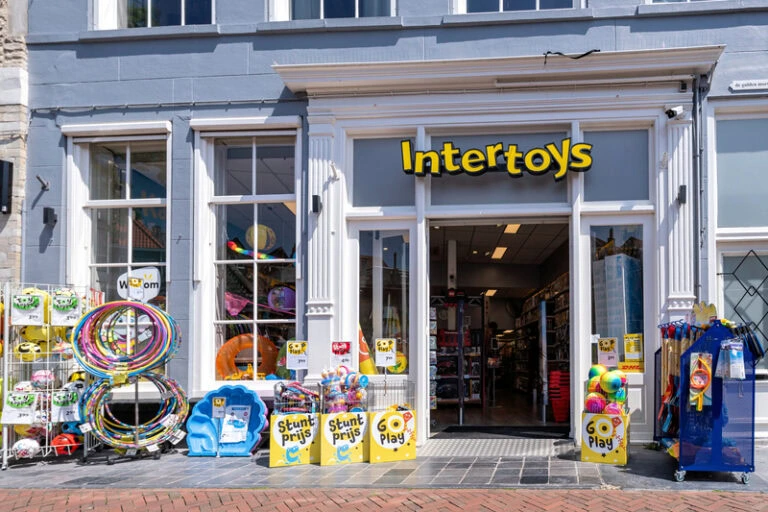
Intertoys has pulled a line of stretchy toy monkeys from its shelves after new lab tests found the sand inside them contains asbestos, one month after the retailer was first warned and promised to act.
The toys, sold under the Orb brand, are squishy monkeys that children can pull and squeeze. The trouble is what’s inside.
When one tears, sand spills out, and that sand isn’t safe.
What did the tests actually find?
As part of an investigation by AD, two monkeys bought from Intertoys were sent to accredited asbestos laboratory Nomacon in IJsselstein.
Both were found to contain chrysotile, a common form of white asbestos, at levels between 0.1 and 2%. As NOS reports, the European legal limit is 0.1%, so even the lower reading sits right at the edge.
This isn’t an isolated scare either. The Orb toys were previously recalled in the United States, where around 120,000 were pulled, and also in Slovenia.
Why did it take Intertoys so long?
Journalists flagged the monkeys to Intertoys and the food safety watchdog, the NVWA (the Netherlands Food and Consumer Product Safety Authority), about a month ago.
Intertoys said it had missed the international fuss and promised to withdraw the toys. They vanished from the webshop, but AD reporters kept finding them in physical stores.
The retailer admitted to AD that the sales stop wasn’t followed through properly. A full recall only started yesterday, Tuesday, July 7.
The NVWA advises against sweeping or vacuuming any spilled sand, and against throwing it in your normal bin.
Instead, experts recommend wrapping the toy in double plastic and taking it to a milieustraat (municipal waste and recycling centre). If a toy has already broken, it’s best to ask a certified asbestos company for advice.
For most Dutch learners, speaking Dutch in the Netherlands — especially in the Randstadarea of Amsterdam, Rotterdam, the Hague and Utrecht — can be a rather difficult endeavour.
If your Dutch isn’t perfect, chances are you will get a response in English — we’ve all experienced it, including myself.
As a consequence, most Dutch learners get demotivated at best, scared off at worst, and consequently settle for finishing the conversation in English.
However, as a non-native Dutch teacher, I know how it can be, and I know how to overcome it.
We got some help from the experts to bring you this article. TaalBoost is a Dutch language school based in Amsterdam, so they know how tricky it can be to get the Dutch flowing. Thankfully, they’ve also got some tips on how to keep the Nederlands going! Let’s start gargling those g’s, baby!
1. Gargle the g’s (and shorten the a’s)
The best way to make people think you mastered their language is to get a grasp of not just the words, but the sounds.
When it comes to the Dutch language, the instantly recognisable sound is the rolling or gargling ‘G’. So, how can you master it?
It doesn’t matter how funny you sound. Image: Magnific
To begin, you place your tongue in the same place as when you pronounce the G sound in the English word “goal” — against the roof of your mouth.
The only difference is that to roll the Dutch ‘G’, the air needs to flow between the tongue and the roof of your mouth. Can you try it now? If you still don’t have it, this wikiHow has even more details.
While you are exercising the Dutch ‘G’, it’s also worth practising your pronunciation of the Dutch ‘H’ as this tends to be a bit more throaty.
The Dutch ‘H’ is not formed in the mouth but in the throat, just like the ‘H’ in the laughing sound of ‘haha’.
Listen to the examples hoor/goor (listen/disgusting), heel/geel (very/yellow), haan/gaan (rooster/to go) below and repeat to master the pronunciation:
When you substitute one sound in a word for a different sound, and it leads to a difference in the meaning between the two words, like in the g/h examples above, this is called a minimal pair.
That’s why — aside from the ‘G’s’ and the ‘H’s’ — the correct pronunciation of the 16 (!!) Dutch vowels are fundamental to making yourself fully understandable.
TIP: If you stand in front of a mirror and say hoor, heel or haan, the mirror should steam up. If there’s no steam, then your pronunciation was probably closer to goor, geel or gaan.
Short and long sounds
Out of the 16 vowels, five have their short and long version, like:
man/maan (man/moon),
zon/zoon (sun/son),
ben/been (am/leg),
wil/wiel (want/wheel),
and zus/zuur (sister/sour).
TIP: The long vowels in the latter examples (maan, zoon, been, wiel, zuur) are pronounced as what could be considered a normal length, and the short vowels are pronounced extra short (man, zon, ben, wil, zus).
One of the first giveaways that your Dutch will get a reply in English is that you’re pronouncing the short vowels too long.
Listen to the audio below and repeat:
2. Glue the words together (but remain understandable)
If you faked your way into speaking, let’s say, Italian, odds are high that you’d make every sound overly clear and understandable with that final ‘a’ like Super Mario does.
That’s because the Italian language follows a staccato consonant-vowel rhythm, often described as melodic.
However, when it comes to the Dutch language, the opposite is true.
The key is to talk Dutch with confidence and speed! Image: Magnific
Instead of adding vowels to make the language more musical, the Dutch compress multiple sounds, words, and even whole sentences into one word in spoken Dutch.
We call this constricted speech, and it works similarly to the English “you’ve” (you have), “don’t” (do not) and “gonna” (going to).
For example:Kweenie (pronounced as quay-nee). Although you actually say one word, it is a contraction of four words: ik weet het niet (I don’t know, or dunno!)
How do you know what words to glue to the neighbouring word?
Pronouns are most commonly ‘incorporated’ into other words.
In written Dutch, we already do this with je for jij/jou/jouw (informal you/your), ze for zij (she or they), and we for wij (we).
Exclusive to spoken Dutch, ik would commonly be shortened to ‘k (I), hij to ie (he), and het to ‘t (it/the). Hem would be pronounced as ‘m (him), and haar as d’r (her). Finally, mijn often becomes m’n (my) and zijn becomes z’n (his) in the spoken language.
Interested in hearing how this sounds in real life and up for an exercise in Dutch constricted speech?
3. Use many meaningless words (in a meaningful way)
The Dutch are notorious for their directness. For a non-Dutchie, it’s commonly a “damned if you do, damned if you don’t” when trying to hit that sweet spot of directness.
In fact, chances are you’ll either come across as not direct enough, too direct or even impolite.
Dutch directness is something you have to overcome and master when learning to speak Dutch. Image: Magnific
Example: One might think that a short answer, such as ja or nee, conforms to the Dutch standards of directness since the message is clear and short.
Sure thing, but it’s also too short, too direct, and, therefore, impolite. You want to go for at least two or three words in your reply: nee, dank je wel or ja hoor/lekker.
The word hoor in the above example does not have any particular meaning as a word — its function is purely pragmatic, to keep the speaking partner at ease.
Other ‘meaningless’ words with a similar function as hoor are maar, eens, even, and toch. The Dutch language is teeming with these pragmatic fillers.
For example: if you are requesting something more imperatively, a command such as kom hier (come here) or ga zitten (have a seat) should be used without fillers only when you’re directing it to a dog or a child that just won’t listen.
In other social situations, you must throw in one or more of the meaningless words for it to become socially acceptable: kom maar/eens (even)hier, or if you’re feeling extra: ga toch maar eens evenzitten!
In Dutch, as is the case with many languages, polite questions are always longer than direct questions. Compare the following examples:
Impolite directness
Kom hier!
Socially-acceptable directness
Kom maar/eens even hier!
Polite directness
Zou je hier willen komen, alsjeblieft?
4. Express yourself (the Dutch way)
In case actual words or sentences fail, you can resort to exclamations.
To use them, you don’t really need any knowledge of the Dutch language, making them a very useful strategy when you need to fake your way into speaking Dutch.
It’s not just words you should be learning — exclamations are equally important! Image: Magnific
The exclamations commonly consist of two sounds that are repeated and can be used in various situations.
They can be categorised as:
Words of exhalation — poeh poeh, hè hè
Words of evaluation — nou nou, zo zo, ja ja
And words that precede lifting or moving a heavy object — hopla, huppeke, hupsakee, huppakee.
Exclamations are riddled throughout the Dutch language. Just think of how we say ‘hi’ and ‘bye’ in Dutch — hoi hoi and doei doei.
Faking your way into anything can be exhilarating, but also quite exhausting after a while. So why not take the next step and learn Dutch properly? TaalBoost offers both in-class lessons at their Amsterdam location and online lessons.
Whether you’re a budding beginner or a seasoned Scheveningen-sayer, their courses will help you dumbfound the Dutch with your language skills.
5. Throw in a couple of phrases (but do this with caution)
Using expressions when learning a new language should, in all honesty, be the last thing to resort to.
Using Dutch phrases is a great way to up your Dutch skills — but do so with caution! Image: Magnific
Expressions and idioms
Expressions or idioms are culture-specific, used only in certain contexts, and follow a specific word order. Use them with caution if you want to fake your way into speaking Dutch!
If not, you may ‘fall through the basket’ as a non-native (In Dutch, door de mand vallen means ‘to become exposed’).
Needless to say, a big no-no when using idioms is to literally translate them from another language.
Still, the literal translations of the expressions are often funny or, at times, even weird.
Dutch
English
Ik hou je in de gaten
Literal: I hold you in the holes (I’m watching you)
Helaas, Pindakaas
Literal: Unfortunately, peanut butter (That’s too bad)
Meedoen voor spek en bonen
Literal: Participate for bacon and beans (Participating for the show)
Het loopt in de soep
Literal: It goes in the soup (It’s failing)
Over koetjes en kalfjes praten
Literal: Talk about cows and calves (Small talk)
Ik zal ze een poepie laten ruiken
Literal: I’ll let them smell a poop (I’ll show them)
Linguistic commonplaces
Even more useful than the expressions to fake our way into Dutch are the linguistic commonplaces.
These ready-made sentences are used in certain situations, but they’re not exactly metaphors.
The linguistic commonplaces are used to create a familiar surrounding for the conversation and your speaking partner(s), either by putting them at ease (similar to Step 3) or teasing them.
Of course, there are enough linguistic commonplaces to warrant a book (in fact, there is one), so let’s focus on just one for now: how to find comfort in the fact that it’s raining.
Dutch
English
De meeste druppels vallen ernaast.
Most droplets are falling next to us.
Wat nu valt, valt straks niet meer.
What is now falling will soon no longer fall
Tussen de buien door is het droog.
It’s dry between the showers.
Het is goed voor de plantjes.
It’s good for the plants.
De boeren zijn er blij mee.
It pleases the farmers.
Het koelt wel lekker af zo.
It cools off nicely like this.
Do you have any tactics for tricking the Dutch? Tell us about them in the comments below!
If you’ve recently arrived from Ukraine, navigating a new banking system on top of everything else is a lot.
The good news is that ING offers a straightforward sign-up process for Ukrainians, with some flexibility in accepted ID. Here’s everything you need to know.
Why Ukrainians in the Netherlands need a Dutch bank account
If you’re a Ukrainian in the Netherlands who falls under the Temporary Protection Directive, you’ll receive leefgeld (a living allowance) from the municipality where you’re registered.
That money, which is intended to cover clothing, food, and a housing supplement if you’re staying with a host family, is paid directly into a bank account. However, having a Dutch bank account can make it easier to receive and manage this payment.
In addition to this, the National Bank of Ukraine has maintained various currency restrictions since the start of the war, including tightened limits on certain cross-border cash withdrawals and specific types of card payments abroad.
Having a Dutch bank card can make the adjustment process easier, at least where payments are concerned. Image: Magnific
That means relying solely on your Ukrainian bank card for daily life in the Netherlands is not always straightforward, and may potentially be quite expensive.
In contrast, opening a Dutch bank account makes the adjustment process far more straightforward. Direct debits for rent, utilities, and subscriptions all run more smoothly with a Dutch IBAN, and everyday contactless payments are much less likely to run into issues.
If you’re eligible, the EU Temporary Protection Directive has you covered
If you’re a Ukrainian national who arrived in the Netherlands after the war began, you very likely qualify for protection under the EU Temporary Protection Directive (TPD).
This is an EU-wide policy that grants Ukrainians a set of rights in member states without going through a full asylum process.
Under this directive, the IND (Dutch immigration office) notes that Ukrainians in the Netherlands are entitled to accommodation, healthcare, education, the right to work, and access to financial services, which can include opening a bank account, subject to the requirements of the financial services provider.
(For the full list of rights, be sure to visit the official EU webpage on TPD obligations.)
Note: Do you fall under the Temporary Protection Directive, but are you not registered with your local municipality yet? You can make an appointment with the IND to arrange this.
What ING offers Ukrainians in the Netherlands
ING is one of the largest banks in the Netherlands and even has a dedicated page for Ukrainian refugees, outlining how to open an account as a Ukrainian national.
With certain Dutch banks, documentation can be a key barrier for newly arrived Ukrainians, as not everyone has a full set of paperwork in order when they first arrive. ING, on the other hand, accepts a range of identity documents for Ukrainian applicants.
Some of these may include:
a valid English-language Ukrainian international passport (or one extended by the Ukrainian embassy), and
a valid O-document (the temporary residence document issued by the IND to Ukrainians who don’t yet have standard identity papers).
In addition to this, ING also accepts a wider range of accommodation types as a registered address compared to some other banks. As long as you have a Dutch residential address registered with your municipality, you can generally proceed with your application.
How to open an ING account as a Ukrainian
The process is fairly straightforward; here’s a step-by-step guide of what to expect.
1. Gather your documents
As mentioned previously, you can use either a Ukrainian international passport or a valid O-document.
Plus, you’ll also need a BSN (your Dutch citizen service number), which is issued when you register with your municipality. Some banks, like ING, also let you open an account without your BSN at the start — provided you submit your BSN within 90 days of creating your account.
Ensure you have all the necessary documents at hand. Image: Magnific
2. Download the ING app or visit a branch
Not close to a brick-and-mortar bank office? No stress, because ING allows new customers to open a bank account via the ING app on a smartphone.
The app is available in English, which makes it more accessible if you aren’t yet comfortable reading Dutch.
If you’d prefer to open an account in person, ING also has branches across the Netherlands where you can complete the process face-to-face.
3. Choose your account type and payment package
Once you’re through the identity verification step, you’ll choose the right package for your needs. ING currently offers 4 betaalpakket (payment package) options.
How much does an ING bank account cost in the Netherlands?
ING Go from €4.00 per month, which is handy for those who want just the essentials for daily banking. You get a checking account, a debit card, and free euro cash withdrawals, with a €2,000 emergency cash limit abroad and the choice to add paper statements for a fee.
ING More from €7.00 per month, which includes a credit card with 365-day purchase protection, 4 free cash deposits per year, and built-in 24/7 cyber incident protection. Your emergency cash limit increases to €5,000.
ING Extra from €15.99 per month, which also includes emergency home assistance, a second account holder at no extra cost, and a +0.50% savings interest rate boost. You also get cyber and ATM threat protection.
ING Max from €44.99 per month; you’ll get a personal financial plan with an advisor, comprehensive medical emergency and trip insurance, and a 1.00% interest rate boost to help grow your savings more securely.
All four include the ING app, a debit card, Apple Pay, Google Pay and Garmin Pay, payment request tools, and in-app features like Look Ahead and Insight to track your spending.
For most Ukrainians settling into daily life in the Netherlands, the Go or More plans will cover your essentials.
Are you a Ukrainian living in the Netherlands, or do you know someone who is? Drop a comment below with any questions or tips for navigating the banking process.
This article was sponsored by ING and written by DutchReview.
A Dutch fund set up to attract leading researchers from countries where academic freedom is under threat has secured 34 international scientists, most of them from the United States.
The fund is called the Tulp Fonds (Tulip Fund), and of the 34 researchers it has brought in, 29 either work in the US or are American. The rest come from Israel, Turkey, the UK, and Singapore.
Why are so many scientists leaving the US?
Many scientific fields have had a turbulent year under the Trump administration.
In 2025 alone, more than 7,800 research grants were cancelled or suspended, Nature reported. Agencies like the National Institutes of Health and the National Science Foundation were hit hardest, “two of the largest public supporters of scientific research in the United States.”
The administration also proposed steep budget cuts for 2026, though NBC News states that Congress and the courts have rejected many of the most drastic ones.
Even so, the volatility has taken a toll on research and education.
Harvard decided to cut its science PhD spots by 75% over two years, according to Chemistry World. For a lot of researchers, that’s reason enough to look abroad.
And, while the Netherlands isn’t the only country trying to attract that talent, it now has 34 top researchers to show for its efforts.
Which scientists are coming?
There’s no full list of names yet, but we know the kind of institutions involved. The US-based group includes researchers from Harvard, Stanford, Columbia, and Yale, along with American federal research institutes.
Their fields cover some of the most important research areas today: artificial intelligence, quantum technology, vaccines, nuclear energy, cancer, Alzheimer’s, climate, and food production.
These are the areas the ministry and NWO see as most valuable for the Netherlands, which is exactly what the fund is meant to target.
What does this mean for the Netherlands?
As NU.nl reports, each institution can receive up to 1 million euros per researcher, spread over five years.
Minister Letschert of Education called the researchers’ arrival “good news for the Netherlands,” pointing to the new knowledge, international networks, and boost to Dutch science they bring with them.
And this might just be the start of the Netherlands’ acquisition of fleeing US talent. More awards are expected in 2027 within the current budget, so the total could rise beyond just 29 US researchers.
Would you move countries for your work, or are you already one of the internationals who did? Let us know in the comments.
A third regional heatwave could strike the southern Netherlands this weekend, and if it lands, it’ll be the earliest a Dutch summer has ever seen three of them.
If you’ve only just recovered from June’s sweaty stretch, brace yourself. The Netherlands is heading into another very warm spell, with forecaster Weeronline saying a third regional heatwave is very likely.
Thankfully, we’re currently in a slightly cooler phase (the calm before the storm, if you will). The south is summery today, with temperatures of 26 to 30 degrees Celsius, while the rest of the country sits between 20 and 24.
When will the heat hit?
Starting Thursday, July 9, temperatures in the south may start climbing back into tropical territory (30 degrees and up), and the warmth is expected to hang around into next week.
That makes a regional heatwave in the south fairly likely by Saturday. If Thursday doesn’t reach 30 degrees, Weeronline expects the milestone to be recorded on Sunday instead.
The Netherlands has never before recorded three heatwaves this early in the year. The closest we’ve come is a hot spell in Eindhoven in 2006, but that third heatwave didn’t turn up until July 15.
A third heatwave landing in the first half of July would beat the record from 2006, with several days to spare.
Could it become an official national heatwave too?
As of July 7, Weeronline is uncertain whether a nationwide heatwave is on the cards. And, even if it unfolds, it won’t break records the way a regional heatwave might.
For a national heatwave to break records, De Bilt (a meteorological monitoring station in Utrecht) has to meet the criteria. It’s uncertain whether temperatures will reach 30 degrees Celsius there by Friday.
Weeronline currently puts the chance of an official national heatwave at around 30%. If it happens, it’d be the second official heatwave this year, and that’s no record, because 1947 already had two before July even started.
Want to make sure DutchReview pops up on your news feed more often? Just add us as a preferred news provider, and we’ll handle the rest.
Starting your own company in the Netherlands can be exciting, but setting up a traditional business bank account? That’s where the long-standing Dutch love affair with bureaucracy really kicks in. 🙃
Whether you’re a freelancer with your own BV or an employee at a multinational in Amsterdam, Dutch banks aren’t exactly known for making life easy.
Add onboarding delays and opaque fee structures to the mix, and it’s no wonder that more and more entrepreneurs in the Netherlands are looking beyond the big banks.
Looking for a business account built for a modern workflow? Meet Airwallex, the global payments and financial platform for modern businesses that supports international companies in the Netherlands.
Just sign up online and enjoy a powerful multi-currency account with low transfer fees, handy expense management, and corporate cards.
Traditional banks vs. fintech platforms: what’s the difference?
Most traditional Dutch banks have been around for decades, and they’re solid choices for businesses that trade primarily in euros or transact solely within the Netherlands.
Traditional banks offer great reliability and brick-and-mortar service, but may not offer as many up-to-date features as fintechs. Image: Freepik
Fintechs, meanwhile, are digital-first platforms designed for companies that operate internationally.
Curious to see how they compare? Let’s dive in:
Feature
Traditional banks
Fintech platforms
Ease of onboarding
Physical appointments and digital sign-ups Days or weeks for approval
Digital sign-ups Often minutes or hours for approval
Accessibility
Physical branches Limited online support
Digital only Often 24/7 online support
Fees
Tiered packages FX mark-ups may be hidden
Transparent pricing, often no account fees for basic package Often no FX markups, or close to interbank rate
Integrations
Limited or subject to additional fees
Direct integrations with accounting software
For entrepreneurs who operate internationally, fintechs are generally the more straightforward choice.
Why opening a business account with a traditional Dutch bank can feel complex
While traditional banks offer solid reliability and customer support, Dutch bureaucracy can make the banking process feel unnecessarily complex.
Let’s briefly run through some of the most common stumbling blocks:
You’ll require a whole list of documents
Before a Dutch bank will even consider your application, you’ll need to provide your KVK registration number, a valid form of ID (such as your passport or ID card), your BSN, residence permit, and often a VAT number.
In general, you’ll have to wade through a lot more paperwork and red tape with a traditional Dutch bank. Image: Freepik
Don’t have your BSN yet? Forget about opening a traditional business banking account.
Further, some banks may even ask for your business plan, and many will only approve accounts for businesses with a permanent Dutch address.
You can expect long onboarding times
In the Netherlands, banks must follow strict regulatory guidelines.
While that’s a win for reliability, this review process can take weeks if you’re an international or if your business is newly registered.
For you, this translates into delays of several weeks before you can issue invoices or pay your suppliers, or even set up the financial side of your business.
Your bank may not keep up with modern technology
Although traditional banks are gradually embracing digital tools, they’re often stuck playing catch-up.
Integrations with accounting software (for example) may be limited, subject to additional fees, or require third-party workarounds. So, if you run a business that relies on software integrations or other modern tools, then traditional banks might feel stuck in the past.
You’ll only get the standard fee setup
When it comes to traditional business banks, many sell banking packages with fixed monthly fees and limited features. Typically, these include a standard current account, a savings account, and a free debit card.
Standard banking packages in the Netherlands come with a current account, savings account, and a debit card. Image: Freepik
If you need a multi-currency account, swift international transfers, or a basic credit card, you’ll need to apply for these individual features. In addition to costing you precious time, extra charges will apply.
Unlike traditional Dutch banks, modern banking solutions are built around how companies actually work today: digital, global, and fast.
These fintech platforms avoid a lot of bureaucratic bottlenecks, saving you time and money:
You’ll get faster onboarding (and fewer hoops to jump through)
Most fintech platforms streamline the verification process, allowing you to open an account from your mobile phone and start invoicing clients within hours.
Forget about waiting weeks for your bank account to be verified, collecting files full of paperwork, or needing to visit a branch in person. The application process takes a few minutes to complete, and your account will be approved within one to three business days.
You’ll enjoy a more up-to-date banking experience
With modern workflows in mind, fintechs offer smooth integrations with tools you’re already using and quicker access to developing software.
Fintechs tend to be at the forefront of mobile banking, with a plethora of modern banking features. Image: Freepik
For companies that value efficiency and innovation, fintech platforms deliver a banking experience that actually keeps pace with how you work — and how the business world is changing globally.
Your accounts are built for global teams
These fintech platforms aren’t just for liaising with Dutch companies. Instead, you can open multi-currency accounts and do business on the global stage.
Funds arrive directly in your wallet, where you can convert them at real-time rates and pay suppliers or employees in their local currency. And what you’ll save in foreign exchange (FX) fees, you’ll also save in time, with much faster cross-border transactions.
You’ll access transparent fee structures
Given that fintech platforms are primarily digital, they typically publish their account fees, FX mark-ups, and additional costs on their websites.
In other words, no more scratching your head and wondering how much that foreign transfer will cost you on top of your existing account fees.
With swift onboarding, competitive foreign exchange pricing, and seamless software integrations, Airwallexisn’t your average business account. This fintech is built for ambitious Dutch companies, helping you succeed on the global stage.
While fintech platforms have many benefits for ZZP’ers, your personal situation will determine whether one is the right fit for you. Image: Freepik
Tips for choosing the best business account for your needs
Of course, not every ZZP’er or employee requires the same features for their business bank account. When comparing banking options, it’s important to consider:
Where you operate: If you only transact within the Netherlands or the eurozone, then a traditional Dutch bank will suffice. However, if you’re banking internationally, choose a fintech platform that offers you multi-currency support with a local IBAN.
Onboarding time: Fintechs can get you up and running quickly, whereas traditional banks may require in-person meetings and a lengthy verification process.
Currencies and payment methods: Beyond monthly account fees, you should also compare costs for additional users, cards, and international transfers. Fintechs often offer feature-rich free or low-cost plans, while add-ons for traditional banking packages can be pricey.
Banking and software integrations: Ensure your account will be compatible with the accounting software, expense management tools, or invoicing systems you plan to use. Fintechs often offer easier integration than traditional Dutch banks.
While it can feel like a lot of information to sift through, taking the time to match your account to your business model will save you money and headaches down the line.
When a traditional bank is still the right choice
It goes without saying, but digital banking isn’t for everyone.
Depending on your situation and financial requirements, a traditional business bank account might be the better option. Image: Freepik
Should you want the familiarity of a local Dutch bank, with in-person support and brick-and-mortar branches, then fintechs just won’t cut it.
In addition to this, when it comes to established Dutch companies with straightforward finances and few international payments, the traditional features offered by regular banks may outweigh the benefits of cutting-edge fintech tools.
Whether you’re Team Fintechs or Team Traditional Banks, understanding your options is key.
By choosing a banking partner that aligns with your company’s goals and financial requirements, you can ensure your finances support your business and avoid banking headaches in the long term.
What has your experience been like with business banking in the Netherlands? Share your thoughts in the comments below.
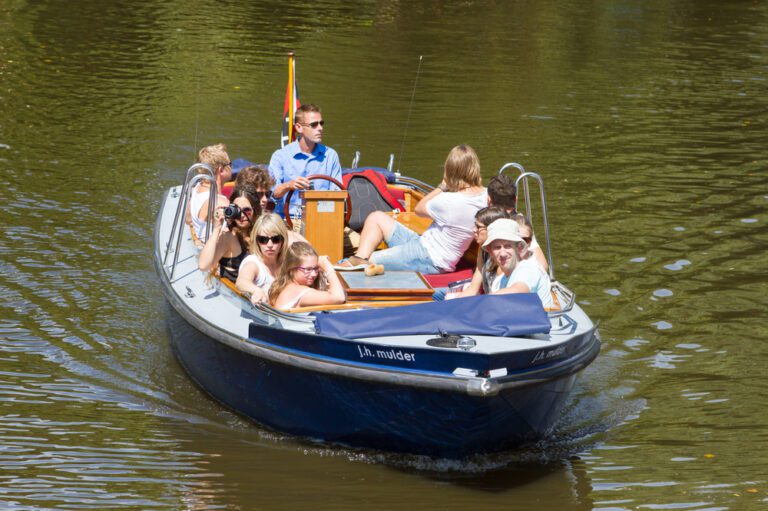
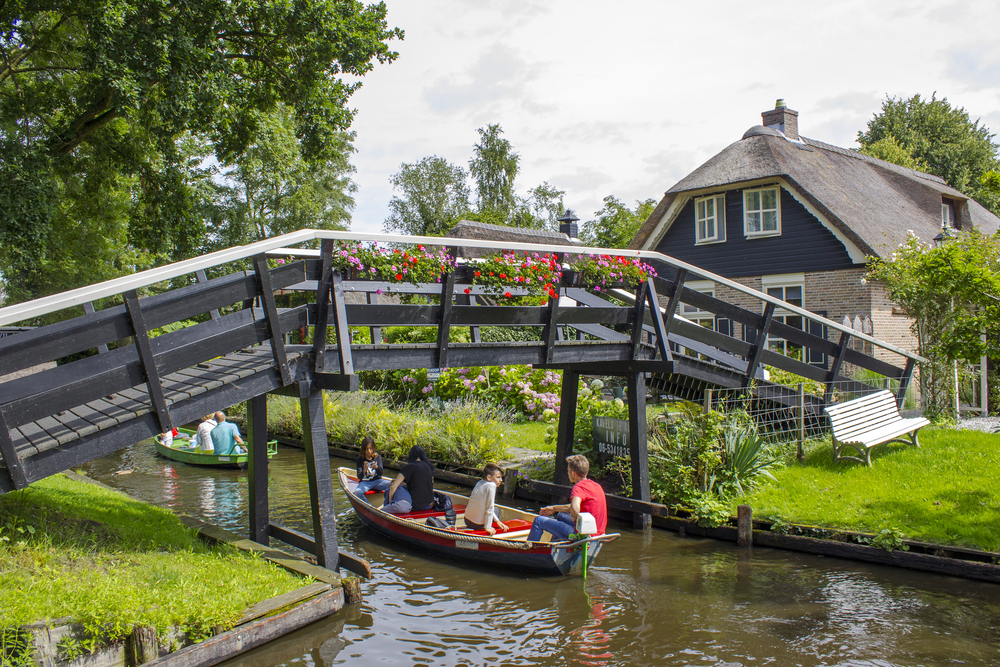
One thing’s certain about the Netherlands: there’s loads and loads of water. And where there’s water, there are boats. And where there are boats, someone’s wondering how you can rent them… that must be you!
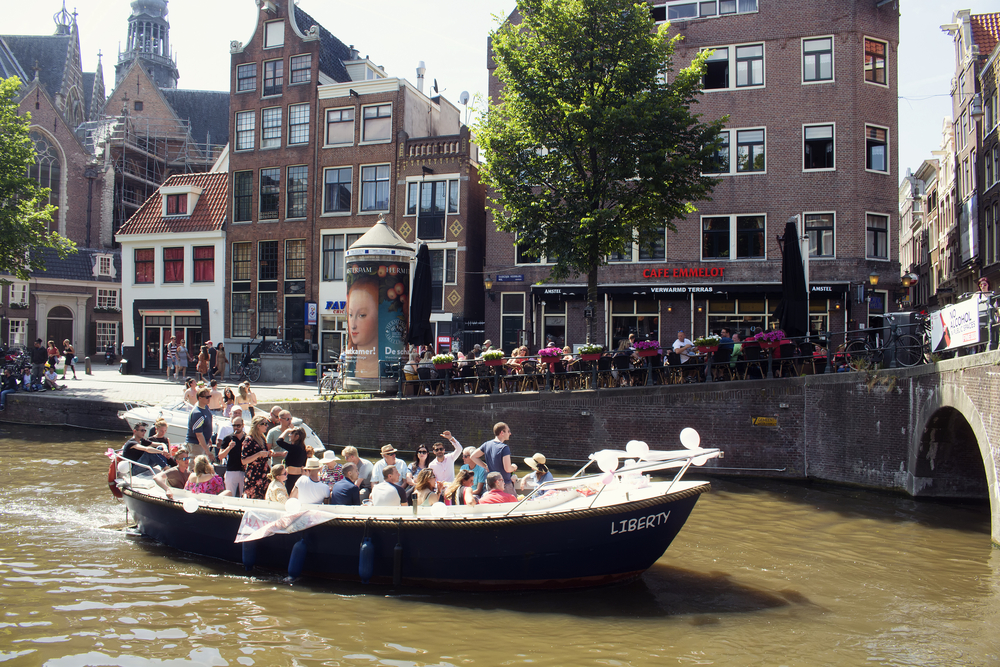
You certainly must have seen the people on boats cruising the canals and enjoying their time in the sun while cracking open a beer.
If you’re a bit jealous, don’t worry because it’s really easy to rent a boat in the Netherlands. Then you can also wave at the mere mortals walking on the sidewalks!
Who can rent a boat in the Netherlands?
Anyone over the age of 18 can rent a boat in the Netherlands. Of course, minors can tag along, provided there is an adult with them.
No special permit or licence is required in order to rent a boat in the Netherlands, as long as it fits in a designated category.
Almost anyone (adult, of course) can drive a boat on the canals in the Netherlands. Image: Depositphotos
If you have a child who is over 12, they can also steer the boat and gain some sailing experience, as long as the boat does not go faster than 13 kilometres an hour and is a maximum of seven metres long.
Do I need a boating licence in the Netherlands?
According to official sources, you only need a boating licence (a vaarbewijs) if your boat is longer than 15 metres or can go faster than 20 kilometres an hour.
Note that it’s the speed the boat is capable of, not how fast you actually go. If your goal is a calm trip down the canals, you shouldn’t need a boat that requires a boating license.
Where to hire a boat in the Netherlands
There are many companies where you can rent a boat in the Netherlands.
Choosing the company that best serves your needs also depends on where you live, so it’s best to start looking locally first.
Look online for boat rentals in the Netherlands; they’re everywhere. Image: Depositphotos
There are several websites you can look into to find boats for rent in the Netherlands.
If you prefer a more hands-on approach to finding and renting boats, go to your local tourist info point, and they can guide you further in finding the best boat rentals in your area.
A romantic boat tour in Amsterdam
There are plenty of differently themed boat tours to book in Amsterdam.
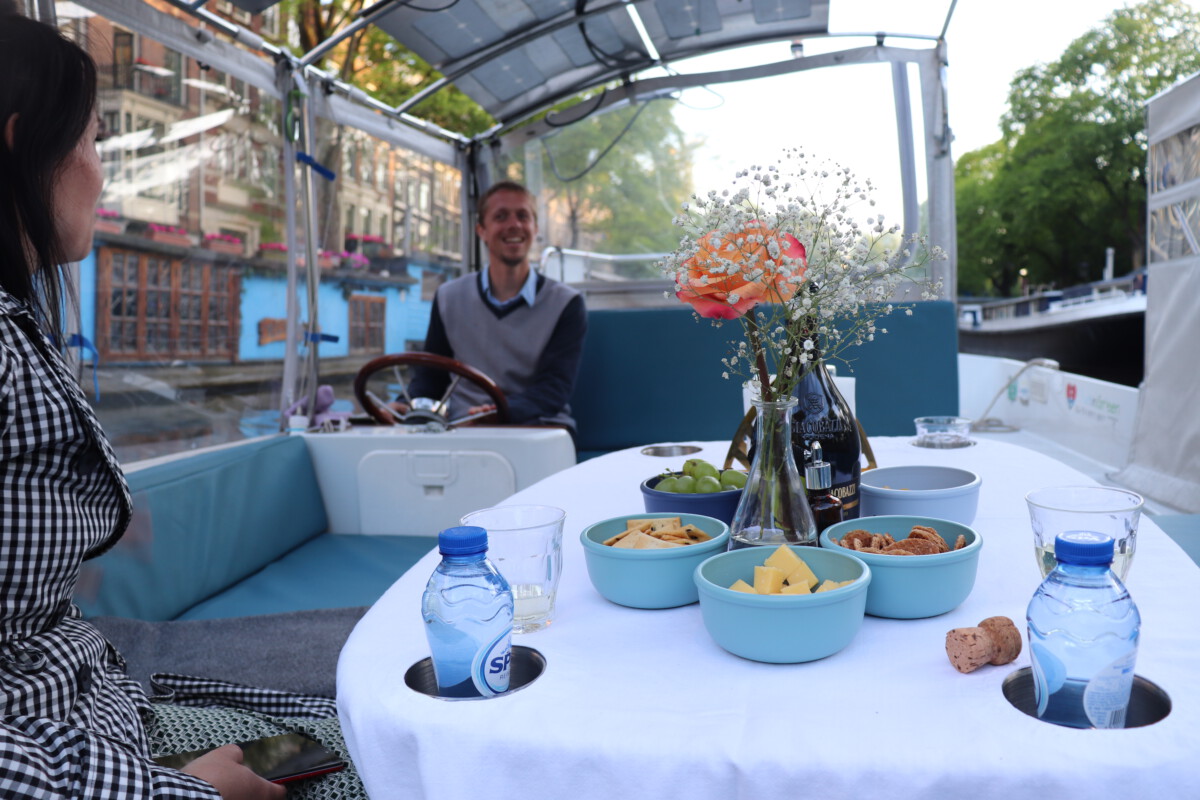
If you want something special, romantic and personal, then you can’t go wrong with Rocco and his romantic boat tour through Amsterdam.
Rocco often sails at the golden hour or sunset. Image: DutchReview
It’s snug, takes you to all the gezellig spots, and comes with all those lovely details such as a glass of bubbles, romantic anecdotes about the city and music to fall in love with.
Rocco is a people person and makes sure it never gets cheesy (although, fun fact, some cheese is served onboard).
P.S. You’re totally welcome to invite the DutchReview crew on any boat tour at all times.
What kind of boats can you rent?
The list of boats that you could potentially rent is diverse and really depends on what kind of experience you want.
If you’re after a more traditional sailing experience? Perhaps go for a bigger sailboat.
Want a luxurious boat so you can travel off the coast and explore the North Sea with your friends? A larger canal boat should fit your needs.
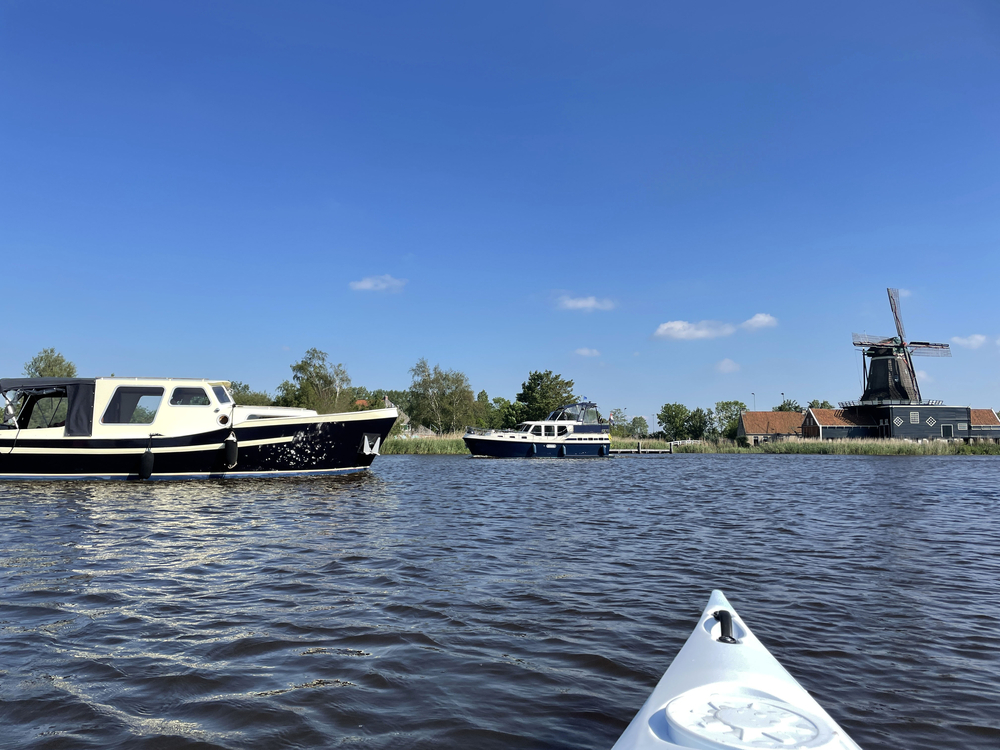
Canoes, motorboats, whatever your heart desires! Image: Depositphotos
Of course, if you wanna be really close to the water and perhaps even risk getting a bit wet, then a cheap canoe is definitely a fun option to consider!
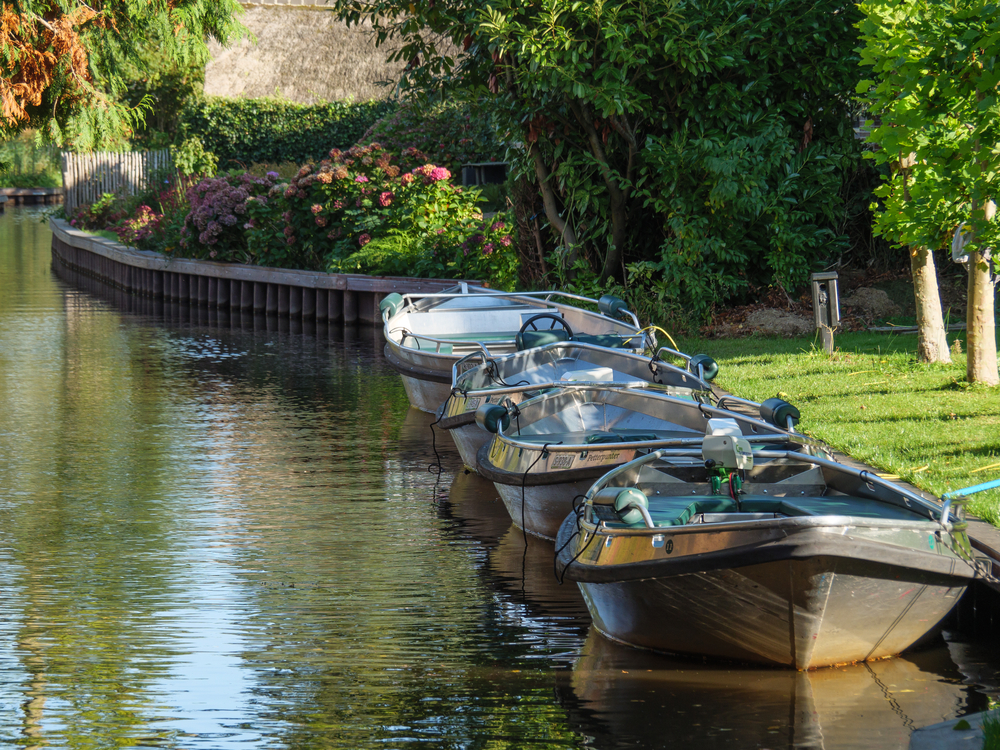
Another very popular option is the small motorboats. Similarly cheap and loads of fun, you can rent them and go exploring the canals of your city at your leisure.
How much does renting a boat in the Netherlands cost? 💸
The cost of renting a boat varies depending on what kind of boat you are renting, for how long, and whether it is manned by a captain or not.
On boat hire websites, prices are usually listed per day and range from around €60 for a basic sloop to €280 or so on average — with luxury boats climbing to €500 a day. Most also ask for a deposit up front.
Want a cheap day on the Dutch canals? Rent a canoe for cheap. Image: Depositphotos
Boats can also be offered for half a day or even for a week if you feel like spending more time on the water.
For canoes or rowing boats, you’ll usually pay by the hour rather than the day. A one-person canoe typically runs somewhere between €8 and €22 an hour, so a couple of hours of paddling won’t break the bank.
What do I need to know before renting a boat in the Netherlands?
An important thing to consider before renting a boat is to get insurance. This also really depends on what canal you are sailing on.
If you are on a busy Amsterdam canal and it’s you behind the wheel (and you have no prior experience), you should really get insurance.
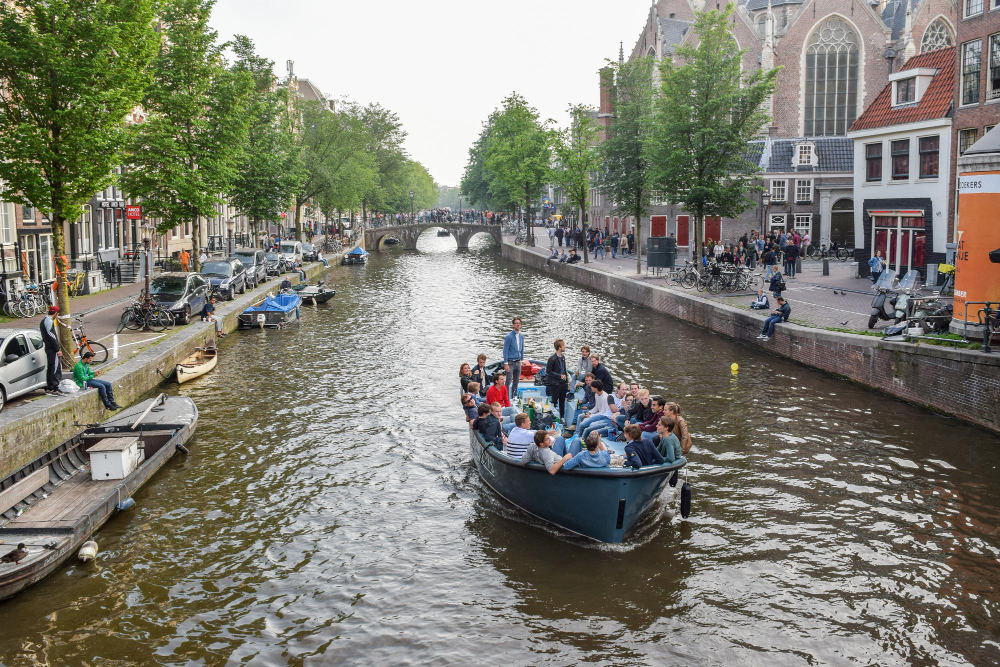
Amsterdam’s canals become a highway for boats during peak season (better get that insurance!) Image: Freepik
If you are somewhere in a more isolated area, it’s perhaps easier, but insurance is an option you should still consider.
However, if you’ve hired a boat including an experienced captain, there’s no need to consider insurance — all legal responsibilities fall on the captain.
Want to get insurance? Make sure to ask for it when renting the boat.
Check for rentals which have ships registered under the HISWA (National Water Sports Association in the Netherlands) rental agreement conditions.
Generally, insurance deductibles equal the deposit you’ll pay on the ship. So, if you pay a €200 deposit and have an accident while you’re steering, expect to pay a €200 deductible.
What should I bring when renting a boat?
Obviously, when cruising down the quaint canals, there are some essentials you should pack.
Firstly, if you are going on a sunny day, sunscreen is a must, especially if your boat does not have an inside area you can shelter in.
Believe it or not, sunny days in Amsterdam can actually get very hot. Image: Pixabay
Depending on how long you’re going for, consider bringing some food. If you are going on a boat tour, some snacks might be provided (especially on guided boat tours).
Can I drink alcohol on a boat in the Netherlands?
Of course, you can crack open some cold Dutch beers while you’re at it — but just as with cars, if you happen to be behind the wheel, don’t drink and drive sail.
According to the Shipping Traffic Act, boat captains can have a couple of drinks as long as they don’t exceed a 0.5 per mille blood-alcohol level.
Finally, a question some of you might be curious about. Can you 4/20 blaze it on a boat?
There’s no law against it when you’re renting your own boat (although the person who owns the boat may have their own rules).
However, especially for guided tours, the answer is almost certainly no.
Alternatives to boating in the Netherlands 🌊
Let’s say you’re interested in being on a boat, but for different reasons (such as motion sickness), you’d rather it doesn’t move. Thankfully, there are options for that as well!
Depending on the city, there’ll be boats that are used solely as terraces — they won’t take you anywhere, but you can get the boat experience.
Houseboats can be rented just like hotels, for a night or two. Image: Depositphotos
Finally, for even more fun, certain coffee shops in the Netherlands are located on boats which are moored on canals. For example, check out the Culture Boat in Utrecht.
Have you ever been boating in the Netherlands? What was it like? Tell us in the comments below!