Home Blog Page 400

No trains between Amsterdam and London for years (until 2028?!)

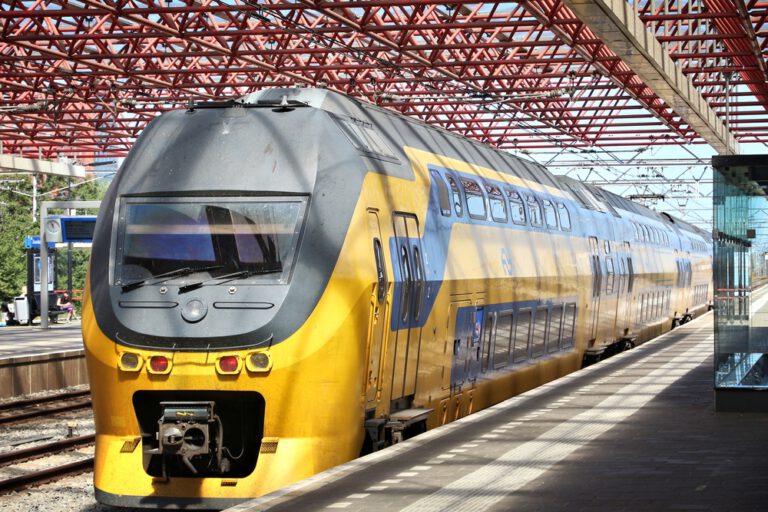
Amsterdam Central Station will undergo extended reconstruction to accommodate more passengers — but this could be a huge problem for the Eurostar connection between Amsterdam and London.

In a letter to the House of Representatives, the Minister for the Environment Vivianne Heijnen foreshadowed that trains between Amsterdam and London might be put on ice for years to come.

What does that mean? Well, the plan is to wrap up the construction work in 2028. Say, what?!

A missing platform

The problem? Platform 15b at Amsterdam Centraal where Eurostars depart to the UK will be used as a building site during the construction works.

The platform is where security checks and passport controls prepare passengers for their international train journey.

Unfortunately, there don’t seem to be any feasible alternatives as of now, says Minister Heijnen.

Pressing for a solution

Heijnen writes that a year-long interruption of the Amsterdam-London train connection is ‘unacceptable’ and presses railway operator, Prorail, to find a solution.

Prorail is currently on a hunt to find an alternative location somewhere within Amsterdam and says more will be known in the summer. Vague, much?

Will you be affected by this possible cancellation of the Amsterdam-London Eurostar? Tell us in the comments!

Blow out the candles! More Dutchies make it to 100 years old

As of this January, the Netherlands had almost 2,600 centenarians! This is over 400 more than five years ago.

A while back, Statistics Netherlands forecasted that the number of centenarians in the country would grow rapidly from 2020 onwards, partly due to the minor baby boom that took place after the First World War. 

So far, this prediction has come true! The number of Dutchies who are 100 years and older is now about 20 percent higher than five years ago, reports NU.nl

READ MORE | Netherlands makes top ten healthiest countries in the world

What are Dutch people putting in their lekker bitterballen these days that’s getting them to live this long? 🤔

Dames en heren: who’s more likely to reach 100?

Women in particular have contributed to the sharp increase in centenarians — which isn’t entirely surprising, as we all know women on average do tend to live longer than men. 😉

But let’s give the men some credit too.

The number of males reaching 100 years or older has been growing relatively faster in recent years compared to the group of female centenarians.

Centenarians by province

In the Netherlands’ youngest province, Flevoland, the number of people reaching 100 years or older has more than doubled since 2018.

Of the municipalities with over 100,000 citizens, Apeldoorn, Breda, and Venlo in particular have a relatively high number of centenarians.

However, the province of Zeeland still holds the highest share of centenarians. We can’t help but wonder if it’s because of all the fresh kibbeling they’re eating over in the west. 👀🐟

Ebeltje for the win 🥇

Now, who is the true queen of Dutch centenarians? The 110-year-old Ebeltje Boekema-Hut from Leek (a province in Groningen) is currently the oldest Dutchie. 🥳

And soon, more will follow in her footsteps. A whopping 3,500 inhabitants of the Netherlands are expected to reach 100 years or older in 2030.

With the Netherlands being one of the happiest countries in the world, it shouldn’t be a bad life for these grandmas and grandpas. 😉

We still can’t help but wonder why the life expectancy in the Netherlands is so high though. 

Could it be the rookworst with a side of mashed potatoes they eat for dinner? Or is it the easy access to walking and cycling paths in the Netherlands that makes it really easy for Dutch people to stay fit?

Whatever it is, they’re clearly doing something right! 

Are you surprised by the increasing number of centenarians in the Netherlands? Tell us in the comments!

Good news! Buying a Dutch house may no longer be a distant dream for young people

1

Who else is sick of hearing that they’ll never be able to buy a house in the Netherlands? 🙋🏽‍♀️ Well — there might finally be some hope on the horizon! 

The Dutch housing market is cooling down, which means it’s becoming easier for young people to buy a home again.

More mortgage applications by young people

The number of young people (up to the age of 35) applying for a mortgage has increased by 17% this year, compared to the last five months of last year, writes RTL Nieuws

In comparison, the total number of mortgage applications filed has only risen by 9%. 

Lower prices, higher interest 

Not only are more young people applying for mortgages; the housing prices are also lower than in 2021 — 2% lower, to be exact! 

This doesn’t necessarily mean that it’s that much easier to get your hands on a lovely Dutch house though. 

READ MORE | Rent or buy a house in the Netherlands? What you need to know in 2022

While housing prices are going down, mortgage interest has gone up by nearly 2% compared to this January.

But the good news about this is that higher mortgage interest rates mean less competition for young people — and less need to bid crazy amounts above the asking price. 💸

Good news or meh news?

The demand for housing is still very high, and young people can still expect to have to borrow heaps if they want to enter the mystical world of the Dutch housing market. 🤷🏽‍♂️

For example, the average mortgage amount for young people has risen by 10% so far this year compared to last year. 

An average mortgage of a young home buyer now amounts to about Є318,000.

But still — good housing market news is good housing market news, and we’ll take what we can get! 

Are you considering buying a home in the Netherlands? Let us know in the comments!

Schiphol leaves Brits stranded in the Netherlands — so they use bikes to get home

Thanks to the giant mess that Schiphol is at the moment, an adventurous journey home is no longer reserved for just epic movie characters like Frodo Baggins.

Fourteen young Brits were unable to get back home last Saturday after celebrating a bachelor party in Amsterdam, reports the NOS.

An epic journey home

Because it was impossible for the men to rebook their flight, they found an alternative journey: take the train to Calais and then hop on the ferry to Dover.

There was just one catch. For safety reasons, pedestrians aren’t allowed on the ferry.

Luckily, the men quickly found a solution — going as cyclists.

But how did they suddenly get fourteen bikes, you ask? Well, this is where it gets interesting.

A quest to find bicycles

Part of the group managed to get second-hand bikes in Brussels, where the train to Calais stops.

“I spent two hours on Facebook Marketplace to make deals with people who sold a bicycle. The prices ranged from 40 to 220 euros. Then we ran through town for another two hours to pick up the bikes,” says groom-to-be Alex Sisan (29).

The rest got their bikes during the next stop in Lille.

Only one of the fourteen guys wasn’t able to get a bicycle. Luckily, he could sit in a car with a couple to cross the channel safely.

The arrival

The group arrived in Dover shortly before midnight and then got home by taxi or hitchhiking.

For the groom-to-be, the journey was the “icing on the cake” of his bachelor party. “Of course, it was a stressful experience. It felt like a Top Gear challenge or something out of a movie.”

The cost of this epic adventure? About 400 euros per person.

An EasyJet spokesperson told the British newspaper The Mirror that the airline would reimburse “all reasonable costs” the men incurred during their journey.

The groom-to-be remains positive. “It’s a brilliant story that I will tell at the wedding. And hopefully soon to my children — and their children,” he adds.

What do you think of these men’s incredible adventure? Let us know in the comments!

Grab your sunscreen: the Netherlands is about to heat up again

Sick of underestimating how cold it is outside and arriving at your destination chilly and damp? Us too! But we’ve got some good news: it’s about to feel a bit more like summer in the Netherlands.

The sun is set to peek through the clouds later this week — and it’ll bring some heat with it. ☀️

From Friday onwards

The change in weather is set to hit on Friday with temperatures ranging from a balmy 20 degrees Celsius along the coast to a blistering 25 in Limburg and Brabandt. 👀

Speaking of blistering, you’re going to be needing your sunscreen. “In June, the sun is very high and it is very powerful. It depends on your skin colour, but you can burn and be red in 10 to 15 minutes” Maurice Middendorp of Buienradar explains to RTL Nieuws.

Listen to Maurice people, slap a sunhat on your pale friends, and reapply that sun protection factor 50+ as religiously as they do. 😎

But first, rain

If you look out your window right now, you’re probably met with grey clouds, raindrops, and puddles. Unfortunately, you’re going to have to power through this weather for the next day or two. ☔️

According to Maurice, “today will be a wet day.” In fact, it will be quite wet.

In June, the Netherlands will usually experience 66ml of precipitation for the entirety of the month. Well, 10ml of that will fall on this rainy Wednesday. 🥲

“The heaviest showers fall in the southeast, but everyone should keep an umbrella at hand. We have to get through this before it gets drier,” he says.

Thursday will also consist of the odd shower. However, it’s not all bad news. Temperatures will remain warm, reaching as high as 18 degrees in some areas — and think of all the wildlife and crops that could do with a bit of rain before the heat comes back. 🌸

Moral of the story: hold fast to that umbrella for the next two days, then switch it out for sunscreen!

Want the latest Dutch news to come zooming through the internet to your inbox? Dat kan! Subscribe to DutchReview’s weekly roundup 📮

Set up your Dutch mortgage quick, easy, and online (no Dutch required!)

As an international in the Netherlands, you’ll find that the Dutch housing market is not without its challenges. That being said, the process of setting up your mortgage doesn’t have to be difficult. 

In fact, MyDutchMortgage.Online wants to make the process as easy as possible for internationals in the Netherlands. 

Setting up a mortgage in the Netherlands as an international

When faced with the task of setting up a mortgage, you may become overwhelmed by the many decisions that need to be taken (and understandably so!). 

You’ll likely have questions like: 

  • What are the different Dutch mortgage types
  • How much can you borrow in the Netherlands? 
  • Are you even eligible for a mortgage? 

And, annoyingly, all the answers to your questions are typically in Dutch! 

Good to know: In the Netherlands, you are eligible for a mortgage if: you have a BSN or you have a residence permit; if you’re a non-EU citizen; you are living in the Netherlands; and your partner (if you have one) also lives in the Netherlands. Ideally, you have a permanent work contract (although this is not a must).

Introducing MyDutchMortgage.Online: the experts that help you do it all 

Thankfully, services such as MyDutchMortgage.Online have been established specifically to help internationals secure their mortgage — quickly, easily, and entirely on the internet.  

Photo-of-man-waving-at-laptop-during-online-meeting-from-home
You can set up your Dutch mortgage entirely online. Image: Depositphotos

They’ll help you determine your eligibility, and walk you through everything that follows in a simple, secure, and affordable way. Here’s how:  

🙋 The mortgage process is handled entirely in English

First things first, you can ditch Google Translate. With MyDutchMortgage.Online, the entire process will be carried out in English. 

Your mortgage advisor will translate all the paperwork and work through it with you, so you don’t have the additional worry of trying to decipher documents — or the fear of missing out on important information. 

👨‍💻 You can organise your Dutch mortgage completely online 

Life can be busy, especially when you’re navigating it in a different country. You have the usual hurdles of waking up on time, commuting, and perhaps taking care of a little one (or two). 

Add to this the fact that you’re doing everything while navigating a new language and culture, and life can feel a little hectic. 

The team at MyDutchMortage.Online understands this, and that’s why the process of setting up your mortgage can be carried out 100% on the internet. 

No need to commute to an appointment in another city! Simply carve out some time for yourself, make sure you have Wi-Fi, and voila, you can start securing that Dutch mortgage. 

🏃 You can act instantly 

Speaking of time, by having the entire process take place online, you can also organise your Dutch mortgage quickly. 

No need to wait for office hours to hand in important documents. If you find yourself with some free time on your hands, you can get the job done whenever — leading to a faster mortgage process in general. 

💸 You receive affordable advice

Not only is life busy, it’s also expensive at the moment. In the Netherlands, you shouldn’t be surprised if you come across mortgage advisory firms that ask for as much as €3,000 for their expertise. 

MyDutchMortgage.Online offers an affordable fixed fee of €1,950 for their services, which gives you a bit more freedom financially.  

🤝 You don’t pay anything until you have secured a mortgage 

MyDutchMortgage.Online also doesn’t want to waste your money. Therefore, you only pay the fixed fee if you’re actually successful in getting a mortgage. 

Photo-of-couple-celebrating-mortgage-on-floor-with-wine
Your money will not be wasted, you only pay for MyDutchMortgage.Online’s expertise once you have secured your mortgage. Image: Depositphotos

Yep, that’s right. It’s a “no mortgage, no fee” kind of deal. So you can rest easy knowing that you’re not handing over your cash for nothing. You’ll either put it to good use or receive it back. 

✍ Sign me up! How can I get a Dutch mortgage with MyDutchMortgage.Online? 

If you’ve moved to the Netherlands, then you know how much the Dutch love bureaucracy. 

That being said, MyDutchMortgage.Online wants to make the process of setting up your mortgage as easy as possible, so they’ve broken it down into six simple steps

Photo-of-couple-smiling-at-laptop-at-home
You can set up your Dutch mortgage in just six steps with MyDutchMortgage.Online. Image: Depositphotos

1. Create an account

Easy. Simply head to their website and create an account to start your mortgage journey. 

2. Enter details

Give MyDutchMortgage.Online the information they need to get you started. This will indicate things such as whether you are employed and if you live in the Netherlands. 

3. Speak with an advisor 

Sit down (virtually) with one of MyDutchMortgage.Online’s advisors. They’ll walk you through your eligibility and potential borrowing power based on your individual situation. 

4. Upload the paperwork

Once you’ve had your chat, it’s time to upload the relevant paperwork that your advisor will need. Again, this can be done entirely online. 

5. Await approval 

Once your advisor has everything they need, it’s time for them to approach the banks and win you that mortgage. You can take this time to focus on other things and relax — the work is being done for you. 

6. Pop the champagne 

Everyone’s favourite part of the process. Once your advisor has secured you a mortgage, it’s time to grab the glasses, pop the bubbly, and not worry too much about the carpet — after all, you’re about to get a new home. 🥂


The process of setting up your mortgage should be about beginning a new chapter in your life in the Netherlands, not about stress. 

Consider what you want, reach out to the experts, and let them take care of it for you! 

How did you find the process of setting up your mortgage in the Netherlands? Tell us about it in the comments below! 

Dutch coronavirus cases rise for the first time in months

Listen we hate seeing the ‘c-word’ crop up on the news radar as much as you hate seeing it on your feed — so let’s just get this over with. Coronavirus cases in the Netherlands have started to rise again.

For the first time since the beginning of March, the RIVM has noted an increase in the number of positive coronavirus tests in the Netherlands, RTL Nieuws reports.

How much of an increase? This week a total of 9,459 tested positive for coronavirus, a 33% increase compared to last week’s figure of just over 7,000.

Don’t panic just yet

Stop flashing back to your March 2020. ✋ For now, the RIVM says that it’s too early to call this increase a new wave.

While there are a number of potential reasons for this rise in cases, the recent holidays may have something to do with the increase.

Why? While there have been more positive tests this week, more people were also getting tested. GGDs carried out 13,000 tests this week, whereas last week this number stood at 10,000.

“It could also be that it has to do with Ascension, for example, or that more people have had themselves tested before a holiday,” the RIVM says.

Increase in variants

Another potential cause for this increase could be the rise of new variants, the RIVM also explains.

The Omikron variant is proving to be a particular pain at the moment, with the BA.4, BA.5 and BA2.12.1 variants all on the rise.

However, the RIVM is not too worried about these variants just yet, as they have no reason to assume they are more pathogenic than the current dominant variant — BA.2.

Rising in the Randstad

As part of the Dutch government’s new approach to tracking coronavirus, sewage water is regularly tested for traces of the virus.

And it seems that the rise of coronavirus is hitting the Randstad the hardest.

Recent tests of the sewage of major cities such as Amsterdam, Rotterdam and The Hague have revealed that, yep, the concentration of virus particles is high compared to the rest of the country.

READ MORE | Coronavirus in the Netherlands: all you need to know [UPDATED]

Of those who tested positive, it also became clear which age group is getting hit hardest at the moment: those between the ages of 13 and 29.

Again, let’s not panic just yet. Enjoy your summer — but maybe bring some hand sanitiser along on your adventures.

Want the latest Dutch news to come zooming through the internet to your inbox? Dat kan! Subscribe to DutchReview’s weekly roundup 📮

A new tourist: humpback whale spotted off the coast of Zeeland

A humpback whale was sighted off the coast of Zeeland yesterday! According to the SOS Dolfijn foundation, it’s likely this is the same whale seen in Belgium a few days before.

Strandpaviljoen DOK 14 in Candzand shared images of the magnificent animal on Facebook, writing: “to see something other than a seal today.” Wat leuk!

Young and small

The Belgian organisation Natuurpunt reported that they observed a humpback whale every day since the end of May.

And it’s likely this is the very same whale they’ve spotted!

Mature humpback whales grow up to 18 metres and weigh up to 40 tonnes. However, as far as the organisation knows, the Netherlands’ largest tourist is a relatively young and small whale. How cute! 🥰

Frequent visitors

Humpback whales often visit Dutch waters, most frequently in the southern section of the North Sea tells Natuurpunt to RTL Nieuws.

The most famous encounter with a humpback whale was Johannes, which was stranded near the Wadden islands in 2012.

Have you ever spotted a whale before? Tell us your experiences in the comments!

A quarter of student interns in the NL are used as cheap labour, study finds

Thinking of completing your student internship in the Netherlands? Make sure you don’t get taken advantage of. According to a study by ResearchNed, a quarter of interns in the lowlands are used as cheap labour.

Commissioned by the Interstedelijk Studenten Overleg (ISO), the study surveyed 4,900 students completing their internships.

And what did they find? Many companies don’t compensate their interns for the work they are completing, the NOS reports.

In fact, one in four are completing tasks that would be carried out by a regular employee — they’re just not getting paid like one. 👀

Cheap labour

The survey revealed that nearly half of the interns were receiving a grand total of €0 for their work. This was especially the case in sectors such as healthcare and education.

Of those who were receiving compensation, the amount varied greatly.

A significant amount of respondents also felt that too much work was being pushed their way, with 19% saying that they believed too many responsibilities were shifted onto their plate.

Compulsory internship compensation

The ISO is an organisation that represents students in higher education in the Netherlands, and it won’t stand for this treatment.

ISO chairwoman, Lisanne de Roos, tells the NOS that “an internship is your very first experience of the labour market. The personal growth of the student should be central there, and not the profit for the employer.”

READ MORE | Studying in the Netherlands: the ultimate guide

The ISO plans on tackling this issue for students. The organisation will advocate for clarifying the rights of interning students. On top of this, it wants to make internship compensation compulsory in the Netherlands. 💪

Have you completed an internship in the Netherlands? Tell us about your experience in the comments below!

University of Amsterdam concerned by the rise in international students

The University of Amsterdam (UvA) is worried about the increasing numbers of international students enrolling in the Dutch capital.

Geert ten Dam, chairman of the UvA board, says there is not enough housing, a tougher workload on lecturers and teachers, and suggests Dutch students are missing out in their home country.

Global labour market

Ten Dam explains that the Dutch government and companies appealed to universities to attract international students for two reasons.

They wanted to obtain knowledge from abroad and help prepare Dutch students for a global labour market. 🌍

However, what they did not expect was such a rapid increase of international students who wanted to study at Dutch universities.

International student hub

In recent years, Dutch enrolments at the University of Amsterdam (UvA) increased by about 6% — while international student enrolments tripled. 🤯

Of the 41,000 students at the university, nearly one-third come from abroad, says Het Parool.

The result?

Because universities cannot give students priority based on nationality, Ten Dam fears Dutch students have to compete with students from abroad to get into a programme.

Now, Dutch universities and Dutch politicians alike argue to limit the number of international student enrolments. 🔐

What do you think about the rise in international student enrollments in the Netherlands? Tell us in the comments!