Miffy, the lovable fictional rabbit, is recognisable anywhere. It has left many wondering where she comes from. Well, it turns out she’s a Dutchie!
Not only is she featured in picture books, but she’s also become an icon, appearing on clothes, accessories, kitchen supplies, and stationery, as seen on the Miffyshop.
Dutch origins
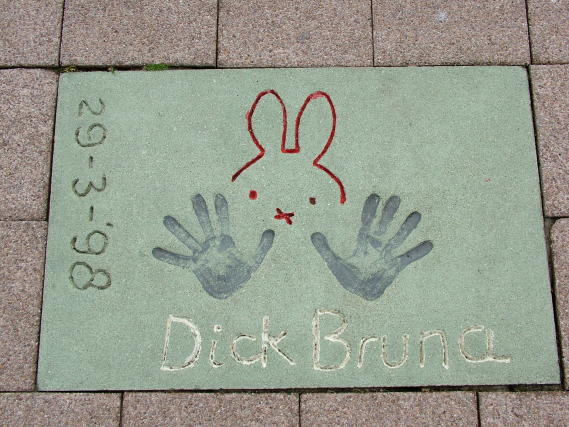
Miffy was born in 1955 in Utrecht by her creator, Dick Bruna. Bruna was inspired when he spotted a rabbit hopping around a garden during a family seaside holiday.
Dick Bruna left his handprints on the wall of fame in 1998! Image: Wikimedia Commons/Ziko van Dijk/CC3.0
He drew a rabbit to entertain his then one-year-old son, and this later became the innocent little rabbit beloved by many: Miffy! That makes her more than 60 years old today.
Since then, Miffy has become a worldwide sensation. She’s been featured in many books, two TV series, a blog, and even her own film. Go Miffy! 🐰
Miffy and Nijntje
In Dutch, Miffy is called Nijntje. This is a shortening of the word “konijntje“, which translates to “little bunny”. Can it get more adorable than that?
While this makes sense for people in the Netherlands, it made it hard to pronounce for other people who weren’t Dutch.
Olive Jones, the first English translator of the books, rebranded her as Miffy, making it easily pronounceable in all languages.
Miffy in Utrecht
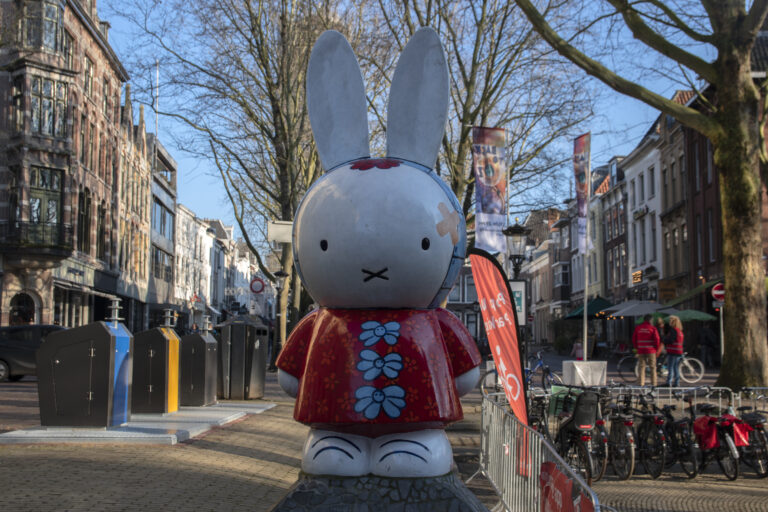
A square in Utrecht has been officially named after her: Nijntje Pleintje, which translates to “Miffy Square”. Since the little rabbit was created there, it acts as a little reminder of Miffy’s birthplace.
The square is home to a statue of Miffy, which was made by Bruna’s son. 🐰
There is also a whole museum dedicated to her in the centre of Utrecht, known as the Miffy Museum.
It contains 10 rooms, each representing a different mini-world inspired by Bruna’s books. Time to head over to Utrecht!
International sensation
Until recently, Miffy wasn’t causing such a ruckus outside of Europe, but now younger folks in North America are going crazy over the Dutch bunny. And we don’t blame them.
She’s on Instagram and TikTok, she’s on pillows and nail art — she’s basically a global superstar!
After all, adults can also enjoy the cuteness of Miffy, even if she was made originally for kids. Of course! She’s adorable, and she reminds us of the simpler times of childhood. What’s not to love?
Did you know Miffy was originally Dutch? Tell us in the comments below!
With hundreds of coffeeshops in Amsterdam, finding the good ones takes work. We visited 10 of the best to bring you top strains, ordering tips, and house rules.
This guide was written and regularly updated by the DutchReview editorial team, based in the Netherlands, drawing on first-hand visits to each coffeeshop featured.
Amsterdam’s coffeeshops are incredibly accessible, offering a wide range of cannabis strains in a laid-back setting that’s unlike anywhere else in the world. Amsterdam is unique: I mean, where else could you float through historic canals on a pleasant high!
We’ve spent years exploring the city’s top spots and sampling the goods (purely for research, of course 😉).
Whether you’re a first-timer or a seasoned smoker, here are our favourite weed strains to try in Amsterdam in 2026.
Amsterdam coffeeshops: quick facts
Payment? Most coffeeshops accept both cash and card, but it’s worth carrying cash as a backup
Who can go? Anyone aged 18 or over with a valid ID — tourists included
How much can you buy? Up to 5 grams per person, per visit
How much does it cost? Expect to pay €10–€15 per gram, depending on the strain and coffeeshop
Where can you smoke? Inside the coffeeshop or in designated smoking areas only — public smoking is banned in central areas including the Red Light District, Dam Square, and Damrak
Can you take it home? No — cannabis cannot legally be taken out of the Netherlands
Remember, like any substance, weed needs to be consumed responsibly and with care. Be mature, consume in moderation, and have a good trip! 🍀
What weed should I order in an Amsterdam coffeeshop? 🙋♂️
So, you’ve made it to an Amsterdam coffeeshop — now comes the fun (but slightly tricky) part: choosing your weed.
There’s a lot to consider. Do you want an energetic, uplifting high that pairs well with exploring the city? Or are you after something relaxing and mellow, perfect for sinking into a sofa and binge-watching a series?
Your mood matters too. Some strains will amplify what you’re already feeling, while others might shift your headspace entirely.
Luckily, many of the best weed strains in Amsterdam are easy to find — especially at the city’s best coffeeshops in the centre, where you’ll find great vibes, knowledgeable staff, and quality weed.
Here are our top picks from our most recent “trip” — pun very much intended. 😉
Gelato 41 from Coffeeshop Sloterdijk 🍨
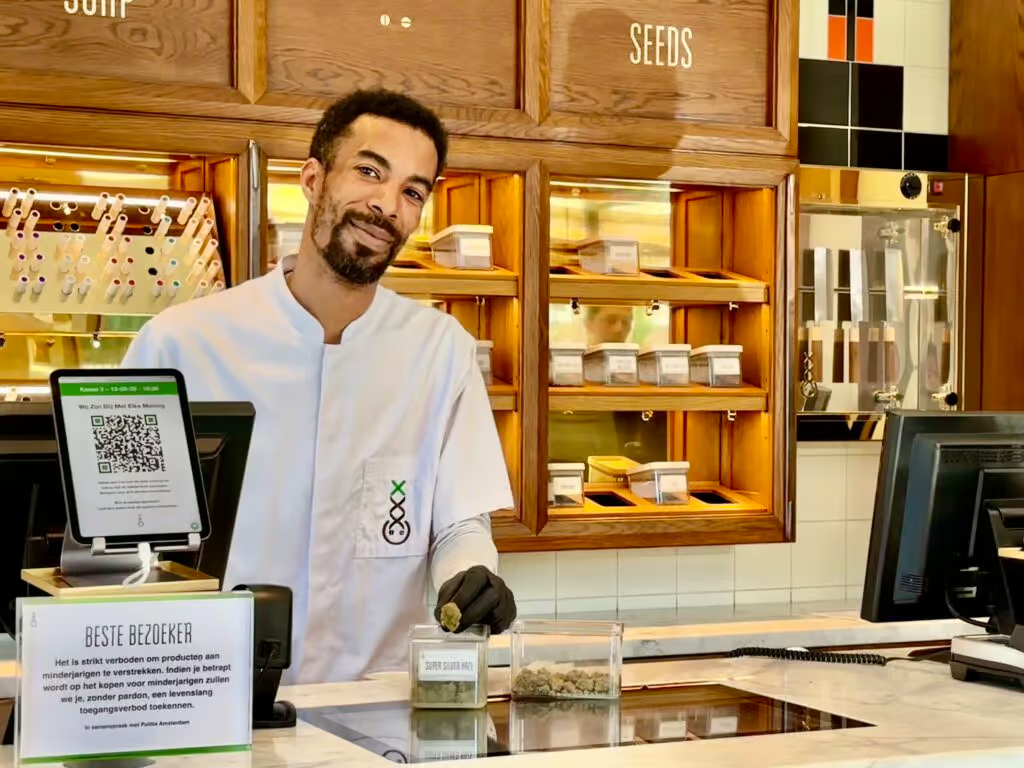
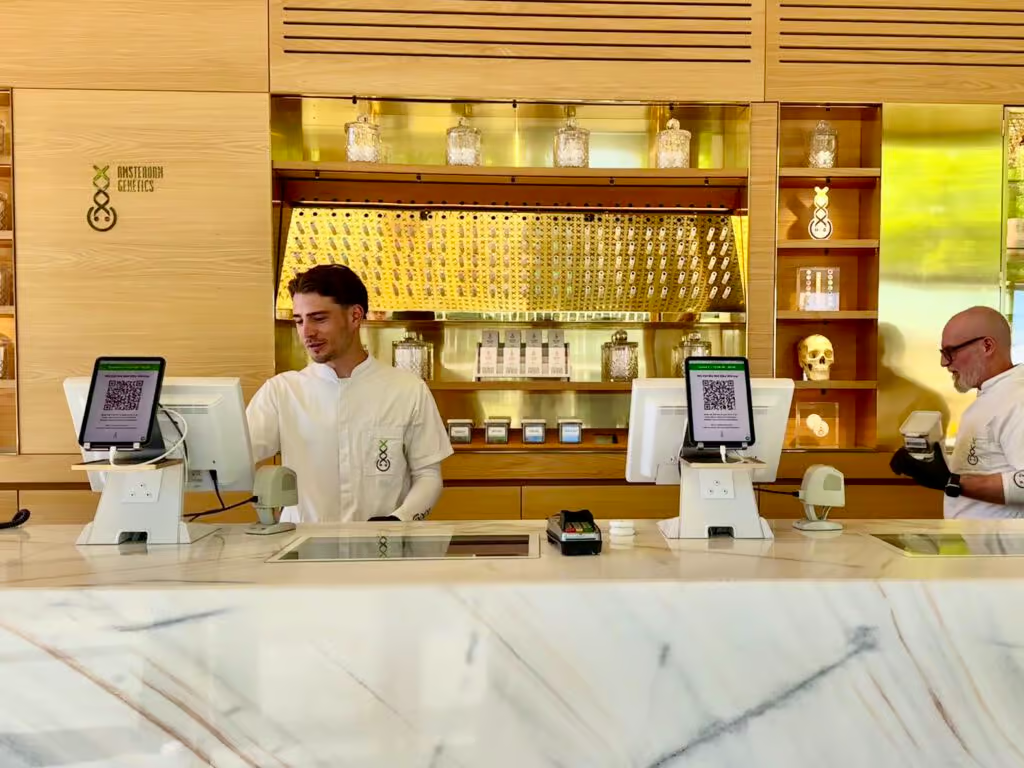
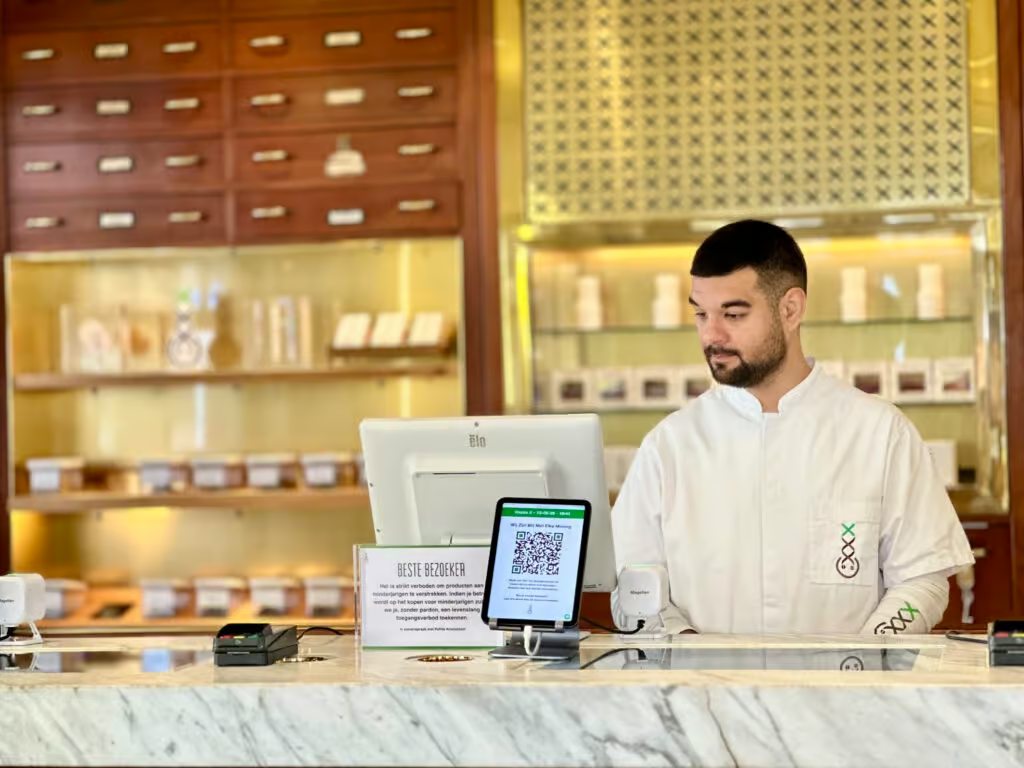
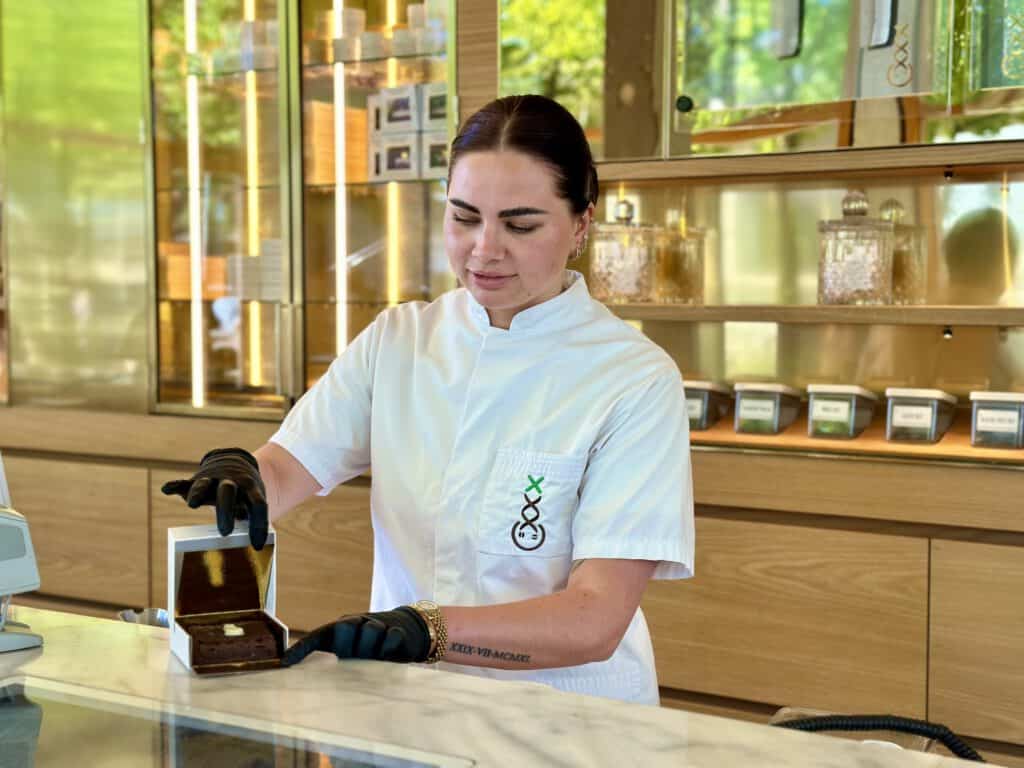
Forget the old-school, hazy coffeeshops — Coffeeshop Sloterdijk, part of the Boerejongens family, is a modern, marble-clad beauty on the edge of the city that feels more like a boutique dispensary than a weed den. Natural light streams in, gold accents gleam, and the minimalist packaging screams premium.
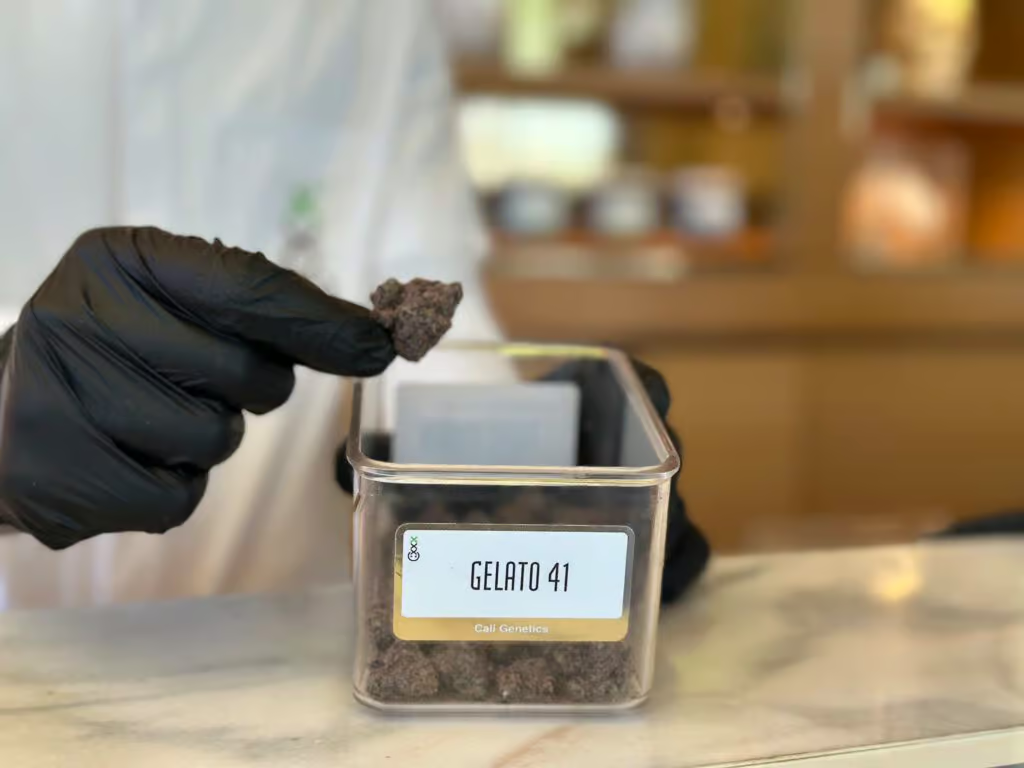
The star strain here? Gelato 41 — a creamy, potent hybrid known for its sweet, dessert-like flavour and smooth, balanced high.
Gelato 41 is perfect for a euphoric and happy high. Image: DutchReview
Expect a blend of relaxation and euphoria with a side of mental clarity — ideal for unwinding without feeling glued to your seat. It’s the kind of high that puts a smile on your face and keeps you comfortably afloat.
New to weed? No worries. You’ll be greeted by a man in a bowler hat (really) and guided by the shop’s cannabis sommeliers in white lab coats — they’ll help you find your perfect match.
Located just outside the city centre, Coffeeshop Sloterdijk is easily reached by train or bike — and yes, there’s even free parking.
☘️ Strain: Gelato 41 💨 Type of high: Relaxed, euphoric, mentally clear 📍 Where to get it: Humberweg 2, 1043 AC Amsterdam (Sloterdijk/Westpoort)
Super Silver Haze from Coffeeshop Boerejongens 😶🌫️
Let’s keep up the pact with one of my all-time favourites: Super Silver Haze from Coffeeshop Boerejongens.
This strain is a citrusy, energising classic — with bright, herbal notes and a clean, uplifting high that’s stood the test of time.
With its high THC content and legendary lineage, Super Silver Haze is one of Boerejongens’ go-to strains for good reason — loved by both curious newcomers and seasoned smokers.
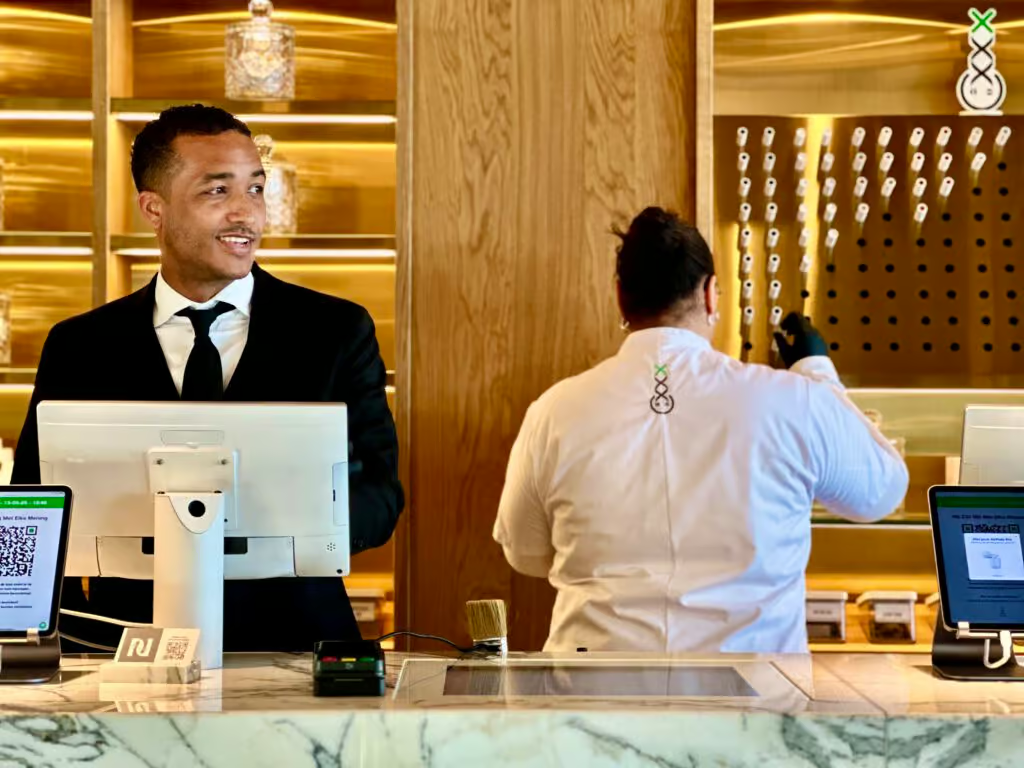
The budtenders at Boerejongens are always happy to give advice. Image: DutchReview
A hybrid of Skunk, Northern Lights, and Haze, this sativa-dominant strain delivers a powerful, clear-headed buzz that’s perfect for daytime exploring, museum-hopping, or just vibing along the canals. Expect creative energy, mental clarity, and just enough body buzz to keep you grounded.
And the vibe? Not your typical coffeeshop. Boerejongens Sloterdijk feels more like a high-end boutique than a stoner hangout — with polished interiors, knowledgeable staff, and seriously sharp uniforms.
There are three Boerejongens locations in Amsterdam, so you’ve got options — leuk!
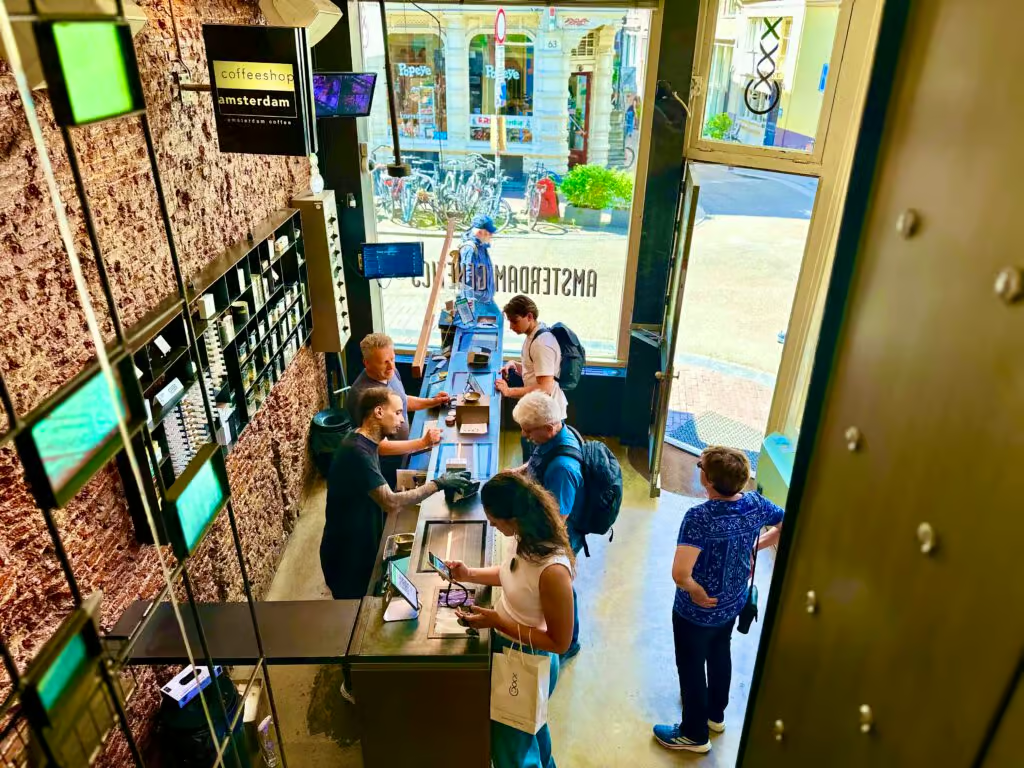
A true staple of the city, Coffeeshop Amsterdam is just a short walk from Central Station — and it’s the perfect spot to ease into the local weed scene with style.
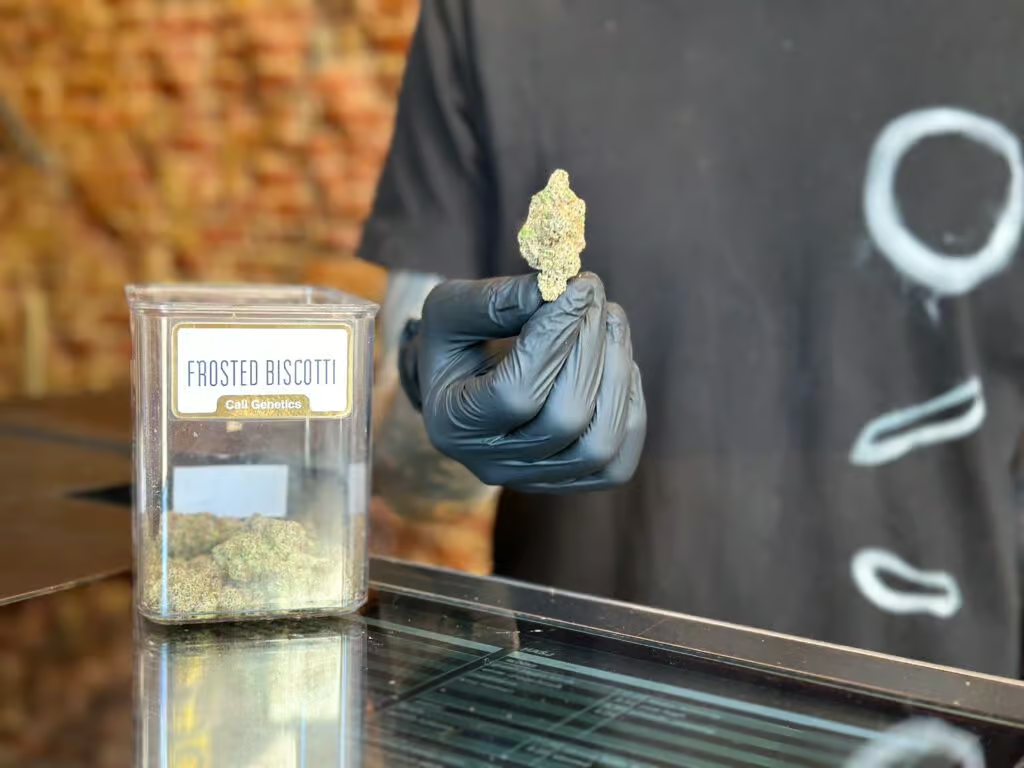
Their standout strain? Frosted Biscotti — a rich, indulgent hybrid known for its dessert-like flavour and powerful indica effects. Expect a smooth, sweet profile with hints of vanilla, nuts, and spice — and a high that hits fast and settles deep.
Frosted Biscotti is perfect for when you want to sit back and relax. Image: DutchReview
With around 80% indica and 20% sativa, Frosted Biscotti is perfect for those end-of-day wind-down moments. It’s deeply relaxing, likely to glue you to your seat (in the best way), and great for slow convos and easy vibes.
Not into rolling your own? No stress. Coffeeshop Amsterdam offers high-quality pre-rolls for maximum convenience.
And for those who want to light up in style, check out Coffeeshop Amsterdam Café just around the corner on Singel 8— a sleek smoke lounge where you can pair your joint with a good cocktail, a cold beer, or a fresh coffee.
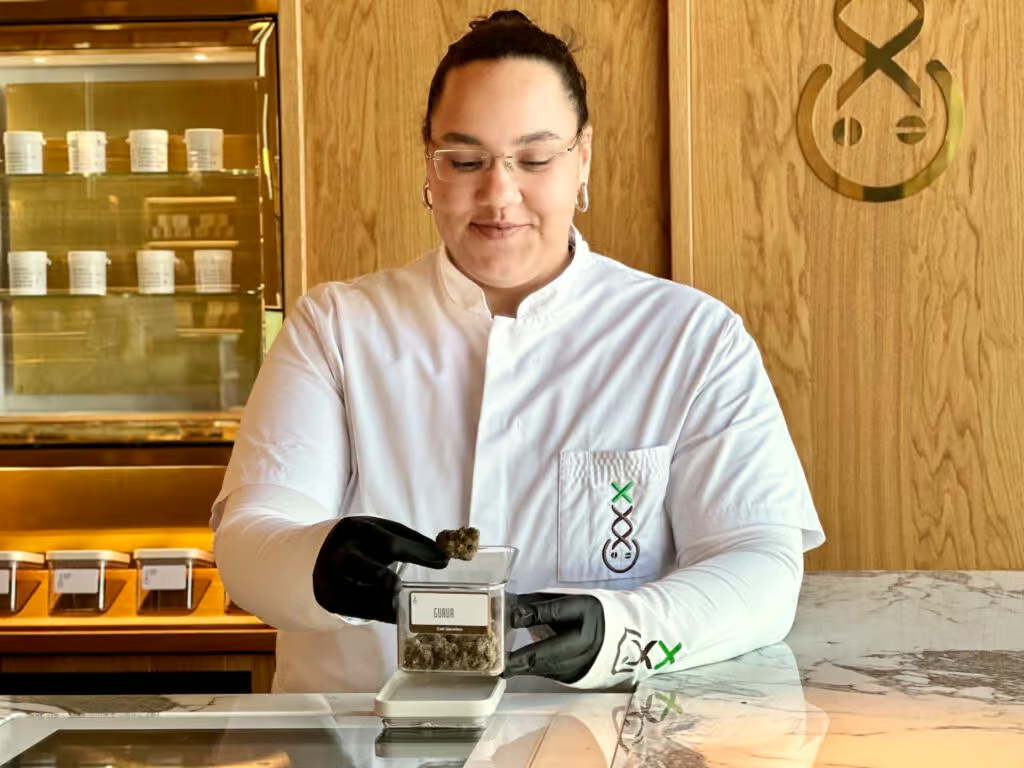
Just across the IJ in one of Amsterdam’s trendiest neighbourhoods, Coffeeshop Noord is a sleek, modern spot serving up seriously tasty strains — and their Guava is a fruity favourite.
This sativa-dominant hybrid brings a tropical twist, with sweet, exotic flavours that live up to its name and a smooth, creamy undertone that rounds it out beautifully.
Coffeeshop Noord’s budtenders really know their product. Image: DutchReview
Guava delivers a happy, heady high that’s perfect for creative energy, casual conversation, or simply soaking in the vibe of Amsterdam Noord — especially if you’re wandering between street art, cafés, and canal views.
Need a mood-lifter in joint form? This one’s a top choice.
Your next pitstop? Coffeeshop Tweede Kamer — not the one in The Hague where Dutch politicians argue, but the iconic cannabis hotspot tucked away in the heart of Amsterdam.
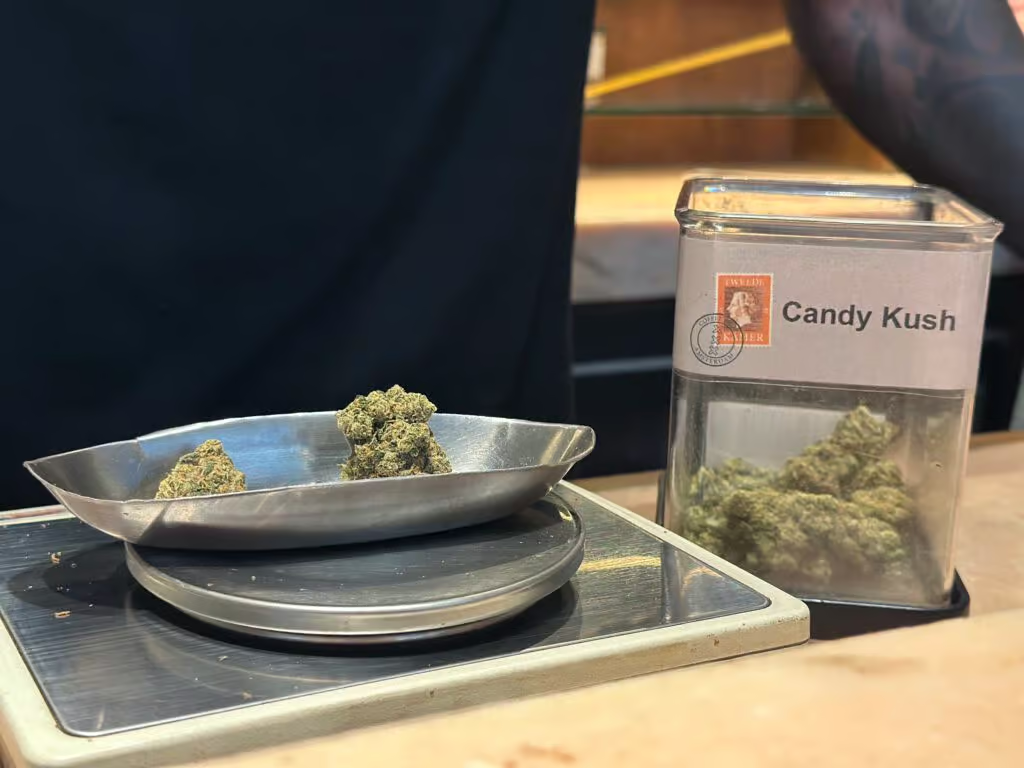
Here, we recommend trying Candy Kush, a sweet and balanced indica-dominant hybrid that lives up to its name in both taste and effect.
Expect sugary flavours with hints of earthy spice, followed by a deeply relaxing high that melts tension without knocking you out.
Candy Kush is a great pick for when you want to feel high without feeling like you’re floating away. Image: DutchReview
This strain offers a perfect body-mind combo — calming enough for a chill evening, but light enough to keep your thoughts flowing.
Bonus tip: Tweede Kamer also sells classic space cakes, if you’re in the mood to switch things up and eat your way to a high instead.
You can’t sum up all the great weed strains and best coffeeshops of Amsterdam in just one article. Nevertheless, there are some honourable mentions that you should consider smoking out.
Lemon Kush from Coffeeshop The Stud 🍋
First up on our honourable mentions list is Coffeeshop The Stud, a local favourite that consistently delivers top-tier quality.
Their go-to strain? Lemon Kush — a vibrant hybrid of Lemon G and Afghani Kush. Expect a zesty citrus explosion that wakes up your taste buds and sets the mood for a mellow, euphoric high.
It’s the perfect choice for relaxing after a long day — whether you’ve been wandering the canals or just need a sunny pick-me-up.
Big Buddha Cheese from Coffeeshop Sensemillia 🧀
Our second shoutout goes to Coffeeshop Sensemillia and their unforgettable strain: Big Buddha Cheese — yep, that’s really its name. This funky hybrid has earned its place in cannabis history, winning the 2006 Cannabis Cup for Best Indica.
Located on a peaceful street in Osdorp, Sensemillia offers a laid-back atmosphere with views over the lake — a perfect spot to enjoy this unique weed strain.
The flavour? Think tropical fruit with a cheesy twist — strange, but strangely satisfying. The high is uplifting, creative, and cheerful, making it ideal for a relaxed afternoon of people-watching or lakeside daydreaming.
White Choco Haze from Coffeeshop Relax 🌫️
The third honourable mention goes to Coffeeshop Relax, a cosy spot where you can try the uplifting White Choco Haze— a sativa-dominant strain perfect for sparking creativity.
A mix of White Choco and Mexican Haze, this strain offers a unique flavour profile: sweet melon with a hint of chocolate. The high is energetic and heady — ideal for creative flow, deep convos, or just vibing your way through the city.
Green Magic from Coffeeshop BIJ
Tucked just beyond Amsterdam’s busy centre, Coffeeshop BIJ is a local favourite with a laid-back vibe — and home to the wonderfully named Green Magic.
This strain is a treat for the senses: vibrant green buds, a rich earthy aroma, and a subtle sweetness that lingers on the palate. But it’s not all about looks — Green Magic delivers on effect too.
With a balanced sativa–indica blend, it offers a smooth, well-rounded high that’s great for a relaxed afternoon wandering the city’s lesser-known streets. It’s the kind of strain that lets you stay present — just with a lighter step and a better mood.
Strawberry Haze from Coffeeshop Siberië 🍓
I couldn’t wrap this list without giving a shoutout to one of my personal favourites — Coffeeshop Siberië, a charming and artsy spot near the Brouwersgracht that never disappoints.
When you’re there, there’s only one answer to “What should I get?” — Strawberry Haze. This sativa strain delivers a sweet, fruity flavour that lives up to its name and a bright, chatty high that’s perfect for social sessions or daytime wandering.
Uplifting, energising, and just plain fun — it’s one of the best fruity strains you’ll find in the city.
How to find the best weed strain for you at an Amsterdam coffeeshop 🌱
Though my favourite weed strains are undoubtedly am-hazing (😉), your taste might be different from mine.
So, if you want to find the strain that’s perfect for you, I recommend you ask your budtender, your friendly local Amsterdam weed expert.
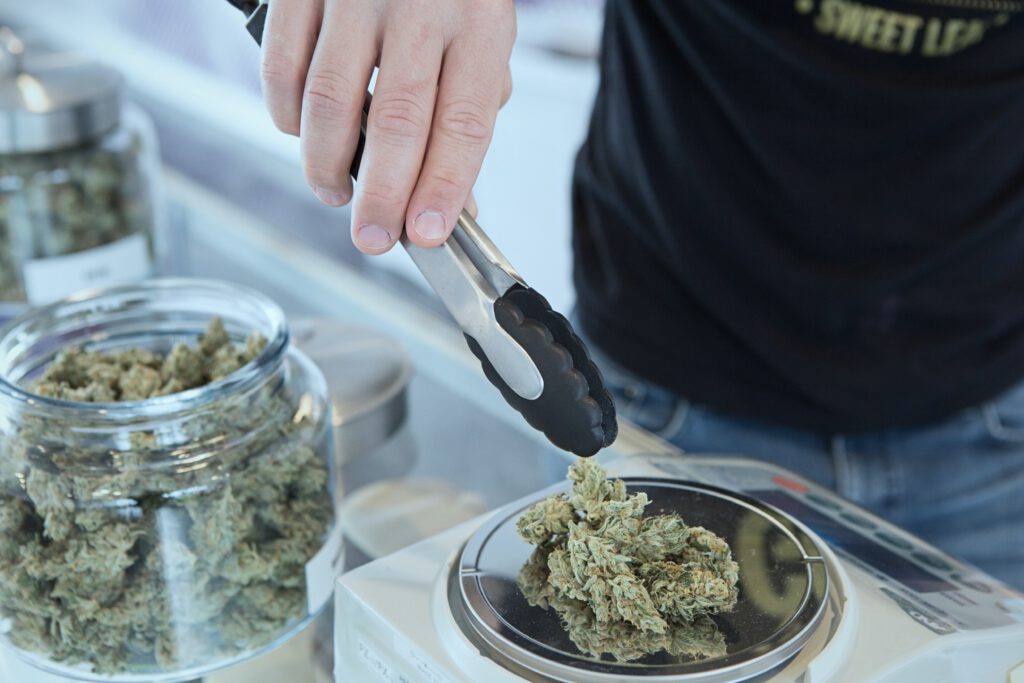
Your budtender will happily help you out — it’s their job! Image: Unsplash
If you haven’t heard of a budtender, they’re like bartenders — except they sell weed.
While it might sometimes feel like you have to be a weed aficionado when walking into an Amsterdam coffeeshop, that’s not true. Amsterdam coffeeshops are used to tourists, newbies, and even weed pros asking questions.
If you’re not sure what kind of weed you want, just walk into any high-quality Amsterdam coffeeshop and ask the budtender for advice. Tell them about the high you want, and let them make a recommendation. After all, they’re the pros!
Amsterdam coffeeshop etiquette: what you need to know 🤝
When visiting a coffeeshop in Amsterdam, it’s essential to be aware of the etiquette and rules to ensure a pleasant experience for everyone. Here are some tips to keep in mind:
Show your ID: Always have your ID ready to prove you are 18 years or older.
Respect the staff and customers: Be courteous and polite to the staff and other patrons.
Smoke cannabis responsibly: Only smoke cannabis inside the coffeeshop or designated smoking areas.
No photos or videos: Avoid taking pictures or videos inside the coffeeshop without permission.
Keep your belongings safe: Don’t leave your personal items unattended.
Stay safe: Never drive or operate heavy machinery after consuming cannabis.
By following these simple guidelines, you’ll ensure a smooth and enjoyable visit to any coffeeshop in Amsterdam.
What else do you need to know about smoking in the Netherlands? 🤔
Now that you’ve secured your weed, there might be some other questions you have about smoking weed in Amsterdam.
Amsterdam’s coffeeshops are a unique and integral part of the city’s culture, offering a diverse range of cannabis products and experiences. So, let’s answer them.
What’s the difference between indica and sativa weed strains?
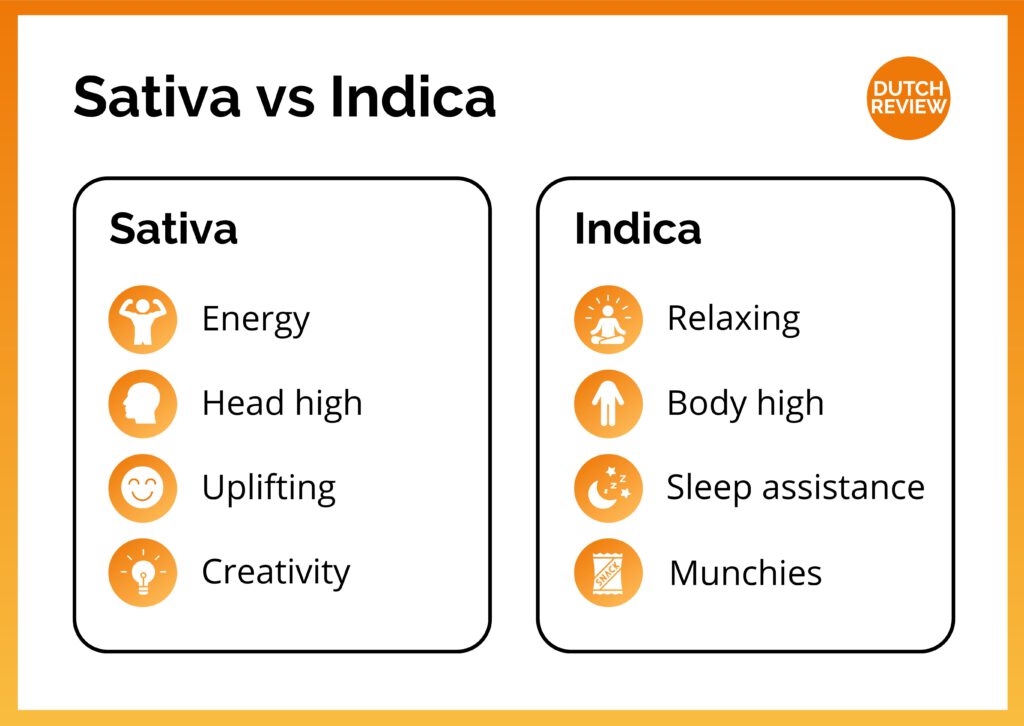
The division between indica and sativa is probably the most well-known indicator in your navigation through the many different sorts of weed there are out there at the many Amsterdam coffeeshops.
Indicas are generally thought to give you a more relaxing body high, well-suited for indoor activities, chilling, and watching TV shows. Sativas, on the other hand, give you an uplifting, cerebral high, perfect for creative activities or more outdoorsy stuff.
Both Indica and Sativa strains can offer delicious strains with unique flavours and effects.
Which one do you prefer? Image: DutchReview
Now, this division is not necessarily true when it comes to effects, and it’s more of a general indicator than anything else.
There can be Sativas that get you high in a way that feels like an Indica, and the other way around. It’s best to try out different strains and see which one works for you and your needs.
It’s also important to note that there is no such thing as a pure Sativa or Indica strain. All of them are a mix and contain a bit of both types. Some strains are specific hybrids that balance out the percentages.
What’s the difference between weed and hash?
Time to clarify some differences when it comes to the magical cannabis plant.
Weed and hash might be different things on paper, but they are similar in the sense that they both are made from cannabis and contain THC, the psychoactive substance present that gets you high.
The difference is how they are produced — and the highs they give.
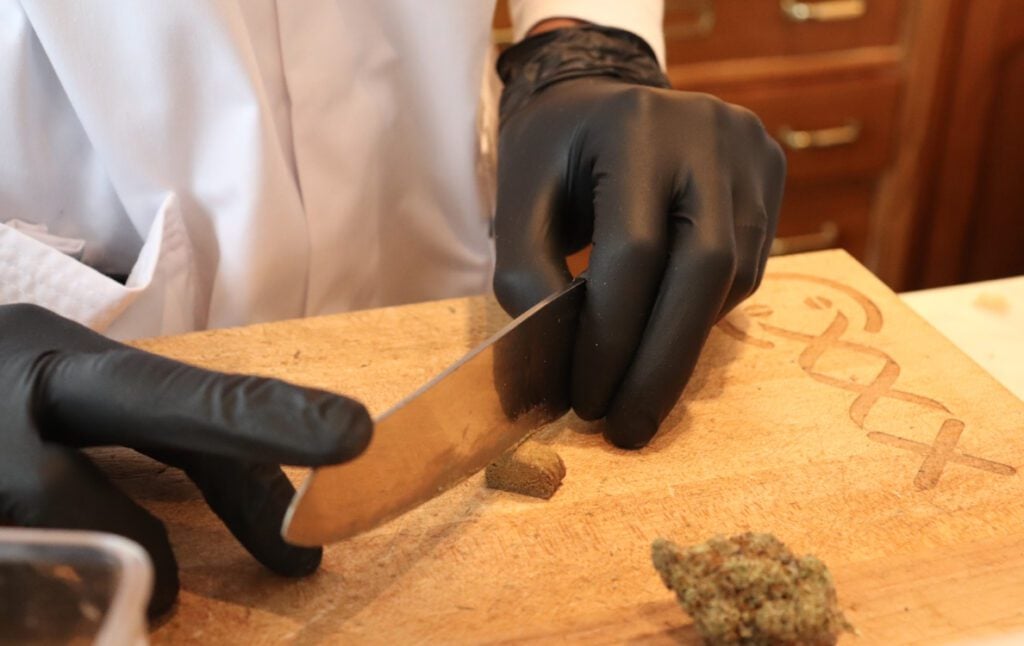
Hashish famously comes in a compressed block like this one. Image: DutchReview
While weed will give you more of that classic stoner buzz, hash will give you a milder high. Because of that, it’s preferred by people looking to smoke but also engage in some sort of upbeat activity.
How do you roll a joint with Amsterdam weed?
Now, let’s get to what is arguably the most important aspect of smoking weed: learning how to roll a joint.
For those who prefer convenience, many of Amsterdam’s best coffeeshops offer high-quality pre-rolled joints. Or, you can roll your own!
You’ll need two essential ingredients: The filter tip and the paper itself.
Before beginning, make sure the side with glue is facing your way. Trust me, there is nothing worse than rolling a joint and realising you put the paper backwards.
When it comes to rolling joints, practice makes perfect. Image: DepositPhotos.com
You’ll first need to make the filter tip. To start, make a few folds at the end of your filter, but try not to crease the paper when you’re folding it.
You can use as many folds as you like, but most people simply make an “M” or a “V” shape with the filter tip. Once your folds are made, just roll the remaining filter material around the folded part. And ta-da: You have a filter!
Now, put your filter at the end of your rolling paper, add your tobacco-weed mix, and roll it into your joint. It may take you a few tries and YouTube tutorials to get there, but trust me; you’ve got this!
Having a bad weed trip in Amsterdam? Here’s what to do 🌩️
As with any substance, bad trips can happen. The important thing is always to remember that you are feeling the way you are because you’ve simply consumed too much weed — and your trip will pass.
Consuming edibles like space cakes can lead to a delayed and prolonged high, which may contribute to a bad trip if not consumed responsibly.
Before smoking, make sure you are in a comfortable, familiar, and homely setting alongside people you trust. These two elements are very important for having a good trip.
If you do decide to smoke weed and you find yourself feeling very anxious and panicked, try not to amplify that feeling further.
Ask your friends to comfort you, drink plenty of water and have some snacks. If you can, try taking a nap. The effect should subside after about two hours, so don’t worry that you’ll feel like that for a long time.
Another important thing to consider is that, beyond Sativa or Indica considerations, weed will usually amplify what you already are.
So, for example, if you are a very sociable person, smoking weed will amplify that feeling even further. If you are a naturally anxious and introspective person, weed may amplify those feelings too, in a way that could make you even more anxious.
Responsible cannabis and weed use in Amsterdam 🌿
Responsible cannabis use is crucial to ensure a safe and enjoyable experience. Here are some tips to help you make the most of your visit:
Start low, go slow: Begin with a low dose and gradually increase as needed to find your comfort level.
Stay aware: Be mindful of your surroundings and keep an eye on your belongings.
Avoid mixing: Don’t mix cannabis with other substances or alcohol to prevent adverse effects.
Stay hydrated: Drink plenty of water and have a snack before consuming cannabis to avoid dehydration and low blood sugar.
Don’t drive: Never drive or operate heavy machinery after consuming cannabis to ensure your safety and the safety of others.
By following these tips, you can enjoy a safe and pleasant cannabis experience in Amsterdam.
Amsterdam weed 101: cannabis basics for coffeeshop first-timers 📚
Cannabis is a complex plant with various strains and effects. Here’s a brief introduction to help you understand the basics:
Indica strains: Generally provide a relaxing body high, perfect for unwinding and indoor activities.
Sativa strains: Typically offer an uplifting, cerebral high, ideal for creative pursuits and outdoor adventures.
Hybrid strains: Combine the effects of indica and sativa, offering a balanced experience.
THC (tetrahydrocannabinol): The primary psychoactive compound in cannabis that produces the “high” sensation.
CBD (cannabidiol): A non-psychoactive compound known for its potential health benefits, such as reducing anxiety and inflammation.
Understanding these basics will help you make informed choices when selecting cannabis products in Amsterdam’s coffeeshops.
Amsterdam’s coffeeshops offer a unique and exciting experience for visitors. By following the etiquette and rules, being aware of responsible cannabis use, and understanding the basics of cannabis, you can ensure a safe and enjoyable experience.
Remember to always drink plenty of water, eat something before consuming cannabis, and don’t drive or operate heavy machinery after consuming cannabis.
Enjoy your journey through Amsterdam’s iconic coffeeshops and discover the best weed the city has to offer! 🌿🍀
Have you smoked any of the strains on the list? What do you think is the best weed in Amsterdam? Let us know in the comments!
Frequently asked questions about weed in Amsterdam
Can tourists buy weed in Amsterdam?
Yes, tourists can buy weed in Amsterdam — all you need is a valid ID proving you’re 18 or older.
Amsterdam’s coffeeshops are open to international visitors, making the city one of the few places in the world where tourists can legally purchase cannabis over the counter.
How much weed can you buy at a coffeeshop in Amsterdam?
The maximum amount of weed you can buy at an Amsterdam coffeeshop is 5 grams per person, per visit. You can visit multiple coffeeshops, but each will enforce the 5-gram limit individually.
How much does weed cost in Amsterdam?
Weed in Amsterdam typically costs between €10 and €15 per gram, depending on the strain and coffeeshop. Premium or Cali-genetics strains at high-end spots like Boerejongens or Coffeeshop Sloterdijk can cost slightly more.
What is the strongest weed in Amsterdam?
The strongest weed in Amsterdam is typically found among high-THC hybrid strains like Gelato 41, available at Coffeeshop Sloterdijk.
THC content at top Amsterdam coffeeshops regularly exceeds 20%, so first-timers should always start slow.
Is weed legal in Amsterdam?
Weed is technically decriminalised rather than fully legal in Amsterdam.
Possession and purchase of up to 5 grams is tolerated under Dutch policy, but cultivation and large-scale supply remain illegal. In practice, buying and consuming cannabis at a licensed coffeeshop is completely accepted and widely practised.
Can you smoke weed anywhere in Amsterdam?
You cannot smoke weed anywhere in Amsterdam.
Since 2023, smoking cannabis in public has been banned in several central areas, including the Red Light District, Dam Square, Damrak, and Nieuwmarkt. Stick to smoking inside a coffeeshop or in designated areas to avoid a fine.
What is the difference between a coffeeshop and a café in Amsterdam?
A coffeeshop is a licensed venue where cannabis is legally sold and consumed, while a café (or kroeg) is a regular bar serving alcohol. The two are entirely separate, so don’t walk into a café expecting a weed menu.
Looking for the best coffeeshops in Amsterdam? As an international living in the Dutch capital, I’ve spent years exploring the city’s iconic cannabis spots — all in the name of research, of course. 😉
This guide was researched and written by the DutchReview editorial team, based on in-person visits to each venue.
Amsterdam’s coffeeshops are legendary. Since the 1970s, they’ve drawn everyone from first-timers to seasoned smokers. Whether you’re after top-shelf weed, a chill vibe, or a real local experience, there’s a coffeeshop for you.
Here are 17 of the best coffeeshops in Amsterdam to get high and enjoy the city like a pro. Welcome to our Amsterdam coffeeshop guide!
What’s on the menu: Most coffeeshops sell loose cannabis, pre-rolled joints, hash, and edibles such as space cakes and gummies. Many also serve coffee, tea, and light snacks.
Age limit: You must be 18 or over to enter and buy cannabis — ID will be checked at the door.
Purchase limit: You can buy up to five grams per person, per visit.
No tobacco indoors: Mixing cannabis with tobacco is not permitted inside — pure joints or a vaporiser only.
Tourists welcome: Amsterdam has not introduced a residents-only policy, so visitors can buy and smoke freely.
Cash is king: Many coffeeshops are cash-only — bring euros, as card payments are not always accepted.
Public smoking rules: Smoking weed in the city centre, Red Light District, and around Dam Square is banned and carries a €100 fine.
The best coffeeshops in Amsterdam (from a local)
1. Coffeeshop Sloterdijk: the coffeeshop that could be a 5-star hotel
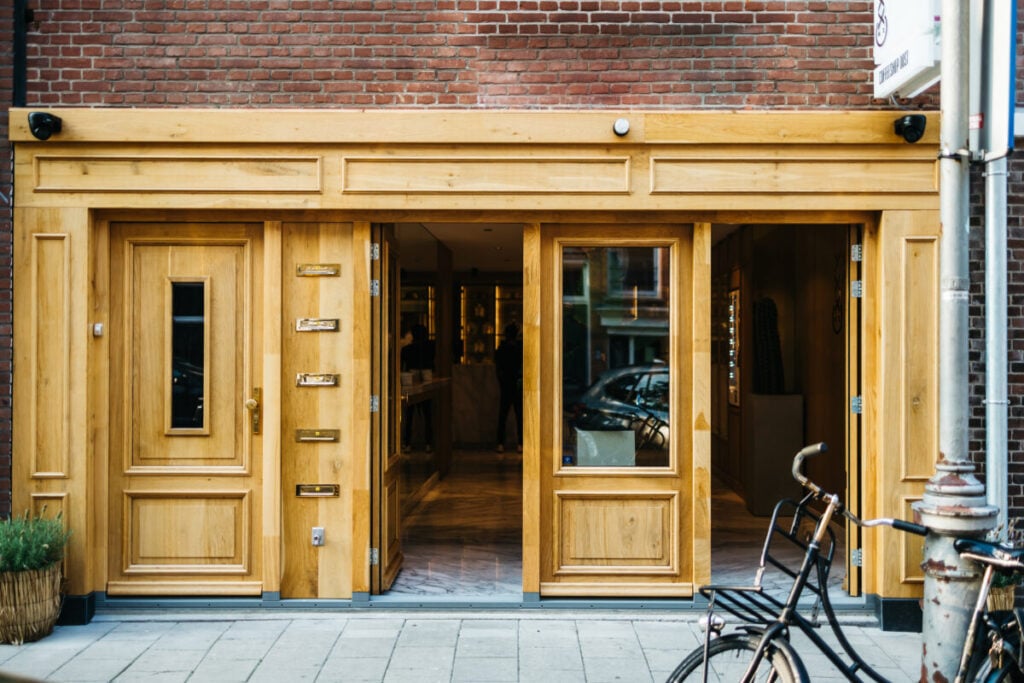
Forget dark and smoky coffeeshops — Coffeeshop Sloterdijk is a sleek, modern gem on the edge of Amsterdam. Think natural light, marble countertops, warm wood finishes, and gold accents. Even the minimalist white cannabis packaging feels premium.
New to weed? Geen probleem. You’re welcomed by a man in a bowler hat, then guided by friendly “cannabis sommeliers” in white coats who’ll help you pick the perfect strain
This is a coffeeshop that challenges what it means to be a coffeeshop. Image: DutchReview
And if you’re after an edible, don’t miss their space cakes. Choose from red velvet, classic brownies, or festive holiday treats — all beautifully displayed.
Located outside the busy city centre, it’s easy to reach by train, bike, or car. Bonus: there’s free parking for quick pick-ups!
If you’re after style and substance, Boerejongens is the go-to coffeeshop in Amsterdam. With two locations across the city, it’s earned a reputation for top-quality cannabis and polished presentation.
The vibe is more luxury dispensary than back-alley hangout — think chic interiors with marble, warm wood, and brass touches.
Some of the staff at Boerejongens have worked there for more than a decade. Image: DutchReview
But it’s not just about looks. The staff are highly trained and ready to help you find the perfect product, whether you’re browsing their award-winning weed, classic hash, or creative edibles.
Don’t leave without trying their signature “spacetry” — a playful take on space cake that tastes as good as it hits.
3. Coffeeshop Amsterdam: the best coffeeshop near Central Station
Just minutes from Amsterdam Central Station, CoffeeshopAmsterdam (formerly Dampkring 2) is a fan favourite for locals and visitors alike. Coffeeshop Amsterdam has been going strong since 1993.
With three spacious floors and a relaxed, social vibe, it’s one of my favourite coffeeshops in the city to actually sit down and enjoy my weed. Yep, you can smoke inside!
The staff make the experience at Coffeeshop Amsterdam. Image: DutchReview
Better still, whether you’re rolling your own or lighting up a pre-roll, you can do it comfortably at your table with a toasty grilled sandwich in one hand and a fresh mint tea in the other.
The café menu goes beyond the basics, offering sweet treats, hot drinks, and even delicious milkshakes.
The weed menu is diverse, the staff are friendly, the prices are fair, and there’s even a second location just a stone’s throw away. Tip: don’t skip the “special cakes” — they’re among the most loved in Amsterdam.
If you ever find yourself in Amsterdam Noord, don’t skip Coffeeshop Noord. I wandered in one morning expecting a hipster café — and found one of the best coffeeshops in the area.
It’s bright, clean, and surprisingly chill for a place that opens at 7 AM. With a 4.7-star rating on Google, it’s no surprise that the weed is top quality and reasonably priced.
I picked up a smooth indica strain on the budtender’s recommendation, and they absolutely nailed it.
Noord is surrounded by beautiful parks and water, the perfect place to light up. Image: DutchReview
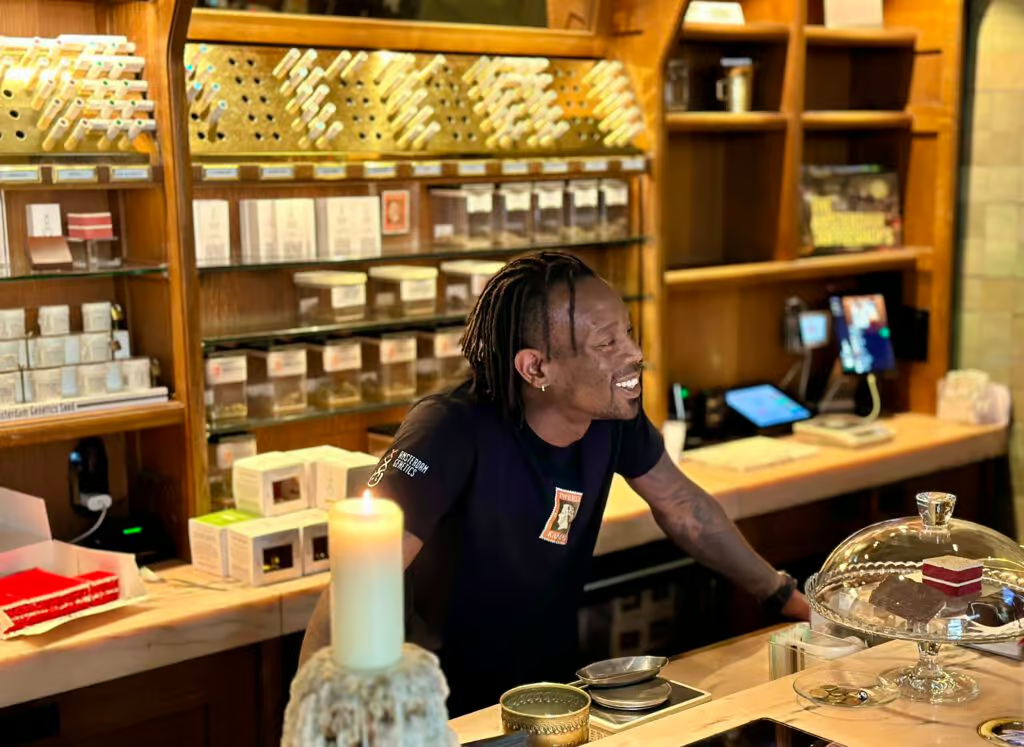
The staff are genuinely friendly and super knowledgeable. You can tell they’re properly trained, not just handing over a menu. Whether you’re new to cannabis or know exactly what you’re after, they’ll take the time to help you out.
Bonus: it’s open every single day, from early morning to just past midnight — great for both wake-and-bake types and night owls.
5. Katsu Coffeeshop: the best coffeeshop in De Pijp for escaping the crowds
Tucked between the Albert Cuyp Market and the Heineken Brewery, Katsu Coffeeshop is a real hidden gem in De Pijp — and one of my personal favourites when I want to escape the tourist crowds.
The moment you walk in, there’s this calm, no-fuss vibe that instantly makes you want to stay a while. Coffee is coffee, juice is juice, and Strawberry Kush is Strawbe — wait, Strawberry Kush?
Katsu keeps it simple: no flashy gimmicks, just good weed, relaxed energy, and reasonable prices for generous quantities.
It’s the kind of place where you can actually enjoy your smoke without the noise of the city — even though you’re right in the middle of it.
Looking for a classic coffeeshop in Amsterdam with real history? De Tweede Kamer is one of the originals — and has quickly become one of my favourites for a low-key, high-quality smoke in central Amsterdam.
Opened back in 1985, this place has serious street cred. It was one of the first coffeeshops in Amsterdam to weigh and package cannabis right in front of customers — and that old-school honesty still shows.
Tweede Kamer is known for giving top advice. Image: DutchReview
Their menu is carefully curated, and the staff genuinely know their stuff. I asked for something mellow, and they took the time to walk me through a few options — no rush, no pressure, just solid advice.
Oh, and the name? A clever nod to the Dutch Parliament (and an iconic postage stamp logo). Classy, chill, and packed with character — this is a coffeeshop that knows its roots.
The Stud has been part of the Amsterdam coffeeshop scene since 1982, and it still feels like a true community hangout. When I visited, the vibe was relaxed and welcoming, with locals dropping by for a smoke, a coffee, or just a chat.
Their website jokingly describes their staff as “traffic controllers, street sweepers, and neighbourhood mediators” — and honestly, it fits. Everyone’s friendly, helpful, and genuinely passionate.
They’ve got great weed at good prices, and in 2022, their host even won “Best Coffeeshop Host” at the Amsterdam Coffeeshop Awards.
If I had to take my mum to a coffeeshop in Amsterdam, I’d pick Coffeeshop Oost without hesitation. Just around the corner from Oosterpark, it’s bright, modern, and refreshingly calm — no chaotic crowds or blaring music here.
A second home? Image: Supplied
Since its recent renovation, the interior feels more like a stylish café than a stereotypical stoner hangout. But while the vibe is fresh, the weed still hits that classic Amsterdam standard.
I tried one of their California strains and was genuinely impressed — smooth, strong, and flavourful.
Whether you’re after flower, hash, or edibles, this spot delivers quality without the fuss.
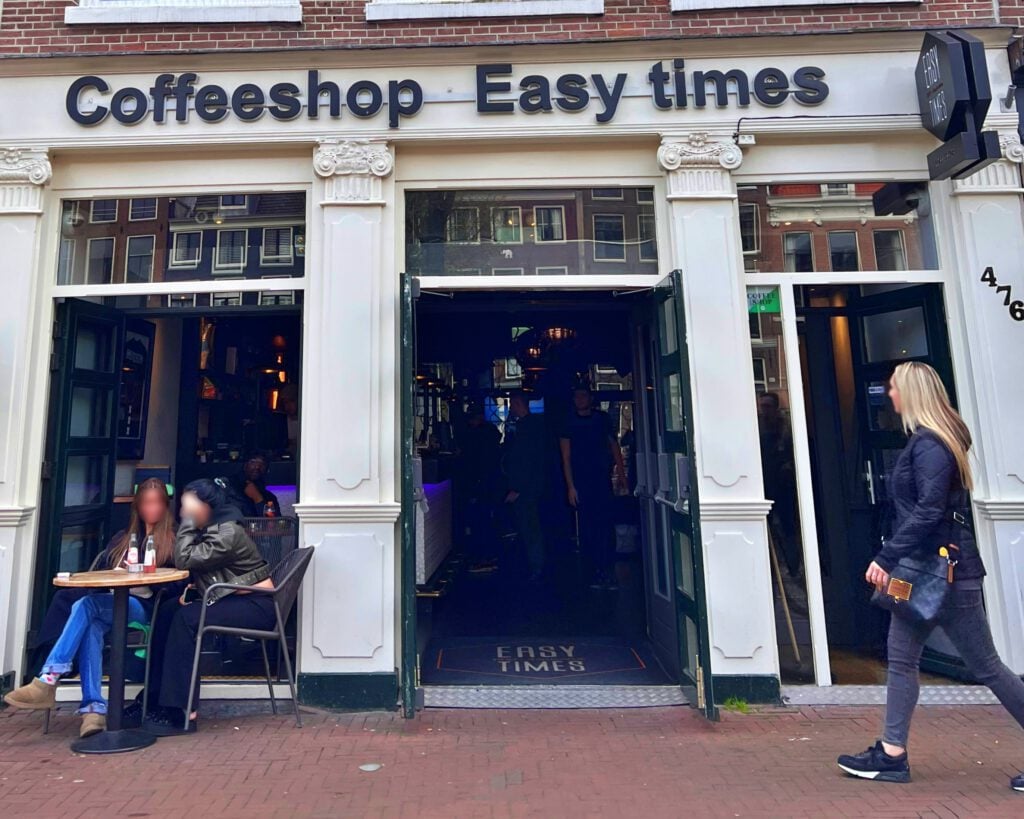
9. Easy Times Coffeeshop: the best Amsterdam coffeeshop for first-timers
If you’re building your Amsterdam coffeeshop list, go ahead and add Easy Times now — you’ll thank yourself later. This spot shines on lazy afternoons when time moves slowly, and you need a little spark to lift your mood.
I ended up here on a quiet Sunday, and true to its name, Easy Times delivered exactly what I needed. The vibe is mellow, the music sets the tone, and the staff are incredibly kind — especially if it’s your first time smoking.
Easy Times is a coffeeshop that really lives up to its name. Image: DutchReview
They’re patient, knowledgeable, and happy to walk you through the menu.
Personally? I went with the G-13 Amnesia Haze — and wow. Smooth, citrusy, and a perfect long-lasting high. Highly recommend for a chilled yet uplifting experience.
10. Coffeeshop Sensemillia Osdorp: get lit, lakeside
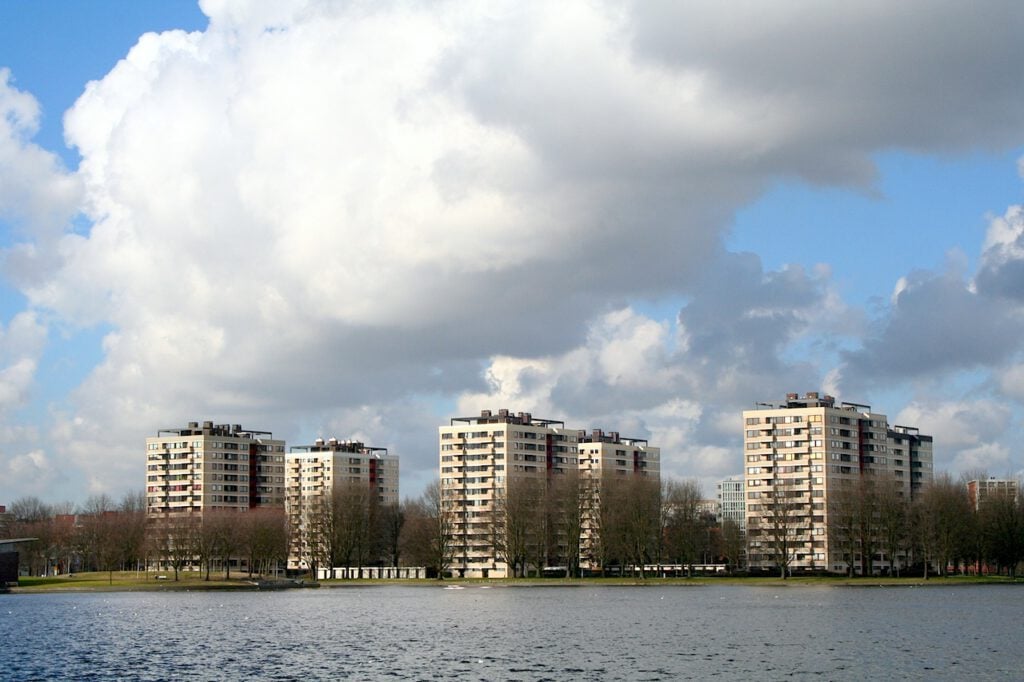
If you’re after a coffeeshop in Amsterdam with a view, Coffeeshop Sensemillia in Osdorp is the one to hit.
Perched above Sloterplas lake, I grabbed a spot on the terrace and lit up while gazing out over the water — easily one of my most peaceful smoke sessions in the city.
This place has been running since 1981 and feels like a true local gem. The staff are welcoming, the prices are fair, and the vibe is unpretentious.
Bonus tip? When the munchies hit, there’s a fantastic Thai restaurant just steps away. Pad Thai and Amnesia Haze might sound odd, but trust me, it works.
Just don’t confuse it with the other Sensemillia location — this is the one with the unbeatable lake views.
11. Coffeeshop Siberië: the hidden gem of Amsterdam coffeeshops
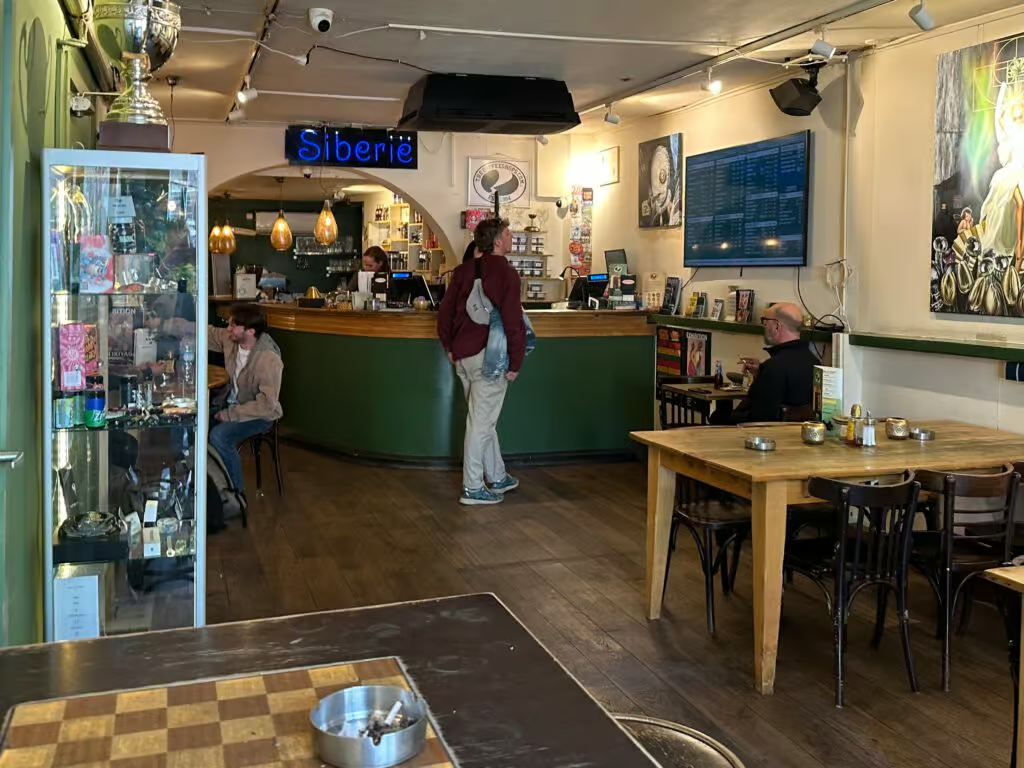
With a name like Coffeeshop Siberië, I expected something a bit cold and industrial, but I was immediately charmed when I walked in. This place feels more like a local café than your typical Amsterdam coffeeshop.
The vibe at Coffeeshop Siberië is cosy, cosy, cosy. Image: DutchReview
Set right along the peaceful Brouwersgracht canal, it’s got wooden floors, cosy tables, rotating local art, and wide double doors that swing open in summer to let in the breeze.
I grabbed a latte from the in-house barista (yes, a real barista) and just sat watching boats drift by — a perfect break from city touring.
The weed? High-quality and lab-tested, which I really appreciated. Prices are a little steeper than further out from the centre, but for the atmosphere alone, it’s well worth the stop.
Just two streets away from Boerejongens West is Coffeeshop BIJ, a favourite coffeeshop for Amsterdam locals.
Nestled in the De Baarsjes neighbourhood, this non-touristy coffeeshop is just a stone’s throw from popular Amsterdam attractions like Vondelpark, Foodhallen, and Rembrandtpark.
Coffeeshop BIJ feels like stepping into a time machine. Image: DutchReview
Beyond the Amsterdam School-style exterior, inside is truly a sight to see: an old pharmacy chest, marble counters, and gold touches. It’s high-end weed smoking as you’ve never seen before.
The white lab-coated workers are also all class and are happy to help out anyone, from the most seasoned smokers to first-time arrivals.
13. Coffeeshop DNA: first-grade weed at affordable prices
Coffeeshop DNA sits just steps from Amsterdam’s Olympic Stadium — and honestly, the weed here deserves a gold medal.
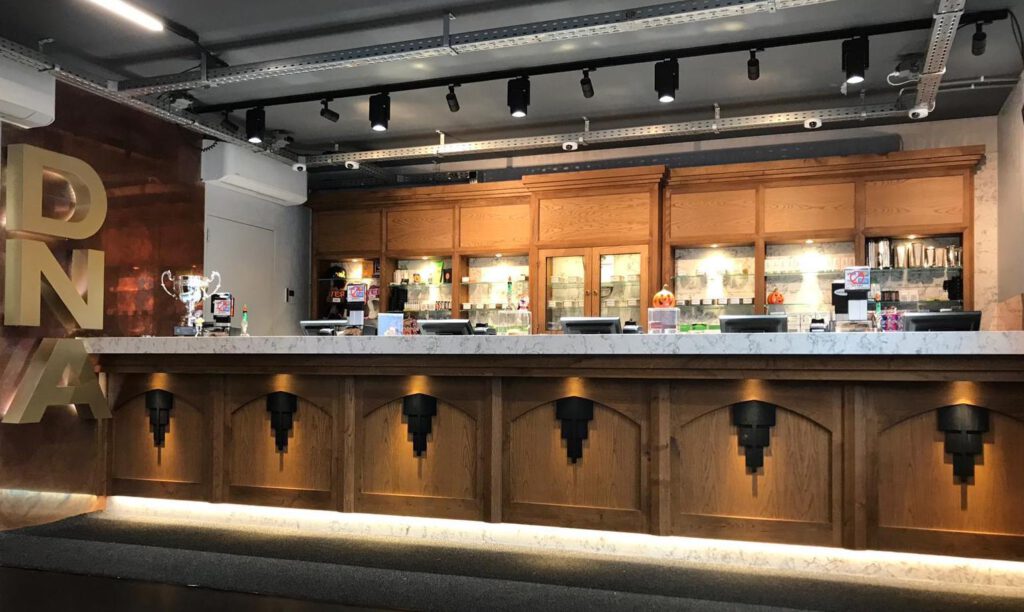
I swung by expecting style, and it delivered: a gorgeous wood-and-gold interior that feels straight out of The Great Gatsby.
That is one beautiful coffeeshop. Image: Coffeeshop DNA/Supplied
The staff are super welcoming, and the prices are surprisingly low for the quality you get. This place proves that top-shelf cannabis doesn’t have to break the bank.
My top tip? Try the hash. I gave it a go on my last visit and haven’t stopped recommending it since — easily some of the best in Amsterdam.
14. Coffeeshop The Border: best price/quality ratio
Open daily from 08:00 to 01:00, Coffeeshop The Border has been a steady favourite since 1992 — and with its bright green signage, it’s pretty hard to miss.
Located right on the edge of Amsterdam, near the Amstelveenseweg, it’s a great stop if you’re heading out of the city or just want a chill, non-touristy spot. I visited on a weekday morning and was impressed by the smooth service and the sleek, industrial vibe inside.
The best part? Every staff member has an official budtender diploma. You really notice the difference — they know their products and give thoughtful advice, whether you’re after hash, flower, or a mellow hybrid to ease into your day.
15. Coffeeshop Dolphins: the most unique coffeeshop near Leidseplein
If you’ve ever wondered what it’s like to get high in a submarine, Coffeeshop Dolphins is the Amsterdam coffeeshop with the answer.
Just a short stroll from Leidseplein, this place is pure aquatic escapism — complete with dolphin murals, blue lighting, and a deep-sea vibe that’s unlike anything else in the city.
There are loads of seating, chill music, and even board games if you’re in a competitive mood. I tried the Verdamper-style glass vaporiser — not something you find everywhere — and it gave the whole experience a futuristic twist.
Add in solid weed, friendly staff, and a cosy cup of hot chocolate? You’ve got yourself a coffeeshop that’s as fun as it is unique.
16. Coffeeshop Relax: Jordaan’s finest weed in a cosy setting
Tucked into the heart of the Jordaan, Coffeeshop Relax Centrum is just five minutes from Amsterdam Central Station — and it’s exactly what the name promises.
It instantly feels like one of those classic, no-fuss Amsterdam coffeeshops where locals actually hang out.
This place has some serious credentials too: it won Best Hash in 2020 and took second place at the 2022 HighLife Cup for its standout Amnesia G13 strain. That alone convinced me to try it — and it did not disappoint.
You’ll find everything from weed and hash to a proper espresso, tea, and fresh pastries. And if there’s a football match on? Grab a seat — this is where you want to be.
17. La Tertulia: a new-age coffeeshop to ponder the world
If you’re after a calm, reflective cannabis experience in Amsterdam, La Tertulia is the coffeeshop for you. I stopped by after a morning at the Anne Frank House, and it was the perfect place to unwind — full of light, leafy plants, crystals, and chill energy.
Located right on the Prinsengracht near the Nine Streets, it’s ideal for journaling, people-watching, or simply sinking into a hot chocolate and one of their surprisingly good toasties.
Everything here feels intentional, from the fully organic weed to the thoughtful interior.
It’s been open since 1983 and spans two cosy levels — a true gem if you’re after something a little more serene. Bonus: they’ve got options for vegans and the gluten-free crowd, too.
Forget what you think you know about “coffeeshops” — in Amsterdam, coffeeshops are licensed, cannabis-friendly spaces where both locals and visitors can buy and enjoy weed legally and comfortably.
These gedoogd (officially tolerated) spots come in all shapes and vibes. Some are laid-back and a little grungy — perfect if you’re after that old-school, no-frills smoke session.
Others feel more like boutique lounges, with sleek marble counters, wooden details, and gold accents.
Most offer a solid menu of top-quality cannabis, pre-rolls, hash, and edibles like brownies, space cakes, and gummies. Many even serve proper coffee, teas, and light bites, just in case you feel like a cappuccino with your joint.
Whether you’re looking for a chill hangout or a stylish spot to spark up, Amsterdam’s coffeeshops offer something for everyone.
They’re more than just cannabis dispensaries — they’re a core part of what makes this city uniquely Amsterdam. ✨
Is weed legal in Amsterdam?
Amsterdam might be world-famous for its weed-friendly vibe — but here’s the twist: cannabis isn’t technically legal in the Netherlands.
Instead, the Dutch follow a gedoogbeleid (tolerance policy), which means cannabis is decriminalised, not legal. Under this policy, anything that is gedoogd — officially tolerated by authorities — won’t be prosecuted, even if it technically sits in a legal grey area. In practice, this means you won’t get in trouble for possessing or buying small amounts for personal use.
Coffeeshops in Amsterdam are licensed to sell cannabis products, and you can legally purchase up to five grams per person, per day. Smoking in public is generally tolerated, although it’s banned in some parts of the city centre (more on that below).
While some Dutch cities have introduced locals-only policies for coffeeshop access, Amsterdam still welcomes both locals and tourists — so yes, you can absolutely visit a coffeeshop on your next trip.
Can tourists smoke weed in Amsterdam?
Yes, tourists can still visit and buy weed in Amsterdam’s coffeeshops. While there have been discussions about restricting coffeeshops to residents only, this has not been implemented in Amsterdam.
If you’re a visitor to Amsterdam, welcome! You’re fully welcome to enjoy the coffeeshop experience — as long as you follow the rules, of course. 😉
Amsterdam coffeeshop rules
When visiting a coffeeshop in Amsterdam, remember to follow these simple rules:
You must be at least 18 years old to enter and buy weed.
Always carry your ID for age verification.
No smoking tobacco indoors.
You can only buy up to five grams of weed at a time.
Respect the staff and other patrons and follow the coffeeshop’s rules.
Amsterdam’s ban on smoking weed in public
In 2023, Amsterdam implemented new rules around smoking weed in public.
The centre and Red Light District are verboden terrein (off limits), but don’t worry — this is a brilliant move to keep Amsterdam a great place for locals and tourists alike (well, once they clear out all the Brits on their stag nights, that is).
Not sure where you can and can’t smoke? Geen probleem!
The rule is simple: if you’re in the old city centre (Red Light District, Nieuwmarkt, and Dam Square), save your cannabis adventures for the cosy confines of Amsterdam’s famous local coffeeshops or the comfort of your accommodation.
Outside of the old city centre, anything goes — but be respectful, of course. 😉 This way, everybody can enjoy the best of Amsterdam without causing trouble.
If you do smoke in a forbidden area, you’ll likely get a tap on the shoulder from the city’s friendly but strict police. They might also give you a €100 fine!
Tips for first-time weed smokers
If it’s your first time visiting an Amsterdam coffeeshop or trying cannabis, no worries — everyone starts somewhere. Here are a few simple tips to make sure your first experience is a good one:
Start small: Try just a few puffs and wait to see how you feel. You can always have more — but you can’t un-smoke!
Stay hydrated: Keep some water nearby, and maybe grab a juice or tea from the coffeeshop.
Bring snacks: The munchies are real — and you’ll thank yourself for having something tasty on hand.
Choose a chill setting: Whether it’s a quiet coffeeshop or a sunny canal bench, find a place where you feel comfortable.
Don’t mix with alcohol: Combining substances can be overwhelming, especially for first-timers.
Listen to your body: Everyone reacts differently. If you’re feeling too high, take a break, breathe, and relax — it’ll pass.
Take it slow, enjoy the vibe, and remember: Amsterdam’s coffeeshops are here to make the experience enjoyable — not intense.
How to roll a joint
Most coffeeshops in Amsterdam offer pre-rolled joints. However, rolling a joint is also a fun skill. Here’s a simple guide:
Gather your materials: You’ll need rolling papers, a filter tip, ground weed, and a flat surface.
Prepare the filter: Roll a small piece of cardboard or paper into a tight cylinder for the filter.
Fill the paper: Place the filter at one end of the rolling paper, then fill the paper with ground weed.
Shape the joint: Pinch the paper between your fingers and roll it back and forth to shape the joint.
Roll and seal: Tuck the unglued side of the paper into the roll, then lick the glued edge and seal the joint.
Pack and twist: Use a pen or similar object to pack the weed down, then twist the excess paper at the end to close the joint.
How to choose the strain of weed that’s right for you
So, now you know about all the best coffeeshops in Amsterdam — but what should you order at them? With so many different varieties and strains to choose from, it can be difficult to decide which one is best for you.
When it comes to choosing a type of weed, it’s important to consider your desired effects. For example, do you want to feel relaxed, energised, or creative?
The high that you’ll get from weed depends largely on the strain you choose: Indica, Sativa, or hybrid.
What’s the difference between Indica, Sativa and hybrid strains?
In the world of cannabis, strains are primarily classified based on their species. You can either have Indica, Sativa, or hybrids — each of which will give you a slightly different high.
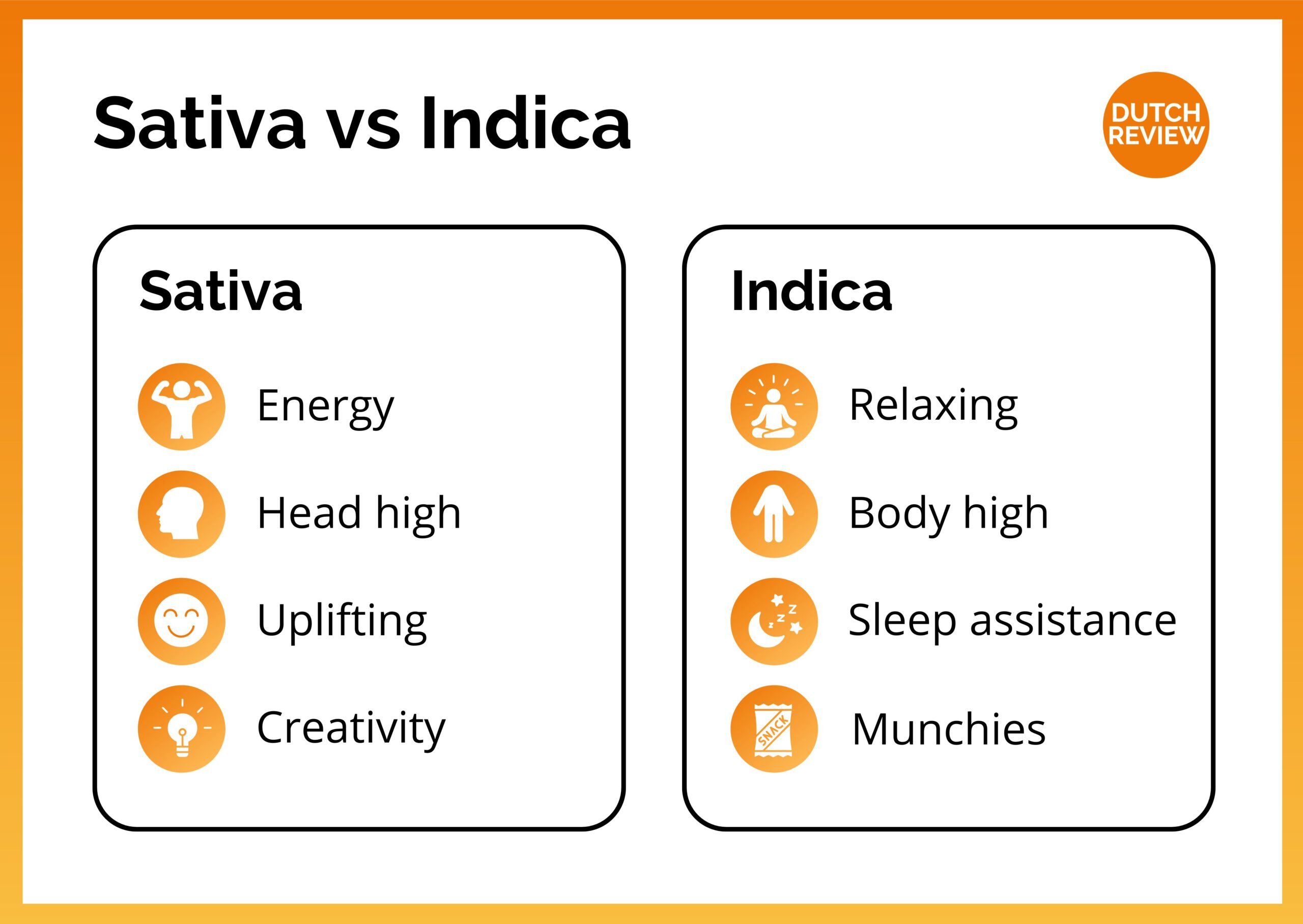
Indica strains are known to give a relaxing and physically soothing “body high.” They’re a popular choice for unwinding and alleviating discomfort.
Sativa strains, on the other hand, are usually smoked for their euphoric and energising “head highs.” They can make mundane activities more fun, and are well-suited for creative tasks or socialising.
Note the most important differences between Indica and Sativa. Image: DutchReview
If you’re seeking a blend of these effects, hybrids — which combine characteristics of both Indica and Sativa strains — could be the perfect option for your needs.
Still not exactly sure which strain is right for you? Don’t be afraid to ask a budtender; they’re there to help!
What to do after visiting some of the best coffeeshops in Amsterdam
So, you’ve explored a few of Amsterdam’s top coffeeshops — what’s next? Luckily, this city is compact, walkable, and full of things to discover once you’ve had your smoke.
A great next move is to visit one of Amsterdam’s many museums. Whether you’re into classic art, modern design, or something quirky like cat museums or microbe worlds, there’s something to match any vibe.
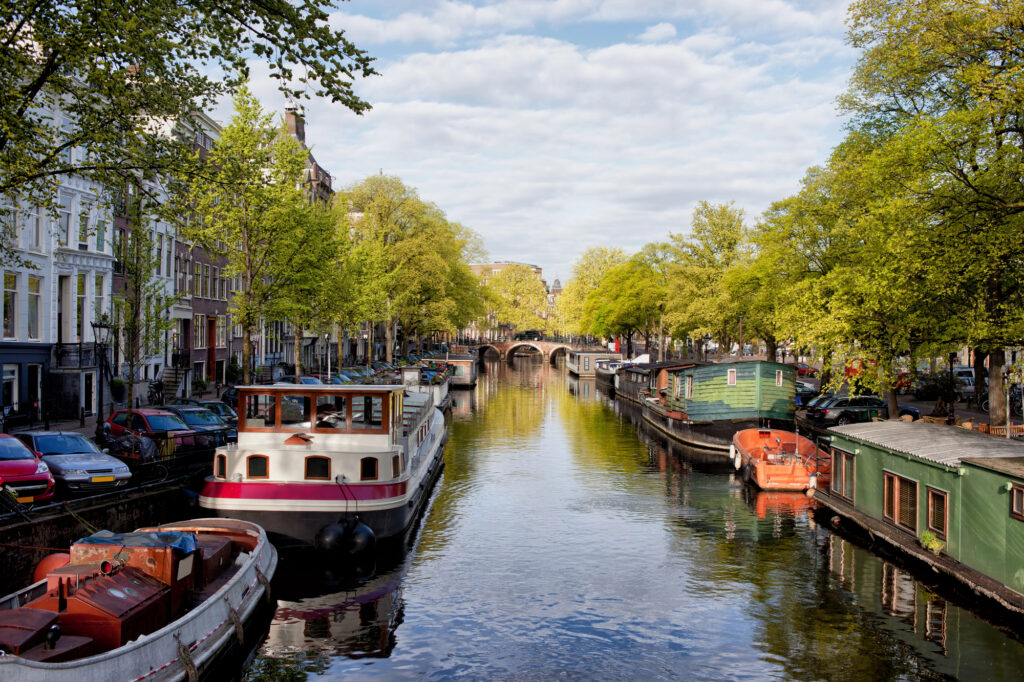
The canals of Amsterdam are all yours to explore. Image: Depositphotos
If the sun’s out, head to a park — Vondelpark, Westerpark, or Oosterpark are all perfect for lounging in the grass and people-watching. It’s a great way to relax and soak up the city’s laid-back energy.
Want to keep the social vibe going? There are still a few smoking-friendly bars in Amsterdam where you can enjoy a joint while your friends sip drinks.
The best of both worlds, really.
What are your favourite coffeeshops in Amsterdam? Tell us in the comments below!
Best coffeeshops in Amsterdam: frequently asked questions
🚬 What is the best Amsterdam coffeeshop?
If you ask me, the best Amsterdam coffeeshop is Coffeeshop Sloterdijk. This coffeeshop is bright, modern, and the “cannabis sommeliers” are on hand to help.
If you’re a tourist in Amsterdam, the Tweede Kamer is also a great choice. This coffeeshop is close to the city centre, classy, and has staff on hand that will give you all the information you need about smoking and coffeeshops in Amsterdam.
📸 Can tourists go into coffeeshops in Amsterdam?
Tourists can still go to coffeeshops in Amsterdam, order, and even smoke inside. While there have been talks to ban non-residents from Amsterdam’s coffeeshops, this hasn’t been passed into law — so tourists can still enjoy!
🧐 Why are they called coffeeshops in Amsterdam?
Amsterdam coined the term “coffeeshops” for its weed stores back in 1972, when a cafe called Mellow Yellow (and a few others) began to secretly sell hash and weed. When the city found it was difficult to stop the cafes selling it, they decided to support them instead.
Today, coffeeshops can apply for a license and must follow strict rules. Now the Netherlands’ policy of “tolerance” of cannabis products is famous worldwide, and people come from all over to visit Amsterdam’s coffeeshops.
👮♀️ What is the rule for coffeeshops in Amsterdam?
Visiting a coffeeshop in Amsterdam has simple rules:
You must be over 18 to buy weed
You can’t smoke tobacco in an indoor smoking area
You can only purchase five grams at a time
Most coffeeshops in Amsterdam sell basic drinks on-site, and others might also offer food. Only rare bars allow you to smoke and drink alcohol at the same time, and these are usually independent of the coffeeshops.
🤔 What happens in coffeeshops in Amsterdam?
Coffeeshops in Amsterdam are really chill places. Typically when you walk in, there will be a room where you can buy weed. You can ask for recommendations from the workers if you’re unsure what to buy.
Then, many coffeeshops also have a smoking room or area. Here, there might be seating, televisions, music, some drinks or food, and even board games. People sit here, roll joints, smoke, and chat.
🙋♂️ How do I order in an Amsterdam coffeeshop?
Ordering in an Amsterdam coffeeshop is pretty simple:
Show your ID at the door if asked.
Look at the menu or ask for a recommendation. Typically you can buy buds (to roll yourself), pre-rolled joints (ready to smoke) or hash.
Ask for any other items you need, like lighters, papers, or grinders.
Pay (many coffeeshops only take cash).
Enjoy! 🍀
👩⚖️ Is weed legalised in Amsterdam?
No — weed is not legal in the Netherlands, including in Amsterdam. Cannabis is gedoogd (officially tolerated), meaning possession and purchase of small amounts is decriminalised, but it isn’t fully legal.
That said, the Netherlands is actively working to change this. Since December 2023, the government has been running a controlled cannabis supply chain experiment, which expanded in April 2025 to include 80 coffeeshops across 10 cities — including Breda, Tilburg, Groningen, Maastricht, and Almere.
Amsterdam is not part of the experiment, so coffeeshops there still operate under the traditional tolerance policy — legal to buy and sell, but the supply chain behind it technically isn’t.
Edibles in Amsterdam are a rite of passage — and this guide covers everything you need to know before you take a bite: what edibles (or, space cakes) are, where to find the best ones in the city, how much they cost, and how to consume them safely without ending up on a park bench questioning your life choices.
This guide was written and regularly updated by the DutchReview editorial team, based in Amsterdam, drawing on first-hand visits to each coffeeshop featured.
But first, you might be wondering:
What is an edible?
How many edibles should you consume?
Will you get too high?
And where can you buy the best edibles in Amsterdam?
After years of exploring Amsterdam for the best weed brownies and space cakes (I’m not a fan of smoking), I can confidently say that Amsterdam offers some of the most delicious and potent edibles — you just need to know where to find them.
So, before you snack on just any weed brownie, here’s your ultimate guide to the best edibles in Amsterdam.
Quick facts: edibles in Amsterdam
Starting dose for beginners: A quarter of the recommended serving — then wait
Legal age: 18+ — no exceptions
Where to buy: Licensed coffeeshops only (not tourist souvenir shops)
Typical price: €10 for standard cannabis edibles; premium hash edibles cost more
THC content: 30–100mg for standard products; up to 330mg for premium options
Time to kick in: 30 minutes to 2 hours
How long the high lasts: 3 to 6 hours, sometimes longer
Keep in mind: Edibles might look like a sweet treat, but they’re strictly for adults aged 18 and over.
Is it legal to buy edibles in Amsterdam? Yes — cannabis edibles are legal to purchase and consume for adults aged 18 and over in licensed coffeeshops. The wietpas (weed pass), which would have restricted sales to Dutch residents only, is not currently in effect in Amsterdam.
What are edibles?
Edibles are food items infused with cannabis, designed to get you high — no smoke required.
Most are sweet treats like brownies, gummies, or classic Amsterdam space cakes, but technically, almost any dish can be turned into an edible.
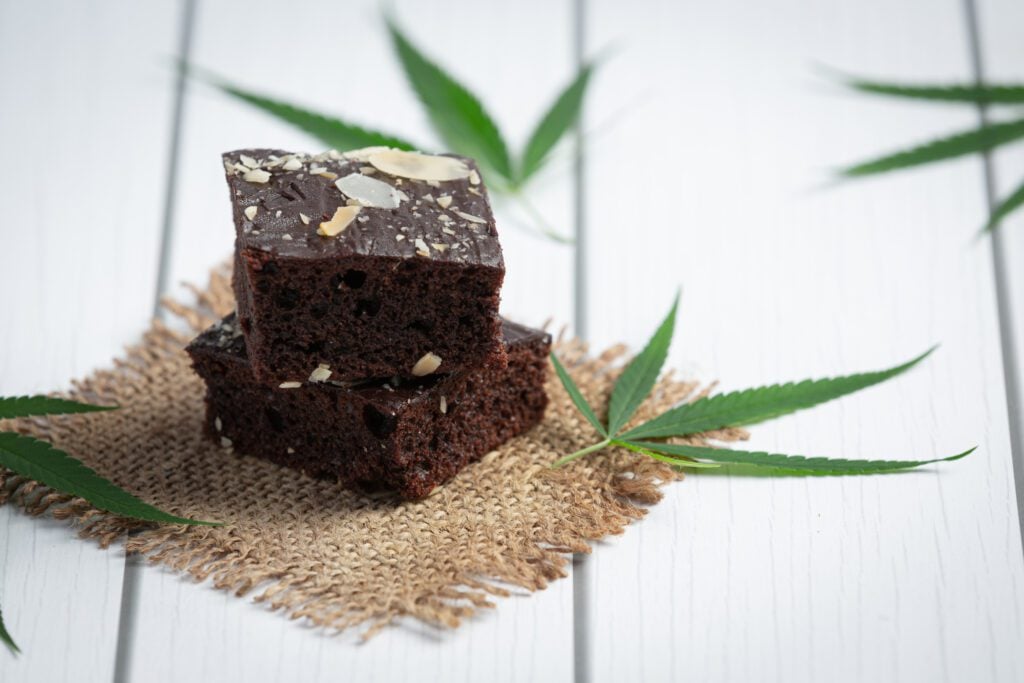
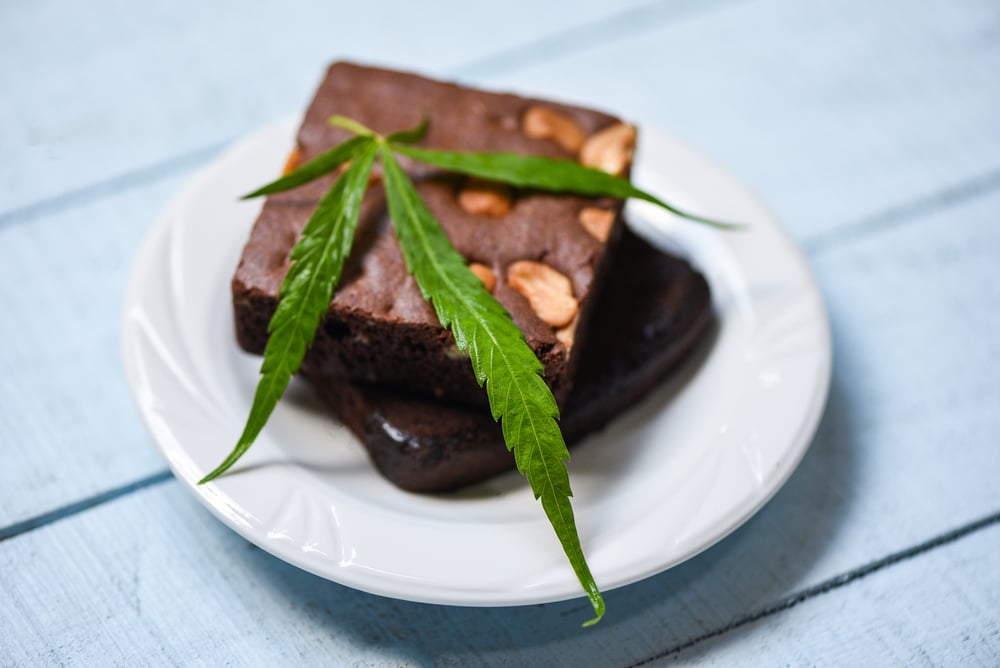
Caution: these brownies may look delicious, but don’t eat too many in one sitting. Image: Depositphotos
But wait — if cannabis is a plant, can’t you just eat it raw? Not quite. The compound that gets you high, THC (tetrahydrocannabinol), needs heat to activate.
So if you munch on a handful of raw weed, you won’t feel much — except like you’ve just eaten a very earthy, very weird salad.
Where to buy the best edibles in Amsterdam
You’ll find edibles in just about every coffeeshop in Amsterdam — but let’s be real, not all of them are worth your money (or your high). Some are dry, weak, or just plain disappointing.
That’s why I’ve rounded up my favourite places to buy edibles in Amsterdam. These spots consistently offer delicious treats that hit the sweet spot — strong, but not overwhelming.
1. Coffeeshop Sloterdijk: Home of Amsterdam’s best brownie
Feeling fancy? Then Coffeeshop Sloterdijk’s Chocolate Brownie might be just the treat for you. With 330mg of THC, this edible doesn’t just look like something from a boutique bakery — it tastes like it too.
Consider me obsessed. Image: DutchReview
It’s big, gooey, chocolatey, and downright delicious — with around 0.33 grams of cannabis per piece and made from Original Beans chocolate. And trust me: half of one is more than enough to keep you floating for hours. ☁️
Located in the Sloterdijk neighbourhood, Coffeeshop Sloterdijk is one of Amsterdam’s most acclaimed spots for premium edibles.
Not a chocolate lover? Luckily, the friendly budtenders really know their stuff and can advise you on the perfect choice of edible for your Amsterdam trip.
2. Coffeeshop Boerejongens: Red Velvet Cake that really hits
If you’re after the classic edible experience, head to one of the Boerejongens locations — especially Boerejongens Centrum, just off the Herengracht. It’s a fan favourite for good reason.
What I love about Boerejongens is the vibe: sleek, modern, and spotless, with staff who really know their stuff.
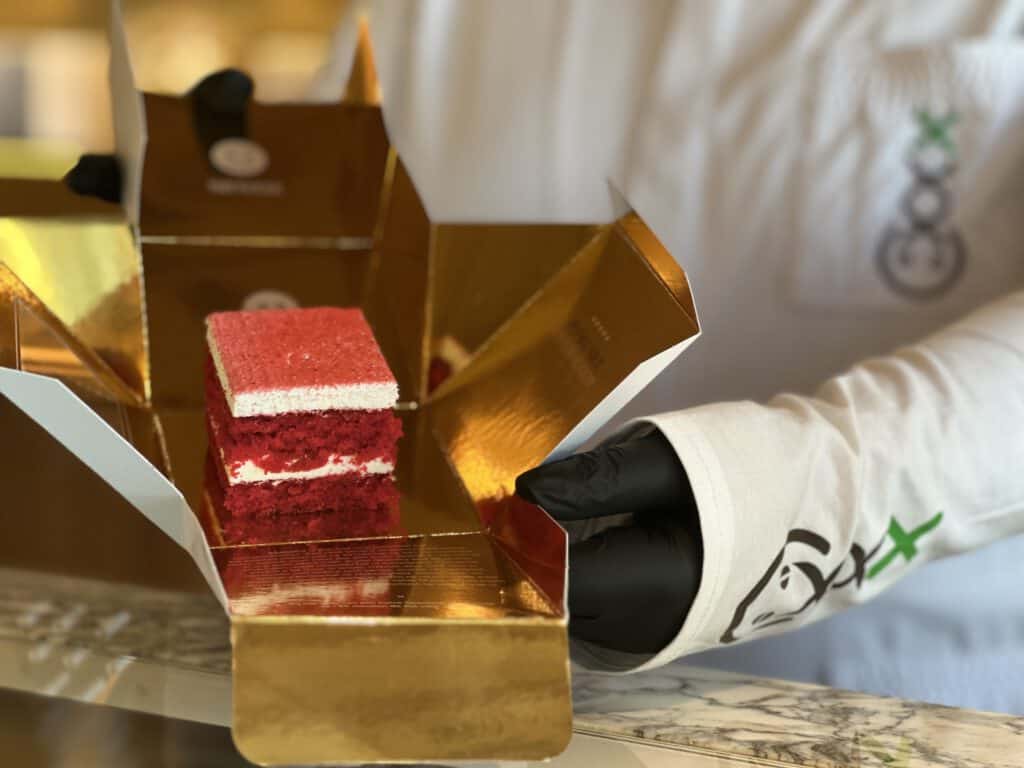
Whether you’re a wide-eyed tourist or a seasoned local, they’ll make you feel welcome. And, it’s one place that sells this incredible Red Velvet Cake “Spacetry”.
This Spacetry is a threat that makes people come back for me. Image: DutchReview
Soft, rich, and topped with a generous layer of gooey cream cheese frosting, this cake is dangerously delicious. But don’t let its sweetness fool you — the high kicks in after about an hour and delivers a strong, full-body buzz.
Boerejongens Centrum, located in Amsterdam’s Canal Ring, is a sleek, modern coffeeshop known for its spotless interior and expertly trained staff. A second location, Boerejongens West, can be found at Baarsjesweg 239.
Take it slow, savour each bite, and don’t underestimate its strength — this one’s not for beginners.
3. Coffeeshop Amsterdam: Chocolate Cake for the chocolate lovers
Locals love Coffeeshop Amsterdam for its relaxed vibe, knowledgeable staff, and consistently great products. But if you’re visiting for edibles, there’s one reason to go: the Chocolate Cake Bar.
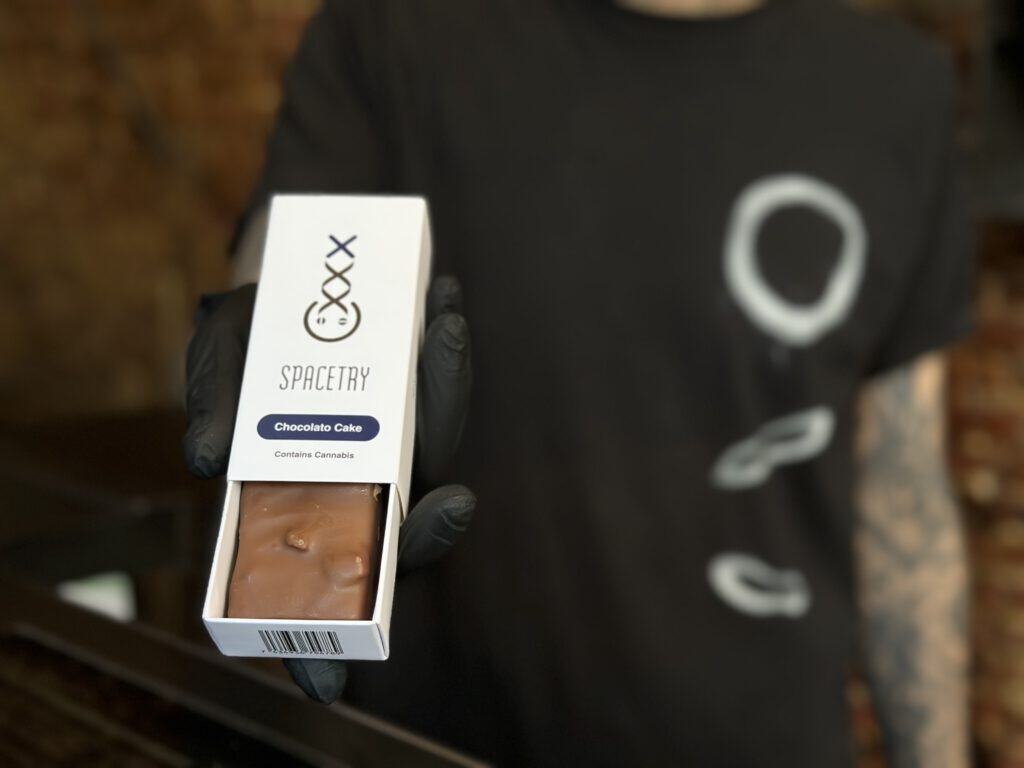
It’s a classic that will take you to the moon. Image: DutchReview
This beautifully boxed treat is made of dark chocolate, salted caramel, ganache — and yes, a healthy dose of THC. It’s rich, satisfying, and easy to underestimate, so take it slow. Half a bar is the sweet spot for most people.
Coffeeshop Amsterdam, situated at Haarlemmerstraat 44 near the Jordaan, has been a fixture in Amsterdam’s cannabis scene since 1985 — one of the first shops to weigh and package products in front of customers. No wonder their treats are so well-crafted!
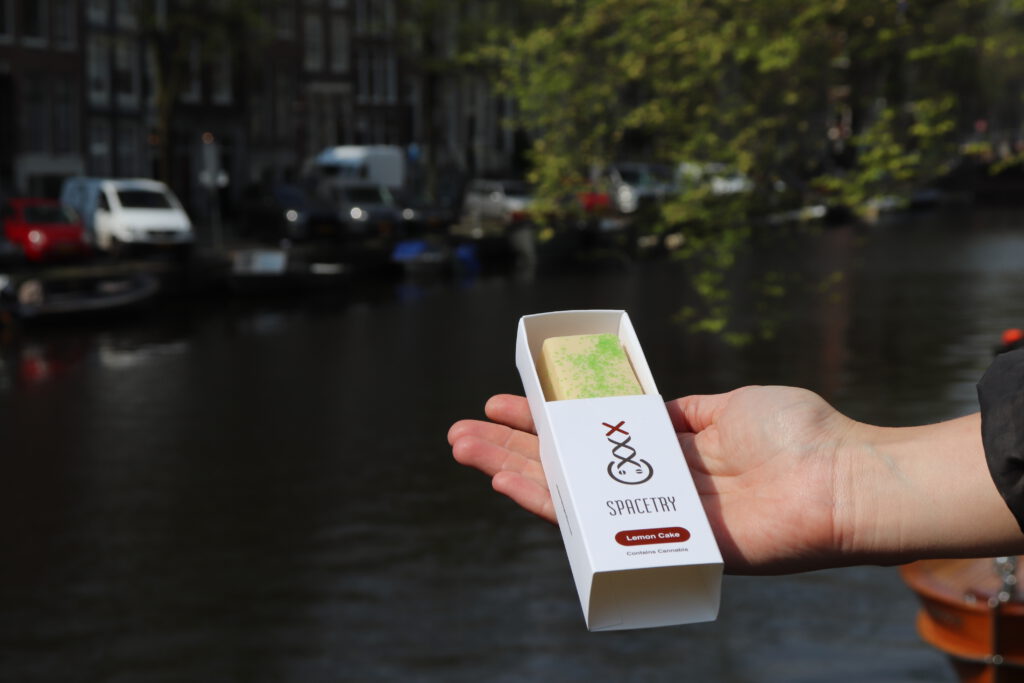
4. Coffeeshop Tweede Kamer: Lemon Cake Bar for a zesty high
Prefer something a little less rich and a little more refreshing? The Lemon Cake Bar from Coffeeshop Tweede Kamer might just hit the sweet (and sour) spot.
Coffeeshop Tweede Kamer is a well-established city-centre shop at Heisteeg 6, known for quality products and a no-fuss atmosphere.
The packaging makes it easy to bring your edible to a nearby park and enjoy it. Image: DutchReview
With its creamy texture, citrusy zing, and light crunch, their signature edible is ideal for a sunny afternoon — especially if you’re not into super-sweet treats but still want to get nicely lifted. 😉
The sleek packaging makes it easy to take on the go, so you can grab one, head to a nearby park, and let the good vibes roll.
5. Coffeeshop Noord for a nutty White Choco Cake Bar
Craving something nutty and indulgent? The White Choco Cake Bar from Coffeeshop Noord combines pistachio and white chocolate into one heavenly edible — with a potent 330mg dose of THC to match.
Coffeeshop Noord is one of my top coffeeshop picks in Amsterdam for edibles. Image: DutchReview
It’s as tasty as it sounds, but it’s not just the cake bar that makes this spot stand out.
Coffeeshop Noord is located at Ooievaarsweg 10 in Amsterdam Noord, the city’s most creative and up-and-coming neighbourhood. Definitely worth the trip across the IJ.
This place boasts a bright, modern interior that feels more like a hip café than your typical coffeeshop. Ideal for first-timers or anyone tired of the usual dark and smoky vibe.
And while you’re up there, take some time to explore Amsterdam Noord!
Like the different types of weed in Amsterdam, edibles in Amsterdam vary depending on what strain is used and, of course, on the food item that has been infused with the cannabis goodness.
What kinds of edibles can you get in Amsterdam?
In theory, anything can be turned into an edible — from gummy bears and lollipops to milkshakes and even burgers. But when it comes to legal edibles in Amsterdam coffeeshops, the selection is more limited.
That’s because Dutch law only allows edibles made from raw cannabis flower — not extracts like THC or CBD oil.
So, while gummies and infused drinks are common elsewhere, you’ll mostly find baked goods here: think Amsterdam’s finest space cakes, brownies, muffins, and other sweet treats.
They’re still delicious — and powerful enough to send you floating down a canal (figuratively, of course 😉).
Weed vs. hash-based edibles
Not all edibles are made the same. Some are infused with weed (dried cannabis flower), while others use hash — a concentrated resin extracted from the plant.
Hash typically contains more THC than regular weed, meaning it can produce a stronger, more intense high. But as always, it depends on the dose — and your own tolerance.
The cannabis used in your edible will usually fall into one of two categories:
Indica: known for producing a relaxing body high — great for winding down.
Sativa: tends to give you a more energetic, heady high — often associated with creativity and social vibes.
What do you prefer? Image: DutchReview
Not sure which one to choose? Ask the staff at the coffeeshop — they’re usually more than happy to help you find the right match for your mood.
Edibles in Amsterdam for first-timers: what to expect
Edibles hit very differently from smoking, and if you don’t know what’s coming, it can feel overwhelming. Here’s the quick, no-panic guide.
How long until you feel the effects? Anywhere from 30 minutes to 2 hours. Eat a small amount, then wait at least two hours before taking more. Many a tourist has polished off a second brownie after “feeling nothing” — only to regret it shortly after.
How long do edibles last in Amsterdam? Between 3 and 6 hours, sometimes longer with hash-based edibles. Plan your day accordingly.
Why do edibles feel stronger than smoking? Your liver converts THC into a more potent compound before it hits your bloodstream — so the high arrives slower, but lands harder and lasts much longer.
What happens if you eat too much space cake? Don’t panic — you’ll be fine. Find somewhere calm, drink water, eat a snack, and breathe slowly. Black pepper or lemon zest can help ease the effects. Sleep it off if you can; it passes.
How much should a first-timer eat? Start with a quarter of whatever the coffeeshop recommends and wait. You can always eat more, but you can’t un-eat what’s already in your system.
How much THC is in Amsterdam space cakes? It varies widely — standard space cakes typically contain around 30–100mg of THC, while premium brownies and cake bars (like those from Coffeeshop Sloterdijk or Noord) can reach up to 330mg. As a rule of thumb, anything over 100mg is strong territory, even for experienced users
Understanding edible potency and effects
Edibles in Amsterdam are a tasty way to enjoy cannabis — but before you dive in, it’s important to understand how they work. The high from edibles can feel very different from smoking, and if you’re not careful, you might end up higher than planned.
Start low, go slow
Edibles vary in potency depending on how much cannabis is used, the strain, and even your personal metabolism.
That’s why it’s best to start with a low dose — especially if you’re new to edibles or have a low tolerance. Give it time to kick in (usually 30 to 90 minutes) before deciding to take more.
Trust us on this one: we’ve learned the hard way that impatience and edibles do not mix.
What do edibles feel like?
The effects depend on the type of cannabis used (indica, sativa, or hybrid), but common sensations include:
Deep relaxation
A strong body high
Euphoria or giggles
A serious case of the munchies
Edibles also tend to last longer than smoking or vaping — sometimes up to six hours or more. Some people find the effects more intense, especially if the edible is made with hash.
Ask questions, don’t guess
Most Amsterdam coffeeshops offer classics like brownies, muffins, and space cakes — but not all are labelled with exact doses. Always ask the staff about potency, and let them know your experience level. They’re usually happy to guide you.
And yes, it’s fun — but don’t be the tourist who eats a full space cake and ends up questioning reality on a park bench. 😉
Tips for buying edibles in Amsterdam
Not all edibles in Amsterdam are created equal — and some are, quite frankly, a waste of your weed budget. Here’s how to make sure you get something tasty, safe, and actually effective:
1. Don’t fall for tourist traps
Those colourful “space cakes” in souvenir shops? Total scams.
They’re made with hemp, not THC — so they won’t get you high. Only licensed coffeeshops are legally allowed to sell cannabis-infused edibles in the Netherlands.
2. Check the label
A proper edible should include clear THC dosage info and consumption advice on the packaging. If it doesn’t? Skip it. Unregulated products might be too weak, too strong, or just wildly unpredictable.
3. Go for something that actually looks tasty
This sounds obvious, but some space cakes are dry, bland bricks masquerading as brownies. Life’s too short for bad edibles — choose one that looks and tastes delicious.
How is consuming edibles different from smoking weed?
Smoking and eating weed can produce very different highs — and it all comes down to how your body processes THC.
Smoking vs eating: a tale of two highs
When you smoke a joint, the effects hit almost instantly but tend to fade within a couple of hours.
With edibles, it’s a slow burn — you might not feel anything for 30 to 90 minutes, but once it kicks in, the high is often stronger and much longer-lasting.
Why? Because the THC in edibles has to be digested, metabolised by the liver, and then circulated through your bloodstream. It’s a different chemical pathway — and the result can feel more intense, especially for beginners.
Another perk of edibles? They’re subtle. No smoke, no smell — just an innocent-looking treat. Perfect for heading to the cinema, chilling at home, or avoiding curious neighbours who’d rather not catch a whiff of your joint.
Because let’s be honest: no one’s ever side-eyed a space cake in Amsterdam. 🍰
Nobody would ever be suspicious of innocent cookies. Image: Depositphotos
What you need to know about eating edibles in Amsterdam
So, you’re ready to try the best edibles in Amsterdam? Great — but before you bite into that brownie, here are a few essential tips to keep your trip tasty (not terrifying).
Eat slowly — and be patient
One of the most common edible mistakes? Impatience. People eat half a brownie, feel nothing after 10 minutes, and then polish off the rest… only to be launched into space an hour later.
I once saw this happen to a classmate while studying in the Netherlands. It wasn’t pretty — and the poor guy was floating for a full six hours.
That’s not to scare you off! Edibles can be amazing — but only if you start low and go slow. Eat a small amount, then wait two to four hours before even thinking about more. It’s much better to be pleasantly buzzed than overwhelmed.
Delicious, but these edibles can knock your socks off in Amsterdam. Image: Depositphotos
Know your dose
Most edibles will say how much THC they contain — usually in milligrams. A standard dose for adults is around 10mg, but if you’re new to edibles, start smaller.
If the packaging suggests eating half the cake, you might want to begin with a quarter or even less. Everyone’s tolerance is different, and trust us — this is one case where less really is more.
What to do if you get too high from edibles in Amsterdam
It happens — even to experienced stoners. If you find yourself feeling too high, anxious, or uncomfortable, don’t panic. Here’s what to do:
Breathe: deep and slow. Remind yourself: no one has ever overdosed on weed.
Hydrate: water helps. Skip the alcohol.
Snack smart: pine nuts, black pepper, or lemon zest can help ease the effects.
Distract yourself: put on a silly show, call a friend, or listen to your favourite music.
Shower or walk: a warm shower or a stroll in a calm area can ground you.
Sleep it off: the high will pass.
And always make sure your phone is charged — especially if you’re venturing out. No one wants to be high and lost in the Jordaan.
Staying safe with Amsterdam’s edibles
Edibles can be a brilliant experience — but only if you go in prepared. Here’s everything you need to know to keep your trip fun, not frightening.
1. Start low, go slow
Eat a small amount — a quarter of the recommended serving is a sensible starting point for first-timers — then wait at least two hours before taking more. Impatience is the number one reason people end up higher than they wanted to be.
2. Know what you’re eating
Check the THC content on the packaging before you dig in. Standard edibles contain 30–100mg; premium products can reach 330mg. If the packaging has no dosage information, ask the staff — or skip it entirely.
3. Don’t mix with alcohol or other substances
Combining edibles with alcohol significantly intensifies the effects and makes an overwhelming experience much more likely. Stick to water.
4. Keep them away from kids and pets
Cannabis edibles look like ordinary baked goods. Store them safely and never leave them unattended around children or animals.
5. Stay aware of your surroundings
Don’t drive, cycle, or operate machinery while under the influence. If you’re heading out, make sure your phone is charged and you know where you’re going before the high kicks in.
6. What to do if you’ve eaten too much
Don’t panic — no one has ever fatally overdosed on cannabis. Find somewhere calm, drink water, eat a light snack, and breathe slowly. Black pepper or lemon zest can help ease the effects. Put on something familiar and comforting, and sleep it off if you can. It will pass.
When consuming edibles in Amsterdam, there are a few things to do to make sure your experience is safe — and fun. Enjoying edibles in Amsterdam should be fun — not stressful.
To make sure your experience is smooth, here are our team’s top safety tips:
Ask the staff at the coffeeshop about the potency and effects — and follow their advice.
Start low and go slow. It’s always easier to take more than to deal with too much.
Know what you’re eating. Check the THC content and read any instructions before digging in.
Don’t mix edibles with alcohol, medications, or other substances — it can mess with the effects.
Keep them away from kids and pets. Those chocolate brownies are tempting for everyone.
Stay aware of your surroundings. Don’t drive or operate machinery while high.
Hydrate and snack. Drinking water and eating something light can help keep you grounded.
A little caution goes a long way — and with the right mindset, your edible adventure in Amsterdam will be both safe and unforgettable.
Want to make your own edibles? Here are the dos and don’ts
Thinking of skipping the coffeeshop and baking your own batch of edibles? Good news — it’s easier than you might think (and a lot of fun). But it’s also a bit more involved than just tossing some bud into brownie batter.
Before you get cooking, keep in mind: sativa strains usually give you an uplifting, heady high, while indica strains tend to create a heavier, body-focused effect. Choose your strain based on the vibe you’re going for.
You’ll need a proper recipe (there are tons online), but here’s a quick cheat sheet of the biggest dos and don’ts when it comes to homemade edibles:
Dos
Don’ts
Do stir thoroughly — this helps distribute the cannabis evenly throughout your dish.
Don’t use raw cannabis — it won’t get you high. THC only works once it’s been heated.
Do activate the THC — cannabis needs to be heated first (via a process called decarboxylation) to unlock its effects.
Don’t grind it too fine — you want a medium grind: not chunky, but not powdered either.
Do measure your dosage — start low: 5mg of THC per serving is a good rule of thumb.
Don’t cook at high temperatures — anything above 130°C can destroy the THC. Keep it low and slow.
Edibles are a fantastic way to dive into Amsterdam’s iconic weed culture — just start small, take it slow, and go with the flow.
Enjoy your trip to Amsterdam — and your other “trip” too! 😉
Have you eaten edibles in Amsterdam? Got a recommendation? Tell us about your experience in the comments below!
Edibles in Amsterdam: Frequently asked questions
Where is the best space cake in Amsterdam?
One of Amsterdam’s best space cakes (in my opinion) is the Red Velvet Cake from any of the Coffeeshop Boerenjongens stores. It’s an instant classic.
How long does it take to get high from edibles?
How long it’ll take for you to feel the effects of your edible can vary depending on your tolerance and experience. As a rule of thumb, the time from ingestion to feeling high can take anywhere between 30 minutes to two hours.
Why is the high more intense with edibles?
The high is more intense with edibles because the THC is absorbed through a different process.
When you smoke weed, the THC rapidly enters the bloodstream through the lungs and binds with endocannabinoid receptors. This means the weed doesn’t metabolise in the stomach.
However, when you eat cannabis, THC is broken down by saliva and absorbed intensely by the stomach, resulting in a slower onset but a longer and stronger high.
How much do edibles in Amsterdam cost?
Prices for edibles in Amsterdam typically start around €10 for cannabis edibles, with premium hash edibles going higher — sometimes significantly so depending on potency and quality. As with most things, the price for edibles generally goes up the closer you are to the tourist city centre.
Are edibles sold at coffeeshops in Amsterdam?
Yes, edibles are sold at Amsterdam coffeeshops alongside other cannabis and hash products. Make sure not to buy space cakes from tourist shops, as these only contain hemp, so they won’t get you high.
Can I make my own edibles?
You can definitely make your own edibles! Making your own edibles can be a cheaper alternative to buying them ready-made. All you need is a recipe, your ingredients, and, of course, some weed.
Donald Pols, the former director of Dutch environmental group Milieudefensie, has been dismissed from his new role as Chief Sustainability Officer at Tata Steel Netherlands, just one day after starting the job.
The steel giant announced the termination on June 2, citing information about Pols’ background that “came to light” after his appointment was finalised and had not been disclosed to the company during the recruitment process.
A past he kept hidden
The background in question is deeply troubling.
According to NRC, Pols was, at the age of 19, chairman of the Afrikaner Studente Front (ASF).
This was an extreme-right Afrikaner student movement in South Africa that actively opposed the ANC, Nelson Mandela’s anti-apartheid organisation, and fought to preserve the apartheid system.
Apartheid, meaning “separateness” in Afrikaans, a language with deep Dutch roots, was a state-enforced policy of racial segregation that brutally oppressed South Africa’s Black majority population.
The ASF attempted to prevent ANC speakers from addressing audiences at South African universities.
A report in the Chicago Tribune from April 30, 1991, described an incident at the University of Pretoria in which hundreds of far-right white students disrupted a speech by Mandela, fighting with his bodyguards and burning an ANC flag.
Pols was quoted in that report, and NRC says three witnesses identify him as the person burning the flag in video footage, though Pols himself initially recognised himself in the footage before later denying it.
Pols speaks out
In an interview with NRC, Pols acknowledged his membership in the ASF, calling it “reprehensible behaviour” and “very wrong positions.”
He described his past as a youthful mistake made during an “extremely turbulent time,” saying he was 19 and felt drawn to the movement’s sense of community and belonging.
“I am responsible,” he told NRC. “But I am in no way the person I was then.”
Tata Steel’s board was unmoved. In its official statement, the company said it “regrets that not all information which was important for making a well-considered decision regarding his appointment was provided during the discussions in the recruitment process.”
His contract was terminated with immediate effect.
An already controversial hire
Pols’ appointment at Tata Steel had been controversial from the start.
Tata Steel IJmuiden is one of the Netherlands’ most significant industrial polluters, with a long history of health complaints from residents in the surrounding IJmond region. The company is currently working through a major green steel transition plan backed by government funding.
The discovery of Pols’ far-right past was made by researcher and historian Anne-Lot Hoek while working on a book about apartheid-era South Africa and Namibia’s colonial history.
What do you make of this story? Let us know your thoughts in the comments below.
Malak Mahmoud, a pregnant woman who was filmed being thrown to the ground by a Dutch police officer, says she was “simply trying to ask the officers a question” when the incident occurred.
In a video call with Al Jazeera, Mahmoud describes being “subjected to violence and beaten by the Dutch police.”
Footage of the May 19 arrest of her husband at an asylum seekers’ centre in Zeist, which emerged online last weekend, has gone viral and continues to stir discomfort.
According to Mahmoud, the encounter began with the detention of her husband, an asylum seeker from Gaza.
She says she had “simply tried to ask them a question” about whether she could “go with her husband,” explaining to Al Jazeera that she was in the last month of her pregnancy and knew no one else in the Netherlands.
Mahmoud added that she was speaking English. The officers responded in Dutch, which she does not understand.
“In that moment, before I even had a chance to receive an answer from the police, the response I received was a hit,” Mahmoud tells Al Jazeera.
The Dutch police respond
After the video made headlines, the officer involved stated he had been unaware that Mahmoud was pregnant and would have “acted differently if this had been the case.”
The police told NOS that they had asked Mahmoud to “leave for her safety,” and that the physical response followed her refusal to comply.
Police in Zeist have opened an investigation into the incident. Mahmoud tells Al Jazeera that all she wants is for the investigation to be “fair and transparent.”
What do you make of Mahmoud’s account? Let us know in the comments.
In a major step forward, the Dutch House of Representatives has voted to allow women to pass on their last names to their children, regardless of the father’s consent.
It’s fairly old-fashioned, but Dutch fathers can currently prevent their children from having a double surname, according to NU.nl.
Even if the mother wishes to give the child a double surname, the child automatically retains the father’s surname if the father disagrees. According to the Rijksoverheid, the law requires that both parents agree to a double name; otherwise, it’s a no-go.
Parental naming rights will finally be on equal footing
Proposed by GroenLinks-PvdA and D66 MPs Songul Mutluer and Joost Sneller, the idea is to give mothers the chance to pass on their legacy, even in contentious situations.
As reported by NOS, one concern is that the current arrangement makes it possible to use the issue of the surname to pressure or exert power over the mother.
In a difficult case of divorce, domestic abuse, or conflict, a mother who wishes to add her name to the child’s is at the mercy of the father’s willingness to consent.
The new proposal would prioritise parental rights on equal footing. Rather than using the father’s name as the default, for instance, both parents’ names would be listed in alphabetical order, writes NOS.
What’s in a name?
Mutluer and Sneller argue that the current standard “does not align with contemporary views on parental equality,” reports NOS. After all, the original law was written in 1811!
As Mutluer put it, “A surname is about identity, family, and recognition.” It seems fair and logical that both parents should be allowed to pass on that element of their legacy.
With this motion approved, the government now has the momentum and urgency to change the law as soon as possible.
And it only took 200 years!
Want to make sure DutchReview pops up on your news feed more often? Just add us as a preferred news provider, and we’ll handle the rest.
If you’ve ever tried to book a cross-border train journey in Europe and ended up on three different websites, wondering who to call when you miss a connection, the EU has finally noticed.
The European Commission proposed new rules on May 13 that would allow travellers to book multi-operator rail journeys as a single ticket on one platform in one transaction.
Under this system, if you miss a connection, you’d be protected by full passenger rights for the entire trip.
What is the EU’s “one journey, one ticket” policy?
Right now, if you book a train journey from Amsterdam to Vienna via multiple operators, you’d have to purchase separate tickets across separate platforms.
The “one journey, one ticket” initiative wants to streamline that process.
According to the new policy, passengers would be able to book a journey spanning multiple rail operators in one transaction, on one platform. This would then be legally treated as a single ticket with unified passenger rights.
Ticketing platforms would also have to display all train services available in a country (including competitors’!) and let you combine them into one purchase.
What happens if you miss a connection under the new rules?
If you miss a connection on a single-ticket journey, the operator that caused the disruption is responsible for the fallout.
That means you’d be entitled to:
rerouting to your final destination at no extra cost,
assistance (such as food and accommodation) if you’re stranded overnight,
and compensation for the delay on your single ticket.
Does this mean train options will be displayed more fairly?
Good news, because platforms would be required to show results neutrally.
That means sorting by price, journey time, or departure time by default, rather than bumping their own operator’s services to the top.
Where feasible, sorting by greenhouse gas emissions would also be required, making it easier for travellers to pick the greener option.
Platforms would also be banned from breaking a combined journey into separate tickets without offering you a single-ticket alternative. Travelling from Amsterdam to Paris via Brussels? The platform would be required to give you one ticket for the full trip.
When does the EU single train ticket rule come into force?
While this may sound like a great upgrade, the policy still needs to jump through a few hoops before it can be implemented.
The proposal now enters the EU’s standard legislative procedure (negotiation between the European Parliament and the Council), which typically takes a year or more before anything becomes law.
Once adopted, rail operators would need to make tickets available at least five months ahead of a service running, provided it’s in the working timetable. This means that, as a prospective passenger, nothing will change for you until the logistics are fully ironed out.
For us in the Netherlands, though, the timing is relevant.
If these rules eventually pass, combining tickets from operators like GoVolta with NS International or European Sleeper in a single booking could get much simpler.
Have you ever lost money or a connection because your cross-border journey was split across multiple tickets? Share your experiences in the comments.
The Netherlands has over a dozen supermarket chains to choose from, with Albert Heijn and Jumbo leading the pack, and budget options like Lidl, Aldi, and Dirk not far behind.
Supermarkets in the Netherlands, much like Dutch cheese, come in many different shapes and sizes.
Finding the right one for you, whether it’s a budget, organic, or premium supermarket, can be harder than finding an NS train with no delays. Oh, and grocery delivery services? The Netherlands has plenty of choices, too.
Lo and behold, the answers you need: the ultimate guide to supermarkets in the Netherlands! 🙌
This post might have affiliate links that help us write the articles you love, at no extra cost to you. Read our statement.
What are the most common supermarkets in the Netherlands?
It goes without saying that the Netherlands has many great supermarket chains, but it can get a tad confusing differentiating all of them and finding one that suits your budget.
To help you decide, here are the most common supermarkets you’re likely to find here. 👇
Albert Heijn (commonly known as AH or Appie) is the largest and most widely available supermarket chain in the Netherlands, with over 1,000 stores nationwide. It’s the go-to for most Dutch shoppers, and you’ll almost certainly live closest to one.
However, the trade-off is price. Albert Heijn is widely considered one of the priciest supermarkets in the country, so shopping here without a strategy can add up fast.
👍 TIP: Getting an AH bonuskaart (bonus card) unlocks weekly discounts on food, household products, and more. Some deals are only available to cardholders.
💰 Affordability: €€€ 🚚 Delivery: Without a subscription, delivery costs €1.95–€7.95 per order, depending on the slot. For regular grocery orders, the Bezorgbundel starts from €9.99 per month (neighbourhood slots) or €10.99 per month (all slots), billed annually.
Jumbo is the second-largest supermarket chain in the Netherlands and is generally considered slightly more affordable than Albert Heijn, without sacrificing much on product range or quality.
What really sets Jumbo apart is its 7 Zekerheden (7 Certainties), which is a set of customer guarantees that includes things like the longest queue having no more than one person ahead of you, and products with today’s expiry date being free of charge.
💰 Affordability: €€ 🚚 Delivery: Yes, fees vary by timeslot. Jumbo’s Bezorgeloos delivery bundle removes per-order costs entirely (available in 3-, 6-, or 12-month packages). Minimum order: €50.
Aldi is a German discount supermarket chain and one of the cheapest options for grocery shopping in the Netherlands. It has a no-frills setup, with a smaller range than Albert Heijn or Jumbo, fewer branded products, and a simple layout.
That being said, what it lacks in variety it more than makes up for in price. If your main goal is keeping costs down, Aldi delivers exactly that.
Lidl is another affordable German discount chain with a strong presence across the Netherlands.
Like Aldi, it offers super-low prices, but Lidl tends to have a slightly broader range, a well-stocked fresh produce section, and the Lidl Plus app for additional discounts and digital coupons.
Plus is a Dutch cooperative supermarket chain with around 260 stores, and a great mid-range option between the budget discounters and the premium end of the market.
In addition to a solid range of products, its stores are well-organised, and its online ordering system is straightforward.
💰 Affordability: €€ 🚚 Delivery: Yes, standard delivery from €6; express same-day delivery from €8.50. Free delivery available on selected promotional products.
Dirk is a solid Dutch discount supermarket and one of the best options for budget shoppers who don’t want to compromise too much on range. It’s particularly strong on own-brand products, with the Consumentenbond reporting that it’s one of the cheapest for huismerken (own-brand products).
Dirk stores are concentrated mainly in the Randstad, so it’s most useful if you’re based in or around Amsterdam, Rotterdam, or The Hague.
SPAR is a Dutch-founded multinational chain with one of the widest footprints in the Netherlands. You’ll find Spar City stores in busy residential areas and city centres, compact Spar Express outlets at train stations, and larger neighbourhood stores dotted across the country.
Many SPAR City locations offer online ordering with same-day delivery, and free delivery on orders over €50 — handy for a quick grocery haul without even leaving the office.
What are regional, organic, and vegan supermarkets in the Netherlands?
In addition to your everyday supermarkets, the Netherlands is also home to other supermarkets, as well as speciality stores for your more niche grocery needs. 🍃
Hoogvliet: high quality and reasonable
Hoogvliet is a mid-range Dutch supermarket chain focused on fresh, quality produce at reasonable prices. It operates mainly in the central and western Netherlands (think Utrecht, South Holland, and surrounding areas), so if there’s one near you, it’s well worth a try.
However, what really makes Hoogvliet stand out is its freshness guarantee. Not happy with what you’ve bought? You can get your money back. Geweldig! 🙌
💰 Affordability: €€ 🚚 Delivery: Yes, €5.99 for orders under €70; €4.99 for orders of €70 or more. Minimum order limit of €50.
Nettorama: a regional, wallet-friendly option
Nettorama is one of the cheapest supermarket chains in the Netherlands, with consistently low prices across both branded and own-label products. If a low price is your only condition, it’s hard to beat.
Helaas, Nettorama operates mainly in the south and east of the country, so if you’re in the Randstad, you’re out of luck.
💰 Affordability: € 🚚 Delivery: none
DekaMarkt: affordable, yet regional
DekaMarkt is a budget-friendly Dutch supermarket chain operating mainly in North Holland, South Holland, Gelderland, Overijssel, and Flevoland. It’s part of the same group as Dirk (Detailresult Groep), but positions itself as the slightly more upmarket sibling, with a broader range and a strong focus on fresh produce.
As Detailresult Groep manages its own production and distribution centres, DekaMarkt can keep quality high while prices stay low.
💰 Affordability: € 🚚 Delivery: Yes, standard delivery from €3.95; reduced to €2.95 on orders of €70 or more. Minimum order limit of €35.
Looking for fresh and organic produce? These supermarkets have all that and more! Image: Depositphotos
EkoPlaza: organic and high-quality
EkoPlaza is the largest organic supermarket chain in the Netherlands, with over 140 stores nationwide. It was also the first supermarket in the world to have a “plastic-free aisle” in 2018!
Every product it stocks is certified organic, making it the best Dutch supermarket for shoppers who prioritise sustainability and natural ingredients. That being said, prices tend to be steep.
💰 Affordability: €€€ 🚚 Delivery: Yes
EkoPlaza Foodmarqt (Marqt): excellent vegan range
Despite being forced to merge with its competitor EkoPlaza, Marqt still maintains its distinct identity as a trendy supermarket catering to lovers of all things fresh and biological.
Even more impressive is its insanely wide range of vegan products, which even non-vegans are likely to be tempted by.
💰 Affordability: €€€ 🚚 Delivery: No
Amazing Oriental: authentically Asian, but pricey
Amazing Oriental is the largest Asian supermarket chain in the Netherlands, stocking a wide range of ingredients and products from across East and Southeast Asia. Whether you’re after miso, fresh tofu, imported noodles, or a specific brand of chilli sauce from home, this is your best bet.
Prices skew higher than mainstream supermarkets, but for hard-to-find ingredients, it’s often the only option.
💰 Affordability: €€€ 🚚 Delivery: No
Desperately searching for your fave brand of imported hot sauce? Head to an Asian grocery store or an independent grocer, instead of a chain! Image: Depositphotos
Independent grocers: budget-friendly alternatives to chains
Independent grocers, particularly Turkish-run groenteboeren (greengrocers) and Middle Eastern or Asian grocery stores, are often significantly cheaper than mainstream Dutch supermarket chains, especially for fresh fruit, vegetables, meat, and dairy.
In addition to this, the number of international grocery stores in the Netherlands has grown steadily in recent years, making them a great option for cutting costs and buying ingredients you won’t easily find elsewhere.
💰 Affordability: €-€€ 🚚 Delivery options: they vary per store
Delivery services in the Netherlands
For those short of time (or just wrangling a whole bunch of kids), wandering the aisles of a supermarket can be a tedious, time-consuming task.
Luckily, the Netherlands is also home to some handy delivery services for your groceries and meal kits!
Dutch grocery delivery services
In addition to supermarkets that offer delivery options, the Netherlands has many grocery delivery services.
This is a great option for working professionals or those short of time, as you can purchase your groceries online or via an app and then choose a time to have them delivered.
Straight from the supermarket to your doorstep, at the click of a button! Image: Depositphotos
Some popular grocery delivery services in the Netherlands include:
Picnic: a troupe of adorable, environmentally-friendly mini-trucks that deliver affordable groceries straight to your door
GroenteBroer: a family business that prides itself on nothing but the freshest fruits and vegetables
Meal kit delivery services in the Netherlands
Much like grocery delivery services, meal kit delivery services are taking the Netherlands by storm. Who would have guessed that Dutchies don’t like doing their own meal prep? 😉
HelloFresh: a company that delivers meal kits for all household sizes and dietary preferences
Marley Spoon: a meal delivery kit featuring Martha Stewart-approved recipes and high-quality ingredients
Flash-delivery services in the Netherlands
Desperate for your groceries and don’t want to wait a day or two for delivery? Sounds like you need to order from a flash delivery service!
As of 2026, the Netherlands has only one flash-delivery service:
Flink: a grocery service that offers a nippy delivery for supermarket prices
What to expect at a Dutch supermarket
If you’ve never been to a Dutch supermarket before, here’s a straightforward look at what to expect.
How many supermarkets are there in the Netherlands?
Internationals that are unfamiliar with Dutch supermarkets may initially be shocked at how small many of them are, compared to supermarkets abroad.
There’s a reason for this, of course, as supermarkets in the Netherlands are concentrated in much smaller areas, with most Dutchies on average just one kilometre away from at least two supermarkets — and five kilometres away from 24, according to Statistics Netherlands (CBS).
Because of this (and their small houses and fridges), it’s not uncommon for Dutch people to go to the supermarket multiple times per week instead of doing one large weekly shop.
Do supermarkets in the Netherlands pack your bags?
Unlike many other countries, cashiers in the Netherlands don’t pack customers’ groceries for them. Given how crowded Dutch supermarkets can be at peak times, stuffing your groceries into bags at record speed is a skill well worth learning!
Do I need to bring my own shopping bag to Dutch supermarkets?
Oh — and speaking of bags, it’s easiest to bring a reusable shopping bag along with you, as plastic bags at the checkout aren’t free. (Not to mention the fact that reusable bags are more environmentally-friendly! 🍃)
It looks like being green is in style! Image: Freepik
However, despite leaning into environmentalism, many Dutch supermarkets still use a lot of plastic wrap on their fresh produce. Yes, Dutch supermarkets, we are judging you. 🧑⚖️
How to save money at a Dutch supermarket
Grocery shopping in the Netherlands can occasionally be a very expensive endeavour, but here are some tips and tricks to save your precious geld (money). ✨
Use a supermarket loyalty card
Your first port of call should definitely be getting a discount card if your local supermarket has one. Some supermarkets, like Albert Heijn, only offer discounts to cardholders, so your card will help you get the most bang for your buck!
Look out for Dutch supermarket discount labels
Most Dutch supermarkets are also very generous with their discounts, so you’ll see regular kortingen (discounts) available. Some of the most common include:
2e gratis: buy one and get one free
1+1 gratis: buy one and get one free
50% korting: the product has a discount of 50%
OP = OP: the product is at a discounted price, while stocks last
Buy own-brand (huismerken) products
Another effective way of saving money at a Dutch supermarket is buying huismerken (own-brand products) instead of A-merken (products from well-known brands).
Huismerken that offer great bang for your buck include:
AH at Albert Heijn (tip: avoid AH Excellent, which is their pricier tier of products)
1 de Best at Dirk
g’woon at Superunie supermarkets (available at Hoogvliet, Coop, and Jumbo, among many others)
Even though figuring out the best supermarket for your budget and personal tastes can be a monumental task at first, the rewards to your wallet and diet can be well worth it.
What would you add to our supermarket guide? Tell us all about it in the comments below!
Supermarkets in the Netherlands: frequently asked questions
Decisions, decisions, decisions… they can get awfully confusing, so we’re here to answer any remaining questions you may have!
What time do supermarkets close in the Netherlands?
Most supermarkets in the Netherlands are open Monday to Saturday from around 7 or 8 AM until 10 PM.
On Sundays, many open later (typically from 10 AM), and some smaller or independent stores may be closed entirely. Hours vary by location, so it’s worth checking online before you go.
Do Dutch supermarkets sell alcohol?
Yes, Dutch supermarkets sell beer and wine, but not spirits, liqueurs, or other strong alcohol.
For those, you’ll need a dedicated slijterij (liquor store) like Gall & Gall, which is usually located next to or inside the supermarket. The legal minimum age for purchasing alcohol in the Netherlands is 18, and supermarkets are strict about checking ID.
Does the Netherlands have cheap groceries?
Grocery prices in the Netherlands are around the EU average, but have been rising faster than in neighbouring countries like Germany and Belgium in recent years.
Whether shopping feels expensive depends on where you’re from, but budget chains like Lidl, Aldi, and Dirk (plus own-brand products and loyalty card discounts) can significantly reduce your weekly spend.
What’s the cheapest supermarket in the Netherlands?
For everyday groceries, Lidl, Aldi, and Dirk are consistently the cheapest supermarkets widely available across the Netherlands.
Nettorama is often cited as the cheapest overall, but it’s only found in the south and east of the country. Dirk is specifically recognised as the cheapest for huismerken (own-brand products).
How can I save money on food in the Netherlands?
The most effective ways to save money on food in the Netherlands are:
getting a loyalty card (bonuskaart) at your supermarket,
buying own-brand (huismerken) products instead of branded ones,
shopping at budget chains like Lidl, Aldi, or Dirk,
Supermarkets use the app to sell “Magic Bags” of groceries that are nearing their expiry date or baked goods that are left unsold at the end of the day, usually for a third of the original price. 🥦
Switching to own-brand products alone can cut your grocery bill by up to 50%, according to the Consumentenbond.
Slaap lekker and buongiorno! The Netherlands is getting a new sleeper train to Italy, with journeys possible from as early as December 2026.
In a press release on Tuesday, Dutch-Belgian rail cooperative European Sleeper announced a new direct night connection between Breda and Milan.
From December 14, passengers will be able to visit Eindhoven and other equally glamorous destinations like Lugano in Switzerland and the famous Lake Como in Italy.
I’m in! Give me the details
With departures on Sunday, Tuesday, and Thursday evenings, it’s the perfect excuse to take a brugdag (bridge day) or two and stretch things into a gezellig long weekend in Milan.
Once you’ve had your fill of pizza, return trains are scheduled for Monday, Wednesday, and Friday.
The announcement comes after years without a direct rail link between the Netherlands and Italy.
This is part of a broader push toward European rail integration — a pledge by the European Commission in 2021 to reduce reliance on flying, reports Nu.nl.
European Sleeper already runs trains from Amsterdam to Berlin, Dresden, and Prague.
@noodlesandblisters Nightjet from Amsterdam to Zurich 🚆 Board from Amsterdam Centraal ~20:15— arrive Zurich HB ~08:20 the next day. Cost (one way): Seat from €29.90 6 person-bed couchette from €49.90 4-bed couchette from €59.90 3-bed sleeper from €89.90 2-bed sleeper from €109.90 1-bed sleeper from €159.90 Prices vary by date & availability, book early for best deals! 😌 next up: hiking Via Engiadina, a stunning long distance winter hike from Zernez to Ramosch in the Swiss Alps! #sleepertrain#nighttrain#viaengiadina#winterhike#switzerland♬ origineel geluid – noodlesandblisters
For those who can’t wait for gelato, the Brussels-Milan service launches on September 9, with fares starting from €29.99 one-way per person!
So all aboard in Breda, because nothing says la dolce vita quite like Nord-Brabant.
Are you packing your bags already? Let us know your thoughts in the comments.