Sororities and fraternities are often associated with the US, but don’t be fooled: the Dutch have them too.
It’s the whole package: the brutal hazing, the Latin jargon, and the weird rituals included. One of them is wearing a jacket that hasn’t been washed for decades. 🤦♀️ Why exactly?
As an outsider, you are most likely to notice the presence of these student unions in your favourite Dutch student city during late August and early September.
This is when the infamous ontgroening (hazing) takes place, the initiation period for new members.
See a group of girls jump into a canal during the early morning hours? Stumble into a bunch of dazed-looking eighteen-year-olds dripping in paint? Read news headlines of hospital admissions due to alcohol poisoning, pneumonia, and psychological torture?
But we were talking about wearing a gross, unwashed jacket, weren’t we? So, what’s that all about?
Why do they do it?
Not washing either yourself or your clothes seems to be a recurring theme in studentenvereeniging culture.
It’s certainly part of the hazing culture, where potential members are not allowed to wash themselves for extended periods of time — even after doing things such as jumping in the canals or sleeping on garbage.
Turns out, even after having successfully survived the hazing period, the not-washing thing seems to stick around. Members of one fraternity, for instance, are not allowed to wash their ties. Ever.
The jacket that is never being washed is specific to the rowing association Aegir, which is a sister society of Vindicat. Every new member is handed a jacket from the sportsperson who came before them.
The rule? The jacket can only be washed if the rowing team wins the Varsity: the biggest student rowing competition in the Netherlands.
The catch? Well, for one, some of the jackets have been around since the 1980s. And secondly, Aegir has won the Varsity race six times thus far. The last time? In 1982. 🤦
You can do the math yourself.
Why is it quirky?
Well, maybe quirky is a bit positive, but it’s definitely pretty weird.
Just another sort-of-extreme and kind-of-concerning item to add to the long list of reasons why it’s probably better not to join a Dutch studentenvereeniging.
Should you join in?
Don’t get us wrong, not every student society in the Netherlands is riddled with such weird traditions and rituals. Some are pretty harmless.
So, if you’re thinking about joining a Dutch fraternity or sorority, do your research and pick wisely.
What do you think of this Dutch quirk? Have you experienced it? Tell us in the comments below!
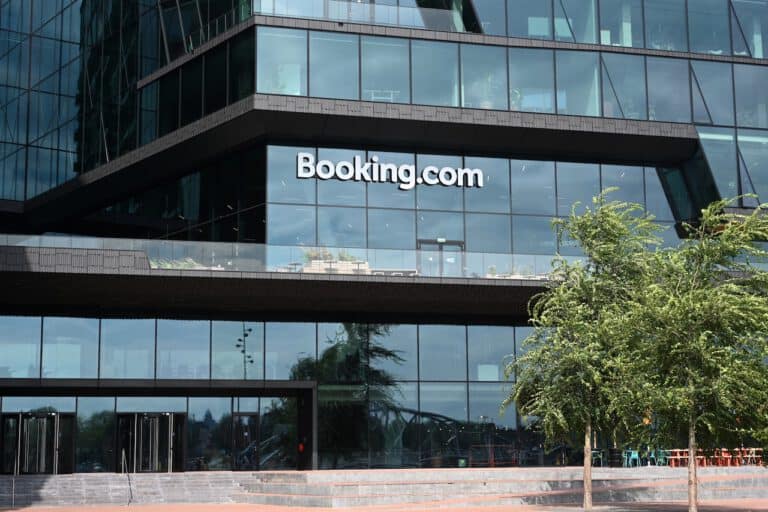
Booking.com confirmed on Sunday evening that customer bookings were accessed by a dubious third party in a data breach.
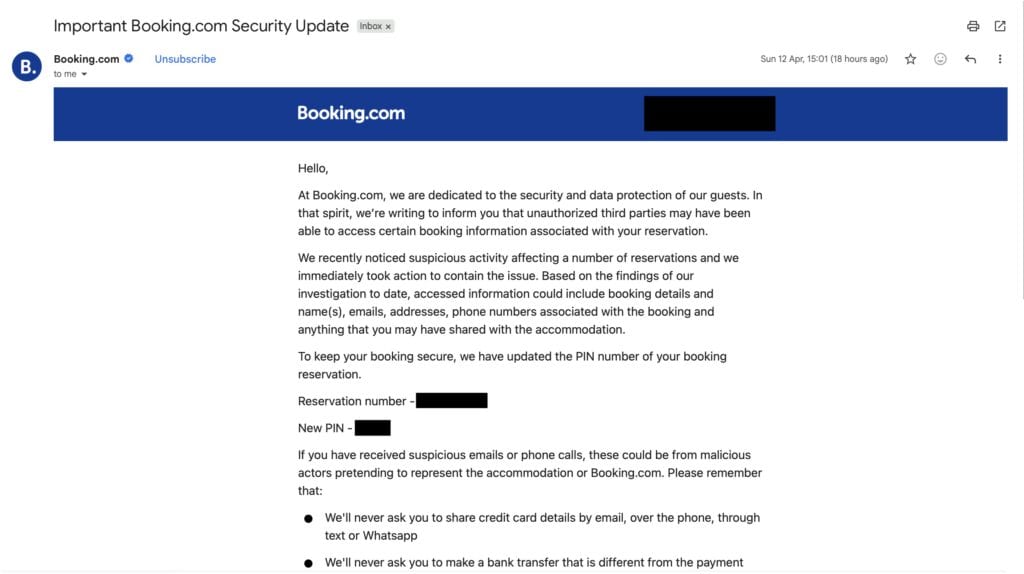
While some customers received an email about the breach, the gigantic Dutch travel agency has refused to share details.
According to NU.nl, Booking.com now says the situation is under control.
What data was exposed?
The email vaguely chronicles the data breach: “suspicious activity” from an “unauthorized third party” is “affecting a number of reservations.”
The potentially compromised data includes names, emails, physical addresses, phone numbers linked to the booking, and any other information shared with the accommodation.
Image: DutchReview
Payment details and passwords do not appear to have been mentioned as part of the breach, though Booking.com has not responded to questions from ANP on the specifics.
Not Booking.com’s first rodeo
It’s a bad time to not be transparent.
The affected users are now potential targets for phishing attempts, given that scammers can use booking details to craft convincing, personalised messages.
Moreover, this isn’t the first time that Booking.com has fallen victim to the occasional data breach.
In 2018, a phishing attempt led to the data of 4,000 customers in the UAE going into the wrong hands. Booking.com informed the Dutch Data Protection Authority almost a month too late and incurred a fine of €475,000.
Booking.com reported in 2024 that general phishing attacks on travellers had risen by 900%.
Have you ever been scammed on a travel website? Tell us in the comments.
King Willem-Alexander and Queen Máxima will spend tonight at the White House as guests of Donald Trump, with Prime Minister Rob Jetten joining for a private dinner — and more than half of the Dutch public supports the visit, despite widespread unease about the current US administration.
The overnight stay is far from routine. According to America correspondent Erik Mouthaan, White House bedrooms are normally reserved for the president’s personal friends.
The arrangement follows diplomatic convention, though: Trump stayed at Huis ten Bosch during last June’s NATO summit in The Hague, and the principle of reciprocity applies, even if, as Mouthaan put it to RTL Nieuws, “Trump only abides by rules when he wants to.”
A tense backdrop
The visit lands at a particularly fraught moment. Trump recently posted on Truth Social that NATO “was not there when we needed them” and last week made an extraordinary threat about the Strait of Hormuz that drew sharp criticism in The Hague.
Left-wing opposition parties have been vocal in their opposition to the trip. RTL’s political reporter Fons Lambie notes, however, that “a large majority of the House” supports it.
What the Dutch actually think
A survey by the RTL News Panel — conducted April 9 and 10 among more than 17,000 respondents — found that 51% of Dutch people are positive about the visit, primarily because they believe maintaining ties with Washington matters right now.
Some 38% are opposed, feeling the Trump administration doesn’t merit Dutch goodwill at this stage.
RTL opinion pollster Gijs Rademaker called it “a devilish dilemma” for many. Most Dutch people view Trump’s administration negatively, but the consensus is that cancelling the invitation would cause more damage than going.
Interestingly, Dutch support outpaces British enthusiasm for a comparable visit: around 42% of Britons back King Charles’ upcoming trip to Washington, according to a YouGov poll for The Times.
The dinner itself
The evening is billed as private, but as Mouthaan noted, Trump is the host and sets the agenda. Political topics are firmly on the table, whether the royal couple want them there or not.
A slim majority of respondents (54%) want Jetten to raise the Netherlands’ position on sensitive issues, but carefully, and not in a way that risks a public falling-out.
So too is the Pearl Harbor incident, in which Trump made a pointed remark to Japanese Prime Minister Sanae Takaichi about her country’s World War II attack on the US naval base while she sat next to him.
Rademaker summed up the Dutch public’s preferred approach: subtlety within rooms, not a standoff on camera.
For Jetten, who has only been prime minister since February, it’s an unusually fast audience with the US president.
The groundwork, at least, has been laid: his past comments about Trump being a “convicted criminal” and “misogynist” were apparently ironed out in advance with the US ambassador to the Netherlands.
Do you think the Dutch royals should keep politics out of tonight’s dinner — or is this Jetten’s moment to speak up? Let us know in the comments.
It’s an ordinary summer day; you’re driving on a highway when all of a sudden, you see a mob of Dutchies with caravans pass by. You think to yourself: where on earth are they going?
Well, that only means one thing: the Dutch’s annual plan to camp in France has officially commenced! 🏕️
What is it?
Every summer, the Dutch hit the road en masse, and make their way to the French wilderness for a cheap, stress-free, and spontaneous holiday trip in nature.
No matter where you are in France, from the mountains to the countryside, or the coast, you’ll find campsites flooded with Dutch people during the summer period. ☀️
It’s a popular pastime amongst the Dutch — in fact, this tradition has been around for decades.
From infancy to adulthood, pretty much everyone in the Netherlands has been or will go camping in France at some point in their life.
Why do they do it?
So, what is it exactly that draws them to go camping in France, in particular?
Is it the freshly-baked croissants? Perhaps.
Or what about the delectable cheese platters the French serve for dessert? Wouldn’t blame them! 😏
However, it all boils down to one main reason: it’s cheap — and lord knows that if an opportunity to go on a low-cost vacation arises, the Dutch will know all about it.
Camping in France offers Dutchies the ultimate economical trip away because they can save money on accommodation and food by staying in the wilderness and bringing all their own supplies from home.
Heading into Paris? Nee — the Dutch keep things economical by staying in the countryside! Image: Depositphotos
France is also just a short car ride away, so people won’t have to resort to expensive air travel. In just a matter of hours, they can immerse themselves in an entirely new country, language, and culture!
Not just that, but the Dutch are eager beavers when it comes to leaving behind their hometown for a beloved camping trip in France because, well, the land of baguettes just does summer better. 🤷
With the warm (and less rainy) weather, nice beaches, and pretty mountains, it’s a perfect holiday destination! And, we can also imagine that the French laid-back culture resonates deeply with the Dutch.
Why is it quirky?
It’s quirky because it’s not just one or two Dutchies that have the urge to go camping in France.
It’s EVERY Dutch person. Even in the most remote corners of France, you’ll find a friendly Nederlander lurking nearby.
And generally, with a camping trip, you only really think to bring the necessities, like clothes, flashlights, sleeping tents, etc. But the Dutch have a slightly different outlook on what they consider essential.
From 10kg of potatoes to jars of peanut butter, and packets of hagelslag, the Dutch will stuff any and everything they can into their campervans, in bulk, before embarking on their trip to France. 🚐
Should you join in?
If you’re a fan of the great outdoors and appreciate all that mother nature brings us, from alluring pine trees to stubborn ticks — you should certainly take a page from the Dutch, and go camping in France!
Just don’t forget to pack the hagelslag. 😉
What do you think of this Dutch quirk? Have you experienced it? Tell us in the comments below! 👇
If you’ve been telling yourself, “Well, at least I’m not trying to buy a house right now,” we have bad news for you: renting in the Netherlands has officially caught up with the chaos.
A new report from rental platform Pararius shows that private sector rental prices in the Netherlands are now rising faster than even house purchase prices.
Over 42% of all private rental listings now cost more than €2,000 per month, up from 36.5% just a year ago. But wait — it gets worse.
What does renting actually cost you?
If we look at the average monthly rent in the unregulated vrije sector (private rental market), it’s officially hit €1,892. That’s an increase of €389 in just two years.
For you to qualify for a rental property, landlords typically require you to earn at least three times the monthly rent.
To put that into perspective, you’ll now need to prove a gross monthly income of €5,676 — well above the Netherlands’ predicted median monthly income of €3,625.
In other words, the Dutch rental homes are technically unaffordable for the average earner.
Where are rents the highest?
To absolutely no one’s surprise, Amsterdam holds its title as the most expensive city, with new tenants paying €28.53 per square metre.
Hot on its heels are Amstelveen and Haarlem, with renters paying an average of €24.17 and €24.05 per square metre, respectively.
If you’re renting in Amsterdam, your wallet is probably weeping. Image: Freepik
However, rent is rising even faster in other cities, with Zwolle seeing a 21.1% increase in rental prices and Dordrecht experiencing an equally generous rise of 19.5%.
Things aren’t all doom and gloom, though.
Certain cities actually recorded a decline in rent per square metre, with the biggest drops in Bergen op Zoom (11.9%) and Alkmaar (7.2%).
What help is out there for struggling renters?
The people hit hardest are middle-income earners: too well-paid for sociale huur (social housing), but still falling short of what private landlords demand.
The old rent ceiling has been raised to €932.93 (or €498.20 if you’re under 21), but you may be eligible for housing allowance even if you pay a higher rent.
The Belastingdienst (Dutch Tax Administration) outlines the following conditions:
Your income must not be too high.
You must not have too much capital.
You live in an independent dwelling.
Check all three boxes? You may be able to get some assistance with that whopping €1,892 rent.
A nursing home in De Steeg, Gelderland, described as a ‘horror,’ has been shut down by the government after an investigation laid bare years of neglect and abuse.
The care home known as Derman Woonzorg came under investigation after an exposé by AD showed extreme cause for concern.
The Dutch Arbeidsinspectie (Labour Inspectorate) and the Inspectie Gezondheidszorg en Jeugd (Health and Youth Care Inspectorate) found that residents have been subjected to an array of misconduct.
The residents, many of whom have dementia, will be transferred to new facilities by the end of April.
Mouse droppings and fake nurses
When the AD team first broke the story, their descriptions shocked the public.
Kitchens full of mouse droppings and expired products, unauthorised staff giving medication, broken elevators, drunken and negligent staff: the list was endless.
One staff member told AD that residents were fed instant noodles daily.
Beds were rented out to the public to bring in extra cash. That means, residents were, at times, sharing their care-home space with homeless people.
Staff are also regularly mistreated, and the management has even been accused of sexual misconduct with female lower-level staff.
Adding insult to injury, payslips were also repeatedly delayed, and Derman still owes substantial sums to some former employees. Certain employees were also working at the care home illegally, under the guise of volunteerism.
How could this go on so long?
According to former employees, staff were told to clean up and put things in order whenever an inspection was planned.
Staff members were often in a difficult position. Like the patients, most were of Turkish descent and needed employment in the Netherlands.
AD found that management rewarded those who were ‘loyal,’ and that work contracts even included a confidentiality clause.
This likely impeded inspectors from getting access to the full picture, despite a history of reports.
What is this place?
Derman Woonzorg opened in 2020 as part of the wider Derman Zorg organisation, founded by Mustafa Demirci.
It was primarily oriented towards care for Turkish-Dutch people, as ‘culturally sensitive home-care,’ reports AD. Derman also has locations in Soest and Arnhem.
Now that the patients are leaving, the future of Rhederpark is uncertain.
Minister of Long-Term Care Mirjam Sterk called the closure “far-reaching for the residents and their loved ones,” AD reports.
The closure is certainly a step in the right direction, but for the residents who endured these conditions, it comes far too late.
Do you think the Netherlands does enough to protect vulnerable people in care? Let us know in the comments.
Paying taxes in the Netherlands as an American can be daunting: after all, you’re dealing with two governments at once.
Here’s what you should know as an American tax resident in the Netherlands.
The Dutch tax system is good at what it does. It’s organised, largely digital, and, once you get the hang of it, not as painful as you’d expect.
The problem for Americans is that you don’t just swap one tax system for another when you move (sorry, guys). You inherit both.
This guide breaks down:
what that means in practice,
where Americans tend to get tripped up, and
how to keep both the Belastingdienst (the Dutch Tax and Customs Administration) and the IRS reasonably happy.
The thing nobody warns you about: you still owe the IRS
Here’s the part that catches most Americans off guard. The US is one of only three countries in the world — alongside Eritrea and North Korea — that taxes based on citizenship rather than where you actually live.
Yup, every other country on earth lets you off the hook once you’ve moved. The US does not.
That means even after you’ve registered in Amsterdam, opened a Dutch bank account, and started paying Dutch income tax, you still have to file a US federal tax return every year. Your worldwide income is still reportable to the IRS, full stop.
Here’s where most Americans get tripped up. Image: Depositphotos
I’ll be honest — I had no idea about this before I moved. I assumed filing US taxes was something I’d leave behind with my American health insurance premiums and obscenely large portion sizes.
Here’s the good news: filing doesn’t usually mean paying. Around 62% of Americans filing from abroad owe $0 in US federal taxes after applying available credits and exclusions.
So, ultimately, it’s more of a paperwork obligation than a financial one — but it’s one you can’t ignore.
How the Dutch tax system actually works
The Netherlands organises income into three categories, called boxen (boxes). Each box has its own rules and its own tax rate. Think of it as three separate tax returns living inside one filing.
Box 1 covers income from work and homeownership. This is where most of your tax life happens. Rates are progressive:
up to €38,441 is taxed at 35.82%,
income between €38,441 and €76,817 at 37.48%,
and anything above that at 49.50%.
Yes, that top rate is significantly higher than the US federal top rate of 37%. Welcome to Europe.
Box 2 covers income from a substantial interest in a company — specifically, owning 5% or more of shares in a business. It’s taxed at:
24.5% on the first €67,804 of income,
and 31% on anything above that.
Box 3 is the tricky one. This category taxes your wealth — savings, investments, second properties — not based on what you actually earned, but on what the Dutch government assumes you earned.
There’s a tax-free threshold of €57,684 per person (€115,368 for fiscal partners), so smaller savers are mostly untouched.
The expat perks you should know about
Before you start mourning that 49.5% top rate, there are two major tools that can dramatically reduce your Dutch tax burden. Plus, one that can wipe out your US bill entirely.
Here are some reasons to be extra patriotic (and get those advantages!) Image: Dreamstime
The 30% ruling
The Dutch 30% ruling allows qualifying expats to receive 30% of their gross salary tax-free. For high earners, it’s one of the most generous expat tax benefits in Europe.
There are a few key requirements. First, you must be on a Dutch payroll. There are two ways Americans typically end up there.
If you’ve been hired by a Dutch employer from abroad, you may qualify directly.
If you’re arriving via the DAFT visa and have set up a BV (besloten vennootschap, a private limited company), you can also qualify, as employing yourself through your BV technically puts you on a Dutch payroll.
For both qualifying routes, some conditions are the same: you must have lived more than 150 kilometres from the Dutch border for at least 16 of the 24 months before starting work, and your salary must meet the minimum threshold — €46,660 per year for those aged 30 or over.
The discount is for 30% of your salary to be tax-free through 2026, dropping to 27% from 2027.
From January 1, 2025, recipients can no longer opt for partial non-resident status for Box 2 and Box 3 income, which previously allowed some foreign assets to sit outside the Dutch tax scope. If you have significant investments or shareholdings, that change matters.
The Foreign Tax Credit
For Americans, the Foreign Tax Credit (FTC) is your best friend. It lets you offset your US tax bill dollar-for-dollar with Dutch income taxes already paid.
Since Dutch rates are generally higher than US federal rates, most Americans in the Netherlands can use the FTC to reduce their US liability to zero. You claim it with Form 1116.
Don’t let tax confusion get in the way of your Dutch dreams. Image: Freepik
Alternatively, the Foreign Earned Income Exclusion (FEIE) lets you exclude up to $130,000 of foreign-earned income from your US taxable income in 2025.
The FTC tends to work better for higher earners in high-tax countries like the Netherlands, but the right choice depends on your specific situation.
The FBAR and FATCA problem
These two acronyms trip up more Americans abroad than almost anything else. They’re not income taxes: they’re reporting requirements. And failing to file them can result in alarming penalties.
FBAR (FinCEN Form 114) must be filed if your foreign bank accounts — combined — exceeded $10,000 at any point during the year. Not at the end of the year. At any point. It’s filed separately from your tax return and is due by April 15, with an automatic extension to October 15.
FATCA (Form 8938) kicks in at higher thresholds: $200,000 in foreign assets for single filers living abroad, or $400,000 for married filing jointly. This one is attached to your regular tax return.
Neither of these is particularly complicated to file. They’re just easy to forget about — especially if you’re not aware they exist. Now you are.
How to file your Dutch taxes: the basics
The Dutch tax year runs from January 1 to December 31. You file your return for the previous year, starting from March 1. Filing by April 1 guarantees a tax assessment before July 1.
The hard deadline is May 1; miss it without first requesting an extension (uitstel), and you risk a penalty from the Belastingdienst.
To file, you’ll need your DigiD (your Dutch digital identity), which you can register for at digid.nl. Americans living in the Netherlands can apply for a standard DigiD once they have their BSN (burgerservicenummer, or citizen service number).
If you haven’t sorted your BSN yet, time to get it done! After all, that’s the starting point for most of Dutch bureaucratic life.
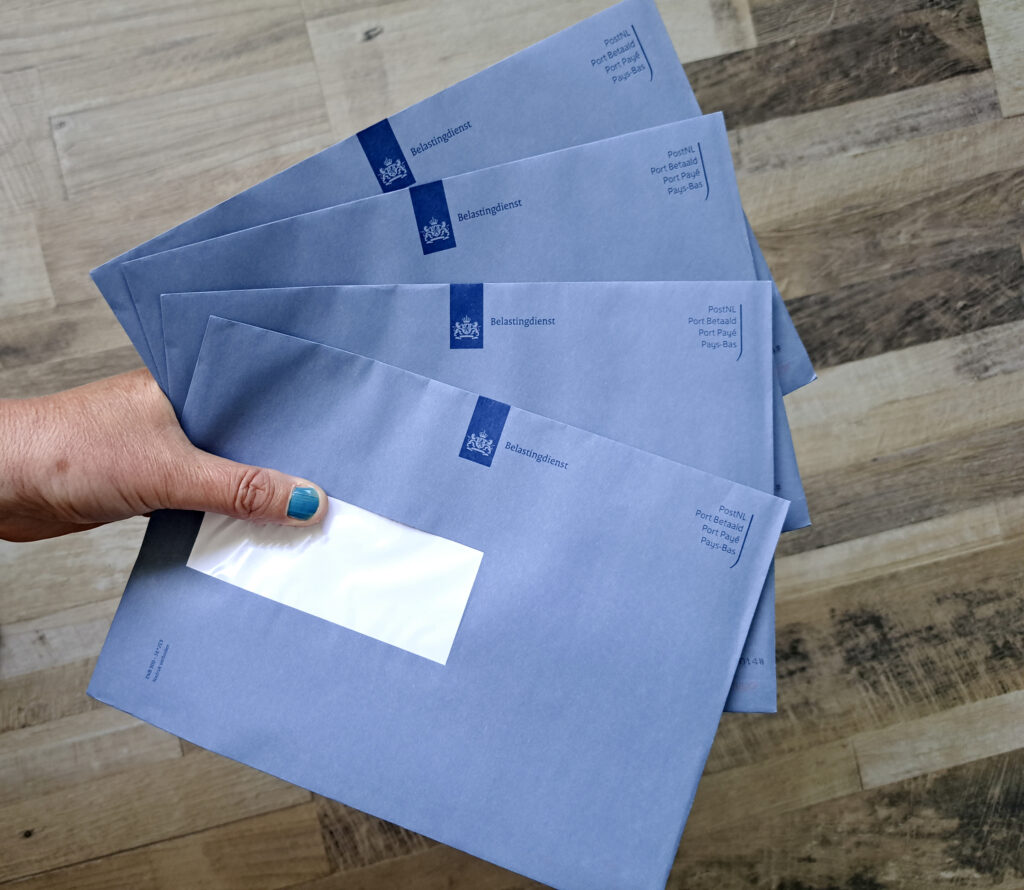
Once you’ve got that BSN, you can look forward to this ominous blue envelope. Image: Dreamstime
Once you’re logged in to Mijn Belastingdienst (the online tax portal), your return will be partially pre-filled with data the Dutch government already has from your employer, bank, and municipality.
It’s one of the nicer surprises of the Dutch system. For me, it was a stark contrast to starting from scratch every April in the US. Here, you just check the pre-filled details carefully, add anything that’s missing, sign digitally, and submit.
Keep in mind: if you moved to the Netherlands partway through a tax year, you’ll need to file an M-form (Migratieformulier) rather than a standard return. It covers the period before and after your arrival, and is primarily in Dutch.
How Social Security works for Americans in the Netherlands
One thing the US and the Netherlands have arranged is a totalization agreement that prevents Americans from paying into both countries’ social security systems simultaneously.
You’ll contribute to one or the other, not both. In practice, most Americans working in the Netherlands pay into the Dutch system.
What to watch out for
A few things that tend to catch Americans out.
Timing matters for investments. Box 3 taxes your assets as they stand on January 1 each year. If you have a large investment account, that date is the one that counts.
Dutch mutual funds can trigger US penalties. Many foreign investment vehicles are classified as PFICs (Passive Foreign Investment Companies) by the IRS and are subject to punitive tax treatment. Before investing in Dutch funds, it could be a good idea to get advice from someone who understands cross-border taxation.
State taxes don’t disappear. Some US states continue to tax former residents even after they’ve moved abroad. The five most aggressive — often called “sticky states” — are California, New York, Virginia, South Carolina, and New Mexico. Each has its own rules, but the common thread is that simply moving abroad isn’t enough to sever tax residency; you usually need to formally establish domicile elsewhere first. If you moved to the Netherlands directly from one of these states, it’s worth getting advice before assuming you’re in the clear.
Should you get a tax advisor?
For your first year, it’s not a bad idea. Filing Dutch taxes as an American involves more moving parts than either system does on its own. A specialist in US-Dutch cross-border taxation could more than pay for themselves.
After that first year, once you understand the shape of your situation, you can check in again and decide whether to handle it yourself or with help.
Already navigated Dutch taxes as an American? Share what you wish you’d known in the comments below.
Frequently asked questions about taxes in the Netherlands for Americans
Do Americans living in the Netherlands still have to file US taxes?
Yes, Americans living in the Netherlands still have to file US taxes. Unlike almost every other country in the world, the US taxes based on citizenship rather than where you live, meaning that the obligation follows you abroad. The silver lining is that tools like the Foreign Tax Credit and the Foreign Earned Income Exclusion allow most Americans abroad to end up with a $0 bill. The paperwork is the burden, not usually the payment.
What is the Dutch box system?
The Dutch box system is how the Netherlands splits income into three categories, each taxed differently. Your salary sits in Box 1, shareholdings in Box 2, and savings or investments in Box 3.
Can Americans in the Netherlands qualify for the 30% ruling?
Yes, Americans in the Netherlands can qualify for the 30% ruling, but it depends on how you’re set up. The ruling is available to anyone on a Dutch payroll, whether that’s through a Dutch employer who hired you from abroad, or through your own BV if you’ve gone the DAFT route (though ZZP sole traders do not qualify). On top of the payroll requirement, you’ll also need to meet the distance rule and the minimum salary threshold to qualify.
What are FBAR and FATCA, and do they apply to Americans in the Netherlands?
FBAR and FATCA are US government reporting requirements, and yes, they do apply to Americans in the Netherlands. FBAR covers foreign bank accounts and applies when your combined balances exceed $10,000 at any time during the year. FATCA casts a wider net, covering a broader range of foreign assets at higher thresholds. The penalties for missing either can be severe, which is why it’s worth treating them as seriously as your actual tax return.
When is the deadline for filing a Dutch tax return as an American living in the Netherlands?
The hard deadline for filing a Dutch tax return is May 1 of the year following the tax year in question. Filing by April 1, though, is actually the date that guarantees a timely assessment, which matters if you’re expecting a refund. If you need more time, you can request an extension (uitstel) before May 1. One thing Americans often don’t realise: your first year here may require a special M-form if you arrived partway through the year, which is more involved than a standard return and worth getting professional help with.
HEMA, everyone’s favourite Dutch chain, has now added something unexpected to its shelves: discounted international train tickets to Berlin, Hamburg, and Bremen.
But you’d best be quick if you fancy a ticket, because vouchers must be purchased by April 12, 2026, and redeemed by June 1, 2026.
This post might have affiliate links that help us write the articles you love, at no extra cost to you. Read our statement.
What exactly are you getting?
The basic €48 return ticket covers a day train journey there and back, plus two pieces of hand luggage — one small (30 x 20 x 15 cm) and one cabin-bag-sized (55 x 40 x 25 cm).
Tack on an extra €12.50 per journey if you’d like to choose your seat, or €29 per journey if you’d prefer to travel in GoVolta’s plush “comfort class.”
The basic package is no fluff, just a cheap international train ticket and the freedom to choose your own accommodation.
However, if you’d rather have a trip planned out for you, HEMA and GoVolta have you sorted with their package deals:
€159 for a three-day trip, including a hotel stay and daily breakfast, and
€239 for the four-day version of the same.
You do need to travel with at least two people for the package to work, so there’s your excuse to get a friend on board. 😉
Got a HEMA pas? You get an extra discount
HEMA loyalty card holders can redeem points for extra discounts: 25 points knock €5 off the return ticket, while 75 points save €20 on either package deal.
Crunching the numbers… that brings a solo return down to €43, and the three-day package to €139 per person.
Here’s some fine print before you book
If you’ve whipped out your bank card to book your summer hols, you may want to put it down and read this.
The Berlin destination switches stations mid-summer: it’s Berlin Gesundsbrunnen until June 11, 2026, then Berlin Spandau from June 14 onwards. Neither is dead in the city centre, so factor in a metro hop.
Extras like a larger suitcase (€30 return) and the aforementioned seat selection options are available — but they’ll cost you.
And if you think you might need to change your travel date after booking, that’ll set you back €50 per ticket, unless you pay €19 upfront for unlimited date changes at the time of booking.
Overall, though? For a spontaneous weekend escape to Berlin or Hamburg, HEMA and GoVolta’s collab offers you a solid option at an affordable price.
Have you travelled with GoVolta before? Let us know your experience in the comments!
The Netherlands is on the verge of becoming the first European country to approve Tesla’s self-driving technology for use on public roads.
The Full Self-Driving Supervised (FSD) technology handles navigation, steering, lane changes, and the most herculean driving act: parallel parking.
The software is already available across the US, Canada, Mexico, Australia, New Zealand, China, and South Korea.
While the Rijksdienst voor het Wegverkeer (RDW) has confirmed its final assessment is underway, Elon Musk expects an answer by April 10.
Now, Europe is watching RDW’s decision closely. A green light for these magical cars would allow Tesla to add the EU to its roster.
Yet, one question remains: In case of an accident…
Who is liable?
Despite the self-driving technology, a driver must keep her hands on the wheel at all times. At least for legal reasons, this ensures that the driver is liable.
Rembrandt Groenewegen, a traffic and personal injury lawyer, tells Een Vandaag, “Whoever is behind the wheel must intervene if anything goes wrong.”
If the driver was reckless (drunk, watching a film, texting, snapping, or reclining their seat) behind the wheel, insurers can still pursue damages. “But it was my robotic car’s fault,” will not be a suitable excuse.
However, if an accident is caused by the car’s software, things are a bit tricky. Vehicle data is often inaccessible to the owner, and extracting it from Tesla may require going to court.
Emeritus Professor of Transport Policy, Bert van Wee, is a wee bit sceptical. “In built-up areas or narrow streets, things can go wrong much more easily due to children crossing unexpectedly or a frozen bridge,” he tells EenVandaag.
🇺🇸 A @Tesla pulled off a split-second crash avoidance move that looked straight-up impossible.
It’s the kind of moment AI and robotics fans live for: proof FSD tech could actually make roads safer.
Accidents in the early stages are, in his view, inevitable, as seen in the US and China. If they happen too often, public trust could collapse even if the technology is statistically safer.
Yet, Gijs Dubbelman, researcher of ‘Mobile Perception Systems’ at Eindhoven University of Technology, says that without keeping up with technology, European carmakers risk losing ground.
Nonetheless, Dutch people, and Europeans, are weary of Tesla for completely different reasons. Primarily because its CEO has certain fascist tendencies, or perhaps because of the Grok fiasco. The time that Musk allegedly did the “Hitler salute” also comes to mind.
Would you trust a self-driving Tesla on Dutch roads? Let us know in the comments.
A Dutch man has allegedly victimised dozens of women from six countries, forcing them to perform humiliating sexual acts.
The Spijkenisse man, who went by “Turpien” on his online accounts, used the popular messaging app Snapchat to find his victims.
The police investigation, which began in 2025, discovered that the sheer volume of material on the man’s computer indicates he had many more than the confirmed 52 victims.
Some of the girls were as young as 13. Known victims span across the Netherlands, the US, Germany, Canada, Montenegro, and England.
Threats and coercion
The sextortion of these women involved coercing them to send nude or compromising images of themselves.
Threatening to forward the images to friends and family if the girls and women did not comply immediately, Turpein would then escalate his demands.
For example, he asked the girls to write messages on their bodies, such as “owned by Turpein,” reports RTL Nieuws.
Once the nude images and videos had been received, the man is suspected of having sold and circulated them through closed online groups.
He has also allegedly created and disseminated child pornography.
The case goes to court
The substantive hearing for this case begins today, April 9, more than a year after his arrest in January 2025.
A police campaign to help victims of sextortion and seek out more of Turpein’s victims has been launched. According to the police, resources are also being made available to parents.
This campaign has one central message for victims: “You are not alone.”
Do you know any additional victims, or have you been affected? Contact Het Centrum Seksueel Geweld on Whatsapp at +31614644309.