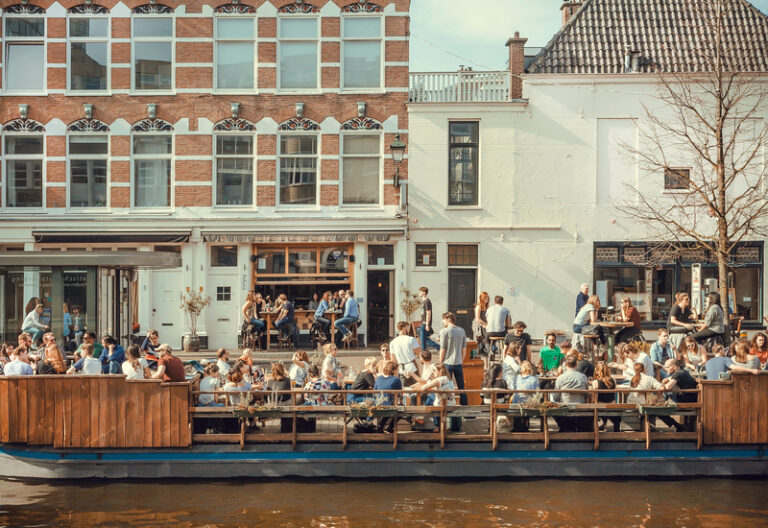
When did the NS become so enthusiastic about the Chinese New Year? Probably when it decided to exchange the attention of millions of passengers for money from the China Media Group (CMG).
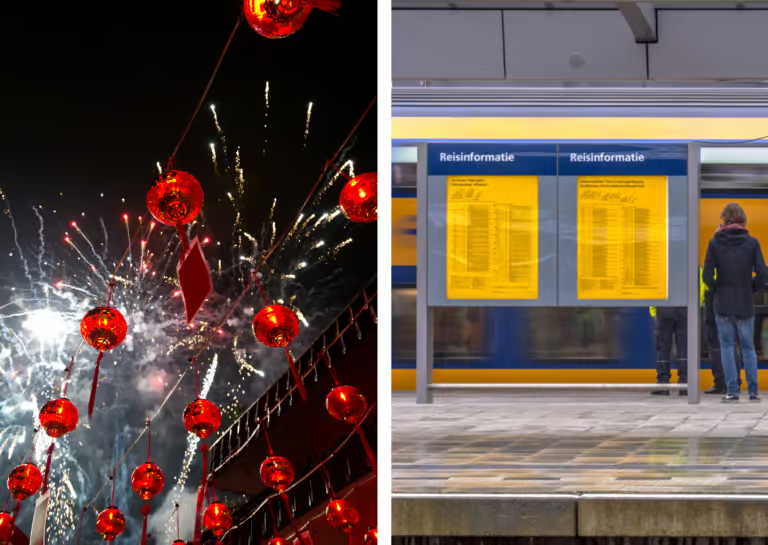
Perhaps you caught the harmless advertisement on screens inside the train compartments. It was a harmless clip of the Chinese Spring Festival, followed by the tagline “Join the celebration, share the jubilation” and the CMG logo.
Nothing to raise an eyebrow at, but RTL Z reports otherwise.
Experts on China explain that the client behind the campaign was China Global Television Network (CGTV), a subsidiary of CMG, which is a company controlled by the propaganda arm of the Communist Party.
Pretty shots or propaganda?
This is not China Media Group’s first red flag (pun intended).
The channel explicitly works under the Central Propaganda Department of the Chinese Communist Party, and has clashed before with Western regulators.
Sense Hofstede, an expert on China, tells RTL Z, “CGTN is explicitly a propaganda channel aimed at foreign countries. Almost all of their content is aimed at foreign countries, including the Netherlands.”
In 2021, the UK stripped CMG of its broadcasting license after regulators found it was not editorially independent from the Chinese Communist Party.
It was a high-profile ban that made headlines across Europe. Did the NS miss the memo?
Why did the NS agree?
NS defended its decision, saying a Dutch intermediary, DSBP Consultants, handled the purchase and that both the advertiser and the advert’s content cleared its policy requirements.
When questioned, the firm refused to take responsibility for the content, saying they acted “solely as an executive consultancy.”
Meanwhile, CGTN said the campaign was part of its international Spring Festival promotion that is meant to “promote cultural exchange” and create a festive atmosphere for the Chinese community in the Netherlands.
Hofstede isn’t convinced. “I don’t think everyone at NS realises this is a state media channel,” he tells RTL Z. “NS should have been more assertive,” he added.
The expert pointed out that this ad is like a foot in the door. “You start with an innocent video, build a relationship, and create a steady income. Later, you can see how far you can go.”
NS admits it can’t keep up
The fact remains clear: the national railway of the Netherlands accepted money from a propaganda service of the Chinese government.
Can advertising ever be free of power and politics? NS acknowledged that its advertising policy may no longer be adequate.
“Geopolitical developments move quickly,” an NS spokesperson tells RTL Z. “It’s difficult to continuously develop and maintain up-to-date policy,” they added.
Rob Jetten has already won voters’ confidence. Now comes the harder part: convincing them his cabinet’s policies won’t hurt their wallets.
The Netherlands officially gets a new government today, as Rob Jetten is sworn in as prime minister alongside his D66, VVD, and CDA cabinet at Huis ten Bosch Palacein The Hague.
While the ceremony takes place, the Netherlands Bureau for Economic Policy Analysis (CPB) has released its verdict on what the new coalition’s plans actually mean for your finances.
Without any new government measures, the spending power of the average household in the Netherlands would have grown by 0.6% during the cabinet’s term.
However, according to AD, the new plans of Jetten’s cabinet drag that figure down to just 0.2%.
Those with lower incomes will hurt the most
The impact of the new policies appears to be unevenly distributed.
The people with the least to spare are bearing the brunt. Households earning up to around €32,000 a year will see no improvement in their purchasing power whatsoever, according to the CPB.
The only stakeholders that gain anything are those at the top. The CPB finds that people earning upwards of €115,000 will see the biggest improvement in what their money can buy.
Even then, their purchasing power increase amounts to just 0.3%.
What causes this?
There are a number of reasons for this.
Firstly, the coalition plans to raise the eigen risico — the annual health insurance deductible, or the amount you pay out-of-pocket before your insurer covers the rest.
The lowest eigen risico will jump from €385 now to €460 in 2027, rising further to a whopping €520 by 2030. Earning minimum wage? You’re probably more reluctant to go check out that backache now.
The higher deductible does come with a slightly lower monthly insurance premium — but the zorgtoeslag (the healthcare allowance lower-income residents rely on to keep premiums affordable) is expected to shrink with it.
The government will also increase tax rates and introduce what it calls a “freedom contribution.”
This is an extra levy on top of regular taxes, essentially meaning households will contribute more to national security spending when they pay their income tax.
Starting in 2028, the Friedrich Naumann Foundation estimates that the security levy will get the government an extra €3.4 billion from residents and a cool €1.7 billion from businesses.
All to meet their budget for the defence sector without gathering too much national debt. Somebody has to pay for the two officers going to save Greenland, and all indications point to you.
Lots of bad news for workers
The CPB’s long-term projections get even grimmer.
Unemployment is expected to rise to over 453,000 people in the coming years, and the number of people living in poverty is set to increase during the cabinet’s term.
Those who end up on welfare will face the worst impact of all. The coalition plans to cut both the amount paid out and the duration of benefits to unemployed and disabled groups.
Meanwhile, on the pensions front, anyone with decades of working life ahead should be warned. From 2033, the government intends to accelerate the rise of the AOW (state pension) age to 70 and a half.
This means someone retiring in 2060 would need to work an extra 15 months compared to what current rules would require.
Civil servants aren’t off the hook either. The new policy plans to cut their salaries while piling on more responsibilities, which the CPB warns is a recipe for problems.
The opposition is not happy
GroenLinks-PvdA, the largest opposition party, has said it will withhold support unless the plans are substantially reworked.
'Wie Nederland vooruit wil helpen, maakt andere politieke keuzes dan dit kabinet.'
Translation: Anyone who wants to help the Netherlands move forward will make different political choices than this cabinet.
Party leader Jesse Klaver argued that ordinary households face hundreds of euros in extra costs while the country’s wealthiest residents are being asked for nothing extra.
The Christian Union, PVV, JA21, and SGP have raised objections too.
Jetten faces his first parliamentary debate next week, and it won’t be easy. With just 66 seats in a 150-seat parliament, the cabinet will have to fight tooth and nail for every single vote.
Winter, take note: spring is apparently tired of waiting. Wednesday could bring temperatures of up to 20 degrees Celsius to the Netherlands.
Warmer air is streaming in from the south and west, and by Wednesday, the Netherlands could be basking in temperatures that make us feel like it’s already spring, according to RTL Nieuws.
Before we run for the terraces
First, however, we’ll have to get through two days of only ok weather.
Today, temperatures will reach around 13 degrees in Zeeuws-Vlaanderen and 9 degrees in the northeast, with sunny spells in the north and west (not too bad).
However, the east can expect a few showers and a firm westerly to southwesterly wind will be felt throughout the day.
Tuesday starts grey and drizzly, with light rain moving northeast through the morning.
However, by the afternoon, it will dry out, and the southwest in particular should see some sunshine. Highs will sit between 10 degrees in the northeast and a balmy 14 degrees in Zeeuws-Vlaanderen (a decent warm-up act).
Wednesday is the day to pretend it’s spring
Wednesday looks set to be the highlight of the week. Plenty of sunshine and little wind will make us briefly forget the slush and snow of last week.
In Limburg, temperatures could reach 20 degrees. The rest of the country won’t be far behind, with 17 degrees expected in the centre and 15 degrees in the northeast.
Even the normally reluctant north should shake off any morning clouds fairly quickly.
Thursday and Friday stay mild, with temperatures holding between 11 and 14 degrees and a fair amount of sunshine.
A shower or two is possible on Thursday, and some light rain on Friday, but nothing dramatic. The Wadden Islands will remain noticeably cooler throughout.
Will you be making the most of the warm weather this week? Let us know in the comments!
This weekend brings milder temperatures, and by next week, forecasts predict a taste of actual spring weather in the Netherlands with inland highs of up to 18 degrees Celsius.
After weeks of wet, mushy snow and general misery, it looks like we’re finally catching a break.
But before we can start celebrating the taste of spring we’re about to receive, we’re in for a rather wet spell, warns Weeronline.
What to expect this weekend
Come Saturday, temperatures will hover around 6 degrees Celsius in the northeast and 9 degrees Celsius in Zeeland.
If you’re planning to be out and about in the morning, you may want to take a rain check, as it’ll be cloudy with frequent rain.
Things will dry up in the afternoon, but the cloud cover won’t budge. A few eastern regions may still see some drizzle, so be sure to carry an umbrella.
Afternoon highs will reach 10 or 11 degrees across most of the country, with the north staying slightly cooler at 8 or 9 degrees and the south nudging up to 12 degrees locally.
Sunday kicks temperatures up a notch, with between 9 and 13 degrees throughout the country. While it’ll stay cloudy with periods of rain, there’s a chance of brief sunshine in the northwest late in the afternoon.
Next week brings the real treat
According to Weeronline, mild conditions will continue into next week, with changeable weather on the cards. Prepare for typical Dutch weather, with rain showers one minute and dry, sunny spells the next.
However, midweek is when things get interesting. A sunny stretch could push inland temperatures up to around 15 to 18 degrees Celsius.
It’s not quite terras weather, and Dutch weather has a well-documented habit of teasing and then disappointing, but we’ll take it!
Are you excited for higher temperatures, or will you miss February’s wintery vibes? Share your thoughts in the comments below!
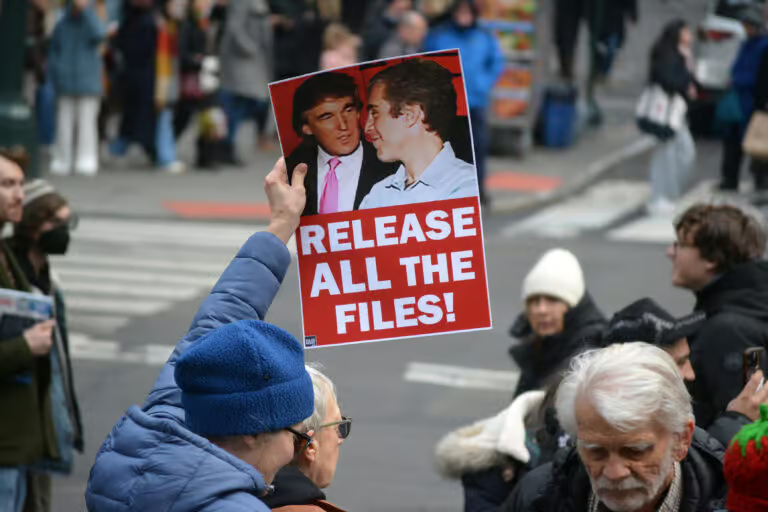
At least five Dutch models were approached by a recruiter working for Jeffrey Epstein, who then forwarded their photos to the convicted sex offender.
The scout in question is Daniel Siad, a Swedish modelling scout whose own name appears in the Epstein files over a thousand times, according to RTL Nieuws’ investigative team.
Siad would approach women on the street or at events, promising modelling work in New York or contracts with major agencies — then send their photos on to Epstein for his “approval.”
Photos were forwarded to Epstein without consent
The investigative team identified five Dutch women approached by Siad between 2009 and 2017.
In two cases, he attempted to set up a Skype call between Epstein and the Dutch models aged 19 and 20 at the time. It’s unclear if that call ever took place, as the two models declined to comment.
However, two of the other women confirmed contact with Siad to RTL Nieuws. It was only after the files were made public that they discovered Siad had forwarded their photos to Epstein.
“He [Siad] said I could work in America, and I really wanted that,” one woman tells RTL Nieuws. “Then he asked if I could send photos. He apparently forwarded them.”
A fifth woman, referred to in the files as “a cute girl from Holland”, could not be definitively identified.
Emails shine a light on the Epstein recruitment process
The released files, which detail Siad’s emails to Epstein, offer an unsettling glimpse as to how the recruitment process operated.
With various fake companies and aliases, Siad stationed himself in Paris and Geneva, luring women in with the promise of modelling work.
“Here’s a cute girl I met in Paris this week,” he wrote about one Dutch woman he encountered at the Louvre. Meanwhile, for another: “Here are pictures of a new model (…). She’s a very funny girl, I’ll send you the video I made.”
Given that millions of pages from the files remain unpublished, there’s a high likelihood that the total number of Dutch women targeted by Siad is much higher than five.
Siad now faces a rape charge
To no one’s surprise, Siad’s involvement with Epstein is just the tip of the iceberg.
The former modelling scout has recently been charged with raping a Swedish woman, while under the guise of helping her find a job in France.
“He said he found me so beautiful and could help me get a modelling career in France,” the victim tells RTL Nieuws over the phone. “He took me to Monaco, but it turned out there was no work there at all. After that, we went to a villa in Cannes, but it was closed. He then raped me in the garden house by the pool.”
After being forwarded a photograph of Siad from the released Epstein files, the victim finally recognised her alleged rapist, who’d evaded capture for 36 years.
“That was him. I felt sick the moment I saw him,” she says, then confirming that she filed a report with the French police last week.
As beloved as the Dutch are, it won’t surprise to anyone that they have a reputation for being stingy.
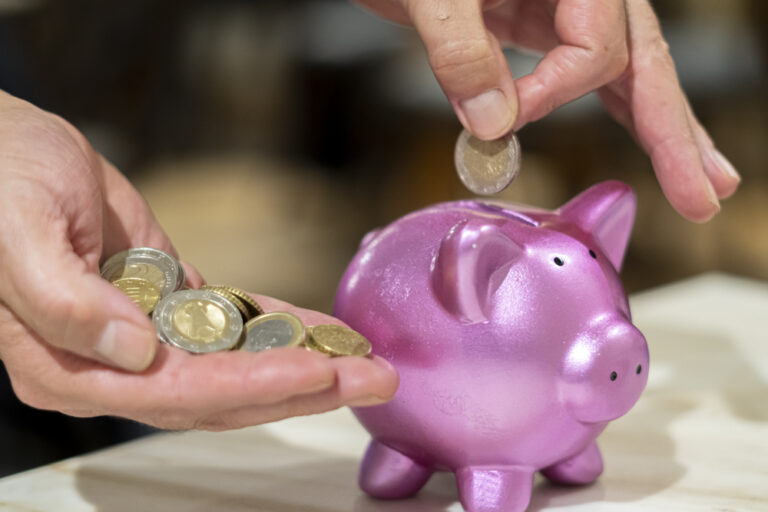
We’ve all received a Tikkie for 80 cents at some point — after all, the expression “going Dutch” had to come from somewhere.
Offering to carpool to work and then sending you a bill, not only for fuel (fair) but also asking you to chip in on yearly maintenance costs — say what!?
We know some generous Dutchies are out there, but we’re sure you know at least a few of the below types too. 😉
Here are 14 of the stingiest things that Dutch people do!
1. Send a Tikkie for minuscule amounts of money
Ever heard of a little thing called Tikkie? Of course you have, this is the Netherlands, and we’re sure you’ve received one for a tiny amount.
Ever been to someone’s house for dinner, and had them slap you with a Tikkie the next day? That’s how you know you’re in the Netherlands! Going Dutch, eh? 😉
2. Be masters of DIY
You know what they say: “Any accountant can be an electrician or a plumber!” What, you’ve never heard that before? Well, they say it in the Netherlands.
Need to lay some laminate flooring? Does your house need to be rewired? Decided you want a new bathroom? That’s a DIY job.
Evert Dutchie has these skills in their arsenal because the other option is *GASP* to pay someone qualified to do it!
This practical side of the Dutch gets them through mind-blowing home renovations on the cheap.
3. Own a flessenlikker (a what?!) and a kaasschaaf
That thing that looks a bit like a spatula, what did you say it was again?
Oh yes, that’s a flessenlicker — a uniquely Dutch tool loved by many across the lowlands, used to scrape the hell out of empty bottles and jars.
If you’re anything like us, you’ve never heard of a flessenlicker. But our extensive research found that the humble tool is a fan favourite in Dutch kitchens.
2. The "flessenlikker" or bottle scraper. This little kitchen tool helps you get every last bit of yoghurt out of the furthest corners of your tetrapak. Dutch people love "getting the dregs out of the jug". We like value for money, we do. #Top5DutchThingspic.twitter.com/keY9dqBfvU
You might wonder why Dutchies would invest time and energy in scraping an empty ketchup bottle — and you wouldn’t be alone. We’ve decided the only conclusion is that they get a thrill out of it. Scraper Olympics, anyone? 🥇
Another Dutch kitchen staple is the classical Norwegian kaasschaaf (cheese slicer).
How else would you get the thinnest, finest slices off, and save your cheese for as long as possible? Thick slices are for the wasteful!
4. Remove the lightbulbs and laminate flooring before moving houses
We can’t understand why so many Dutch people use laminate flooring when they move houses. It sounds exhausting, unnecessary, and frankly, a little rude.
Also, what are the chances of finding a new house that will exactly fit your old laminate flooring? Is that a criterion when people are house-hunting?
And don’t even get us started on lightbulbs. While Dutchies save their precious euro unscrewing each half-used lightbulb, the new residents will probably spend their first night huddled around the light of a smartphone — welcome home!
5. Plan a surprise or romantic getaway for their significant other, and expect them to pay half
Let’s just throw the social rule book out the window, why don’t we?
While the Dutch are super pragmatic, romantic getaways are much less dreamy when you know you’ll be receiving half the bill for it in a few days.
Why spend €7 on lunch for a day, when you could spend that much and have breakfast and lunch for a week? Smart with money — or downright stingy?
7. Refuse to spend money on public transport or taxis
It could be four in the morning, there could be a blizzard, they could be wearing a ball gown, or their wife could be giving birth.
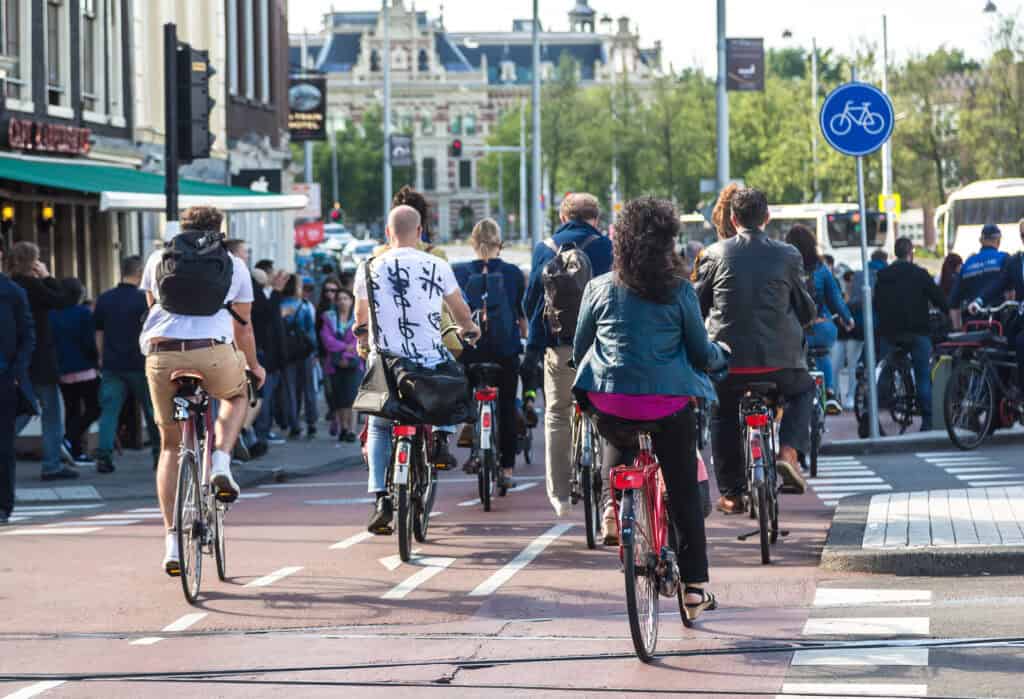
None of this matters to Dutchies, who believe their biking skills are far superior to any weather phenomenon or health event. They’re biking, or they’re not going anywhere.
We must admit, though, that biking is quite convenient! Image: Depositphotos
While we’ve gotta admire their determination, there’s no denying that it’s usually far more comfortable to spend €10 on a taxi, or even take public transport.
But the Dutch would rather cycle five kilometres through a thunderstorm in a figure-hugging floor-length dress and heels. As they say, “Je bent niet van suiker!” (“You’re not made of sugar!”).
8. Retrieve half-eaten food and bottles of wine after dinner parties
Have you ever had someone over for dinner and asked them to bring an ingredient? A cucumber, for example? It might shock you that they’ve left and taken that half-eaten cucumber with them.
Goodbye to your hopes of making tzatziki the next day.
While this would be considered blasphemy in other places, it isn’t unusual in the Netherlands. Perhaps the Dutch standard of living is so high because of all that money they’ve saved by retrieving half-eaten leftovers after dinner parties.
Act broke to stay rich, right?
9. Prepare a single piece of meat per guest
Ever been to a friend’s house for dinner but gone home feeling kinda hungry? Yeah, it’s a Dutch thing. Dutchies are notorious for cooking for the exact number of people they’re expecting, and only preparing a piece of meat each.
Even though refrigerators were invented a century ago, there’s no place for leftovers (or people with a bigger appetite) in this society, because the broodje kaas is king.
So, if you’re attending a Dutch dinner party, you might want to swing by the Albert Heijn to go on your way home.
10. Not provide food at weddings
We all know the best part of a wedding isn’t the ceremony — it’s the food. 😋
But consider yourself warned: read it carefully if you receive an invite to a Dutch wedding. Guests are often only invited to the ceremony, not the reception.
Of course, some people do go all out, but in general, the unions of Dutchies aren’t the big white wonderlands that you have in other countries.
Wednesday morning, 8 AM at the courtroom is more their style. You can’t have a fancy party that early in the morning.
So you see, there’s a method to their madness — or maybe it’s just a ruse to save some cash?
11. Take food to places that have catering
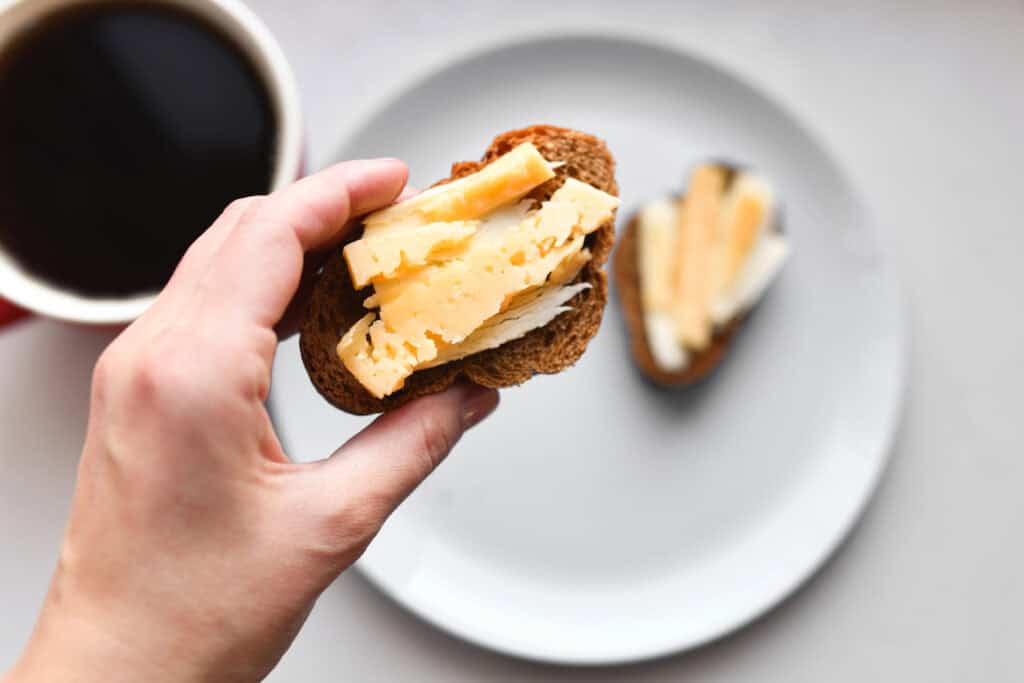
Going to the zoo can be a bit pricey, so why would you pay €5 for a snack at the on-site cafe when you could bring your own perfectly good broodje kaas (cheese sandwich) in a zip-lock bag from home?
You can never go wrong with broodje kaas, though! Image: Depositphotos
Even when they travel, they’re known to pack their own food!
Dutch people camping in France, for instance, might seem like it would be great for French restaurants.
Wrong. See, it could be, but Dutchies are notorious for bringing all their food with them from home — pindakaas, jam, and macaroni.
With all the culinary wonders France prides itself on, we must ask ourselves, “waarom?” (Why?).
12. Pick a travel destination based on a €3 price difference in the flight tickets
Athens would’ve been so nice, and you’ve always wanted to go there, but Kraków is €3 cheaper. What an obvious choice! After all, are you even Dutch if you aren’t financially prudent?
P.S. Hey Dutchies, your flight departs at 6 AM from Eindhoven — have fun leaving home at one in the morning.
13. Expect people to provide their own birthday cake
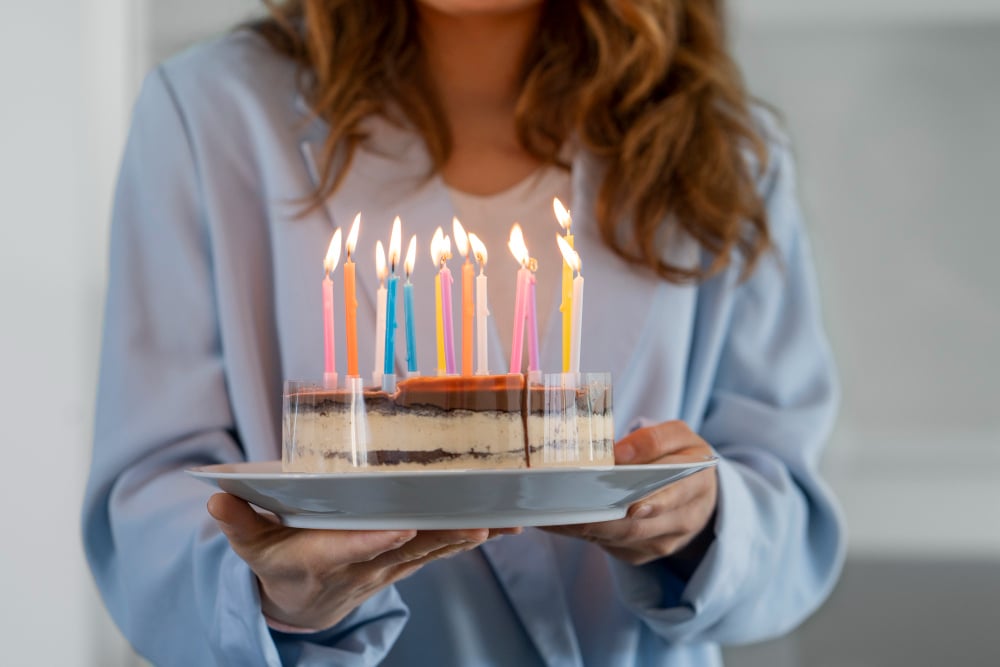
It’s your birthday, gefeliciteerd! 🎉 But we’re in the Netherlands now, so there’ll be no fanfare. Don’t forget to bring your birthday cake — yes, that’s right, it’s the only cake anyone will get.
Got the cake? Ok, now sing yourself a happy birthday — just kidding. Image: Freepik
Your friends and colleagues will be expecting it (because they’ve got your special day written down in their birthday calendar in the toilet). But remember, everyone only gets one piece each.
While we’re on the topic, you can be certain no one will buy you a convertible for your birthday, but maybe your friends will chip in and buy you something super useful, like a new pedal bin for your kitchen.
14. Buy random things (in bulk) from the supermarket, because they’re on sale
We are convinced that many Dutch pantry staples make it onto the grocery list, not because Dutchies like them, but because they’re always in the ‘bonus’ (or, in non-Dutch, on sale) at Albert Heijn.
Dutchies will stop at nothing to get a discount and maximise that saving. Even if it means changing their whole diet in the process.
While most aren’t that extreme, after hearing that their local supermarket was selling three crates of beer for €25, these Dutchies brought a tractor and loaded up on €6,000 worth of beer.
Now, do you believe us?
If, in reading this, you had a shiver-inducing flashback to a time when you encountered a stingy Dutch person, try not to take it personally. Their parents and grandparents were like that, and their kids probably will be too.
It’s just the Dutch way!
What’s the stingiest thing you’ve ever seen a Dutchie do? Tell us in the comments below!
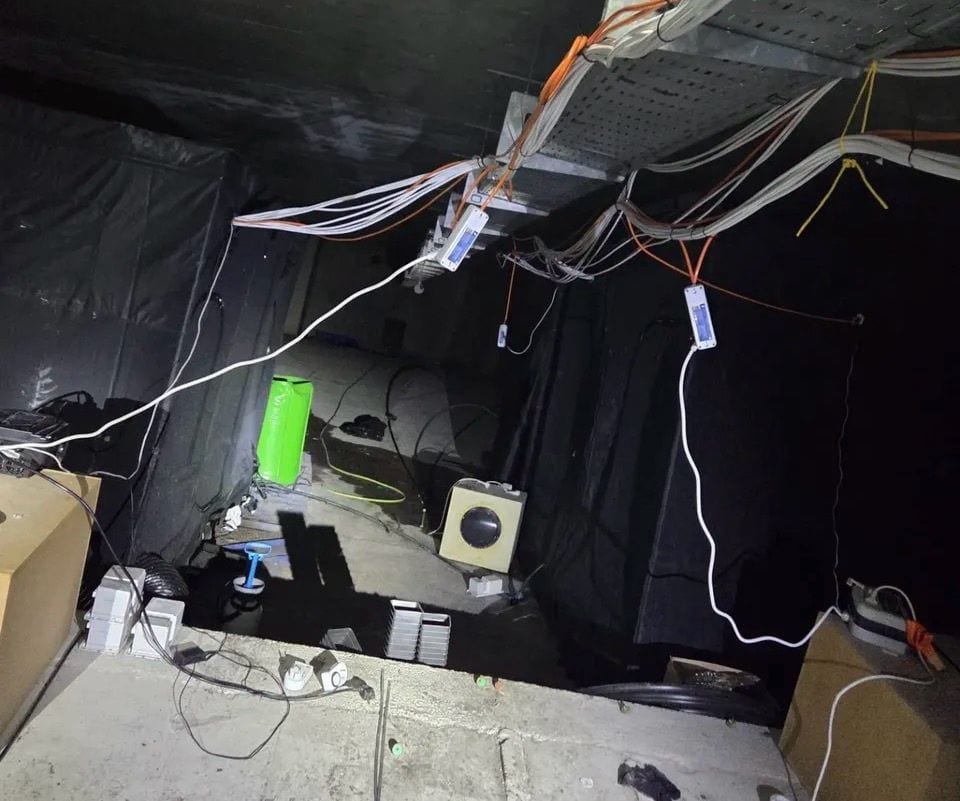
Someone thought a motorway bridge near Vianen was the perfect spot for an illegal cannabis operation. They almost got away, until an unexplained electricity bill blew their cover.
Police discovered 180 cannabis plants beneath the Jan Blanken Bridge on the A2 motorway.
They were set up in what Mayor Sjors Fröhlich of the Vijfheerenlanden municipality describes to RTL Nieuws as “some kind of technical room.”
The nursery was deserted when officers arrived.
Hiding in plain sight
The growers had forced their way in through a locked door that had been tampered with repeatedly.
“There are also a lot of young people hanging around, so it could just be some vandalism,” Fröhlich tells RTL Nieuws.
For a spot so tricky to access, an occasional broken lock didn’t warrant a closer look. Little did police know that there were growers with more ambitious plans for a nursery.
The power bill didn’t add up
The national agency responsible for roads and waterways, Rijkswaterstaat, had been struggling to account for an unusually expensive energy bill for quite some time.
A bridge pillar isn’t supposed to draw much power, explains the mayor, yet Rijkswaterstaat’s consumption figures kept climbing.
Breaking Bad, the Netherlands edition. Image: Sjors Fröhlich/LinkedIn
As it turned out, the grow lights in the nursery were running off a tapped connection — meaning the Dutch state had been unknowingly covering the electricity costs the entire time.
Not long in business
The plants appeared to be a first yield, according to Fröhlich, which suggests that the business endeavour was relatively new.
The 180 cannabis plants have since been destroyed.
No one was present at the time of the discovery, and police are now working through available leads to identify the culprits behind it.
More than half of people in the Netherlands sympathise with at least some elements of Donald Trump’s MAGA ideology, according to new research by the Clingendael Institute.
These findings come as a surprise given that the country would also have voted overwhelmingly for Kamala Harris if given the chance.
The study, reported on by RTL Nieuws, surveyed 4,297 Dutch residents weighted to be representative of the national population.
It asked participants about their support for the various strands of thought that make up the Make America Great Again (MAGA) movement in the United States.
These topics ranged from immigration scepticism and anti-institutionalism to Christian nationalism and tech libertarianism. Quite the ideological buffet!
So how MAGA is the Netherlands, exactly?
It’s important to note that no single strand of MAGA commands majority support here.
Some individual positions attract broader support, though.
A notable 46% of respondents agreed with Trump’s claim that there are “shithole countries” where people “are not capable of good governance” — a figure that raises eyebrows given how few Dutch politicians would dare touch that kind of rhetoric.
There’s also a notable gender split among younger people. Women aged 18 to 34 are significantly less receptive to MAGA ideas than any other demographic group.
Men in the same age bracket, meanwhile, show levels of sympathy in line with older generations (both male and female), making them more likely to agree with MAGA ideologies and ideas than their female counterparts.
But do they actually like Trump?
Not particularly.
Despite the ideological overlap, personal enthusiasm for the big orange man himself is a different story.
More than two-thirds of eligible Dutch voters said they would have backed Harris in the US election, compared to just 16% who would have voted for Trump.
The flu epidemic gripping the Netherlands has entered its second week, with more people turning to their huisarts (GP) for help than the week before.
And health authorities say the worst is likely still to come.
According to data from the RIVM (National Institute for Public Health and the Environment) and research institute Nivel, 68 in every 100,000 people visited their GP with flu-like symptoms last week, up from 62 the week before.
And numbers continue to climb
While this may not sound like much, GP visit numbers are a key indicator of how widely the virus is spreading.
Since only a fraction of those infected actually seek medical attention, the figures act as a barometer for the broader population.
And what’s the verdict? More and more people are coming down with the flu.
What symptoms should I look out for?
For most people, the flu means a rough few days of fever, coughing, headaches, and fatigue. It’s unpleasant, but something you can manage without a doctor’s visit.
Authorities generally advise riding it out unless symptoms worsen significantly: think recurring high fever, fainting, or difficulty breathing. Are you down bad? Rest, fluids, and paracetamol are your best tools.
Some circulating variants differ slightly from the strains this season’s vaccine was designed to target, though the RIVM says it still protects “roughly in line with other years.”
It’s a different story for vulnerable groups. The RIVM estimates around 4,700 people in the Netherlands die from flu-related complications each year, with the highest risk among people aged 60 and over, those with lung conditions, and people with diabetes.