With this morning’s tropical temperatures, you’d be forgiven for heading straight for the beach. But today, you’ll have to be quick to beat the impending storms—which have now been upgraded to CODE ORANGE.
Today’s forecast might just be the mother of all Dutch weather mood swings, as shared by RTL.
Code ORANGE crashes the party: The KNMI has issued a Code Orange for the WHOLE of the Netherlands tonight, explaining that “we will experience intense thunderstorms, large hail, and heavy gusts of wind.”
Code Orange applies first in Zeeland from 16:00, followed by all other provinces as the storm moves across the country from the southwest.
It’s going to be rough. Expect lightning strikes, heavy rain and howling winds, which Erasmus says could reach up to 100 kilometres per hour.
Wild weather whiplash
The day begins sunny and reaches a tropical 31 degrees Celsius in the southeast — the perfect summer forecast we deserve after six months of winter.
But then, around 5 PM, the ultimate weather 360° brings SERIOUSLY heavy thunderstorms, strong winds, rain and hail, with Zeeland hit first.
Hopefully, by midnight, it will be calmer as the showers make their way from Zeeland to the northeast.
And if you’re wondering how this might affect tomorrow’s semi-final viewing, don’t worry. Wednesday should be much drier and a sweet 24 degrees across the country.
Are you hoping to enjoy the sun before the storms later? Let us know in the comments below.
The Netherlands’ bid to become Euro 2024 champions continues in Dortmund on Wednesday night for a semi-final showdown with England.
Neither side made easy work of their quarter-final wins as England scraped through on penalties against Switzerland, and the Dutch came from behind to beat a spirited Turkey 2 – 1.
Now all eyes turn to Dortmund, Wednesday, 9 PM. But will this game be any better for fans’ heart rates?
The English predict an equal match
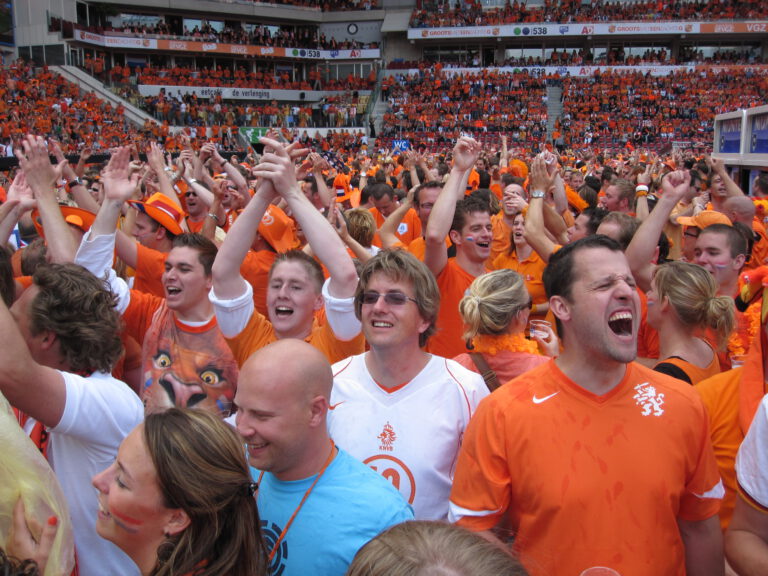
We’ll see whether the Netherlands’ dominant “Links Rechts” chanting can be out-sung by the classic croons of “it’s coming home” from English fans.
For now, the English media is already making a lot of noise with their pre-match hype.
The Daily Mail believes the Holland side is “not brilliant” and “quite an average Oranje” but recognises that “England are not great either”.
All in all, the Dutch fighting spirit is their biggest asset — closely followed by super sub Wout Weghorst, who made all the difference in Saturday’s quarter-final.
But bookies say it’s coming home
So far both England and the Netherlands have enjoyed what most people are calling the ‘kinder’ side of the tournament’s draw (other adjectives include ‘easier’ or ‘ridiculous’).
But whatever you want to call it, the Dutch side are in their first Euros semi-final for 20 years and the grand final is in sight. 🤩
After a successful connection between Brussels and Prague, the European sleeper is working on a route to Venice and the Alps.
According to Treinreizigers.nl, the new sleeper train will run from February 2025 until easter in April.
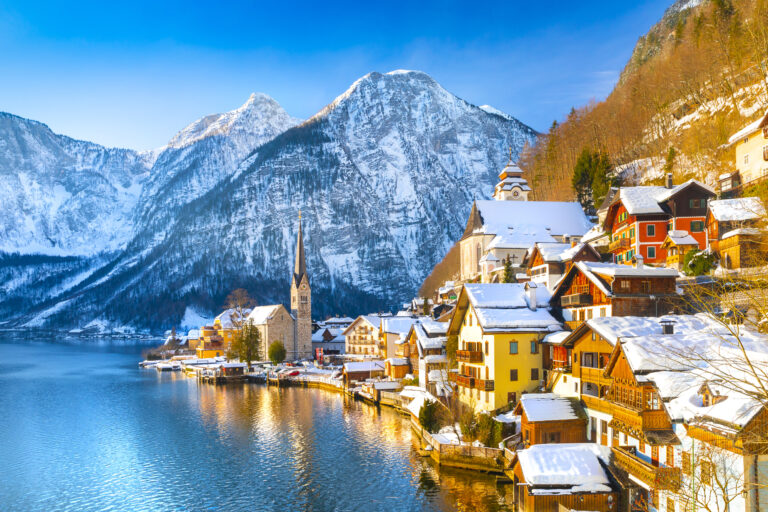
The Dutch cities of Rotterdam and Utrecht will get access to the sleeper, travelling via Belgium to the Austrian ski resorts and then to Venice as the last stop on the route.
Connecting capitals
The European Sleeper train has been running three times a week between Brussels and Berlin since May 2023.
At the beginning of 2024, the route was then extended to include Prague, Czechia and Dresden, Germany, connecting four European capital cities by night train.
Welcome aboard the inaugural European Sleeper train ES 453 Bruxelles-Midi – Praha hl.n. via Antwerpen, Amsterdam, Berlin, and Dresden! The train is 15 cars long. pic.twitter.com/XJOWwTXD5S
European Sleeper co-founder Elmer van Buuren says that the train is meant to leave Brussels on a Wednesday and return from Venice on a Sunday. “The ticket prices are also more attractive than an airplane ticket to the Alps during peak season.”
The budding train company is hoping to extend its routes to the south of France and Barcelona by 2025 or 2026.
Tickets for the current sleeper train from Brussels to Prague via Amsterdam and Berlin are currently available.
Will you be trying out this new sleeper train? Tell us in the comments below!
In the Netherlands, cash isn’t king — debit cards are. But, while cash is also widely accepted, you may be surprised when arriving in this popular country that Mastercard, Visa, and American Express are sometimes not.
So, what do the Dutch use, and why are you being left red-faced and unable to pay at the local supermarket?
As someone who has also endured this embarrassing moment, let me tell you why.
So, why don’t your bank cards work in the Netherlands? Well, the majority of the Dutch use Maestro (a payment platform owned by Mastercard) or regular debit cards.
Maestro is a debit card system that is similar to Visa or Mastercard, which most comparable countries use.
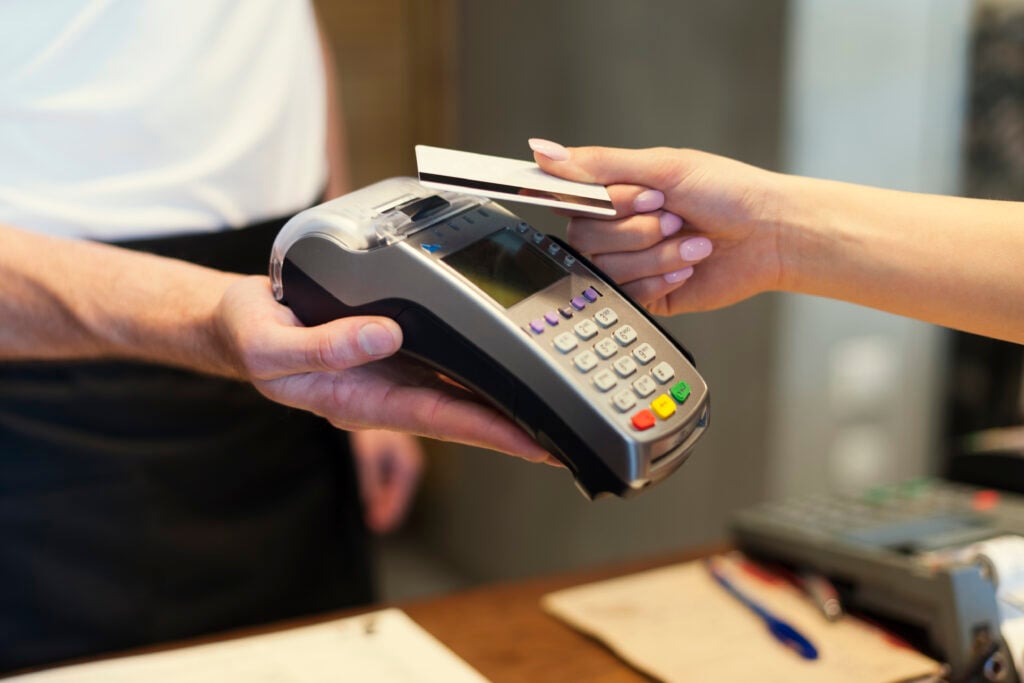
Don’t have a debit card? Note that it is most likely needed in the Netherlands! Image: Freepik
Whether a shop will accept or decline your foreign card is completely up to the owner.
Credit card transactions cost the owner a lot more than debit card sales, and the Dutch love to save money.
Good to know: With Maestro currently in the process of being phased out, this may not be an issue for much longer!
Communication breakdown
The way different cards talk to credit card machines and the corresponding banks is also a point of trouble.
Maestro cards work on a single-message debit system, where when you swipe your card, the money moves from your bank account to the merchant.
However, most other payment platforms now rely on dual-message debit and credit cards, where when you swipe your card, your bank makes a “promise” to the merchant that the money will be there.
A few days later, the merchant will present these “promises” to the bank and collect their dues.
This is why credit transactions typically show as “pending” and offer an “available” and “current” balance.
Dutch people typically don’t like credit cards in general because the Dutch are very debt-adverse people.
In fact, in Dutch, the word for debt — schuld — also has another meaning: guilt.
As a rule of thumb, if the store services a large portion of international customers (for example, at tourist locations or similar), they will accept Visa, Mastercard, and sometimes American Express.
A lot of payments won’t work without a Maestro in shops, restaurants, or grocery stores! Image: Freepik
Maestro is no longer the favourite in 2024
Don’t ditch that Visa Debit card just yet though, as it’s slowly but surely becoming more fashionable in the Netherlands.
Since July 1 2023, Maestro-branded debit cards are no longer available, reports Betaalvereniging Nederland (the Dutch payments association).
Maestro cardholders are often left high and dry when attempting to pay for things abroad — such as when trying to book flights, in my experience — as their cards don’t allow them to pay in regular shops or webshops based outside of Europe.
As a result, newer Visa Debit and Debit Mastercards are being rolled out to fix these issues. (Better late than never, I guess! 🙌)
When exactly you’ll receive your new Visa Debit card or Debit Mastercard depends on when your specific bank decides to roll them out — but if it hasn’t already, the change is coming!
Okay, so what’s the deal with iDEAL and Tikkie, then?
You’re online, creeping around and doing a bit of splurge shopping.
Stoked with your purchases, you click on the magical checkout button to send the items fluttering to your door. Suddenly, “huh? iDEAL only?”
With online shopping basically made for credit cards, and the Dutch not liking credit cards, these totteringly tall people needed to find an alternate solution that would still let them fulfil their online shopping desires.
iDeal utilises online banking to make a direct transfer to internet vendors via a Dutch bank account.
Sound eerily familiar? Well, it certainly shares similarities with Maestro’s immediate transfer from one bank account to the other.
However, some websites only accept iDEAL, which means you need to have an online bank account, which means — you need a Dutch bank account. Yeesh!
Be aware! A lot of online shopping apps or websites won’t let you pay without iDEAL! Image: Pexels
But hang on. What if you want to use your Dutch Maestro card to do some online shopping on a foreign website?
Well, it looks like that Maestro card isn’t accepted! You kept your old Visa Debit card, right?
This increasingly frustrating dilemma is another reason why the Dutch chose to roll out debit cards in 2023.
So how can I spend all my hard-earned euros?
Thanks to the gradual rollout of more Visa Debit cards and Debit Mastercards it is now easier to get by in the Netherlands without a Maestro card or iDEAL.
However, I still find myself needing my Maestro card in order to pay for certain things. So I would still recommend trying to get one if you plan on staying here long-term.
If you can’t get a Maestro-only card from your home bank, then you’re left trying to get a Maestro card in the Netherlands. The easiest solution, then, is to open a Dutch bank account.
Finally, if you can go without online shopping at some retailers, you may just find that cash is still king.
But, if you’re averse to paying stodgy ATM fees and against carrying large amounts of cash, this probably isn’t for you.
What’s your experience with banking cards in the Netherlands? Tell us in the comments below!
Why don’t my bank cards work in the Netherlands? Frequently Asked Questions
Why isn’t my Visa Debit card recognised as a debit card in the Netherlands?
In the Netherlands, Visa Debit cards are recognised as being credit cards, and many Dutch stores do not accept credit cards. This is because Visa Debit cards work on a dual-message debit system, which is the same system used for credit cards.
What is iDeal?
iDEAL is an online payment system that circumvents the need for the Dutch to have credit cards.
Instead of filling out your card information when paying for something online, iDEAL takes you directly to your personal online banking website, where you transfer the money directly to the business owner.
How do I replace my Maestro card with a Visa Debit or Debit Mastercard?
Once your bank makes the switch, you will automatically receive a new Visa Debit or Debit Mastercard in the post. There is no need to apply for one.
Dutch beach volleyball pro, Steven Van de Velde, is currently facing the heat as prior convictions for sex with a minor resurface following his qualification for the Paris Olympics.
For those who’ve missed media coverage of the issue, here’s the lowdown. 👇
What’s the backstory on Steven Van de Velde?
According to the BBC, Van de Velde met his victim — a 12-year-old British girl — on Facebook.
In August 2014, despite the child revealing her age during their online conversations, he flew from Amsterdam to Milton Keynes in the UK to meet her.
As reported by the Milton Keynes Citizen, Van de Velde proceeded to give his victim alcohol and request oral sex, before taking her virginity in her sister’s bedroom.
Owing to Van de Velde’s lack of condom use, he advised the 12-year-old to get the morning-after pill once the ordeal was over.
Thankfully for the victim, it was this visit to a family planning clinic that alerted the authorities to the crime.
Van de Velde was sentenced to four years in prison in the UK before being extradited to the Netherlands one year into his sentence.
His sentence was then adjusted to Dutch standards, NU.nl reports, and Van de Velde was released.
Van de Velde’s big return has garnered mixed reactions
Despite widespread criticism, the Dutch Volleyball Association (Nevobo) released a statement voicing its unwavering support for Van de Velde.
In the words of Nevobo general director, Michel Everaert: “We have been in constant contact with Steven, who has now been fully reintegrated into the Dutch volleyball community.”
“He is proving to be an exemplary professional and human being and there has been no reason to doubt him since his return.”
“We fully support him and his participation in Paris, which he and Matthew have earned.”
(Warning ⚠️: Distressing themes) Thousands are signing a petition calling on the International Olympic Committee to disqualify Steven van de Velde, a Dutch volleyball player who in 2014 was convicted of r*ping a 12-year-old girl.
Yet, as Trouw reports, this decision “will inhibit progress on safety and create mistrust among athletes towards the systems put in place to protect them”.
In a joint statement to the International Olympic Committee, the Sport & Rights Alliance (a coalition of nine human rights organisations), Kyniska Advocacy (a British organisation for protecting women in sport), and The Army of Survivors (an organisation aimed at ending sexual assault against young athletes) have called to ban van de Velde from the games.
A Change.org petition has also been created to disqualify Van de Velde from the upcoming Olympic games.
What do you think of Steven Van de Velde — a sex offender — representing the Netherlands at the Paris Olympics? Tell us your thoughts in the comments below!
Many things were expected at Taylor Swift’s concert in Johan Cruijff Arena last night: think sparkling outfits, cowboy boots, and friendship bracelets.
One thing that was not expected, however, was Swift suddenly speaking the queen’s Dutch.
As the musical icon welcomed the crowd at her first of three shows in Amsterdam, she tried out some Nederlands — and people were surprised:
Swift used a classic phrase out of the Dutch 101 handbook: “Leuk jullie allemaal te zien.” And if you ask us, her accent is quite impressive for someone fresh off the plane.
In fact, some Dutchies are saying she sounds like Queen Máxima herself, writing:
“Zo klinkt ze een beetje als Máxima haha! Ach ja; allebei queens dus it makes sense.”
Translation: She sounds a bit like Máxima! But yeah, they’re both queens, so it makes sense.
And “Ze klonk als Máxima 😭”. Translation: “She sounded so like Maxima.”
While Dutch is also the queen’s second language, it’s safe to say that she has certainly worked hard on her accent, so we’ll call this a win for Swift.
Maybe it’s on your to-do list, or you’ve been putting it off, but you might be asking yourself whether it’s actually worth your time and money to learn Dutch.
We all know at least one person who didn’t intend to stay in the Netherlands for long but still find themselves not speaking a word of Dutch even after 10 years.
Here are a few things to ask yourself if you’re considering taking a Dutch language course.
If your answer to any of the below questions is yes, then perhaps it’s time for you to learn some Nederlands.
1. How long do you plan on staying in the Netherlands?
First and foremost, it’s important to consider if you wantto stay in the Netherlands and how long you intend to live here.
If the plan was to get your university degree in the Netherlands and head back to your home country, it’s completely fair if you don’t want to spend too much time or money on learning Dutch.
Not everyone plans to stay in the Netherlands — but sometimes we stay longer than planned. Image: Depositphotos
However, if you envision yourself staying here long-term, then that’s all the more reason to take Dutch courses and learn the language.
Take it from a seasoned expat, if you plan on building a life in the Netherlands, then you need to be able to have full access to all that life here has to offer — and you can’t do that if you’re restricted by a language barrier.
Good to know: Depending on your nationality, some people who want to stay in the Netherlands long term will have to complete Dutch integration exams (also known as inburgeren in Dutch) — and this includes meeting a Dutch language requirement!
2. Do you want to build a career in the Netherlands?
While it’s really handy that the Netherlands already offers a lot of jobs entirely in English, some careers have better prospects if you speak Dutch, and this is something you need to consider if you want to build a career in the Netherlands.
For example, if you work in communications, administration, human resources, politics, or law, to name a few, proficiency in Dutch will definitely give you an edge in the job market.
Learning Dutch will give you all kinds of opportunities within your career. Image: Depositphotos
Even if your role doesn’t technically require you to speak Dutch, by speaking the same language as many of your colleagues, you open yourself up to friendships, networking, and, perhaps, an even better job in the future!
Learning Dutch will open many more doors for you while living in the Netherlands — plus, having an extra language under your belt could never hurt while you’re looking for work in Europe.
3. Do you want to have more Dutch people in your life?
It’s easy to stay in an international bubble when you live in the Netherlands, especially if you’re surrounded by only international students from your university or your entire work friend group are expats.
Making friends with the locals is a great way to get to know the Netherlands better (and practice your Dutch!). Image: Freepik
If you want to make friends with more locals or already have Dutch friends you want to connect with better, learning Dutch is a great way to expand your social circle and skills.
There are plenty of sports clubs, music clubs, and more where you can meet more Dutchies and learn to socialise in Dutch.
4. Is your partner Dutch?
This is an important one: if your partner is Dutch, learning the language can be especially helpful in building a stronger long-term relationship with them.
And it definitely doesn’t hurt your chances of impressing your partner’s Dutch parents and extended family!
Knowing the Dutch language will bring you closer to your partner and their family. Image: Freepik
After all, who doesn’t want to show off their skills at perfectly ordering food or have a friendly discussion about the proper way to eat tompouce?
On the other hand, if you’re single or don’t have a Dutch partner, we can see why learning Dutch might not be a top priority for you.
5. Will your kids grow up in the Netherlands?
Speaking of family, if you’ve moved to the Netherlands with your children or plan to have and raise children here, there’s a good chance they will learn to speak Dutch as well — and you’ll want to be able to communicate with them!
Even if your partner isn’t Dutch, it’s still a great idea to learn the language if you plan to raise your kids together in the Netherlands. Image: Freepik
Being able to speak Dutch will be especially handy if you’re sending your child(ren) to a Dutch school. It’ll be easier for you as a parent to communicate with your kid’s teachers and other parents.
If you answered “yes” to at least one of the above questions, then I strongly recommend taking a Dutch course.
There are plenty of advantages to learning Dutch, from improving your job prospects to opening up your social life. And if you plan to stay in the Netherlands, knowing the language will help you integrate comfortably.
So, what were your answers? Is it time to learn Dutch? Geen stress (no stress), you’ve got this. 🇳🇱
Have you taken a Dutch course before? Tell us about it in the comments below!
OK, we said 50/50, and technically, that’s what you’re getting — because you can’t have the sun without a little rain (you should know that, we’re in the Netherlands).
The weather forecast for the coming days is truly a mixed bag: from a bright, sunny start today to a cool and drizzly first weekend of January — sorry, July.
But there will be MUCH better days ahead, weeronline.nl reports.
Today’s sunny start gets blown away
After a few early showers, this morning is looking crisp and bright with the sun shining across the Netherlands.
The temperatures remain mild at 18 to 20 degrees because the westerly wind is… just plain stubborn.
The breeze persists throughout the day, getting gustier later on into a cool night with lows of 11 degrees.
Wet and windy weekend
One word for the next few days would be “changeable”. My wardrobe would agree.
Once again, we will enjoy a bright start to Friday until the clouds appear, and the chance of rain only increases as the day goes on.
By the evening, the rain will be falling like it does best in the Netherlands, and we’ll wake up to more clouds by morning.
Anyone who has lived in the Netherlands has heard of the kapsalon. It’s not just the Dutch word for “hairdresser”, it’s also a delicious (often drunken) feast. Now, a new, tragic chapter to this delicacy’s lore has just unfolded.
We’ve all been there, you’re standing around with some friends, a warm tin container in your hands, about to lift a cheesy fry to your mouth when a Dutchie interjects —
“You know why they call it a kapsalon?”
The origin of the kapsalon
You listen to the story for the 15th time, watching your beloved Dutchie’s animated expression as they tell a tale as old as time.
It all started in 2003 with a Rotterdam hairdresser who loved his local shwarma shop, El Aviva. The hairdresser was a regular who asked for all his favourite foods to be combined into one dish.
Eventually, El Aviva and the hairdresser started calling the weird medley of chips, shwarma, melted cheese and salad the “kapsalon” — and thus, a beloved Dutch delicacy was born.
A birthplace, up in flames
This morning, an era has come to an end, with Nu.nl reporting that El Aviva was burnt to the ground on Wednesday night.
We’re not just talking smoke damage here, reports claim that the kitchen has been left blackened and charred, and the house above the establishment is uninhabitable.
According to bystanders, the fire started in one of the kitchen’s extractor fans.
But we’re glad to hear that, reportedly, no one was harmed amid the tragedy.
It’s the end of an era, you’ll be missed El Aviva. ❤️
While it might still be the top Dutch city for tourists (we’re looking at you, Brits), Amsterdam has a slightly different reputation among the Dutch themselves.
The capital has officially fallen to 4th place in Dutch adults’ ranking of their favourite cities in the Netherlands, according to the Cities-Regions-Brands Survey by Hendrik Beerda.
Hundreds of respondents have voted for their favourite cities based on loyalty, appreciation, brand awareness, visit intention, growth expectations and reputation. 💭
And the results are in!
Utrecht takes the crown
Nabbing the #1 spot? It’s pretty, it’s friendly, and it’s at the top of every wish list for a Dutch day out.
That’s right, the new leading city for 2024 is the wonderful Utrecht.
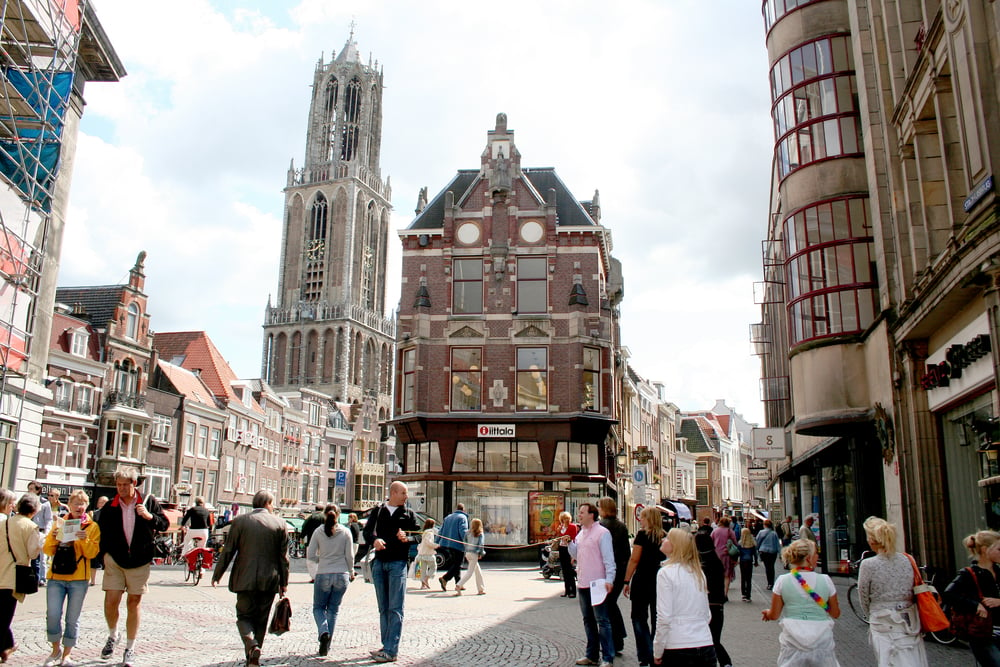
A bustling city centre — but not too busy! Image: Depositphotos
Rotterdam and Maastricht also move up the rankings, and here’s how the top five shapes up:
1
Utrecht 🏆
2
Rotterdam
3
Maastricht
4
Amsterdam
5
Nijmegen
Other than A’dam, the reputations of these top cities have only gotten stronger since 2019’s results, especially Nijmegen, which was previously at #9.
From Rotterdam’s innovation to Maastricht’s holiday vibe, the favourites showcase the variety of city life in the Netherlands.
Teens still dig Amsterdam’s vibe
When it comes to young people between 12 and 18, Amsterdam’s still got it.
The capital’s nightlife is probably to thank for that, although other cities are catching up in that department too.