Staff and students at TU Delft will be pleased to hear that the Dutch University has improved by leaps and bounds — so much so that it is now decidedly the best university in the country. 👑
For the first time since 2016, Delft University of Technology (TU Delft) has ranked among the top 50 universities worldwide, the NOS reports.
Not only that, but the school has catapulted from 70th place to 48th place according to the World University Rankings 2024, provided by the UK’s Times Higher Education.
Fall from grace
Meanwhile, Wageningen University, which has dominated the Dutch uni charts for the last four years, are left scratching their heads after plummeting from 59th place to 64th place.
Also, for the first time since 2011, Utrecht University has fallen short of being ranked within the top 100. What is happening to the world? 🙀
Coming in second place in terms of top Dutch universities is none other than the University of Amsterdam, which snagged the 61st spot.
The Netherlands claims several spots in the top 100
Leiden University came in 77th place, the University of Groningen ranked 79th, and Erasmus University Rotterdam just managed to weasel their way into the top 100 by stealing the 99th spot.
Times Higher Education determined the ranking based on the universities’ quality of education, research, “knowledge transfer”, and “internal positioning”. Sounds fair and square to us. 👀
Did these results come as a surprise to you? Share your thoughts in the comments below!
Sorry, everyone, but it’s official: our time spent working from the sofa wearing sweatpants won’t be regulated by Dutch law. Instead, it’ll stay up to employers on a case-by-case basis whether or not employees can work from home.
The Senate was questioning whether a work-from-home law was necessary — and now it has been rejected by a small majority (one vote, to be exact).
What’s the deal with this law?
Good question. If this law had passed, then work-from-home requests couldn’t have been rejected by your boss willy-nilly.
Instead, employers would need to consider them on the basis of “reasonableness and fairness”, writes the NOS, just like requests to work fewer or more hours.
The law at stake was already a milder version of an earlier proposal, which proposed that employers could reject WFH requests only if it was heavily in the interest of the business.
But even with a milder proposal, the Senate still gave the bill a big nee. 👎
Not great for parents
The rejection of this law is a disappointment for many — but mostly for parents.
It’s helemaal not easy to be a working parent, as we know. A fixed work-from-home law could have helped parents continue to work their jobs while staying home to keep an eye on their children when needed.
As Marjet Winsemius, director of The Foundation for Working Parents, tells the NOS, “Not all workers can or want to simply change jobs. That makes employers very powerful, while this law would actually put a brake on that power.”
Whether another version of this law will be requested remains to be seen.
What do you think of this law? Tell us in the comments!
Paracetamol jokes aside, Dutch healthcare is some of the best in the world. The bad news? Healthcare premiums are pricey — and they’re growing even more expensive as we speak.
Ja hoor, you read that right! Dutch healthcare premiums will shoot up by a whopping 8.4% in 2024, with even the cheapest insurance policy now costing you €149 per month.
Experts: you can thank inflation for the rise
Well, who’s to blame for the runaway healthcare premiums? Patrick Jeurissen, Radboud’s professor of affordable and accessible care, blames raging inflation for the “exceptionally high rise” in premiums.
(And he’s not joking either, with last year’s inflation hitting a max of 10%! 😳)
Speaking to RTL Nieuws, Jeurissen notes that “higher wages have been agreed in the care collective agreements.”
In my opinion, the article romanticises the health care system in the Netherlands. Yes, a health insurance is available for everyone but there is still a large group of people who can barely pay the monthly premium.
As a chunk of the wages for hospital staff are taken from healthcare premiums, we will now see a delayed reaction to that price hike in our healthcare premiums.
Something has to give
This is the steepest increase in Dutch healthcare premiums since 2006, and it has, quite naturally, garnered some criticism.
CEO of insurer DSW, Aad de Groot, is one of many public figures questioning the long-term sustainability of this price hike.
Opposing murmurs have also found their way into the Dutch House of Representatives. Political parties such as Groenlinks, PvdA, and PVV are also voicing their concerns about the growing unaffordability of healthcare.
In conversation with RTL Nieuws, de Groot offered a parting word of wisdom: “A lot of people are overinsured for care they don’t actually need. It’s good to take a critical look at what’s really important.”
What do you think of the rise in healthcare premiums? Let us know your thoughts in the comments below!
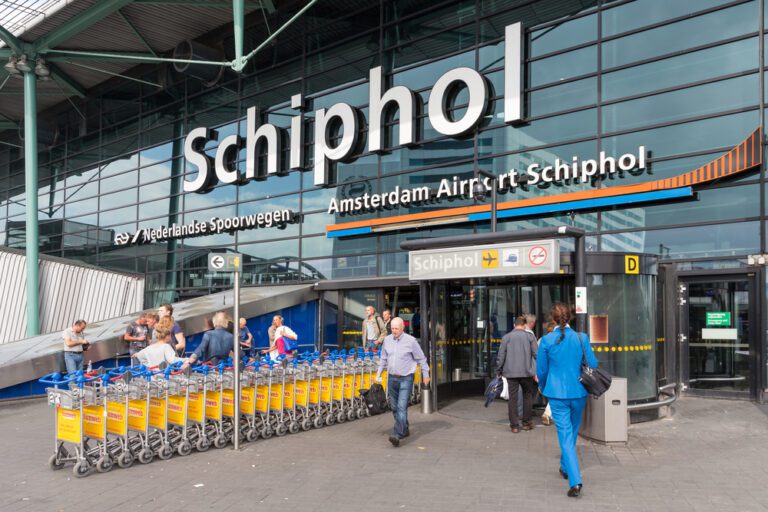
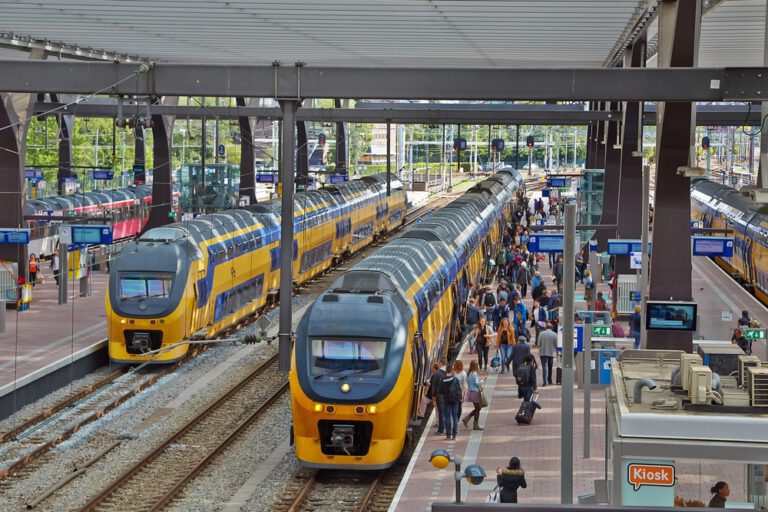
Got plans to travel by train to (or through) Schiphol in October? Well, you may want to reconsider.
Next week, and on the weekend of 14 and 15 October, there will be fewer trains going through Schiphol, according to NU.nl.
Contrary to what you may think, it’s not due to strikes this time — but due to works by ProRail on the tunnel that leads through Amsterdam’s airport. 🚧
Longer journeys, more people, more delays
What can we expect? Fewer trains, mostly — which means they’ll be fuller and there may be more delays.
According to the NS, you can expect to be on the rails a whopping 10 to 30 minutes longer than usual (so take that into account on your morning commute! 😉).
Help! I need more details
We gotcha! Here’s what we know so far. 👇
Between 2 and 8 October, there will be:
One sprinter and one intercity per hour between Schiphol and Utrecht.
One intercity per hour between Schiphol and Almere.
Four intercities per hour between Schiphol and Leiden (and the west of the country).
On the weekend of 14 and 15 October, the NS will use buses on the routes to and from Leiden, Sassenheim, Nieuw-Vennep, Hoofddorp and Schiphol.
Let op! Smaller stations may be skipped by these express buses. To find out the accurate departure times of these buses, NS recommends using their online travel planner.
Helaas, there’s more to railworks come
Though the details are not yet known, ProRail has also announced railworks around Schiphol for the end of November and the beginning of December. It’s unclear how these will affect train travel.
Why all this construction, you ask? Well, ProRail and the NS are working on making Schiphol more accessible. This is expected to take until 2028.
You can find out more about the plans from the video below (in Dutch).
Will these works affect your plans? Tell us in the comments!
Sadly, the Blijdorp Zoo recently lost one of its favourite residents; Irma the elephant has passed away, but not before living up to the impressive age of 53.
Originally hailing from Denmark, this friendly tusked creature arrived at Rotterdam’s Blijdoorp Zoo back in 1975 with financial support from the Friends of Blijdorp association, Rijnmond.nl reports.
Sadly, as a Diergaarde Blijdorp spokesperson mentions, Irma had faced some health struggles for the last couple of years, resulting in an alarming weight loss, joint problems, missing teeth, and an introverted personality. 😔
Irma’s legacy
By all accounts, Irma lived an adventurous life, making national headlines in 1984 when she birthed a healthy calf called Bernhardine — the first baby elephant ever born in a Dutch zoo.
Not only that, but Bernhardine was the first instance of a baby elephant born in captivity anywhere, which took the world by storm.
After her passing, Irma has left an extensive family tree of offspring behind — that is, six children, 14 grandchildren and three great-grandchildren, to be exact. 🐘
A difficult decision
It’s safe to say this lovable elephant will be missed. Zookeeper Kasper Willebrandts, who cared for Irma over a decades-long companionship, says letting her go in order to put her out of her misery “was not an easy decision”.
Olifant Irma is op de respectabele leeftijd van 53 jaar overleden. Om welzijnsredenen is in goed overleg tussen de dierenarts en de verzorgers besloten dat het moment was aangebroken om haar in te laten slapen, een moeilijke maar weloverwogen beslissing. https://t.co/AZJ2POiuQPpic.twitter.com/F7CPEKopE9
Translation: “Elephant Irma passed away at the respectable age of 53. For welfare reasons, it was decided in close consultation between the vet and the caregivers that the time had come to put her to sleep, a difficult but well-considered decision.”
After a goodbye ceremony that took place last week, Irma’s body was transported to Utrecht University for an autopsy, and her remains might be studied for educational reasons.
Now, the rest of the inhabitants at the zoo have to get used to the absence of their “leader”, mother, and grandmother. Rest in peace, sweet Irma. 🐘🧡
How do you feel about Irma’s death? Share your thoughts in the comments below.
Will the Netherlands ever make it out of this housing crisis? (Realistically, yes, but it sometimes it doesn’t feel like it). The newest development is that the city of Amsterdam isn’t able to build enough new homes for everyone.
The city is lagging far behind on its 2023 housing construction plans — some 3,000 homes behind, to be exact.
The goal was to build 7,500 new homes in 2023, but now it’s expected that only 4,500 of them will be done by the end of the year. 😮💨
Amsterdam, please give us homes
The costs of building new homes are rising. This time, it’s due to things such as more expensive building materials.
The focus that is suffering the most is homes for medium-priced rentals. The goal was to build 3,000 of these homes, but in the first half of 2023, the city only built *drumroll please*… a laughable 211.
The reason? Uncertainty about rent regulations on a national level. It’s hard to know what will be considered a “medium-price rent” soon, so investors are opting out of buying them.
Social housing, on the other hand, seems to still be up to standard. Many corporations are still investing in these construction projects, so the sector has managed to keep its head above water.
In the first half of the year, 1,576 social rental homes started being built.
So, what now?
As Het Parool writes, Housing councillor Reinier van Dantzig is now considering “transformation projects” to counter this “terrible” delay — where existing buildings are converted into new homes. 🏠
On top of that, Van Dantzig is also asking the government for extra money. He wants there to be a special fund for construction projects that are in danger of being postponed or stopped due to poorer economic conditions.
Right now, it’s being investigated which projects in Amsterdam are eligible for this. An emergency debate is also scheduled for tomorrow, September 27, to discuss the next steps.
What do you think of these construction projects? Tell us in the comments!
Everybody wants a bit of the Netherlands. How could they not? The land of windmills and bikes appeals to tourists and business travellers alike. The problem? There is not enough space for all of them.
According to AD.nl, the Netherlands will welcome about 21 million foreign tourists this year — on top of the 29 million domestic vacations taken by Dutchies.
According to the Dutch Tourism & Conventions Board (NBTC), this represents a 30 per cent growth in tourists and business travellers. This year alone. 😳
Where is everyone coming from?
Germans, in particular, are increasingly flocking to the Netherlands, accounting for about 7 million foreign guests. Tourists from other countries like the UK and China are lagging behind because of COVID-19 restrictions.
COVID-19 restrictions? Yup, the UK and China stand out in how they handled the crisis because their restrictions lasted much longer. As a result, there are disproportionately fewer visitors from these countries now.
Still, the non-Dutch visitors account for approximately 21 million visitors to explore this bike-filled land. That being said, the number of staycations by Dutch tourists will stay stable at almost 29 million.
In total, that leaves the Netherlands with almost 50 million tourists! And, of course, 50 million people shifting around this tiny, flat country will lead to some spatial issues.
Okay, so what happens now?
Regardless of whether someone is from the Netherlands, all these people take on a “tourist” lifestyle, and they need shelter in places like campsites, hotels, and other accommodations.
The result? There is literally not enough space for everyone. Because of this, “doing nothing is no longer an option,” NBTC director Jos Vranken tells AD.nl.
It’s not just for the tourists, but something also has to be done to make sure that certain areas stay livable for the locals.
The NBTC is taking action by asking to be a part of the discussion regarding spatial plans in the Netherlands.
Specific cities are also starting to take matters into their own hands. In Amsterdam, for example, attempts are being made to reduce tourism because the quality of life is under pressure.
Have you noticed an increase in people moving around your city in the Netherlands? Tell us in the comments!
You thought your student days were behind you, but lately, you’ve been toying with the idea of getting an MBA. Good on you!
Deciding where to study can be a difficult choice, but if you’re envisioning study sessions along a Dutch canal side (if not, we bet you are now!), then we have a suggestion. 👇
Introducing Nyenrode Business University
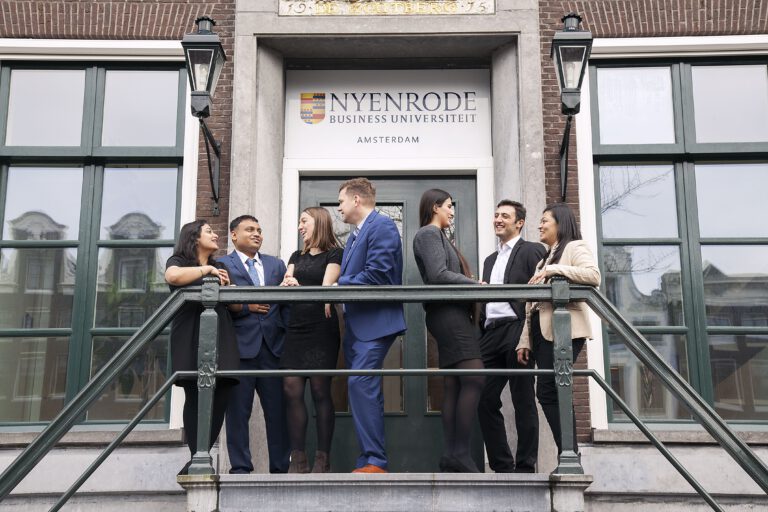
Nyenrode Business University is the only private research university in the Netherlands. It was founded in 1949 by leading businesses such as Phillips, KLM, Shell, and Unilever. Needless to say, it has a strong connection to the business world.
Rooted in real-life business practices, Nyenrode has provided quality education for seven decades.
For non-Dutch speaking students, Nyenrode offers two English-taught MBA programmes: the Modular Executive MBA in Business and IT and the brand-new Impact MBA.
Good to know: While the Modular Executive MBA is taught in Breukelen (near Utrecht), the Impact MBA can be followed in Amsterdam or Breukelen.
While all programmes have a heavy focus on bridging theory and practice to further students’ professional development, Nyenrode knows that its alumni will go on to have important roles in this world.
This means they take personal development seriously in their quest to educate responsible leaders. 💪
Welcome to Nyenrode! We were lucky enough to get a personal tour of Nyenrode’s Amsterdam campus, where Ralph welcomed us to the university’s (gorgeous) premises. Check out this virtual tour to get an idea of what it’s like!
How Nyenrode promotes responsible leadership
Okay, we know “responsible leadership” are two words that are being thrown around more and more these days. But that’s because it’s an increasingly important concept. 🌍
At Nyenrode, though, responsible leadership isn’t just a buzzword. Instead, it’s one of the university’s pillars. Responsible leadership is prompted through small class sizes, immersive experiences, and CEO meet-ups.
Small class sizes
One of the unique things about Nyenrode Business University is that you’re not going to get lost in a sea of students. All classes have a maximum of 30 to 40 students, meaning you can wave doei to crowded lecture halls and professors who have no idea who you are.
When we visited one of the lecture halls at Nyenrode’s location in Amsterdam, we were pretty much stunned. Coming from lectures with 500 people in them, this essentially seemed like an intimate dinner setting.
Plus, should your eyes wander past your limited amount of classmates, you’d be looking straight to one of Amsterdam’s most famous canals! Not bad if you ask us — though you should probably stay focused on class. 😉
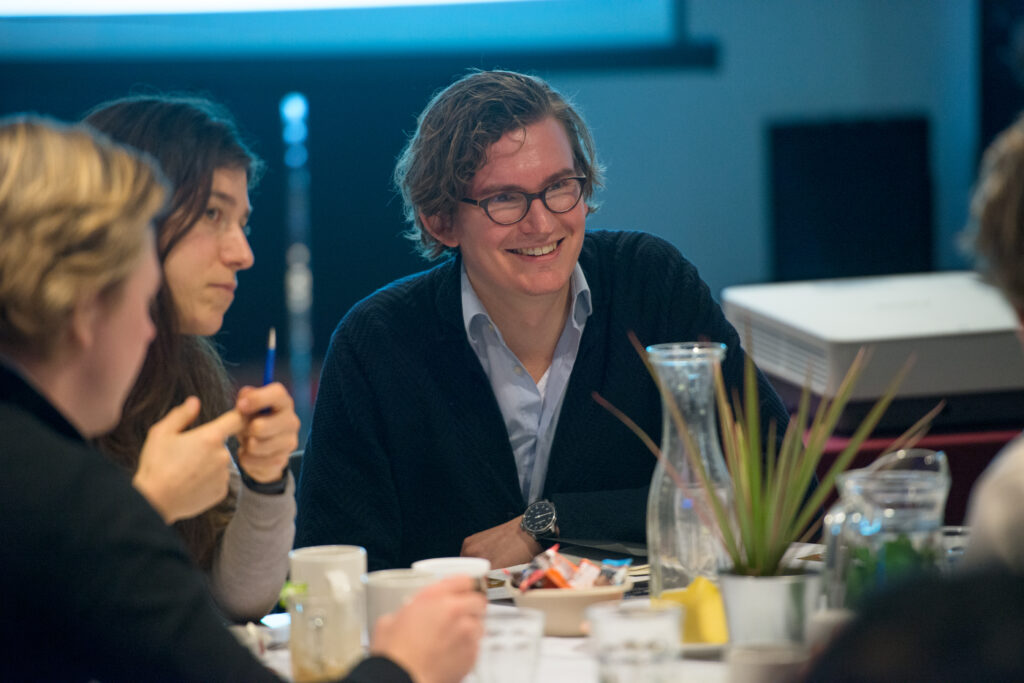
Breakfast Sessions at Nyenrode help create a sense of community and provide good networking opportunities, too. Image: Nyenrode/Supplied
It’s not all about small class groups, however. Nyenrode actively promotes a sense of community through student networks, alumni gatherings, and so-called Breakfast Sessions.
Breakfast Sessions are some of Nyenrode’s most treasured events and occur four times per academic year. Naturally, they include a delicious breakfast, but you’ll also sip your coffee while listening to an inspiring keynote speaker.
Seated side by side, students and business leaders use these sessions as opportunities to discuss current challenges and offer each other advice and feedback.
Immersive and hands-on experiences
If you’re following the full-time Impact MBA at Nyenrode in Amsterdam, you’ll spend your time exploring the multifaceted interactions between businesses and society at large, coving topics like:
Responsible marketing strategies
Sustainable development and circularity
Macro and Ecological Economic
Sustainability Transition and Systemic Change
After learning about each of these practices in Amsterdam, you’ll also be able to participate in Nyenrode’s Global Immersion Program, a week-long international study trip where you’ll broaden your network and build relationships that will enhance your career.
CEO meet-ups: a.k.a networking goals!
Did you like the sound of Nyenrode’s Breakfast Sessions but want to skip the croissants? No problem! Throughout the full-time MBA programme, Nyenrode organises so-called Meet the CEO Sessions.
Similar to the Breakfast Sessions, they offer students and executives a chance to discuss current topics in business and learn from each other. These sessions will expand your professional network considerably.
The result? An increase in your employment options after graduation!
Where will you be studying?
While the curriculum is certainly an important factor in deciding where to pursue your MBA, the location definitely also plays a role.
After all, you already have a few years of work on your back, so you want to study in a place that offers you, one: a professional network or, two: possibilities for a new job after graduation.
Did we hear someone say Amsterdam? 👀
The Amsterdam campus — on the Keizersgracht!
Nyenrode’s full-time Impact MBA programme is located in an old building along the gorgeous 17th-century Keizersgracht canal.
One of Amsterdam’s three main canals, it runs through the Jordaan neighbourhood, which forms a quieter part of the city centre.
In fact, you’ll find Nyenrode’s Amsterdam campus smack in the middle of the famous Negen Straatjes — the most gezellig and quirkiest shopping district in Amsterdam.
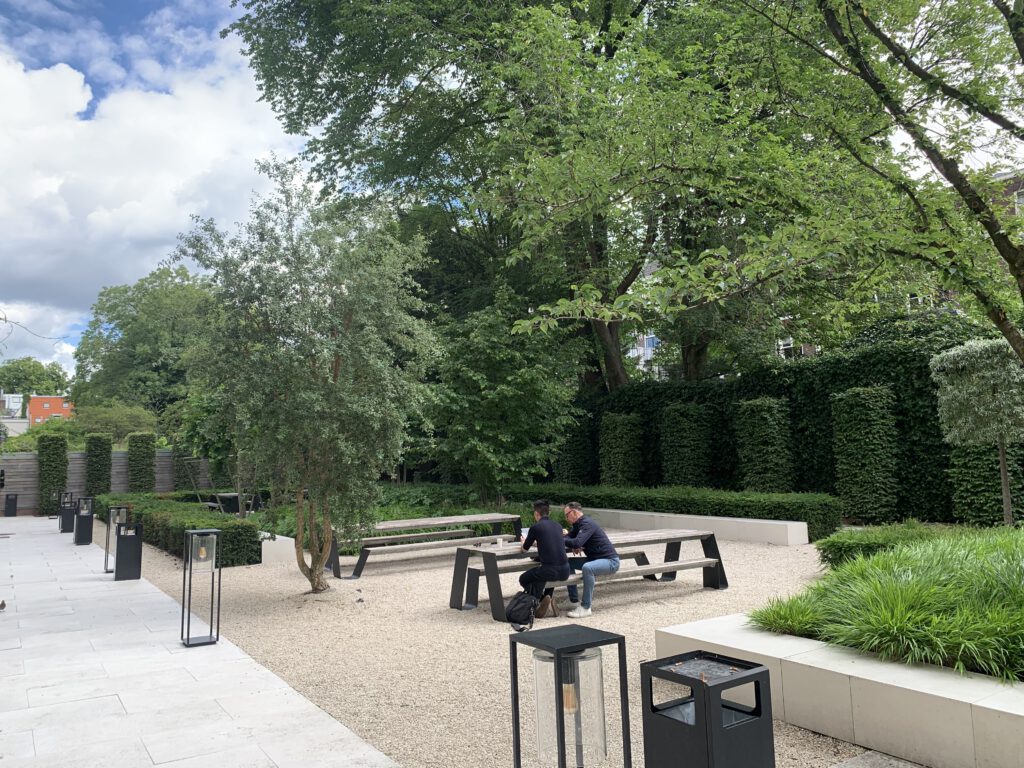
If you get tired of the bustle of the Dutch capital, you can retreat to Nyenrode’s cosy courtyard. Image: DutchReview
Together with three other main canals, Keizersgracht and its accompanying streets form Amsterdam’s Grachtengordel (Canal District).
Why are you telling me this, you may ask?
Because not only will you be studying in a hella cute area, but you’ll literally be taking your MBA at a UNESCO World Heritage Site.
Inside, however, Nyenrode’s Amsterdam campus is no relic. It features a large reception and light classrooms that really make you want to get down to business. 👩💻 Best of both worlds if you ask us.
The Breukelen campus — yes, that’s a castle
Now, if you’re not too keen on leaving your job to study full-time, then Nyenrode offers you two alternatives. An the two-year Impact MBA and a modular executive MBA in Business and IT.
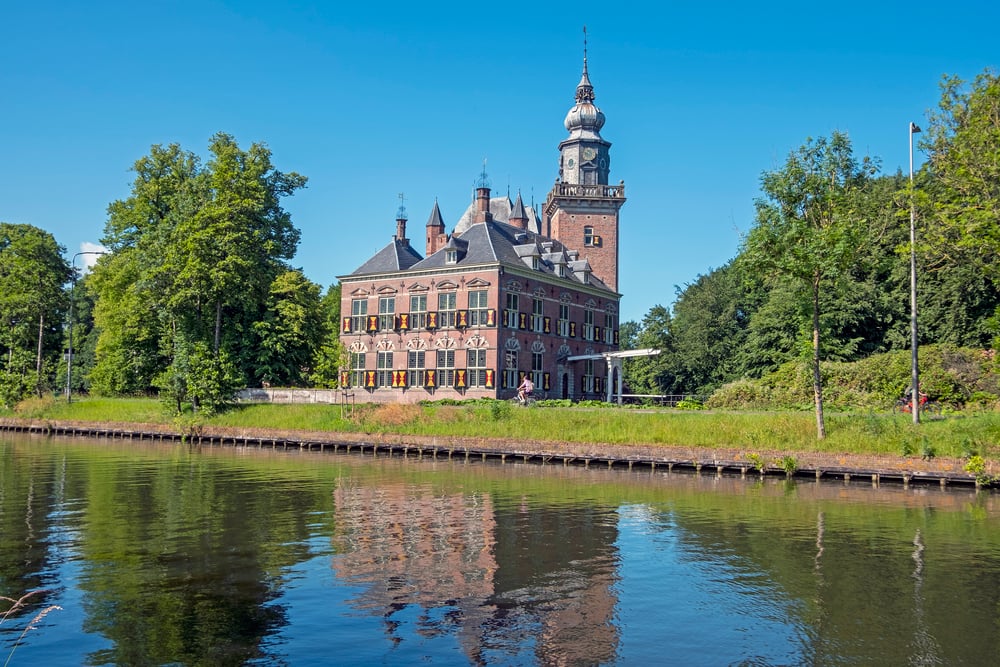
If you opt for one of these, your courses won’t be taught in Amsterdam. Instead, you’ll follow intensive modules on Nyenrode’s campus in Breukelen. Oh, and by campus, we mean a 13th-century castle.
The castle itself had a turbulent history until it was turned into a university campus after WWII. Now, with every new Nyenrode graduate, a new chapter is added to that history — albeit a more stable one.
Studying abroad is a big step, where will you go?
Ready to jump ship (or flight 😆) and pursue your MBA at Nyenrode? Jazeker!
Before you pack your bags, it’s good to have a clear idea of where you’re going — in life, that is. Yup, we’re talking the long game here!
So, here are a few of the paths and opportunities that Nyenrode offers its students.
Dip your toes into a start-up paradise
Taking your MBA in Amsterdam means you’ll be living and studying in one of Europe’s start-up capitals.
While that’s pretty cool in itself, what’s even more impressive is that many of the innovations that are popping up in the Dutch capital are created by the city’s students.
Moreover, if you begin to feel a little entrepreneurial yourself, Nyenrode is essentially a start-up heaven. The Nyenrode Incubator is located in the Keizersgracht building and offers students a place to work on their start-ups.
With the incubator, Nyenrode not only offers students a physical space where they can work on something they’re passionate about, but it also promotes an innovative mindset in its cohorts.
Plus, the incubator gives students real-life experience with responsible leadership and respect for stakeholders — some of Nyenrode’s key values.
Hello, Amsterdam business life!
By now, you know that Nyenrode is directly linked to world-leading businesses through its founding partners. However, you’ve probably also figured out that it isn’t a university that relies purely on its reputation.
Through continuous cooperation, idea exchanges, and networking, Nyenrode maintains a close relationship with businesses in Amsterdam — and around the world.
Maybe you’ll be hosting an alumni talk one day. Image: Nyenrode Business University/Supplied
As a Nyenrode graduate, you’ll not only benefit from the Nyenrode name on your resume, but also from the interactions you’ve had with industry leaders at Breakfast or ‘Meet the CEO’ Sessions.
Do a quick LinkedIn sweep and glide right in through the doors of Zuidas’ glossy buildings!
Career change with canal views
Finally, an MBA is the perfect way to accelerate your current career or launch a new one. 🚀
Asides from bettering yourself academically and professionally, you’ll spend your time at Nyenrode focusing on becoming a better leader and familiarising yourself with the European business community.
The university’s well-rounded programme and respected name mean that recruiters and HR offices are well aware of the many attributes a Nyenrode graduate has to offer. Once you add ‘MBA’ and ‘Nyenrode’ to your resume, you bet you’ll be getting some attention. 😏
For train passengers who aren’t nine-to-fivers, it might feel like Christmas has come early this year, but for unlucky rush-hour travellers, well, the NS wants to implement surcharges. 🥲
The Dutch railway operator’s CEO, Wouter Koolmees, will run this plan past the House of Representatives in the Hague today, Het Parool reports.
However, it looks like he will have some convincing to do — apparently, much of the VVD, GroenLinks-PvdA, D66, CDA, PVV, SP and ChristenUnie aren’t pleased about the idea for this “peak tax”.
After all, public transport in the Netherlands is already pricey compared to the rest of Europe, and some essential workers (such as teachers, cleaners, and nurses) have no choice but to travel during rush hour.
What’s the damage?
According to plans by the NS, their vision is to force train passengers to cough up a surcharge of €2.50 between 8 and 8:30 AM.
For the lucky few who travel half an hour before or after that allotted time bracket, the surcharge payment will only be €1.50 euros.
Now, all that’s left to do is for the NS to convince the House of Representatives to get on board the surcharge train, which would come into effect in 2026. The question is, do we want them to? 😬
What are your thoughts on this potential new train tax? Let us know in the comments below!
Guess what folks: After a week of rain, wind, and plummeting temperatures, it’ll soon be time to put those raincoats back in the closet.
Next week, summer is returning to the Netherlands for one last hurrah, as Weerplaza reports.
And you know what that means: we have to seize the golden opportunity for one last round of cocktails on a terrasje, a stroll along the beach, or a canal adventure on a boat. 🛶
A late summer week
Sun, clouds, and rain will each be making appearances on Dutch skies over the weekend, with temperatures dancing between 10 and 17 degrees Celsius.
But here’s the news you’ve been waiting for: From Sunday onwards, the chances of precipitation will decrease, there will be more sun, and better vibes. ☀️
Throughout the upcoming week, temperatures could rise as high as 23 degrees towards the south of the country.
And the best part? You can leave your umbrella at home because it’s going to be gloriously dry! … So cocktails, anyone? 🍹
If you’re looking to enjoy an evening of drinking on a sunny terrace with friends, make sure to do it towards the beginning of the week! The weather is expected to get a little sadder by the end of the week.
How will you spend the sunny days that are coming our way? Tell us in the comments!