Home Blog Page 415

Dutch supermarkets fall behind on human rights policies

Albert Heijn and Jumbo could be doing better when it comes to human rights practices in their business. 🌿

Oxfam Novib creates a yearly supermarket ranking based on their human rights policies for workers, small-scale farmers, and women in the supply chains. 🧑‍🌾

German brands Aldi and Lidl in the Netherlands made good strides towards better human rights policies this year. On the other hand, PLUS needs to “get to work,” says RTL Nieuws.

Making improvements

According to Oxfam Novib, the two German supermarkets in the country made solid improvements to their policies. “It really makes a difference in corporate social responsibility,” says Charlotte Vollaard, a human rights and business expert. 🕊

“Since the first ranking in 2018, supermarkets are scoring better than before. The difference is very big, especially because the Dutch supermarkets scored so poorly.”

But still, Oxfam Novib says all supermarkets can do much more to combat the exploitation of workers, farmers, and women in their practices.

Supermarket ranking results

Supermarket Lidl scored the highest on improvement, ranking 59% in Oxfam’s assessment. Aldi followed with a 49% increase. 👍🏼

READ MORE | The ultimate guide to the cheapest supermarkets in the Netherlands

The Dutch supermarkets only did so much (or so little?) — Albert Heijn scored 28%, and Jumbo scored 35% in overall improvements. PLUS did the worst, only ranking at 14%. 😕

No more exploitation

Ultimately, what matters most to the organisation is that “those who produce our food can earn a livable wage and are not exploited.”

Despite all the improvements, no supermarkets in the Netherlands have reached that goal yet. Vollaard says supermarkets are moving in the right direction with their human rights approach, but there is still a lot to be done.

What do you think of this supermarket ranking? Tell us in the comments!

And now it’s autumn: wind and rain forecast for the Netherlands this week

Prepare to have your face battered by blustery winds, your umbrellas thwarted by rain, and your nose nipped by considerably colder temperatures — truly autumnal weather is returning to the Netherlands for the week.

And we don’t mean the pumpkin spice-latte, colourful leaves, crisp air kind of autumnal. According to Weerplaza, the week is set to look wet, windy and certainly not warm.

Rain, rain, and wind

Batten down the hatches and buy yourself some comfort food. Today is set to be exclusively wet and extra windy. ☔️

And tomorrow. Oh and maybe Wednesday too. In fact, don’t have high hopes for the rest of the week. 🥲

There are some silver linings to be seen amongst all the clouds, however. The wind will be slightly less strong on Tuesday — but still present.

And technically, while there are a series of depressions set to pass over the Netherlands, meteorologists can’t yet confirm whether that means a lot of rain at the end of the week or just een klein beetje.

Temperatures will also rise to a balmy 10 degrees. 🌴 That’s something, right? 😅

From summer to winter to autumn

The past three weeks of weather in the Netherlands have been more temperamental than a toxic ex, to say the least. Last week, we went from 20 degrees and sunshine to sub-zero temperatures and snow.

In fact, just yesterday, the Netherlands saw temperatures drop as low as -10.8 in Achterhoek. 😳 There was even SKATING in Winterswijk, according to RTL Nieuws.

Now, however, it’s autumn’s turn to make a comeback. 🍂

Want the latest Dutch news to come zooming through the internet to your inbox? Dat kan! Subscribe to DutchReview’s weekly roundup 📮

Dutch ‘virus truth’ leader rearrested for violating release conditions

Leader of the anti-coronavirus movement Willem Engel was rearrested on Sunday afternoon while on his way to a protest in Nijmegen.

Engel apparently did not comply with the imposed release conditions and police took him into custody again, tells the NOS. 🚨

Released and arrested in the same week

The police only released Engel last week, on the condition that he would not post on social media. However, Engel visited the online TV programme Café Weltschmerz. 🎥

The Public Prosecution Service will not confirm the reason for the arrest. Engel’s legal advisor assumes the police rearrested him for this appearance.

Tweet translation: The detention of Willem Engel today, is this beautiful or is this beautiful.

He doesn’t see this as a violation of conditions because they should only apply to his personal media accounts — right? 🤨

Public Prosecution investigation

The Public Prosecution Services started an investigation on Engel after around 22,000 people filed complaints against him for inciting civil unrest through social media. 📱

Some claim Engel is guilty of sedition, spreading medical disinformation, fraud, and statements with terrorist intents and threats.

Police arrested Willem Engel in mid-March and detained him for two weeks. It hasn’t been determined whether Engel’s case will be dealt with in court.

The court will decide whether the Virus Truth leader remains in custody or if they release him pending his trial.

What do you think of Willem Engel’s rearrest? Tell us in the comments! 💭

Feature Image: Peter Heine/Wikimedia Commons/CC3.0

All NS trains are cancelled this Sunday until at least 8 PM

Update Monday April 4, 7:30 AM: Train services have been restored, hallelujah!


Earlier:
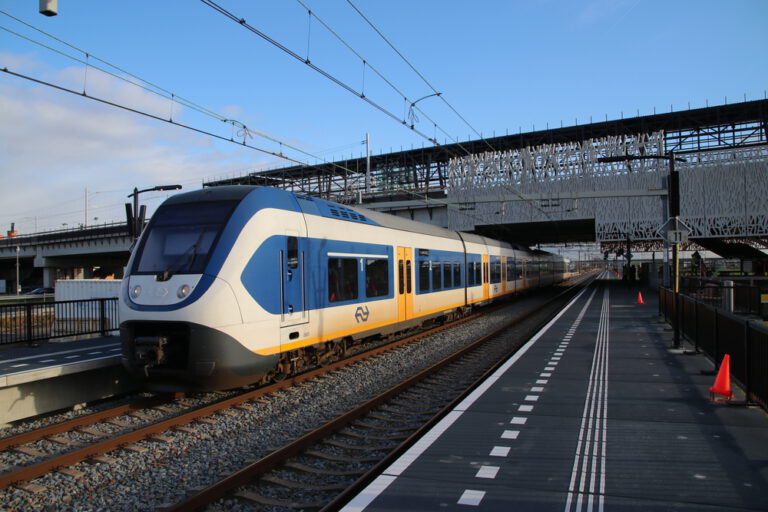
Such a nice sunny Sunday, what could go wrong? Well, obviously the trains, because of a technical malfunction at the NS, no trains will run until at least 8 PM anywhere in the Netherlands.

Because of the same malfunction, the travel planner also shows a lot of incorrect travel advice. It was also not possible to show current travel information at stations for hours — but that information has since been restored, the NS said.

The latest tweet from the NS reports that it’s until 5 PM. But at 3:30 PM the news came in that trains were cancelled until at least 8 PM:

Trains might not run this entire Sunday

It is unclear how long the outage will last, and the NS advises not to travel. If you are already underway you have to find other transport and plan the trip via the 9292 app and all NS trains with a scheduled departure time before 8 PM will not run, as is reported on their website.

To make matters worse, no buses are used because there are not enough to cover all the passengers in all of the Netherlands, said a spokesperson to the NOS.

Not everything has broken down though, as the regional trains (a.k.a not the Randstad) are apparently running according to their normal timetable.

Travellers stranded all across the country

Passengers have become trapped at stations across the Netherlands. There are tons of international travellers stranded at Amsterdam Central Station who now have no idea what to do. Among them are people who have to fly from Schiphol in a couple of hours.

Stuck on a station? Up for giving a fellow traveller a ride? Just annoyed with the NS? Comments below!

Image: Abuzer van Leeuwen/Supplied

Dutch trains (almost) back on track after major outage

A technical fault that caused the entire NS train network to literally grind to a halt on Sunday has been fixed — just in time for Monday morning peak hour. 😉

The NS expects that the normal timetable will be largely restarted this morning, thus there will be zero Get Out of Rail Free cards for those wanting to work from home. 🤷‍♀️

The train event

The critical fault occurred yesterday, forcing many weekender’s plans down the train and leaving others stranded. While the malfunction was rectified yesterday evening, it wasn’t possible to restart trains until the early hours of this morning.

“In order to start reliably, systems must be updated and trains must be placed in the right place. That takes time,” said NS in a statement.

So what now?

You should be getting ready for work, that’s what! For those planning on jumping on a train, here’s what a bit of light digging has found:

✅ trains between Schiphol and Amsterdam are running,
✅ trains between Utrecht and Leiden are on track,
✅ trains between Rotterdam and Den Haag are on the move.

And heaps more. Check out the NS Travel Planner to see if your trip is on track!

Were you affected by Sunday’s train outages? Tell us in the comments below!

11 things that will surprise you as an American living in the Netherlands

The road of moving to the Netherlands from the US was plastered with a whole lot of surprises and confusion. Here’s what you need to know if you’re an American wishing to find a new home in the lowlands.

When I first moved abroad, I knew everything would change, from the smallest details of life to the overall experience.

To give you an idea, and maybe prepare you for your own move — here are the biggest differences I have noticed as an American moving to the Netherlands.

1. Grocery stores

The US has many grocery stores with an astounding supply of goods, from smaller Trader Joe’s to big-box chains like Costco.

woman-walking-in-street-market-looking-at-fruits-and-vegetables
The most popular supermarket in the Netherlands is Albert Heijn, you will walk past one almost every ten minutes. Image: Depositphotos

While you learn to find alternatives for your favourite recipes from home, be reassured that most Dutch food has fewer additives than the US due to stricter regulations — a definite plus for your health! 

READ MORE | The ultimate guide to the cheapest supermarkets in the Netherlands

Supermarkets in the Netherlands are wonderful and fundamentally different to what we’ve got here in the US. They even function as your local post office! Here are some other things I think may surprise you as an American shopping at a Dutch grocery store.

🛒 Baskets

Most supermarkets have baskets with wheels you can push around the grocery aisles. Some also have shopping carts, like Jumbo — a major chain you’re relieved to see in English, except it’s pronounced “yum-bo.” Sorry, false alarm!

🥚 Eggs

These aren’t refrigerated and won’t be found in chillers. They’re just on an ordinary aisle shelf. Why? The EU doesn’t allow eggs to be washed like the US.

🍾 Alcohol

Only beer, wine, and pre-mixed drinks are sold in supermarkets but not hard liquor like whiskey or vodka. However, the prices are astoundingly low since you usually won’t see wine sold for over €10!

If you want to buy hard alcohol, you’ll need to head to the Sliterij or liquor store (although most supermarkets have their own liquor store right next to the supermarket).

♻️ Recycling centres

Fees for recycling bottles and cans are much higher than in the US, at 25 cents for each bottle deposit (statiegeld).

That means when you buy plastic or glass bottles, you will pay a small amount included in the price. However, you can get your deposit back once you recycle at a machine located in the store.

🤳 Self-checkout

Like in the US, there is a self-checkout in most Dutch supermarkets. However, in the Netherlands, you won’t be able to leave the grocery store without scanning your receipt’s barcode.

Also, baggers (people that help you bag your groceries) don’t exist in the lowlands, and you’ll learn what pressure feels like whilst trying to keep up with the cashier scanning your goods.

2. Food

The Netherlands is famous for its tulips, clogs, windmills, and stroopwafels. However, if you didn’t know, there are other quirks to the Dutch diet. 

Dutch-fries-in-a-wrapper-with-mayonnaise-and-ketchup
Dutch fries win over French every time. Image: Depositphotos

🥖 Bread

Forget about everything the US tells you about carbs and eating less bread if you want to fit in. Bread is a staple in Dutch culture.

You’ll see long lines at farmers’ markets in front of the bread stall, and if you go to the grocery store later in the day, chances are you’ll find nothing but crumbs in the bakery section.

🧀 Cheese

The second essential to a Dutch lunch. If you love cheese, you’re in for a treat because this country has tons of it. You will never be the same after having seen these fabulously huge, round wheels of Dutch cheese.

If you buy some at specialist cheese shops or farmers market stands, you can usually get a generous sample, if you ask. Who needs Costco samples anymore?

READ MORE | Dutch cheese varieties: the comprehensive guide

Also, let’s talk Gouda cheese. That lovable cheese Americans call “goo-duh” is actually pronounced as “how-duh”, with the typical throaty-scratchy ‘g’ in the beginning. You’re welcome because if you anglify while ordering a chunk of aged “goo-duh”, you’ll be met with quite a bit of confusion.

🍟 Fries

The American ketchup is king, but in the Netherlands, it’s the Dutch mayonnaise that rules the kingdom of condiments. Try it, you’ll likely love it more than you care to admit. Don’t fear, though, you can still find ketchup at any fries stand in the Netherlands if old habits die hard.

3. Restaurants

Dining out is another one of those activities that hold quite a few surprises when coming from good old American dining culture. Here are some of them.

Dutch-man-paying-for-dinner-with-his-date-in-a-restaurant
Once you’ve snagged yourself a Dutch bank card, paying for everything will be super fast. Image: Depositphotos

💧 Drinks

Tap water isn’t given out willy-nilly over here. You’ll be asked if you want still or sparkling and have to badger them for some kraanwater.

When it comes to sodas, gone are the days of a medium, large, or XL refillable size. In the Netherlands, you’ll be getting a petite glass bottle smaller than your phone. And don’t even think about asking for refills!

Getting coffee in the Netherlands is also a completely different ball game. These will likely be smaller than what you’ve seen normalised at Starbucks. No more tall, grande or venti sizes! Iced coffee also doesn’t exist everywhere, and make sure that there are ice cubes since ijs koffee can also mean finding a scoop of ice cream in it. (Gross.)

🍽 Doggy bags

Leftovers being taken home simply aren’t as common here since the portions are not as large as in the US, but in recent years it’s slowly becoming more acceptable to make this request.

I’ll never forget the time I received my leftovers in a plastic yoghurt container two years ago, but I appreciated the effort! 

💵 Payment

This is actually super convenient in the Netherlands as your server will carry a handheld credit card machine so you can pay right from your seat. Oh yeah, and don’t fret if you can’t make the tip. Giving tips isn’t customary in restaurants or other services.

The majority of service workers in the Netherlands make a livable wage, unlike in the US, where tips are heavily relied upon. You can definitely offer, but some people will even refuse to take it (insanity).

3. Shopping

The US really has its citizens spoiled by making shopping as accessible as possible, but also at the cost of employees who work late or long hours. What did we really ever need from Target after 10 PM?  

picture-of-shopping-street-in-centre-of-utrecht-netherlands.
The Netherlands has some malls, but many stores will be in cute cobbled streets. Image: Depositphotos

🕞 Opening hours

It’s not uncommon to see stores or businesses open from 10 AM and close at 6 PM here in the Netherlands. Weekends usually have shops closing by 5 PM. On Sundays and Mondays, many businesses open at 12 PM, such as grocery stores, but some do not open at all.

If the establishment is open on Sunday, they may be closed on Monday instead for a rest day.

Also known as koopavond in Dutch, many cities observe this with stores closing later than usual at 9 PM and typically on a Thursday or Friday. In the Amsterdam shopping area, you may find later weekday shopping hours, with stores closing at 8 or 9 PM. 

💰 Payment

Not all stores will accept Visa or Mastercard, especially smaller Dutch establishments. More recognisable retail stores are likely to accept Visa or Mastercard, luckily, but it’s best to have a Dutch banking card or euros on hand if you’re new!

And remember, the price you see is the price you pay, all taxes are already included.

4. Working Culture

The Dutch working culture is verrry different to the US. For one, there is such a thing as a work-life balance.

photo-of-people-at-company-taking-dutch-lessons
You’ll get to know your Dutch colleagues really well thanks to their direct nature. Image: Freepik

Breaks are actively encouraged, whether it’s a 10-minute coffee break or your annual leave. Speaking of vacations, they are referred to as “going on holiday,” in the Netherlands. You get 4x your weekly working hours, so if you work 40 hours a week and you’re entitled to 160 hours or 20 days off in the year.

READ MORE | The work-life balance in the Netherlands is the best in the world

Also, overtime isn’t really a thing. Unlike the US, it’s not as common and possibly even strange. So get ready to clock out and get home in time for that early Dutch dinner, unless you’re staying for a post-work borrel, of course.

5. Driving

The Netherlands is famous for its bike-riding inhabitants, and public transportation is known to be excellent too. Yet, plenty of people still drive cars — and you’ll be relieved to know that the Dutch drive on the right side of the road just as we do in the US.

American-driving-a-car-in-the-Netherlands
Imagine if this was your daily commute. Image: Depositphotos

Nevertheless, there are still some things you should know when driving in the Netherlands as an American. (Watch out for all those roundabouts!)

⛽️ Gas

At first glance, fuel looks cheap, especially if it starts with a €1 something, but it’s sold in litres, not gallons, which are much smaller. There are roughly 3.7 litres in 1 gallon, so when you do the math, it adds up to roughly the same amount as in the US. 

🏎 Speed limits

Surface roads are typically 31 mph and freeways are a maximum of 75 mph. Why such odd increments of speed? Because mph isn’t a thing here, but km/h is.

It’ll take a moment to get used to kilometres, so if you’re driving, make sure you’re not thinking in miles, or you may get a speeding ticket due to many cameras!

6. Four seasons in a day

Depending on where you are from in America, you may or may not be shocked by the moody weather and odd seasons here. Although winter can be brutal with low temperatures down to -6 degrees, spring makes up for it with its beautiful blooms!

picture-of-little-girl-in-rain-jacket-umbrella-and-boots
It’s raining, then it’s sunny and warm, then it’s freezing and raining again. Image: Depositphotos

The weather can be tumultuous. Sunshine, overcast clouds, wind, and rain — it’s not unusual to experience all of these in just one day (or a couple of hours). Overall, there’s not that much sun throughout the year, so it might be worth investing in a Vitamin D lamp or taking some supplements.

🌦 Dutch summers

Summer days are long in the Netherlands, with the sun rising around 5 AM and the sun setting at 10:30 PM.

When it’s warm or nice out, you’ll see many people on their balconies or rooftops, sitting at the canal side or even bringing their own tables out in alleys and sidewalks to dine with friends. You may even spot the occasional couch just propped out on the sidewalk.

7. Measurements

This is sure to be a pain when it comes to cooking, weather, clothing alterations, haircuts, and more since the US is only one of a few countries in the world that uses a different system for temperature and measurement. Welcome to gibberish in numbers. 

photo-female-hand-adjusting-temperature-on-heater
Make sure to double-check that your degrees are in Celsius, not Fahrenheit! Image: Depositphotos

The US uses the imperial system of feet, inches, pounds, ounces, etc., while the Netherlands/EU uses the metric system for metres, centimetres, kilos, grams, etc. I find it handy to ask how long it takes to get somewhere if I don’t remember the conversion for distance. 

We are also the few that use the Fahrenheit system instead of Celsius for temperature. Our numbers sound excruciatingly hot to Europeans, whereas we’re asking ourselves what the heck 10 degrees is supposed to feel like.

8. Time and date

If you’re from America, you’re accustomed to the date format MM/DD/YY, but the Netherlands uses DD/MM/YY. This is especially important when filling out documents or making appointments and reservations. 😅

Photo-of-man-and-woman-sitting-at-desk-looking-at-Dutch-energy-bill-trying-to-work-out-how-to-save-money
All the Dutch paperwork is hard enough, don’t make it harder for yourself by forgetting the European date format. Image: Freepik

If you already know how to tell military time, it’ll make your life easier wherever you go in Europe. It’s one thing you can also start in the U.S. before you move, as I did for fun before I knew I’d become an expat.

Note: for those that aren’t sure, the 12-hour clock is when you use am-pm, the 24-hour is military time. So, 12:00 midnight is 00:00 in military time.

I wish it stopped there, but telling the time in the Netherlands gets even more confusing.

You will find that asking a Dutch person for the time may set you in a tailspin. If you ask for the time at 9:30 PM, they will tell you it’s “half ten”. While English speakers may think this means it’s half past ten, Dutch speakers actually mean it’s half to ten! What the hell Dutchies??

9. Sirens

What is that blaring noise? No, the city is not on fire! On the first Monday of every month, your municipality will do a siren test at 12 PM. Don’t be confused or alarmed.

sirens in the netherlands
Maybe, put a reminder on your phone five minutes before the siren will go off, just so you don’t freak out your first few months in the Netherlands. Image: Pixabay

It’s the Dutch way of testing the public warning system, which sounds like a historical sound from Europe’s war-torn past. 

READ MORE | Sirens in the Netherlands: are we under attack?

10. Restrooms

Carry a couple of euro coins or have your card ready since taking care of business isn’t free in places like the airport or the gas stations.

toilet-signs-netherlands-public-bathrooms-not-for-free
You’ve got to pay up to use the bathrooms in the Netherlands. Image: Freepik

I know what you’re thinking, gas stations… good news, they’re not as scary as the ones in the US. In fact, gas stations in the Netherlands are pleasant, and they even sell flower bouquets out front. 

11. The country itself

Don’t make the rookie mistake of calling it Holland, you’ll immediately cause eye rolls all around you.

Photo-of-woman-getting-annoyed-at-guy-talking-to-her-on-couch
Holland = region. The Netherlands = country. Amsterdam = city. Image: Depositphotos

This is a region not the official name of the country called the Netherlands.


Now that you’ve read through this list, hopefully, you’re a little more prepared or learned something new about your new home in the Netherlands. The expat journey is a difficult one, but embrace the cultural differences and you will get so much more in return by keeping an open mind to change!

What differences have you noticed as an American living in the Netherlands? Let us know in the comments!

Editor’s Note: This article was originally published in October 2021, and was fully updated in July 2023 for your reading pleasure.

Inflation in the Netherlands rises to nearly 12% in record time

The Dutch inflation rate has been on the rise this year — going from 7.3% in February to 11.9% in March 2022. That’s an increase of 4.6 percentage points! 🥸

This increase is the largest the Netherlands has seen in the past 40 years and owes almost all of it to the rise in energy prices, reports NU

In fact, the Centraal Bureau voor de Statistiek (CBS) estimated that the cost of energy (including fuel) in 2022 is twice as expensive as it was in 2021. ⛽

As you’ve probably realised already, the sharp increase in energy is largely due to the war in Ukraine, which has continued to drive up both oil and gas prices.

This tweet from the Centraal Bureau voor de Statistiek (CBS) explains that inflation in the Netherlands has reached 11.9% in March 2022, according to the HICP (Harmonised Index of Consumer Prices). 📈

The tweet also mentions that the graph only shows the initial estimates and that the actual figures will be published on April 7.  

What does this mean? 

Basically, the rise in the inflation rate represents how much more expensive life has become in the Netherlands. 

According to NU, things like food, drink, and tobacco are now 5.5% more expensive than last year while other services have become 2% more expensive. 💰

How does the Netherlands move from here? 

The rise or fall of the Dutch inflation rate will largely depend on how the war in Ukraine plays out, along with Putin’s demands on buying Russian gas. 

READ MORE | Dutch Prime Minister thinks boycotting Russian oil will only have small effects

On March 30, Putin announced that all western countries have to pay for their Russian gas in rubles from Friday April 1 onwards. 

While the Netherlands has rejected this request, it creates a lot of uncertainty about gas prices in the future. 

For now, the Dutch cabinet has lowered excise duties on fuel. This means a reduction in the indirect taxes on gas sales, which will apply for residents of the Netherlands for the entire year of 2022. 

How are you experiencing this increase in fuel prices? Tell us in the comments below! 

Change of plans: Ukrainian refugees in the Netherlands must apply for asylum

When the invasion of Ukraine first began, the Dutch Secretary of State said that Ukrainian refugees will not be considered asylum seekers in the Netherlands — but it turns out that they have to apply for asylum after all.

However, the process will be simplified compared to the usual request for asylum, RTL Nieuws reports.

Asylum seekers after all

Back in February, State Secretary for Asylum, Eric van der Burg, said that Ukrainians “do not enter the asylum procedure, because they do not have to be asylum seekers.”

However, the tune has changed slightly. Now, Ukrainian refugees in the Netherlands must in fact apply for asylum through a simplified process.

They sign a form “and that’s it for the next year”, Van der Burg explains. Ukrainians will not have to go to Ter Apel, he says, as it is just an “administrative act.”

Why is it necessary?

It turns out that this procedure was actually conceptualised 19 years ago. Under this treaty, Ukrainian refugees do not have to apply for a visa but they do have to formally apply for asylum.

At least, they may have to — Van der Burg actually hasn’t clarified yet whether it will be mandatory to sign the form. 👀

The form can be thought of as Ukrainian refugees officially asking for help from the Dutch government. It is necessary to apply for asylum in order to receive support, says RTL Nieuws.

READ MORE | Here’s how you can help Ukraine from the Netherlands

However, at the moment, refugees will not have to worry about the application. This is because Ukrainians have the right to stay in the Netherlands for 180 days before applying for asylum.

Want the latest Dutch news to come zooming through the internet to your inbox? Dat kan! Subscribe to DutchReview’s weekly roundup 📮

It’s snowing in the Netherlands IN APRIL and we quit

Nope, this is no April Fool’s joke, people. Take one good look (or double-take) out of your window you’ll see that the Netherlands is covered under a thin blanket of snow. 🌨

Did someone say climate change? Or just classic (Dutch) April weather? We’ll leave that up to the experts.

Code yellow until 10 AM

On a more serious note, the Royal Netherlands Meteorological Institute (KNMI) has issued a code yellow warning because of hazardous ice and snow on the roads for almost the entire country, reports the NOS.

The KNMI also predicts heavy winds on the western Dutch coast, especially around the area of the IJsselmeer. 🌬

Accidents

Throughout the night, there have been several accidents. Close to the village of Hidaard, in Friesland, a bus slipped off the road and the driver is now in the hospital.

There has also been a severe car crash on Rotterdam’s Stadionsviadukt. While the exact circumstances are unclear, one person died and two people were wounded.

Snow here to stay?

Okay, but how much of this nonsense will we have to endure? We’re shivering in our clogs over here!

The gusts of snow are expected to drift over and out of the Netherlands by early midday. From then on it’s still cold but the roads should be free of dangerous ice and slipperiness.

Weerenradar does say that the weekend will stay cold here in the Netherlands. We can expect between 0 degrees to 2 degrees and occasional snowfall in the West and South of the country.

Too late for snow

One thing is for certain, it’s about two months too late now for winter to show its face.

We’ve been spending the past three weeks enjoying some exceptionally warm weather this March — and were mentally prepared for some more of that.

So, bye bye sneeuw. We won’t miss ya. (Even though you’re pretty.)

How are you going to spend this snowy day in the Netherlands? Tell us in the comments!

Netherlands bans cars every Sunday to curb CO2 emissions and save fuel

UPDATE 2/04/2022: Sorry to burst everyone’s bubble but we couldn’t skip out on our yearly April Fool’s Day prank. 😁 Catch y’all next year!


Dutch Prime Minister Mark Rutte has announced that the Netherlands will introduce car-free Sundays from this month.

The first Sunday of every month will now be completely car-free — driving cars, trucks, and other vehicles on streets or highways will be against the law for the full 24 hours. 🚗

Returning to the roots

The Dutch Cyclists’ Union (Fietserbond) has lobbied the Dutch government for a long time to include one day free of motor vehicles every month. And they have finally succeeded in convincing the cabinet! 🎉

Tweet translation: One of the measures that has proven to be effective and work well is working from home. Let’s bet on that to the maximum. The car-free Sunday returns? And makes sense? Yes, says Professor Bert van Wee via @nhdagblad

The Netherlands is already so bicycle- and public transport-dependent, the Dutch Cyclists’ Union argued Dutchies would survive without cars. Lekker fietsen, hé? 🚲

Unsurprisingly, the Dutch Cyclists’ Union is a pretty tough organisation — before you know it, they might go after cars every day of the week. 🤯

Autoloze zondag” (Carless Sunday)

This isn’t the first time the Netherlands is doing car-free Sundays. The Dutch government announced a ban on cars for a number of Sundays from November 1973 to January 1974. And the circumstances are pretty similar too. 😬

Black-and-white-photo-of-people-on-the-highway-in-the-Netherlands
This group of people are definitely taking advantage of the empty highways to make a cool hang out spot! Image: Wikimedia Commons/Public Domain

The Netherlands was facing a pretty serious petrol crisis and the government decided to curb oil consumption and ration fuel by introducing these vehicle-less days.

Now, the Dutch government wants to take serious strides in saving everyone some money and lowering the country’s carbon footprint, given the extremely high gas prices, climate change, and fossil fuel consumption.

Ever since Shell ditched the Netherlands for the UK, they’re making an extra effort to stick it to them and their oil. 👊

Imposed fines and penalties on violations

And to seal the deal, the Dutch government is even adding new types of fines and penalties system for anyone caught with their car out of the garage:

Where you are drivingImposed fine
Highway (Randstad)€650
Highway (Outside Randstad)€600
Inner-city€450
Outer-city€400
Countryside€300
School-zone (anywhere)€450

If they catch you more than three times driving in your vehicle on a car-free Sunday, they plan to tow your car away and swap it for a bike.

“We can’t be expected to cover all of the costs for extra fuel usage and the road tax”, says a spokesperson for the Dutch government.

The government intends to use the bicycles fished out of the canals as these replacement bikes for those who get fined (call that Dutch “re-cycling”). Bell and lights NOT included. 😡

To make matters worse, when you do the ride-of-shame away, the municipality enforcement officers will slap you with a fine for the lack of lights too.

No problem for us! We’re ready to hop back on our bikes and use the reliable and trusted Dutch public transport system. 💪🏼

How are you planning on getting around the Netherlands in the coming car-free Sundays?