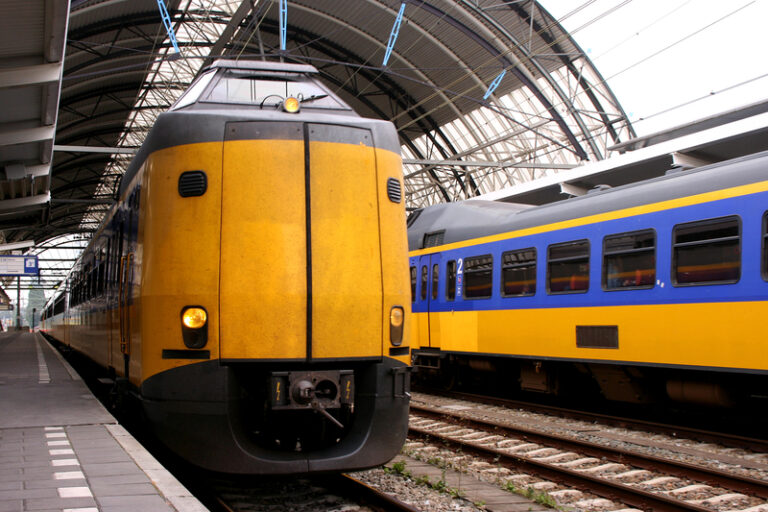
The planned discounted summer train subscription is set to begin on June 21st, if parliament approves.
As you may have heard, the Dutch cabinet wants to offer the flex dal vrij NS subscription for just €49 a month this summer.
This plan has been in the works since April, and if parliament approves, it will help alleviate the economic pressure of the current energy crisis.
What’s the deal?
According to NOS, the “climate ticket” runs from June 21 to September 1, covering unlimited travel on any NS route outside rush hour and at weekends. At full price, that same subscription costs nearly €128 a month.
However, the so-called “climate ticket” is proposed to run from June 21 to September 1. That window of just over two months is shorter than the three originally floated.
Parliament still needs to sign off
The deal needs approval from both the Tweede Kamer and Eerste Kamer before it can go ahead. State Secretary Bertram (Infrastructure) has pressed both chambers for a swift decision, warning that any delay would make the June 21 start date impossible.
The government has capped spending at €118 million, meaning there’s a hard limit on how many subscriptions can be issued, reports NOS.
Here’s hoping they can get it through in time.
Would the train pass change how you travel this summer? Let us know in the comments.
So, you’re parched and wondering if you can drink tap water in Amsterdam. Knowing where to get safe drinking water in a foreign country can be a little daunting, so what’s the deal in the Netherlands?
We’ve all heard horror stories about drinking tap water in foreign countries, and the last thing anyone wants on a vacation (or at any time) is to be stuck inside and on the toilet.
So, can you drink tap water in the Netherlands? Let’s take a look.
Is tap water safe to drink in the Netherlands?
Good news: tap water is totally safe to drink in the Netherlands, especially in Amsterdam, where tap water is often of better quality than bottled water.
In fact, tap water in the Netherlands shares the number one spot with six other countries for the safest drinking water in the world.
In the Netherlands, water companies use advanced technology to filter surface water without using chlorine or fluoride. High levels of chloride can be harmful to the environment, so it’s a major plus that Dutch tap water has none of it.
The calcium content is very low, making it softer water than other regions of Europe. Water that is referred to as “soft” causes less damage to appliances, like washing machines.
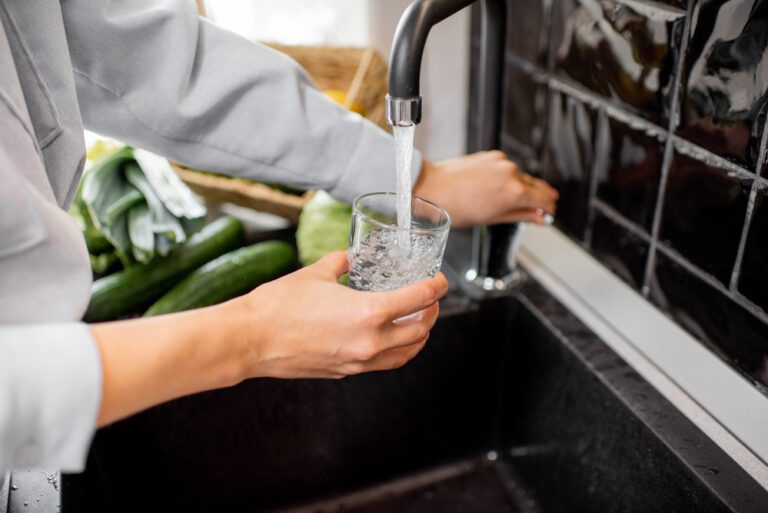
Dutch tap water tastes better than bottled water. Image: Freepik
Another bonus is that the taste is known for being good. In fact, it was found to be tastier than bottled water!
However, you may find that Dutch water tastes different from your home country — that’s because of the low calcium content.
Rest assured, it won’t take long for you to adjust. So don’t be shy to fill up your water flask and skip the store’s bottled water.
Is it safe to drink from public drinking fountains in Holland?
Public drinking water in the Netherlands is very safe since it is purified in the same way as regular tap water.
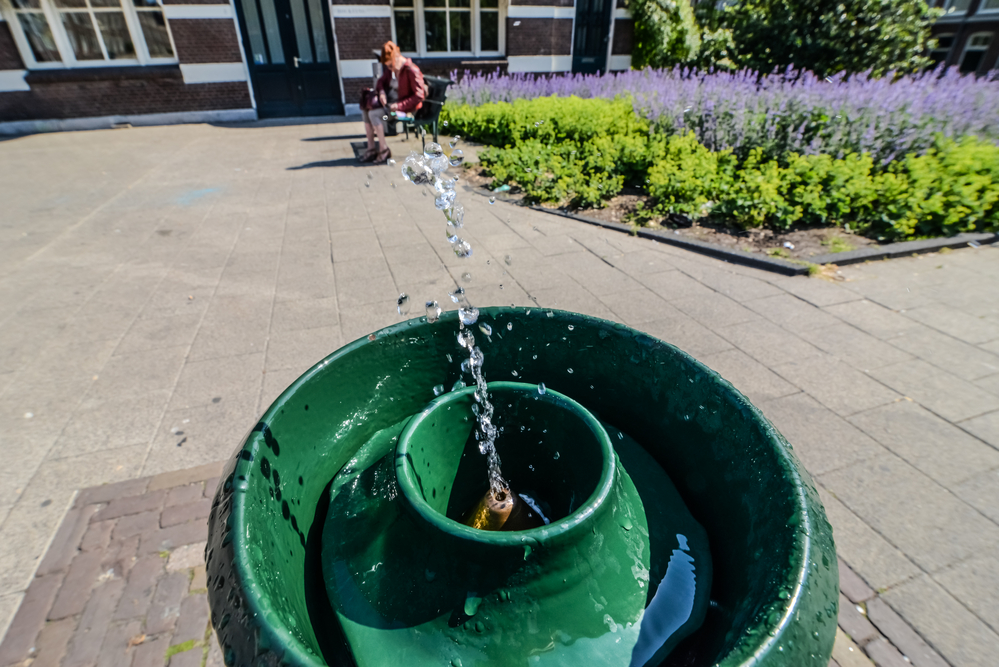
You can find drinking fountains all around Amsterdam, many of them colourfully painted or even mosaiced.
Water from drinking fountains is lekker! Image: Depositphotos
Additionally, there are water bottle filling stations, which you’ll find in many parks and streets.
There are even websites that help you locate the nearest drinking fountain wherever you are in Amsterdam. Now that’s cool!
Can you ask for tap water in a Dutch restaurant?
When going out for dinner in the Netherlands, you can ask for tap water, but most of the time, you’ll be charged for a glass or bottle.
If your stars align and the goddess of free water bestows an enchanted kiss upon you, you may stumble upon a restaurant that has no problem serving totally free tap water.
Of course, you can always ask the question of whether a restaurant charges for tap water.
Help! Why does Dutch water create white build-up on my tap?
As mentioned, the calcium content of Dutch water compared to the rest of Europe is low, but it’s still there.
Calcium build-up was something I had never encountered before coming to Europe, so when clumps of white started gathering in my kettle and around my taps, I had no idea what to do.
Calcium build-up is when white deposits start forming as a result of the calcium in the water. This can happen in your toilet, shower, taps and kettle.
It can affect the quality of water coming out of your tap, as the deposits can break off. This is particularly unpleasant and not very good for you, especially when the deposits end up in your cups of tea!
Luckily, there’s a simple solution to that. You can purchase products to clean out the calcium at supermarkets or stores like Action.
You can also use good old undiluted white vinegar, which you can soak your showerheads in for a new, shiny finish. I recommend cleaning out your kettle every month to prevent long-term build-up.
Have you tried the water in Amsterdam? Let us know what you think in the comments below!
An EU law is set to dispel Dutch workplace secrecy, bringing salary ranges into job ads, giving you the right to ask what your colleagues earn, and forcing companies to publish their pay gap data.
In most Dutch workplaces, talking about your salary is technically allowed… but most people would view it as a major gaffe.
However, that’s about to change with the EU Pay Transparency Directive, which the Netherlands is now working on writing into national law (albeit not as quickly as Brussels would like!).
What’ll change for employees in the Netherlands?
When the EU Pay Transparency Directive is implemented in the Netherlands, it’ll bring a serious to-do list for employers.
In particular, the EU directive stressed that job vacancies must include a salary (or salary range), and employers are no longer allowed to ask candidates what they currently earn.
The last point is crucial, as this question tends to anchor your new salary to whatever you were paid before, regardless of what the role is actually worth.
In addition to this, if you’re already employed by a company, the directive will give you the right to request information about your own pay level and how it compares to colleagues doing equivalent jobs.
For larger companies, the obligations go even further. Businesses with 100 employees or more will be required to report on their gender pay gap between men and women.
If a gap of 5% or more turns up in a job category without a clear justification, it’ll be mandatory for the company to create a full pay review and action plan.
An external monitoring body would then publish the results on a public website, so it wouldn’t just be internal box-ticking.
When is this actually happening?
Helaas, here’s where things get messy.
The EU deadline for all member states to write this into national law was June 7, 2026 — and the Netherlands has already announced it won’t make it.
A draft bill went out for public consultation in early 2025, but in September 2025, the government announced the timeline wasn’t feasible and then pushed implementation to January 1, 2027.
An updated version of the bill went to the Council of State in January 2026, which issued its advice in April 2026.
As of May 22, 2026, this bill needs to pass through both the Tweede Kamer (Dutch House of Representatives) and Eerste Kamer (Senate) to fully take effect.
However, the good news is that from June 7, 2026, Dutch courts are expected to interpret existing national law in line with the directive.
While that’s not as powerful as the full law being in effect, it does mean employers aren’t entirely off the hook in the meantime.
Would salary ranges in job ads change how you approach your next negotiation? Let us know in the comments.
Prosecutors are calling for a four-year prison sentence for a Dutch roadside assistance worker who ran over and killed a man who had stolen from him.
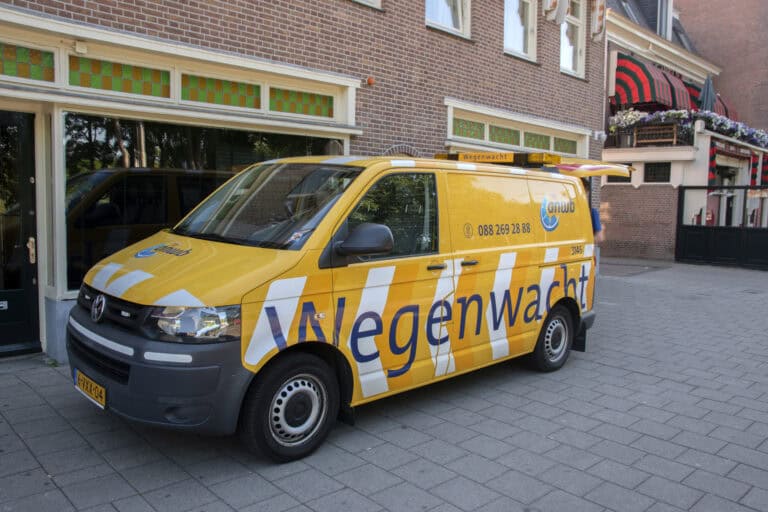
The unique case came to trial this week. According to NOS, in 2024, the wegenwachter (roadside mechanic), identified only as Wil van G., 60, chased down, struck, and killed a man who had stolen his phone and wallet.
Now, as the trial proceeds, prosecutors are seeking a four-year sentence for van G.
The thief stole his phone and wallet
It began on May 16, 2024, when Van G. was partway through a roadside job at a supermarket on the Urkhovenseweg in Eindhoven.
A 56-year-old man took advantage of the distraction, making off with Van G.’s phone and a wallet holding €600, both taken from the ANWB van while the mechanic had his back turned, reports NOS.
Van G.’s son used Find My Phone to pinpoint the device to a children’s play area on the Kempensebaan. When Van G. arrived, he came face to face with three men and recognised one of them as the person who had robbed him.
Van G. then confronted the thief
According to NOS, he confronted them loudly, a large tyre iron in hand. The man he’d identified as the thief jumped on a bicycle and bolted. Van G. then chased him in his van.
Footage played during the hearing showed the mechanic driving over a grass verge at high speed before ploughing into the cyclist. The thief was caught under the wheels, at which point van G. reversed.
The victim succumbed to his injuries in the hospital several days later.
Prosecutors seek a four-year sentence
Van G. sat slumped over and barely spoke before the three judges, reports NOS. He had already served seven weeks in pre-trial detention before being let out, as the prison system could not offer him meaningful mental health support.
He told the court he has not worked since the incident and depends on heavy medication to get through the day and sleep at night. He said returning to custody would kill him.
Prosecutors said they took his condition seriously, but argued the real issue was the manner in which he had pursued a man on a bicycle with a delivery van.
The Openbaar Ministerie (OM, public prosecutors) told the court that, whatever his intentions, the lethal risk of that choice was obvious to any reasonable person. They are seeking four years in prison and a five-year ban from driving.
A ruling is expected on June 4.
Where do you think the line is between protecting yourself and going too far? Let us know your thoughts in the comments below.
Moving to the Netherlands from the US means adjusting to Dutch life, from health insurance and taxes to local banking and learning a new language.
Trading stars and stripes for stroopwafels and Sinterklaas is a big step, so it’s essential to be prepared and do your research. Let’s run through the process together.
Before moving to the Netherlands: Checklist for US citizens
If you’re contemplating booking that flight from the US to Schiphol, it’s vital to run through some “must-haves” first.
1. Get a Dutch visa and residence permit
As a US citizen, the good news is that you won’t require a Dutch visa for quick visits to the Netherlands.
However, if you’re planning to live, work, or study in the Netherlands, you’ll need to apply for a Dutch residence permit. In most cases, these residence permits are mandatory for all visits longer than 90 days.
The first step to getting a residence permit is applying for a visa, but it’s good to note that there are different types of visas depending on your situation.
These are some of the most common visas and residence permits for US citizens:
The Dutch American Friendship Treaty (DAFT) visa
Thanks to a special treaty between the Netherlands and the US, American entrepreneurs can apply for the DAFT visa to set up their businesses in Holland.
However, certain conditions apply: you’ll need to be willing to invest €4,500 in your business, and you must register with the KvK (Dutch Chamber of Commerce) within 6 months of receiving your residence permit. The visa application costs €423.
See the IND’s full list of requirements for the DAFT visa here.
A Dutch residence permit for highly-skilled migrants
Are you an American who’s secured a role with a Dutch employer? If they’re a recognised sponsor by the IND (immigration department), you may be eligible for a highly-skilled migrant visa.
See the IND’s full list of requirements for a highly-skilled migrant visa here.
The European Blue Card residence permit
If you’re a highly qualified professional with a minimum of five years of relevant work experience, your employer may apply for a Blue Card residence permit for you.
See the IND’s full list of requirements for a European Blue Card residence permit here.
A residence permit for US citizens with a Dutch spouse or partner
If you’re an American married to or in a registered partnership with a Dutch citizen, you can apply for a partnership visa. Your partner can also apply for this visa if they have a valid Dutch residence permit.
They will need to act as your sponsor, and the two of you will likely need to provide proof of your marriage, registered partnership, or relationship. The visa application costs €254.
See the IND’s full list of requirements for a partnership visa here.
A Dutch student visa for US citizens
Are you an American who’s planning to study in the Netherlands? If you’ve been accepted into a Dutch university or education institution that’s a recognised sponsor by the IND (immigration department), you can apply for a student visa and residence permit.
In most cases, your university or college will facilitate the visa process for you, but you’ll need to prove you have sufficient financial means to support yourself and pay your tuition fees. The visa application costs €254.
See the IND’s full list of requirements for a Dutch student visa here.
2. Find housing in the Netherlands
If you’re an American who’s planning your move to the Netherlands, it’s vital not to underestimate the current housing crisis.
In 2025 alone, the Ministry of Housing reported a national shortage of nearly 400,000 homes, with approximately 434,000 applicants vying for the 38,000 properties on the market.
Between fierce competition, steep prices, and difficulty viewing properties if you aren’t based in the Netherlands yet, finding housing is an uphill battle.
That’s why it’s crucial to start looking for housing several months before you’re due to arrive.
Some of the most widely used platforms for internationals include:
Good to know: If you’re looking to beat the crowds, avoid big cities such as Amsterdam or The Hague. Smaller or mid-size Dutch cities will typically have more housing available at more affordable rates, though you’ll likely need to factor in the cost of commuting.
Natuurlijk, if you’re opting to rent instead of buy, it pays to come prepared. You’ll typically need:
A copy of your passport and/or Dutch residence permit
Proof of income, such as payslips or a valid employment contract
Sufficient funds to leave a deposit (roughly three months’ rent)
3. Arrange relocation from America to the Netherlands
Once you’ve secured a roof over your head, it’s time to tackle the logistics of moving continents.
Depending on the agency, your relocation company may be able to assist with your visa process, too. Image: Freepik
The most convenient option is arranging your move through a relocation company.
In addition to shipping your household items across the Atlantic, some relocation companies also provide other services, such as immigration advice, housing assistance, and more.
After moving to the Netherlands: Checklist for US citizens
Hoera, you’ve finally made it! But before you can settle into life as an aspiring Dutchie, there are a few essential tasks that you need to tick off your to-do list.
1. Register at your local Dutch municipality
The most important item on your agenda should be registering at your local municipality (gemeente).
Of course, this isn’t just a bureaucratic formality.
You’ll need to register at a valid address to receive your BSN (citizen service number), which is a requirement for almost everything in the Netherlands, from opening a bank account to signing your employment contract. (You can think of it as the Dutch equivalent of your Social Security Number.)
To register, you’ll need to book an appointment at your local town hall — also known as a gemeentehuis or stadhuis.
For the appointment, you’ll typically need:
Your passport
Proof of address (such as a rental contract)
Your birth certificate
Your letter of enrolment (if you’re a student)
Depending on your situation, you may be asked to provide some additional documents. It’s best to call your gemeente (municipality) and double-check what information they’d like you to provide.
2. Open a Dutch bank account
While Americans aren’t legally required to open a Dutch bank account, using a foreign card in the Netherlands can be… quite a hassle.
In our experience, it’s not uncommon for Dutch supermarkets, cafés, and shops to decline foreign bank cards (yes, even debit cards).
For many expats, getting a Dutch bank account isn’t just convenient; it’s an essential next step when it comes to integrating.
Especially if you’ve moved out of the Randstad, it’s far more convenient to replace your American Express credit card with a Dutch debit card. Image: Freepik
To open a bank account in the Netherlands, you’ll usually need:
Your BSN
A valid form of ID (such as your passport)
Proof of address (such as a rental contract)
Your university letter of enrolment (if you’re applying for a student bank account)
In certain cases, you can even open a Dutch bank account before you’ve physically landed in the Netherlands.
With their expat-friendly banking services and helpful, in-person customer support, INGis an excellent choice for Americans who want a Dutch bank account. Even better: you can sign up for an account via their handy mobile app, before you’ve even set foot in the Netherlands.
There are two main types of Dutch health insurance: basisverzekering (basic health insurance) and aanvullende verzekering(additional health insurance). Only the former is compulsory, but additional health insurance may be necessary to cover specific needs, such as advanced dental work.
It’s important to take out Dutch health insurance as soon as possible, because being uninsured may see you fined heavily by the CAK (the national body that oversees healthcare costs).
Good to know: Depending on your situation, you may be eligible for a Dutch healthcare allowance, also known as zorgtoeslag. Read the full list of conditions here.
Other things to set up as a US citizen in the Netherlands
When you’ve ticked the most important things off your list, it’s time to explore some things that aren’t essential, but will make your transition to Dutch life easier.
1. Get a Dutch mobile number
While you can technically survive with your US mobile number, you’ll likely be bleeding money in roaming fees.
Although prepaid SIM cards are available at Schiphol Airport (Amsterdam), many expats opt for more feature-rich SIM-only plans. Image: Freepik
Given that there are loads of budget providers on the market, most internationals opt to get a Dutch mobile number as soon as possible.
Generally, to get a local SIM-only plan, you’ll need:
Your BSN
A valid form of ID (such as your passport)
A Dutch bank account
Proof of address (such as a rental contract)
If you’re applying for a mobile contract, you may also be asked to pass a credit assessment.
2. Swap your US driving licence with a Dutch one
As an American citizen, you can legally drive on your US licence for up to 185 days, according to the Dutch Vehicle Authority. After this window, you’ll be obligated to get a Dutch licence (or hang up those car keys indefinitely).
However, if you’re unfamiliar with road rules in the Netherlands, it’s always a good idea to start with some driving lessons before jumping into your exams.
Are you a highly-skilled migrant for whom the 30% ruling applies? In this case, you can skip your Dutch driving exams and simply exchange your US licence for a Dutch one.
3. Understand the Dutch tax system
Moving to the Netherlands from the US means wrangling a whole new tax system, and it’s important to understand how it works, so you don’t incur any fines.
In addition to this, as an American, you may still be obligated to file your tax returns with the IRS.
However, the US and the Netherlands have a treaty to prevent double taxation, so you may qualify for foreign earned income exclusions or tax credits.
Dutch taxes can be stressful, especially with double taxation in the mix. Reaching out to a tax accountant is often the best choice for many expats. Image: Freepik
Consider reaching out to a tax accountant or advisor at your bank for advice about your situation.
Dutch taxes can be a headache, so it’s vital to manage your finances effectively. With a bank like ING, you can easily track your income and expenses, get real-time financial updates, and set aside money for a rainy day — all from the comfort of their cheery orange app.
4. Take a few Dutch classes
The Netherlands might be home to the best non-native English speakers in the world, but knowing some Dutch is an invaluable asset.
From understanding tax documents or official letters from your gemeente to enjoying some beers with your colleagues, having at least a basic grasp of the language will help you feel less like a visitor and more like a local.
And, if you’re in the process of making your move permanent, you’ll likely need to take the Dutch integration (inburgering) exam at A2 or B1 level. Starting lessons as soon as you arrive allows you to reach your language goals at a comfortable rate.
Moving to the Netherlands from the US: Frequently asked questions
Do Americans need a visa for the Netherlands?
If you plan to visit the Netherlands for a period shorter than 90 days, you don’t need a Dutch visa. However, for stays longer than 90 days, American citizens will need to apply for a Dutch visa and residence permit.
Is it cheaper to live in the Netherlands than in the US?
Unfortunately not. According to data by Numbeo, the overall cost of living in the US is actually 5.8% lower than in the Netherlands.
However, individual expenses like rent or groceries may be cheaper in the Netherlands, depending on which city you’re moving to.
What’s the easiest way for Americans to move to the Netherlands?
For many Americans, the simplest option is generally the Dutch American Friendship Treaty (DAFT) visa. This special visa allows US entrepreneurs and freelancers to set up their business in the Netherlands with minimal red tape, though an investment of €4,500 will be required.
American students can also apply for a student visa, provided they’re accepted by a valid Dutch educational institution.
Can I drive in the Netherlands with a US licence?
Yes, but only temporarily.
Once you arrive in the Netherlands, you’ll be allowed to use your US driving licence for up to 185 days. Afterwards, you’re legally obligated to get a Dutch licence.
What happens to my US taxes if I move to the Netherlands?
Unfortunately, Uncle Sam doesn’t want to let you go! As an American citizen, your income is subject to US income tax, even if you’ve moved across the Atlantic.
However, the two countries also have a treaty to prevent double taxation, so you may qualify for foreign earned income exclusions or tax credits.
The spring season comes with all sorts of public holidays in the Netherlands, and Pentecost is right at the top of that list.
Pentecost (also known as Pinksteren) falls on May 24 and May 25, so what’s there to expect from this holiday in the lowlands, and what are its origins?
A brief history of Pentecost in the Netherlands
Pinksteren is a Christian celebration signifying the day the Holy Spirit came down from Heaven and revealed itself to the Apostles. The date it’s celebrated depends entirely on Easter, always landing on the 50th day following Easter Sunday.
The day also commemorates the birth of the Christian Church, with some historians maintaining the belief that the tradition was celebrated as early as the first century.
While the main celebration occurs on Sunday, the real highlight for the general public is Whit Monday, locally known as Tweede Pinksterdag (Second Pentecost Day).
This day is an official national public holiday in the Netherlands, giving workers and students an extended long weekend and marking the official conclusion of the Christian Easter season.
Pentecost is typically a holiday for spending time with your loved ones. Image: Magnific
How is it celebrated?
Eerste and Tweede Pinksterdag are traditionally celebrated with music festivals, outdoor markets, and spring fairs spanning across the Netherlands.
Sunday tends to be a quieter family day, while Whit Monday is when the country comes alive with specific Dutch traditions. Across various regions, huge open-air flea markets (Pinkstermarkten) and neighbourhood fairs crop up, drawing thousands of bargain hunters looking for second-hand treasures and local food.
Historically, Pinkpop (the longest-running open-air festival in Europe) was always held during the Pinksteren weekend in Landgraaf.
Three of the Netherlands’ biggest banks, including ING, ABN Amro, and Rabobank, are backing a new European cryptocurrency, set to launch later this year.
The project is called Qivalis, and it’s built around a stablecoin, which is a type of digital currency designed to hold a steady value by being pegged to a real one (in this case, the euro).
ABN AMRO and Rabobank joined the consortium earlier this week as part of a wave of 25 new banks announced, while ING was one of the founding members.
What exactly are stablecoins (and Qivalis)?
Unlike Bitcoin or Ethereum, whose values can vary wildly from one day to the next, a stablecoin is a form of cryptocurrency backed by collateral — like euros, dollars, gold, or copper.
According to De Nederlandsche Bank, this collateral makes the value of stablecoins far more reliable than regular cryptocurrency.
In practice, they’re increasingly used by businesses to move money across borders quickly and settle financial transactions, without the time and cost factors of traditional banking.
However, the downside is that almost all stablecoins run on US dollars, which creates friction for European companies that want to transact in euros.
This is exactly the niche that Amsterdam-based Qivalis is trying to fill. Currently backed by 37 banks across 15 countries, the Dutch company wants to issue a euro-pegged alternative to the current stablecoins on the market.
“With over 25 additional banks joining, Qivalis is evolving into a genuinely shared European effort,” says Geert Wijnhoven, CTO of ING Wholesale Banking.
In his words, the project’s goal is to create a “common infrastructure that empowers clients to move value instantly, automate processes and operate seamlessly across borders in a more efficient way.”
Why are Dutch banks suddenly into crypto?
It’s a valid concern as, not too long ago, the Netherlands’ biggest banks wanted nothing to do with digital currencies.
ABN AMRO shelved a crypto wallet pilot “Wallie” in 2018, and Rabobank dropped a similar project (“Rabobit”) the year after. Now, they’re joining forces to help build a shared digital coin.
As reported by the FD, the sudden shift has a great deal to do with the situation in the US, where “dominant digital dollars” are being used to strengthen the “hegemony of American currency.”
Currently, almost 98% of the global stablecoin market runs on US dollars, controlled by American companies. And, as more assets (such as bonds and property) start being traded digitally, Dutch banks want to be the ones building these projects, not watching the US do it.
According to Christine Lagarde, President of the ECB, “Europe must respond by promoting euro-denominated stablecoins of its own”, or else it’ll face “a future of digital dollarisation and a loss of monetary sovereignty.”
Needless to say, the more banks that participate, the more useful a euro coin becomes, with more liquidity, broader reach, and a greater chance it actually gets used beyond a European experiment.
The good news is that Qivalis is gaining real momentum within the EU, with the project going from 12 founding members to 37 in under eight months.
So, when can you actually use this euro stablecoin?
Qivalis is targeting a launch in the second half of 2026, but first needs approval from De Nederlandsche Bank (DNB) to operate as a licensed electronic money provider.
So, if you’ve got an account at ING, ABN AMRO, or Rabobank, you aren’t likely to see any updates yet.
Should the project launch this year, it could eventually mean faster, cheaper cross-border payments and a more reliable way to hold digital euros.
However, not everyone’s convinced of the need for an EU-regulated cryptocurrency. ECB president Christine Lagarde recently argued that “the case for promoting euro-denominated stablecoins is far weaker than it appears.”
But with 37 banks now committed and a DNB licence application in progress, Qivalis is pushing ahead regardless.
Would you use a euro stablecoin from your Dutch bank, or does crypto still feel too uncertain for you? Let us know in the comments!
And that fear is now affecting the capital markets, with yields on 10-year Dutch government bonds hitting 3.316% on Tuesday — the highest level since 2011.
Lenders use these yields as their pricing reference for mortgage rates. So, when bond yields rise, your home loan gets more expensive.
Which lenders are raising rates?
De Hypotheekshop, a Dutch mortgage advisory firm, confirmed to De Telegraaf that the big three (ING, ABN AMRO, and Rabobank) are among those raising rates.
Martin Hagedoorn, a manager at the firm, told De Telegraaf the pace of change is striking. Rabobank, for example, typically adjusts its rates on Mondays, but updated them this Wednesday due to the extreme volatility in the market.
As reported by De Telegraaf, the average rate for a ten-year home loan with the NHG (Nationale Hypotheek Garantie, the Dutch national mortgage guarantee scheme) hit 4% — up from 3.7% before the latest escalation in West Asia.
Experts like ING economist Sander Burgers point out that increases are likely to continue for another week or two, as lenders haven’t yet fully absorbed the rise in capital markets, making further hikes likely.
However, there’s some optimism in the mix: Burgers noted that the current move is modest compared to the 2022 surge, when rates climbed from around 1.5% to over 4% following Russia’s invasion of Ukraine.
What does this mean for house prices?
Dutch house prices were already cooling in the first quarter of 2026, with demand softening amid global economic uncertainty. The current rate spike is unlikely to help.
Higher borrowing costs eat into what buyers can actually pay, which typically puts downward pressure on property values.
However, Burgers says the bank expects house prices to remain broadly stable by year-end, with affordability constraints among the reasons.
Burgers said in his research that experts foresee “slightly fewer sales and downward pressure on prices this year, but that this dampening effect will fade over time.”
Clearly, the dust hasn’t settled, but thankfully, experts aren’t predicting a repeat of 2022.
How is this week’s rate spike affecting you? Let us know in the comments.
The Netherlands and several other countries have rounded on Israel over footage showing detained Gaza flotilla activists being forced to the ground, hands bound, while a senior Israeli minister laughed and waved a flag.
The scenes emerged after Israel illegally intercepted the Global Sumud Flotilla in international waters near Cyprus on Monday.
The convoy of vessels, carrying aid to relieve Gaza and around 428 activists, was boarded by Israeli forces and escorted to the Israeli port of Ashdod. Among those detained are six Dutch nationals, NOS reports.
The video that sparked fury
Israeli National Security Minister Itamar Ben-Gvir shared footage on X of his visit to the detained activists, and the backlash was swift.
In the video, a woman with her hands bound is roughly forced to the ground after shouting “Free, free Palestine.” Ben-Gvir is then seen grinning and waving an Israeli flag.
Elsewhere in the footage, dozens of activists are shown kneeling face-down, hands tied behind their backs, with the Israeli national anthem playing in the background.
Human rights lawyer and former UN special rapporteur for human rights in Palestine says global outrage at Israel’s Ben-Gvir over the ill treatment of Gaza flotilla activists, who were recently abducted by Israeli forces, is 'a long time coming.' pic.twitter.com/C4a08nWzzy
Meanwhile, Israeli Transport Minister Miri Regev also posted a video of herself with the detainees, describing the scene as the consequence of “coming to break the blockade of Gaza.”
Dutch government summons Israeli ambassador
Dutch Prime Minister Jetten called the treatment mensonterend (degrading) on social media, saying it “goes beyond all limits.”
As confirmed in a post on X, he raised the matter directly with Israeli President Herzog.
Foreign Minister Berendsen went further, describing both the treatment of the activists and Ben-Gvir’s behaviour as “completely unacceptable.”
He contacted his Israeli counterpart and summoned the Israeli ambassador to the Netherlands for an explanation. Both Berendsen and members of parliament are demanding an apology from Israel.
“They must be treated with dignity,” Berendsen said of the six Dutch detainees. “Based on these images, we have serious concerns about that.”
He also called on Israel to fully cooperate in ensuring their safe and prompt return to the Netherlands.
Netanyahu distances himself (but only so far)
Israeli Prime Minister Netanyahu acknowledged in a statement that Ben-Gvir’s conduct did not reflect “the norms and values of Israel.”
However, he stood behind the decision to intercept the flotilla and ordered the activists deported “as soon as possible,” referring to them as “provocateurs.”
The Netherlands wasn’t alone in its condemnation. Italy and France also summoned their Israeli ambassadors.
Italian Prime Minister Meloni, not the most liberal leader in Europe, shall we say, called the treatment of detainees, many of them Italian nationals, “unacceptable” and a violation of human dignity, demanding their immediate release.
Canada, Portugal, Spain, and Ireland also added their voices to the criticism, with Ireland’s foreign minister stating the activists had been detained illegally.
Two of the Netherlands’ most popular supermarkets are recalling certain nut products over fears they may contain metal particles.
Both Albert Heijn and ALDI have issued urgent safety warnings, pulling specific batches of their products from sale.
If you’ve bought nuts from either supermarket in the past week, it’s time to check your kitchen cupboard.
Which products are affected?
At ALDI, the product in question is Trader Joe’s Cashewnoten ongezouten (unsalted cashew nuts) in a 170g pack, with the EAN-code 2003020120930.
The cashew nuts in question. Image: Aldi
Only the batch with the best-before date September 23, 2026, is affected; ALDI says all other batches are fine.
The recall is being carried out on behalf of supplier Snack Connection B.V., following a production error that may have introduced metal particles into the product.
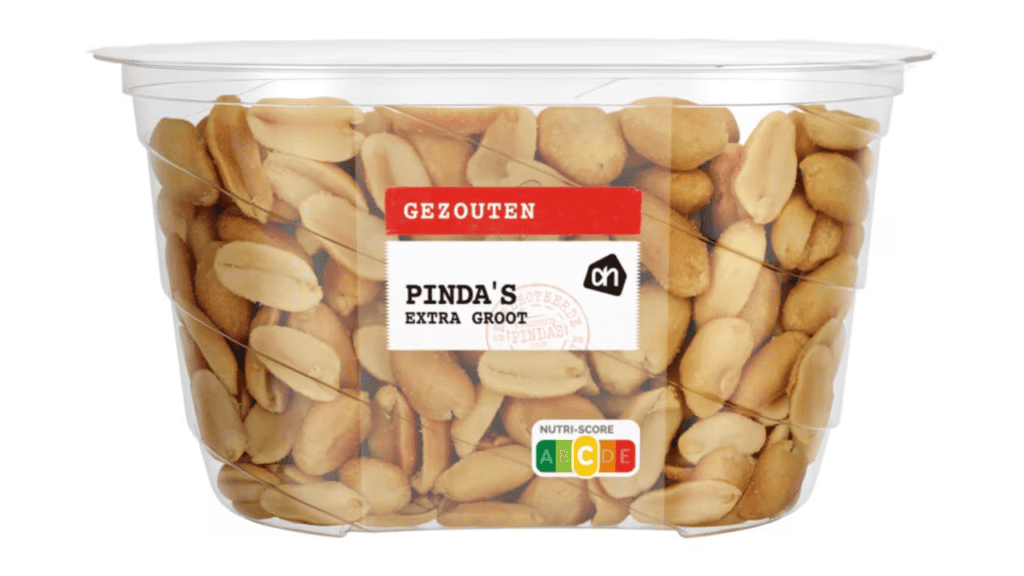
Meanwhile, at Albert Heijn, it’s the AH Pinda’s extra groot gezouten (an extra large tub of salted peanuts), with the best-before date November 4, 2026. Again, all other batches are not affected.
The peanuts in question. Image: Albert Heijn
Both supermarkets warn that consuming the recalled products could be dangerous to your health, with ALDI specifically flagging the risk of injury.
What should you do?
Needless to say, don’t eat the nuts.
Take them back to the store instead, opened or unopened. Both retailers will give you a full refund.
If you bought the Albert Heijn peanuts online, you can also request a refund by filling in this form or by contacting AH’s customer service page.
ALDI customers with questions can get in touch through the ALDI contact form.
Have you bought either of these products? Let us know in the comments, and please do pass this warning on to any snack-loving friends who might have stocked up.