Ah, the tompouce. Some may say this pastry looks like a cake made by children for children. But don’t underestimate this fragile square of vanilla cream — it’s considered royalty in the Netherlands.
Okay, maybe it’s not exactly royalty, but it is indeed eaten on Koningsdag(King’s Day) to celebrate the King’s birthday.
And just like royalty, it shows up at all the important events of the year…
You’ll see orange tompouces for King’s Day, pink tompouces with heart-shaped sprinkles for Valentine’s Day, spider-web glazed tompouces for Halloween — you get the picture.
However, one thing you won’t see is Dutchies agreeing on how to eat it. 👀
What is it?
The tompouce is a 4X10 centimetre (yes, precisely) puff pastry consisting of vanilla cream and topped with colourful frosting.
It’s similar to what other countries call a Napoleon cake, but the tompouce has a much longer history.
The legend goes that an Amsterdam pastry chef named the dessert in 1858 after seeing a little person called Tom Pouce perform at a circus in Friesland.
Is it true? We’re not quite convinced, but since we can’t exactly ask him, let’s roll with the folklore. 🤷♀️
Why do they do it?
Traditionally, Dutchies eat orange-glazed (duh) tompouce on King’s Day, but the treat tastes just as good and is almost equally popular around the year. 😍
They’re associated with the royal celebration because the Dutch royals eat tompouce when a new baby is born, rather than the biscuits with muisjes of commoners.
Why is it quirky?
The pastry itself is not necessarily quirky, but the way it’s eaten is. 👀
Tompouces are fragile things — the puff pastry dough is not quite firm enough to cut into, and the cream filling is soft enough to go everywhere if you attempt to bite into it.
So how do you go about eating it?
Just had a crompouce, which is a combination of a tompouce (Dutch pastry) and a croissant.
In the Netherlands, there are largely four (more or less) accepted ways to eat your tompouce. 👇
Take the top slice of puff pastry from the cake and place it on the bottom. Now, you can bite into it without the cream getting smushed out between the layers.
Smush it with a fork. It’s all going the same place anyway!
Split the tompouce in two on the horizontal side. This way, you get an equal amount of cream with each slice of pastry.
Just bite into it. This will likely be messy.
Should you join in?
Sure! If you like sweet things, tompouces are delicious!
Plus, you’re not properly integrated until you’ve struggled (and maybe succeeded, but definitely laughed) while eating one of them. 😂
What do you think of this Dutch quirk? Have you experienced it? Tell us in the comments below!

👉 Want more Dutch quirks? We have the ultimate list!
Dutch weather can get us down sometimes. As soon as it gets gloomy (like, 99% of the time in the Netherlands), our mood can dip.
The most important advice is to stay busy — especially in the winter when the weather is constantly bad. But what should you be doing?
Here are 27 ideas for activities to keep you busy and entertained during the sleet and storm.
1. Find local concerts in your city (big or small)
It doesn’t have to be a big and unnecessarily expensive Taylor Swift concert. Instead, head to a local music bar in your city to see local bands or a smaller artist performing in an intimate venue.
There’s nothing like singing at the top of your lungs in a room full of strangers. Image: Julia Moritz/DutchReview
It’s a great way to discover new musicians, get out of the house, make new friends, and cherish a memory you’ll reminisce about forever.
2. Try an indoor sport
Bouldering, bowling, squash, gymming, swimming, go-karting, you name it!
These sports will keep you active and get some adrenaline going, all while you’re out of the rain and surrounded by heaters.
When was the last time you went bowling? Image: Depositphotos
Gather your friends, get creative, and find a way to get moving while staying warm.
3. Host weekly hangouts with your friends
This can be any activity you choose, but there is only one rule: spending quality time with your friends.
What better way to beat the rainy-day blues than having a good old-fashioned hangout?
There’s nothing like a little bit of gossip to get your heart rate up. Image: Freepik
Whether it’s a weekly movie night, a rotating dinner with a theme, or a game night, having a regular plan is a sure way to get some good vibes.
4. Go to a pool bar
“I can’t play pool, I can’t aim, my hand-eye coordination is awful.” All excuses until you’re down a pint of beer. Suddenly, you’re a pro at pool.
Don’t worry; this writer did make the winning shot. Image: Julia Moritz/DutchReview
But this rainy day activity is so fun regardless of how drunk you are. You can go with one person or a whole group, or your friends can teach you (bonus: it’s a charming date idea 😏).
5. Go axe-throwing
Maybe this is a bit niche, but trust us, it’s so fun. Get in touch with that primal, primitive, caveperson side of you and see if you can hit the bull’s eye.
There’s nothing like getting in touch with your primitive side. Image: Depositphotos
Hurling axes at a wall is truly an underrated activity. You’ll walk away from the arena feeling like the toughest person in the world. Need we remind you, Northern Europe is Viking territory already.
6. Make your home extra cosy
Homebodies, don’t worry, we’re thinking of you too. The truth is, there’s no point in wishing it were summer in the middle of winter.
When was the last time you built a blanket fort? Image: Depositphotos
So lean into it with some candles, fairy lights, and lekker hot chocolate (whipped cream optional but encouraged)!
Also, don’t forget to wear fluffy socks and a little paper crown. You might not feel like the queen of winter, but rest-assured, you are the queen of your blanket fort!
7. Visit an arcade
If you want to go outside but don’t want to be super active, head to an arcade! This wasn’t just cool 40 years ago. They’re it’s still fun!
When was the last time you played Pac-Man? Image: Dreamstime
Whether you want to tear up the dance floor with Dance Dance Revolution or shoot at some zombies, there’s something for everyone.
8. Go to an escape room
Calling all mystery book lovers, riddle solvers, and adventure seekers! This one’s for you.
There’s nothing better than an escape room to escape your rainy-day thoughts. Bring your friends and figure out who’s the best at solving puzzles. 🕵️♀️
9. Have a spa day
Why not treat yourself? Get a massage, wear a fluffy robe, and sit in a sauna to beat the cold.
Who said you had to leave your house for a spa day? Image: Depositphotos
Okay, maybe a fancy spa day isn’t in your budget. Geen probleem, do an at-home spa! Enjoy a hot shower with a body scrub and a nice-smelling shampoo, lather on a face mask, paint your nails, and light some scented candles. 🕯
Lucky for you if you live with someone who you can convince to give you a massage. Make use of it!
10. Go ice-skating
Of course, you have to go ice skating! It’s the quintessential winter activity. Find an ice-skating rink in your city and live that winter wonderland dream.
There’s no quintessential winter activity like ice skating. Image: Freepik
If you’re lucky, you might even find some frozen canals around you!
11. Visit a museum or art gallery
Modern, Abstract, Renaissance, Surreal, Cubist… You name the art movement, and the Netherlands has it. Surrounding yourself with beauty is perhaps the best way to spend your day. Bad weather who?
The Rijksmuseum is so massive that it’ll fill your entire day. Image: Depositphotos
You might also find inspiration by studying old paintings and reading the descriptions alongside them.
12. Have “remote work dates” with a friend
Maybe you can’t quite escape the workday to do all these fun activities, but don’t be too quick to blame your boss! Kill two birds with one stone and plan a home office day with a friend.
You’ll feel like one of those Instagram girls who have their lives together. Image: Depositphotos
Meet up at one of your houses or a cute café. This is especially nice if you work remotely and miss social interaction.
13. Join a class to learn something new
Perhaps your intellect has started declining from all the doom scrolling on Instagram. Time for you to expand your brain! 🧠
Imagine eating cereal from a bowl you made. Image: Freepik
Pottery, painting, drawing, cooking, whatever you like, find a class in town and go all in. It’ll hold you accountable for leaving the house and introduce you to some new people.
14. Plan a weekend away with friends or family
Okay, maybe sometimes there’s just nothing to do about it, and the weather sucks. That’s when you plan a trip.
Hop in a car, bus, or train, and spend three days somewhere in the south of Europe with better weather. No shame in getting some escape from the gloom and hitting the “reset” button in your brain!
15. Get a big, cosy, waterproof, warm coat
If you have to leave the house and weather the storm, make sure to have the right armour (made up of goose feathers and impermeable material!).
Trust us: when cold hail is hitting you left, right, and centre, you’ll be happy to have invested in a good coat.
16. Call all of your friends until one of them picks up
Sometimes, it’s just too miserable to go outside. We get it. But if you’re feeling a bit lonely or just want some chat, that’s when you call someone!
There’s nothing a quick call with your Mama won’t solve (or maybe it leaves you more triggered 🤪). Image: Pexels
17. Start a workout challenge
Want to take a class, but not much of an artsy person? Try out boxing, karate, dancing, or yoga. You never know until you try. What if yoga has been your higher calling all this time?
There’s nothing wrong with regulating your nervous system with some movement. Image: Depositphotos
And if you’re not feeling up for a whole class, check out something on YouTube or challenge yourself to work out every day for a month. This could be your winter arc! 💪
18. Start pet-sitting
It’s truly underrated what a little furry friend can do.
Whether it’s a hyperactive puppy or a wise old cat, their fluffy little ears will definitely bring some light back into your life.
How could you ever turn down an offer like this? Image: Depositphotos
And what’s better than getting paid to hang out with these little guys? Surely, someone near you needs a pair of eyes to watch over their furry friend for a weekend or two.
19. Maybe don’t skip your work borrel
Look, we know. Not everyone has a super lovely, friendly, welcoming work environment. But hopefully, you have at least one co-worker you can latch onto while you sip some beers.
The Dutchies are definitely on to something with this borrel culture. Image: Depositphotos
Best case scenario, everyone you work with is nice, and you discover their real-world, outside-of-work personalities.
This one just makes sense, doesn’t it? It’s chilly out; you’ve got your fluffy socks on, a blanket, and a movie. What’s missing? A nice, warm beverage in a cute little cup.
Maybe this can be the year that you perfect your hot chocolate recipe.
You find the best cocoa in town, with the perfect type of milk, add in some whipped cream and maybe even some marshmallows if you’re feeling crazy. No judgment here!
21. Sleep and eat more
Trust us, you need to sleep more and eat more in the colder months.
Your body needs more fuel at this time because it uses so much energy to keep you warm. So, if you find yourself hungrier and sleepier, snack and nap away! 🛌
Nothing better than closing your laptop and giving in to that afternoon sleepiness. Image: Depositphotos
Although if you like having a monthly paycheck, maybe wait until you’re clocked out.
22. Take an online course
An online course could be about anything. In this day and age, you can learn an astounding amount of skills on the internet, often for free.
Taking a class in something that genuinely interests you can be extremely rewarding. Image: Depositphotos
Surely, there’s something you’ve been meaning to learn about and have been putting off. Maybe it’s cooking, or perhaps it’s a language, personal finance, history, shoemaking — anything!
23. Rearrange your furniture
Ever heard of feng-shui? Rearranging your furniture might just rearrange your mood. Try switching your sofa with your dining table, or your bed with your closet.
It’ll leave your home feeling fresh and new. Image: Freepik
Maybe you’ll hate it and change it back, or maybe not. Either way, you beat the boredom — and maybe you’ll make your house a little cosier in the process!
24. Knit yourself a sweater
Much like a perfect cup of tea, this one just fits in with the whole vibe. Turn on a series on Netflix and knit away.
We do not take responsibility for the tears shed if you make a mistake. Image: Depositphotos
It’s a very calming hobby, and there’s nothing cooler than wearing a sweater you made yourself!
25. Get your driver’s license
Let’s face it: gloomy days can get boring. But if you’re bored anyway and looking for something to do, why not get your Dutch driver’s license?
It’s not easy, but it’ll be so rewarding when it’s done. Image: Freepik
It’s admittedly not the cheapest thing you’ll ever do, but maybe you can use the autumn and winter months to crack down, take some lessons, and gain a new skill. 🚗
26. Buy a onesie, fluffy socks, and a hot water bottle
Look, the Dutch weather isn’t going to improve just because you’re staring longingly at a Ryanair flight to Spain. It’s time to stop whining and embrace the endless grey drizzle.
Throw on your thickest HEMA thermal leggings, grab a hot water bottle, and accept that this is your life now. Trust us, once that hot water bottle hits your tummy, you’ll finally understand what gezellig actually means.
At what point does a love for an inanimate object become unhealthy? Asking for a friend. Image: Julia Moritz/DutchReview
Just fill it up with water from your tea kettle and hold it to your torso. Soon enough, you’ll be addicted to the warmth and never want to go back.
27. Learn how to play an instrument
Start with something small if you have to, like a harmonica, a tambourine, or a ukulele. Or, if you want to go for the classic, why not try your hand at the guitar?
You can find the chords to a lot of songs on Ultimate Guitar! Image: Depositphotos
You might not be the next Jimi Hendrix, but at least you’ll be able to play one song by heart. So when the next house party comes around, there will be no stopping you!
Whether you’re out making memories or leaning into the cosy vibes at home, the secret to beating the gloom is simply making the most of it.
What are your favourite ways to survive the gloomy Dutch weather? Tell us in the comments below!

It’s that time of the year — let’s talk about seasonal depression in the Netherlands. Mental health in the Netherlands is a topic that we discussed before, but today we want to focus on Seasonal Affective Disorder or SAD.
Before we dive into the topic of Seasonal Affective Disorder (SAD), please consider contacting your GP as soon as you can if you or someone you know is exhibiting very serious symptoms of a breakdown or could potentially harm themselves or people around them.
You can also call these helplines:
Suicide prevention Netherlands: 0800 – 0113
Samaritans: 0602 222 88
We can also understand the nervousness and anxiety you must feel when moving to a new country with an already existing mental or physical health issue.
If you want to know everything about healthcare and health insurance in the Netherlands, check out our guide. You can also find out everything you need to know about mental healthcare in the Netherlands here.
Seasonal Affective Disorder (or SAD)
Have you ever had the feeling that you’re entering into hibernation mode during the winter months, where you sleep either too much or too little, eat way too much or too little, and avoid social gatherings because you seriously lack the energy to get out of your house?
An aspect of depression can be isolation and loneliness. Image: Freepik
You might tell yourself that you just can’t be bothered to go out because it’s too cold, or that you prefer your own company. Even running necessary errands like going to the grocery store becomes a chore, and the things on your to-do list just keep getting longer.
If you feel like this in the colder months of the year, then you might have Seasonal Affective Disorder, or SAD for short.
If you relate to these symptoms, you may have Seasonal Affective Disorder. Image: Depositphotos
Although it’s different from depression, it is more common among those with a pre-existing depressive disorder. People with SAD usually show symptoms during late autumn or early winter and resume normal mental health during the spring and summer.
There are also cases where the symptoms begin in spring or summer. This disorder makes the person exhibit mild to moderate depressive symptoms, which start to get more severe as the season continues.
Symptoms of seasonal affective disorder
According to Mayo Clinic, the symptoms of SAD include, but are not limited to:
Feeling depressed for most of the day on most days
Lack of motivation or interest in doing things you once enjoyed
Lack of energy
Lack of sleep (insomnia) or sleeping too much
Eating too much or too little
Fatigue
Finding it hard to focus
Feelings of hopelessness or guilt
Suicidal thoughts or thoughts about death
Some symptoms are specific to winter and autumn depression and may include:
Oversleeping
Change in appetite and craving more carbohydrate-rich foods
Gaining weight
Feeling tired all the time
Other symptoms are specific to summer and spring depression and may include:
Insomnia
Loss of appetite leading to weight loss
Restlessness or anxiety
What causes SAD?
SAD was first mentioned in medical literature as early as 1845 and was dubbed as such only in the 1980s. The causes of this disorder are yet to be established. However, there is a correlation between SAD and a lack of light.
Without getting bogged down with too much medical terminology, the important terms to know about are the hypothalamus, the part of your brain that maintains hormonal balance; melatonin, the hormone which monitors your sleep cycles; and serotonin, the brain chemical or neurotransmitter which affects your mood.
The lack of light during Dutch winter can impact your internal biological clock. Reduced light is linked to a drop in serotonin levels, which are related to symptoms of depression.
Melatonin levels are also affected by the change in seasons, where darkness produces more of the hormone, making us more sleepy.
In the summer or spring, the body could have exhausted the hypothalamus during the winter months, thus leading to the improper functioning of this part of your brain.
Who is more likely to suffer from SAD?
This disorder has been diagnosed more in women than in men, and it affects younger adults more than older adults. The risk of having the disorder increases if you have a blood relative who has this disorder or another form of depression.
If you have major depression or bipolar disorder, your symptoms can worsen during the same time of the year.
Lack of sleep or too much sleep are both symptoms of SAD. Image: Depositphotos
If you have or are at risk for any of the above-mentioned factors, be sure to tell your doctor or the mental health professional who’s treating you.
What can be done to help with SAD?
If you are exhibiting mild symptoms, the following tips may help. But seek medical help as soon as possible before it starts to severely affect your work and quality of life.
Maintaining a healthy sleep schedule
As mentioned before, it can get difficult to wake up in the morning or get to bed at night because of changes in your hormone and brain chemical levels.
If it’s only mild symptoms that you are exhibiting, try to get to bed and wake up at the same time every day. Be sure to get at least 7 to 8 hours of sleep between the same times. This may seem silly, but sleep affects much more than we realise.
Maintaining a healthy sleep schedule can help your mental health. Image: Freepik
Be sure not to use your computer, stare at your phone screen right before bed, or stimulate your brain too much. Make your room as dark as possible by closing the curtains so that no streetlights keep you up.
To make yourself sleepy as your bedtime approaches, you can take a relaxing shower, have a cup of tea, or get your to-do list together for the next day.
Bonus points if you want to write down a few good things that happened to you that day! Being depressed can make you feel like nothing is going right, but this can make you realise it’s not all bad. Even if some good things are very small, it’s better than nothing!
Dust off your gym clothes
Exercise, even when your brain tells you not to. Start off small: start with a walk. Remember: anything is better than nothing.
Do this for a week, increasing your distance slowly. Slowly build up your stamina by turning your walks into jogs, and try to keep increasing the distance you cover.
You can even try to do yoga at home. Image: Depositphotos
If jogging is not your thing, geen probleem! Your bike is there when you need it. You can also join the gym, take up yoga, try Zumba, salsa, kickboxing, or even rock climbing! Basically, any physical activity is good for you. It is up to you to decide what kind.
Light therapy
Yes, there is something called a SAD lamp (or the more positive “happy lamp”, they both mean the same thing), and you can buy it on Bol! It’s basically a lamp that emits light which mimics sunshine.
Portable sizes can be bought, and you can keep one in your office and use it throughout the day while you work away at your computer. But be sure to consult your doctor so that it is the most effective for you.
“Sunshine” vitamin supplements
The lack of sunlight can also be linked to vitamin D deficiency. When there is no natural source of vitamin D, like the sun, it is important to incorporate it into your diet.
seasonal depression kicking my ass already, feeling exhausted, drained of energy and motivation, creatively uninspired, groggy and miserable pic.twitter.com/uDAyQe5CyS
The foods which are rich in this vitamin are dairy products like milk (soy milk for the vegans), cheese, and citrus fruits like oranges. Consult your doctor for more options and to consider adding vitamin D supplements to your routine. They can help you determine the dosage.
Rely on your support system
Your support system is the group of people who you can always rely on to take care of you when you cannot take care of yourself.
Living as an expat, especially if you have recently arrived, can be extremely lonely. It is understandable if you feel like you do not have anyone like this in the country yet.
It becomes difficult to be social if your symptoms are really severe, and that is a point you do not want to reach. Moving to a new country is all about breaking out of your shell, right?
Gather some friends and find something fun to do with them! Bonus points if you find a Christmas market. Image: Depositphotos
You can build that support system by going to classes (this is where that physical activity tip also comes into good use) and meeting people with similar interests. Invite your co-workers out for lunch, or have them over for dinner.
Or turn that around if you know someone who is new and does not know a lot of people. You know how hard it is to be the new kid on the block. Use your experience so that it’s a little bit easier for the newbies. We are all in this together, after all!
Seasonal depression can be very challenging sometimes. When it starts to get tough, it can help to go back to the very basics: sleep, food, movement, and loved ones.
But, if none of these tips helps you, contact your GP and get help because mental health sometimes needs additional help.
Have you experienced seasonal depression in the Netherlands before? Do you have more tips? Let us know in the comments below!

Authorities and experts in the Netherlands are beginning to realise… We don’t need the United States of America.
“Throw the USA out of NATO!”, “Blacklist FIFA!”, “Stop exporting semiconductors to the States!” These are some of the sentiments spreading across Dutch media this week.
Renowned Dutch voices are speaking up against America, following Trump’s aggressive threat of an additional 10% tariff on all European nations sending troops to Greenland.
And since Trump still can’t seem to grasp that Greenland isn’t a piece of real estate up for grabs from Denmark, here is how the Netherlands are actually responding, according to AD.
A call to kick the US out of NATO
While McDonald’s has already snuck its way into every corner of the globe, according to the experts, the real issue isn’t just America’s cultural omnipresence. It’s the fact that we’ve allowed one orange man to bend international law to his every whim.
Rob de Wijk, a geopolitics columnist for Trouw, has urged European NATO members to expel the United States from the alliance.
Calling Trump’s leadership in NATO “useless,” the writer rallied for the now-former European allies to regroup.
Critical of Europe’s dependence on America, de Wijk wrote: “I constantly hear the mantra that we can’t do without America. Nonsense. It’s a matter of will.”
Stop selling ASML chips to the US
Similarly, the former Commander of the Dutch Armed Forces, Dick Berlijn, rallied for a more strategic approach.
“I think Europe needs to be more vocal about our position,” Berlijn tells NRC. “For example, ASML should no longer be allowed to supply American companies.”
ASML is a Dutch tech giant that holds a near-monopoly on the lithography machines essential for making the world’s most advanced microchips.
Boycott the World Cup
Over the weekend, Bernard Welten, former chief commissioner of Amsterdam, wrote a LinkedIn post calling to boycott the World Cup, which is to be held in the US next summer.
Now a member of the police’s scientific advisory board, Welten advocates for a symbolic action because “silence is no longer a neutral position.”
Welten is sounding the alarm on Trump’s bullying tactics, insisting it’s high time for the allies to step up and tell the White House: enough is enough.
He writes, “That would be a scene that still makes sports blush with shame; never before has it sold its soul so unashamedly and allowed itself to be turned so easily into a dictator’s propaganda vehicle.”
In one of the most pathetic and humiliating moments in history, Trump just received the new inaugural FIFA Peace Prize.
They literally invented a “peace prize” to keep him happy after he didn’t receive the actual Nobel Peace Prize. Beyond parodypic.twitter.com/I1ahYRCz85
But why shove politics into sports? Some might rebut.
Welten argues that Trump and FIFA have already crossed that line.
Aside from FIFA’s “peace prize” invented especially for Trump (turning football into MAGA bootlicking), America’s strict travel bans would prevent fans from at least 17 countries, including Brazil and Senegal, from supporting their team.
As experts and idealists finally speak out against Trump’s chokehold on the world, we stand to witness the beginning of a long-repressed EU versus US duel.
Donald Trump’s latest tantrum has Dutch politicians calling him out for what it is: blackmail. The American president is threatening eight NATO allies, including the Netherlands, with punishing tariffs unless they help hand over Greenland to the US.
It seems that the Dutch and the rest of the EU aren’t having it this time.
Trump announced he’ll slap an additional 10% import tariff (potentially rising to 25%) on eight European countries that dared to participate in Denmark’s Arctic military exercise.
The crime? Sending soldiers to Greenland, which Trump has decided belongs to America, despite it being part of NATO ally Denmark.
The Netherlands sent two military personnel to Greenland, which Trump apparently considers a nuisance to his imperialist ambitions.
“This is blackmail,” says Dutch minister
Outgoing Minister of Foreign Affairs David van Weel didn’t mince words when he appeared on WNL op Zondag. He called Trump’s threats “blackmail” and a “ridiculous proposal,” according to RTL Nieuws.
“This is not how allies treat each other,” Van Weel said, adding that the next two weeks must be used to get Trump’s tariff threats off the table entirely. If that doesn’t happen? “All options are open.”
Despite the threats, Van Weel confirmed the Netherlands won’t be withdrawing its two military personnel from the mission.
Originally, only one naval officer was being sent, but a logistics planner has now been added to the team.
For context, these proposed tariffs would come on top of the existing 15% import levy already in place on most EU goods. So Trump wants to pile an extra 10% to 25% on top, potentially making Dutch exports to America significantly more expensive.
The Netherlands isn’t facing this alone. Eight NATO countries issued a joint statement condemning Trump’s threats: the Netherlands, Sweden, Norway, the United Kingdom, Germany, France, Finland, and Denmark.
Outgoing Prime Minister Dick Schoof posted the statement on X, declaring that the tariff threats “risk undermining” relations between Europe and the US. The statement emphasises that the Arctic exercise is a “shared trans-Atlantic interest” and “poses no threat to anyone.”
Statement by Denmark, Finland, France, Germany, the Netherlands, Norway, Sweden and the United Kingdom:
As members of NATO, we are committed to strengthening Arctic security as a shared transatlantic interest. The pre-coordinated Danish exercise „Arctic Endurance“ conducted…
D66 leader Rob Jetten, the next PM, and CDA leader Henri Bontenbal, who are currently in negotiations to form the next Dutch government together with the VVD, were equally scathing in their criticism.
Jetten called it “unprecedented” for America to take such measures against its allies, whilst Bontenbal used the word “ridiculous.” Both leaders welcomed the EU’s announcement of counter-measures, reports the NOS.
Interestingly, both defend the decision to form a minority government during such turbulent international times.
According to them, it’s more important to quickly establish a new cabinet that can participate in European decision-making rather than spending another six months on coalition negotiations.
Bontenbal notes that “This makes it clear that a cabinet needs to come quickly, and that you can’t spend another six months forming one.”
VVD leader Dilan Yeşilgöz, the third party leader in negotiations, declined to speak to the press before heading into a next round of negotiations.
Wilders didn’t say anything about Trump but did find time to mock Moroccans, which basically says everything.
What do you think of Trump’s tariff threats? Should the Netherlands hold firm or find a diplomatic way out? Let us know in the comments below.
If there is one topic that is both super important and utterly unsexy, it is pensions in the Netherlands.
Whether you’re an international or not, your pension situation in the Netherlands can have a huge impact on your future income, especially if you don’t end up staying here for 50 years.
Understanding how the system works now means fewer surprises later. It also means more money for your future self, who will hopefully be sipping wine on a terrasje and not worrying about AOW percentages.
So grab a coffee and let’s break down the Dutch pension system.
How the Dutch pension system works
The Netherlands uses a three-pillar pension system. It sounds complicated, but it is one of the more straightforward frameworks in Europe once you unpack it.
The three pillars are:
The state pension, known as AOW
The pension you build up through your employer
Voluntary pension schemes or long-term savings you arrange yourself
Together, these determine how much money you will receive once you leave the workforce.
Most Dutch residents rely on at least two of these three pillars. For internationals, the mix can vary a lot depending on how long you stay in the Netherlands, what jobs you have, and whether you are employed or self-employed.
Many internationals simply opt to arrange a pension for themselves, through financial services like Brand New Day.
The holy trinity of Dutch pensions. Image: DutchReview
Pillar 1: Dutch state pension (AOW)
What is AOW?
The AOW, or Algemene Ouderdomswet, is the basic state pension provided by the Dutch government. It is paid by the Sociale Verzekeringsbank (SVB) and acts as a financial baseline for everyone who has lived or worked in the Netherlands.
Unlike many countries, where your state pension depends on your salary, the Dutch system works on residency. You earn AOW rights simply by being insured under the Dutch social security system, which usually means living or working here legally.
How does AOW accrual work?
Every year you are insured in the Netherlands equals roughly 2% of your total AOW entitlement. You need 50 years of insurance to get the full amount.
A simple example:
10 years in the Netherlands means around 20% of full AOW
25 years means around 50%
40 years means around 80%
This is why internationals often receive a partial AOW unless they stay in the Netherlands for decades.
If you spend years abroad or arrive in the Netherlands later in life, your AOW may be lower. In some specific situations, you may be able to voluntarily insure yourself for missing years, but this depends on age and timing.
When do you receive AOW and how much?
Your AOW age is linked to Dutch life expectancy projections and is calculated based on the day you were born.
This means the retirement age shifts gradually, so always check the most recent update on the SVB website. You can calculate your AOW pension age online.
The amount of your AOW pension depends on your living situation and how many years you were insured under the AOW scheme.
The longer you’re insured under the AOW scheme, the more you build up. Image: DutchReview
The AOW is designed as a basic minimum income (it roughly follows the statutory minimum wage), so most people need an occupational and/or private pension on top if they want a comfortable retirement.
As of 1 January 2025, a full gross monthly AOW pension for someone living alone is €1,580.92, while partners who both receive AOW each get €1,081.50 gross per month.
These amounts are adjusted twice a year, so always check the latest figures on the SVB site.
Example scenario 1: short stay in the Netherlands (5 years)
Let’s say you live in the Netherlands for five years and then move away. That gives you about 10% of full AOW. You also keep any employer pension you built during those five years.
In retirement, the Netherlands pays your small AOW slice plus any pension fund contributions from your time here.
AOW and expats who leave the Netherlands
If you leave the country before reaching retirement age, you keep whatever AOW percentage you already earned. You do not get it automatically, though. If you live abroad when you reach pension age, you must apply for AOW through the SVB.
Your right to AOW may be affected by the country you move to. Some countries have treaties with the Netherlands, while others do not. Always check early if you plan to retire internationally.
Pillar 2: Occupational pension
If you are employed in the Netherlands, there is a good chance your employer is paying into a pension fund on your behalf.
These pensions are managed by collective funds or insurance companies and usually include both employer and employee contributions.
How do occupational pensions work?
Your Dutch employer often contributes a percentage of your salary to the pension fund each month.
Part of your pension is paid by your employer. Image: Depositphotos
You may contribute as well, depending on the company scheme. Over time, these contributions build up a significant portion of your retirement income.
Occupational pensions are a major part of Dutch retirement planning and often much larger than AOW.
Not every employer offers a pension plan, though, and some smaller companies do not have one. Always check your employment contract and ask your HR department how your pension is arranged.
What happens if you change jobs?
Because the Netherlands has many pension funds, each job may contribute to a different fund. You can keep pensions from multiple funds without issue.
The Netherlands does not combine them into one pot, but your pension overview tool (more on that below) shows them together.
You can also sometimes transfer pension rights from one fund to another, a process known as value transfer. Whether it is advisable depends on investment performance, fees, and fund health.
Example scenario 2: changing employers several times
Let’s say you work in the Netherlands for 12 years, across three different companies. That earns you about 24% AOW and three small employer pension pots. They may look tiny individually, but together they form a meaningful part of your retirement income.
What happens when you move abroad?
You do not lose any rights to your occupational pension if you move to another country. The pension either stays invested in the Dutch fund or pays out once you reach pension age.
Transfers abroad are sometimes possible, but they can have tax consequences. It is often better to leave the pension in the Netherlands.
Your UPO pension statement
Every year, you receive a Uniform Pensioenoverzicht (UPO) for your occupational pension. This is a statement that shows:
the pension you have built up
the pension you are expected to receive
what happens in case of disability
what your partner may receive if you die
It is very wise to save your UPO statements. If you ever leave the Netherlands, these documents make your future pension administration much easier.
Pillar 3: Private and voluntary pensions
This pillar is where you can add flexibility and security to your already existing pension scheme(s). Private pension options include:
lijfrente (annuity products)
private pension accounts
long-term investment products
tax-advantaged pension savings
People usually choose these plans to cover gaps, add extra retirement savings, or benefit from tax incentives. We recommend Brand New Day, a supplementary pension that is very well-suited for expats in the Netherlands.
Freelancers are their own employers, so they often opt to set up a private pension. Image: Freepik
Why internationals often need a private pension
If you:
arrive in the Netherlands later in life
plan to stay only temporarily
work for an employer without a pension plan
are self-employed
then a private pension is extremely useful, as the Dutch state pension (AOW) and many employer schemes won’t fully cover your retirement needs.
In these situations, a private pension gives you control and the chance to make up for missing or limited pension accrual in the Dutch system.
Example scenario 3: arriving later in life
Let’s say you move to the Netherlands at 50 and stay until retirement. You build up about 34% AOW plus any employer pension. Because your AOW will be quite low, many internationals in this situation choose to set up private pension savings to fill the gap.
Pension options for freelancers (ZZP’ers)
Freelancers in the Netherlands do not automatically build up an occupational pension via an employer. They still accrue the state pension (AOW), but any extra pension on top of that is their own responsibility.
You can also look into annuity products or other private arrangements. Because the responsibility lies entirely with you, it is worth researching early.
Example scenario 4: freelancing in the Netherlands
You work as a ZZP’er for seven years. You build about 14% AOW, but you do not get an employer pension. Without arranging a private pension or investment plan yourself, your retirement income will be very limited.
How to check your pension in the Netherlands
The most helpful tool in the whole Dutch pension universe is mijnpensioenoverzicht.nl. This national platform shows your complete pension picture in one place.
You can check your Dutch pension at any time. Image: Depositphotos
It includes:
your AOW accrual
your occupational pensions
estimated future income after retirement
estimated partner benefits
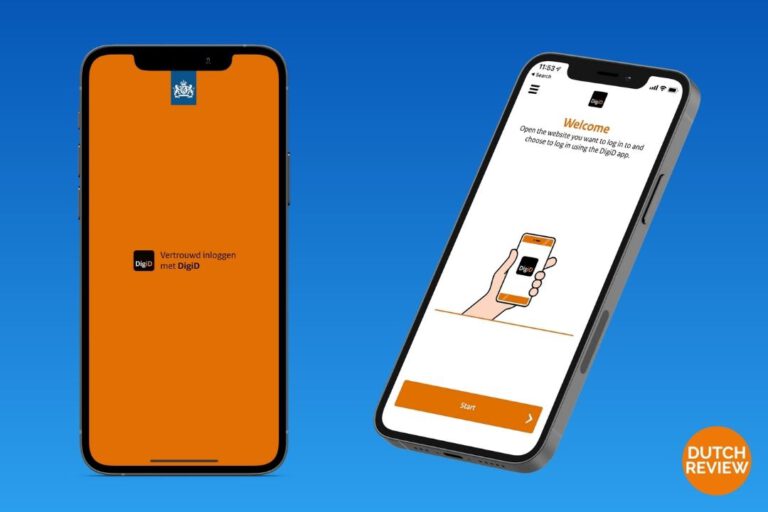
You simply log in with your DigiD and get access to everything.
Pro tip: If you ever leave the Netherlands, download your full pension report. It makes international retirement planning much easier later on.
How are Dutch pensions taxed?
Pension income in the Netherlands is treated the same way as regular income, which means it is taxed in Box 1 once you start receiving it. The exact amount depends on your total pension income and whether you live in the Netherlands or abroad at the time.
If you retire in the Netherlands, your AOW and occupational pensions are taxed under the lower “pension” tax brackets for seniors.
Yep, the Belastingdienst wants its fair share too. Image: Dreamstime
If you retire outside the Netherlands, tax treaties determine where you pay tax and how much. Some countries tax Dutch pensions locally, while others allow the Netherlands to tax first.
Private pension products, like lijfrente, also follow specific tax rules. You usually receive a tax benefit while saving, and then pay tax on the payout later.
It is not the most thrilling part of retirement, but it is worth checking how your future income will be taxed before you make long-term plans.
What’s changing for the Dutch pension system
Like many other countries, the Netherlands is currently in the process of shifting to a new pension system.
The so-called Future Pensions Act is the biggest pension reform in decades.
Why is the system changing?
The old pension system relied heavily on collective formulas that worked well decades ago but did not align with modern careers. People change jobs more often, work flexibly, or switch sectors, and the old rules sometimes create imbalances between age groups.
The new pension system aims to fix this. It is:
more transparent, so you can actually see how much of your pension is yours
more personalised, with growth that better reflects your own contributions
more linked to real investment returns, instead of slow, collective smoothing
fairer for younger and older workers, so gains and risks are shared more evenly
In other words, the system shifts from a “one size fits all” approach to one that follows your individual pension pot more closely.
What the reforms mean for you
Your pension fund may switch to a new structure over the next few years. You might see:
changes in how your money is invested
clearer personal pension pots
slightly more fluctuation in expected payouts
updated communication from your pension fund
The transition is gradual and varies by fund.
You usually don’t need to take action yourself, but do read messages from your pension fund carefully — in some schemes you may be asked to choose or confirm certain options during the transition.
What you can do now to prepare for retirement in the Netherlands
Even if retirement feels far away, a little planning helps.
You do not need to become a pension expert, but having a general overview now will save a lot of confusion in twenty or thirty years.
Dutch pension vocabulary explained
Term
Meaning
AOW
The Dutch state pension.
SVB
The organisation that pays AOW.
Pensioenfonds
A collective pension fund.
Lijfrente
A private annuity pension product.
UPO
Annual pension statement.
Jaarruimte
Your tax-free pension saving allowance per year.
Reserveringsruimte
Extra catch-up allowance for pension savings.
Pensioenpremie
The contribution paid into your pension.
The Dutch pension system may seem confusing at first, but it is built to provide a stable foundation for life after work.
Retirement might still be far away, but your future self will be grateful that you took the time to understand things today.
Do you have any questions about Dutch pensions? Leave them in the comments!
Do I lose my pension if I leave the Netherlands?
No. You keep your AOW percentage and your occupational pensions. These will be paid out wherever you live, although tax rules may vary.
Can I retire in the Netherlands as a foreigner?
Yes, but non-EU nationals may need to meet income requirements to maintain long-term residency. Your pension income can help with this.
What happens if I worked in more than one country?
Within the EU, pension rights are coordinated. Each country pays its portion once you reach retirement age. Outside the EU, it depends on bilateral agreements.
How much pension will I receive?
Your retirement income depends on:
your investment returns
how long you lived in the Netherlands
what your employer paid into your pension fund
what you saved privately
Do I need to apply for my pension?
If you live in the Netherlands, AOW starts automatically once you reach your AOW age. If you live abroad, you must apply through the SVB.
Occupational and private pensions require applications once you reach retirement age.
Are Dutch pensions taxed?
Yes. Dutch pension income is taxed as income, although the rate depends on your residency. If you live abroad, tax treaties determine who collects the tax.
What if I lose my DigiD before retiring?
You can request a new DigiD abroad, but it might take some time. Better to download and save all pension records early.
Will my partner receive a benefit when I die?
Many occupational pensions include survivor benefits. Always check your fund rules.
Picture this: you’re taking a stroll through the picturesque streets of any given Dutch city, the sun glistening on the canal water, boats sailing past you in the breeze, you marvel at the unique Dutch architecture…
…and all of a sudden, there is a 150 kg washing machine dangling on a rope right above your head!! 😱
No, we’re not evoking some comedic scene from a graphic novel where some unfortunate soul gets crushed by a piano somehow falling from the heavens.
Instead, this is about the everyday scenario of Dutchies trying to figure out how on earth to move large objects — we’re talking sofas, ovens or, well, pianos — through the impossibly narrow doorways, staircases and windows of Dutch canal houses.
The solution? Hoisting hooks!
What is it?
If you’re a keen observer of Dutch architecture, you might have already noticed that at the very top of most buildings, there are old, wooden hoisting hooks.
Why is that? Back in the day, the value of a property was determined by its width. To save money, as is Dutch custom, many property owners would save space by building narrow but long and high houses, as we know them today.
And the hooks? They serve as a means to transport furniture and other items to higher levels. A simple wheel-and-rope mechanism helps to hoist any desired object into the air.
During the ‘Golden Age‘, when many Dutch cities became wealthy through trade in colonial goods, the upper stories of canal houses often served as storage units to keep valuable spices or fabrics out of reach of potential flooding.
Finding housing in the Netherlands can be ridiculously hard — and there’s a minefield of scams to dodge along the way.
Even if you think you’re too smart to be taken in by a housing scammer, the Netherlands housing crisis is the perfect storm of pressure, competition, and scarcity.
This means that even the most seasoned house hunters can fall for a rental scam.
However, armed with a bit of key knowledge, you can spot a con and save your cash from being swindled.
Here’s what to look out for to avoid housing and rental scams in the Netherlands!
If it’s too good to be true, it probably isn’t true
You may have heard that the Netherlands has a major housing shortage — yeah, it sucks.
This has bumped up competition for everyone searching for a house, and in response, landlords have bumped up their prices, too.
If you think you’ve hit the jackpot with a three-bedroom, two-bathroom apartment for €750 per month, we hate to break it to you, but that’s a Dutch housing scam.
Think you found that PERFECT rental flat? Don’t get too excited just yet. Image: Depositphotos
Scrutinise the landlord’s social media
If you’re searching for a room or apartment on Facebook, you have a great advantage — Facebook profiles.
Some scammers are clever enough to hide most of their personal details, but they often forget to hide certain things.
For example, if they have a Dutch name, but you see they’ve liked pages with names in foreign languages, that’s a red flag.
If you’re using Facebook Marketplace, always click the “See Seller’s Other Listings” button.
Scammers often post on multiple groups all over the Netherlands or all over Europe and will often use the same pictures or similar descriptions in all their ads.
It’s an easy way to see if they’re dishonest!
You can also search the seller on Facebook to see if they’re posting ads in house-hunting groups in multiple locations.
If an advertiser has the same property listed in different places, that’s a scam. Image: DutchReview/Supplied
Go full detective on the pictures of the house
Pictures of a house mean nothing.
These are often lifted from Airbnb or other rental websites and shared between house scammers in the Netherlands and other countries.
First, do a reverse image search on the images and see if they appear elsewhere on the web.
Are power outlets the Dutch/EU standard? (One circle with two circular holes)
Is the apartment unreasonably spacious? Remember, homes in the Netherlands are generally small.
Does anything in the image look not Dutch? E.g. shopping bags or boxes with foreign letters on them, food brands, or shoes not worn in the Netherlands (like plastic, indoor slippers).
All tap water in the Netherlands is drinkable. It’s less common to have large bottles of filtered water in kitchens than it is in other countries. If you spot this, that could be a clue.
TIP: Reverse image search easily in Google Chrome by right-clicking on an image and selecting “Search Google for Image”. Then, see if the picture has been posted on other websites (like Airbnb or real estate websites).
Know what a scammer’s message looks like
We’ve seen so many scammers’ messages at this point that we can pick out the patterns.
First, scammers provide way too much information up front, and it’s all designed to make you think, “This is the perfect house!” Spoiler: It’s just another Dutch rental scam.
Here are a few key points to look out for:
🚩 You’re immediately referred to another person
Scammers often (but not always) work by having multiple people send messages and post ads on various house-hunting websites or social media.
Then, to communicate, they’ll send you a WhatsApp number for the “landlord” or person taking care of renting the apartment.
This is straight-up a red flag. Unless they’ve sent you a real estate agent contact that you can verify online, proceed with extreme caution.
🚩 The apartment and lease are way too perfect
And strangely detailed. Scammers’ descriptions of the houses tend to have similar characteristics, including…
A long list of all the great appliances and features in the house.
No minimum or maximum rental term (you can stay as long as you like!).
A “perfect location” that is close to generic bars, restaurants, and grocery stores.
A very specific location (sometimes with the full address, sometimes the suburb and postcode). Dutch people rarely describe their address as “Westerpark, 1013 RR,” and will instead just say “Westerpark.”
Some scammers will even include oddly specific details like “Artis Zoo is 8 km from the apartment.”
Renting out rooms separately (each room is €420, and the price for the whole apartment is €840).
Scam ads generally all feature similar characteristics. Image: DutchReview/Supplied
🚩 The “landlord” is in another country and can’t show you the property
If you ask for a viewing, the scammer will then tell you why they can’t show you the apartment in person. Watch out for:
Being out of the city on a business trip, visiting family, living in Spain, vaccinating children in Africa, and researching coronavirus vaccines in the UK.
A promise that as soon as you sign the lease and make the full deposit and first month’s payment, they’ll send you the keys via registered post/DHL.
Sellers always have a reason why they can’t show you the apartment. Image: DutchReview/Supplied
Be wary of supplied IDs from the landlord
The landlord may send you passport copies to prove they are who they say.
Don’t take these at face value: scammers will request passport copies from people they are trying to scam and then steal their identity later — either for more scams like this one, to open new Facebook accounts, or for more insidious identity fraud.
NEVER send your ID until you’re 100% sure
Unless you want to find extra profiles of yourself online (or have loans taken out in your name), don’t send copies of your ID.
If you absolutely have to, be certain that you’re not working with a scammer, have met the landlord, and have viewed the apartment.
Check who officially owns the house
For €3.70, you can find out exactly who owns a house in the Netherlands (and make sure it matches up with your potential landlord). Head to the Kadaster property registerand click “Nu bestellen” (Order Now).
If there isn’t a match, request a written explanation from the person you’re in contact with.
Tell them you need written authorisation that the landlord or agency is acting on the owner’s behalf.
Avoid renting an apartment that you haven’t seen
We get it, the Dutch housing market sucks. If you know you’re moving here and have been given the advice to “start looking for a house before you arrive,” we understand. But you should be very careful.
If you can’t see an apartment yourself, try to find someone you can ask to view the property on your behalf: a friend, colleague, or classmate who may be willing to lend a hand.
This is an email response one of our editors received from a real-life scammer. Yeah, right, Martin Peter! Image: DutchReview/Supplied
And remember, if the landlord can’t show you the apartment (because they’re out of the country, or something along those lines), that’s a big red flag.
Avoid, avoid, avoid, or you may just fall for a housing scam in the Netherlands.
Resist the pressure to sign immediately
Scammers will often pressure you to sign on the dotted line to secure the apartment.
They may say that they have a lot of interest but that they will give it to you if you sign (and send money) now.
Beware of these pushy sales tactics, take a deep breath, and make sure you’re convinced you’re not working with a scammer first.
Be smart with how you pay
Scammers want one thing: money.
Be extremely careful when working with a landlord about how you will make the payments.
When paying cash
Try to avoid cash where possible: this leaves zero paper trail.
If you trust the landlord, but they ask for cash, try to get them to sign a receipt.
While handing them the money, record the conversation on your phone while you do it. Make sure to say key information out loud, such as “Here is €1,200 cash to pay rent for January for the apartment at 1234 Oudestraat.”
When paying via bank transfer
If you’re paying for your rent via bank transfer, be critical of the account details.
Does the account name match who you’re speaking with?
Is it a Dutch bank account? If not, why?
Is it an IBAN that you’re paying into?
Does the bank name look legitimate? Is it a bank you recognise or can verify online?
Other methods of payment
We’re yet to see a legitimate landlord in the Netherlands who wants payment for their rental property via money transfer services like Western Union.
Do not do it.
Never, ever pay through Airbnb
A common scam is that, once you’ve found the perfect apartment, the “landlord” will request that you pay via Airbnb.
They’ll tell you to reserve the apartment for one month upfront, and then you’ll be able to extend indefinitely.
The landlord will then send you a link to their property on the Airbnb website that looks completely legit. Do not fall for it.
It will be a fake link to a scam website that will take your money and give you no apartment in return.
A true landlord will never do this. Why? Airbnb takes an average of 14-16% of every reservation from a landlord. If your rent is €1000, why would a landlord turn around and give €150 to Airbnb?
Beware of illegal sublets
If you can’t register at an address, you may be dealing with an illegal sublet. This occurs when someone who is renting an apartment wants to sub-rent it to another person.
You won’t be in trouble if you sub-rent an apartment, but if the landlord finds out, you may be kicked out — even if you’ve paid. You’ll also likely not be able to register with the local municipality, which is mandatory in the Netherlands.
Know where to ask for help
If you’re not sure, ask people around you for help. Sometimes, a critical eye that’s not emotionally involved can save you from a scam.
If you’re unsure about a rental contract, !WOON is an organisation dedicated to helping residents with housing issues. You can also contact your local Juridisch Loketfor free legal advice.
Of course, if you do fall for a scam, take action straight away!
Contact the police and press charges. Gather as much evidence as possible and screenshot any conversations that you’ve had with the scammer.
Have you had experience with a rental housing scam in the Netherlands? Share your story in the comments below so other people know what to look for!
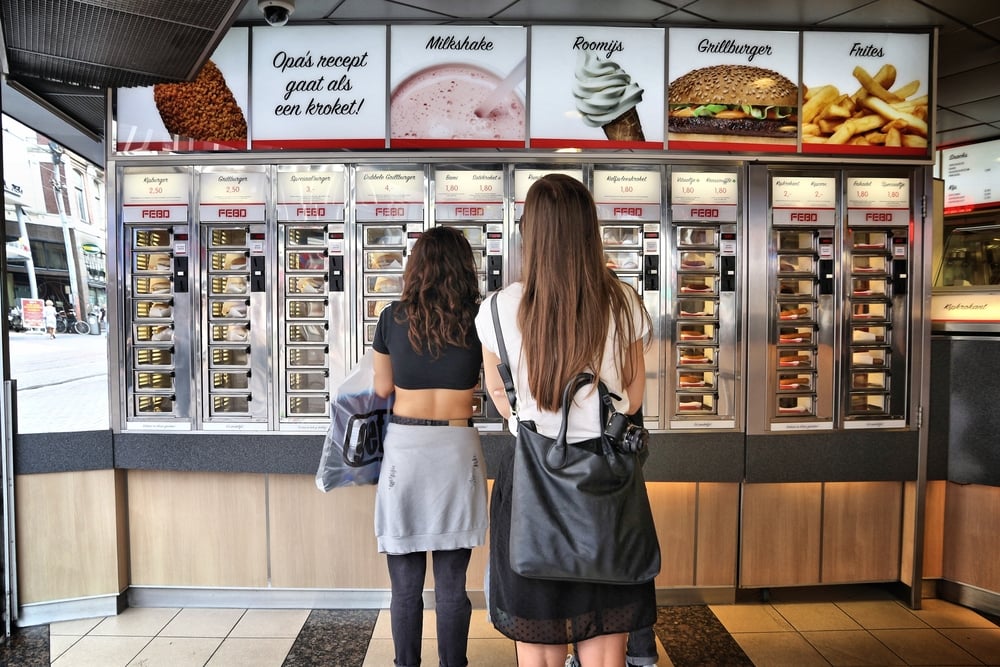
You are what you eat. That means the greasy junk food you shove directly into your mouth from a FEBO wallmust be a correct representation of your innermost personality.
Don’t worry, we jest, we jest.
But still, it cannot be denied: even when being blinded by starvation hysteria, it takes a special kind of person to opt for plain patat, as opposed to a freaky frikandel, or a classy kaasoufflé.
So let’s find out what your favourite FEBO order reveals about your personality in this highly scientific article.
🍟 Patat/friet (fries)? You avoid food poisoning at all costs
Fingers crossed they’re unsoiled. You’re getting the sweats just thinking about it. Image: Canva/DutchReview
You’ve been burned before. Maybe all it took was a seemingly harmless little shrimp. Next thing you knew, you had set up camp in a toilet stall for 24 hours so you could projectile vomit at five-minute intervals. 🤢
Whatever your haunting encounter with food poisoning looked like, one thing is for sure: you sure as heck aren’t going to risk having a repeat at this sketchy fast food wall. Nuh-uh. 🙅♀️
So, you warily edge around the foods that are trapped inside their steel cages and ask the kassa for a sauceless portion of good ole’ fright-less frites.
Your friends call you a coward, but one day they’ll pay the price, and when that day comes, you won’t hold their hair back while they puke. 😈
🤐 Frikandel? You don’t eat and tell
Doesn’t that look so appetising? Image: Canva/DutchReview
Ooh, a vegetarian late-night slip-up, perhaps? You’ve got a hoodie pulled down over your face in an attempt at anonymity as you tiptoe your way through the dimly lit snack bar and reach for a cheeky, chewy frikandel.
To be fair, a frikandel’s contents are so ground up that it barely counts as meat anymore, no? 👀
Still, no one can ever know you were here, understood? You’re a healthy, disciplined human (with a TikTok account dedicated to meat-free meal prep) who eats home-cooked, noncarcinogenic dinners six nights a week.
It’s not your fault that your inner snack demon possessed you to come here. You might even go as far as to ask the store manager to delete security camera footage of you entering. Is that so wrong? 🤫
👨🍳 Kaassoufflé (cheese soufflé)? Pretending you’re in France
“What can I get for you?” asks the man behind the counter. (You hate using the weird locker thingies.)
“Kaasouffllé,” you reply airily, then clasp the dish in your silk-gloved fingers. 💁
An accent over the ‘e’ goes a long way. When you close your eyes and bite into the soft pillow of melted cheese, you imagine you’re eating off a porcelain plate on a Parisian terrace, as opposed to a soggy paper sheet outside a FEBO wall in the rain.
Regardless of what went down at the stinky rave you just attended, you like to approach any “hangover cure” with prestige and class. Besides, “cheese pastry” just doesn’t have the same ring to it.
🍔 A standard burger? Welcome to NL. You must be new around here
Burgers: even when they’re bad, they’re still pretty good, right? Image: Canva/DutchReview
“Bitter balls”? Feeling nauseous, you back away from the menu’s fine print with your hand clenched over your mouth in horror.
It’s been five hours since you got off the plane at Schiphol Airport for a weekend of degenerate, British-style stag fun. Now that you’ve been thrown out of many a bar for your “lad” antics, you could demolish a slice of pizza, a kebab, or a hot dog. 😋
But helaas, you are met with the hardship of dodgy Dutch cuisine, which your stomach doesn’t have the capacity to deal with (yet). You know this city wanted you to “Stay Away,” but given these food options, it’s like they’re trying to kill you! 😲
Your eyes scan the cubbies for something familiar until they land on what appears to be a plain old burger. Thank God those taste the same everywhere.
🐔 Kipburger (chicken burger)? You’re a gym bro on a cheat day
Grrr. So much protein, your muscles are expanding just looking at it. Image: Canva/DutchReview
You grunt while completing minor tasks because it allows you to demonstrate what a strong alpha male you are. 💪
That is why you find yourself flexing your biceps performatively as you tap your card, purchasing a dry kipburger from the FEBO. Then you sprinkle a bit of extra protein powder on top for good measure.
“It’s my cheat day. I’ve been bench-pressing 140 kilos all week, so it’s time for me to eat 10 of these little burgers,” you hear yourself explain in a loud voice, to no one in particular, before scurrying out of there. 👉 👈
😮💨 Kipkorn (chicken stick)? Do you have the munchies?
You may or may not wake up in 13 hours with one of these stuck to your face. Image: Canva/DutchReview
Could the fact that you’re inspecting all the snacks with a foolish smile plastered across your face have something to do with you being, well, a little geblunt (stoned) tonight? Don’t worry, your secret is safe with us. 🥦
Captivated by the bright neon lamps outlining the wall, you float toward the FEBO like a bloodshot-eyed moth to a flame.
There, catching the fluorescent light and glistening in all its greasy glory, you see it: the love of your life, the only thing that ever understood you.
A kipkorn. You nibble at it slowly, savouring each delectable bite, before mindlessly devouring the rest of the FEBO wall’s contents until the staff kicks you out. 🤤
🧆 Rundvleeskroket (beef croquette)? You’re not trying to impress anyone
Is it even possible to eat these elegantly? Image: Canva/DutchReview
Hobbling lopsidedly because you lost a shoe and donned a shirt that wasn’t yours, you march toward the first snack shack you see. 🥴
Then you thrust loose change into the cubbyhole as if it’s a casino slot machine, and after snatching the rundvleeskroket, you cram it into your mouth at once, not stopping to chew.
Mascara was already streaked down your cheeks, but now crumbs and sticky sauce have been added to the mix.
But so what if other customers stare at you like you’re mauling a small animal? You’re too sick and tired to care anymore. Plus, you’re so drunk you likely won’t remember this shameful moment! 😃
Several buildings in Utrecht’s historic city centre have collapsed in the blast, and it was a stroke of luck that no one was home during the explosion.
The Visscherssteeg, an alley between the Stadsbuitengracht and the Oudegracht canals, was hit by one or more explosions yesterday afternoon, reports RTL Nieuws.
A routine weekday afternoon turned into a scene of rubble, sirens, and distressed residents.
“It’s truly shocking,” Mayor Dijksma told RTL Nieuws, adding that the residents must have had “an angel on their shoulders.”
What happened, and when
At around 3:30 PM on January 15, an explosion was reported in Visscherssteeg, in the centre of Utrecht.
The blast was powerful enough to demolish parts of several buildings and trigger a fire, which firefighters could only extinguish by mid-evening.
An eyewitness sitting at a nearby restaurant when the explosion took place, told RTL Nieuws: “It felt like the whole building lifted two or three centimetres.”
Due to the risk of further collapse, a large area was instantly barricaded.
Counting the casualties
In the aftermath of the explosion, four people were lightly injured, one person was rushed to the hospital, and a bystander felt unwell at the scene.
Meanwhile, emergency services confirmed that no residents were home at the time of the explosion.
One resident, who is normally always home on Thursdays, happened to be away. “A miracle,” neighbours said.
As firefighting efforts continued into the night, displaced residents stayed at the Karel V Hotel or with friends and family.
As residents began to process the initial shock later that evening, a Dutch Urban Search and Rescue (USAR) team arrived with sniffer dogs to sift through the debris.
Their search continued through the night, though as of this morning, no victims have been located.
Gas smell, but no clear cause
The cause of the explosion remains under investigation.
While a gas leak was detected in the vicinity, authorities have yet to determine if it triggered the blast or occurred as a result of it.
Although foul play is considered unlikely, investigators are determined to leave no stone unturned.
As a precaution, gas and electricity have been disconnected for 40 nearby residences, and the Springweg parking garage remains closed.