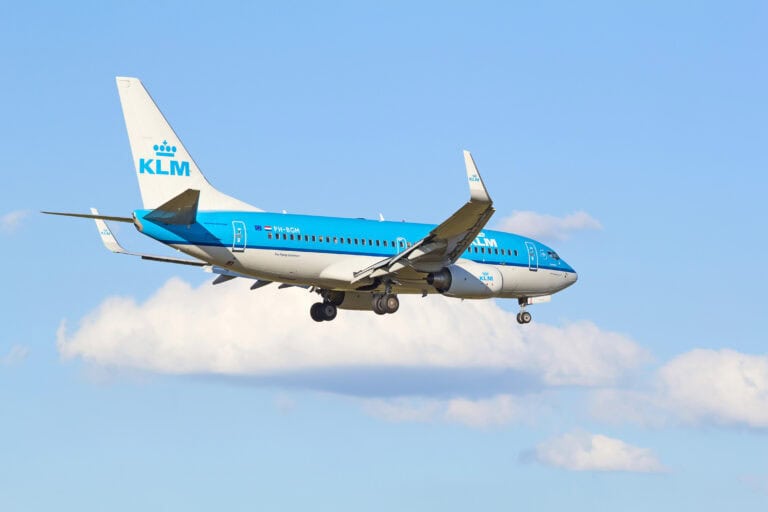
Flying from the Netherlands this summer just got pricier, with new research showing that the gap between plane and train tickets has never been wider for families.
A study by savings platform Raisin compared return journeys across ten popular European destinations for a family of four, and the results are… a tad horrifying for your wallet.
On average, flight prices soared 13.1% compared to last year, while train fares stayed almost flat.
Here’s what the price hike means for you
In practice, that 13.1% spike means that an average return flight for two adults and two children now costs around €914. That’s up from €808 in 2025, before you’ve even added baggage charges.
Now, let’s break down how much your luggage costs will add to the overall sum. KLM charges between €20 and €70 per bag per leg within Europe, so three checked bags for a family could tack on anywhere from €120 to over €400 per return flight.
Train tickets, meanwhile, crept up just 2.5%, from €500 to €513 on average — putting the price difference at €401 in favour of the train.
London was the only exception
However, if your family has its heart set on a trip to London, flying actually works in your favour.
If you’re heading to London, flying is typically much cheaper than taking the train. Image: Depositphotos
The Eurostar route through the Channel Tunnel comes in at €652 return for a family of four, compared to €554 by plane, making it the only destination in the study where the train is the pricier option.
So, how can you keep travel costs down?
According to Raisin researcher Jasper Berkhout, when you’re “dependent on high-speed lines to France or the UK, costs rise sharply.”
His practical advice is to book trains early to catch Deutsche Bahn’s Sparpreis (discounted early-booking fares). Meanwhile, for flights, you’ll want to check nearby airports like Weeze, Frankfurt, and Brussels rather than defaulting to Schiphol.
The good news is that with more train routes running directly from the Netherlands (including new night train connections to Switzerland and Italy), rail is an increasingly attractive alternative to flying.
Are you flying or taking the train for your summer holiday this year? Let us know in the comments below!
Moving into a new home in the Netherlands brings plenty of excitement, but tracking the actual value of your stuff often gets lost in the chaos of navigating contracts and utility bills.
Replacing your belongings after a fire, flood, or break-in can cost thousands of euros, even if you think you don’t own that much.
That’s where inboedelverzekering (home contents insurance) comes in. It’s surprisingly affordable, but it can save you lots of tears (and, most importantly, cash) if disaster strikes.
Here are seven things you should think about insuring in your Dutch home.
This post might have affiliate links that help us write the articles you love, at no extra cost to you. Read our statement.
1. Your bike (yes, even when parked outside)
Living in the Netherlands means a big piece of metal is now one of your most prized possessions, a.k.a. your fiets (bike). But you’re not the only one who appreciates your bike; thieves do too. So, what can you do? Insure your bike.
In the Netherlands, many inboedelverzekering policies cover your bike if it’s stolen from inside your home or shed (yes, it happens).
If, on top of that, you want to be protected against theft from the street, you should consider getting a policy that includes outdoor coverage or a separate bicycle insurance policy.
Good to know: The Netherlands has a number of providers that offer comprehensive coverage for your bicycle, including Univé, Allianz, and Laka.
2. Your expensive electronics
You don’t have to be a tech-junkie for your electronics to make up a pricey part of your belongings in the Netherlands.
Between your laptop, smartphone and flat screen TV, you’ve probably poured thousands of euros into your electronics — so let’s make sure they’re insured.
Trust me, you’ll want those electronics replaced ASAP. Image: Depositphotos
In the Netherlands, most home contents insurance policies cover electronics in the event of fire, water damage, or theft.
Some even offer additional coverage for accidental damage, like if you drop your phone in the toilet or pour coffee over your laptop.
3. Your furniture (it was more expensive than you remember)
That second-hand IKEA sofa? The designer dining chairs you bought during a moment of weakness? Your bed frame and mattress? The value of all the furniture in your home quickly adds up.
And while this cost often seems very one-and-done, having to replace all your furniture at once is a very pricey affair. This could happen in case of a fire or flood, for example, so it’s a great idea to have your furniture insured under home contents insurance.
Good to know: Dutch home contents insurance typically covers all your household items and personal belongings, protecting them from damage and theft.
You can either take out a policy from an insurer like Univé or through a bank like ABN Amro.
4. Your kitchen appliances
Whether you own your home or rent, chances are your kitchen is home to more than just a kettle and a crusty frying pan.
Your toaster, coffee machine, blender, and that high-tech rice cooker you have stored somewhere in the back of your cupboard? These small appliances easily fly under the radar until they have to be replaced. Luckily, home contents insurance covers these kinds of gadgets.
Of course, as a homeowner, you also have to think about the big appliances, like your fridge, oven, stovetop, and dishwasher. These usually fall under opstalverzekering (building insurance), which covers the permanent parts of your home.
5. Your jewellery and watches (even if it’s “just” sentimental value)
Even if the monetary value of your jewellery isn’t sky-high, the emotional toll of losing a cherished item can be brutal.
While home contents insurance won’t bring back the memories, it can at least help you replace or repair what’s lost.
Most standard insurance policies cover theft, fire, and water damage, from your grandma’s gold necklace to that sleek new smartwatch. However, it’s important to know that many policies will only cover the costs up to a certain amount (often around €2,500).
If you own anything pricier than that, you’ll need to declare it separately to make sure it’s fully covered. Just let your insurer know, and be ready to show a receipt or valuation.
6. Your clothing and shoes (especially if you have expensive taste)
If you’ve ever splurged on a winter jacket or own more than one pair of leather shoes, it’s time to start thinking about getting insurance for your wardrobe.
Fire, flood, or even mould (especially in those damp Dutch homes) can quickly ruin clothing. If this ever happens to you, a solid home contents policy ensures that you won’t be stuck rebuilding your closet from scratch.
7. Your art, musical instruments, and sports equipment
Got a violin? A mountain bike? Or a nice painting you treated yourself to? These kinds of personal items don’t always get the attention they deserve… until something happens to them.
Instruments are expensive; protect them. Image: Freepik
Whether you just have lots of hobbies or you’re a semi-pro, these belongings can carry more value than you realise.
Most inboedelverzekeringen will cover them, but if you’ve got high-end equipment — like a professional racing bike, a grand piano, or rare artwork — you might need to take out extra coverage or declare them separately to make sure they’re fully insured.
Why home contents insurance matters
Now that you know what to insure, let’s talk about why it’s worth doing so.
Home contents insurance covers the things you’ve bought to live your daily life. If they’re damaged or lost due to fire, theft, water damage, or even storm damage, this insurance helps you replace or repair them.
These risks are more common than many people think, especially in older buildings or apartments with shared infrastructure. Without coverage, replacing everything out of pocket can become very expensive, very quickly.
Luckily, inboedelverzekering is usually quite affordable, often costing just a few euros per month.
Many insurers also offer the option to bundle it with liability insurance (aansprakelijkheidsverzekering), which covers you if you accidentally cause damage to someone else’s property.
Do you have home contents insurance in the Netherlands? Share your thoughts in the comments.
Too much tourism, too much English on trams, and now too many students from abroad? As internationals, sometimes it’s hard not to adopt a growing sense that the Dutch government doesn’t like us very much. 🥲
Since voting to cut down on international students in 2019, the House of Representatives has been continually striving to keep non-Dutch citizens out of the Netherlands.
So far, any efforts by the Dutch government to do so have gone in vain. Much to their dismay, the country is brimming with internationals.
In fact, there’s even more of us
In 2023 alone, there was a 1,200 increase in non-EU applicants compared to the previous year. (And remember, this is something EU internationals don’t have to submit. 👀)
The latest development in this de-internationalisation saga is the University of Amsterdam (UvA) demanding a €100 down payment for applications, purely to frighten off international students. 😳
But why would the regering (government) want to exclude a group of people that enrich, diversify, and even fund their lives? (Think of those deliciously huge student fees for non-EU internationals.) 💰
I’m not necessarily saying the thwarting of immigration is a case of “biting the hand that feeds you”, but it’s also… not… not that? 👀
The “reasons” they’ve provided
So what does the House of Representatives have to say for itself?
Here are the reasons both the government and Dutch universities have given to justify their decision, and here’s my hot take on their responses.
The Dutch accommodation shortage
One reason that gets cited over and over again is the ongoing and persistently unpleasant accommodation shortage.
You know, the one that has students scraping together an average of €715 a month? (If they’re lucky enough to find a room in the first place, that is.)
Supposedly, by saying, “Don’t come here”, the government is just looking out for internationals, wanting to save them from the clutches of homelessness.
After all, it seems that for them, this is the only viable option: limit the universities’ international student intake, as opposed to, say, building more student accommodation or imposing a price ceiling for money-grabbing landlords that capitalise on students’ desperation.
Pff, that would be insane! 🙃
Too much work for university lecturers
Another complaint that can apparently be traced back to international students is the workload of university lecturers, who claim the excessive swarm of internationals with extra exams and papers to grade has them swamped.
The turnout once you scrap internationals. Image: Freepik
And let’s not forget the sweaty, stuffy lecture halls crammed full of promising young internationals who are apparently overly eager to learn the ways of the world.
As a professor, it must be hard to know such an unreasonable number of people are interested in hearing what you have to say. 😪
Are internationals inherently less valuable?
Do you believe these are the sole reasons why internationals are being encouraged to stay away? That’s up to you to decide.
But riddle me this: If there were an overflow of Dutch students as opposed to internationals, would the government instruct them to take a hike as well? Would they put a halt to the education of their own citizens?
Or maybe the House of Representatives would come to find that the room capacity and professorial workload suddenly weren’t such a big deal after all. 🤔
In fact, last year, the UvA attempted to set a quota ensuring that, while internationals were being excluded from their popular political science and psychology programmes, Dutchies wouldn’t be kicked out as well.
See, they didn’t want to lose their budding Dutch uni babies along with internationals. Are you thinking what I’m thinking? Yep, that’s a well-aimed slap in the face of foreigners.
Now, I’m not saying every native of this country is on board with some kind of “Make the Netherlands Dutch again” scheme — after all, plenty of nationals are more than willing to help out internationals.
But after the recent campaigning to ban English announcements on public transport— courtesy of the Language Defence Foundation — and the outgoing minister for education threatening to do away with English-taught courses, an icky feeling has surfaced in the pit of my stomach.
It’s almost suggesting there’s a “them” versus “us” — us being the competitors, space occupiers, accommodation snatchers, and alienated “others”.
How do the Dutch really feel about the influx of internationals?
If I didn’t know any better, I would say it seems like a significant portion of government and university staff alike don’t find some people’s overseas origins favourable.
And if I really didn’t know any better, I would say a good few don’t think internationals are welcome.
Could the driving force be patriotic pride? Concerns about the Dutch language and culture being lost to the looming peril of anglicisation?
Or are the reasons a bit like the ones behind the “no internationals” policy liberally applied all over accommodation listings by discriminating Dutch landlords — that is, they just don’t like us that much?
We ain’t budgin’
You can run, but you can’t hide. The Netherlands has become a multicultural hub with internationals (like yours truly) lurking at every turn. 🙊
And frankly, this didn’t happen by accident either; Amsterdam has welcomed tourists with outstretched, mercenary arms for literal centuries — up until the last few years, at least.
Not only that, but according to the Universities of the Netherlands (UNL) spokesperson Gijs Kooistra, Dutch university attendees would also benefit from a diverse, multicultural student body.
Kooistra also notes that the presence of English-taught courses in Dutch academia helps yield “the best academic staff” from overseas *cough*…but you didn’t hear it from us. 👉👈
While these opinions aren’t intended to stir the pot or create an even larger divide between pro and anti-internationals, maybe they will serve as food for thought. 🧐
How do you feel about the Dutch government and universities’ action to reduce the intake of students from abroad? Share your thoughts in the comments below!
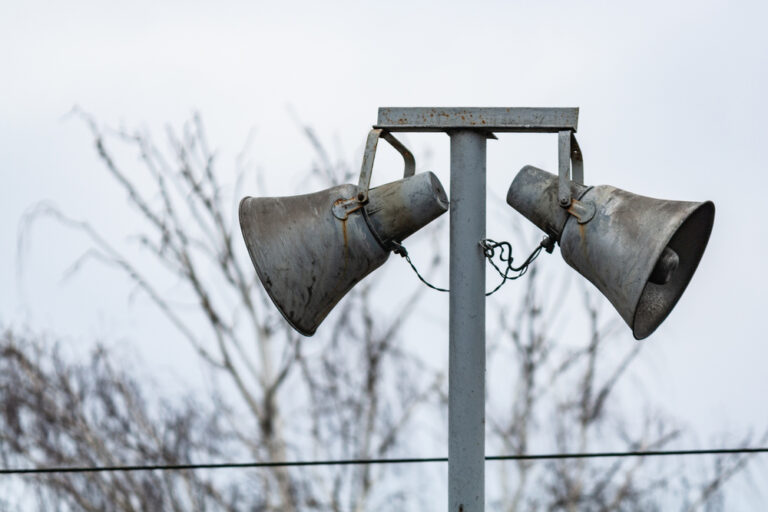
The Netherlands is finally saying “doei” to its iconic monthly air raid sirens; the luchtalarm (air raid alarm) network will be switched off for good in 2028.
If you’ve lived in the Netherlands for longer than a few weeks, you’re likely no stranger to that ear-splitting wail on the first Monday of every month. However, as of May 20, 2026, the luchtalarm’s days are numbered.
Justice and Security Minister David van Weel (VVD) wrote in to parliament this week to confirm that the country’s network of roughly 4,200 siren poles will be phased out from January 1, 2028.
Why is the luchtalarm disappearing?
Sadly, age isn’t just a number — as NOS reports, the cabinet had long been weighing plans for a modern replacement siren network.
Rather than pour money into maintaining ageing infrastructure indefinitely, van Weel has decided the phase-out will go ahead as previously planned.
“Right now it’s quite a dumb device — you press a button and a siren goes off,” van Weel tells NOS. “What you want is to be able to give people much more targeted information.”
So, what will be replacing the air raid sirens?
Look no further than the humble NL Alert, which sends emergency alerts straight to your Dutch mobile device.
As of 2026, this emergency notification system reaches around 92% of the population (a figure that has been stable for several years) and can deliver targeted messages explaining exactly what is happening and what to do, rather than just sounding a generic alarm.
Several MPs pushed back after Van Weel’s letter, pointing out that mobile networks can fail, which is exactly the kind of scenario where a backup alarm matters most.
As Rijnmond reports, local politicians in the Rotterdam region have also raised concerns, warning that dropping the physical sirens makes crisis communication more vulnerable, not less.
Meanwhile, experts have previously flagged that people who are non-Dutch-speaking or have low literacy may be harder to reach through text-only alerts.
Van Weel acknowledges these concerns, confirming that the Justice Ministry and the Defence Ministry are already working on a “minimal civil-military warning chain” as a fallback. What that looks like in practice, unfortunately, is still unclear.
Will you miss the monthly sirens, or are you happy to see them go? Let us know in the comments.
Before you think about sunbathing, scuba diving, and sipping cocktails on Dutch islands in the Caribbean, let us draw your attention to the Wadden Islands.
They make a belt off the bight of mainland Germany and the Netherlands, in an area known as the Wadden Sea, and you don’t want to miss them.
Never heard of the Wadden Islands before? Well, they’re actually old news. The first inhabitants were recorded as early as 800 AD!
So, what do these islands look like today, and what more can we learn about their history?
Want to get to your island getaway ASAP? Jump ahead! 🏝️
This post might have affiliate links that help us write the articles you love, at no extra cost to you. Read our statement.
🏖️ Texel: the largest Wadden Island
The beautiful island (the Frisian word is phonetically pronounced “Tessel”) has nearly 14,000 inhabitants.
A quarter of this large island is a protected nature reserve, attracting the hundreds of thousands of tourists who visit the island each year. Tessel is wonderful for long bike tours and its stunning beaches.
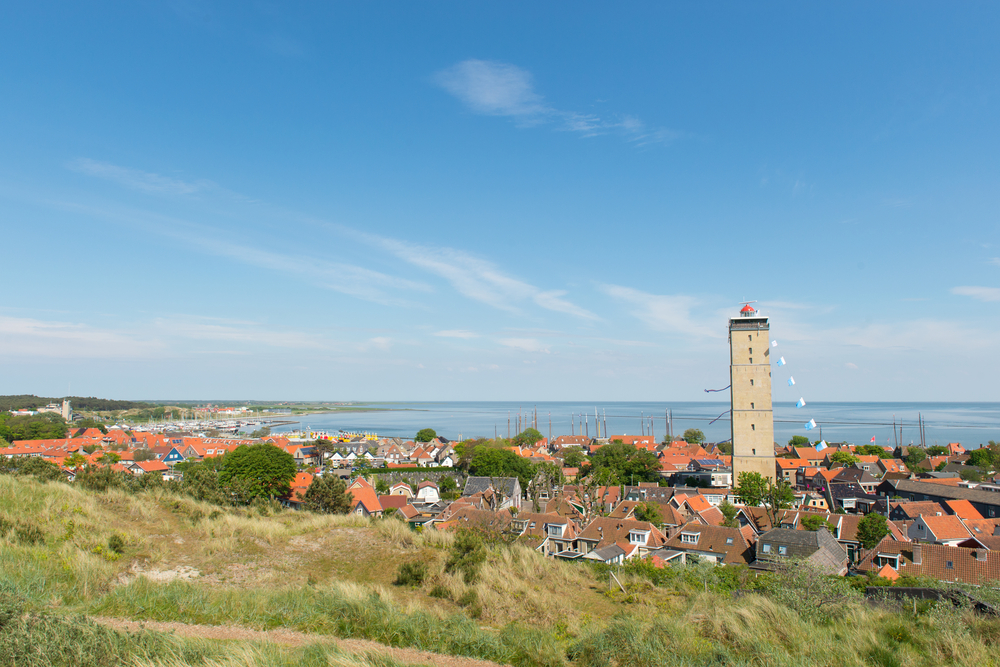
Doesn’t this just look like a fairy tale? Image: Depositphotos
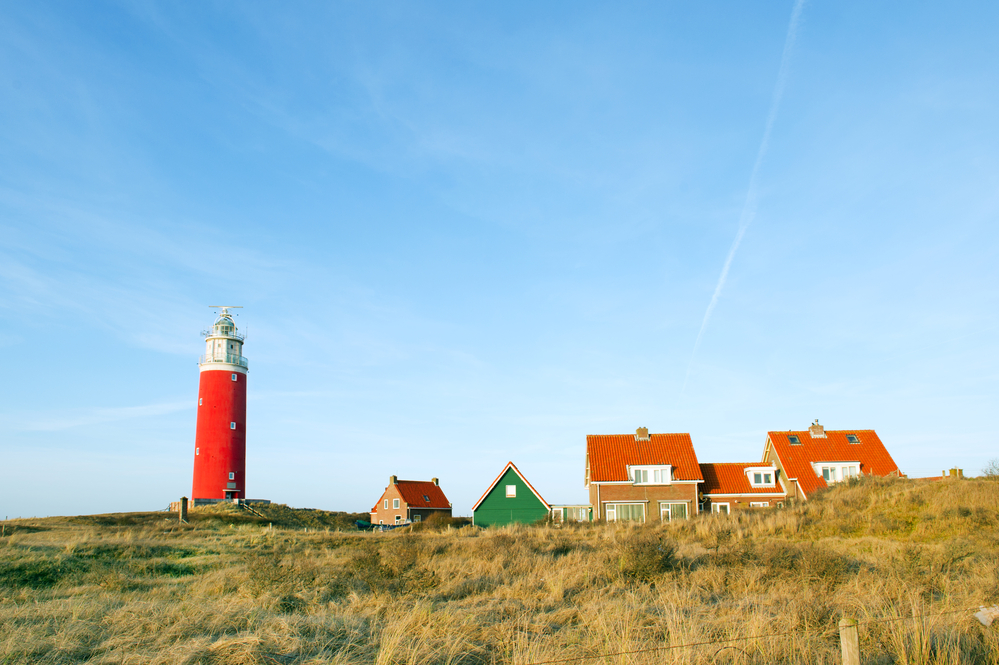
The island is known for the high number of birds that live there and the endless dunes in the area. Do you love forest trails, endless fields of sand, and 19th-century lighthouses? Well, this is the place to be.
And the cherry on top: you can visit the lovely Ecomare nature museum, aquarium and wildlife sanctuary for seals and birds. But let op! Your heart may melt when you “sea” the seals poking their faces out of the water.
🪖 Vlieland: a Dutch island with a military history
The next island in line is Vlieland. This one is quite a lot smaller than Texel, with little more than a thousand inhabitants.
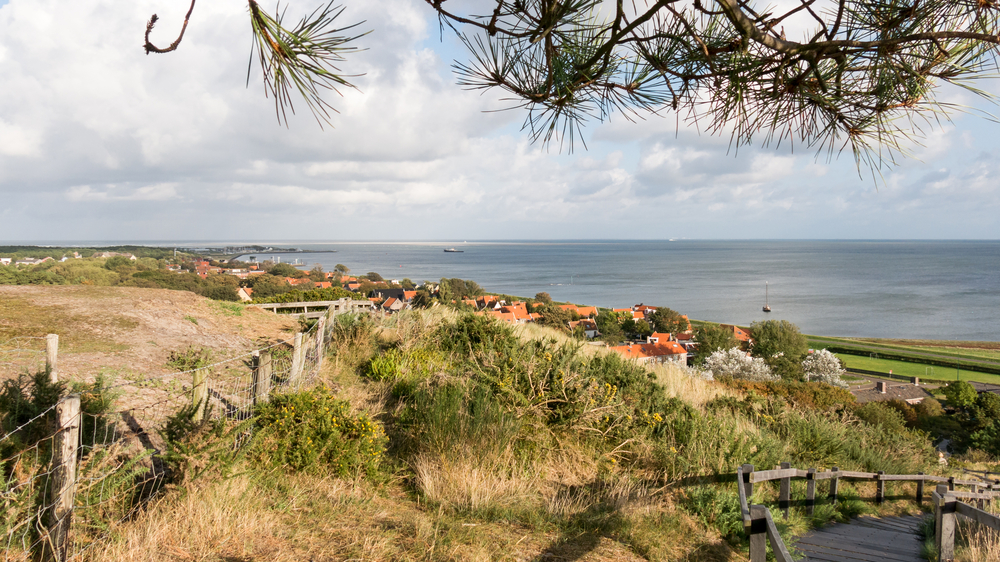
With views like this, it’s easy to forget Vlieland’s history. Image: Depositphotos
During World War II, Nazi Germany utilised the island as part of the German Atlantic Wall project. At one point, there were more soldiers than locals occupying the island!
Make sure to check out Vlieland’s lighthouse for some great views. After that, catch a free open-air film screening at Podium Vlieland or go horseback riding before settling into some beach yoga.
🌾 Terschelling: a touristic and agricultural island
Between Vlieland and Ameland sits Terschelling. This particular Dutch island has quite a dense and intense history, particularly a bloody past that goes back much further than WWII.
Who needs the South of France when you have Terschelling? Image: Unsplash
In 1666, the Brits were hellbent on disrupting Dutch trade routes and narrowing the competition in European trade. So, how did they go about ridding the Dutch of their dominance in global trade?
The island was consumed in such a blaze that it would be known as “Holmes’ Bonfire” after the British general Sir Robert Holmes. One year later, the Dutch retaliated and defeated the Brits in the ‘Battle of Chatham’, ending their disputes.
Today, Terschelling survives on tourism and a bit of agriculture. There is much to do and see — you can learn about the Netherlands’ history with the British, drive a Land Rover on the beach, or visit the shipwreck museum.
🌊 Ameland: a quiet beach getaway
Just 3,500 people live in Ameland, fondly referred to as Amelanders. Hollum, Ballum, Nes, and Buren are the largest villages left on Ameland. There were others, but sadly, the ocean has reclaimed them over time.
It’s enough to make your brain go quiet. Image: Unsplash
This island, too, has a rich history. In 1813, the Dutch Royal Family incorporated Ameland into its constitution as part of Friesland, and it has since been recognised as an official part of the Netherlands.
More than a century later, in 1940, the German military shipped troops out to Ameland, where they took control of the island.
The Allies never engaged in combat with the German troops on Ameland. This may be why these stranded Nazi troops surrendered only a full month after Nazi Germany fell — they were hard to contact.
Today, Ameland has an airport and a bus route, making it easy to take in its unique flora and fauna. It’s also a great place for thrill-seekers and adrenaline junkies — ever tried kite surfing?
☘️ Schiermonnikoog: Dutch biodiversity at its finest
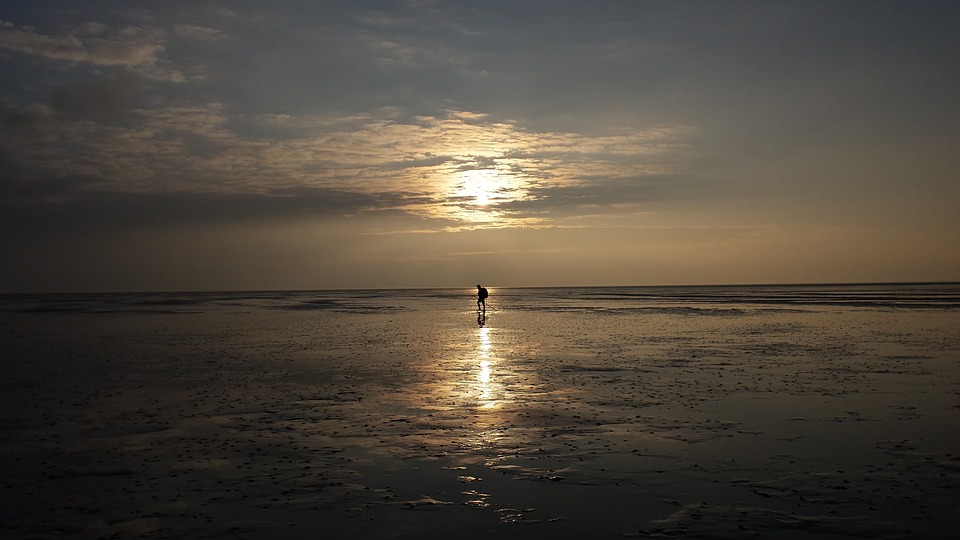
Getting out to Schiermonnikoog is always a great idea. The widest beach in Europe is right here, and so are opportunities for mudflat walking because most of the sandbank is covered in shallow (walkable) waters.
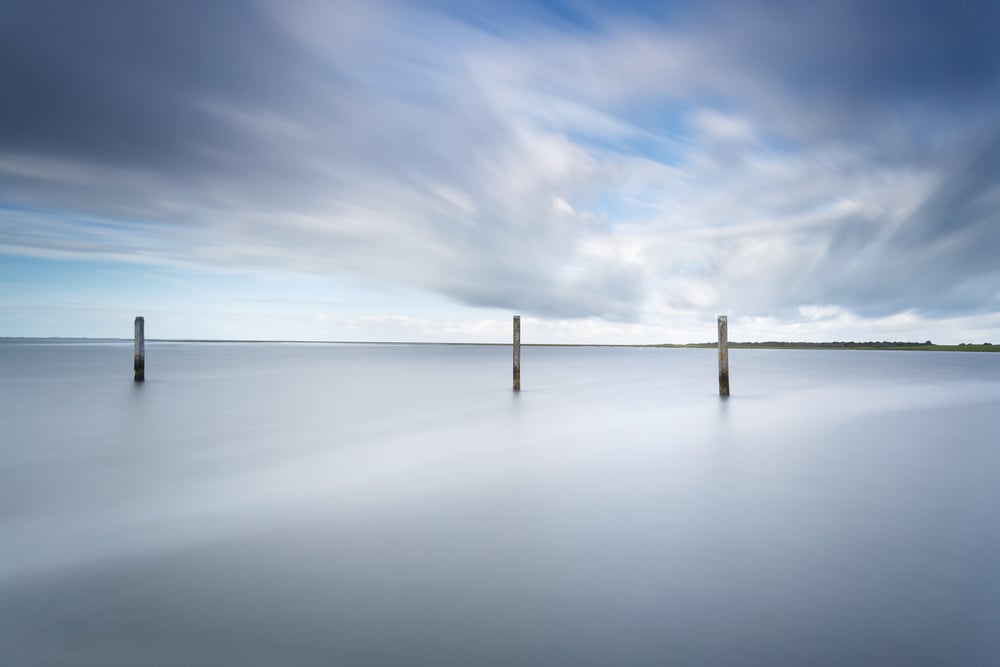
The mudflats look almost like clouds on Earth. Image: Depositphotos
Situated between Rottumerplaat and Ameland, Schiermonnikoog is often considered a Dutch national park. Around 1640, the aristocratic Stachouwer family bought Schiermonnikoog and used it as their private property for centuries.
Since then, it’s been passed from owner to owner several times.
After the people of Schiermonnikoog revolted against Maria Stachouwer in the 18th century, before the Napoleonic Wars, the island was passed to the Dutch poet John Eric Banck from 1858 to 1893.
The charming island of Schiermonnikoog today has plenty of relaxing activities for a break from the hustle and bustle of the city. Image: Depositphotos
Bank improved this land’s agriculture by planting a hardy grass species that would withstand future conditions. At the end of his run, he sold the island to a German count, Hartwig Arthur von Bernstorff-Wehningen.
Finally, at the end of World War II, Schiermonnikoog was confiscated by the Dutch State under Article III of the Decree on Enemy Assets.
Today, it’s a beautiful island, perfect for nature lovers — whether you love hiking, walking along the coastline, or getting your adrenaline pumping with water sports.
🌅 Mudflats behind the Dutch Islands
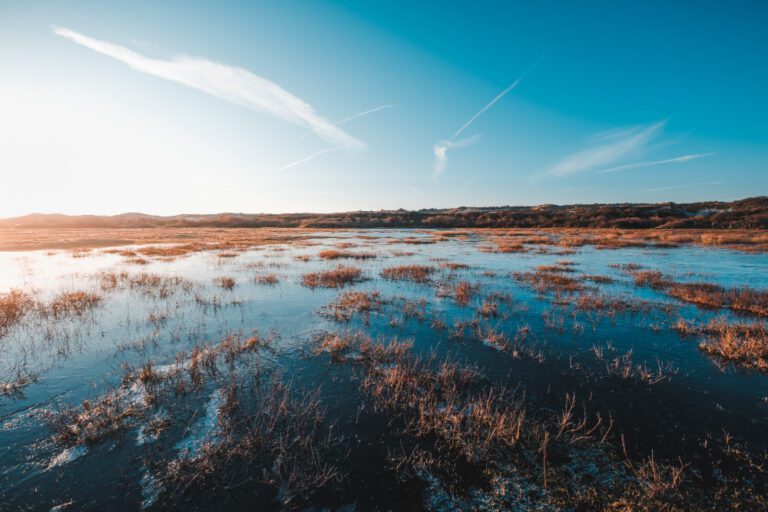
Behind the Dutch islands is a large stretch of semi-solid ground known as the mudflats. They stretch between the Wadden Islands and the mainland of Denmark, Germany, and the Netherlands.
Mudflat walking in the Netherlands. Image: Pixabay
You’ll feel just like Jesus walking on water, but maybe a bit more stable. This is where you can really see the true beauty of the Netherlands in all its flatness. Breathe in, breathe out, and enjoy the massively wide open space.
If you want to walk with a purpose, there are plenty of guided tours to take here. What are you waiting for?
How many Dutch islands have you been to? Tell us in the comments below!
Ahhh, the infamous Dutch directness: is it a stereotype, or is it accurate? Should it even be called “directness” or simply “honesty”?
Straightforwardness is valued so much in Dutch society that there’s even a Dutch word for it: bespreekbaarheid. This translates to “speakability” and means that no topic should be taboo. 🗣️
A rude awakening to Dutch directness
Having lived in New Zealand throughout my teenage and early adult years, I got used to politeness interfering with honesty. Kiwis pride themselves on being kind and pleasant.
One of the first comments I heard when I moved to the Netherlands was from someone I had just met an hour earlier.
As I sat in a bar, sipping a Heineken Pilsner, a person announced, “Your hair looks terrible, and your hands are big for a girl”. I laughed and felt lucky I was confident enough to brush this off. 🤷♀️
Personally, I find Dutch directness extremely refreshing as it creates authenticity and builds good rapport. However, not everyone values it, as it sometimes can just be downright rude. 🙄
“Your teeth are much yellower than mine, HAHA!” Image: Freepik
We asked our loyal readers, “What is the bluntest thing a Dutchie has ever said to you?” Here are some of your stand-out responses.👇
Appearances
1. I was at a festival when one Dutchie came up to me and exclaimed: “Your outfit is nice, but your bag is hideous…can I throw it away?” — Holly, Amsterdam.
2. I ran into a Dutchie I used to date, and one of the first things I said to him was: “Well, you’ve lost some muscle, haven’t you?” — Layla, Leiden.
3. Someone once yelled at me: “Watch where you are going, b*tch!” When I turned around, they quickly followed with, “Oh, sorry, dude. I thought you were a woman.” — Levi, Leiden. 👀
Sore points
4. My neighbour in Haarlem told me off for having a barbecue and exclaimed it was the worst smell she had ever encountered and that my daughters’ voices gave her a headache. — Shireen, Haarlem.
5. When I had friends visiting my place, my neighbour said, “Oh, I hear the girl who laughs like a seal is back.” — Kavana, Rotterdam. 🦭
6. It was at a bar in Amsterdam, and we had been waiting to be served for over 30 minutes despite the bar being almost empty. We eventually approached the waiter, who was chatting with someone, and asked if he was going to take our orders or if we should just go up to the bar. He replied very rudely and bluntly that if we were there to enjoy friends’ company, then we should just shut up and enjoy the conversation and that he would eventually come by. He added that if we were in a ‘hurry’, we could always go get fast food — Ana, Amsterdam.
There are contested opinions from Dutchies themselves about their directness…
“I will just say that my Dutch directness has not served me well at all in my many years outside of the Netherlands, and I recommend tempering one’s honesty a bit. After all, the fine art of diplomacy is to state one’s opinion in such a way that no one takes offence and even agrees with it.” — Norma, The United States.
“I am Dutch, and from my point of view, the directness does not come from being honest but from being efficient and pragmatic … we don’t like to lose time and effort in making the situation prettier than it is.” — Marie, The Hague.
A question for those struggling with Dutch directness
Yes, Dutch directness can be harsh — but here’s something to consider: When you’re looking for true friendship, what do you prefer?
A. Honesty and directness. B. Sugar-coated sentiments.
If you choose A, then go find some more Dutch friends. 🤗
What has been your experience with Dutch directness? Share it in the comments!
The sun might be shy here, but nothing beats a summer day at one of the best beaches in the Netherlands with sea, sand, and a cold drink in hand. 🍹
Are you ready to head to one of the Netherlands’ beautiful beaches, but not sure which one to visit? Well, that’s why we’re here. 😉
Whether you live in the north or the south of the lowlands, a gorgeous beach is never too far away. Our list of the best beaches in the Netherlands will get you all set for a hot summer!
Ready to dive in? Jump to a part of the Netherlands below!
The province of Noord-Holland has a beach for every occasion — whether you’re looking for a nature getaway, a romantic escape, or just a nice place to spend the afternoon with your family.
1. Zandvoort aan Zee: Amsterdammers’ escape
If you consider yourself a true Amsterdammer, then Zandvoort aan Zee will not be new to you.
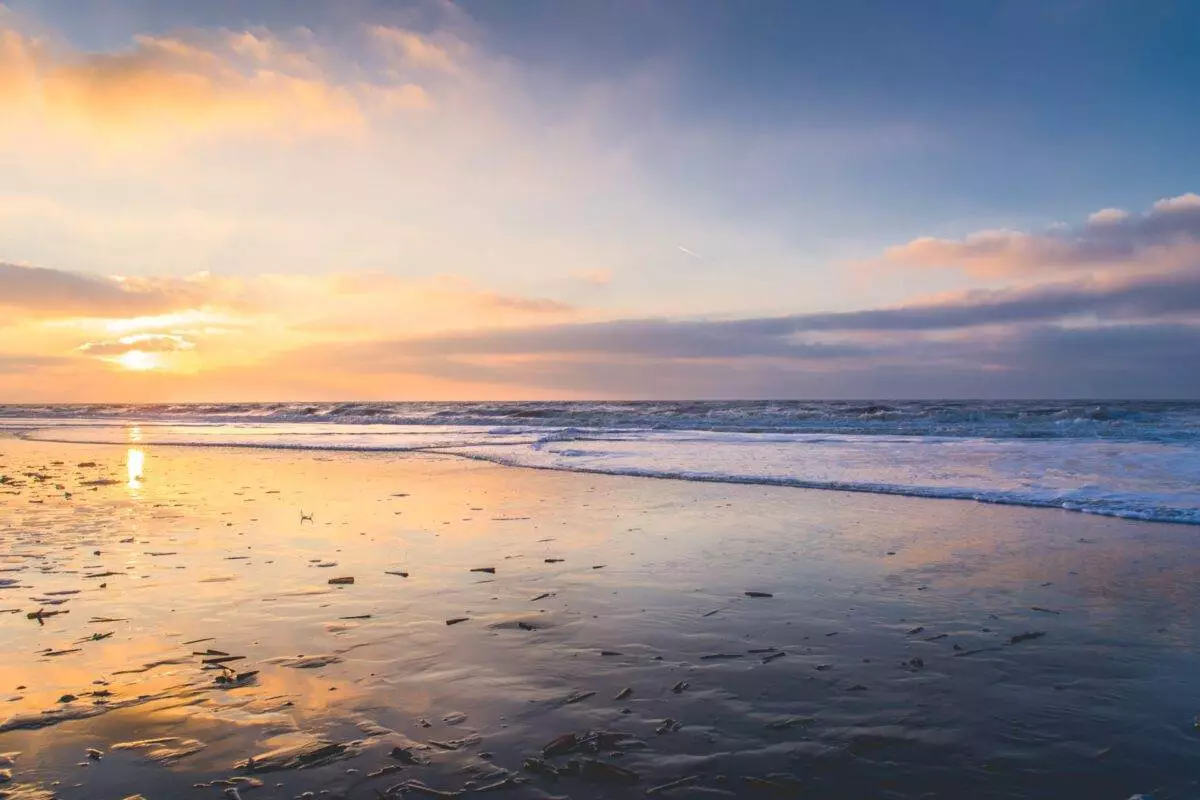
This popular sunbathing spot is located 30 kilometres outside of Amsterdam, making it the closest beach to the Dutch capital.
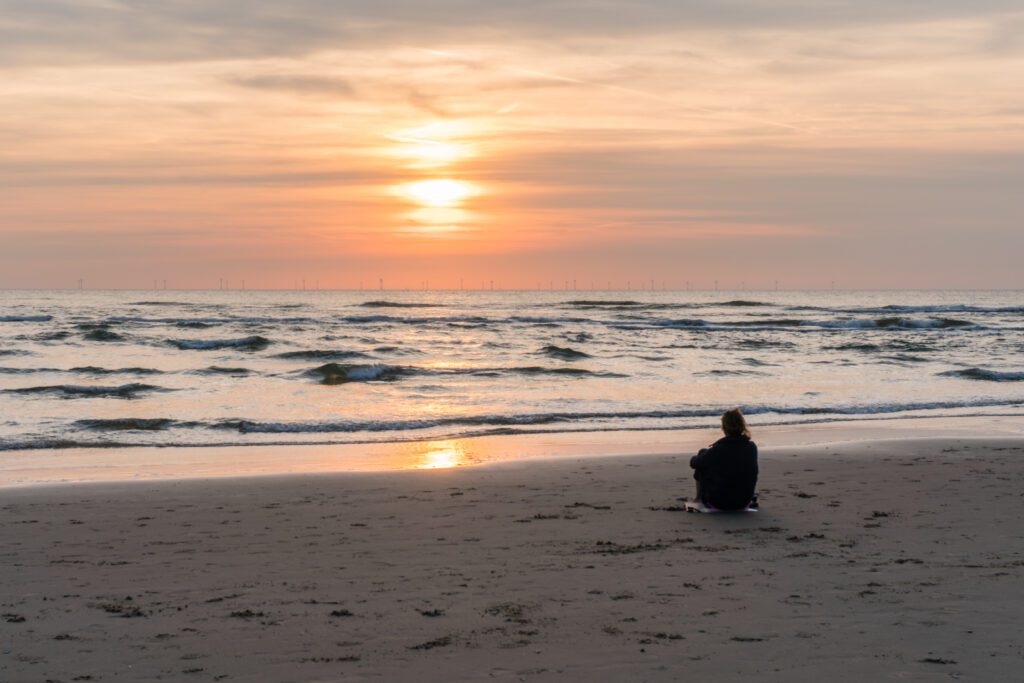
Enjoy beautiful sunsets at the Zandvoort aan Zee beach — right outside Amsterdam. Image: Unsplash
Its convenient location makes it the perfect place to venture to if you need a break from the busy city life.
This long and lovely sandy beach in the Netherlands is part of the Zuid-Kennemerland National Park, known for its magical combination of impressive dunes and peaceful forests.
What more do you need for a perfect day to unwind?
2. Paal 29: the hidden beach
In any good beach guide, you want to find some spots that only a few people know about. Paal 29 — a true hidden gem — is one of them (and so are the next three beaches on this list). 🤫
You can reach this secret beach through the Schoorlse Duinen at the end of a 1.5-hour hike. It’s also technically reachable by bike from Amsterdam; however, the cycle is long and fairly uphill, so don’t expect a leisurely ride. 🚲
Fortunately, there is a beach club at Paal 29, which means you don’t have to drag a picnic with you over the dunes (unless you want to go full-Dutch mode, of course).
3. Camperduin: a historical site
Camperduin is truly special. As the name already suggests, this beach is surrounded by dunes.
While this is not that unusual for a Dutch beach, what makes the Camperduin dunes special is that they shelter an artificially created lagoon — how perfect is that for an afternoon swim? 🏊
The place also has real historical value. The Battle of Camperdown, where the Dutch lost a naval battle to the British, took place here in 1797. Best not to rub it in the local Dutchies’ faces, though. 😉
4. Bloemendaal aan Zee: dunes for days
Bloemendaal aan Zee is one of the most popular beaches in the Netherlands, and for good reason.
Like the other beaches on the list, it’s surrounded by nature. The Kennemerduinen are especially beautiful to walk through.
What a sight for sore eyes! Image: Fabimaru/Wikimedia/CC4.0
And just like all the other good Dutch beaches, Bloemendaal aan Zee is lined with cafés serving delicious snacks and drinks (bitterballenandbiertjes, anyone?), so you won’t be starving as you chill in the sand.
5. Petten aan Zee: a romantic escape
If you’re planning a romantic evening at the beach, we can recommend Petten aan Zee. ❤️
An hour away from Amsterdam, its panoramic dunes are the perfect spot to watch the sun go down — it even has benches ideally placed for sunset viewing.
Petten is also great for swimming and easily accessible by public transport or car (with free parking!)
6. Sint Maartenszee: a quiet place
Petten and Sint Maartenszee are the perfect pair if you fancy a double-beach day. Located just five kilometres down from Petten, Sint Maartenszee is easily reached by bike. 🚲
It’s a beautiful rustic spot, ideal for children with a playground to enjoy. You can also rent a sunbed or a windscreen from one of the beach clubs dotted along this beautiful coastline.
7. Egmond aan Zee: an underrated spot
Situated in the northwest of Noord-Holland, Egmond aan Zee has one of the most beautiful beaches in the Netherlands.
The old fishing village and the local lighthouse are popular spots to visit, and the local beach is wonderfully quiet.
Does it get any more peaceful? I don’t think so. Image: Depositphotos
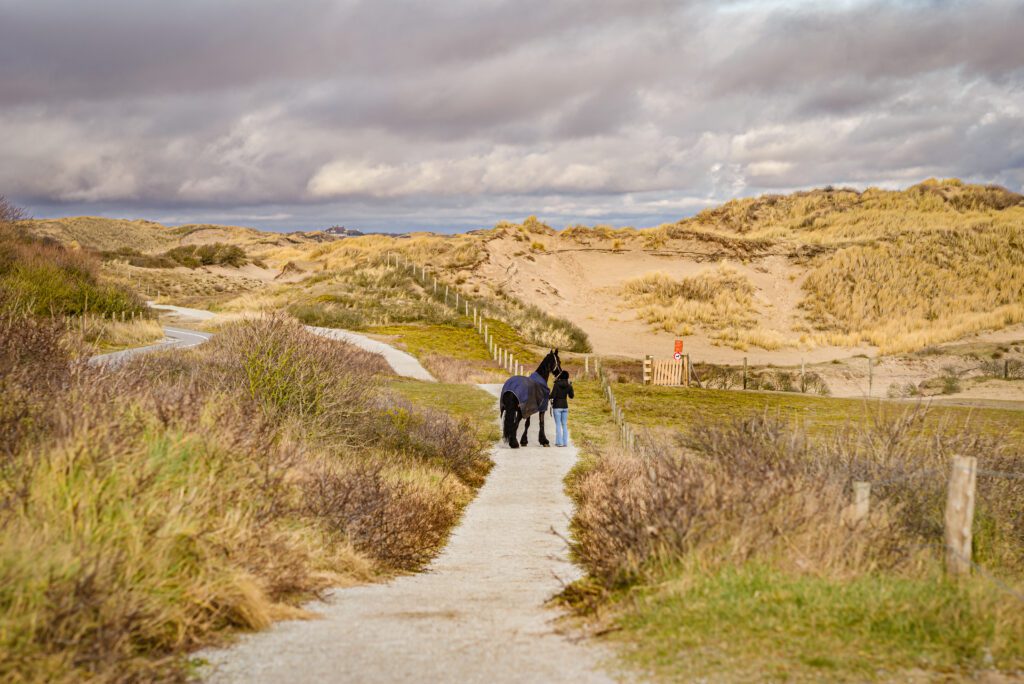
If you’re looking for a place to walk along gorgeous dunes, go for a peaceful swim, watch the sunset, or even spot some wild horses, then this is it. 🐎
8. Texel: the Netherlands’ own island beach
If you’re in the mood for a mini holiday, this one is for you. The island of Texel is located just off the coast of Noord-Holland (near Den Helder) and is pretty cheap to get to by ferry.
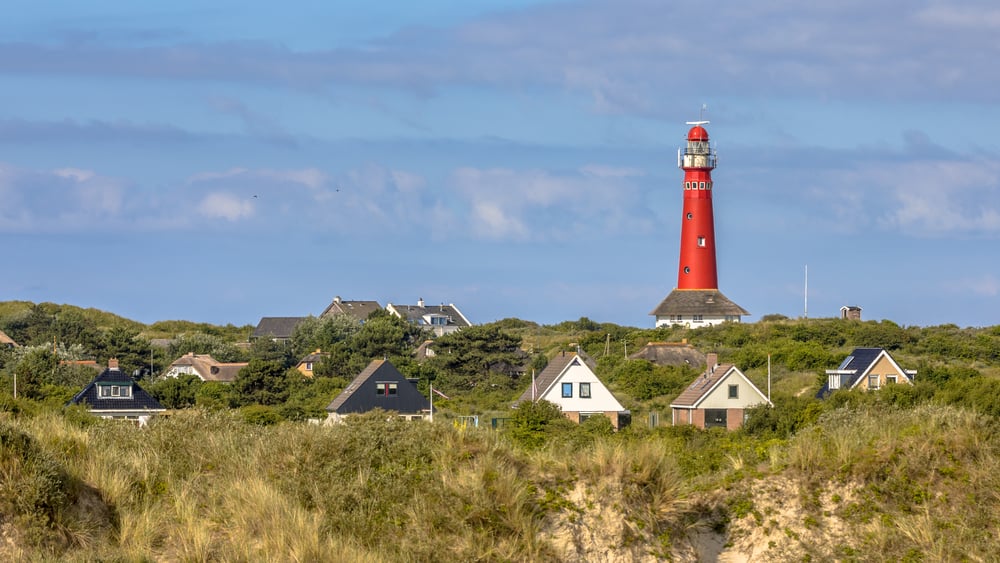
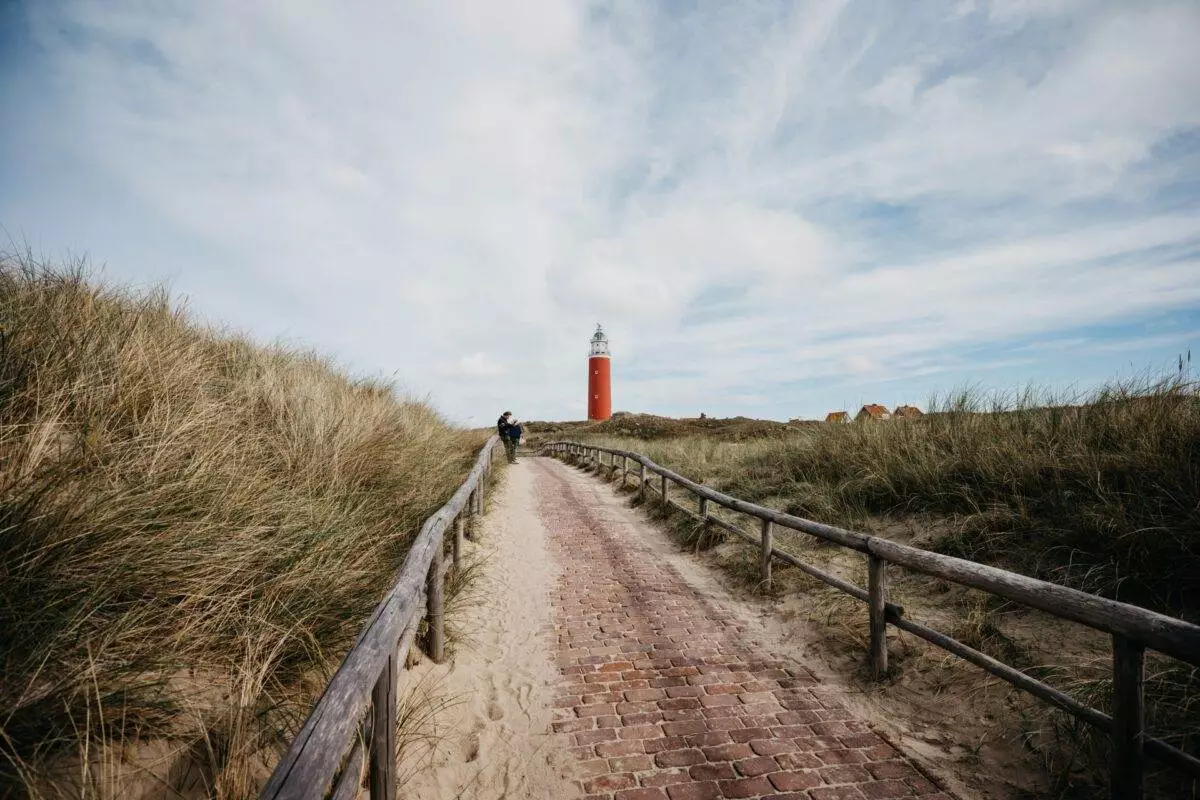
While the island itself is not that big, I can testify that there is a lot to explore — whether it’s the quintessentially Dutch beaches, picturesque dunes, hills where Scottish highland cows graze, or the popular lighthouse that you occasionally see on Instagram.
Texel’s iconic lighthouse just makes for the most photogenic monument! Image: Unsplash
If you get tired, there are plenty of restaurants where you can relax and replenish your energy. However, Texel is quite windy, so don’t forget to bring your kite for extra adventure (and a windbreaker)!
Best beaches in Zuid-Holland: the popular sights
Whether you’re looking for a place bustling with nightlife or a more laid-back beach, the options in the province of Zuid-Holland are endless. What are some of the top Dutch beach spots out here?
9. Scheveningen: the classic spot
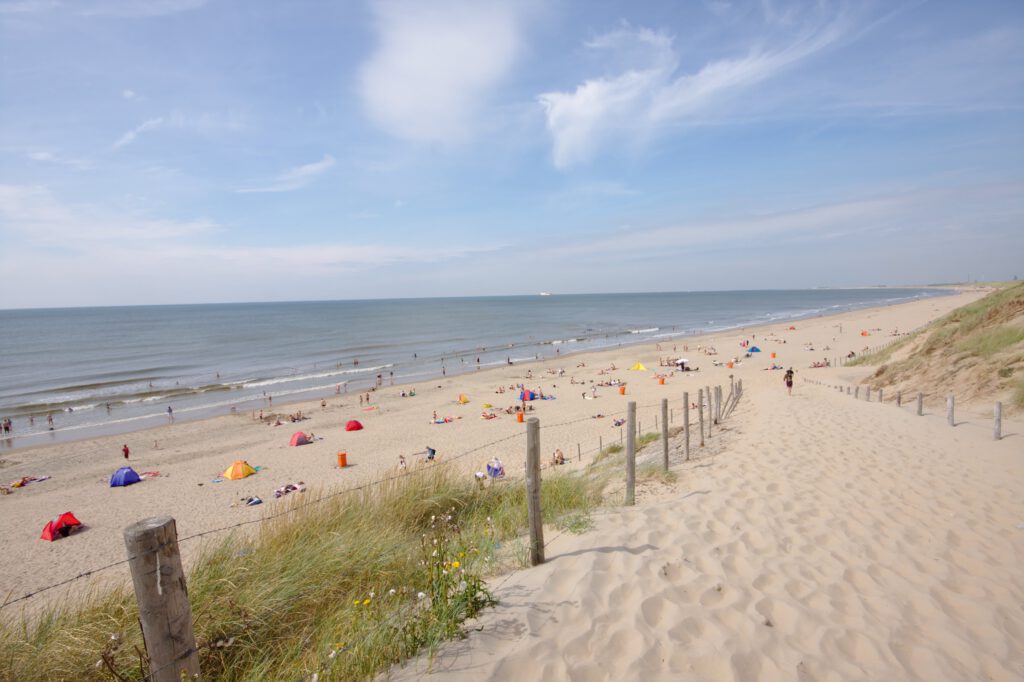
Scheveningen is by far the most popular beach in the Netherlands. No wonder — the beach is HUGE.
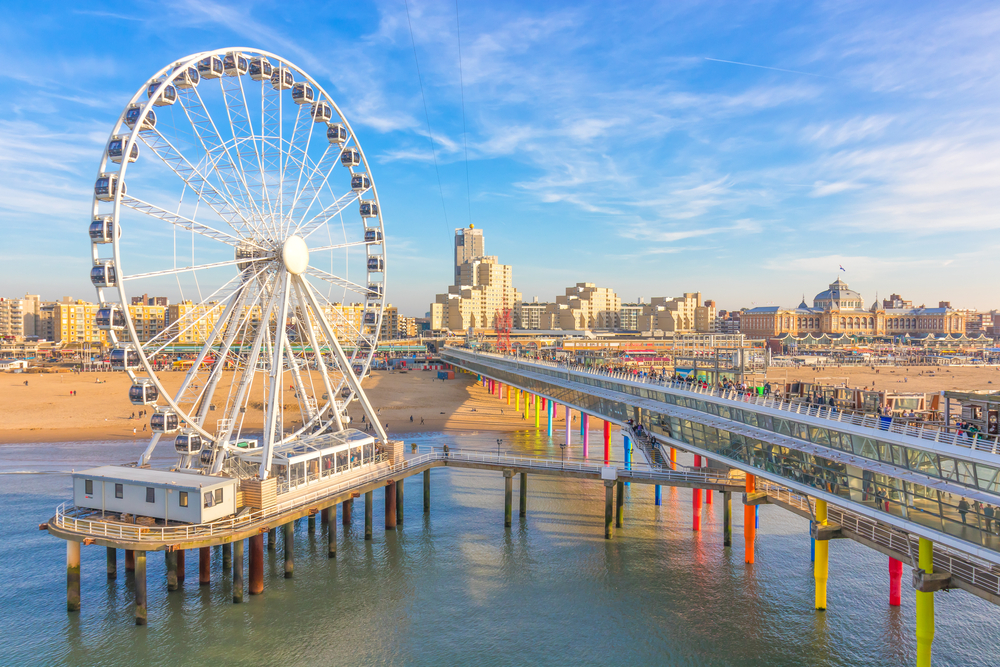
It has gorgeously fine sand, countless beach bars (who can say no to an ice-cold cocktail on a hot summer’s day?), shops, restaurants, a gaming arcade, a pier, you name it!
A tried and tested fan favourite! Image: Depositphotos
Scheveningen is a place to visit year-round, with plenty to do in spring, summer, autumn, and winter.
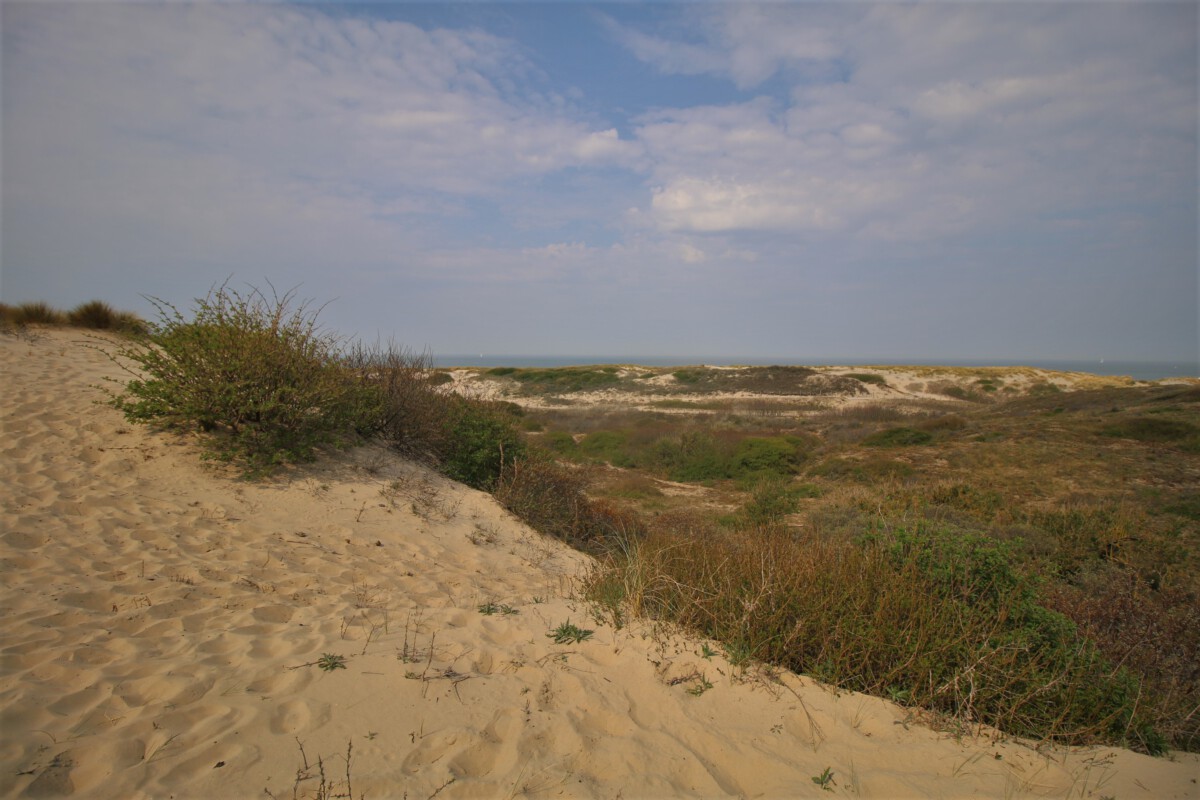
Far less crowded, Zuiderstrand is framed by the Westduinpark — a nature reserve full of dunes, beautiful plants, and tiny hills to walk over (we are in the Netherlands, after all).
The dunes of Zuiderstrand. Image: Charlotte Baart/Supplied
There are a few beach clubs, though not nearly as many as at Scheveningen. Zuiderstrand is the perfect place for a relaxing day: bring your book, some sunglasses, and your wallet for the bitterballen cravings when they inevitably come. 😋
11. Hoek van Holland: Rotterdammers’ favourite
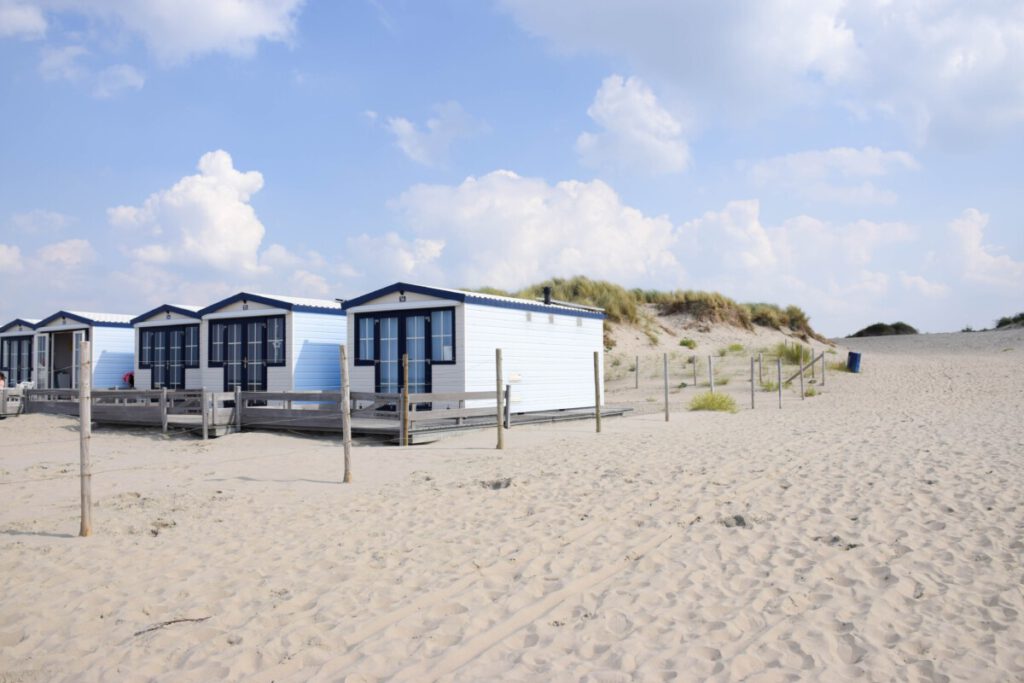
Hoek van Holland is a beach that every Rottedammer knows. It’s located a quick 30-minute journey outside the city, and you can easily get here by car or metro (or by bike if you’re feeling brave on a sunny day).
At Hoek van Holland, you can even rent one of these charming “strandhuisjes” (little beach houses). Perfect for a weekend away! 😍 Image: Jana Vondráčková/Supplied
The “Hook of Holland” is home to numerous beach bars, restaurants, and hotels and a place that no water sports enthusiast should miss. It’s the perfect spot if you want to go somewhere resembling Scheveningen without the hoards of tourists.
On top of that, this lovely beach in the Netherlands offers countless opportunities for exciting hikes and walks in its surroundings.
12. Wassenaar: between Leiden and The Hague
The Wassenaar beach is a lovely, soft-sanded, eight-kilometre stretch of land between The Hague and Leiden. Surrounded by dunes and lovely nature paths, it has a similar vibe to the laid-back Zuiderstrand.
This is a great Dutch beach for anyone living in Leiden. It can be reached by car in less than 20 minutes (or 40 minutes by bike, if you’re up for it).
You can enjoy a walk, run, or bike ride through the dunes and dip in the sea to cool down afterwards. Sheer bliss!
13. Noordwijk: dunes and tulip fields
Noordwijk Beach is located close to the popular tulip fields of Keukenhof, which I love to visit in spring.
It has many beach clubs, several of which are open all year round. Noordwijk is the perfect place to have a drink and a snack while looking out to sea, whether it’s summer or winter.
There are plenty of beach activities as well, such as rafting, canoeing, and kite-flying. And the best part? Dogs are welcome here, too! However, do check where and in what season your four-legged friends have to be on a leash.
Young or old, human or dog — everyone loves Noordwijk! Image: Depositphotos
14. Katwijk: the cleanest beach in the country
Katwijk Beach is another beautifully sandy beach in the Netherlands. Its two-kilometre boulevard is lined with shops, bars, and restaurants.
The 19th-century lighthouse and the charm of the former fishing village will really take you back in time. Katwijk offers a wide range of water sports, and there is ample space to enjoy a sunbath or a nice walk along the beach.
You might even see the occasional horse here! Image: Depositphotos
The beach is very popular with tourists, and it’s certainly somewhere you should go if you happen to be in the area. It was once even voted the cleanest beach in Zuid-Holland. Plus it’s dog-friendly! 🐶
Best beaches in Zeeland: for tropical feels
The province of Zeeland is a summer paradise and hosts some of the best beaches in the Netherlands. Located in the southwest of the country, the province is home to several charming beach villages that always leave me wanting more.
15. Domburg beach: a vintage beach spot
If you’re off to Zeeland for your holidays, then this Dutch beach is something you shouldn’t miss. As one of the oldest beach resorts in Zeeland, it’s a beautiful place for a long beach walk.
The perfect place to catch a stunning sunset (and get that Instagram photo! 📸). Image: Depositphotos
There are many different options for water sports enthusiasts here and, of course, multiple bars and restaurants. If you’ve had enough sand for the day, head over to the cute village and explore its unique charm.
16. Oostkapelle beach: a peaceful getaway
It’s nice, it’s big, and there is plenty of room for everyone: Oostkapelle Beach. 🌊
Perfect for those seeking some peace, this oasis is not accessible by car, so you must walk or cycle through a forest to get there.
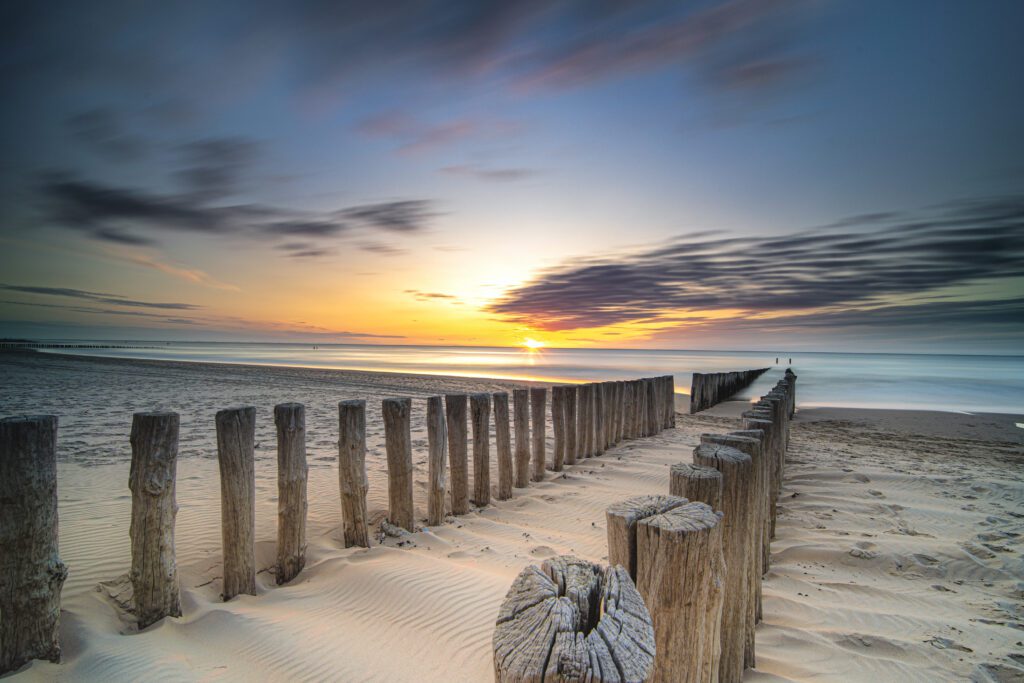
On this cloudy day we all can use some summer vibes, how about you?Sit back, relax and think of summer with this capture of the wavebreakers at the beach between #domburg and #oostkapelle in #zeeland.
Sounds like the perfect nature adventure, right? Well, it gets even better: the northern part of this beach is a nudist beach. Can’t be bothered with sandy swimming trunks? Geen probleem, just take ’em off! 😉
17. Berkenbosch beach: a true nature escape
If you want a slightly more natural beach (as in, not surrounded by buildings and restaurants), Berkenbosch may be the best beach in the Netherlands for you.
This lovely sandy beach is quieter yet still very popular. It is the perfect place for a nice walk or a sunbathing session away from the hustle and bustle of daily life.
18. Cadzand: The Netherlands southernmost beach
There’s something very human about wanting to visit places that are “the most” anything, and honestly, that’s one of the reasons why we’d recommend visiting Cadzand.
It’s the southernmost beach in the Netherlands, and apart from that, it’s just a lovely place to visit.
Stroll around the city centre of Middelburg itself, head out to Cadzand to enjoy some fresh seafood for lunch, and chill on the beach until the sun sets — a day well spent if you ask us. 🌅
Best beaches on the Wadden Islands: in pristine conditions
Friesland is a province we don’t talk about a lot. However, it’s a place in the Netherlands you shouldn’t overlook. The Wadden Islands offer some of the most beautiful nature spots in the country.
19. Ameland: sandy dunes and windy skies
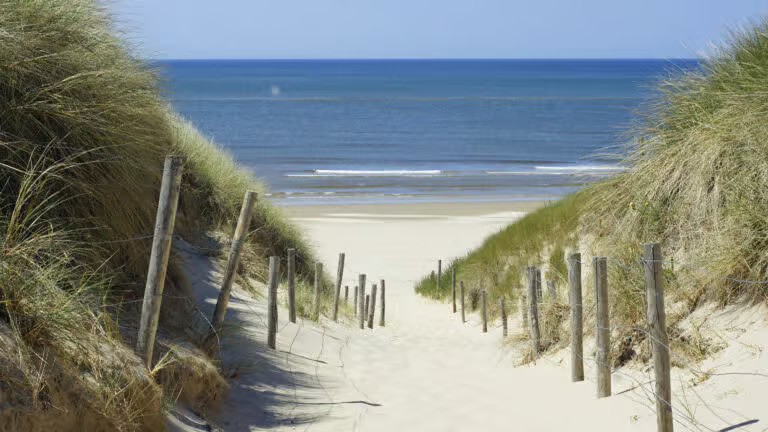
The beautiful beach of Ameland is very similar to the one in Texel — long and lined with beach houses and dunes.
Similar to Texel, it’s also very windy, which makes it the perfect place to bring your kite. Additionally, if you’re into sports, a rugby festival is held here every June!
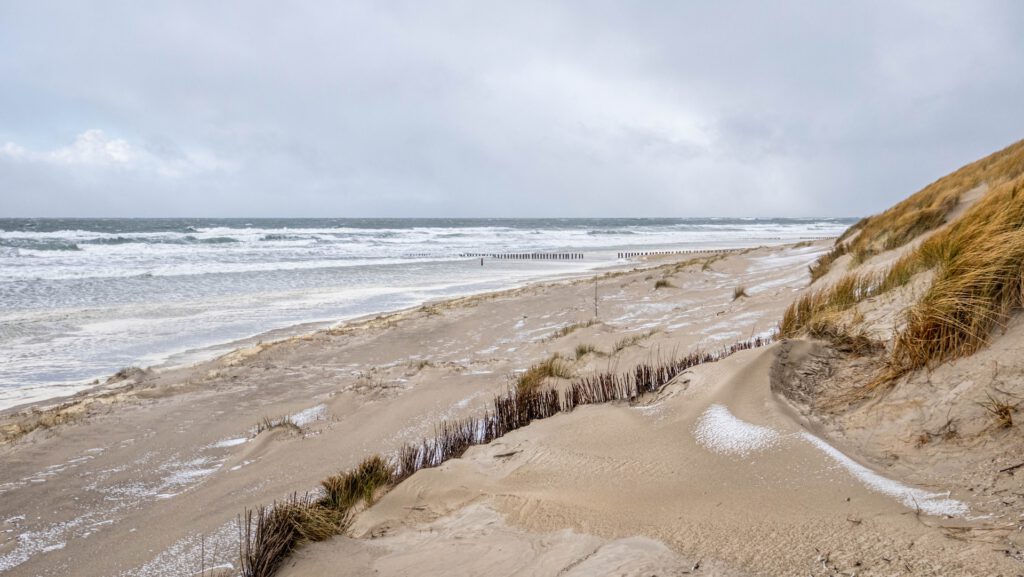
The windy beach of Ameland — stunning! Image: Unsplash
20. Schiermonnikoog: one of the widest beaches in Europe
The beach of Schiermonnikoog doesn’t just have a funny-sounding name, nor is it just one of the best beaches in the Netherlands; it’s also one of the widest beaches in all of Europe!
How is that for a bucket list experience? The vast beach is ideal for windsurfing, and as a bonus, it’s also one of the cleanest beaches in the Netherlands!
It’s also perfectly suited for children who aren’t super confident sea swimmers yet — the waters here are perfectly shallow and clear.
So, what are you waiting for? Grab your flip-flops, sunscreen, and a lekker snack and off you go! Your nearest Dutch dream beach might be just a quick bike ride away.
What are your favourite beaches in the Netherlands? Do you have more suggestions for beaches that we should add to the list? Let us know in the comments below!
Best beaches in the Netherlands: frequently asked questions
Now that you know where to find the best beaches in the Netherlands, here is a quick overview of some of the most pressing questions and answers.
🐕 Can I take my dog to a Dutch beach?
It depends on the beach you’re visiting. Always look up information about the specific beach on its website or the website of the local gemeente (municipality). Many beaches have a set of rules where you can’t walk your dog at certain times of the year or day. Winter is when you’re usually allowed to walk your dog on the beach.
👨👩👦 Are beaches in the Netherlands overcrowded?
Popular Dutch beaches, such as Scheveningen, can get pretty busy. This is especially the case if you go on a hot day during the weekend.
But there are still tons of less busy alternatives in all parts of the Netherlands, many of which can be found on this list!
🌱 Are there nudist beaches in the Netherlands?
Yes, many! The rule of thumb is that if you find a regular beach, there’s a naaktstrand somewhere nearby. You can find a list of them per province on naaktstrandje.nl.
👙 Are you allowed to sunbathe topless in the Netherlands?
Short answer: yes! However, many people don’t do it these days — simply because it’s so easy to capture on a phone. On Dutch nudist beaches, phones are not permitted.
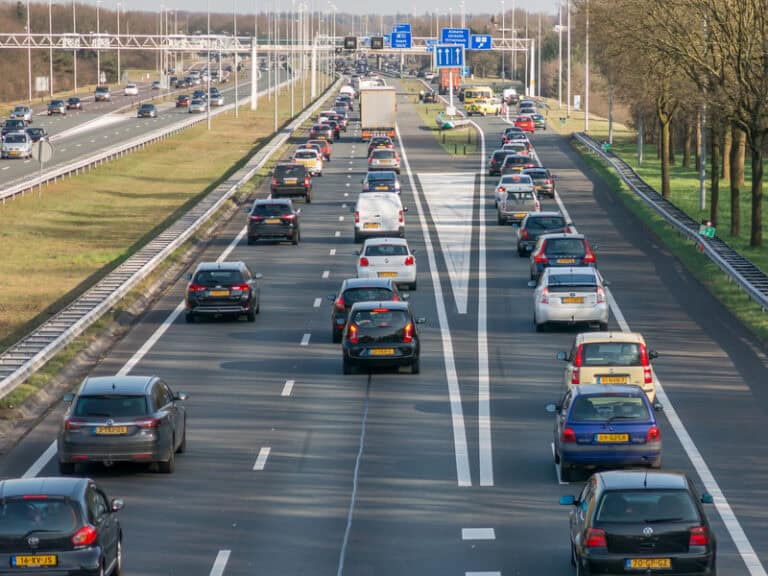
The Netherlands is about to more than double the number of speed camera locations, with the new rollout built around one core principle: keep drivers guessing.
According to NU.nl, the Public Prosecution Service (OM) has confirmed a sweeping expansion of automated traffic monitoring.
Right now, checks cover roughly 650 sites. That figure is set to more than double to at least 1,450 in the coming years, spanning portable units, trajectory checks, focus cameras, and fixed installations.
Catching drivers off guard
The centrepiece of the plan is the flexflitser: a portable camera repositioned regularly. Motorists have no reliable way of knowing where it might show up next, and that uncertainty is entirely the point.
According to the OM, unpredictable deployment produces stronger long-term compliance than fixed infrastructure alone.
If there’s no safe stretch to speed on, the thinking goes, most drivers will simply stop trying.
30 km/h zones get enforcement muscle
Dutch cities have been steadily lowering urban speed limits to 30 km/h, but until now, policing in those zones has been lacking.
The OM plans to close that gap by putting flexflitsers on 30 km/h roads.
A separate pilot, launching later this year, will test trajectory checks inside urban areas, technology previously reserved for motorways.
Freeing up the police
The expansion isn’t only about catching more speeders. Automated systems already handle around 75 per cent of speeding and red-light violations in the Netherlands.
The OM wants to push that share higher still to help free up officers for cases where a human on the ground makes a real difference.
Marc Pluimers, Head of Policy and Strategy at the OM, says it’s more important to focus officers’ attention on “situations where human intervention truly adds value,” reports NU.nl.
Do you think the expansion will improve road safety? Drop your take in the comments.
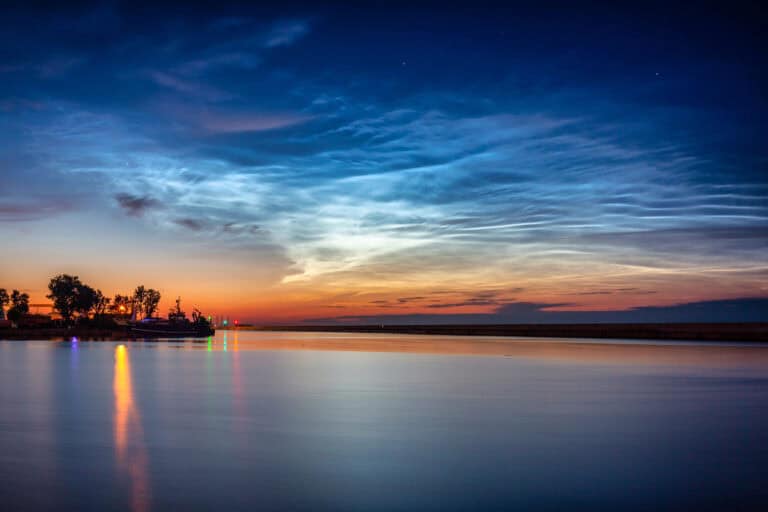
There’s a rare atmospheric treat gracing Dutch skies this weekend: lichtende nachtwolken, also known as noctilucent clouds.
These thin, silver-blue formations that shimmer in the night sky long after sunset are the highest clouds on Earth, typically drifting around 76 to 85 kilometres above the Earth.
What exactly are they?
While they may glow brightly in the sky, Space.com explains that these clouds don’t actually produce light; the glow comes from sunlight bouncing off ice crystals at that extreme altitude.
Given that there are very specific requirements for noctilucent clouds to form, their viewing window is rather short — roughly between May 20 and July 20, with the KNMI noting that the best chances fall in the weeks around the summer solstice.
In addition to clear skies, you’ll also want a view of the northern horizon and minimal light pollution. If possible, try cloud-spotting away from big cities.
Look for a faint blue-white haze low in the sky, in a northwesterly, northerly, or northeasterly direction.
As the clouds reflect very little light, they’re typically only visible after the sun has already set for an hour and fifteen minutes (or roughly an hour and fifteen minutes before sunrise).
Can’t spot them this weekend? Buienradar meteorologist Jordi Huirne tells RTL Nieuws that the chance of seeing noctilucent clouds “is usually greatest in the month of June”, so you’ve still got oodles of time.
We get it — when you think of Dutch cuisine, you’re probably thinking ‘fried’, ‘potato’ or ‘beige’.
But trust us, the Dutch know their way to your heart, and it’s plastered with cookies, cakes, and other mouth-watering toetjes (sweets).
So here are 11 Dutch treats you have to try. (And we’re talking ASAP — there are too many treats and not enough time!). 🏃♂️
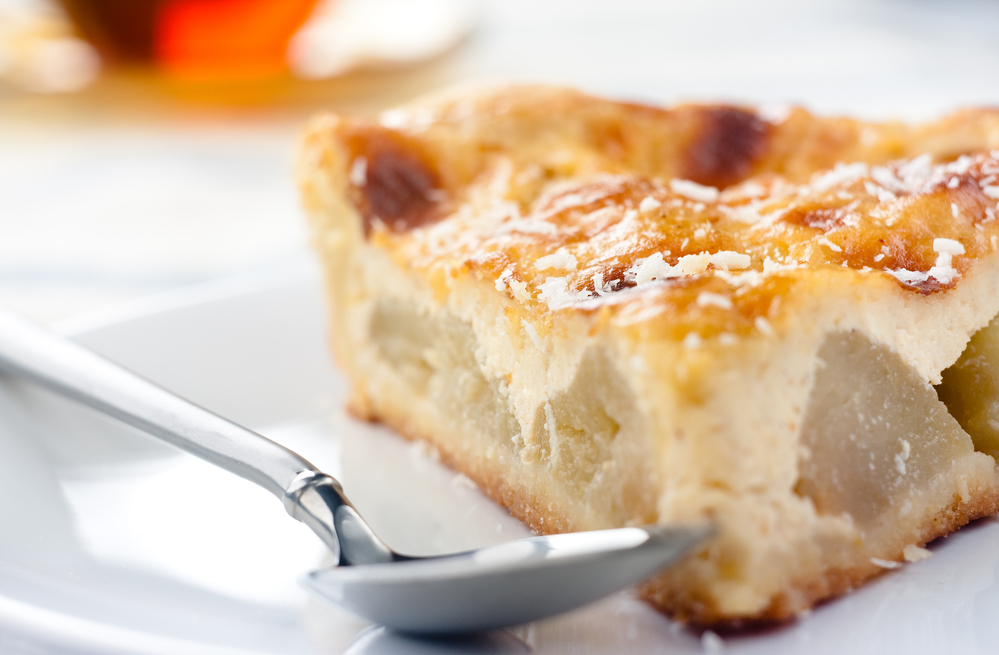
1. Appeltaart: a classic Dutch treat with a twist
This Dutch version of the American apple pie, the German Apfelkuchen, or the French Tarte aux pommes, leaves absolutely nothing to be desired.
The appeltaart is so popular in the Netherlands that you will hardly find a café without it on the menu.
A perfect addition to any coffee date: Dutch appeltaart with a side of slagroom. Image: Depositphotos
What differentiates the Dutch appeltaart from its counterparts in other countries is the thick apple chunk filling. Occasionally, some sneaky raisins make their way in there, too. And, of course, always cinnamon!
Always order your appeltaart with a helping of slagroom (whipped cream)! Or a steaming cup of koffie verkeerd (coffee with milk/latte). (Or both, you won’t regret it!). 😋
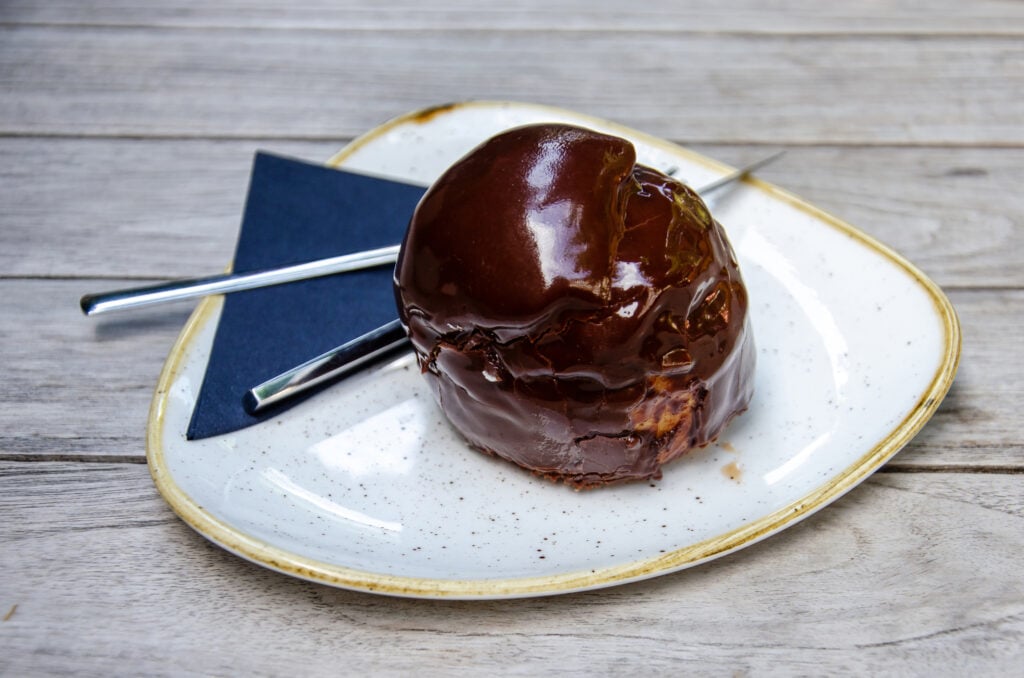
2. Bossche bol: the whipped cream dream
This Dutch treat is not talked about enough. Bossche bollen are balls of whipped cream enclosed in a layer of dough wrapped in dark chocolate fondant. Lekker!
These bad boys are roughly the size of an apple, which you can eat with your hands. Pro tip: don’t wear a white t-shirt when eating one of these delicious Dutch treats — they can get messy. 😉
3. Tompouce: the pink pastry dividing the Dutch
Ohh…the tompouce. This Dutch favourite is a square cake with a state-of-the-art pink glaze on top. The centre consists of a thick, creamy vanilla custard filling balanced on a thin piece of puff pastry.
The tompouce deserves special attention for a multitude of reasons.
First of all, it’s heel popular in the Netherlands. The store chain HEMA says that the tompouce is their most sold baked good. Fourteen million pieces are bought each year — 14 million!
This dainty cake is also notorious for dividing the Dutch over how best to eat it.
Some Dutchies like to separate the top layer of pink-glazed puff pastry to eat last. Some pick the tompouce up with both hands and eat it like a sandwich. Others tip the tompouce on its side and (try to) elegantly cut through lengthwise to have two halves.
There are 12 different ways of eating a tompouce. That’s a lot of controversy for such an innocent-looking (and lekker)cake. 😋
Fun fact! Since 2023, this treat also exists in an alternative version – the crompouce! As the name suggests, it is a hybrid between a croissant and a tompouce. Which one is better, you ask? There’s only one way to find out. 😋
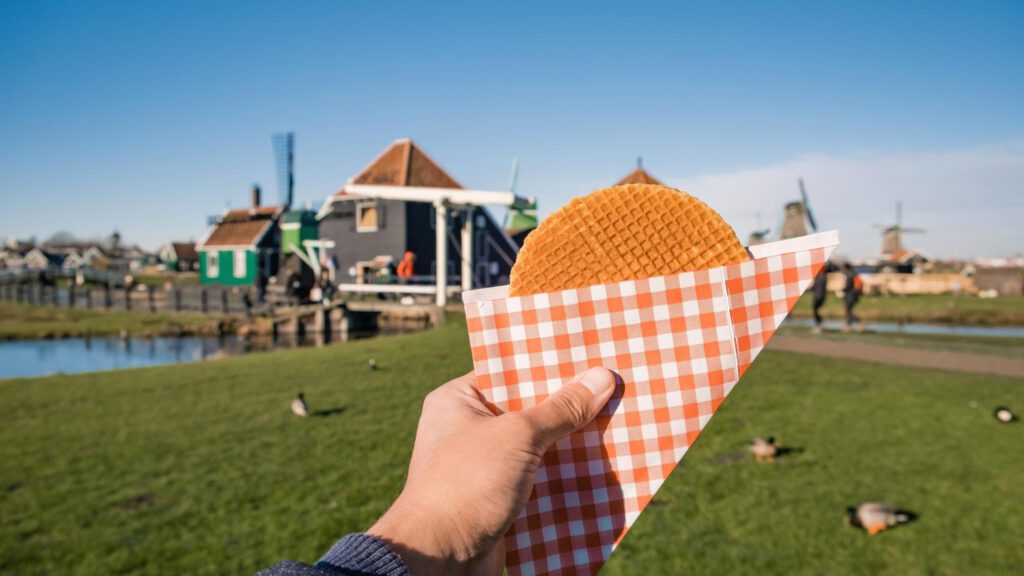
4. Stroopwafel: the Dutch syrup sandwich
The stroopwafel(syrup waffle) is hands down the Netherlands’ most popular food export! Well deserved because these thinly layered waffles with a smooth caramel filling are seriously delicious.
Look at the gooey syrup dripping down this stack of stroopwafels. Yum! Image: Depositphotos
Ideally, you’ll get yourself one fresh from the market (hot, gooey, and sweet 😍), or you could buy the supermarket version and pop it in the microwave for eight to 10 seconds. It gives off the same effect but is admittedly less elegant.
If you’re feeling adventurous, stroopwafels come in an assortment of different flavours ranging from honey to chocolate to lavender — there is a whole world of stroopwafels for you to explore.
TIP: Sit your stroopwafel on top of your coffee cup and let the steam melt the inside caramel. It’s delicious, and you’ll look like a real Dutchie! 🇳🇱
5. Vla: The Dutch pudding
Vla is pudding or custard, just a little more watery — and the Dutch love it.
Enter any supermarket in the Netherlands, and you will see an array of vla lined up in the cooling aisle. They are packaged in milk cartons, and no flavour is left out: vanilla, chocolate, strawberry, caramel. And there are often seasonal selections, too — like apple pie!
What a lovely assortment of chocolate and vanilla vla. Image: Depositphotos
The best thing about vla is that you can get creative when eating it! Top it with oats and bananas for breakfast, or to make it a real sweet treat, sprinkle some hagelslag (chocolate sprinkles) or spritz whipped cream on top.
Or just chug it right out of the box if you’re feeling ravished. The options are endless!
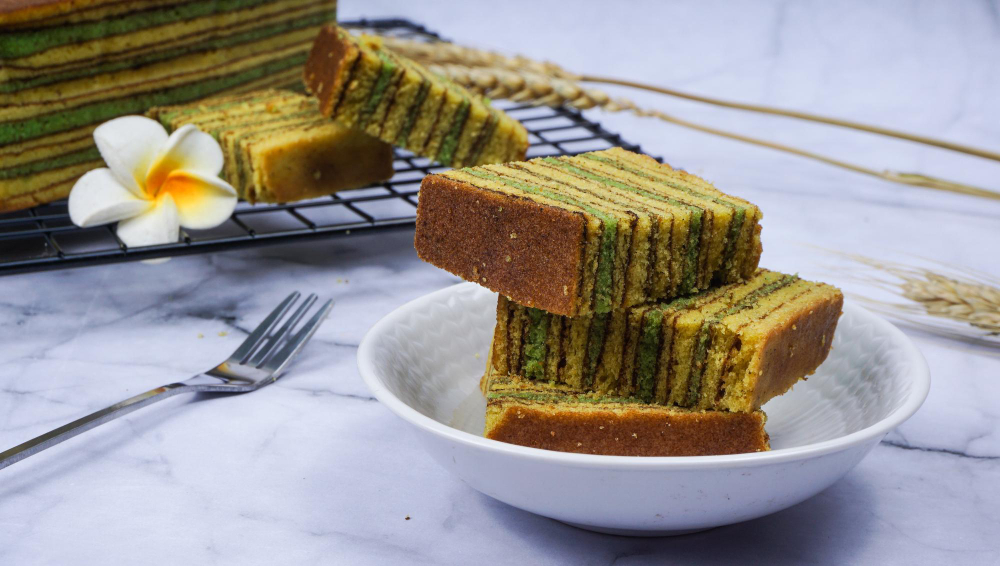
6. Spekkoek: the (literally and figuratively) multi-layered Indonesian-Dutch treat
The literal translation of this Dutch toetje is ‘fat cake’ or ‘bacon cake’ — doesn’t that sound inviting? 👀
If you can get over the name, however, you definitely won’t be disappointed. Like many Dutch sweets, spekkoek is packed full of spices. From cardamom, cinnamon, cloves, and ginger — this multi-layered cake has it all.
This is actually an image of the Indonesian version of the spekkoek, but we wanted to pay due tribute! Image: Freepik
Not only is it rich in flavour, but this cake also has a rich history. The treat is thought to be a product of Dutch colonialism in Indonesia, where a similar version of the “thousand-layer cake” is served during the holidays.
7. Boterkoek: the Dutch buttery sugar bomb you have to love
The Dutch ‘butter cake’ is exactly what the name describes it as. The boterkoek mainly consists of butter, sugar, and flour — and is therefore suitable for even the pickiest eaters.
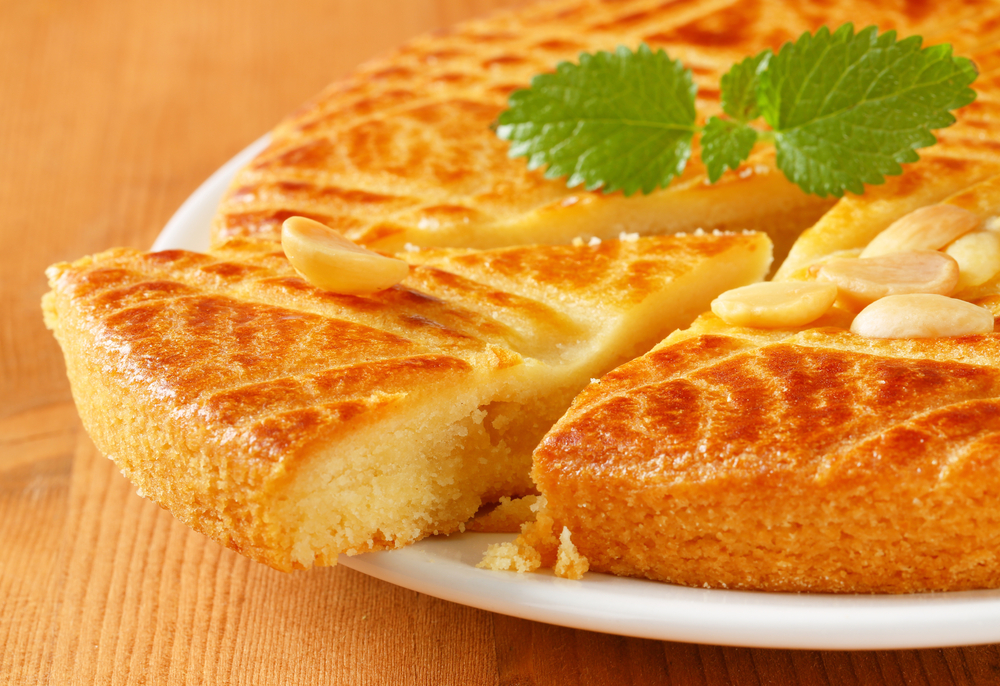
You can recognize the boterkoek through its distinct pattern and almond topping. Image: Depositphotos
You can easily recognise the boterkoek by the typical criss-cross pattern on the top, sometimes buried under a layer of roasted almonds for an extra kick.
This cake is genius in its simplicity, so we don’t have much to say. Except to try it, of course!
8. Oliebollen: the ultimate Dutch New Year’s treat
If you’re not familiar with Dutch holiday traditions, you might be wondering what the frick are oliebollen? Well, don’t worry, that’s what we’re here to tell you.
An oliebol, literally translating to ‘oil ball’ (mmm, appetising), is a deep-fried dough ball dusted with powdered sugar.
It sounds simple, but it’s also absolutely delicious. You can get different variations, for example, with raisins or apple pieces.
Oliebollen with raisins and powdered sugar… if that doesn’t scream holiday season. Image: Freepik
One thing is certain, they’re best enjoyed after a wintery cold afternoon walk, hot and steaming, direct from an oliebollenkramen.
As soon as Christmas and New Year start approaching, you’ll see oliebollenkramen (oliebollen stands) pop up all over the country. In supermarkets, frozen oliebollen are moved right to the front of the shelves. Lekker!
8. Gevulde speculaas: like speculaas cookies, but the cake version
Another Dutch holiday treat: anything speculaas. Especially, gevulde speculaas.
You might have come across the Dutch speculoos cookie, a flat, sweet, crispy thing pressed in the form of Dutch houses or windmills.
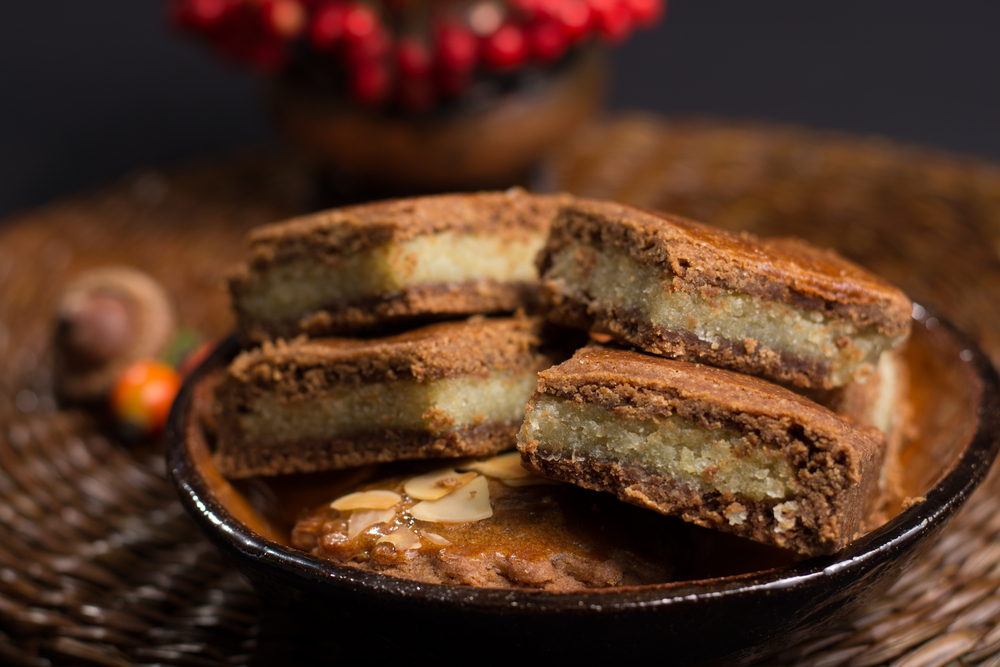
What a perfect view of the creamy-marzipan filling of a gevulde speculaas. Image: Depositphotos
Well, gevulde speculaas (filled speculoos) takes it up a notch. What gives the two treats the same name is the spice mixture, which gives this distinct speculoos-y flavour.
The ultimate difference is that gevulde speculaas is more of a small cake than a cookie. And it’s filled with a deliciously sweet marzipan filling. Yum!
10. Kruidnoten: the teeny-tiny treats that taste like Christmas
As soon as Sinterklaas approaches, you’ll find these little button-sized biscuits stocking the shelves of every supermarket in the Netherlands.
Tiny little pops of flavour! Image: Freepik
You might, by the way, know these Dutch treats under the name ‘pepernoten’. Don’t worry, that’s an honest mistake, and even Dutch people typically don’t know the difference.
To clarify once and for all: kruidnoten are small, dome-shaped spiced biscuits made from wheat flour. Pepernoten, on the other hand, are based on rye flour and flavoured with honey and anise.
While kruidnoten have a uniform size, pepernoten come in different shapes and sizes. You’ll most likely be popping kruidnoten into your mouth while having a Christmas movie night. ✨
11. Limburgse vlaai: the tri-national fruit tarte
Last but not least, the cherry on top of the cake (almost, quite literally). Popular in Belgium, Germany, and the Netherlands, the Limburgse vlaai is a real crowd-pleaser.
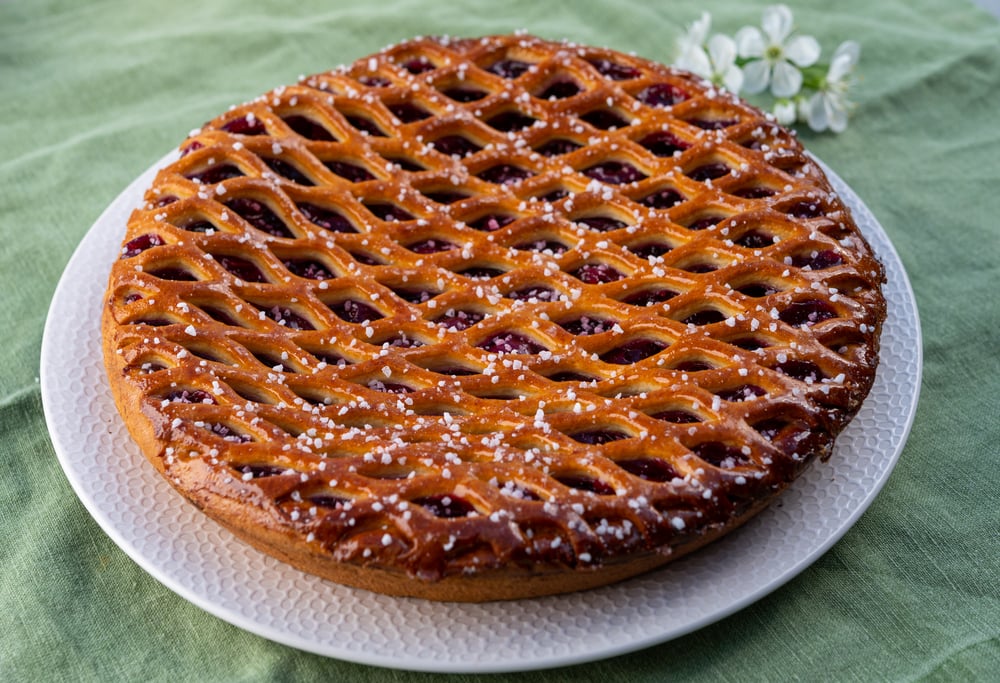
To be honest, who would turn down a piece of taart filled with sweet and juicy fruits? Traditionally, the Limburgse vlaai is filled with plums, but there are also variations with sour cherries or apples.
Dutch Limburgse vlaai with a delicious cherry filling. Image: Depositphotos
The most important thing for the cake to be a true Limburgse vlaai is the unmistakable criss-cross pattern on top.
The cake originates from the Dutch province of Limburg (duh) in the south of the country, which is nestled between its Belgian and German neighbours. Consequently, some version of the cake exists in all three countries.
Did we miss one of your favourite Dutch toetjes? Tell us in the comments below! 👇