The Dutch government is preparing for a scenario where their alliance with the United States may cease to exist. Prime Minister Dick Schoof confirmed this during a European defence debate in parliament.
While stressing the importance of transatlantic ties, Schoof acknowledged the need for contingency planning, RTL Nieuws explains.
“We don’t want it, but you always have to think about it. But you don’t do that in the public domain. We do that in the secret rooms of a number of departments”, he stated yesterday.
To Plan B or not to Plan B
While most political parties support strong US ties, Pieter Omtzigt (NSC) and Rob Jetten (D66) probed whether Europe should prepare for a future without American support.
Schoof acknowledges these concerns but emphasises that “We are heading for that transatlantic bond [with the US],” believing it is too soon to discuss a ‘Plan B’.
What would this Plan B entail? Perhaps a scenario where the US leaves NATO — but like Schoof says, that’s a topic for the future (or well, hopefully, it’s not).
Either way, the discussion gains urgency as Trump suspends aid to Ukraine, increasing pressure on Europe to take action and bolster its defences.
While maintaining its commitment to NATO, the Dutch government quietly considers all possible outcomes.
So, you’re on the hunt for the best clubs in Amsterdam — where the music is booming and the dance floor is jumping. Well, you’re in luck, because we’ve compiled a list of the best clubs the Dutch capital has to offer.
Amsterdam is known worldwide for its epic nights out. From raging hen parties to the Thursday-night-drinks-that-become-a-four-night-bender, Amsterdam has a club for everyone’s needs.
Whether you’re looking to dance the night away or sit, wallflower-esque, there’s something out there you’re guaranteed to enjoy.
Ready to get your dance on? Jive on over to one of these sections. 💃
You’ll find that the club is split into two different sections. Studio 1 is a bigger space, hosting bands and performances, while Studio 2 is a little smaller. There’s also a bar and seating area for those that would prefer to sit and chill.
0T301 has loads to offer, not just club nights — they’ve also got a vegan restaurant, exhibitions, and even a cinema.
If you’d prefer to catch a movie and get some grub while your friend’s party away, we’d definitely recommend a visit to OT301! 👯♀️
🎶 Music? Everything from Latin to electronica 💃 For who? Creative types looking to get involved with the arts. 18+ 🚩 Where? Overtoom 301, 1054 HW Amsterdam 💲Price? Range from €5-25
2. Radion: where you can lose yourself in the music
Radion, a club located in the former ACTA dental centre — yes, you read that right — is another example of a venue where you can not only dance the night away but also join the other events they host.
Lose yourself on the dancefloor at Radion! Image: Depositphotos
Their program includes everything from club nights to photo exhibitions to dance performances. 🩰
🎶 Music? Lots of techno! 💃 For who? For anyone who wants a night of partying, all-natural high, and raging techno sounds. 18+ 🚩 Where? Louwesweg 1, 1066 EA Amsterdam 💲 Price? Range from €15-25
3. NYX: the Greek Goddess, and where you’ll find acceptance
Nyx is a popular, LGBTQIA+ friendly club built across four stories of a building that used to be a carriage house. Inspired by the Greek Goddess, Nyx, the club stands for inclusivity and open-mindedness.
Get those shots lined up, for you’ll be in for a night you’ll never forget. Image: Depositphotos
Basically, come one, come all, and let out your inner Goddess! 🌈
🎶 Music? Pop, pop-punk, and rock; you can even find their playlists for club nights on Spotify 💃 For who? Everyone! A queer-friendly club, people from all backgrounds are welcome. 18+ 🚩 Where? Reguliersdwarsstraat 42, 1017 BM Amsterdam 💲 Price? Range from €12-17
4. Vondelbunker: where you’ll feel like you’ve travelled back in time
Located in an old bunker in Vondelpark, this club is run by a non-profit organisation seeking to combat gentrification in Amsterdam. They rely on donations to keep running! 💸
They host lots of different events, such as chess clubs, and you can find exactly what’s going on on their website.
🎶 Music? Electronic and techno mostly; but they feature lots of artists! 💃 For who? Open to everyone, and inclusivity is key. 18+ 🚩 Where? Vondelpark 8A, 1071 AA Amsterdam 💲 Price? Free entrance for most events, but remember to make a donation!
5. Lofi: for chill vibes
Want to enjoy a night out but not feel like you’ve been in the trenches the next day? Step one is to maybe not drink so much, step two is to find a more chill club. 😏
Listen to some Lo-fi tunes at Lofi, Amsterdam. Image: Depositphotos
A club featuring lots of disco music, but mostly focused on Lofi and house beats, this is the perfect place to go if you’re looking for a low-key but still energising night out!
🎶 Music? Lofi 💃 For who? Anyone looking for relaxed but energetic beats. 18+ 🚩 Where? Basisweg 63, 1043 AN Amsterdam 💲 Price? Range from €15-40
6. Parallel: where you can rave the night away
Located in Amsterdam’s Northside, in the unique building of Tolhuistuin, Parallel is the place to go if you want to be up all night with the tunes. 🎶
Parallel is one of Amsterdam's newest nightlife venues and already kicks it up a notch with six ADE events. Celebrate UK sounds with Bru-C & Nia Archives, dance to Pongo-style Kuduro or go all out during TranceParty:100%Dost! More info and tickets here 👉 https://t.co/fDbySUuvNPpic.twitter.com/wEEd2I3hVj
Self-proclaimed as being a club with one foot in the now and the other in the future, Parallel is for those of us thinking about an uber-technologic future — and a good bop.
You’ll find this very luxurious club in Leidseplein. An area famous for its clubs, Leidseplein is the best place to go if you’re looking for a more-authentic, truly Dutch night out. In the side streets, away from the tourists, is where the Dutchies come out to play! 😉
Found in the heart of Amsterdam. Image: Depositphotos
The club hosts exclusive club nights on Fridays and Saturdays. You’ll have a blast experiencing the stylish interior, unique layout, and magnetic dance floor.
🎶 Music? Lots of different sounds; pop, electronica, techno 💃 For who? Ones who like to dress up fancy from time to time. 😉 21+ 🚩 Where? Korte Leidsedwarsstraat 18, 1017 RC Amsterdam 💲 Price? €18-66.50
8. Paradiso: you might catch Lady Gaga hangin’ round
Again located in Leidseplein, Paradiso is a well-established part of the Amsterdam night scene.
Built into what used to be a church, the club has a notorious reputation, having hosted musicians such as Lady Gaga, the Arctic Monkeys, and David Bowie over the years. 🎤
The club is also a recognised charity and is passionate about the arts and sustainability. 🌲
🎶 Music? Hosts lots of different musicians, bands and club nights 💃 For who? Anyone who loves a good night out. 18+ 🚩 Where? Weteringschans 6-8, 1017 SG Amsterdam 💲 Price? Ranges from €10.50-40+ for concert tickets and club nights
9. Air: for veterans and those freshly 18 (or 21!)
A very well-known club, Air Amsterdam is the place to go for an epic evening of partying and all-night dancing! 💃
A destination visited by locals and tourists alike. Inside Air, you’ll meet lots of different people with all kinds of backgrounds. The club is focused on tolerance, diversity, creativity, quality, and freedom, meaning you can be assured of having an enjoyable night out. 🏳🌈
The club is also card-only, so remember to pack your Maestro. If you’re stuck, you can buy an AIR card, an alternative to your card or cash, and use that to pay for drinks at the bar and for a locker to keep your stuff safe.
Dragshow Bar Lellebel is a drag bar and club, so if you’re looking to sashay the night away, this is surely the place to go! 💁♀️
You’ll find this club in the Reguliersdwarsstraat area. It’s a small enough bar, but it strives for inclusivity and diversity, and everyone is more than welcome!
🎶 Music? Lots of pop and pop-rock 💃 For who? Welcomes anyone and everyone from all sexualities and backgrounds! 🚩 Where? Utrechtsestraat 4H, 1017 VN Amsterdam 💲 Price? Free!
11. Chigaco Social Club: for a night of epic memories
This club opens its doors everyday except Mondays, and hosts popular DJs and plays the kind of music you can lose yourself to, this is the place to go for an all-night bop! 🎉
Prepare to lose every weekend on the dancefloor at Chicago Social Club! Image: Depositphotos
Placed bang-smack in the middle of Leidsesquare, it’s also in a great location for a bit of club-jumping. A two-floor club with a balcony, you’ll be able to find a nice spot for you and your friends (and a little bit of flirting! 😘).
🎶 Music? Techno and electronica 💃 For who? 21+, occasional events for 18+ 🚩 Where? Leidseplein 12, 1017 PT Amsterdam 💲 Price? €16.50-40+
12. Shelter: where you can hide from the Dutch winter and dance away
A club created with the inspiration to provide a place for veteran clubbers and newcomers alike, you can find Shelter across the IJ river in Amsterdam.
The club is famous for its raves, so pack those bags with water and food – gotta stay hydrated, kids! 💦
Located in a former factory, the Melkweg embraces pop culture with vibing club nights, concerts, theatre performances, and exhibitions.
There is a little something for everyone with the wide range in their programming and the variety of talent that they host. A space that lets you be creative and where you’ll feel free to be yourself while dancing the night away.
🎶 Music? A large variety, including electronic, hip-hop, R&B, and more 💃 For who? 18+ for the club, 6+ with adult supervision for concerts 🚩 Where? Lijnbaansgracht 234a, 1017PH Amsterdam 💲 Price? €10-30 for club nights, €10-40+ for concerts
14. Escape: for an exhilarating experience ⚡
If you’re looking for an electrifying atmosphere in the heart of Amsterdam, head to Escape, where the music is pumping and you can leave your soul on the dance floor.
Open every night of the week, you can squeeze in some party time with world-class DJs whenever you’re up for it. You could even grab a quick snack in between dance moves at the club’s restaurant.
🎶 Music? A variety of genres, mostly house, pop, and electro 💃 For who? 18+ on Mondays to Thursdays; 21+ for men and 18+ for women on Fridays to Sundays 🚩 Where? Rembrandtplein 11, 1017 CT Amsterdam 💲 Price? €7.50-59
So, there you have it! The fourteen best clubs in Amsterdam for all the different types of nights out you could imagine. 🎊
Before you hit the club, though, you might have a few burning questions. 👇
What do I wear to clubs in Amsterdam?
Clubs are usually not extremely strict about dress codes. Generally, an elevated casual look is more than enough.
However, commercial clubs such as Jimmy Woo, Escape or Air Amsterdam prefer the clean, dressy and semi-casual look. While more alternative clubs such as Shelter, Vondelbunker and Radion have a grungier demographic.
If the club has a very specific dress code, this will be listed on their website.
Our advice is to dress in whatever makes you feel most comfortable and confident; so all you have to worry about during the night is showcasing your best dance moves. 🕺🏻
What are the rules of clubbing in Amsterdam?
Clubs have a right to reject you or kick you out if you do not abide by their house rules, even if you have a ticket.
This is especially the case if you’re heavily under the influence or display aggressive behavior towards others or staff.
In general, the etiquette is to respect others, maintain a safe and welcoming environment for all, and look out for the community. Not too hard, right? 🙏
Can I get high on the dancefloor?
It’s important to be aware of the laws regarding drug use in the Netherlands. It’s a major shock to many tourists, but weed is not actually legal in the Netherlands: however, it is decriminalised.
Before you hit the club, make sure you know what’s allowed! Image: Depositphotos
Another fact to be aware of before you get yourself in a spot of trouble: carry no more than 5 grams at any given time.
And, if you’re planning on smoking, do so outside. Most clubs will have a smoking area where you can relax and enjoy — but remember that pre-rolled joints are mostly a big nee nee. Bring those filters and rolls, folks! 🚬
TIP: If you are going to get high in one of Amsterdam’s famous clubs, try to avoid truffles. In general, we wouldn’t advise getting high for the first time inside a club! 🚫🍄
Got the ground rules? Great! Grab those shot glasses and turn on the tunes; it’s time to dance the night away! 🥂
What’s your favourite club on this list? Tell us your thoughts in the comments below!
Clubbing in Amsterdam: Frequently asked questions
How long are clubs open?
Most Dutch clubs tend to open at around 11 PM and close towards 5 AM.
Can I get rejected from a club?
Yes, if you don’t meet the age limit, don’t have a ticket or don’t abide by their house rules. This is especially the case if you’re heavily under the influence or display discriminatory and aggressive behavior.
Do clubs have lockers?
Most clubs will have lockers to store your heavy winter jacket it. Make sure you bring coins with you, since most of them are with a fee.
Can I smoke inside?
No. Most clubs will have a large outside area where smoking is allowed.
Do I have to pay for the bathrooms?
Most clubs won’t ask for a bathroom fee, however this really depends on the individual club.
Can I buy drinks at the club?
Yes, all clubs have a bar section. However, drinks tend to be expensive, so we suggest you pre-drink with your friends instead. 😁
A devastating fire is raging in the city centre of Arnhem in the east of the Netherlands. Several stores and apartments have been destroyed, forcing people to evacuate.
According to RTL Nieuws, asbestos has also been released during the fire. People are urged not to approach the city centre.
All hands on deck
There are currently 150 firefighters trying to get the situation under control. They’re employing the help of thermal cameras and drones to determine which buildings are still on fire.
So far, no casualties have been reported.
Around 150 firefighters are currently fighting a fire in the historic city center of #Arnhem, The #Netherlands. The blaze has spread to ~10 buildings with 10 shops and 25 apartments. Evacuations are underway and there have been no reports of casualties so far.
— Michael Barthel (MiBaWi) (@RealMiBaWi) March 6, 2025
Between 60 and 80 people have been successfully evacuated and set up in a nearby town hall, but it’s unclear if all houses under threat have been cleared.
The municipality warns residents to stay out of the smoke, not touch any debris, and to avoid the city centre.
Widespread destruction
The fire started last night in the party supply store SoLow on Jansstraat and spread to the Body Shop, Etos, and YOYO! Fresh Tea Bar, and a few dozen apartments.
Many of these 18th and 19th-century buildings are built with wood, so the fire spreads quickly. They cannot be re-entered yet due to the heat and risk of collapse.
“Between 8 and 10 shops and a block of houses can be considered lost,” René Bierman, spokesperson for the Gelderland Midden region, told Omroep Gelderland.
Meanwhile, the police are still trying to determine the cause of the fire.
After discussions on an age limit for social media first sparked in January 2025, the Dutch House of Representatives is one step closer to making this a reality.
A narrow majority of the House now agrees — no addictive social media before age 15. How exactly this should be enforced remains a question.
“A trap which they can no longer escape”
D66 has created a proposal for the age limit, co-submitted by the NSC, SGP, CDA, and ChristenUnie.
The proposal is first and foremost aimed at protecting children’s mental health, but also their wallets — it claims that social media platforms use addictive techniques to earn money off of children.
“Young people are shown images that are not at all suitable for them and end up in a trap from which they can no longer escape,” explains D66 MP Hanneke van der Werf to the NOS.
The age limit proposal has been supported by the BBB, SP, Partij voor de Dieren (Party for Animals), Volt, JA21, and also by the previously apprehensive GroenLinks-PvdA.
Getting everyone on board
The Netherlands would now like to make this support even broader — they are pushing for a joint European approach.
State Secretary Karremans (Youth, Prevention, and Sports) will consult his European colleagues on a possible EU-wide measure and how it could be enforced.
What do you think? Can an age limit for social media be enforced? Let us know in the comments!
Looking for a fun day trip? Consider it sorted: here are the best zoos, animal parks, aquariums, monkey parks and more in the Netherlands.
A little bird (maybe one from Avifauna, but more on that later 😉) told me you’re looking for the best place to visit the animal kingdom in the Netherlands.
Well, look no further. Whatever your favourite furry friend, we’ve put together a list of the most popular zoos in the Netherlands. 🐒
Ready to jump in? Zoo(m) to wherever takes your fancy below!
Keep an eye on ticket prices: Most of the tickets for these zoos are cheaper (at least by a few euros) when you buy them online rather than at the zoo! So, where possible, we have included the online prices below. 🎫👨👩👦
1. ARTIS Amsterdam Royal Zoo
This is actually the oldest and most popular zoo in the Netherlands. Despite being around for so long, it’s still very modern and well-kept.
ARTIS Zoo provides its visitors with a whole day of fun and a variety of different things to see. 🤩
They have a daily schedule, so if you’re dying to see the lions or penguins being fed, then make sure to check the timings and head to the enclosure at the specified time.
ARTIS is the oldest zoo in the Netherlands. Image: Depositphotos
They offer guided tours and even hotel experiences. The zoo also has an aquarium and a planetarium — so there’s certainly plenty to explore!
I may be biased here as the Rotterdam Zoo is my local and personal favourite, but it’s one of the most beautiful zoos in Europe. And with the number of awards it’s been nominated for, others seem to agree with me!
Blijdorp Zoo is one of the most popular animal attractions in the Netherlands. Image: Gert-Jan de Jong/Wikimedia Commons/CC3.0
It’s got amazing scenery and an incredible play park for children (if seeing all the animals hasn’t worn them out yet).
There’s also a large aquarium section, a butterfly garden and animals from all over the world. The zoo is so big that you might actually struggle to see it all within the opening hours.
Beekse Bergen Safari Park is a really wild experience. If you’re stretched for time (or sufficient funds) when it comes to the real deal — this is definitely a good second-best safari option.
The park is so large that we recommend taking the whole day to explore it all, especially when it gets really busy during the peak summer season!
Enjoy a Dutch safari close to Tilburg. Image: SQCK/Wikimedia Commons/CC3.0
You have a few options: the walking tour, where you can see the safari animals on foot, or the driving tour, where you can admire them from the comfort of your own car or safari bus. There’s also an option to take a boat trip around the park.
The Burgers’ Zoo in Arnhem is a great zoo outside of Holland. It has a wide range of different species in varied habitats, from desert to ocean. There’s even a mangrove forest! 🌿
The zoo has a variety of great things on-site for all your needs throughout the day, including five different restaurants.
Ogle at the ocean of Burgers’ Zoo in Arnhem. Image: Manfred Morgner/Wikimedia Commons/CC3.0
What makes it different from other zoos is that the animals here live in their respective natural habitats. In this sense, you get to see them freely roam around, as opposed to being stuck in cages or small enclosures.
It’s certainly more ethical, making it an even more special experience.
If you’re after more than just a regular zoo, then Wildlands Adventure Zoo is for you. The name tells you everything you — it’s a zoo, but a very adventurous kind.
Wildlands Zoo in Emmen promises a day full of adventure. Image: Richard Broekhuijzen/Wikimedia Commons/CC4.0
Think roller coasters and treetop walks, restaurants and jungles. This makes it perfect for the whole daring family. 👨👨👧👦
While you’d be mistaken for thinking the below-sea-level Dutchies exist underwater, the AquaZoo in Leeuwarden is where you’ll find actual marine life.
Fancy seeing the polar bears, penguins, and crocodiles splash about? AquaZoo is a great place to go with a group of friends or the whole family.
Admire the beautiful polar bears at AquaZoo Friesland. Image: Unsplash
Here, you will learn all about the different animals and how members of the zoo take care of them. The best way to take it all in is by checking out some of the animal shows they have on offer.
There’s even a “Seal Safari,” where you can take a boat to the middle of the lake and watch the seals swim around.
The sweetest monkeys, all roaming free in Apenheul. Image: Apenheul/Wikimedia Commons/CC4.0
The monkeys are left just to roam free, so there’s no predicting what they’ll do (one may even sit on your shoulder!). 🙈
There are signs with information scattered across the whole zoo, so you can learn all about these wonderful creatures as you walk around and watch them.
💶 Price: Depending on the date, €24 to €28 (online)
⏰ Opening Hours: March 21 to November 9, 10 AM – 5 PM
The Seal Rehabilitation and Research Centre in the WEC is the perfect place to go if you want to see more of the great things the Dutch animal research facilities are doing.
Rescued seals in Pieterburen Seal Sanctuary. Image: GerardM/Wikimedia Commons/CC3.0
You can learn all about seals and how this sanctuary rescues them. The place is basically one giant seal hospital, so it’s really an interesting and unique experience.
The seals in this centre were rescued and otherwise in poor health. Once they return to normal, they’re released back into the ocean.
💶 Price: Adult €22.50, kids 3-12 €13.50, students €17.50
Centres like Sea Life are basically giant aquariums with plenty of marine creatures to admire for hours.
This one is located at the beautiful Scheveningen beach (so you can really get your money’s worth in one trip) and has over 150 different types of fish. 🐠
There are also feeding demonstrations and activities for children. The centre has a large underwater tunnel, so you can walk through the tank looking up a variety of fish and sharks (it’s wild).
On Valentine’s Day, they even turn the place into a mini restaurant, so you can dine with your other half in the tunnel, literally under the sharks. That’s a date you won’t forget anytime soon. 💝
In the middle of the hilly, wooded South Limburg landscape, you can enjoy the stunning GaiaZoo, officially crowned the best outing in the Netherlands in 2023. 🏆
And if that’s not convincing enough, this beautiful location is home to over 2000 animals, including more than 150 unique and endangered species.
A family of giraffes, just one of the lovely sights of Gaia Zoo. Image: Donarreiskoffer/Wikimedia Commons/CC3.0
Visitors have the chance to travel the world in one day, from the savannah to the rainforest. Say hello to lions, giraffes, gorillas, rhinos, red pandas, wolverines and even squirrel monkeys up close in the forest.
With rope bridges and climbing towers, plus worldly dishes in the restaurant, it’s not just the animals making GaiaZoo an exciting day out.
💶 Price: Depending on the date, adults around €27, kids aged 3-9 around €22 (online)
Originally starting out as a chicken farm, Ouwehands Zoo in Rhenen now spans 22 hectares and is home to incredible creatures (not that we don’t think chickens are incredible enough). 🐔
One very special feature of the zoo is the Bear Forest, where rescued brown bears roam alongside wolves in the beautiful wooded landscape.
The crowds gather at the Blue Lagoon attraction in Ouwehands, waiting for the spectacular sea lions! Image: Steven Lek/Wikimedia Commons/CC3.0
You can even enjoy the unique experience of visiting giant pandas in the Netherlands! Meet the cute pair of pandas while wondering around the Pandasia part of the park, built to look traditionally Chinese.
💶 Price: Adults €29.50, kids €26.50
⏰ Opening Hours: 10 AM – 5 PM, April 5 onwards 10 AM – 6 PM
Bird park Avifauna in Alphen aan den Rijn has all things feathered, from eagles to ostriches. But don’t forget the resident red pandas and monkeys, either.
The main attraction is all things flying, though, and there’s lots of space in this park for all the bird species to spread their wings.
All things feathers, beaks, and wings at Avifauna Bird Park. Image: Donald Trung Quoc Don/Wikimedia Commons/CC3.0
The birds at Avifauna are truly cared for, as all visitor’s fees go towards keeping the park perfect for its winged inhabitants.
This vogelpark (bird park) is one of the first dedicated bird parks in the world, complete with lots of greenery and ponds to take in as you wander.
💶 Price: €10 during the winter season (November 4 to March 31), €18 to €19 for the rest of the year, depending on the day (online)
⏰ Opening Hours: Weekends 9 AM – 4:30 PM during winter season, every day 9 AM – 6 PM for the rest of the year
The Netherlands is a land of art and museums. From the Frans Hals and Van Gogh Museums to the Rembrandt House, visitors come each year to admire their genius.
But how many of us ever pause to ask these questions: where are the works of female painters from the Dutch Renaissance and the Golden Age?
How come Dutch museums are only named after famous male painters, and why does nobody ever talk about these women?
An erased legacy displayed in today’s museums
The very first art critics in the (Dutch) Renaissance and Dutch Golden Age eras often made fun of female painters. “Women paint with their brushes between their toes,” one infamously said.
We are all often in awe of Michelangelo’s Sistine Chapel ceiling paintings, Da Vinci’s Mona Lisa, and Vermeer’s Milkmaid, but I’m sure that there aren’t many people who know the name of a single female painter from that era.
It’s almost as if their legacy has been completely erased from the history books.
Only 13% of art pieces displayed in today’s museums were made by a woman. Only 2% of the art market’s turnover is spent on artworks by female painters. And 10% of international galleries do not represent any women at all.
Alarming figures regularly crop up about the underrepresentation of women in art, and not much has been done to change things.
For centuries, women were excluded from the art world in all kinds of ways, yet a number of them managed to become highly esteemed painters, despite the many obstacles they encountered.
Female invisibility in a patriarchal society
A comment you often hear is: “If there are no famous female painters, maybe it’s because they were just not good enough.”
But, the reason why there are so few female painters doesn’t necessarily lie with women not being good enough, but with a patriarchal society that sought to shackle them with repressive social standards.
The difference between men and women was very clear in the Renaissance and Dutch Golden Age eras: men were allowed to get an education, chase careers, and be successful, while women were forced to stay at home.
This meant that women were actually not visible in society. They were mainly expected to stay indoors to take care of the household and the children.
Although male painters liked and regularly depicted women on their canvases, it was not socially acceptable for women to practice the profession themselves.
Everything was aimed at excluding them from painting as much as possible. They had less access to education, were not allowed to study nude models to gain knowledge of human anatomy, and were banned from art schools.
This made it extremely difficult for women to learn to paint at a high level.
Against all odds
Considering all these obstacles, it is truly a miracle that there have been women who succeeded in becoming quality painters. This often had to do with the fact that they received a lot of support from their families.
Although the purpose was not for them to make a career, especially in the eclectic world of art, there were still parents who supported their daughters in developing their artistic talent.
Many of the well-known female painters had fathers who were painters, so they were lucky to learn the tricks of the trade from childhood by observing them in their studios.
Others came from well-to-do families and had the means to afford the costly affair of apprenticing to a painter.
As a result, women depended very much on the wealth and approval of their fathers or male guardians for their art education.
This explains why famous female painters in the Renaissance and Golden Age eras were so rare. The freedom and opportunity to develop as a painter belonged exclusively to privileged women.
Yet, their guts, talent, and perseverance must also be praised. By embarking on a career as a painter, these women went against the prevailing norms of how a woman was supposed to behave.
By taking the plunge and going for their passion, they lifted painting to a higher level.
Dutch women painters of the 17th century
In the Netherlands, female painters played an important role in the development of art. Still-life painting, a genre typical of the Low Countries, was mostly mastered by women of this era.
Three women painters stood out.
Maria van Oosterwijck
Maria van Oosterwijck (1630-1693) came from a family of painters but did not become an apprentice until she was thirty.
In 1666, Maria moved to Amsterdam, where she became an assistant to still-life painter Willem van Aelst. At his studio, Maria developed into a painter of international repute.
She was best known for her highly detailed still-life flowers and often went to the Hortus Botanicus in search of rare flowers to immortalize.
Her works were highly sought after and sold to heads of state and noblemen, from King Louis XIV and Emperor Leopold I of Austria, to Cosimo de Medici and William III of England.
On December 28, 1667, the Florentine Prince, Cosimo III de Medici said that her still-lifes were just as good as those of the renowned Van Aelst.
When Cosimo III bought two paintings from her after his second trip to Holland in 1669, Maria became a household name in the art world.
While many painters in Amsterdam and elsewhere struggled to keep their heads above water between 1680 and 1690, Maria’s reputation and the general appreciation for her work remained high, even in the highest European circles.
In 1684, Jan III Sobieski, King of Poland, bought three paintings from her for the capital sum of 2,400 guilders.
When Johann Georg III, Elector of Saxony, visited The Hague on a trip in 1688 and saw three of her paintings, he was so impressed he bought them for 1500 guilders.
Louis XIV (the Sun King) also had one of her paintings in his “art cabinet”.
Through Constantijn Huygens’ intervention, King-Stadtholder William III and his wife Maria Stuart acquired two paintings from Maria in 1689, one for the price of nine hundred guilders. Both paintings are still part of the English Royal Collection at Hampton Court in London.
Thanks to her art sales, Maria was able to buy a house on Amsterdam’s Keizersgracht, where she trained other female painters, including her former maid Geertje Pieters and another very talented pupil of Willem van Aelst, Rachel Ruysch.
Constantijn Huygens wrote a poem about Maria in 1677, saying: “Maria van Oosterwijck stands at a rare height and has no equal.”
In 1690, at sixty years of age, Maria withdrew from the painting world.
She moved to Uitdam to live with her nephew Jacobus van Assendelft, who had become a preacher in 1688. She died three years after the move.
In the past two centuries, interest in her paintings has declined somewhat, but presently, her works are attracting more attention again and are sold for high prices.
Rachel Ruysch
Rachel Ruysch (1664-1750) grew up in a rather interesting family.
Her father was a well-known anatomist who owned a large collection of rare flora and fauna. Her mother’s family consisted of many painters, as a result of which she came into contact with painting as well as with animals and plants from an early age.
She showed so much talent as a still-life painter that her parents decided to send her to become an apprentice to Willem van Aelst. It is quite possible that her training was largely carried out by Maria van Oosterwijck.
Rachel preferred to paint woodland grounds and compositions with flowers. Because flowers were an immensely popular motive in the Netherlands during the Golden Age, her lively, colourful works soon started to draw attention.
Her paintings sold for such high prices that she could live comfortably by making only a few works per year.
In the summer of 1695, Johann Wilhelm, Elector Palatinate, visited Frederik Ruysch’s museum. On that occasion, he doubtlessly also saw the paintings of Rachel, who was now married to the painter Jurriaan Pool.
She had just given birth to her first child, but motherhood did not prevent her from continuing her career as a painter.
At this point in her career, she had become very famous and successful, and in 1699, she was offered membership into the Confrerie Pictura in The Hague as recognition for her contributions to art.
She was the first woman to receive this honour. As a mother of ten children, she must have had a very busy life, but nevertheless, she continued to paint until her death at the proud age of 86.
Judith Leyster
Although women like Maria van Oosterwijck and Rachel Ruysch had a great influence in the painting world, there is one woman who managed to make an even bigger impression.
In 1633, Judith Leyster (1609-1660) was the first woman in the Western world to be recognized as a master painter.
It’s a mystery how she developed into a painter since she did not come from an artistic family.
At the age of nineteen, she was already known in her hometown of Haarlem as a highly talented young woman who could compete with the best male painters of her time.
In 1633, she was admitted to the Guild of Saint Luke of Artisans, making her the first woman to be recognised as a master painter.
Her style is very similar to that of Frans Hals, and some of her works were once wrongly assigned to him.
Since Judith signed her works with only the letter “J”, it was also rumoured that Frans Hals might have had an unknown brother by the name of Jan.
Leyster specialised in painting cheerful genre scenes. The people in her works often have vivid facial expressions and casual poses.
As far as we know, Judith Leyster is the only woman who made paintings of modern figures, instead of mythological and Biblical scenes.
Unfortunately, very few of her paintings have survived, probably because she only worked as a painter for a relatively short period of time.
In 1635, she married the painter Jan Molenaer, after which she left the art world. Eighteen paintings are attributed to her with certainty. These works largely date from the period 1628-1635.
In 2016, one of her self-portraits surfaced, probably dating from 1653. The painting was auctioned for half a million euros.
Leyster’s works can be found in the Rijksmuseum, Mauritshuis, the National Gallery in London, the Frans Hals Museum, and Museum Boerhaave.
Passion for art and revolution
These female painters were a rarity in a world that left little room for women to develop their talents. They were not supposed to have had the careers they carved out for themselves.
Yet, some of them dared to take the revolutionary step towards an “unconventional” life as professional painters.
These women often found themselves in an environment where they were encouraged to develop themselves, such as progressive monasteries or a family that offered support.
The vast majority of these female painters have long disappeared from our history books, but thanks to feminist historical research, they are increasingly being “rediscovered” today.
The growing attention provides for new exhibitions that demonstrate the importance of these women for painting.
More museums in the Netherlands, Europe, and the world need to have exhibitions showcasing their paintings and telling the story of how much they have contributed to the art world.
I hope we get to a point where little children can learn about these wonderful women just as much as they are taught about van Gogh or Rembrandt.
And that museums are opened and named after them, and their genius works of art are displayed with pride for all to see, enjoy, and admire. They deserve to be celebrated and not forgotten.
Which female Dutch painter is your favourite? Have you ever seen their work in a museum? Tell us about your experiences in the comments.
How to send a letter or package in the Netherlands
Postal services in the Netherlands are primarily handled by PostNL, the national postal carrier.
While private companies such as DHL, DPD, FedEx, and UPS also offer shipping options, PostNL is the popular choice for standard mail and parcels.
Whether you’re sending a heartfelt letter, shipping a Vinted sale, or receiving an international package, understanding the rules and costs can save you lots of time and hassle.
So, let’s break it down. 🧩
Sending letters and cards with PostNL
PostNL’s distinctive orange mailboxes are conveniently located throughout the Netherlands, making it easy to send letters and small packages. 📩
Make sure you put it in the correct slot! Image: Depositphotos
Each mailbox typically has two slots:
The right slot is for local mail with nearby postcodes (same neighbourhood or city)
The left slot is for destinations further away, including international addresses
Make sure your mail is placed in the correct slot for timely delivery. ⏱
Size and weight guidelines
To use the orange post box, your mail must meet the following size and weight requirements:
Minimum size: 14 x 9cm
Maximum size: 38 x 26.5 x 3.2 cm
Maximum weight: 2 kg
If your item exceeds these dimensions, it should be sent as a parcel.
Labelling a letter
To ensure that your letter reaches the destination as fast as possible, it is important to make sure you label your envelope correctly and clearly.
In addition to writing the destination address, make sure also to include sender information for the recipient to reply to your message or for PostNL to return your letter if it was unable to be delivered.
It’s as simple as it looks! Image: DutchReview
Stamps and pricing
The price of a stamp for a standard letter or postcard is €1.21 within the Netherlands and €1.90 outside the Netherlands. Heavier letters require additional stamps.
Stamps can be bought at any PostNL point. For letters and cards up to 50 grams, you can purchase a stamp code online and handwrite it directly on your envelope.
Easy peasy! Image: PostNL
For items heavier than 50 grams, a shipping label is required, which you can also buy online.
Make sure to check the PostNL website for the most up-to-date rates.
Delivery times
Domestic letters and cards are typically delivered within two days of being sent. However, PostNL only delivers these items between Tuesday and Saturday.
It’s your lucky day if you send your letter right before one of these show up! Image: Depositphotos
If you’re sending international mail, it may take two to three working days within Europe or up to 25 days abroad, depending on the destination.
You can either drop off parcels at designated PostNL points near you, often located in shops displaying the orange PostNL sign, such as Bruna or Primera, or package lockers.
Once you see one, you’ll see them everywhere. Image: Depositphotos
During the holiday season, these times may differ. Keep an eye on the PostNL page to keep up to date.
If you’re unavailable during delivery, items may be left with a neighbour or directed to a nearby PostNL point. You will be notified by a note in your mailbox or through the Track & Trace system.
Alternatively, you can also select a specific date to receive your parcel for it to be delivered according to your availability.
Tracking your parcels
PostNL provides a Track & Trace service, which allows you to check your parcel’s status using the barcode from your shipping receipt and your postcode.
Customs and taxes
If you’re expecting a package from outside the European Union (EU), a customs declaration is required to be completed by the sender.
When it arrives in the Netherlands, Dutch customs will examine the parcel. If it contains goods sent from outside the EU, the receiver may be required to pay taxes.
However, if the article is a gift and the value is lower than €45, no taxes will be charged.
TIP: Sending a parcel with your belongings? You can often avoid paying unnecessary taxes by including a note inside and outside of the box to customs explaining that you are sending your own possessions.
Alternative private shipping companies
While PostNL is the primary postal service in the Netherlands, other companies like DHL, DPD, FedEx, and UPS also offer shipping options with similar services, such as express delivery and international shipping.
Have any questions about postal services in the Netherlands? Let us know in the comments below!
Postal services in the Netherlands: Frequently asked questions
If the delivery status remains pending, wait an additional day or two. Still no sign of your parcel? Contact customer service for assistance.
Can I send a parcel if I’m a tourist?
Yes, tourists in the Netherlands can send parcels. Standard rates apply based on the parcel’s size and weight.
Can I cancel a shipment?
Yes, cancellations can be processed through the PostNL app or by logging in online.
How do I return a parcel?
To return a parcel in the Netherlands, you will need a shipping label. Then, you must package the item securely and return it to the delivery person for free if there’s room in the mailbox or drop it off at a PostNL point.
Returns can also be tracked using the Track & Trace system.
Does PostNL pick up parcels that I want to send?
PostNL picks up packages for business accounts once there’s a scheduled collection time.
What is the cheapest way to send a package to the Netherlands?
There are many options you can use, such as USPS for the United States or DPD, FedEx, UPS, or DHL.
How much is post fee in the Netherlands?
The price for standard letter or postcard will be €1.21 within the Netherlands and €1.90 outside the Netherlands.
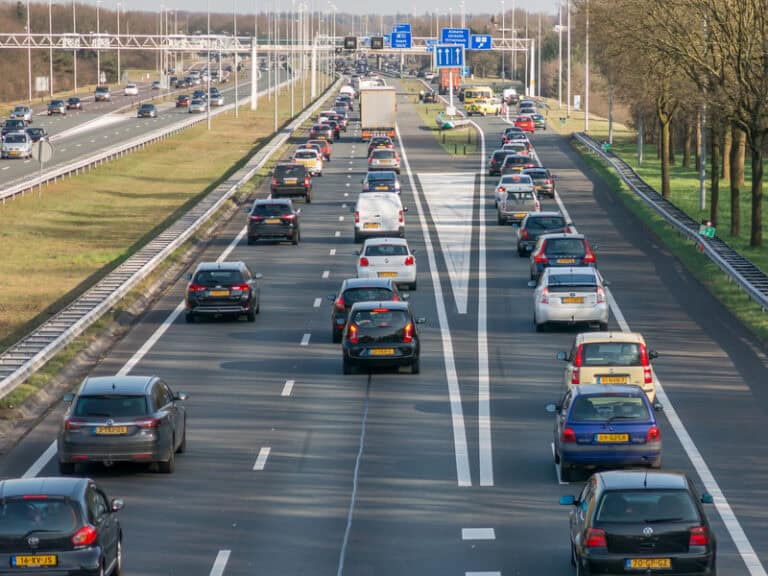
The 2025 ranking of “The World’s Friendliest Drivers” is in, and guess what? The Netherlands made the top 10! 🎉
Yes, in a country where cyclists behave like they own the road and roundabouts feel as lawless as the Wild West, Dutch drivers are apparently… very agreeable.
But before handing out medals for kindness, let’s take a closer look at how this conclusion was drawn. 👇
How was this measured?
British car marketplace AutoTrader conducted an international study, asking licensed drivers across the globe how friendly they consider themselves behind the wheel.
Using the “Agreeableness” section of the Big 5 Personality Test, participants rated themselves on kindness, patience, and trust.
They also had to confess their driving sins — things like aggressive honking, tailgating, and flipping off that one guy who refuses to merge properly.
Curious about the results? Here are the top-ranked countries:
Place
Country
‘Friendly Driving’ Score
#1
UK 🇬🇧
35.40
#2
Australia 🇦🇺
35.02
#3
New Zealand 🇳🇿
33.59
#4
USA 🇺🇸
33.37
#5
Portugal 🇵🇹
33.11
#6
Canada 🇨🇦
33.03
#7
France 🇫🇷
32.98
#8
Netherlands 🇳🇱
32.88
#9
Spain 🇪🇸
32.50
#10
Ireland 🇮🇪
32.35
#11
Italy 🇮🇹
32.24
#12
South Africa 🇿🇦
31.54
#13
Germany 🇩🇪
31.07
#14
Mexico 🇲🇽
30.84
#15
Poland 🇵🇱
29.55
Yes, the UK came out on top, full of drivers who politely wave people into traffic and say “sorry” after nearly rear-ending your car.
Meanwhile, the Netherlands ranked 8th, sitting comfortably ahead of its neighbour Germany (are we surprised?).
Polite… or permanently defeated?
With a Friendly Driving Score of 32.88, Dutch motorists are, on paper, quite polite.
This is a bit shocking, considering they share the road with lawless scooters, unpredictable trams, and oma’s on e-bikes who will cut you off without hesitation.
But let’s be real: maybe it’s not kindness, just pure survival instinct. They know that at any moment, a fatbike or a clueless tourist might swerve into their lane.
That said, let’s not start handing out politeness trophies just yet. If you’ve ever been tailgated on the A2, you might have some doubts about Dutch driving friendliness. 🚗
So, are Dutch drivers among the friendliest — or just good at convincing themselves (and others) that they are? Share your thoughts in the comments! 🤔🚦
The Dutch have a special place in their hearts for fried snacks and finger food. Add fish to that combination due to their close relationship to water, and you have kibbeling.
Yet another food quirk from the Netherlands, who would’ve thought?
We saw it coming — and kibbeling just has a special place in our lives that we couldn’t just let slip by.
So, what exactly is kibbeling?
Kibbeling is a classic Dutch snack and a staple at almost every open-air market.
It consists of battered chunks of codfish, deep-fried, and served with a mayonnaise-based garlic sauce or tartar sauce, and sometimes fries.
Eating kibbeling is a thing of its own. Every kibbeling stall in the country is stalked and frequented by seagulls.
Therefore, finding a safe location to enjoy your fresh box of kibbeling is a necessary task.
For the brave-hearted foodies, ditch the fork that comes with your batch and dig right in with your hands for an authentic but messy experience (sanitise or wash them first, though 👀).
Why are the Dutch like this?
A look at Dutch snacks can show you the strong relationship between Dutchies and fried food.
The country’s location in the North Sea is another reason behind this kibbeling sensation — where the best places to enjoy this Dutch delicacy are along the coast, like Scheveningen.
A crispy, quirky addiction
The dish itself is not quirky, but the obsession is — although understandable, given how DELICIOUS this snack is.
And if you’re vegetarian/vegan and have major FOMO, some supermarkets like Albert Heijn and Jumbo have vegan kibbeling, so you get your fix! 😊
Last night, US President Donald Trump announced that he would suspend all military aid to Ukraine — at least for now. Now, the Netherlands and the rest of Europe must step up to shape the peace plan for Ukraine.
During a special summit for Ukraine in London on Sunday, Dutch Prime Minister Dick Schoof said that the Netherlands would join the military planning for a European “coalition of the willing.”
However, as the NOS writes, the Netherlands has not yet made any concrete commitments for support.
Schoof’s plan
While Schoof has stressed that US support is crucial for any agreement to succeed, he has also reaffirmed that the Netherlands views Russia as the aggressor and supports a peace agreement that ensures Ukraine’s sovereignty.
“It is important that the Netherlands joins in,” he says, adding that the country has shown its “willingness to participate actively.” However, he hasn’t made any concrete agreements in London.
“If you don’t join in, you don’t know what’s going on,” Schoof emphasised.
The Netherlands supports Ukraine as firmly as ever. Now more than ever. We want a lasting peace and an end to the war of aggression started by Russia. For Ukraine and its people, and for Europe.
Former Dutch Prime Minister and current NATO Secretary General Mark Rutte also weighed in, stating that Europe’s involvement depends on the concrete ceasefire agreement.
Opposition wants to do more
Schoof’s lack of concrete commitments has sparked criticism from opposition parties in the Dutch House of Representatives.
Frans Timmermans, leader of GroenLinks-PvdA, expressed disappointment, pointing out that British Prime Minister Keir Starmer immediately pledged extra arms deliveries. “I would have liked the Netherlands to have taken a step forward, as other countries have done,” he said.
D66 leader Rob Jetten echoed this sentiment, calling on Schoof to show more leadership and clarify what additional support the country is prepared to offer.
Discussions about the situation in Ukraine and European defense strategies will continue on Thursday, March 6, in Brussels.