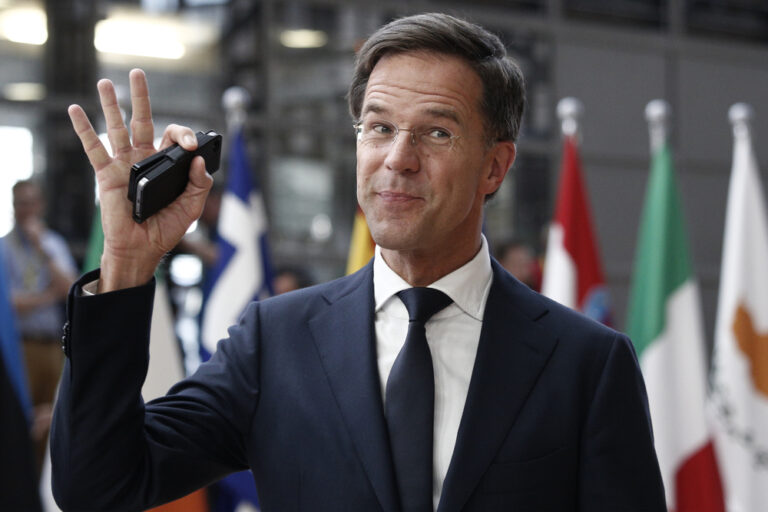
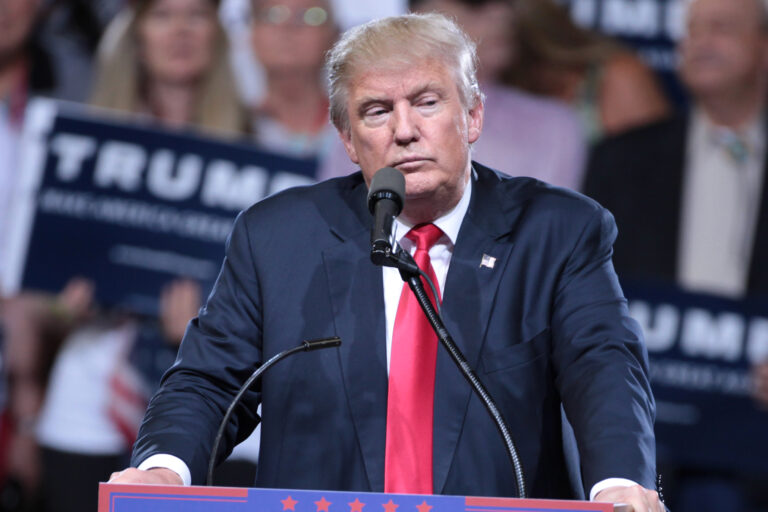
Rutte can breathe a sigh of relief and drop the word “Daddy” from his vocabulary for the foreseeable future. It looks like all that flattery paid off, with many reporting the NATO Summit a huge success.
But what exactly happened? Who’s the “Daddy?” Let’s break down the outcome of the NATO Summit.
There was A LOT of flattery and fanfare
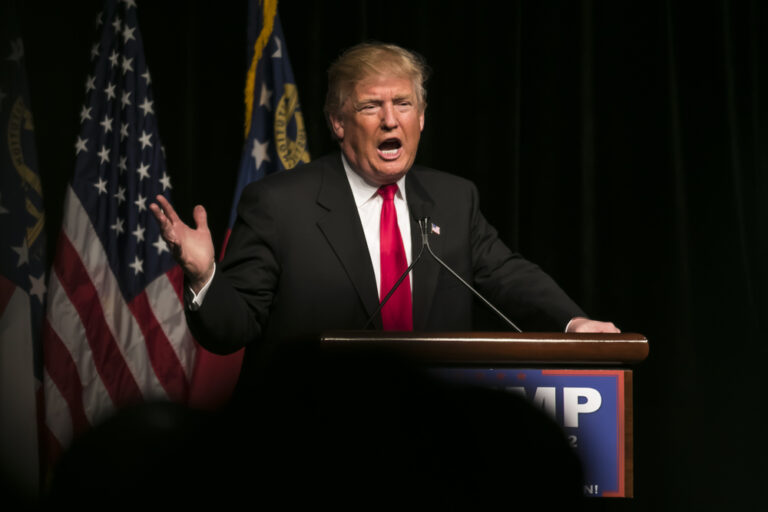
It looks like a large part of Mark Rutte’s role as NATO chief included flattering Donald Trump wherever possible.
Day one of the summit began with a congratulatory text sent to Trump as he made his way to the Netherlands. This was then followed by a special shoutout to Trump by both Rutte (shocker) and the King himself.
A certain Trump lookalike also managed to get a word in with the president, snapping a selfie that will haunt us all.
Thank you so much Mr President @realDonaldTrump for the excellent meeting we just had and our discussion about the need for tougher immigration laws!
Following a successful sleepover at the King and Queen’s, it was time to see whether all that flattery worked.
And it certainly did
A very important talking point for Trump was defence spending, with the president of the US calling on NATO members to increase their defence spending to 5% of their countries’ GDP.
Rutte was able to negotiate this down to something more feasible for NATO’s members, while also appeasing Trump.
According to RTL Nieuws, all 32 NATO member states have agreed to spend 3.5% of their GDP on defence, plus a further 1.5% on “supporting matters.” The members will have until 2035 to achieve this.
With a plan of action and a flattered US president, the summit even managed to touch on the topic of Ukraine.
According to Rutte, NATO members will continue to support Ukraine, with the NATO chief saying “We call on Russia to put an end to its aggression against Ukraine.”
Ok, but “Daddy!?”
While Rutte has managed to achieve much over the past few days, perhaps the moment that will be burned into all our minds for the coming years is him referring to Trump as “Daddy.”
Speaking with the press following the summit, Trump and Rutte addressed the US president’s use of a certain expletive when talking about Iran and Israel.
Rutte jumped in to explain for Trump, saying “Daddy has to sometimes use strong language.”
The use of “Daddy” did not go unnoticed with headlines across the world referring to it.
And if Rutte thought this would all blow over by the morning, he can think again.
Even the White House has decided to get in on the meme, using Usher’s song “Hey Daddy (Daddy’s Home)” to create a sort of promo video about the president’s visit to the Netherlands.
Trump is in The Hague — and it’s all about him. Before the US president even stepped off the plane, the red carpet was rolled out (though it nearly flew away in the Dutch wind).
From royal dinners to gushy texts and speeches from Rutte, the Dutch are going all in to please him.
Let’s break down the five-star welcome the US president is getting.
Rutte’s message to Trump: if flattery was a sport, he’d take gold
NATO’s Secretary General, Mark Rutte, isn’t holding back on the compliments. In fact, he began sending them mid-flight.
Trump gleefully shared a screenshot of Rutte’s congratulatory message on Truth Social from his plane. And let’s say: subtlety did not make the passenger list.
🧵 3/3
Rutte appeared unconcerned that Trump aired his message: "I have absolutely no trouble or problem with that because there's nothing in it which had to stay secret." Here's what his note to the US president said:
Congratulations and thank you for your decisive action in Iran,” wrote Rutte in his message to Trump. He added, “You are now flying to another great success in The Hague tonight.”
But the real kicker? “Europe is going to pay in a BIG way, as they should, and it will be your success!” That sound you hear is a thousand eyebrows hitting the ceiling.
Rutte also gave a special shoutout to Trump during his speech at dinner last night.
“Let me salute President Trump’s longstanding leadership in calling for NATO to increase defence spending… Mr President, dear Donald, that is thanks to you pushing us.”
The King thanks everyone, but Trump gets a special mention
King Willem-Alexander kept things royal, but let’s be honest, the flattery didn’t stop there.
During his dinner speech at Paleis Huis ten Bosch, the King thanked world leaders: “I wish you wisdom in your upcoming discussions, and I am confident that they will lead to a NATO that is stronger than ever.”
🇬🇧 ‘It was a great pleasure to receive you this evening at Huis Ten Bosch Palace. I wish you wisdom in your deliberations tomorrow and I have every confidence that they will result in a NATO that is stronger than ever.’ – King Willem-Alexander pic.twitter.com/ff6AeWdyZ7
But when it came to Trump? Oh, the flattery dial turned up: “Mr. President, it means a great deal to us to welcome you to our home tonight. We cherish the bonds of friendship that will always unite our countries.”
At this rate, everything from NATO to the napkins seems to be lining up to charm Trump.
Because this visit is all about him
As if the royal toast wasn’t enough, Trump wasn’t just dining — he spent the night. Instead of the usual guest spot at the Dam Palace, he was invited to stay at Paleis Huis ten Bosch, the King’s actual home.
According to NOS, royal expert Josine Droogendijk called the overnight stay “very special,” noting that it doesn’t happen anymore.
Naturally, Trump posted a glowing thank-you on Truth Social this morning:
“Thank you to Their Majesties the King and Queen of the Netherlands for the tremendous honor of hosting me at their beautiful home tonight. The U.S.A. appreciates your gracious hospitality!”
At this point, between the flattery, the palace, and the perfectly worded speeches, The Hague has become a very formal fan club.
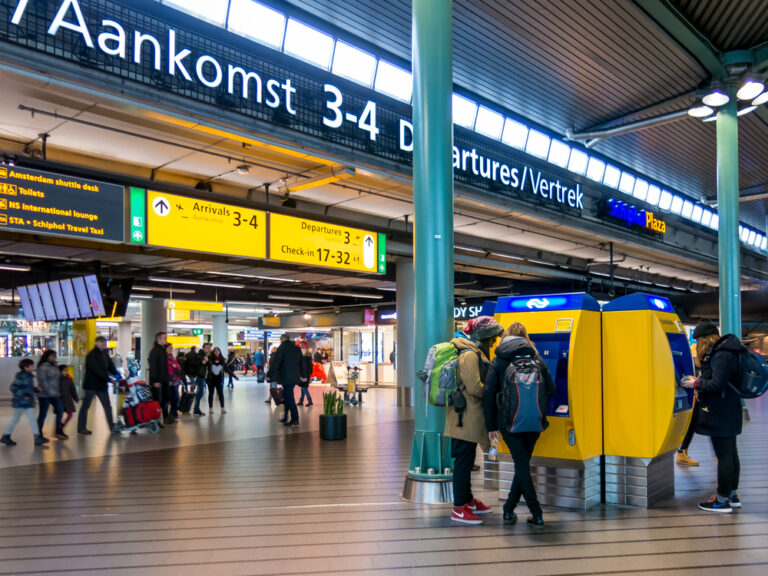
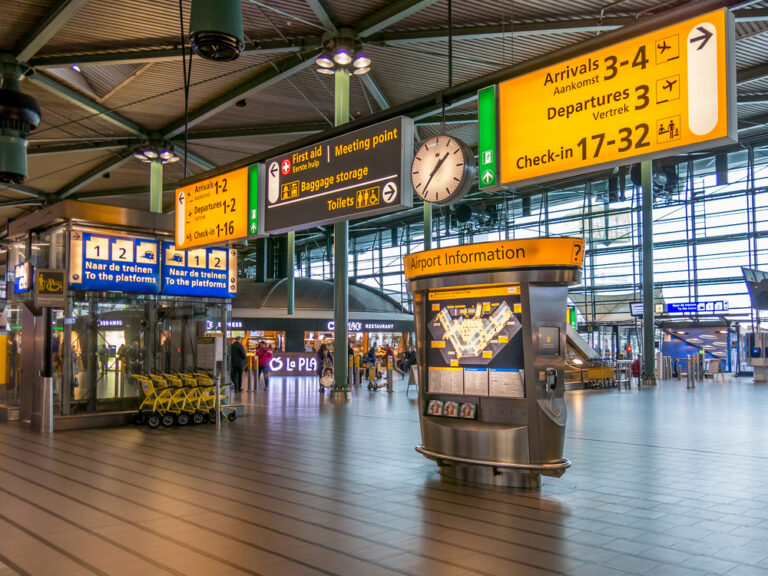
Train troubles are back at Schiphol this morning, and if you’re thinking “here we go again,” you’re absolutely right — except you’re not going anywhere for the time being.
According to the NOS, a signal failure is causing major disruptions between Schiphol and Amsterdam Zuid, with the NS expecting problems to last at least the entire morning.
Multiple routes disrupted
If you’re trying to get to the airport today, brace yourself.
This morning, far fewer trains are running between Schiphol, Amsterdam Zuid, Leiden, Rotterdam, and Bijlmer Arena, while defective overhead lines are also wreaking havoc on routes between Utrecht and The Hague, and between Utrecht and Rotterdam.
Much like yesterday, the NS advises travellers to use different Amsterdam stations to reach the airport, with the metro system between Amsterdam Sloterdijk, Amsterdam Lelylaan, and Amsterdam Zuid as your best alternative.
The timing couldn’t be more frustrating — train services resumed last night at around 10:15 PM after yesterday’s massive cable fire knocked out certain routes for nearly an entire day.
Now, just hours later, we’re back to square one. 🫠
Police suspect criminal sabotage
Here’s where things get seriously concerning: Dutch police are actively investigating whether yesterday’s devastating power outage was caused by a crime.
It’s reported that a fire broke out in power cables around 3:45 AM yesterday. However, police are now beginning to suspect this wasn’t just an unfortunate accident but a crime.
Forensic teams have secured evidence at the fire scene and are reviewing surveillance footage from the area.
The investigation was initially delayed until power lines could be safely disconnected, but officers are now treating the incident as potential arson.
Timing is suspicious
Justice and Security Minister David van Weel confirmed during the NATO summit in The Hague that sabotage is one possibility under investigation, saying:
“That is one of the things we are investigating. It could be an activist group, another country — anything is possible”.
The timing is particularly suspicious given that The Hague is hosting the NATO summit.
Police are investigating whether the sabotage was linked to the summit. However, another possibility being examined is copper theft, though ProRail has declined to speculate further on the cause.
Regardless of the cause, the result is simple: trains will be chaotic yet again. For now, keep your travel plans flexible, check the NS app constantly, and perhaps be extra nice to your friends who own a car. 👀
History can be used and abused for many things, which is why it’s useful to understand it. That’s why we tell these stories about Dutch history that we consider true.
However, the truth is not always handed to us, and sometimes, history can be intentionally misrepresented for heinous reasons. 👀
Ever since the 2016 OnsOnderwijs2032 report, which discussed the future of Dutch education, accurate portrayals of Dutch history have taken a backseat.
The report suggested that there will no longer be a separate history class in Dutch schools and that history lessons should be implemented in other classes. Is that good? Probably not. But can we do anything about it? Probably not.
That’s why we’ve taken it into our own hands to critically examine three principles or myths that may have influenced Dutch society’s view on history. 👇
The Polder Model
The Polder Model is a term that was invented in the 1990s. It describes a process of decision-making based on consensus and dialogue, with every party having an equal say. It is defined by the lifelong struggle of the Dutch with the element of water in a land that lies partly below sea level.
The Dutch turned their stubbornness into strategy, and the polder model is the result! Image: Depositphotos
The enthusiasm for the polder model was initiated abroad. In 1994, several articles were written in the USA, in which the Americans admired the Dutch combination of unemployment care and job creation.
It was only in the second half of the 1990s that the term was also embraced by the Dutch. It included not only the successes of our consensus economy but also the way we addressed our problems with drugs, the environment, and sex education.
Although the term suggests that there was a polder model in our early modern country because we had to keep our feet dry, the reality was a whole different story. In most of the polders and water boards, there was no harmony, consensus, or equal meetings.
The only way they worked together was that the polders came into being due to the contribution of joint capital and united cooperation. However, the decisions were mainly one-sided by board members with an aristocratic background.
The early modern world was a class society in which people from the higher classes had little interest in what the farmers wanted or in giving them any kind of vote.
The notables made all the decisions; they dominated the water boards, and their word was law. There were barely any exceptions to this rule.
Dutch tolerance
Tolerance is something that the Dutch talk about all the time.
Politicians often see it as one of the moral highlights of Dutch society. They try to sell this moral concept abroad and tell us that Dutch tolerance is under pressure because of the refugees that ‘flood’ our country.
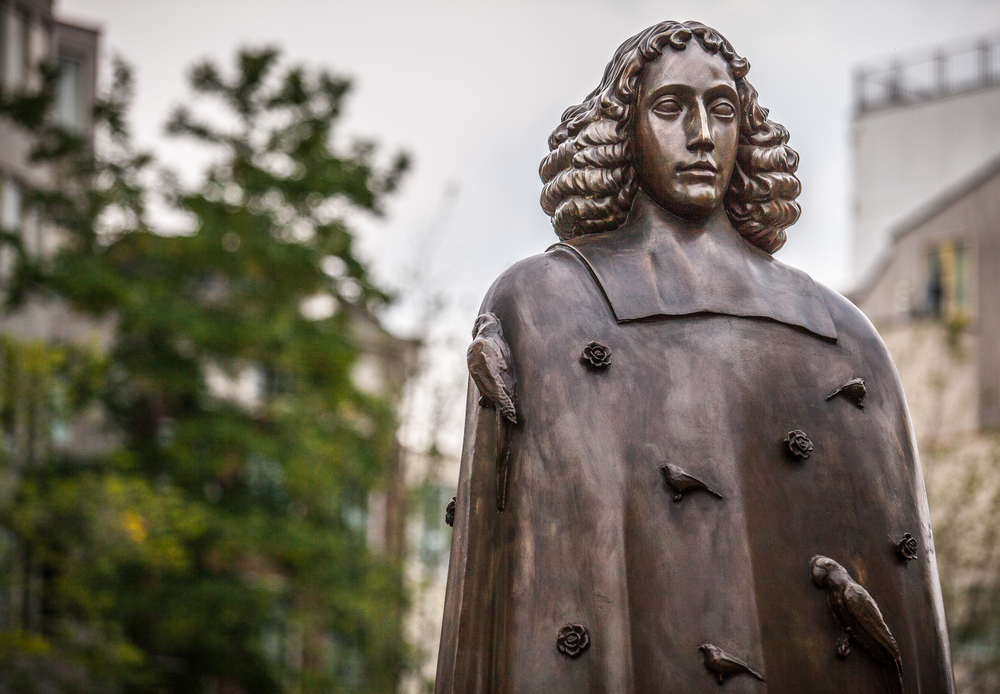
After all, we are the land of Spinoza and other free-thinking intellectuals persecuted elsewhere. We are the land where soft drugs can be used freely and where the sexual preference of someone is a non-issue.
In between, some moderate protestant rulers eventually drew the longer straw. But that didn’t mean they implemented a religious program that we would have considered tolerant in the 21st century.
There were several restrictions on the freedom of religion, there was discrimination, and mixed marriages were rare.
Spinoza confessed that he was afraid to publish several articles because of possible repercussions. Overall, however, there was relative peace in which our economic, cultural, and colonial expansion would prosper as never before.
Bronze statue of Dutch philosopher Baruch Spinoza in Amsterdam. Image: Depositphotos
Tolerance isn’t even a positive term when it means that you “allow someone to be different, even though you’re actually against it.” That can be pretty passive-aggressive, so why do we even want it to be a cornerstone of the Dutch identity? Get rid of it. Erase it from our collective memory.
The Netherlands got rich off colonial trade
The image of our trading spirit has its roots in the Golden Age of Dutch history, the 17th century.
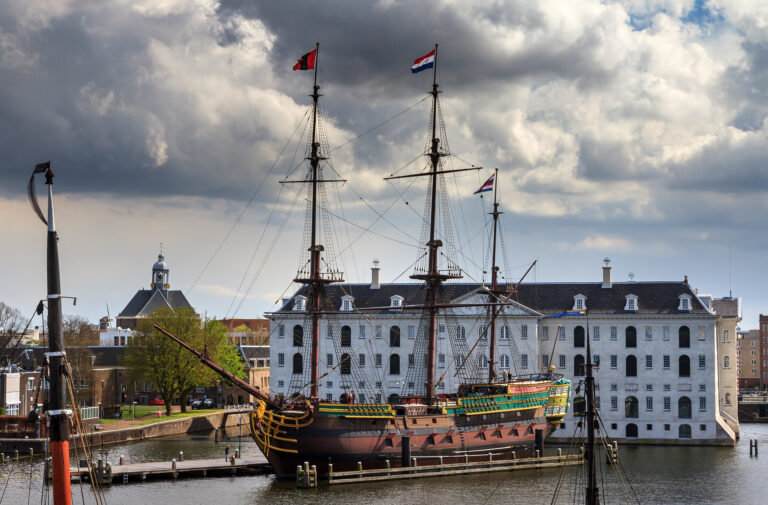
The East India Company (VOC) and West India Company (WIC) were world-famous for dominating the world market in certain Asian spices and temporarily monopolizing the slave trade in the West Indies, the so-called asiento.
In addition, it was the Calvinist spirit that made us even richer than we already were.
Because the ethos of Calvinism was that you shouldn’t be too showy with your luxuries, doe maar normaal dan doe je al gek genoeg (act normal, then you act crazy enough), they invested their profits back into companies such as the VOC and the WIC, which made them even richer.
Although the history of the VOC and the WIC contributed heavily to the image of our trading spirit, we weren’t getting rich from this international trade. Most of the wealth we generated was mainly earned through inter-European trade, rather than extra-European trade.
However, the VOC and WIC were pioneers in financing the enterprises through public enrolment by stakeholders.
Therefore, you could call them the first joint-stock companies (N.V. in Dutch) the world ever had, although they had privileges, such as the monopoly on warfare in the Indies, that few N.V.’s in the Netherlands have nowadays.
With a little historical knowledge, it’s easy to see that most of the supposed principles of Dutch identity are less true than most politicians make them out to be.
The only way to avoid future abuses of misrepresented historical knowledge is to keep accurate and reflective history as a vital part of the Dutch education system.
What do you think aboutthese myths about Dutch history? Do you think they’re true? Tell us your thoughts in the comments below!
Trump hadn’t even taken off for The Netherlands before the real turbulence started, not in the air, but in global politics.
Between fiery statements, mid-flight phone calls, and a royal sleepover, Trump’s NATO visit is shaping up to be anything but smooth.
Trump slams Israel and Iran before boarding
Just before boarding his flight to the NATO summit, Trump accused both Iran and Israel of violating the ceasefire.
As reported by NOS, before boarding he announced that, “I am not happy with Iran and certainly not with Israel,” warning Israel to “get your pilots back” and declaring that both sides “have no idea what the f*ck they are doing.”
A high-altitude call with Netanyahu
While en route to The Hague, Trump phoned Israeli Prime Minister Netanyahu, urging him to halt further strikes on Iran.
Trump posted on Truth Social that “all planes will turn back,” suggesting the ceasefire was back in place.
But according to Axios, an American news outlet, Netanyahu reportedly refused to stop the attacks, claiming Iran broke the deal first.
From hotel plans to palace lockdown
As the ceasefire drama unfolded in the skies, Trump’s overnight plans quietly shifted on the ground.
As confirmed by AD, Trump ditched his Noordwijk hotel plans after King Willem-Alexander invited him to stay at Huis ten Bosch Palace.
On Wednesday, he will have a royal breakfast with the King and Queen, cameras and croissants included.
Thankfully, The Hague didn’t need to update its emergency ordinance: a lockdown was already in place. The Haagse Bos is closed to the public from 4 PM to 11 AM, and nearby roads have been blocked since Sunday — some until Friday.
So while Trump dines and dozes in royal comfort, The Hague navigates NATO traffic, closed woods, and one very high-maintenance guest.
Once meant to teach Dutch kids how to read, Ik Mik Loreland (which roughly translates to Me Mik and Loreland), aired from 1994 to 2002, however, it’s now better known for giving them nightmares.📚
What started as an educational series for children between 6 and 7, became infamous thanks to one unforgettable (and slightly terrifying) character… Karbonkel.
The story of Ik Mik Loreland
Before we get into the horrors of this character, let’s lay out the plot of the show.
Our heroine, Mik, lives in Loria, a land where reading and writing is everyone’s jam… except for Karbonkel, a one-eyed magic creature with serious spelling issues.
When Karbonkel gets frustrated about not being able to tell his story, he throws a tantrum and poof! all the letters disappear. Loria becomes Loreland: where literacy goes on vacation.
Teaching kids to fear, not spell
Karbonkel was supposed to be a misunderstood magical creature who couldn’t read or write. Instead, he became the stuff of childhood horror.
Life in the Netherlands is great, but it’s also expensive. I’m doing whatever I can to try and save money, and one important way to do that is by making sure my savings continue to grow.
So no, I’m afraid my newfound hack to saving money isn’t as simple as cancelling my HBO subscription or freezing cash. It’s by finding banks with better interest rates for my savings.
This post might have affiliate links that help us write the articles you love, at no extra cost to you. Read our statement.
So, I decided to try out Trade Republic
Trade Republic is an online broker based in Germany, and I first heard about it after we published an article about their interest rates.
I’m not going to lie: talking about interest rates is usually the best way to make me mentally slip out of a conversation, find a nice cosy corner in the back of my brain, and fall into a deep sleep of dissociation — *snaps fingers* — but stay with me.
I signed up for Trade Republic’s interest rates on savings. Here’s what I found. Image: Freepik
The most important thing you need to know about Trade Republic is that they offer a2% interest rate on savingsto residents in the Netherlands.
This means that if you open a savings account with Trade Republic, you can store your money in an account that accrues 2% interest per year, and this is what drew me to it.
Let’s compare that to the average rates at the big banks in the Netherlands. Here’s what your balance could be after 12 months:
Your deposit
ABN AMRO (1.25%)
Trade Republic (2%)
€5,000
€5,062.5
€5,100
€10,000
€10,125
€10,200
€20,000
€20,250
€20,400
€50,000
€50,625
€51,000
I like to think of this extra cash as the cushion that protects me from the €15 increase I’ve seen in my monthly health insurance premium this year.
My experience signing up
I’m quite a noob when it comes to banking jargon, so I was worried that once I tried to create an account, I’d be faced with options that I didn’t understand. However, I found the process was quite intuitive and entirely in English.
After downloading the app, I was asked for my details, such as my name, date of birth, and address. I then had to verify my identity by taking a picture of my government ID and sending a very unflattering video of myself for verification.
While I did have to wait until the next morning to get approved, setting up was relatively simple.
Trade Republic is a great option for people who want better interest rates on their Dutch savings. Image: Freepik
It’s worth noting that my colleague, Abuzer, also signed up for Trade Republic, and he was approved within five minutes.
The only moment where I struggled a bit was when I had to provide my ‘Belastingnummer’ or, as the app will say if you’re using it in English, “Tax number.” I had no idea which one this was.
Turns out, they meant my good ol’ BSN number. If this isn’t burned into your brain, you can likely find this in your email from when you registered at your Dutch address.
By opting for an account with Trade Republic, I now have somewhere to keep my savings without feeling like they’re gathering dust and losing value.
I am also a risk-averse girlie — especially when it comes to money. So, another big selling point for me was that since Trade Republic is based in Germany, my deposit is covered under the European Deposit Guarantee Scheme.
This means that should anything happen to Trade Republic (for example, if they were to go bust), any savings I have with them are guaranteed up to €100,000.
Additionally, when choosing a bank to open a savings account with, I found that many other banks which offered similar interest rates required me to keep my savings in that account for a fixed term.
So, while I could opt for a Swiss bank with the same interest rates, unlike Trade Republic, I wouldn’t be able to withdraw anything from that account for two years.
You should note thatwith Trade Republic, there is no minimum fixed term, and I can withdraw my money as and when I need it.
My money is easily accessible. Image: Freepik
What I also like about Trade Republic is how easy it is to use.
I open the app, type in my passcode, hit the big button that says cash, and voila, there’s my money.
If I want to know how much interest I have earned, I just scroll down, tap the interest button, and there it is. (I like to tap this particular button when I need a dopamine hit.)
The interest is also deposited into my account monthly, so I can reap the benefits as I go. No need to wait for a year!
I’d also like to point out that the app does offer other features, such as the opportunity to invest. So, while it’s simple, this app does have a lot of functions (I just haven’t tried them yet!).
👎 What could be improved
Of course, nothing is perfect. There were also a few things that I felt could be improved when using Trade Republic.
One handy feature that I came across when setting up my account was that I could put money into the account by selecting Apple Pay as the payment method, but I can’t use it.
There were, of course, some cons when it comes to using Trade Republic. Image: Freepik
When I went to select this option to send money from my Dutch card to my Trade Republic account, I was met with a message saying this card wasn’t accepted.
I’ve never had this issue before with Apple Pay and my Dutch bank card, but given that Dutch cards tend to be a bit awkward in every country other than the Netherlands, I’m not entirely sure this one’s on Trade Republic.
It’s also worth noting that unless you want to have major anxiety, you shouldn’t try to transfer your beloved savings between bank accounts on a weekend.
Trade Republic operates during the working week and working hours, so if you decide to transfer money on a Saturday morning, your money won’t show up in your account until after the weekend.
And if you’re planning on transferring money during public holidays, all I can say is good luck.
I tried to transfer some savings from my Trade Republic account to pay my rent for April. However, I forgot that Easter Friday and Easter Monday were a thing. This meant that I had to wait five days before I actually saw my transfer go through — not fun.
This was just a rookie mistake by me, but it certainly had me stressed.
I also found that the Trade Republic app sometimes glitches when I try to carry out a transfer. While travelling abroad, I wanted to transfer some money. However, the verification code I needed to complete the transaction wasn’t being sent to my number.
After a day or two, the verification code was sent again, and I could transfer money, but regardless, it was quite frustrating.
This could have been because I was in a different time zone and some extra layer of security prevented the code from being sent, but I’m not sure!
All this being said, my money has ultimately been transferred safely between my accounts, and I continue to use Trade Republic.
I want to see for myself, how can I sign up?
That’s my two cents! What you want to do with it is up to you. Interested in signing up? Nice! The process is clear and simple.
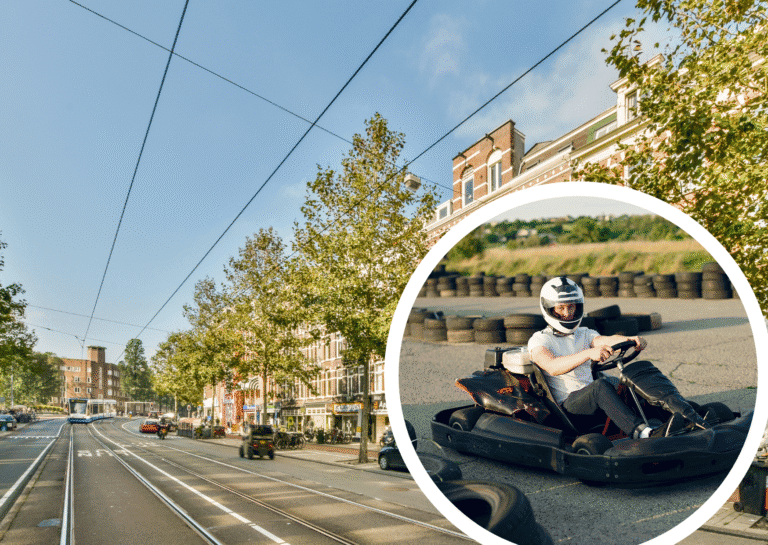
Pirate flags, motorised karts, and joyrides past the Rijksmuseum — Amsterdam has officially become a live-action Mario Kart level.
As Het Parool reports, tourists have been zipping through Amsterdam city centre in motorised go-karts since May, and let’s just say… the city isn’t exactly thrilled.
A kart too far?
The tours, offered by an arcade in Osdorp called Molly’s Arena, are inspired by Japanese pop culture and let tourists cruise the city for two hours.
For €150 per person, groups of four race past landmarks such as Dam Square and even under Amsterdam Centraal Station.
Drivers must be 21, hold a valid licence, and pass a safety quiz, but Alderman Melanie Van der Horst still isn’t buying it. “Amsterdam is busy enough as it is. Traffic is no place for crazy tours,” she tells Het Parool.
Fun for the ‘Gram, fear for the trams
In spite of what locals say, tourists appear to be loving it. Videos show karting pirates shouting “This drives so well!” and dubbing each other Max Verstappen.
The city, meanwhile, is less amused. Van der Horst points out that the karts’ low design makes them nearly invisible to trams, trucks, and basic road logic.
It’s giving big beer bike energy. Amsterdam has seen this kind of chaos before and knows how it ends. 🛑
Perfectly legal, completely unwanted
Here’s the twist: for now at least, the karts are totally legal. 😬
According to the Dutch Road Traffic Service (RDW), they’re classified as “heavy quads for road use” and allowed to drive up to 90 km/h. Why? We don’t know either.
Molly’s claims they coordinated with the city, police, and insurers, but officials strongly disagree.
Van der Horst has now appealed to Infrastructure Minister Mark Tieman, urging national regulation to keep these street racers out of busy cities. 🧑⚖️
So what’s your verdict? Should Amsterdam embrace the kart life or slam on the brakes? Let us know in the comments. 👇
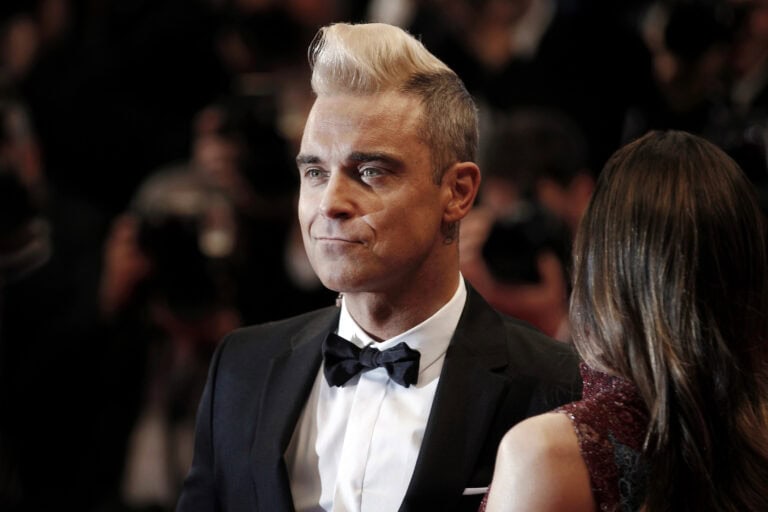
The global pop icon is no stranger to messing with fame. This week he hit the streets of Amsterdam with a mission: to see if anyone would recognise him. Spoiler alert: most didn’t.
After his concert in Amsterdam, Robbie Williams decided to explore the city — in true Robbie style.
With his ever-supportive (and sneaky) wife Ayda Field behind the camera, Robbie strolled around asking strangers to take photos with him. Instead of fanfare, he got puzzled looks.
A master of low-key chaos
A few people recognised who he was, but the majority were just plain confused by the very enthusiastic man asking for selfies.
But it’s Amsterdam, right? Sometimes you just have to say yes to a crazy stranger.
This isn’t Robbie’s first undercover gig either. Last year, he plonked himself on a bench in London in a video cheekily titled “Waiting to be seen.” Spoiler again: he wasn’t.
Robbie’s outfit is anything but subtle, yet not a soul recognises him. At one point, he even says hi to a group of people, who completely ignore him — classic London.
If you were planning on travelling to Schiphol, Utrecht, or Amsterdam today, then it may be time to either find a bus, metro, or book a taxi.
It’s not a strike this time, however. Due to a power outage, no trains are running to Schiphol, Utrecht or Amsterdam.
According to the NOS, the outage was found to be caused by a fire along important cable lines — and repairing them is going to take all day.
Yep, the NS expects the outage to last until around 18:00.
There are some ways to travel still
However, if you’ve already found yourself staring at a list of cancellations in a station hall, there are some alternative travel options for a lucky few.
The NS advises that travellers can try to commute using the metro between Amsterdam Sloterdijk, Amsterdam Lelylaan, and Amsterdam Zuid.
Schiphol Airport is also still accessible from the south, which means some travellers should be able to get there on routes between The Hague and Rotterdam.
Resorting to travel by car? The good news is that the roads are remarkably quiet due to the NATO Summit. The bad news is that some roads are also closed for this same reason. 🫠