Planning on taking a winter holiday? You’re in luck, because this Black Friday, NS International will offer a hefty discount for train tickets to and from Belgium.
The company is offering a major promotion on tickets to Belgium from the Netherlands, as high as 75% off in some cases, reports Trienreiziger.nl.
The tickets are sold online on the NS website, where you will have to book directly.
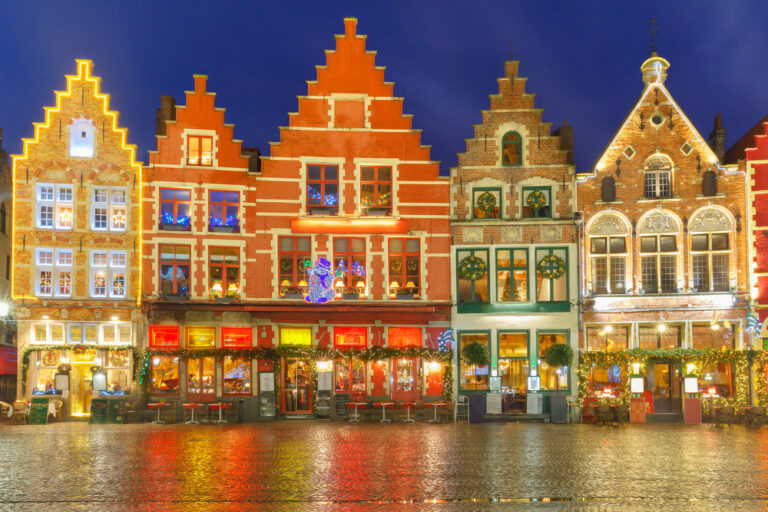
Christmas trip to Brussels? Yes, please!
This year, the massive train ticket sale will cover trips to Belgium between December 2 to February 28.
However, there are a few catches:
Firstly, you’d better get them quick: you can only buy a limited number of tickets.
Secondly, the offer only lasts between November 25 and November 28! 🤑
Finally, the offer is only available for certain Intercity trains to Brussels.
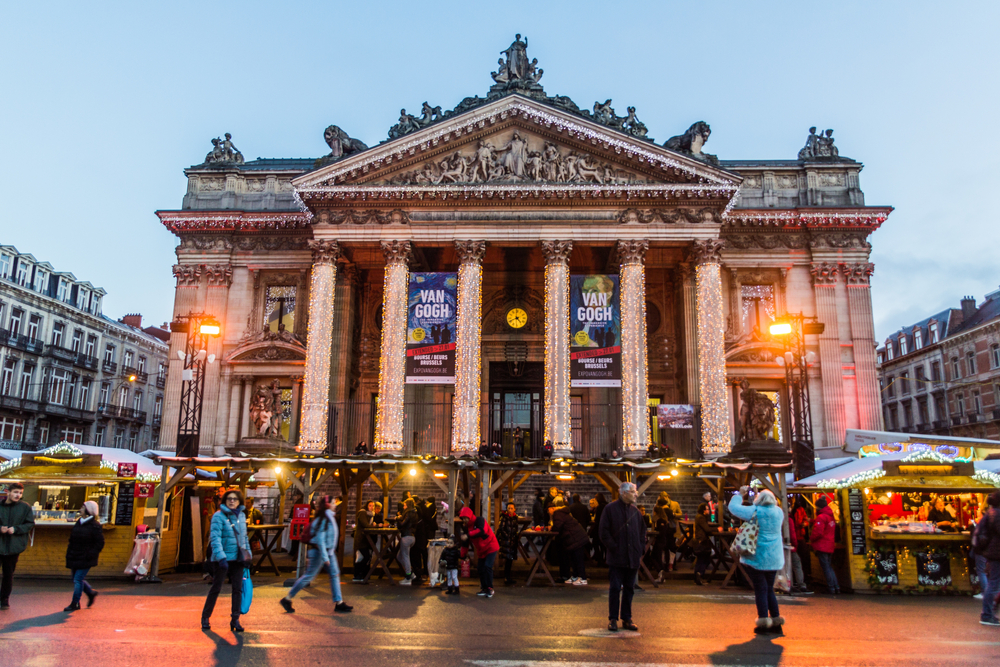
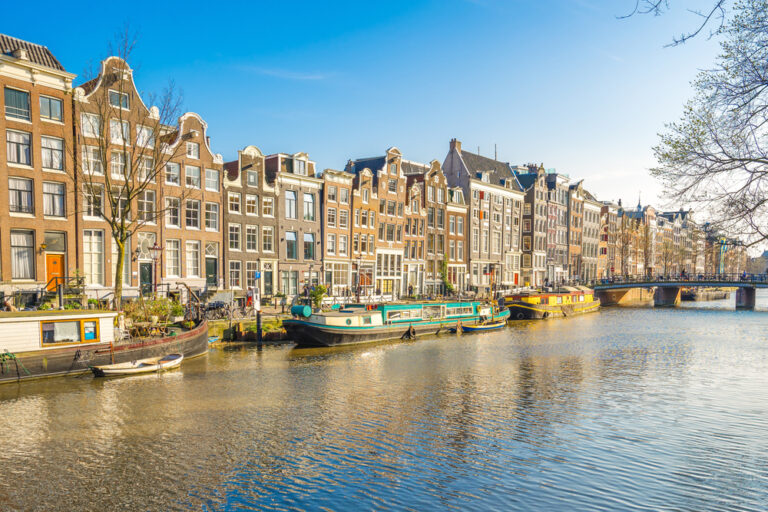
Taking a trip to the bustling Christmas Markets in Brussels this winter. Image: Depositphotos
Extra trains
In combination with the discount, there will also be extra trains from different parts of the Netherlands to Belgium.
In Groningen, a temporary train will run from the central station to Antwerp — for just €13 one way (with that snazzy discount.)
First-time Black Friday promotions are confined to one trip
This is the first time that NS International has offered tickets specific to one train line and one destination.
In the past, train tickets have been sold to countries south of the Netherlands without limitation, and they were not tied to one specific train provider.
But, despite the restrictions, due to the sale, the trip from the Netherlands to Belgium could be cheaper than travel on some domestic trains within the country.
*runs to NS website.* 🏃♀️
Will you be grabbing a cheap ticket to Belgium this winter? Tell us in a comment below! 👇
With wintertime bringing in shorter days, cycling in the dark is more and more widespread, and these volunteers want to help make everyone feel safer.
The Dutch Cyclists Union, or the Fietsersbond, wants to conduct research about how safe cyclists feel when travelling in the dark, in order to better advise municipalities on what they can do to make cyclists feel safe, reports RTL Nieuws.
Safety stand
The Fiestsersbond has set up small stands across the Netherlands, situated at the beginning of large parks so that cyclists can see them in the dark.
From there, cyclists can then call the volunteers while they continue their journey, feeling safer knowing that someone is on the other end of the phone in case something happens.
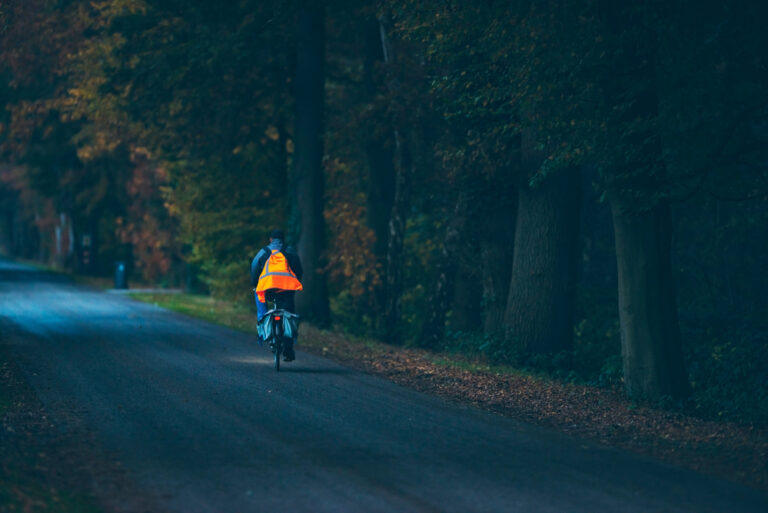
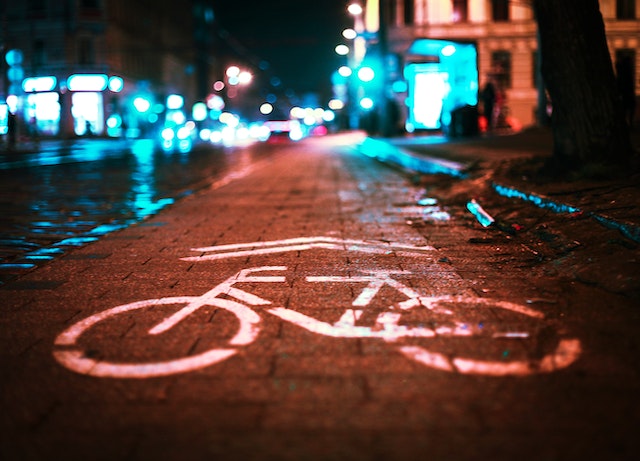
Even though the Netherlands has many streetlights, cycling at night can be daunting. Image: Pexels
However, the Meefietslijn, as they have named it, is not an established call line yet. For now, cyclists will have to get the numbers of volunteers at the stands.
Feeling vulnerable? Call someone
The Cyclists Union has a few tips to help cyclists feel safer on the roads in the dark evenings (and mornings!). Ross Goorden from the fiestsersbond tells RTL Nieuws that calling someone, in general, is a great way to stay safe in the dark.
His advice? “Let people know you’re on the road and call someone while you’re cycling. Preferably do so hands-free and with one earpiece in. That way, you can also hear the ambient noise.”
But, the union has some other tips to offer too:
Cycle with someone
Use strong bike lights
Detour if you don’t like the route
Let people know you’re on your way
How do you help yourself to feel safer cycling in the dark? Tell us in a comment below! 👇
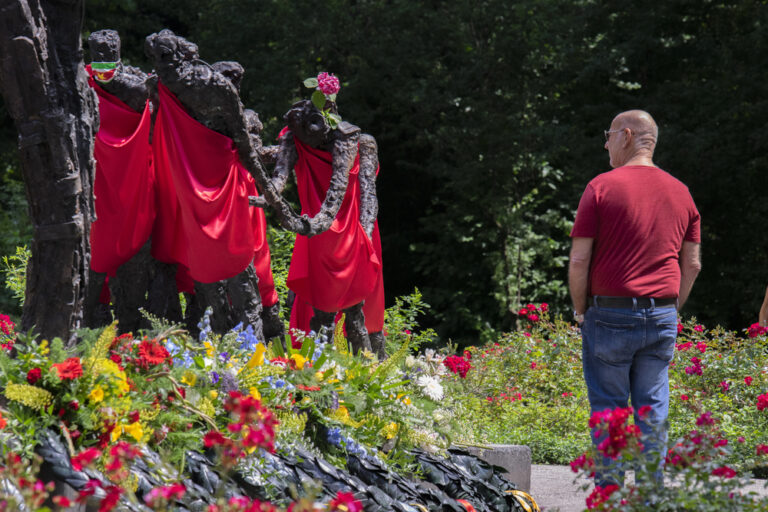
It is expected that on December 19, seven members of the Dutch cabinet will give speeches in which they’ll express remorse and apologise for the Netherlands’ role in slavery.
While the Dutch government has announced that it will apologise, sources have revealed to the NOS that the cabinet members will issue their speeches in Suriname and the Dutch Caribbean.
These include: Aruba, Bonaire, Curaçao, St. Eustatius, Saba, and Sint Maarten.
However, prime minister, Mark Rutte, will be giving his speech right here in the lowlands.
Next year, 2023, will mark 150 years since slavery’s abolition in the Dutch colonies. So, in the long-awaited run for apologies, the Dutch government will finally express their regret.
However, while commemorations will be made, there will be no financial compensation given to the descendants of those who have been enslaved.
The Netherlands plans to apologize for slavery and allocate $200M — not for reparations, but to raise awareness on slavery’s legacy, reports @business.
The Dutch enslaved up to 1.7 million people.
Slavery generated 40% of its economic growth during its so-called "Golden Age." pic.twitter.com/PbRM9srESs
Instead, the cabinet will fund up to €200 million in awareness projects in an effort to teach others about the grim role the Dutch played during their so-called “Golden Age“.
As we’re currently experiencing unseasonably warm late November temperatures of 11 to 12 degrees Celsius today, next week’s nippy chill is going to seem much colder in comparison. (*cries in rising gas prices*)
Typical Dutch rain and gloom will follow
Like besties that can’t bear to be away from each other, rain will swiftly follow in the wake of winter’s entrance.
9 years living in the Netherlands, I still can't find the joy in cold weather, especially winter 😬 pic.twitter.com/SML60DFQPZ
The Christian Democratic Appeal (CDA), a Dutch political party, proposes to ban mobile phones in schools.
“Young people grow up thinking they can multitask, but they simply can’t,” says Réne Peter, MP for CDA.
The party hopes that a ban would ensure more concentration among the students. They refer to an earlier study that confirmed that smartphones in the classroom lead to lower grades and can reduce language and reading skills, RTL Nieuws reports.
Currently, every school can decide for themselves if they allow phones in the classrooms.
This is an ongoing debate in several countries; Dutchies would not be the first to ban phones in schools. French students are not allowed to use their phones in their school building since 2018.
Back to the middle ages?
Several schools started to go on a more digital journey, especially after the pandemic. They are using mobiles in the classroom to share materials.
The CDA counts on their resistance, and they suggest using iPads instead. They say it’s a matter of getting used to it.
“Who knows, maybe children will talk to each other more during breaks.”, Peters says.
Do you think it is a good solution ban ut phones from schools? Tell us in the comments! Tell us in the comments!
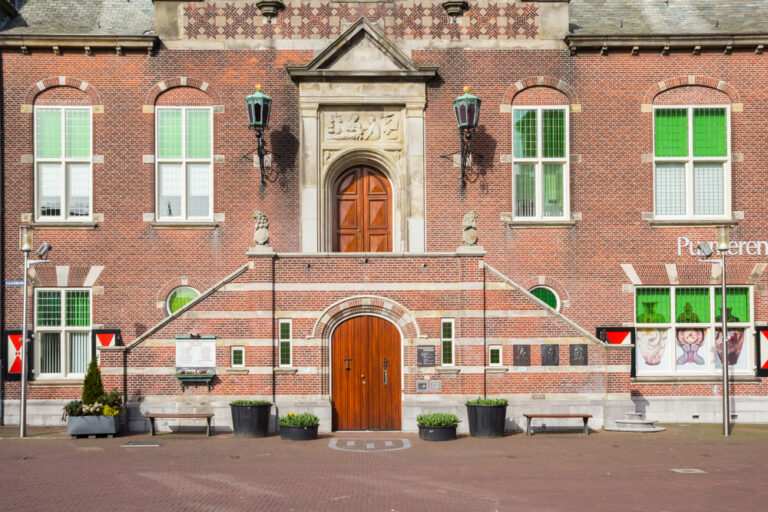
A Dutch artist decided to remove his art exhibition from Purmerend’s town hall last Friday, following public criticism due to (shock and horror!) breasts in some of his artwork.
The municipality initially only wanted to remove some of the offending artworks, reports RTL Nieuws, but the artist decided to take them all down in protest.
Keep “abreast” of the issue
Jeroen Hermkens, an Utrecht-based artist, created 14 lithographs and four drawings depicting breasts.
These were for an art exhibition titled “proud women from Beemster”, to celebrate a municipal merger between the towns of Beemster and Purmerend. On display since November 7, Hermkens’ pieces were to hang in the town hall till December 10.
However, the breasts on display apparently ruffled more than a few feathers, with visitors to the town hall finding the drawings and lithographs offensive.
Has political correctness gone too far?
Hermkens’ answer to RTL Nieuws was a definitive yes.
The artworks had already been on display earlier this year, at a special exhibition called “Ode aan de Beemstervrouw” (Ode to the Beemster woman), with no ensuing hysterics.
The artist also noted that the municipality’s decisions about which artworks to remove were arbitrary.
As such, he decided to remove all of his art pieces himself, rather than have them removed for him.
What do you think of the removal of these drawings and lithographs? Tell us all about it in the comments below!
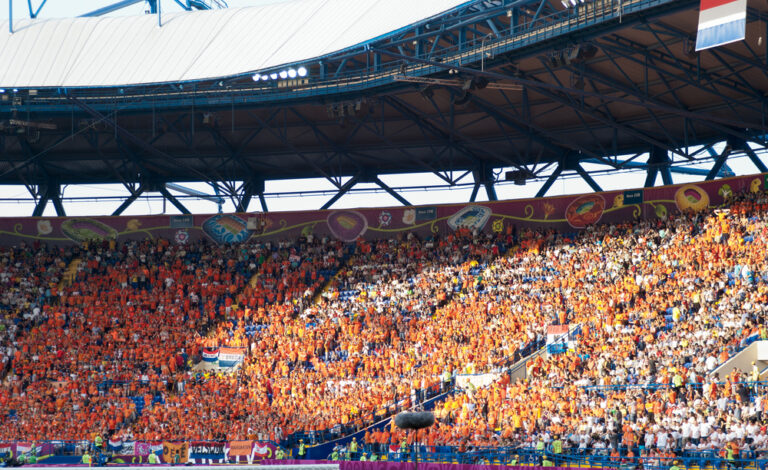
The Dutch football fan nicknamed “tit man” got kicked out of the stadium this Monday. The reason? His “OneLove” armband, which is designed to focus on inclusion and anti-discrimination in this year’s World Cup.
The man was also deprived of his large, inflatable breasts — his signature prop giving him the creative nickname.
“Not allowed”
The supporter was partying on the grounds of the arena where the Netherlands had just played against Senegal, in Monday’s match.
The man was then stopped by a police officer, ordering him to take the OneLove band off, according to Hart van Nederland. The OneLove band is a symbol used during this year’s edition of the World cup to protest Qatar’s discrimination against LGBTQ+ people.
According to “the tit man”, the officer simply stated the band was “not allowed”, without elaborating on the reasons why.
Het enige dat ik hier niet aan snap is
Waarom nodig je als Qatar zijnde de Tietenman uit als hij niet de Tietenman mag zijn
Translation: Bunch of clowns. Shame on the Netherlands for these types of figures, but fits perfectly with the Dutch national team. It’s the only thing I don’t understand. As Qatar, why do you invite the Titman if he can’t be the Titman? That’s his whole thing?
Relatively safe for supporters
The fan was ensured that the inflatable breasts were acceptable props for the game.
However, the supporter was ordered to remove the OneLove band, and the inflatable breasts, as being caused by the individual officer’s personal opinion.
Same-sex relationships can result in prison sentences in Qatar, and players and supporters have marked their dismay by wearing the OneLove armbands during the World Cup.
Additionally, the living and working conditions of the thousands of migrant workers used to build the World Cup infrastructure have been described as nothing less than modern-day slavery.
While the Dutch housing crisis is far from over, prices started to go down after what seemed like an eternity of price hikes.
Compared to September, the price index of owner-occupied dwellings fell by 0.5% in the previous month. Considering the current housing situation, this seems like a good reason to pop open some champagne! 🍾
Far from normal
In the previous month, the owner-occupied dwellings were 7.8% more expensive on average than a year ago, according to the Statistics Netherlands (CBS) and The Netherlands’ Cadastre, Land Registry and Mapping Agency.
After several big protests, now there is some hope for better housing. Image: Depositphotos
Dutch housing prices reached their lowest point in June 2013 and followed an upward trend until August 2022, RTL Nieuws reports. Compared to 2013, prices were 96.6% higher this September. 🥲 But it’s now the third month in a row that Dutch house prices have fallen.
It becomes increasingly difficult for people to pay their rent in bigger cities, and it is almost impossible to find a place as an international student.
Rising mortgage rates, in particular, make it incredibly challenging to buy or rent a house in the Netherlands. Because of this, 8% fewer homes changed hands in October compared to a year earlier.
How does the housing crisis affect you? Tell us in the comments!
Recent studies have shown that road casualties among cyclists will grow in the upcoming years if no new measures are taken by the Dutch government.
Cycling in the Netherlands has become a more popular pastime in recent years. In fact, over the period of 2010 to 2019, the number of bicycle kilometres increased by 10%.
As more Dutchies and internationals roam the bike paths, accidents are bound to happen. Fortunately, Dutch Minister Harbers of Infrastructure and Water Management concocted a plan to prevent more casualties.
In a press release issued by the Ministry for Infrastructure and Water Management, Harbers will invest a baffling €50 million to improve bicycle safety for the groups that are more prone to casualties.
This refers particularly to the elderly, single-vehicle crashes, sports and school environments, and traffic on the cycle path.
Accident-prone
Older people love biking in this flat country just as much as the rest of us, but they do pose a greater risk of being seriously injured on the bike path. They contribute highly to the number of cycling casualties, hence why it’s important to offer them extra protection.
Similarly, it’s also common to see children in the Netherlands grow up on bikes. For the Dutch, it’s never too early to get their kids out on the wheels. 🚲
Their size makes them extra vulnerable to cycling injuries. In truth, about 1 in 5 cyclists who visited an emergency room after an accident were younger than 17 years.
Next to that, in 2019, more than 80% of serious bicycle crashes involved a motor vehicle, ergo why major steps need to be taken in that area as well.
Better cycling infrastructure is underway
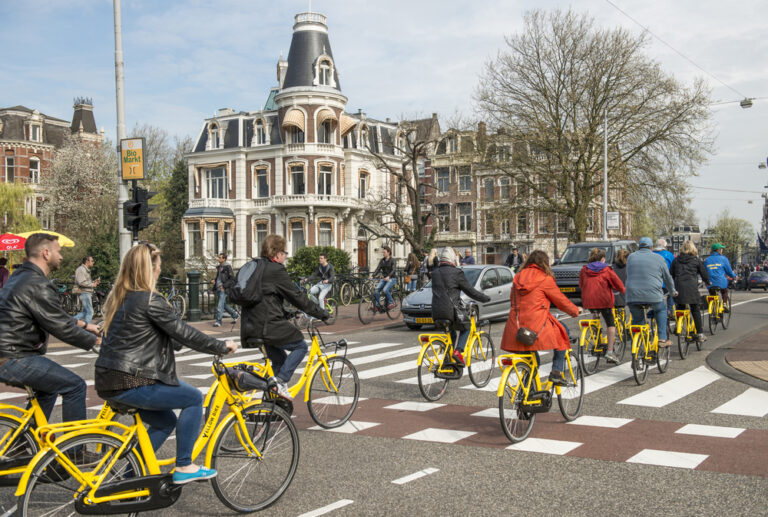
Bike paths are getting busier as more people find pleasure in cycling in the Netherlands. Naturally, with different vehicles driving at varying speeds, accidents tend to happen.
— 21st Century City @urbanthoughts11@masto.ai (@urbanthoughts11) February 23, 2020
Apparently not wide enough.
To prevent this, the Dutch cabinet announced that they would invest another €780 million into building more and wider cycle routes across the country, where there is little to no crossing involved. 🤩
Despite predictions, positivity remains
A SWOV study published today showed that halving the number of road casualties for cyclists by 2030 will be nearly impossible. Still, Harbers remains optimistic that his plan will help to reduce the number of road casualties for cyclists.
“A great increase in the number of cycling casualties is predicted for the coming years. I think it is important to reverse that trend. After all, cycling is healthy, cheap, and easy.”
“That is why I am now focusing more on the safety of cyclists. Together we already do a lot on road safety, but with this amount, we are doing a shovel on top of that”, says minister Harbers.
What do you think about Harbers’ plan? Tell us in the comments below! 👇
The Netherlands is one of the most sustainable countries in the world, with one of the best waste management systems in Europe. Here’s how the Dutch go from litter to glitter, from wreck to tech, from waste to replaced. ♻️
I sometimes wonder why the colour of the Netherlands is orange, when a lot of what they do is painted green. From crazy renewable energy projects to citizen-led initiatives against food waste, the Dutch are famous for their Go-Green attitude.
A clear example is waste separation in The Netherlands. Waste separation is part of a bigger Dutch commitment to have top-notch waste management policies, and pro-environmental citizens.
So, how does waste separation in The Netherlands work exactly? Well, there are a lot of layers and levels to examine, so let’s get to it!
How do they do it?
So, how do the Dutch do it? Is it all policy and government? Or do the citizens play a role in this? Definitely both, but household waste separation in The Netherlands is definitely a strong starting point.
Dutchies are very keen on separating their waste, and municipalities encourage people to do so. Every city has different rulings, knowing the system of your city can save you from getting a fine, and lets you be part of the solution!
National and international commitment: the Dutch leading the way
Sometimes the ‘green priority’ of the Netherlands is put in the hot seat. Other times, it’s put in the spotlight as the gold standard.
A 2012 report by the European Commission graded 27 EU countries on different aspects of European waste management legislation. “Waste generated, waste collection, waste recycling and recovery and landfill creation”, were some of the criteria analyzed.
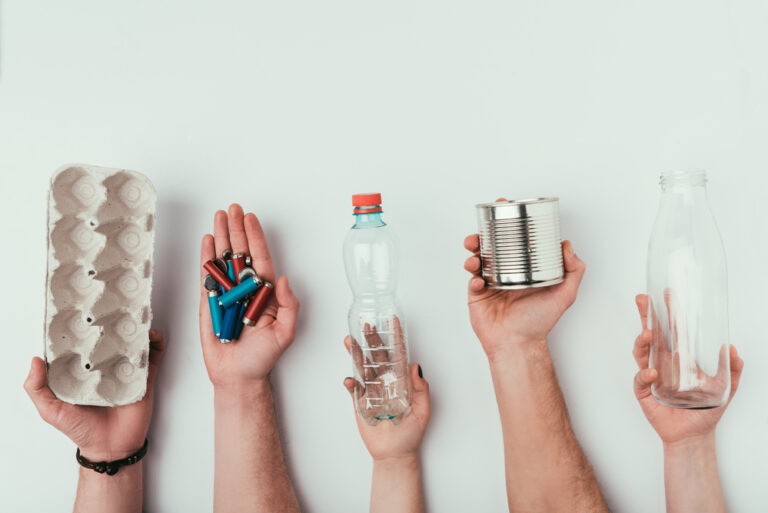
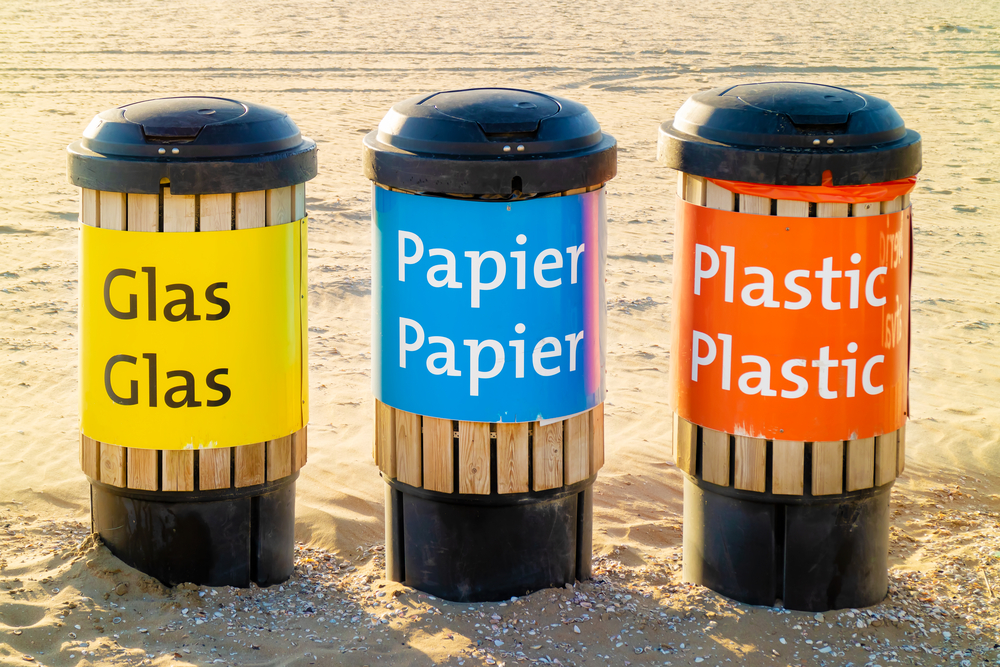
They take recycling so seriously they say it twice. Image: Depositphotos
Something also worth taking a look at, which goes beyond the scope and focus of this article, is how The Netherlands prioritizes following the ‘waste management hierarchy‘.
This hierarchy “indicates an order of preference for action to reduce and manage waste from most favourable to least favourable actions.”. Also called the ‘Lansink’s Ladder’ (named after the ex-Dutch politician that proposed it back in the 70s), is visible in Dutch waste management actions.
In short: policies and citizen involvement work together for the least amount of waste in the Netherlands.
Most neighbourhoods have different bins used for different types of waste. Amsterdam has bins in the following categories: glass, paper, plastic packaging and drinks cartons, shoes & textiles, and ‘residual waste’.
Most people separate their waste and place it in the corresponding bins themselves. Some neighbourhoods do not have bins, which means people have to take out their trash for collection on specific days, no earlier than 21:00. Doing it before can result in a fine.
Specific types of waste, like household chemicals/waste (leftover paint, expired medicine and/or used light bulbs), can be taken to places like supermarkets or pharmacies for proper disposal.
Lastly, bulky waste, like kitchen and washing appliances, can be left out in specific locations for pick up, on specific days as well.
Waste separation in the Netherlands: a priority for all, for all the good reasons
I come from a city that has the highest levels of air pollution in Mexico. Some people blame the government, others blame the citizens. Whoever is to blame, the top and the bottom are not working together. The opposite is true in the Netherlands.
Both the authorities and the people seem to be on the same page. The Netherlands didn’t make it to the top of the charts in the waste management scene on policies alone. It starts at the household level, where Mevrouw van der Schaap takes her time to separate paper from glass.
It seems that people know that going green is the right way to go, and the state facilitates this with proper rulings and facilities. While there is always room to improve, it is safe to say that The Netherlands sets a valuable standard for the rest of Europe, and the world.
What do you think of waste separation in The Netherlands? Tell us in the comments below!
Editor’s Note: This article was originally published in February 2018, and was fully updated in November 2022, for your reading pleasure.