Home Blog Page 437

Dutch King sends mixed messages about controversial Golden Carriage

King Willem-Alexander is in hot water again due to a video wherein he gave mixed messages about the Golden Carriage, which depicts racist imagery.

Every year, the King rides the Golden Carriage on Prinsjesdag (Budget Day). However, the carriage is the subject of great debate and many find its slave panel to be racist and offensive.

He has just announced in a video that the vehicle will no longer be used “for official occasions”, according to the NOS.

However, the King also said, “Only if we take this road to reconciliation together, the Golden Coach can drive again on Prinsjesdag.” This is confusing, to say the least.

Dutch colonial past

He has also said in the past that the panel is part of the “Dutch cultural heritage” and should not be removed. 😐

However, some people like Mitchell Esajas, co-founder of The Black Archives, believes that continuing to use the carriage is wrong.

“I had a strange taste in my mouth when I heard that. As far as I’m concerned, it should be moved permanently to the future Slavery Museum,” Esajas told the NOS.

For now, the carriage remains at the Amsterdam Museum.

What do you think about the King’s Golden Carriage? Tell us your thoughts in the comments below!

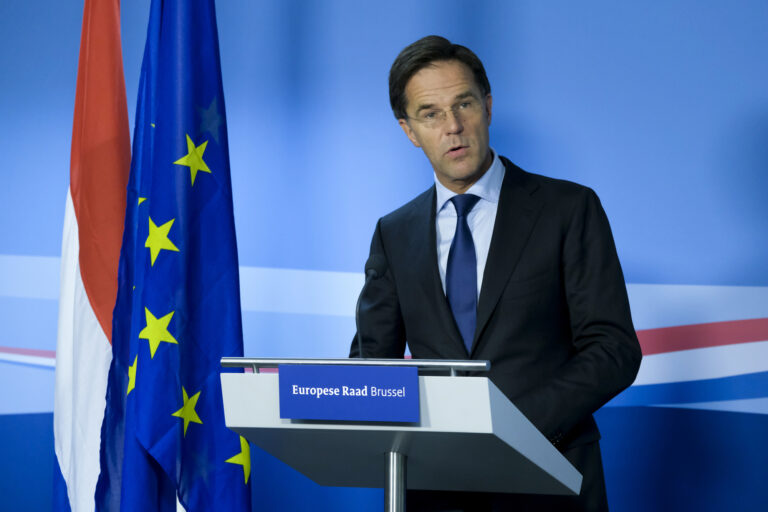
Feature Image: Minister-president Rutte/Wikimedia Commons/CC2.0

The OMT advises Dutch cabinet to relax measures for education, sports, and retail

After pleas from shopkeepers and municipalities alike, the Outbreak Management Team (OMT) sees the possibility to relax measures for education, sports, and retail in what seems like a much-needed comeback for these sectors.

In the meantime, the cultural and catering industries will have to wait a bit longer, reports NU.nl.

A change of heart

The cabinet, RIVM experts, and the OMT are discussing the coronavirus situation, but a decision has not been made regarding the reopening of these sectors. The first press conference with the new Dutch cabinet will give the final word tomorrow.

The hard lockdown is set to end on Saturday, January 15, and due to the advice of the OMT, university and MBO students may get the chance for physical lessons again. There is also a chance that shopping and hairdresser appointments may return.

However, the cabinet wants to give business owners some leeway and “take things in small steps” to work on a proper reopening.

Hope for the future?

Although the omicron variant’s infection peak is still expected to hit the Netherlands, this seems like a big turn of events for the cabinet and OMT to consider relaxing restrictions. Despite the rate of coronavirus infections, many business owners have announced their reopening regardless of restrictions given the economic circumstances of these businesses.

On a brighter note, Belgian virologist Marc van Ranst has told Het Parool that the omicron variant is more similar to the flu. And there are other studies showing significantly fewer hospitalisations.

What do you think of the relaxation of restrictions for education, sports, and shops? Tell us your thoughts in the comments!

Feature Image: RODNAE Productions/Pexels

Climate action or you’re going to court: Milieudefensie tells Dutch companies

The Dutch environmental organisation Milieudefensie (Friends of the Earth Netherlands) has called on 29 businesses to come up with a concrete plan on how to reduce their CO2 emissions by 45% before 2030. 🌍

They have until April 15 to deliver their plan — and if they fail to do so, Milieudefensie says they will take it all to court. The environmental organisation has won a huge case against Shell earlier this year, so they’re not messing around.

What kind of plan?

Milieudefensie demands that the plan will outline concrete climate action on how to cut back CO2 emissions in the next eight years. They are required to state how much CO2 they emit now, to which level they want to reduce it and how they’re going to do that.

Donald Pols, director of Milieudefensie, tells the NOS that CO2 emissions will have to be reduced significantly within the next eight years to lastingly avert a climate catastrophe. This is why they started the campaign.

Who’s on the hitlist?

Milieudefensie targets some of the 29 biggest companies in the Netherlands. There are those who contribute directly to CO2 emissions, such as the Dutch airline KLM, and Schiphol Airport.

But the environmental organisation also has its eyes on companies who contribute to climate change more indirectly. For example, Dutch banks Rabobank and ING will have to reevaluate how much of their funding goes towards the burning of fossil fuels.

Shell paved the way

That this demand is something to take seriously became evident earlier this year when Milieudefensie won a landmark case against Dutch-British multinational Shell. Shell was forced to commit to cut back its CO2 emissions by 50% in the next couple of years.

Milieudefensie was backed by the international Paris agreement, as well as six other environmental organisations including Greenpeace and FossilvrijNL. So far, 17,000 Dutch citizens supported the cause with a petition.

Holding companies responsible for their climate impact yay or nay? Tell us what you think in the comments!

Feature Image: PantherMediaSeller/Depositphotos

Why the Netherlands isn’t underwater (VIDEO INSIDE)

It’s miraculous how these flat lowlands have managed to withstand becoming an Atlantis. If you’re wondering how, we have a video for you.

Floods make up for a big part of Dutch history, after all, the majority of the country is below sea level, goes through hardcore rain seasons, and (no thanks to climate change) is facing a rise in sea levels.

However, as with flood-prone areas (or country in this case), preventative solutions are planned. In the Netherland’s case, it comes as state of the art flood management systems that ought to keep the country nice, dry, and on the opposite side of sinking.

Aside from their world-renowned water engineering skills, which clearly show through The Delta Works, Dutchies are so innovative that they’ve even explored floating homes as part of their future at some point.

But enough with words, we present to you this Ted-Ed video that nicely sums up how the Netherlands managed to stay above water in less than 6 minutes! Happy watching. 🍿

Did this video miss any key point of the Netherland’s approach against floods? Tell us in the comments below!

Feature Image: Vishal/Unsplash

Dutch retailers revolt: this time with municipality backing

After suffering more than €2 billion in losses and seeing patrons take their shopping across the border to Belgium and Germany, Dutch shops have had enough.

In a direct violation of the coronavirus lockdown measures, retailers are once again opening their doors for customers.

“It’s essential for us to open again now — or we’ll close forever,” one entrepreneur tells the NOS.

From playful demonstrations to civil disobidience

Some shops in the Netherlands have already made careful attempts at opening. Mostly these were “playful demonstrations” where they simply invited customers in for a cup of koffie and a chat.

READ MORE | Several Dutch shops open in protest against coronavirus measures

However, as the next press conference approaches — accompanied by increasing rumours that we’ll see very few relaxations, entrepreneurs are revolting.

To enforce or not to enforce

In Sittard, retailers attempted to open fully earlier this week but were promptly closed down by municipal enforcement officers (BOAs). The city’s shopkeepers say they receive very little support from the municipality.

Other municipalities are more understanding, however. In Didam, 20 non-essential shops and catering establishments are planning to open this Saturday — as the municipality has informed that no BOAs will stroll along the shopping streets. 👀

READ MORE | Dutch municipalities sign letter asking cabinet to reopen non-essential shops

The retailers association Gastvrij Didam doesn’t want shops to throw all regulations out the window, however. While they hope to see similar openings across the country, they urge entrepreneurs to enforce the basic coronavirus measures.

And indeed Didam isn’t the only city where shopkeepers enjoy the support of their municipality. Also in Aalten, Montferland, and Oude IJsselstreek will shop-invite customers back in — without BOAs crashing the opening. 💃

What do you think of shops opening despite the ongoing lockdown? Tell us in the comments below!

Image: mangostock/Depositphotos

Lucky for stoners — cannabis may prevent coronavirus infections

According to a study done at Oregon State university, there are components in cannabis that may prevent the coronavirus from entering healthy cells. 🌿

Two substances in hemp, CBGA and CBDA, can counteract the virus, reports De Telegraaf.

So… how does it work?

To not overcomplicate things, these two substances attach themselves to a protein that is part of the virus and block a substance that it uses to infect humans. Hooray! 🎉

Scientists at Oregon State University ran seemingly tests with the alpha and beta variants of the virus, but haven’t tested this on humans just yet — anyone interested in volunteering? 😮‍💨.

The perfect Dutch stereotype

Now, you might be thinking this is perfect for Dutch people since “all they do is smoke weed and get infected with coronavirus” but it’s not as cut and dry.

Obviously, not everyone likes to or is able to smoke (although, that’s what edibles are for) and technically, cannabis use is still not legal but perhaps the weed capital of the world has hit a jackpot with this study. 💸

The Netherlands has had record-high numbers in the last weeks, so if your hard lockdown dream was staying inside and getting high on the best weed out there to fight a global pandemic, your dream doesn’t seem too far off the horizon. 🪁

What do you think of the results of this new study? Could weed be the answer to the coronavirus? Tell us in the comments below!

Feature Image: DutchReview Reader/Supplied

Lockdown makes them sick: mental health issues amongst students on the rise

The best time of your life, that’s what many say about the university years. Well, during the coronavirus pandemic it sure isn’t.

With almost two years of an on-and-off lockdown that kept many universities closed, mental health issues amongst students are on the rise, RTL Nieuws reports.

And now, another lockdown. While childcare facilities and middle schools were allowed to open, universities have been forced to shut their doors yet again.

Now, the Dutch Association for Psychiatry has sent an open letter of appeal to the OMT (Outbreak Management Team), pleading for higher education to open up again. And for good reason.

Mental health issues on the rise

“The lockdown is meant to prevent sickness, but it is the lockdown that makes people sick,” says Elnathan Prinsen, the Chair of the Dutch Association for Psychiatry.

He says that more and more students are experiencing serious states of anxiety, depression, burnout and loneliness, that resemble actual symptoms of mental illness.

Prinsen also says that three-quarters of mental illnesses develop before the age of twenty-one during late adolescence. The years 18 to 20 are especially important to develop good brain health.

Staring at a screen all day everyday

Anyone surprised by that? If you’ve started your studies sometime in the last two years, you might have never met your classmates or teachers. Or seen a classroom from the inside.

Instead, you’re staring at black boxes with names without any real-life contact. Sitting alone in your room, staring at a screen all day.

No long nights getting to know your life-long friends over drinks, and at parties. No clubbing, no borrels, no social life whatsoever.

A letter to the OMT

All these reasons have led Prinsen and the Dutch Association for Psychiatry to write a letter of appeal to the OMT, urging the Dutch government to allow universities and other high education facilities to open again.

New measures will be announced on Friday, January 14, regarding the extension or adjustment of the ongoing lockdown.

What is your experience as a student in the Netherlands during the coronavirus pandemic? Tell us in the comments!

Feature Image: dragana.stock@gmail.com/Depositphotos

Paris, London, then Amsterdam: Dutch capital has third highest rents in Europe

Ever found yourself complaining very loudly in a bar about Amsterdam’s ridiculously high rental prices? Well, speak up, you’re completely justified in feeling hard done by.

Unless you’re talking to someone living in Paris or London, that is. 👀

Third most expensive city on the list

While it’s hard to believe that Amsterdam’s overheated and overpriced rental market could be beaten, the rental site HousingAnywhere has carried out a comparison of the rental prices in the varying European cities in which it functions.

READ MORE | €16,000 per month: meet the most expensive rental house in Amsterdam

And the result? Amsterdam sure is pricey. It’s the third most expensive city to rent in — but they wouldn’t recommend moving to Paris or London as an alternative.

Let’s break down the numbers

The average rental price in Amsterdam will set you back a lovely €1,641, the rental site found. But don’t choke on your coffee just yet. ✋

If you decided to up everything and move to London instead, you would find yourself paying an average of €1,850 per month — 😳.

But hang on girl, that’s not the worst of it. Looking to move to Paris ‘Emily in Paris’ style? (Side note: please don’t do that.) You’d be paying an average of €1,964 per month. Who needs food, or healthcare, or savings, right? 😄

Amsterdam wasn’t the only Dutch city to rank

The Dutch capital wasn’t alone on this list of shame, however. Three other Dutch cities actually joined Amsterdam in Europe’s top 10 most expensive cities when it comes to renting. Want to take a guess as to which they were?

READ MORE | The Housing Crisis in the Netherlands: What is it and why should we worry about it?

We’ll give you a hint. Coming in at number five on the list is a city that rhymes with “smootrecht” and it will set you back a whopping €1,445 per month on average. Fun fact: this is higher than Berlin.

Following in its footsteps is Rotterdam, ranking just under Berlin in number seven. Here, you can expect to pay an average of €1,386 in rent per month.

READ MORE |The student housing nightmare: a tale of discrimination, fraud and protest

Last but certainly not least (or cheap) is The Hague ranking at number nine, which enjoys an average monthly rent of €1,295 per month. 😅

Do you live in any of these cities? Let us know what you think of these findings in the comments below!

Feature Image: Isabella Jusková/Unsplash

Dutch passport ranks fourth most powerful in the world for 2022

Got a Dutch passport? Congrats! That maroon-coloured baby gives you access to 188 destinations, hassle-free.

The London-based global citizenship and residence advisory firm Henley & Partners has released its annual passport index — and the Netherlands is right up there this year ranking as the fourth most powerful in the world. 💪

The list’s purpose, which is based on exclusive travel data by the International Air Transport Association (IATA), is to rank passports based on how travel-friendly the documents are per issuing country, reports CNN.

Note: The ranking doesn’t take travel restrictions into consideration. The accessibility is calculated based on a COVID-19 free world — one can dream. 🤞

Overwhelmingly European

The EU dominated the top chunk of the list for 2022, where the German passport (which grants access to 190 destinations) was two countries short of first runners Japan and Singapore with a score of 192 destinations.

France, the Netherlands, and Sweden are sharing the fourth spot with Austria and Denmark with a score of 188, while Ireland and Portugal ranked fifth with a score of 187.

READ MORE | How to get Dutch citizenship in 2022: becoming a Nederlander

Belgium, New Zealand, Norway, and Switzerland shared the ranks with the United States and the UK, coming in sixth place with easy access to 186 destinations.

Travel positive

In spite of the travel restrictions which restrained international mobility on many levels for the past couple of years, the firm confirms overall travel freedom.

While these travel freedoms are mainly enjoyed by Europe, North America and richer Asian nations, an individual can now visit 107 countries on average without applying for a visa in advance.

This number doubled since 2006, where it used to be 57 countries on average. 🤯

Follow DutchReview on Facebook and Instagram for the latest travel updates from the Netherlands! ✈️🚄

Feature Image: Berend van Rossum/Unsplash

Dutch municipalities sign letter asking cabinet to reopen non-essential shops

Several municipalities in the Netherlands have written and signed a brandbrief (pressing letter) to the cabinet, asking them to reopen non-essential shops.

With fears of the continuation of a lockdown, municipalities worry about the consequences for shopkeepers, reports RTL Nieuws. 😥

Concerns across the country

Some municipalities are calling for different policies when it comes to opening non-essential shops. They recognise that appropriate safety measures will be needed to reopen — but many business owners seem ready to comply.

Other non-essential shops are taking matters into their own hands by protesting and opening their doors to customers, regardless of the consequences set by municipalities and the cabinet. 🪧

After Dutchies ventured to Belgium for Christmas shopping, non-essential shopkeepers in the Netherlands are desperate to get out of lockdown — and honestly, who else isn’t?

What do you think of non-essential stores reopening? Tell us your thoughts in the comments! 🗯

Feature Image: harrybeugelink@gmail.com/Depositphotos