A Suspect (allegedly named Chris Jude) confessed to the horrific murder of young Lisa from Abcoude back in August 2025, along with the rape of a second woman, and an attempted rape and assault of a third woman, both in Amsterdam.
Previous to this admission, the suspect claimed to have no recollection of the incidents.
According to NOS, several other falsehoods have been revealed during the latest interrogations.
This includes that while the suspect is indeed Nigerian, he did not grow up in orphanages as he previously claimed, and that he is still in touch with his family, which he had also denied.
New confession
In addition to the murder of Lisa on August 20 and the rape of an Amsterdam woman on August 15, Chris J. also admitted to the attempted rape of a woman in Amsterdam Oost on August 10.
After attacking the unsuspecting woman and bringing her to the ground, a bystander intervened. At this point, the woman attempted to flee, but was punched in the face by Chris J.
Two more bystanders joined the altercation before he fled the scene.
While initially written off as a failed robbery, the assault is now being treated as an attempted rape, reports NOS.
Prior to this last hearing, the third assault was not on the docket — it was added to the list of charges last week.
Both the living victims were present at the hearing.
The voices made him do it
The suspect is now claiming that voices in his head were pushing him to rape and kill, according to Nu.nl.
After arriving in the Netherlands in June as an asylum seeker, a mere two months before committing the murder of Lisa, Chris J. began living at a COA facility.
Nu.nl also reports that the suspect says his delusions were telling him that he needed to rape a woman to enter heaven.
After the successful rape of the second victim on August 15, the voices began telling him to kill, he says.
Chris J.’s lawyers say his delusions are serious and that he does indeed show signs of mental illness.
He is receiving medication and will be examined at the Pieter Baan Centre ahead of the next hearing on April 30.
What do you think of this latest confession? Let us know in the comments!
If you were thinking of packing away your winter coat, think again. The Netherlands is in for a cold snap this weekend, with several centimetres of snow expected on Sunday. And it’s not just the north that’ll get hit.
After a mild couple of days, temperatures are set to plummet from Friday onwards, with freezing conditions returning across the country.
William Huizinga, meteorologist at Buienradar, tells RTL Nieuws that Sunday will be “really cold”, with snowfall likely throughout much of the Netherlands.
Icy winds coming from the north
Starting Friday, the chill sets in hard. Temperatures will hover around 4 degrees Celsius, with wet snow falling locally in the north during the day.
The cold isn’t just about the numbers on the thermometer. Northwest winds will sweep icy air down from the north, making it feel “waterkoud” (biting cold, literally “water-cold”), according to Huizinga.
Saturday starts grey but should see some sunshine breaking through as the day progresses. It’ll stay mostly dry, with only the odd local shower possible.
That being said, temperatures will remain just a few degrees above freezing — hardly beach weather.
Carnival revellers: you’ve been warned
Here’s one for anyone planning to celebrate Carnival this weekend: Saturday night into Sunday could see moderate frost, with temperatures potentially dropping to around -5 degrees.
So if you’re planning to don a costume and party outdoors in Limburg or Brabant, you might want to rethink that skimpy superhero outfit and opt for something with a bit more insulation.
On Sunday, the real snow arrives
Sunday is when things get wintry. The wind will pick up, making the forecasted 3 degrees feel even colder.
Precipitation will move in from the west, but not in the form of rain. This time, it’s expected to be snow.
But timing is everything here. The later in the day, the higher the chance of snow. According to Huizinga, recent forecasts show that “in the course of the afternoon, even in the west, a few centimetres of snow could fall.”
The snow could continue until late evening, possibly turning to rain later on. By Monday morning, some areas may still have a white coating, though this will vary by location.
However, anything left in the morning will gradually melt away. By afternoon, temperatures are expected to climb back to 6 or 7 degrees Celsius, and the cold will disappear once again.
Are you brave enough to face Carnival in sub-zero temperatures? Let us know in the comments below.
Lightyear is a great choice if you want to invest in the Netherlands without wading through pages of Dutch financial jargon or losing money on hidden fees.
Whether you’re an expat trying to navigate investing in the Netherlands or a local who’d rather not pay ridiculous fees on your hard-earned cash, finding the right investment platform can often feel needlessly complicated.
Enter Lightyear: a handy investment app that’ll help you build wealth, without all the migraine-inducing fine print.
Here’s everything to know about growing your finances with Lightyear.
First things first: what’s Lightyear?
Put simply, Lightyear is an investment app that enables you to buy and manage global stocks and funds, without unnecessary barriers or hidden fees.
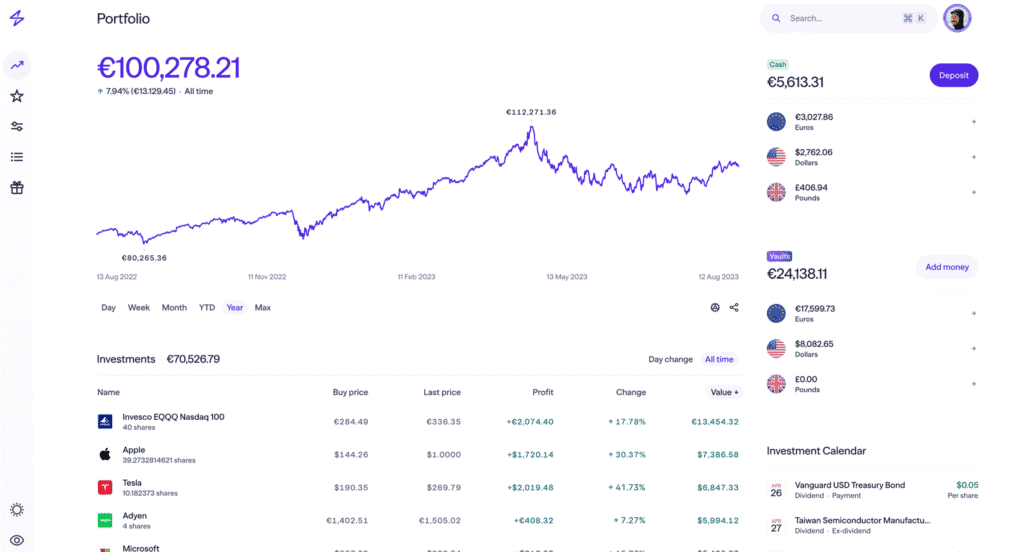
Lightyear’s clean, user-friendly design makes it a breeze to keep track of all your funds and investments. Image: Lightyear
Whether you’re interested in diversifying your portfolio or you’re simply dipping your toes in investing for the first time, Lightyear offers a range of features to make the process simple and stress-free.
Because, let’s be honest: you shouldn’t feel as though you need a Master’s in Finance or millions in the bank to start in investing.
How Lightyear helps make investing easier in the Netherlands
With an app designed for everyday investors, we’d best describe Lightyear as an all-in-one platform where investing doesn’t feel intimidating
These were the features we found most beneficial, as a team of internationals and Dutchies. 👇
Invest across currencies, with EUR, USD, and GBP all in one account
Thanks to Lightyear’s multi-currency accounts, you can hold savings and investments in EUR, USD, and GBP all in one place.
This was a major pro for us, as being able to hold funds in three currencies helped us avoid unnecessary conversion costs.
Forget about unnecessary double conversion fees, because Lightyear’s multi-currency accounts simplify the process for you. Image: Freepik
In addition to making faster and more efficient transactions across markets, this also means that more of your money is going where it should: towards your actual investments.
Earn money while your cash waits for the perfect investment
If you’re still deciding where to invest your cash, you can park it in one of Lightyear’s Savings Vaults, where it’ll be invested in Money Market Funds from some of the world’s largest asset managers, like BlackRock.
What is a Money Market Fund? This is a type of mutual fund that invests your cash in low-risk, short-term debt securities, like treasury or corporate bonds. With their high liquidity, you can typically withdraw your cash at any time.
For those of us who didn’t want to invest a lot of money upfront (or just couldn’t find the right investment opportunity), these high-yield vaults offered a lot of the pros of traditional savings accounts — just with far higher returns on our money.
However, let op: though these vaults may have “saving” in the title, they’re still an investment platform.
This means that returns aren’t guaranteed, but this is still a savvier option for your cash than letting it sit in a Dutch savings account and earn a few measly euros in interest.
Start small with partial shares (even a little goes a long way!)
If you’ve always wanted to own shares from big-name companies, but can’t afford the market price of a full share, fractional shares are a great alternative.
As their name suggests, fractional shares allow you to buy a fraction of a whole share. You can think of it as the difference between buying a delicious chocolate cake for €300 or a satisfying slice of that cake for €30.
Thanks to fractional shares, everyone can get an affordable slice of the investment cake. Image: Freepik
We found it an excellent option for both beginner investors and people who want to diversify their portfolio without breaking the bank.
Enjoy commission-free trading on a diverse range of ETFs
One of our favourite features was Lightyear’s commission-free ETF trading.
What is an ETF? An ETF, or exchange-traded fund, is essentially a bundle of investments. You can have stocks, bonds, and other kinds of assets all in one ETF, and it’s an easy way of diversifying your portfolio without conducting hours of individual research yourself.
While many investment platforms charge fees for buying and selling ETFs, Lightyear says “nee”. This meant that we paid:
Zero execution fees when investing in ETFs, and
Zero custody and account fees for holding investments.
Although other minor fees did occasionally crop up, such as conversion fees, these don’t apply if you buy in the same currency. Even better, the lack of platform fees enabled a greater percentage of our funds to go into our investments.
Trade international stocks and ETFs hassle-free from a single app
Forget about juggling multiple investment platforms, because Lightyear gives you access to over 6,000 international stocks and hundreds of ETFs — all from the comfort of their mobile app.
We’re also big fans of the app’s clean and user-friendly interface. From monthly overviews to profits and value fluctuations, keeping an eye on our investments was a stress-free walk in the park.
Get AI-powered insights to make smarter investments
Not sure what’s going on in the stock exchange today? Geen probleem, because Lightyear’s AI-powered market insights condense this wealth of information into bite-sized chunks, making it more accessible to both beginners and busy investment pros.
With AI at your service, you can access market insights in the blink of an eye. Image: Freepik
While the app doesn’t offer tailored investment advice, we liked the option of staying informed while still having the freedom to make our own financial decisions.
Benefit from savvy investment tools
If FIRE (Financial Independence, Retire Early) is one of your long-term goals, Lightyear’s investment tools are a major asset.
What is FIRE? FIRE is a movement centred around strategically saving and investing, so you can retire decades before your country’s traditional retirement age.
From compound interest calculators to in-depth stock comparisons, we found these tools super helpful in creating a solid plan for our financial future.
All in all, we thought Lightyear was solid proof of the fact that investing doesn’t have to be complicated. Whether you’re just building your portfolio or you’ve been in the game for a while, we found the app refreshingly user-friendly and feature-rich.
Have you tried investing with Lightyear? Tell us all about your experiences in the comments below!
Disclaimer: Investing means you can lose some or all of your money. If you are unsure what this means, please speak to a qualified financial adviser.
In many countries, a loyalty card is a boring bit of plastic that lives at the bottom of your bag alongside a receipt from 2019.
In the Netherlands, things are different. Your Albert Heijn Bonuskaart is basically a personality test in barcode form. The moment you reach the checkout at your local Appie, your entire life philosophy is laid bare in a single scan.
Whether you’re a keychain veteran or a wide-eyed expat still figuring out why your broccoli is suddenly €1.79 without that little card, there is no neutral Bonuskaart personality. There is only what yours, or the lack thereof, says about you.
And yes, the Albert Heijn knows too. So let’s get into it.
The minimalist rebel without a Bonuskaart
Ah, this person. They arrive at the checkout, scan their items and go straight for the pin machine. No awkward scramble through their bag to find their Bonuskaart. No Bonuskaart at all, in fact.
What this signals: I don’t want Big Supermarket tracking my every wedge of Gouda. What it also signals: I forgot to get one, and now I’m too far in.
Life in the Netherlands means life with a Bonuskaart. Image: Freepik
The no-card stance is a bold move in a country where korting (discount) is practically a love language.
The Dutch are famously attached to saving every possible cent, so voluntarily paying full price for your hagelslag carries a certain anarchic energy. Respect, honestly. But also, why are you like this?
The fully integrated keychain veteran
This is the Bonuskaart in its purest, most honourable form: a slightly scratched, slightly faded piece of plastic that has lived on a keyring since forever and has absolutely earned its place there.
What this signals: I’ve been here long enough to know the drill. What it also signals: I respect the two-for-one deals. Deeply. Personally.
The keychain veteran knows exactly when the broccoli is discounted (Mondays), which yoghurt is on offer this week, and has probably reorganised their entire dinner plans around a timely price drop on chicken thighs. They are, in the most wholesome way possible, extremely Dutch.
The digitally superior app-only operator
This is the person who, when asked for their Bonuskaart, smoothly produces their phone and scans it with a slight air of superiority.
What this signals: I optimise everything. What it also signals: My screen brightness is always set too high at checkout, blinding everyone.
Digital Bonuskaart is simply more efficient. Image: Freepik
The Netherlands is, by now, a deeply cashless and app-driven society, a fact evidenced by everything from the iDEAL payment system to using platforms like 99Bitcoins.
The app-only Bonuskaart user fits neatly into this world. They are efficient, paperless, and mildly smug about it.
The opportunistic expat, aka “Can I use yours?”
Picture the scene: you’re standing in the queue at Albert Heijn, you do not have a Bonuskaart, and you are looking at a €4.79 price tag on something that is clearly meant to cost €3.49. So you do the only reasonable thing — you ask the person behind you.
What this signals: I just moved here. What it also signals: I refuse to pay €1.30 more than I have to on principle.
The best part? This is genuinely fine in the Netherlands. Strangers lend their Bonuskaart without drama, without offence, without even much of a pause.
It’s a small act of pragmatic generosity that says a lot about Dutch culture: there’s no sentimentality about it. The discount should be had. Alsjeblieft (Here you go).
No matter where you look in the Netherlands, there’s an Albert Heijn with a Bonuskaart waiting for you. Image: Abuzer van Leeuwen/Supplied
Now, if you’re new and have been getting by on borrowed Bonuskaarten, don’t panic. Getting set up in the Netherlands is a process, and the card is genuinely one of the first things worth sorting.
The anonymous cardholder: strategic and slightly mysterious
You might not know this exists, but the Bonuskaart can actually be used anonymously, without registering your name, email, or entire digital identity to Albert Heijn’s systems.
What this signals: I want discounts, but not surveillance. What it also signals: I’ve thought this through more than most people.
This person has done their research. They’ve weighed the kortingen against the data collection, made a deliberate choice, and are quietly winning on both fronts. The anonymous Bonuskaart holder is playing a long game that very few people even knew was possible.
What’s actually hiding behind the Bonuskaart?
We like to make fun of the Bonuskaart, but if you take a step back, you’ll realise that all this is about more than a supermarket loyalty card. It’s a window into a distinctly Dutch set of values.
Planning. Frugality. Efficiency. The quiet, deeply satisfying pride of saving €1.12 on a block of cheese.
The Dutch approach to money is famously no-nonsense. There’s a reason the phrase “going Dutch” exists in the English language, and it’s not because the Netherlands is known for throwing cash around.
The Bonuskaart isn’t just about saving money. It says: I pay attention. I plan. I do not pay full price for yoghurt if I absolutely don’t have to.
So what happens when you are at the checkout? Are you the keychain veteran? The app-optimiser? The person sheepishly borrowing a card from a stranger while the queue grows behind you?
Wherever you land, know that in the Netherlands, this is serious business. The Bonuskaart is not a trivial bit of plastic. It’s a social contract, a lifestyle commitment, and a minor source of national pride.
Which Bonuskaarttype are you? Let us know in the comments below! 🧀
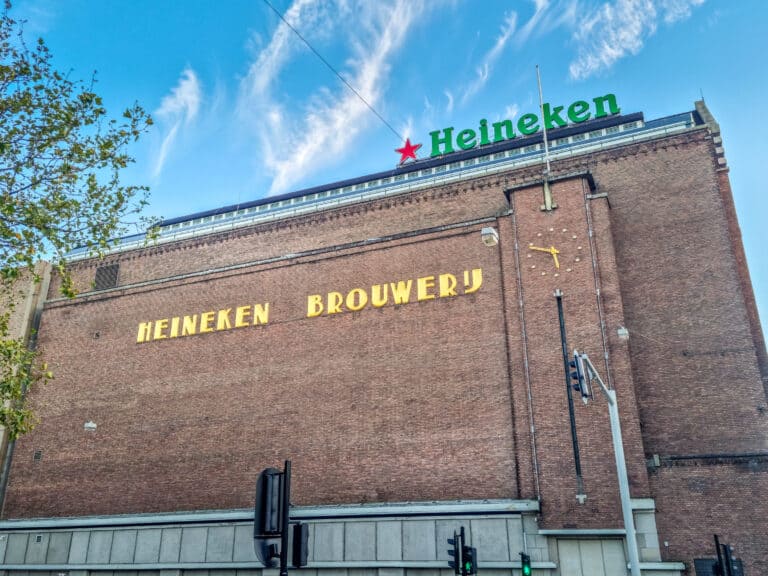
Dutch multinational Heineken is axing between 5,000 and 6,000 jobs worldwide over the next two years in a major restructuring aimed at cutting costs and boosting productivity.
The company presently employs 3,700 people in the Netherlands, and while it’s unclear exactly how many Dutch jobs will be affected, the Amsterdam headquarters has already been hit by cuts.
According to the NOS, the announcement came this morning as Heineken presented its annual results for 2025, revealing that revenue dropped 4.7% to around €34.2 billion.
Currently employing over 87,000 people globally, the brewer is now moving to significantly streamline its operations.
Amsterdam is already feeling the pain
This latest round of redundancies follows an already-announced restructuring at the company’s Amsterdam headquarters, where 400 jobs were cut in October.
According to NOS, some of those roles were relocated abroad while others simply disappeared.
The redundancies also follow a broader trend of major Dutch companies downsizing. Chip manufacturer ASML recently announced it would cut 1,700 jobs despite posting record profits.
More AI and fewer breweries
Of course, AI plays a role here too. When Heineken announced its restructuring plans in October, NOS reported that the company would digitise supply chain processes at breweries and increase its use of artificial intelligence in marketing departments.
The brewer is also shutting down divisions where growth has stalled and closing several breweries; however, Heineken hasn’t yet revealed which locations will get the axe.
We are all victims of inflation. But now, they have found a way to exploit your natural bodily urges.
You might have to sell a kidney to make your health insurance premium this month.
To blow off some steam, you decide to get a little coffee. €5.50 for a cappuccino? May the Lord have mercy.
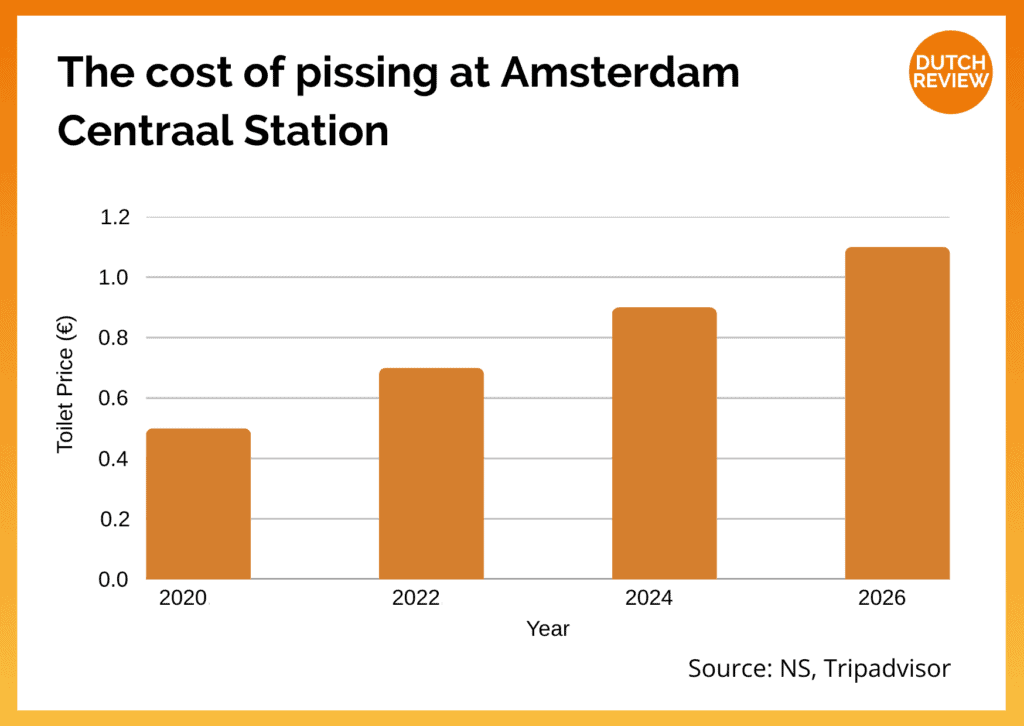
Now you are at the train station and need to take a leak. You learn that it costs €1.10? The toilet seat had better be made out of gold.
It’s not just inflation
The price of restrooms has risen sharply over the last six years. From “I have some spare change” to “This is actually hurting my wallet.”
But the last jump cannot be blamed on inflation alone. According to RTL Nieuws, if you adjust for inflation, the price should be sitting at around 96 cents.
Take a look for yourself! Image: DutchReview
So why the 14 cents extra?
Apparently, NS and the Sanifair toilet service want us to pay for their new restroom gates.
The price increase is partly due to the replacement of the restroom turnstiles that ensure a faster flow of people, an NS spokesperson told RTL Nieuws.
“So you have to consider the cost of the restrooms, but also the cost of staff. That’s why the price has gone up,” the spokesperson added.
I, for one, tried the new Sanifair gates at Amsterdam Centraal, and they left me utterly confused. They do not confirm that your bank card worked, leaving you frantically wrestling the steel barrier while trying not to wet yourself.
According to the spokesperson, the €1.10 price was agreed upon with Sanifair, who claim they’re keeping passengers in mind (definitely not with a user-friendly design) by matching prices at shopping malls and highway rest stops.
Anyone for a 50-cent voucher?
The NS clarifies that you can get a 50-cent voucher back to use at station shops. But let’s be honest: most of us will lose it, forget about it, or bin it before we even leave the loo.
Freek Bos, chairman of the travellers’ association Rover, isn’t impressed either.
“Set the amount back to 90 cents and leave the voucher out. Then you end up with the same amount, because few people use it,” he tells RTL Nieuws.
Even if inflation made sense, the price jump doesn’t. When nature calls, you’ve got to pick up. Leaving no other choice for a vulnerable passenger but to pay up.
Although the NS points out that smaller stations still charge 50 cents for unstaffed (dirty) toilets, the Sanifair loos come with friendly staff and daily upkeep — hence the €1.10 price tag.
Owen Ramsingh, a Dutchman who was brought to the United States at just five years old, has been deported back to the Netherlands with nothing but his phone and the clothes on his back.
According to De Telegraaf, Ramsingh was detained by ICE for a criminal conviction in his teenage years.
Ramsingh and his family do not speak Dutch, but are determined to make a new start after months of desperation.
What happened?
Back in September 2025, Ramsingh was told by a judge that he could not return to America, under a ten-year ban.
This came as quite a shock: after all, Ramsingh, who considers himself completely Americanised, had a green card (residence permit).
However, a previous conviction from his youth was used as justification. Ramsingh had been involved in drug dealing at the age of 16, but was arrested and paid for his crimes with a 25-month prison sentence.
Not only did he serve his time, but this conviction occurred in the late 1990s — a quarter of a century ago.
Despite all this and countless testimonials from members of his community in Missouri, he was told his time in the country he had once considered home was done.
The horrors of ICE
After being detained by ICE, Ramsingh was entirely at the mercy of the new American immigration regime.
As De Telegraaf reports, his experience in ICE’s hands involved sleeping on concrete floors, sharing space with 70 other detainees at a time, and horrific treatment from guards and staff.
He even detailed how guards made bets on where in the facility the next detainee to commit suicide would choose.
Ramsingh was not told if he would see his family again.
He was instead shipped from facility to facility in terrible conditions, forced to wait and see what would happen next.
Worst of all, Ramsingh, who lost his daughter Destinee last year, will be unable to visit her grave again, as she is buried in the United States.
A new start
In the face of all this, Ramsingh and his family are now determined to make a new start in the Netherlands.
After being emotionally reunited with his other daughter, Kimya, and wife, Diana, who had followed him to the Netherlands, they are being sheltered by Ramsingh’s estranged father, who lives here.
Their outlook is positive, but one cannot help but remember all that is being left behind: a home that Ramsingh worked hard to afford, friends and family, and a lifetime of memories.
What do you think of Ramsingh’s story? Let us know in the comments!
At DutchReview, we like to celebrate all of the wonderful things that make the Netherlands great, but let’s be fair: there are some things the Netherlands just doesn’t have (but should).
If you’ve lived in Holland your whole life, you may not realise, for example, that there are real places in the world where the not-so-mythical sun actually shines. ☀️
However, we complain about the weather enough. Instead, let’s focus on some other vitally important things that the Netherlands doesn’t have.
1. Space and housing
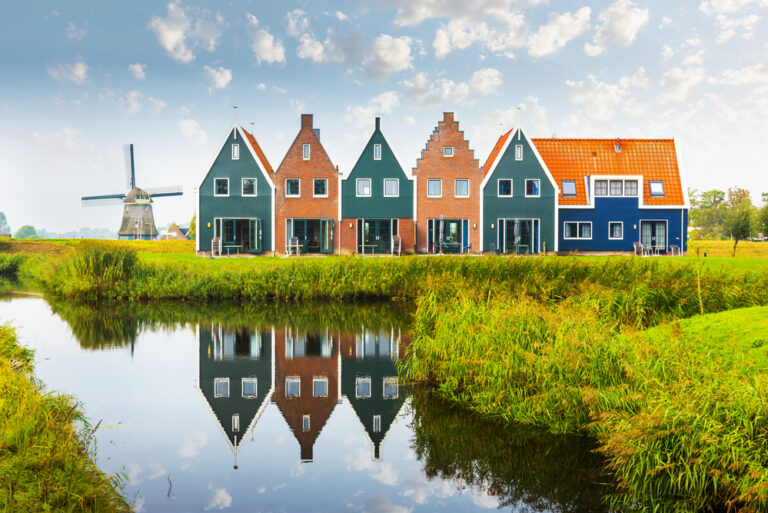
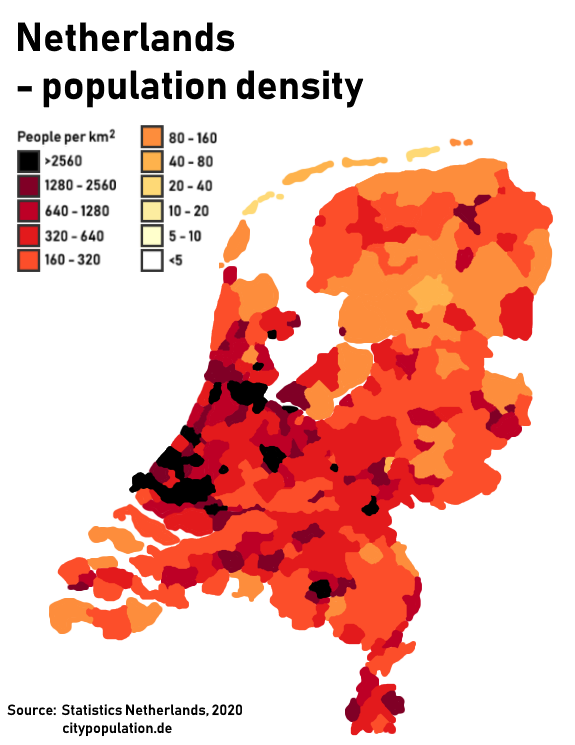
Ok, so this one is quite simple. The Netherlands is small and has a lot of people. It would be nice to have a bit more space to put all these people.
It’s not as if we don’t have the technology. We’ve been making land out of water for hundreds of years. Why stop now?
A logical follow-up to the lack of space is the lack of houses (at least, that’s certainly what it feels like).
Let’s all just move to the countryside. Image: nerdy.maps/Wikimedia Commons/CC4
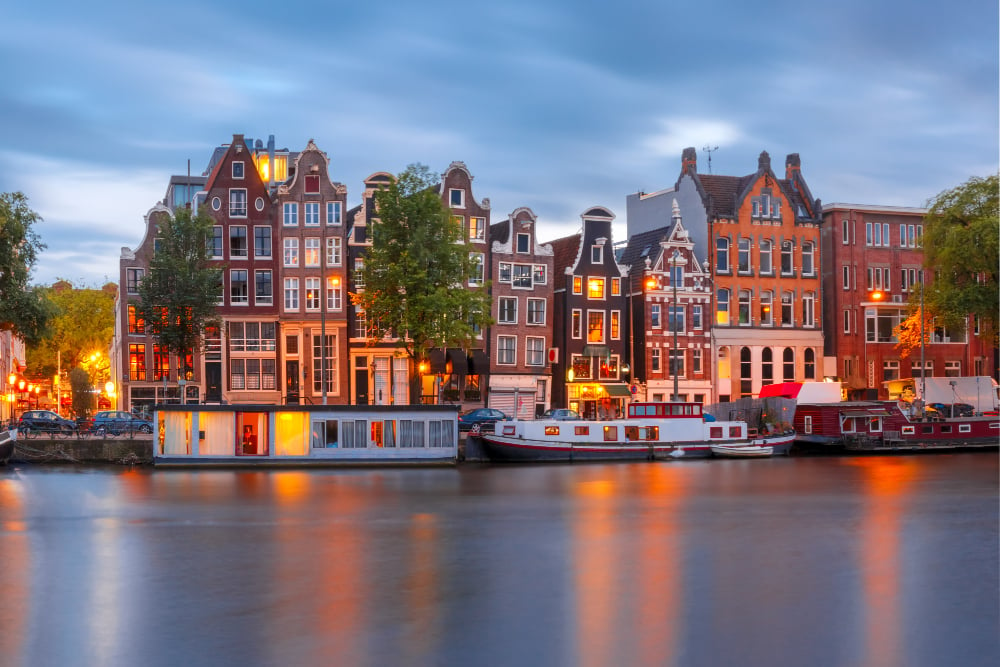
Ever tried finding a reasonable place to live in Amsterdam? It’s really super easy, as long as you don’t mind homelessness or crippling debt.
2. Good curtains
Although we love sneakily looking into people’s homes, we’ll never truly understand why the Dutch don’t have curtains. And it’s not just in the bedrooms that curtains (or the lack of them) can cause problems — it’s in every window! 🪟
Have you ever tried one of those lovely summer evening strolls in the Netherlands? There you are, just strolling calmly along the sidewalk, and suddenly your gaze drifts to the right.
Next thing you know, you’re blank staring at the neighbouring family inside eating dinner. You quickly turn back before you’re caught creeping, hoping it was fast enough. What would they think if they saw you?
Good curtains are just something that the Netherlands doesn’t have, but definitely needs if we’re ever to avoid more such awkward encounters.
3. Delicious Dutch cuisine
Yes, Dutch food does exist, but is the cornucopia of fried snacks and glorified mashed potatoes really a claim to fame?
Wouldn’t it be nice if the Dutch had…good food to call their own?
It’s not as though there is a lack of ingredients. The Dutch are some of the world’s most renowned experts when it comes to growing with greenhouse technology. Not to mention they have no issue producing high-quality meat and fish.
Why then, have the Dutch settled for sticking a potato, a plain piece of meat, and some broccoli on a plate? Simply put, it seems the Dutch, on the whole, lack an appreciation for truly flavourful food. 🧆
Boerenkool: The pinnacle of Dutch cuisine. Image: Depositphotos
To be fair, it’s not as though they have no tastebuds, and there are plenty of exceptions — but a love for food just isn’t as ingrained in the Dutch.
It’s not too strange to see a Dutchie bring their own sandwich to work (consisting of nothing but bread and cheese). 🥪
Have you ever seen a Frenchman do that? Or an Italian?
4. A good men’s football team
I’m super happy with the state of Dutch football. Well… the women’s team, that is. Nothing to complain about there. Let’s keep that up.
But when it comes to the men…well, let’s just say it seems that a good men’s football team is just another thing that the Netherlands doesn’t have. ⚽️
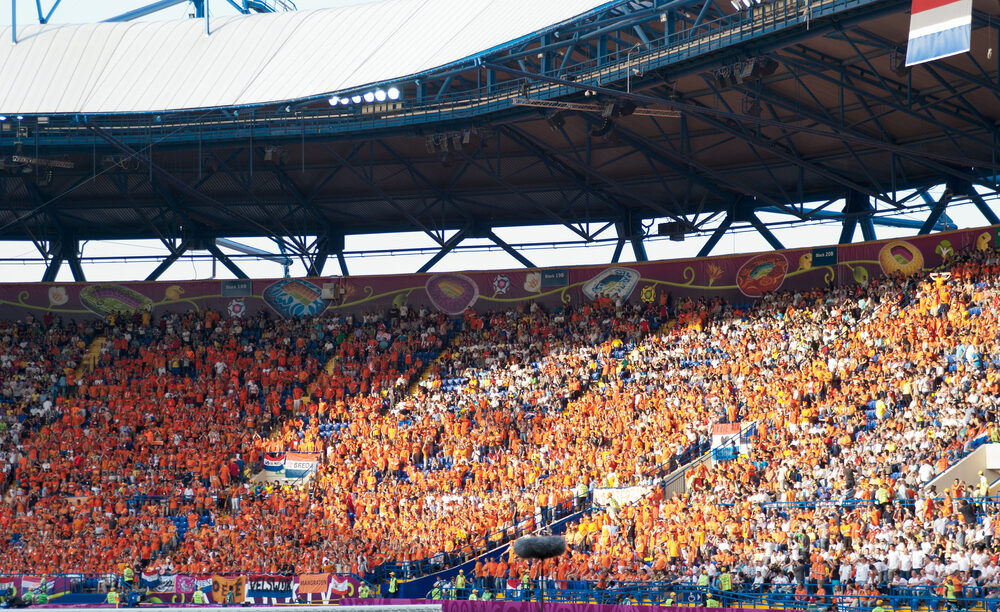
At least we’ve still got the orange spirit! Image: Depositphotos
Though the men’s team have qualified for the 2026 FIFA world cup, the Dutch football women have historically done much better overall. Let’s not forget when a Dutch female player was named FIFA’s Best Women’s Goalkeeper in 2019.
I’m staying optimistic for this year, though!
5. Toilets with leg space
Why can’t the Dutch just put the toilet in a room where you aren’t resting your knees halfway up the wall in order to fit your legs?
Why even bother putting a toilet if you end up squatting on top of it anyway? And it’s not as though the Dutch are small people, either!
It’s Valentine’s Day in the Netherlands and you’re dating a Dutchie. Not sure what to do or to gift them? If you’re thinking “nothing, or maybe a card,” then you may not be too far off!
If Valentine’s Day isn’t your favourite day ever, you’re not the only one: The Dutch are not the biggest fans, either.
Since numbers don’t lie, we can tell you two thirds of Dutchies in relationships report that they don’t celebrate this day! Most of them consider it to be just commercial nonsense — an obligation rather than a celebration.
So yes, you could say that there’s some truth to the stereotype that the Dutch are not heel romantic.
For most Dutch couples, Valentine’s Day is just a normal day. Image: Depositphotos
How can you surprise your partner on Valentine’s Day in the Netherlands?
Of course, we understand if you want to prepare a V-day little surprise for your schatje (darling).
That’s why, as someone who has been dating a lovely Dutchman for many years, I’m bringing you a selection of tried and tested things you can do to make the day of love a little more special (without going overboard, of course). 💘
Keep it cliché (and cheap)
Let’s say you are dating one of those rare Dutchies that actually enjoys the celebration of love on Valentine’s Day.
You don’t want to do anything too major, but you also don’t want it off your radar completely.
We believe that even the tiniest bit of thought makes a gift memorable — so why not learn some Dutch pick-up lines to reignite that spark with your loved one? 😉
If you’d rather stick with the classics, then the Netherlands is the right place to do so: plenty of Dutch people offer cards to their partner on Valentine’s Day.
You’d also still be a great Valentine if you go for chocolates or wine, but your don’t go too expensive. The Dutch are a thrifty bunch, after all!
Say it with flowers
Second to a card and chocolates? Flowers. Flowers from the market, flowers from the store, even the flower shop itself — they’re all flowers, and they’re all yours. 💐
However, where the French or the English might give their Valentine red roses, the Dutch are more into mixed bouquets, keeping it classy and colourful.
Of course, you can never go wrong with a bouquet of Dutch tulips! Image: Freepik
If you’re a florist, then this day is when you rake in all that sweet money. The number of pre-orders for flowers is enormous leading up to V-day.
According to Royal FloraHolland, they sell many more flowers in the early weeks of February than any other time of the year. In 2024, for instance, they sold 166 million roses in the two weeks before Valentine’s! 💐
Valentine’s Day activities in the Netherlands
If you want to do something a little special for V-day, there are a few things you could do.
For something a little extra, take a trip to the Dutch seaside, like Scheveningen, where we’ve compiled a whole list of activities that you could plan for your valentine. You could also try going out for an outdoor activity or a day trip, depending on your city.
Going on a city trip on Valentine’s Day? Don’t forget to dress for the Dutch weather! Image: Pixabay
As the true foodies we are, rest assured we have plenty of food suggestions for you here at DutchReview. And even if you’re in the mood for something a little low-key, you can opt for some home-cooking — maybe even go for a Dutch meal?
If you are planning on going to the restaurant, it’s crucial to think ahead and make reservations. The Dutch might not spend the most on presents, but they sure enjoy a nice dinner date. 🍽️
The only thing you should absolutely not do on Valentine’s Day, is to send your date a Tikkie for whatever activity you end up doing (but we’re sure you already knew that!). 😉
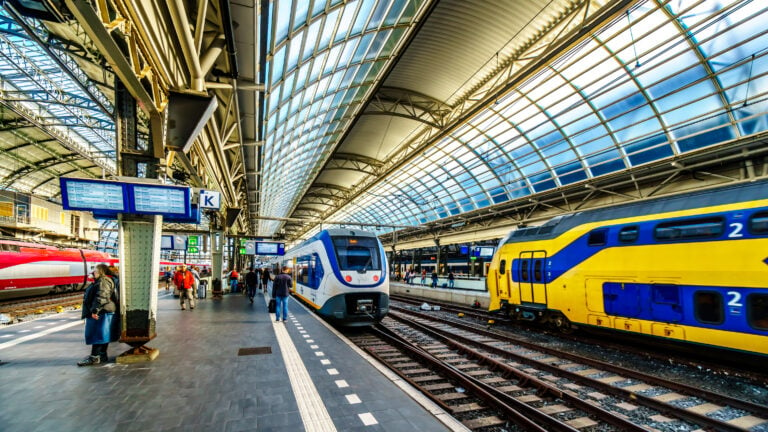
Good news! The NS has unveiled plans to boost rail services in the north and east of the country, with a direct Groningen-Rotterdam connection and weekend upgrades for commuters heading to Amsterdam and beyond.
The Dutch rail operator has published its advisory proposal for the 2027 timetable, and those of us in the northern and eastern regions are going to be the big winners.
The changes include bringing back direct trains between cities in these regions, adding more weekend services, and using high-speed trains to cut journey times.
The direct Groningen-Rotterdam route returns
Commuters coming to and from the north can rejoice. One of the headline announcements is the return of a direct intercity between Groningen and Rotterdam, which disappeared at the end of 2024.
And this time around, the train will take a faster route via the high-speed line (HSL).
According to NS, trains from Groningen will travel via the Hanzelijn to Zwolle and Schiphol, then continue along the HSL to Rotterdam Centraal. The new ICNG trains (nicknamed “the Wasp”) can reach speeds of 200 kilometres per hour on the high-speed track.
Travel times could drop even further once speed limits on the Hanzelijn are increased.
Weekend improvements across multiple regions
However, that’s not all. The NS is also proposing several weekend service upgrades that’ll make Saturday and Sunday travel significantly easier for those heading to or from major cities.
Between Amersfoort and Deventer, intercity trains will run three times per hour on Saturdays and Sundays, up from two currently. This improves connections between these cities and Amsterdam in both directions.
Meanwhile, Amsterdam and The Hague will see extra early-morning and late-evening intercities on weekends, and trains between The Hague Centraal and Amsterdam Centraal will add stops at Voorhout and Hillegom stations during weekends, replacing a sprinter service on that route.
For commuters from The Hague, there’s more good news.
The number of sprinters between The Hague and Dordrecht will double on Sundays, jumping from two to four per hour. During weekdays, the current ten-minute sprinter service will continue.
Another change on the cards is the return of a direct peak-hour train between Enschede and Amsterdam Centraal, which would help commuters travelling between the east and the capital.
These are proposals, not confirmed changes. NS asks regional governments and passenger organisations for feedback on the new timetable every year, which it uses to refine its plans.
Rail infrastructure manager ProRail will then assess whether NS’s wishes are feasible, taking into account the needs of other passenger and freight operators. The final 2027 timetable will be announced in autumn.
Will these changes make your commute easier, or are you still waiting for better connections? Let us know in the comments!