If you’re travelling through Utrecht Centraal or the Amsterdam region between now and March 1, the NS has a heads-up for you: expect busier trains, longer journey times, and some routes replaced entirely by buses.
ProRail is widening platform 3 and rerouting track 5 at Utrecht Centraal, and the effects of this will be felt across the national timetable for the next two weeks.
What’s happening this weekend?
From Friday evening (February 20), at 11 PM, fewer trains will run between Utrecht Centraal and Amsterdam Centraal, Utrecht Centraal and Schiphol Airport, and Utrecht Centraal and Arnhem Centraal.
Many trains will also depart from different platforms than usual, so keep an eye on the boards.
The most severe disruption this weekend is between Ede-Wageningen and Arnhem Centraal, where no trains will run at all on Saturday, 21, and Sunday, 22 February. Replacement buses will operate instead.
There will also be no Sprinters between Utrecht Centraal and Utrecht Overvecht this weekend. The NS recommends travelling via Bilthoven as an alternative.
Meanwhile, travellers between Utrecht Centraal and Hilversum are advised to reroute via Amersfoort Centraal.
What about next week?
Let’s start with Utrecht. Firstly, the reduced frequency on the Utrecht–Amsterdam, Utrecht–Schiphol, and Utrecht–Arnhem routes continues through to Friday, February 27.
On top of that, from Monday, February 23, through to Thursday evening, February 26, buses will replace Sprinters between Utrecht Centraal and Maarssen.
From 9 PM, evening buses will serve the Utrecht Centraal–Bunnik route Monday to Friday that same week.
Now, what about Amsterdam commuters? From Monday, February 24, through to Sunday, March 1, no trains will run between Amsterdam Sloterdijk and Haarlem. Replacement buses will run instead.
However, alternative routes are available.
Those going between Haarlem and Amsterdam Centraal can travel via Uitgeest, while travellers between Leiden Centraal and Amsterdam Centraal can detour via Schiphol Airport. Anyone travelling between Haarlem and Utrecht Centraal is advised to reroute via Leiden Centraal.
And the weekend after that?
From Saturday, February 28, to Sunday, March 1, no trains will run between Amsterdam Zuid and Schiphol Airport, or between Amsterdam Zuid and Amsterdam RAI.
Instead, travellers on these routes can use the metro between Amsterdam Zuid, Amsterdam Lelylaan, and Amsterdam Sloterdijk.
Anyone needing to get from Utrecht Centraal to Schiphol during this period should reroute via Amsterdam Centraal.
The NS advises checking the NS travel planner shortly before departure, as travel advice can change at short notice. The planner is already showing updated journey options for the full disruption period.
Are you catching a train through Utrecht or Amsterdam over the next two weeks? Share your route in the comments, and let us know if those replacement buses actually turn up on time.
eSIMs are a handy option for travellers to the Netherlands, saving you data roaming fees and offering seamless connectivity.
I’ve done the whole “frantically scour the airport for a SIM vendor” thing before, and it definitely wasn’t the smoothest start to my trip. Wiser this time around, I decided to spare myself the headache and opt for an eSIM.
What is an eSIM — and how does it work?
An eSIM (also known as an ‘embedded SIM’) is a virtual SIM card that allows you to connect to a mobile network.
Saving you the hassle of fumbling with a tiny plastic card, eSIMs have to be downloaded to your phone — ensuring that you can keep your regular SIM while also connecting to a new network upon arrival.
Why I opted for an eSIM instead of a regular Dutch SIM card
Honestly, while I might love travelling, the last thing I want to do after a long international flight is hunt down a little airport kiosk selling prepaid SIM cards.
I’m also a bit scared that my original SIM card might get lost in the chaos of inserting a prepaid SIM, making my way through immigration, and picking up my luggage.
As eSIMs can be bought and installed before you travel, you needn’t worry about scouring the airport for a kiosk selling prepaid SIMs. Image: Freepik
And what about SIM-only plans, you might ask? Well, given that SIM-only plans in the Netherlands often require you to have a Dutch bank account, they aren’t an accessible option for tourists or internationals who’ve just landed.
With an eSIM, things are just… easy. All I need to do is activate my plan once I land, and I’m sorted. 💅
What made me choose Holafly
Like flavours of Dutch drop (liquorice), there are oodles of eSIM providers out there.
However, I had a very specific list of requirements that I wanted from an eSIM: unlimited data, customisable plans, a speedy and stable connection, and excellent reviews.
The only provider that 100% fit the bill? Holafly.
🤳 Want to try Holafly yourself? Use our discount code ‘DUTCHREVIEW‘ to knock 5% off your order!
What I liked about using an eSIM in the Netherlands
I’ve already touched on the convenience aspect of using eSIMs, but that’s just the tip of the iceberg in terms of why I opted for one.
I found my new eSIM surprisingly easy to set up
As a self-professed tech dinosaur, lengthy instruction manuals are the bane of my existence, and I was dreading the process of setting up my eSIM.
In reality, however, the steps were quite simple:
I purchased my eSIM on the Holafly website, specifying my location (the Netherlands) and the number of days I needed data for (35),
Received a QR code via e-mail and scanned it on my mobile phone,
Installed my eSIM via the code, and
Followed some instructions to set it up.
I also appreciated the fact that the instructions were thoroughly uncomplicated — and that Holafly offers 24/7 support for the rare occasion when (or if 😉) you run into any issues.
I didn’t need to rely on dodgy public Wi-Fi
Although public Wi-Fi might seem like an absolute lifesaver when you’re on the road, it’s the equivalent of walking to a tourist trap with a sign that reads “please pickpocket me”.
Though convenient, public WiFi can play host to a whole host of nefarious entities. Image: Freepik
Airports, public transport services, and cafés are prime hunting grounds for hackers, with the Dutch Ministry of Justice and Security noting that some scammers even mimic the names of trusted Wi-Fi networks to lure you in.
Even with a VPN activated, I’m not particularly keen to risk connecting to an unsecured network. Thankfully, my Holafly eSIM could be activated instantly upon arrival, helping me avoid potential data threats.
I only paid for as much mobile data as I actually needed
If I had to pick my favourite feature of Holafly eSIMs, it’d be the sheer customisability of their plans.
Most eSIM providers have set durations for how many days’ worth of data you can buy, and they typically only offer a maximum of 30 days. If, like me, you want a package that’s valid for longer than 30 days, this means that you’ll probably need to splurge on two 30-day plans. 😬
In contrast, Holafly’s pay-for-what-you-use system spared me the hassle of overpaying for data. I was able to specify exactly how many days I wanted data for, with no wasted gigs or last-minute top-ups needed.
I got access to unlimited data and excellent coverage
In the Netherlands, getting an unlimited mobile data connection usually requires a Dutch bank account. This, in turn, requires you to have registered for a BSN (or citizen service number).
With my Holafly eSIM, I didn’t need to jump through those bureaucratic hoops, as I had immediate access to my unlimited data.
With instant connectivity, eSIMs bypass all the Dutch bureaucracy of getting a SIM plan in the Netherlands. Image: Freepik
Even better, since Holafly has partnered with Dutch mobile provider KPN for their Dutch eSIMs, I also had access to one of the fastest and most expansive 5G networks in the country.
(Oh, and myy connection isn’t stingy, either — I can share up to 500MB per day with my travel partners.)
What I didn’t like about using an eSIM in the Netherlands
If visiting the Netherlands has taught me anything, it’s that there’s a downside to pretty much everything (*cough* Dutch rain ⛈️ *cough*) — and the same is true of my Holafly eSIM.
My eSIM was pricier than a Dutch mobile phone connection
I’ll be upfront: eSIMs aren’t a cheap option. For example, my Holafly eSIM cost roughly €74 for a 35-day connection.
In contrast, unlimited data SIM-only plans from Dutch providers tend to cost less than half of that price, with introductory plans ranging from €21.50 to €32.50 per month.
However, as SIM-only plans in the Netherlands typically require you to have a Dutch bank account, this was a cost I was willing to bear.
I couldn’t get a Dutch mobile number with my eSIM
Given that Holafly’s eSIMs are data-only, you won’t be given a local number or calling credits.
This wasn’t a huge deal for me, as most of the apps I used didn’t require a Dutch number (like Google Maps, Spotify, and WhatsApp).
Although many eSIM services (such as Holafly) don’t yet offer a Dutch number, you do get oodles of data — more than enough to WhatsApp to your heart’s content. Image: Freepik
However, it’s something to consider if you want food delivery or need transport services, as some of these might require a local number to register.
Final thoughts: Is an eSIM a smart choice when travelling to the Netherlands?
Whether an eSIM is the best choice for you will likely depend on the length of your stay and your data requirements.
However, if you want to avoid the dangers of unsecured Wi-Fi networks, skip the hassle of hunting for a SIM at the airport, and enjoy instant connectivity, then I’d highly recommend checking out an eSIM.
Dying to give Holafly a try? We’ve got a discount code (DUTCHREVIEW) that’ll shave 5% off your order — saving you more euros to spend on that gooey, sprinkle-covered stroopwafel you know you want to try in Amsterdam. 😉
But with municipal elections scheduled for March 18, a narrow majority voting for implementing the so-called ingezetenencriterium (resident criterion, or I-criterium) could emerge from the ballot box, reports Het Parool.
What’s the I-criterium?
The I-criterium isn’t new. It’s been Dutch law since 2012, allowing municipalities to restrict coffeeshop access to only residents of the Netherlands.
The system was introduced in southern provinces to deter Belgian, German, and French tourists from driving across the border to stock up on weed.
Today, only a handful of Dutch cities actively enforce it. Amsterdam doesn’t — yet.
The political chess match
The PvdA, currently Amsterdam’s largest party, wants the I-criterium implemented in the city centre, Het Parool reports.
D66 opposes it, while GroenLinks hasn’t committed yet, despite a plan to merge with the PvdA after the elections.
Meanwhile, the VVD and CDA want to go further and implement it across all of Amsterdam. If the votes fall right, Mayor Femke Halsema could finally have her majority.
However, experts are divided on whether it’ll work or just unleash absolute chaos on the streets.
“It’ll be a blessing for the city”
Dingeman Coumou from the residents’ organisation d’Oude Stadt is blunt. Municipal research suggests millions fewer tourists would visit if coffeeshops were off-limits, and good riddance to the party crowd.
“It’ll be a blessing for the city, I can guarantee you that,” he tells Het Parool.
Pieter Tops, emeritus professor of organised crime studies, also believes it could work, but only with serious commitment.
“The police have to be able to act effectively and have the support of local politicians, and you have to be persistent. You can’t achieve this in a year”, he tells Het Parool.
“Complete symbolic politics”
Meanwhile, Joachim Helms from the Green House coffeeshop chain calls it “complete symbolic politics.” His concern? Street dealers.
“Thousands of street dealers are standing by, ready to take over sales to tourists,” he tells Het Parool, pointing to COVID lockdowns when dealers appeared immediately with price lists.
Dirk Korf, emeritus professor of criminology, agrees. “The plan is unenforceable. Who’s going to enforce it?” he asked, predicting street trade would flourish.
He points to Lelystad: the city had no coffeeshop for years but plenty of street dealers. When the first coffeeshop opened, the dealers vanished.
Meanwhile, Maastricht, which enforces the I-criterium, now has to deal with the issue of street dealers. “Controlling that was impossible with current police capacity,” crime reporter Bas Dingemanse from De Limburger tells Het Parool.
How could this affect internationals?
The I-criterium isn’t a ban on international residents, but on tourists.
Anyone registered with a Dutch municipality’s BRP (population register) would be allowed access to coffeeshops, regardless of nationality.
That includes international students, expats, and anyone living in Amsterdam legally. The ban targets day-trippers, holiday visitors, and anyone not registered as a Dutch resident.
However, whether this tourist ban is even enforced depends on who wins on March 18.
Do you support banning tourists from coffeeshops? Tell us in the comments below!
Why do we, as Dutchies, often assume that our way is the best and that any other way is ultimately worse? For example, take the ultra-Dutch phenomenon roepnaam.
Not every international in the Netherlands will be familiar with the Dutch phenomenon of roepnamen (“daily names”). Yet many, if not most, of your Dutch friends will have one.
Why bother with two names?
The Dutch use their roepnaam because many of the Dutch have been given traditional Christian names by birth that aren’t very sexy (sorry).
Most people who use their roepnaam instead of their official name(s) are so used to this tradition that they just accept it as normal.
Then why this article? The answer is quite simple: as soon as you cross the borders and move beyond the Netherlands, this system can raise some (or many) eyebrows.
Culture shock in Australia
My name is, and always has been, Janneke. It’s typically Dutch, hard to pronounce for non-Dutch speakers, and not the easiest name when living in an English-speaking country.
“Is that really your name?” is the reaction to finding that your best friend’s actual name is not their roepnaam. Image: Freepik
Working in Australia, an average day in the office for me would be something like this:
“Can you spell that for me again, please?” “Sorry, I didn’t get that. Veronica?” “How do you spell that? Y-a-n-i-c-a?”
Day in, day out. If only I were given another name when I was born… but, wait a second — I actually was! And I’m no exception — ask any of your Dutch friends.
The Dutch way always makes sense
So this was the system: children would be given a bunch of official names (three for me) and an extra (like three isn’t enough 😮💨) roepnaam.
Family and friends would receive a card in the mail announcing the baby’s birth and stating the official names.
Underneath, however, would be a phrase that read something like: “and we call her/him ….[roepnaam].”
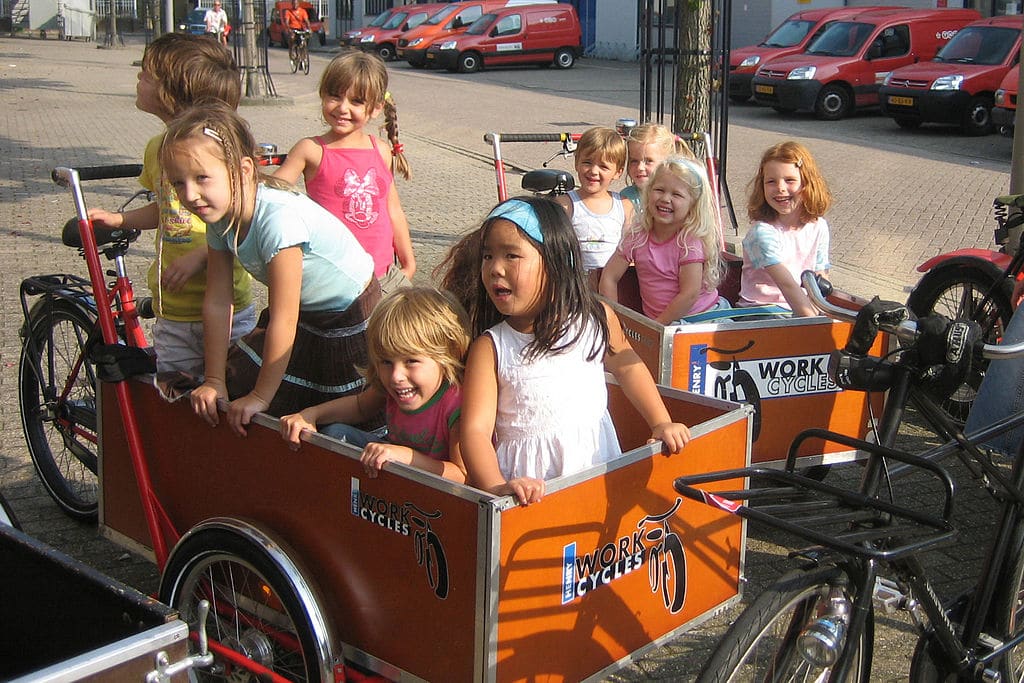
Our names, you ask? Don’t even get us started. Image: Workcycles/Wikimedia Commons/CC3.0
The only time my official name was used growing up meant I was in trouble, and it was time to RUN. I would hear this roar going through the house — JOOOHHHANNNAAAAA.
Needless to say, I didn’t like my official name very much. But as I rarely had to use it, I never worried about it so much.
Then, some 30 years later, I decided to move to Australia, and I soon found out what kind of mess this confusing naming system could get me into.
Who am I?
Ever looked an Australian cop straight in the eyes after being accused of giving out a false name? In a car full of drunk friends? I have.
I gave him my driver’s licence and my name. Of course, this was swiftly followed by, “Can you please spell that for me, Miss?”
“J-a-n-n-e-k-e.” The cop raised his eyebrows before asking me to leave the car. My friends were getting increasingly nervous, but I still had no clue what the problem could be.
“Can you please explain why you have a different name on your licence than you gave me?” The giggly atmosphere in the car suddenly dropped, like everyone was instantly sober.
Changing your name on a bunch of official documents is no easy feat! Image: Depositphotos
I stumbled and explained the whole ‘system’ in the Netherlands regarding names, but it didn’t sound convincing.
This was serious, and I needed to address it before I ended up in an Australian prison for perjury! Of course, my roepnaam was registered somewhere, right?! It had to be. On my birth certificate. For sure.
It wasn’t. The name I had been using for 30 years did not exist anywhere. There was no official paperwork with my name on it.
No more roepnaam for you, missy
I had to jump through many hoops to change the “false name” I had been using on official paperwork.
From my employment contract, rental agreement, public transport card, and everything.
Good luck explaining to a government official how you accidentally committed a crime using a false name (that you didn’t know was false in the first place). What a joy!
Anyway, the next time you think you might be dealing with a spy, it’s probably just a harmless Dutchie with some very confused parents.
What do you make of this weird Dutch quirk? Tell us in the comments below!
After years of delays, the Netherlands has finally approved a new wealth tax on savings, investments, and real estate (Box 3). But it’s not coming into effect just yet.
The Dutch Tweede Kamer (House of Representatives) voted yesterday to replace the controversial Box 3 tax with a system based on actual returns rather than fictional ones, aiming for a 2028 launch.
While politicians across the spectrum admit the new law isn’t perfect, they much prefer it to the alternative: another delay that would cost the government €2.4 billion per year.
What was wrong with the old Box 3 tax scheme?
For years, the Belastingdienst taxed people based on assumed returns from their assets, rather than what they actually earned. Dubbed “Box 3 income”, these assets include funds in savings accounts, investments (i.e. shares, crypto, bonds, and more), and real estate.
As interest rates plummeted and people earned less on their savings, this system became increasingly unfair.
Things came to a head in 2021 when the Hoge Raad (Dutch Supreme Court) ruled that the existing Box 3 system violated European human rights law by discriminating against savers.
Since then, successive governments have promised a fix — originally for 2025, then 2026, and now 2028.
What do these changes mean for you?
According to the government, the new Wet werkelijk rendement box 3 (Act on the Actual Return on Box 3) will tax real income: interest from savings accounts, dividends from shares, and rental income from property.
If you’ve got investments, you’ll pay annual tax on both income received and changes in value, even if you haven’t sold anything yet.
In addition, there’ll be a capital gains tax on the “value development” of your real estate. This can involve a tax on the profit (or loss) from your second home or property that you rent out, only if you choose to sell.
Good to know: Your primary residence won’t be subject to Box 3 taxation.
Are you selling shares in start-ups (small, new companies) or scale-ups (fast-growing, new companies)? You’ll also pay a capital gains tax on the profit or loss from your sale.
Let op: there’s another overhaul coming
If you thought the upcoming Box 3 overhaul was final, you’ll be sorely disappointed.
A majority passed motions requiring the next government to present a new Box 3 proposal by Prinsjesdag 2028, potentially before the current system even launches.
While politicians disliked taxing “paper profits” (unrealised gains on investments), they couldn’t quite agree on an alternative that wouldn’t blow a massive hole in the budget.
What do you think of the seemingly endless Box 3 saga? Share your thoughts in the comments below!
Flu season isn’t over yet: in the Netherlands, up to five different viruses are circulating through the population. Virologists say we need to be careful.
Despite all we learned from the coronavirus pandemic, it seems like we could all use a refresher on how to avoid getting sick (and getting others sick).
As AD reports, Dutch hospitals are filling up with flu patients, with some so packed that other medical procedures, like surgery, are having to be postponed.
Here’s what we know:
Watch out for the “big five”
It’s well-known that the flu is a bit of a shapeshifter.
Unfortunately, when multiple strains are making their way through the populace, it can seem like a perfect storm.
So if you’ve had the feeling you’ve been getting sick over and over in the last few months, it’s quite possible you’re just being treated to the full-five experience.
Which viruses are causing the chaos? According to virologist Ab Osterhaus in an interview with AD, we’re currently seeing RS, HMPV, good ol’ coronavirus, and two different strains of flu.
It’s practically a smorgasbord of infection.
The flu isn’t new
While the circulation of this many viral infections is certainly overwhelming, it’s not exactly new.
Speaking with AD, virologist Marion Koopmans says that “this is exactly the picture we were already seeing before” the coronavirus pandemic.
The restrictions brought on by the pandemic meant that, for a time, flu infections were incredibly low. People stayed home, were vigilant when ill, and avoided vulnerable people.
But things have changed. People are out and about once again, and certainly aren’t as careful as they once were.
So, perhaps we all need a refresher on what you can do to avoid getting others sick:
Stay home if you have symptoms. Yes, a runny nose counts as a symptom. Don’t go to that concert.
Cough into your elbow (a classic).
Keep your distance from vulnerable people.
If you must leave the house, consider wearing a mask (it’s chic, we swear).
For more detailed advice, you can visit the RIVM (National Institute for Public Health and the Environment) website.
Have you been impacted by the big five? Let us know in the comments!
“What’s the weather like over there?” — you probably get asked this question about the Netherlands often. Instead of saying, “Remember when mom went through menopause? It’s that incarnate.” Just show them these videos.
It’s almost impossible to give one specific, non-changing characteristic of Dutch weather. It does what it wants, and we’re just here for the crazy ride.
It messes with your head
If there’s one thing Dutch weather is guaranteed to do, it’s f*ck with your mood.
You may have that one smug Dutch neighbour who tells you to dress appropriately, and you’ll be fine, but we guarantee they also find themselves getting bamboozled by Dutch weather sometimes — much like these poor Nederlanders.
If the above videos didn’t already reveal this, Dutch weather loves to go to the extreme — whether that means really hot, really cold, or enough rain to drench you to the bone.
Dutch telecom giant Odido has confirmed a major data breach affecting potentially 6.2 million customer accounts. Hackers accessed a customer contact system containing names, addresses, phone numbers, bank details, birth dates, and even ID document information.
Odido discovered the breach last weekend and immediately launched an investigation with cybersecurity specialists.
The company has now blocked the hackers’ access and reported the incident to the Autoriteit Persoonsgegevens (the Dutch data protection authority).
Good news: passwords, call records, location data, and billing information weren’t compromised. Odido’s services are still running normally — you can keep calling, texting, and streaming without issues.
Can be resold on criminal marketplaces
“The more a criminal knows about a victim, the easier it is to trick them,” Dave Maasland from cybersecurity firm ESET Nederland tells AD.
He warns that stolen data like this gets resold on criminal marketplaces and can be abused for years, particularly to scam elderly people through fake bank calls.
Tech lawyer Menno Weij calls it “a serious leak, especially for the Netherlands,” when speaking with AD, noting both the scale and the variety of data stolen.
The stolen information hasn’t been published online yet, but Odido can’t guarantee it won’t be in the future.
What to do if you’re a customer
Experts warn that you should watch out for suspicious calls, texts, or emails from people claiming to be from Odido, your bank, or other organisations.
Check links carefully (look for typos and dodgy senders), never share passwords or PIN codes, and verify invoices through your Mijn Odido account before paying.
Odido says that affected customers will receive an email from info@mail.odido.nl within 48 hours. No email? Check your spam folder. Still nothing? You’re probably in the clear.
Are you an Odido customer? Tell us in the comments if you’ve received a notification.
Dutch laboratories have now detected asbestos in at least 25 samples of childrens’ play sand, including kinetic “magic” sand that sticks together. Yet nothing has been officially recalled.
Last week, the AD reported that asbestos had been found in samples of loose play sand.
Now, testing laboratories across the Netherlands report finding asbestos in kinetic sand products too, the type marketed as cleaner and less messy for indoor play.
Found in multiple samples
SGS Search, one of the country’s major testing facilities, examined magic sand samples and found asbestos in roughly 30 to 35% of them.
Bob Vijge from the lab stressed to AD that the amounts detected were small (less than 0.1%) but emphasised that any presence of asbestos in children’s toys is illegal.
According to the AD, six out of twelve loose sand products tested positive for asbestos, with three containing alarming levels of 2 to 5% tremolite, a particularly dangerous grey asbestos.
Now, the sticky “magic” sand variety (often called kinetic sand) has also tested positive, meaning the contamination problem is broader than initially suspected.
Multiple accredited labs have confirmed the findings. Nomacon, which conducted the original AD investigation, has discovered both tremolite and chrysotile (white asbestos) in additional samples submitted by worried parents and daycare centres.
Still no official recalls in the Netherlands
Despite mounting evidence from accredited laboratories, no play sand products have been formally recalled in the Netherlands.
That being said, some retailers have quietly stopped selling them “as a precaution.”
Without formal recalls, other EU countries aren’t automatically notified either. Belgium only learned about the issue because officials there read the AD article themselves.
The NVWA (Netherlands Food and Consumer Product Safety Authority) says it can only force recalls based on its own investigation, which could take several more weeks.
Are you keeping play sand away from your kids, or waiting for official guidance? Let us know in the comments.
Perhaps that judge was more fond of animals, or perhaps snakes are less inviting than birds, but this time the renter was less lucky.
The judge found that the massive amount of snakes was simply too much — it was ruled that the man must leave the property within four weeks.
He wants… more snakes?
Tubantia also reports that the man was breeding these snakes. Apparently, a mere 60 pythons were not enough for him.
Interesting take. Most people can’t stand one!
The judge found this concerning, though perhaps not for the reason you’d think.
He rejected the man’s defence that these snakes were “essential” to him, arguing that this amount of breeding constitutes a business, which is illegal to run on the rental property.
The resident now has four weeks to leave the rental property and find a new place (hopefully far, far away) to house his many slithery friends.
What do you think of all the snakes? Let us know in the comments!