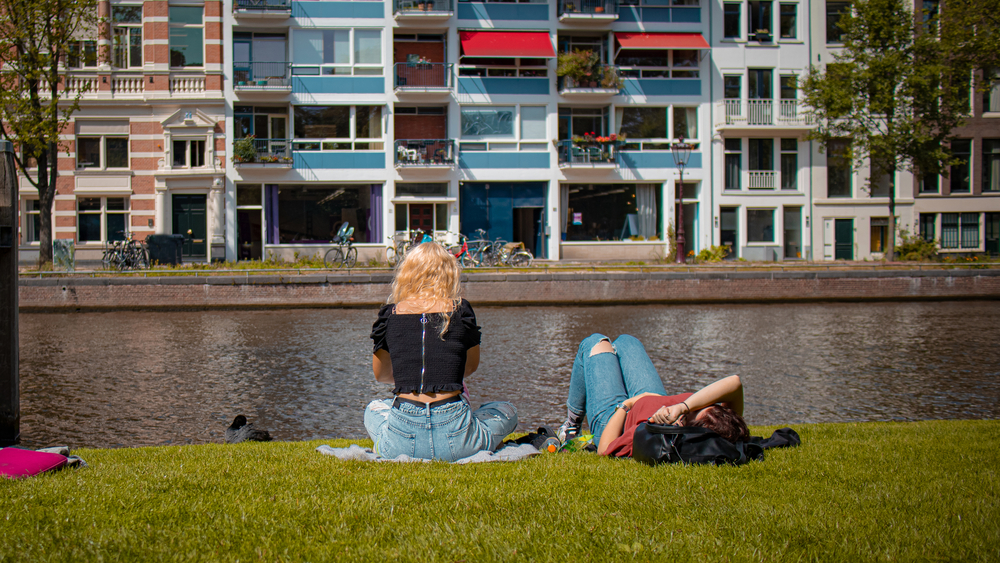
Good news for your weekend plans: temperatures are set to climb sharply over Easter, with Weeronlinepredicting highs of up to 17°C by Saturday.
You’ll need to earn it first, though. Thursday and Good Friday are looking grim before the holiday hits its stride.
First, the bad news: Thursday and Friday
Thursday is grey, grey, grey. Wet spells through the morning, a brief glimpse of sun near the coast in the afternoon, and a high of 10°C. For April, that’s pretty dismal.
Good Friday offers a deceptively bright opening, before the sky closes in and rain pushes in from the west by afternoon. Coastal spots can expect winds of force 7. Highs of 11°C mean it’s wise to bring a jacket.
Easter Saturday is where it turns around
By Saturday, the outlook shifts. A mostly dry, pleasant day is on the cards, with sunshine and cloud trading places throughout. It feels like spring for once: highs of 14°C in the north, 17°C in the south.
Sunday and Monday follow a similar script — partly cloudy with spells of sun, and good enough for outdoor plans. The south peaks around 17°C again, the north around 13°C.
Could 20°C actually happen?
According to Weeronline, Tuesday and Wednesday of next week could see some regions reach 20°C or above for the first warm days of 2026.
The catch, as ever, is that it won’t last, with cooler air and showers forecast to follow. Classic Dutch weather.
Still, a few days of warmth after months of grey is nothing to sniff at. Get the terrasje plans ready.
Are you heading out over the Easter weekend? Let us know in the comments!
The Dutch festival season is officially underway, and it’s kicking off in Brabant: Paaspop returns to Schijndel this Easter weekend, April 3 to 5, with over 350 acts spread across 17 stages.

Now in its fifth decade, Paaspop has grown from a regional Easter gathering into one of Europe’s larger open-air events.
This year’s lineup covers pretty much every genre going — Sean Paul closes Friday on the main Apollo stage, Scooter takes Saturday, and Tom Odell headlines Sunday, with DI-RECT finishing the night off.
Beyond the headliners, the 17 stages each have their own character: heavy rock and tributes at the Thunderbolt, hiphop and R&B at the Roxy, Balkan beats and folk at the Social Club.
Day tickets start at €89 for Friday and €99 for the weekend days.
What else is coming this festival season?
Paaspop is just the first entry on what looks like a busy Dutch summer calendar. Here’s what festivalgoers also have to look forward to:
Pinkpop (June, Landgraaf) — one of the Netherlands’ longest-running festivals, drawing big international acts to the south of the country each year.
Milkshake Festival (July, Amsterdam) — a celebration of LGBTQ+ culture, music, and performance art in Amsterdam’s Westerpark.
Lowlands (August, Biddinghuizen) — the three-day “city within a festival,” with its own currency, newspaper, and a reliably eclectic lineup.
Are you heading to Paaspop this Easter weekend, or saving yourself for later in the summer? Let us know in the comments!
After five years of stashing my money in a bunq Pro account (aside from a short-lived stint with ING), I’m ready to claim: yes, it has a price tag, but yes, that price tag is worth it.
bunq offers plenty of tools for long-term wealth building, like crypto and stocks. But what really won me over are the everyday banking features that make managing money feel surprisingly satisfying.
Here are the features that genuinely changed how I handle my finances.
1. Opening up to 25 bank accounts (with their own IBANs!)
I currently use 21 bank accounts. Each one is dedicated to a specific expense or saving goal: groceries, insurance, flights home, house renovations, and even municipality taxes.
Excessive? Maybe. Effective? Absolutely.
Every weekly, monthly, quarterly, and once-a-year payment is already accounted for before it arrives. Instead of dreading bills, I know the money is already set aside.
Image: DutchReview
The real advantage of bunq Pro is that every account has its own IBAN. In a country powered by direct debits, that matters.
My health insurance pulls from the IBAN for my health insurance account. Municipality taxes come from my tax pot. Everything goes exactly where it should.
You might think it’s hectic to have this many bank accounts, but nope. They’re all sorted into folders, and I even have pictures uploaded for each account — purely for the ✨ aesthetic ✨, of course.
2. Having my salary sorted automatically
If you’re imagining me manually distributing my salary across 21 accounts every month, don’t worry.
With Organise Your Income, bunq recognises my salary the second it lands and automatically divides it just the way I like.
Woosh! My salary is immediately digitally chopped up and distributed into 20 other accounts before I even have a chance to spend it.
Image: DutchReview
Savings for flights to Australia? Check. House fund? Done. Insurance? Covered.
It means my money has a plan before I do anything with it. Total gamechanger. That alone changed how I manage my finances.
3. Manually approving direct debits
The Dutch love direct debits. However, I love control.
With bunq, every direct debit request can ask for approval first. Health insurance, Swapfiets, and internet bills. I receive a notification and decide when the payment goes through. I can even switch the account it comes from.
Prefer things to run automatically? You can simply select “Always accept this direct debit”, and future payments will go through without approval.
4. Keeping total control over my bank cards
bunq Pro gives me three physical cards and up to 25 digital ones, each connected to whichever account I choose.
But hey, say I’m running around purchasing things for a DIY project in my bedroom. I just pay everything from my personal account, sit down later, tally it all up, and then make a manual transfer…right?
Nope. With bunq, I just open a card in my bunq app and change the account the card takes money from. Instead of the card taking money from my Daily account, it takes it from my Home account instead. When I’m done? Switch it back in just a few taps.
Image: DutchReview
I can also change my PIN in the app, customise colours and icons in my Apple Wallet, and set everything up exactly how I like it.
With bunq, my cards work for me — not the other way around.
5. “Moving” a payment to another account
If switching your card sounds too involved, bunq has an even easier option: moving payments.
If you pay for something from one account, you can later move that payment to another account with just a few taps.
For example, if I buy a present using my everyday account but realise it should come from my partner’s and my shared gifts account, I simply open the transaction, tap “Move”, and select the correct account.
6. Having Round Up to save money while on the go
Alright, saving is hard — but what if you could save without even realising it?
With Auto Round Up, bunq rounds each purchase up to the nearest €1 or €5 and transfers the difference into a savings account.
Those small amounts add up surprisingly quickly. By rounding up to the nearest euro, I saved almost €200 in five months without noticing it.
7. No hidden foreign currency fees with ZeroFX
Nothing ruins a trip abroad like coming home to dozens of small currency conversion charges.
Luckily, that doesn’t matter when you have bunq Pro. With this account, you pay exactly zero hidden currency conversion fees — AND you receive the real Mastercard exchange rate. That rate is almost the same as the one that you see on Google.
There is a 0.50% markup to cover currency fluctuations, but compared to traditional banks, the difference is noticeable. For anyone who travels frequently, it’s a clear win.
Want to bask in these bank features? bunq has a Dutch banking license, and deposits are protected up to €100,000.
It’s almost that time of year again: King’s Day. 🧡 The day to party, drink, buy and sell random things —and forget even the slightest semblance of worry.
King’s Day is the day when the Dutch celebrate the birthday of King Willem-Alexander. But don’t be fooled, this national holiday is not so much about the birthday of the King.
Instead, it’s much more about wearing orange, drinking stupid amounts of alcohol and roaming the streets of your favourite Dutch city.
New to this favourite of Dutch traditions? Here are some things you can do that’ll catapult you at least ten steps forward in your inburgering (integration) process to become a true Dutchie.
How many orange hats can you count in this picture? Image: Depositphotos
1. Attend Festivals
Well, let’s get one of the most obvious to-dos out of the way, shall we? It doesn’t matter where you are in the Netherlands, there’s always going to be a King’s Day festival within a comfortable travelling distance. (And by ‘comfortable’ I mean an overly packed train and an incessant stream of hour-long delays.)
While almost any venue will be hosting a King’s Day event, it’s the annual festivals that boast the biggest parties. Most festivals focus on music genres like house and techno, but if you’re looking to party the Dutch way, then it’s an ideal way to let loose.
There are dozens of options when it comes to festival choice, so just get your groove on and find a festival in your area!
2. Visit flea markets
Not feeling the festival vibe? Make sure to check out the King’s Day flea markets! It’s the one day of the year that the ban on free trade is lifted, and so everyone sets up their own makeshift shops and begins to haggle mercilessly with everyone else in sight.
Why? Because we’re Dutch and we like a ‘good’ deal. And so, we will shamelessly spend half an hour trying to convince our neighbours to cut 20 cents off the asking price of their third-hand copy of a useless Harry Potter and the Prisoner of Azkaban DVD.
So, if you’re in need of some useless old crap or need to get rid of some, the King’s Day flea markets are the place to be.
Most cities will have a number of centres where the newly-christened merchants set up more densely, but it’s not uncommon to see them spread all throughout urban areas.
From homemade treats to second-hand books and hidden treasures — you can really buy anything on King’s Day fleamarkets! Image: Depositphotos
3. Witness royalty
For those wondering what the King actually does on King’s Day, wonder no longer. Each year, the King visits a different city where he parades around with his family, and everyone can come together to celebrate with the monarch himself.
In the past, King Willem-Alexander has visited De Rijp, Amstelveen, Dordrecht, Rotterdam and Tilburg. This year, the Frisian town of Dokkum is the lucky host.
The royal walkthrough begins at the Bonifatiuskapel, with Friesian horses accompanying the group to the start of the route while singer Elske DeWall performs. This will be the first time the royals have celebrated King’s Day in Friesland in 18 years.
The Dutch King and Queen at a King’s Day parade. Image: Depositphotos
4. Drink beer
There’s not much explanation needed for this. While the weather on any Dutch day is excuse enough to resort to beer drinking, King’s Day is truly a special day for the nation’s favourite alcoholic beverage.
It might also just be the most popular thing to do on King’s Day. While public drunkenness is regularly frowned upon, King’s Day makes the practice entirely acceptable, or at least tolerable.
I’m not saying you should start day drinking, but if there’s ever a day for it, King’s Day is that day.
If nothing else, King’s Day is the country’s biggest annual party in the Netherlands — and it wouldn’t be a Dutch party without a bit (read, a lot) of beer.
What other way to truly celebrate without beer drinking? Cheers! Image: Freepik
5. Do nothing
And if you’re not into doing any of the activities above, just do nothing. No one can stop you. It’s King’s Day. No one can force you to work (unless, of course, you’re helping to facilitate the aforementioned activities).
Listen, I know that there are worse things in the world, but let me rant for a second. If you’re a woman in Amsterdam with a full bladder, good luck.
And if you’re a woman with a full bladder on King’s Day, prepare to get swindled.
Ok, let’s set the scene
I’ve just left a friend’s house. There’s a big group of us, I’m four drinks deep, and we have a thirty-minute journey ahead of us.
Naturally, about 10 minutes in, the need to pee hits a few of us.
For the men in the group, the solution was simple — they could saunter up to one of the hundreds of urinals the city had set up for them and relieve themselves.
For those of us without a penis, however, it was a dilemma.
After a few minutes of hunting, we found our oasis in the desert: someone had opened up their garage-turned-art-studio and was offering up their toilet.
But, of course, it was going to cost us €4 per person to use it. €5 if we also bought a drink.
While we made sure to haggle the price down to €4 for both the use of the toilet and the drink, I still felt cheated.
Regardless of whether or not we took a drink, our innocent bathroom break left me faced with a random man holding a €16 Tikkie request (I was paying for four of us).
No penis? We can charge you
When my friend told this man that she thought €4 was too much to be charging to use his toilet, he shrugged and said, “I think it’s reasonable.”
And it could be seen that way. There were many other people offering their toilets for a casual €4, so that seems to have been the average King’s-Day-piss rate.
In fact, I even saw one person charging €6 for the use of their toilet — so we had a good deal, right?
I’m not alone in facing this issue. Women have been calling out cities across the Netherlands for their lack of female-friendly public toilets, Amsterdam specifically.
A win for urination equality — kind of
Thankfully, I’m not the only woman to be slightly pissed by the lack of public spaces for me to, well, piss.
In 2015, one Dutch student, Geerte Piening, was faced with a dilemma that almost every woman in Amsterdam has experienced: she had to pee, but there was no public space open for her to go.
She was left with no option but to squat in an alley and was slapped with a €140 fine as a result.
Instead of coughing up the cash, Piening decided to take her case to the court. After all, what was she supposed to do? Grow a third leg?
Technically, this was the court’s answer to the issue: with the judge ruling that her fine was justified because she should have just gone in a male urinal.
So yes, she just needed to whip out her penis — because how else is a woman meant to use a urinal?
The court’s findings didn’t have the desired effect, with women taking to the streets of Amsterdam to protest by, among other things, urinating en masse.
Women! We’re getting toilets!
While the judge didn’t rule in Piening’s favour, the absolute chaos that followed the ruling has led to a win for women.
In 2024, the city of Amsterdam finally agreed to offer more women-friendly public toilets, announcing that they would invest €4 million in creating more public toilets for those of us who lack a penis.
Still partying the day after. 🥳 Image: Depositphotos
As with all good things, King’s Day eventually comes to end (boooh!), and there are some things we just don’t like about the big party’s aftermath.
1. The hangover
Yesterday, it was all fun and games, but now you are lying here, your head is throbbing, your heart is pounding, and your tongue is glued to the roof of your mouth.
Just lying somewhere and craving water, or any kind of liquid, anything really. Barely keeping your eyes open, you are trying to remember some of the things that went down the night before (hangxiety, anyone?).
Us after partying on King’s night. Image: Depositphotos
You’re probably also making a pact with yourself that you will NEVER, EVER drink again, or googling “how to cure a hangover FAST” — and trust us, we feel you. 😆
To talk about hangovers, the Dutch use Kater (ik heb een kater) or ‘(Ik ben) brak’, but they also have many essential words during King’s Day holidays.
2. The shameful (but let’s face it, still fun) memories
Ok, it all started out with the first innocent beer somewhere by a canal. You are watching the boats passing by, listening to the pumping music. Everyone’s in a good mood. 🕺🏻
You walk around for a bit whilst looking at all the things people are selling in the flea markets. Some are really quite creative, offering their balls to be kicked for €1 (no, seriously).
Others let you throw some eggs at their faces for a small amount of cash. Fun!
And, of course, there’s the colour orange everywhere. People left and right with orange shirts, dresses, sunglasses and other accessories. 🧡
The Dutch vibes are everywhere on King’s Day! Image: Depositphotos
Painted faces and smiles everywhere. One of your friends hands you the next ice-cold beer. And you cheer to celebrate the King’s birthday again and again and again. 🍻
Fast forward some five to six hours, and you find yourself dancing on a table in a bar spilling half of your drink and screaming the lyrics of A-Ha’s Take on Me.
Everything that happens after that is only a blur, which is probably just a trick of our brain to protect you from all the humiliation.
If you are lucky, you just won’t remember all the embarrassing stuff you did. And, if you are even luckier, no one took pictures to document it.
3. The filthy streets
With the amount of people celebrating King’s Day in the streets, it’s no surprise that a lot of garbage stays behind after the party ends. Of course, it’s still advised to pick up after yourself!
Sweeper machines like these are hard at work after King’s day. Image: Depositphotos
It actually looks more like a warzone with smashed plastic cups and beer cans everywhere, mixed with the leftovers from the flea market that people just abandoned on the sidewalks.
It’s a mess (just like you, on the next day). But hey, dawn comes, and the streets are being wiped clean, which happens at an impressively fast pace. 🤔
Soon, we slowly start to feel a bit better, after finally managing to drag ourselves to the sink to drink litres and litres of water and grab a bite of anything digestible.
As our brain starts working again, we realize that even though we had to cope with a painful hangover and maybe some painfully embarrassing memories, we were part of a memorable day celebrating the King’s birthday with Dutchies, expats and tourists.
And we can’t wait for next year!
What did you get up to this King’s Day? Tell us in the comments below!
King Willem-Alexander has been the Netherlands’ head of state for over 10 years now, but there’s more to him than “just” being king.
From secretly flying KLM planes to having the nickname “Prince Pils” while in university, King Willem Alexander has led an interesting life, that’s for sure.
1. King Willem-Alexander’s pretty normal upbringing (for a future king)
Willem-Alexander was born in the Academic Hospital in Utrecht and attended primary school in Baarn nearby.
Following his family moving house, he attended Eerste Vrijzinnig Christelijk Lyceum in The Hague for high school and was placed in a ‘normal’ class.
His parents, Beatrix (then Queen of the Netherlands) and Claus, insisted that Willem-Alexander should not receive any form of preferential treatment from his teachers.
Here’s a cute video of Willem-Alexander and his brothers being interviewed about their upcoming move to The Hague in 1980 (Willem-Alexander reckons he’d rather stay where he is).
2. In his teens, King Willem-Alexander left for Wales
In his teenage years, Willem-Alexander found the pressure of being the heir to the throne a bit too much.
He biked to secondary school each day and would often try to escape from the detectives employed by the royal family to keep him safe.
He made a decision with his parents that it would be good for him to escape the Netherlands for a while, to finish his secondary school education at the Atlantic College in Wales.
It was probably very exciting for King Willem to see hills in Wales for the first time! Image: Depositphotos
3. King Willem-Alexander competed in the sports Elfstedentocht tour
King Willem-Alexander also competed in the 1986 Elfstedentocht tour — a 200-kilometre-long ice skating tour in Friesland (that might never happen again).
It’s good that Willem did it back in the eighties, then! He competed in the ice skating tour under the pseudonym W. A. Van Buren, just as he did when he ran the New York marathon in 1992. He completed both events.
4. The Dutch King studied history at Leiden University
In 1987, Willem-Alexander began his studies in History at the oldest Dutch university, Leiden University and finished his MA in 1993.
He wrote his final thesis on how the Netherlands responded to the French decision to leave NATO’s integrated command structure. Helpful for someone destined to be the head of state!
Studying at Leiden University seems to be a tradition for the Dutch royal family, as Willem’s mother, Beatrix, and his grandmother, Juliana, also studied there.
5. While studying, Willem-Alexander acquired the nickname “Prince Pils”
During his university life, Willem Alexander acquired the nickname “Prince Pils” to his own displeasure, according to the NOS. He was a member of the infamous student association Minerva.
It was a rough time for the then-prince, as gossip magazines scrutinised his private life and especially his drinking activities.
His intellectual capacities were also questioned by not-so-illustrious magazines. You could hardly blame him for enjoying a Pilsner every once in a while. The crowds will certainly be raising one for him on King’s Day!
6. He didn’t tell Queen Máxima who he was when they first met
When the King first bumped into his future wife, Queen Máxima, he initially didn’t tell her who he was. The pair met at the 1999 Seville Festival in Spain.
When first introducing himself to Máxima, he said his name was merely Alexander — when he was, in fact, Willem-Alexander Prince of Orange.
When he finally did tell the queen his title, she thought he was joking!
7. He proposed to Queen Máxima while ice skating
It seems that the King is a bit of a romantic. He proposed to Queen Máxima whilst the two were ice skating on the frozen lake of Huis Ten Bosch.
Last year, he recreated that moment on Valentine’s Day and shared it with the public on Instagram — you must admit, it’s pretty sweet.
8. King Willem-Alexander might have secretly flown a plane you were on
King Willem-Alexander works as a pilot for KLM occasionally. He began doing this during his mother’s reign and has said that if he were not a member of the royal family, he would have liked to have been an airline pilot.
In 2017, King Willem-Alexander revealed that he had actually been flying Cityhopper KLM planes once or twice a month, even after his ascension to the throne.
In a pilot’s uniform and cap, he was rarely recognised when walking through the airport — though some clever passengers recognised his voice over the intercom.
In 2026, he announced he had flown the Boeing 737 for KLM for the last time. However, he will now retrain to fly the Airbus A321neo.
9. Like any Dutchie, he has an interest in water management
Willem-Alexander knows his roots and his waterways.
He worked as an honorary member of the World Commission on Water for the 21st century, and he was a patron of the Global Water Partnership, a collaboration between the World Bank, the UN, and the Swedish government.
His water-focused career continued when he was appointed Chairperson of the United Nations Secretary General’s Advisory Board on Water and Sanitation.
Well, the more you know! Hopefully, there are a few surprises here for you, even if there’s a lot about the Dutch royals that we already know and love (though that depends).
Did we miss any interesting facts about King Willem-Alexander? Let us know in the comments below.
If there’s something Dutchies enjoy, it’s celebrating their (usually) beloved King on King’s Day. And part of the festivities includes a series of weird and wacky street games.
They already have weird sports and questionable habits regarding fire safety, so what’s another quirk on the list? 🤷🏻
What is it?
Most people know about King’s Day in the Netherlands, but may not know how many street games people love to play. 🎯
If you’re planning on celebrating King’s Day in Amsterdam or another Dutch city, you might spot a few of these games, including:
Koekhappen: Someone hangs cookies on a string in a line, and everyone participating has to bite off pieces and finish their cookie to win. With their hands tied to their back, too, of course.
Sjoelen: Think shuffleboard, but shrink it and put it on a table! Players push plastic or metal pucks into the scoring zone using their hands instead of shuffleboard sticks.
Spijkerpoepen: Perhaps the most bizarre one — you tie a piece of string around your waist, and a nail is at the end of the string. Now, you’re supposed to get the nail inside a beer bottle or another small opening.
Reminds me of spijkerpoepen (nail pooping). A game I used to play in the Netherlands as a kid. pic.twitter.com/o5jSEBT3yC
Sounds like a lot of fun, right? Well, there are even more street games to play! You have to keep an eye out when you’re making your way around the city. 👀
Why do they do it?
Plenty of Dutch kids are trying to make a little extra cash. Many kids like participating in flea markets and selling their old clothes and toys. 🧸
However, some Dutchies like to set up these games for others to play for a small fee.
And even without kids, it’s hilarious to see (drunk) adults play these games and have the time of their lives.
While no official sources say where these games came from, it’s likely they were passed down through Dutchie generations. 🧓🏻
Why is it quirky?
These games are uniquely Dutch. Such activities go hand-in-hand with King’s Day, even if they aren’t just for the royal celebrations. 👑
And almost every Dutchie has played them at some point. Whether as a kid at a friend’s birthday party or a King’s Day celebration with your friends and family, most natives have tried a game or two.
Should you join in?
Absolutely! You may find them chaotic and maybe a bit embarrassing if you’re a street game newbie (unless you’re on the sauce), but it’s all in good spirit. 🤗
These street games certainly made the childhoods of Dutch children, and we’re sure they’d make adulthood a blast too.
Have you ever tried playing one of these games? Tell us in the comments below!
As most of the country will be partying on the streets of the Netherlands, biertje in hand and wearing flashy orange clothing, we here at DutchReview would like to say a big gefeliciteerd!Happy birthday, King Willem!
The King, who will no doubt celebrate his big day with grace and style has, like all of us mere citizens, managed to have some hilarious moments during his life.
Read on for our King Willy highlights! 👑
That time he was King of the swingers (toilet swingers that is!)
Yes, that is the King of the Netherlands swinging/throwing/hurling a bright orange toilet!
Back in 2012, when King’s Day was Queen’s Day in celebration of the late Queen Juliana’s birthday, King Willem sportingly took part in a toilet throwing contest, in which he flushed the competition away and walked away with a little toilet trophy.🚽
That time the Prins of Pils enjoyed a cold one with Putin
Willem-Alexander en Maxima met Poetin aan het bier. De wereld is gek. pic.twitter.com/TZoc3pvIzY (via @JeroenPauw1)
Yes, that is Putin. King Willem is not renowned for his startling intelligence but instead for his playful personality.
The Dutch king often trumps his other royal family members in popularity polls — until 2021, when his popularity began to plummet.
Back in his student years in Leiden, the King was nicknamed the ‘Prins of Pils’ a.k.a ‘Prince of Beer,’ as he was, on more than one occasion, seen showing his love for the alcoholic beverage. 🍻
Some reports claim that the young Prins of Pils even managed to drive a car into one of the canals of the student city of Leiden. I mean, who hasn’t drunkenly messed up on this scale?!
That time the Dutch King found his Queen
King Willem married the lovely (now) Queen Maxima on February 2, 2002. What King Willem lacks in quick wit, intelligence, and beauty, Queen Maxima delivers! 👸🏼
Queen Maxima hails from Argentina, and as flawless as she is now, she wasn’t when she married this Dutchman.
Her father was a Minister of Agriculture during Argentina’s brutal dictatorship. Many in the government opposed this particular connection, and the marriage wasn’t welcomed by all.
With Simyo’s snazzy new international data bundles, you can wave doei to scary roaming charges and hoi to affordable, stress-free connectivity while abroad.
Sure, the EU has its handy “roam like at home” policy, but travelling outside of the EU can get very expensive very quickly. Before you know it, your mobile bill could get even scarier than the thought of taking a red-eye flight next to a screaming baby.
Luckily, Simyo has a little something up their sleeve to keep those costs manageable. Let’s dive in! 👇
Simyo: Why this provider is SIMply the best
Not only was Simyo voted the best mobile provider in 2025 by the Dutch Consumer’s Association, but they’ve also racked up a truly impressive 35 awards in their trophy cabinet.
While they’re marketed as a “budget” provider, they consistently outcompete the Netherlands’ biggest providers in terms of quality, reliability, and customer service.
Plus, their plans run on the highly awarded KPN network, giving you access to one of the strongest and most reliable signals in the country — for a fraction of the cost of a standard KPN plan.
Premium network access for a discounted price? Sign us right up! Image: Freepik
As internationals ourselves, we’re also big fans of the fact that Simyo offers their SIM-only plans in eSIM format.
This gives us the freedom to purchase a plan (including an international bundle) within minutes. There’s no need to set foot in a brick-and-mortar store or stress about needing a SIM card thirty minutes before your flight.
From the US to Egypt, Simyo now covers these countries
Reflecting their diverse customer base, Simyo has expanded their coverage to include data bundles for several non-EU countries.
While these bundles vary in terms of data and price, most offer you around 10-20GB for €20-35, with coverage for up to 31 days. They may not offer unlimited data, but they’re significantly cheaper than activating data roaming on your Dutch SIM card.
So, whether you’re heading to visit family in Turkey, going on a business trip to the US, or exploring the wilds of South Africa, Simyo has a plan for you.
Here’s the current list of destinations where you can activate an international data bundle:
Canada,
the Caribbean Netherlands,
Egypt,
Indonesia,
Morocco,
Serbia,
Singapore,
Thailand,
Turkey,
the United States,
and South Africa.
The only catch is that you’ll need to be a Simyo SIM-only user to apply for these bundles. (Sorry, prepaid users!)
Are the bundles worth it? Let’s talk price and value
If you’re travelling home from the Netherlands and don’t want to swap out your Dutch SIM card for a local one, Simyo offers you a great alternative in their international data bundles.
These bundles can be purchased as add-ons to your SIM-only plan.
As they’re factored into your bill at the end of the month, you needn’t worry about paying the costs upfront or while you’re on the road.
Whether you’re touring the wilds of South Africa or the beaches of Indonesia, these eSIMs are a handy travel companion. Image: Freepik
And, even better? Simyo’s data bundles might even be cheaper than certain travel eSIMs.
Take Simyo’s Canadian data bundle, for example.
A 31-day bundle offers you 10-20 GB of data for around €25 to €35, which is a far cry from the €85 to €90 that some travel eSIMs cost for a similar number of days.
However, if you’re a heavy data user, you might find Simyo’s data limits a little underwhelming. There’s no unlimited data option, and the number of GBs in each package tends to vary depending on which location you choose.
Here’s how to activate your foreign data bundle
We aren’t tech wizards over here at DutchReview, so we really appreciated the sheer simplicity of it. There were no fussy email downloads, no QR codes, and no multi-page list of instructions to read through.
All you really need to do to activate one of Simyo’s data bundles is:
Check Simyo’s website to see if there’s an international bundle available for your destination,
Choose the amount of GBs you want for your trip,
Send an SMS with an activation code to 1330, and
Enjoy your data, stress-free!
And, if the data in your bundle is running out, it’s simply a question of texting a short activation code to 1330 and… boom, more data.
So, should I try Simyo’s bundles on my next trip?
As a workplace full of internationals, we found these bundles a great alternative to travel eSIMs.
While they’re especially handy for existing Simyo users with family outside the EU, the ease of sign-up and activation means they’re also a solid option for internationals who want to switch to an expat-friendly provider.
Combining excellent service with wallet-friendly prices and features tailor-made for internationals, these bundles are a stellar alternative to regular travel eSIMs. Image: Freepik
In our opinion, if you’re only away for a week and can live off your family’s WiFi connection, getting one of these bundles may be a waste of money.
However, if you’re travelling the world for a few weeks and want to avoid the hassle of juggling multiple SIM cards, Simyo’s bundles are an excellent choice.
Would you try one of Simyo’s international data bundles on your next trip home? Share your thoughts in the comments below!