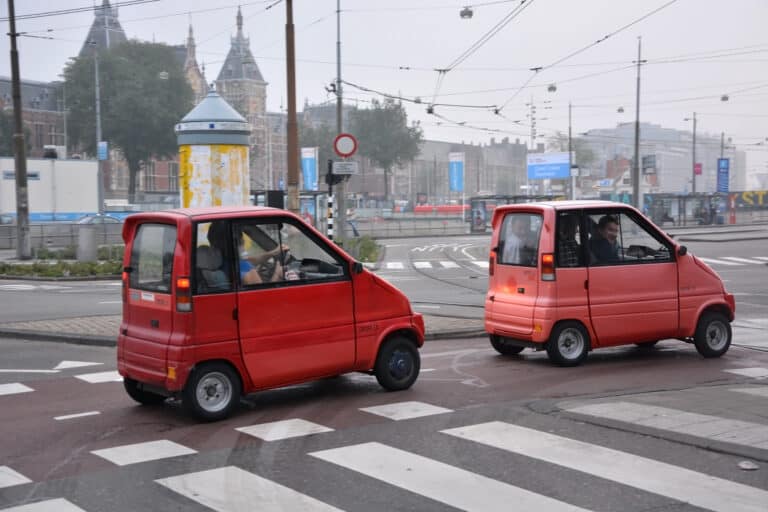
Counting on public transport to bring you home after a serious NYE party? There’s a very slim chance.
On December 31, most public transport will stop at 8 PM, but if you are travelling between Haarlem, Amsterdam, and Zaandam, you could catch NS night trains that begin at 1 AM.
As for the rest of us? Here’s how it’ll work this NYE…
There will be limited night buses.
Trains to and from Schiphol Airport, however, will continue running until 10 PM.
Meanwhile, the metro in Rotterdam will be running all night. Even better, RET has confirmed that travel on the metro will be free on New Year’s Eve!
A slow start on New Year’s Day
On the first day of 2026, the NS resumes services at around 10 AM. Your ticket checker might be hungover, so make sure not to be too grouchy.
However, the NS also knows the holidays will stop, and work will begin. So, some intercity routes, including Utrecht, Eindhoven, Arnhem, Amersfoort, and Zwolle will start running earlier.
Sprinters to Schiphol will also depart from cities like The Hague, Alkmaar, and Hoorn from 6 AM.
Mourners carrying a coffin through Zorgvlied cemetery in Amsterdam. Image: HansPeter/Wikimedia Commons/CC1.0
Rather than buying a grave, in the Netherlands, it’s common to rent a grave space for up to 20 years, and then have the remains relocated to a communal grave.
This is mostly due to a lack of grave space. The estimated number of occupied graves currently sits at 2 million, with each grave containing two or three bodies.
With such high demand for grave space, it’s common for families to have general graves in which up to three coffins are buried on top of each other.
This allows for them to keep their loved ones together in death, without taking up that much space.
However, even though families can choose to rent a grave rather than purchase a plot, the price of this can still be steep.
For example: The most expensive lease for a grave for up to 30 years is in Esserveld cemetery, which will cost you an eye-watering €7,000. 😲
You can still go budget-friendly, though! The cheapest grave rental rests at about €700 in Losser.
2. You can apply for assisted suicide
Euthanasia can offer patients a solution to their low quality of life. Image: Freepik
In the Netherlands, patients suffering from chronic health issues can request to be euthanised if they feel that it is the only solution to end their pain and low standard of living.
While a sad solution, it does offer patients and their families some peace of mind.
Children under the age of 16 can also request to be euthanised, but need their parents’ approval.
The compostable coffin, also known as a “living coffin”, was designed by a Dutch start-up and now offers a more sustainable alternative for those who are buried in the Netherlands.
The coffin, made out of fungus, biodegrades. This boosts the natural process of the breakdown of the body, helping to integrate the body back into the environment and soil.
Fun fact: When using a normal wooden coffin, it can take the body up to 20 years to decompose, but when buried in a biodegradable coffin, the decomposition of the body can take only three years.
4. You can choose to have a natural burial
With a natural burial, you can be re-integrated into nature. Image: Depositphotos
While we stay on the topic of burials that benefit the environment, in the Netherlands, you can choose to have a natural burial, such as in a forest.
People who choose to do this are laid to rest without a coffin.
Instead, they are wrapped in a shroud, and the body is left to biodegrade into the soil, once again becoming part of the earth and the natural cycle of life.
However, those who choose to do so can’t have a gravestone to mark their resting place. In place of this, they can choose to plant a tree over the grave or to have a simple inscription as a marker.
Seems like a sweet and simple way to be laid to rest and return to the soil. 🌼
5. There’s a service that writes poems for those who died alone
Overwhelming in its beauty, sadness, generosity, grace and crusty Dutch/Belgian humour. The Lonely Funeral Project is just wonderful pic.twitter.com/jZbAh8dVDX
Though we wouldn’t like to think that we’d have no friends or family to remember us after we passed, it’s a comforting thought to know that someone, somewhere, will be thinking of us.
Plus, the poetry is just beautiful! 😍
6. Most people choose to be cremated in the Netherlands
Scattering a loved one’s ashes somewhere they loved can be a sentimental activity. Image: Depositphotos
In 2019 alone, 66.95% of the people who died in the Netherlands were cremated.
Cremations can also be a sentimental choice for many families.
While you’re not bound to the space of a grave for mourning purposes, scattering a loved one’s ashes in their favourite spot can be a cathartic and loving way of saying vaarwel.
This option is also quite a bit cheaper than burial, costing between €725 and €1,000.
7. Organ donation in the Netherlands works slightly differently
At the age of 18, all Dutch citizens receive a letter asking them to opt in or out of organ donation. Image: Depositphotos
In most countries, people can choose whether or not their organs will be donated to those in need after their passing.
For the Dutch, however, it’s slightly different. They receive a letter on their 18th birthday giving them the option to opt out of organ donation.
If they fail to respond to this letter, after death, their choice will be marked as having “no objection to organ donation.”
This means that, in the Netherlands, unless you explicitly state that you don’t wish to donate your organs after death, it’s taken as a given that your (presumably) healthy kidneys are up for grabs!
While it may sound a bit morbid, we can find solace in the knowledge that we are contributing to the prolonged life of another human. That’s something to celebrate, anyway!
8. You are buried no more than six days after death
According to Dutch law, a person’s remains must be disposed of no less than six working days after death. Image: Freepik
Well, either buried or cremated. The Dutch like to organise funerals quite soon after the death of their loved ones, offering time to gather together and mourn their loss.
With Dutch funerals, a wake is usually organised, and is very much a family affair.
Held most commonly in the home of someone close to the deceased, the wake offers a moment to somberly reflect on the life of the person who has passed.
However, it is actually a law in the Netherlands that a person’s cremation or burial occurs no more than six working days after their death.
A quick turnaround, but at least once all the chaos of planning is over, the family can grieve in peace.
Hopefully, we’ve given you some clarity on what to expect if you or a loved one ever passes away in the land of the Dutch — or perhaps even just a bit of niche cultural insight.
What do you think is the weirdest thing about dying in the Netherlands? Tell us your thoughts in a comment below!
New Year’s Eve in the Netherlands is a spectacular sight to see: but with more and more cities banning fireworks, new ways to celebrate are on the horizon.
Fireworks and the Netherlands are a never-ending love story, sprinkled with passion, affection, and a good bunch of drama.
Here is all you need to know about the Dutch plans for a banging New Year’s Eve in 2025.
And by seriously, we mean that, in the past, all the major Dutch cities turned into something resembling a war zone on the last day of the year.
Dutch people are not shy about throwing firecrackers onto the street where you’re walking, and you’re likely to be shocked by explosions and bangs on every corner.
What a way to bring in the new year! Image: Depositphotos
City centres are usually intensely crowded, and large crowds combined with the fire quickly become a safety hazard.
However, despite no national fireworks ban, more and more Dutch cities are banning personal fireworks and putting on public light or laser shows instead.
In total, 20 municipalities have chosen to ban fireworks in certain areas in 2025.
Of course, Dutchies aren’t known for following the rules (and they love their fireworks), so you can expect to see plenty of illegal fireworks still being set off on December 31 — and the days and weeks preceding it.
So, if you’re not interested in risking injury or sore ears as part of your holiday celebrations, you might want to be extra careful when going out on New Year’s Eve in the Netherlands.
New Year’s Eve in 2025: Which Dutch city is doing what?
No matter where you are in the Netherlands, you can expect one thing from New Year’s Eve 2025: there will be fireworks.
Here’s what December 31 might look like in your city.
Amsterdam’s New Year’s Eve
Amsterdam has banned private fireworks but is compensating with a fantastic public show and activities.
The central Museumplein in Amsterdam will be filled with attractions, including their “Electric Fireworks” display, which they describe as a “spectacle of light, audio and eco-fireworks”.
New Year’s Eve is just not the same without fireworks, is it? Image: Depositphotos
Here, you can countdown the new year, enjoy an incredible light installation, music, and more. There’s a children’s show at 7 PM and the main event starts at 10 PM.
The Sloterpas and Weesp will also have a big, professional fireworks show.
Best of all, all the events are free!
Rotterdam’s New Year’s Eve
The Dutch harbour city of Rotterdam has also prohibited personal fireworks, but you won’t be short on options this New Year’s Eve.
The oh-so-famous Erasmus Bridge will provide Rotterdammers with a magnificent spectacle, known as the biggest fireworks show in the Netherlands. Unfortunately, due to budget constraints, there is no earlier show for children in 2025.
Watch the colours light up the sky all across the Netherlands this New Year’s Eve. Image: Depositphotos
The fireworks over the bridge are programmed to music, ensuring a spectacular event.
You’ll also be able to see fireworks at Nesselande and potentially Hoek van Holland, so there’s no shortage of options.
The Hague’s New Year’s Eve
The administrative capital of the Netherlands will not opt for an overall firework ban for private persons, describing such bans as unrealistic.
Instead, stork town will enforce fireworks-free zones around the city, for example, in areas close to petting zoos, animal shelters, and hospitals.
Want something far grander? The Hofvijver will again house The Hague’s main New Year’s Eve show this year. What a location!
However, this celebration will ditch the fireworks in 2025. The Hague will opt for a laser and light show this year.
The festivities will kick off with a DJ from 10 PM and will go on until 1 AM.
No matter the fireworks situation, though, you can rest assured that the traditional New Year’s swim at Scheveningen will take place as always.
Every January 1, the inhabitants of The Hague jump into the ocean with little red hats on. Image: Lybil BER/Wikimedia Commons/GNU
Utrecht’s New Year’s Eve
For the first time, Utrecht has implemented a personal fireworks ban. Regardless, past reporting has shown that plenty of people are willing to risk a €250 fine and still buy fireworks for personal use, so don’t expect peace and quiet.
The city is running some general events. You can walk or cycle through a magnificent and interactive light route, stop to eat some delicious oliebollen, and then count down the New Year at Jaarbeurs with The Recipes, DJ Duo Motion, and a massive light show.
Got kids? There’s a musical world tour, light show, and countdown between 5:30 PM and 6:30 PM too!
Maastricht’s New Year’s Eve
The southern city of Maastricht has no general fireworks ban this year.
That means that fireworks are allowed throughout the city from 6 PM on December 31 until 2 AM on January 1.
Groningen’s New Year’s Eve
Like last year, Groningen has implemented several fireworks-free areas in different parts of the city, including the centre.
Outside those areas, you’re free to set off fireworks between 6 PM on December 31 and 2 AM on January 1.
If you want all the fun vibes, head to the Vismarkt. There, the fireworks-free event ”3, 2, 1 Goud & Nieuw” (3, 2, 1 Gold and New) will take place, with a local DJ, visual art and interactive performances.
The dark side of fireworks in the Netherlands
The widespread fireworks obsession in the Netherlands does not come without troubles. Injuries and even casualties are an unfortunate routine every year, with emergency rooms filled to the brim from fireworks-related incidents.
Most large-scale celebrations in the Netherlands have seen dangerous situations unfold where fireworks have set fire to cars, mailboxes, and even buildings.
The Netherlands is no stranger to dangerous New Year’s celebrations. Image: Depositphotos
In addition to regular violence as part of the mayhem that usually erupts during the Dutch New Year’s celebrations, certain individuals also tend to find it sensible to fire fireworks into crowds of people, celebrating in public areas.
Needless to say, it’s an annual struggle to keep the festivities under control and the injuries and damages at a minimum.
Are fireworks legal in the Netherlands?
Officially, untrained individuals are not permitted to light fireworks in the Netherlands, with one notable exception: New Year’s Eve.
Between 6 PM on December 31 and 2 AM on January 1, regular folks can legally set off (almost) whatever fireworks they like. However, they can only be lit in areas allowed by your local municipality.
There might be fireworks-free zones in parts of your city, so make sure to check this first to avoid a fine.
Will you be getting a New Year’s kiss this year? Image: Depositphotos
Of course, we’re talking about the Dutch, so you’re likely to occasionally hear fireworks all year round — and a lot in the two months prior to New Year’s.
Also, officially, fireworks can only be sold to private individuals between December 29 and 31 by certified stores. However, the specific rules always differ between municipalities, as firework regulations are set locally, not nationally.
Additionally, there are certain types of fireworks that are banned. That means your local fireworks dealer is not allowed to sell them, and if you somehow obtain them, you’re not allowed to use them. The forbidden types of fireworks are:
single shots
category F3 fireworks
firecrackers (including strings of firecrackers)
rockets
Despite the rather strict regulations, however, most people largely disregard limitations, buy them from other countries, and set off fireworks whenever and wherever they please.
It’s also important to note that, beginning next year, a nationwide ban on consumer fireworks is expected to take effect. So get your firework fun in before it’s too late!
NYE fireworks: how to keep it safe
If you do not live in a fireworks-free zone and wish to light up your own show this New Year’s Eve, there are several precautions you should consider.
First of all, don’t light fireworks if you’re influenced by alcohol — it’s a recipe for disaster. Secondly, always wear protective eye gear when handling fireworks, and never hold lit fireworks in your hands.
In other words, don’t do it like this. Image: Depositphotos
Keep water close by in case of unintentional fire spreading, and never (ever, ever,) light fireworks indoors.
Finally, make sure you keep the fireworks as far away from other people, houses, or flammable materials as possible.
New Year’s Eve and pets in the Netherlands
Pet owners should consider their four-legged friends’ well-being before committing to their fireworks plans.
New Year’s Eve can be a seriously traumatic experience for many pets, and it might be worth it to skip the fireworks altogether to avoid stressing out your (or your neighbours’) animals.
Other than that, try to keep the curtains closed to limit the number of light flashes in your house, walk your dog before the whole thing starts, and try to behave as normally as possible around your pet to avoid increased stress.
How are you going to celebrate New Year’s Eve this year? Tell us in the comments below!
New Year’s Eve in the Netherlands is thoroughly celebrated, with enough fireworks to entertain spectators for hours. But watch out, it can get pretty intense. No Dutch NYE is complete without three things: fireworks, bonfires, and, well, riots.
Here’s all you need to know about New Year’s Eve in the Netherlands, from the good ol’ traditions (fireworks) to the not-so-common traditions (shooting). Let’s get into it!
Fun fact! New Year’s Eve is actually called Oudejaarsavond in Dutch, meaning “old year’s eve.”
Fireworks in the Netherlands: ending the year with a bang
The Dutch take New Year’s Eve very seriously, and a key component to sparking those NYE vibes is, of course, fireworks.
In the Netherlands, fireworks can be heard almost all year-round. However, the frequency of those loud bangs in the night tends to increase throughout December as we get closer to the end of the year.
General fireworks rules and regulations in the Netherlands
In general, no untrained individuals are allowed to light fireworks in the Netherlands (we’re looking at you, pre-teen boys). That is, unless it’s New Year’s Eve.
It’s beginning to look a lot like New Year’s! Image: Depositphotos
Yep, in the Netherlands, between 6 PM on December 31, and 2 AM on January 1, you’re free to do basically whatever you want, even if you’re not a professional fireworks igniter.
However, enjoy this privilege while it lasts: a new ban on all fireworks other than the F1 category will take effect in 2026. So, this NYE is the last free-for-all for the foreseeable future.
Officially, regular folks are also only allowed to buy fireworks at specially certified stores between December 29 and 31.
This rule comes in an attempt to regulate the sales of somewhat dangerous party equipment. In reality, however, the Dutch don’t worry about the rules too much.
There are also certain types of fireworks that are banned completely, including single shots, category F3, firecrackers, and rockets. Does that mean you won’t see them when the clock strikes 12? We doubt it.
So, what NYE fireworks shows can I see this year in the Netherlands?
You’re guaranteed a banging New Year’s Eve in the Netherlands, no matter where you go. Some cities have public shows, some let you light up your own by yourself, and some have banned private fireworks altogether.
Wherever you end up celebrating, here’s what each major Dutch city is doing on New Year’s Eve.
Despite a full-on ban on private fireworks in the centre of the Dutch capital, Amsterdam promises a great show this year. There will be several public fireworks shows around the city to welcome the new year in proper fashion.
It’s free to attend, you don’t have to bother with the hassle of lighting up your own, and it’s way less dangerous than New Year’s Eve in most other Dutch cities. Win-win-win, if you ask us!
Fireworks in Rotterdam
Sure, the second largest city in the Netherlands has also banned private fireworks a few years ago, but don’t let that bring you down!
There’s no shortage of fireworks shows in the Netherlands. Image: Pexels
Rotterdam will put on the largest fireworks show in the country, from the beautiful Erasmus Bridge. This is a Dutch New Year’s Eve celebration you’re not going to want to miss.
Fireworks in The Hague
In The Hague, the municipality has established several fireworks-free zones around the city to protect humans and animals.
The Dutch love fireworks, that’s for sure. But it seems the promise loud bangs is not enough to create the ultimate New Year’s Eve in the Netherlands.
Dutch people have decided to also include massive bonfires as part of their celebrations, making a sport out of creating the tallest fire possible (we’re talking fires creeping up towards the 50-metre mark).
The most well-known New Year’s Eve bonfire takes place on Scheveningen Beach in The Hague. In 2019, the massive fire got out of hand, leading to fire storms and countless injuries.
A fire the size of a building — how can anything go wrong? Image: Maurits Verbiest/Wikimedia Commons/CC2.0
This, as well as the past few years, has raised some question whether the big bonfires in the Netherlands will continue to take place on New Year’s.
But not to worry yet: Scheveningen is still scheduled to host the beach bonfirethis year (thank goodness).
That being said, if the public bonfires don’t work out, you can rest assured the Dutch will find some way or another to light stuff on fire. True to tradition, Dutchies love to set their Christmas trees ablaze when it’s time to get rid of them.
Shooting: because fireworks aren’t noisy enough for NYE
As if it wasn’t enough to light up fireworks for two months straight before the end of the year; New Year’s Eve in the Netherlands is not complete without some shooting. Yep, shooting.
The concept of carbide shooting has been a Dutch New Year tradition for ages — it’s seen as a fun way to start the New Year with a bang.
New Year’s Eve in the Netherlands is celebrated greatly. Image: Depositphotos
How does it work? The Dutch put some carbide in an old milk churn, cover the top with a ball, light a small fire, and cover their ears for the imminent explosion.
The ball will fly several yards, making carbide shooting an easily competitive activity.
Since the 1970s, the explosive game has been quite the social activity, and today you can even find several organised competitions and gatherings based around carbide shooting across the Netherlands.
The rules on where and when this odd practice is allowed vary from municipality to municipality, as there is no nationwide ban.
Time to make a mess! New Year’s riots in the Netherlands
The Dutch take New Year’s Eve very seriously, which, unfortunately, can bring out some not-so-nice sides to the festive celebrations.
With all that noise, heat and visual stimulation, New Year’s Eve in the Netherlands can be quite an intense affair.
The Netherlands usually wakes up to quite a mess on the first day of the new year. Image: Depositphotos
Deliberate and accidental fires, vandalism, and general disturbances — walking the streets of Dutch cities on NYE is not for the faint-hearted.
It’s common to see riots in cities across the Netherlands on New Year’s Eve, with firefighters and emergency services on high alert.
New Year’s Eve in the Netherlands is full of traditions. Riots and milk churn shooting set aside; some of them are quite weird — and lovely.
Oliebollen — because the New Year’s resolutions start tomorrow
Mmm… Lekker! Image: Freepik
The most easy-to-like Dutch New Year’s tradition is, arguably, an abundance of oliebollen — the deep-fried buns covered in powdered sugar that make us all go “lekker!”
The greasy delicacy has been eaten in the Netherlands for centuries and can be bought from street stands from autumn onwards.
But make no mistake; this distant cousin of the doughnut is traditionally a New Year’s treat, and certain Dutch people will absolutely frown if you buy it too early in the year.
Another Dutch New Year’s tradition is the Oudejaarsconference (Old Year’s Conference) — a comedy cabaret aired every New Year’s Eve in the Netherlands.
It’s a humorous reflection on the past year, hosted by one or more comedians, and it’s been a staple in Dutch New Year’s entertainment for ages. Trying to finesse your Nederlands? Join in on this one!
The practicalities of New Year’s Eve in the Netherlands
Everyone’s going somewhere, and everyone’s determined to have a GREAT time. It’s a recipe for disaster from a logistical point of view, so here are three things to keep in mind when planning your New Year’s Eve in the Netherlands.
It’s worth putting a bit of effort into the NYE preparations. Image: Depositphotos
Public transport during New Year’s Eve in the Netherlands
It’s no surprise that the public transport system in the Netherlands can be a bit of a struggle on New Year’s Eve.
Everything is even fuller than usual (since most people want to drink alcohol and therefore can’t drive), and transport schedules are significantly different from normal.
Between 8 PM on December 31, and 1 AM on January 1, the vast majority of public transport in the Netherlands (meaning buses, trains, and trams) will not run.
In other words: plan your movements in advance, and make sure you’re happy with your location before it’s too late.
Book in advance
If you’re in the mood for going out on New Year’s Eve, be it to a restaurant, bar, or maybe a club, you should make sure you reserve your table and book your tickets well before the night itself.
Venues and restaurants tend to fill up with reservations ridiculously early, so one quick phone call in advance can really save the evening.
Always book a table in advance if you want to go out on New Year’s Eve. Image: Depositphotos
Stay clear of 13-year-old boys with makeshift fireworks
If you want to stay away from the annual mayhem that tends to happen every New Year’s Eve in the Netherlands, you’re best off staying indoors.
If you do wish to risk it, however, a piece of good advice is to avoid teenage boys wielding fireworks altogether.
The Dutch are an innovative bunch, and some youngsters decide to experiment with fireworks (and their rules). However, with trial comes error, and let’s just say you don’t want to be around for that.
What are your plans for New Year’s Eve in the Netherlands this year? Tell us in the comments below!
FAQ: New Year’s Eve in the Netherlands
Is it legal to set off fireworks in the Netherlands?
For now, in the Netherlands, private individuals are allowed to set off fireworks between 6 PM on December 31, and 2 AM on January 1. This rule does not apply if you are in a fireworks-free zone, or if you live in a fireworks-free city.
What should you do if a fire gets out of hand?
If your fireworks or bonfire gets out of hand on New Year’s Eve, as soon as possible, tell someone to call the Dutch emergency number: 112.
Meanwhile, try your best to extinguish the fire. Before you start breaking out the matches, always remember to keep a bucket of water and/or a fire extinguisher nearby.
Does Amsterdam have a fireworks show?
Yes, Amsterdam will have a few public fireworks shows on New Year’s Eve. Amsterdam has banned the private ignition of fireworks since 2023. However, public shows are still allowed.
Is New Year’s Eve a free day in the Netherlands?
New Year’s Eve is not a public holiday in the Netherlands — officially, it’s a working day. Still, public transport runs on heavily reduced schedules, and most people take the day off if they are able to.
Is it a bird? Is it a plane? Nope, it’s a wielrenner. 🥴 Although, seeing as they’re decked out in skin-tight spandex from head-to-toe, ‘Superman’ might be what they were going for.
Let’s just say, it takes a special kind of person to wriggle into a full-body lycra suit every morning (which probably also requires lying down and asking for the assistance of a family member) and then mount an athletically superior, two-wheeled machine designed to intimidate teenagers on their oma-fiets.
We’re not talking about motorcyclists, no — we’re talking about wielrenners in the Netherlands: lycra-clad hobby cyclists zooming around on €3,000 race bikes.
In the bike-friendly Netherlands, cyclists speed down the road without fearing cars. For an American, the prospect is thrilling—and terrifying. https://t.co/Xn1F2Ma8zU
Who are the real men beneath the masks/helmets? In their normal lives, they’re dads, husbands, grocers, cops, or bankers. But once they put on that suit and step into their alter-egos, it’s as though they become one with their racefiets.
Here are seven reasons why an intervention is truly needed:
1. They bike too fast
Picture this: you’re cruising through the bike lane, minding your own business, birds are twittering, and your thoughts are in a peaceful, meditative state.
…Until the scene is rudely interrupted by a spandex-coated flash of lightning whizzing past you, very nearly severing your arm.
Wielrenners cycle at dangerous speed levels that never really seem justifiable. Seriously, 150 kilometres per hour on a normal bike path? And for what?
Sorry, but you breaking your personal fitness record can’t be more important to you than everyone else keeping their limbs intact… right?
Every encounter with a wielrenner feels like a “close shave” that had a high chance of causing a crash, one that would entirely be their fault.
The way they lean forward makes it seem like they’re always bracing for impact. Which…can and does happen, apparently 😬
2. They shout at everyone because… no bell
If your peaceful biking session isn’t cut off by the abrupt presence of an unwanted spandex-clad pest — I mean, guest — maybe you’ll hear them first.
Ah yes, the sound all other bikers and pedestrians have come to recognise. Piercing the harmonious silence of nature, the sound of a grown man 15 metres behind you shouting:
“PAS OP!”
“Watch out!” he’ll say. Hah! Good one.
Only you physically can’t watch out, because if you turn around to investigate the source of this noise, you run the risk of being decapitated.
Also, his ticked-off tone implies that you’re the one who’s a nuisance to society for calmly trying to make your way to work.
Seeing as a lycra biker’s skimpy racefiets usually doesn’t support a bell, their preferred method of alerting others to their unpredictable presence is, you guessed it, screaming at the top of their lungs.
At best, it’s just a bit anti-social. At worst, it’ll induce cardiac arrest for the faint of heart.
Lycra bikers, we know you mean well, but please just tone the volume down a notch — it’s not as if we’re all wearing noise-cancelling headphones.
3. They’re often on roads they shouldn’t be on
Whether you’re on a horse trail, driving through the motorway, or walking, a wielrenner can manifest himself. They are omnipresent, and nobody’s safe.
Try as you might, you can never entirely manage to escape the wrath of wielrenners.
People on road bikes wearing lycra are probably closer to the speed of drivers than others on the bike path. Here in the Netherlands they’re trialling letting those cyclists use the road (it’s mandatory to use the bike path, unlike in the UK), because speed diff can be dangerous.
Remember, these people are shapeshifters, godlike entities existing outside of space and time, and normal traffic rules seem to evade them.
If you wanna work out your glutes and hamstrings, that’s cool and all, just please don’t subject the rest of us to it everywhere, constantly.
It’s a very dangerous sport, and maybe people should find a different way to blow off steam on weekends with buddies or take out their (potentially marital) frustration.
4. They have visible nether regions that no one asked to see
Riddle me this: what’s more frightening than a wielrenner on a fiets?
As it turns out, the answer to that is a wielrenner off of a fiets. Specifically, one who’s strolling around a shopping street just wheeling his bike beside him.
The children, think of the children! Image: Freepik
A word of advice: if you want to spare your retinas from being scarred, avert your eyes. Pretend to be fixated on something that’s a 45-degree angle above their head.
Whatever you do, don’t look down. Lycra is unforgivingly revealing, probably doesn’t allow room for boxer shorts, and leaves very little to the imagination.
5. They feel way too self-important
We get it, you own a racefiets, are among the only people in the Netherlands to wear helmets, and don’t have many other hobbies. But please come back down to Earth.
The satisfied expression on their faces always seems to suggest, “Move, I’m a wielrenner. I’m better than you”.
Not only are they convinced their legs have developed a superhuman strength that could out-pedal anyone — and to be fair, it is a little impressive — but they also expect to be given the right of way in any circumstance.
Anecdotally speaking, I’ve seen them refuse to stop for even a sweet, old granny crossing the road.
They believe everyone should also respect what they see as a profound art form, but it is truly just a recreational sport that needs to be taken less seriously.
Seeing how they aggressively dominate other bikes and pedestrian spaces makes you wonder if they’re not just in need of a thorough psychiatric evaluation. 🤷♀️
6. They creep up on you silently
Silent but violent. Like a jaguar stalking its prey in complete stillness before it’s ready to pounce.
The tires of a wielrenner’s bike are very thin, to improve the vehicle’s aerodynamics, rolling resistance… yeah, who cares.
The bottom line is that as the wheels of the bike go round and round, you won’t hear a sound.
On the one hand, this means they take up less space (luckily), but on the other hand, the ambush is made all the more petrifying, like a horror-movie jumpscare.
7. They often come in large groups
It’s basically a cult. Think dad’s fantasy football league but on wheels.
That means if there’s one, there’s bound to be several more, following in sudden succession. A full-blown herd stampeding through the clear, with smoke blowing out behind them.
The hive mentality of the sport also means they’re trapped in an echo chamber of mutual encouragement. And that is why they’ll never stop.
Then again, we’re not sure life would be the same without them. Maybe the fabric of reality would disintegrate if we didn’t have to hold our breath anytime we make a turn while biking or hear the familiar sound of voices screaming to “get out of the way”.
In all seriousness, it’s fine, we get it, they’re just doing their thing. But maybe they could invest in a nice bell from HEMA?
How do you feel about wielrenners? Share your thoughts in the comments below!
As this year draws to a close, millions of oliebollen will be baked and eaten in the Netherlands.
While many tourists and expats get hooked on the oily snack, the question remains: why do the Dutch eat oliebollen around Christmas and New Year’s Eve? And where did this doughy snack come from?
So while you’re here, grab a drink, a seat, and an oliebol, and let us discuss the delicious Dutch delicacy. 😋
First of all, what are oliebollen?
You can pick up freshly fried oliebollen from an oliebollenkraam like this one. Image: Depositphotos
Oliebollen are small balls of dough that have been fried in a pan with a layer of oil — hence, the (translated) name: oil balls.
This Dutch dessert is usually eaten on New Year’s Eve, with raisins/currants inside or powdered sugar on top. You can also add other ingredients to the batter, such as cinnamon or apple pieces.
They are called oliebollen or smoutballen in the Netherlands, smoutebollen in Flanders, croustillons in Wallonia, and schmalzkugeln in Eastern Belgium and Germany.
Origins of the oliebol
The history of theoliebol goes back a long time. Nobody knows who ate the first oliebol or how they made their way into the Low Countries.
Die-hard oliebollen fans and experts point to a painting by Albert Cuyp from about 1652 depicting a cooking pot with oliebollen, to show that they have existed for a long time in the Netherlands.
There are some people who believe that the oliebol might have been brought to the Netherlands from Portugal and Spain by Sephardic Jews who were forced to flee from the Spanish Inquisition in the Middle Ages.
At that time, there was already a delicacy in Portugal that looked a lot like an oliebol.
But let’s be honest, none of these facts will convince any Dutchie that the oliebol is not Dutch all the way to its doughy, fatty core.
Batavians and Frisians
Another story goes back even further to a time when the Batavians and the Frisians would eat food made of a kind of fatty dough around the turn of the year in order to escape a Germanic goddess known as Perchta or Berchta.
It was believed that in the winter, she would go around with a sword, ripping open the stomachs of those whose bellies were not fat.
Only those with fat bellies filled with this fatty dough were spared. (So eat up, people! No diets this year 😱.)
So why are oliebollen eaten during the holidays?
There are several theories about why the Dutch eat oliebollen around Christmas and on New Year’s Eve. Some Dutch folks believe that the practice originated in the Middle Ages.
In some areas, it was common for people to fast between St. Martin (November 11) and Christmas. After this period of fasting was over, they feasted, drank and ate.
“Oil cakes” were an important part of this celebration because they were filling and fattening, and thus perfect for the winter period — especially after such a long fast.
Freshly cooked and steaming is the best way to enjoy this Dutch delight. Image: Freepik
In the time between Christmas, New Year’s and Epiphany, it was also a late medieval custom for the poor and vagrants to go door-to-door to get something to eat in exchange for a New Year’s wish or a song.
Oliebollen could have been part of that tradition because they were cheap to make and satisfying.
These days, oliebollen can be bought at small mobile food trucks at train stations all over the country. It is customary to eat them with powdered sugar, and on New Year’s Eve, to wash them down with some champagne.
Some tasty oliebollen facts
The first recipe for oliebollen, “oil cakes”, can be found in a cookbook from 1667: “De verstandige kock” (the wise cook). Those “oil cakes” were flat, and filled with raisins, apples, and almonds, among other things.
When Holland became more prosperous in the 17th century and worldwide trade made it easy to obtain olive oil and flour, cakes became thicker and fried in more oil, and that was how the modern-day oliebol was created.
In 1868 the Dutch dictionary, Van Dale recorded the word “oliebol” and soon after that, the name “oil cake” kind of disappeared.
There is no word in any other language for “oliebol“. In the United States, they are called “Dutch doughnuts”.
Have you ever tried an oliebol? Tell us your experiences in the comments below!
The Dutch like to start their year with a refreshing splash (and probably hypothermia). On the first day of each year, thousands of Dutchies make their way to the beach at Scheveningen and charge into the freezing waters for the traditional New Year’s Dive.
How often have you daydreamed about celebrating the New Year by jumping into a freezing ocean, possibly leading to hypothermia, before having a warm bowl of pea soup?
Well, you can stop dreaming. Simply head to the not-so-tropical beach of Scheveningenon January 1 of each year, for the ultra-traditional New Year’s Dive.
What is the New Year’s Dive at Scheveningen?
The Nieuwjaarsduik (New Year’s Dive) is the yearly Dutch tradition of running into the freezing winter waters to celebrate the beginning of a new year.
The biggest New Year’s Dive happens at Scheveningen (AKA the place with a name no foreigners can pronounce), but people take crazy dips all over the country.
People dip into the freezing ocean every New Year’s Day in the Netherlands. Image: Txllxt TxllxT/Wikimedia Commons/CC4.0
On January 1 1965, the Nieuwjaarsduik began when local Scheveningen resident and ex-canal swimmer Jan van Scheijndel, and seven other human beings (we suspect they were half-penguin), willingly jumped into the freezing water to celebrate the New Year.
Since then, the event has grown amazingly in popularity, and hosts approximately 10,000 participants every year! Nowadays, people sign up for an official event organised by the municipality of The Hague, sponsored by the soup company UNOX.
The organisers provide trained lifeguards, a ridiculously comfortable orange UNOX winter hat, and a bowl of warm pea soup.
They also guarantee dozens of cameramen/women trained to capture the exact moment in which you regret making the decision to jump into the freezing water in exchange for soup.
Is the New Year’s dive a good idea?
Now, is subjecting yourself to what can only be described as voluntary torture objectively a good idea? Absolutely not. Should you do it? Only if you were raised by polar bears, and you love pea soup.
But hey, two amazing human parents raised me, I have no strong feelings towards soup in general, and I’ve jumped in twice. Why? It’s all about having a unique bonding experience with your friends and with the Dutch.
I don’t know what it is exactly, but the whole experience is just very exciting and cool (no pun intended). Both years, sitting down with my friends to enjoy our soup after dipping in and out of the water has been an amazingly unique way to start the year.
As a foreigner, it also feels really nice to be part of a Dutch tradition.
Has anyone told them they don’t HAVE to do this to themselves? Image: Depositphotos
Afraid that you’ll be too hungover to make it all the way to Scheveningen? No worries, because you can also enjoy this chilly event at other locations such as Amsterdam Amstel, Amsterdam Ijburg, Arnhem and Den Bosch.
Feeling fearless? Here is how to join the New Year’s Dive
Signing up is done on the day itself and costs €4. The actual swimming event starts at 12 PM at Beelden aan Zee, but it always fills up fast, so if you’re up for a new and refreshing way to start the year, be early (registration opens at 10:30 AM)!
And hey, if you spend the first day of the new year running into freezing water with the New Year’s Dive, the whole rest of the year will feel like smooth sailing.
Have you ever participated in this weird, cold Dutch tradition? Tell us about it in the comments below!
I’m proud to be Dutch, I really am. After all, the Netherlands is a country of amazing and wonderful occurrences and phenomena.
Citizens of this nation definitely have good reason to be proud of the country’s accomplishments. However, for all its genius, the Netherlands has many strange quirks.
Here are just seven of the odder cultural Dutch quirks.
1. They are always on time
When you schedule a meeting here at 11 AM, you’ll find that the meeting will begin at precisely 11:00 AM. Not a minute sooner or later.
You’re probably sitting there thinking, “Well, of course, the meeting was scheduled for 11:00 AM, so it starts at 11:00 AM.”
Get used to this expression from your boss — or friends. Image: Freepik
But the truth is, unless you’re Dutch (or from the handful of other ‘on-time’ places), then you’re probably late for every meeting you attend — even if you don’t realise it.
If you’re an international living in the Netherlands, then it might not be a bad idea to invest in a watch.
2. They congratulate absolutely everyone on birthdays
I don’t mean to imply that the Dutch don’t celebrate birthdays. They do. In fact, when someone is jarig (meaning that it’s their birthday), you’re expected to congratulate them. That doesn’t seem so weird, does it?
But you’re also expected to congratulate everyone else remotely related to them if you happen to come into contact with them.
Welcome to the party! Now join the circle of death. Image: Depositphotos
Say you’re invited to your friend’s birthday party. You show up (obviously on time), and you’re met by a living room filled with relatives and friends, all seated in a single circle surrounding the coffee table.
All the heads turn to you, and you’re expected to make your way around the circle to each person and congratulate them for the birthday of whoever is celebrating that day.
Only after this ritual of round introductions may you then take your own seat and witness the quiet, awkward politeness that is the Dutch celebration of birth.
3. Their toilets are just… weird
On this subject, I will first quickly get the whole ‘shelf toilet out’ of the way.
Depending on your expectations, it may or may not disappoint. I literally cannot count on my two hands how often I have had a conversation about the design of this particular restroom.
Despite their strange looks, they actually make a lot of sense for several reasons. Firstly, the toilet-goer is provided with a glance at their deposit after the deed (especially useful for those who want to know more about their current health afflictions).
Dutch toilets are a real experience. Image: DutchReview
It also severely reduces backsplash (a source of potential hygiene issues and frequently unwanted wetness).
Setting toilet design aside, the Dutch bathroom is a strange phenomenon in and of itself. The way they are shoved into the smallest spaces imaginable is astounding.
Sitting down in a bathroom like this is a skill in and of itself. Especially for those with average or longer-sized legs, be ready to become a contortionist. I’m personally no longer surprised when I find my feet on either side of my head during bathroom visits.
4. They say helaas pindakaas and other weird things
Take helaas pindakaas, for instance, which literally translates to “too bad, peanut butter.” In fact, the following few examples really speak for themselves:
Van een vlieg een olifant maken / To make an elephant out of a fly
Wie boter op zijn hoofd heeft, moet uit de zon blijven / He who has butter on his head must stay out of the sun.
Met de deur in huis vallen / To fall with the door into the house.
Nu komt de aap uit de mouw / Now the monkey comes out of the sleeve.
5. They are super stingy with their money
The Dutch have been raised to count their pennies. Image: Depositphotos
It is no secret that the Dutch are considered stingy and careful with their money. So much so that the phrase “going Dutch” refers to the practice of splitting a bill so that each exactly pays precisely his or her portion of the whole, not a penny more or less.
Of course, this penny-pinching practice is often less than practical, and as such, the Dutch have also developed an incredible array of tools to ease the process.
From the removal of one and two-cent coins in the economy to the development of highly efficient Internet banking and apps like Tikkie, the Dutch are obsessed with making their frugality practical.
6. They have very specific insults
Like many other cultures, the Dutch are not ones to back down from a good argument, and unsurprisingly, we can get very creative.
Among the more everyday categories of insults are illness and disease (because that’s normal, apparently). Take some common examples, such as wishing someone the kanker (cancer), tyfus (typhoid), or tering (tuberculosis).
Swearing with diseases? Only in Dutch. Image: Freepik
But it gets stranger. Among other insults that have met my ears are anusridder (anus knight), klootzak (ball sack), and huppelkut (skipping vagina).
And if you really want to get weird (if not necessarily dirty), then consider the fact that I’ve been called a sprinkhaan (grasshopper).
Other insults include krentenbol (a Dutch bread with raisins), mongol (Mongol, duh), and NSB’er (referring to members of the Dutch Nazi Party).
7. They consume an insane amount of coffee
With the Dutch people’s over-reliance on caffeine, the Netherlands has the fifth-highest per-capita consumption of coffee in the world. That would be fine, but you’d think with their addiction to coffee, they could at least make it…good?
The Dutch are famous for drinking a lot of (not very good) coffee. Image: Depositphotos
Despite all these Dutch quirks, I still love this country. Ultimately, it’s these strange little things that make the Netherlands what it is and make it wonderful (most of the time).
Which of these Dutch quirks surprised you? Which have you witnessed yourself? Let us know in the comments below!
Sharing is only caring until you need an extra plate. Then it costs €5.
Picture it: You sit down at a cosy restaurant, order a couple of drinks, and one juicy steak to be shared between two people. Then you ask for an extra plate and cutlery, and suddenly your bill includes a €5 surcharge for tableware.
Welcome to Venlo, where the sharing surcharge at “Eetcafé Prins Hendrik” triggered a country-wide debate on money, manners, and morals.
Was the restaurant stingy over a single plate? Was the couple pinching pennies by ordering one steak for two? Or has a culture of individualism lost its ability to share?
It was only a matter of time before the cost of living crisis snuck into our cutlery. And indeed it has, this is a growing trend in the Netherlands.
How would you react?
The debate gained traction after Rob Baltus, regional chairman of Koninklijke Horeca Nederland, shared the instance on LinkedIn to gauge public opinion.
According to the restaurant, guests were warned of the surcharge before they requested additional tableware.
“It was €2.50 for cutlery and €2.50 for a plate,” an employee of Eetcafé Prins Hendrik clarified to AD.
Because they were informed prior, “It’s their own choice whether or not to opt for it,” the employee added.
The guests found the matter despicable, according to the newspaper. And many critics on LinkedIn accused the restaurant of being inhospitable over a measly €2.50.
However, supporters argued back that occupying two seats at a restaurant and ordering one main course was a crime in itself.
Paying for the experience
“This is a way to capitalise on the experience,” wrote Baltus in defence of the surcharge.
Money is not only spent on the dish. Guests are paying for the service, atmosphere, square footage, furniture, and the list goes on.
Just as much as common people, profit margins in the hospitality industry are under pressure. The restaurant in Venlo isn’t the only one charging extra for tableware.
And legally speaking, no law protects your right to a free plate!
The Netherlands Authority for Consumers and Markets says that a sharing surcharge is allowed, as long as it’s communicated in advance.
Whether or not you get it, perhaps, depends on the generosity (non-Dutchness) of the restaurant owner.
Where do you draw the line?
While the challenges of hospitality are very real, where do you draw the line? By the same logic, restaurants may very well charge for in-house candles, curtains, and toilet paper!
Just ask yourself this question: Would you ever catch an Asian restaurant charging for an extra plate?
This is not to say that Dutch restaurant owners entirely lack the generosity gene. Prins Hendrik made sure to mention that children can share for free, and couples can share a cake for free.
But a steak for two adults? Please beware of the terms and conditions.
What is your take on the great plate debate? Tell us in the comments!
Have you ever wondered why the Dutch are called “Dutch”? You might be surprised by the word’s origin.
The Dutch are famous for being very direct and straightforward people. Do you want a genuine opinion about your outfit? You got it! Want to split the bill? No problem! Do you want to have unlimited types of cheese to choose from? You got that tenfold!
Everything seems pretty simple here until you start asking yourself specific questions. Why does this country have two names? Is it the Netherlands or Holland? And why are people here called the Dutch? And why do these words have nothing in common with one another?
Well, we have the answers for you!
The Netherlands vs Holland: What even is the difference?
If you know the difference between the Netherlands and Holland, have heard the Dutch national anthem at least once, and know a thing or two about Dutch history, then you’re pretty much a half-Dutchie.
But for those who don’t know those things, let’s get it out of the way before we get to the main question.
In short, the Netherlands is divided into 12 provinces. However, the two provinces of North and South Holland contain all the good (read: touristy) stuff.
Think tulips, windmills, canals, Amsterdam, and The Hague. Because the two Holland provinces are so popular, the whole country eventually became known as Holland, even though its real name is the Netherlands.
But why are the people here called Dutch? Well…
The British are to blame
England? English! America? American! The Netherlands? Netherlander? Hollander? No, Dutch! Why? Because logic.
As if Brexit wasn’t enough to screw up half of Europe, the Brits messed things up for the Netherlands quite some time ago.
Now, we need your full attention for the reason why we call the Dutch, well, “the Dutch.” As we all know, the German word for Germany is “Deutschland.”
Now, for the British, everyone who spoke a Germanic language was one and the same. This resulted in the British calling people from Germany and the Netherlands both Dutch.
Then, as time passed, the Germans became known as, well, Germans. However, like a nickname you got in high school, “Dutch” still sticks with the Netherlands.
What do you think about the word’s origin? Did we surprise you with the reasoning behind it? Tell us in the comments below!