Home Blog Page 97

Here’s why the Netherlands doesn’t have many skyscrapers

0

You’d think a wealthy, densely populated country like the Netherlands would be bristling with skyscrapers.

Instead, the Dutch skyline looks more like a collection of well-behaved brick buildings having a polite conversation. Stroll through Amsterdam or Utrecht, and the tallest thing you’ll see is probably a church tower from the 14th century.

It’s not for lack of money or ambition. So what are the Dutchies’ reasons for keeping things grounded?

The soil situation is absolutely bonkers

The Netherlands sits on what can generously be described as geological jelly. Most of the country is built on soft clay, peat, and sand that’s about as stable as a wobbly Amsterdam canal house after a few too many drinks.

For centuries, the Dutch have solved this problem by ramming wooden poles deep into the ground until they hit something solid. Amsterdam alone has thousands of buildings perched on these timber stilts, some dating back hundreds of years.

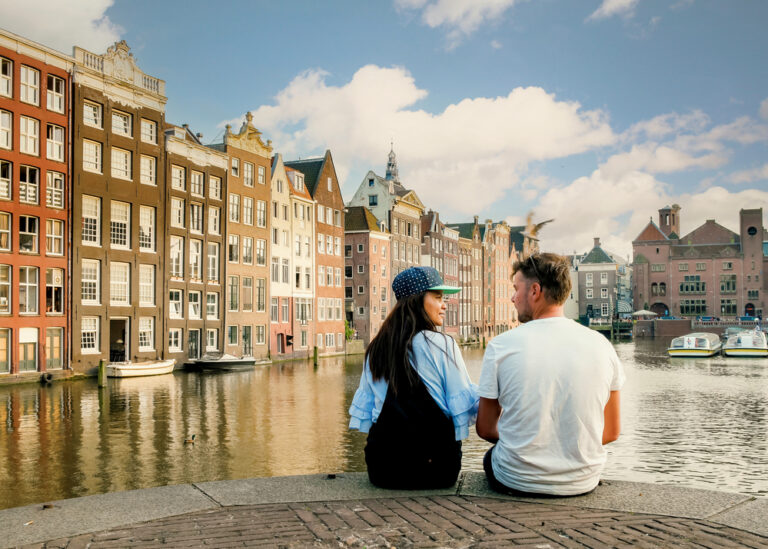
Photo-of-old-canal-houses-in-the-Netherlands
Do you know what’s beneath Amsterdam’s famous canal houses? Image: Depositphotos

While building cute canal houses on a forest of chopsticks somehow works, the same cannot be said for a 50-storey tower.

According to TNO research, around 425,000 Dutch buildings already face foundation problems, with an estimated repair bill of €20-30 billion by 2050.

Modern skyscrapers need foundations that go incredibly deep, but in the Netherlands, you might have to drill through 30 metres of mush before hitting anything resembling solid ground. That’s expensive, risky, and frankly, a bit mad.

Schiphol has a say in things

Here’s another reason: one of Europe’s busiest airports sits below sea level and doesn’t want tall buildings getting in the way of its planes.

Schiphol Airport handles over 66 million passengers annually, and its flight paths create invisible height restrictions across large chunks of the Netherlands.

photo-of-plane-taking-off-from-schiphol
The flight paths of Schiphol impose restrictions on the height of surrounding buildings. Image: Depositphotos

Aviation regulations mean that in many areas, especially around Amsterdam, there are strict limits on how tall buildings can be. It’s ironic that an airport sitting in what used to be a lake is telling everyone else they can’t build high. But that’s aviation law, we guess.

Heritage preservation is serious business

The Dutch take their historical buildings very seriously, and with good reason. Amsterdam alone has over 9,000 listed monuments, and the Canal Ring is a UNESCO World Heritage site.

Dutch cities learned from Brussels’ mistakes in the 1960s and 1970s, when rapid modernisation destroyed much of the Belgian capital’s historical character — a phenomenon now known as “Brusselisation.” Seeing what happened in Belgium, the Netherlands decided it quite liked its narrow canal houses and charming brick architecture.

Height restrictions in historic city centres aren’t just suggestions, they’re law. This means that in the most desirable urban areas, where skyscrapers would make the most economic sense, they’re simply not allowed.

The Dutch are practical, not flashy

There’s something fundamentally Dutch about asking “why build up when you can build out?”

The Netherlands has been creating land from nothing for centuries, so when they need more space, they don’t automatically think vertical.

The Dutch approach to urban planning prioritises liveability. Wide bike paths, neighbourhoods made for humans, and buildings that don’t block out the (already limited) sunlight make more sense than competing in an international penis-measuring contest with skyscrapers.

woman-commuting-to-work-in-the-netherlands-by-bike
Wide biking paths over a crammed concrete jungle. Image: Depositphotos

There’s also the small matter of cost. Building tall is expensive, and the Dutch are famously frugal. Why spend millions on a foundation that might sink when you can build perfectly good housing that stays put?

Zoning laws actually mean something

Dutch planning regulations aren’t just suggestions. Municipal governments have real power to control development, and local communities get meaningful input into what gets built in their neighbourhoods.

The Environment and Planning Act gives local authorities comprehensive control over building heights, aesthetics, and environmental impact. If a community doesn’t want a skyscraper casting shadows over their afternoon coffee, they usually get a say in it.

This isn’t NIMBYism but rather democracy in action. The Dutch system prioritises long-term livability over short-term profits, which means fewer skyscrapers but more sustainable communities.

There are exceptions

There is one glorious exception to the Netherlands’ altitude aversion: Rotterdam. After German bombs flattened the city center in 1940, Rotterdam had a blank canvas to work with.

The result? The lowlands’ only proper collection of tall buildings, including the country’s seven tallest structures.

rotterdam-skyline-with-greenery-of-nearby-parks-in-view
Rotterdam’s skyline is quite different from that of other Dutch cities. Image: Depositphotos

Rotterdam’s skyline shows what’s possible when you start from scratch and have modern foundations. The city embraced vertical growth and became the Netherlands’ architectural playground.

However, even Rotterdam’s success is limited. Its current tallest building is the Zalmhaven tower at 215 metres, which overtook the 165-metre Maastoren in 2021. These heights are rather modest compared to most international cities.

Climate change makes everything worse

As if soggy soil wasn’t challenging enough, climate change is making foundation problems worse. Rising sea levels, more extreme weather, and changing groundwater levels are threatening existing buildings, let alone potential new skyscrapers.

The Dutch are masters of water management, but even they’re finding it challenging to keep up with accelerating change. Building tall structures on unstable ground that’s becoming less stable every year feels like spending it all at the best casino of architecture.


Maybe the Netherlands has got it right. While other countries race to build ever-taller monuments to human ambition, the Dutch have created cities that work for people, not Instagram. Their urban landscape prioritises bikes over Bentleys and canal houses over corporate towers.

The absence of skyscrapers doesn’t make Dutch cities boring, it makes them human-scale. You can actually see the sky, feel connected to your neighbours, and navigate without getting lost in concrete canyons.

Do you think the Netherlands is missing out by not having more skyscrapers? Or is the low-rise approach part of what makes Dutch cities so liveable?

Insiders warn that lines at Schiphol will be horrific next summer: here’s why

If you thought the great Schiphol chaos of 2022 (hours-long queues, missed flights, and passengers crying) was not going to happen again, sorry, but insiders are warning it could.

Speaking with De Telegraaf, insiders say that the May and summer holidays of 2026 are shaping up to be even messier.

So, be ready to dust off your camping chair or avoid planning a holiday in May. 

The perfect storm: courtrooms, contracts, and chaos

A person involved tells De Telegraaf that “The lines are going to be worse than in the horror summer of 2022, when hundreds of thousands of passengers missed their flights because Schiphol was short-staffed. The lines stretched all the way to the control tower.”

“The same thing is happening now, due to Schiphol’s own stupidity. And who will suffer? The passengers.”

But what’s causing this? At the heart of the crisis is a legal tug-of-war over Schiphol’s €1.5 to €2 billion security contract.

Two long-time security companies lost out after decades of working at the airport, and they’re now dragging Schiphol to court, claiming the selection process wasn’t fair.

While the judges figure it out, the newly hired security companies can’t start preparing.

The result? Recruitment is frozen when it should already be in full swing.

Even if things magically cleared up tomorrow, thousands of existing security workers need to be re-approved before they can start under the new companies.

No help from the old guard

You’d think the current contractors might step in to cover the gap. Not so. After being rejected, they are, understandably, refusing to extend their services.

So, Schiphol is essentially standing in front of millions of travellers with nothing in hand but a smile, saying, “Don’t worry, it’s gonna be alright.”

@dutchreview Training for a marathon without knowing, thanks @Schiphol Airport AMS #dutchtok #netherlands #fy #fyp #dutchreview #livingnl #holland #schiphol ♬ original sound – The Flying Welshman

Schiphol, of course, insists everything will be fine. “We are confident that the selected parties can handle this responsibility,” a spokesperson says in a reaction. 

“We won’t comment on individual companies, but naturally we will only select parties that meet all the requirements and that we are convinced can guarantee continuity and quality.”

Are your 2026 holiday plans steering towards a road trip? Share your thoughts in the comments below.

Mother of 15-year-old boy shot by Dutch police to file manslaughter complaint

The biological mother of a 15-year-old boy who was shot dead by police on Sunday plans on filing a manslaughter complaint against Dutch police.

Her son, Jerryson, was shot and killed by an officer outside a McDonald’s in Capelle aan den Ijssel shortly after he stole a fatbike along with others.

The Dutch Public Prosecution Service reports that the boy was in possession of a converted gas alarm pistol, which counts as a functioning firearm.

Police claim that they gave several warnings to Jerryson, and when he tried to run, they shot him.

Mother wants justice

Speaking with talk show, Pauw & De Wit, the biological mother’s lawyer, Gerald Roethof, says “she’s devastated.”

He explains that the mother now lives in Curaçao, but had left her eldest children in foster care in the Netherlands with the hope of giving them a chance at a better life.

Now, she wants to get to the bottom of the shooting.

“Should the police shoot in this situation? That’s what matters to her. And her position is: no. Absolutely not,” her lawyer says.

She is appealing for anyone who may have witnessed the shooting to come forward and is asking for a pathologist of her choosing to examine her son’s body.

Want the latest Dutch news to come zooming through the internet to your inbox? Dat kan! Subscribe to DutchReview’s weekly roundup 📮

11 things that will surprise you about renting in the Netherlands

There are plenty of things that will surprise you about the Netherlands — what the frick are frikandels? Why are the seagulls so violent? And is that three people on a bike!? However, most people underestimate the surprises that come with renting in the Netherlands. 

Now, some surprises are fun to encounter in the moment, but when it comes to the Dutch rental sector, let’s just say it’s best that you approach the challenge as informed as possible.


1. A rental agency can’t charge you for their services

So, let’s take it from the top. You’ve hunted online, had multiple viewings, and now, finally, by the grace of some rental goddess, you’ve found a place to live. 

You’ve signed the dotted line, paid the deposit and first month’s rent, and yet, you still have a rental agent standing in front of you with their hand open. Why? It’s the “service fee”, “key fee”, “mediation costs”, or “registration fee”, of course.  

Photo-of-rental-agent-shaking-hands-with-couple-at-table-renting-in-the-Netherlands
A Dutch rental agent often acts as the mediator between you and the landlord, however, if they were hired by the landlord, you shouldn’t pay anything! Image: Freepik

First things first, slap that hand away (metaphorically, at least.) Unfortunately, in the Netherlands, many rental agencies will try and source their commission from the tenant, citing some form of “fee” that has to be paid  — but this is, say it after us, illegal. 

READ MORE | 11 creative solutions to the Dutch student housing crisis that makes us say “Why didn’t we think of that?”

The agency should receive a sum of money for mediating between you and the landlord if they were hired by the landlord to advertise the property. However, this means it’s up to the landlord to pay this fee, not the tenant

The only exception where you will have to pay fees to the agency is if you hired them to find you a property. 

If an agency isn’t willing to turn to the landlord for some money or simply wants more, they may try to sneak in some “fees” for you to hand over. This is where you have the right to tell them nee, according to Dutch law, you do not have to pay such fees. 

Make sure to ask the agency to specify exactly what the costs are for, and if you really want to show them you’re not messing around, it’s time to turn into Reese Witherspoon in Legally Blonde and say the following: 

“As of 2015, according to Article 7:417 paragraph 1 of the Civil Code ‘BW’, it is not legal to charge me the costs for [x,y,z] when you work on behalf of the landlord.”


2. It’s very hard to significantly raise the price of rent in the Netherlands

In the Netherlands, your landlord can’t just turn around and up your rent by 20% every year — or whenever they feel like it. 

photo-of-woman-looking-confused-at-letter-about-raising-rent-in-the-Netherlands-making-a-call
In the Netherlands, your landlord can’t simply up your rent by a ton of money. Image: Freepik

While it is, of course, standard that a landlord may increase the rent from year to year (we don’t live in a utopia), Dutch landlords are only allowed to raise the rent of their properties by a certain percentage each year. 

These percentages are determined by the Dutch government year and vary depending on whether or not you are renting in the private or social sector: 

  • In 2025, if you’re renting in the private sector, your landlord may raise the rent by a maximum of 4.1% per year.  
  • As of July 2025, if you’re renting in the social sector, your rent may be increased by a maximum of 5% per year. 

What does this mean? For example, if you rent an apartment in the private sector for €1,250 per month in 2024, this may be increased by a maximum of 4.1% in 2025. This means your landlord can add a maximum of €51.25 to your monthly rent for a total of €1301.25.

You should be able to find any information about the annual rent increase in your rental contract. Does the contract claim that the annual rent will be raised by more than 4.1%? According to Dutch law, you will not have to pay a penny above the 4.1%. 


3. The government now decides what your landlord can charge you

Since July 2024, the Affordable Rent Act (Wet betaalbare huur) has fundamentally changed how rent is calculated for a significant portion of rental properties in the Netherlands. The Dutch government basically said “enough is enough” to landlords charging astronomical rents for mediocre properties.

Here’s how it works: every rental property now gets scored on a points system based on size, kitchen and bathroom quality, energy efficiency, outdoor space, and the property’s WOZ value. Properties scoring 186 points or less have strict maximum rents that landlords cannot exceed.

What does this mean in euros? Properties with up to 143 points are capped at around €900 per month, while those scoring 144-186 points have maximum rents of approximately €1,185 per month. Properties with 187+ points remain in the “free sector” where landlords can charge market rates.

READ MORE | Moving to the Netherlands: all you need to know

If you signed a rental contract after July 1 2024, your landlord must provide a points calculation showing how your rent was determined. From January 2025, this became mandatory for all new tenancies. And if landlords don’t comply? Well, municipalities can fine them.

However, there is a catch. This only applies to new contracts from July 2024 onwards. Your 2019 rental won’t magically get cheaper.

But for house-hunters, you now have ammunition to challenge overpriced properties and can even do rough points calculations before viewings to avoid wasting time on places asking €1,400 for basic flats that should cost €1,000.


4. Houses in the Netherlands sometimes come without flooring

Let’s say you’ve found yourself a beautiful apartment in a stunning newbuild apartment complex — congrats! Did you know there’s a chance you’ll have no flooring?

While most apartments and buildings will, thankfully, come with the basics included, you may sometimes be left with the task of putting down the flooring. This is most commonly the case for new builds, but may also apply to older houses. 

photo-of-man-laying-down-flooring-in-rental-with-no-flooring
Sometimes, you may have to sort the flooring in your Dutch rental for yourself. Image: Freepik

Yep, in cases like this, it’s not uncommon for a landlord to hand over the key to a completely bare apartment. 

If this is a situation you really don’t want to find yourself in, make sure to look at the description of the listing and be on the hunt for the word kaal. 

Meaning literally “bald,” if an apartment has ‘kaal’ in the description, it means you are likely going to have to source some of the most basic necessities — think floorboards, curtains and light fixtures — yourself. 

Instead, you should opt for properties that have the description: 

  • Gemeubileerde” (furnished), or
  • “Gestoffeerd” (unfurnished). 

5. Sometimes, the rent listed isn’t the total monthly rent

One of the main things that may surprise you when looking for an apartment in the Netherlands is that the actual monthly rent is often not listed. 

What does this mean? When a property is listed on a rental site, the number you are seeing is often just the cost of the ‘basic rent’, meaning the rent without the inclusion of extra costs such as utility fees and service costs. 

This is something you should factor in when considering your budget — can you cover the complete costs? Or just the basic rent? 

Not sure of the total cost per month? You can expect to pay around €150 and €250 in utility costs per month. Of course, this depends on the size of the property, however. 

If the price says something like “incl g/w/e” after it, then you’re in luck! This means the rent per month is already inclusive of the utility costs. Does it say “excl. g/w/e”? Then helaas, you’re going to have to factor in utility costs on top of your rent. 


6. The municipality will need money from you too

Another unpleasant surprise that you may be faced with when renting in the Netherlands is that you will also have to pay the municipality for living in your rental property. 

As the tenant, you will be expected to pay certain municipal taxes. For most renters, these include a waste collection and sewage tax.  

photo-of-Utrecht-with-bikes-parked-along-canal
In the Netherlands, renters must also pay municipal taxes. Image: Freepik

These are usually paid once per year. How much you have to pay in this tax depends on a number of factors, such as the municipality you live in and how many residents there are in your home. 

In 2025, the average rental household was expected to pay an average of €480 in municipal taxes — yep, that’s certainly a surprise to take into consideration. 

However, one tax tenants shouldn’t be expected to pay, is the Onroerende Zaakbelasting (OZB) or “real estate tax.” Since 2006, this is for the property owner, a.k.a, the landlord, to pay — not the tenants.


7. The Dutch government can give you money for rent (if you qualify)

Worrying that your income won’t be sufficient to keep up with your rental costs? Geen stress, did you know the Dutch government offers a housing subsidy? 

READ MORE | Toeslagen: save money with these allowances in the Netherlands

This is known as the huurtoeslag, and it is meant to help those with lower incomes cover the cost of their rent. However, this subsidy isn’t for anyone and everyone. 

photo-of-father-holding-daughter-above-head-in-new-apartment
Renting in the Netherlands? Surprise! You may be eligible for the huurtoeslag. Image: Freepik

There are a number of requirements that you must meet in order to be eligible for the huurtoeslag, including

  • Firstly, as of 2025, your basic rent must be no higher than €900.07
  • If you are under the age of 23, your basic rent can be no more than €477.20 unless you have a child living with you (in this case, it remains at €808.06)
  • You must be living in an independent living space — meaning you have your own front door that locks, your own kitchen, and your own bathroom
  • You can have a maximum of €37,395 in assets or €74,790 if you are a couple

How much rental allowance you receive depends on your specific circumstances. However, by having so many requirements in place, the Dutch government ensures only those who really need it will get a housing subsidy. 

If you’ve decided to opt for a €4,000 per month apartment on a salary of €4,500, then sorry, you’re not necessarily in need of a rental subsidy, just a budget (and a more affordable apartment)! 


8. You can have an oral rental contract (yep!)

Not only is this surprising, but it’s also something to watch out for. Any rental agent will tell you right away that an oral contract is a less-than-ideal way to establish your rental contract, and while it’s very uncommon, it is technically legally possible.

This can be dangerous territory. You have to be careful about what you say, as this could be seen as legally binding and held against you in the future.  

READ MORE | The dos and don’ts of buying a house in the Netherlands, according to the experts

If you find yourself in a situation where you believe a landlord is trying to establish a contract verbally, it’s best to just hit the pause button, grab a pen, and hand it over to them with a flourish that says, “no sir-ee, not this international.” 

While it may be tempting to seal the deal then and there, it’s important to remember that by having a written contract, you have something to refer back to in the future should anything be disputed. 


9. You may have to meet an income requirement

So, you’ve found your dream apartment, attended a viewing and are ready to send that bedazzled acceptance email to the agency — but hold up, your agent hits you with another hurdle “the income requirement is three times the monthly rent, do you meet this?” 

photo-of-couple-looking-at-laptop-working-out-if-they-meet-Dutch-income-requirement
Do you meet the income requirement for renting a property? Yep, that’s another surprise waiting for you! Image: Freepik

Now, what on earth is an income requirement, and what does it mean for your rental dreams? 

In the Netherlands, many landlords will ask that their tenants meet an income requirement in order to ensure you’re in a position to pay rent. This means that they want your monthly income to be a certain amount before they will allow you to rent their property. 

The amount? This is often three or even four times the monthly rent. In practice, it would look a little something like this: 

You’ve viewed a property for €1,000 per month, however, the landlord has an income requirement of three times the monthly rent. This means your monthly income should be at least €3,000 in order for the landlord to consider you. 

You may be wondering whether or not the requirement concerns your gross or net income — good question! Helaas, this usually depends on the landlord. 

The income requirement isn’t always stated in the initial listing of the rental, so make sure you have this in the back of your mind when attending a viewing or speaking with the agent. 


10. You don’t decide how many people can live in your home

Fun fact: In the Netherlands, Dutch municipalities will actually put a limit on the number of people who can live at one address. 

The result? Even if you find a two-bedroom home, that doesn’t necessarily mean that you, your partner, and your two dating friends can all live there together like you’re in an episode of Friends. 

photo-of-housemates-sitting-around-coffee-table-eating-food-having-drinks
Want to have three housemates? Only if the municipality lets you all register! Image: Freepik

At least, you can’t all live there together while still being able to register with your municipality. 

In the Netherlands, once you have found a place to live, you must register your address with your local municipality. Once you have done this, you will receive a burgerservicenummer (BSN). This identity number is very important if you want to get anything done in the Netherlands. 

READ MORE | Gemeentes: what are Dutch municipalities and how do they work?

You’ll need it to apply for jobs, pay taxes, set up Dutch health insurance, and get a DigiD. This means that you’re going to be in quite a predicament if you cannot register at the address you live in because the municipality says there are too many people already registered there. 

Make sure to take this into consideration when hunting for that home of yours! Plan on eventually inviting your partner to come live with you? Well then, you better ensure that it’s possible for them to register at your address as well!  


11. Scams are around every corner

Unfortunately, the current Dutch housing market is a great breeding ground for scammers. There are too many people looking for housing, and too few houses. As a result, it’s easy for scammers to take advantage of desperate house-hunters. 

photo-of-woman-looking-stressed-while-looking-at-laptop-in-cafe
One unfortunate surprise that many people will face when renting in the Netherlands is that there are many scams out there. Image: Freepik

With so many internationals looking for housing from abroad, they become the ideal targets for these scam artists. After all, you need a property upon arrival in the country, you can’t come to view it, and you probably don’t know anyone in the country who can verify its existence. 

READ MORE | How to avoid getting scammed as an international in the Netherlands

As a result, your hunt for housing in the Netherlands is probably going to lead you to a few scams. Here are a few red flags you can look for

  • The landlord claims they’re not in the country, so they can’t let you view the property in person
  • The pictures of the property do not look particularly Dutch/do not reveal what is outside the windows 
  • The property looks too good to be true — in this economy? Red flag! 
  • Check out the landlord’s social media, are they posting the same property all over the Netherlands or Europe? Then it’s a no-go

Moving to a new country is always going to be full of surprises — but hey, isn’t that part of the adventure? 

With everything that can surprise you about renting already covered, it’s time to take the leap and look forward to the rest of the fun that you’ll encounter on your new journey. 

What surprised you about renting in the Netherlands? Tell us in the comments below!

Why driving in the Netherlands is stressful: My experience of living in the Netherlands

Maybe the hectic driving experience it’s not the first thing that comes into your mind when thinking about the Netherlands, but it’s a factor that you need to consider!

What’s so stressful about it, you ask? Well, put your seatbelts on, because it’s about to be a stressful ride. 👇

Driving in the Netherlands

Like many other people, I imported my car to the Netherlands when I moved here.

Excited to explore my new home on four wheels, I was quickly discouraged: the more I drove, the more I understood why Dutchies like to stick to their fiets.

dog-camping-in-france
He is not stressing too much about driving! Image: Depositphotos

Without a mental map of the streets in my head, I often got lost and did sightseeing tours through all the streets of the village where I live now.

READ MORE | How to get a Dutch driver’s licence: the ultimate guide

I often did some bigger detours — but thanks to Google Maps, I always found my way back home (probably 20 minutes later than I wanted to).

Further, I want to mention that since I grew up in a city with two million inhabitants (Vienna), I acquired a quite “aggressive” way of driving.

I was lucky that I started working towards my driver’s license at 16, so I could gain a lot of driving experience.

I learned how to drive on crowded streets, how to switch lanes the Viennese way, and I can parallel park in the tiniest spot available — but I was not prepared to take on these Dutch streets.

So, what’s driving in the Netherlands like?

So, coming to the Netherlands, I did not expect a lot of differences. I imagined it to be the little boring kind of countryside driving, with lots of cows, no cars, and straight roads.

Boy, was I wrong. Since then, I have identified many sources of stress on Dutch streets. 😰

Sharing the streets with bikes, trams, and people

When driving in a city like Amsterdam or Utrecht, you’ll never be the only person on the road. Instead, you’ll share the streets with cyclists, mopeds, buses, and trams.

photograph-of-a-tesla-car-driving-down-a-street-in-amsterdam
Cyclists rule these streets. Image: Depositphotos

No matter how used you are to busy streets, the Netherlands will have you sweating.

While bikes are cutting ahead of you to your right, trams are “ding”-ing to your left — and all you want is to get out of the madness.

Traffic lights in the Netherlands

In Austria, traffic lights jump from red to yellow to green. When the light is yellow, you press your gas pedal to the ground because the people behind you will start honking as soon as the light turns green.

READ MORE | How much does a driving licence cost in the Netherlands? (2025 guide)

Sounds stressful? Wrong. The fact that Dutch traffic lights jump from red to green immediately is stressful.

photo-of-
red-traffic-light-driving-in-the-netherlands-stressful
NEVER. Look. Away. Image: Depositphotos

Still having in the back of my head that everybody honks like mad once it is green, I try to sprint away from the traffic light as soon as I can.

At first, I really missed the two seconds of the traffic light being yellow, but after a while, I figured out that my time delay did not make people mad. Still, the stress of waiting for the light to turn green never went away.

Driving on Dutch highways

The aggressive driving style of Dutch people is evident once you are on the highway. People will pass you at 160km/h, because you drive too slow at 130km/h (while the speed limit is 100 km/h).

Five meters further down, cars are stuck behind a truck, and you can kind of wave to them as you drive past — IF they don’t just hit their blinker at the last second and crash into your lane.

Photo-of-Ferrari-driving-fast-on-road
No wonder they like Formula 1 so much. 😉 Image: Freepik

I have learned that the blinker is used to show people that you want to go in a different direction or on the highway if you want to switch lanes. You show people your intention to drive and wait if people let you do so.

READ MORE | Buying and driving a second-hand car in the Netherlands: costs you need to know

In the Netherlands, the blinker is there to show the other drivers that “I am coming NOW.” People rush in between two cars, then one has to brake heavily, causing a chain reaction of braking, causing, guess what… jams.

Traffic jams in the Netherlands

Did I mention Dutch traffic jams? I’ve always experienced jams as an accumulation of cars because something happened (like an accident or roadworks).

photo-of-traffic-on-highway
Just GO! Image: Depositphotos

In the Netherlands, it’s not rare to suddenly stand on the highway for ten minutes for no reason — just because of congestion, or… because somebody switched lanes and everybody had to brake hard.


Phew, who knew writing an article could give you so much road rage? 😡

Trust me, as someone who drives on one of the busiest Dutch roads daily, I come across all these points every single day.

I started to accept the traffic lights after a few months, but the traffic jams still cause quite some frustration, and the lane switching will always stress me out.

Do you agree with these notes about driving in the Netherlands? What are your experiences? Tell us in the comments!

Btw, turns out public sex in this Amsterdam park is LEGAL 

If you know, you know. And if you don’t know, well… now you do. Since 2008, having sex in Amsterdam’s Vondelpark has been legal, as long as you stick to a few guidelines. 

That’s right, you can ‘sleep’ with someone (minus the bed) smack in the middle of Amsterdam and in the great outdoors. 🌿

Does this progressive law make strides for the sexual liberation movement? Or did the Dutch government’s indulgence in people’s thrill-seeking go too far? That’s up to you to decide. 

Here are the facts 👉👌

Vondelpark amasses millions of visitors per year. 10 million visitors, to be exact. Some of these are, well, freakier than others. 

So how did this wholesome park, once a stylish recreation ground for middle-class Amsterdammers in the mid-19th century, become a swing-set-by-day, sex-swing-for-swingers-by-night kind of place? 

READ MORE | The complete and unadulterated guide to sex in the Netherlands

It all started on a fateful September day in 2008, when Amsterdam Alderman Paul van Grieken made a life-changing and controversial announcement. 

It was suddenly legal for consenting adults over the age of 18 to, *ahem*, get it on in Vondelpark — so long as they: 

  • did so under the cloak of night (never when it’s light outside), 
  • didn’t have “intercourse near the playground,” 
  • and cleaned up their “garbage” afterwards. 🥴

The reason for this new law? Who knows. The way Van Grieken saw it, it wasn’t something he could regulate even if he wanted to. Perhaps the sexual activity was already happening, so much so that Amsterdam police were tired of fighting it.

As the saying goes, if you can’t beat ‘em, join… okay, yeah, maybe not. 

What’s the catch? 

Let’s hope you didn’t just glance at this article’s headline, grab a suitcase full of sex toys, and make a beeline for Vondelpark in broad daylight. Slow down there, cowboy! ☝️🤠

First, and very importantly, keep in mind that sex is not legal in other Dutch parks, only in Vondelpark.

Should this article inspire you to venture into the Volderpark shrubbery for your own sexcapade, whether it’s to spice up a dead marriage or because you’re without accommodation (Amsterdam is expensive, after all), remember the three S’s: 

1. Sort out the trash (Ew)

While the municipality claims to be indifferent about any sex that may or may not be happening behind closed doors/vegetation, they are tired of finding the condoms people often leave behind. (Um, understandably so). 

So, unless you want your DNA traced back to you (just kidding), make sure you clean up after you wrap up. 

2. Stay secluded; voyeurs should be excluded 

Although this might seem like common sense, some adventurers before you have failed in this area. Let their mistakes be a lesson to you. 

You’ve got to stay camouflaged, buried deep in bushes, even wear all camo if possible, and make sure you sufficiently stifle the sounds of your midnight lovemaking. 🤫

If you’re an innocent dog walker who isn’t interested in park sex, try to steer clear of bushes if you happen to find yourself frolicking around Vondelpark after hours, lest you accidentally encounter some naked cuddling. 

READ MORE | Hiking in Amsterdam: top 7 places for wandelen near the city

Consider this a warning. (That said, please don’t try your hand at voyeurism either. Don’t be that guy/girl.) 

3. Stop, just stop

Wait, you weren’t actually going to go there, were you? Please don’t. This is an intervention.

Think about the stinging nettles that could end up in any…orifices. Not to mention the fact that there are plenty of ticks in the Netherlands. Stay safe out there! 😬

Enter at your own risk

In 2017, police chief Bernard Welten issued a warning reminding park-going sex-havers to keep things tasteful and, above all, discreet. 

One couple got so caught up in the throes of the passion that year that it became an audible, visible “nuisance” to those around them. 

READ MORE | How the pandemic pushed sex workers into the shadows

It’s perfectly fine to go at it “at times when no one is walking their dog in Vondelpark,” suggested Welten at the time. 

But if a wide-eyed dog walker stumbles upon a scene that’s mentally scarring and then notifies the police, the authorities won’t hesitate to “act”. 

view-of-pond-in-dutch-park-vondelpark-on-a-sunny-day-with-large-willow-trees-hanging-over-water-and-reflected-in-the-water
Quite the scenery, huh? 👀 Image: Depositphotos

Basically, do try to keep your dignity and respect for others intact when partaking in some horizontal tango in Vondelpark. (Well, in this case, it might be more of a vertical tango, but you know what, let’s not get into it.) 

Mixed reception 

Like any progressive, sex-positive decision, this Vondelpark law was met with its fair share of pushback

Among the most critical voices was an employee of Vondelpark’s Blue Tea House, who called the whole affair belachelijk (ridiculous). 

He also pointed out the government’s hypocrisy, considering how many restrictions there are for paid sex compared to unpaid sex. 

READ MORE | In the Netherlands, it’s legal to offer driving lessons in exchange for…sex?

An elderly couple strolling through the park with their grandchild back in the day also scolded the municipality for being “irresponsible” and for promoting “filth.”

Whether or not you agree, it’s important to keep the opinions of locals in mind when embarking on your own…journey. 

Significance in the LGBTQ+ community 

Over the years, the site has gained a reputation for its significance concerning Amsterdam’s LGBTQ+ community. 

Well before the law was in place, parts of Vondelpark were reportedly a hotspot for gay men to have late-night trysts, dating back to, some say, the 17th century

Considering the strict, discriminatory rules they faced, doing it at home may not have been an option. 

Cases like that do demonstrate why meeting somewhere outside to engage in funny business — so long as it’s both safe and consensual — might not be that bad of an idea. 

Is this law reasonable, helpful, or just plain disturbing? Share your thoughts in the comments below!  

Watch out, Rotterdam: Women are being targeted by a scooter-riding serial assaulter

Police in Rotterdam are urgently searching for a man who has attacked multiple women and girls in the IJsselmonde district over the past two months.

Authorities believe the same suspect is responsible for at least ten incidents, ranging from harassment to sexual assault.

A series of attacks

The string of incidents took place between July 7 and September 3, with RTL Nieuws reporting that at least five victims were physically assaulted.

The victims, aged between 11 and 24, include three minors.

The most recent incident involves a 19-year-old woman who was pushed off her bicycle and assaulted. Thankfully, the woman managed to escape and alert the police.

Who is the suspect?

The man is described as being in his 20s, with a slightly tanned or light complexion. Witnesses say he rides a dark scooter, wears a dark helmet without a visor, and has a noticeable gap in his teeth.

Descriptions have varied slightly between incidents, but police believe it concerns the same individual.

READ MORE | OPINION: Men, we’re not scared of asylum seekers, we’re scared of you

Rotterdam police are canvassing the neighbourhood, reviewing CCTV footage, and appealing for public help. In particular, they’re requesting that residents with doorbell cameras or other recordings from the area share their footage.

If you have any information on the man (or men) involved, please contact the authorities:

  • Police Tip Line: 0800 – 6070 (free)
  • Report Crime Anonymously: 0800 – 7000 (free)
  • National Intelligence Team: 088 – 661 77 34 (local rate)

Have you seen him? You can call the tip line or report anonymously. You can also use this tip form.

Is the Netherlands banning Antifa? Here’s what we know

Several accounts on Twitter/X, Instagram, and TikTok have reported that the Netherlands has now banned the anti-fascist movement, Antifa. Is this true? Let’s dive in!

Following Donald Trump’s executive order designating Antifa a “domestic terrorist organisation” in the US, many Twitter/X accounts were swift to claim that the Netherlands is following suit.

The Dutch parliament has adopted a motion

On September 18, a motion to designate Antifa as a “terrorist organisation” in the Netherlands was formally adopted.

The motion, which was submitted by FVD’s Lidewij de Vos, Geert Wilders, and the BBB’s Caroline van der Plas, accuses Antifa of “threatening politicians, disrupting meetings, intimidating students and journalists, and not shying away from using violence”.

However, a motion is just the tip of the iceberg, as it is not a legally binding document on its own. The cabinet will still have to review all adopted motions and decide if they should be implemented.

Whether it will be implemented is yet to be seen

In a press conference the following day, Prime Minister Schoof explained that in his opinion, such a decision is “more up to the court than the cabinet.”

However, when discussing whether the motion will now be passed, he kept his answer vague, saying “in principle, you follow the motion of the House, but we are still considering it.”

He stated that further discussions on the state of Antifa in the Netherlands will likely take place this Friday (September 26), at the Council of Ministers.

So, while the Netherlands hasn’t officially banned Antifa yet, the movement’s status might change as early as this Friday.

Want the latest Dutch news to come zooming through the internet to your inbox? Dat kan! Subscribe to DutchReview’s weekly roundup 📮

What would happen if Belgium joined the Netherlands? (Video inside!)

Have you ever wondered what would happen if the Netherlands and Belgium joined forces and became one super country? Well, this video has all the answers!

Thanks to the YouTube channel FTD facts, we have the answer to a question that has crossed many people’s minds: what if the Netherlands and Belgium became one country?

READ MORE | A love/hate relationship: the Dutch-Belgian rivalry explained

Well, the answer this video gives to this hypothetical is not only very interesting but also extensive.

From the economy to culture, as well as military and so much more, here is what would happen if the Netherlands and Belgium became a single country one day:

What is your opinion about a hypothetical world where Belgium joined the Netherlands? Tell us what you think in the comments below!

After one year in the Netherlands, this is what I’ve learned

I arrived on these shores just over a year ago, and the Dutch lifestyle has already taught me a few things about myself.

So, muse along with me and take this opportunity to reflect on how the lowlands have shaped my life. 🥰

I am decidedly short

At 164 centimetres, I’m admittedly on the shorter side, but I’ve never felt quite as small as I have since moving to the Netherlands.

The average height for a Dutchie is around 183 cm for men and 170 cm for women. From where I’m standing (literally, always looking up), most seem far taller than that. 

Dutch men are rated as the tallest and Dutch women as the second tallest in the world. Even the teens are inordinately tall. It leaves me feeling both intimidated and in awe.

READ MORE | Being short in the Netherlands: a short guide for the vertically-challenged

According to some, evolution and environmental factors such as good healthcare, sanitation, and nutrition are stronger drivers for growing lanky humans than pure genetics.

Oh, and eating cheese, lots and lots of cheese. 😝

I do not cycle as well as I thought I did

I cycle — at least I did as a student, and I’ve enjoyed getting muddy on mountain biking trails in New Zealand.

So naturally, I thought the first thing I’d do when we arrived in this tiny country of elegant cycling giants would be to hop on a bike.

Embarrassingly, it turns out that even five-year-old children cycle better than I do.

My husband surprised me with a bicycle complete with a child seat, called a moedersfiets, for my first birthday in the Netherlands.

Instead of excitement, I was filled with an overwhelming urge to curl up in a fetal position.

photo-dutch-bike-parking-near-a-station-in-the-netherlands
Just an everyday scene in the Netherlands. Image: Depositphotos

I mean, 22 million bicycles for a population of 17 million people, seriously? I felt utterly unqualified to join this cycling way of life.

READ MORE | From omafiets, to mamafiets and bakfiets, Dutch bikes, explained!

I have been that silly person stepping off a tram, standing clueless in the middle of a fietspad (bicycle path), avoiding injury only because of the ninja-like agility of the Dutch cyclist.

I’ve witnessed parents steering a full bakfiets (a bicycle for transporting children), with a newborn strapped to their chest and another child balancing on the back or even precariously standing on the carrier. 🤯

Initially, I started my cycling adventure slowly and overcautiously. Not daring to diagonally cross a road, despite the little green bicycle arrow telling me I am allowed.

READ MORE | 19 things the Dutch did to make cycling easy and attractive

Once, I crossed the road straight over (as I misunderstood this specific green arrow) and was corrected in no uncertain terms by a motorist who nearly ran me over.

I may have recognised the words, “rot op, stommert!” (go away, stupid), and from what I now know about Dutch insults, I think that was rather kind.

I refused to cycle with my son in his seat for at least a week or two, and with good reason, as I’ve fallen four times with him. Every time to be helped up by some aardige (kind) yet amused passerby.

bakfiets-netherlands-dutch-cycling-culture-two-kids-in-a-bakfiets-in-the-forest
Putting a child on a bike seems very strange in many cultures. Image: Depositphotos

Thank goodness I do not adhere to the inherent Dutch resistance to helmets — at least not when he is concerned. 

A year on, and I’ve improved both in skill and confidence. I still can’t cycle with my hands in my pockets, or while carrying an umbrella, a crate of beer, a large painting, a ladder, or a massive suitcase.

I still fail miserably at the elegant mount and dismount I see women do, often in a skirt and heels. I am practising this movement where there is no one to point and laugh, though.

READ MORE | 7 types of cyclists found when biking in the Netherlands

I now love my bicycle, and I much prefer it to any other mode of transport. Even my four-year-old is becoming a Dutchie: cycling without stabilisers to school, with me next to him, of course. 🎒

I’ve come to realise that the average cyclist not only has unequivocal pedalling skills but is also remarkably tolerant.

As long as you obey the cycling etiquette of staying on the righthand side of your lane and using your hand signals, that is.

READ MORE | Dos and don’ts of riding a bicycle in the Netherlands

And do remember that icy patches on the road and those sneaky stoeps (sidewalk) edges are not your friends. Oh, and invest in good rain gear — even those ugly rain trousers!

I speak my mind more freely

When I was first told about the ‘Dutch directness‘ and Dutchies’ fondness for their schedules, I conjured up an image of a nation of rude, abrupt, and closed-off people.

I could not have been more wrong. This so-called directness is not onbeleefdheid (rudeness) in the least, but sincerity. 🙌

I no longer have to read between the lines or wonder about the hidden meaning behind someone’s words. You can take a compliment at face value. 

photo-three-colleaugues-talking-in-office
Some people actually appreciate it if you just say what you think. Image: Depositphotos

This say-it-like-it-is culture also taught me to be more honest about my feelings and opinions and to get to the point quicker. I find it refreshing. 

READ MORE | Dutch directness: 5 questions you’ll get in the Netherlands (and how to answer them)

From my experience, Dutch people are friendly and open — they just like scheduling their lives.

Sure, this habit might hinder spontaneity but it gives more certainty in life, as appointments are most often kept or apologies are given well in advance.

After-school playdates are a different story, as the children organise these during school hours, and as a mere courtesy, inform us as parents when we pick them up from school. Goodbye schedule, hallo spontaneity! 

Learning Dutch is not that easy om onder de knie te hebben (to master)

I am a New Zealander by ‘adoption’ but a South African by birth, which means I can also speak Afrikaans. As Afrikaans derives from Dutch, I thought it would be pretty easy for me to learn.

Yet another misconception. 🙃

Although there are some similarities, there are even more differences in grammar, pronunciation, and vocabulary.

My Afrikaans knowledge tends to hamper my learning. 

I often think I’m doing well until I see complete confusion in the other person’s eyes, followed by “wat zeg je?” (what are you saying?), and I realise I’ve used Afrikaans, or my pronunciation is not nearly guttural enough.

READ MORE | How to learn Dutch: the ultimate guide (by people who learned!)

The fun thing, however, is that quite a few innocent Dutch words and sayings are a bit rude in Afrikaans.

A poes might be fluffy but indeed not a four-legged, domestic animal, and a doos is not the container you use to pack your belongings.

Both words relate to a much-loved Dutch profanity (apparently not as strong as its English counterpart), which is often used when referring to things like the weather.

Speaking of weather, I could write a book about the weather in the Netherlands and how often people — including me — complain about it.

photo-of-people-cycling-in-amsterdam-street-in-rain
A wet, windy cycle! Image: Image: Depositphotos

In fairness, few things beat a beautiful summer’s day in the Netherlands, when you can enjoy borrels (drinks and snacks) with friends until late in the evening (as the sun only sets after 10 PM).

READ MORE | Dutch Quirk #47: Complain about the weather nonstop

Stepping on crunchy leaves on a crisp autumn morning is also magical.

These experiences keep me going as I all-to-often battle the elements of wind, rain, sleet, snow, and then some more rain and wind on my bicycle — all during the same journey. 🥲

What things did you learn after arriving in the Netherlands? Tell us in the comments below!