In a political investigation released by the House Judiciary Committee, the United States continued its war against European policymakers for their attempts to regulate Big Tech.
On Tuesday, the Republican-led committee indicated in its investigation that the 2022 European Digital Services Act (DSA) is, in fact, censorship.
The Dutch organisation, the Netherlands Authority for Consumers and Markets (ACM), was called “censorious” for its recent expert-led discussion ahead of Dutch elections on how to improve the DSA and better safeguard user rights.
According to the Volkskrant, the Judiciary Committee claims that the DSA, which is overseen in the Netherlands by the ACM, limits Americans’ freedom of expression.
More specifically, they argue that the law especially affects content related to U.S. politics, and that by pushing platforms to control this material, the DSA has crossed the line into restricting Americans’ free speech.
What are they mad about?
The DSA, enacted in 2022, is a piece of EU legislation that attempts to protect citizens from online threats by placing certain vital responsibilities on platforms.
This includes things like enhanced protection for minors, flagging illegal content, ad transparency, and more.
Dutch organisations and watchdogs, such as Bits of Freedom and Justice for Prosperity, have been involved in the development of this legislation from the start, and have a less-than-positive outlook on US attempts to undermine EU regulation on Big Tech.
The latest conference on the DSA, held in Amsterdam, touched on how platforms are circumventing DSA regulation and how the policy might not go far enough.
Clearly, the Judiciary Committee does not take kindly to these efforts. Their 160-page report repeatedly calls the DSA a campaign of “censorship” and an attempt to “control free speech.”
Not mincing words, are they?
The response
Speaking with the Volkskrant, Justice for Prosperity director Jelle Postma described the recent investigation by the committee as “pure intimidation.”
Believe it or not, Europeans don’t want to be regulated by what the US finds acceptable.
Postma indicated that the US reaction to the DSA might actually be a sign it’s working.
After all, when an administration that seems to relish in online manipulation is this upset about regulation, one can only assume that the law is on the right side of history.
In the meantime, the watchdog organisations certainly aren’t backing down. Releasing a joint statement, Bits of Freedom and Justice for Prosperity said, “If US companies want to operate in Europe, they have to comply with our legislation.”
Then again, complying is not something this administration is known for.
What do you think of the latest report? Let us know in the comments!
The new Dutch coalition wants to introduce a tax on sugary foods and drinkswith the aim of promoting healthier dietary choices.
This new suikertaks (sugar tax) could apply to packaged products containing 6% or more sugar and is expected to raise about €900 million annually.
“We’re making unhealthy choices less attractive,” proudly states the coalition agreement. However, the implementation isn’t quite so cut and dry.
How does the tax work?
In principle, the higher the sugar content, the steeper the tax.
Yet, exactly how much more you’ll pay for your chocolate bar remains unclear. The parties estimate that the average person could spend around €50 annually on the tax.
Do you have a massive sweet tooth? Helaas, you’d likely be looking at a figure much higher than €50.
And what does it mean for your grocery bill?
In addition to hitting popular, high-sugar products like soft drinks, chocolate, and cookies (yes, even those delicious stroopwafels), the new tax could also target frozen fruit, if it’s sold in a package.
However, it’s still unclear how stringently this sugar tax will be implemented — and whether your packaged, frozen blueberries will escape that 6% levy.
“I assume they make an exception for frozen fruit,” Voedingscentrum (Nutrition Centre) nutritional and behavioural expert Liesbeth Velema tells the NOS.
Opinions are also divided on how (if at all) this tax will affect baked products, depending on whether you buy them loose from the bakery or pre-packaged from Albert Heijn.
“Will the sugary-filled cookie from the bakery escape the consequences? We still have many questions about the implementation,” Velema wonders.
Could we really see the suikertaks implemented?
At present, around 120 countries already implement sugar taxes, albeit typically on sugary drinks alone.
Research shows that it’s an effective strategy, with people opting to buy fewer of the taxed sugary drinks and manufacturers choosing to reduce the sugar content of their products.
If you’re planning a late night out in Amsterdam this weekend, here’s some bad news: evening and night trains won’t be running to or from Amsterdam Centraal from today through to Sunday.
ProRail’s ongoing renovation work means you’ll need to plan alternative routes home.
The disruption starts this evening at 9:45 PM and will continue through to Sunday, February 8.
According to AT5, it’s all part of ProRail’s massive overhaul of Amsterdam Centraal, which began in 2022 and won’t wrap up until 2030.
What’s actually happening at the station?
ProRail is working on cables and track infrastructure, which means some platforms and stairways are temporarily closed.
In 2026, several work weekends are scheduled to minimise disruption whilst keeping the station operational.
During the day, trains will run with reduced frequency to destinations including Alkmaar, Breukelen, Haarlem, Schiphol, Hoofddorp, Uitgeest, and Weesp.
And during the night? While the works will start at 9:45 PM today, from Friday to Sunday, there will be zero night trains running to, from, and via Amsterdam Centraal from 12:00 AM.
According to NH Nieuws, many trains that would normally terminate at Centraal will instead turn around at Amsterdam Muiderpoort or Amsterdam Sloterdijk.
What are my alternative options?
The NS recommends that travellers instead make use of Amsterdam’s metro network.
And if you’re brave enough to face them, the NS will also run replacement buses.
For example, the night trains between Amsterdam Centraal and Schiphol, and Amsterdam Centraal and Utrecht Centraal will be replaced by buses throughout the weekend.
The NS is urging passengers to check the travel planner before heading out, though honestly, if you can avoid travelling through Centraal this weekend altogether, that’s probably your best bet.
More disruption ahead
Unfortunately, this isn’t a one-off inconvenience.
ProRail has scheduled similar work for two more weekends: once in week 8 and again in week 10 of this year. Each time, expect the same pattern of reduced services and replacement buses.
Why all the chaos? Amsterdam Centraal is being transformed to handle a massive increase in passenger numbers.
That means wider platforms, more tracks, and completely new infrastructure, including a massive underground bike garage to replace the infamous bike tower.
Planning to travel through Amsterdam this weekend? Share your alternative route strategies in the comments below.
There are a few things to consider before learning Dutch, one of them being your budget. But if you’ve been spending your money on bitterballenrather than books (if so, we can’t blame you), then this is your sign to start studying!
1. Take a free Dutch language course from your local library or municipality
Though renowned for switching to English when a non-native speaker starts practising their Dutch conversation skills, the Dutch really do want you to learn their language!
That’s why many Dutch public libraries and municipalities offer free courses for internationals living in the Netherlands.
You can learn Dutch for free at almost any library in the Netherlands. You don’t even have to hold a library card!
They offer various courses, language learning activities, advice about study books, and conversation practice (taal in de bibliotheek).
2. Watch Dutch movies and use the Language Reactor extension
Have you set your subtitle language to Dutch, been fascinated by The Resistance Banker, or perhaps laughed at Just Say Yes? Then you’re well on your way to learning Dutch using Netflix.
This extension for Google Chrome will show your subtitles in two languages so you can compare the Dutch audio and text with a translation in your language.
Language Reactor also lets you watch the subtitles one at a time and change their playback speed.
Finally, it offers a pop-up dictionary — and will even suggest the most important words for you to learn! You can look at the Language Reactor catalogue to see which movies have high-quality Dutch subtitles.
3. Follow a free online Dutch course
Are you at one of those stages of learning Dutch where you need a more structured plan of action? Then consider taking a look at a MOOC (Massive Open Online Course).
For learning Dutch, the University of Groningen offers a three-week introductory course where you’ll learn to speak, understand, and write basic Dutch.
The course is well organised and accessible, and offers heaps of learning material: videos, quizzes, flashcards, and printable materials.
Plus, it only takes three weeks — so it’s an easy, quick, and completely free way to boost your Dutch.
4. Listen to Dutch music and podcasts
Get ready to move your body from links (left) to rechts (right) ‘cause we’re going to listen to some Dutch bangers!
(And please check out the song if you haven’t yet had the pleasure of being trampled by a cheery mob of drunk Dutchies at a street party. 👇)
In all seriousness, Dutch music is a great way to practice your listening skills. For example, you could memorise your favourite lyrics from Dutch rapper and pop artist Snelle (and, as added bonus, watch his documentary on Netflix).
Or, if you’re trying to practice your conversational skills, then spice up your commute or chores with a Dutch podcast.
5. Discover Dutch YouTube channels
Here’s another way to make your procrastination productive — yay! (or not, depending on your mood.) There are many YouTube channels out there for those trying to overcome the struggles of learning Dutch.
But if you want to watch something and feel a little less like you’re studying, then there are also regular YouTube channels run by Dutchies that spreken Nederlands in their videos.
6. Learn Dutch grammar online — no textbook needed!
While it might be more fun to learn about bizarre Dutch idioms or cool untranslatable Dutch words, grammar is your fundamental building block for learning a language! Often, grammar books are expensive and don’t exactly make for the most entertaining reads.
Instead of investing in a brick full of bijzinnen and scheidbare werkwoorden, use the power of the fantastic interweb. 😆 We recommend checking out DutchGrammar.com for simple, clear explanations.
7. Use Dutch language learning apps
Have you ever wondered how to say “yes, the rhinoceros is my pet” in Dutch? — No, really? Well, perhaps then “the girl ate my sandwich” — in the Netherlands, that could actually be useful.
Anyways, Duolingo is going to teach you this and many other seemingly random sentences.
As one of the world’s leading language learning apps, Duolingo is often the first place people turn when trying to learn Dutch fast and easy.
But Duolingo isn’t the only language app out there! So if you’re not a fan of rhinoceroses (or don’t see the point in knowing how to say it in Dutch), then consider checking out one of these:
Memrise is similar to Duolingo but often has more relevant content, and their free version is fantastic!
Babbel has a free trial period that lets you get started with Dutch.
6000 Words allows you to learn with fun language games.
8. Read Dutch children’s books
When learning a new language, it sometimes feels like you’re a kid all over again. Or at least as if you have the vocabulary of a child, which can be — frustrating.
However, a great way to embrace these first stumbling steps on the journey to learning Dutch is by reading children’s books! Storybooks aimed at kids are written in simple language but often contain practical vocabulary.
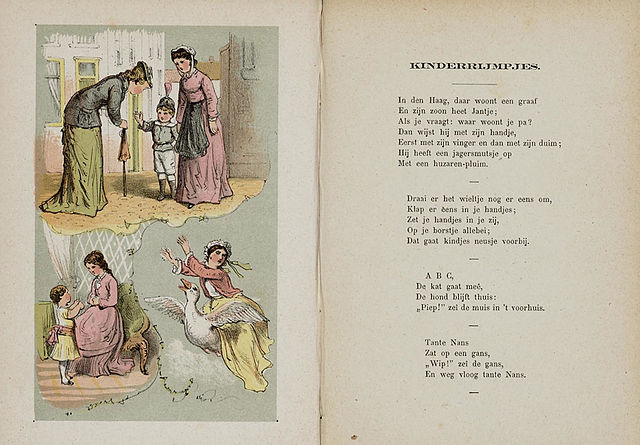
Children’s books can be a lot of fun! Image: Goeverneur/Wikimedia Commons/Public Domain
Importantly, then they’re relatively easy to find for free! Check out if there’s a little free library in your neighbourhood or if you’re meeting your Dutch partner’s parents, then chances are your new schoonmoeder will be eager to give you your partner’s old Jip en Janneke books — dankjewel!
9. Self-study with Dutch books from your local library
Just like they offer free language courses, Dutch libraries will also happily supply you with self-study books for learning Dutch!
The specifics vary slightly per library: some offer you a basically free (but limited) library card as a language learner, and others just let you visit the language learning centre to check out books.
10. Join a Dutch language learning Discord
A good way to stay motivated and make learning fun is by joining a Dutch language learning server on Discord.
Discord is an instant messaging system where you can join a particular group (server) that interests you and chat with like-minded people worldwide.
The Nederlands Leren/Learn Dutch server has over 5,000 members, many of whom are native speakers and are happy to talk to people learning their language. You may even find some new friends in real life!
11. Play games on Dutch servers
Language learning really can be all fun and games! Above, we saw that there are a bunch of chat servers you can join to learn Dutch.
Playing video games on a Dutch server can help you learn the language! Image: Depositphotos
These are great for becoming part of a language-learning community, but you could also join a Dutch gaming server if you’re interested in gaming. That way, when you play your favourite video games, you’ll hear and communicate with real Dutchies!
This way, the main focus isn’t on learning Dutch, but if you’re gaming with a group of people who chat and speak Dutch, you’ll likely learn it as a byproduct!
12. Switch the operating language on your computer or phone to Dutch
It almost seems too simple, but changing your language settings on your computer and phone is a good way to immerse yourself in the Dutch language!
You’ll learn some words that you’re used to seeing every day, and your brain will pick up Dutch easier as it recognises it more.
Most likely, you’re so used to your laptop or phone interface that you won’t even have to translate Dutch — you’ll know what it means just from its icons and placement.
Often, Dutchies will switch when you try to speak Dutch, simply because their English is way better than your Dutch. It’s well-meaning but doesn’t really help you in your language-learning journey.
The best piece of advice that’s worked for me is to either be persistent and gently remind them that you’re trying to learn — or simply pretend you don’t speak English. “O, sorry, ik spreek geen Engels — maar wij kunnen Nederlands praten?”
Start small! Practice your Dutch for free in a store — service encounters usually follow a predictable “script.” Image: Depositphotos
Pretending you don’t speak English can also be a mind trick for yourself to avoid speaking it at times when you could’ve used your Dutch.
We all know that saying something in English can be easier or faster, but the chances are that you do know how to say it in Dutch — so be patient with yourself and use the everyday Dutch phrases we know that you know! 😉
And if you forget a word, don’t worry! People are much more communicative and willing to understand you than you think.
14. Read the news in Dutch
News pieces communicate information in a clear and organised manner, so once you’ve graduated from children’s books, reading Dutch news could be the next step!
If you don’t feel quite confident enough to read the main news websites, you can start by browsing the NOS Jeugdjournaal, which is the public broadcaster’s online news for kids. It’s free, has interesting articles, and is written in easily understandable Dutch — triple win!
Other Dutch news sources, such as RTL Nieuws, NU.nl, and the regular NOS, are also free to read online. You can also pick up a free Metro newspaper the next time you’re at the station and read it while you commute!
15. Surround yourself with Dutchies
Even if you live in the Netherlands, there’s no guarantee that you’ll be immersed in the Dutch language. That’s why you should take an active role in finding Dutchies who’ll practice with you!
In my experience, making Dutch friends or finding a Dutch partner is a good way to practice your conversation skills — and aside from maybe buying a coffee, it’s completely free!
So text your friends in Dutch, chat with them during a borrel, let them have a laugh as you try to pronounce Dutch tongue twisters, and listen as they passionately discuss Dutch memes.
The more you immerse yourself in the Dutch language, the more you’ll learn — and maybe it’s easier to blunder in front of friends than in a class.
16. Participate in Dutch language cafés and exchanges
If, on the other hand, you got to know your Dutch friends and partner in English, and now it feels weird to speak Dutch together (we know the struggle), then consider finding a language buddy!
In many places in the Netherlands, you can attend a language café or exchange — completely free.
Volunteer groups often arrange language cafés, universities, or social clubs, so keep an eye out for what’s on offer in your city. You can also look for someone to do a language exchange with.
This way, your language buddy will teach you Dutch, and you can teach them whatever language you speak!
As you’ve seen, there are many ways to learn Dutch for free — 16 to be exact! All it requires is commitment, patience, and not being afraid to make mistakes.
Do you know of other ways to learn Dutch for free? Tell us in the comments below!
Ah, the verjaardagskring. If you’re not Dutch, you might be wondering, “Is that a ritual? A secret society? A medieval punishment technique?” Close.
The verjaardagskring (birthday circle) is a traditional Dutch birthday celebration where guests sit in a circle and engage in polite conversation.
There’s no music, no dancing, minimal food, and just enough alcohol to keep you from chewing your own arm off.
Here’s a short, useful guide to attending a verjaardagskring, and living to tell the tale.
Congratulate everyone. No, seriously. Everyone.
When you arrive, prepare for the Dutch greeting. You must kiss every person three times: left, right, left, and say “gefeliciteerd” (congratulations). Not just to the birthday person, no. But to every single guest in the room.
Yes, Jan’s great-aunt who hasn’t smiled since the Cold War? Gefeliciteerd. The neighbour you’ve never met before? Gefeliciteerd. The cat who’s minding her own business? Just to be sure, gefeliciteerd as well.
By the end, your voice will be hoarse and your social battery empty, but hey, you’ve bonded with strangers via forced cheer and uncomfortable proximity. You can do anything.
Just don’t come empty-handed, or you’ll be met with the same look Dutch cashiers give when you try to pay with a €100 note: pure suspicion mixed with a dash of judgement.
And remember, the Dutch are famously zuinig (that’s polite for “cheap”). So your modest gift won’t just be appreciated; it’ll be admired as an efficient, economical display of affection.
Bring a bottle of mid-range wine, and you might just be crowned guest of the year.
Choose your seat like your life depends on it
Now comes the tension-filled moment: the seating. Remember, this is a circle, and you’re here for the long haul. Once you sit, you stay. It’s like musical chairs without the music or the fun.
Scope out the room — avoid the uncle who smells like Gouda cheese and regret, and try to snag a seat near someone who has displayed at least two different facial expressions.
Prepare for small talk that’s smaller than small
Dutch people are charming, practical, and enthusiastic about discussing… the weather. Wind resistance? Fascinating. Bike lanes? Riveting. Rain trajectory? Groundbreaking.
Don’t be surprised if the conversation keeps circling back (pun intended) to the birthday person and that one time they fell into a canal at age 6. It’s wholesome. It’s cringe. It’s verjaardagskring.
Eat beforehand or perish
This is where many internationals tragically fail. You hear “birthday party” and think snacks, food, possibly a buffet? No. The Dutch are minimalists, so prepare for the eating experience to be… frugal.
Expect a single small slice of cake, a handful of peanuts, cheese cubes impaled with toothpicks, and a splash of prosecco if you’re lucky.
Eat before. Trust me. Otherwise, you’ll be nibbling on stale crackers, wondering if it’s socially acceptable to go raid the host’s fridge.
Know when to leave
There will be a moment of sweet, sweet silence. But don’t be fooled: this isn’t a rare occurrence. The verjaardagskring is riddled with small, awkward pauses.
They appear every ten minutes or so, like unwanted and unskippable pop-up ads for dental insurance. Everyone quietly sips their drink, stares at the cheese cubes, and waits, just waits, for someone to say something.
But when you feel that one long stretch of lingering silence, one where even the birthday person starts checking their phone, that’s your golden opportunity.
If you don’t seize it, someone will fill the void with a deep dive into wind patterns or parking regulations, and suddenly you’re trapped for another hour out of sheer politeness.
Stand up, say your goodbyes, kiss everyone three more times, and make your escape while you still can.
The verjaardagskring isn’t just a birthday party, it’s a social endurance challenge. But once you get used to it (or learn to tolerate it), you might even start to enjoy the quirky charm of it all.
Who needs loud music and fun anyway? Gefeliciteerd! You’ve made it.
Have you ever experienced the verjaardagskringat a Dutch birthday party? Tell us about your experience in the comments.
A Nijmegen woman is taking an abortion clinic to court for performing her abortion. The woman claims that the medical team failed to evaluate her mental state before conducting a procedure she was not sure about.
“This should never have happened,” she says.
Now, the 33-year-old is taking the Arnhem abortion clinic to the disciplinary court, reports AD.
“Everything happened in a daze”
The incident dates back to 2023.
The woman says she arrived at the clinic feeling overwhelmed, carrying a bag of her own vomit from the car ride.
After a consultation and an ultrasound, the woman was given medication for the abortion.
Within an hour, the fourteen-week fetus was removed.
“It all happened in a daze,” she told the Regional Disciplinary Board for Healthcare in Zwolle.
Before the procedure
How did the woman end up in the clinic? After facing severe abdominal pain, a friend suggested taking a pregnancy test.
To the woman’s shock, it was positive.
She contacted the father, who didn’t want to keep the pregnancy, and soon after called the abortion clinic.
Following a phone consultation, she was given an appointment five days later.
Once presented with the consent form, the Nijmegen local says she signed it without thinking.
She also didn’t check the boxes that confirmed she had read the form, but no one picked up on this.
Although she believed her pregnancy to be in its early stages, an ultrasound showed otherwise. The woman was already 14 weeks along.
She never got to see the ultrasound image, something that her lawyer argues should have happened.
What’s happening now?
The doctor, nurse, and clinic manager were all present at the disciplinary tribunal.
The clinic insisted they acted in good faith, noting that the woman had initiated contact herself and showed no signs of hesitation during the consultation.
Why would a doctor perform an abortion if there were any indication that the patient was unwilling?
The attending nurse acknowledged that the woman was looking straight ahead and seemed a bit sad.
However, according to the nurse speaking at the tribunal, “That’s not unusual. We see it often.”
Since the procedure, the woman has lost her job and now relies on social welfare. She attributes her current personal and financial struggles to the abortion.
The disciplinary board, a court that ensures professional ethics, is expected to deliver its ruling within six weeks.
What do you think of the woman’s decision to take them to court? Tell us in the comments.
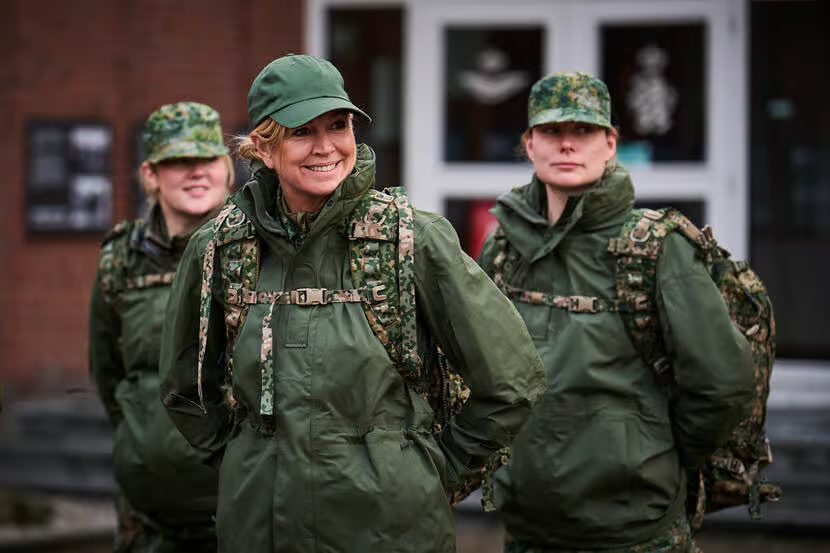
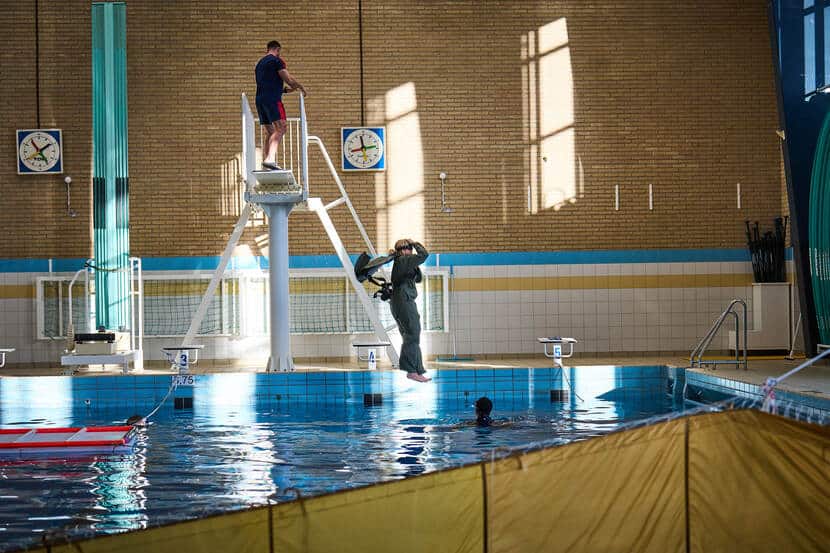
As a part-time soldier in the reserves, Maxima will undergo both theoretical and practical training, reports RTL.
And these aren’t just skills she will sit on. During national emergencies, reservists are deployed alongside professional soldiers. In more serious conflicts, they can also assume these soldiers’ responsibilities.
While it was officially announced earlier this week that she would be joining the reservist army, it doesn’t come as a shock.
The decision makes perfect sense in light of the recent royal support of the Dutch military.
Besides, she’s hardly the first Dutch sovereign to surprise us with her skills:
Máxima’s recruitment comes in close step with that of her daughter, Crown Princess Amalia, who has been promoted to corporal this past month, as announced by the RVD.
Ultimately, the Dutch royal support for the military aligns with a broader European emphasis on security and defence in 2026.
Threats from US President Donald Trump and continued incursions by President Putin of Russia have put many EU leaders on edge.
Military spending is going to be prioritised in the incoming Dutch coalition, and it’s clear they have Queen Máxima’s support!
Ministry hopeful for more recruits
This public show of royal involvement in the military is likely to increase enlistment from others as well.
Speaking with NOS, historian and royal family expert Coks Donders says that “with the images released of Máxima climbing and shooting, there are people who think: I want this too.”
When Princess Amalia first enrolled, the Defensity College saw its student numbers double, according to NOS.
Nothing like a little royal PR to boost recruitment!
What do you think of Máxima’s decision? Let us know in the comments!
Under the current plan by the D66, VVD, and CDA parties, state pension ages could rise to as high as 72 years old. Let’s get into it.
Due to higher life expectancy among people currently under 60, the state pension age could increase if the new Dutch coalition gets what they want, NOS reports.
And if they do get the green light? Starting in 2033, the retirement age will begin increasing in line with the expectation that we young folks are going to live longer.
For youngsters already facing astronomical housing prices, climate catastrophes, and AI world domination, we can now add working into our 70s to the list.
Yippee.
So, what’s my estimated retirement age?
According to the coalition’s plans, the AOW retirement ages (starting from those born in 1979), would look like this:
Birthdate
New AOW plan
July 1979 – March 1982
69 years, 3 months
April 1982 – December 1983
69 years, 9 months
January 1984 – September 1985
70 years
October 1985 – June 1988
70 years, 3 months
July 1988 – March 1990
70 years, 6 months
April 1990 – December 1992
70 years, 9 months
January 1993 – September 1995
71
October 1995 – June 1997
71 years, 3 months
July 1997 – December 1998
71 years, 6 months
If you’re born after 1998, our condolences. Who knows how long you could be working.
For a complete list of these estimations and an included comparison with the current AOW retirement ages, see this article by NOS.
Why are they doing this?
According to the coalition, pension-age requirements should more accurately reflect the one-to-one relationship between life expectancy and retirement age.
Currently, life expectancy is rising faster than the retirement age.
Ultimately, these increases could enable the incoming cabinet to save €2.7 billion per year, according to NOS.
Of course, it’s not for certain: the coalition will have to get its plan through Dutch parliament first.
And not everyone is a fan of the proposal. Unions have responded negatively, reports NOS, arguing that those in more physically or mentally demanding jobs will be placed in an unfair and potentially harmful position.
They fear that people will be forced to work beyond their limits or capabilities to secure their pensions.
Working three extra years in a heavy construction job, for instance, is a dangerous way for a senior citizen to be spending their time.
Let’s just say it’s no surprise Gen Z is economically nihilistic.
What do you think of the coalition plans? Let us know in the comments!
The north is on high alert this morning, with the RIVM releasing a code red weather warning for deadly “black ice”, which has already paralysed roads and public transport.
Early this morning, residents of Groningen, Friesland, and Drenthe were urged to stay indoors as extreme icy conditions affected the region.
When it rains in negative temperatures, the droplets immediately freeze on the ground and continue to freeze, turning highways, pavements, and fietspads into sheets of black ice. Even gritting can’t do much here.
According to NOS, the result is a rare code red weather warning, due to dangerous road accidents and public transport being brought to a complete halt.
No trains or buses
All train and bus platforms up north are now deserted.
There will be no trains to or from the provinces of Drenthe, Groningen, and Friesland until 11 AM today.
The NS trains that depart from the Randstad and Gelderland for these provinces will turn around in Zwolle.
Bus services follow suit, as Qbuzz announced last night that there will be no buses in Drenthe, Groningen, and Friesland until 10:30 AM.
Road accidents on the rise
The danger of black ice has led to many accidents on the A6 and A28. Vehicles have skidded off the road, some ending up in ditches or worse.
The A28 towards Groningen was closed between Vries and Eelde at around 7 AM.
Bianca Damink of the ANWB’s traffic department told NOS that extremely slippery conditions are making it difficult for emergency services to reach accident sites.
The number of traffic accidents reinforces the advice: stay home.
Essential services are affected too
The slippery conditions have rippled through daily life.
Hospitals cancelled morning appointments and surgeries to prevent patients from getting into an accident on the way to the hospital.
Meanwhile, the regional waste management company Omrin temporarily halted its operations after several of its garbage trucks were involved in road accidents.
With the last code red dating back to 2023, this is a rare and serious warning. We urge all our readers to stay home and stay safe — black ice is simply not a risk worth taking.
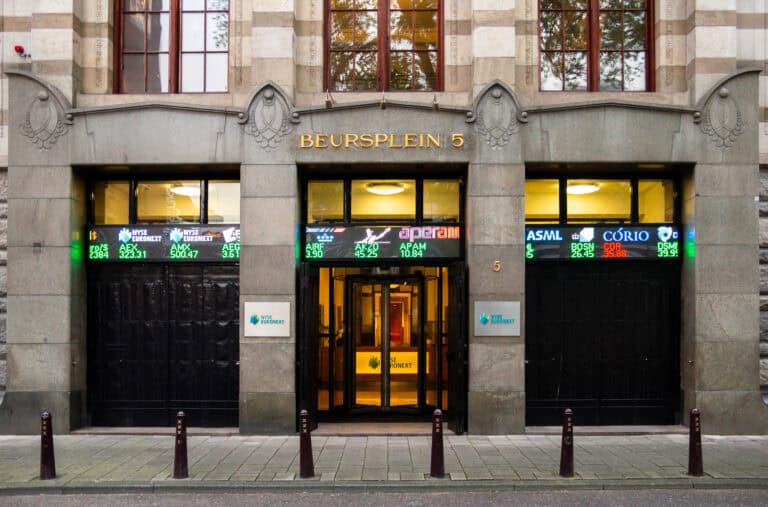
Formerly known as Amsterdam’s Stock Exchange, Euronext Amsterdam is doing splendidly — now, they want to make investing locally even easier.
According to AD, companies are showing growing interest in IPO’s, and share prices are generally rising.
In other words, 2026 shows signs of being a great year for Euronext, which also welcomed several large companies in 2025.
So, if everything is going so swimmingly, why are they looking to make changes?
Euronext wants local, private investment
While this all sounds like good news, Euronext CEO René van Vlerken argues that these benefits rarely trickle back to the wider population (since the main investors at Euronext are companies, not individuals).
Rather than investing here, Dutch people are putting their money in the American stock market.
Van Vlerken argues that European regulation (and Dutch regulation specifically) makes private investment too difficult.
Speaking with AD, he explained, “You have to pass a sort of exam before you can invest, and it’s a lot of paperwork. Private investors are practically demotivated.”
The investment hub is therefore looking to keep Dutch money in the Netherlands by making it simpler and more appealing to invest locally, rather than in the US.
Why do Dutchies cling to their cash?
It’s a bit surprising that the Dutch are so careful about investing, given how low interest rates currently are.
If anything, there is plenty of motivation to get your money out of the bank (since it’s definitely not growing there).
Younger investors, for instance, are even turning to crypto, reports AD. So, clearly, there is a desire to invest.
According to van Vlerken, though, while companies are happily breaking into the stock exchange, private investors are not too keen. He says this is also due to a lack of awareness.
“We need to convince investors that there are European gems worth investing in and ensure we identify and continue to support the new ASMLs,” he said to AD.
What’s the solution?
To hear van Vlerken tell it, the plan involves a whole lot of convincing.
Not only should banks be discouraged from making private investment more difficult, but individuals should also be encouraged to support European companies.
He also says pension funds need to be drawn in. Rather than investing in American tech giants, they could be putting their money into Euronext, says van Vlerken.
Some argue that the relative ease of investing in the US, with apps and online brokers, is incomparable to the hoops a Dutch individual must jump through to invest in Euronext-listed companies.
And, says van Vlerken, education is a key factor: “We advocate for including investing in secondary school curricula.”
Introducing your teenager’s new favourite class: Money Moves 101.
What do you think of Euronext’s ambitions? Let us know in the comments!