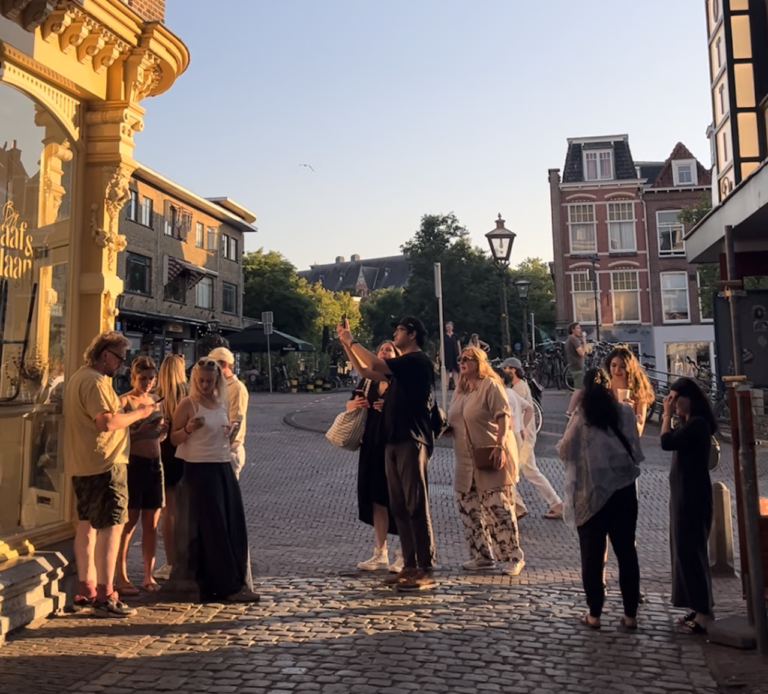
Two women who met as adopted teenagers in the Netherlands now discover, nearly 30 years later, that they’re actually biological sisters.
Meena Geltink (43) and Minal Tijssen (44) were both born in India and abandoned at an orphanage as children, before being adopted separately by Dutch families. Despite living a short drive apart, neither was aware they had a sister.
Their story went viral earlier this week after news agency Reuters filmed their emotional reunion, and it’s the sort of feel-good story that really warms the heart.
Two adopted kids with an instant connection
The pair first crossed paths as teenagers in 1996, at a gathering for adopted children. Though they’d never met each other before, the connection was immediate.
Even close friends were shocked by how alike the pair seemed. The two even jokingly called each other “sis” in their correspondence, long before they had any real reason to.
“It’s like looking in a mirror,” Geltink tells Dutch broadcaster NOS.
Unfortunately, life then dragged the two in different directions. They each found partners, became mothers, and lost touch for 15 years. In that time, Tijssen even moved to France.
A DNA test changed everything
The truth surfaced when a small notification on Tijssen’s mobile popped up: Meena, sister.
In April of this year, Tijssen had taken a DNA test through the popular service MyHeritage, and her results now yielded a rare 100% match.
“At first, I didn’t even realise it was the Meena I knew,” she confesses to NOS. Once the shock wore off, she immediately contacted her newfound sister.
Geltink, meanwhile, had been searching MyHeritage’s database for biological relatives since 2017. Finally, she’d found her answer.
“I finally feel complete”
This week, the sisters finally reunited in Den Bosch; their first meeting in 15 years. According to Reuters, there were tears, hugs, laughter — and even their first selfie together.
Both also spoke of a loneliness that had followed them through otherwise happy childhoods.
“For years, I felt a hole in my heart,” Geltink tells Reuters. But after officially meeting her sister, “It’s like a missing puzzle piece has been found.”
Tijssen echoed the sentiment to NOS: “I have always had people around me who loved me and took good care of me, but a part of me has always felt lonely. And now this happened. Deep down, I felt that I would no longer be alone.”
This story, at least, has a happy ending.
Geltink notes that she finally feels “complete”; the sisters now spend hours a day talking and messaging.
Do you have a heartwarming family story to share? We’d love to hear it in the comments.
If there’s one thing I don’t want someone lecturing me about, it’s which stocks to invest in. However, what I do want to know is someone’s experience with investing in stocks — so here’s mine.
I decided to try out investing with the online investment broker, Scalable Capital. Let me tell you how I found it.
Firstly, what’s Scalable Capital?
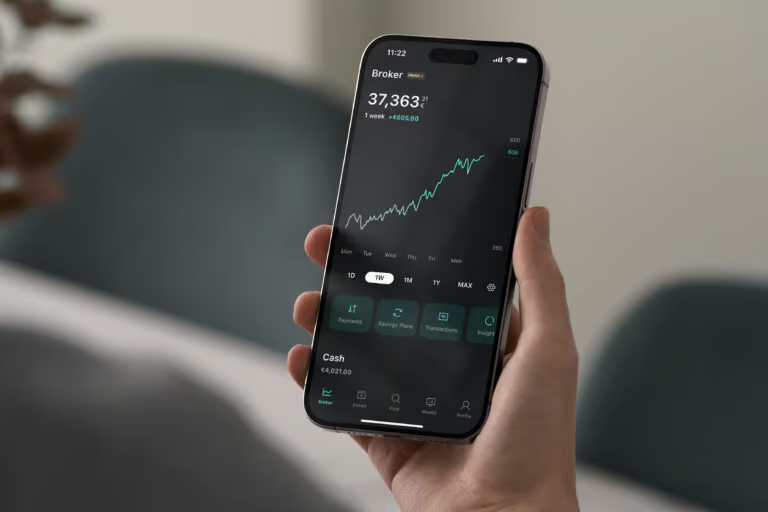
Scalable Capital is a website and app that allows you to invest in a number of different ways. You can choose from investing in stocks, ETFs, cryptocurrencies, and funds — all from one account.
However, there’s much more to it than that. Scalable Capital offers its users multiple smart tools to help them make better financial decisions — but more on these below.
Note: It goes without saying that there are risks associated with investing.
This post might have affiliate links that help us write the articles you love, at no extra cost to you. Read our statement.
Why did I choose Scalable Capital?
There were four main reasons why I decided to try out investing in stocks with Scalable Capital:
I’m a ZZP’er, so I need to be smart about savings
Firstly, I’m a freelance editor, which means I need to be smart about my money.
I don’t have a pension plan set up for me, so making sure my savings continue to grow is very important.
One way to try to prepare for a better financial future is by looking into investing — so I needed to find a platform that would enable me to do this.
As a freelancer, I have to be smart about my savings; Scalable Capital can help me with that. Image: Freepik
Scalable Capital’s affordable packages, easy-to-use app, and multiple investment options will allow me to try my hand at investing and see what it can do for my savings.
Scalable Capital is trustworthy, and I need that
Another big selling point of Scalable Capital is that it has been tried, tested, and reviewed.
I’m not going to start investing using a platform that I don’t trust. A quick Google search showed me that Scalable Capital has a 4-star rating and has convinced over 600,000 users since it launched in 2014.
Scalable Capital also has a German custodian bank (Baader Bank), meaning my money is protected under the European Deposit Guarantee Scheme.
This means that should anything happen to the bank my money is held with, my deposit will be guaranteed up to €100,000.
Note: The Deposit Guarantee Scheme only applies to money deposited with Scalable Capital, not money invested with Scalable Capital.
I want to fight back against inflation
If there’s one thing I worry about when it comes to my savings, it’s inflation.
Unless I find a way to allow my savings to continue to grow and gain value, inflation is going to gradually decrease the value of the money I’ve worked so hard to save.
Not only is Scalable Capital a platform that will enable me to invest my money and give it the chance to grow, but they are also currently offering 2% interest on the money you deposit with them.
With my investments, my cash is better protected against rising inflation. Image: Magnific
I can choose to invest in ETFs if I want
What I also like about Scalable Capital is that once I have mastered the art of investing in stocks, I’m not limited to just that. I can also choose to invest in Exchange Traded Funds (ETFs), for example, all from the same account.
With no need to hop from one service to another, I can use my one account to invest as little as €1 in the over 2000 ETFs that are available on Scalable Capital.
While Scalable Capital offers me the room to try out investing, it also allows me room to go further once I get comfortable.
Here’s how it went
So, how did it work once I decided to invest with Scalable Capital? Let’s talk about it.
The setup: nice and easy
The first thing I noticed with Scalable Capital was that the app is very user-friendly, making iteasy for me to set up an account.
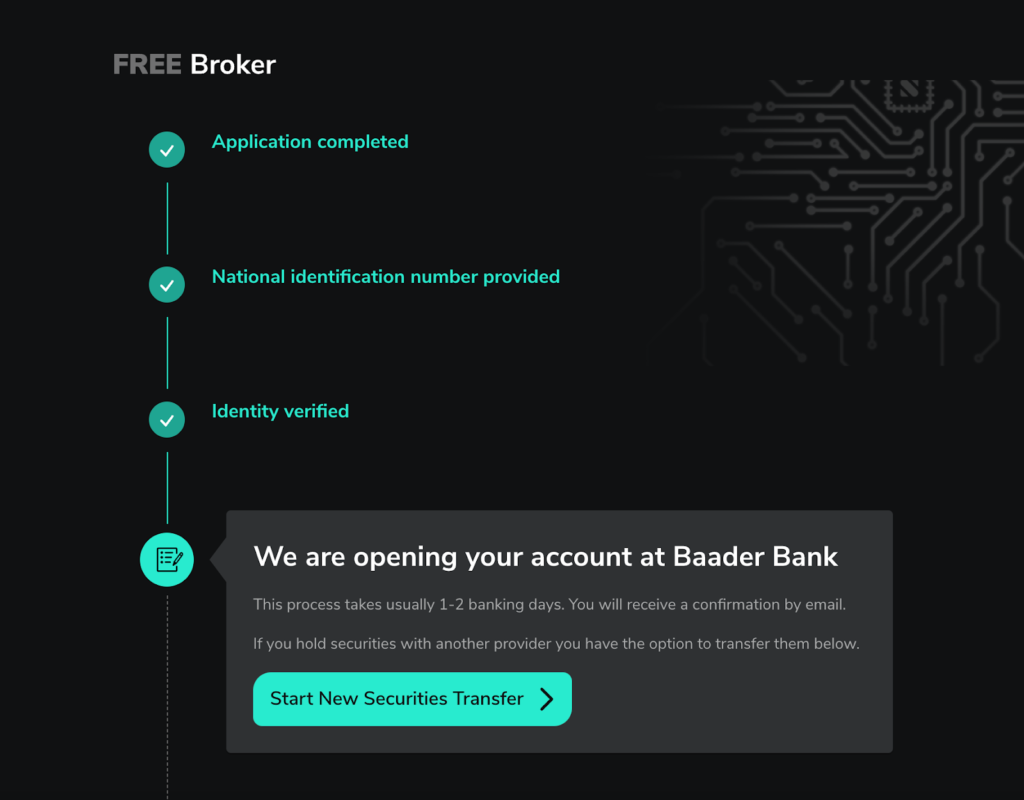
There were three steps I had to complete: Select a package, give my personal details, and confirm my identity.
I input my personal information, which included details such as my date of birth, address, and BSN.
Setting up an account with Scalable Capital was fairly straightforward. Image: Scalable Capital
Scalable Capital then made sure to confirm my identity. I was asked to take two pictures of my passport (one straight on, one tilted), send a selfie, and send a video of myself following prompts.
While this may seem like a lot of effort, I appreciated it; at least I know that they take their customers’ security very seriously.
I then waited for my identity to be confirmed by Scalable Capital before I could proceed any further, which took about 2 hours. Once that was done, my account was ready to go within 24 hours.
I chose a broker
I could choose between two different plans: Free Broker and Prime+ Broker. Let’s quickly run through what these different packages offer:
Free Broker — This is the best option if you’re just dipping your toes into the world of investing. You pay zero subscription fees and instead pay €0.99 per trade you make (investments made through savings plans are commission-free). You also receive 2.50% interest on up to €50,000 deposited.
PRIME+ Broker — At just €4.99 per month, you can gain access to all tools and analytics, have a flat trading fee per month, and enjoy interest rates on your deposit. You receive 2.50% interest on up to €500,000 deposited.
The main difference between these packages is the number of smart tools and benefits you can make use of when investing.
For example, once you pay for Scalable Capital’s PRIME+ Broker, you can receive helpful portfolio analysis, set price alarms so you know when it’s best to invest and gain access to more portfolio groups.
I chose to begin with Scalable Capital’s FREE Broker. This way, I could first explore what I wanted to do with the app and see what tools I needed access to.
However, if you opt for Scalable Capital’s PRIME+ Broker, you get a trading flat rate and full access to the portfolio analysis tool Insights, powered by BlackRock.
Scalable’s PRIME+ plan offers you in-depth portfolio insights, which I found super helpful as a beginner. Image: Magnific
I bought a stock
Once I had my identity confirmed and my Free Broker subscription, it was time for me to bite the bullet and try out investing in stocks — and with Scalable Capital, I have over 8,000 stocks available to choose from.
To start, I decided to deposit €2,499 in my Scalable Capital account, which, together with the initial €1 deposit (for verification purposes), gives me €2,500 to invest.
I then chose to invest in ASML — but you should make your own educated decision! This is just for illustrative purposes.
The cost of one stock in ASML was €861 at the time of investing. However, I also had the choice to include a STOP or LIMIT order.
By placing a LIMIT order, I am essentially making sure that should the price of the stock suddenly jump up from €861 to €870 while I’m trying to buy it, the sale won’t go through. This prevents me from accidentally paying more than I want for the stock.
With a STOP order, I could ensure that I buy the stock once it reaches, say, €900. Should the stock price increase to this number, I will automatically buy it.
With FREE Broker, I pay a transaction cost of €0.99 per order on stocks. I can see these costs displayed in the app before confirming the order.
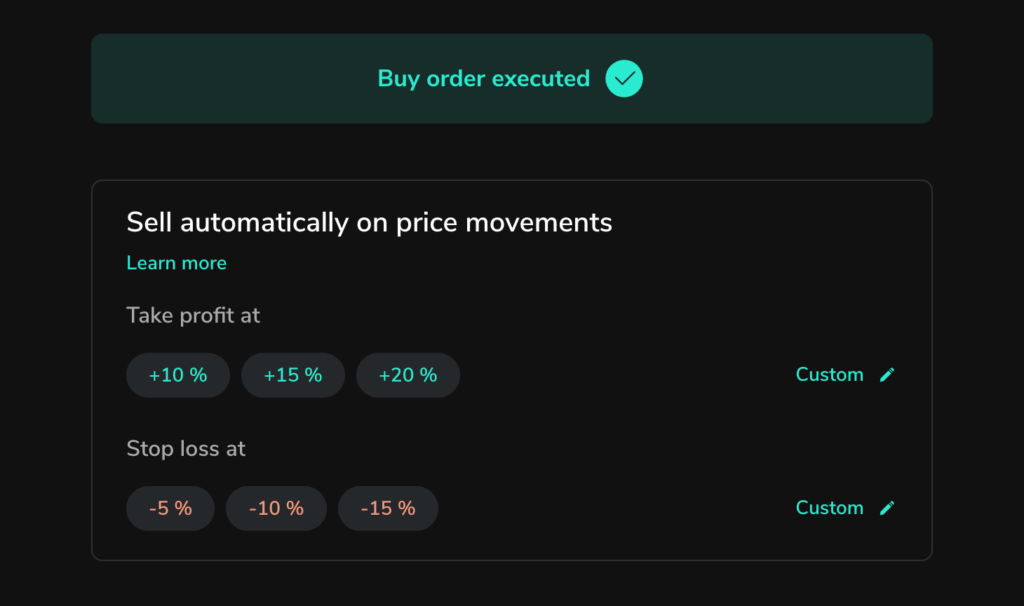
What I found super helpful about the buying and selling process was that I could actually set limits at which I would like to sell the stock.
For example, I could choose to sell the stock if I was making a loss of 15%. Similarly, I could choose to sell the stock if it went above a certain percentage of profit.
I had much more control over my profits and losses. Image: Scalable Capital
Note: With Scalable Capital, it is only possible to make fractional stock purchases using their savings plans.
I can start a savings plan
Speaking of savings plans, these were a huge selling point for me.
Scalable Capital offers savings plans to all its users. With these, you can set up an automated investment plan.
For example, you may decide that at the end of each month, you want to invest €50 in stocks. There are several reasons why I like this tool:
It’s automated; I don’t have to do anything (yay!)
I don’t pay any order costs
I can invest as little as €1
I can buy fractional stocks
You enter the investment market at multiple moments (distributing your entry risk)
One question that always haunts me about investing in stocks is, “when is the right moment?” With savings plans, you choose not one single moment, but a long series of moments to enter the market. This is called dollar-cost averaging.
Time in the market beats timing the market, so this allows you to start today and reap the benefits of compound interest.
For example: Say each month you invest €100 — no matter whether the stock market goes up or down — because you believe that, long term, the market will go up. If it goes down momentarily, this same €100 will allow you to buy more units, bringing your average purchase price down.
Look at that, she’s stock market smart. 💁
I watched my investments grow
Once I set myself up and have chosen what I want to invest in, it’s time for me to sit back and let my money do its thing.
Using features such as Scalable Capital’s savings plans, I can take a hands-off approach while also knowing that I will stay informed by using the app’s alerts and automations.
That being said, I like to keep an eagle’s eye on my money, which is why I enjoy the app’s simple and clean look.
Ready to try investing for yourself? Scalable Capital can guide you on your journey; just sign up and get started!
Have you invested with Scalable Capital before? Tell us about your experience in the comments below!
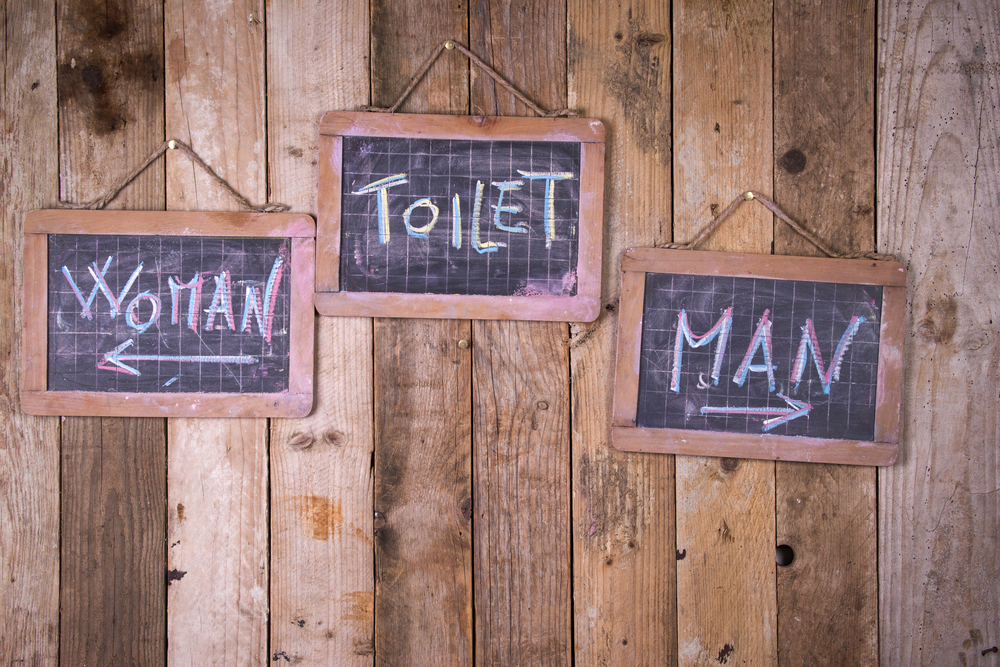
It’s the moment we all dread in the Netherlands: having to use the loo when you’re out and about. There’s just one problem: where the heck are the public toilets around here? And why do you have to pay?
Picture this: you’re relaxing with your friends in the city, wandering from shop to shop… when suddenly you feel it. Your friends notice the flicker of fear in your eyes: you need the loo.
In any other country, this would be no cause for concern; from Ireland to New Zealand, public toilets are commonplace, free, and relatively clean (most of the time).
But in the Netherlands, things are a little different. If you need to go while you’re out of the house, you’re going to have to part with one of three things: your money, your dignity, or your comfort. In some cases, you’ll probably have to part with them all.
Why are Dutch toilets so expensive?
Anyone who has lived here for a while can tell you that Dutch toilets are not free of charge. Fees range from 50 cents to a whole €1.10, depending on the city and location.
For the price we’re paying, we’d expect the toilets in the Netherlands to look something like this! Image: DepositPhotos.com
You might be wondering what all this money goes towards. Well, keep wondering. We have geen idee (no idea). Perhaps it’s just another Dutch quirk; lord knows they have a strange toilet culture in this country.
Presumably, some of the money pays the wages of the omnipresent toiletjuffrouw — the lady who takes your money when you’re entering the toilet (good for her, though. Respect the hustle).
Other than that, nobody seems to have a good answer as to why train stations, cafés, and restaurants all charge you for using their facilities.
Sneaking into café toilets is an option
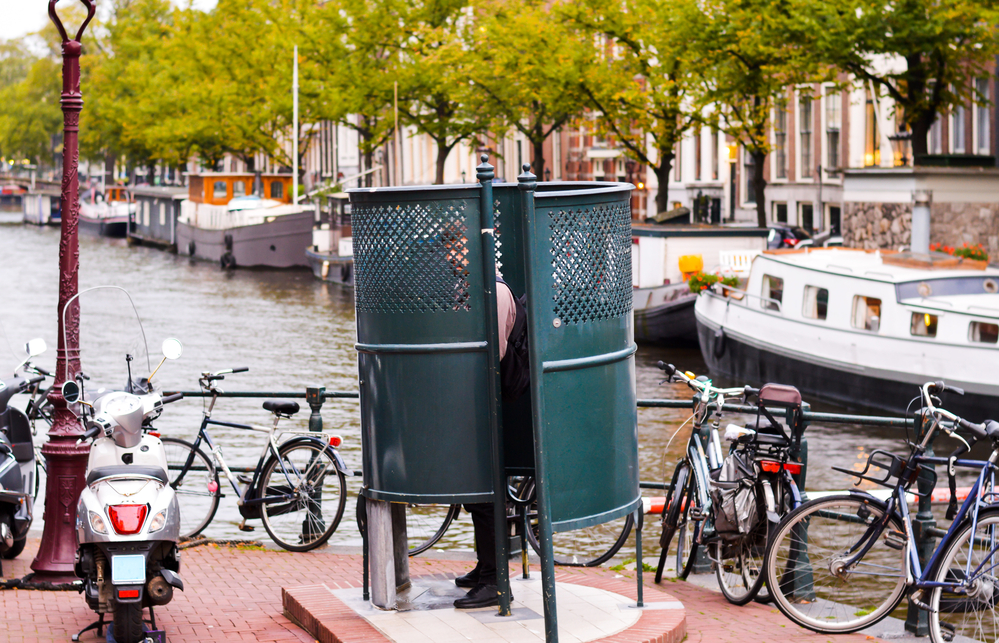
While in some cities, men can shamelessly use the urinals that are casually placed in the middle of the street (yup), women’s lives in the Netherlands are a little harder.
Officially, most cafés will ask you for 50 cents if you use their toilets without buying something. However, you can decide to risk your dignity and sneak past the wait staff to the toilet in the back.
Legally, they can’t make you pay, though it is considered pretty rude. But hey, the Dutch are known for their directness, so there’s a limit to how offended they can get.
And nonetheless, in an emergency when you have no change in your pockets, it’s an option — if not the best option.
Toilets are actually pretty important
For most of us, the worst-case scenario is being uncomfortable for an hour or so until we get home to enjoy the luxury of a free, clean, private toilet.
As a result, some people don’t even leave their houses, as Het Parool reported. How awful!
Finding a public toilet can be a nightmare in the Netherlands! Image: DepositPhotos.com
There’s no denying that the public toilet situation in the Netherlands is, well, 💩. But luckily, if you’re out, about, and desperate, there are some apps out there that help you find public toilets, such as HogeNood!
That said, recent research by the Dutch Stomach Liver Intestine Foundation has concluded that West Maas en Waal in Gelderland is the best municipality for peeing in public — so take that into account when planning your next day trip.
It won’t fix the lack of toilet paper or the horrifying inspection shelf, but at least you’ll be able to find a place to do your business. 😅
Have you had any horrifying experiences with public toilets in the Netherlands? Let us know in the comments below!
One person has died, and multiple others have been injured during an explosion at the Port of Rotterdam.
According to Rijnmond, the explosion occurred at a storage tank at around noon, at the Gunvor Energy site on the Moezelweg.
Emergency services responded to the blast, and a trauma helicopter was also deployed.
Crew working on pipelines
A spokesperson has confirmed to Rijnmond that a crew were working on the pipelines at Gunvor when something may have gone wrong. As yet, the cause of the blast is still unknown.
However, there were other incidents in the port this morning, including a power outage in Botlek, and a power surge that led to a fire at a high-voltage substation on the Maasvlakte.
Moving to a new country is often something to be celebrated. However, for new international students arriving in the Netherlands, this is often a stressful time.
International students moving to the Netherlands often find that it’s not a hangover that causes them to miss their university commitments — but homelessness.
Instead of being greeted with the idyllic image of eating cheese whilst riding a bike and wearing clogs, many are faced with an unfair, confusing, and often discriminatory housing market. 🏡
Student housing crisis: The problems
One of the major issues seems to be a lack of affordable housing for all students, not just the internationals. Often, rooms are subpar and overpriced, but the lack of a viable alternative means that students have little choice but to take what they can.
The Dutch student housing crisis is only predicted to get worse with time… Image: Unsplash
Just to illustrate how bad the situation is, in 2025, Utrecht set up a Glamping Spot for new students because there wasn’t enough room for them (involuntary camping adventure?). 🏕
Universities in the Netherlands are not responsible for finding their students’ accommodation. New students are left to face the daunting task of finding a room alone.
On top of all this, new students may only find out that they actually have a seat at university as little as a month before they are due to start.
Facebook and student housing: it’s problematic 💸
To begin, Facebook groups are often plagued by scammers waiting to take advantage of desperate people. They offer a room if a deposit is sent straight away, but of course, no such room exists.
Some people have been scammed out of hundreds of euros before they’ve even arrived in the country.
Even if you go through a housing agency, there are risks.
There are plenty of stories circulating of people who have paid huge agency fees to these companies only to be left with no house and considerably less money.
Even reputable agencies will charge vast sums in agency fees, contract fees, and basically, any fee that they can justify.
Utrecht student and vlogger Levi Hildebrand read this article and set out to give you 5 reasons why it’s a good idea to house an international student!
The Facebook groups paint a grim picture of exactly how bad things are. For every room posted, there are at least 50 posts from concerned prospective students pleading for somewhere to stay.
“Dutch girls only” 🙅♀️
This is when the internationals are faced with the cherry on top of all of their problems. The dreaded words at the top of nearly every post: “Dutch girls only”.
The arguments for girls wanting an all-female house are understandable, and some might say that it’s reasonable to want to live in an all-Dutch house in your own country.
Unfortunately, what Dutch students want is in contradiction with what Dutch universities want.
There’s a real drive from Dutch universities to bring in more internationals, but the housing market, as it stands, cannot cope with this influx.
As a result, there are people who have missed their first lectures, people sleeping in tents, couch-surfing, and dropping out of university.
This is clearly not the best welcome and can lead to a feeling of a divide between Dutch and international students, which is far from ideal…
Student housing: Is there a solution?
For now, a solution to the student housing crisis seems to be far away in the distant and foggy future. However, over the past few years, students have started coming together across the Netherlands to try and ensure a fairer housing system.
How do you feel about the student housing crisis? Tell us in the comments below!
Choosing between a prepaid SIM and a SIM-only plan in the Netherlands comes down to one question: how much commitment do you want?
If you’ve just landed in the Netherlands, getting a SIM-only plan often involves supplying your provider with a whole host of things you don’t have yet, from your BSN to your Dutch bank account information and more.
This guide breaks down both options, how much they cost, and which one actually fits your situation as a newcomer.
Dutch mobile requirements come with BSN and banking hurdles
Very often, the best Dutch mobile deals expect you to already be connected to the services that established residents use.
For example, most SIM-only subscriptions are paid by automatische incasso (automatic direct debit), which usually means you need a Dutch bank account.
In addition to this, many will also ask for your BSN (citizen service number), which is an official identifier that all legal residents are required to have in the Netherlands.
Fair warning, there’s a lot to set up when you first move to the Netherlands! Image: Magnific
However, you aren’t simply granted a BSN upon arrival. You only receive one when you register at your local gemeente (municipality), and the waiting time can take days or even weeks.
Just landed and don’t fancy explaining to a Dutch shop assistant that no, you don’t have a BSN yet? Simyo’s prepaid starter pack is €5 and comes with €7.50 of credit, with no BSN required.
Order your SIM online and have it shipped straight to you, or pick an eSIM and be connected in minutes.
With prepaid SIMs, you just buy the SIM card and load money onto it. This credit will then cover all data, calls, and texts until it runs out (or until 30 days are up).
There’s no contract and no monthly bill; you just top up when you want and stop whenever you like. In the Netherlands, it’s the one mobile option you can set up without a BSN, a Dutch bank account, or even a local address.
How do prepaid SIMs work in the Netherlands?
You buy a SIM card, load it with credit, and use that credit for data, calls, and texts. When your credit runs low, you top up again, either online or via a mobile app.
Affordable, accessible, and commitment-free, prepaid SIMs are very popular with international students. Image: Magnific
Prepaid SIMs are also extremely accessible; you can pick one up from almost anywhere, including:
Airports (ideal for tourists or new internationals),
Major supermarkets like Albert Heijn and Jumbo,
Drugstores such as Kruidvat and HEMA,
Kiosks like Primera, and
Telecommunications shops run by providers (such as KPN, Vodafone, Odido, etc).
However, let op: SIMs at Schiphol tend to cost more than the identical product in town. If you can wait until you reach a general shop, supermarket, or telecommunications outlet, do.
How much do prepaid SIMs cost?
Prepaid SIMs usually work out pricier than a subscription — especially if you’re a heavy data user who needs to top up your prepaid credit regularly.
The silver lining is that upfront costs and requirements are typically low: you pay zero activation fees, there are no hidden administrative charges, and you avoid credit checks.
Here’s what to know about Dutch SIM-only plans
A SIM-only plan is a monthly mobile subscription, albeit without a phone attached. You pay a fixed monthly fee for a set bundle of data, minutes, and messages.
The catch is that it works like any Dutch contract, so it generally requires a Dutch bank account, often a BSN, and a local address.
How do SIM-only plans work in the Netherlands?
You choose a bundle, pay the same amount each month, and the provider takes it automatically by automatische incasso (direct debit). To pay via direct debit, you’ll generally need a Dutch bank account.
One to two-year SIM-only plans are the norm, making them ideal if you’re setting down roots in the Netherlands. Image: Magnific
The SIM usually arrives by post, so you’ll need a Dutch address too. In addition to this, many providers may also ask for your BSN when you sign up.
Contracts typically come in two forms:
Some are maandelijks opzegbaar (cancellable monthly), giving you rolling flexibility, albeit at a slightly higher rate.
Most will tie you in for one or two years in exchange for a slightly lower rate.
Not all providers offer monthly cancellable contracts, so it’s best to read the fine print before you purchase your SIM-only plan.
How much do SIM-only plans cost?
Budget providers generally offer plans for around €5 a month, and costs may even dip lower during promotional periods.
For that, you typically get a healthy data allowance plus unlimited domestic calls and texts. As a rule, the longer the contract, the cheaper the monthly rate.
With Simyo, you build your own plan: choose your data and call bundles, then adjust them up or down each month for free. Unlimited calling is €7 a month, and you can cancel monthly if a two-year contract feels a touch too committed.
Already on Simyo prepaid and want to switch to SIM-only? Dat kan! You keep your number, your SIM, and — best of all — the switch is 100% gratis. Learn more.
Prepaid vs. SIM-only in the Netherlands: a full breakdown
All Dutch prepaid and SIM-only plans run on the same three networks: KPN, Vodafone, and Odido.
Irrespective of whether you’re eyeing a €40 unlimited data SIM-only subscription or a €6 prepaid plan, they may well run on the same network.
With only three major network providers (KPN, Odido, and Vodafone), many budget and premium providers share a network. Image: Magnific
However, the actual differences lie in the cost structure, commitment, and amount of Dutch paperwork you need to get started.
Here’s what to know:
Feature
Prepaid
SIM-only
BSN-required
No
Often, yes
Dutch bank account required
No
Usually, yes
Dutch address required
No
Usually, yes
Contract
None (or monthly rolling)
Depends on provider (usually a minimum of 1 year)
Flexibility
Cancel anytime
Tied to contract terms
Best for
Short stays, new arrivals
Settled residents, long stays
Needless to say, neither is objectively “better”; they’re built for different stages in your expat journey and different flexibility requirements.
So, which option is best for newcomers?
The right choice depends entirely on how long you’re staying and what paperwork you’ve sorted.
Let’s dive into the three most common scenarios and determine which SIM plan best suits your situation.
If you’re staying short-term (under 3–6 months)
Prepaid SIMs are the clear winner here.
If you’re here for fewer than three months, you may not even need to register with your gemeente (local municipality) at all. Without this registration, you won’t have access to a BSN or a local Dutch bank account, which rules out most SIM-only plans.
If you’re only here a few weeks and don’t need a Dutch number, consider opting for a travel eSIM.
The “best” SIM plan for you will likely depend on the duration you’re staying and your budget. Image: Magnific
If you’re staying longer-term
Once you’ve got a BSN, a Dutch bank account, and a fixed address, SIM-only plans are usually the cheaper option.
If you don’t yet have a BSN (or Dutch bank account)
Prepaid SIMs are generally the safest bet here, because you don’t need a BSN, a bank account, or a Dutch address to purchase one.
Do you want to swap over to a SIM-only plan at a later date? The sequence that works for most internationals is to get a prepaid SIM on arrival, book your gemeente registration appointment (these can take weeks in bigger cities, so do it early), collect your BSN, then open a bank account and get your SIM-only plan sorted.
Most providers will let you keep your existing Dutch number when you swap from prepaid to SIM-only, so don’t fuss about number portability.
Which option did you choose when you first arrived in the Netherlands: prepaid or SIM-only? Share your thoughts and experiences in the comments below.
We’ve previously discussed what happens if you lose your job in the Netherlands, but what about the unemployment benefit front?
We all need cash when we lose our jobs; it’s a stressful time. The good news is that you can apply for an unemployment benefit in the Netherlands, AKA the WW-uitkering (sponsored by the good bureaucrats at the Uitvoeringsinstituut Werknemersverzekeringen (UWV) — try saying that 10 times fast!)
Don’t sweat it if you’re an international, you aren’t going to be left behind either. Read on to learn all there is to know about WW-uitkering. But first, are you eligible? Let’s see. 👇
✅ Am I eligible to claim unemployment benefits in the Netherlands?
Internationals can apply!! As long as they are legal residents of the Netherlands (😉).
You must have worked at least 26 weeks out of the last 36 weeks before you’ve lost your job — then you’re eligible for basic benefits covering three months of salary (de wekeneis, and not the full paycheck — more on that later on).
You can apply for unemployment benefits at uwv.nl. You will need a DigiD for the online application. If you don’t have one, you can send your application by post. To do this, you must personally register as a jobseeker at one of UWV offices.
If you lose more than five hours of your workweek, without access to financial compensation, you can apply for WW-uitkering. This is also the case if you only work ten hours a week.
External factors must be the reasons for losing your job. So, you can’t apply for unemployment benefits if you’ve been fired for personal misbehaviour.
You also can’t quit your job just to collect unemployment benefits.
You can apply only if you are immediately available for another paid employment (so no taking a six months trip to Thailand first).
💶 How much money is the unemployment benefit in the Netherlands?
For the first two months, your benefit is 75% of your WW-maandloon — your average monthly wage from the year before you lost your job. After that, it drops to 70%.
There’s a ceiling, though. The UWV caps the calculation at a maximum daily wage of €309,91 (2026). Earn more than that, and your benefit is worked out using the cap, not your actual salary — so high earners lose proportionally more.
Want an idea of your own figure? The UWV has a Rekenhulp (calculation aid) that gives you a rough bruto (gross) estimate. It can’t tell you your net amount, since that depends on how much tax gets withheld in your situation.
Currently unemployed? No need to stress: you can apply for unemployment benefits! Image: DepositPhotos.com
⏱ How long can you receive the unemployment benefit?
Here’s the short version: at least three months, and at most 24 months. Where you land in between depends on how long you’ve worked.
Your work history is measured two ways — the wekeneis (weeks requirement) and the jareneis (years requirement). Together, they decide your benefit’s length.
The basic three months
If you meet the wekeneis — you worked at least 26 of the 36 weeks before becoming unemployed — you’re entitled to three months of WW. That’s the floor.
Anything longer
To get more than three months, you also need to meet the jareneis. That means you worked at least four of the five calendar years before you lost your job, counting each year in which you earned wages for at least 208 hours.
Meet it, and your benefit stretches roughly one month for every year of work history, up to that 24-month maximum.
One thing worth flagging: the ceiling dropped. For benefits starting on or after 1 January 2026, the maximum is 24 months. This is down from the old 38. If your WW began before that date, the previous rules still apply to you.
Worked elsewhere in the EU?
Years worked in another EU country can count too, as long as you can prove them. Be warned: the UWV has to wait for the other country’s records to come through, and that can drag on, so it’s worth chasing it up regularly.
📅 When and how do you get paid?
Your WW is paid monthly, in arrears, not on a fixed calendar date.
After each month ends, an Inkomstenopgave (income declaration) appears in your Mijn UWV account. You fill it in, send it off, and the UWV pays out — usually within 14 days.
You have to do this every single month. Forget it, and your payment simply doesn’t come until you do.
🔎 What is werk.nl?
Werk.nl is the UWV’s job-seeking platform, and being registered there is part of the deal. When you apply for WW through Mijn UWV, you’re registered as a jobseeker as part of the process.
It’s where you keep your CV, get help searching for work, and manage your digital Werkmap (work file) with tasks the UWV sets you.
And there are strings attached. To keep your benefit, you generally need to apply for jobs at least four times every four weeks and keep your CV live on werk.nl. Miss your obligations and the UWV can cut your payment, so it pays to stay on top of it.
Do you have experience with unemployment benefits in the Netherlands? Help each other out and share it in the comments!
Xavi Hernández will be the next head coach of the Netherlands men’s football team ‘Oranje’, the Dutch football association KNVB has announced, with the 46-year-old Spaniard signing a contract that runs all the way to the 2030 World Cup.
He takes over from Ronald Koeman, whose second stint in charge ended at the last World Cup when Oranje (the nickname for the national team) went out in the last 16 to Morocco, in a tournament that was, frankly, a bit of a damp squib for the Dutch.
The long, slightly sad search for a coach
If you’ve been following Dutch football gossip, you’ll know the hunt for a new coach felt like it went on forever, and not in a good way.
One by one, the big names slipped through the KNVB’s fingers, according to NOS: Erik ten Hag, Peter Bosz and Liverpool’s Arne Slot all fell away for various reasons. Even Jong Oranje (the under-21 team) coach Michael Reiziger, arguably the in-house safe pick, missed out.
Watching your national association get politely turned down by half the coaching world isn’t the most flattering look. So landing a Barcelona icon is either a triumphant plot twist or a very well-timed rescue, depending on how charitable you’re feeling.
Why this appointment is a big deal
Xavi isn’t just any coach. He’s widely regarded as one of the finest midfielders the game has ever seen, having won the Champions League four times with FC Barcelona, plus two European Championships with Spain and the 2010 World Cup. As a manager, he led Barcelona to the Spanish title in 2023.
There’s also a piece of history here. Xavi becomes the first foreign coach of the Dutch national side since Austrian Ernst Happel in 1978.
And this is where it gets interesting, because Dutch football culture is famously proud, opinionated and convinced it invented the beautiful game. Whether it can truly stomach an outsider in the dugout, rather than one of its own, remains very much to be seen.
The Cruijff connection (that feels a touch rehearsed)
In his official statement via the KNVB, Xavi leaned hard into his Dutch credentials, calling himself “a bit of a son of Dutch football.” He name-checked Johan Cruijff and Rinus Michels as influences from his Barcelona academy days, plus Louis van Gaal, who handed him his debut, and Frank Rijkaard.
It’s all technically true. It also reads a little like a man who knows exactly which buttons to press with a Dutch audience. Invoking Cruijff and Michels within minutes of your appointment is a bold way to win over the sceptics, and it may land as heartfelt or as slightly too on-the-nose, depending on who’s listening.
Either way, the KNVB is sold. Director of top-level football Nigel de Jong said Xavi’s job is to give Oranje a recognisable, attacking identity again, the kind of dominant, front-foot football the Dutch like to believe is their birthright.
Xavi will be officially presented at a press conference on the KNVB Campus in Zeist on Tuesday, August 25, at 4:30 PM.
Are you excited to see a Barcelona great take charge of Oranje, or do you think Dutch football won’t warm to a foreign coach? Let us know in the comments.
Feature Image: Image: Mehdi Zare/Wikimedia Commons/CC4.0 (Modified)
Dutch culture is notoriously open-minded. Controversial topics such as abortion, drug use, euthanasia, homosexuality and prostitution are viewed as fundamental, autonomous human rights.
Sex workers sitting in public view in the windows of the Red Light District is far from scandalous or immoral, despite being the stomping grounds for curious tourists.
However, when I moved to the Netherlands, there was something more shocking than the Red Light District that immediately crossed my mind.
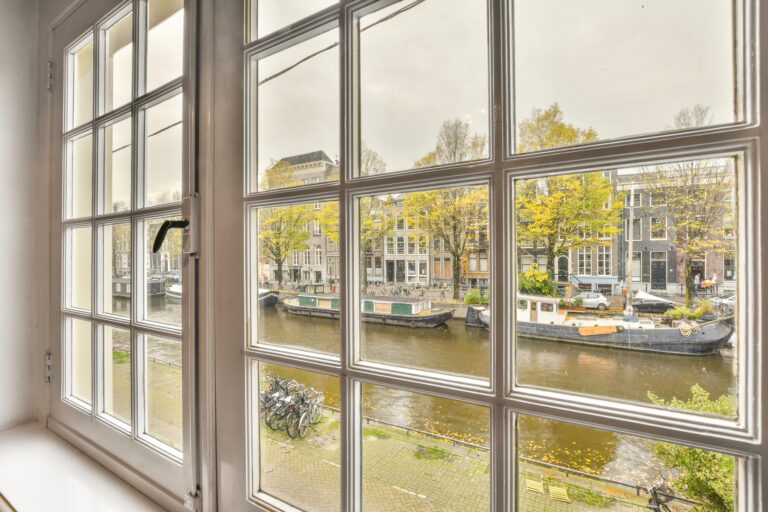
It was the windows across the idyllic city of Amsterdam that offered an open and unshielded view into people’s own homes. So the question remains: why are the Dutch so averse to curtains? 🤔
Somewhere between religion and myths
Calvinism played a huge role in forming the mindset of Dutch society.
Although the majority of the Dutch today consider themselves atheists, the characteristics of Calvinism — hard work (although not too hard), discipline, and frugality — still heavily influence the general mindset.
Catholics believe in the purchasing of salvation by saving the soul from sin through Sunday donations and the tithe (donating 10% of your annual income).
Open windows? Hoera, you’re closer to God (apparently). Image: Magnific
Calvinists, on the other hand, believe that our destiny is already predetermined by God, as sin inherently exists in each human as a result of Adam and Eve.
Consequently, a believer must prove their faith through their own economic activity and self-control.
The abundance of materialistic luxury that embodies the Catholic church is obviously a fundamental contradiction to any frugal Calvinist.
Historically, the clergy at the top enjoyed the benefits of financial gain, but always behind closed doors and — more importantly — closed curtains.
Conversely, the Calvinist mentality focused on an open door policy with nothing to hide and, accordingly, open curtains. See what we’re getting at here?
Of course, there are always a few fictional tales circulating. One popular myth is that back in the day, men often spent a lot of time at sea, away from their wives.
What better way to instil some good old neighbourhood watch vibes than by adopting a culture of open windows?
It ensured that these lonely ladies didn’t get up to any mischief while their men were away. Closed curtains called for suspicion, whilst open curtains kept any harmful gossip at bay.
It’s a toss-up between fear and faith
Growing up in the aftermath of predominant Catholicism, it’s still common in Ireland to see semitransparent lace blinds dominate living rooms during the daytime. And, once the sun sets, some thick blackout curtains to keep the heat in and any peering eyes out.
However, in the Netherlands, not only are curtains a rarity, but windows are generally larger.
There is a compromise that some Dutch submit to: vinyl stickers pasted on windows that force prying eyes to work a little harder, whilst still maintaining a level of transparency, of course.
And a bit like consensual voyeurism
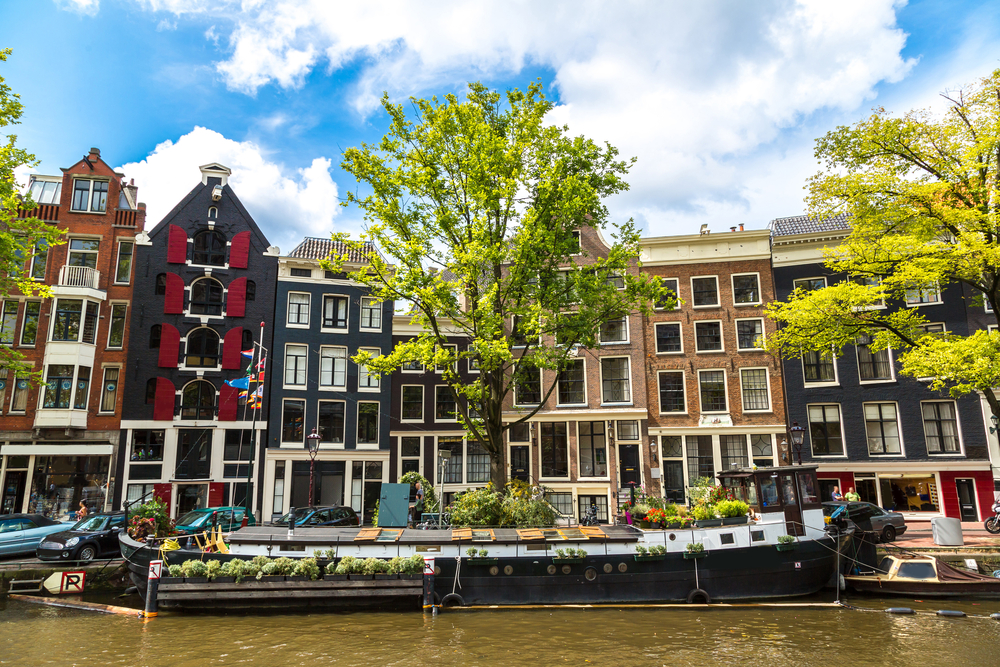
Apartment living in Amsterdam is tight on space, especially in my neighbourhood of The Nine Streets (De Negen Straatjes).
Buildings are tall and — dare I say — uncomfortably close to your neighbour’s curtain-less living room.
With houses as beautiful as this, it’s difficult to look away! Image: DepositPhotos.com
Maybe it’s my natural curiosity or admiration for Dutch interior design, but sometimes I cannot help but look into my older neighbour’s beautiful living room.
But any attempt at a friendly wave on my part is ignored as though I don’t exist. I genuinely don’t believe this is a scornful burn but rather an internalised acceptance of a cultural norm that I was previously oblivious to.
I tested this norm during the historic 40-degree heatwave of July 2019, parading around in my bikini, demonstrating some terrible dance moves, and performing some questionable activities. But, nothing, niks, nada!
Despite this, and never having bumped into each other in the street or verbally chatted in some weird way, I feel like I know this stranger.
In fact, I’ve pretty much memorised his daily routine!
He always eats dinner at 7 PM on the couch, his sons visit from time to time, has no partner, enjoys reading the newspaper in the morning, and likes inviting his friends over to watch football (but only when AFC Ajax is playing!)
Knowing who your neighbour hangs out with on the regular is pretty common. Image: DepositPhotos.com
But it’s not only my neighbour and I: many people live in what can only be described as a shop window.
Large paned windows, often with no curtains and the contents of the household on display to whoever walks by.
If you have seen The Truman Show with Jim Carey, this manner of living can only be described as a conscious form of surveillance.
However, this is where you can go back to the aforementioned Calvinist idea of self-control — no peeking!
So, should you just do away with curtains?
I’ve made two conclusions from living in the land of no curtains:
After living in the Middle East for a few years and internalising a more conservative outlook, I’m beginning to ‘go Dutch’ in more ways than one. It’s safe to say that I can get on board with this open-minded mentality!
I rarely close my curtains, and I can now dance around my bedroom listening to Rockwell’s ‘Somebody’s Watching Me’ without having shivers go down my spine!
Don’t consider moving to the Netherlands to open up a successful curtain shop because it will more than likely fail.
What do you think about the Dutch and their lack of curtains? Have you been guilty of peering into someone’s house? Let us know in the comments below.
Forget complaining about Dutch weather, whining about train delays, and heated debates about fireworks. What really unites the people is a solar eclipse.
Last night, the Netherlands experienced a rare sight: an 88% partial solar eclipse (and a meteor shower).
The result? Some wholesome and hilarious videos.
A people momentarily united
It didn’t matter who you were or how you felt about things; if you weren’t working yesterday evening, chances are you took to the streets last night (along with all those neighbours you’ve never met).
Amsterdam looked like something out of the start of a disaster movie, with everyone emerging out of their homes and onto the street.
And there were some interesting… alternatives to be found
Many of us weren’t fortunate enough to find eclipse glasses in time this year. However, the Dutch are known for being innovative, and that certainly showed last night…