A minor was arrested yesterday after an attendee of Zandvoort’s Pride on the Beach festival was assaulted.
The assault took place on the Grote Krocht in Zandvoort this Monday.
The victim was verbally abused and then beaten. Thankfully, they didn’t require hospitalisation.
Police suspect sexual orientation was the motive
According to NH Nieuws, police believe the motive for the attack was the victim’s sexual orientation.
With the help of camera footage, police were able to identify and arrest the suspect. For now, they will not reveal the exact age of the suspect or the details of the assault.
70 reports of discrimination during WorldPride
And Zandvoort isn’t alone. This year has already seen dozens of reports of discrimination during the start of WorldPride in Amsterdam, NOS reports.
The LGBTI+ organisation, Report It Always, usually receives a few reports of discrimination per day. However, this weekend, it saw no fewer than 70 reports come in.
These incidents of discrimination took place primarily during the Pride Walk, as well as while people walked home from the Milkshake festival.
The Netherlands has islands, over 70 animal species, and, to say the least, it’s very flat. Travelling across this tiny country from the east to the westwill only take you a little over two hours.
The geographical placement of the Netherlands makes the country quite unique and gives it an agricultural advantage over countries further from the equator.
The Netherlands has a lot of greenery, vegetation, smart irrigation systems, and it’s technically below sea level.
The highest point in the Netherlands, with a staggering altitude of 322 metres above sea level, is the summit of Vaalserberg, a hill located in the province of Limburg.
The lowest point (which lies 6.74 metres below sea level) is found in the Zuiderplaspolder in Nieuwerkerk aan den IJssel. What else is there to know? Check out this video by Geography Now to find out.
Did you learn anything new about the geography of the Netherlands? Let us know in the comments below!
Most people who are required to integrate in the Netherlands have three years to complete the inburgeringprocess. That said, plenty of people finish in one to two years with consistent study — and a few strategic choices.
How long it actually takes depends on your route, your education level, and your schedule.
Miss the deadline? You’re looking at fines and loan repayment headaches. Nail it early, and you can get on with the more important things.
Why does the timeline matter? Because your inburgeringsdiploma (integration certificate) is directly tied to bigger goals: renewing your residence permit, applying for Dutch citizenship, or avoiding a fine from DUO.
Want to check the inburgering off your list? Inburgering.org helps you navigate the entire process — from understanding your personal route and deadlines to preparing for your exams. Follow the online courses in your own time and on your own schedule and learn the Dutch you need to pass. Find out more.
What counts as completing inburgeringin the Netherlands?
Inburgering isn’t just passing a Dutch language exam and calling it a day. To officially complete the process, you need to tick off several boxes — all monitored by DUO (Dienst Uitvoering Onderwijs, the Dutch organisation responsible for education and integration).
Here’s what’s required:
Dutch language exams — reading, writing, listening, and speaking
KNM exam (Kennis van de Nederlandse Maatschappij — Knowledge of Dutch Society)
Participation requirements — the Participatieverklaring (PVT) workshop and the MAP (Maatschappelijke Begeleiding en Participatie, or social guidance and participation) component
Official confirmation from DUO that all components are completed
That last point is important. You might have passed every exam and attended every workshop, but until DUO sends you a certificate, you’re not officially done.
The difference between “passing exams” and “officially completing” inburgering
These two things are not the same — and confusing them can cost you.
You pass exams by scoring at least a 6/10 on each individual component. Officially completing inburgering, however, means DUO has received and registered all your results, your participation components are logged, and your file is marked as closed.
If you’ve done your exams but forgotten to submit proof of your MAP participation, DUO won’t consider you complete — even if your Dutch is good enough to host a talk show.
What is the official inburgeringdeadline?
The standard legal deadline to complete inburgering is three years from the date you become officially obliged to integrate.
Your three-year clock starts the moment you become officially inburgeringsplichtig (obliged to integrate), not when you first arrive in the country or start studying Dutch.
That means that if your formal letter from DUO arrived six months after you moved here, your deadline starts from the date on that letter.
Which law applies to you depends on when you became inburgeringsplichtig:
Before 1 January 2021: You fall under the Wet Inburgering 2013. Your required language level is likely A2.
From 1 January 2022 onwards: You fall under the Wet Inburgering 2021. Your required language level is likely B1 — a noticeably higher bar.
DUO monitors your progress throughout, including how much of your loan you’ve drawn down and whether you’re on track. They will contact you if things seem to be going off the rails.
Miss the deadline without an approved extension or exemption, and the consequences can include:
Repayment of your DUO integration loan at an accelerated rate
Potential impact on your residence permit renewal
Extensions are possible in certain circumstances — more on that below.
What affects how long the Dutch integration process takes?
No two inburgering journeys look the same. Here’s what tends to speed things up or slow things down.
Your education level and prior language experience make a significant difference. If you already speak German or another Germanic language, you’ll likely pick up Dutch faster. People used to formal study environments also tend to adapt to exam prep more quickly.
Your integration route plays a big role too. Under the 2021 law, there are three main routes:
B1 route — the standard path, aiming for Dutch at B1 level
Education route (onderwijsroute) — for people continuing into Dutch higher education; takes longer but leads to a higher language level
Self-reliance route (Z-route) — for people for whom B1 isn’t realistic due to low literacy or other circumstances; focused on practical participation
Life gets in the way. Work, childcare, health issues, and family responsibilities all affect how much study time you can realistically carve out.
Someone studying full-time can theoretically reach B1 in under a year. Someone juggling a full-time job and two kids might need closer to three.
Want to study on your own time and learn the Dutch you’ll need to pass the integration exams? Inburgering.org offers courses (and podcasts!) that will take you from being a Dutch newbie all the way to A2 and B1 in an easy online environment. See your options.
Course intensity and consistency are arguably the most controllable factors. Remember: studying a little every day is far more effective than cramming.
Exam availability can also cause unexpected delays. Certain exams — particularly the speaking exam — have limited booking slots. Leave it too late, and the next available date could push you dangerously close to your deadline.
Finally, extensions from DUO are possible if you have a valid reason (illness, family circumstances, or other personal hardship). But they’re not guaranteed — and applying doesn’t pause the clock. Keep studying while you wait.
What happens if you don’t finish inburgeringwithin three years?
Missing the deadline isn’t the end of the world, but it’s something you really want to avoid.
Fines are the most immediate consequence. DUO can issue a fine of up to €1,250 for failing to complete the process on time. Further penalties can follow if things stay unresolved.
Loan repayment can also be affected. If you took out a DUO loan to fund your courses or exams, missing the deadline may mean repaying it under less favourable conditions.
Extensions (verlengingen) are available in specific circumstances — serious illness, having a baby, or other significant personal hardship. Your municipality may also support a request if delays were partly due to the guidance process itself.
Exemptions (vrijstellingen) exist for people who can demonstrate sufficient Dutch through other means, or who have a condition that makes completing inburgering impossible.
If you think you might be heading towards a missed deadline, the worst thing you can do is ignore it. Contact your municipality or DUO early.
Can you finish inburgeringin the Netherlands faster than three years?
Absolutely — and many people do.
Finishing in one to two years is entirely realistic with consistent effort and the right support. Intensive Dutch language courses can get you to A2 or even B1 within six to twelve months.
Add a few months for the other components and exam scheduling, and the whole process is well within your three-year window.
Early completion is not just allowed — it’s encouraged. There’s no advantage to waiting, and finishing early means you’ll be ready to apply for permanent residency or citizenship as soon as it’s possible.
A few things that can help you move faster:
Start as soon as you receive your DUO letter — don’t wait until year two to think about it
Choose an intensive or structured course rather than slow-paced group classes
Book your exams early so you’re not caught out by limited availability
Work through all components in parallel where possible, rather than sequentially
Strategic planning genuinely makes a difference. Knowing your route, understanding what’s required, and lining up the right support from the start can shave months off your timeline.
Are you currently going through the inburgeringprocess — and how long do you think it’ll take you? Drop your experience in the comments below!
You know the top online shops in your home country, but what about the best online stores in the Netherlands?
Whether you’re a new arrival or want to order a present for a friend or family member who has made Holland their home, you’re probably wondering which online stores are well-stocked, safe, and have super-fast postage.
And here’s a surprise: Amazon isn’t the webstore of choice here.
From the Dutch version of Amazon to clothing, technology, or secondhand goods, here are the best online stores in the Netherlands.
This post might have affiliate links that help us write the articles you love, at no extra cost to you. Read our statement.
Can’t wait for the postman to ring your bell? Jump to a section below!
Are you a person of convenience? So are we. Lucky for us, the Netherlands has plenty of one-stop online stores that have anything you may need (along with all the things you don’t even know you need yet). 😉
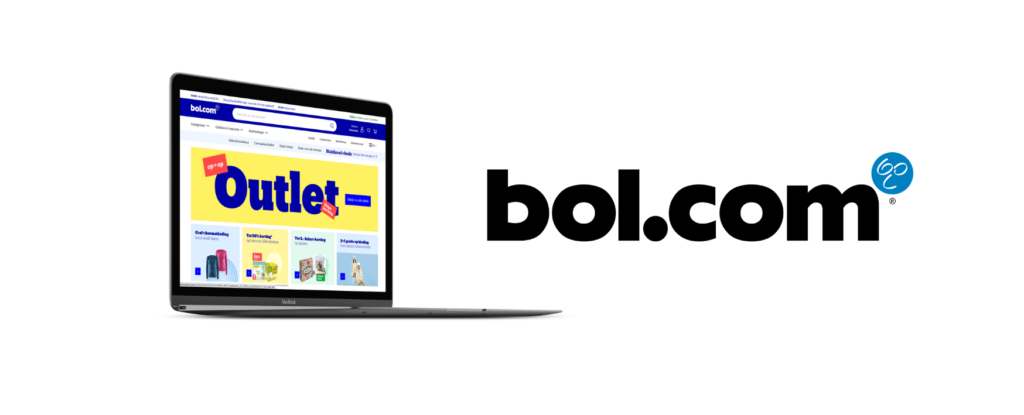
Bol.com: The OG Dutch online shop
The Dutchies prefer Bol.com over the American giant. Image: DutchReview
Bol.com is THE online shop in the Netherlands — really, Dutchies love this place. And for a good reason: since its start in 1999, Bol.com has repeatedly won multiple awards, including the award for the best online store in the Netherlands. 💪
Bol.com started in 1999 with 26 employees; today, it has more than 1,800. Much like Amazon, it offers a wide variety of items, from both its own warehouse and products from third parties.
Unlike Amazon, however, Bol.com continues to be the big boss of the Dutch market. Proudly selling a crazy 12% of all online sales in the Netherlands, Bol.com does almost quadruple the business of Amazon. 📈
💳 Payment methods: iDeal, credit card, Bancontact 📦 Subscriptions: Bol.com Select, €14.99 per year for free delivery and discounts on selected products ⏰ Average shipping time: 1-2 working days 🔁 Return policy: Free returns within 30 days
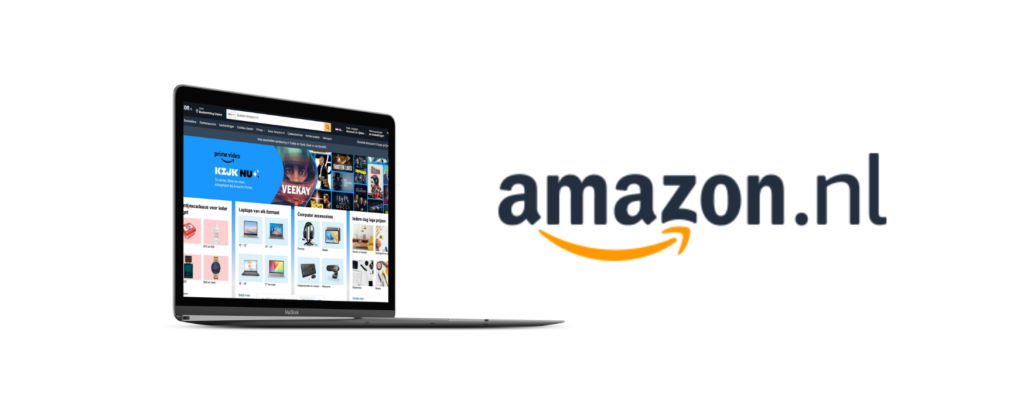
Amazon: American giant goes Dutch
We’re sure EVERYONE has heard of Amazon. Image: DutchReview
Although we all have mixed opinions about Jeff Bezos, everyone knows Amazon and loves its convenience. Since 2020, Amazon is offering all its product categories to the whole of the Nederland, such as toys, fashion, and consumer electronics.
With a sparkling new distribution centre in the Netherlands, most purchases land on your doorstep within a matter of days.
However, while Amazon is king in the US, it comes in second place in the Netherlands to its main competitor: Bol.com 🇳🇱
💳 Payment methods:iDeal, credit card, Bancontact 📦 Subscriptions: Amazon Prime: €4.99/month for free shipping and Amazon Prime video streaming ⏰ Average shipping time: 1-2 working days 🔁 Return policy: Returns within 30 days, sometimes buyers have to cover the cost of shipping (depending on the product/seller)
AliExpress: Cheap and cheerful
If it’s cheap, it’s being added to the cart. 👀 Image: DutchReview
As you may know by now, Nederlanders can’t pass up a good deal. Therefore, it comes as no surprise that they love AliExpress. AliExpress is an online retail service based in China that allows Chinese businesses to sell to customers around the world — and things are CHEAP.
They offer a wide range of products, but reviews are heel mixed, so it’s a bit of a hit-or-miss situation.
In review ratings, Trustpilot.com gives AliExpress a 2.7 rating out of 5, based on 127,882 reviews. Our tip: when shopping here, make sure to read individual product reviews. Oh, and watch out for those new additional shipping costs. 🤓🔎
💳 Payment methods: iDeal, credit card, Klarna, PayPal 📦 Subscriptions: N/A ⏰ Average shipping time: 15+ working days 🔁 Return policy: Free returns within 15 days
Wehkamp: Connected to Dutch society
Wehkamp was founded in the tiny Dutch village of Slagharen. Image: DutchReview
Another online shop in the Netherlands that prides itself on its great variety of products is Wehkamp. Wehkamp’s history dates back to 1952, when the company was founded as an innovative mattress shop that would ship bedding to its customers by post.
Fast forward some 70 years, and today, Wehkamp offers around 300,000 products from 2,500 brands. Though its warehouse focuses mostly on fashion, furniture, and beauty, it is far from limited to those.
Whether you need a trampoline, a whirlpool, or a shiny electric bike (because why not?!) — Wehkamp is where you can find it.
💳 Payment methods: iDeal, credit card, Apple Pay, Tinka 📦 Subscriptions: N/A ⏰ Average shipping time: Generally 1-2 days, sometimes longer for bigger items such as furniture 🔁 Return policy: Free returns within 30 days
Clothing webshops in the Netherland
If you want to blend in with the Dutch, you have to dress like the Dutch. What’s the best way to do that, you ask? Shopping at the same places as they do, natuurlijk.
Zalando: Get the Dutch uniform
For years, Zalando has been taking Europe by storm. Image: DutchReview
Zalando is a German online shop that sells shoes, clothing and accessories that the Dutch just love. Flared leopard print pants? They got ‘em. A grey Nike sweater? Yup. Platform Dr. Martens? Jazeker.
In an effort to be more sustainable and reduce fast fashion, Zalando launched its “Pre-Owned” platform in 2021, where loyal customers can buy and sell pre-loved items. 🧡
If you easily feel disheartened by the overwhelming offer of online clothing shops, then Zalando’s ‘get the look’ page may be perfect for you. Here you can easily shop pre-styled outfits. Super leuk!
💳 Payment methods: iDeal, credit or debit card, PayPal, bank transfer 📦 Subscriptions: Zalando Plus (which is free!) ⏰ Average shipping time: 3-5 working days 🔁 Return policy: Free returns within 100 days
ASOS: Beyond British labels
ASOS actually stands for “As Seen On Screen,” because when it was first launched, it exclusively sold imitations of clothing from film and TV! Image: DutchReview
With ASOS’ worldwide popularity, it’s no surprise that it’s also one of the most loved online stores in the Netherlands.
In case you don’t know it (which we doubt): ASOS is a British online clothing retailer that sells over 850 brands and ships to EVERY. SINGLE. COUNTRY. in the world. 🌎
As a business that is mostly targeted towards young adults, ASOS is aware of the fact that many of its customers are students (and thus broke 😉).
To accommodate this, they offer a 10% discount to every student (i.e. any person who can provide and confirm a student e-mail address).
💳 Payment methods: iDeal, credit card, PayPal, Apple Pay, Riverty 📦 Subscriptions: ASOS Premier, €20 a year for free next-day delivery on all orders ⏰ Average shipping time: 2-5 working days 🔁 Return policy: Free returns within 28 days
ABOUT YOU: For you, for me, for everyone
Clothing really does say a lot ABOUT YOU, huh? Image: DutchReview
Third and final on our list for top online stores in the Netherlands to buy clothing is another German retailer: ABOUTYOU.
Much like Zalando, ABOUT YOU sells clothing, accessories, and shoes from different popular brands, such as Nike, Levi’s and Adidas. Besides this, the retailer also has its own brand called Edited. 👕👠👜
Once again, lucky for all the students among us: ABOUT YOU offers a 10% student discount!
💳 Payment methods: iDeal, credit card, PayPal, Apple Pay, Klarna 📦 Subscriptions: ABOUT YOU VIP ⏰ Average shipping time: 2-5 working days 🔁 Return policy: Free returns within 28 days
Online electronics retailers in the Netherlands
Picture this: You’re all excited to get a brand new flat-screen TV, you head to the nearest electronics store, and then … the giant box doesn’t fit in your car’s trunk. 😬
Or even worse: you don’t have a car — and there’s no way you can take it on your bike (You’re not Dutch, after all). There is only one easy solution: order your electronics online and have them delivered to your house.
For that, you’ll need an online electronics store in the Netherlands. Here are the best!
Coolblue: For excellent service
Coolblue bears its name because it tried to be the exact opposite of its competitor at the time, “Hot-Orange.” Image: DutchReview
A Rotterdam original, Coolblue was started in 1999. It’s one of the biggest online shops in the Netherlands for electronic goods, and offers a wide variety — from phones and gaming consoles to fridges and dishwashers.
Besides a webshop, Coolblue also has 14 physical stores throughout the country, and if you order from them, you are guaranteed to get great service. For example, if they deliver a fridge, they’ll bring it in, set it up, and take your old one away for recycling.
Their slogan, “alles voor een glimlach” (“everything for a smile”), applies not only to their products but also to their great customer service. We’re fans!
💳 Payment methods: iDeal, credit card, Apple Pay, bank transfer 📦 Subscriptions: N/A ⏰ Average shipping time: 1-2 days 🔁 Return policy: Free returns within 30 days
MediaMarkt: The German multinational
MediaMarkt guarantees to always give its customers the best available price. Image: DutchReview
MediaMarkt is the biggest electronics retail chain in all of Europe, so it’s no surprise that it’s also widely spread in the Netherlands. They bring electronic goods to their Dutch customers via a well-functioning online store and 49 physical stores. Lekker bezig!
The best thing about MediaMarkt? It’s unbeatable price-matching. The German giant checks the prices of its 25 biggest competitors daily and adjusts its prices accordingly.
💳 Payment methods: iDeal, credit card, Apple Pay, Klarna, bank transfer, in instalments 📦 Subscriptions: N/A ⏰ Average shipping time: 1-2 days 🔁 Return policy: Free returns within 30 days
Expert: Swiss quality service and appliances
Expert’s employees really are experts at what they’re doing. Image: DutchReview
Still looking for that perfect, affordable fridge? Head over to Expert! With an overall customer rating of 8.8 out 10, Expert is just waiting to give you that sweet, sweet customer satisfaction.
Though they also sell TVs, phones and tablets, customers love and trust them most for their bigger appliances, such as air-conditioning, dishwashers, and ovens.
The best part? For a little fee, the lovely Expert employees will install your appliance for you and take your old one with them. 🎛️🛠️
💳 Payment methods: iDeal, credit card, Klarna 📦 Subscriptions: N/A ⏰ Average shipping time: Depends on the item you’re buying 🔁 Return policy: Free returns within 14 days
Online butchers in the Netherlands
Craving a steak after all that shopping? Believe it or not, it’s possible to order your meat online in the Netherlands.
The Butchery: For high quality meat
Yes, you can even buy meat online in the Netherlands. Image: The Butchery/Supplied
Sometimes, supermarket meat simply doesn’t cut it. That’s where services like The Butchery come in. As one of the best online butchers in the Netherlands, The Butchery makes sure each cut of meat meets its high standards.
How? Firstly, they weigh each item individually, ensuring you get exactly what you asked for. Every cut is also triple-trimmed and prepared entirely in-house, so what arrives is 100% grill-ready and ready to cook.
Not only that, The Butchery’s meat is delivered flash-frozen. This means it is frozen ultra-fast at -40 degrees Celsius, which prevents large ice crystals from forming inside the meat.
💳 Payment methods: iDeal, credit card, gift cards 📦 Subscriptions: N/A ⏰ Average shipping time: Same day on weekdays if ordered before 11 AM, evening after if ordered after 11 AM. 🔁 Return policy: N/A
Online second-hand stores in the Netherlands
Second-hand shopping is not just cheap, but also sustainable — so really, why would you NOT want to do it? One man’s trash truly can be another man’s treasure. 🤷♂️
Too lazy to scour the Kringloop shops until you find that perfect deal? Geen probleem (no problem), because these three online stores in the Netherlands have made second-hand shopping as easy as pie!
Marktplaats: The Dutch version of eBay
With 8 million monthly visitors, Marktplaats is easily the most popular second-hand platform in the Netherlands. Image: DutchReview
Marktplaats is the most popular online shop in the Netherlands for buying and selling second-hand items. Often called “Dutch eBay,” the company was actually acquired by eBay in 2004 for a whopping €225 million!
Hundreds of thousands of items get uploaded to Marktplaats daily, so it’s no surprise that, besides some seriously good deals, you can find some seriously good entertainment on there.
Whether it’s your bike that was stolen last week, or a knob of ginger that looks like a teddy bear (yes, really) — Marktplaats has it. 😉
💳 Payment methods: Payment request with iDeal, or cash (if you’re picking up an item in person) 📦 Subscriptions: N/A ⏰ Average shipping time: Depends on seller 🔁 Return policy: Depends on seller
Facebook Marketplace: Buy, sell, trade
Of course, Mark Zuckerberg wanted to join the party as well. Image: DutchReview
In 2007, Mark Zuckerberg saw an opportunity and, of course, took it: He introduced Facebook Marketplace, Facebook’s very own second-hand platform.
The introduction of the feature came in response to the popularity of “buy and sell” groups, where people were, well, buying and selling their stuff.
The only downside to Facebook Marketplace is that you need a Facebook account to use it.
Like with any kind of second-hand shopping, it’s important to be mindful when shopping on Facebook Marketplace. We advise going for sellers in your area and meeting up with them somewhere public for the sale. Safe shopping!
💳 Payment methods: To be agreed upon with the seller, usually Tikkie/payment request or cash 📦 Subscriptions: N/A ⏰ Average shipping time: Depends on seller 🔁 Return policy: Depends on seller
Vinted: Dress for less (and a good cause)
Shopaholics, this is where you can save some serious money. Image: DutchReview
Vinted is an online website and app that lets you buy and sell secondhand items. It’s based in Lithuania, but buyers and sellers in 18 countries love the app, including the Netherlands.
Though mostly geared towards clothing, shoes, and accessories, Vinted technically allows you to trade all sorts of items.
They have a zero-tolerance policy regarding non-genuine items and require sellers to provide proof of authenticity when selling their pre-loved clothes. This makes it the perfect place to snag a designer item for a fraction of its original price!
💳 Payment methods: iDeal, credit card, Apple Pay 📦 Subscriptions: N/A ⏰ Average shipping time: Sellers have to ship items within 5 working days 🔁 Return policy: If you agree with the seller, you can return items and get your money back. The buyer pays the cost for the shipping and returns.
Whatever you’re looking for, these online stores in the Netherlands should be a great start for you to start the hunt for that perfect something.
What’s your favourite online store in the Netherlands? Tell us in the comments!
Dutch online shops: Frequently asked questions
Does the Netherlands have Amazon?
Yes! Amazon opened its Dutch distribution centre in 2020. Amazon.nl offers not only a huge variety of items, but also its very own Amazon Prime streaming catalogue.
What is the best online shop in the Netherlands?
The most popular online shops in the Netherlands are: Amazon, Bol.com, Wehkamp, Zalando, ABOUTYOU, Asos, Expert, MediaMarkt
What is the Dutch version of Amazon?
The Dutch equivalent of Amazon is Bol.com. Bol.com offers similar services and is based entirely in the Netherlands.
Do online stores in the Netherlands accept credit cards?
For the most part, yes. Unlike physical stores, which often don’t accept credit cards, online stores in the Netherlands generally do.
Where do Dutch people shop for clothes?
Dutch people love lekker shoppen. Besides physical stores like H&M, The Sting, and ZARA, they do most of their online shopping at Zalando, ASOS, and ABOUTYOU.
Riding a bicycle in the Netherlands is one of THE main reasons why people are so happy here. But there are some rules you need to get used to.
Before moving to the Netherlands, many of us lived in a place with little to no biking infrastructure.
Riding a bicycle to work was basically asking for a shorter life, and being stuck in traffic in a car was as common as breathing. But once you move to the Netherlands, you’re putting those days behind you, and now you can go everywhere with your trusty fiets!
And sure enough, after a while of biking, you’ll notice that there are some important dos and don’ts of riding a bicycle in the Netherlands.
This post might have affiliate links that help us write the articles you love, at no extra cost to you. Read our statement.
Legal requirements for riding a bicycle in the Netherlands
In a country that built its cities with bikes in mind, you won’t be surprised that the legal system has also been shaped around cycle culture. Here are some legal requirements to note to avoid getting a fine.
Don’t ride under the influence (RUI)
Despite what most Dutchies (and us internationals 👀) do, it is actually illegal to ride your bike drunk or stoned. If caught, you can get a hefty fine. How hefty? Well, up to a whopping €200!
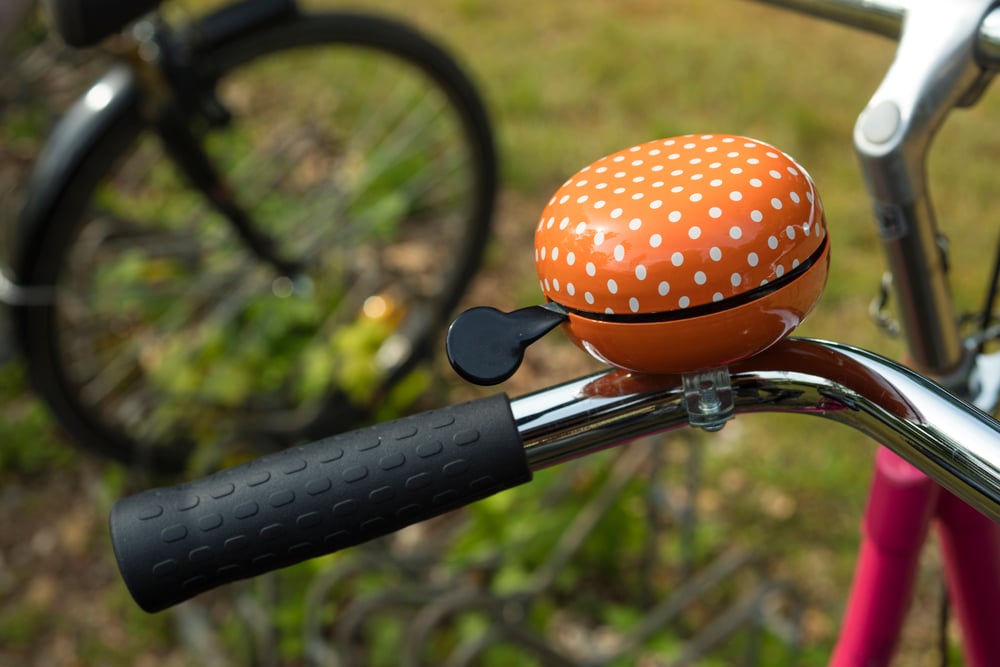
Step outside in a Dutch city, and within a few minutes, you’ll hear it: the “tring-tring” of a bike bell. Romantic at first, then slightly annoying.
Bike bells are a fun way of personalising your ‘fiets’! Image: DepositPhotos.com
But alas, every bike should have a bike bell; it’s compulsory. They let you know when someone is behind you and wants to overtake you or if you’re in the way. It’s very handy and much more polite than being yelled at by an angry Dutchie.
Use your bright lights
If you’re riding at night, you must use a properly attached white or yellow light on the front of your bicycle and a red light on the back. Not having a light can result in… you guessed it, a fine. Also, worse, it could result in a car running you over.
Bicycle lights are very easy to find, and you can purchase some very cheap ones at Hema or Action. If you get detachable ones, make sure you take them with you when you park. Stealing bike lights is the top Dutch national pastime(right after getting cheap groceries).
Signal before you turn on your bike
I think the first time somebody yelled “lul!” at me was when I did a tight turn with 10 high schoolers behind me. At first, I thought it was the Dutch variant of “lol”. Naturally, because I’m hilarious.
But then I realised I had been called a d*** because I had not signalled before I turned a corner. Oops.
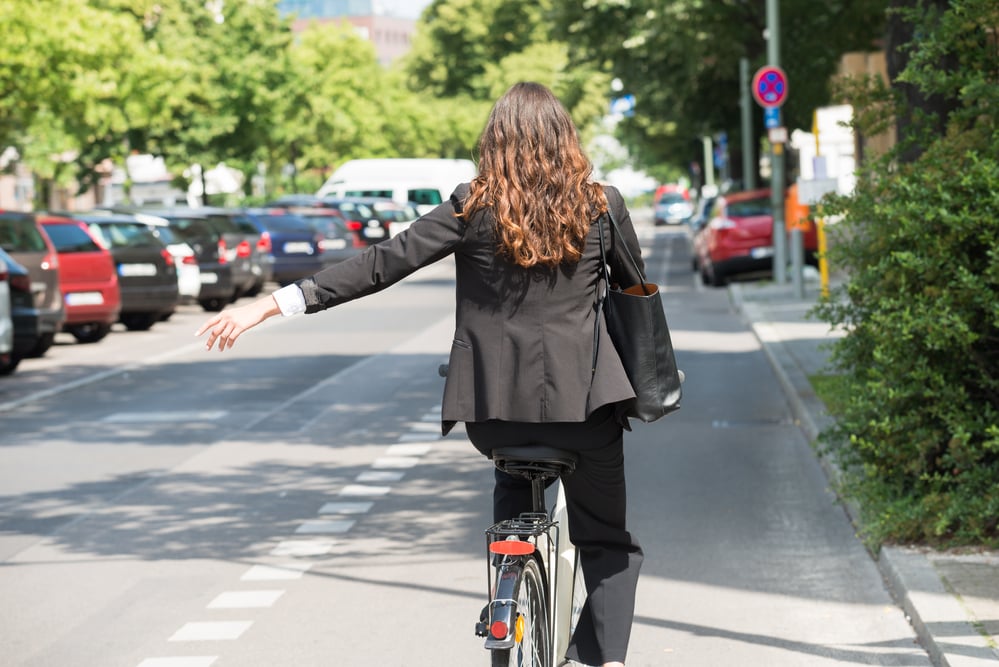
Make sure to signal by putting out one hand before you take a turn. Image: DepositPhotos.com
Now, after being the cyclist stuck behind someone who doesn’t signal a couple of times, I understand how important it is!
If you want to go left or right on your bike, stick your left or right hand accordingly! This lets non-psychic people know what direction you’re turning towards, makes traffic more fluid, and prevents any name-calling that may hurt your feelings.
Do not text and cycle
Much like you shouldn’t text while driving, you also shouldn’t text while cycling. At first, this was only discouraged among Dutchies — have you seen them cycle?
Either way, your phone can wait, but that pothole or moving tram won’t. So, keep your hands on the handlebars and your eyes on the road, or you might end up texting your friends from the emergency room instead of the park. ☝️
What’s good to know when cycling?
That’s enough on the law. Let’s discuss some helpful tips for things like not getting your bike stolen. 😉
Put a lock on it — properly!
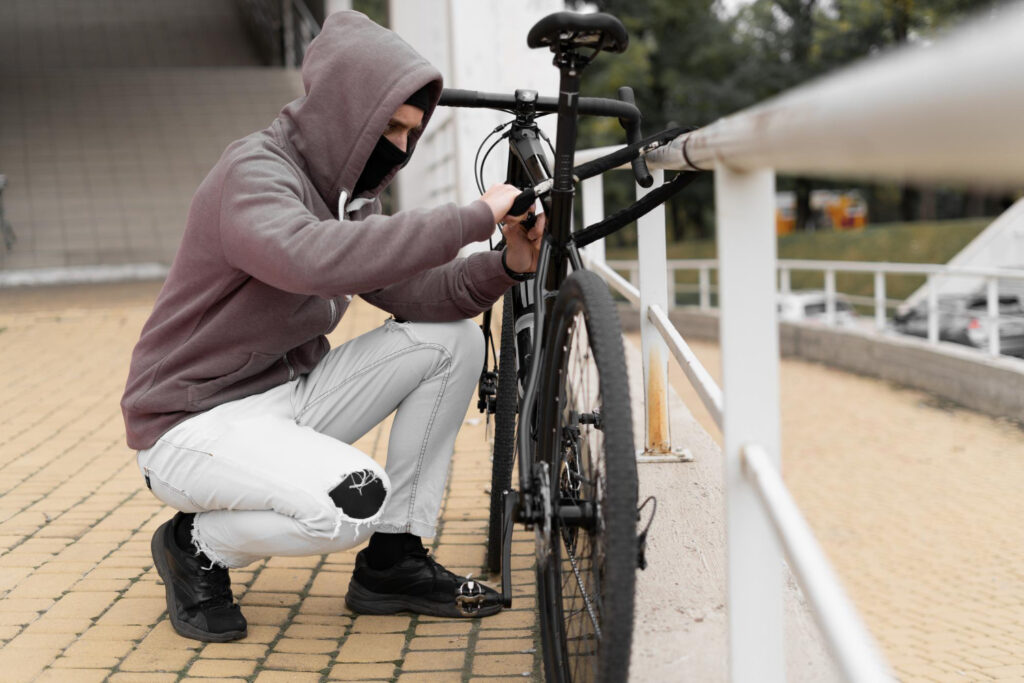
It’s surprising how many people get their bikes stolen because they don’t know how to put a bike lock on properly. Now you might say, “C’mon, that’s easy! Besides, nobody steals anything in this country.” Well, that’s where you’re wrong.
Thousands of bikes get stolen in Amsterdam each year. Image: Magnific
If you want to cheap out on something while living here, it better not be your bike lock! Although there are many types of locks out there, U-locks and sturdy chain locks are the best.
Also, there is a proper way to lock your bike. You should always lock your bike to a pole or a bike rack, and your lock should surround your frame and your tyre.
Tip: If you fear your bike will get stolen (which is a very significant possibility), the best thing to do is to take out bike insurance. Yep, that’s a thing here!
Don’t have bike insurance yet? We recommend Univé for their bike and e-bike insurance. 🚲
Don’t buy €10 bikes in alleyways
Who doesn’t dream of buying a cheap bike after moving to an expensive city? But any bicycles you buy from shady guys in the inner city are probably stolen.
If you’re buying a stolen bike, you’re supporting and boosting the stolen bike market. This perpetuates the cycle and might even end in your newfound stolen bike getting stolen again. So, don’t do it.
The Netherlands is filled with second-hand bicycle shops. While a second-hand bike shop will not sell bicycles for €10, there are many affordable and fair options.
Get your head in a helmet — maybe
Wearing a helmet while biking is important because it protects your brain in the case of an accident, and brains are important.
Although not compulsory, and although there’s a big helmet/no helmet debate, we recommend wearing a helmet, at least if you cycle really fast.
Even if it’s just a short trip to Albert Heijn, if you’re going fast, put on a helmet. Image: Magnific
It would appear that the traffic infrastructure and a superb biking culture are better than enforcing helmet laws, though.
The Netherlands (right after Denmark) is the European country with the fewest accidents that result in cyclists dying. Maybe that’s why not many Dutchies wear helmets.
So wear a helmet! Or not! It’s your choice.
Pay attention when wearing headphones
There are two things we love doing, but we know we shouldn’t do. One of them is having Ben & Jerry’s cookie dough ice cream for breakfast every morning, and the other is riding our bicycle while listening to music.
While it’s not technically illegal to ride your bike while listening to some Iron Maiden on your headphones, it can be detrimental to your health. By detrimental to your health, we mean not hearing a bus and getting run over by it.
So, like the helmet thing, it’s not illegal, but it is highly recommended that you do not listen to music while riding your bike.
Read and respect the traffic signs
Lastly, there are three things you should always keep in mind when riding your bicycle: signs, pedestrians, and tram lines. There’s a wide range of road signs that you need to keep an eye out for.
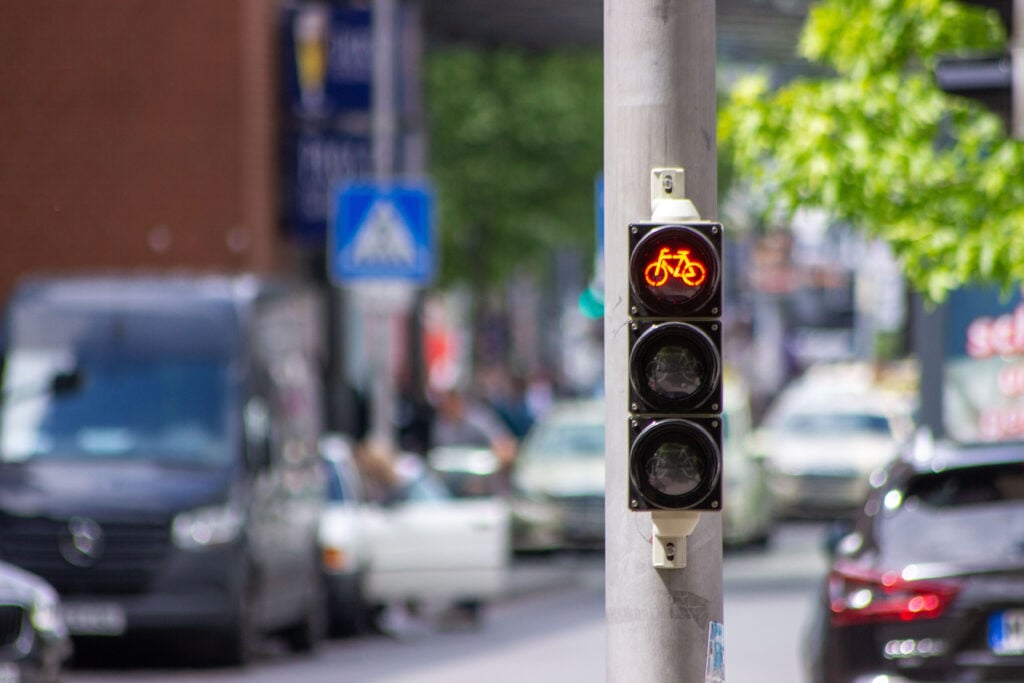
Oh, and look out for traffic lights, of course! Image: DepositPhotos.com
Four of the most important ones to recognise are:
uitgezondered fietsers (except people on bicycles);
rechtsaf voor fietsers vrij (right turn free for bikers);
let op! Uitrit bouwverkeer (watch out for construction traffic);
and“pedestrian zebras” (pedestrian crossings).
If you see a white sign with a red line around the edge (no entrance), but it is followed by uitgezonderde fietsers, you may follow that road — if you’re on a bike, of course.
You’ll also see blue signs with white letters reading rechtsaf fietsers vrij. These mean “right turn free for bikers.” So even if they’re next to a red traffic light, if you’re on a bike, you can turn right freely — just remember to signal!
No matter how many times I’ve done it, my pulse skyrockets when I have to cross a tram line. If you fall in one, it’s almost a guarantee you will fall embarrassingly.
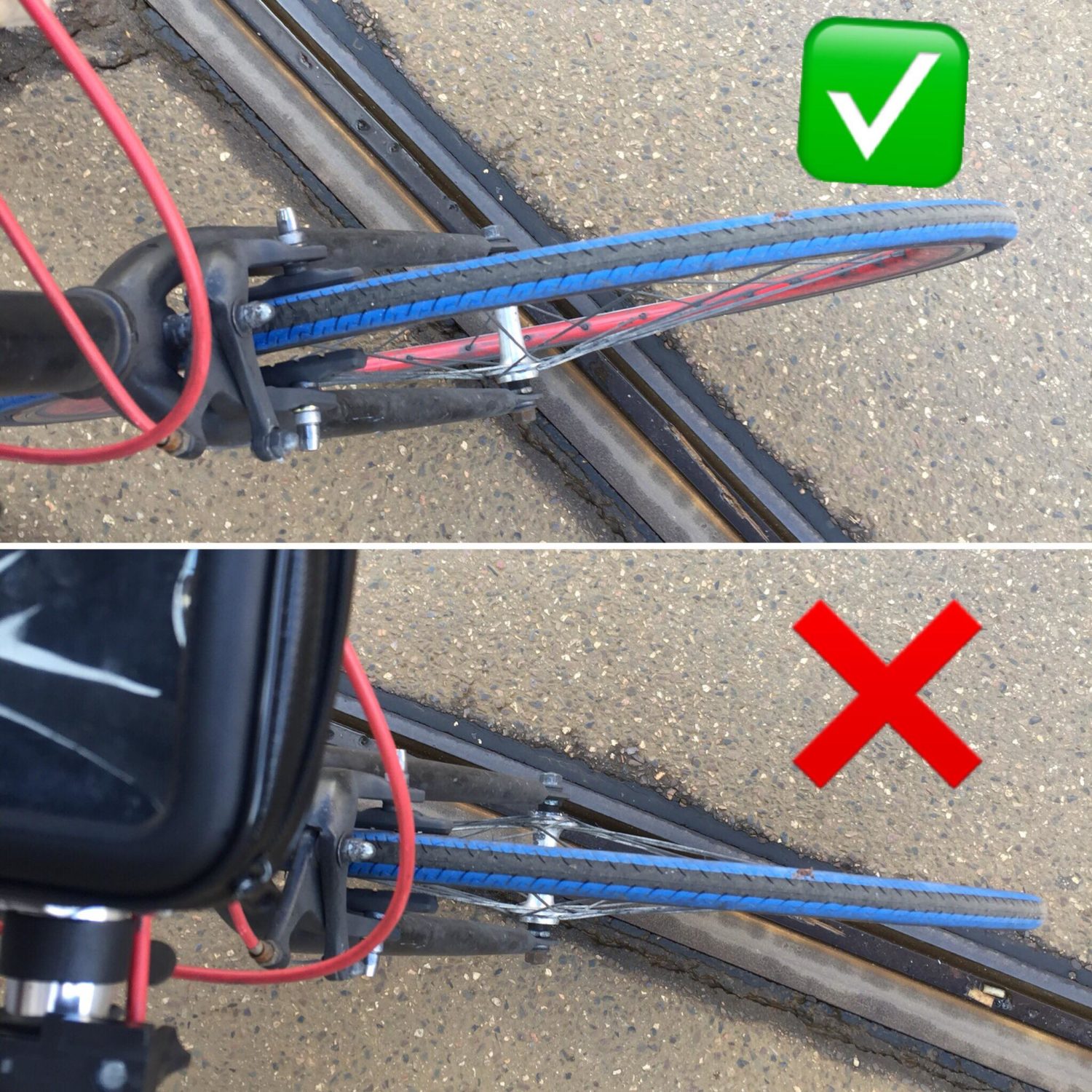
The best way to cross a tram line while riding a bicycle in the Netherlands is to cross it as perpendicular as possible. Here’s a handy picture to save your life in the future.
Beware of the tram lines when you’re cycling! Image: Renan Alejandro Salvador Lozano Cuervo/Supplied.
Well, that’s about it for thedos and don’tsof riding a bicycle in the Netherlands. Hopefully, you’ll find this list useful if you’re new to this charming little country. Riding a bicycle here is easy and incredibly safe.
But of course, if you keep these handy tips in mind, we’re confident your biking experience will be considerably better.
Did we miss any important dos or don’ts? If we did, tell us in the comments below!
Two Dutch expats have caused quite the stir in Bali (and online) after it became clear that any Indonesians who tried to join their Bali-based run club were automatically rejected.
The men, who organise running events through Entourage Bali, have now been banned from re-entering Indonesia.
What exactly happened?
According to AD.nl, Indonesian media has been reporting that anyone who attempted to join a recent run club event with an Indonesian name or number, was refused admission.
This was backed up by people who attended the run club, with one participant telling News.com.au that the club appeared to only consist of western foreigners, and “there weren’t even any people from other Asian countries.”
Another woman took to Threads to detail how when she applied to join the event, she was told her application would be reviewed. Meanwhile, her husband, who had a western name and foreign number, was automatically accepted.
Needless to say, this doesn’t look good, especially when we consider the history between the Netherlands and Indonesia.
Entourage took to Instagram to explain what went wrong, claiming that “the biggest proportion of people joining had Indonesian nationality.”
They wrote that the automatic rejection of people with an Indonesian number was a mistake: “‘However, we made errors in the automated approval for our WhatsApp groups. While we were trying to create a place where expats could meet, a problem arose where +62 numbers and Indonesians were incorrectly rejected.”
The two Dutchmen, named as Hidde and Joost on social media, left Bali for Singapore on Wednesday. Their departure is now permanent, as the immigration services have been told not to let them back in.
And perhaps that’s for the best. If the men were to return, they would be arrested immediately. According to AD.nl, foreigners are not allowed to organise events in Indonesia.
If you’re living here and are having a child in the Netherlands soon, here are a few things you should know.
1. Fertility treatments in the Netherlands
If you are somehow struggling to become parents (we hear you), be aware that Dutch health care usually covers fertility treatments, if or when needed.
Fertility treatments in the Netherlands are insured by your healthcare! Image: Magnific
However, this can be a lengthy process.
You will need a referral from your family doctor, and from there, you may go to hospitals or centres that are specialised in this. I can highly recommend the kind, knowledgeable and amazing staff at the Reiner de Graaf clinic in Voorburg.
2. Maternity and paternity leave in the Netherlands
As a mother, you are entitled to maternity leave as soon as you’re working.
Mothers in the Netherlands are entitled to 6 weeks of paid pregnancy leave (before the due date) and at least 10 weeks of maternity leave (after childbirth).
This means that mothers in the Netherlands have the right to at least 16 weeks of paid maternity leave in total.
Nothing like spending time with your newborn baby without worrying about work! Image: Magnific
Partners get paternity leave, though not nearly as much, sadly. They are entitled to one week of paid leave and five additional weeks of leave at 70% pay. After that, there is also parental leave.
3. Daycare in the Netherlands
If both parents will be working outside the home, you’ll need daycare. And in the Netherlands, daycare centres are in very high demand.
The general advice is to start researching and enrolling pretty much the moment you get a positive pregnancy test — waiting lists really are that long. You could also choose to leave your child with a gastouder (a registered childminder) or find a babysitter instead.
Here’s the good news, though: the government now covers a big chunk of the cost for working parents, and that share has been climbing.
If you and your partner both work or study, or you’re following a civic integration course or a municipal programme, you can claim kinderopvangtoeslag (childcare allowance), a government contribution towards your daycare fees.
How much you get back depends on your income, and the scale is generous at the lower end.
For 2026, that scale runs from 36.5% up to 96% of the maximum hourly rate. Parents with a combined income up to €56,412 can claim back as much as 96%. This is part of the government’s ongoing push towards nearly-free childcare for working families.
If your household income sits below roughly €40,000, nothing much changes for you: you’re already on the maximum allowance. And keep in mind the allowance only covers up to a set hourly rate and a maximum number of hours per month, so anything above that comes out of your own pocket.
This very Dutch service is available through most health insurance packages. While it can be very useful, it is not mandatory.
So, what is it? Right after you give birth a nurse/social worker comes to your home for several purposes. The two most important of which are:
Keeping track of the baby’s growth and general health state and,
Checking the mother’s recovery is also going well (they check for fever/signs of infection, look at the stitches, feel the uterus as it stretches back down to its original location).
Within this role, the kraamzorg is trained to check for red flags/signs of postpartum depression or other mental health or behaviour issues (eg. addictions) so that they can direct you towards professional help when needed.
You’re not alone after giving birth, maternity care is there to help you! Image: Magnific
They also give all kinds of advice (take it or leave it), show you how to take care of a baby (priceless for first-time parents without any help or grandparents around), help with cleaning, cooking and other household chores.
Some can also help with breastfeeding, or again, direct you to a lactation consultant; take care of older children and do general errands.
Some kraamzorg companies offer their services in English. I had friends who loved their kraamzorg and other friends who hated it.
Personally, I felt a bit overwhelmed by the idea of having a total and complete stranger at home on those early vulnerable days, and my mom (and mother in law) were around, so we had her come for the minimum hours, but I see how it could be a great help.
5. Consultatiebureau — paediatrician in the Netherlands
So, unlike many other countries, children here are NOT given a paediatrician unless there IS a problem (eg. premature birth or other conditions).
When something medical comes up, you should go to your family doctor and he will refer you to a paediatrician/hospital if it is considered necessary.
Getting your baby checked out by a pediatrician is important! Image: Magnific
All the checkups for growth and vaccinations are given by the nurse and paediatrician at the Consultatiebureau. They will have the first visit at home, as soon as the child is born, again, to screen the parents and home environment.
They will screen your baby for genetic conditions (heel prick) and follow their growth until they are teenagers (regular visits are until the age of 4). Also, they will have a “vrije inloop” day in which you can come for advice.
An organisation called Moeders Informeren Moeders runs at different consultatiebureaus, and it is great to find and offer support. The thing is, while I think the Consultatiebureau is great as an institution, in principle, you never know what kind of advice you will get.
6. The Dutch school system
Depending on where you live, you will need to register your child for a school either from birth, from the moment they are one, or not until they are three. These rules vary per municipality (gemeente).
For example, in Voorburg, you can enrol your child in as many schools as you like and, because there are so many children and the waiting lists are so long, and you may do so from birth.
Don’t wait too long to enrol your child in a school! Image: Magnific
However, in The Hague you may only register your child to one school and exclusively when s/he is three years old (this was decided as a result of children having places at school and parents moving cities at the last moment).
Dutch education is public, but there are different types of schools and teaching methods (Montessori, Waldorf, Dalton, etc.) and you may also choose a school with a religious affiliation (Catholic, Christian) or with none.
Nevertheless, the main criteria for schools to accept your child will be the postal code, so if you really have a mindset on a school, I recommend moving right next to it. Waiting lists are long and it is just a matter of luck to get where you want.
There are also private/international schools like the European, International, British or American schools for which different rules apply. The teaching language may be different than Dutch, something to consider depending on how long you are planning to live in the Netherlands.
7. Playgroups, museums, activities, parks and petting farms for children in the Netherlands
I have to say the Netherlands is really a child-friendly place. There are always plenty of things to do with children — from petting zoos to science exhibitions; a lot of museums have been specially designed for kids.
So many activities to do for your children in the Netherlands! Image: Magnific
Whenever the school holidays roll around, all kinds of activities for kids start popping up across the Netherlands, such as art festivals for children of all ages with dance, theatre, painting workshops.
Some libraries organise readings for babies and toddlers, while art museums often have special activities and exhibits for children during the as well.
If your child does not go to daycare, at 2 years old, they can also go to a peuterspeelzaal. A peuter-what? Yes — word literally translates to “toddler playroom”, and it is meant for children to start socialising. How fun!
The best advice I received when I became a mother was to just go out every day.
Eventually, meeting other mothers helped me set a network of friends and that’s how you find out about playgroups (often at church halls or community centres) that are much needed for the peace of mind of everyone: the children play, and the parents can enjoy some calmness, even if its just for a moment.
From fertility treatments to daycare, holiday activities, and schools — having a child in the Netherlands comes with a lot of planning and, most importantly, a lot of fun!
Have you had a child in the Netherlands, what was your experience like? Tell us in the comments below!
You know you need to take the Dutch integration exam, but is the level A2? B1? Something else completely? It’s normal to be confused, but here’s the easy guide.
For the longest time, the Dutch integration exam was pretty straightforward: everyone did it at A2 unless they wanted to take a Dutch university course. Simple, right?
However, the Dutch government decided that A2 wasn’t enough to, well, integrate. To change the level, they had to change the whole integration law, which took a long time.
Now, if you’re wondering what language level the Dutch integration exam is, the answer is: it depends!
Some people are under the old system, some people are under a new system, and others are still undecided.
Here’s the easy guide to knowing at which language level you might need to take the Dutch integration exams in 2026.
We teamed up with the pros for this article: InburgeringOnline! Bart and his team have guided thousands of internationals through the Dutch integration process with affordable online courses designed to take you from zero Dutch to A2 or B1 in a flash. Find out more.
But first…
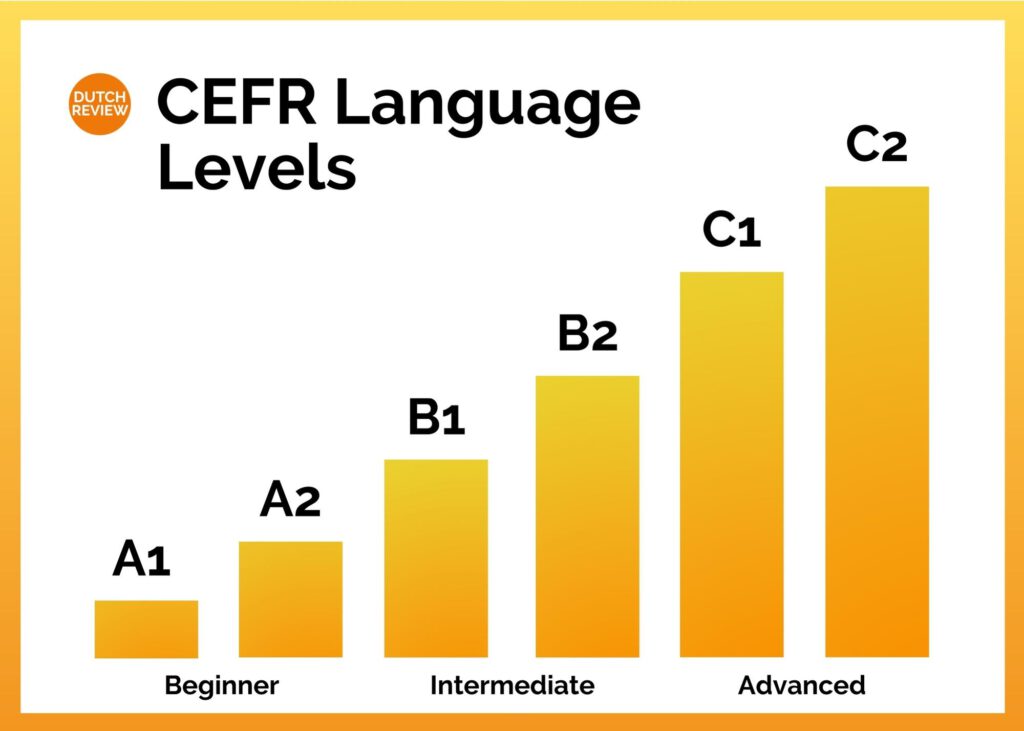
A2, B1? Are we speaking in code? If you’re feeling a little confused, we’re using terms from the Common European Framework of Reference for Languages (CEFR). It looks a little like this:
The CEFR language levels are used across Europe. Image: DutchReview
At what language level do I need to take the Dutch inburgering exams?
The language level of your Dutch integration exams has two main factors:
Your visa or residency type and,
The date the IND formally decided that you must begin to integrate
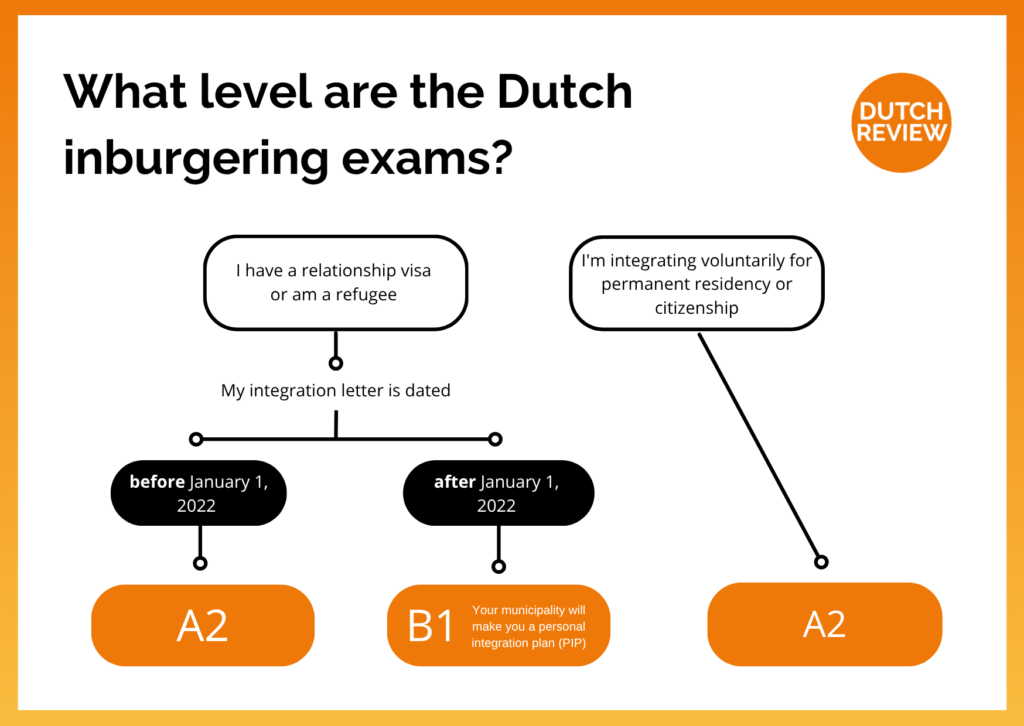
I have a partner/relationship visa, or I am a refugee
If you have a partner or relationship visa or are a refugee, the IND will automatically decide that you must integrate. This typically happens shortly after the date that you registered at your local municipality.
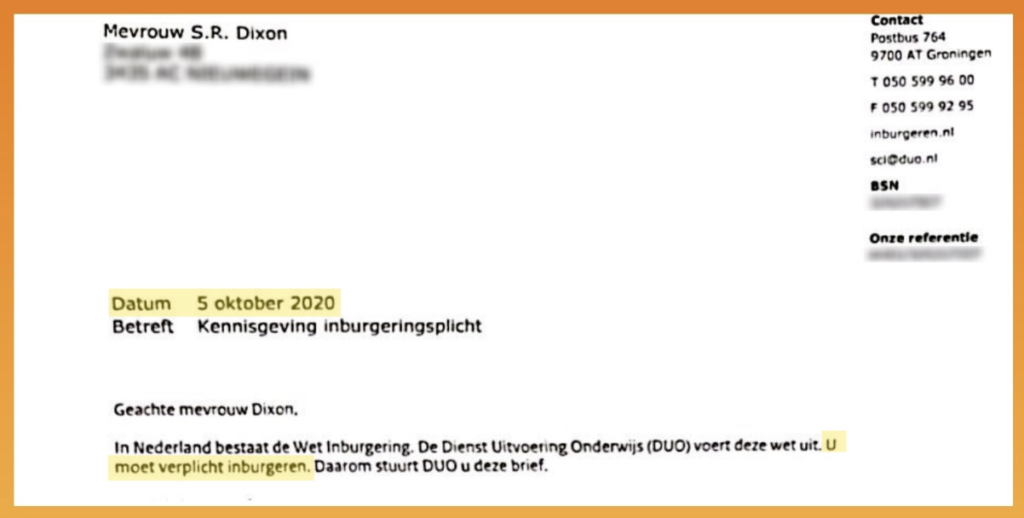
You will receive a letter advising that you are required to integrate, or, as DUO, the Dutch education authority, will write, “U moet verplicht inburgeren.”
Your official letter from DUO will have an important date. Image: Samantha Dixon
The most important thing here is the date of the letter. That’s because there are two laws at play: The Civil Integration Act 2013 and the Civil Integration Act 2021 (which affects people from 2022 onwards).
You can tell which law you fall under by your letter’s date.
Your letter is dated before January 1, 2022
If the date of the letter is before January 1, 2022, then congratulations: the language level you will take the Dutch integration exams at is A2.
Your letter is dated after January 1, 2022
If the date of your letter is after January 1, 2022, you’ll need to study for a while longer: your language level will most likely be B1.
Why “most likely”? Technically, the municipality can decide for you to follow one of three routes:
The B1 route: where you learn Dutch to a B1 level, mostly for integration and working or volunteering.
The education route: where you learn Dutch to a B1 level or higher to prepare for higher education.
The self-reliance route: an exemption given for people who must integrate but find the first two routes too difficult. Instead, you learn Dutch to an A1 level and have non-mandatory exams.
However, the first route is supposed to be the most common option. The upside? You’ll speak pretty decent Dutch by the end!
To create your plan, you’ll first be invited for an initial meeting at your municipality: the brede intake or “broad intake.” Here, you’ll answer questions about your integration so far in the Netherlands, your education, your home life, and so on.
You will also take a basic exam called the leerbaarheidstoets, or “learning ability test.” This test requires no preparation or practice; it’s simply a test of understanding and comprehension.
After the initial meeting, your municipality will create a personal integration and participation plan (PIP). This plan details the steps of your integration process and the route that you will take.
What if the exams are too difficult? A municipality can make some rare exceptions to the language levels stated above — but typically only if you have health problems or would truly struggle to learn Dutch due to circumstances beyond your control.
I am integrating to apply for permanent residency or citizenship
If you don’t fall into the category of having a relationship visa or being a refugee, you likely:
Are here on a temporary visa (such as a working visa),
Have lived here for around five years, and
Have decided to make your stay in the Netherlands more permanent.
We get it, the Netherlands is a leuk place to live!
If this is you, and you’re not an EU, EEA, Swiss, or Turkish citizen, then you’re integrating “voluntarily”, and it’s good news: the language level you will need to integrate is A2.
While learning Dutch might seem like a long journey, an online course can let you do it on your own terms and in your own time. In fact, those using InburgeringOnline reported that an online course was quicker, cheaper, and way more effective than traditional schools! Take a peek at the courses. 👀
For some time, the Dutch government claimed that it wanted to raise the required level for “volunteers” to B1. However, there have been no changes to the level so far, and no indications of any to actually come.
Image: DutchReview
TIP: Still not sure at which level you need to take your exams? Check out DUO’s inburgeren plan generator.
Do I need to take the Dutch integration exams?
Whether you need to take the Dutch integration exams is mostly determined by your nationality. If you’re not from an EU or EEA country, Switzerland, or Turkey, and you’re coming to live in the Netherlands long-term, you’ll likely need to take the Dutch integration exams.
As with anything, there are a few exceptions.
Whether you’re A2 or B1, we can tell you this: taking the Dutch integration exams is really achievable and worth it — especially if it leads to permanent residency or a Dutch passport!
At what language level do you need to take your Dutch integration exams? Share it in the comments below!
Dutch integration exam language level: Frequently asked questions
How long do I have to complete the inburgering exams?
If you are required to integrate in the Netherlands, you have three years to earn your Dutch integration certificate. Most people can study and take all the exams within a year, or even a few months.
Who has to take the integration exam in the Netherlands?
Anyone seeking to stay in the Netherlands for a longer period and who is not a member of an EU/EEA state, Turkey, or Switzerland must take the Dutch integration exams.
What language level is the Dutch integration exam in 2026?
The language level of the Dutch integration exam depends on your visa and when you are required to integrate.
For those on a relationship or refugee visa who became required to integrate before January 1, 2022, the level is A2; for those after that date, it is B1.
For people who are voluntarily integrating, the language level is A2.
Is the Dutch integration exam level still A2?
The Dutch integration exam level is still A2 for people who became required to integrate before January 1, 2022 and for people who are voluntarily integrating in 2026. For everyone else, the level is likely to be B1.
How difficult is the Dutch integration exam?
The Dutch integration exam is taken at either A2 (basic) or B1 (intermediate) level, depending on your personal situation and when you are required to integrate. It’s possible to prepare for and pass the Dutch A2 integration exams within a few months.
The preparation time for the B1 integration exam can take between six and 12 months, depending on your learning speed.
If you’re a proud Dutch passport owner, we’ve got a headline for you to send to your friends and family. The Dutch passport has landed among most powerful passports in the world.
According to the Global Passport Index, the Netherlands shares third place with countries such as Singapore, Belgium, Luxembourg, Sweden, Germany, and more.
But what exactly are these rankings based on?
It all depends on the mobility score
No, someone didn’t just yeet some passports into a pool to see which floated the longest, the Global Passport Index bases its rankings on each passport’s mobility scores.
To generate this score, the index looks at the number of countries that can be easily accessed by a given passport. They look at factors such as:
How many countries will let you travel visa-free
How many countries require you to arrange a visa-on-arrival
How many countries require you to have an Electronic Travel Authorisation (eTA)
And how many countries will issue you an eVisa within three days
These numbers are then added together to give each passport a mobility score. Easy.
What are the Dutch passport’s numbers?
Not to brag, but according to the Global Passport Index, a handy Dutch passport will grant you visa-free entry to no less than 131 countries.
Meanwhile, you will need to organise a visa on arrival for 43 countries, and you need a visa to travel to 24 countries.
Is 24 a high number? Sure, but just remember, if you hold a Dutch passport, you’re still super priviledged.
Others dropped in the rankings
Americans have yet another reason to wish they weren’t tied to the US. Thanks to a certain someone’s antics across the pond, the US passport has dropped to 9th place.
What has Trump got to do with it? Well, since the introduction of stricter US visa policies, other countries have decided to reciprocate and tighten the requirements for US passport holders to enter their borders, BNR reports.
It was also a rough year for Vanuatu, which saw its ranking plunge due to the EU and UK’s doubts about its “citizenship-by-investment” program.
And the bottom of the list? In 95th place sits Afghanistan, with Syria, Iraq, and Pakistan sitting in 94th, 93rd, and 92nd place respectively.
If Sunday’s deluge of rain had you thinking that we’ve returned to typical “Dutch summer”, think again. Temperatures are set to skyrocket once more this week, with up to 36 degrees expected in some parts.
However, first, we have to get through a drizzly start to the week.
Monday will begin with some showers and lower temperatures. However, they will slowly start to rise, with those in the south already enjoying a balmy 24 degrees, AD reports.
Up to 30 degrees from Tuesday
By Tuesday, you’ll already be sweating. Temperatures will sit at around 25 to 27 degrees for those of us along the coast — somewhat manageable for anyone confined to an office.
However, anyone in the east, centre, and south of the country will experience less… productive working temperatures, with between 28 and 30 degrees expected for these regions.
Wednesday is the real scorcher
However, if there’s any day this week to request to WFH, it’s Wednesday.
Temperatures will shoot up even more, reaching no less than 34 to 36 degrees for anyone living inland.
The rest of the country? Temperatures will sit at 30 degrees or more, no one’s dipping into the 20s.
What happens after Wednesday depends on what the winds feel like doing.
A strong westerly wind is expected to cool us down on Thursday, but its timing will determine exactly how sweaty we’ll all be.
According to Weeronline, this shift in wind should bring temperatures along the coast back down to a more manageable 25 degrees.
However, if that shift comes later in the day, cities such as Rotterdam and Amsterdam could still experience temperatures as high as 30 degrees.
And for those in the south? It could be just as warm and sticky as Wednesday, with temperatures of 35 to 36 degrees potentially hitting Limburg, Twente, and the Achterhoek.