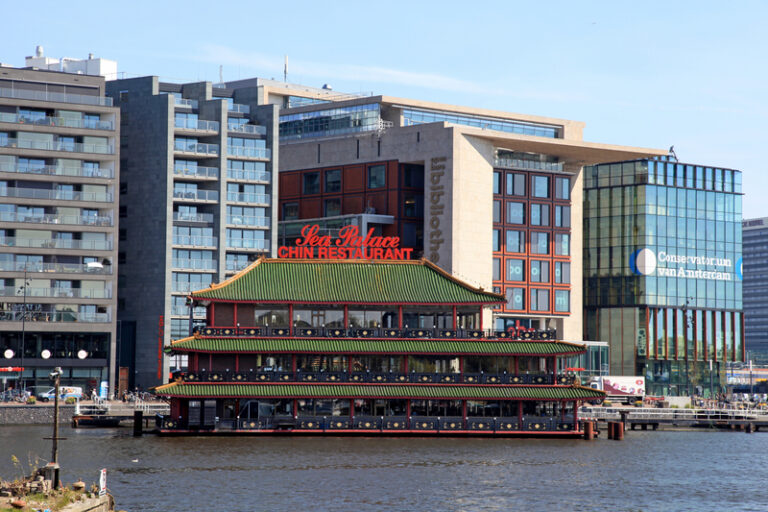
Let’s be honest: Chinese food is the staple of Dutch people who are too lazy to cook. There’s a massive amount of Chinese restaurants in the Netherlands: from frugal takeaway to high-end floating establishments, there’s one for every palate.
As a culturally aware expat living in the Netherlands, you must have heard native Chinese people complain about the Chinese food here. Ever wonder why they’re being so critical?
One reason is that most so-called Chinese restaurants in the Netherlands that do delivery are not strictly Chinese, but something of a hybrid between Indonesian cuisine and Southern Chinese cuisine. 🍛
Hence, you will see restaurants offering this kind of “Invented in the Netherlands” Chinese food with the apt descriptor: Chinees-Indisch.
Here are some features of this breed of comfort food that Dutch people love so much!
When getting Chinese food in the Netherlands, expect names you can’t pronounce
Dish names are often transcribed into the Latin alphabet, meaning that even Chinese people wouldn’t understand at first glance.
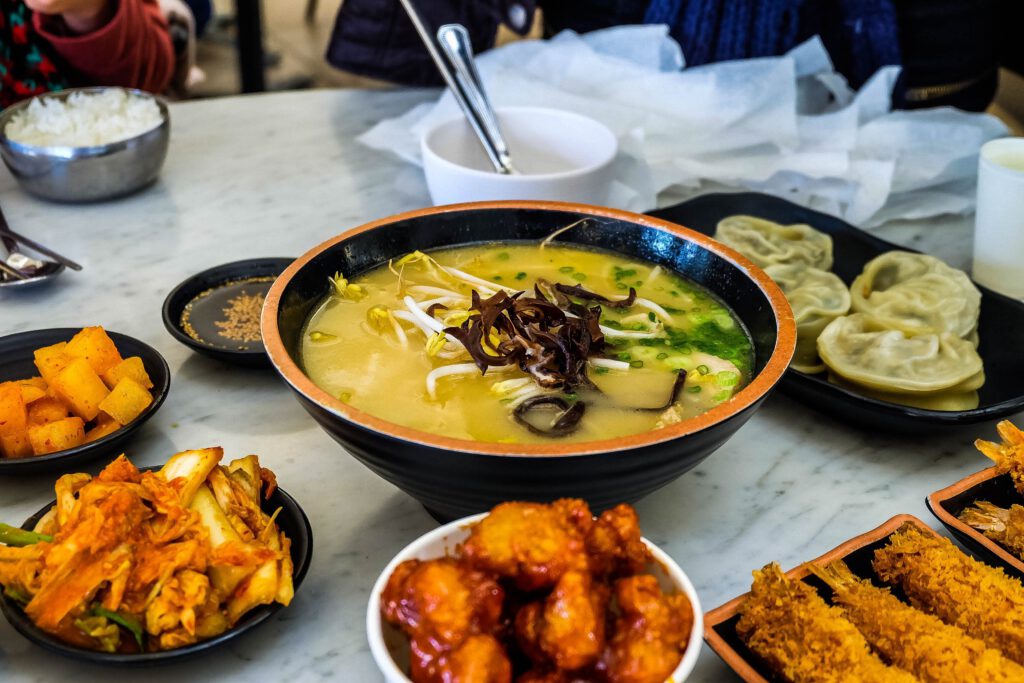
Yummy Chinese noodles! 🍜 Image: Pexels
Despite this, Chinese restaurants are going strong in the Netherlands. “Foo Yung Hai”, “Tjap Tjoy”, “Tau Foe”, “Tjap Ha”, “Koe Yuk” — these are just some words that almost every properly fed Dutch kid knows.
Luckily, restaurant owners are usually kind enough to provide Dutch — and sometimes even English — descriptions of the dishes under the unfamiliar names.
Enjoy meat or fish — and often both!
Europeans, especially foodies, often complain about how meat and fish should not be mixed in the same meal, let alone in the same dish.
Dutch-Chinese restaurant menus may have different sections for meat and fish, but don’t be surprised if you find big chunks of beef in your oyster sauce with your squid dish or pieces of shrimp in your stir-fried pork.
And you know the best part (or worst, if you have allergies)? This isn’t always written on the menu. Some things are better kept a surprise, as fortune cookies teach us.
Expect an avalanche of food
Doesn’t that look delicious? 😍 Image: Unsplash
Some of us may have this experience: no matter how many times you have ordered takeaway, it never ceases to amaze you how much food you are given.
Sambal: you’re going to get it whether you want it or not
You get sambal with your Chinese food in the Netherlands, even though it’s from Indonesia. Image: DepositPhotos
I’ve mentioned that Chinees-Indisch food consists of a lot of Indonesian and Southern Chinese cuisine. Normally, the Southern Chinese influence is prevalent, as most of the Chinese restaurant owners (or their forefathers) are Cantonese speakers from the South of China.
In Southern cuisine, however, spicy food is almost non-existent, because it is simply way too hot to eat spicy food when the temperature hangs around the thirties most of the year. ☀️
Of course, this would not apply to people living in the Netherlands, where summer days’ temperatures are rarely over twenty degrees, or my Dutch-Indonesian friends, who carry mini-bottles of Sambal in their bags. That’s how you know that the ubiquity of Sambal is an Indonesian legacy.
Congratulations! The Chinese food you eat in the Netherlands can’t be found in China!
Given the prevalence of Chinees-Indisch food here, you might think that you would find this everywhere back in China.
But, you would also be very proud to know that you won’t find it anywhere else in the world. (Okay, maybe in Chinatown in Indonesia, or Indo-town, if it exists, in China).
Dutch-Chinese food apparently fits into every occasion. Wait, really?
Chinese Dim sum, who wouldn’t want a bite out of that? 😋 Image: DepositPhotos
I love Chinese food, but I wouldn’t want to eat it all the time.
Let’s say you are invited to a movie night or birthday party or, even Christmas at a Dutch household. You will inevitably run into the situation where your Dutch friends are pouring boxes of Chinees-Indisch takeaway onto their dinner plates.
And best yet, they announce that (surprise!) dessert is going to be sweet rice pudding ordered from a Dutch bakery. (Well, rice pudding is actually Dutch.) 🍮
You can’t blame your Dutch friends. After all, ordering Chinees-Indisch food is just one of the most convenient and cost-efficient meals.
It is the kind of food you won’t mind presenting to your visitors — unlike delivery pizzas that remind everyone of all-nighters in college or shoarma that brings up memories of partying till 5 am and being as hungry as a cow.
At least it fills the stomach without, arguably, making you too bloated, unlike the all-occasion Dutch borrel food!
What do you think of Chinese food in the Netherlands? Let us know in the comments below!
Yep, NS trains are going to be even worse than they already are this autumn, with more trains arriving and leaving too late and tickets becoming more expensive.
We’ve all been there: waiting at a platform when suddenly the dreaded voice plays over the tannoy. “Beste reizigers…”, it says, announcing your train is delayed or, even worse, cancelled. 😡
Well, unfortunately, that isn’t set to change for a while, as the AD writes. After a disappointing 2023 in which NS was ordered to pay €500,000 and ProRail €2.75 million, both companies are expecting to receive fines again this year.
Why is the train service getting worse?
Great question. Let’s get the big one out of the way: The high-speed line between Rotterdam and Schipol still has a major speed limit from its designed 300 km/h to 80 km/h due to poorly designed viaducts.
The fix for this won’t be complete until 2026. Across the lines, large works will be carried out over the coming years, to update the infrastructure that was built after the Second World War.
Major works are also being carried out on a major Dutch freight route, meaning freight trains have to detour through Brabant on the passenger lines.
When should we expect greater punctuality?
ProRail’s CEO John Voppen believes the rail service will improve next year, whilst NS boss Wouter Koolmees tells the AD that “he doesn’t know when [the issues] will be solved”.
For now, there will be no end to the delayed and cancelled trains we have become so accustomed to, and with the threat of a 9% price increase next year, it seems we will be paying more, too.
Have you had any experiences with cancelled trains? Let us know in the comments below!
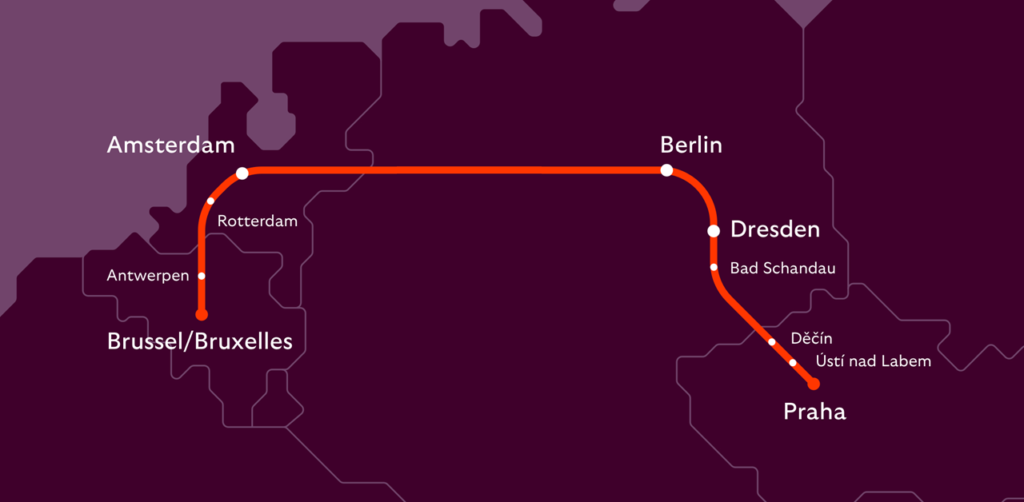
Grab your travel pillows! European Sleeper has just launched a pass allowing unlimited night train travel between Belgium, the Netherlands, Germany, and the Czech Republic.
With inviting prices starting from €149 for a monthly pass and no nationality requirements, this offer promises to become a hit.
This post might have affiliate links that help us write the articles you love, at no extra cost to you. Read our statement.
So, where can I go?
If you’re craving a weekend getaway (or four!), you’ll be able to enjoy some quality time in one of the following destinations:
Brussels 🇧🇪,
Dresden 🇩🇪,
Berlin 🇩🇪,
Prague 🇨🇿.
Take your pick! Image: European Sleeper
Those of us living in the Netherlands will find this deal particularly sweet, since we can board the train from seven different Dutch cities: Roosendaal, Rotterdam, The Hague, Schiphol, Amsterdam, Amersfoort, and Deventer.
All you need is a reservation
There are three types of European Sleeper passes: the €149 one-month pass, the €299 three-month pass, or the €799 yearly pass.
Each pass grants you unlimited travel across the whole European Sleeper network. 🤯
However, you do still need to pay a reservation fee when booking your exact journey. These reservation prices start as low as €11 and are calculated based on the type of seat or sleeper you want to book and the distance of your journey.
Once again, Dutch dwellers are in luck. Due to the country’s convenient geographical location, all trips from the Netherlands count as either short or medium trips, making reservation prices cheaper.
What are you waiting for? Pack your bags and go get that European summer — or autumn, or winter, or spring… you get it. 🎒
What’s your experience with night travel? Tell us about it in the comments below.
Everyone likes to tease about Tikkie, but now Dutch stinginess is finally paying off. Thanks to record-high investments this year, they have officially put aside more money than ever.
Their smart money moves mean Dutch consumers owned a record amount of shares and bonds in June this year, as De Nederlandsche Bank reveals.
This post might have affiliate links that help us write the articles you love, at no extra cost to you. Read our statement.
Intelligent investors
The record-high number of Dutch investments totals an eye-watering 185 billion euros. WOAH. 🤯
Investing has become an increasingly popular Dutch hobby, mainly thanks to a peak in the Amsterdam Exchange index earlier this summer.
This means their investments were worth more not necessarily because the Dutch put more money into investments, but because stock prices have risen. 📈
Want to start investing yourself? Platforms like Trade Republic and Scalable Capital are a great place to get started. If you want to learn more about investing in the Netherlands, check out our article on the topic here.💡
Tech is the top choice
Currently, there’s one industry ruling the roost when it comes to where the Netherlands buys its stock.
Dutch tech companies like ASML and ASMI are popular among Dutch investors, as well as American firms like Alphabet, Apple and Nvidia.
The oil giant Shell remains the unmoved favourite and most popular stock in the Netherlands.
Note: It goes without saying there are risks associated with investing.
Stinginess pays off
But the Dutch don’t only know how to invest wisely, they also know how to build their savings.
Two young girls have been arrested for arson after confessing to setting no less than seven fires across the city of Alkmaar, causing one shop to burn down completely.
With little to do during the school holidays, the “vulnerable girls” acted out of boredom, not targeted action, their lawyer Elwin Boska tells NH.
The Public Prosecution Service is holding the girls responsible for seven fires across the city.
The series started on the first floor of the city centre library, followed by the McDonald’s toilets, Hema, the Grote Kerk, the Vue cinema and then a tent in a Declathon shop.
While staff extinguished these fires in time, a clothing store in the De Mare shopping centre went up in flames. Fortunately, there were no fatalities.
Why did this happen?
The pair had a lighter between them as they both smoke, but they did not explain why they started setting fires.
Alkmaar locals are understandably angry. Footage of the young girls’ arrests is now circulating online, as well as rumours.
Some believe the girls acted on orders, were put under pressure, or were even following a TikTok challenge. However, according to Boskma, he has found no indications to substantiate any of these.
With an investigation now underway, the 12-year-old suspect awaits a verdict on house arrest, while the 14-year-old remains in custody for at least two more weeks.
What do you think of the young girls setting fires out of boredom? Let us know in the comments below.
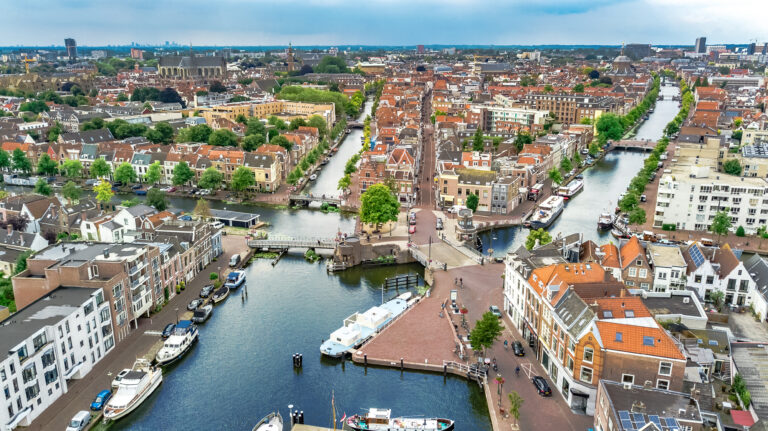
Albeit small and charming, there are loads of things to do in Leiden. As one of the most beautiful cities in the Netherlands, it never fails to amaze! 😍
From windmills to secret courtyards, you can easily fill a week with things to do in this gorgeous, old, university town. Here are my 17 top tips!
In a hurry? Jump straight to the activity that catches your eye first!
This post might have affiliate links that help us write the articles you love, at no extra cost to you. Read our statement.
1. Delve into history at the Burcht van Leiden
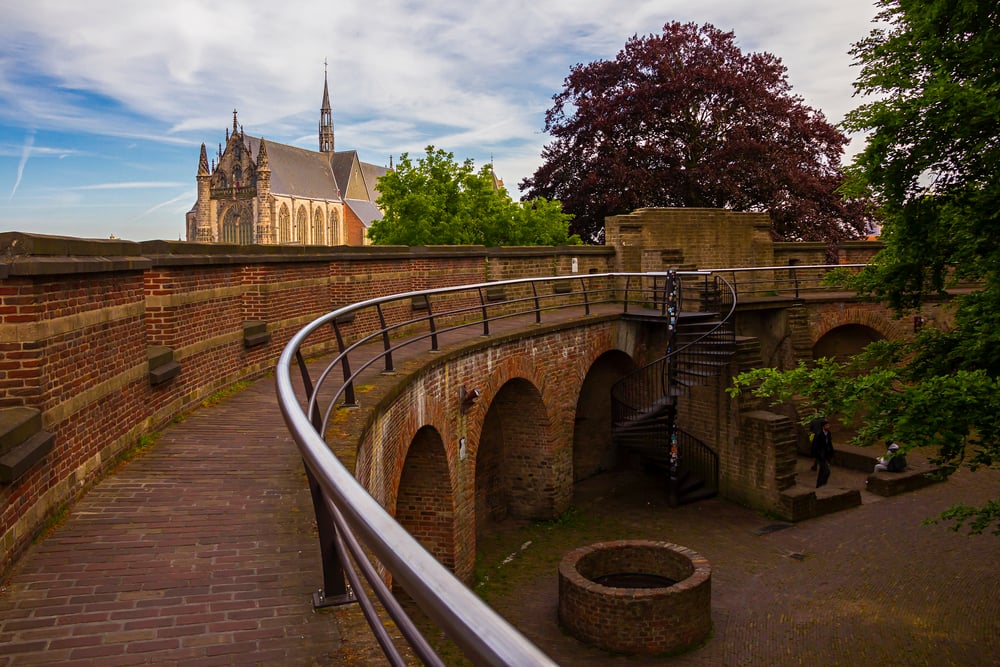
It’s quite unique to come across a hill in the Netherlands, so enjoy the steep climb while you can. 😅
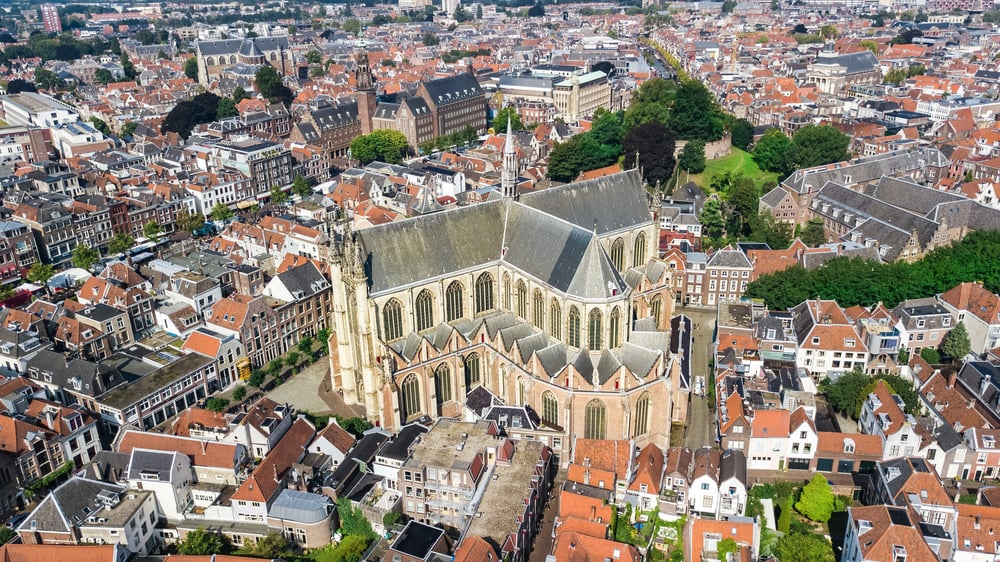
This medieval fortification gives you the best view of the stunning Hooglandse Kerk, and of Leiden in general!
Let op! A hill in the Netherlands! Image: Depositphotos
The 11th-century construction was once a medieval fort and is now an adorable park open to the public. It’s also seen as a national symbol signalling the Dutch defeat of the Spanish in 1574. 💪
The garden has several greenhouses and is open for anything from casual strolls to event rentals. There’s also an adorable café for when the rain (inevitably) sets in.
Here’s a hot tip; if you study at Leiden University, it’s totally free to enter! But watch out, you’re going to want to buy everything they have in the gift shop. 💸
💰 Price: €8.50 for adults, €3.50 for children ⏰ Opening hours: Monday to Sunday:9 AM to 6 PM (summer), 10 AM until 5 PM (winter). 📍 Location: Rapenburg 73, 2311 GJ Leiden
3. Experience real Dutchness at Molen De Valk windmill museum
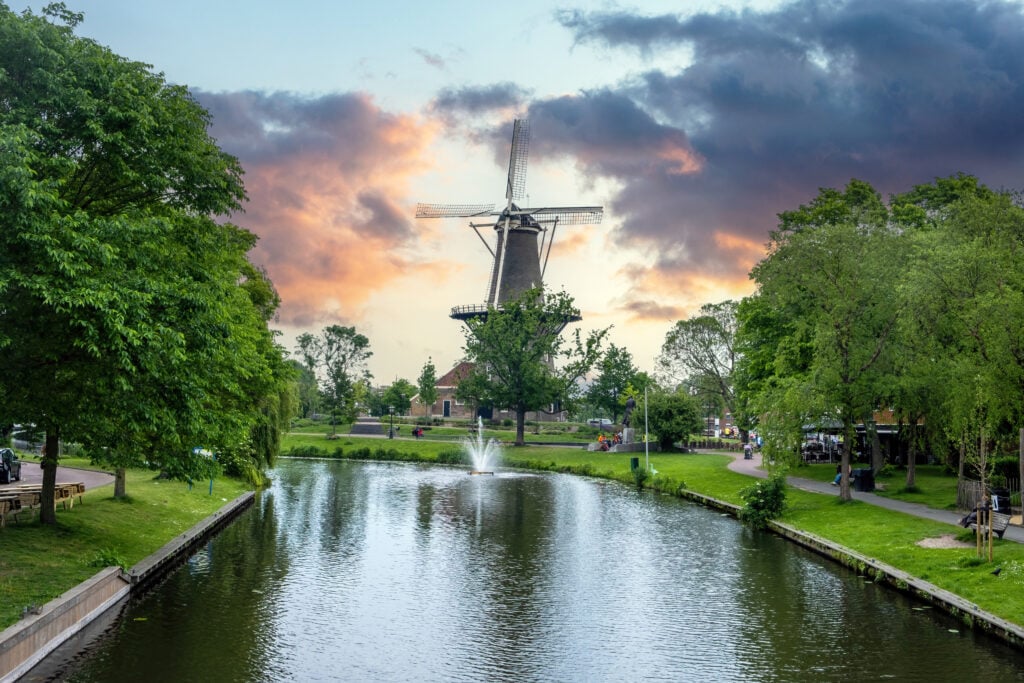
You simply cannot visit the Netherlands without seeing a windmill, and if you’re going to Leiden, you’re in luck — there’s one hanging out right in the centre!
Dutchness overload! Image: Freepik
De Valk is the only windmill left of the 19 that once stood within the city walls of Leiden. Originating in the 1600s, the windmill offers great insight into 300 years of milling history.
You can enjoy the windmill museum or simply admire the construction from the outside — believe us, you won’t want to miss it.
💰 Price: €6.00 for adults, €3 for children ⏰ Opening hours: Tuesday to Saturday 10 AM to 5 PM, Sunday 1 PM to 5 PM 📍 Location: 2e Binnenvestgracht 1, 2312 BZ Leiden
4. Get lost at Wereld Museum Leiden
The first museum of Ethnography in Europe is hard to miss if you’re visiting Leiden.
The museum is one of the oldest of its kind in the world, and it’s a crown jewel in the university city’s long and proud research tradition. 🦸♀️
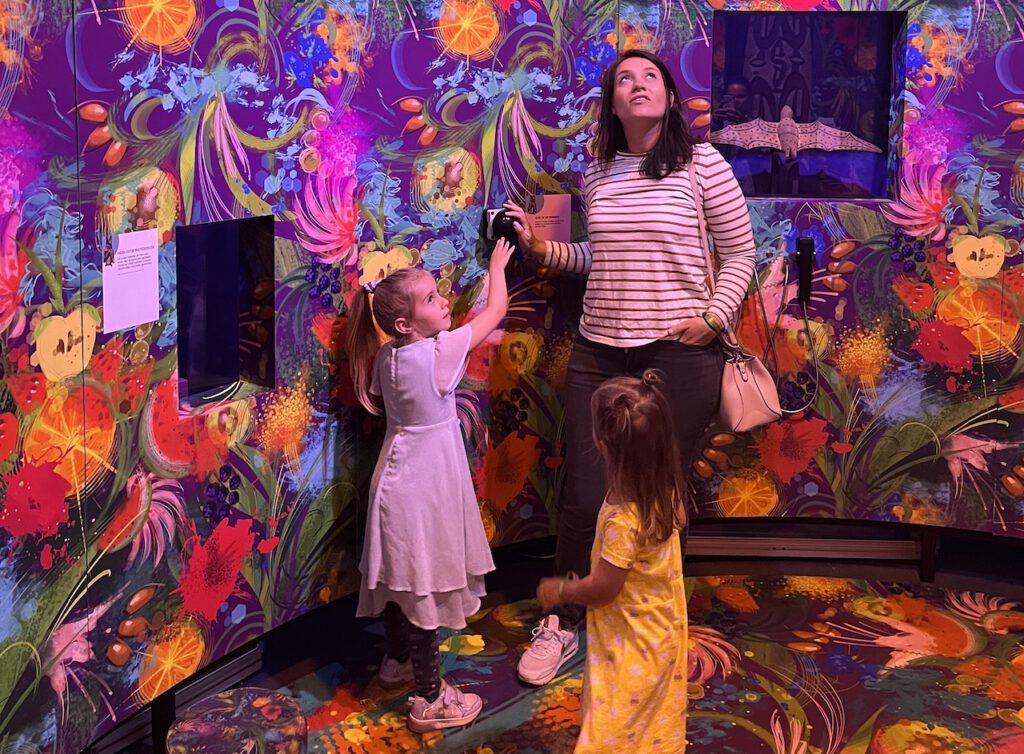
Wereld Museum Leiden offers mind-blowing exhibitions. Image: DutchReview
Book a guided tour, or just admire the museum at your own pace — but be warned that you can easily lose yourself in the many exhibitions for hours and hours!
If that doesn’t tickle your fancy, how about enrolling in traditional New Zealand Haka war dance workshops and checking out Buddhist and Islamic creative drawing workshops?
💰 Price: €16 for adults, €8 for children, €10 for students ⏰ Opening hours: Tuesday to Saturday, 10 AM until 5 PM 📍 Location: Steenstraat 1, 2312 BS Leiden
5. Take a refreshing boat tour on Leiden’s canals
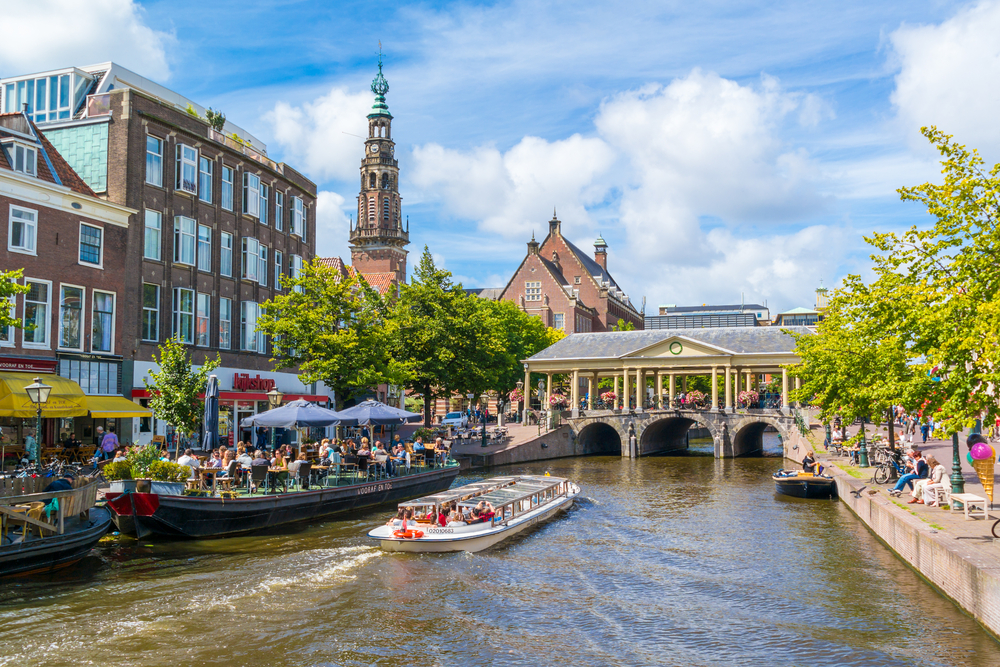
With its 28km of canals, a boat tour in Leiden should be on every visitor’s bucket list. There are tons of companies to choose from, offering a range of options.
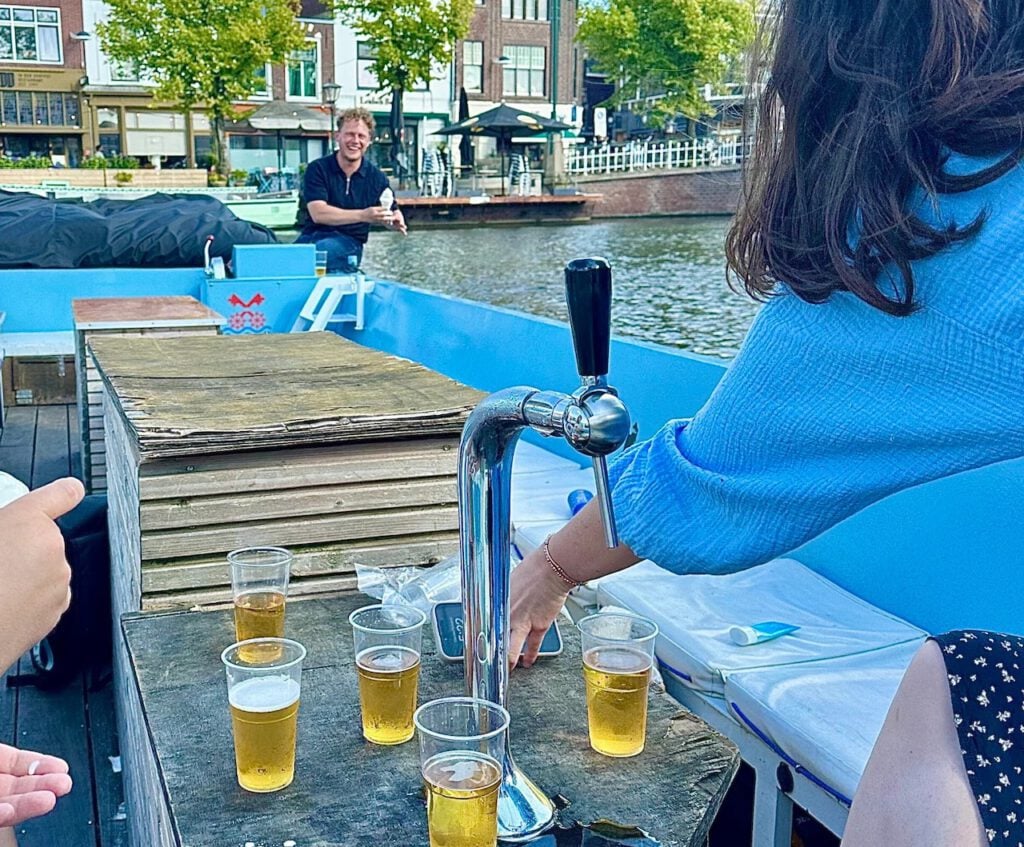
Cold beers, open-air boat, hot summer’s day and stunning Leiden views? Sounds like a dream. Image: DutchReview
Private or group, morning, midday, or evening, open-air or protected from the rain — there’s something for every taste! ⛵
If you’re sure the weather is going to be good, it’s definitely worth it to book an open-air boat — you see way more than if you have a roof!
As Leidenaars, we recommend Rederij Sleutelstad — they even offer a boat with a beer tap on board so you can pour your own pint while you take in the sights! 🍻
💰 Price: from €12.50 for adults, from €8.50 for children (depending on the company) ⏰ Opening hours: Daily 📍 Location: All over the city centre!
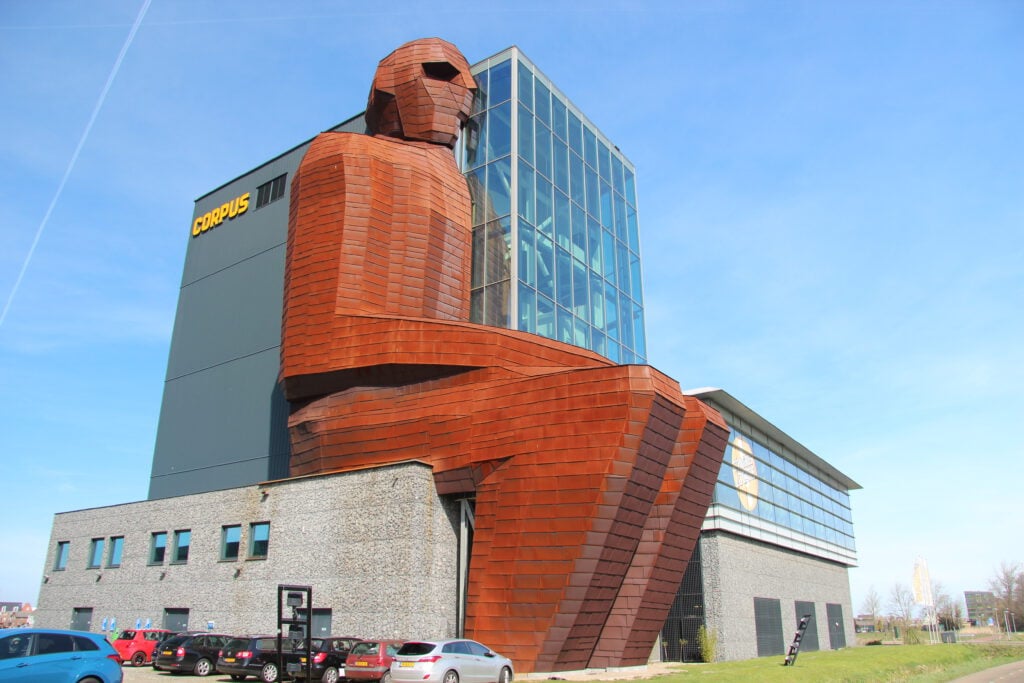
6. Explore the human body at the Corpus Museum
The world’s first-ever museum dedicated to exploring the human body is located in Leiden!
The Corpus Museum building is quite unique! Image: Bic/Wikimedia Commons/CC4.0
What happens with your body when you listen to music or get a splinter? This museum is super interactive and suits all age groups (although kids find it especially fun).
On your visit, you’ll literally be walking around ‘inside’ a massive human body, whilst being inside a 35 metres tall building that looks like — you guessed it — a human body. 🧍♀️
However, reservations are almost a must because this museum fills up quickly! Also, make sure you book your tickets online, for a small discount.
Please note: children under the age of six are not permitted in the museum.
💰 Price: €23.95 (all ages, online price) ⏰ Opening hours: Tuesday to Friday 9:30 AM to 3 PM, Saturday and Sunday 9:30 AM to 5 PM 📍 Location: Willem Einthovenstraat 1, 2342 BH Oegstgeest
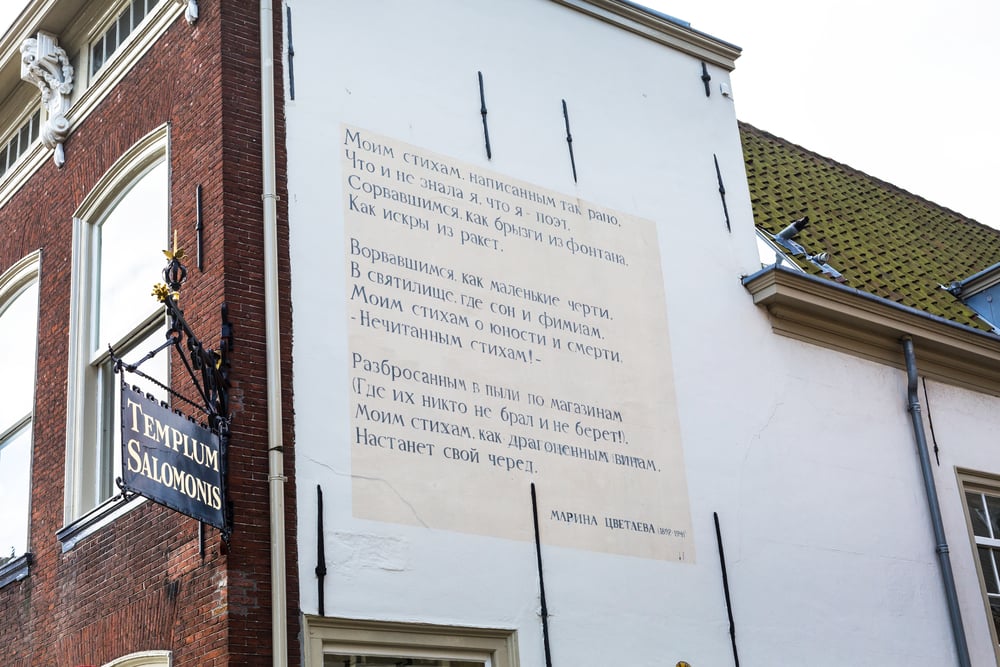
7. Be inspired by Leiden’s many wall poems
Leiden is full of beautiful poetry, simply painted onto the walls of its houses. More than 100 poems written by local poets have given the city a lovely creative vibe for over 30 years! 🧾
There are poems in tons of different languages. Image: Depositphotos
The poems are written in several different languages, so it might be an idea to check out their translations for maximum enjoyment.
If you want some deets to complement your art experience, and you’re down to test your Dutch skills, most bookstores in Leiden sell a handy book called Dicht op the Muur, containing information about the first 101 wall poems.
Or even better, you can try out one of these pre-made routes completely for free!
💰 Price: Free ⏰ Opening hours: All day, every day 📍 Location: Throughout the city
8. Stroll among the stalls at the Saturday market in Leiden
Every Saturday, you can enjoy lovely Dutch treats in Leiden’s weekly street market. There’s no better way to be introduced to Dutch delicacies, crafts, or just Dutchies in general!
Prices tend to be lower than other shops in the Netherlands, so it’s really an opportunity to let loose and secure all those souvenirs and travel gifts! 🎁
If you can’t find enough food and drinks to satisfy your tourist belly at the market itself — fear not! There are tons of cafés and restaurants surrounding the market too.
💰 Price: Free entrance ⏰ Opening hours: Saturday 8 AM to 5 PM 📍 Location: Aalmarkt, 2312 JC Leiden
9. Admire Leiden’s beautiful Pieterskerk
With 900 years of history, there are few better ways to explore the city of Leiden than through a visit to the Pieterskerk.
What used to be Leiden’s main Catholic church has its roots all the way back to the 1300s. Today it serves as a museum and event venue, but the impressive building is still worth a visit. ⛪
Enjoy a concert, ponder the historical exhibitions, or simply admire the building.
💰 Price: €5 for adults, free for children up to 12 years ⏰ Opening hours: Tuesday to Sunday11 AM to 6 PM 📍 Location: Kloksteeg 16, 2311 SL Leiden
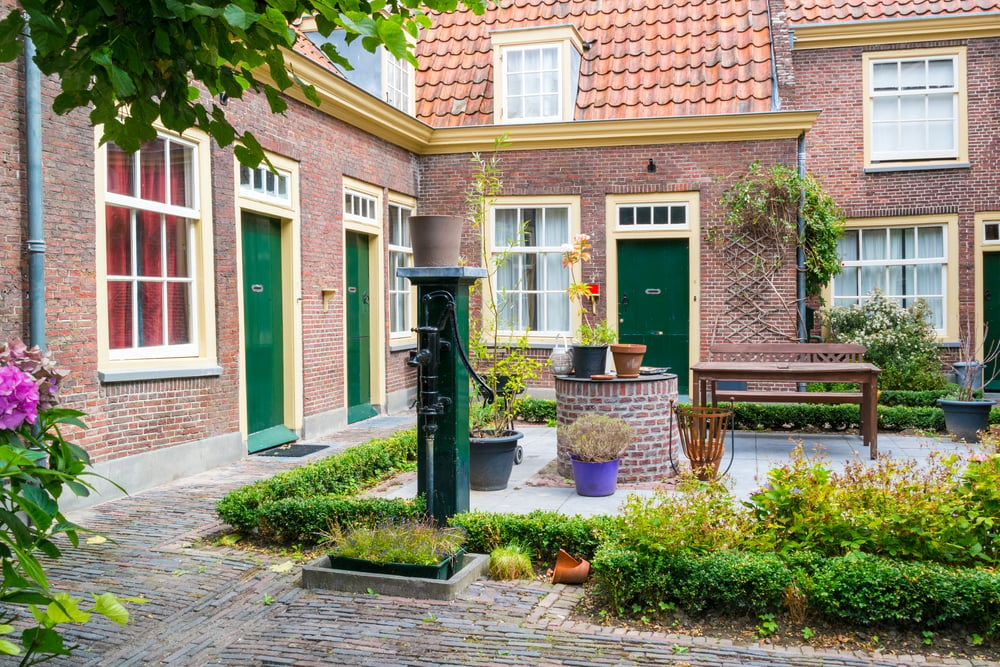
10. Explore secret courtyards in Leiden
A poorly kept secret is that most Dutch cities are full of gorgeous hidden courtyards. These romantic gems are also all over Leiden if you know where to look. 🧐
Some are even open without any entrance requirements! To find the best ones yourself, all you need is on a hofjes map that’s easily purchased for €3.50 at the tourist information office.
However, the easiest and most rewarding (albeit not too private and romantic) way to explore Leiden’s 35 hofjes is with a tour, so you get the most out of the local history knowledge.
💰 Price: from €0, depending on the tour company ⏰ Opening hours: Daily, depending on the hofje 📍 Location: Leiden city centre
11. Enjoy a drink on the water in Leiden
Leiden is full of canals, and the canals are both framed and covered with cute little restaurants, bars, and cafés as far as the eye can see.
There’s no shortage of bars and cafes on Leiden’s canals. Image: Depositphotos
If you’re visiting the Netherlands, you might have heard of the quintessentially Dutch concept of the borrel (if not, educate yourself here). An afternoon on a floating terrace in Leiden is the perfect way to really blend in with the locals. 🍻
If drinking on the water makes you nauseous, don’t stress: there are tons of borrel-worthy bars on more steady ground as well. The centre is packed with places to satisfy all tastes (and budgets).
The area with the most options is along the canal De Rijn and Nieuwe Rijn, although areas outside of the immediate city centre are less crowded.
💰 Price: a small biertje is typically €3 – €5 ⏰ Opening hours: All day, every day (depending on the specific location) 📍 Location: Leiden city centre
12. Embark on Leiden’s Rembrandt-themed walking route
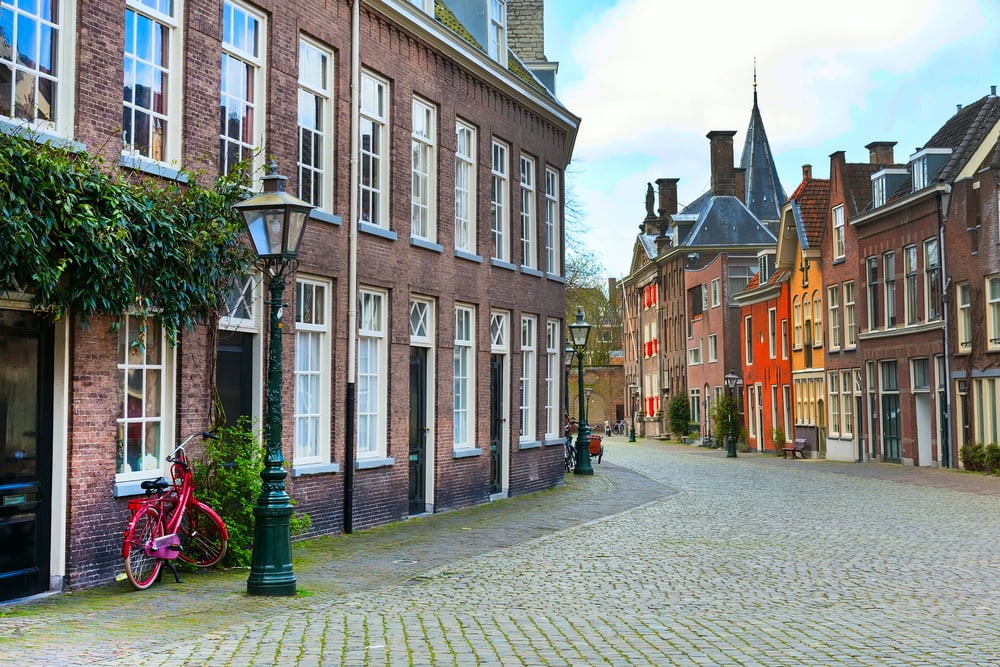
Stroll around the adorable streets of Leiden. Image: Depositphotos
As part of the tour, you’ll explore Rembrandt’s first years as an artist in the studio of his first teacher, Jacob van Swanenburgh (the so-called Young Rembrandt Studio). 👟
The route is accessible via a purchasable booklet, and the tour also can be downloaded via the Rembrandt Route App!
💰 Price: €6.95 for the route booklet ⏰ Opening hours: The Rembrandt route is accessible at all times, but the Young Rembrandt Studio is open Tuesday to Sunday 12 PM until 5 PM 📍 Location: Langebrug 89, 2311 TJ Leiden (Young Rembrandt Studio)
13. Get starstruck at the Heineken Star Bar in Leiden
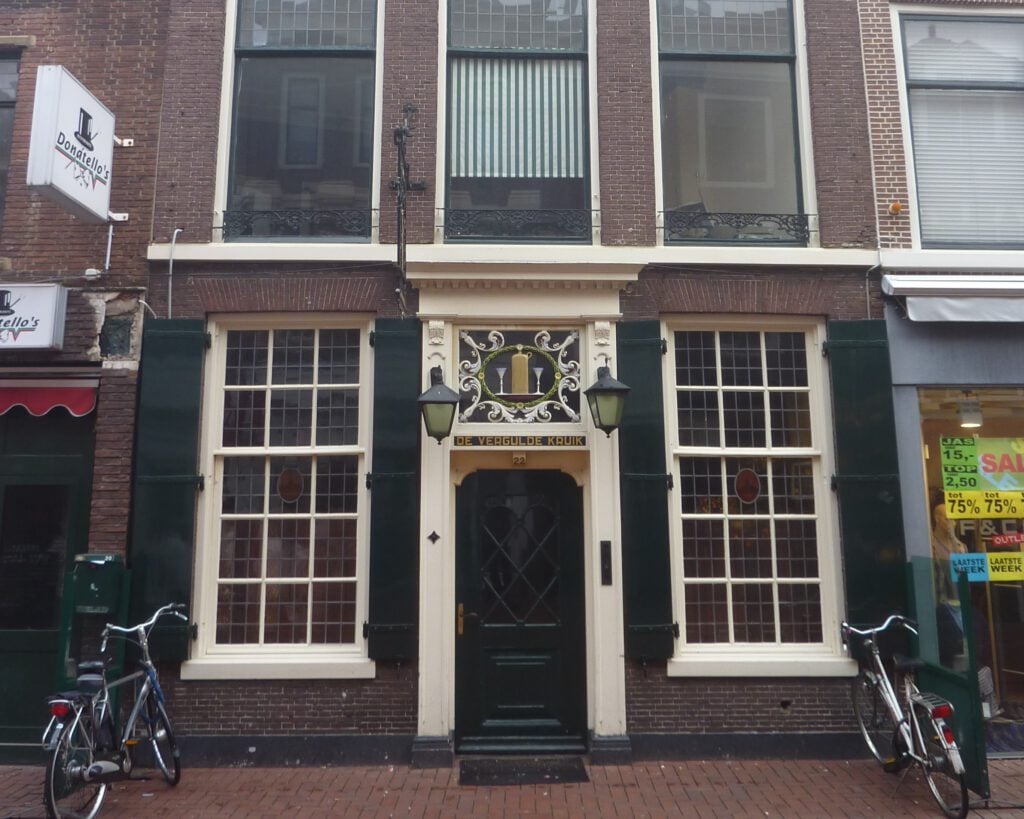
Ever wondered where the famous Dutch beer brand Heineken got its logo? I’ll tell you anyways! One of the oldest brown pubs in Leiden, De Vergulde Kruik, allegedly sold their red-star logo to Heineken for about €400 in today’s money. 😎
Old and classic, nothing beats a traditional Dutch borrel. Rudolphus/Wikimedia Commons/CC3.0
The pub is centrally located and really feels like a time machine when you step inside.
With its 19th-century stained glass, original silver taps, and cosy atmosphere, De Vergulde Kruik is a favourite among locals, students, and occasionally a tourist or two.
If you’ve had enough of the endless supply of Dutch beer (like a crazy person), you might be happy to hear that the pub also serves delicious food!
💰 Price: a small biertje is typically €3 – €5 ⏰ Opening hours: Monday to Friday 3 PM to 12 AM, Saturday and Sunday 12 PM to 10 PM 📍 Location: Haarlemmerstraat 22, 2312 GA Leiden
14. Watch the stars at Leiden’s Old Observatory
As the oldest of its kind, the Observatory in Hortus Botanicus is one of the things to do in Leiden that is well worth a visit. It’s frequently used as a university building, but it’s also open to visitors.
Check out the visitors’ centre, book a private tour, or join one of the monthly open evenings of one of Leiden’s astronomy societies. ✨
Enjoy an astronomy lecture and try out a telescope at the open evenings — the perfect date idea if you ask me!
💰 Price: from €10 for entry, €95 for a private tour, €4 for an open evening ticket ⏰ Opening hours visitors center: Tuesday to Friday 1 PM to 5 PM, Saturday and Sunday 11 AM to 5 PM 📍 Location: Sterrenwachtlaan 11, 2311 GP Leiden, Nederland
15. Take a green break at Het Plantsoen Park
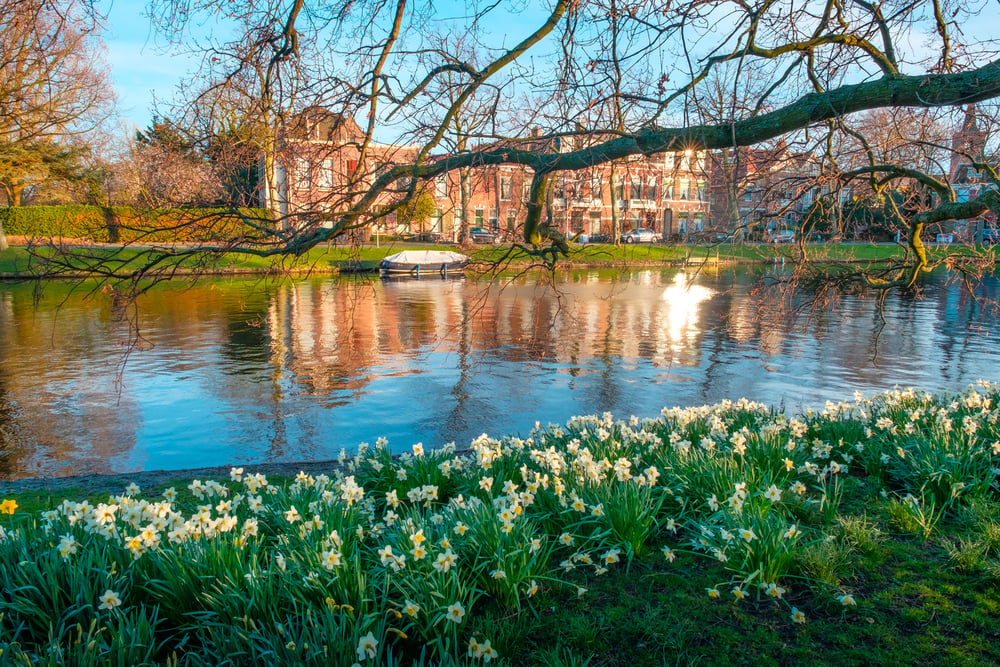
This 19th-century city park of Leiden is a popular spot for weekend strolls along the water.
It’s always nice to take a green break when you’re on a busy city trip! Image: Depositphotos
In addition to fresh air, green grass, and beautiful flowers, there are also other interesting sights in Het Plantsoen, such as the old aviary, the fountain, and the 350-year anniversary monument of the relief of Leiden. 🌳
The park was designed by architect Salomon van der Paauw in English style. In its time, the project was funded by the municipality of Leiden, which hired several unemployed people for the construction.
Stay up to date on the activities in the park and its surroundings via the Het Plantsoen newsletter, produced by the Het Plantsoen Association.
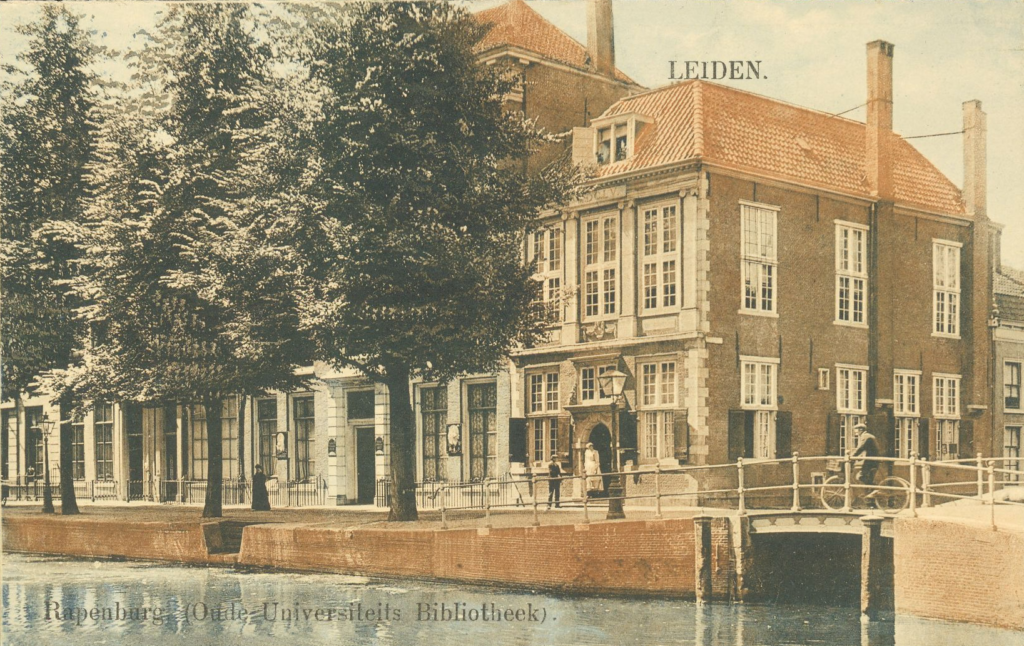
16. Let your history geek loose at the Bibliotheca Thysiana in Leiden
Founded in 1653 in honour of the Dutch legal expert Johannes Thysius, this old library contains over 2500 books and several thousand pamphlets.
Law students have been coming to Bibliotheca Thysiana for centuries. Image: Unknown author/Wikimedia Commons/CC BY-SA 3.0
The building is the only surviving 17th-century construction in the Netherlands that was built for the purpose of being a library — an interesting piece of history if ever there was one!
Not only is the library a great source of legal reading material, but you can also book meeting rooms or join a guided tour of the building (albeit for quite a fee).
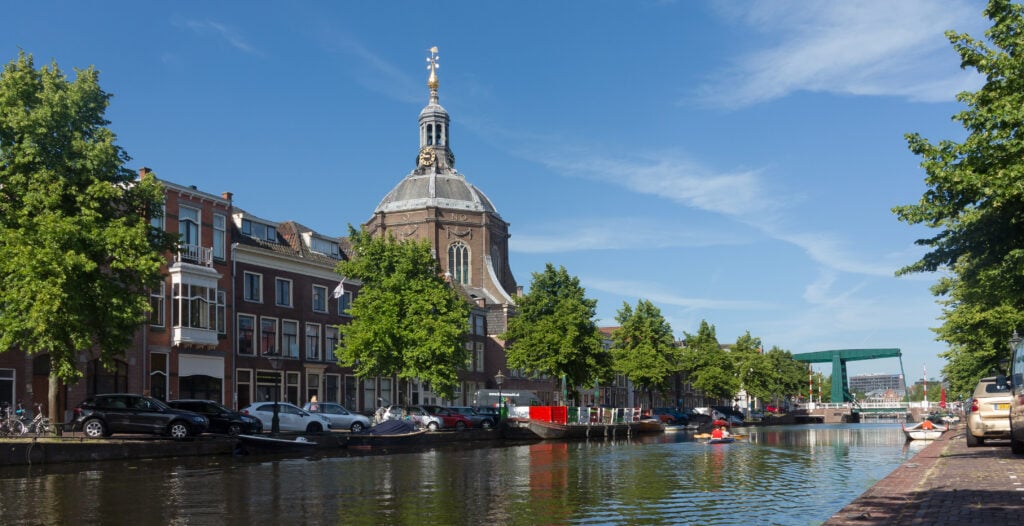
The round dome of the Marekerk is quite striking and impossible to miss if you visit Leiden.
The reformed Protestant church was the first of its kind in Leiden and keeps lots of history and beauty between its walls. 😍
A landmark in the Leiden skyline. Image: Helena/Wikimedia Commons/CC2.0
There are usually lots of concerts taking place in this historical building, but if you’re just in the mood to sit and relax, you can also enjoy a coffee at the Marekerk café.
There’s no shortage of things to do in the beautiful city of Leiden, so get your walking shoes and cameras ready! It’s the perfect blend of exciting and calm and should be on any traveller’s bucket list.
Which attractions will you visit in Leiden? Do you have any suggestions to add to the list? Tell us in the comments below!
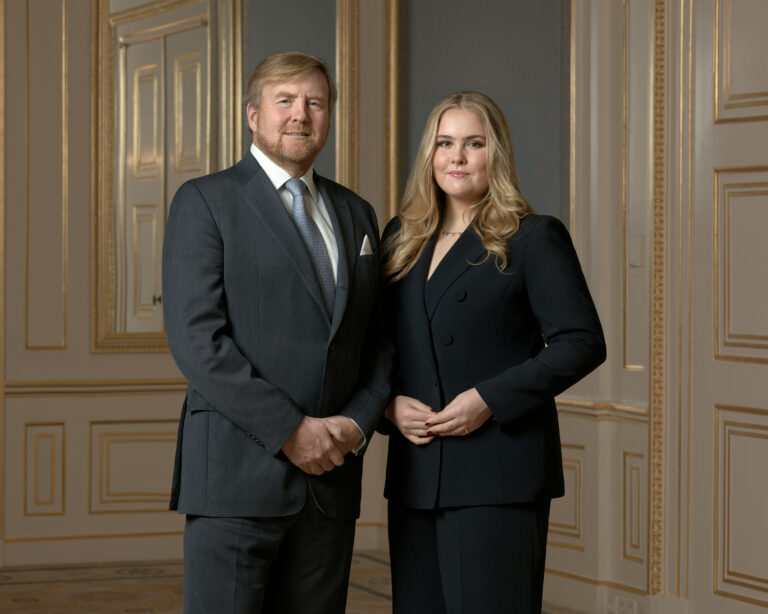
Dutch Princess Amalia will become a member of the biggest Amsterdam student association, ASC/AVSV, and participate in hazing this week.
What do the royal family and fraternities and sororities have in common? They both have a long history in the Netherlands, as well as their fair share of controversy.
Despite not initially being selected for the corps’ intro week, Amalia will join ASC/AVSV following her post-introduction camp in Leusden, NOS reports.
From resisting royal rituals…
In Amalia’s first year at the University of Amsterdam, she broke from family tradition on two counts: She wouldn’t be studying in Leiden and would not become a “member” (yet).
Then the Crown Princess spent a year in Spain because of serious threats to her life in Amsterdam.
Now she’s swapping the Spanish sun rays for a Dutch September haze, which comes with its own dangers.
…to a taste of troubling traditions
The Amsterdam student corps receive countless applications every year, but also copious media attention.
In 2022, videos surfaced on social media showing male members at a dinner party referring to women as “cum buckets” and “whores.”
A female member filed charges against four men, but they were not prosecuted.
I know finding student housing is tough, but there’s got to be an easier way to get a room than by submitting to sadistic hazing rituals that involve setting yourself on fire, getting hot wax dumped on you, and/or rolling around naked in broken glass. https://t.co/WSbHjDb7F4
Then, last year, the Amsterdam corps issued an apology to its members past and present for years of violence and abuse during the initiation period.
So Amalia joins as the culture is supposedly changing, with the corps introducing a code of conduct, increased supervision, rest requirements and confidential counselors.
What do you think of the Princess becoming a member of the student corps? Let us know your thoughts in the comments below.
Chinese restaurants in the Netherlands are facing significant challenges. Even worse, experts are concerned that recent legislation changes could potentially eliminate the sector within the next ten years.
More specifically, staff mobility in Dutch Chinese restaurants has hit a great wall of… bureaucracy.
Why? Since July 1, 2024, new laws regulating hiring processes have made it more difficult than ever to find Chinese cooks.
This has left restaurants scrambling for solutions, with many reducing their working days, closing down parts of their business, or even cutting their menu in half.
The ‘Wok Agreement’ is up in flames
According to experts, the new law might deal a fatal blow to an already struggling sector.
“I fear that in ten years, there will be no Chinese restaurants left at all,” the co-owner of Amsterdam’s famous Nam Kee restaurant tells Het Parool.
But the problem isn’t new: increasingly strict laws have been causing chef shortages in the Netherlands for over a decade.
In 2014, the so-called ‘Wok Agreement’ proposed a partial solution to the problem.
The law allowed Chinese restaurants to impose otherwise illegal requirements throughout their hiring process, such as fluency in specific Asian languages or specific skills in Asian cuisine.
However, the agreement was scrapped in 2022 due to concerns that it facilitated illegal labour practices.
‘Without Asian cooks, no Asian restaurants’
With the special ‘Wok Agreement’ requirements being dropped, restaurants are now expected to seek out European cooks and train them in Asian cuisine.
Sector workers find this unacceptable, and in May, they submitted a petition to the Tweede Kamer (Dutch House of Representatives), titled ‘Without Asian cooks, no Asian restaurants’.
So far, they haven’t been heard.
Do you think the law should make an exception for Asian chefs coming to work in the Netherlands? Share your thoughts in the comments.
It’s official: even expat spiders can navigate the Dutch housing crisis before we can, as this large species from Down Under is here to stay.
The Australian house spider has been spotted across the Netherlands since 2021, which means it has truly proven the fact that it can survive Dutch winters.
“It will survive here”, Jinze Noordijk, biologist at the EIS Knowledge Center Insects, tells NU.nl.
Should you be worried?
The short answer is no: these critters are big, but they’re not dangerous to humans.
The spiders have travelled from afar (as their name suggests), previously settling in North and South America, South Africa, and Europe, mainly in England and Germany.
The news lady even said “with the amount reported they’re here to stay.” UHM NO THANKS pic.twitter.com/zML4683RUY
The Australian variant spreads via plants, so plenty have probably already made a home in your garden. Gezellig!
What do they look like?
We would rather remain blissfully ignorant. But, if you would like to keep an eye out for these eight-legged friends, there are some ways to recognise them.
Firstly, they are normally a few centimetres in size (gulp). They also have a mark on the upper side of their bodies, and their web is a unique zig-zag pattern instead of the usual wheel design.
You can report sightings to Waarneming.nl, as they track just how advanced the Aussie spider’s settlement becomes…
Have you spotted any Australian house spiders in the Netherlands? Let us know in the comments below.
To be President of the United States, the Constitution states that you must be a ‘natural-born citizen’ in the country. Thanks to his great-great-grandfather, Martin didn’t have a problem with his election.
Once a Dutchie, always a Dutchie
Martin van Buren never lost touch with his Dutch roots. He grew up in a distinct Dutch community where he mostly spoke Dutch.
He even went on to marry a woman with Dutch ancestry, Hannah Hoes. You can take the man out of the Netherlands but not take the Netherlands out of the man.
Perhaps, the only thing not very Dutch about him was his height. He stood at a short stance of only five foot six. Wat jammer!
President of nicknames
During his presidency, van Buren accumulated a list of nicknames. Namely: The Careful Dutchman, The Red Fox of Kinderhook, The Little Magician and The Great Manager.
Most interestingly was Old Kinderhook which was abbreviated to O.K. and is said to have led to the widespread popularity of this term that we still use today.
His presidency isn’t really one for the ‘top 10 greatest Presidents of all times’ lists since he was plagued by the panic of 1837, starting only after five weeks in office, for which he got the blame.
That led to a new nickname: Martin van Ruin. Of course, his opponents used the financial crisis against him which meant he had little to no chance of being reelected. Doei Dutchman!
Despite his failures, Martin van Buren’s reign as America’s President is a fond accomplishment for the Dutch. For such a small country, it was definitely no small feat.
Do you know of any other Presidents around the world of Dutch origin? Tell us in the comments!