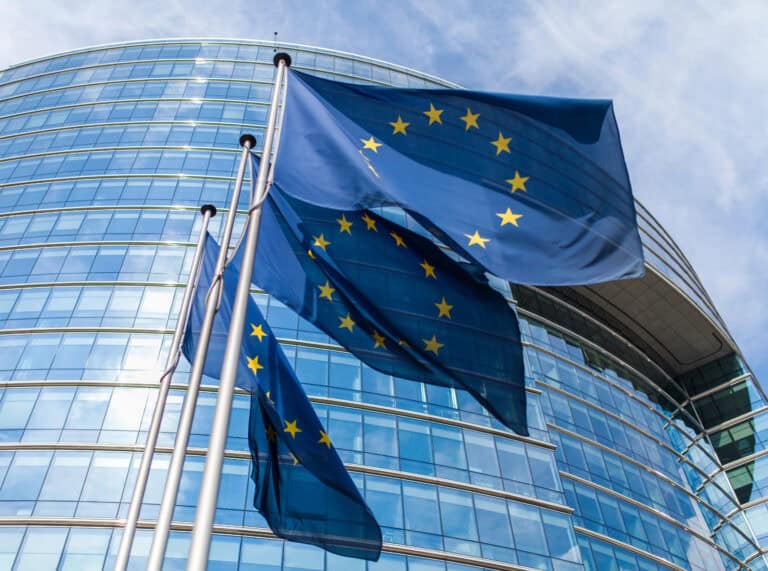
The Netherlands might be losing out on billions as the EU discusses its new long-term budget, with talks captured in a classic feud of net contributors vs. net recipients.
In its role as president of the Council of the EU, Cyprus has put forward a proposal for a 2% (€32.8 billion) cut to the common budget — referred to as the Multiannual Financial Framework.
The proposal protects farmers’ subsidies and regional payouts, while slashing funding in places like the European Competitiveness Fund and Global Europe Fund, which finance European innovation and development aid.
As of the current budget, agriculture and regional funding are the largest spending categories, standing at 60%. Under the proposed changes, this drops to 44%.
The Dutch aren’t happy about it
“Unacceptable, unaffordable, and unbalanced” is how the proposal was described by the Dutch Minister of Finance, Eelco Heinen (VVD), according to De Telegraaf.
Under the current proposal, the Netherlands is set to lose out on at least €2.7 billion a year, writes AD.
The Jetten cabinet has adopted a policy under which Dutch contributions to the EU would be capped at €1.6 billion. For context, the Netherlands is one of the largest contributors to the EU — in 2024, the country contributed a total of €7.5 billion.
The frugals vs. the farmers
The Netherlands finds itself in a group of net contributors labelled the “frugal countries,” alongside Germany, Denmark, Sweden, Finland, and Austria. Their priorities are clear: slashing spending on agriculture and regional funding, with greater emphasis on defence spending.
“We wanted a 20% cut, and we got 2%,” said an EU diplomat to POLITICO.
On the other side of the dinner table are the net recipients, dubbed the “Friends of Cohesion”: Bulgaria, Croatia, Estonia, Greece, Italy, Latvia, Lithuania, Malta, Poland, Portugal, the Czech Republic, Romania, Slovenia, Slovakia, Spain, and Hungary. These 16 member states are calling for an increase in agricultural and regional funding.
The European Parliament, co-legislator alongside the Council, is also pushing for a bigger budget, describing Cyprus’ proposal as insufficient.
Here’s what happens next
EU leaders aim to reach an agreement on the budget by the end of the year, requiring unanimous support from all 27 member states and the consent of the European Parliament.
Ireland takes over the presidency from Cyprus in July and will be tasked with brokering a unified agreement before 2027, a major election year for critical EU member states like France and Italy.
What are your thoughts on the budget debate? Let us know in the comments.
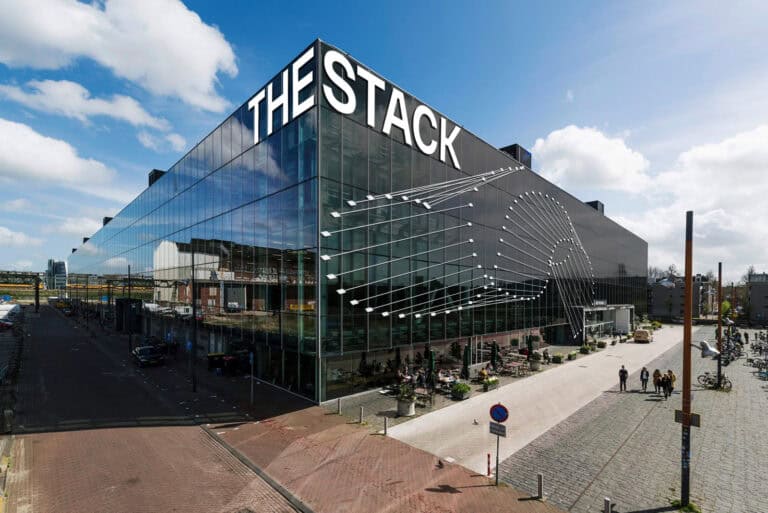
A new AI hub called The Stack is opening in Amsterdam this September, aiming to bring together the country’s fastest-growing AI startups under one roof and stop Europe from outsourcing its tech future.
According to the press release, the idea is simple: put founders, investors, and big corporate partners in the same building, and watch the sparks fly.
With more than €10 million in private money and the City of Amsterdam behind it, a lot hinges on this project.
A smart move for Europe
Currently, Europe is feeling nervous about how much it depends on AI built elsewhere. And that concern hasn’t come out of thin air; the US has produced 40 AI foundation models, while Europe has managed just three.
The Stack, writes the release, “is founded to change that by giving Europe’s best AI builders a physical home.”
What is The Stack?
Essentially, you can think of it as a haven for AI companies: a single building in Amsterdam where startups, investors, and corporate giants all work within “Let’s grab a coffee and chat?” distance of each other.
The complex will officially open its doors in September 2026 at Jacob Bontiusplaats 9 in Oostenburg, a former industrial pocket on the eastern edge of the city.
At launch, it’ll host a curated group of fast-growing startups, with Ubicloud, Dawnguard, and Iconic Works first through the door.
Backers include a mix of Dutch and global giants, including ABN AMRO, ClickHouse, Deloitte, IMC, Google, Miro, and Prosus.
Why is this happening now?
Needless to say, the timing isn’t a coincidence.
With Anthropic’s latest AI models no longer available in Europe, the EU has had a major wake-up call about its reliance on foreign AI companies.
The Stack’s founding director, Esther Bisschop, didn’t mince words: “Our digital infrastructure still relies too heavily on players outside our continent. The US and China are racing ahead, while Europe continues to watch from the sidelines.”
In her view, the problem isn’t a lack of ambition but a lack of somewhere to channel it. Will The Stack act as a hub for home-grown talent? Only time will tell.
What does this mean for internationals in the Netherlands?
If you work in tech (or want to!), these are changes worth knowing about.
Through partners like Techleap, a Dutch organisation that supports startups, The Stack says it’ll be connected to universities and research institutions both here and abroad.
Would you want to work somewhere like The Stack, or are you rolling your eyes at the AI hype? Share your thoughts in the comments below.
A new EU proposal could potentially undermine the Netherlands’ planned Box 3 wealth tax, letting wealthy investors shelter their gains in a company while ordinary savers pay 36% a year on their gains.
An EU plan to make investing easier could mean a much smaller tax bill for people who hold their investments inside a company instead of in their own name.
For most internationals with a savings account, nothing changes for your day-to-day finances. But for anyone with a sizeable investment portfolio, it could reshape how much tax you pay (and when).
What’s changing?
The Netherlands wants to overhaul Box 3, the tax on your savings and investments, from 2028. According to official sources, the new system would tax your actual gains at 36% each year, even on shares you haven’t sold.
Why are Box 3 taxes being overhauled again?
At present, Box 3 taxes a fixed, assumed return rather than what you’ve actually earned.
The Hoge Raad (the Dutch Supreme Court) ruled that illegal in 2021, so the Box 3 reform will tax your real return instead, at 36% — with the first €1,800 per person untaxed each year.
However, while the Netherlands is moving to tax private investors more heavily, the EU is heading in the opposite direction for company-held investments.
Right now, when a company earns profits from shares it holds in another company, it pays tax on that income. Should the EU proposal come to pass, it would make those profits tax-free.
This means that if you hold your investments inside your own BV (private limited company) rather than in your own name, your gains could build up untaxed inside the company, instead of being taxed yearly in Box 3.
What do these potential changes mean for savers?
If you invest privately, the new Box 3 tax would hit you with 36% a year on your gains from 2028, even on shares you haven’t sold. You pay taxes on everything above the tax-free allowance of €59,357 per person, according to the Belastingdienst (Dutch Tax Administration).
However, if the new EU proposal goes through, wealthier investors could dodge those taxes entirely. By holding their investments through a company, the EU proposal would let their gains pile up untaxed, while ordinary savers keep paying in full.
Should enough money shift into companies to escape taxation, the Dutch treasury could stand to lose billions, and the wealth tax would land hardest on the people least able to game it.
There’s a catch
Thankfully, both plans are still proposals, not law.
The EU plan comes from European Commissioner Wopke Hoekstra, reports RTL Nieuws, and was first revealed by De Telegraaf. EU tax changes need all member states to agree, which rarely happens quickly.
In addition to this, the current Box 3 reform is on equally shaky ground. Finance Minister Heinen wants to amend it before the Eerste Kamer (the Dutch Senate) votes on June 30, 2026.
Want to make sure DutchReview pops up on your news feed more often? Just add us as a preferred news provider, and we’ll handle the rest.
The Netherlands’ fastest and most reliable VPNs enable you to protect your privacy online, access region-locked content, and securely browse the net. 🤳
Whether you’re looking to access foreign streaming services or stay private on public Wi-Fi, a VPN is one of the handiest tools money can buy.
Why? Well, in addition to boosting your online security, it gives you access to a whole suite of useful features that’ll help you:
Save money on hotels and flights by unlocking regional discounts
Access geo-blocked content, such as foreign streaming libraries and websites banned in your location
Stay safe online by masking your IP address, encrypting personal data, and hiding your true location
Our top VPNs in the Netherlands
⚡ Best VPN overall:ExpressVPN 🔐 Best VPN for security:NordVPN 💸 Best VPN for users on a budget: Surfshark
What is a VPN?
A VPN (or Virtual Private Network) is a service that establishes a secure connection between your device and the internet.
It does this by encrypting your data and rerouting it through a remote server, ensuring that your IP address stays hidden.
An IP or Internet Protocol address refers to a unique numerical label assigned to every device that connects to the internet. You can think of it as an online address, which tells the internet where to send your messages, emails, and other data.
However, because IP addresses can be used to track your web activity and approximate location, it leaves the door wide open for various dangers. These include:
Your internet data, banking information, or identity could be stolen by hackers
Your data could be sold to companies by your internet service provider
Your access to various sites and services could be denied due to geo-blocking
A VPN acts as a shield against these virtual threats, making it a stellar choice to use one! 💪
This post might have affiliate links that help us write the articles you love, at no extra cost to you. Read our statement.
The best VPNs in the Netherlands
With a powerful blend of speed, reliability, and a whole host of security features, these are the top VPNs in the Netherlands.
ExpressVPN’s lightweight design delivers a faster and more reliable experience than competing VPN services on the Dutch market.
It’s designed to be as unobtrusive as possible, boasting instant connections and minimal battery drain. During our tests, I was shocked at how speedy my connection was, even while accessing my Dutch Netflix library from halfway around the world.
From defending your devices against malware-ridden websites to exploring the internet ad-free, NordVPN ensures a speedy and secure connection.
As a privacy-conscious user, I was a big fan of the fact that NordVPN offers “obfuscated servers”, ensuring that my location is kept private, without sites detecting that I have a VPN active. I could also opt for a dedicated IP, letting me browse from Leiden — irrespective of where I travel.
Proving that premium protection doesn’t need to come with a premium price tag, Surfshark’s comprehensive security makes it one of the best-value VPNs in the Netherlands.
Surfshark comes with a suite of handy web tools, like a fake ID to protect your info online, antivirus software, and connectivity for an unlimited number of devices. I also like that it offers a built-in ad-blocker, meaning there’s one less plugin for me to download.
CyberGhostgives you a smooth and hassle-free viewing experience, with a range of servers optimised for popular streaming sites like Netflix, Hulu, and Disney+.
As someone who loves streaming both Dutch and international content, I was a big fan of the fact that these servers also come with unlimited bandwidth, so you’ll never notice a dip in the quality of your connection.
Based in Switzerland and subject to some of the strictest privacy laws in the world, ProtonVPN’s free plan offers the best value for a no-cost VPN.
While I like the fact that the free plan avoids the data caps and annoying ads you can expect from budget VPNs, I did find that it was significantly slower than a paid ProtonVPN plan and all of the other options on this list.
Oké, we’ve outlined the best VPNs available in the Netherlands, but there’s still one major question left unanswered: why exactly do you need a VPN in the first place? 🤔
1. VPNs help you bypass geo-blocked content
Geo-blocking involves restricting access to certain sites and online services based on a user’s geographical location.
This is quite common for streaming platforms like Netflix, Prime Video, and HBO Max, which have different content libraries depending on where in the world you currently are.
A VPN allows you to bypass these geographical restrictions by masking your real location and making it appear as though you’re in the same country as the content library you want to access.
Thanks to VPNs, it’s a lot easier to access foreign content libraries — even if you’re halfway around the world. Image: Freepik
How does this work in practice? Well, let’s say you’re dead keen on watching the latest season of The Boys — but, helaas pindakaas, it’s not available on your local Prime TV library.
By switching your virtual location to a country where The Boys is available, a VPN allows you to access those episodes from the comfort of your own home (no flight tickets required!).
2. VPNs prevent your service provider from throttling your bandwidth
If you’ve ever noticed your Wi-Fi connection getting annoyingly slow during certain periods of the day, your internet service provider (or ISP) could very well be throttling your bandwidth.
The most common reason why an ISP would choose to limit your connection is that they’re attempting to ease network congestion during periods of peak usage.
However, this can also happen if you’re in the habit of repeatedly using large amounts of data to stream, game, or download bulky files.
As a VPN encrypts all your data and masks your IP address, your internet provider can’t see what you’re doing online or what device you’re accessing the internet from, discouraging them from throttling your connection.
3. VPNs protect your data while on public Wi-Fi networks
Unfortunately, having your webpage load at a snail’s pace is the least of your worries when it comes to using a public Wi-Fi network.
According to the Dutch Ministry of Justice and Security, it’s always best to “avoid work or financial activities” while using unsecured Wi-Fi networks. These networks are often vulnerable and allow personal data to be intercepted by nefarious third parties.
Even worse, the ministry notes that scammers can even “use the name of your trusted network” to impersonate them and lure you into a false sense of security.
Though VPNs offer a great first line of defence, it’s always best to minimise your time spent using public Wi-Fi. Image: Freepik
VPNs stop potential hackers in their tracks as your IP address is masked, and all of your data is encrypted and rerouted through your provider’s secure servers.
In addition to this, several VPN providers also offer antivirus software, giving you an extra layer of protection.
4. VPNs shield your online activity from prying eyes
Whenever you hop online, your data and search history are visible to a number of curious busybodies. (Sorry, but that incognito tab won’t save you. 🥸)
These entities range from the mundane, like your internet service provider and government, to the more nefarious, such as advertisers and hackers, who’ll want to use your data.
Using a VPN stops these prying third parties from getting their grabby hands on your browser data, banking information, location, and other things you’d rather keep a secret.
This is because a VPN encrypts your information, creating a secure tunnel between your device and the websites you’re trying to access. Even if someone tries to intercept this stream of information, your VPN’s encryption will render it meaningless to them.
What to look for when choosing a VPN
Of course, not all VPNs are created equal — several factors separate good providers from ones that’d be a waste of your money. 👇
Opt for a secure VPN protocol
You can think of VPN protocols as a series of virtual instructions. These dictate how your data is transferred between your device and the VPN’s remote servers, but not all protocols offer equal security.
If you’re looking for a great blend of speed and security, WireGuard, OpenVPN, and IKEv2/IPSec protocols top the list.
Those you’d best avoid, meanwhile, include the functionally obsolete PPTP and the rather slow SSTP.
Good to know: All the VPN services that made our list use secure protocols.
Ensure there’s a no-logs policy
Most VPNs nowadays advertise a no-logs policy, which means that they don’t store any of your data, such as your IP address or internet history.
In general, you’ll want to ensure that your VPN has a rock-solid no-logs policy. Image: Freepik
However, the most secure VPNs also conduct third-party audits to ensure that no user data is being logged. In general, it’s good practice to check if your VPN of choice has published the results of these audits.
Good to know: All of the VPN services on our list have a history of third-party audits, easily accessible on their websites.
Choose a VPN with widespread server coverage
In general, the more servers a VPN has, the better your speed and reliability will be.
This is because a VPN with widespread coverage allows you to choose a server close to your geographical location, increasing your connection speed.
Plus, having a large network allows a provider to distribute users across more servers and locations, reducing the risk of network congestion and a lack of protection in the case of server outages or maintenance.
For users who love streaming foreign content, opting for a VPN with global coverage is an absolute must. Why? Well, to maximise your chances of seeing that hard-to-find film on your bucket list, you’ll need to access servers in different countries.
Good to know: All the VPNs in our list have solid global coverage and multiple servers in each country they operate in.
Whether you want to browse securely or access region-locked content, a VPN is one of the best cybersecurity tools money can buy.
Have you ever used a VPN? Tell us all about your experience in the comments below!
VPNs in the Netherlands: Frequently asked questions
Is using a VPN legal in the Netherlands?
Yes, it’s legal to use a VPN in the Netherlands.
In fact, the Dutch have one of the strongest stances in favour of digital privacy and internet freedom, so you can surf stress-free with your VPN activated.
Does using a VPN slow my internet connection?
Due to the process of encrypting your data and rerouting it through a remote server, all VPNs will slow down your internet connection.
However, better VPNs tend to have systems that minimise these reductions in speed, like ExpressVPN’s Lightway protocol and NordVPN’s NordLynx.
What is the fastest VPN in the Netherlands?
Both ExpressVPN and NordVPN offer some of the fastest internet speeds for users in the Netherlands.
How can I improve my VPN speed?
Although an active VPN will always result in a certain amount of speed loss, there are several handy ways to minimise this.
For example, you can connect to a server closer to your physical location. This will reduce the distance your data has to travel to be routed through one of your VPN’s secure servers.
Is it safe to use a free VPN?
Although a free plan from a reputable VPN provider might offer some benefits, it’s worth noting that many free VPNs make their money by selling user data to third parties.
Further, some free VPNs may either have malware loaded on their software or lack strong security protocols, making them an unnecessary risk.
One of the only exceptions is ProtonVPN, which has a speedy free plan that also offers quite solid security.
Wherever you live, utility costs can be a pain in the backside. Looking at your energy bill can make you seriously consider living in a cave. But before you live among the bats, there are ways you can reduce the costs of that hefty energy bill in the Netherlands.
Here are 14 real things you can do in the Netherlands to cut down that energy bill (so you can have a bit more cash to spend on important things, like poffertjes 😉).
This post might have affiliate links that help us write the articles you love, at no extra cost to you. Read our statement.
1. Turn down your heating at night
Did you know that by turning down the heating to 15 degrees at night, you could save up to €100 a year? You can be snug in bed and sleep happily knowing you’re saving cash! 💤
How we sleep knowing the energy bill will be less this month. Image: Freepik
Even turning down the heating at night by just one degree can save you up to 7% on your yearly energy bill in the Netherlands — those extra pennies can go towards pints in the pub.
Tip! If you have underfloor heating, turn your thermostat down by just two degrees overnight. Otherwise, you’ll spend more money heating it in the morning. 😉
In the Netherlands, you can choose between fixed and variable energy rates.
Variable rates typically change every six months, on January 1 and July 1. Whereas, with fixed rates, the energy price remains the same for the entire duration of your contract.
Do your research! Image: Freepik
While variable rates are great when energy prices are decreasing, total energy costs are usually lower with a fixed-rate contract.
Soaring energy prices due to geopolitical conflict have made fixed contracts the more attractive option.
A one-year contract with fixed rates is often the cheapest option, as it allows you to sniff out the best deal every year and potentially get a discount. 🔍
3. Choose a green energy provider
What’s better than just saving money? Saving the planet! Green energy is an increasingly popular (and affordable) option for Dutch consumers.
What is the easiest way to save money on your Dutch utility costs? Use power at night.
Electricity in the Netherlands is cheaper during “off-peak hours” — at night, during the weekend, and on public holidays.
Technically, you only need to turn on the light when the sun is not out. Image: Freepik
This means that it’s smarter to do your laundry on a Sunday instead of Monday, turn on the dishwasher before you go to sleep, and charge laptops and smartphones overnight.
Check with your energy provider to find your province’s exact times! For example, in Amsterdam, off-peak hours are between 11 PM and 7 AM on weekdays.
User beware! You’ll need a smart metre that automatically switches between the two rates. Old metres means every hour is a peak hour.
Wondering what a smart metre is? Great question. 👇
5. Invest in a smart metre
Dutchies pride themselves on being smart, which includes tracking their energy usage.
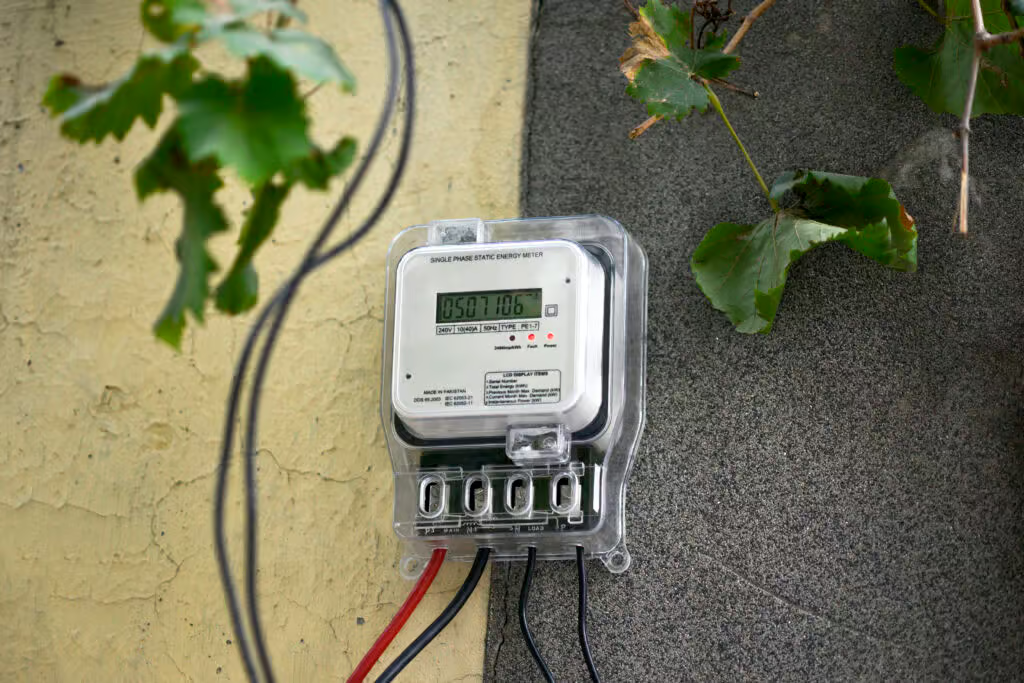
A smart metre tracks exactly how much energy you use, meaning you only pay for your consumption. 🤔
The Dutch government is also making it more expensive for those who don’t have a smart metre.
Look how sleek a smart metre is. Image: Freepik
Since July 2021, anyone with an old energy metre in the Netherlands is charged the same rate both night and day. Meaning, they can’t benefit from the reduced night tariff.
If you switch to a smart energy metre, you can keep getting those sweet discounts and only pay for the power you actually use! 💰
6. Get a Dutch app to control your appliances
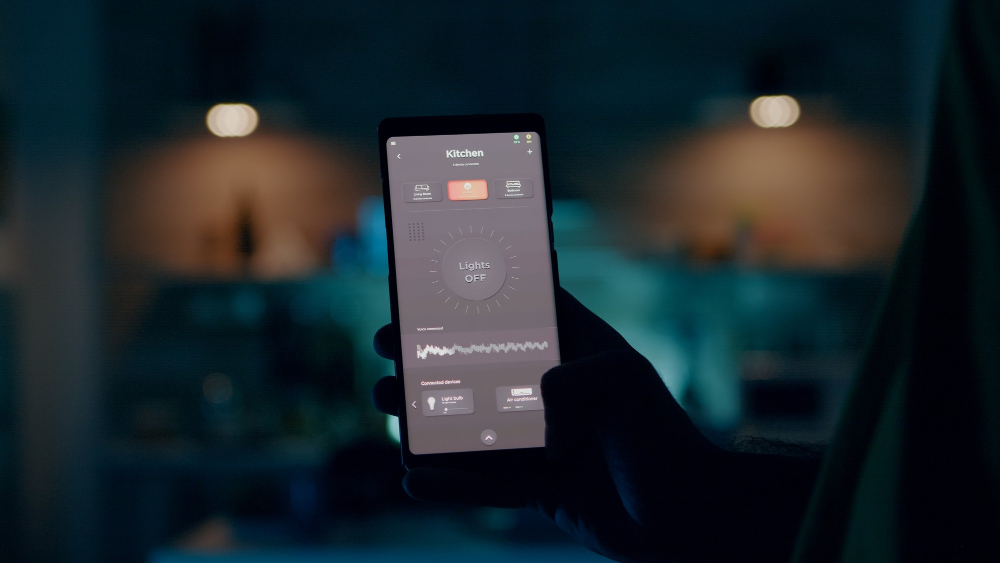
Several energy suppliers in the Netherlands have their own apps, especially if they provide one of those smart metres we mentioned earlier.
However, many useful energy-tracking apps are not connected to a specific provider.
Futuristic, huh? Image: Freepik
EnergyFlip lets you compare your energy usage to that of other households and will even notify you when your energy contract is due to expire.
Meanwhile, the UMeter app lets you know your energy consumption and gives you insight into the yield of your solar panels — a great choice if you’re going green!
7. Install solar panels
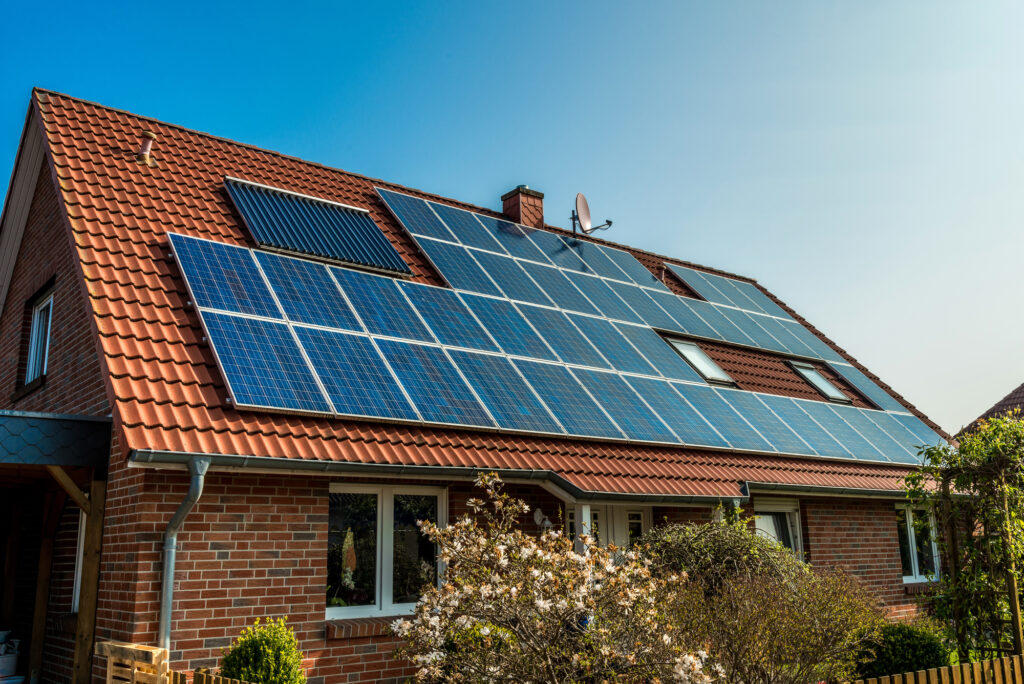
You might not think so (because of how rarely the sun comes out), but solar panels are a double win for your wallet and carbon footprint. All thanks to the Dutch net metering system.
It’s pretty simple: if your solar panels generate more energy than you use as a household, you can send the excess energy to the public grid.
Installing solar panels is becoming cheaper, and it’s great for the environment. What’s not to love? Image: Depositphotos
Further, you can get a partial tax refund for generating your own sustainable electricity!
8. Make sure your house is properly insulated
The Netherlands is known for its gorgeous canal-facing houses. While these are beautiful, they were most likely built before modern-day insulation was invented.
If you own a house in the Netherlands, it’s worth investing in insulating it properly.
This may seem like a high cost upfront, but you will reap the rewards in years to come when your heating isn’t (literally) going out the window. 🔨
Best to check that your home insulation is up to par! Image: Freepik
Talk to your landlord if you’re renting and think your home could be more energy efficient.
However, if they refuse to help, there are some cheap tricks you can try if you can’t afford a complete revamp.
Try sealing drafty windows with self-adhesive draft tape, but make sure you have good ventilation. This prevents you from heating a humid house (which soaks up more energy).
9. Change out old devices
Household appliances are like cars: the newer the model, the more energy-efficient it is. ⚡
Household items made before the year 2000 are like your dad’s old Jeep — greedy guzzlers.
Getting a newer fridge or switching from a gas stove to an induction hob will require much less energy.
Be sure to check the EU energy label on your kitchen appliances! Image: Freepik
Not sure which models are the most efficient? Look out for the EU energy label. You’ll probably recognise the colour-coded list of energy efficiency.
This ranks from A to G (dark green A+++ is the most efficient, G being the least efficient).
10. Take a shorter shower
We’re all guilty of standing in the shower for longer than we need to, but to save on your energy bill, you’ll need to have a splash-and-dash mentality. 🚿
Showers should be short and sweet. Image: Freepik
Experts warn that if you shower for longer than 10 minutes, you might as well be having a bath.
While showers are great places to develop new ideas, your shower routine will be more economical if you turn the tap off sooner.
And, if you want to go one step further, try having a cold shower a few times a week to avoid the extra heating costs. PS: A cold shower is also the best cure for a nasty hangover!
11. Switch your gas stove to an electric one
Compared to the US, electricity in the Netherlands is cheaper than gas.
And, with the threat of gas supplies being turned off, it might be worth investing in an electric stove.
Out with the old! Image: Freepik
It costs €1.15 to cook rice on a gas stove compared to €0.08 on an electric stove.
Not only will they save your cents from being spent, but you’ll also be doing a good deed for the environment. 🌲
12. Air dry your clothes
Using one less appliance will make a world of difference. Skip out on the tumble-drying and invest in a humble clothing stand.
Say no to the dryer, and yes to the clothesline! Image: Freepik
Benefits, benefits, benefits. Not only will you save costs, but airdrying is also more eco-friendly, reduces creases, and lengthens the life span of your clothes!
It’s cheaper to head down to your local Action and fill your cart with fleece blankets, fuzzy socks, and electric heaters than to sell your kidney to pay an exorbitant energy bill.
Finally, an excuse to stay wrapped up in blankets all day! Image: Freepik
Moreover, your wind-down time in the evenings could surely use some more cosiness. Add a warm cup of chocomel to your routine, and you’d have made the best out of a bitter winter.
14. Use your devices wisely
Smart metres, smartphones, smartwatches: the world is full of small smart devices that can do much of the hard work for you.
But sometimes, we need to be smart, too — especially regarding how we use our household appliances and electronic devices.
Use LED lighting instead of incandescent and halogen lamps, as they are up to 85% more efficient.
Turn off appliances you’re not using — this can save you up to €100 per year.
When you’re done charging your phone and laptop, don’t leave the charger in the socket.
Favour an electric kettle over the stove when boiling water. Don’t boil more water than you need — this saves energy AND water.
Defrost food from the freezer in your fridge instead of the microwave. The cold that’s being released will be used for cooling, making the refrigerator use less energy.
These handy tips will change the way you think about your energy bill: from something you dread, to something that shows you how much money you managed to save.
Do you know of any more handy tips to save money on your energy bill? Tell us in the comments below!
A married couple, both 53, were found dead in their home in Meerstad in the municipality of Groningen overnight. Police have now arrested the couple’s 13-year-old daughter as a suspect.
According to NOS, officers discovered the two bodies at around 2:45 AM, and the girl was detained a short while later. Police are currently treating the case as a crime, and haven’t speculated about a possible motive.
What do police know so far?
For now, very little has been made public. Speaking with NOS, a police spokesperson said tactical and forensic work is underway at the property.
Investigators also plan to speak with the suspect. For now, she is being held in isolation, meaning she is not allowed contact with anyone other than her lawyer.
A dog was found inside the home and was collected early in the morning by the animal ambulance service.
One resident on the street where the couple lived said she heard a very loud bang during the night, though she noted it may have been the police entering the property.
Have you always wanted to try truffles in the Netherlands? Or are you just curious about what they are and how they work? In either case: You’ve come to the right place. We’ll happily share all that there is to know about the hallucinogenic.
Psychedelic truffles, also called “magic truffles”, are fungi that give psychedelic effects when consumed. They are a narcotic couched under the “drug” label and outlawed in most countries — but not in the Netherlands.
What are truffles?
Truffles are a by-product of the well-known magic mushroom. While the terms “truffles” and “magic mushrooms” are often used interchangeably, and both are parts of the same fungus, there is a slight difference between the two.
Whereas mushrooms are the fruit that sprouts above ground, truffles grow entirely underground and never break the earth’s surface. Both parts of the fungus produce psychedelic effects.
The top part of the vegetable is what we call “magic mushrooms”. Image: Depositphotos
The chemical compounds of both a truffle and a mushroom are identical, and the substances that cause the psychedelic effects are psilocybin, psilocin and biocytin.
Nonetheless, firsthand accounts show that truffle trips are often a little milder than mushroom trips, which tend to be deeper, more intense and introspective.
A possible reason is that truffles come in set quantities, so their consumption is more standardised. It’s important to know the differences between magic mushrooms and truffles in the Netherlands — which we’ll elaborate on later (spoiler: one is banned).
How should you consume truffles?
Truffles can either be eaten or consumed in the form of tea. Generally, most people eat them raw, though they describe their taste as foul. 🫠
Depending on what you have in your stomach, the truffles should take more or less 45 minutes to start affecting you. That being said, it is recommended to consume truffles on an empty stomach.
Don’t have a big dinner before eating these. Image: Koń/Wikimedia Commons/CC2.0
Unfortunately, unlike a shot of Jägermeister, they cannot be downed quickly. To release the psilocybins effectively, you must chew them slowly before swallowing.
One popular way to make their taste more pleasant is by mashing them up into a paste using a truffle grinder.
What are the effects of truffles?
Thanks to the compound called psilocybin, which enhances serotonin activity in the brain, doing truffles in the Netherlands can make the user feel very euphoric.
They may also make you feel relaxed, at peace in the world and searingly introspective and insightful (but you might get a bit of anxiety about the crappy weather).
Colours and geometric patterns become more vivid, and sounds may flow into each other. 😵💫
A truffle trip can last anywhere between four and six hours, but time is often distorted while tripping. That all depends on the strength of the truffle and your mood or state of mind when taking it.
Some people cope okay with this, but others panic themselves into believing they’re stuck in a never-ending time warp. Some accounts also report nausea as a side effect of the trip.
But in a similar vein to people who say “time heals all” while going through a bad breakup, tell yourself: “It’s just a trip, don’t panic”. All you can do is get through it and have a reassuring friend to calm you down and watch over you.
Taking truffles in a safe space and with a so-called trip-sitter is highly recommended. Image: Magnific
A loophole in the law
Magic mushrooms are illegal, so how come you can buy truffles in the Netherlands?
The Dutch try as much as possible to decriminalise the use of drugs, making it a private matter for each individual and not a matter for the enforcement apparatus.
However, protests against hallucinogenics broke out in 2008 after a girl jumped out the window while under the influence. The girl’s parents blamed the state of the Netherlands because the drug wasn’t illegal. Following this, several politicians lobbied to ban the sale of mushrooms in the Netherlands.
A bunch of types of mushrooms were banned under the legislation, but one type was omitted from the list: the truffle! That’s why you can still legally buy and consume truffles in the Netherlands.
Where can you buy truffles in the Netherlands?
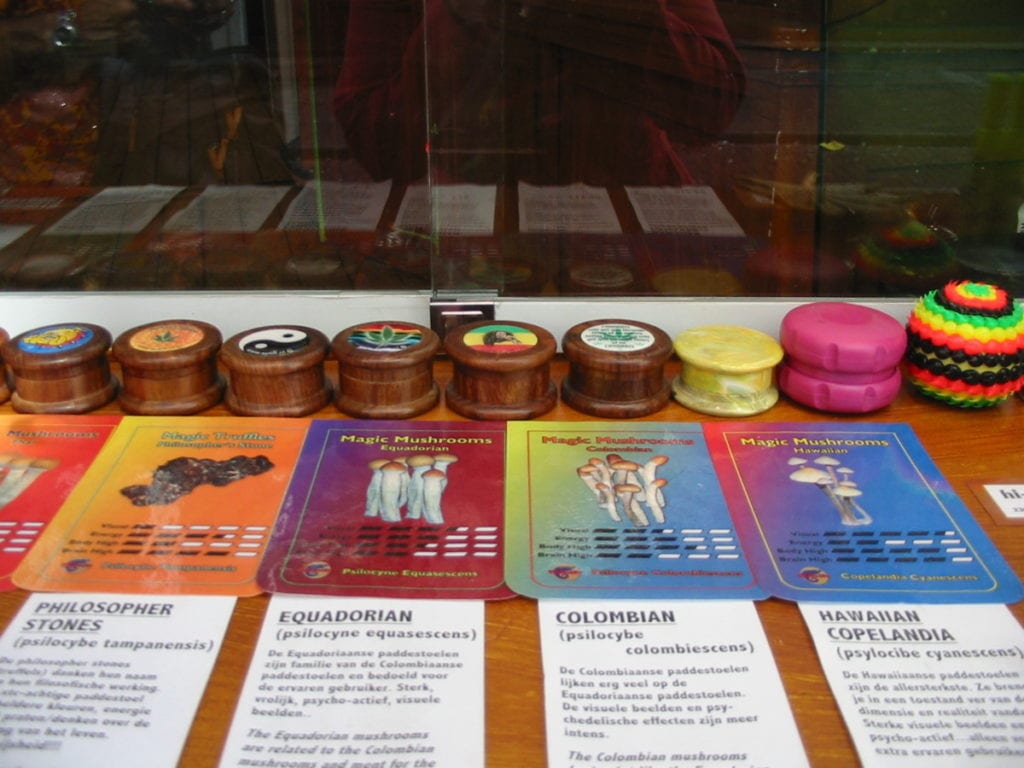
In the Netherlands, truffles can be bought from a so-called smart shop (which is different to a coffeeshop).
Smart shops opened in 1993 and sold items like herbal drinks and vitamins. A while later, they became known for selling magic mushrooms and truffles.
Take your pick from the most colourful menus you’ll ever see. Image: Ellywa/Wikimedia Commons/CC3.0
Like weed in coffeeshops, there are ridiculous names and descriptions for truffles in the Netherlands. There are, for example, Mexicana’s, Dragons Gynamite, and Tampanensis — to name a few.
Ask the shop owner for advice on what type to buy, or even better, tag along with an experienced friend you trust and who knows your limits.
Three smart shops for buying truffles in Amsterdam
Looking for a good smart shop to buy truffles in the Netherlands? If you’re in Amsterdam, we can recommend these. 👇
Kokopelli: You will find this very curious smart shop very close to the red light district in the Warmoestraat. Even if you are not interested in tripping, this shop is worth a visit.
Mediamatic Fabriek: Here, you can learn about the growing process of truffles. Mushroom-loving futurists at Mediamatic offer mushroom-growing workshops every few months, covering either the magic kind or the boring (oyster) kind. Sign up for their newsletter to find out when the next one is scheduled.
Tatanka Smartshop Amsterdam: A big, spacious, smart shop with helpful and knowledgeable staff.
How much should I take?
It is recommended that each person takes between 5 and 10 milligrams. Truffles in the Netherlands are usually sold in 15 or 20 milligrams. Each box has a potency indicator.
Boxes range in price but typically cost between €10 and €40.
What to do (and not to do) when you’re high on truffles
DO take them with people you feel totally comfortable with and trust
DON’T consume them if you are in a bad mental state
DO take them in a safe or peaceful environment such as an apartment or forest or a park
DON’T panic — if the trip is getting too intense, tell a friend, breath deeply and repeat to yourself that it will be over soon
DO eat sugar (after consumption) if you want to lessen the high, as dextrose is known to calm the effects
DON’T combine truffles and alcohol — this can increase the risk of a bad trip
DO have a sober trip-sitter who can watch over you while you’re high
How to be a conscientious trip-sitter
Taking one for the team and remaining sober while your friends take truffles in the Netherlands? You’re amazing. 🌟
Here are some pointers to be a good trip-sitter:
DO be soft-spoken and reassuring
DON’T be condescending
DO offer drinks and food
DON’T disregard their requests
DO engage with their weird chats
DON’T mock them or laugh
DO bring distractions like glow sticks and interactive games to heighten the experience
DON’T panic if someone else is panicking
Is it dangerous to take truffles in the Netherlands?
The short answer to this question is simple: no. Especially in the Netherlands, where the sale of truffles is regulated and controlled, their consumption should not pose a danger. But let’s elaborate.
Scientific investigations have repeatedly ranked mushrooms and truffles as the least dangerous drugs. Regarding potential harm to self and others, alcohol and tobacco rank MUCH higher.
Another big difference between truffles and other, less demonised drugs is that they are not addictive, as Johns Hopkins professor Dr Matthew Johnson explains.
While the infamous “bad trip” is a real phenomenon, he claims it is a rare occurrence.
Research shows that truffles have positive effects
Rather than dangerous, magic mushrooms and truffles are proven to have profound healing effects. Clinical psychologist Ros Watts of Imperial College London is one of the leading researchers on psilocybin.
She explains that the brain is more malleable whilst on the drug, making it possible to break out of rigid patterns and, therefore, change the way you think.
Psychedelic micro-dosing
Still unsure if the shroom trip is for you? Why not start your truffles experience with a microdose?
This way, you can safely test if you vibe with the drug. Consuming minor amounts of psychedelics is noted to be highly beneficial, and firsthand accounts almost unanimously hail the benefits.
Micro-dosing truffles is scientifically proven to benefit people’s mental health. Image: Depositphotos
One study at Johns Hopkins University in Baltimore showed that a mushroom trip eased the anxiety of people with life-threatening cancer and dramatically improved mood and well-being.
One user’s account showed how micro-dosing dramatically helped his ability to cope with the grief of losing his child.
He comments: “On the days I took the dose, my mind felt more open and free-ranging… I would feel closer to nature, which would appear more beautiful, and I felt more “present” in the moment, better connected to my family and to my own emotions, more likely to spark up conversations with strangers.
The dose was too small to cause visual disturbances. It was more a feeling of energised openness — I would notice details that had previously passed me by.”
Doing truffles in the Netherlands, when the user is informed and sensible about the drug, can be an eye-opening experience with long-lasting effects.
Of course, you must always be wary of the possible side effects and use them appropriately, but once informed, don’t shy away from having new experiences.
Do you have any extra tips for taking truffles in the Netherlands? Let us know in the comments!
Almost the whole country will go under code yellow from Thursday at 10 AM, June 18. The RIVM will also activate the National Heat Plan as Friday threatens highs of 35 degrees Celsius.
If you’ve been waiting all year for an excuse to do absolutely nothing in the shade, here it is.
The RIVM and KNMI announced the warning together on Wednesday, and only the Wadden Islands will get to sit this one out. For the rest of us, there’s a chance of a regional heatwave by the weekend.
As reported by the KNMI, the warning applies to a stretch of warm, sticky days rather than one freak afternoon.
How hot is it actually going to get?
Temperatures climb on Thursday, and from Friday, it hits 30 degrees Celsius, with local spikes up to 35 degrees, NU.nl reports.
Over the weekend, daytime highs will settle between 25 and 30 degrees, which means you can expect to find frat boys in the canals, and empty ijsje shelves in the appie.
@dutchreview Lekker weertje he? ☀️😎 Seriously, is someone pulling a joke? Lather up with that sunscreen because temperatures are set to rise up to 34 degrees Celsius this weekend. What are your plans for the tropical weekend? Let us know! #netherlands#weather#dutchreview♬ original sound – DutchReview
What is the National Heat Plan, and why should you care?
While you and Jan may be dreaming about getting some serious tan lines, for others, it’ll be a rough weekend.
The Nationaal Hitteplan (National Heat Plan) is the RIVM’s way of putting carers and healthcare staff on alert when hot weather rolls in. It switches on when the KNMI expects four days in a row of 27 degrees or more.
The point is simple: heat is sneaky. According to the RIVM, the warm spell can leave people feeling tired, headachy, and unable to concentrate. More serious problems, like dehydration or heatstroke, are also on the table.
The advice is the kind your grandmother would approve of, such as drink plenty of water, head outside early (or later in the evening when it’s cooler), and keep your home shaded.
And for anyone experiencing their first summer here, you’re about to learn that most Dutch homes aren’t built for the heat, so a fan and a cold drink are your best friends this week.
So, are you team beach, team fan-in-front-of-the-laptop, or team “I’ll just complain about it”? Tell us how you’re surviving the heat in the comments.
Dutch paternity leave gives new fathers up to 15 weeks of statutory leave (geboorteverlof), but it’s essential to understand the complex UWV payout rules and strict allocation timelines before your baby arrives.
Here’s our guide to paternity leave (vaderschapsverlof) in the Netherlands: what your rights are, how much time you get, and whether it’s paid or not.
How many weeks of paternity leave do you get in the Netherlands?
In the Netherlands, partners are entitled to one week of fully paid birth leave (geboorteverlof) to be taken within four weeks of the birth.
To extend this, you can take up to five weeks of supplementary birth leave (aanvullend geboorteverlof) within the first six months, paid at 70% of your daily wage (up to the UWV maximum daily wage limit).
If that seems a bit hectic, you can also request additional birth leave on top of the existing paternity leave you’re entitled to. To do so, you’ll have to:
take out paternity leave,
decide what date you want your leave to start,
know how many whole weeks you’ll need,
and have a plan about how many weeks you’d like to spread this leave (eg, paternity leave every day for a few consecutive weeks, or a few days of paternity leave each week spread over several weeks).
If you’re expecting a child, it’s best to do your research into paternity leave well before the baby is born. Image: Magnific
As such, even though you need to start taking this time off within six months of the baby’s birth, it doesn’t need to be right after they are born. You could, for example, decide to take your five weeks of leave after the maternity carer leaves.
Ultimately, you’re entitled to five weeks of paternity leave (vaderschapsverlof), for which you get 70% of your regular pay. However, you could even get full pay if your employer is willing to supplement it.
Here’s how to apply for paternity leave in the Netherlands
Sorting out your paperwork while prepping for a baby might feel like a chore, but securing your time off is a straightforward process.
Because government payouts are tied to strict deadlines, timing your application correctly ensures you get full legal coverage without administrative delays.
Let’s walk you through the process:
Notify your employer in writing (~4 weeks before the due date): Send a formal letter or email to your HR department or manager stating your intent to take both standard and supplementary leave. You don’t need to provide exact calendar dates yet, just specify how many total weeks of leave you plan to request.
Take your standard leave (1 to 4 weeks post-birth): Take your one week of 100% fully paid geboorteverlof within the first four weeks of your child’s arrival. This serves as a mandatory prerequisite; the government requires you to fully exhaust this week before any supplementary funds can be unlocked.
Initiate the UVW claim via your employer (immediately after the birth): Provide your employer with the baby’s official date of birth. Your employer will then log into the UWV portal (the Employee Insurance Agency) to submit the formal application for your 70% supplementary leave allowance (WAZO-verlof).
Schedule your leave blocks (up to 1 year post-birth): Coordinate with your team to distribute your remaining time. You have 6 months to use your 5 weeks of supplementary leave and 12 months to use your 9 weeks of paid parental leave. These can be taken in consecutive blocks or spread out flexibly (e.g., taking one specific day off per week).
Can fathers get paid holiday leave in the Netherlands?
In the Netherlands, new fathers and partners continue to build up their fully paid statutory annual holiday leave (wettelijke vakantiedagen) while they are away on government-subsidised birth or parental leave.
By Dutch law, an employer is strictly prohibited from reducing your standard accrued vacation days simply because you took time off to welcome a child. You accumulate your vacation hours at 100%, meaning you won’t return to work with a drained holiday balance.
However, it is important to understand how this interacts with your 8% annual holiday allowance (vakantiegeld). According to the Employee Insurance Agency (UWV), your vacation allowance continues to accumulate normally during your time off.
Paternity leave gives fathers much more time to spend with their new babies. Image: Magnific
When the UWV processes your 70% payouts for supplementary birth leave or paid parental leave, your vakantiegeld is automatically calculated and factored directly into that 70% payout rate, which the UWV distributes along with your regular leave payments.
If your employer chooses to supplement your leave up to 100% of your regular salary based on a company policy or collective labour agreement (CAO), they will also top up your holiday allowance accordingly.
Many expat fathers choose to strategically chain their regular annual vacation days onto the end of their parental leave.
Because full-time employees in the Netherlands are legally entitled to a minimum of 20 days of fully paid vacation per year, using these days allows you to create an even longer bridge of time at home without taking the 30% cut in your daily income required by the UWV framework.
Let op: This holiday accumulation only applies to paid leave blocks.
According to the Rijksoverheid, while you accrue vacation days during your 9 weeks of paid parental leave, you will stop accruing holiday hours and holiday allowances during any weeks of unpaid parental leave, unless your company’s specific CAO or employment contract explicitly states otherwise.
How does paid parental leave (ouderschapsverlof) work for fathers?
What about after paternity leave is over? Well, then you can take parental leave (ouderschapsverlof).
Some conditions apply, such as:
you’re the official parent of your child,
you’re the adoptive/foster parent of your child, and they live at the same address as you, according to the BRP (Personal Record Database),
your child is under 8 years old.
In the Netherlands, parents are entitled to 9 weeks of partially paid parental leave (ouderschapsverlof) during the child’s first year. Both supplementary birth leave and paid parental leave are compensated at 70% of your salary.
Parental leave helps ease the load at home and facilitates bonding with the new child. Image: Freepik
However, keep in mind this is capped at 70% of the statutory maximum daily wage (maximumdagloon) set by the UWV. If your salary exceeds this cap, your payout will be lower unless your employer chooses to supplement the difference.
Some employers will also cover part of the salary the parent would have earned without that leave, but they are not obligated to do so under Dutch labour law.
On the bright side, at least you have an excuse for not helping them with maths homework. 😉
Paternity leave in the Netherlands as a self-employed person
Unlike maternity leave, paternity leave as a self-employed person (zzp’er) is not legally recognised in the Netherlands.
This means that independent entrepreneurs and freelancers have no statutory right to paid partner leave (geboorteverlof) or paid parental leave (ouderschapsverlof)
Unlike salaried employees who fall under the Wet WIEG framework, self-employed partners are fully responsible for managing their own working hours and must personally absorb any loss of income while taking time off to bond with a newborn.
Male ZZPers in the Netherlands got the short end of the stick when it comes to parental leave. Image: Pavel Danilyuk/Pexels
The only statutory exception for independent workers applies to birthing mothers, who remain entitled to at least 16 weeks of financial support through the Self-Employed and Pregnant scheme (ZEZ-uitkering).
That means that you will need to have your own savings if you want to take any leave at all to be with your partner and new baby.
What are your experiences with the Dutch paternity leave system? Tell us in the comments below!
Paternity leave in the Netherlands: Frequently asked questions
How many weeks of paternity leave do fathers get in the Netherlands?
In the Netherlands, fathers are legally entitled to up to 6 weeks of birth leave (geboorteverlof) plus 9 weeks of paid parental leave (ouderschapsverlof), for a total of 15 weeks of partially or fully paid time off during the baby’s first year.
Is paternity leave fully paid in the Netherlands?
No, partner leave in the Netherlands is a mix of fully paid and partially paid time off. The first week of standard birth leave is 100% paid by your employer.
The subsequent 5 weeks of supplementary birth leave and 9 weeks of parental leave are 70% paid via the UWV, up to a statutory maximum daily wage limit.
What is the maximum payout for supplementary paternity leave (aanvullend geboorteverlof)?
The payout for supplementary birth leave is capped at 70% of the statutory maximum daily wage (maximumdagloon) set by the UWV.
If your regular salary exceeds this government cap, your weekly pay will be lower unless your employment contract or Collective Labour Agreement (CAO) explicitly states your employer will top up the difference to 100%.
Can self-employed fathers (ZZP’ers) get paid paternity leave in the Netherlands?
No, self-employed partners (ZZPers) in the Netherlands are not entitled to government-funded paid partner leave or paid paternity leave.
While self-employed mothers can claim a pregnancy allowance (ZEZ-uitkering), self-employed fathers and partners must completely self-fund their time off after a birth.
Can you apply for supplementary paternity leave with the UWV?
Sadly, you can’t apply to the UWV directly; your employer must submit the application for you.
You should inform your employer in writing at least 4 weeks before you intend to start your supplementary leave, and they will request the benefit payout from the UWV on your behalf after the child is born.
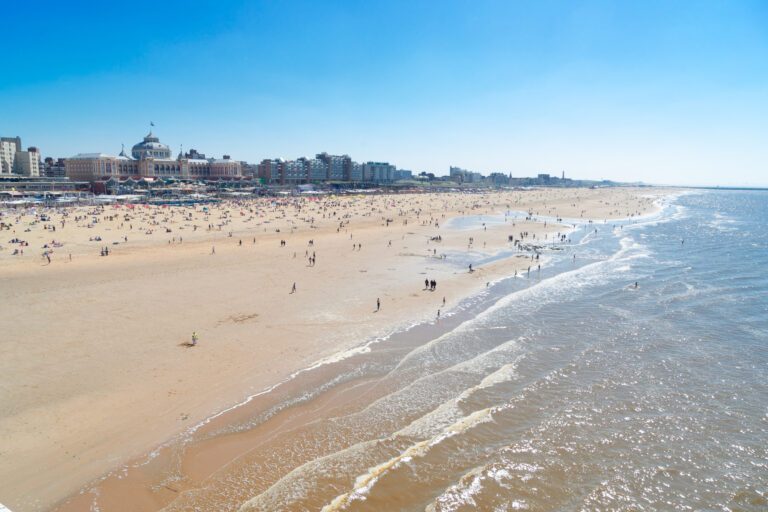
In Scheveningen, stately houses meet the laid-back atmosphere that comes with having the beach as your backyard. In short, it’s a must-sea (pardon the pun) on your travel list!
While Scheveningen forms part of The Hague, this coastal district has a very unique vibe and identity of its own.
So what should you do once you’ve got the sand between your toes?
These are my top picks for the best things to do in Scheveningen.
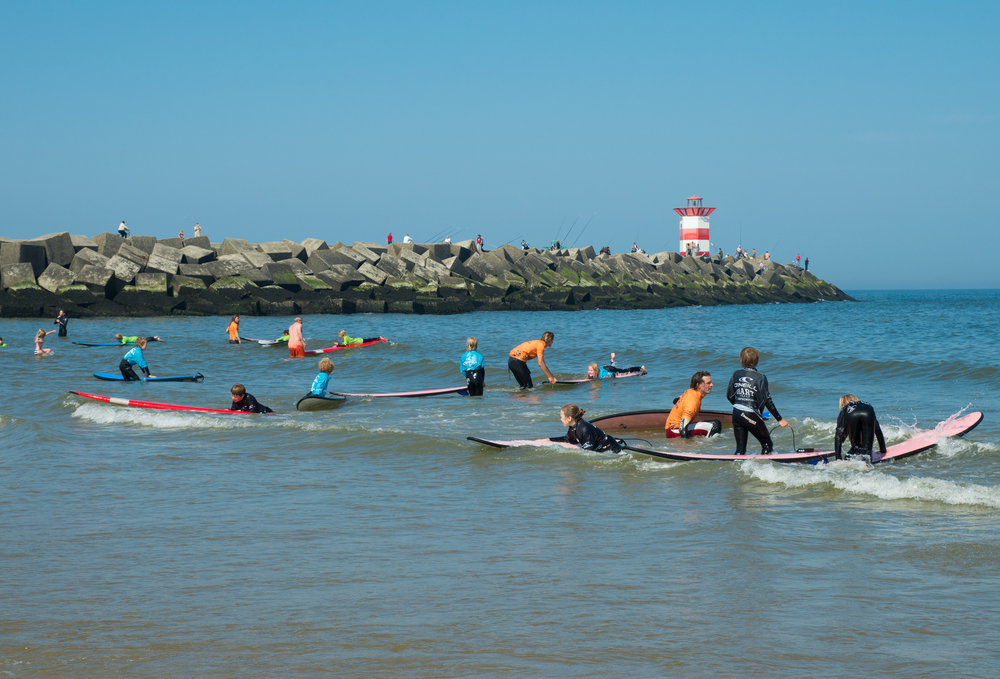
Scheveningen is known as THE spot to go surfing in the Netherlands, so what better way to start your day there than by challenging the waves?
If you’ve never jumped on board in your life, don’t worry! Scheveningen is host to several surf schools, and you can easily book a lesson. There are also surf camps organised for kids during the summer months.
Right on! Surf on the North Sea in Scheveningen. 🤙 Image: Depositphotos
Do you already have experience with surfing? Then swagger on over for a chat about the waves and rent some gear!
You can also try out other water sports like windsurfing. If you’re going to be in the Netherlands, why not make the most of the infamous wind?
You’ll find Aloha, The Shore, and Hart Beach just a stone’s throw away from each other near the harbour, while Surf’s Cool is located on the pier.
💰 Price: €37.50–€87.50 for adults (17+), €21.50–€75 for children (6-16)
⏰ Opening hours: Every day, around 9:00 AM – 5:30 PM
It isn’t located at the beachfront or one of the main shopping streets, which means Tigershark Coffee is a gem you wouldn’t encounter without knowing about it (you’re welkom).
Their coffee, colourful decor, and friendly service are definitely worth the detour!
Some of us will simply never be able to navigate our way around the edges of a surfboard — or mount one. But this doesn’t mean Scheveningen can’t offer you something.
You can opt for a hike in one of the two parks on either side of Scheveningen: Westduinpark and Oostduinpark.
The beautiful dunes in Westduinpark Scheveningen are perfect for a hike or a nature bike ride. Image: Magnific
Westduinpark is one of the largest nature reserves in The Hague. It’s located close to the harbour and has several access points to Zuiderstrand, a quieter and less touristy part of the beach.
For history lovers, you can play a game of eye-spy and spot old partially uncovered WW2 bunkers.
Oostduinpark is another beautiful park located in the north of Scheveningen.
It forms part of a large nature area that stretches all the way to Katwijk beach and features some beautiful, rugged nature, dunes, and even a lake!
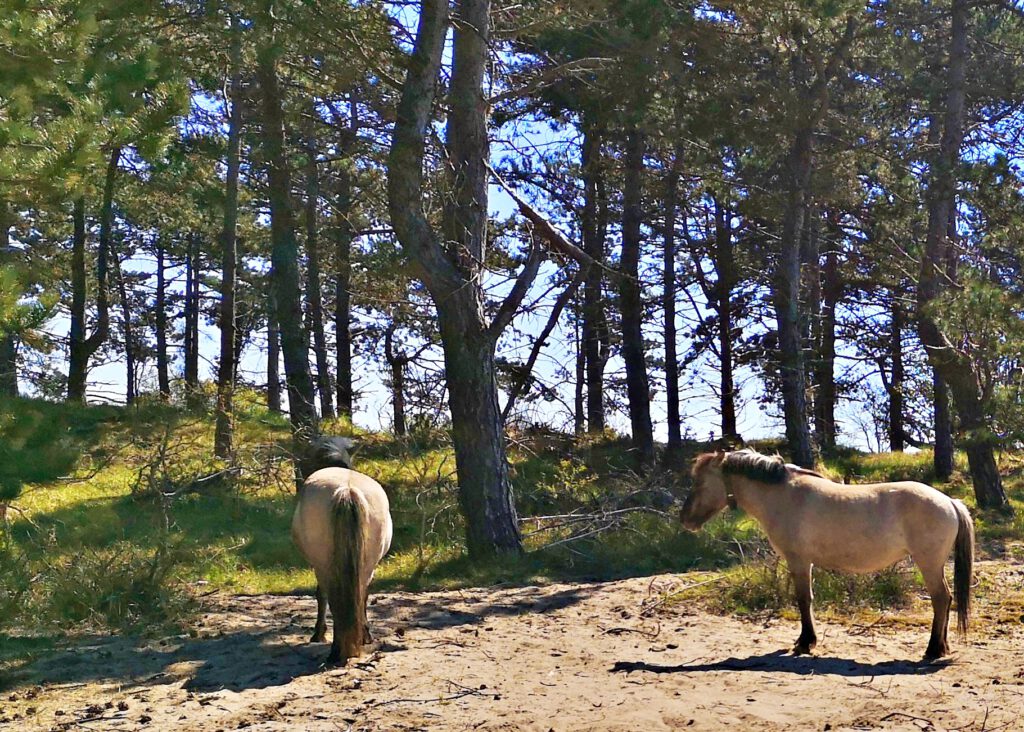
Oostduinpark is also home to wild (but friendly!) horses. Image: Christine Stein Hededam/Supplied
There are many lookout points from where you can get a beautiful view of nature around you. Oostduinpark is also home to many fuzzy friends like sheep, rabbits, and deer.
If you want to explore it completely, we’d recommend going by bike.
5. Enjoy a gezellig lunch at the furthest corner of Scheveningen
Close to Oostduinpark, you’ll find Het Puntje. It’s a cosy café at the northernmost point of Scheveningen.
Scheveningen offers many food-related things to do as well! Image: Magnific
They pride themselves on their down-to-Earth atmosphere, as their website puts it: “With us, there’s no fuss, but feet in the sand and the waves as background music” — how lovely! Het Puntje serves healthy breakfast, lunch, and dinner (and, of course, borrels!)
Their menu follows the seasons, and so do their opening hours — breakfast is always served from 9 AM, but closing times depend on the weather and the guests! 😎
💰 Price: €5 – €20 (for food)
⏰ Opening hours: Every day, 9 AM — closing time depends on the weather
6. Go to De Pier and have a stroll along the boardwalk
Scheveningen is perhaps best known for its pier (with the crazy New Year’s Dive coming in as a close second) — and no wonder!
Inside, the landmark has restaurants, shops, and games, while on the outside, it provides activities ready to meet the needs of any adrenaline junkie.
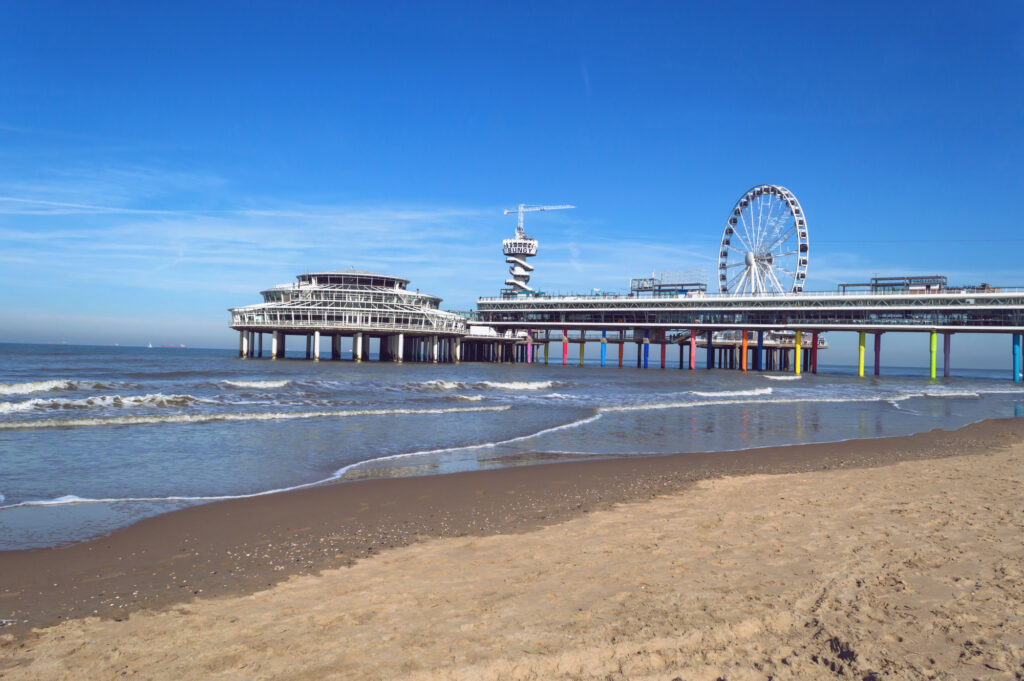
The pride and joy of Scheveningen: De Pier! Image: Depositphotos
Aside from its noticeable, ridiculously tall Ferris wheel, De Pier also has a bungee jump tower and a zipline so you can whoosh above the other ice cream-eating visitors.
While the pier is a must-see, you shouldn’t underestimate the rest of the boardwalk!
Note: A few statues worth noting are the “Fisherman’s Wife of Scheveningen” and the cute (but sometimes scary if you look close enough) sculptures from Museum Beelden aan Zee.
Remember to look around and admire the beautiful architecture of the Kurhaus, as well as the different statues placed along the beachfront. (Even if you’re busy fighting seagulls for the right to your fries).
If you’re facing the sea, make sure to turn to your left and see if you can spot the Rotterdam Port on a sunny day.
To end your adventurous day, stop by one of the beach bars where they have small fires keeping you warm on the beach at night.
Next up, time for some local flavour! It’s not a visit to the beach if you don’t assert your dominance over the sea by eating some fish.
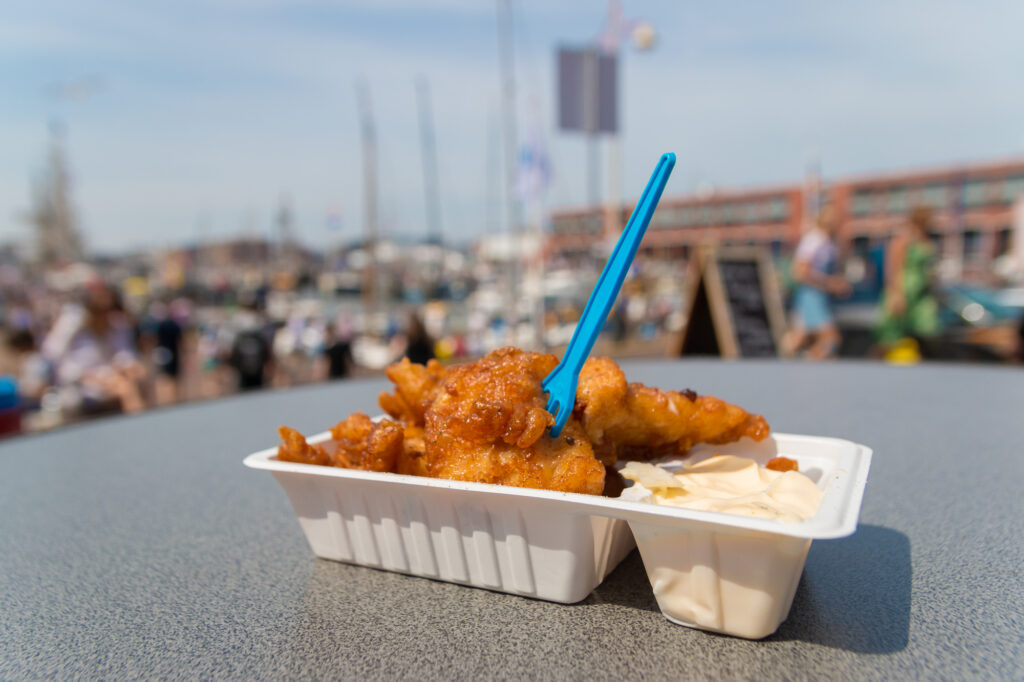
Kibbeling is a Dutch delicacy (or, as close as it gets) consisting of battered, deep-fried fish.
The Dutch take on fish ‘n chips: kibbeling — come find it in Scheveningen. Image: Depositphotos
Before you get flashbacks to drunken nights at the snackbar and their everything-fried menu, rest assured that kibbeling contains actual quality ingredients.
When you order it in Scheveningen, the meat for your kibbeling is freshly caught cod from the North Sea — lekker!
Dutch beaches have a lot to offer, but we are in the Netherlands, meaning it’ll get cold at some point.
So, to round off your day after enjoying the beach’s laid-back atmosphere, jump into a fresh change of clothes and experience the other side of Scheveningen!
Tired of the beach? There are many things to do in Scheveningen, including shopping! Image: Magnific
Once you move a little further in from the beach, you’ll come across some beautiful houses (that no doubt cost a little more than average). But do you know what expensive houses mean? Quality shopping streets!
Frederik Hendriklaan (or ‘De Fred’ as it’s known by locals) is one of those. It’s located in the Statenkwartier and stands out with its beautiful Art Nouveau style.
De Fred is home to a varied selection of shops (for all budgets!), including a handful of small businesses, speciality stores, and nice cafés.
What better way to end your day in Scheveningen than by having dinner in this charming neighbourhood, resting your feet, and soaking up the last of the summer sun?
💰 Price: Whatever you’re willing to spend
⏰ Opening hours: Depends on the shop, but typically between 10 AM and 5 PM weekdays and between 12 PM and 5 PM on weekends.
If you’re feeling tired but want to stretch your legs while discovering the charm of Scheveningen, visit the historical housing area.
Oud Scheveningen is a short five-minute walk from the Pier. Go down to Keizerstraat at the Fisherman’s Wife of Scheveningen statue (Vissersvrouw van Scheveningen monument).
— Michael H.W. Backes (@michael_backes) July 26, 2016
The neighbourhood is filled with stunning old fishermen’s houses, narrow cobbled streets, and blooming flowers everywhere. The people of Oud Scheveningen take great care and pride in maintaining its beauty.
They even have their own emblem. Look around and count how many Scheveningen flags you can spot!
The neighbourhood is also home to a small shopping street that’s home to small stores, cosy cafes, and delicious restaurants.
Scheveningen has plenty of green spaces, including thick forests, perfect for getting lost in nature. Did you know it was once the King’s hunting grounds?
The Scheveningen Bosjes is an easily accessible forest in the middle of the city. But once you go in, you will easily forget that the city is so close by.
The Scheveningen Bosjes is a beautiful dense forest with plenty of walking trails to explore. Image: Depositphotos
There are hundreds of intertwining walking trails, cycling paths, and benches to take a well-needed break from the city.
Not alone? There are playgrounds scattered throughout the forest for children to play and dedicated open spaces for dogs to run off-leash.
Westbroekpark is a large open park perfect for a picnic. There are big open green spaces to lay out your picnic blanket and playgrounds for kids to swing around on.
Take a rest and admire the famous rose garden in Westbroekpark in Scheveningen, The Hague. Image: Depositphotos
For unforgettable memories, you can rent rowboats with friends and family and explore the park through the beautiful canal. 🚣♀️
You can also admire the beautiful flowers blooming throughout the park. From June to November, the park features a gorgeous Rosarium, a rose garden with over 20,000 roses in bloom.
12. Go see the fascinating sea creatures at SEALIFE
Note: SEALIFE is currently temporarily closed. It is expected to open again around mid July.
Cool off and spend a few hours discovering the beautiful sea creatures inhabiting our oceans at SEA LIFE, located right on Scheveningen’s stunning beach boulevard.
Imagine what it’s like to be swimming in the ocean at SEA LIFE in Scheveningen. Image: DutchReview
With over 45 aquariums, you will meet all kinds of animals, from fascinating sea turtles, jellyfish, and piranhas to adorable penguins and otters. Zo lief! 🦦
13. Take a break and visit the Kunstmuseum Den Haag
Art lovers should visit the Kunstmuseum Den Haag, one of Europe’s largest art museums, where you’ll find a diverse collection of art with more than 160,000 pieces of work.
The museum also has rotating exhibitions from various artists such as Maurits Cornelis Escher, Pablo Picasso, and Claude Monet.
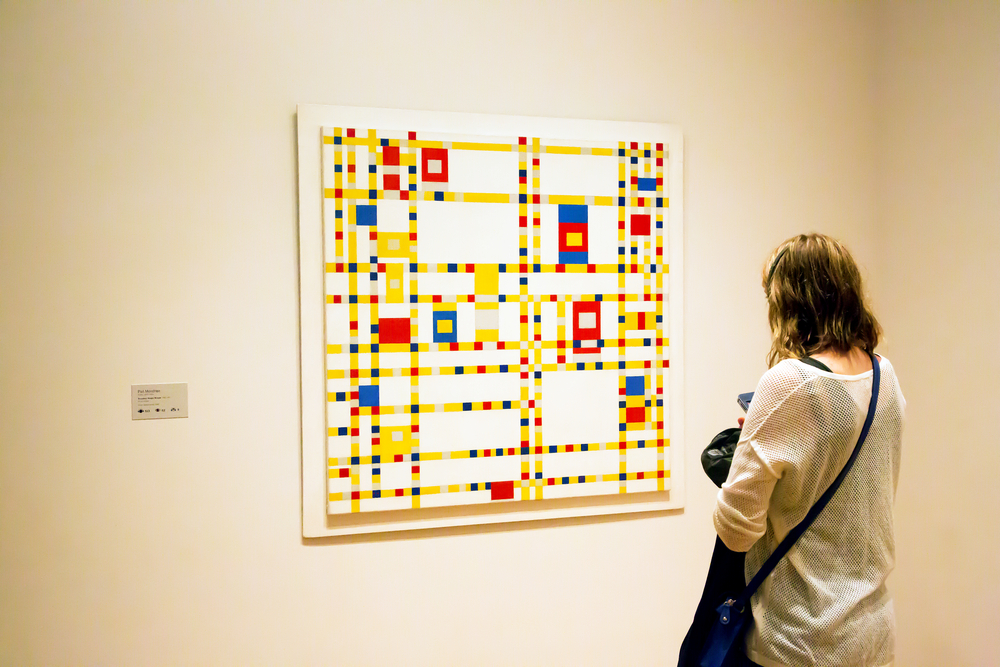
Discover the famous artist Piet Mondrian and his art at the museum. The Kunstmuseum Den Haag is the international home of Piet Mondrian’s works of art, with 300 of his pieces on display.
The Kunstmuseum Den Haag in Scheveningen holds many of Piet Mondrian’s most famous artworks. Image: Depositphotos
There are also often workshops organised for children to explore their creativity and learn about Dutch art through painting and pottery.
Children under 18 can discover the art museum for free.
Right next to the art museum is The Museon Omniversum. The family-friendly interactive science museum teaches all about the world and the environment.
You’ll easily get lost in time and spend hours at the place between the exhibitions, films, and laboratories.
Enjoy a day of science — all while still in Scheveningen! Image: Magnific
During the day, the museum is packed with interactive activities to learn and inspire about how to commit to a liveable Earth for all. In the evenings from Thursday to Sunday, the museum screens films on nature, culture, music, and science in a theatre.
There are constantly new exhibitions on fascinating topics such as dinosaurs, space travel, and climate change.
Children up to three years old get free entrance, and children up to 11 years old can get a discounted fee of €14.95.
Stretching for almost five kilometres, you’ll never run out of things to do in Scheveningen. Here are the last few little things to see and enjoy while discovering the beach.
Many people fish near the two lighthouses around the Scheveningen harbour. Image: Depositphotos
Make sure to take a stroll along the Scheveningen harbour (Haven). You can daydream about owning a boat while admiring the small private boats docked at the marina.
On either side of the harbour, there are two small green and red lighthouses on each side. You can walk along the jetty and feel the seaside wind. You’ll usually also find a few people fishing. 🎣
If you’re a fellow stargazing lover, The Hague offers a perfect spot for you.
Although it’s just outside of Scheveningen, the Celestial Vault in Kijkduin is super close by, right next to Westduinpark.
Celestial Vault by #JamesTurrell – A beautiful journey through the landscape, the ascent, the transition from open landscape to enclosed space. Just you, the dome like sky & a continuous horizon viewed from the centre. Followed by a cycle back to The Hague through Westduinpark. pic.twitter.com/lYaNGLNLgk
This unique spot is an artificial crater that blocks out all artificial light coming from the city. Artist James Turrell created the huge crater, which boasts walls up to five metres high at the top of a dune.
The floor is covered in grass, making it perfect to lie down and spot the constellations of the night sky. 🌟
Make sure to pack a thick blanket and some warm chocomel, and you’ll be all ready to go.
18. Spend the afternoon at the thrilling LEGOLAND® Discovery Centre
Bring the kids along to the LEGOLAND® Discovery Centre, a few metres away from the pier, for a day full of dream-worthy LEGO® activities.
Be amazed by all the LEGO® creations at the LEGOLAND® Discovery Centre at Scheveningen Beach. Image: DutchReview
Hop on a train through a life-sized LEGO® city, dodge the lasers at NINJAGO® training, and watch an action-packed 4D film in the cinema. Not to mention the endless amounts of LEGO® builds just waiting for you.
There are lots of things to do in Scheveningen, especially in the summer, but this is our take on how to spend a perfect day in the district. Hopefully, some of it will tickle your fancy, too. 🥰
Have you already been to Scheveningen? What are your favourite things to do? Tell us in the comments below!











![14 dang smart ways to save on energy costs in the Netherlands [UPDATED 2026]](https://dutchreview.com/wp-content/uploads/hand-adjusting-heater-level-768x509.jpeg "14 dang smart ways to save on energy costs in the Netherlands [UPDATED 2026]")